



Summarize this blog post with:


In this article, you’ll learn what SEO agencies actually do day to day, which services separate a strong agency from a weak one, how to evaluate whether you need one at all, what to expect in terms of cost, and how to spot red flags before you sign a contract. You’ll also learn how the best agencies are now adding AI search visibility to their service mix, and why that matters for your business.
Table of Contents
What services do SEO agencies provide?
An SEO agency improves your website’s visibility in search engine results pages (SERPs). More visibility means more organic traffic. More organic traffic means more leads, more customers, and more revenue without paying for every click.
But “improving visibility” is vague. What does the work actually look like?
Here is a breakdown of the core services most agencies deliver, and why each one matters to your business.
|
Service |
What it does |
Why you need it |
|---|---|---|
|
Keyword research |
Identifies the search terms your buyers use |
Targeting the wrong keywords wastes months of work |
|
Link acquisition |
Earns backlinks from other websites to yours |
Links remain one of Google’s strongest ranking signals |
|
Technical SEO |
Fixes crawlability, indexation, and site speed issues |
A technically broken site cannot rank, no matter how good the content is |
|
Content creation |
Produces blog posts, landing pages, and on-page copy |
Search engines need content to rank, and buyers need content to trust you |
|
Tracks performance against business KPIs |
You cannot improve what you do not measure |
|
|
AI search optimization |
Monitors and improves visibility in AI answer engines |
A growing share of buyers now get recommendations from ChatGPT, Perplexity, and Gemini instead of scrolling Google results |
Let’s go through each of these in detail.
Keyword research
Keyword research is usually the first thing an agency does when you sign on. It sets the direction for every other service.
The agency will identify what your potential customers are searching for, how many people search for each query per month, and how competitive each term is to rank for. Then it will prioritize those keywords based on business value, not just traffic volume.
Here are a few terms you will hear during this process.
Search volume refers to the average number of times a keyword is searched per month. An agency will abbreviate this as “SV” or “MSV” (monthly search volume). Higher volume means more potential traffic, but it also usually means more competition.
Keyword difficulty measures how hard it is to rank on page one for a given keyword. Most SEO tools score this on a scale from 0 to 100. A keyword with a difficulty of 85 will take significantly more effort and resources than one scored at 25.
Search intent describes what the searcher actually wants when they type a query. Someone searching “buy running shoes” wants to purchase. Someone searching “best running shoes for flat feet” wants comparison information. Your agency should match content to intent, not just to keywords.
How keyword research actually works
A good agency does not just pull a list of high-volume keywords and hand it to you. The process looks more like this.
Step 1. The agency enters your domain and your top competitors’ domains into an SEO tool like Ahrefs, Semrush, or the Analyze AI Keyword Generator.
![[Screenshot: SEO tool showing organic keywords report for a domain, displaying keyword, volume, difficulty, and position columns]](https://www.datocms-assets.com/164164/1777502991-blobid1.png?auto=format,compress&w=1248&fit=max)
Step 2. It runs a competitive gap analysis. This shows keywords your competitors rank for that you do not.
![[Screenshot: Competitive gap analysis showing keywords unique to competitor that target site is missing]](https://www.datocms-assets.com/164164/1777503000-blobid2.png?auto=format,compress&w=1248&fit=max)
Step 3. It clusters those keywords by topic and maps each cluster to a page type. Some keywords belong on product pages. Others need blog posts. Others need landing pages.
Step 4. It prioritizes. Not every keyword is worth chasing. A smart agency weighs search volume, keyword difficulty, and business relevance together. A keyword with 50 monthly searches but high purchase intent can be more valuable than one with 5,000 searches and no commercial relevance.
You can run a basic version of this yourself using the Analyze AI SERP Checker or Keyword Rank Checker to see where you stand. But the real value from an agency is not the data extraction. It is the interpretation. An experienced agency knows which keywords to prioritize because it has seen what works across dozens of businesses in similar verticals.
What about keyword research for AI search?
Traditional keyword research focuses on what people type into Google. But a growing number of buyers now ask ChatGPT, Perplexity, or Gemini questions like “What is the best CRM for small businesses?” or “Which project management tool has the best integrations?”
These are not keywords in the traditional sense. They are prompts. And the way AI engines choose which brands to recommend is different from how Google ranks web pages.
A forward-thinking agency will research not just which keywords matter in Google, but which prompts matter in AI search. This means identifying the questions AI engines are being asked in your space, checking whether your brand shows up in the answers, and finding where competitors are getting mentioned instead of you.
Tools like Analyze AI’s Prompt Discovery let you see exactly which prompts are relevant in your industry, which competitors appear in AI answers, and where your brand is missing.
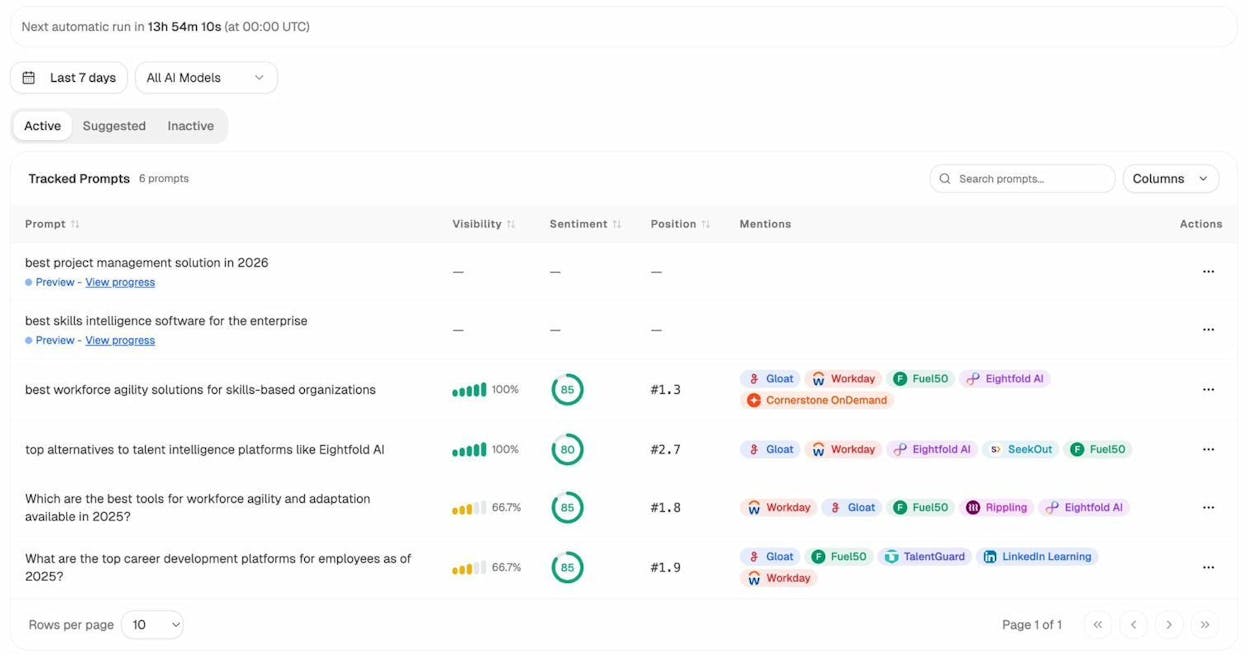
If your agency is not doing this, it is leaving an entire channel unmonitored.
Link acquisition
Links from other websites pointing to yours (called backlinks) are still one of the most important ranking factors in Google. Every serious study on ranking factors confirms this. Without backlinks, even great content struggles to rank for competitive terms.
An SEO agency handles link building because it is time-consuming and requires relationships, outreach infrastructure, and editorial judgment that most in-house teams do not have.
Here are the terms you will hear in this area.
Dofollow links pass ranking value (sometimes called “link equity” or “link juice”) from the linking site to yours. These are the links that directly help your rankings.
Nofollow links tell search engines not to pass ranking value. They still have indirect value. A nofollow link from a major publication can drive referral traffic and brand awareness, even if it does not directly boost rankings.
Domain authority (or domain rating, depending on the tool) measures the overall link strength of a website on a scale from 0 to 100. A link from a site with a domain rating of 80 is far more valuable than a link from a site rated 15.
Link profile is the full picture of every backlink pointing to your website. A healthy link profile is diverse, with links from many different domains, content types, and industries.
What link building methods do agencies use?
Agencies typically use a mix of these approaches.
Content-led link building. The agency creates a piece of content designed to attract links naturally. This might be original research, a data study, an interactive tool, or a comprehensive guide that becomes a reference in your industry. Other sites link to it because it is genuinely useful.
Digital PR. Some agencies have in-house PR teams or partner with digital PR firms. They pitch stories to journalists and publications, earning coverage and backlinks from high-authority news sites.
Guest posting. The agency writes articles for other websites in your space, including a link back to your site. This works well when the target publications are legitimate and relevant. It becomes a problem when agencies pursue low-quality, spammy guest post placements.
Broken link building. The agency finds broken links on other websites (pages that return 404 errors), creates a replacement piece of content on your site, and reaches out to the site owner suggesting they update the broken link to point to your resource. You can find broken links on competitor sites using the Analyze AI Broken Link Checker.
Resource page outreach. Many websites maintain resource pages that link to helpful tools, guides, or references in their industry. The agency identifies relevant resource pages and pitches your content for inclusion.
The key thing to ask your agency is this: what specific link building tactics will you use for my site? Generic answers like “we’ll build high-quality links” are a red flag. You want specifics.
Technical SEO
Good technical SEO is arguably the most important service an agency provides, because nothing else works if the technical foundation is broken.
Think of it this way. You can have the best content and the most backlinks in your industry. But if Google cannot crawl your site, cannot index your pages, or encounters thousands of errors, none of that effort matters.
When you hire an SEO agency, one of the first things it will do is run a technical SEO audit. This is a systematic review of your website’s technical health.
What does a technical SEO audit cover?
Here is what a thorough audit typically checks.
Crawlability and indexation. Can Google access and index your pages? The agency will review your robots.txt file, XML sitemap, and Google Search Console to make sure nothing is blocked that should be accessible.
![[Screenshot: Google Search Console showing indexing report with valid and excluded pages]](https://www.datocms-assets.com/164164/1777503016-blobid4.png?auto=format,compress&w=1248&fit=max)
Site architecture and internal linking. Is your site structured in a logical hierarchy? Can users and search engines navigate from any page to any other page within a few clicks? Poor site structure is one of the most common issues agencies find, especially on large e-commerce sites.
Page speed and Core Web Vitals. Google uses page experience signals as a ranking factor. The agency will measure your Largest Contentful Paint (LCP), First Input Delay (FID), and Cumulative Layout Shift (CLS). If any of these fail, the agency will work with your development team to fix them.
![[Screenshot: PageSpeed Insights report showing Core Web Vitals metrics with pass/fail indicators]](https://www.datocms-assets.com/164164/1777503026-blobid5.png?auto=format,compress&w=1248&fit=max)
Canonical tags and redirects. Duplicate content confuses search engines. Canonical tags tell Google which version of a page is the “main” one. The agency will check that these are implemented correctly and that redirects (301s and 302s) are not creating chains or loops.
Structured data (schema markup). Adding structured data to your pages helps search engines understand your content better and can earn rich snippets in search results. The agency will check whether you have schema markup and whether it is valid.
HTTPS and security. Your entire site should be served over HTTPS. Mixed content (some pages on HTTP, others on HTTPS) creates security warnings and can hurt rankings.
Mobile usability. Google uses mobile-first indexing, meaning it primarily uses the mobile version of your site for ranking. If your site does not work well on mobile, your rankings will suffer.
This is not a one-time exercise. Technical SEO requires ongoing monitoring. Businesses of all sizes regularly introduce technical issues without realizing it. A new site deployment, a CMS update, or a developer accidentally adding a noindex tag can tank your rankings overnight.
Content creation
Content is what search engines index and rank. Without content, there is nothing to show up in search results.
SEO agencies typically produce three types of content for you.
Blog content
Blog posts target informational keywords. These are the queries where people are looking for answers, guides, comparisons, and how-tos.
A good agency will deliver a content calendar at the start of your engagement. This calendar maps out which blog posts will be published, which keywords each post targets, and in what order they should go live.
The best agencies do not just assign topics to writers and hope for the best. They follow a production process that looks something like this.
-
The strategist identifies a keyword opportunity based on the keyword research.
-
The strategist writes a content brief that outlines the target keyword, search intent, required headings, competing articles to beat, and the unique angle the piece should take.
-
A writer (in-house or outsourced) drafts the article.
-
An editor reviews the draft for accuracy, readability, and SEO alignment.
-
The content is published, formatted, and internally linked.
If an agency skips the brief step and just tells a writer “write a 2,000-word article about X,” that is a sign of a lower-quality operation.
Landing page content
Landing page copy is different from blog content. It is written to convert. The goal is to get the visitor to take a specific action, whether that is filling out a form, booking a demo, or making a purchase.
An agency will typically write landing page copy in collaboration with your team, because it needs to align with your brand voice, value propositions, and product messaging. Good agencies will also A/B test different versions to see which performs better.
Meta titles and descriptions
Meta titles and descriptions are the text snippets that appear in search results. They do not directly affect rankings (with the exception of meta titles, which do), but they heavily influence click-through rates.
For small sites, the agency will write these manually. For large sites with hundreds or thousands of pages, it will set up templated formulas that automatically generate meta tags based on page attributes like product name, category, and location.
Content that works for AI search too
Here is where the landscape is shifting. Creating content that ranks in Google is necessary, but it is no longer sufficient.
AI answer engines like ChatGPT, Perplexity, and Gemini are pulling information from web content to build their responses. If your content is clear, well-structured, and authoritative, it has a better chance of being cited in AI-generated answers.
This does not require a different content strategy. It requires a better one. The same qualities that make content rank well in Google, such as depth, clarity, original data, and strong entity coverage, are the same qualities that make AI models cite and recommend your brand.
Tools like Analyze AI’s Content Writer help you create content that is built to perform in both channels. It takes you from idea to research to outline to draft, with AI visibility gaps, competitor keyword analysis, and editorial comments baked into every step.
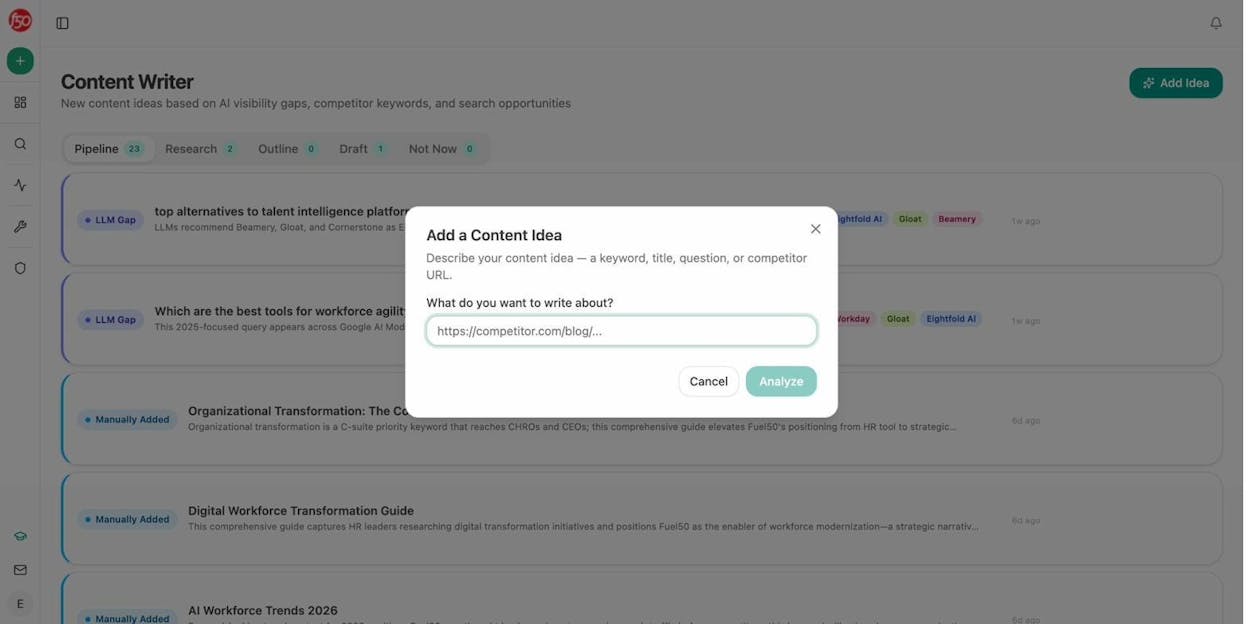
And if you already have content that is underperforming, the Content Optimizer lets you paste a URL, get a content score, and see line-by-line suggestions for improving visibility in both traditional and AI search.
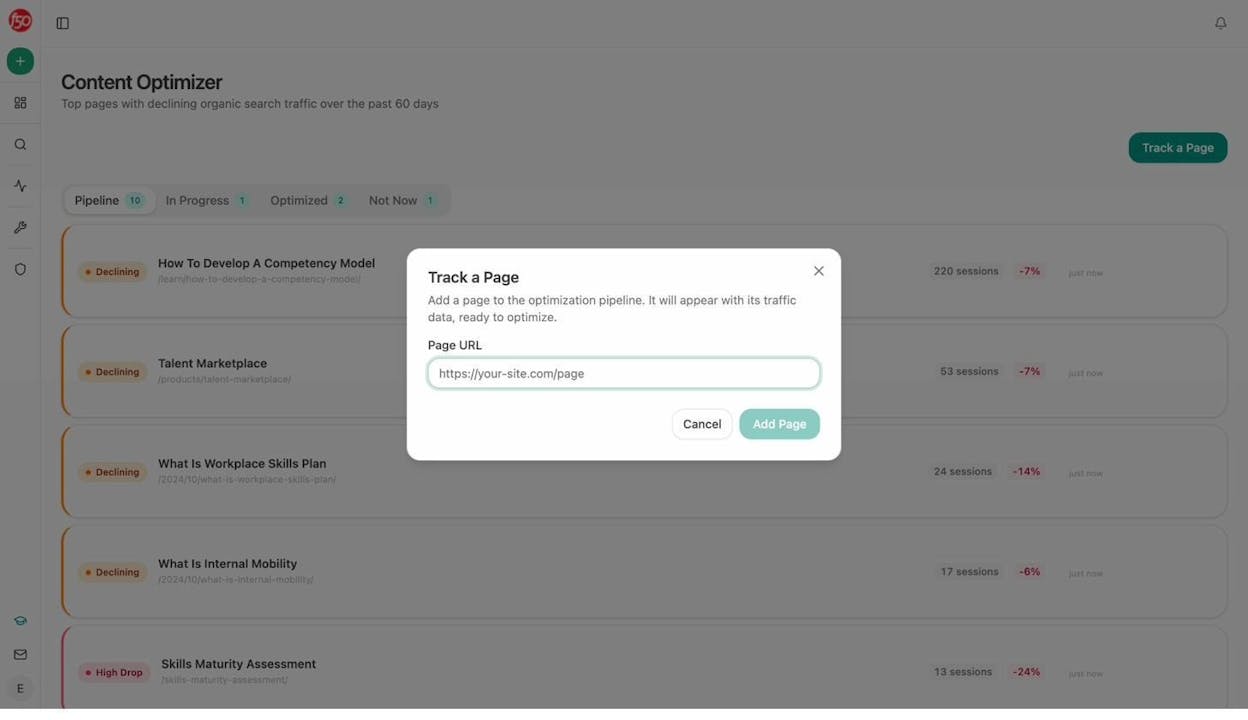
The point is not to optimize separately for AI search. The point is to create content so good that it works everywhere.
SEO reporting
SEO agencies produce a lot of documentation. Roadmaps, spreadsheets, decks, dashboards, monthly reports. This paper trail serves two purposes. It keeps the agency accountable, and it gives you the data you need to justify the investment internally.
The SEO roadmap
When you first start working with an agency, it will present a roadmap. This document outlines what the agency plans to do over the next three to six months, broken into phases.
A good roadmap prioritizes technical fixes first. The logic is simple: if your site has a major technical issue (like pages being accidentally deindexed), no amount of content or link building will move the needle until that issue is resolved.
After technical fixes, the roadmap typically moves into content production and link building, with ongoing monitoring throughout.
Kick-off calls and weekly check-ins
After you receive the roadmap, the agency will schedule a kick-off call to walk through it with you. This is your chance to confirm priorities, set expectations, and agree on KPIs.
Following the kick-off, most agencies hold weekly check-in calls. These are usually 30 minutes and cover what was done the previous week, what is coming next, and any blockers.
A good agency will give you access to a live performance dashboard so you can check progress between calls. A great agency will connect that dashboard to actual business metrics, not just rankings and traffic.
Monthly SEO reports
The monthly report is the agency’s primary communication vehicle. It should cover what happened, why it happened, and what happens next.
Good monthly reports include these elements.
Performance summary. Rankings, traffic, and conversions compared to the previous month and to the same month last year.
Work completed. A list of what the agency delivered that month, including content published, links earned, and technical fixes implemented.
Insights and analysis. Not just numbers, but interpretation. Why did traffic increase? Why did certain keywords move? What does this mean for next month’s strategy?
Next month’s plan. What the agency will focus on in the upcoming month, tied back to the original roadmap.
If your agency’s monthly report is just a spreadsheet of rankings with no commentary, that is a problem. Rankings without context are meaningless.
Reporting on AI search visibility
Here is a gap most agencies have not closed yet. Traditional SEO reporting tracks rankings, traffic, and conversions from Google. But it tells you nothing about whether your brand is showing up in AI-generated answers.
As AI search grows, reporting needs to expand to cover this channel too. That means tracking which prompts your brand appears in, which AI engines mention you, what sentiment those mentions carry, and whether AI referral traffic is converting.
Analyze AI provides this layer. The Overview dashboard shows your brand’s visibility and sentiment across all major AI engines in one view, filterable by time period and competitor.
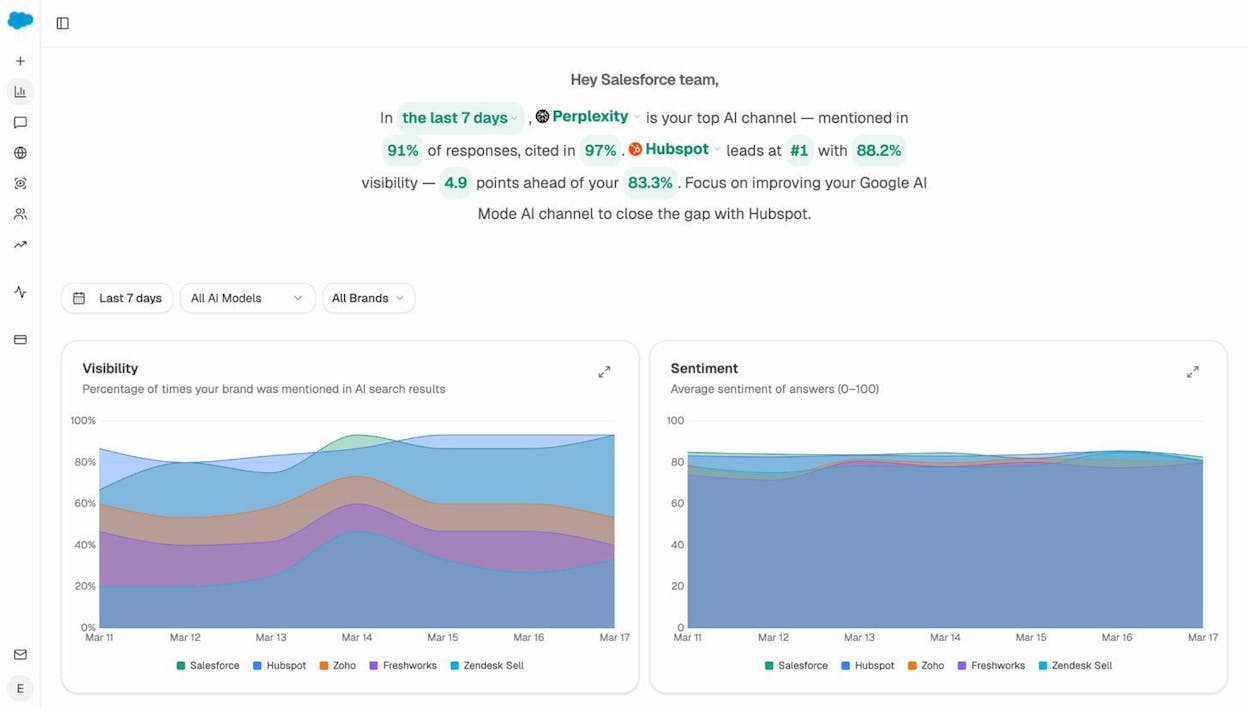
And the AI Traffic Analytics dashboard connects to your GA4 account to show exactly how many visitors are arriving from ChatGPT, Claude, Perplexity, Gemini, and Copilot, which pages they land on, and whether they convert.
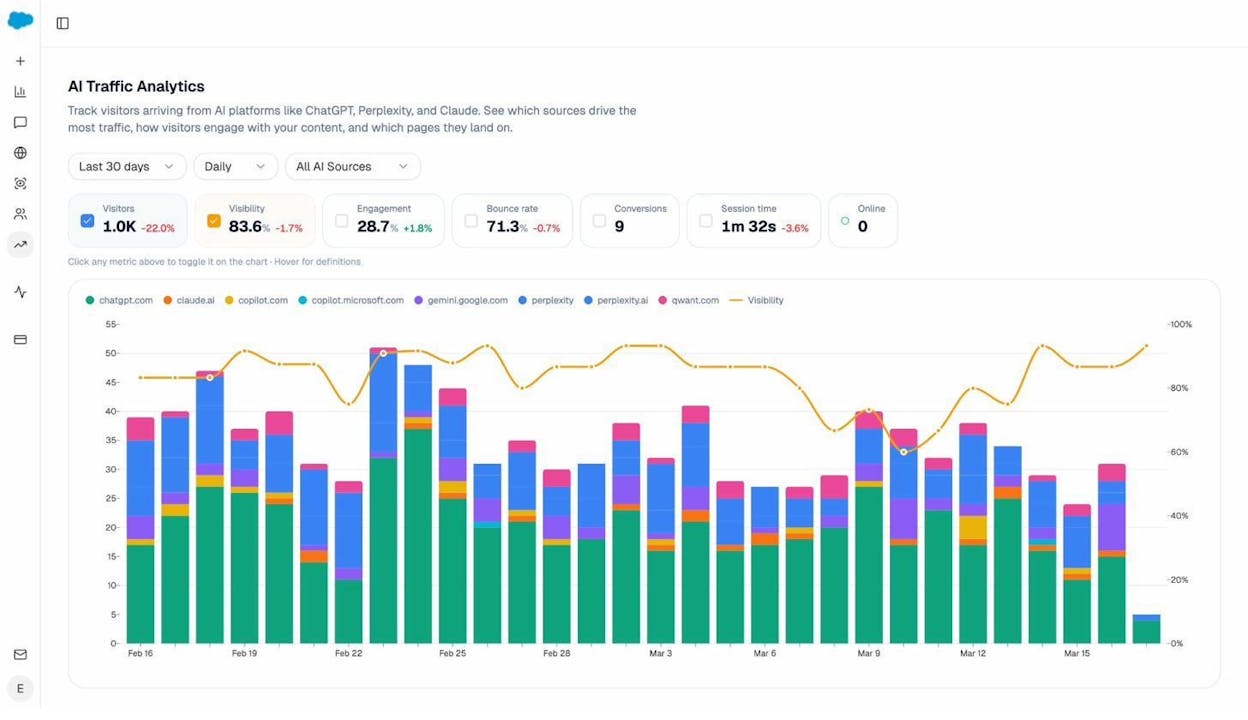
If you ask your agency to report on AI search performance and it cannot, consider adding Analyze AI to your stack so you can track this channel yourself.
How AI search is changing what agencies need to deliver
SEO is not dead. That needs to be said plainly because too many vendors are selling fear right now.
What is actually happening is that search is expanding. People are still searching on Google. But they are also asking ChatGPT, Perplexity, and Gemini for product recommendations, service comparisons, and buying advice. The way buyers find you is changing. The reason they choose you is not.
This means the agencies that deliver the most value going forward are the ones that treat AI search as an additional organic channel, not as a replacement for SEO.
In practice, that means a few things.
Monitoring AI visibility. Your agency should know whether your brand shows up when someone asks ChatGPT “What is the best [your category] tool?” If it does not track this, you have a blind spot.
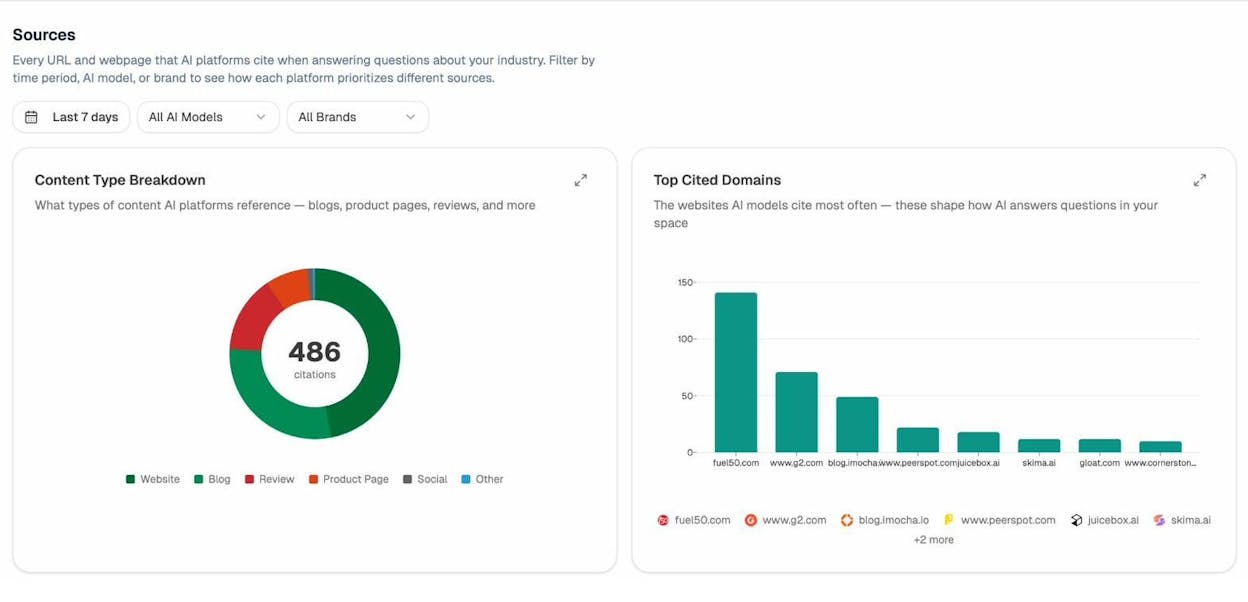
Understanding citation sources. AI engines do not just make up their answers. They pull from specific sources, such as blogs, product pages, review sites, and documentation. Knowing which sources AI models cite in your space tells you where to focus your content and link building efforts.
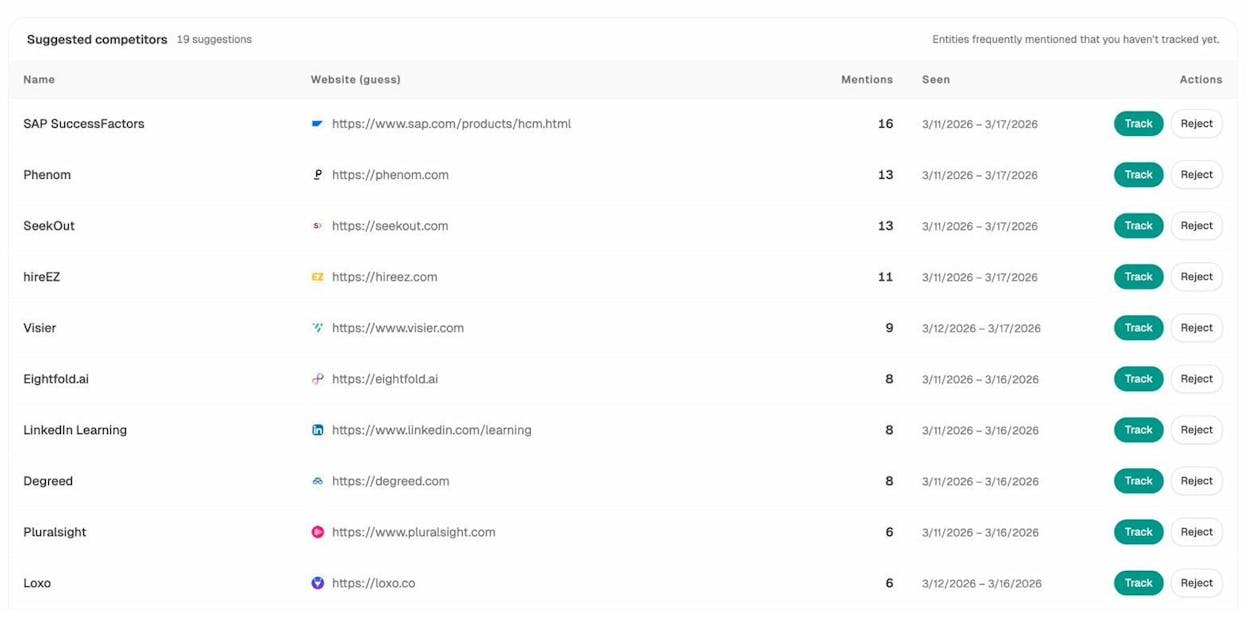
Tracking competitor positioning in AI. It is not enough to know that you appear in AI answers. You need to know who else appears, in what position, and how often. Analyze AI’s Competitor Intelligence shows you exactly which brands are winning prompts in your space and which ones you are losing to.
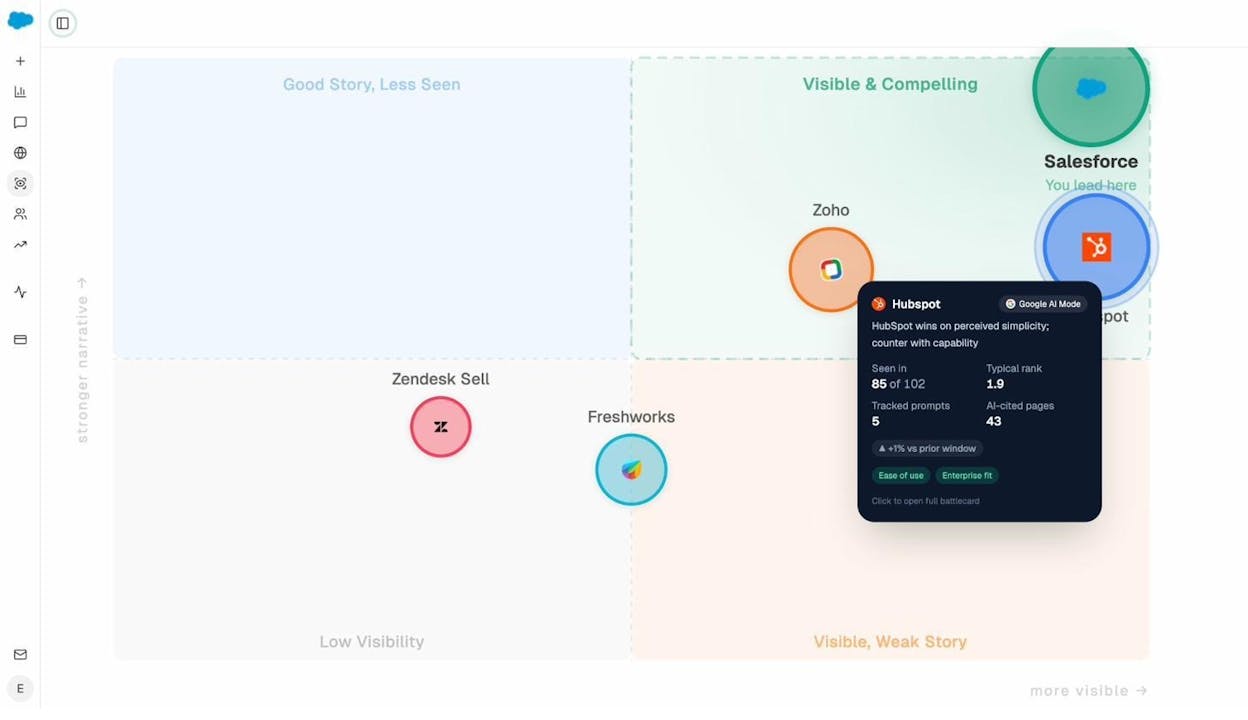
Managing brand narrative. AI engines do not just mention your brand. They describe it. They say things like “known for intuitive UX” or “limited integrations.” If the narrative is wrong, you need to know. The Perception Map in Analyze AI plots your brand and competitors on a visibility versus narrative strength matrix, so you can see where you stand at a glance.
The bottom line: ask your agency whether it monitors AI search. If it does not, it is delivering an incomplete picture of your organic presence.
Benefits of hiring an SEO agency
There are real advantages to working with an agency instead of trying to build all of this in-house from scratch.
Immediate access to expertise. Hiring a full SEO team takes months. An agency gives you access to strategists, technical SEOs, content writers, and link builders on day one.
Access to enterprise tools. Enterprise SEO tools are expensive. Agencies spread those costs across multiple clients, so you get the benefit of premium tools without paying the full license fee.
Cross-industry experience. A good agency has worked with businesses in many different verticals. That means it has seen what works (and what fails) across industries, and it can apply those lessons to your business.
Scalability. An agency can scale effort up or down based on your needs. Launching a new product? The agency can spin up a content sprint. Budget is tight this quarter? It can reduce scope temporarily. Try doing that with a fixed in-house team.
Collaboration with internal teams. The best agencies work alongside your marketing, product, and engineering teams, not in a silo. They integrate with your PR efforts, align with your PPC campaigns, and coordinate with your developers on technical fixes.
Learning opportunity. A good agency will teach you as it works. The knowledge it shares during your engagement can help you build your own internal SEO capabilities over time.
The bottom line is that an SEO agency is a good fit for companies that want expertise without the overhead of hiring a full team, or that need to move faster than their internal resources allow.
How much does an SEO agency cost?
This is the question everyone asks and few articles answer directly. Here is the reality.
|
Agency tier |
Monthly retainer |
What you typically get |
|---|---|---|
|
Freelancer / solo consultant |
$500 - $2,000 |
Basic audits, keyword research, limited content |
|
Small agency (2-10 people) |
$2,000 - $5,000 |
Core SEO services, monthly reporting, some content |
|
Mid-size agency |
$5,000 - $15,000 |
Full-service SEO, dedicated strategist, content production, link building |
|
Large / enterprise agency |
$15,000 - $50,000+ |
Multi-channel strategy, large content teams, custom reporting, C-suite alignment |
A few things to keep in mind.
You get what you pay for. An agency charging $1,000 per month cannot afford to dedicate senior talent to your account. The math simply does not work. At that price point, you are likely getting junior SEOs or heavily templated work.
Retainer is not the only cost. Some agencies charge separately for tools, content production, link building outreach, or developer implementation hours. Ask for a full breakdown before signing.
ROI is what matters, not cost. An agency that charges $10,000 per month but generates $100,000 in attributable revenue is a better investment than one that charges $2,000 and delivers nothing. Always evaluate agencies on outcomes, not just price.
Signs you actually need an SEO agency
Not every business needs an agency. Here are the situations where an agency makes the most sense.
You do not have SEO expertise in-house. If no one on your team knows how to run a technical audit, build links, or develop a keyword strategy, an agency fills that gap immediately.
You have the expertise but not the capacity. Some teams have one or two SEO-savvy people who are already stretched thin across other responsibilities. An agency lets them focus on strategy while the agency handles execution.
You are entering a competitive market. If you are launching in a space where competitors already have strong SEO, catching up requires concentrated effort. An agency can accelerate your progress.
You have a website migration coming up. Site migrations (changing domain, CMS, or URL structure) are high-risk for SEO. An agency with migration experience can prevent the traffic drops that commonly follow.
You want to grow organic as a channel. If you have been overly reliant on paid ads and want to build sustainable organic traffic, both from traditional search and AI search, an agency can help you build that foundation.
When an agency is probably not the right fit: if your total marketing budget is under $3,000 per month, you would get more value from an SEO consultant or a set of good tools and self-education. Agencies need a minimum budget to deliver meaningful results.
Tips for choosing the right SEO agency
Choosing the wrong agency is expensive. Not just in fees, but in lost time. Here is how to evaluate agencies effectively.
Look past the “award-winning” label
Almost every reputable agency is award-winning at this point. SEO industry awards are plentiful, and most established agencies have collected a few. The label tells you the agency is not brand new, but it does not tell you whether it is the right fit for your business.
![[Screenshot: Google search results for “award-winning SEO agency” showing dozens of agencies using that exact phrase]](https://www.datocms-assets.com/164164/1777503057-blobid13.png?auto=format,compress&w=1248&fit=max)
Focus on results, not trophies.
Ask what tools they use
The tools an agency uses reveal how serious it is about the work. If an agency is using enterprise-grade SEO software like Ahrefs, Semrush, Screaming Frog, and dedicated rank trackers, it is investing in the infrastructure needed to do good work.
If it is relying entirely on free tools and you get the sense it is cutting corners, that is a red flag.
Also ask whether it has tools for monitoring AI search visibility. The landscape is shifting, and agencies that only track Google are leaving a growing channel unmonitored. Tools like Analyze AI give agencies (and their clients) visibility into AI search performance alongside traditional SEO.
Ask about their reporting cadence and format
Before you sign, ask to see a sample report. This tells you a lot. Is it just a dump of ranking data? Or does it include analysis, insights, and next steps?
Also ask how frequently you will receive reports, and whether you will have access to a live dashboard between reports.
Ask about their team
The people pitching you are usually not the people doing the work. Agencies use experienced salespeople and directors to close deals, then hand accounts to junior team members.
This is not inherently bad. Junior SEOs can do great work with the right training and oversight. But you should ask to meet the actual team that will work on your account. Ask how many hours of senior SEO time you will get per month. And ask what the team’s capacity looks like. If your agency contact is managing fifteen other accounts, you are not getting their best attention.
Ask about outsourcing
Outsourcing is common in the agency world. Content writing, link outreach, and even technical audits are sometimes handled by offshore or third-party teams.
This is not automatically a problem. But you should know about it. Ask the agency directly. If it outsources, ask to see examples of the outsourced work. Quality is what matters, not where the person sits.
Request client references and case studies
Any credible agency will have case studies on its website showing results it has achieved for other clients. Read them carefully. Look for specific numbers (traffic growth, ranking improvements, revenue impact), not just vague claims.
Better yet, ask for references you can actually contact. A short phone call with an existing client will tell you more about the agency’s working style, responsiveness, and honesty than any case study ever could.
Check for contract flexibility
Some agencies lock clients into 12-month contracts with steep early termination fees. Others work on a rolling monthly basis.
Long contracts are not always bad. SEO takes time, and a 6-month commitment can make sense. But be wary of agencies that insist on long lock-in periods with no performance clauses. A confident agency will tie contract length to performance milestones.
Ask what happens if a key team member leaves
Agency turnover is real. If the senior strategist who built your roadmap leaves the agency, what happens to your account? Ask about transition plans and knowledge documentation. A well-run agency has processes in place to handle this.
How to measure if your SEO agency is working
You have signed with an agency. Now how do you know if it is delivering?
Here are the metrics that actually matter, ranked by importance.
Revenue and leads from organic
This is the number that pays for the agency. Track how many leads or sales come from organic search traffic. Use Google Analytics (or your analytics tool) to set up conversion tracking for organic traffic specifically.
If your agency cannot show a clear line from its work to revenue, something is wrong.
Organic traffic growth
Total organic traffic should trend upward over time. Expect a slow start. Most SEO campaigns take three to six months before meaningful traffic gains appear. But by month six, you should see clear, positive movement.
Keyword ranking improvements
Rankings are a leading indicator. They move before traffic does. Track your target keywords monthly. You should see positions improving over the first three to six months.
Use the Analyze AI Keyword Rank Checker to spot-check your positions at any time.
Link profile growth
The number and quality of backlinks pointing to your site should increase steadily. Ask your agency for a monthly link report showing new links acquired, the domain authority of linking sites, and which pages received links.
Technical health score
If your agency ran a technical audit at the start, it should be remediating those issues over time. Ask for a monthly health score from whatever crawling tool it uses. The score should improve.
AI search visibility (the new metric)
This is the metric most businesses are not tracking yet, but should be.
Are you showing up when someone asks ChatGPT or Perplexity about your product category? Is the sentiment positive? Are competitors appearing above you?
Analyze AI’s weekly email digests send you a summary of your AI visibility, citation changes, competitor shifts, and priority actions every Monday. No login required. You wake up to a snapshot of exactly where you stand across AI search.
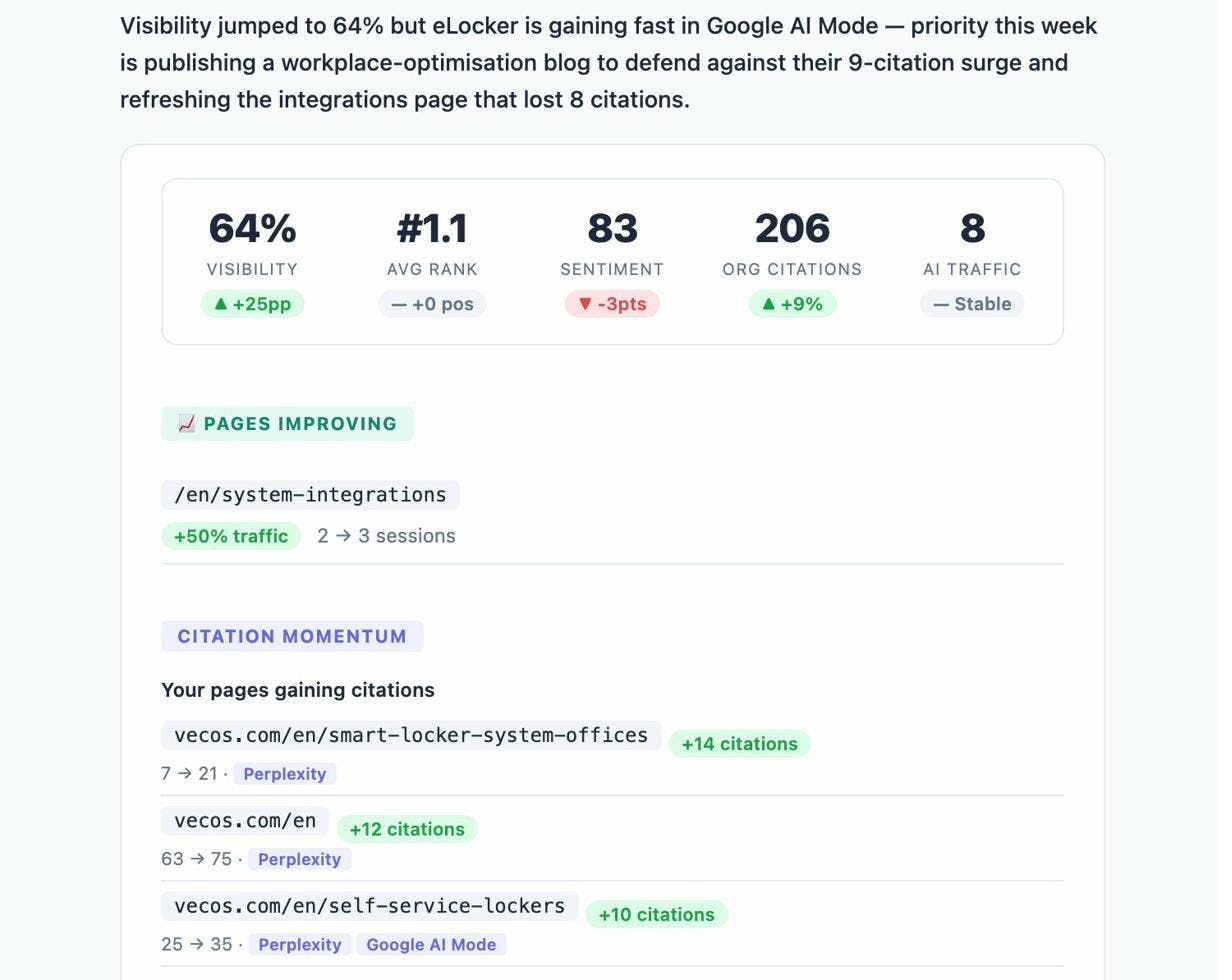
If your agency is not reporting on this, you can still track it yourself. And if AI referral traffic is growing (which the data suggests it will), you will want to know exactly which pages are driving that growth.
Red flags that your agency is underperforming
Watch for these warning signs.
No improvement after six months. Some patience is required with SEO, but six months with zero measurable progress is a problem. By this point, you should see at least some ranking improvements and a few technical wins.
They cannot explain what they did. If your agency cannot clearly articulate what work it performed in a given month and why, that is a red flag. Good agencies over-communicate, not under-communicate.
They blame everything on Google updates. Algorithm updates do cause fluctuations. But an agency that blames every setback on Google and takes credit for every win is not being honest with you.
They focus on vanity metrics. If the monthly report is full of impressions, reach, and “brand awareness” but never mentions conversions, leads, or revenue, the agency may be hiding the fact that its work is not producing business results.
They resist sharing access to tools and data. You should have access to your own Google Analytics, Google Search Console, and any third-party SEO tools the agency uses on your behalf. If it is reluctant to share access, ask why.
How to run a quick AI search audit before hiring an agency
Before you even start talking to agencies, you can run a quick check on your AI search visibility yourself. This gives you a baseline and helps you evaluate whether an agency’s AI capabilities are real or just marketing.
Step 1. Go to ChatGPT, Perplexity, and Gemini. Type in the key buying prompts for your industry. For example, “What is the best [your product category] for [your target customer]?”
Step 2. Look at the results. Is your brand mentioned? In what position? What is the sentiment? Who else appears?
Step 3. Do the same for three to five of your top competitors. Compare.
For a more systematic approach, use Analyze AI’s AI Search Explorer to run ad hoc searches across multiple AI engines at once and see exactly who shows up for any prompt.
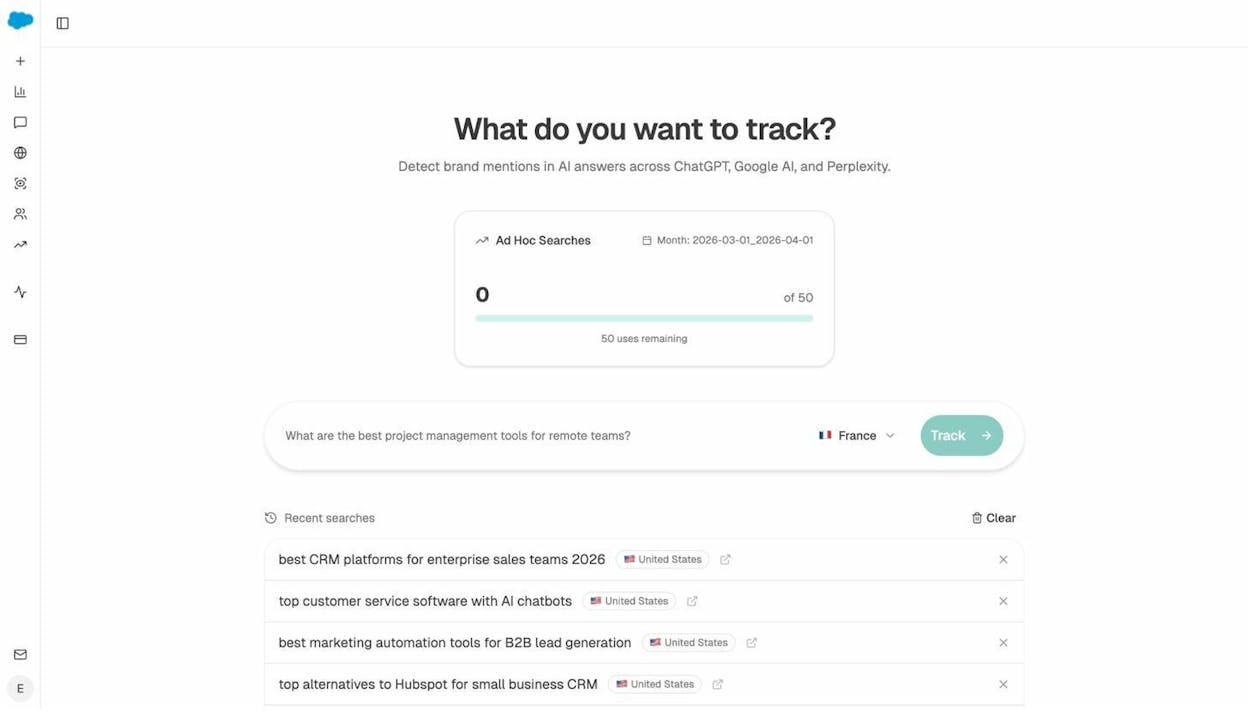
This takes ten minutes and gives you a clear picture of where you stand. If you are invisible across AI engines, that is both a risk and an opportunity. And it is something to discuss with any agency you are evaluating.
Final thoughts
An SEO agency handles keyword research, link building, technical fixes, content creation, and reporting so you can focus on running your business. The best agencies now also track AI search visibility, because that is where a growing share of buyer research is happening.
Here is what to remember.
Expect to invest at least a four-figure monthly retainer for meaningful results. Ask hard questions before signing: Who will work on my account? What tools do you use? Can I see a sample report? What is your link building process?
Give the relationship time to work. SEO is not a quick fix. But by month six, you should see clear, measurable progress in rankings, traffic, and ideally revenue.
And do not ignore AI search. Whether your agency tracks it or you do it yourself with a tool like Analyze AI, knowing how AI engines represent your brand is no longer optional. It is a core part of understanding your organic presence.
The brands that treat AI search as an additional organic channel, not a threat to SEO, are the ones that will compound visibility over time. That is the approach worth investing in.

Ernest

Ibrahim


