



Summarize this blog post with:


In this article, you’ll see how AthenaHQ and Profound compare across pricing, AI engine coverage, citation depth, content tooling, and the part both vendors quietly leave out, which is actually doing the work their dashboards flag. You’ll get a side-by-side breakdown, where each one stings the budget, and a decision framework. If you’re a CMO, an agency lead, or a content team running a serious AI search program, you’ll walk away knowing what you’re really signing up for.
You’ll also see where a third option, Analyze AI, fits in, especially if you’re tired of paying enterprise prices for what is essentially a charting layer.
Table of Contents
The 30-second answer
Both tools track AI search visibility well. Neither one moves work off your plate. Here’s the headline view:
|
Lens |
AthenaHQ |
Profound |
|---|---|---|
|
Entry price |
$295/mo Self-Serve (credit-based) |
$99/mo Starter (ChatGPT only) |
|
Realistic price |
$295 or $545/mo (Growth) |
$399/mo (Growth) for 3 engines |
|
Engines tracked |
8 on all plans |
1 on Starter, 3 on Growth, 10+ on Enterprise |
|
Pricing model |
Credits (consumption-based) |
Flat tier with prompt caps |
|
Strongest feature |
Action Center workflows |
Conversation Explorer (real prompt volume) |
|
Weakest point |
Credit math, single-country Self-Serve |
Engine gating, steep learning curve |
|
Best fit |
Single-market teams who want a structured checklist |
Fortune 500s with budget and analyst headcount |
If you only need monitoring and have one country to cover, AthenaHQ is the cleaner entry. If you have a six-figure GEO budget and a data team, Profound is built for you. If you want the visibility data plus the systems to act on it without a strategist on the meter, the second half is the one to read.
What each tool actually does
AthenaHQ is a generative engine optimization platform that tracks how AI engines describe your brand, ranks competitors against you, and turns the gaps into an Action Center workflow. It’s positioned as the marketing-friendly choice in the category.
Profound is the enterprise standard, with $58.5M raised from Sequoia and Kleiner Perkins and customers like Ramp, MongoDB, and US Bank. It pioneered Conversation Explorer, which surfaces real prompt volume data across AI engines, and pairs visibility data with agents that draft content and publish to WordPress, Sanity, or Contentful.
Both are doing real work in a real category. The question is whether the work they do is the work you need done.
Pricing: the number you see vs. the number you pay
AthenaHQ uses a credit-based model. Self-Serve is $295/month and includes 3,600 credits, where each AI response costs one credit. Track 100 prompts across 8 engines once a week and you burn 3,200 credits a month, almost the entire allowance, before any ad-hoc checks. Extra credits sell in 1,250-credit blocks at $100 each. Growth lands around $545/month. Enterprise is custom and starts north of $2,000/month.
A detail most buyers miss. Self-Serve covers a single country. Multi-market visibility requires Enterprise. So does the ACE Citation Engine, API access, and BI tool integrations. The plan you see on the pricing page is rarely the plan you actually need.
Profound uses tiered prompt caps with engine gating, which is its own kind of trap.
-
Starter at $99/month tracks ChatGPT only.
-
Growth at $399/month tracks 3 engines with a 100-prompt cap.
-
Enterprise is custom and unlocks all 10+ engines, real prompt volume data, AI bot crawl analytics, and dedicated strategist support.
If you need Perplexity or Google AI Mode visibility, you’re paying $399/month minimum. More than 100 prompts puts you in Enterprise. No free trial on either tier.
The pricing gap is real, but it’s not what teams should fixate on. The harder question is what each tier actually lets you do.
AI engine coverage
AthenaHQ has the cleaner story. All 8 engines (ChatGPT, Perplexity, Gemini, Claude, Microsoft Copilot, Google AI Overviews, Grok, DeepSeek) are available from Self-Serve onward. You pay through credits, not through a tier upgrade.
Profound gates engines hard. Starter is ChatGPT only. Growth adds two more. Enterprise unlocks the full 10+ engine roster, including Meta AI and Google AI Mode.
If engine breadth matters in week one, AthenaHQ wins. If you only care about ChatGPT, Profound’s Starter is cheaper, but a ChatGPT-only strategy is a 2024 plan.
Prompt tracking and ad-hoc search
Tracked prompts are the daily backbone. Ad-hoc prompts are the “what’s ChatGPT saying about us right now” check.
AthenaHQ runs daily tracking on prompts you configure. Ad-hoc searches happen through the Ask Athena copilot, which consumes credits. Heavy use of Ask Athena is the fastest way to burn through the Self-Serve allowance.
Profound runs daily tracking and lets you do on-demand prompt searches without consuming a separate budget. Conversation Explorer surfaces what real users ask around your category, so you can prioritize prompts with actual search demand. The catch is that you only get the rich version on Enterprise.
Citation and hallucination analysis
This is where the platforms separate from rank-tracker-style tools.
AthenaHQ shows you which domains cited each AI response. The ACE Citation Engine (the advanced citation graph) is Enterprise-only, so Self-Serve users see only the basic citation list per prompt.
Profound offers prompt-level citation analysis on Growth and up, with a clearer view of citations versus mentions. A citation is a linked attribution. A mention is your brand name appearing without a link. Enterprise adds hallucination flagging.
Profound wins on citation depth, but you need Growth ($399/mo) minimum to use it. Read more on how LLMs cite sources across 83,670 citations.
Competitive benchmarking
Both platforms track share of voice and average rank. The differences are in the slicing.
AthenaHQ offers share of voice with sentiment overlay and regional segmentation on Enterprise.
Profound covers share of voice, average position, and Conversation Explorer, which maps competitor messaging across real prompts. You can see when a competitor starts winning a new positioning angle, not just when their visibility ticks up.
Profound is the stronger competitive intelligence layer at the tiers that unlock it. AthenaHQ is more accessible at entry tiers but shallower.
AI traffic attribution
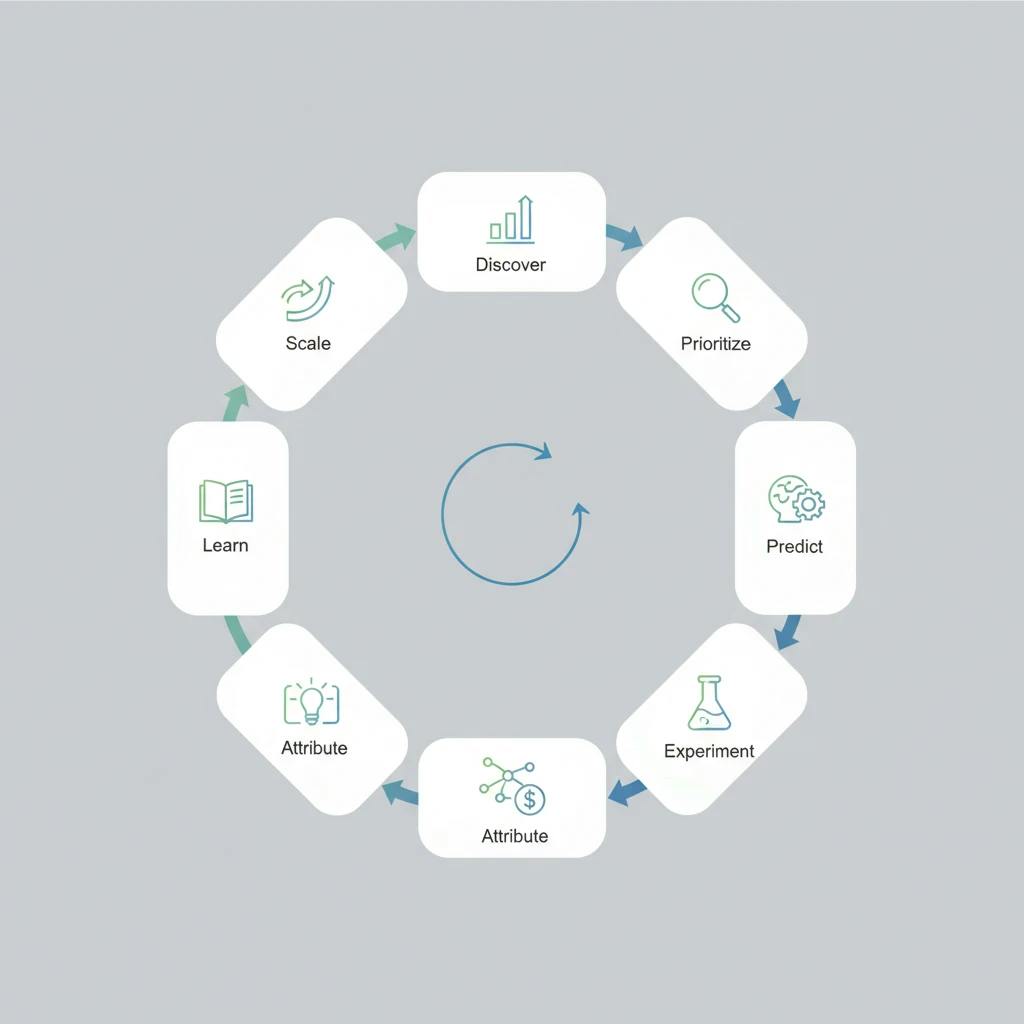
This is the bridge between visibility and revenue, and the place most GEO tools quietly underperform.
AthenaHQ offers Shopify and GA4 integrations to tie AI visibility back to traffic and revenue. The integration works on Self-Serve.
Profound offers AI bot crawl analytics (which crawlers visit your site, what content they read) and visibility-to-traffic correlation. The native GA4 integration is missing, so most attribution work happens in custom dashboards or BI tools. You need API access for that, which is Enterprise.
For mid-market teams, AthenaHQ is the easier traffic story. For Fortune 500 teams with BI infrastructure, Profound’s bot analytics is unique.
Content creation and optimization (where it gets thin)
Both platforms have started adding content tooling. Both feel bolted on.
AthenaHQ’s Action Center generates GEO optimization tasks. Each task is a structured workflow that audits a page, identifies the gap, suggests a fix, and assigns an owner. Writers and editors aren’t in the loop. The platform points at the page. Your team does the rewrite.
Profound’s Agents draft content briefs and full articles, then publish to WordPress, Sanity, or Contentful. It’s closer to a content engine, but briefs are AI-templated and the QA layer is light.
If your team writes the content themselves, AthenaHQ’s checklist works. If you want first-draft content generated, Profound’s Agents are closer to functional. Neither one has a workflow with research, outline, draft, and editor-style comments built in.
Onboarding and time-to-value
AthenaHQ sells fast. You can sign up, configure prompts, and have data flowing within an hour. The interface is built for a marketing manager, not a data scientist.
Profound sells slow. Enterprise plans come with a dedicated strategist. Onboarding includes integration work, prompt configuration, and stakeholder training. Time-to-first-insight is days to weeks. If your team has no data analyst, AthenaHQ is the lower-friction choice.
Who AthenaHQ is best for
AthenaHQ works well for single-market mid-market teams that want a structured Action Center workflow, are comfortable with credit budgeting, and can accept that Self-Serve is a starting point rather than the full feature story. Real estate brands, DTC Shopify stores, and B2B SaaS in a single country tend to get the most out of it. It’s the wrong fit if you’re multi-country, if you need ACE Citation Engine depth, or if your usage is unpredictable enough that the credit meter creates monthly friction. For a deeper look, see the full AthenaHQ AI review.
Who Profound is best for
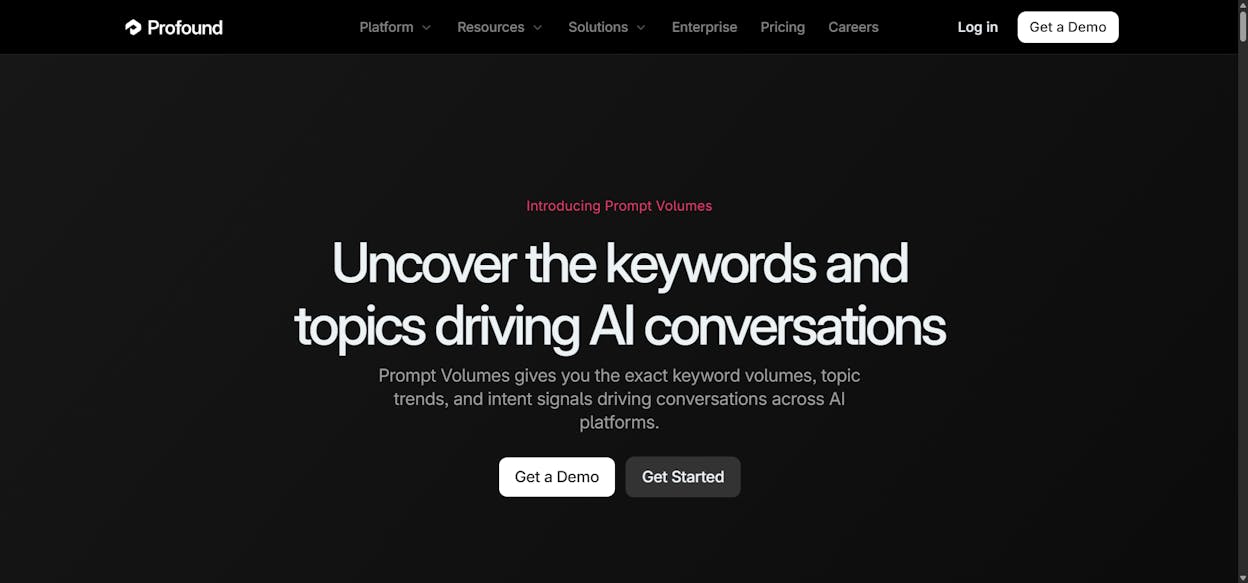
Profound is built for Fortune 500 brands with dedicated data and marketing ops teams, where SOC 2 Type II compliance is a procurement requirement and the budget can absorb Growth at $399 or Enterprise at five figures. Conversation Explorer prompt volume data and AI bot crawl analytics are uniquely valuable at that tier. It’s the wrong fit for startups, growth-stage SaaS, or any team without an analyst on hand to translate the data into action. The Profound AI review goes deeper.
The gap neither tool fills
Both AthenaHQ and Profound stop at the dashboard line. They surface what’s broken. They don’t fix it.
The Monday board prep still gets done by an analyst. The competitor narrative shift still gets summarized by a strategist. The content brief still gets written by a content lead. The “we’re losing position 2 on Perplexity for X prompt” alert still becomes a Slack message someone acts on three days later.
For teams running serious AI search programs, that’s where the budget leaks. The visibility cost is the smallest line item. The labor cost of acting on the data is the real spend.
This is where Analyze AI is built differently. We don’t believe AI search is replacing SEO. We believe AI search is another organic channel that compounds with SEO, and that the brands winning both are the ones with systems to act on the data. Read the Analyze AI manifesto for the long version.
Where Analyze AI fits
Analyze AI is the agentic SEO and content platform that pairs AI search visibility data with the systems to act on it. Same core dashboards as AthenaHQ and Profound. Same citation, competitor, and traffic tracking. Then a layer neither platform has. A Content Writer that produces editor-grade drafts. A Content Optimizer that rewrites pages based on real gap analysis. And an Agent Builder that automates the work between them.
The pricing is also simpler:
|
Plan |
Price |
What you get |
|---|---|---|
|
Growth |
$99/mo |
3 AI engines, 25 tracked prompts/day, 50 ad-hoc prompts, GA4 integration, unlimited seats |
|
Pro |
$250/mo |
4 AI engines, 35 tracked prompts/day, 100 ad-hoc prompts, 10 Content Writer + 5 Content Optimizer workflows |
|
Custom |
Talk to us |
All engines, unlimited prompts, unlimited workflows, dedicated account manager |
Growth at $99 is a third of AthenaHQ’s $295. Pro at $250 sits below Profound’s $399 Growth. Custom is where you go when you’ve grown into a Profound-sized program and want better workflow tooling.
What you get on the visibility side
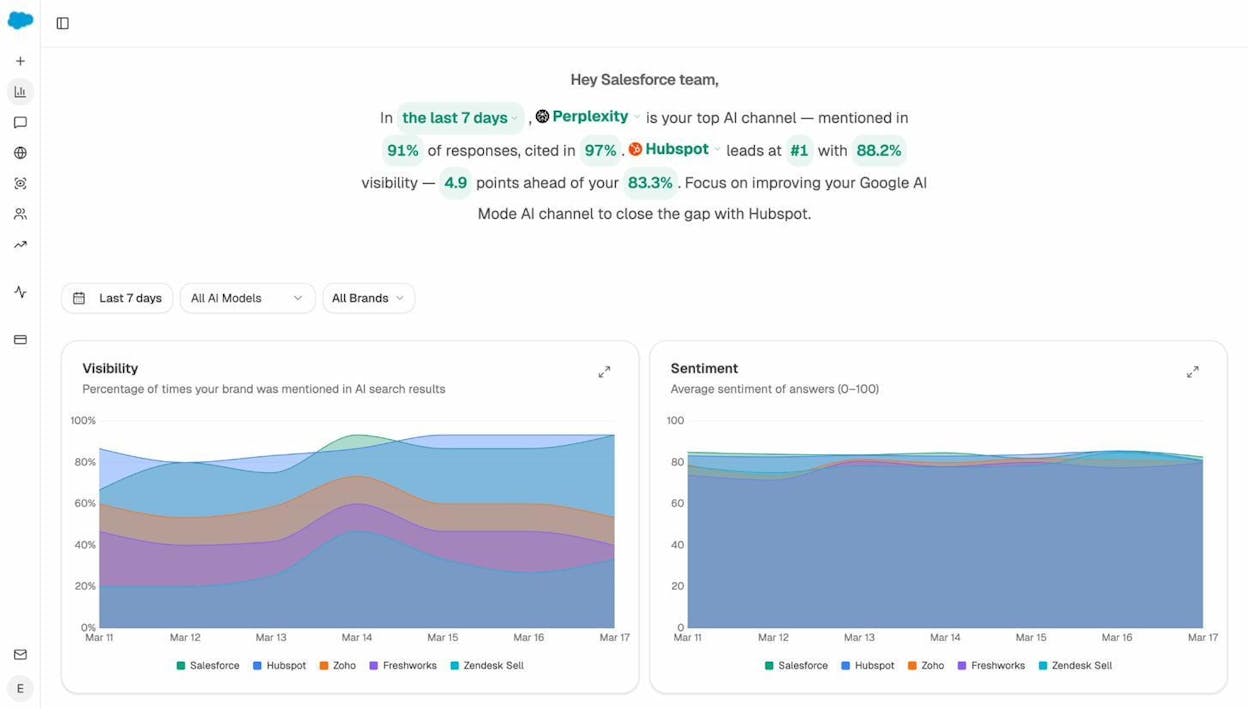
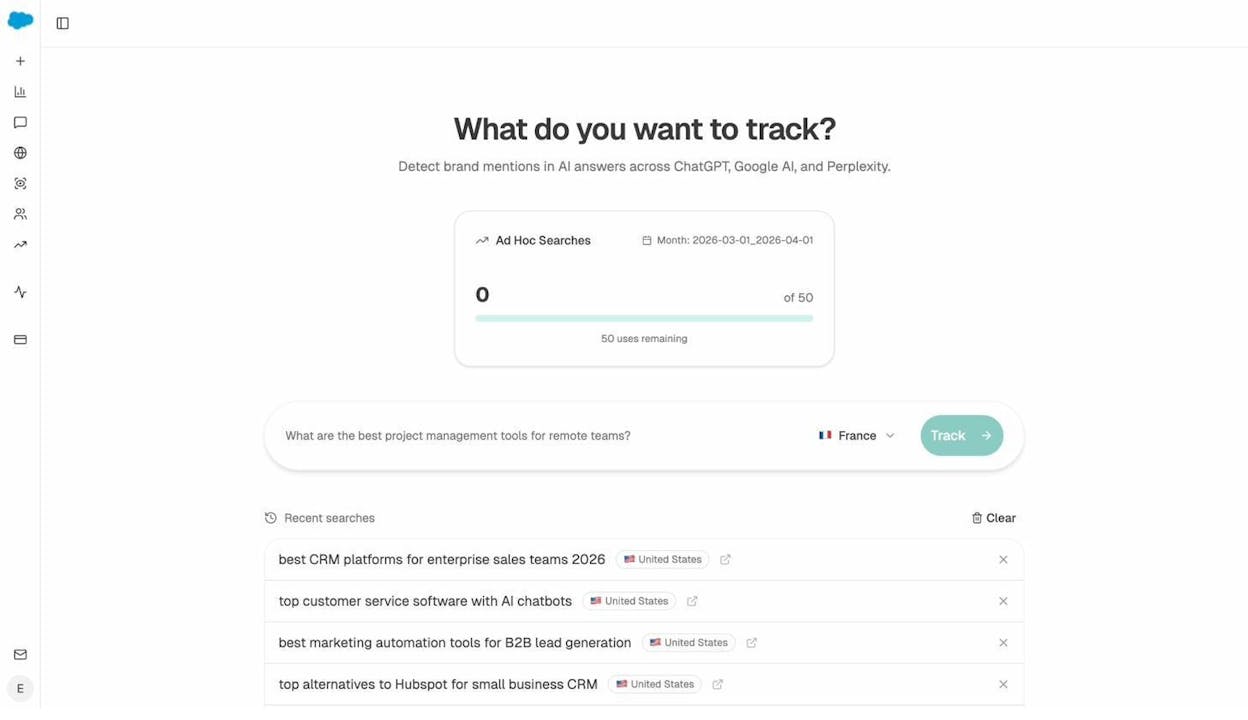
Daily prompt tracking with rank, sentiment, and citation deltas. Ad-hoc prompt search to spot-check any query (50 on Growth, 100 on Pro, unlimited on Custom). Prompt Discovery mines new prompts you should be tracking based on your brand and competitors. Per-engine breakdown shows whether ChatGPT or Perplexity is the channel where you’re slipping.
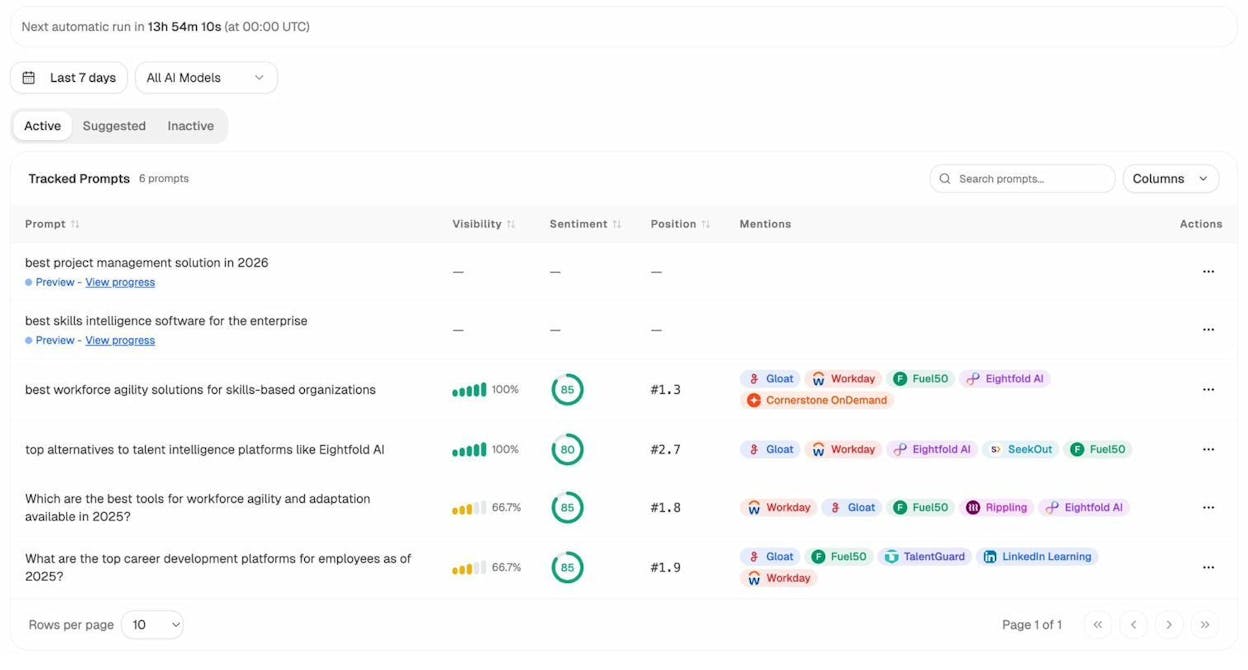
Citation Analytics shows you the URLs cited per prompt, the domains earning the most authority, and the gaps where competitors are cited without you.
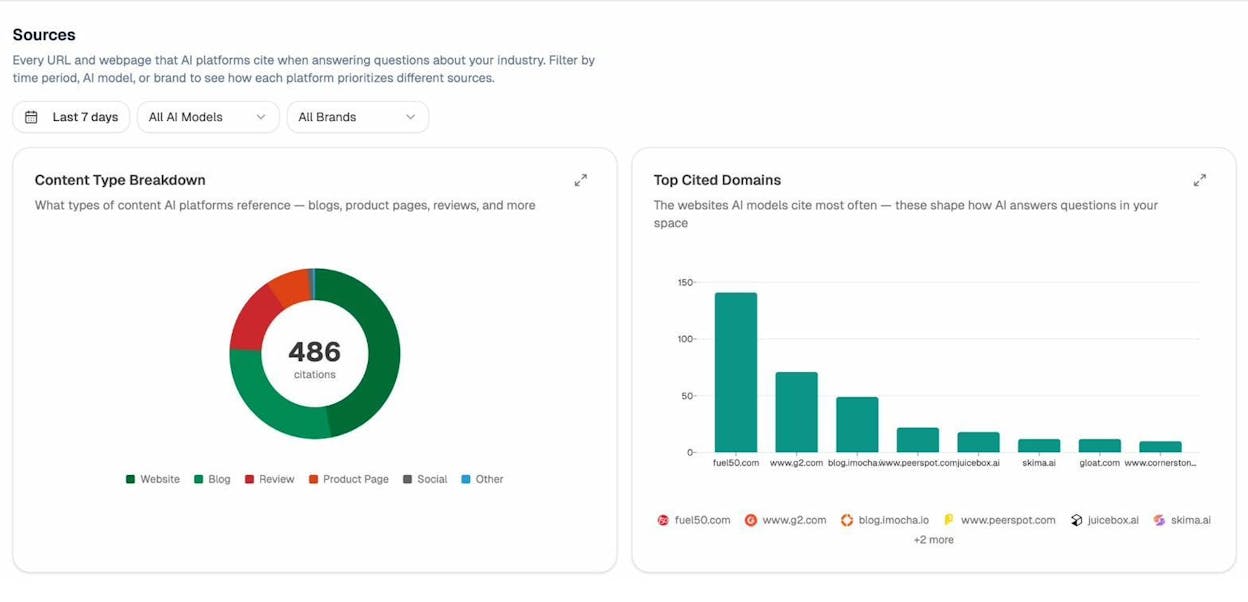
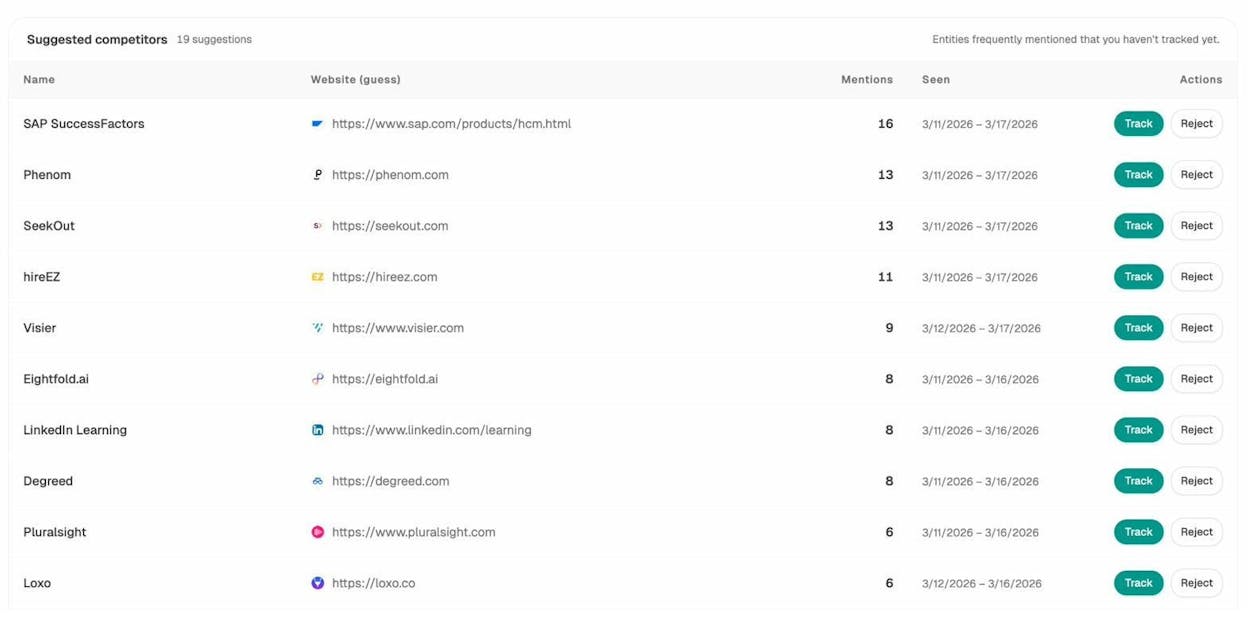
The Competitors dashboard gives share of voice, average rank, and prompt-level competitor displacement. You can see exactly which competitor took your position 2 on which prompt this week. This kind of specificity is what makes AI search competitive analysis actually actionable.
AI Traffic Analytics ties all of it back to GA4. You see which AI engines drove visits, which landing pages converted from AI traffic, and which prompts correlate to revenue.
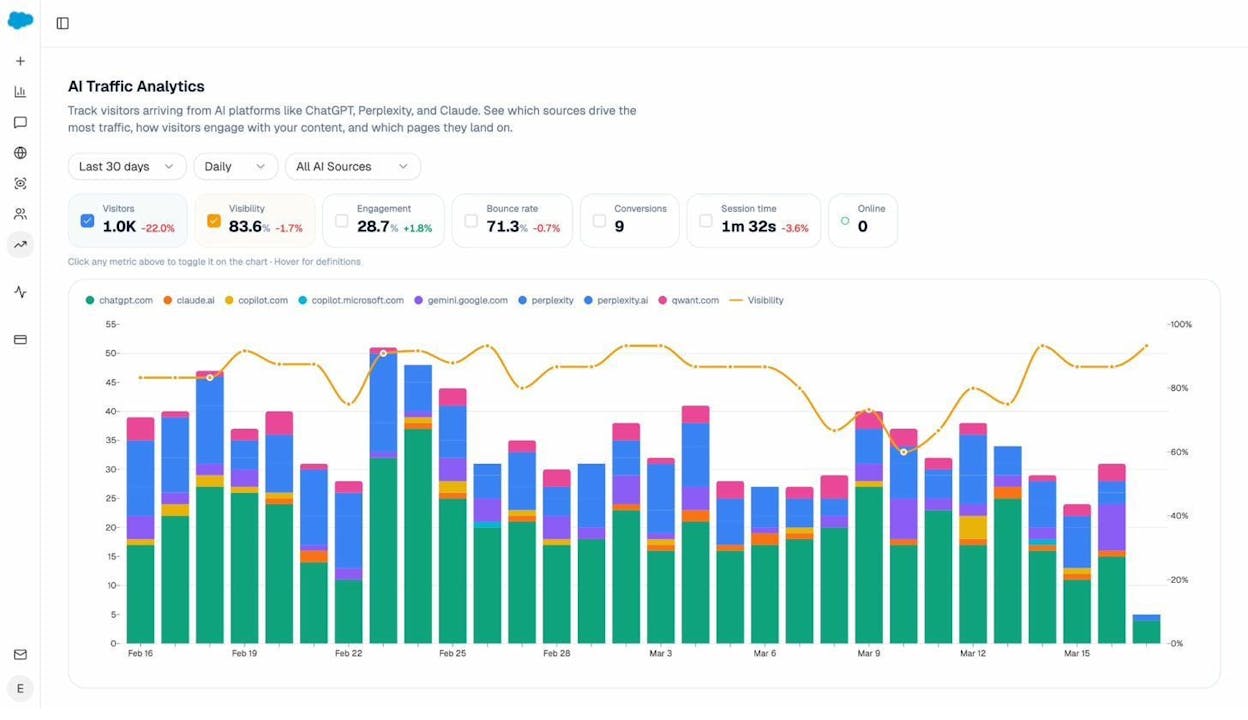
This is the same surface AthenaHQ and Profound offer. The differentiator is what comes next.
Content Writer that actually writes
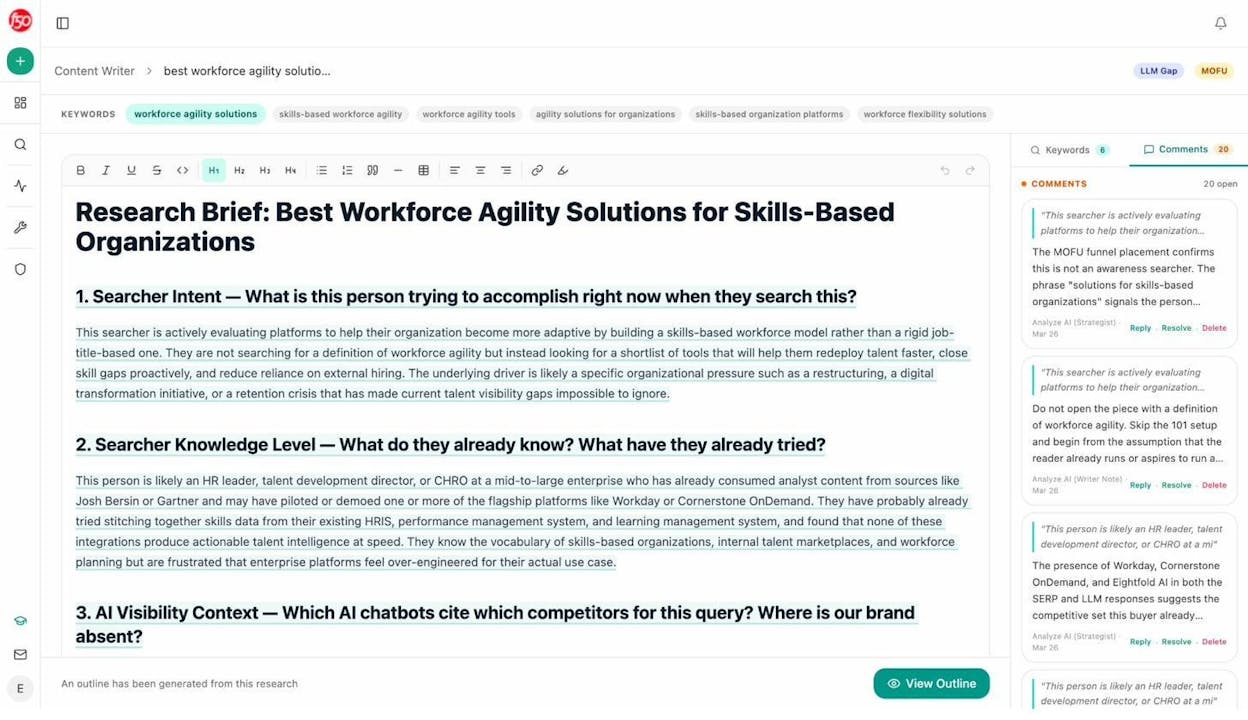
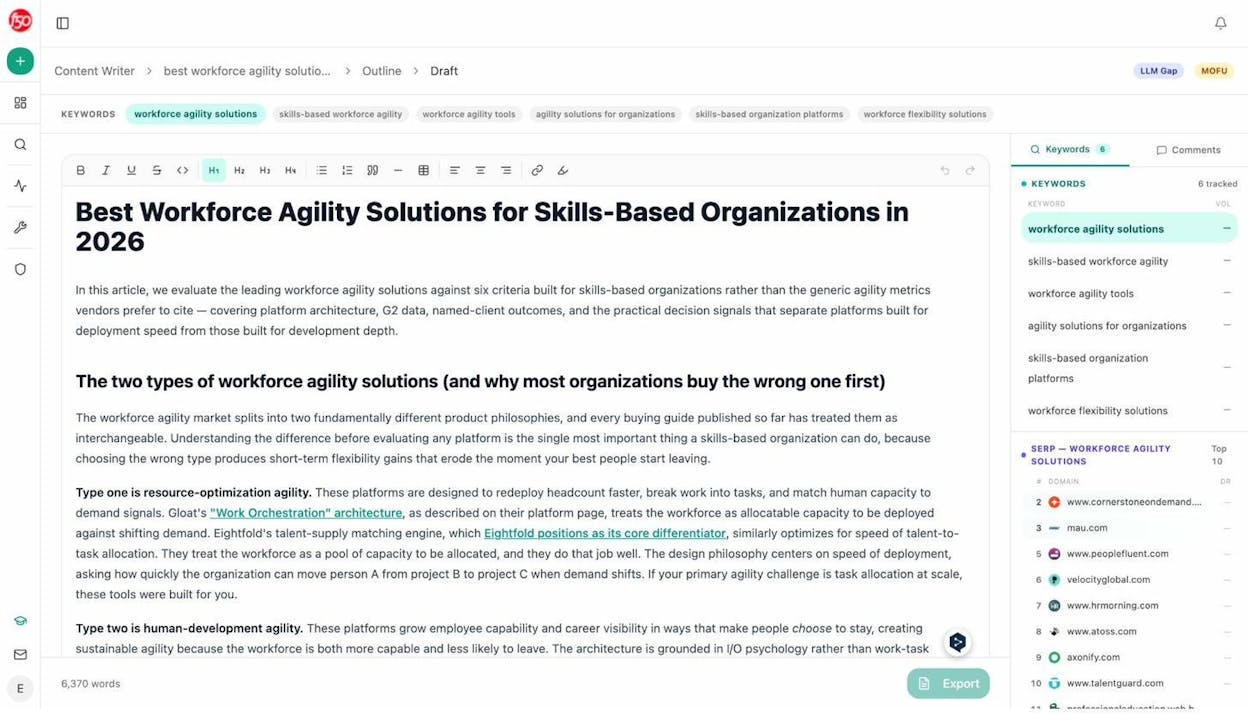
The Analyze AI Content Writer is not a “generate a draft” button. It’s a research, outline, and draft pipeline, and the outputs come with editor-style comments showing what was added, why, and where the proof points came from.
You pick a topic. The writer pulls research with comments inline. You edit the outline. The system produces a full draft scored for AI Engine Optimization readiness.
Content Optimizer that rewrites by gap
The Content Optimizer fetches your existing URL, runs an audit, identifies specific gaps (missing entities, unsupported claims, under-represented topics), and produces an optimized version with editor commentary on what changed and why.
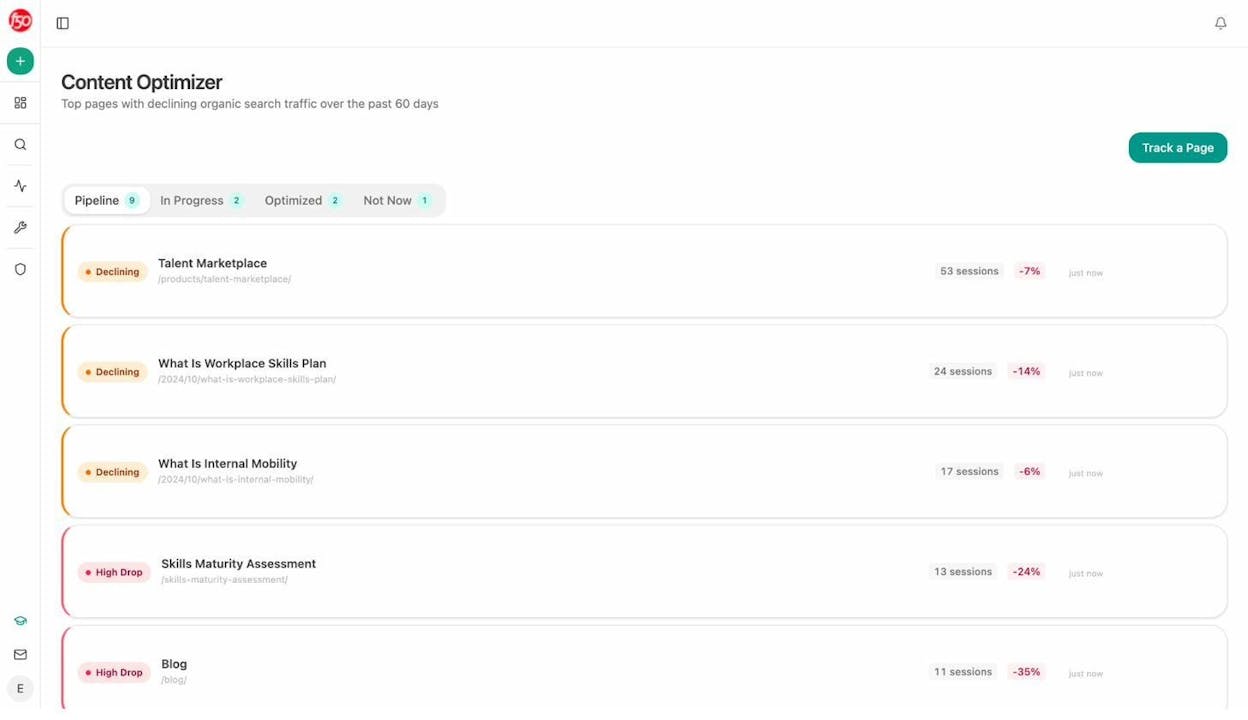
You’re not getting “make this content better” suggestions. You’re getting a marked-up rewrite with reasoning in the margin, the way a senior editor would mark up a draft.
Agents: the part most buyers don’t realize exists
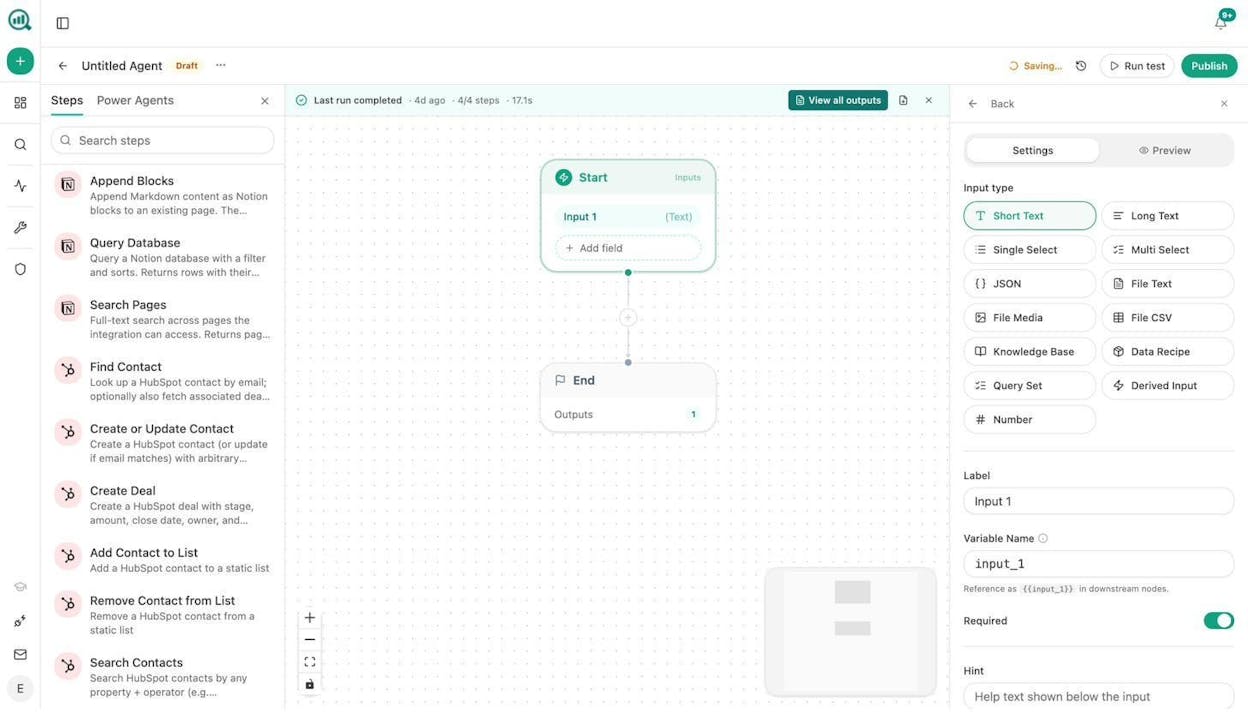
Most teams reading a GEO comparison are thinking about reporting. The Analyze AI Agent Builder is built for the layer underneath that, which is doing the work the reports point to.
It’s a programmable substrate with 180+ nodes across AI, web research, DataForSEO, Semrush, GSC, GA4, HubSpot, Notion, WordPress, Sanity, Contentful, and Mailchimp. 34 pre-built data recipes hand you the data shape you need (share-of-voice, competitor gaps, declining pages, citation magnets, prompt cluster briefs, narrative themes). Three trigger modes (manual, schedule, webhook).
What teams build with it, drawn from real customer patterns:
-
Monday board prep on autopilot. A scheduled agent runs every Monday at 7am. Pulls share-of-voice, AI traffic, new HubSpot deals, and competitor message shift. Wraps it in your brand voice. Exports a DOCX. Emails it to leadership. Replaces the 4-hour analyst chase.
-
Content refresh fleet. A weekly agent finds your declining and stale pages. For each, it scrapes the existing post, rewrites it for freshness and AEO, diffs the change, and pushes the update to WordPress if the change is substantive.
-
Crisis early-warning. Every 15 minutes, the agent checks brand mentions and news research. Anything below your sentiment threshold with above-threshold reach pings the PR team’s Slack with the source URL and a drafted response.
-
Brief-to-publish pipeline. When a brief moves to “approved” in Notion, the agent generates research, builds an outline, drafts the full piece with brand voice injected, scores it for AEO, and either publishes to WordPress or pings the writer with the gaps. No piece publishes without passing the AEO gate.
-
Monday agency client briefing pack. A scheduled agent loops over a client list, pulls exec one-pager + GSC top pages + AI visibility delta + competitor SERP movement, builds a per-client DOCX, and emails each client team.
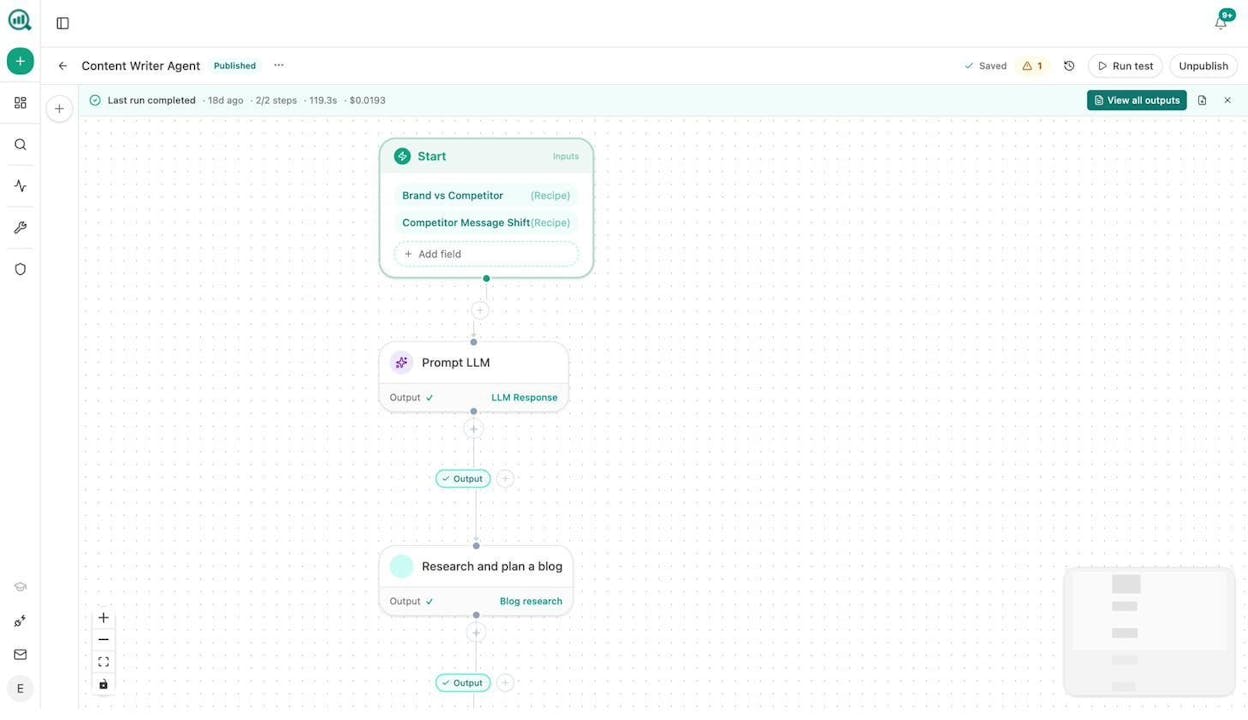
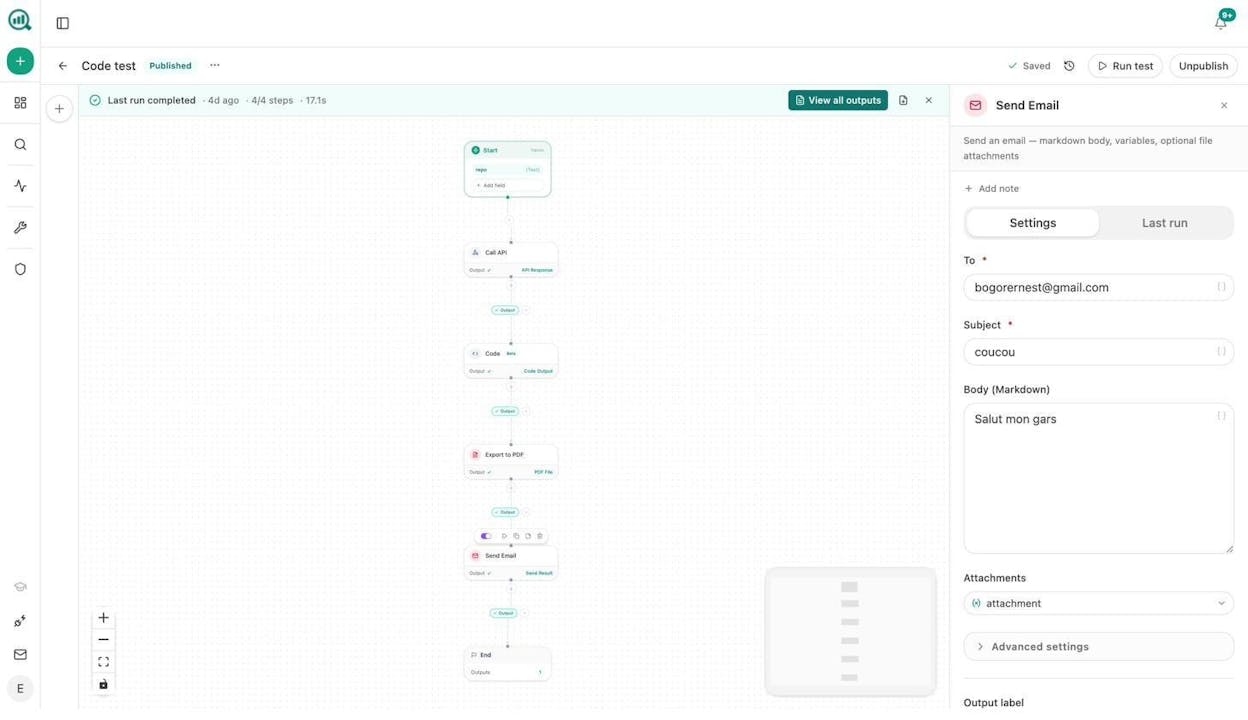
Neither AthenaHQ’s Action Center nor Profound’s Agents go this deep. Action Center is a structured checklist. Profound’s Agents draft and publish content. Analyze AI Agents replace the operations layer of a marketing team, with the visibility data already in the room. For more examples, 10 ways teams use Analyze AI covers the patterns in detail.
Perception Map and Weekly Digests
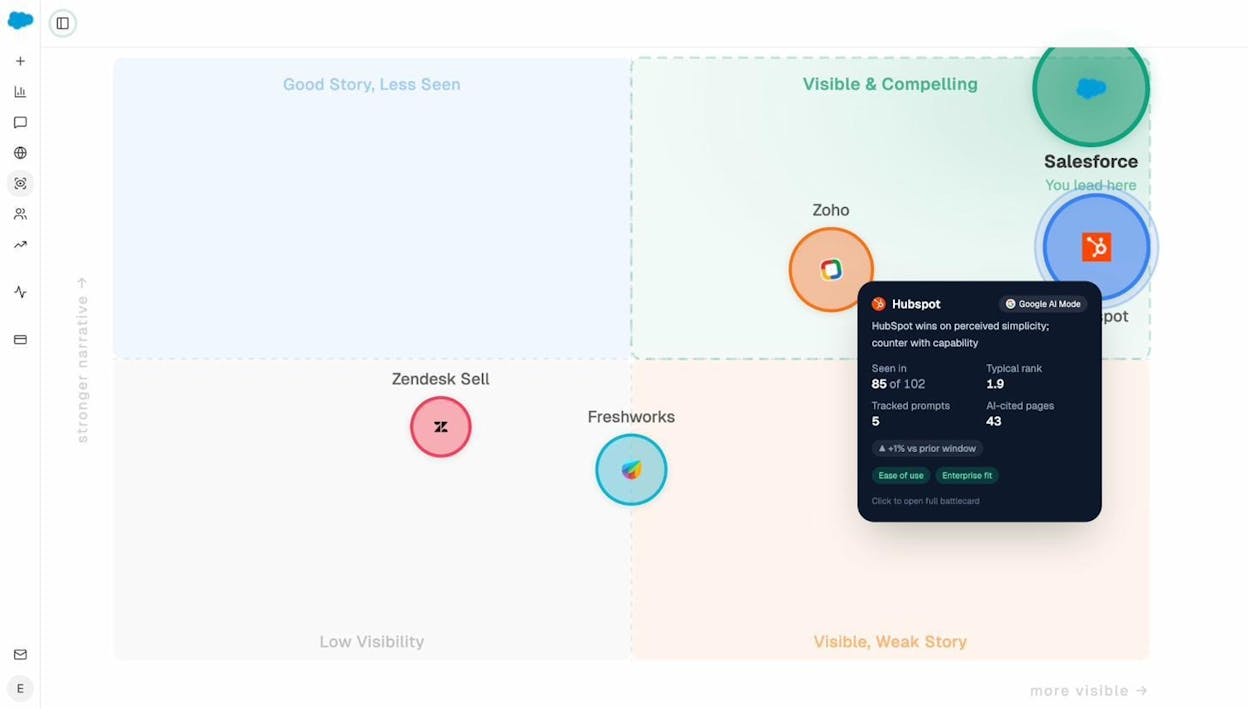
For the strategy side, the Perception Map plots every tracked brand on a 2D quadrant (presence and narrative strength). You see at a glance whether you’re a category leader, a challenger, a niche player, or losing ground.
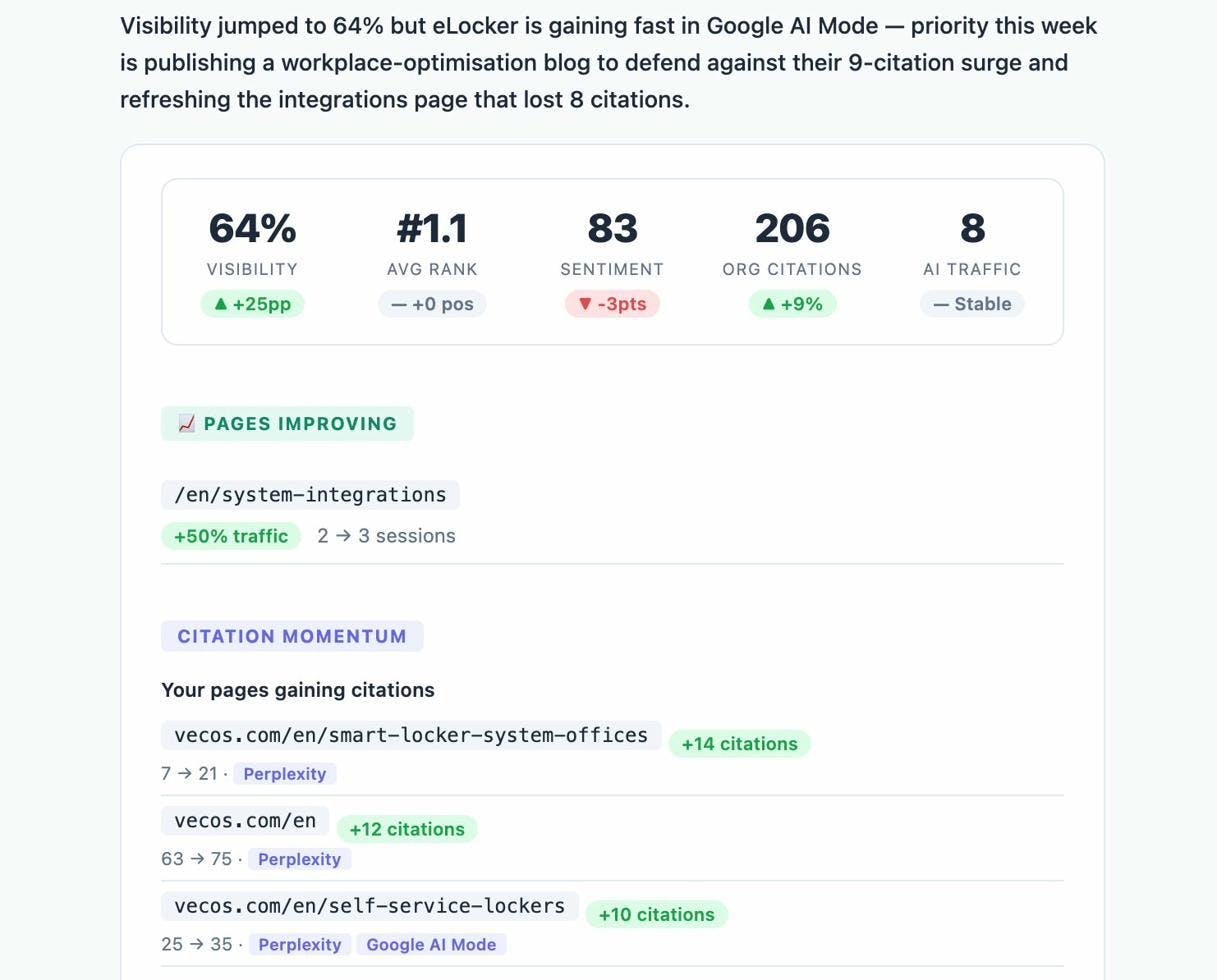
Weekly Email Digests put visibility deltas, top movers, new competitor citations, and recommended actions in your inbox. The dashboard becomes push, not pull.
How to choose between the three
If your decision is genuinely AthenaHQ vs Profound, here’s the cleanest framework:
|
Your situation |
Pick |
|---|---|
|
Single-market team, mid-market budget, action-checklist culture |
AthenaHQ. Action Center matches how you work. Budget for credit overages. |
|
Fortune 500, dedicated GEO program, SOC 2 Type II is procurement-mandatory |
Profound. Conversation Explorer and bot crawl analytics are uniquely valuable. Plan for Growth at $399 minimum. |
|
Growth-stage to mid-market team that wants visibility plus systems to act on it |
Analyze AI. Same core dashboards. Better Writer and Optimizer. Agent Builder that runs the rest of your marketing ops on schedule and on webhook. |
Most teams comparing AthenaHQ vs Profound sign for the visibility data, then discover six months in that the visibility data is the easy part. The hard part is the systems around it.
If you’re on the fence, the free tools suite (AI Visibility Checker, Keyword Generator, SERP Checker, Website Authority Checker, LLM.txt Generator) is a low-commitment way to see what the platform produces. Or book a 15-minute demo and we’ll walk you through the first agent your team would build.

Ernest

Ibrahim


![50 GEO Statistics From Tracking 83,670 AI Citations [2026 Data]](/_next/image?url=https%3A%2F%2Fwww.datocms-assets.com%2F164164%2F1779314907-blobid0.png&w=3840&q=75)


