



Summarize this blog post with:


In this article, you’ll learn how to run an AI search competitor analysis that shows you where you’re losing ground in ChatGPT, Perplexity, Google AI Mode, and Copilot, and what to do to close those gaps. You’ll find the competitors AI puts you up against, pick the prompts that define your category, benchmark visibility and citations across engines, read how AI frames each brand, find the pages where competitors win and you don’t, and turn the findings into an action plan your team can run quarterly.
Table of Contents
What AI visibility competition actually is
Traditional SEO competitor analysis figures out who is outranking you for the keywords you care about, and why. AI search competitor analysis has the same job, but the surface area is wider. In AI answers, three things matter at once.
-
Whether you appear at all. ChatGPT might answer “best CRM for SaaS startups” with a list of five tools. If you’re not one of them, you’re invisible.
-
How you appear. AI describes you. The adjectives, ordering, and framing decide whether you sound like the safe choice, the cheap choice, or an afterthought.
-
Who AI cites about you. Most AI answers are stitched from third-party sources. The pages AI trusts to talk about your category are now part of your competitive set.
This is why a “rank #1 in Google” mindset misses the point. Two competitors can rank below you in Google and still win the AI answer because they have a stronger citation footprint or a product page AI prefers to summarize.
Step 1. Identify your AI search competitors
You have three types of AI search competitors to find.
-
Co-mentioned competitors. Brands AI lists alongside you when answering category questions (“best X for Y”). Usually the ones you already know.
-
Replacement competitors. Brands AI cites or recommends instead of you for prompts your buyers actually type. The dangerous ones, because you may not know about them yet.
-
Comparison competitors. Brands your audience asks about next to yours (“Brand A vs Brand B”). The ones you have to beat at the bottom of the funnel.
The fastest way to surface all three is to feed your brand and a handful of prompts into a tracking tool. In Analyze AI, the Competitor Intelligence view ranks each competitor by how many AI mentions they earned in the same prompt set as you, and the Suggested competitors panel surfaces brands AI keeps mentioning that you have not yet added.
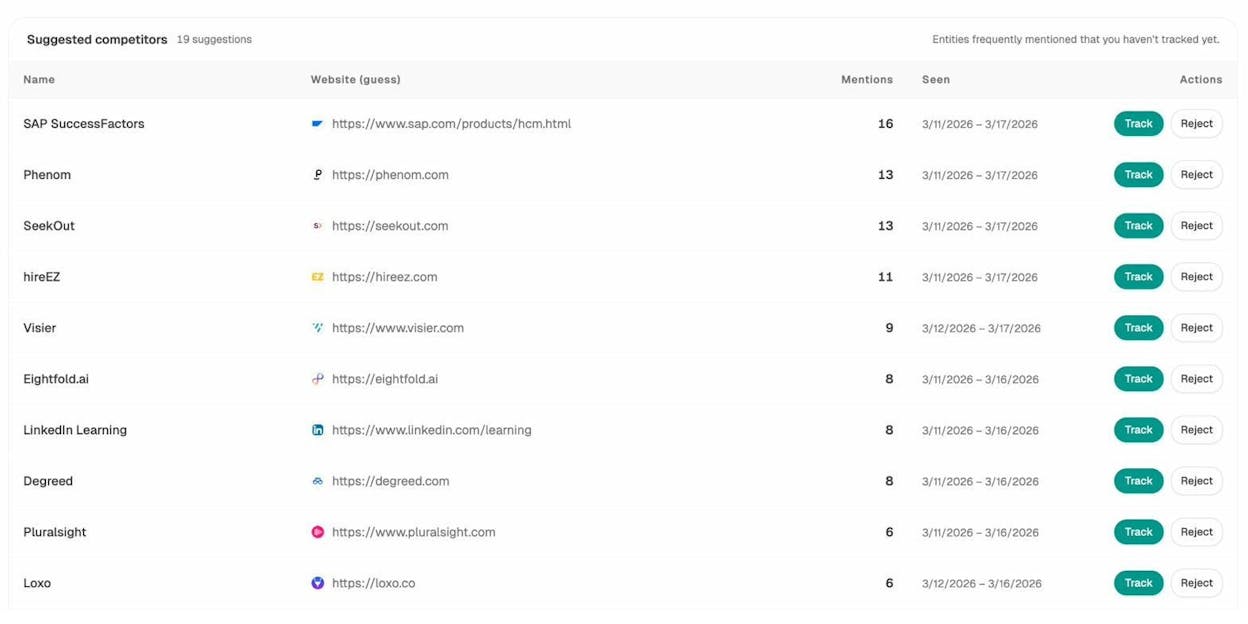
When a brand appears here with a meaningful mention count and a recent “last seen” timestamp, it belongs in the analysis. Track the ones that show up across multiple prompts, not the one-offs.
If you’d rather start from a known competitor list, you can add brands manually. Click Add Competitor, drop in the name and domain, and Analyze AI starts tracking their mentions and citations alongside yours.
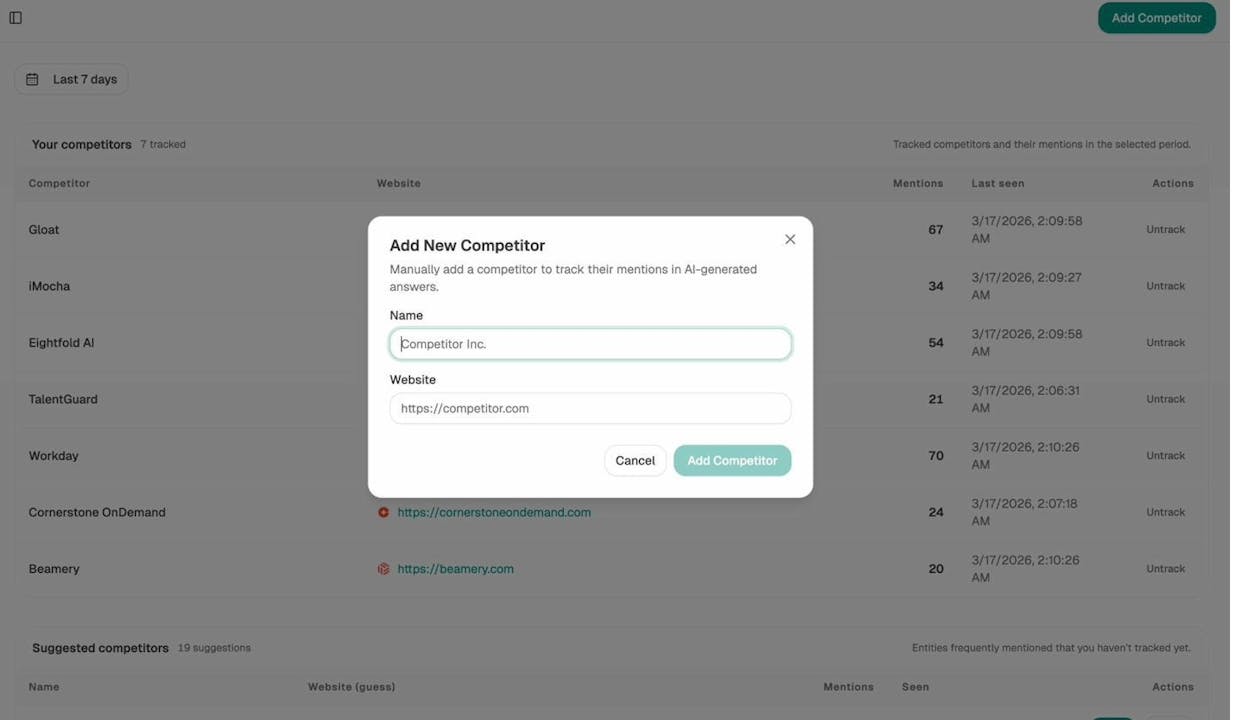
A useful sanity check is to run a few “vs” prompts manually. Type “Brand A vs Brand B” or “alternatives to Brand A” into ChatGPT and Perplexity and note who keeps surfacing. Add anyone you missed. For a deeper walkthrough on identifying rivals across both Google and AI search, see our guide on SEO competitor analysis with AI search rivals.
Step 2. Choose the prompts that define your category
This is the step Ahrefs and most other guides skip past, and it’s the most important one. Your AI visibility is only as meaningful as the prompts you measure it against. A good prompt set has three layers.
Category prompts. “Best X” or “top Y for Z” prompts buyers in your category type. (“best CRM for B2B SaaS,” “top project management tools for remote teams.”) These tell you whether you show up in the consideration set.
Use-case prompts. Prompts that name a job to be done, not a category. (“how to track customer churn,” “tools to automate SDR outreach.”) Less competitive and easier to win.
Comparison and alternative prompts. “Brand A vs Brand B,” “alternatives to Brand A,” “Brand A pricing.” Bottom-of-funnel and pull buyers close to a decision.
Aim for an even mix, weighted toward the prompts your sales team actually hears in calls. Talk to a sales rep for ten minutes. They will give you a better prompt list than any keyword tool will.
Once you have the list, drop the prompts into Prompt Tracking. Analyze AI runs each one across ChatGPT, Perplexity, and Google AI Mode on a daily cadence and records visibility, sentiment, ranking position, and which competitors got mentioned alongside you.
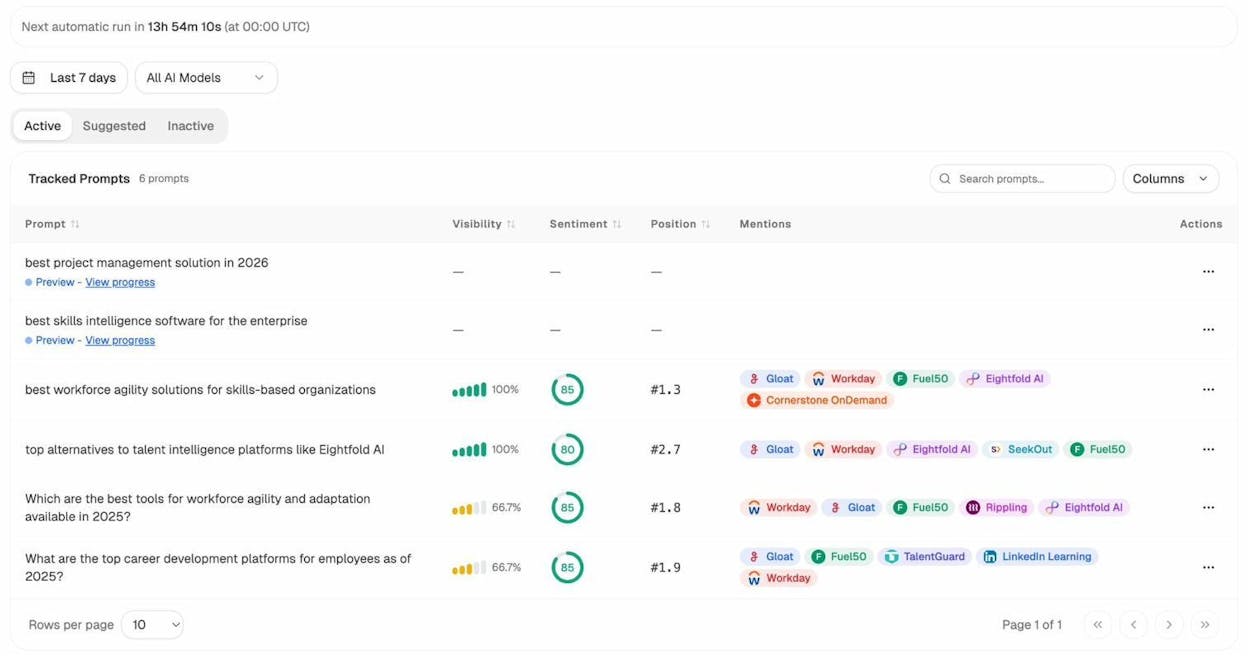
Two columns to focus on. Visibility tells you how often you show up across the daily runs. If you’re at 0% on a category prompt where four competitors hit 100%, that is your most urgent gap. Mentions tells you which brands actually show up in each prompt’s answers. You’ll often spot a competitor you didn’t know was in your space.
If you don’t yet have prompts ready to track, Prompt Discovery suggests prompts based on what your audience is already asking AI about your category, which saves you the manual work of building a list from scratch.
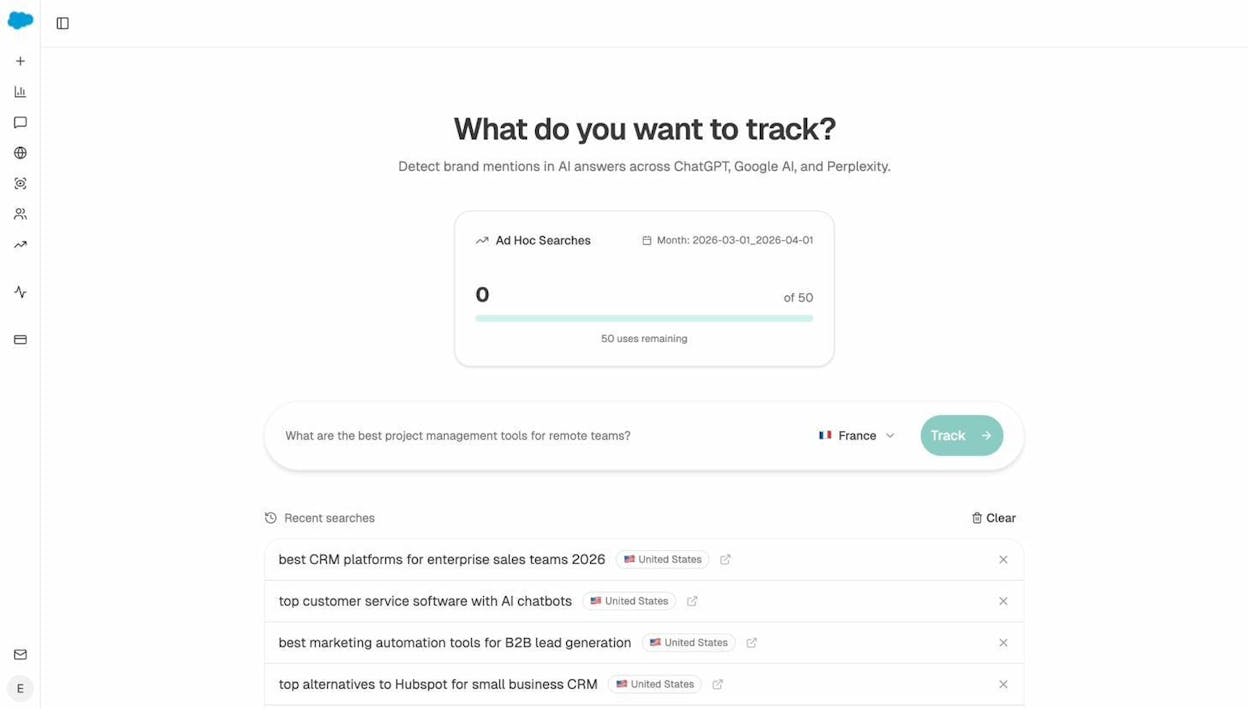
You can also run quick one-off checks on prompts you’re considering. The Ad Hoc Prompt Searches tool runs a single prompt across the engines on demand so you can see who shows up before you commit it to your tracked list.
A good prompt set is somewhere between 20 and 50 prompts. More than that and you spend your time reviewing data instead of acting on it.
Step 3. Benchmark visibility, citations, and sentiment
Now you have your competitor list and your prompt list. The next step is recording where every brand stands today, so you can see what moves over time.
Open the AI Visibility Tracking overview. The top of the dashboard summarizes your current standing in plain language, including which engine is your strongest, which engine is the gap, and how far ahead or behind your top competitor you are.
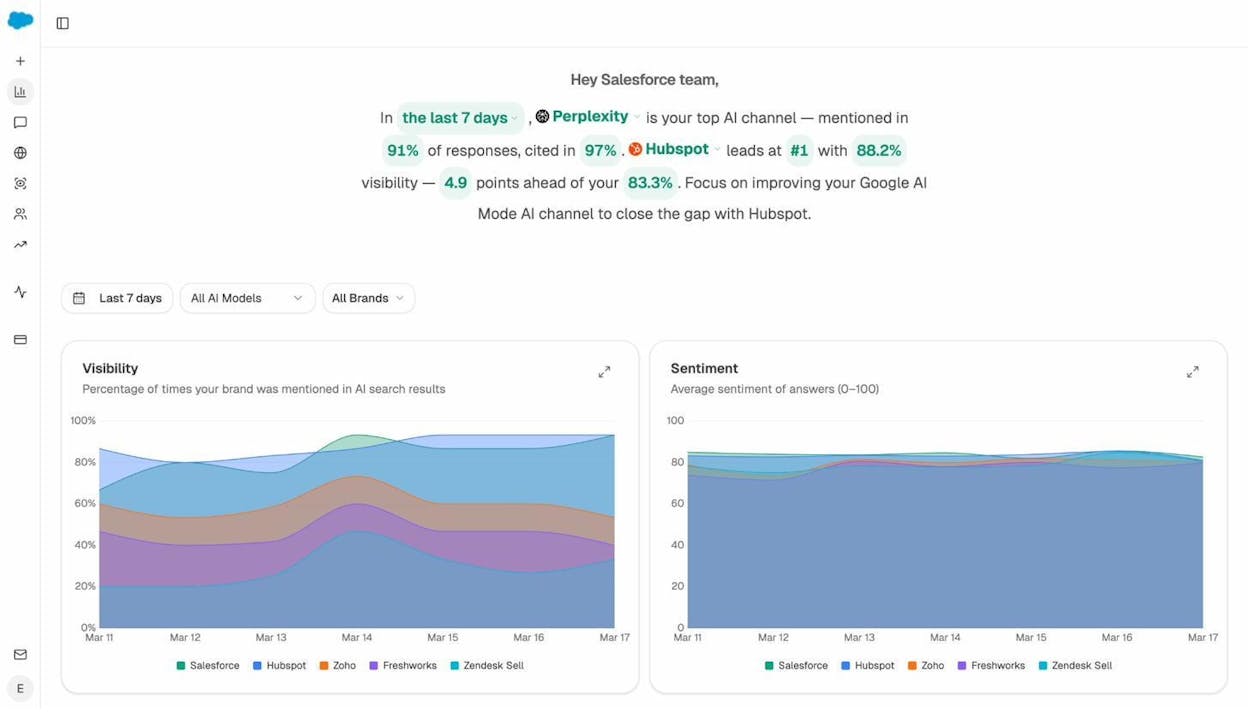
Five metrics are worth recording for each brand.
|
Metric |
What it tells you |
|---|---|
|
Visibility |
How often the brand appears in AI answers across your tracked prompts |
|
Citations |
How often the brand’s website is cited as a source in AI answers |
|
Average position |
Where the brand tends to appear inside AI answers (1st, 2nd, 5th in the list) |
|
Sentiment |
Whether the brand is described positively, neutrally, or negatively |
|
Engine breakdown |
How visibility differs across ChatGPT, Perplexity, Google AI Mode, and Copilot |
Engine breakdown is where most teams find their first surprise. A brand can lead on Perplexity and lose on Google AI Mode because Perplexity leans heavily on third-party reviews and Google AI Mode leans on traditional ranking signals. Track each engine separately or you’ll average over a real story.
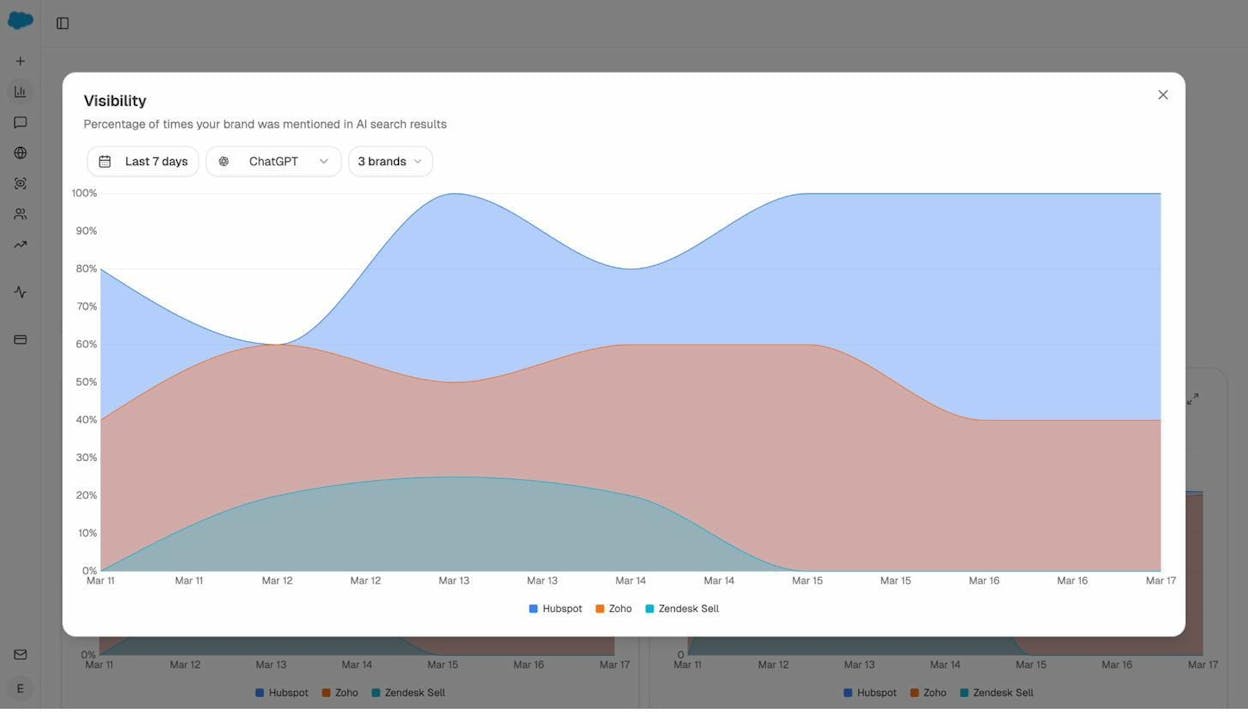
Save these numbers in a spreadsheet alongside the date. Repeat the benchmark in 30 days and again in 90 days, so you have a baseline.
Step 4. Read how AI describes each brand
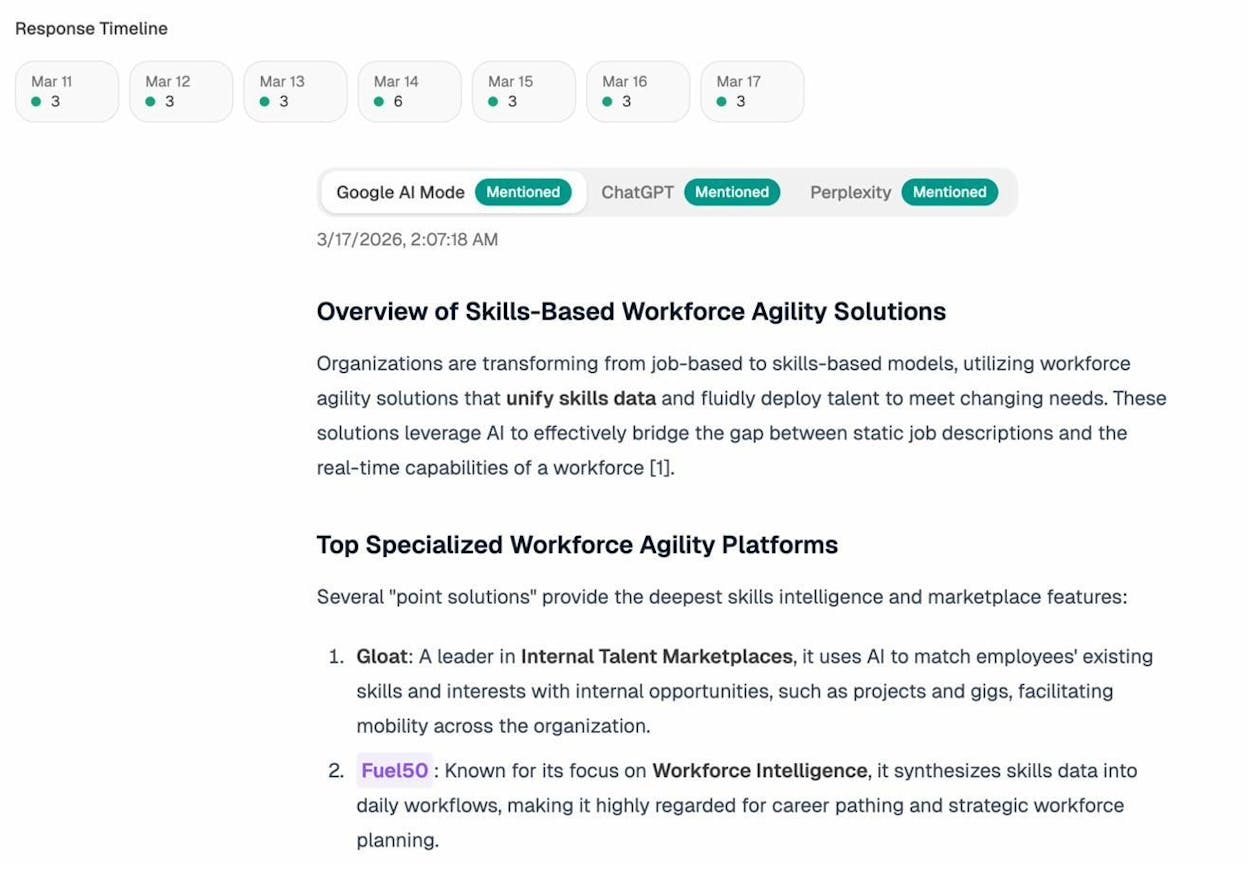
Numbers tell you whether you appear. Reading the AI answers tells you how, and that is where most of the strategic insight lives. For each tracked prompt, open the AI response and look at four things.
Position in the answer. Are you first, third, or buried at the bottom of a list? Position correlates with how much attention buyers give you when they skim.
Length and depth. Some brands get a one-line mention. Others get a full paragraph with features, pricing, and use cases. Depth signals authority.
Adjectives and framing. Does AI describe you as the leader, the affordable option, the niche tool, or the legacy player? These framings come from somewhere (usually third-party content), and you can influence them.
Sentiment. Positive, neutral, or negative tone. Negative framing in AI answers compounds, because future model updates train on the same content.
For a higher-altitude view of how each competitor is positioned across all your prompts at once, the Perception Map plots every brand on two axes. The horizontal axis is visibility (how often AI mentions the brand). The vertical axis is narrative strength (how distinctive and positive the AI’s framing is).
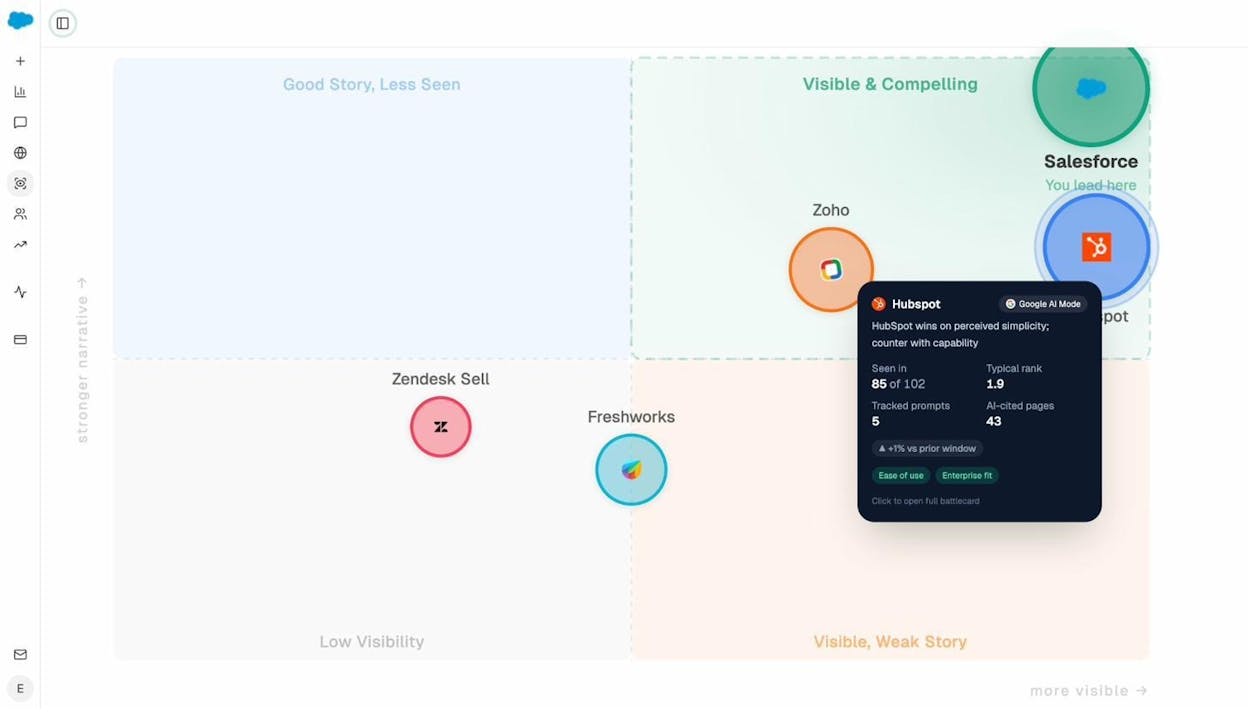
The four quadrants give you a quick read on each brand. Visible & Compelling brands are mentioned often and framed well. They’re the ones to beat. Good Story, Less Seen brands are framed favorably when mentioned but rarely surface. They’re a step from breaking out. Visible, Weak Story brands are mentioned often but described generically. You can outflank them with a sharper narrative. Low Visibility brands rarely surface and are not yet a threat, worth monitoring.
For a head-to-head read on a single competitor, the AI Battlecards view consolidates everything AI says about that brand into themes, distinctiveness scores, and a recommended counter-positioning angle.
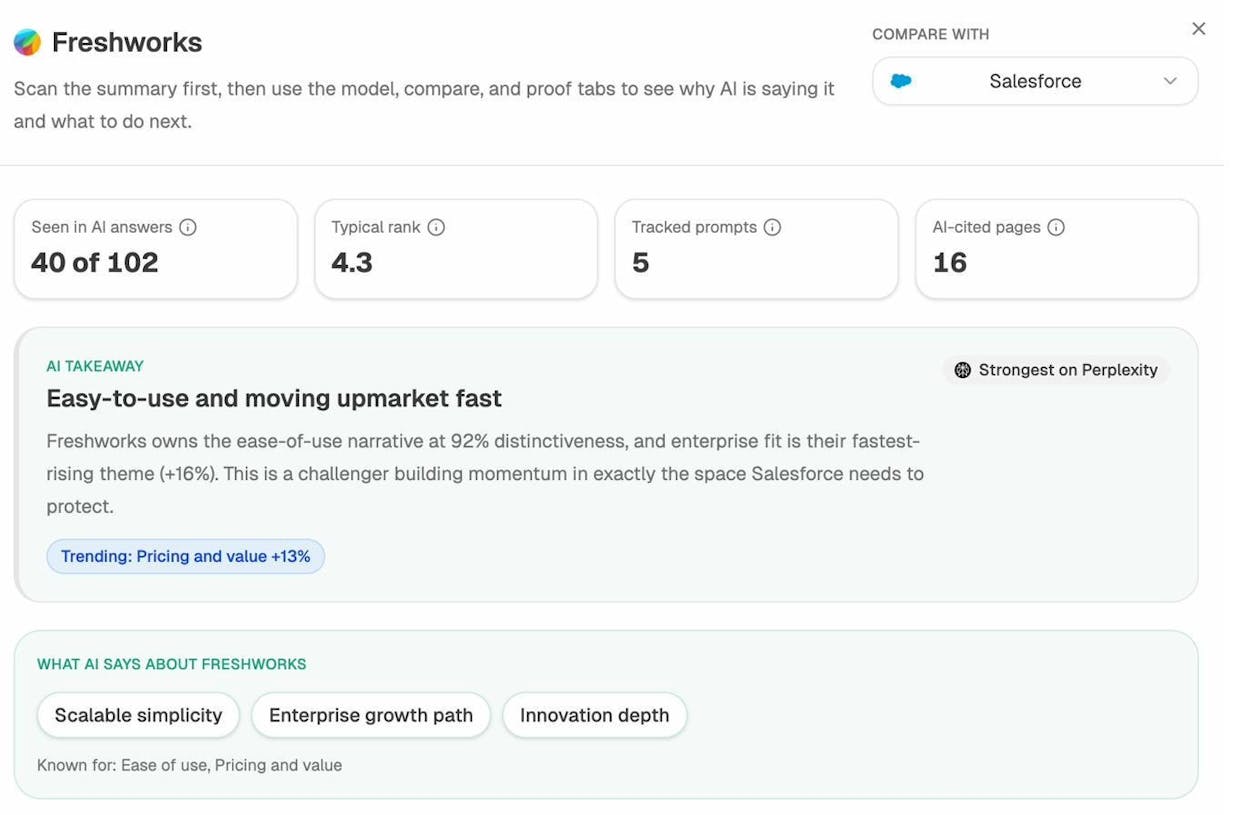
The takeaway from this step is qualitative, not numeric. Write down the three or four words AI uses most often to describe each major competitor, and the three or four words it uses for you. The gap between those two lists is your positioning brief.
Step 5. Find the citation gaps where competitors win and you don’t
Most AI answers cite outside sources. If a competitor’s website (or a third-party article that mentions them) is in those sources and yours isn’t, you have a citation gap.
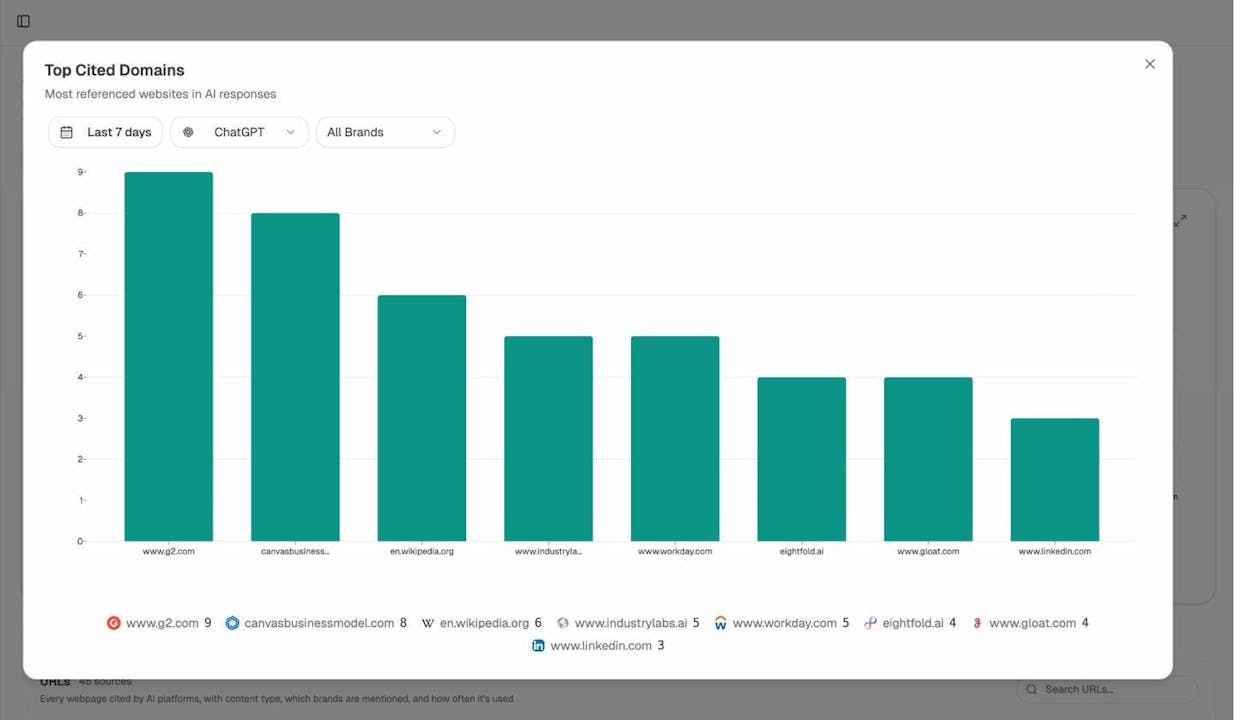
The Citation Analytics view shows you every URL AI cited when answering prompts in your category, broken down by content type and by domain.
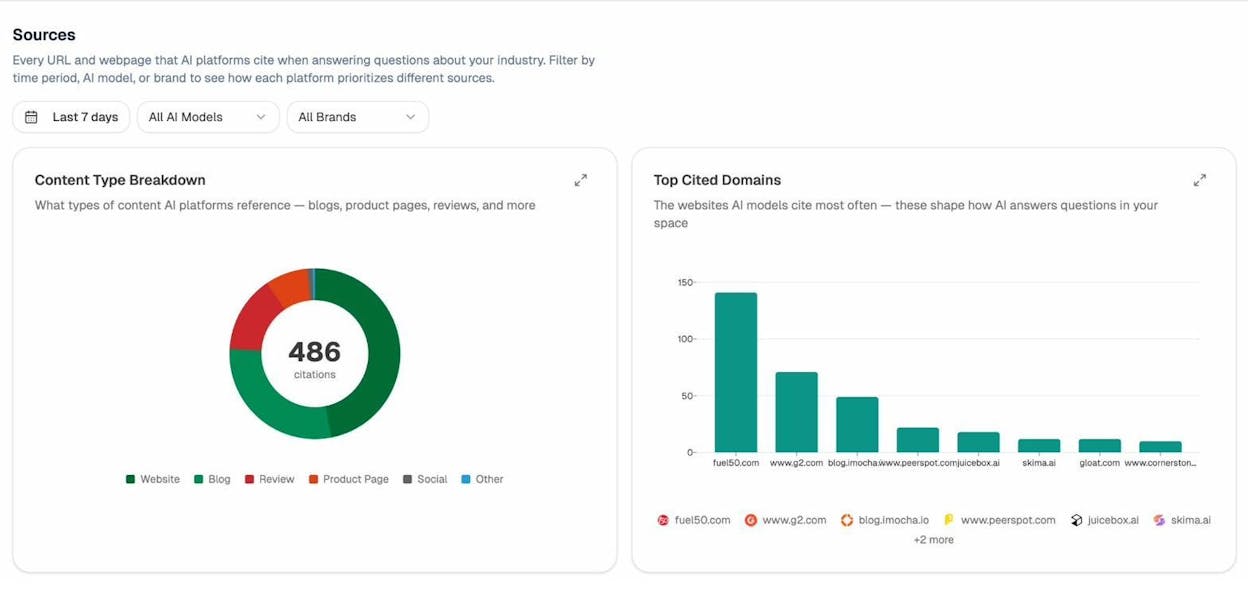
Two patterns to look for.
Domain gaps. Compare your domain’s citation count to your competitors’. If a competitor is being cited 70 times for prompts in your category and you’re being cited 12 times, the gap is structural and probably ties back to the volume and depth of content they publish.
Content type gaps. AI answers in some categories lean on blog posts, in others on review sites or product pages. If your competitors are being cited mostly through G2 and Reddit threads and you have a thin presence on those platforms, that is your gap, regardless of how much you publish on your own blog.
Drilling into the Chats view shows you the actual AI responses, the citations attached to each, and which brands appeared in each conversation. This is where you spot prompts where a competitor is being cited heavily and you’re not in the answer at all, which is your fastest-win list.
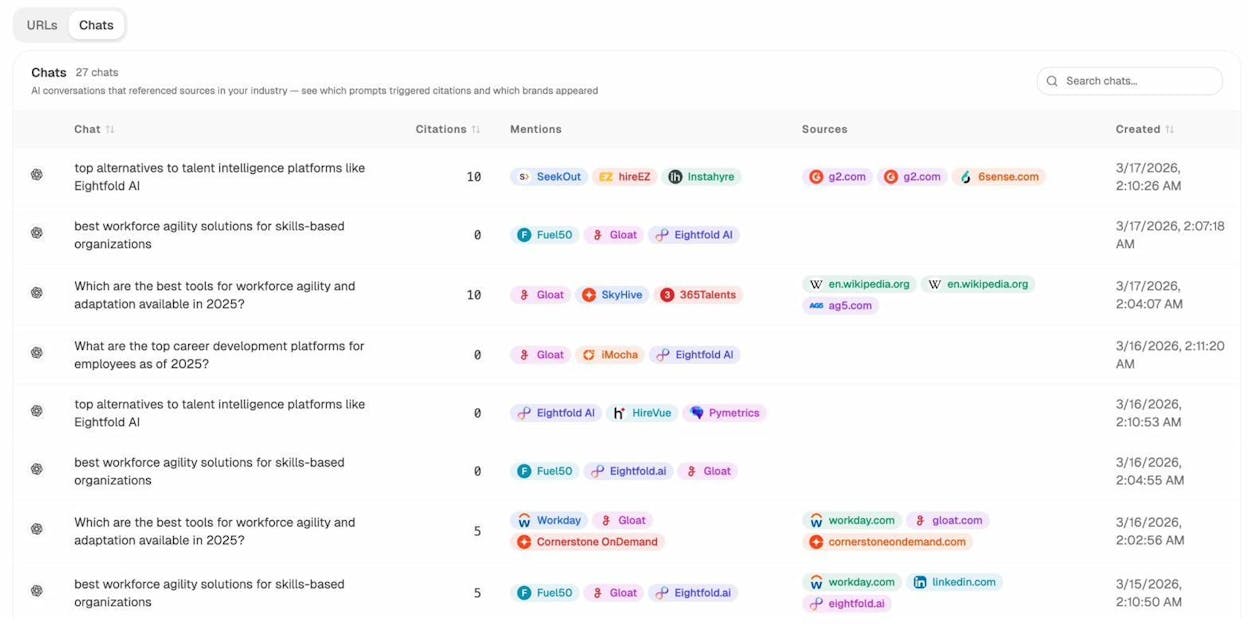
For each gap you find, write down two things. The first is the prompt where the gap shows up. The second is what type of content was cited (a third-party review, a blog post, a product page, a Reddit thread). Those two pieces of information tell you exactly what to build or earn.
To check whether your own pages have any broken paths or technical issues that might keep them out of citations, run them through the free broken link checker and the website authority checker. AI engines tend to favor pages on healthier domains, so cleaning up the basics still matters.
Step 6. Find the pages on your own site that already work in AI search
This step needs AI traffic data, and it’s where you find compounding wins.
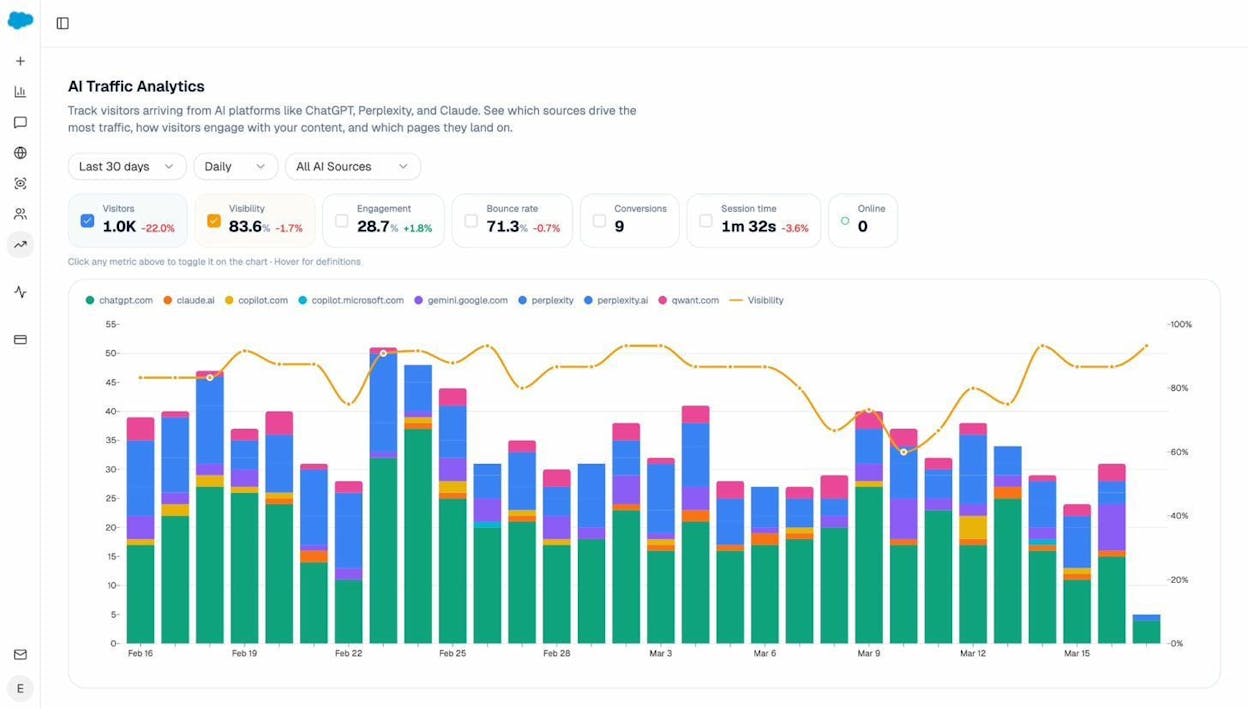
Most teams treat AI search as a black box. The AI Traffic Analytics view turns it into a normal analytics report, showing every visit referred from ChatGPT, Perplexity, Claude, Copilot, and Gemini, what page they landed on, and whether they engaged.
The most useful report inside this view is the Landing Pages table. It ranks every page on your site by how much AI traffic it has pulled and how often each page has been cited.
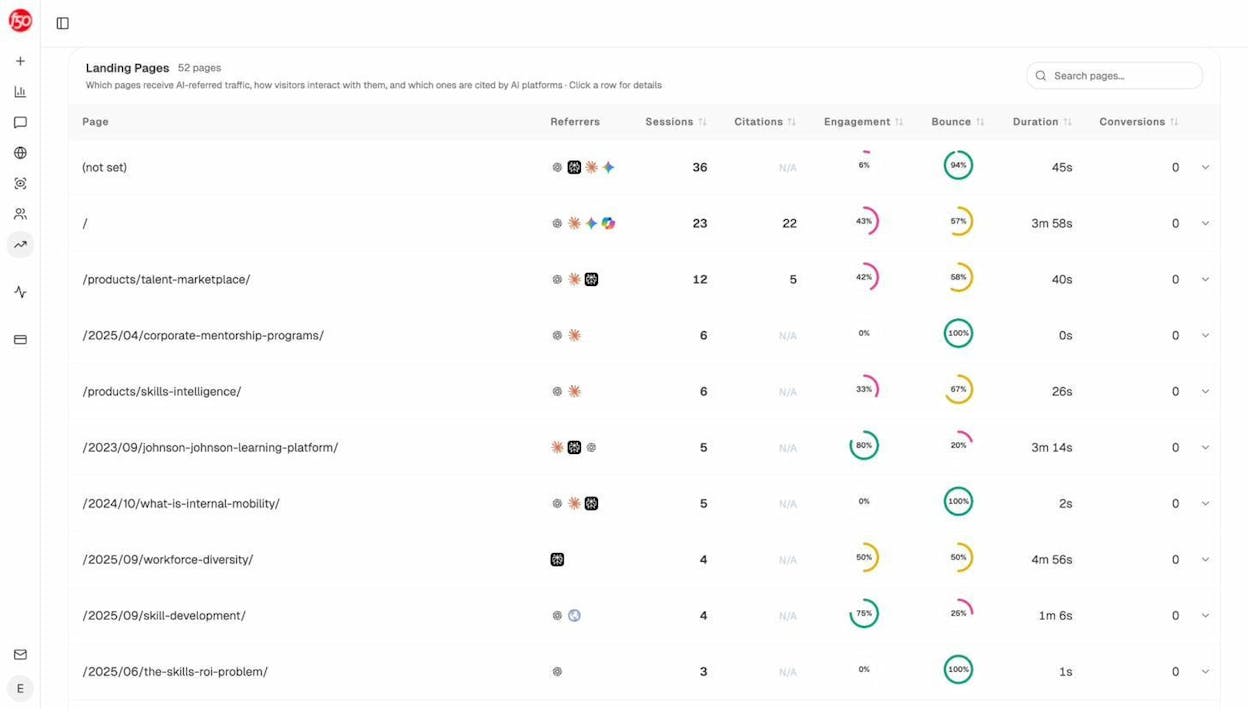
Two patterns to look for. Pages that AI keeps citing. These are working. The format, structure, and angle on those pages is something AI trusts. Figure out what they have in common (a comparison table, a clear “what is X” definition at the top, a specific dataset) and reuse the pattern on adjacent topics. Pages that get traffic but bounce hard. AI is sending visitors who arrived expecting one thing and got another. The page is misaligned with the prompt. Rewrite the intro, tighten the H2s, or break the page into two more focused pages.
The Recent AI Visitors stream shows you individual sessions, including the prompt category they likely came from based on the engine and the landing page. Useful for sanity-checking the table.

Once you’ve found the pages that already work, the play is simple. Find adjacent topics where competitors win and apply the same structure to a new page targeting that topic.
Step 7. Audit how each brand is mentioned across the wider web
Brand web mentions correlate strongly with AI visibility. AI engines are trained on the open web and grounded in search results, so the more high-quality places you appear, the more often AI has reason to bring you up. Your competitive analysis cannot stop at your own site.
Three places matter most.
Industry review sites. G2, Capterra, TrustRadius, Product Hunt, and any vertical-specific equivalents. Check each competitor’s review count, average rating, and the language reviewers use. AI cites these heavily.
Independent blogs and listicles. Search “best X for Y” in Google for your category and note which sources rank. Then check whether each major competitor is mentioned in each. The pattern of who-gets-mentioned-where often explains AI rankings better than any single SEO metric.
Reddit and community discussions. Especially relevant for ChatGPT, which leans heavily on Reddit. Search for your category subreddit and see which brands are recommended in pinned posts and high-upvote threads.
To check whether the gap is structural, run a quick traffic check on the top sources. The free website traffic checker and the SERP checker show you whether the sources citing your competitors are high-traffic, high-ranking pages, or whether AI is leaning on lower-quality citations you can outrank with one solid piece of content.
Make a list of every source that cites a competitor and not you. Sort it by traffic. The top is your digital PR backlog.
Step 8. Turn findings into a prioritized action plan
By this point, you have four lists.
-
Prompts where competitors appear and you don’t
-
Pages on competitor sites that AI cites heavily and you have nothing comparable
-
Sources that mention competitors but not you
-
Pages on your own site that already work, which you can replicate
Sort each list by impact. Impact in AI search is a function of two things, namely how often the prompt appears in your tracked set, and how close the prompt is to the buying decision. A “best CRM” prompt with daily volume and a clear bottom-of-funnel signal beats a long-tail informational prompt with low volume.
Then split the work into three buckets, because each one needs a different team.
|
Bucket |
What it covers |
Who runs it |
|---|---|---|
|
Fix |
Existing pages bouncing AI traffic, missing citations, or framing your brand poorly |
Content/SEO |
|
Build |
New pages targeting prompts where competitors lead and you’re absent |
Content/SEO |
|
Influence |
Earning mentions on third-party sources that cite competitors more than you |
PR/partnerships |
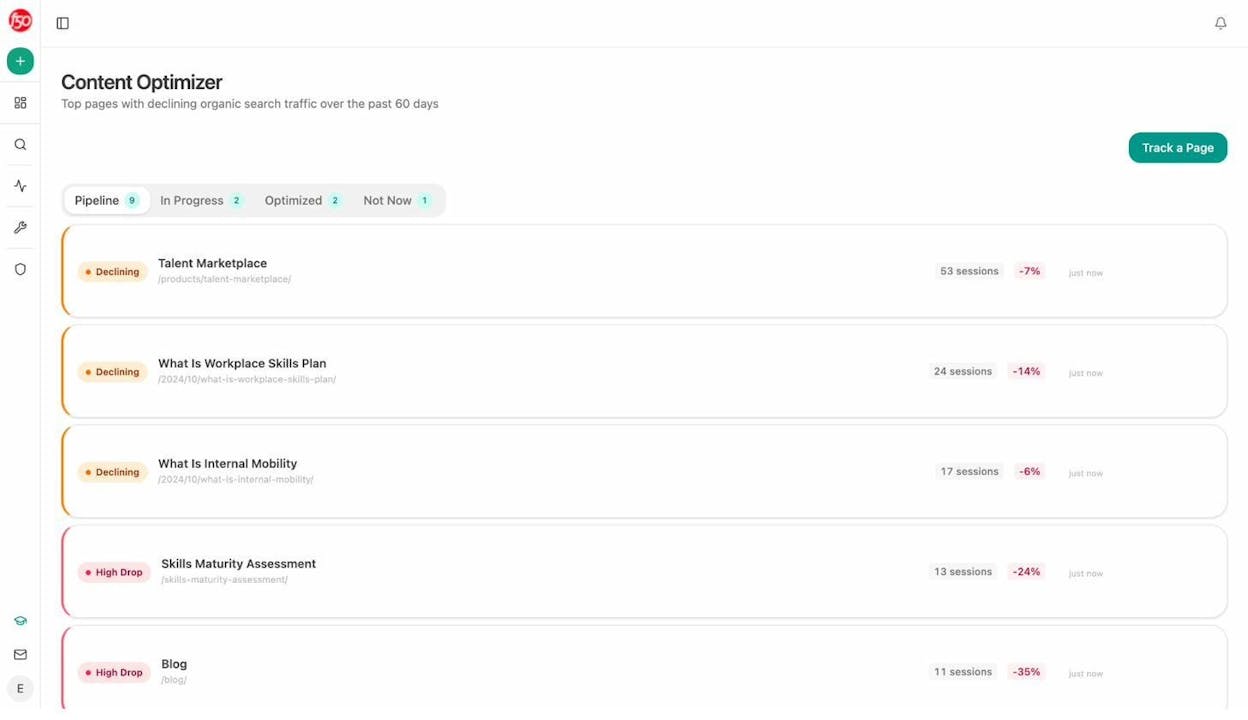
For each “Build” item, the AI Content Writer takes a prompt, surfaces the AI gaps for that topic, and drafts an outline based on the angles competitors are missing. For each “Fix” item, the AI Content Optimizer scores your existing page on argument, flow, clarity, and polish, and produces an editorial pass with comments.
The point of splitting the work is that “AI visibility” is not a content problem alone. Treat it as one and you’ll write your way into a plateau, because the citation footprint will not move without earned mentions.
For more on earning brand mentions and citations once you’ve identified gaps, see our guides on how to get mentioned in AI search, how to rank on Perplexity, and how to rank on ChatGPT.
Make this a recurring workflow, not a one-time audit
AI visibility moves week to week. A model update, a competitor’s PR push, a new G2 review wave, any of these can shift your standing inside ten days. The teams that win in AI search treat the analysis as a habit. Run a full version of the steps above once a quarter. Run a lighter version every Monday by checking what changed since last week, who gained, who lost, and what triggered it.
Analyze AI sends a weekly email digest that does the diff for you, so you don’t have to log in every week to spot the change. It surfaces the pages gaining and losing citations, the prompts where your visibility moved, and the priority action for the coming week.
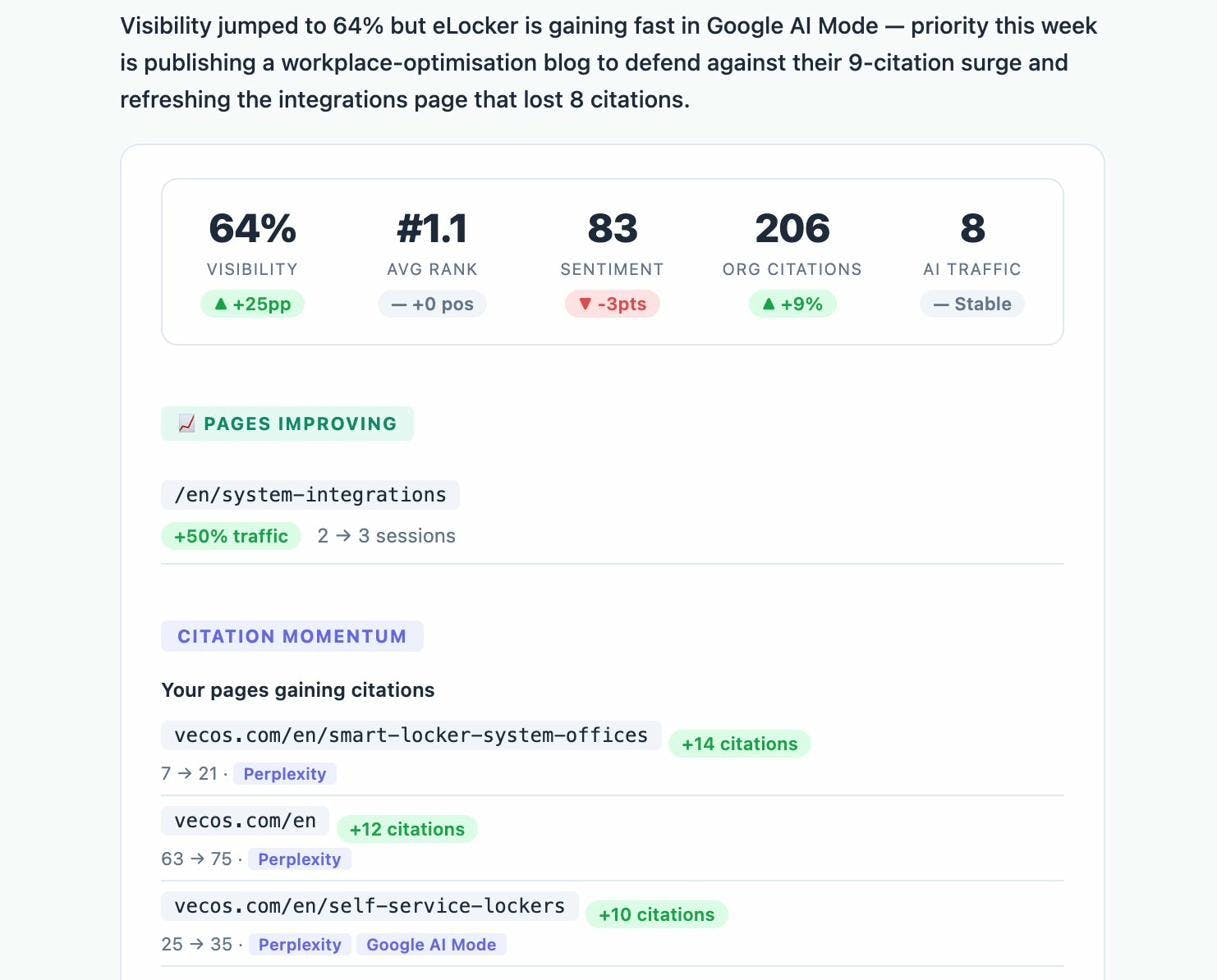
When something moves, you’ll know within seven days, and you can act before it compounds.
Final thoughts
AI search competitor analysis is not a different discipline from SEO competitor analysis. It is the same discipline applied to a second organic channel that uses different signals. The brands that win in both will be the ones with sharp positioning, deep content, and a citation footprint that earns them their way into the answer.
The seven steps above are designed to give you that footprint methodically. Identify the right competitors, track the right prompts, benchmark the right metrics, read the qualitative layer, find the gaps, double down on what works, and turn it into a plan your team runs quarterly.
The difference between brands that lead in AI search and brands that don’t is rarely talent. It is cadence.
If you want to put a tracker behind every step in this guide, you can start a free trial of Analyze AI and have your first benchmark in under a day.

Ernest

Ibrahim


