



Summarize this blog post with:


In this article, you’ll learn nine content research tactics that move articles from forgettable to cited. Each tip has a clear input, a process, and an output you can drop into your draft. The goal is a research workflow that reliably produces information your competitors don’t have, framed in a way readers and AI engines find useful.
Table of Contents
1. Pick a topic that can actually move the business
Most “bad” articles started life as bad topics. Before you research the topic, research whether the topic is worth your time.
A useful topic does three things at the same time. It matches a real demand signal (people are searching for it or asking AI engines about it). It maps to a buyer your business can actually serve. And it has a path to ranking, given your domain authority and the competition.
Here is a fast filter you can apply.
|
Filter |
What you’re checking |
Tool |
|---|---|---|
|
Demand |
Is anyone searching or prompting for this? |
Keyword Generator, Google Autocomplete, Prompt Discovery |
|
Difficulty |
Can we realistically rank for it? |
|
|
Fit |
Does it map to what our product solves? |
Customer interviews, sales transcripts |
|
AI Visibility |
Are AI engines answering questions in this cluster? |
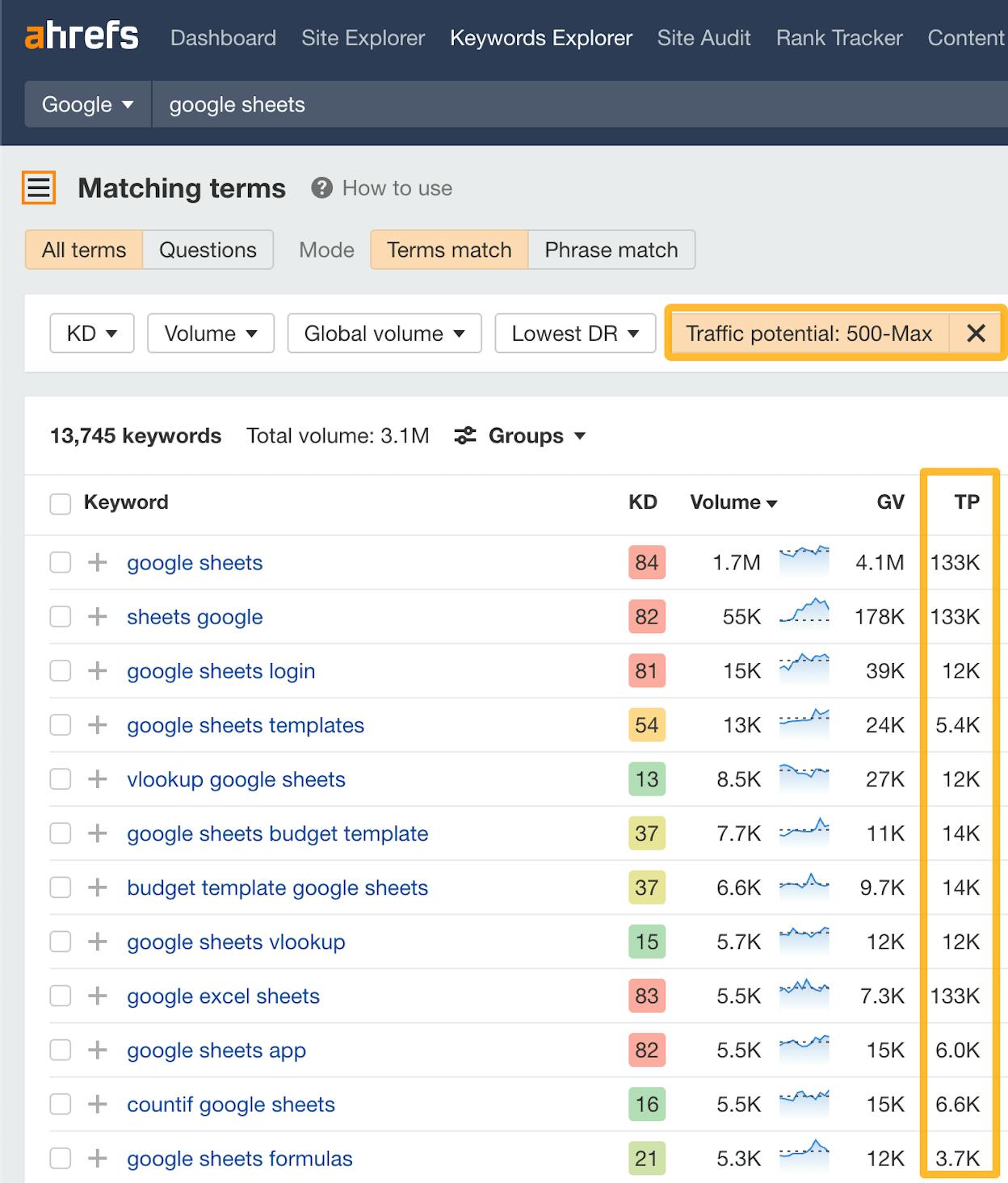
For traditional keyword research, start with one broad seed term. Drop it into Ahrefs Keywords Explorer or our free Keyword Generator to pull related queries, then filter for traffic potential and intent. The output is a shortlist of “parent topics” worth covering.
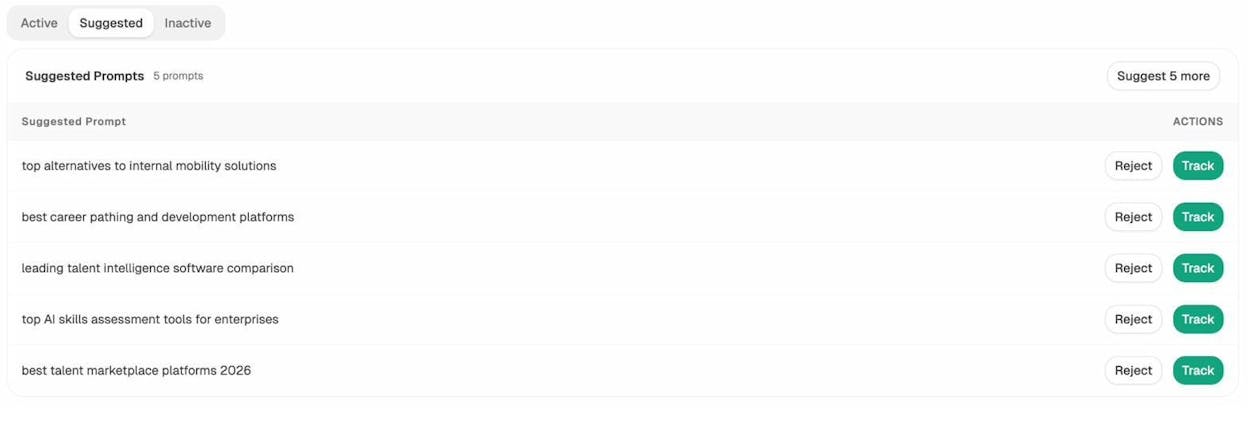
For AI search, the equivalent is finding prompts your buyers run on ChatGPT, Perplexity, Claude, and Gemini. Inside Analyze AI, the Prompt Discovery feature surfaces prompts in your space you aren’t tracking yet, with mention counts and the engines they appear on.
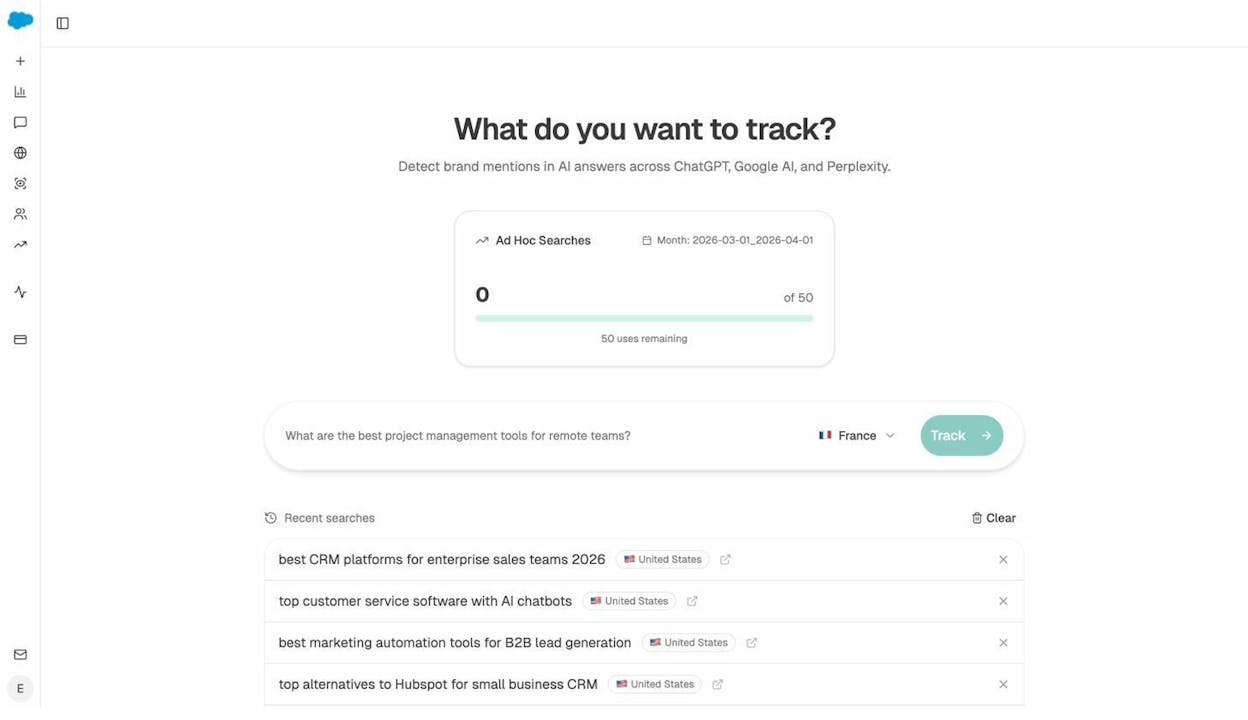
You can also test individual prompts with Ad Hoc Searches before committing to track them. This is useful when you have a hunch about a phrasing your buyer uses but want confirmation before building a full topic cluster around it.
A good topic shows search volume, prompt activity, and a clear connection to a problem your product solves. If any of those three is weak, pick another topic.
2. Map the search intent and the answer intent
Search intent tells you what someone wants to find. Answer intent tells you what AI engines have decided is the right format for that wanting. You need both.
Search intent breaks down into three things. The first is content type, meaning is this a blog post, a tool, a product page, or a video. The second is content format, meaning a how-to, a listicle, a comparison, a definition. The third is angle, meaning is the searcher a beginner, a practitioner, or a decision-maker.
You read these signals from the SERP itself. If the top ten results are all listicles, Google has decided listicles win this query. If they are all video carousels, your text article will struggle no matter how good it is.
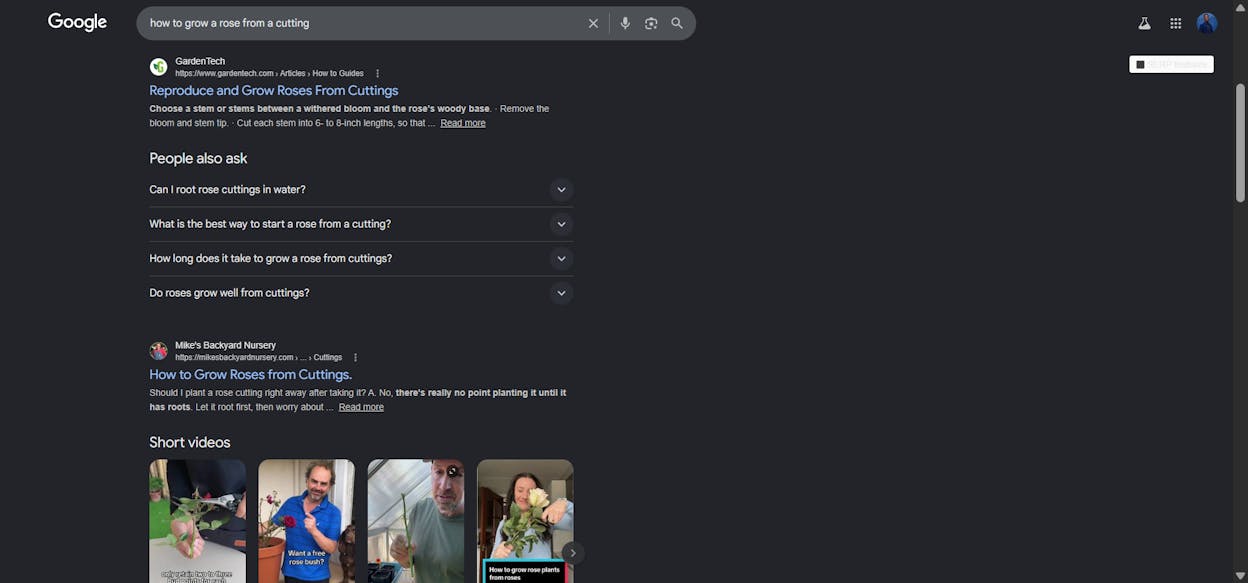
People Also Ask boxes and “related searches” tell you which sub-questions you need to address inside the article. Treat them as a checklist.
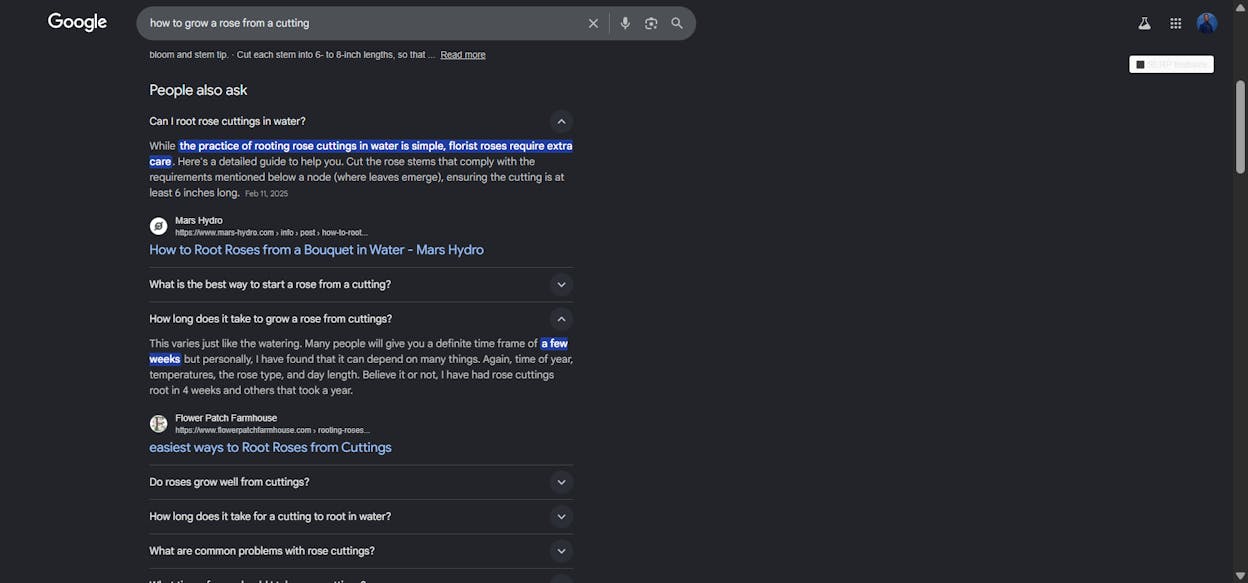
Now layer in answer intent. When someone asks ChatGPT or Perplexity the same question, what kind of source does the engine reach for? Is it product pages, third-party reviews, blog posts, or documentation? You can see this directly in Analyze AI’s Sources dashboard, which shows the content type breakdown of every URL AI engines cite in your industry.
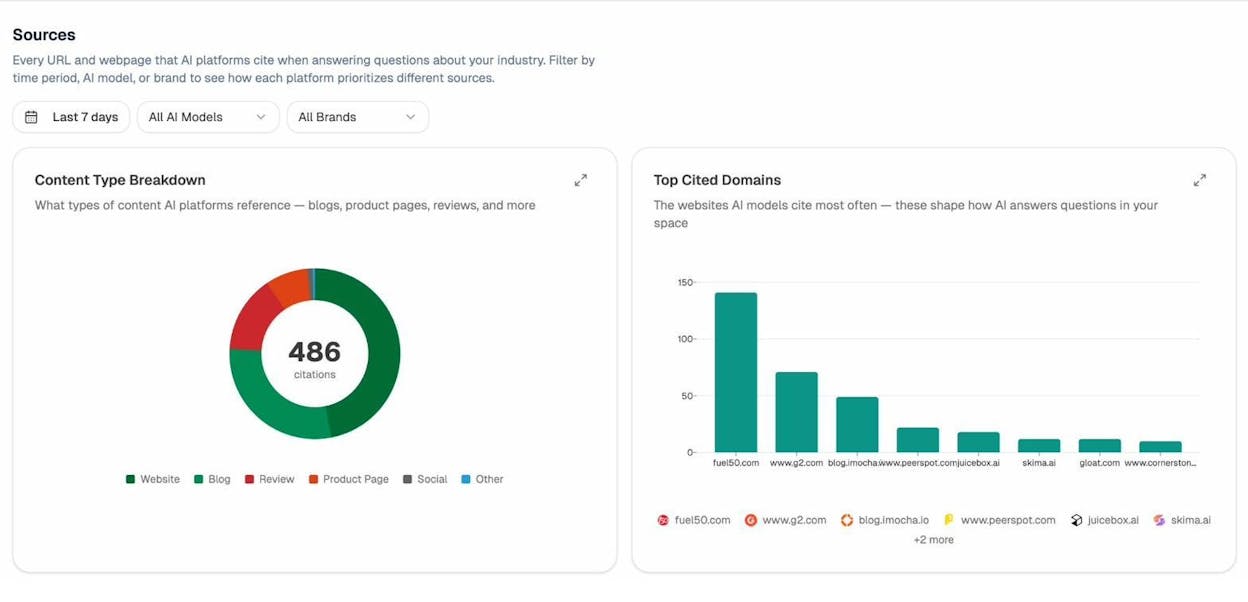
If AI engines in your space cite blog posts 60% of the time and product pages 18%, the format guidance is clear. Match the format AI is already rewarding.
For a deeper dive on intent classification, see our guide on search intent and how to interpret it for SEO and AI search.
3. Find the information gap competitors leave open
The skyscraper approach (write the same thing, just longer) is the reason most SERPs feel identical. Information gain is the better mental model. Google’s 2020 patent on information gain describes how the algorithm rewards articles that bring new information to the discussion, not just more words.
Your job in research is to find what nobody has said yet. Here is a process.
Step 1. Open the top eight ranking pages for your keyword in separate tabs. Skim each one and write down its core argument in a single sentence.
Step 2. Make a list of every section heading across all eight articles. Group them. The sections that appear in every article are table-stakes, you have to cover them. The sections that appear in only one or two are gap candidates.
Step 3. Look for what nobody covers. Common gaps include measurement (how do you know it worked), real failure modes (what goes wrong), decision frameworks (when to use this versus alternatives), and original data.
Step 4. Look for what everyone gets wrong. If eight articles all repeat the same advice and you have evidence the advice is outdated, that disagreement is your angle.
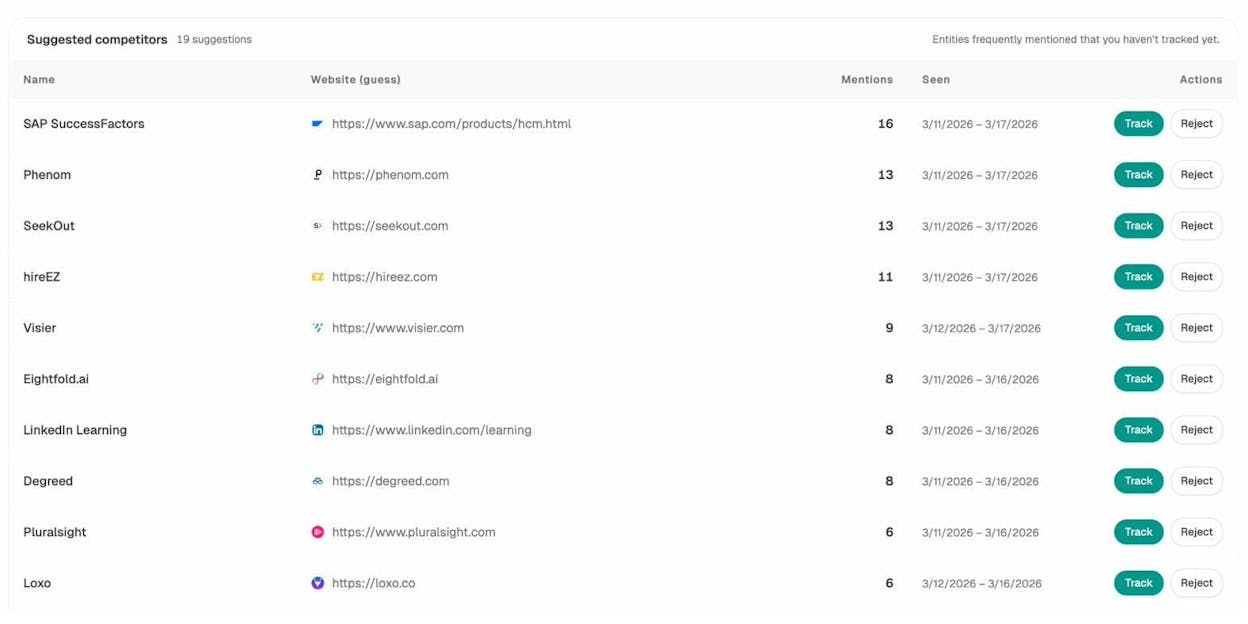
For AI search, the parallel exercise is finding the prompts where competitors win and you are absent. Inside Analyze AI’s Competitor Intelligence, you get a ranked list of suggested competitors based on entities AI engines mention alongside you, plus the exact prompts where they outrank you.
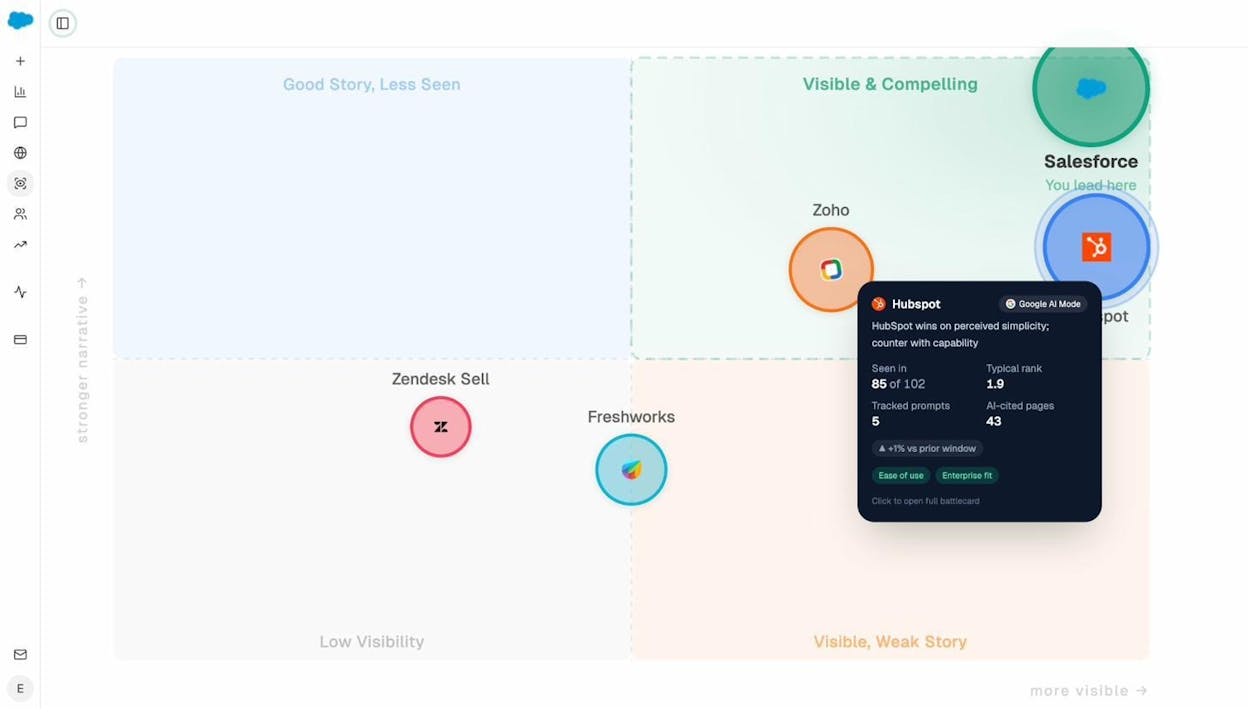
The Perception Map then plots each competitor on two axes. One is how visible they are in AI answers. The other is how strong the narrative AI builds around them is. Competitors in the “Visible, Weak Story” quadrant are the ones to attack with information-rich content, since AI is citing them but the story is thin enough to displace.
The deliverable from this step is a one-page brief with three lists. List one is what every competing article covers, which you have to cover. List two is what nobody covers, which is your information gain. List three is what AI engines say about competitors that you can fact-check or counter.
For more on this competitive layer, see our breakdown of how to outrank competitors in AI search using citation data.
4. Talk to subject matter experts
Articles written entirely from desk research read like articles written entirely from desk research. They are flat. They repeat the same examples. They never quite tell you anything you couldn’t have figured out yourself.
The fix is interviewing one or two subject matter experts (SMEs) for every meaningful piece. An SME is anyone with hands-on experience doing the thing your article is about. They are not necessarily famous.
Three places to find them, in order of how useful they actually are.
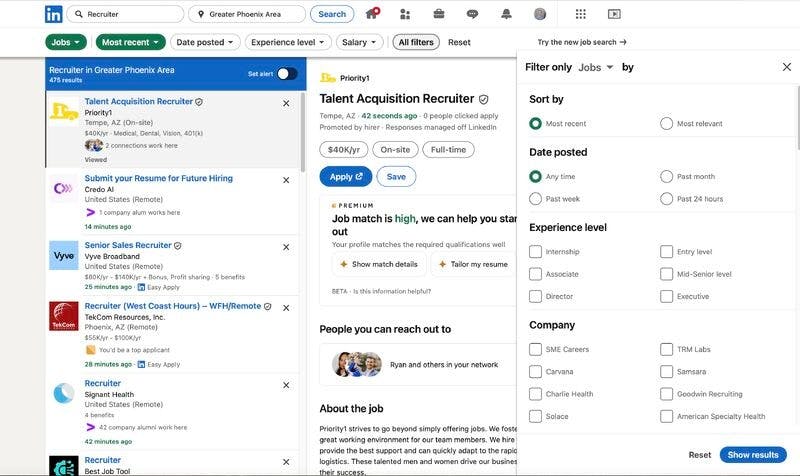
LinkedIn search. Search the role and the niche together. “Senior SEO” plus “fintech.” “Head of growth” plus “marketplace.” Filter for people who post about the topic, not just hold the title. Active posters are far more likely to respond and to give you usable quotes.
Podcasts and newsletters. Anyone who has been on three podcasts about a topic is by definition comfortable being quoted on it. Pull a list of guests from the top three or four podcasts in your space and you have a starter SME database.
Your own customer base. Your customers are the people doing the thing you write about. Ask your customer success team for two or three accounts that match your article’s persona, then ask them for a 20-minute call.
When you reach out, three things matter. Keep the ask short. Tell them where the quote will run and roughly how long it will be. Send the questions in advance.
A working email looks like this.
Hi [name], I’m writing a piece on [topic] for [publication]. Could I get a 15-minute call to ask three questions about [specific angle]? I’ll send the questions ahead of time and the final quote for your approval before publishing.
Three questions, fifteen minutes, draft approval. That structure gets a yes far more often than a vague “can I pick your brain” ask.
5. Mine social platforms for raw, first-party perspective
Social platforms are not where you write. They are where you find the language real people use to describe the problem your article is about. That language is gold. It improves your headlines and intros, and it surfaces sub-problems you would never have thought of from a desk.
For most B2B topics, the platform ranking has flipped. Reddit is now the most useful, LinkedIn second, X (formerly Twitter) third.
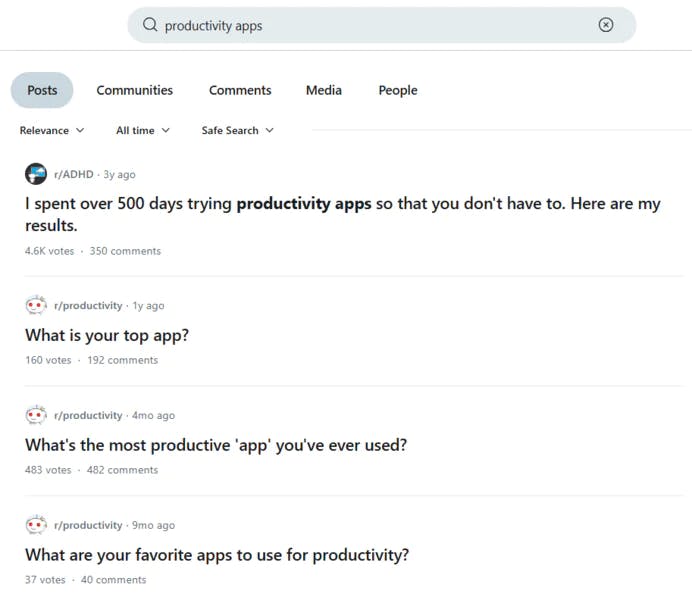
Reddit. There is a subreddit for almost every niche. Search for your topic and read the top posts of the past year. Pay particular attention to comments with high upvotes that disagree with the original post. Those are the contrarian takes that often have the most original thinking.
LinkedIn. Use the search bar with content filters set to “posts” and date filtered to the past month. Sort by relevance. The posts that surface are usually from practitioners with strong opinions, which is exactly what you want.
X advanced search. Still useful for fast-moving topics. Set a minimum engagement threshold and a date range. Filter to “people you follow” to keep noise low.
Niche Slack and Discord communities. Often the highest-signal source, almost never indexed by search. If your topic has an active community, post a research question with a clear ask. People help when the ask is specific.
The output of this step is a doc with verbatim quotes (with attribution where the platform is public) and a list of phrases your audience actually uses. Drop those phrases into your draft. They make the writing feel current.
6. Run a small survey to get original data
You don’t need a 2,000-respondent industry report to publish original data. You need 30 to 50 honest answers from people who match your audience. That is enough to surface a pattern, and patterns from real practitioners are more interesting than perfect statistics from anonymous panels.
Three formats that work, ranked by effort.
A LinkedIn poll takes five minutes. The catch is you only get four answer options and no demographic data. Use it for binary or quaternary questions like “how often do you publish.”
A short Google Form, shared in your newsletter and one or two relevant communities, gets you 30 to 80 responses if your list is decent. You can ask five to seven questions, including one open-ended one, which is the most valuable. The free-text answers are where the article angles come from.
A paid survey through a platform like Pollfish or SurveyMonkey gets you a panel that matches a target profile. Worth it only when you are publishing a flagship report rather than supporting a single article.
Here is a template that works for a quick survey.
Q1. What is your role? (Multiple choice) Q2. How long have you been doing [the thing]? (Multiple choice) Q3. What is your single biggest challenge with [the thing] today? (Open text) Q4. What is one tool, tactic, or resource that has actually worked for you? (Open text) Q5. Anything you wish someone would write about [the topic]? (Open text)
Question five alone often gives you three or four article ideas you would never have generated yourself.
7. Pull from reports, white papers, and academic sources
Blogs reference each other. After a while, the same statistic loops through your industry until nobody remembers where it came from. Reports and academic sources are how you escape that loop.
Where to look, beyond the obvious McKinsey and Deloitte reports.
Google Scholar for academic papers. Filter by year and look at “cited by” counts to find the foundational papers in a topic. The top cited paper from 2019 is often more useful than the top blog from 2024. SSRN covers working papers in business and economics, often more current than published journals. Industry-specific databases beat aggregators like Statista for any topic with policy implications. Banking has BIS. Pharma has the FDA. Marketing has the IAB. Primary sources publish more rigorous data.
Google’s Search Quality Rater Guidelines is a 175-page document explaining exactly how Google evaluates search results. SEO writers reference it constantly because it is one of the only first-party sources on what “quality” means to Google.
A practical workflow for extracting from a long report. Skim the executive summary. Read the methodology section to understand what the data can and cannot tell you. Search for the two or three terms most relevant to your article. Pull the specific stats with page numbers, not just headline findings. Page numbers matter because you will want to cite precisely.
8. Mine your own data before you go anywhere else
This is the tip most teams skip, and it is usually the highest leverage one.
Your own analytics, your own search console, your own customer support tickets, your own sales call transcripts. These contain insights nobody else has, because nobody else has them. The exact phrases your buyers use. The objections that come up on every demo. The articles that already convert and could convert more.
For SEO research, Search Console is the obvious starting point. Look at the queries page for keywords where you rank between positions 5 and 15. Those are the articles that need a refresh, not a rewrite.
For AI search research, the equivalent is your AI Traffic Analytics. Inside Analyze AI’s Landing Pages report, you can see which of your pages are receiving traffic from ChatGPT, Perplexity, Claude, Gemini, and Copilot, plus the specific prompts that drove each visit.
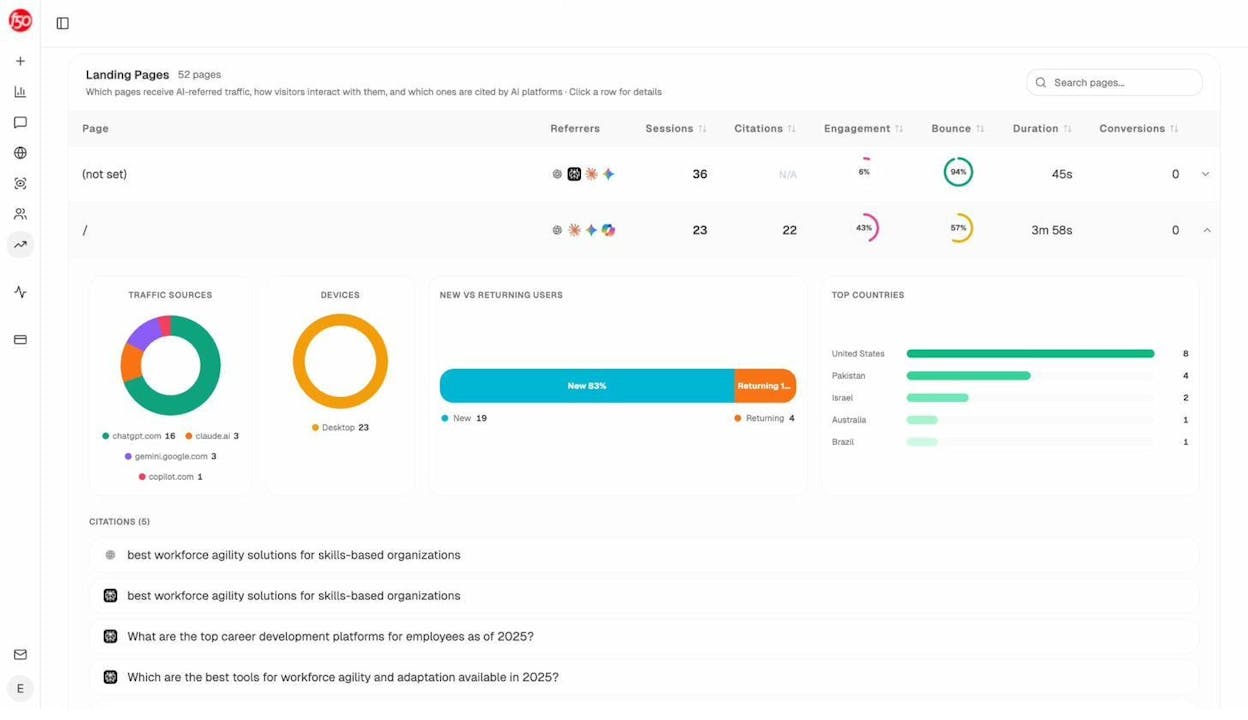
You will usually find two patterns. A small number of pages receive most of the AI traffic. And the prompts driving those visits are often slightly different from the keyword the page was optimized for.
Both findings are research outputs. The pages that work tell you what format and depth wins. The prompt-keyword gap tells you the new angles to add to existing pages. Replicate what works on more pages, and rewrite the pages where the prompt-keyword mismatch is hurting conversion.
For a deeper read on this, see how to find which keywords your site ranks for and our AI Traffic Analytics overview.
9. Talk to your readers and your customers
Two groups, two different jobs.
Your customers tell you why people buy. Pull three to five recent customers and run a 20-minute call. Ask what they searched for before finding you, what they tried first, and what almost made them choose someone else. Most articles get those three answers wrong because they are written without ever talking to a buyer.
Your readers tell you what is missing from existing articles. The simplest way to gather this is a single question at the end of your articles. “What is missing from this piece?” Pipe the answers into a shared doc. Within a few months you have a backlog of article ideas, all of them grounded in real reader gaps.
Sales call transcripts are the underrated middle layer. If your team uses Gong, Chorus, or any call recording tool, search the transcripts for the topic of your article. You will find the exact words prospects use to describe the problem, plus the objections they raise. Both feed straight into a stronger draft.
A working cadence is one customer call per article, one sales transcript scan per article, and one reader survey question running on the blog continuously. The combined effort takes a few hours per piece and produces the parts of the article that competitors literally cannot copy.
How to put this into a workflow that runs every time
Nine tips is a lot. The reason most teams don’t run all of them is not that they are lazy. It’s that there is no system. Here is a sequence that fits inside a normal article timeline.
|
Day |
Tasks |
Time |
|---|---|---|
|
1 |
Topic selection, intent mapping, information gap analysis (tips 1, 2, 3) |
3 hours |
|
2 |
SME outreach, reader survey kickoff (tips 4, 6) |
Async |
|
3 |
Social mining, report extraction, internal data review (tips 5, 7, 8) |
3 hours |
|
4 |
Customer call (tip 9) |
30 minutes |
|
5+ |
Write |
The total research time is roughly six to eight hours of focused work, spread across a week so the async pieces have time to come back. That is the cost of an article that has a chance of bringing something new to its SERP and being cited by AI engines on the way there.
If you want to compress the AI search side of this workflow, our AI Content Writer bakes prompt-level gaps, competitor analysis, and citation targets into the research stage of every brief, so the outputs of tips 1, 2, 3, and 8 land in one place. The AI Content Optimizer does the same for existing pages, scoring them on argument, flow, clarity, and polish, and surfacing the gaps that are costing you citations.
A final note
The point of content research is not to write longer articles. It is to write articles that say something true and useful that no one else has said in quite the same way. Every tip above is a method for getting closer to that bar.
If you only do three of the nine, do tips 3, 8, and 9. Information gap analysis stops you from writing the same article as your competitors. Mining your own data points you at the angles only you can write. Talking to customers makes the writing land with the people you actually want to reach.
The rest is execution.

Ernest

Ibrahim
![Link Prospecting: How to Find Quality Backlinks for Your Website [With Template]](/_next/image?url=https%3A%2F%2Fwww.datocms-assets.com%2F164164%2F1778017297-blobid0.png&w=3840&q=75)


