



Summarize this blog post with:


We pulled together findings from Ahrefs (55.8M AI Overviews across 590M searches, then a 146M SERP follow-up), Pew Research, Semrush (10M+ keywords), BrightEdge, Conductor (21.9M queries), and SE Ranking. We layered in our own data from tracking AI search visibility for hundreds of brands, and then walked through what to actually do with the findings.
In this article, you’ll see what the largest datasets on Google’s AI Overviews reveal about where they appear, who gets cited, and what they do to clicks. You’ll also see how AI Overviews fit into the wider picture of AI search across ChatGPT, Perplexity, Gemini, and Copilot, because Google’s AI feature is one slice of the channel, not the whole map.
Table of Contents
Key takeaways
-
AI Overviews appeared on 9.46% of all desktop keywords and 16% of US keywords as of mid-2025, then grew to 25.11% of Google searches by early 2026 (Conductor)
-
Ahrefs’s follow-up study of 146M SERPs put the share at 20.5% in September 2025, and BrightEdge measured 48% of queries by February 2026
-
The top 50 domains capture 28.9% of all AI Overview mentions, with Reddit, Wikipedia, Quora, and YouTube leading
-
97.7% of queries that trigger AI Overviews are informational. Commercial queries climbed from under 9% to 18.57% across 2025 (Reboot Online), so the buyer-intent surface is widening
-
AI Overviews show up less for branded queries, local queries, and short queries. They show up more for informational queries with longer phrasing
-
Pew Research found click-through rates fall by 47% when an AI Overview appears (8% with AIO vs 15% without)
-
Only 13.7% of citations overlap between AI Overviews and Google’s AI Mode, which means the answer surfaces are diverging even within Google
-
AI Overviews are one slice of AI search. ChatGPT, Perplexity, Gemini, and Copilot drive different patterns, and tracking only Google misses most of the picture
How widespread are AI Overviews now?
Google said AI Overviews had over 1.5 billion monthly users in Q1 2025. That is roughly 26.6% of all internet users.
By early 2026, AI Overviews appeared on 25.11% of Google searches, up from 13.14% in March 2025 (Conductor). BrightEdge measured 48% of queries in its dataset by February 2026, a 58% jump in twelve months.
The growth is not linear. Semrush analyzed 10M+ keywords and found AI Overview coverage rising from 6.49% in January 2025, peaking near 25% in July, then settling at 15.69% in November. Google appears to be testing aggressively, then dialing back when user data warrants it. The direction is up, but the path zigzags.
|
Source |
Coverage |
Window |
|---|---|---|
|
Ahrefs (590M searches) |
9.46% desktop, 16% US |
May 2025 |
|
Ahrefs (146M SERPs) |
20.5% |
September 2025 |
|
Pew Research |
18% of Google searches |
March 2025 |
|
Semrush (10M keywords) |
6.49% to 25% peak, 15.69% by November |
Jan to Nov 2025 |
|
Conductor (21.9M queries) |
25.11% |
Early 2026 |
|
BrightEdge |
48% |
February 2026 |
Three takeaways from this spread. First, every study uses a different keyword sample, so the headline percentages shift. Second, the trend is upward across multi-quarter windows. Third, by any measure, AI Overviews are now too common to ignore.
If you want to check current coverage in your own niche, the Analyze AI free SERP Checker pulls SERP features for any keyword without an account.
Which websites dominate AI Overviews?
Ahrefs found that the top 50 domains capture 28.9% of all AI Overview mentions. Reddit, Wikipedia, Quora, YouTube, NIH.gov, Mayo Clinic, and Cleveland Clinic led the list. Pew Research came to a similar conclusion, finding that Wikipedia, YouTube, and Reddit accounted for 15% of all links inside AI Overview summaries.
Here is the category breakdown across the top 50:
|
Category |
Share of mentions |
|---|---|
|
Q&A and Community Discussion |
5.9% |
|
Health and Medical |
5.8% |
|
Knowledge and Reference |
4.4% |
|
Video and Social Media |
3.4% |
|
Education and Learning |
1.3% |
|
Search and Translation |
1.2% |
|
E-Commerce and Tech |
1.1% |
|
News and Media |
0.6% |
|
Job and Career |
0.4% |
|
Regional Health |
0.4% |
The pattern is clear. AI Overviews favor sources that already carry institutional authority. Encyclopedias, government health sites, large user-generated forums, and educational publishers. If you are competing in any space adjacent to those categories, you are competing for citation room inside summaries that Wikipedia and Reddit already occupy.
But that is the AI Overviews picture. AI Mode citations look different. Ahrefs’s December 2025 analysis showed only 13.7% of citation URLs overlap between AI Overviews and Google’s AI Mode. Different feature, different sources, even on the same Google product. ChatGPT, Perplexity, and Gemini diverge further. SE Ranking analyzed 2.3M pages and found that domain traffic is the strongest single predictor of citations across LLMs (SHAP value 0.63), more than any on-page signal.
How to find your specific niche in AI search
Knowing the category leaders is interesting. Knowing which domains AI cites for your prompts is what changes your strategy.
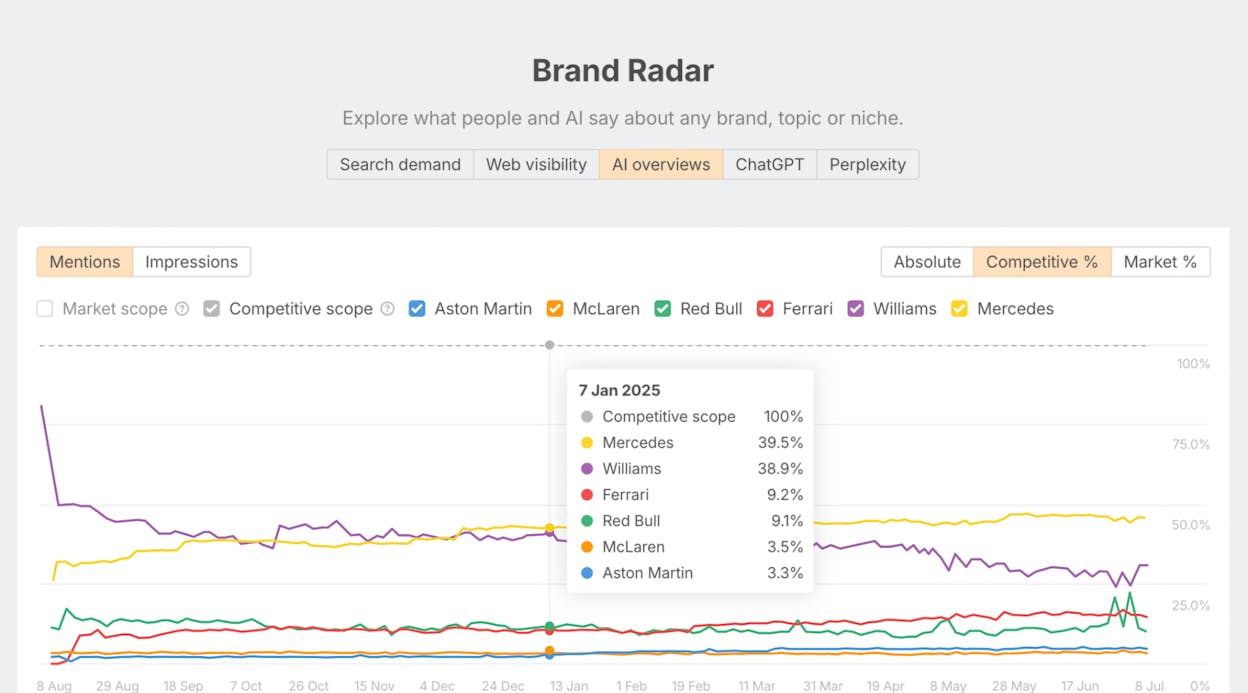
Inside Analyze AI, the Sources dashboard shows the websites and pages that AI engines cite most when answering buyer-intent prompts in your category, broken down by engine.
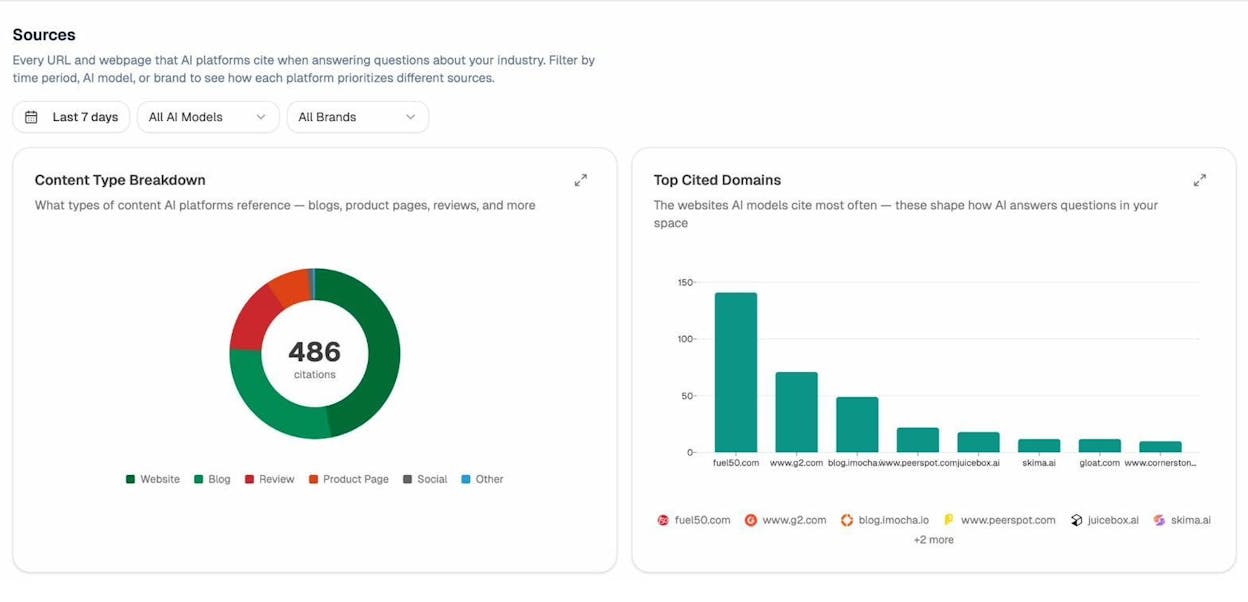
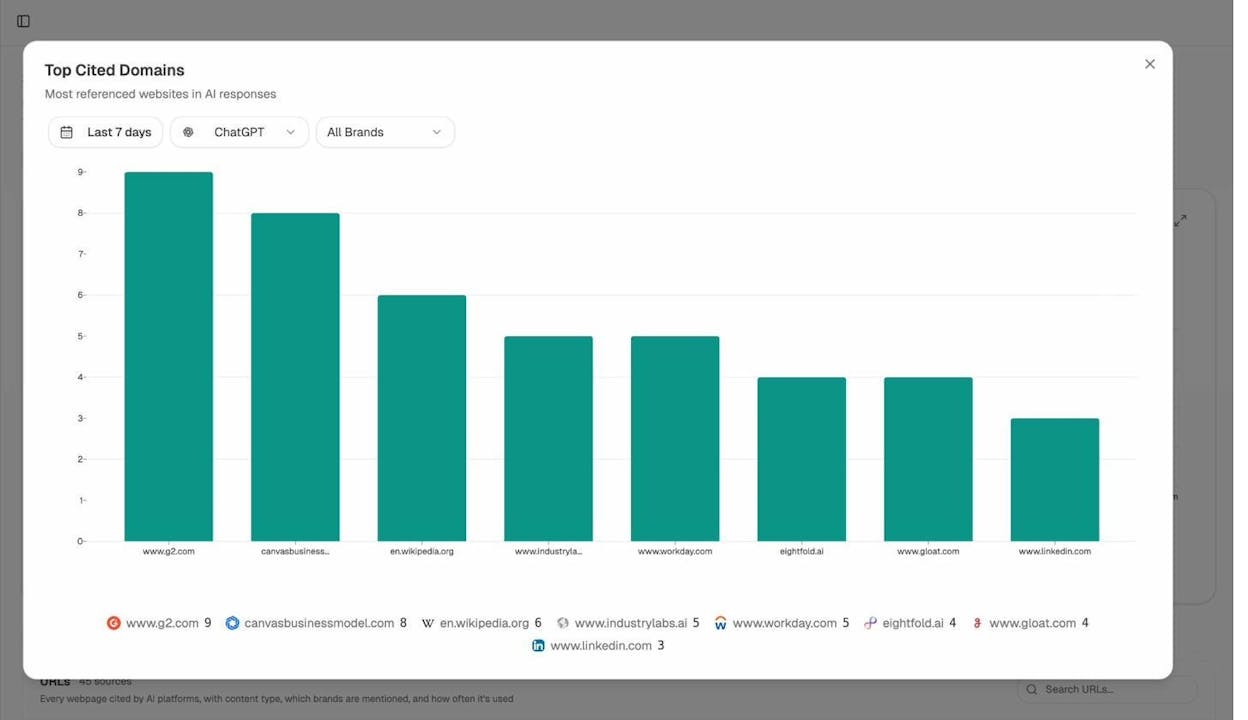
If G2 and Reddit dominate citations in your space, that is where you build presence. If competitor product pages and review sites dominate, that is where you compete. The dashboard turns “build authority” from a strategy slogan into a list of specific domains to invest in. Pair it with the free Website Authority Checker to size up the sites currently outranking you.
You can also see the picture broken out by content type and competing brand:
AI Overviews favor informational queries (for now)
Of the AI Overviews Ahrefs analyzed in May 2025, 97.7% triggered on informational queries. The September 2025 follow-up (146M SERPs) put it at 99.9%. Semrush had the figure at 91.3% in early 2025. By October, that fell to 57.1%. Reboot Online tracked the same shift, with commercial query share rising to 18.57% and navigational queries growing from 1.43% to over 10%.
This is the dataset’s most important shift. AI Overviews started as an answer-the-question feature. They are becoming an answer-the-buyer feature. SaaS comparison queries, “best X for Y” lists, and pricing-related searches are increasingly triggering summaries.
The implication is straightforward. If your traffic strategy assumes Google will keep sending clicks for commercial queries while it eats only the informational ones, that bet is weakening every quarter.
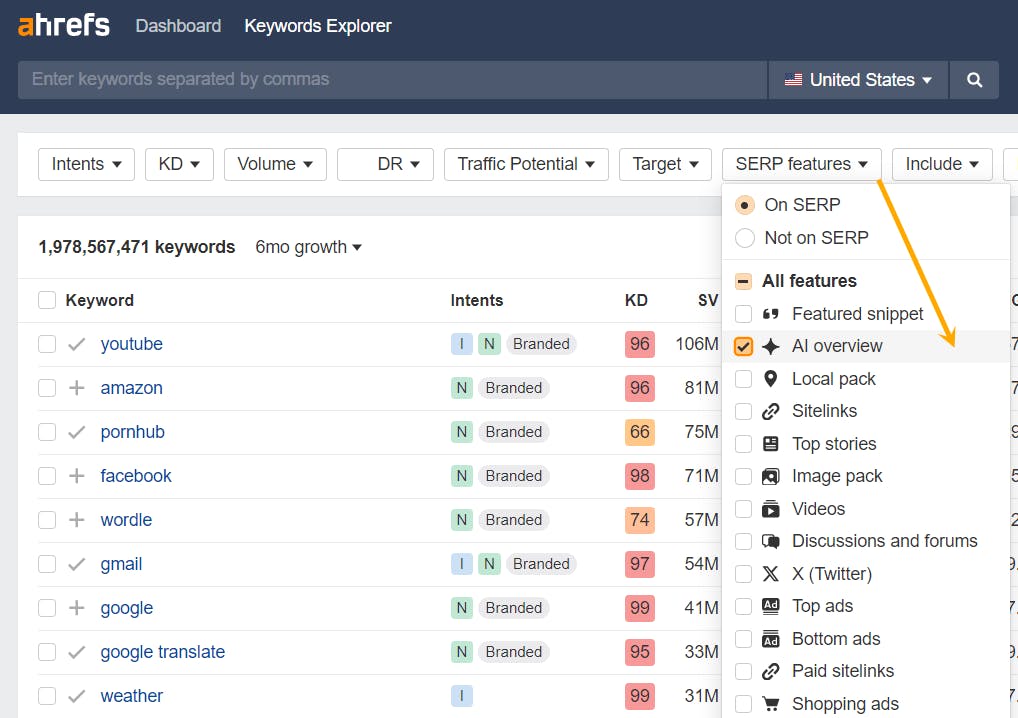
How to do the same analysis for AI search
Google AI Overviews are one surface. Buyers are asking the same commercial questions to ChatGPT, Perplexity, and Gemini. To see who shows up in those answers, you have to run the prompts where the buying decision happens.
In Analyze AI, Prompt Tracking lets you input the high-intent prompts in your category and watch who appears in answers across each engine.
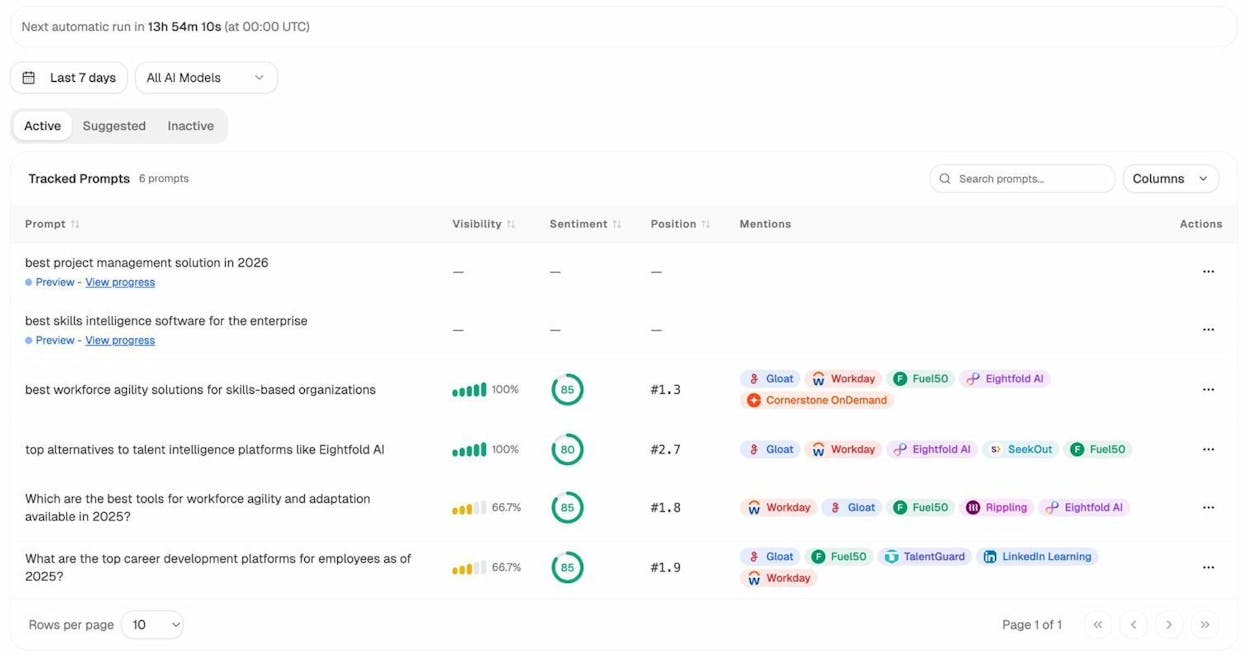
You can also use Prompt Discovery to surface prompts you didn’t think to track. The system suggests buyer-style queries based on your space and your competitors.
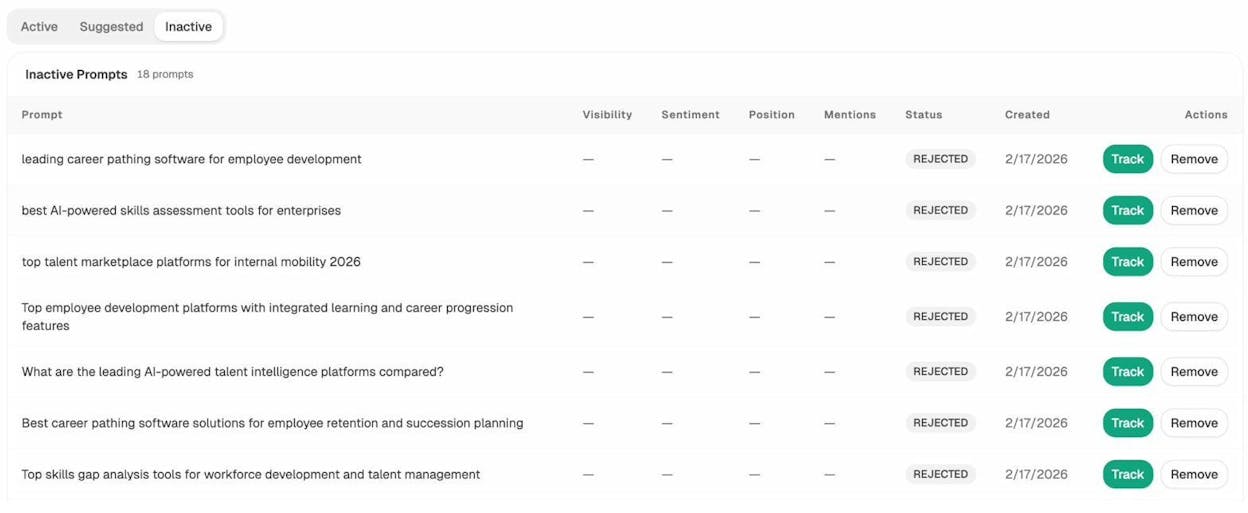
For one-off checks before you commit to tracking a prompt, the Ad Hoc Prompt Searches feature lets you fire a prompt across engines and see the answers side-by-side.
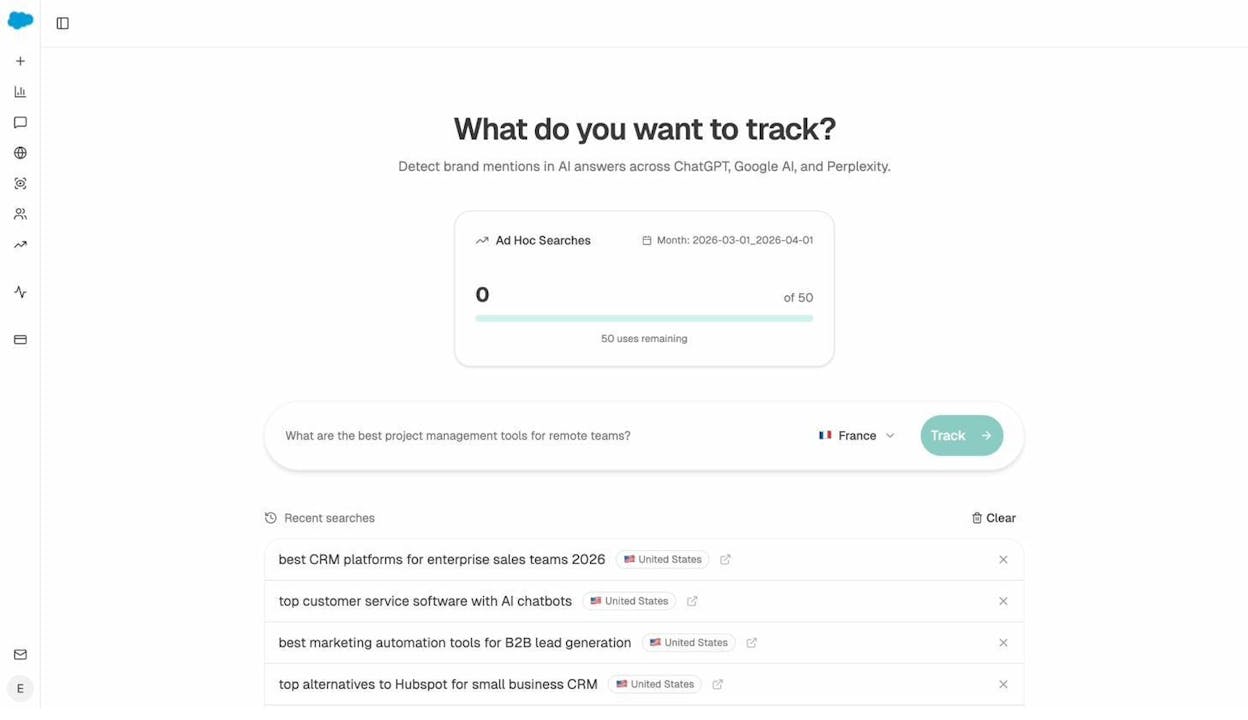
Run “best [your category]” and “[your competitor] alternatives” through this. If competitors show up and you do not, that is a content gap to close. Our guide to ranking on ChatGPT and guide to ranking on Perplexity walk through how to fix those gaps once you find them.
AI Overviews appear less for branded and local queries
Branded queries trigger AI Overviews 19.97% of the time in Ahrefs’s data, compared to 80% for non-branded. The September follow-up showed AIOs are 1.9x more likely to appear on non-branded queries.
Local queries trigger AI Overviews just 7.9% of the time. Pew Research came in close at 7%.
The branded gap matters for competitive positioning. When a buyer searches your brand name, they are unlikely to see an AI summary. When they search the category you compete in, they will see one almost every time. The first surface still rewards brand strength. The second rewards content authority and citations.
The local gap is good news for brick-and-mortar SEO. AI Overviews are not eating “[service] near me” searches yet. The Map Pack still owns that real estate, and traditional local SEO and ecommerce SEO playbooks still apply.
Longer queries trigger AI Overviews more often
Pew found that 8% of one or two word searches trigger AI Overviews, compared to 53% of searches with 10 or more words. Question-based searches generated AI summaries 60% of the time. Full-sentence searches with both a noun and verb did so 36% of the time.
This matches how people now type. They are no longer entering keyword fragments the way a search engine taught them to. They are typing full questions, the way they would speak to a colleague.
For content strategy, this is a re-weighting. The medium-tail and long-tail keywords that used to be ignored as “not enough volume” are now the queries most likely to be answered by an AI summary first. If you want to be inside that summary, the question-style content needs to be tight, scannable, and answerable in 50 to 150 words per chunk. SE Ranking found that sources structured this way get 2.3x more citations than long-form unstructured content.
You can find these long-tail, question-style keywords with the free Keyword Generator Tool or Keyword Difficulty Checker, and validate volume on alternative surfaces with the YouTube Keyword Tool and Bing Keyword Tool.
AI Overviews mostly skip monetized searches
71.67% of the searches that trigger AI Overviews have no CPC data. They are non-monetized searches that no one was bidding on.
This is a useful reality check. Google is not removing ads from its highest-revenue queries. It is summarizing the queries that did not pay anyway. That is also why Google had room to roll AI Overviews out aggressively in the first place. The bottom line was protected.
But this is changing. By October 2025, Google ads appeared next to 25.56% of AI Overview SERPs, up from under 1% in March (IDEAVA, drawing on Semrush). The non-monetized window is closing. Plan for it.
The CTR collapse is real
The headline finding across all the studies is what AI Overviews do to clicks.
|
Study |
CTR finding |
|---|---|
|
Pew Research |
8% click rate with AIO vs 15% without (47% relative drop) |
|
Ahrefs |
34.5% reduction in clicks for position #1 |
|
Seer Interactive |
61% drop for queries with AIO |
|
Amsive |
15.49% average drop across 700,000 keywords |
|
Authoritas |
Up to 79% drop for top news sites |
|
Stackmatix (citations) |
Up to 35% CTR increase for cited sources |
The range is wide, but every study points in the same direction. AI Overviews reduce clicks. Position #1 takes the biggest hit, because it is the position users would have clicked first.
There is nuance, though. Pages cited inside an AI Overview can see CTR increases of up to 35%. Being the source Google quotes is a different game from ranking under the summary. Authority comes with traffic when you are cited. Sitting outside the summary is where the bleeding happens.
This is also why measurement has to change. Rankings tell you whether you are visible in the old surface. Citations tell you whether you are visible in the new one. We covered this gap in detail in our guide on AI visibility audits.
AI Overviews are only one slice of AI search
Most studies stop at Google. Buyers do not.
Ahrefs’s data centers on Google. Pew, Semrush, BrightEdge, and Conductor are mostly in the same lane. But search is no longer Google-only. Conductor’s 2026 benchmarks show ChatGPT drives 87.4% of all AI referral traffic. Adobe reported a 693% surge in AI referral traffic during the 2025 holiday season. Buyers are running their decision-making prompts on multiple engines, and only one of them is Google.
The citation patterns differ enough that you cannot extrapolate from one to the others.
|
Engine |
Distinct pattern |
|---|---|
|
Google AI Overviews |
Wikipedia, Reddit, YouTube heavy. 93.67% of citations overlap with top-10 organic |
|
Google AI Mode |
Only 13.7% citation overlap with AI Overviews |
|
ChatGPT |
Wikipedia 7.8%, Reddit 1.8%, Forbes 1.1%, G2 1.1%. Only 11% domain overlap with Perplexity |
|
Perplexity |
YouTube, Wikipedia, Apple, Google heavy |
The same brand can see citation volumes differ by 615x between Grok and Claude (Superlines, March 2026). Tracking only Google AI Overviews gives you a partial answer to a question your buyers are asking everywhere.
To see the full picture, you need a tool that monitors visibility across every major engine.
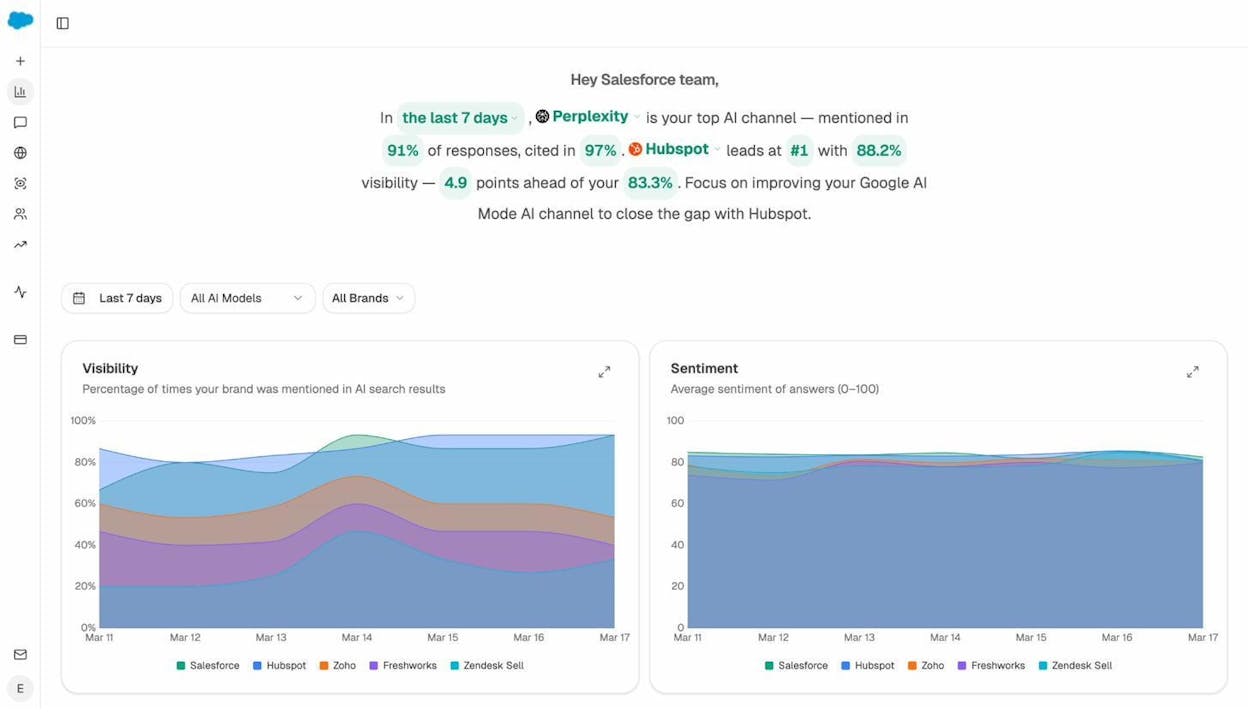
The AI Visibility Tracking view inside Analyze AI shows your visibility percentage, sentiment, and average position broken down by ChatGPT, Perplexity, Gemini, Copilot, and Google AI Mode. You see which engine is sending you traffic, which is mentioning competitors instead of you, and where the gap is widening.
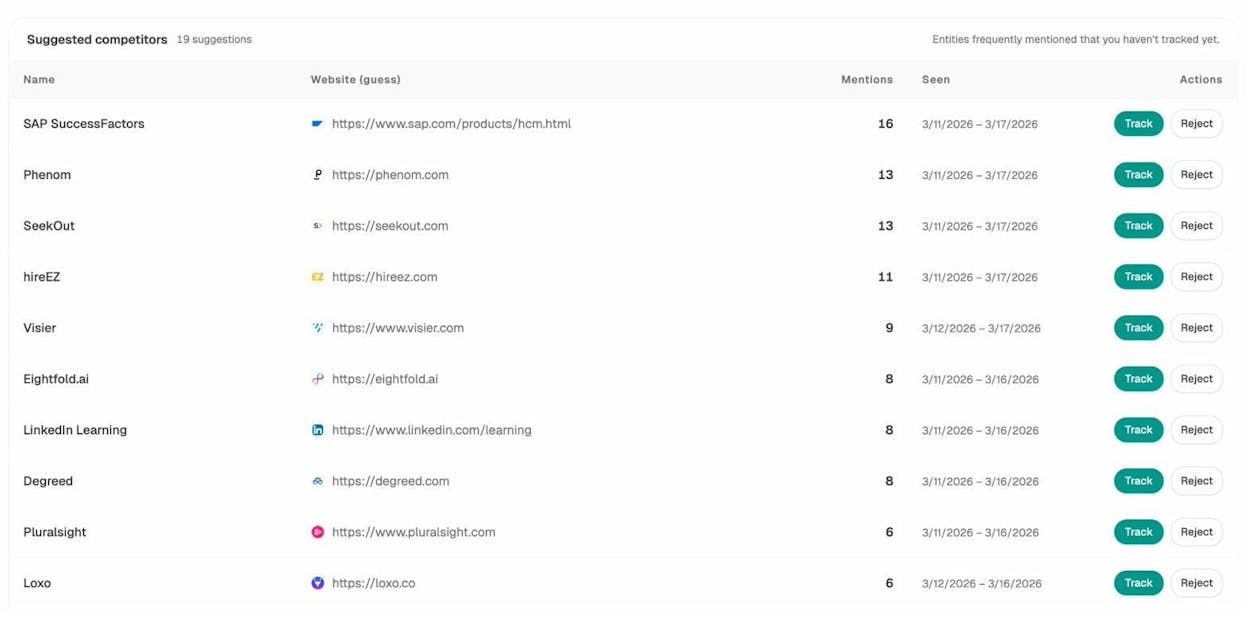
For competitive context, the Competitors view ranks each brand across the same prompt set:
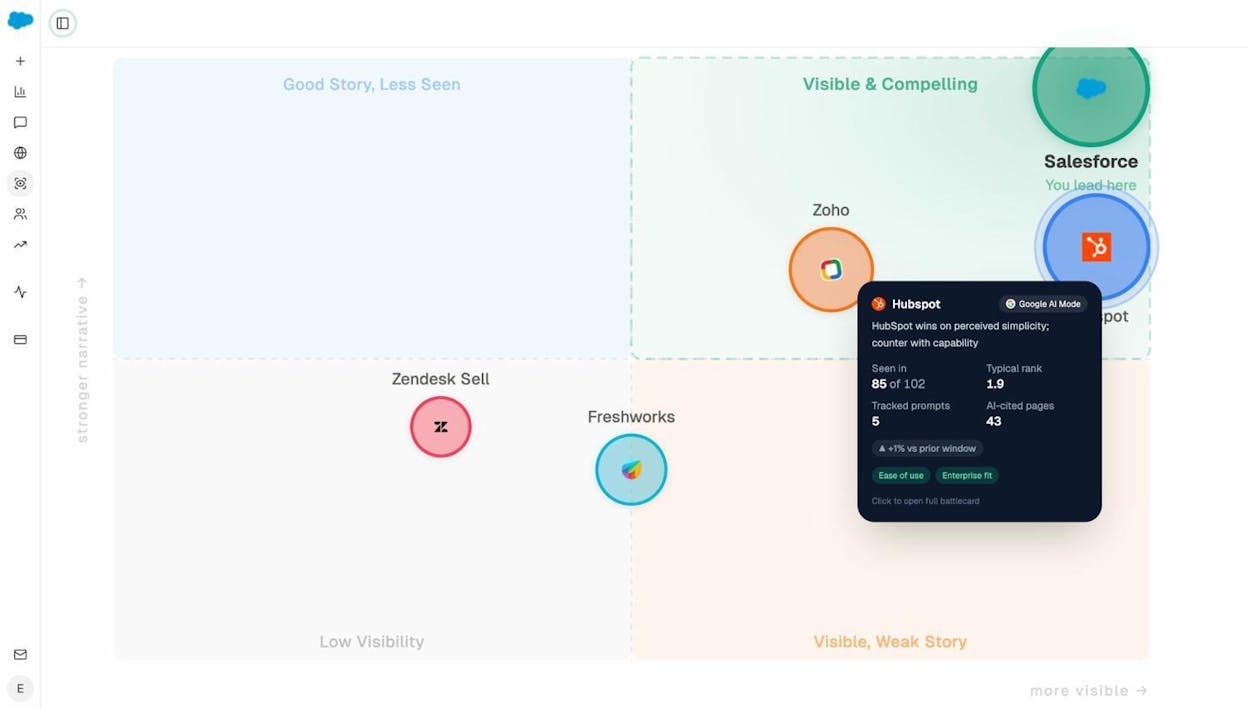
The Perception Map plots visibility against narrative strength, so you can see whether you are visible but described weakly, or invisible in places you should be:
If you want a deeper read on cross-engine visibility, our breakdown of how to outrank competitors in AI search walks through the prompt-by-prompt diagnostic.
What to actually do with these findings
The studies give you the lay of the land. The point of the rest of this article is to convert that into a list of things you can act on this quarter.
1. Audit where you appear and where you don’t. Run 20 to 50 of your highest-intent prompts across Google AI Overviews, ChatGPT, Perplexity, Gemini, and Copilot. Mark which ones cite you, which ones cite only competitors, and which ones cite nobody. The “nobody” prompts are the easiest wins. The “competitors only” prompts are where the work is.
2. Identify the citation patterns in your space. Pull the top-cited domains for your category. If review sites dominate, your G2, Capterra, and Trustpilot presence matters more than your blog. If publisher coverage dominates, PR and digital outreach matter more than backlink count. The tactic depends on the pattern. Our AI visibility guide has a longer playbook for this step.
3. Optimize for citation, not just rank. Pages cited inside AI Overviews see CTR gains. Pages ranking just below a summary lose half their clicks. Structure your content for citation. Lead each section with a direct answer in 50 to 150 words. Use clear subheadings. Add data and statistics. Pages with statistics get 30 to 40% higher visibility in AI responses (Superlines, 2026).
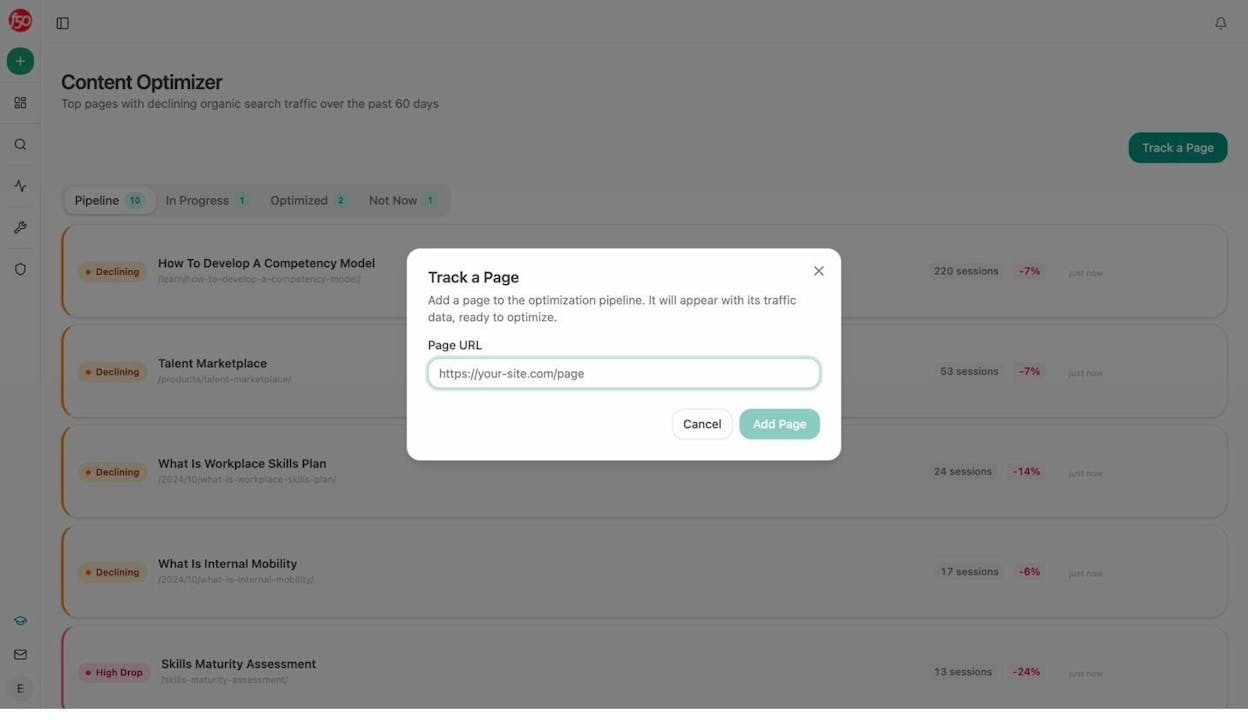
The Analyze AI Content Optimizer scores your existing pages on argument, flow, clarity, and polish, then generates editorial comments and an optimized draft.
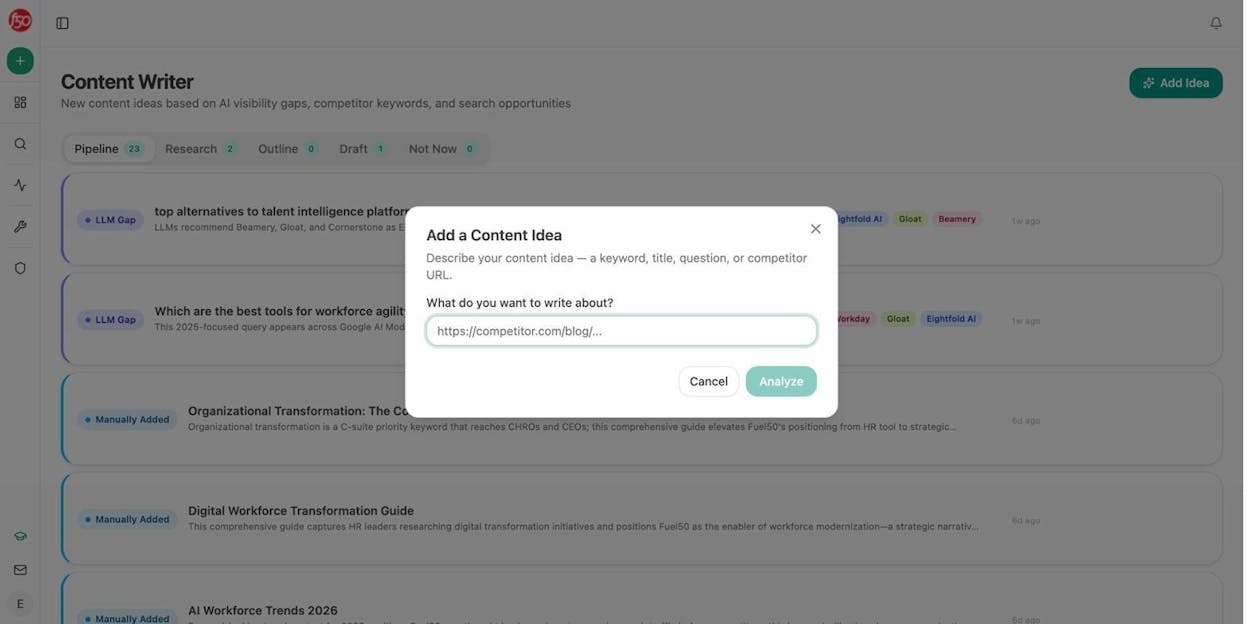
For new content, the AI Content Writer takes a topic from idea to research to outline to draft, with AI search visibility gaps and competitor analysis baked into each step.
4. Track AI traffic, not just AI visibility. Mentions don’t pay rent. Sessions and conversions do. The AI Traffic Analytics view shows which landing pages get AI referrals, which engines sent each session, and what conversion events those visits trigger.
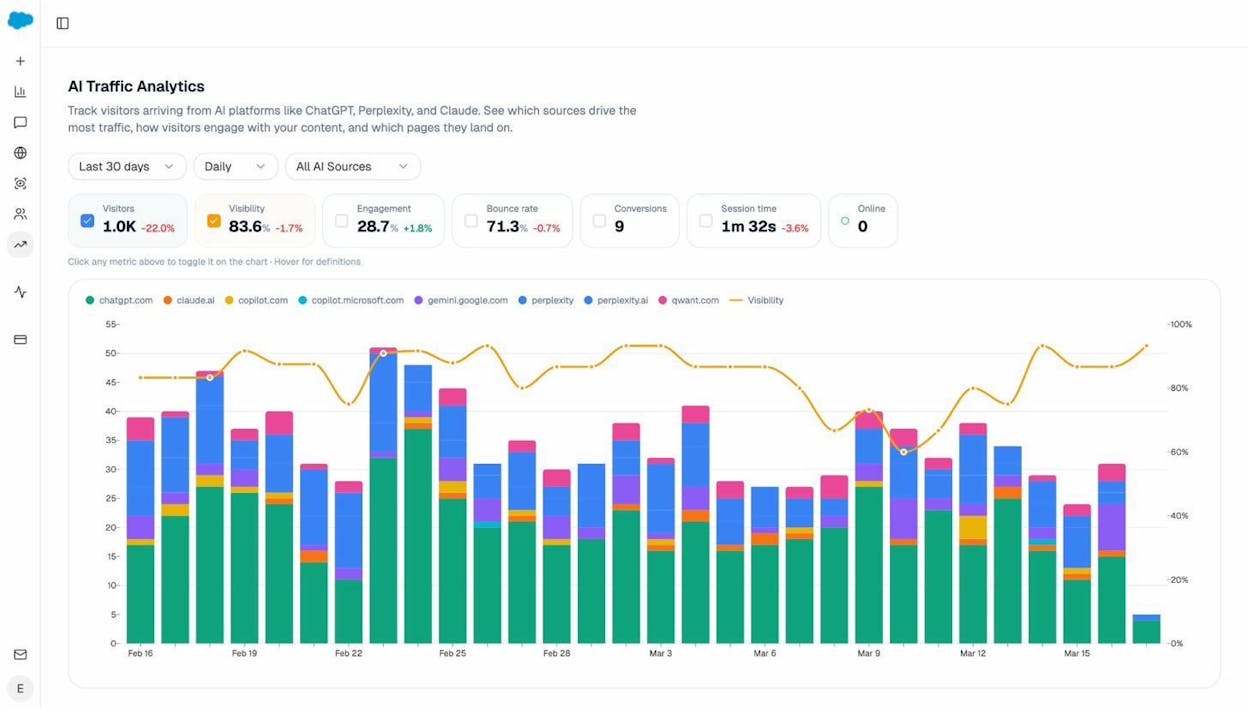
A page with high AI traffic and a 94% bounce rate is a real problem. AI is recommending it but the page is not delivering on the promise. That is conversion optimization, not visibility optimization, and it is often where the highest-leverage fixes live.
You can sanity-check overall traffic numbers against the free Website Traffic Checker and surface broken outbound links with the Broken Link Checker.
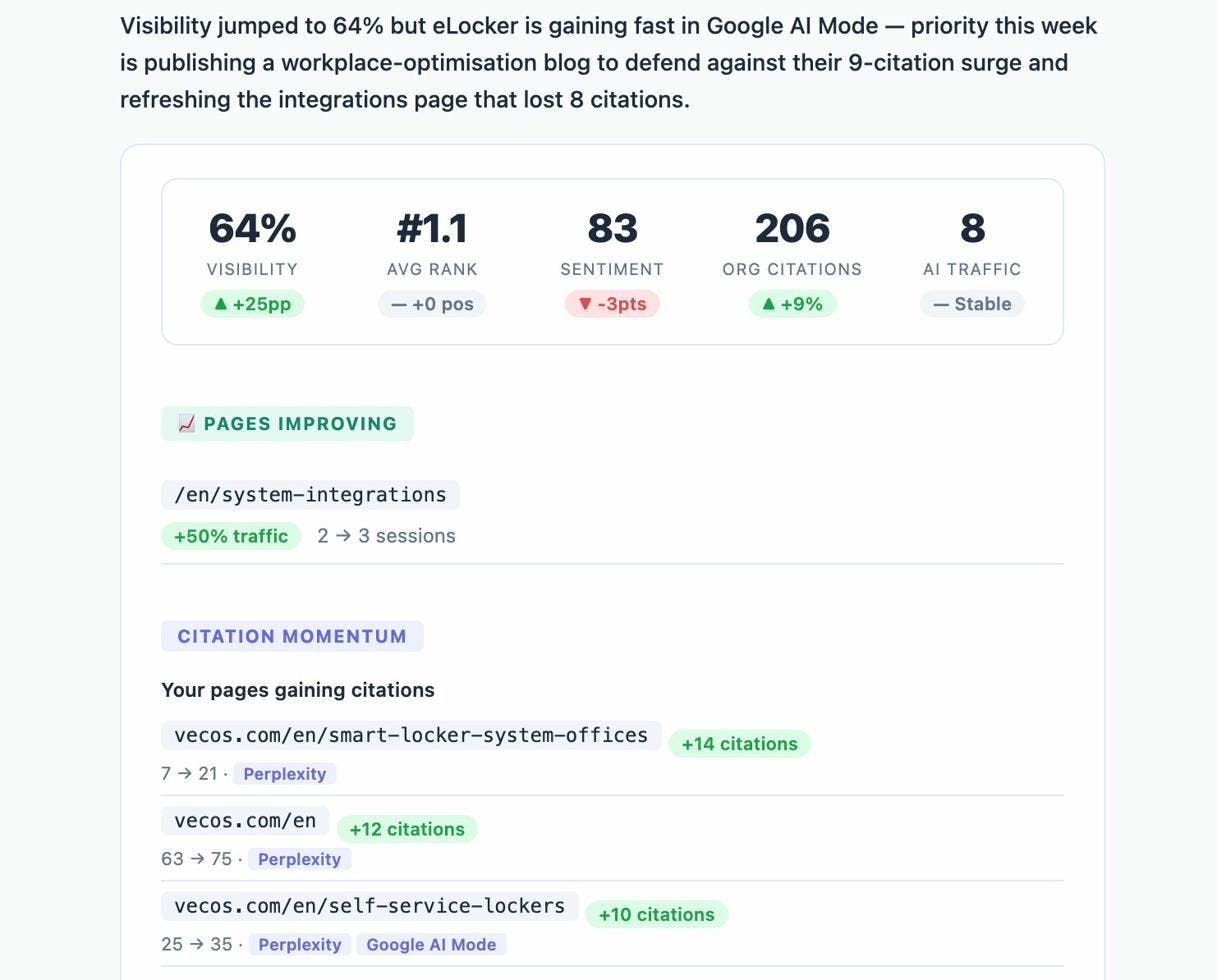
5. Subscribe to the trends, not the headlines. AI Overview coverage moves week to week. So does engine sentiment. The Weekly Email Digests inside Analyze AI summarize what changed in your visibility, sentiment, citations, and competitor positions, so you spot drifts before they become quarterly problems.
SEO is not dying. It is widening.
Most articles you will read about AI Overviews end with a flavor of panic. Lose your traffic. Lose your business. Pivot or die.
The data does not actually say that. The data says search is widening. Buyers are asking more questions, in more places, and getting answers from more surfaces. Total search usage across both surfaces grew 26% globally and 16% in the US over the past year (Graphite, March 2026). Every piece of content you optimize for traditional search is now also a candidate for AI citation.
The work is not to abandon what got you here. The work is to add a layer. Track the prompts where buyers decide. Watch which sources AI cites in your space. Optimize your highest-intent pages for both surfaces. Measure traffic, not just mentions.
If you want a deeper look at how SEO and AI search work together, our GEO vs SEO breakdown and SEO Pillars guide for AI Search walk through it. Both are written under the same belief that runs through this article. AI search is another organic channel, not a replacement for the old one.
The brands that show up in AI answers in 2027 will be the ones that paid attention to the data in 2026 and acted on it. The studies are clear. The next move is yours.

Ernest

Ibrahim


![Link Prospecting: How to Find Quality Backlinks for Your Website [With Template]](/_next/image?url=https%3A%2F%2Fwww.datocms-assets.com%2F164164%2F1778017297-blobid0.png&w=3840&q=75)


