



Summarize this blog post with:


In this article, you’ll find twelve tactics that pull untapped organic traffic out of the site you already have. Each one is something you can start on today.
Table of Contents
TL;DR
Here is the full list at a glance, ranked by how fast each tactic typically pays out.
|
# |
Tactic |
Time to result |
Effort |
SEO impact |
AI search impact |
|---|---|---|---|---|---|
|
1 |
Refresh pages with outdated information |
Days |
Low |
High |
High |
|
2 |
Improve topical relevance and entity coverage |
Weeks |
Medium |
High |
High |
|
3 |
Redirect dead pages with backlinks |
Hours |
Low |
Medium |
Low |
|
4 |
Boost important pages with internal links |
Weeks |
Low |
Medium |
Medium |
|
5 |
Win featured snippets and AI citations |
Weeks |
Medium |
High |
High |
|
6 |
Translate top-performing content |
Months |
High |
High |
Medium |
|
7 |
Repurpose high-performing videos |
Weeks |
Medium |
Medium |
Medium |
|
8 |
Rewrite weak titles and meta descriptions |
Days |
Low |
Medium |
Low |
|
9 |
Add schema markup to eligible pages |
Days |
Low |
Medium |
Medium |
|
10 |
Consolidate cannibalizing pages |
Days |
Medium |
High |
Medium |
|
11 |
Earn reviews on the platforms AI engines cite |
Months |
Medium |
High (local) |
High |
|
12 |
Publish free tools |
Months |
High |
High |
High |
1. Refresh pages with outdated information
Search engines rank fresher pages above stale ones for any query where searchers want current information. AI engines do the same. When a model generates an answer about an evolving topic, it favors the source updated most recently.
Refreshing decayed pages is the fastest traffic win you can run. The work is small. The impact shows in days.
Find the pages that have lost traffic in the last six months. In Ahrefs, open Site Explorer, go to the Top pages report, set the Traffic filter to “Declined,” and compare against the previous six months.
The Google Search Console equivalent is the Performance report with a date comparison set to the last six months versus the previous six.
Then look for pages where the topic itself has aged. Statistics roundups, software reviews, “best of” lists, and how-to guides referencing tools all decay because the underlying facts move.
For each decayed page, replace stale data, swap out screenshots that no longer match the live product, and remove sections no longer relevant. Update the publish date only if the content itself genuinely changed.
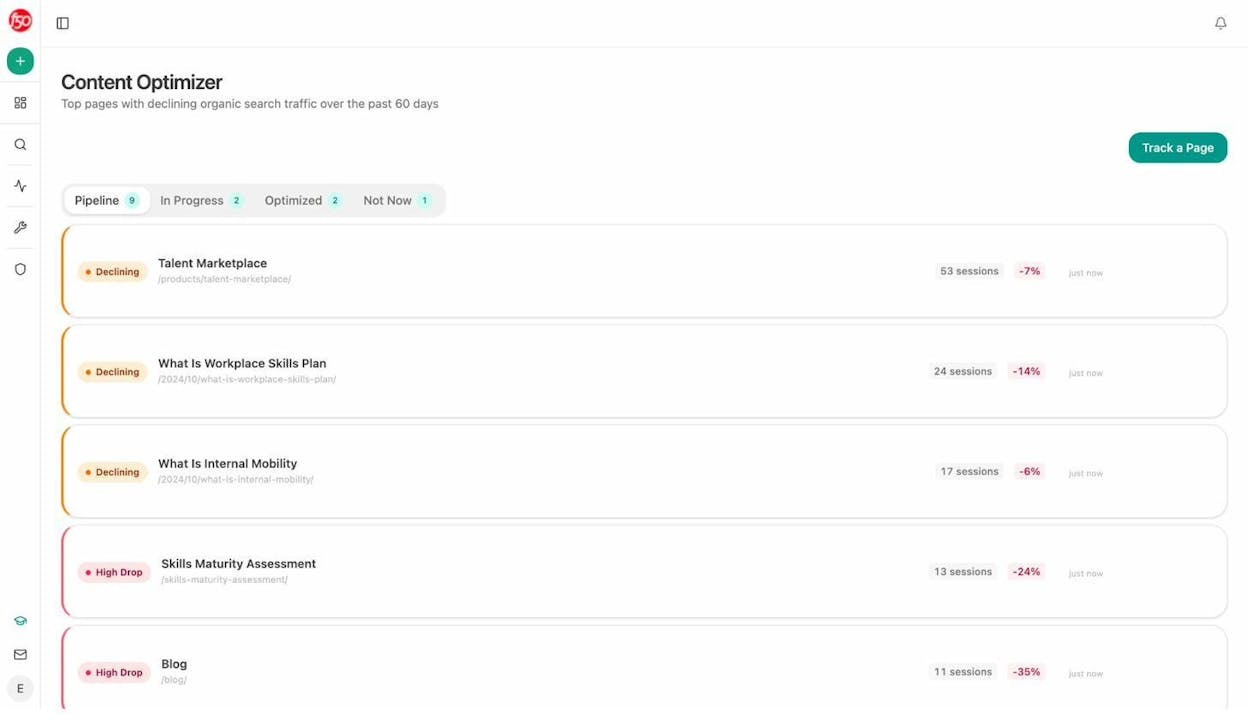
For AI search, the same decay applies but is harder to catch because the loss does not show up in Google Search Console. Analyze AI’s Content Optimizer surfaces pages with the steepest AI-traffic declines over the last sixty days and queues them for refresh.
2. Improve topical relevance and entity coverage
Search engines now grade how completely a page covers a topic. A page that mentions every subtopic and entity that matters to the query ranks higher than one that hits only the obvious points. AI engines do something similar when they choose which sources to cite.
Most pages stuck on page two have a coverage problem, not a quality problem.
The fix is to identify what the page is missing and add it. The fastest manual way to do this is to list every subtopic the top three ranking pages cover, then audit your page against that list. Each missing subtopic is a section to add.
You can also automate the audit. The Analyze AI Content Optimizer fetches your page, scores it against AI-citation patterns, and returns a list of entity gaps and structural fixes.
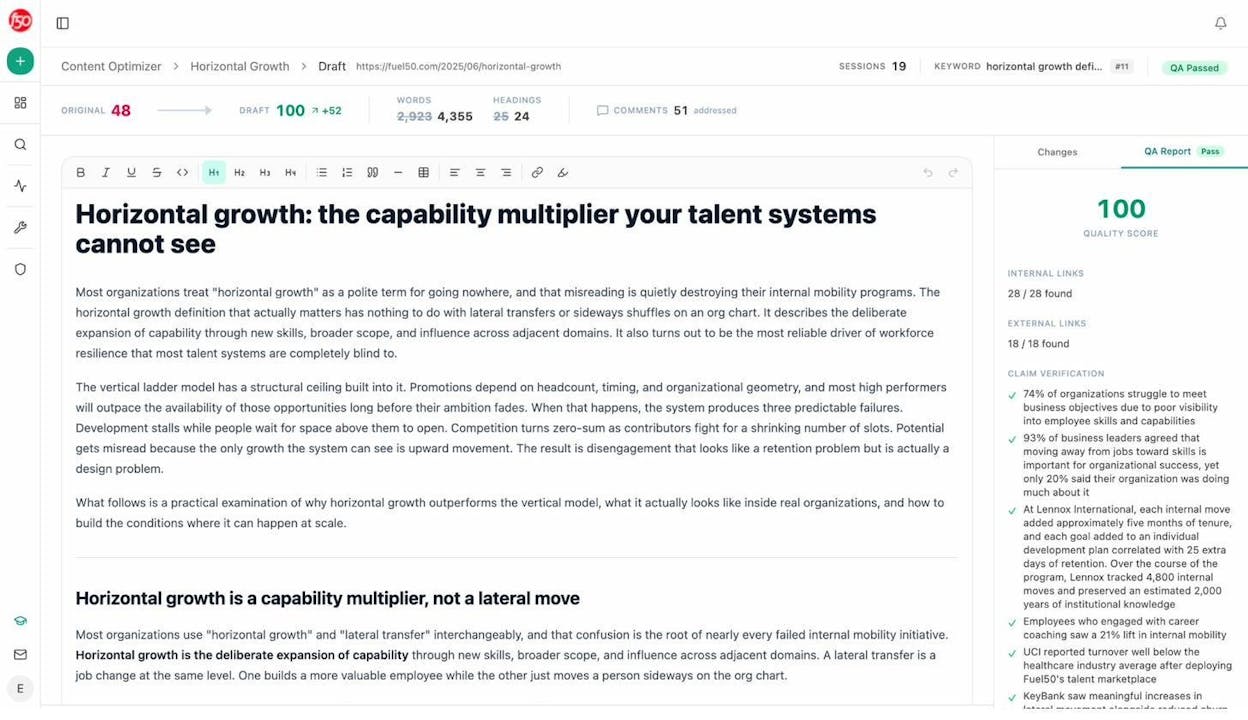
Once you have the gap list, write the missing sections. Aim for genuine information density rather than padding. A new paragraph that adds a real subtopic is worth more than three paragraphs that restate what the page already says.
This approach has a documented track record. Internal Ahrefs data shows targeted topic-gap refreshes produced an average traffic lift of roughly 72% across pages updated this way.
3. Redirect dead pages with backlinks
Backlinks are slow to build and remain one of the strongest ranking factors. When a backlinked page on your site returns a 404, you lose the link equity that page was holding.
Reclaiming that equity is a same-day task. You find the dead pages, then redirect each one to the closest live equivalent.
To find them in Ahrefs, open Site Explorer, go to the Best by links report, and add a 404 filter. Sort by referring domains.
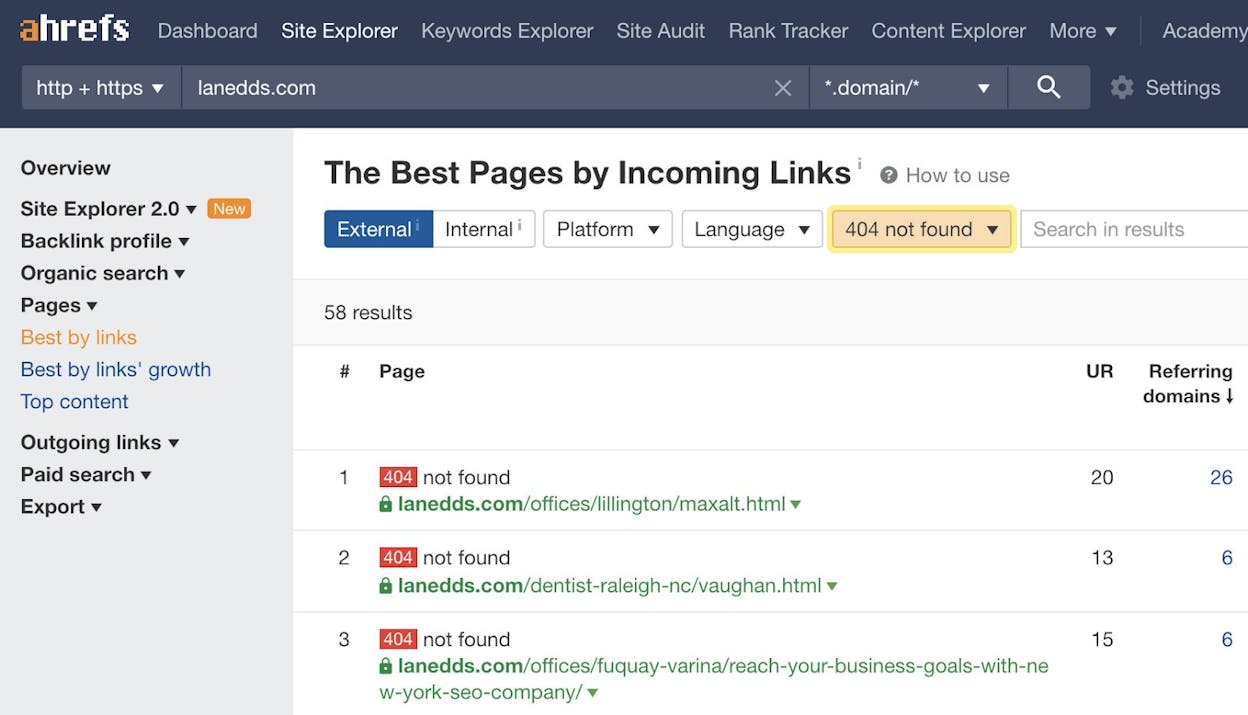
If you do not use Ahrefs, our free Broken Link Checker finds broken pages on any site you point it at. Run it monthly as part of your audit cadence.
For each dead URL, you have three options. If the original content was useful and is not on the site anywhere else, reinstate it from the Wayback Machine and serve it from the same URL. If the content is no longer relevant, redirect with a 301 to the closest live page on the same topic. Avoid pointing every dead URL at the homepage. Google treats homepage redirects from unrelated URLs as soft 404s and ignores the link equity.
4. Boost important pages with internal links
Internal links carry PageRank between pages on your site. They also help search engines and AI crawlers understand which pages matter most. A page with no internal links pointing at it is one that no engine treats as authoritative.
The leverage is in routing internal links from your highest-authority pages to your conversion pages.
Find your most-linked pages first. In Ahrefs, the Best by links report sorts pages by referring domains. In Google Search Console, the Links report shows the same view. Then ask which of your money pages, product comparisons, or pillar guides need a boost. Add a contextual link from each high-authority page to those targets, with anchor text that includes the target page’s primary keyword.
A repeatable process is to run the Internal Link Opportunities report in Ahrefs Site Audit. It scans your content for relevant unlinked mentions and pairs them with their natural target page.
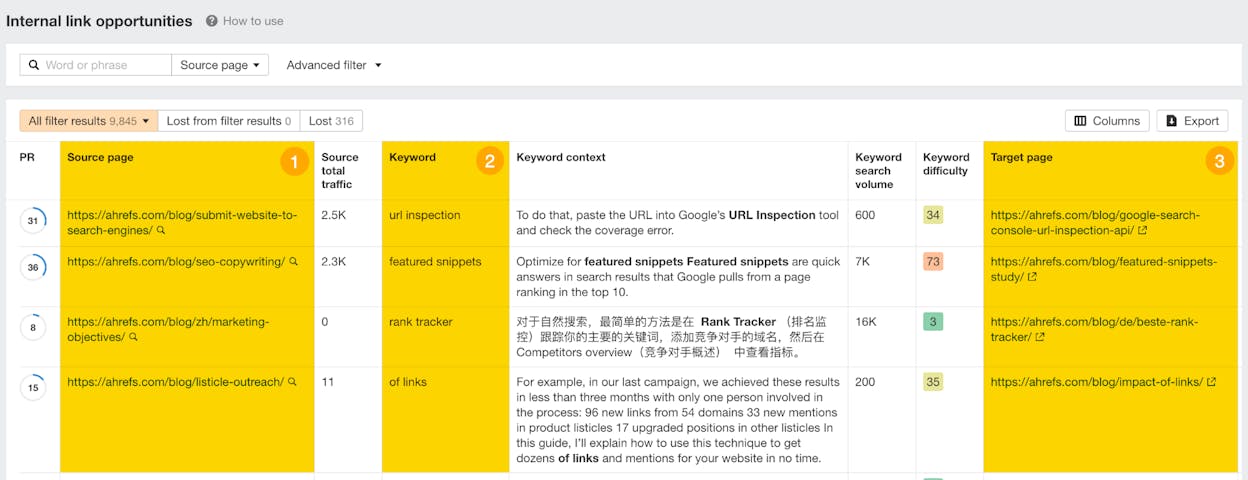
For a deeper walkthrough on anchor strategy and click-distance, see our guide on SEO internal linking.
For AI search, internal links matter for a related reason. AI crawlers traverse the same link graph, and pages buried deep get crawled less often. Surface your AI-relevant content within two clicks of the homepage and the engines will see it sooner.
5. Win featured snippets and AI citations
A featured snippet is the short answer Google shows above the regular results. Winning one moves you to position zero, often with a noticeable click bump.
The opportunity is largest for keywords where you already rank in positions 2 to 8 and Google already shows a snippet from a competitor. You are close enough to be considered. You just are not the chosen format.
To find these keywords in Ahrefs, open Site Explorer, go to the Organic keywords report, filter for Position 2-8, and filter SERP features to “Featured snippet” where the target does not rank. Sort by volume.
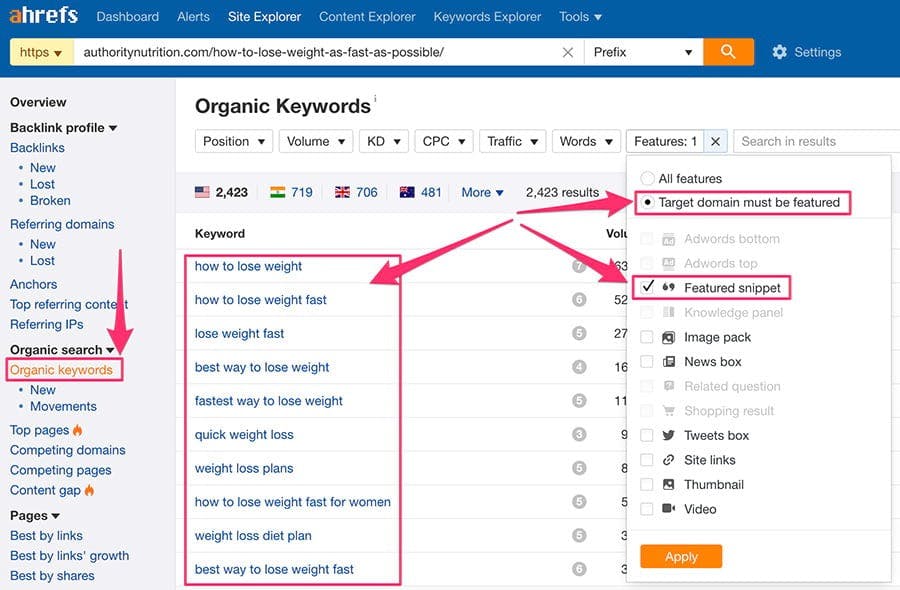
To win the snippet, study the format Google currently shows. If it is a paragraph snippet, match the length, around forty to sixty words, and answer the question in the first sentence. If it is a list snippet, structure your answer as an ordered or unordered list with each item starting with a verb.
The same formatting wins AI citations. ChatGPT, Perplexity, and Gemini extract direct answers from pages that lead with the answer and surround it with context. Long preambles get skipped. Buried answers get skipped.
To check whether you currently win the AI citation for a question, run an ad hoc prompt search. You enter the question, choose the engines, and see who gets cited.
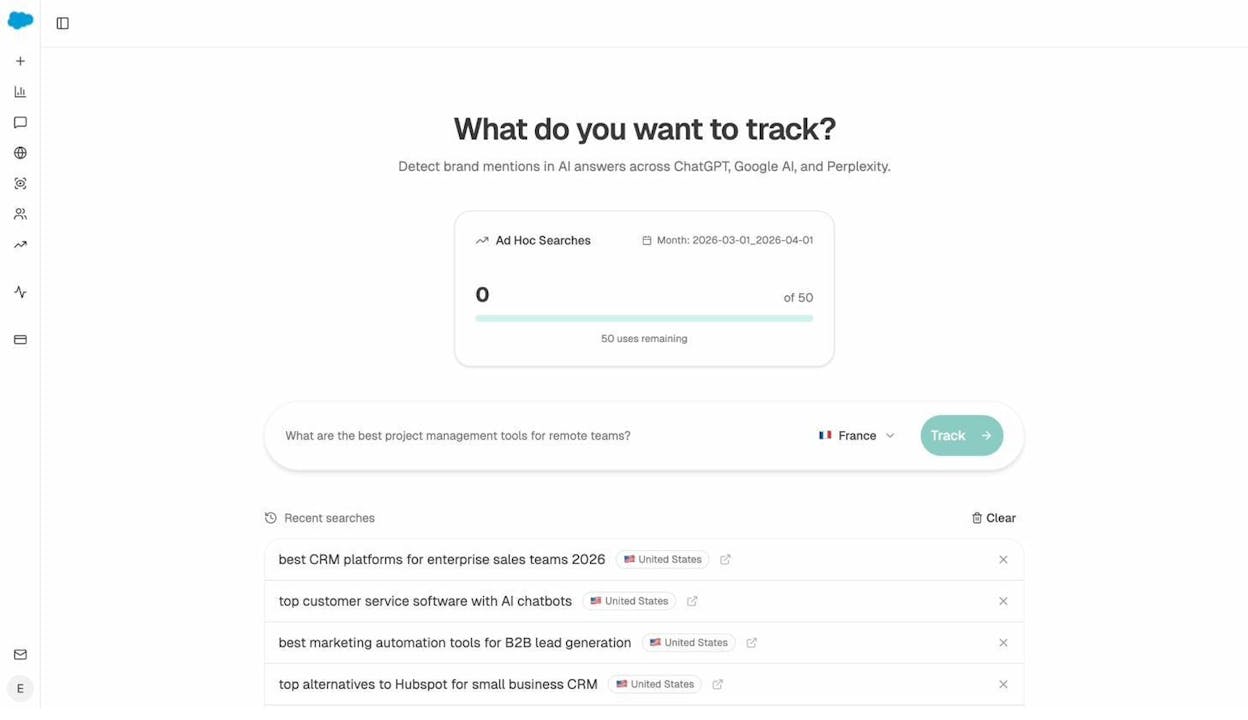
If a competitor is cited and you are not, open the cited page, study how the answer is structured in the first 200 words, and rewrite your opening to match. For more on the related People Also Ask box, see our guide on optimizing for People Also Ask.
6. Translate top-performing content
Google personalizes results by language and location. Even when a searcher types an English query in a non-English country, Google often surfaces local-language results above English ones. A page that ranks number one in English in the United States may not rank at all in France or Germany.
Start by finding your top-performing English pages in Ahrefs Site Explorer’s Top Pages report.
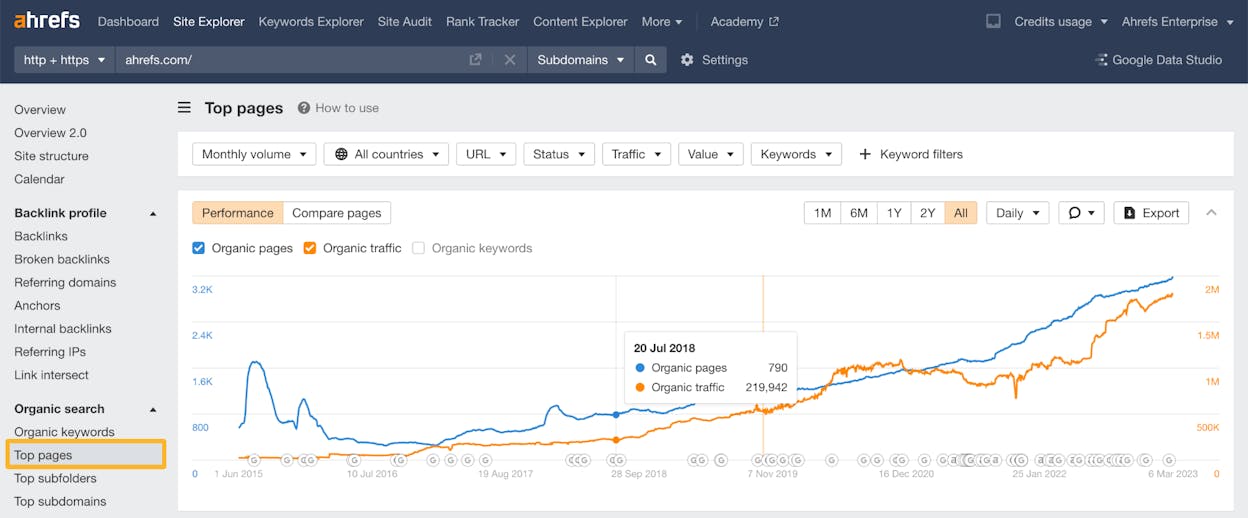
For each candidate, validate that the topic has search volume in your target language. Ask ChatGPT how a native speaker would phrase the query, then run that phrase through our free Keyword Generator Tool and our Keyword Difficulty Checker to confirm the volume is real.
Hire a native translator. Machine translation alone leaves enough subtle errors to undercut your rankings, especially for keyword-targeted phrasing where word choice carries SEO weight.
For AI search, the regional logic is similar. Most engines weight your domain by language signals on your site. A Spanish version on /es/ with proper hreflang reads as a Spanish source. A Spanish article inside an otherwise English directory likely will not.
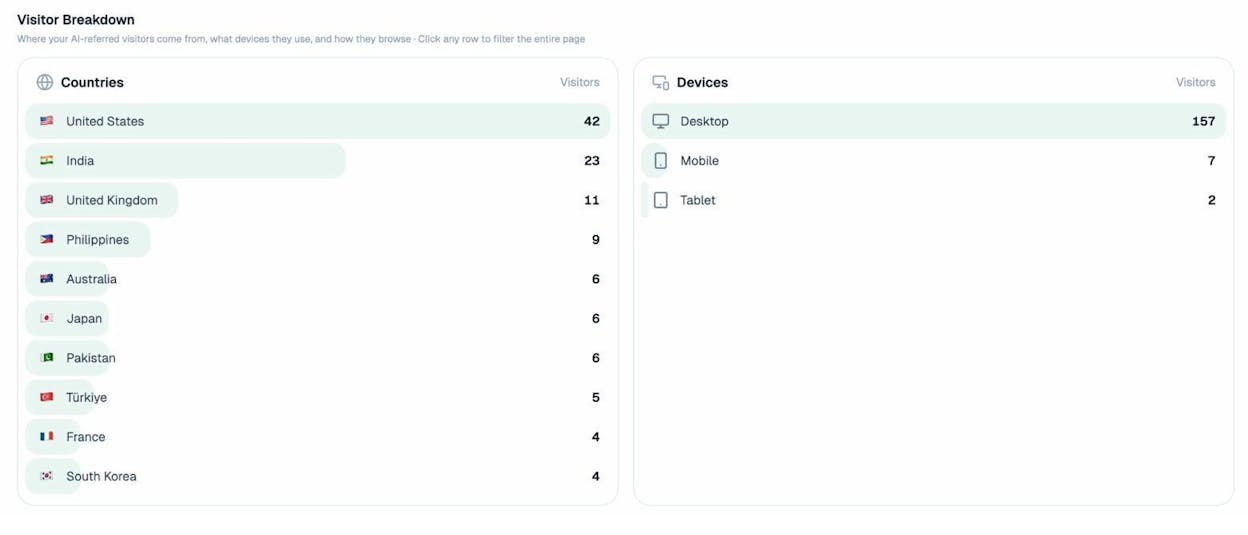
Track the lift in Analyze AI’s AI Traffic Analytics, which segments visitors by country.
7. Repurpose high-performing videos into blog posts
If a video has earned views and engagement on YouTube, the topic has search demand. The traffic you missed is the people who searched the topic on Google instead of YouTube.
Repurposing the video into a written post captures that demand. You already have the script, the talking points, and the examples. You only need to format it for the page.
Before you commit, validate the topic has Google search volume. Run the title and a few related phrases through our free Keyword Generator Tool. If you also publish on YouTube, our YouTube Keyword Tool gives you the YouTube-side picture.
Do not paste the transcript and call it done. Restructure around the search intent of the keyword you are targeting. Add the supporting screenshots, data, and links the video did not need. Embed the original video high on the page so engaged readers can switch formats.
For AI search, transcripts and structured headings are doubly important. AI engines parse text far better than they parse video. An H2-driven written version of your video is the version they will cite.
8. Rewrite weak titles and meta descriptions
If your page already ranks but the click-through rate is low, you do not need a higher rank to get more traffic. You need a better title.
This is the cheapest tactic in the list. The biggest gains come from pages with high impressions and low CTR.
Find them in Google Search Console. Open the Performance report, sort by impressions, and look for pages with CTR well below the average for that position. A page ranking number three with a 1.2% CTR is leaving traffic for any site that writes a tighter title.
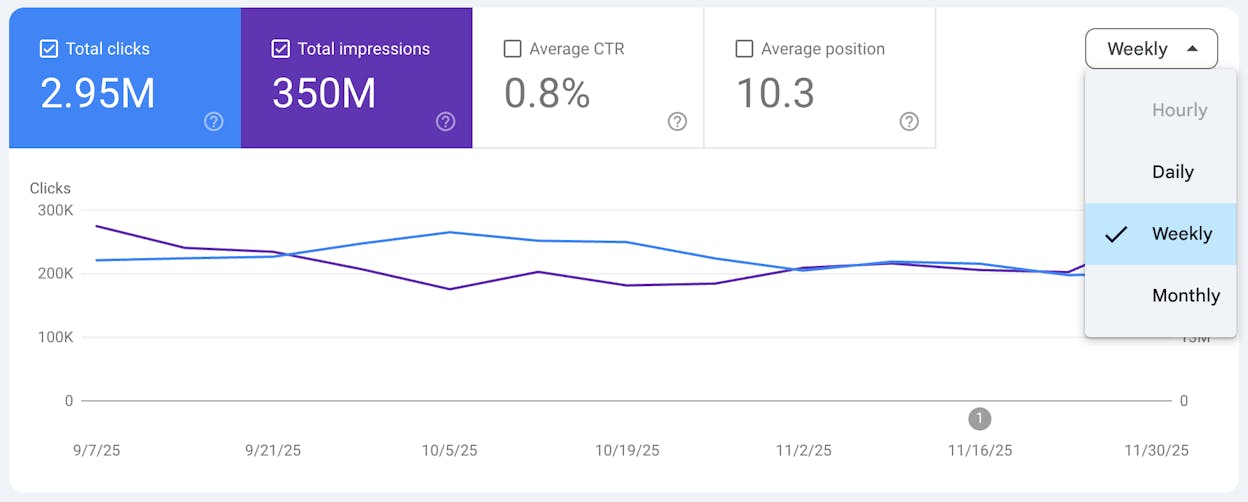
To rewrite the title, ask ChatGPT for ten variations. Include the target keyword in each. Keep them under 60 characters. Pick the one that promises the most specific outcome. Do the same for the meta description. Two sentences, lead with the benefit, end with a soft action.
For AI search, the title carries less weight because AI engines read the body of the page. The first paragraph carries the most weight, because that is the section AI extractors quote most often. If your top page opens with three sentences of throat-clearing before the actual answer, rewrite the opening. The Analyze AI Content Optimizer scores opening paragraphs against citation patterns and flags openings that are too soft to get cited.
9. Add schema markup to eligible pages
Schema markup is structured data that tells search engines and AI parsers what a page is about. It does not lift rankings directly. It triggers rich results, which lift CTR, which lifts traffic.
Common schema types worth adding are Article, FAQ, HowTo, Product, Review, Recipe, and Organization. Each unlocks a specific rich result.
Implementation has two paths. If you use WordPress, plugins like Yoast or Rank Math add the relevant schema based on the page type with no code from you. If you use a headless CMS or want non-standard schema, generate the JSON-LD with a schema generator and paste it into the page head.
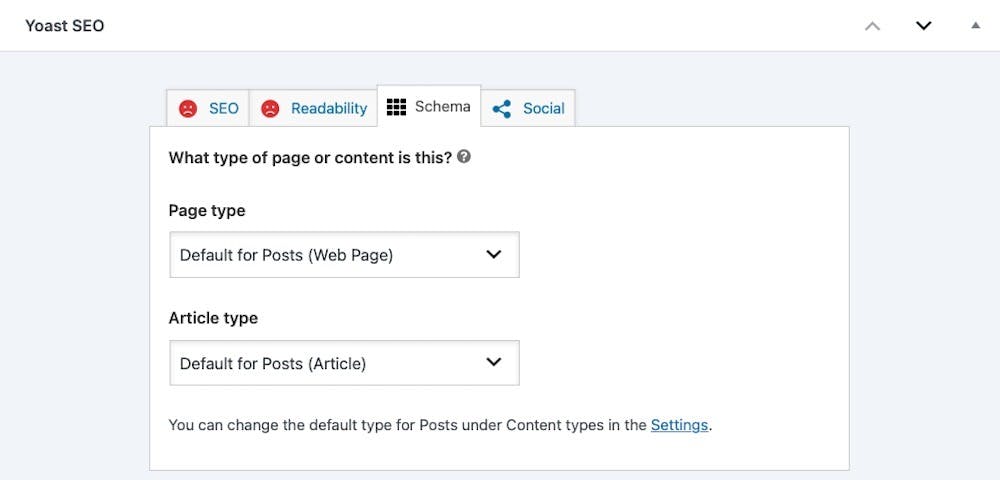
Validate your code with the Google Rich Results Test, which flags missing required properties.
For AI search, schema is doubly useful. Engines like Perplexity and Gemini parse JSON-LD to extract structured facts, which makes your content easier to cite accurately. A product page with proper Product schema is more likely to be cited with the correct price.
10. Consolidate pages competing for the same query
When two pages on your site target the same keyword and the same intent, they cannibalize each other. Google rotates rankings between them, and neither page reaches its full position.
You find cannibalization by looking for keywords where your domain has multiple URLs ranking with positions that swap over time. In Ahrefs Site Explorer, open the Organic keywords report, switch on the “Multiple URLs only” toggle, and look at the ranking history of each.
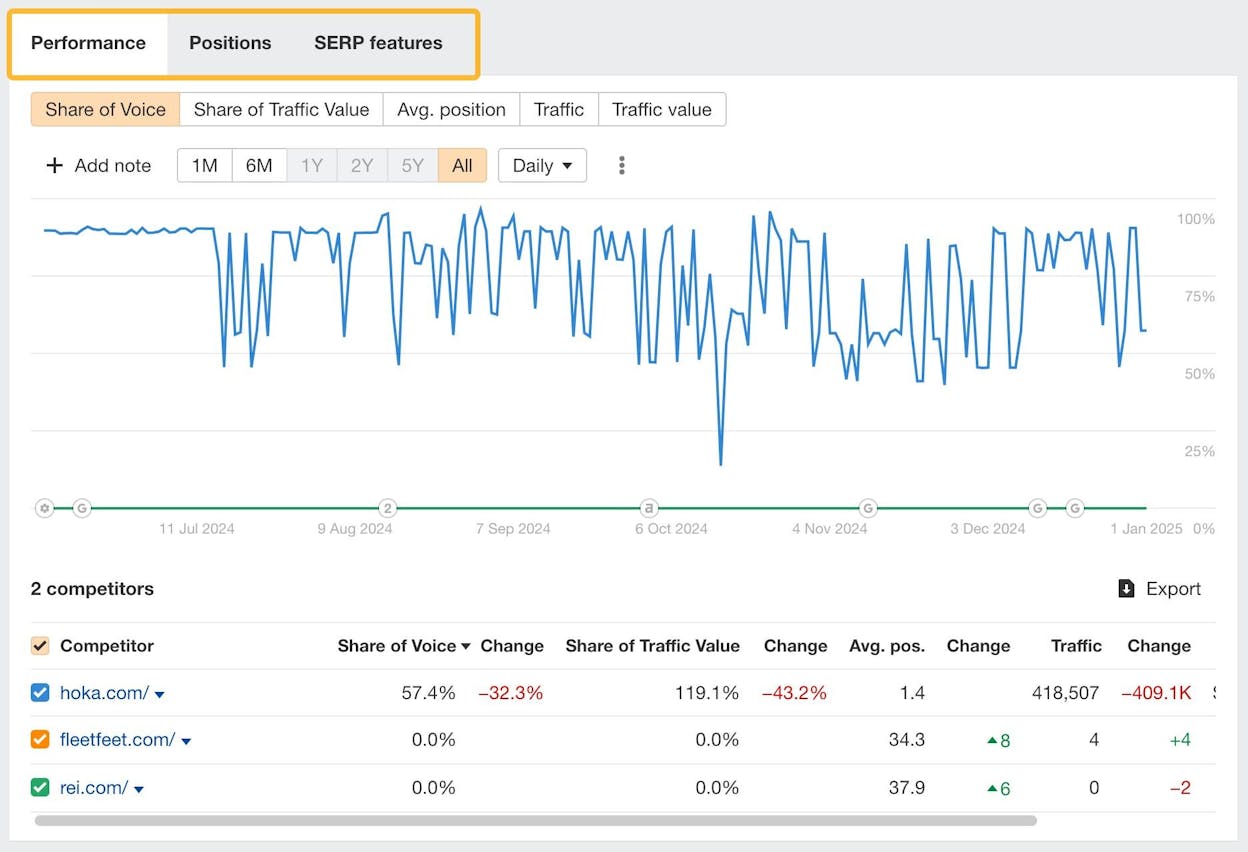
If both pages serve different intents, one informational and one commercial for example, leave them. If they serve the same intent, you have three options.
Merge the weaker page into the stronger one. Keep the URL of the page with more backlinks and 301 the weaker page.
If the topic is large enough to deserve a hub, build a pillar page that links out to the individual articles. The pillar ranks for the head term, and the articles rank for the long tails.
If the cannibalization is title-driven, where multiple posts share similar slugs and titles, rewrite the titles to differentiate the angle, then re-evaluate after a month.
11. Earn reviews on the third-party platforms AI engines cite
For local businesses, Google reviews are one of the highest-leverage local SEO signals after the basics of your business profile. More five-star reviews lift your map pack rank, which lifts clicks to directions and phone calls.
The same logic now applies to AI search for B2B and SaaS brands, but the platforms are different. When you ask ChatGPT or Perplexity for “best CRM for small teams,” the engines pull heavily from G2, Capterra, TrustRadius, and Reddit. The brands cited in the answer are usually the brands with the most recent reviews on those platforms.
You can see this pattern in Analyze AI’s Sources dashboard, which shows the top domains AI engines cite in your space.
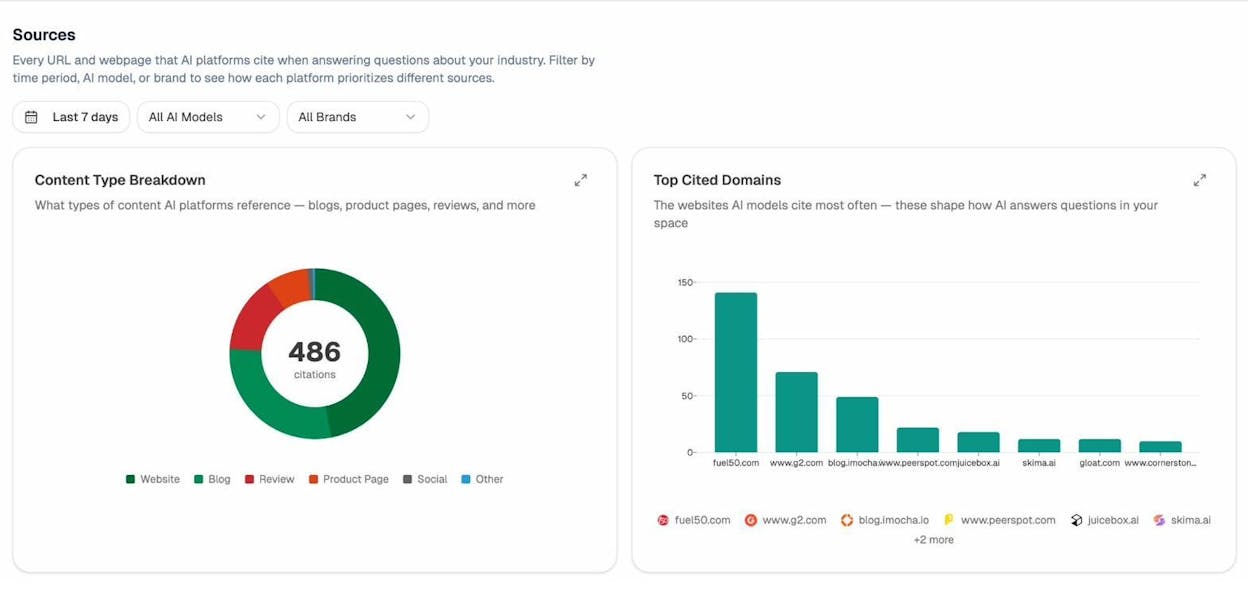
If your space cites G2 and Capterra heavily, getting more reviews there is one of the few AI-search levers a brand can move on directly. Run a quarterly review-ask cadence aimed at your power users. A short email that links straight to your G2 review page tends to convert better than a generic ask.
12. Publish free tools
Free tools are the slowest tactic in this list and the highest-ceiling. A useful free tool ranks for the head term in its category, earns links from journalists and bloggers, and gives qualified prospects a hands-on taste of your product.
Three reasons free tools work in search and in AI engines. First, intent has shifted. For many “how do I check X” queries, searchers used to want a tutorial. Now they want the tool that does the check. Second, free tools earn links naturally because they are useful. Third, AI engines cite tools as concrete answers when someone asks for one.
To find a tool worth building, start with your product. Pick the smallest valuable piece you can isolate, the slice that someone could use in thirty seconds. Then validate the keyword. Look at “checker,” “generator,” “calculator,” and “tool” combinations alongside your category terms in any keyword research tool.
You can see how this strategy looks in production by browsing our free tools library, which includes a SERP Checker, a Website Authority Checker, a Bing Keyword Tool, and a Keyword Rank Checker. Each ranks for its keyword and feeds qualified leads into the product.
What not to do
A short list of moves that will cost you traffic faster than the tactics above will earn it.
Do not publish off-topic content to chase trends. Mixing unrelated niches confuses your topical signal and dilutes the authority you have already built.
Do not publish thin or AI-generated content at scale. Pages that do not meaningfully help a reader get filed under “thin content” by Google and ignored by AI engines.
Do not buy backlinks from low-quality networks. Cheap links inflate domain rating numbers without moving rankings, and they invite manual penalties.
Do not chase keyword volume without checking intent. A high-volume keyword you cannot satisfy is worse than a low-volume keyword you can.
Track and double down on what is working in AI search
The tactics above only compound if you can see what is working. For traditional search this is solved by Google Search Console, Ahrefs, and Google Analytics.
For AI search, this layer has been missing until recently. Analyze AI’s AI Traffic Analytics shows which AI engines send visitors, which pages they land on, and how engaged those visitors are.
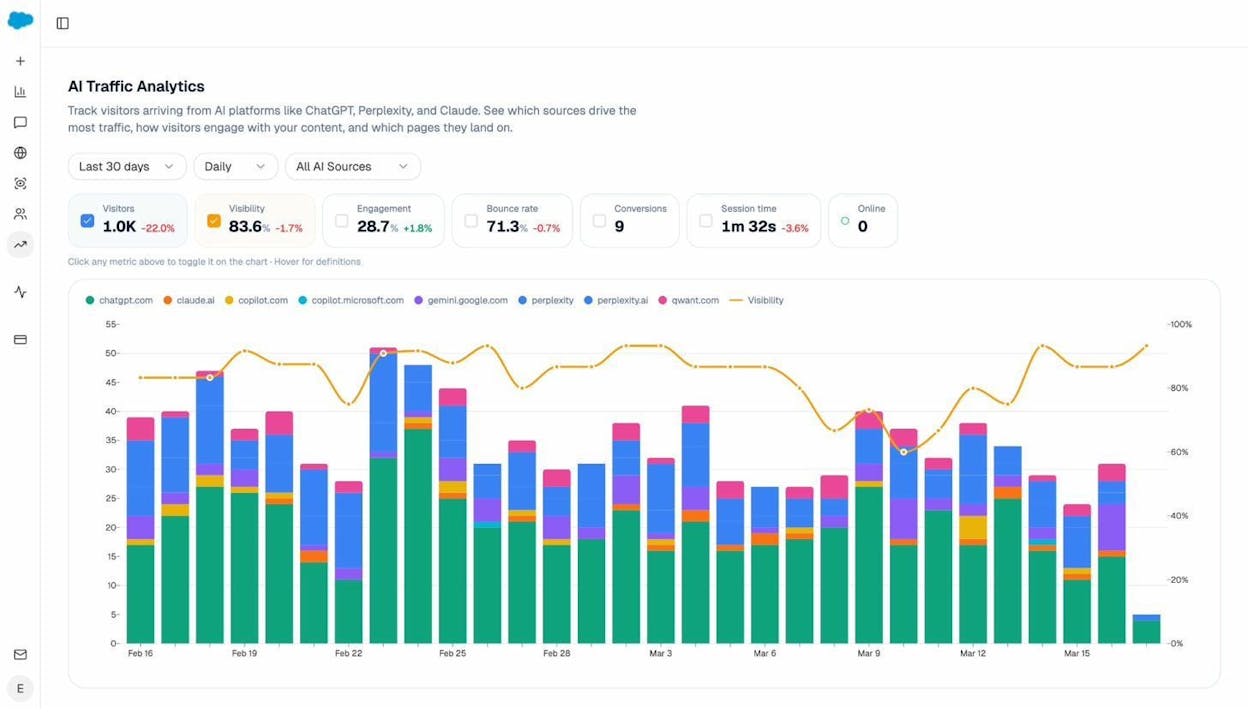
The Landing Pages report is the high-leverage view. It tells you which of your pages are already winning AI-search traffic without you trying.
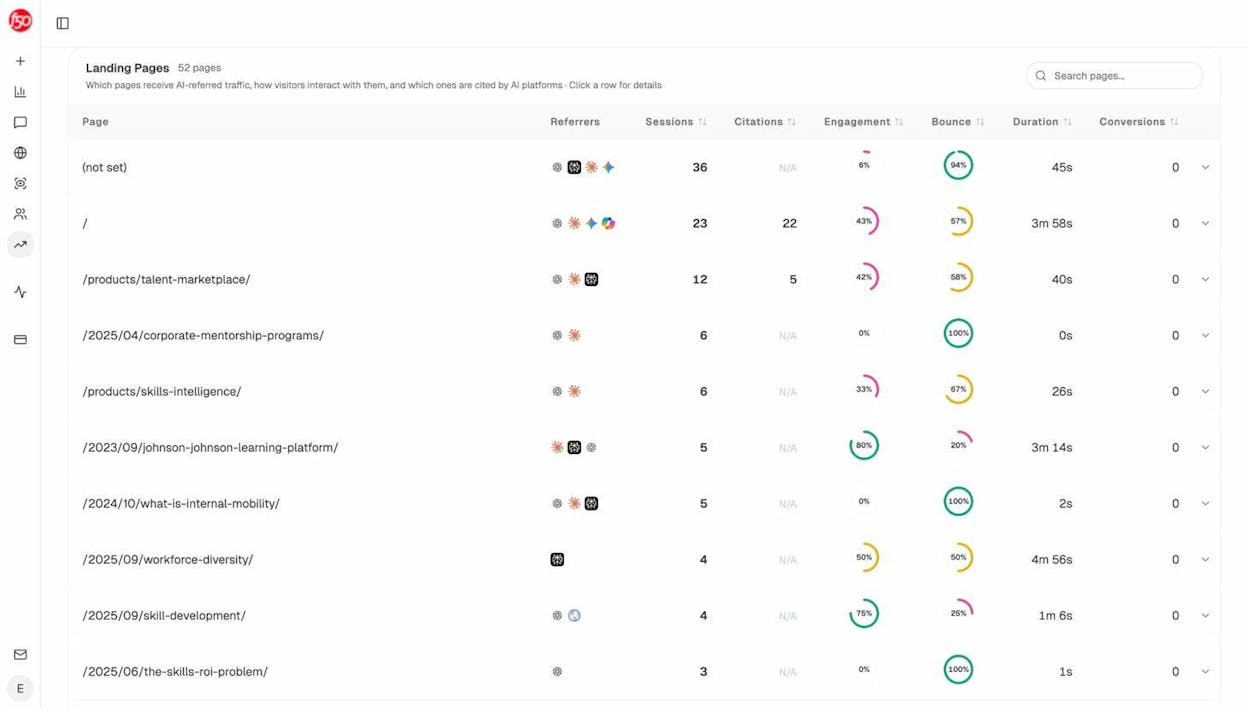
If three of your top ten landing pages are listicle comparisons and seven are how-to guides, you know which formats your space rewards. Double down on the format that wins.
If a page that ranks well in Google brings zero AI-search visits, the page is structurally invisible to AI engines. Run it through the Analyze AI Content Optimizer and apply the gap fixes from tactic 2.
For more on the mechanics of getting cited, our guide on how to rank on ChatGPT walks through the citation patterns we see across 65,000 prompts.
Final thoughts
The twelve tactics above are not a list to do once. They are a list to run on a quarterly cadence. Each pass lifts a page or two, and the gains stack.
Before you start the cycle, run a site audit to catch any technical issues that would undercut every tactic on this list. Indexation errors, slow-loading templates, and broken hreflang quietly cap your ceiling. Our roundup of the best SEO audit tools covers the better options.
Most of your future organic traffic is already on your site. Pull it out.

Ernest

Ibrahim
![Link Prospecting: How to Find Quality Backlinks for Your Website [With Template]](/_next/image?url=https%3A%2F%2Fwww.datocms-assets.com%2F164164%2F1778017297-blobid0.png&w=3840&q=75)


