

![Link Prospecting: How to Find Quality Backlinks for Your Website [With Template]](/_next/image?url=https%3A%2F%2Fwww.datocms-assets.com%2F164164%2F1778017297-blobid0.png&w=3840&q=75)

Summarize this blog post with:


In this article, you’ll learn how to do link prospecting in five repeatable steps, the criteria that separate strong prospects from waste-of-time outreach, and the search operators and tools top SEOs use to build a clean list. You’ll also learn how to extend the same workflow to AI search, where the sites LLMs cite are often the sites worth a backlink pitch. By the end, you should be able to open a spreadsheet, run a few searches, and walk away with a list of domains worth reaching out to.
Table of Contents
What link prospecting actually is
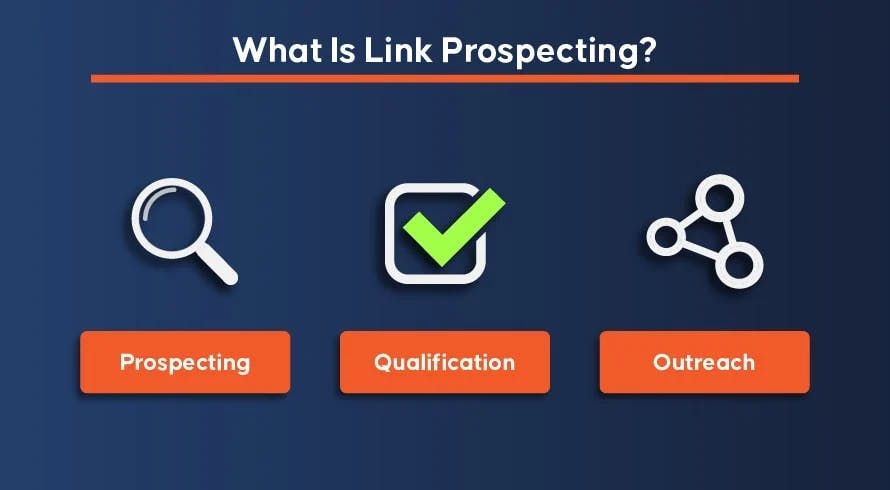
Link prospecting is the work of finding sites that could plausibly link to yours, vetting them for quality and relevance, and gathering enough information to run an outreach campaign without burning the prospect.
It sits before outreach. It sits after strategy. And it is the part of link building most teams underinvest in, because it feels like spreadsheet work and not like real SEO. The result is generic outreach that gets deleted on sight.
Done well, link prospecting filters out the sites that will hurt you, surfaces the sites that will move rankings, and gives you enough context to write a pitch that does not sound templated.
Why link prospecting matters in 2026
The standard answer is that Google penalizes sites with low-quality backlinks, so prospecting protects you from the wrong kind of attention. That is still true. But the bigger reason now is that the same link graph powers two channels at once.
Search engines still use links as a strong signal of authority. AI engines like ChatGPT, Perplexity, Gemini, and Copilot are pulling from a similar pool of trusted publishers, listicles, and editorial pages when they generate answers. When a publisher links to you, they often start citing you in adjacent content. When an LLM cites a publisher often, that publisher becomes a high-leverage backlink target. A single prospect list can serve both motions.
We hold this view at Analyze AI for a reason. Our manifesto is that AI search is an additional organic channel, not a replacement for SEO. The same content that ranks well in Google tends to be the content that LLMs surface in their answers. The same publishers that pass link equity tend to be the ones that LLMs treat as reliable. So a good prospect list is no longer just a backlink asset. It is also a citation map.
A 5-step link prospecting workflow
Below is a repeatable process you can hand to a junior link builder or run yourself. It works for guest posting, niche edits, broken link campaigns, digital PR, and skyscraper outreach. It also doubles as a citation prospecting workflow.
Step 1. Match prospects to your link building strategy
The prospects you need depend on the tactic you plan to run. A guest posting list is built differently from a broken link campaign. A digital PR list looks nothing like a niche edit list. Confuse them and you pitch the wrong people the wrong thing.
Here are the tactics most teams use, and the kind of prospect each one needs.
|
Tactic |
What you need to find |
How you find it |
|---|---|---|
|
Guest posting |
Niche-relevant blogs that accept contributors |
Google search operators, Content Explorer |
|
Niche edits |
Existing pages where your link fits inside the body |
Topic searches, competitor backlink reports |
|
Broken link building |
Pages that link to dead resources you can replace |
Broken link checkers, archive checks |
|
Digital PR |
Journalists and authors covering your space |
Author searches, HARO-style platforms |
|
Skyscraper |
Pages that already link to inferior versions of your content |
SERP backlink reports |
|
Linkable assets |
Pages linking to similar studies, calculators, or templates |
Backlink reports for similar assets |
Pick one tactic per campaign. A clean list for one tactic will outperform a mixed list for three. If you are running guest posting and broken link building together, build two separate lists. The vetting criteria barely overlap, and the outreach copy is different.
Step 2. Define your evaluation criteria
A prospect is only useful if it would actually help you. Three metrics handle most of the filtering, and a fourth is becoming non-negotiable in 2026.
Relevance. This is the strongest signal that a link will help you and the weakest signal that any tool can measure cleanly. Topical relevance is whether the site covers your subject area. Geographic relevance matters for local businesses pursuing customers in a specific region. A relevant link from a small blog usually beats a high-authority link from a site that has nothing to do with your topic.
Domain authority. Most teams use a metric like Domain Rating from Ahrefs, Authority Score from Semrush, or Domain Authority from Moz. These metrics are proxies for the strength of a site’s backlink profile and are useful for filtering at scale. You can run a quick check on any domain using our free Website Authority Checker.
Organic traffic. Authority metrics can be manipulated. Organic traffic is harder to fake, because Google has to actually be sending visitors. A site with a high authority score and almost no traffic is a red flag. Use our Website Traffic Checker to confirm a domain is actually pulling organic visitors before you spend time on outreach.
AI citation footprint. This is the criterion almost no link prospecting guide includes yet. If a domain is being cited by ChatGPT, Perplexity, Gemini, or Copilot when users ask questions in your category, two things are true. The domain has earned editorial trust in the eyes of an LLM, which is a strong quality signal. And any backlink, mention, or co-citation you secure on that domain has a higher chance of feeding into AI answers about your space.
A baseline filter that works for most B2B SaaS and content sites looks like this.
|
Metric |
Floor |
Ceiling |
|---|---|---|
|
Domain Rating (or equivalent) |
40 |
85 |
|
Monthly organic traffic |
1,000 |
No upper limit |
|
Topical relevance |
Tight match to your category |
Any |
|
AI citation footprint |
At least one citation in the past 90 days |
Any |
Adjust the floor for early-stage sites and lift it for enterprise programs. The point is not the number. The point is that you wrote it down before you started looking.
Step 3. Find quality link prospects
Five methods consistently produce strong prospect lists. The first three are familiar to anyone who has done link building before. The last two pull from the AI search layer and are where most teams have a chance to pull ahead.
3a. Mine your competitors’ backlinks
Your competitors have already done the qualification work. The sites linking to them are willing to link to a company in your category, which is the hardest barrier to clear in outreach.
Pull a competitor’s domain into Ahrefs Site Explorer (or a similar backlink tool) and open the Best by links report. This shows you the pages on their site that have earned the most backlinks, which tells you what kind of content the publishers in your space link to.

Then run a Link Intersect report against two or three competitors at once. This surfaces the domains that link to multiple competitors but not to you, which is the cleanest definition of a missed opportunity.
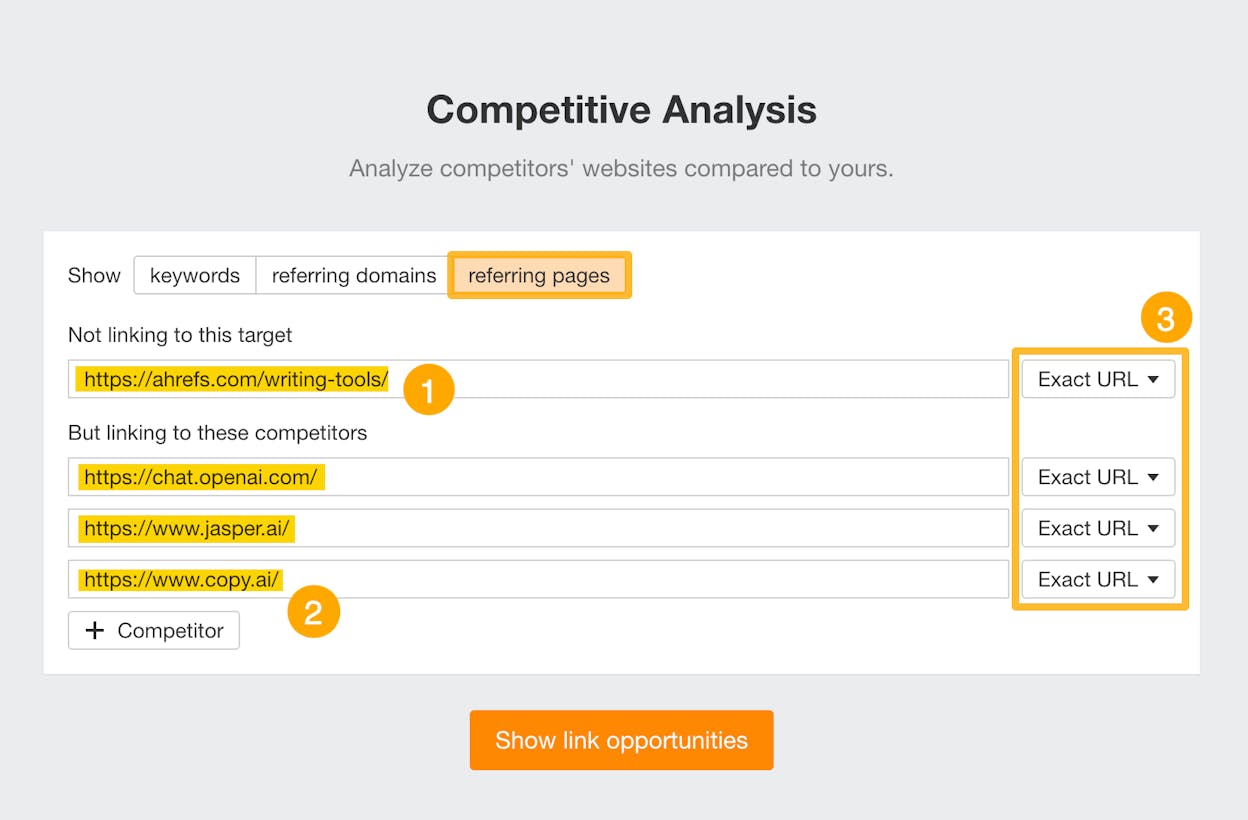
For more on this workflow without missing the obvious wins, see our guide on SEO competitor analysis.
3b. Use Google search operators
Google is still the cheapest prospecting tool you have. Search operators let you find pages that match specific patterns, useful for guest post opportunities, resource pages, or pages that mention a topic without linking to a good source.
Here are operators that work for guest posting prospects in any niche.
"your topic" + "write for us"
"your topic" + "guest post by"
"your topic" + "contribute"
"your topic" + inurl:guest
"your topic" + inurl:contribute
"your topic" + "guest blogger" + inanchor:contact
For resource page prospecting, swap in operators that surface curated lists.
"your topic" + inurl:resources
"your topic" + intitle:resources
"your topic" + "useful links"
"your topic" + "recommended reading"
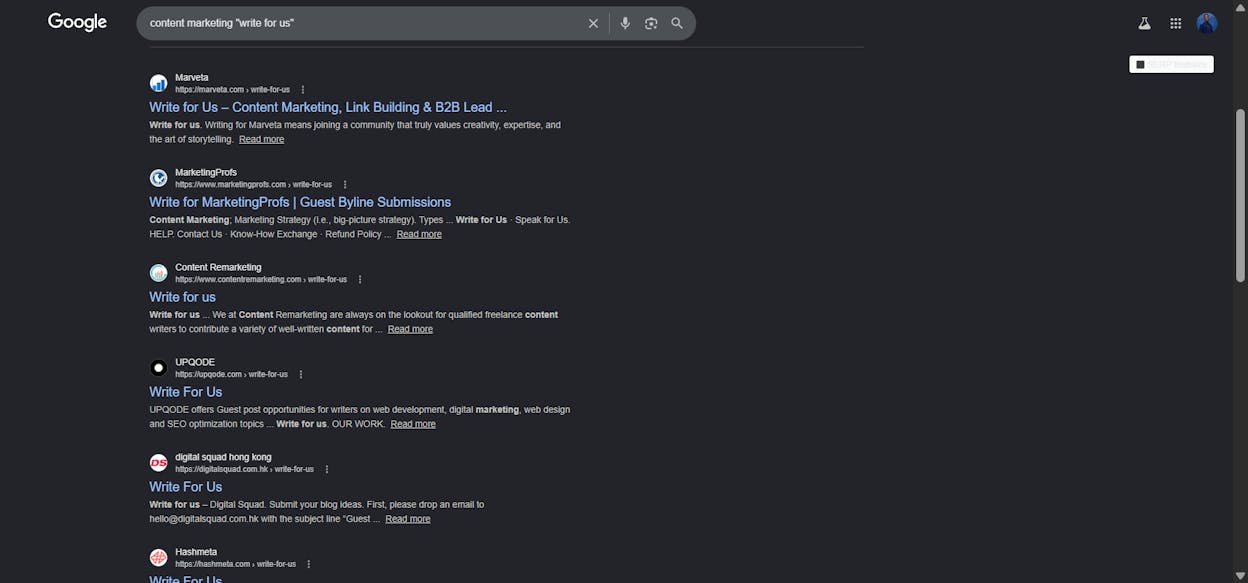
Install the Ahrefs SEO Toolbar (or the Moz or Semrush equivalent) so you can see authority and traffic metrics directly on the SERP. This lets you disqualify weak domains in real time instead of pasting each URL into a separate tool.
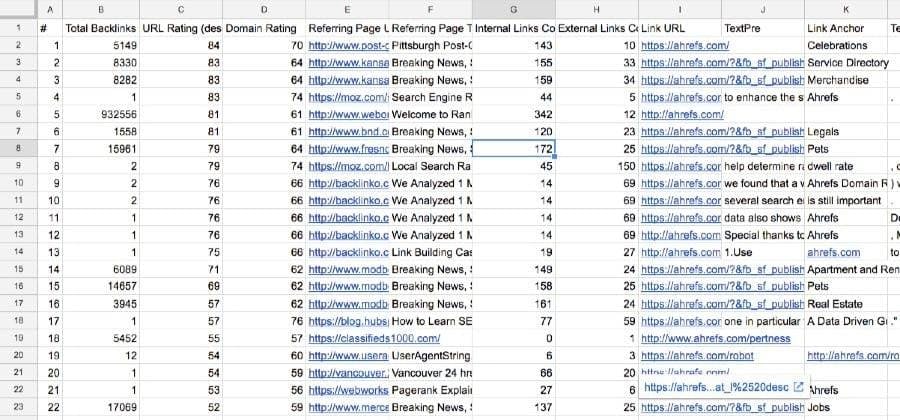
Paste qualified results into a spreadsheet as you go.
3c. Find broken link prospects
Broken link building works because you offer a publisher something useful before you ask for anything. You find a dead link on their page, point it out, and suggest a live page on your site as a replacement.
Use our free Broken Link Checker on resource pages and roundup posts in your niche. The tool surfaces every dead outbound link on a page in one pass.
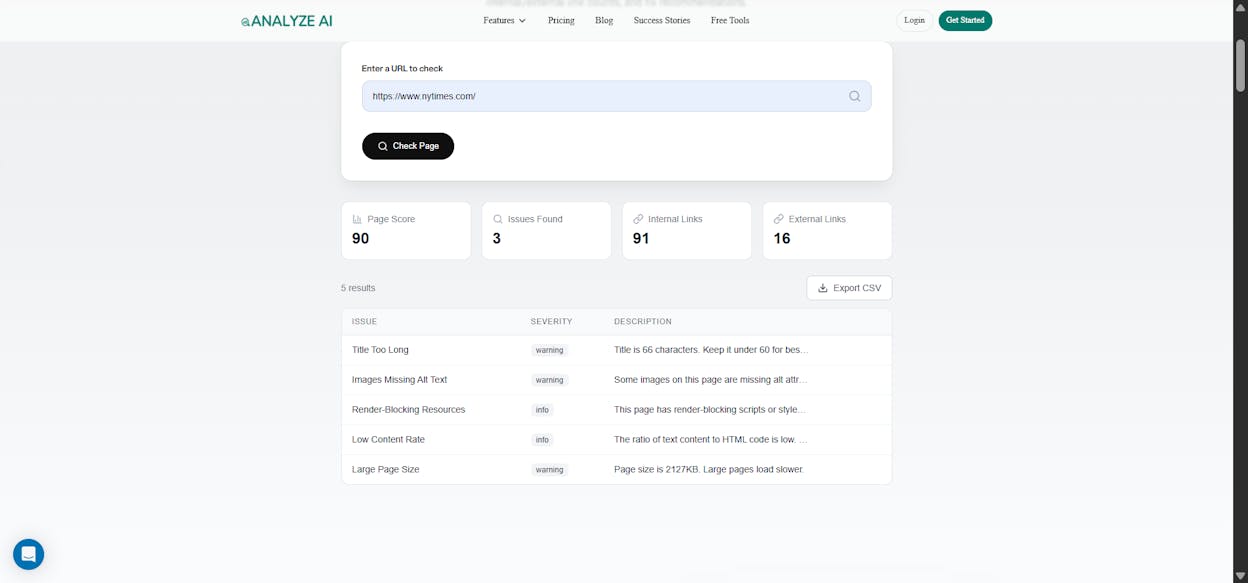
Once you have a list of dead resources, plug each broken URL into a backlink tool to find every site that still links to it. Each becomes a prospect. The pitch is the same template every time, which makes the campaign easy to scale.
For more on this category, see our guide to the 9 best backlink building tools.
3d. Find prospects through AI citations
This is where the workflow changes shape. When ChatGPT or Perplexity answers a question in your category, it cites a small set of trusted domains. Those domains are doing the editorial work of summarizing your space. They are also strong candidates for a link, a quote, or a brand mention.
Open the Sources dashboard in Analyze AI and you get the citation graph for your category. The Top Cited Domains panel shows the publishers that LLMs reach for when answering your tracked prompts.

Filter by AI model to see which publishers each engine prefers. ChatGPT often leans on G2, Wikipedia, and category-specific blogs. Perplexity reaches deeper into long-tail content. Gemini cites a different mix again. The publishers that show up across all four engines are the ones to prioritize.
The URLs view shows the exact pages being cited, what content type they are, and which brands get mentioned in the answer.
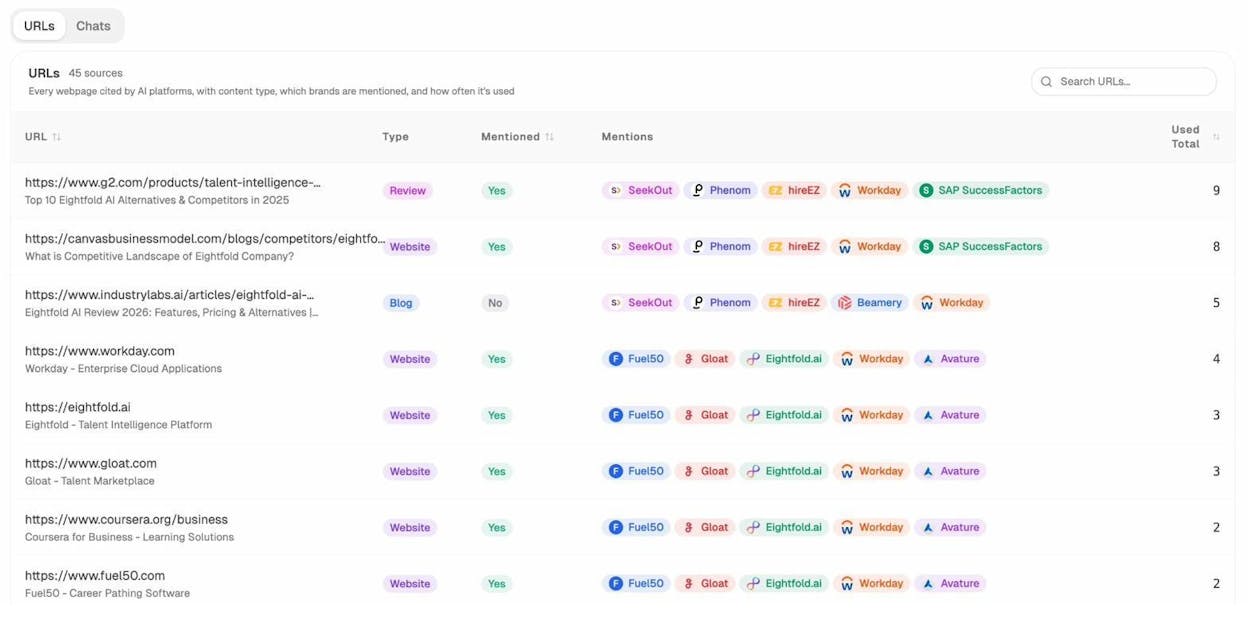
Two things are useful here. First, every domain on this list is a backlink target with proven editorial gravity. Second, the brands listed under “Mentions” are the competitors AI engines treat as authoritative in your space. If a publisher cites a comparison page that mentions five competitors but not you, that is not a backlink prospect. It is an outreach campaign with a clear edit request.
3e. Reverse-engineer the pages that earn AI citations
The other half of citation prospecting is figuring out what kind of content earns the link. Open the Landing Pages report in AI Traffic Analytics to see which of your pages are getting cited, by which engines, and on what prompts.
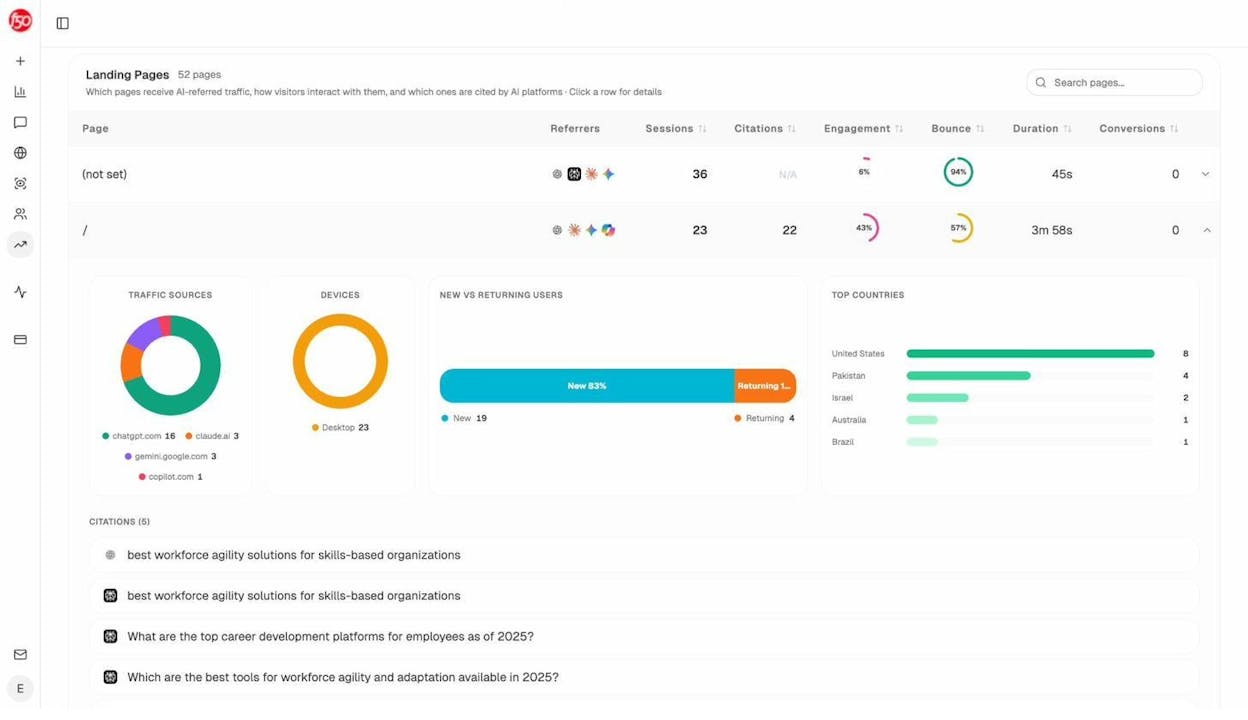
Patterns show up quickly. Listicles and comparison pages tend to attract citations across most categories. Original studies and benchmarks attract citations and backlinks at the same time. The pages that work for you become the pitch you take to the publishers in step 3d, because you are offering content of the same shape they have already cited from someone else.
For more detail on the tactics that earn citations, see our breakdown of how to get mentioned in AI search and our guide on how to rank on Perplexity.
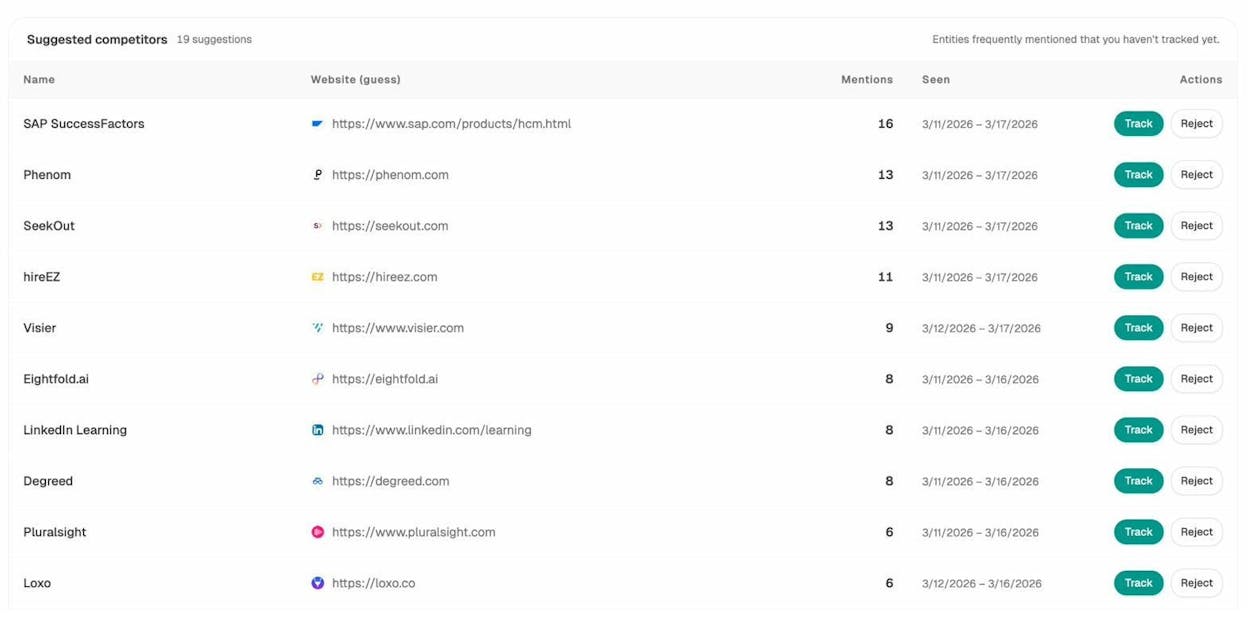
You can also use the Suggested Competitors view in Analyze AI to find brands that show up in AI answers for your category but that you have not been tracking. Each one is a new lead for the competitor backlink mining process in step 3a.
Step 4. Evaluate and prioritize the list
By this point you should have a few hundred candidate domains. Disqualify aggressively, because outreach to a weak prospect costs the same as outreach to a strong one.
Apply your filters from step 2 in this order.
-
Topical relevance. Open the homepage. If the site does not cover your category, cut it.
-
Authority threshold. Drop anything below your DR floor.
-
Organic traffic. Drop anything where traffic is suspiciously low for the authority score, which is the most reliable manipulation signal.
-
AI citation footprint. If the domain is in your Sources dashboard, mark it as a high priority. If it is not, keep it but rank it below the cited domains.
Then check for spam signals on every site that survives.
|
Green flag |
Red flag |
|---|---|
|
Named authors with bios and history |
Posts attributed to “Editorial team” |
|
Real about page with company information |
No about page or contact details |
|
Topical focus and consistent publishing |
Posts on every topic from crypto to weight loss |
|
Reasonable ad density |
More display ads than content |
|
Editorial outbound links |
Long lists of paid outbound links |
Sites with manipulated authority metrics tend to fail more than one of these checks. If a site looks suspicious, it usually is.
Score what is left.
-
Tier 1: Relevant, above DR floor, healthy traffic, cited by AI.
-
Tier 2: Relevant, above DR floor, healthy traffic, not cited by AI.
-
Tier 3: Relevant, below DR floor, healthy traffic, possibly cited.
Run outreach in that order. Tier 1 deserves a personalized pitch. Tier 2 can run on a lighter template. Tier 3 should only get touched if your other tiers are exhausted.
Step 5. Find contacts and prepare the outreach
A prospect with no contact is not a prospect. This is the last filter, and it removes more domains than most people expect.
Use an email lookup tool like Hunter, Apollo, or Findymail to pull verified addresses for each domain. Search by name where you can, because pitches sent to a named editor convert several times higher than pitches to a generic info inbox. Capture the editor’s name, role, and one piece of context for the opening line.
Pre-write your pitch templates for each tactic. Personalize the opening line and the value proposition for every Tier 1 prospect. Use a heavier template for Tier 2 and Tier 3, but never send a pitch where the only personalization is the recipient’s first name.
Track every prospect through one of three statuses. To outreach. Awaiting reply. Closed. An outreach platform like Pitchbox, BuzzStream, or Respona handles the sending, follow-ups, and reply tracking. Cap follow-ups at two.
Common link prospecting mistakes
A few patterns show up in almost every prospecting program that is not working.
Optimizing for authority instead of relevance. A DR 80 site in an unrelated category will not move your rankings the way a DR 50 site in your exact niche will. Authority metrics are useful for filtering. They should not be the thing you optimize for.
Treating prospecting as a one-time project. New publishers launch every month. Old ones get acquired or change focus. Run the prospecting workflow once a quarter at a minimum. Once a month is better.
Ignoring brand mentions. Some of the strongest opportunities are pages that mention your brand without linking. These convert several times higher than cold pitches, because the writer has already vouched for you. Search for "your brand" in quotes across the past 90 days, then check which mentions are unlinked.
Skipping the AI layer. A prospect list built only from backlink data will miss the publishers that LLMs are starting to cite but that have not yet built the kind of backlink profile a traditional SEO tool would surface. These are the prospects with the fastest-growing influence in your category, and the ones your competitors do not yet have.
Build the list once, use it twice
Link prospecting used to be a one-channel exercise. You built a list, ran outreach, collected backlinks, and the work ended there.
The job now is bigger and easier at the same time. The publishers worth pitching for a backlink are usually the same publishers worth pitching for an unlinked mention, a quote, or a place in the next listicle the LLM is going to cite. A single prospect list, refreshed quarterly, can carry your link building program and your AI search visibility program at the same time. Build the list, refresh it, and reuse it across every campaign.

Ernest

Ibrahim


