



Summarize this blog post with:


In this article, you’ll learn the six marketing channels that drive revenue for online stores, how to set up each one step by step, and how to use AI search visibility as a new organic channel alongside traditional SEO. You’ll also get actionable tips for keyword research, conversion optimization, content marketing, and tracking your brand across both Google and AI platforms like ChatGPT, Perplexity, and Gemini.
Table of Contents
What Is E-commerce Marketing?
E-commerce marketing is the practice of using online channels to drive awareness, traffic, and sales for a digital storefront. It includes paid channels like Google Ads and Facebook retargeting, owned channels like email and your blog, and earned channels like organic search rankings and affiliate referrals.
The goal is simple: get potential customers to find your products, trust your brand, and complete a purchase. The best e-commerce marketers do this across multiple channels at once so they’re never dependent on a single source of traffic.
Here’s why that matters. If 80% of your revenue comes from paid ads and costs rise, your margins collapse overnight. But if you’ve also built organic search traffic, an engaged email list, and a presence in AI-generated answers, you have a buffer. Diversification isn’t just smart — it’s survival.
The Six Main E-commerce Marketing Channels
Every e-commerce marketing strategy draws from the same pool of channels. The mix that works for you depends on your budget, your product, and where your customers spend time.
1. Search Engine Marketing (SEM)
Search engine marketing includes both organic traffic from Google (SEO) and paid traffic from Google Ads (PPC). Together, they cover every stage of the buyer’s journey — from someone researching “best running shoes for flat feet” to someone ready to buy “Nike Pegasus 41 size 10.”
Search engine optimization (SEO)
SEO is how you show up in Google’s organic results without paying for each click. For e-commerce stores, this means optimizing your product pages, category pages, and blog content so they rank for the keywords your customers search.
The core of e-commerce SEO involves four things: keyword research to find what shoppers search for, on-page optimization to align your pages with those searches, technical SEO to make your site fast and crawlable, and backlinks from other websites to build authority.
SEO is a long game. It can take months before you see meaningful results. But the payoff compounds — once you rank, you get traffic without paying for every visitor.
![[Screenshot: Google organic search results for a product keyword like “best wireless earbuds” showing product listings and blog posts ranking]](https://www.datocms-assets.com/164164/1776867799-blobid1.png?auto=format,compress&w=1248&fit=max)
Paid search ads (PPC)
Paid search lets you skip the wait. You bid on keywords, and your ad appears at the top of Google’s results immediately. The catch is you pay every time someone clicks.
For e-commerce, Google Shopping ads are especially effective because they show your product image, price, and reviews right in the search results. This gives shoppers the information they need to click and buy without extra steps.
![[Screenshot: Google Shopping ads appearing at the top of search results for a product keyword]](https://www.datocms-assets.com/164164/1776867805-blobid2.png?auto=format,compress&w=1248&fit=max)
The smartest approach is running both SEO and PPC at the same time. PPC gives you immediate visibility and data on which keywords convert, while SEO builds the long-term foundation that reduces your dependency on ad spend.
Where AI search fits in
Here’s what most e-commerce guides miss: a growing number of product research queries now happen inside AI platforms.
When a shopper asks ChatGPT “what’s the best budget espresso machine for beginners?” or asks Perplexity “compare Breville Bambino vs DeLonghi Stilosa,” the AI generates an answer by pulling from web content and citing sources. If your brand’s content is cited, you get visibility and traffic without paying for it.
This matters because these are high-intent queries. Someone asking an AI engine to compare two products is close to buying. And unlike Google organic results where you’re competing for ten blue links, AI answers typically cite just a handful of sources. Getting included means outsized visibility.
You can track whether your brand is being mentioned in AI answers — and which competitors are getting cited instead — using a tool like Analyze AI. The Overview dashboard shows your visibility across ChatGPT, Perplexity, Gemini, Claude, and Copilot at a glance:
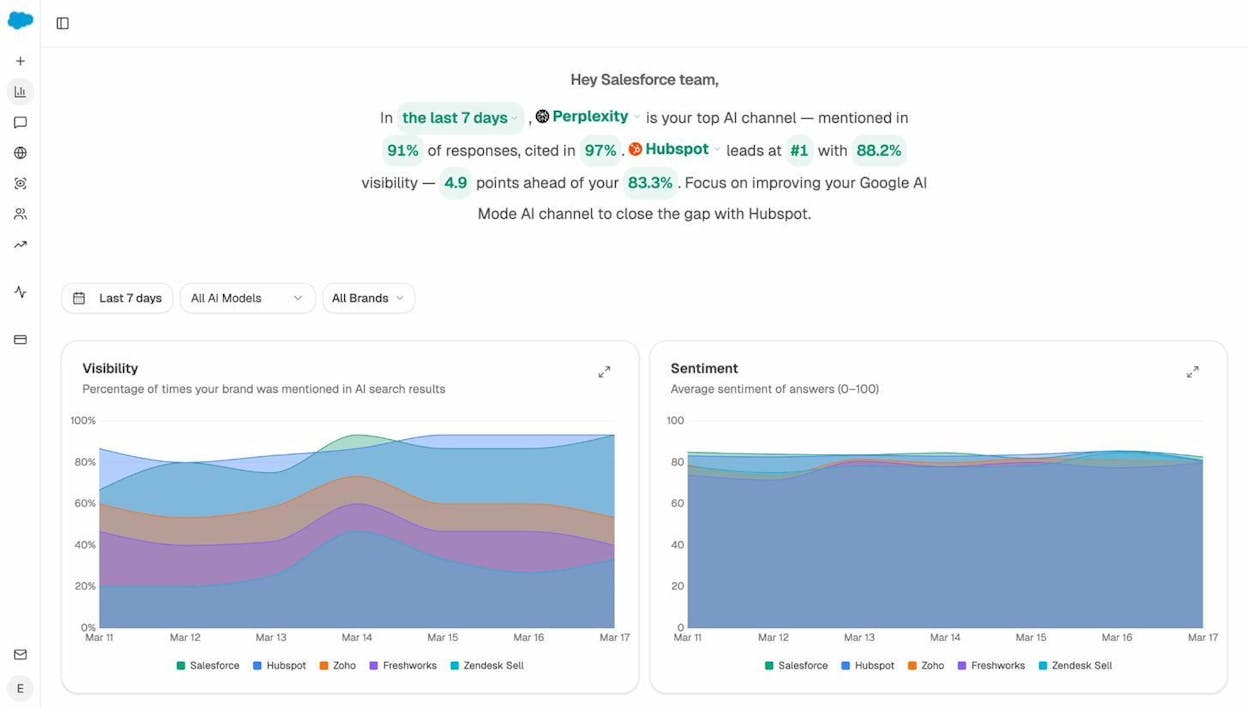
This data tells you whether AI engines recognize your brand, how you stack up against competitors, and which AI models mention you most often.
2. Social Media Marketing
Social media is where your customers spend hours every day. Whether it’s Instagram, TikTok, Facebook, Pinterest, or YouTube, each platform offers a way to put your products in front of people who are browsing, discovering, and sharing.
Organic social media
Growing an organic following takes time, but it’s one of the most cost-effective ways to build brand awareness and drive traffic. The key is choosing the right platform for your product.
Visual products (clothing, home decor, food) tend to perform well on Instagram and Pinterest. Products that benefit from demonstration or storytelling (fitness equipment, kitchen gadgets, beauty products) do well on TikTok and YouTube. B2B products or high-consideration purchases often get more traction on LinkedIn or YouTube.
Start with one platform, learn what content your audience engages with, and expand from there. Trying to be everywhere at once is a recipe for mediocre content across the board.
Paid social media ads
The fastest way to get results from social media is through paid advertising. Facebook and Instagram ads let you target users by demographics, interests, and behavior. TikTok ads reach younger audiences who discover products through short-form video.
One of the highest-ROI tactics for e-commerce is retargeting ads — showing ads to people who visited your store but didn’t buy. A shopper who added a product to their cart and abandoned it is far more likely to convert than a cold visitor. Retargeting brings them back.
![[Screenshot: Facebook Ads Manager showing a retargeting campaign setup with cart abandoners as the audience]](https://www.datocms-assets.com/164164/1776867811-blobid4.png?auto=format,compress&w=1248&fit=max)
3. Email Marketing
Email is consistently one of the highest-converting channels for e-commerce. The reason is simple: your email list is made up of people who already know your brand and chose to hear from you.
The challenge is that email doesn’t work as a stand-alone channel. You need traffic from SEO, social, or ads to build the list first. Once you have it, email becomes the engine that nurtures one-time buyers into repeat customers.
How to grow your email list:
-
Add a popup or banner offering a discount (10–15% off the first order is standard) in exchange for an email address.
-
Include an email opt-in during checkout so customers can receive updates.
-
Create a lead magnet — a buying guide, style quiz, or exclusive content — that gives visitors a reason to subscribe.
What to send:
-
Welcome sequences that introduce your brand and best-selling products.
-
Abandoned cart emails that remind shoppers what they left behind.
-
Product launch announcements and restocks.
-
Educational content from your blog that builds trust.
-
Personalized recommendations based on past purchases.
![[Screenshot: An email marketing platform like Klaviyo showing an automated abandoned cart email flow]](https://www.datocms-assets.com/164164/1776867811-blobid5.png?auto=format,compress&w=1248&fit=max)
Keep your list clean by removing inactive subscribers every three to six months. A smaller, engaged list outperforms a large, disengaged one every time.
4. Content Marketing
Content marketing goes beyond just having a blog. It’s about creating photos, videos, guides, comparison posts, and tools that capture customers at every stage of the buying journey — from “I didn’t know I needed this” to “which one should I buy?”
Here’s why content is powerful for e-commerce: your product and category pages can only rank for a limited set of transactional keywords. Content lets you rank for the informational and comparison queries that feed your funnel.
Example: a shoe store’s content funnel
|
Funnel Stage |
What the Shopper Searches |
Content You Create |
|---|---|---|
|
Awareness |
“how to style Chelsea boots” |
Blog post with outfit ideas featuring your boots |
|
Consideration |
“best waterproof boots for hiking” |
Comparison guide reviewing your boots vs. competitors |
|
Decision |
“brand X Chelsea boots review” |
Customer review roundup or video review |
Each piece of content introduces your brand to someone who might not have found your product pages directly. And when that content ranks on Google or gets cited by an AI engine, it works around the clock without additional ad spend.
You can use Analyze AI’s Keyword Generator to find content ideas based on what shoppers are searching for. Enter a seed keyword related to your products, and you’ll get a list of keyword ideas with volume and difficulty data.
![[Screenshot: Analyze AI’s free Keyword Generator tool showing results for a seed keyword like “running shoes”]](https://www.datocms-assets.com/164164/1776867817-blobid6.png?auto=format,compress&w=1248&fit=max)
For a deeper walkthrough, see our guide to SEO content strategy.
5. Display and Retargeting Ads
Display ads are banner-style ads shown on websites across the internet through networks like the Google Display Network. On their own, they’re good for brand awareness but rarely drive direct conversions. Their real power is in retargeting.
Retargeting works by placing a cookie in a visitor’s browser when they land on your site. When that visitor leaves without buying, you can show them ads for the specific products they viewed — on other websites, on social media, and even in email inboxes.
Research shows that it can take 28 to 62 or more touchpoints before a shopper makes a purchase. Retargeting accelerates this by keeping your brand and products in front of warm prospects without the cost of acquiring a brand-new visitor.
![[Screenshot: Google Display Network showing retargeting ad settings targeting site visitors who didn’t convert]](https://www.datocms-assets.com/164164/1776867817-blobid7.png?auto=format,compress&w=1248&fit=max)
Best practices for retargeting:
-
Segment your audience: show different ads to cart abandoners vs. people who only viewed a product page.
-
Set a frequency cap so you don’t annoy potential customers with the same ad 50 times.
-
Use dynamic product ads that automatically show the exact item a visitor was looking at.
-
Exclude people who already purchased to avoid wasting budget.
6. Affiliate and Influencer Marketing
Affiliate marketing is where someone promotes your product and earns a commission for every sale they send you. It’s performance-based — you only pay when a sale happens — which makes it one of the lowest-risk marketing channels.
How it works:
-
You create an affiliate program and set a commission rate (typically 5–20% of the sale price).
-
Affiliates sign up, get a unique tracking link, and promote your products on their blog, YouTube channel, or social media.
-
When a customer clicks the affiliate’s link and makes a purchase, the affiliate earns a commission.
The best affiliates are content creators who already have an audience in your niche. A fitness blogger reviewing your resistance bands or a tech YouTuber comparing your headphones to competitors — these are high-trust endorsements that convert well.
![[Screenshot: An affiliate program dashboard showing tracked sales, commissions, and top-performing affiliates]](https://www.datocms-assets.com/164164/1776867823-blobid8.png?auto=format,compress&w=1248&fit=max)
Influencer marketing follows a similar model but is usually paid upfront rather than commission-based. You pay a creator a flat fee to feature your product in a post, video, or story. The best results come from micro-influencers (10,000–100,000 followers) who have engaged, niche audiences rather than mega-influencers with millions of followers and lower engagement rates.
One overlooked benefit of affiliate and influencer content: the blog posts, reviews, and videos they create become content that Google and AI engines can reference. A well-written affiliate review of your product on a high-authority site can rank on Google and get cited in AI-generated answers, giving you compounding visibility long after the initial post goes live.
How to Build Your E-commerce Marketing Strategy
Knowing the channels is step one. The next step is executing them well. Here are seven practical tactics that separate stores that grow from stores that stall.
1. Start With Keyword Research
Every marketing decision gets easier when you know what your customers are searching for. Keyword research reveals the exact words and phrases people type into Google (and speak into AI assistants) when they’re looking for products like yours.
Step 1: Generate keyword ideas
Use Analyze AI’s free Keyword Generator to start. Enter a broad keyword that describes your product category — like “leather boots,” “organic skincare,” or “wireless headphones” — and you’ll get hundreds of related keyword ideas.
![[Screenshot: Analyze AI Keyword Generator showing results for “leather boots” with volume, difficulty, and CPC data]](https://www.datocms-assets.com/164164/1776867823-blobid9.png?auto=format,compress&w=1248&fit=max)
Step 2: Sort keywords by intent
Not all keywords are equal. Some indicate research (“how to clean leather boots”), some signal comparison shopping (“best leather boots for winter”), and some are ready to buy (“buy brown leather Chelsea boots”).
|
Keyword Type |
Example |
Best Page Type |
|---|---|---|
|
Informational |
“how to care for leather boots” |
Blog post |
|
Comparison |
“best leather boots under $200” |
Listicle or buying guide |
|
Transactional |
“mens brown leather Chelsea boots” |
Product or category page |
Focus your product and category pages on transactional keywords. Use your blog to target informational and comparison keywords that bring in shoppers earlier in the funnel.
Step 3: Check keyword difficulty
Before you invest time creating content for a keyword, check how competitive it is. Use Analyze AI’s Keyword Difficulty Checker to see how hard it would be to rank on the first page of Google.
![[Screenshot: Analyze AI Keyword Difficulty Checker showing difficulty score for a product keyword]](https://www.datocms-assets.com/164164/1776867829-blobid10.png?auto=format,compress&w=1248&fit=max)
Prioritize keywords where you have a realistic shot at ranking. For newer stores, that usually means longer, more specific keywords (like “waterproof leather hiking boots women” instead of just “hiking boots”).
Step 4: Research what prompts people are asking AI engines
Here’s the additional layer most stores skip. Beyond traditional keyword research, find out what questions shoppers are asking ChatGPT, Perplexity, and Gemini about your product category.
With Analyze AI, you can track the prompts people use when asking AI engines about products in your space. The Prompts dashboard shows you the exact questions being asked, which brands appear in the answers, and where your competitors win that your brand doesn’t:
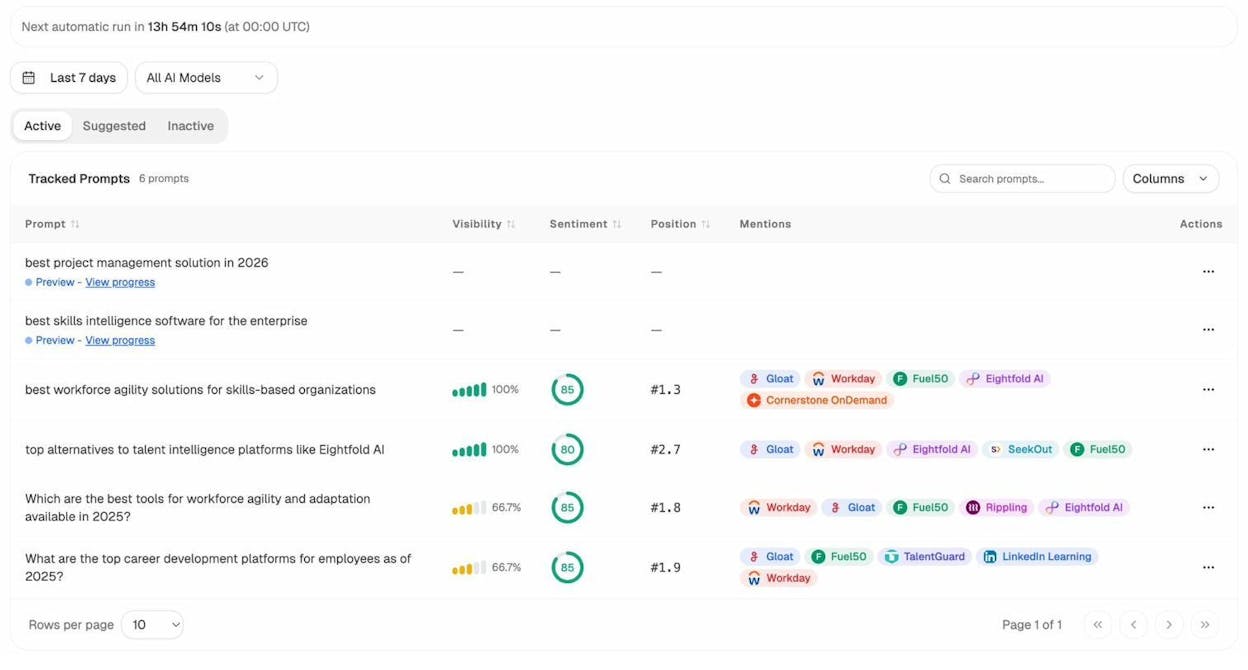
This data is gold for content planning. If you see that ChatGPT consistently recommends three competitors but never mentions your brand when someone asks “best budget espresso machine,” you know exactly what content gap to fill.
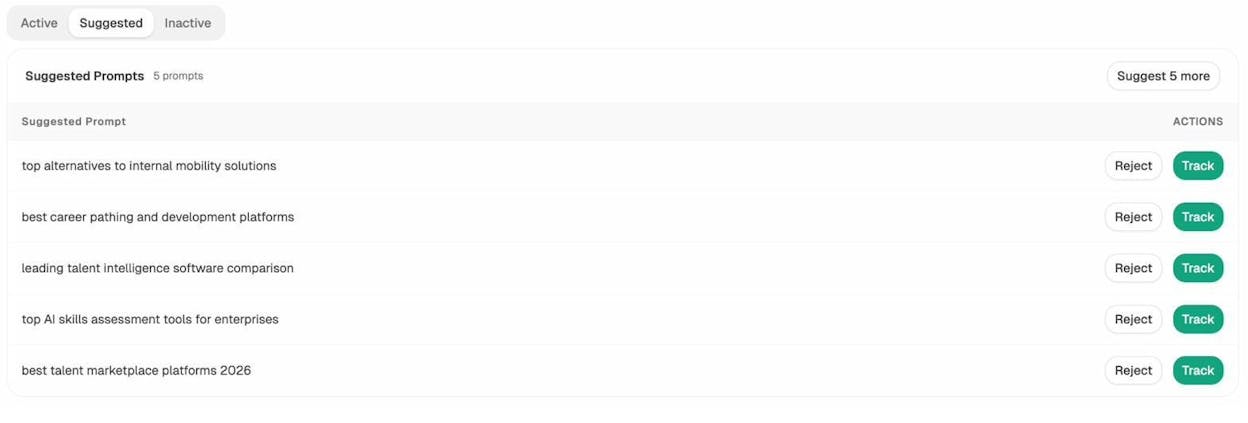
You can also use the Suggested Prompts tab to discover prompts Analyze AI has identified as relevant to your space but that you’re not yet tracking:
2. Optimize Your Website for Search and Conversions
Once you know your keywords, apply them to your site. This is called on-page SEO, and it covers:
-
Title tags: Include your primary keyword in a way that reads naturally and compels clicks. “Men’s Brown Leather Chelsea Boots | Free Shipping” is better than “Buy Boots Here.”
-
Meta descriptions: Write a clear summary that tells searchers exactly what they’ll find on the page.
-
URLs: Keep them short and descriptive. /mens-leather-chelsea-boots beats /product-12847.
-
Product descriptions: Write unique copy for every product. Don’t just copy the manufacturer’s description — every other retailer already did that.
-
Image optimization: Use descriptive file names and alt text. brown-leather-chelsea-boot-side-view.jpg beats IMG_3847.jpg. Compress images so pages load fast.
-
Internal links: Link related products and category pages to each other so Google (and shoppers) can find everything easily.
Beyond SEO, optimize for conversions. The best organic traffic in the world won’t help if your site loses visitors at checkout.
Quick conversion wins:
-
Use high-quality product images from multiple angles.
-
Show customer reviews and ratings on product pages.
-
Make the checkout process as short as possible (guest checkout is a must).
-
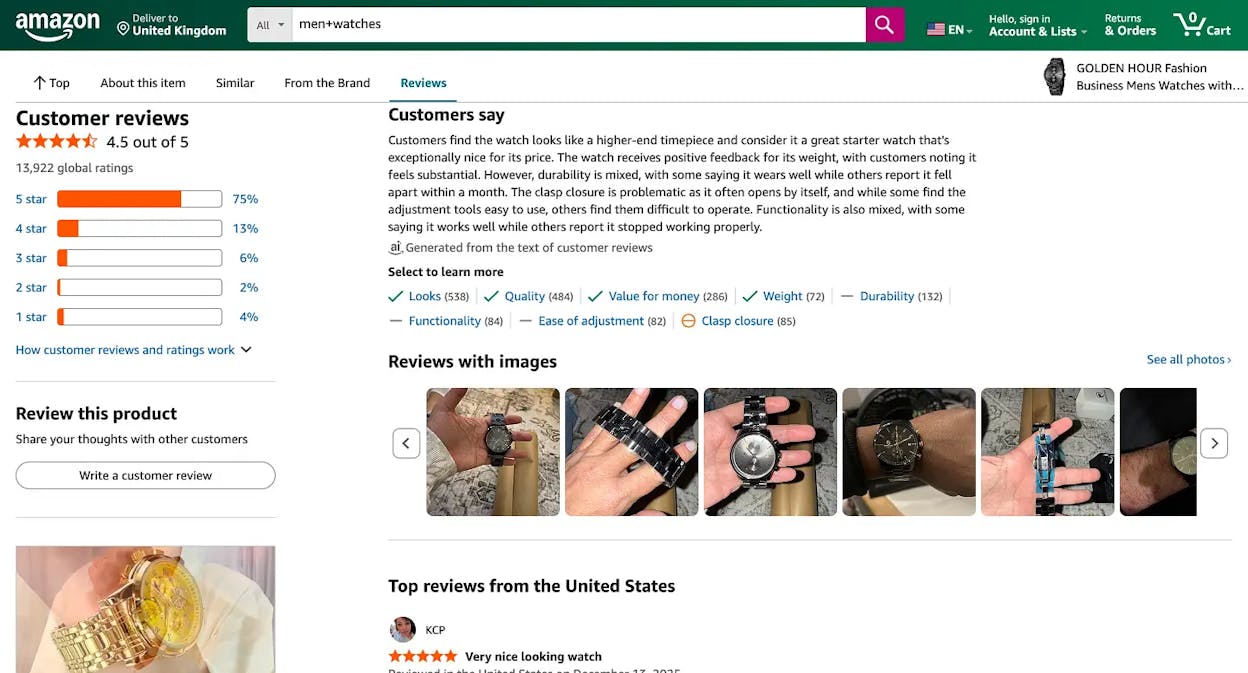
Display shipping costs and return policies upfront — surprise fees at checkout are the top reason for cart abandonment.
-
Add trust signals: SSL badge, payment method logos, money-back guarantee.
You can check your site for broken links that hurt both SEO and user experience with Analyze AI’s Broken Link Checker.
3. Build a Content Engine
A blog isn’t enough. You need a content engine — a repeatable system for creating content that ranks on Google, gets cited by AI, and moves shoppers toward a purchase.
Step 1: Map content to your funnel
Start with bottom-of-funnel content that targets shoppers closest to buying. These are the comparison posts, alternative guides, and “best X for Y” listicles that convert at the highest rate.
Then work your way up to middle-of-funnel content (how-to guides, buying guides) and top-of-funnel content (educational posts, industry trends).
Step 2: Create content that AI engines want to cite
AI models tend to cite content that is clear, well-structured, factually accurate, and comes from authoritative sources. To increase the chances that your content gets cited in AI-generated answers:
-
Use clear headings and structured formatting (H2s, H3s, tables, bullet points).
-
Answer questions directly and concisely in the first paragraph, then go deeper.
-
Include original data, expert quotes, or first-hand experience — AI models weigh unique information heavily.
-
Keep your content updated. AI models prefer recent, accurate sources.
You can monitor which of your pages are actually getting cited by AI engines using Analyze AI’s Sources dashboard. It shows which URLs AI platforms reference when answering questions in your industry:
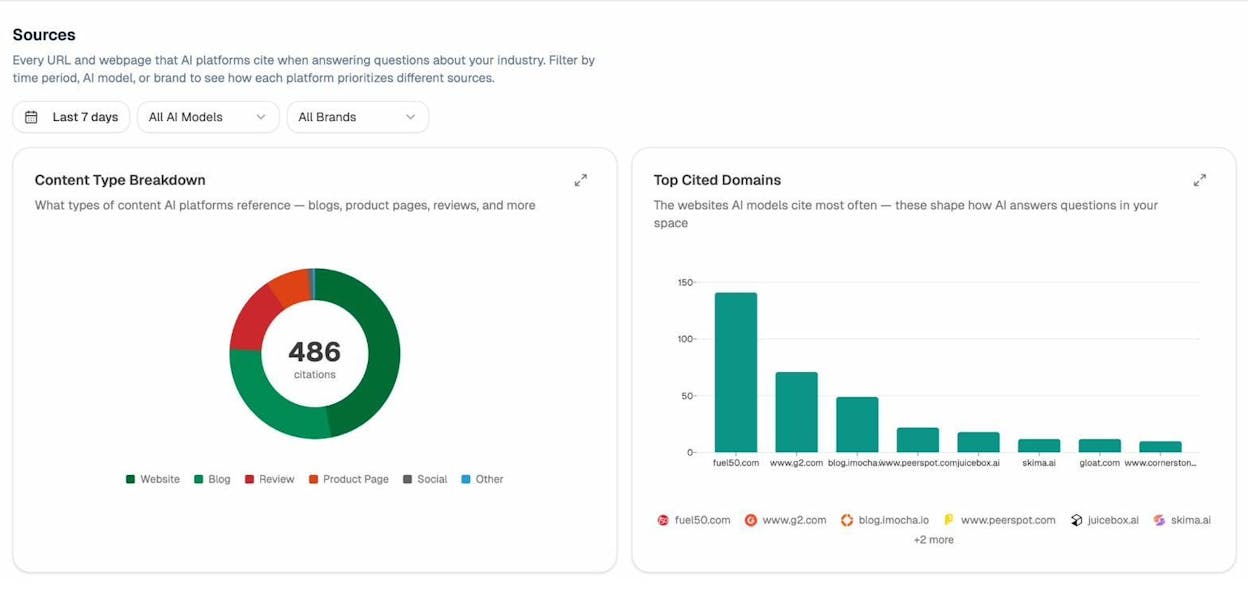
This tells you what type of content gets cited most (blog posts, product pages, reviews) and which domains dominate the citations in your space. Use this data to guide what you create next.
Step 3: Track your AI-referred traffic
Once you’re creating content that AI engines cite, measure the traffic it sends. Analyze AI’s AI Traffic Analytics dashboard shows visitors arriving from ChatGPT, Perplexity, Claude, Gemini, and Copilot — broken down by source, landing page, engagement, and conversions:
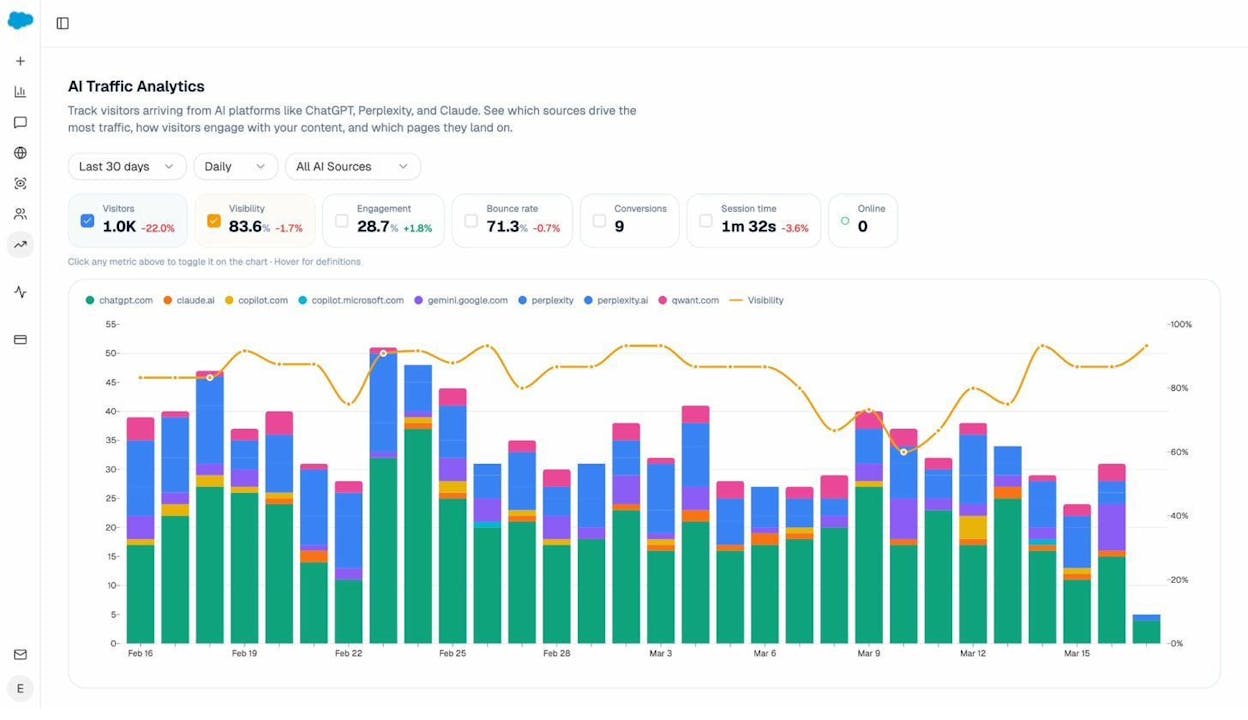
The Landing Pages report shows exactly which pages on your site receive AI-referred traffic, how visitors interact with them, and whether they convert:
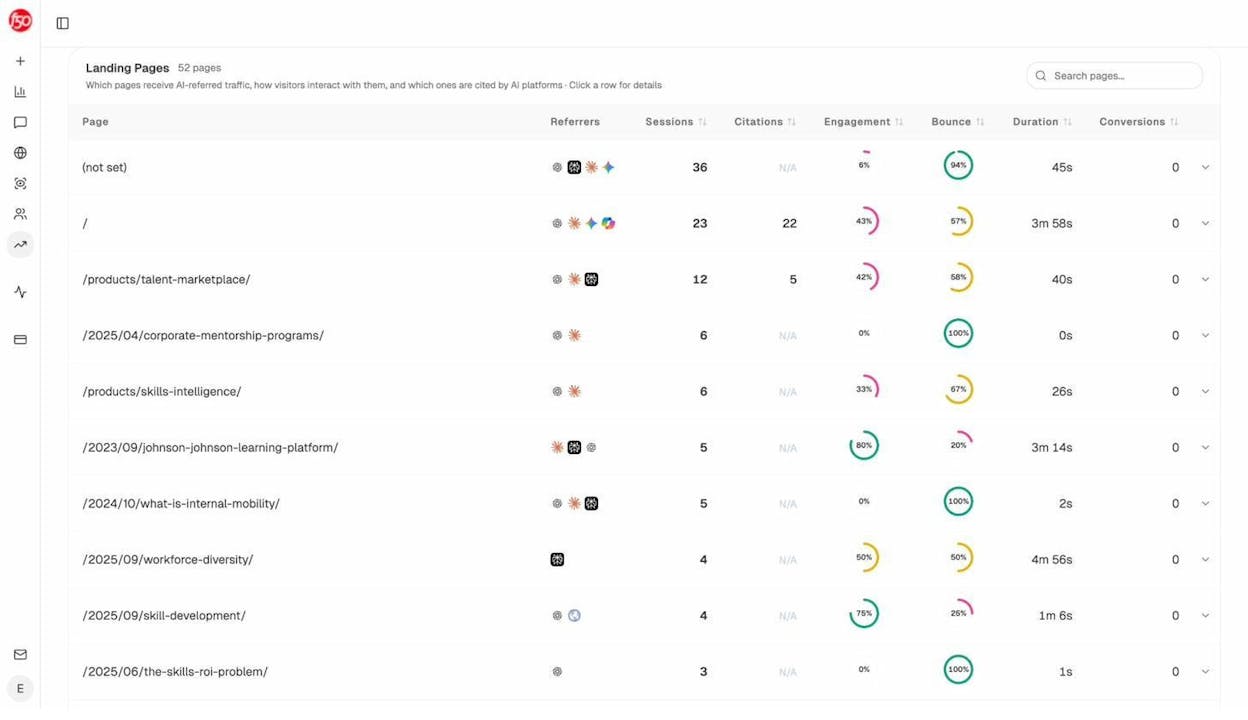
This is powerful because it closes the loop. You can see which content assets drive AI traffic, double down on what works, and fix what doesn’t.
4. Use Retargeting to Recover Lost Sales
Most visitors won’t buy on their first visit. Retargeting brings them back.
Set up a basic retargeting system:
-
Install the Facebook Pixel and Google Ads remarketing tag on your store.
-
Create audience segments: cart abandoners (highest priority), product page viewers, homepage visitors.
-
Build ad creatives for each segment. Cart abandoners should see the exact product they left behind. Product page viewers should see a broader selection.
-
Set frequency caps (3–5 impressions per day) to avoid ad fatigue.
-
Exclude recent purchasers so you don’t waste budget.
Pair retargeting ads with an abandoned cart email sequence for maximum recovery. A shopper who sees a retargeting ad and gets a reminder email within 24 hours is far more likely to return and complete the purchase.
5. Create Video Content
Video is no longer optional for e-commerce. Shoppers want to see products in action before they buy, and platforms like TikTok, Instagram Reels, YouTube Shorts, and even Google’s search results prioritize video content.
Types of videos that sell:
|
Video Type |
Example |
Best Platform |
|---|---|---|
|
Product demo |
Showing a gadget in use |
YouTube, TikTok |
|
Unboxing |
First impressions of packaging and product |
YouTube, Instagram Reels |
|
Customer testimonial |
Real buyer sharing their experience |
Website, Facebook Ads |
|
How-to / Tutorial |
Teaching how to use the product |
YouTube, Blog |
|
Behind the scenes |
Factory visit, team culture |
Instagram Stories, TikTok |
Start with short-form video (under 60 seconds) for social media. These are quick to produce and have the highest reach. Then repurpose strong performers into longer-form YouTube content.
![[Screenshot: TikTok analytics showing a product demo video with strong engagement metrics]](https://www.datocms-assets.com/164164/1776867849-blobid17.png?auto=format,compress&w=1248&fit=max)
6. Track What’s Working — Including AI
You can’t improve what you don’t measure. At minimum, track these metrics across your channels:
|
Channel |
Key Metrics |
|---|---|
|
SEO |
Organic traffic, keyword rankings, conversion rate |
|
PPC |
Cost per click, ROAS, conversion rate |
|
Social |
Engagement rate, follower growth, referral traffic |
|
|
Open rate, click rate, revenue per email |
|
Content |
Organic traffic, time on page, conversions |
|
AI Search |
Brand visibility, sentiment, citation count, AI traffic |
Most e-commerce stores track the first five columns and ignore the last one. That’s a missed opportunity.
With Analyze AI, you can track your brand’s visibility across every major AI platform in one dashboard. The Perception Map shows where your brand and competitors sit on two axes — visibility and narrative strength — so you can see at a glance who AI engines favor:
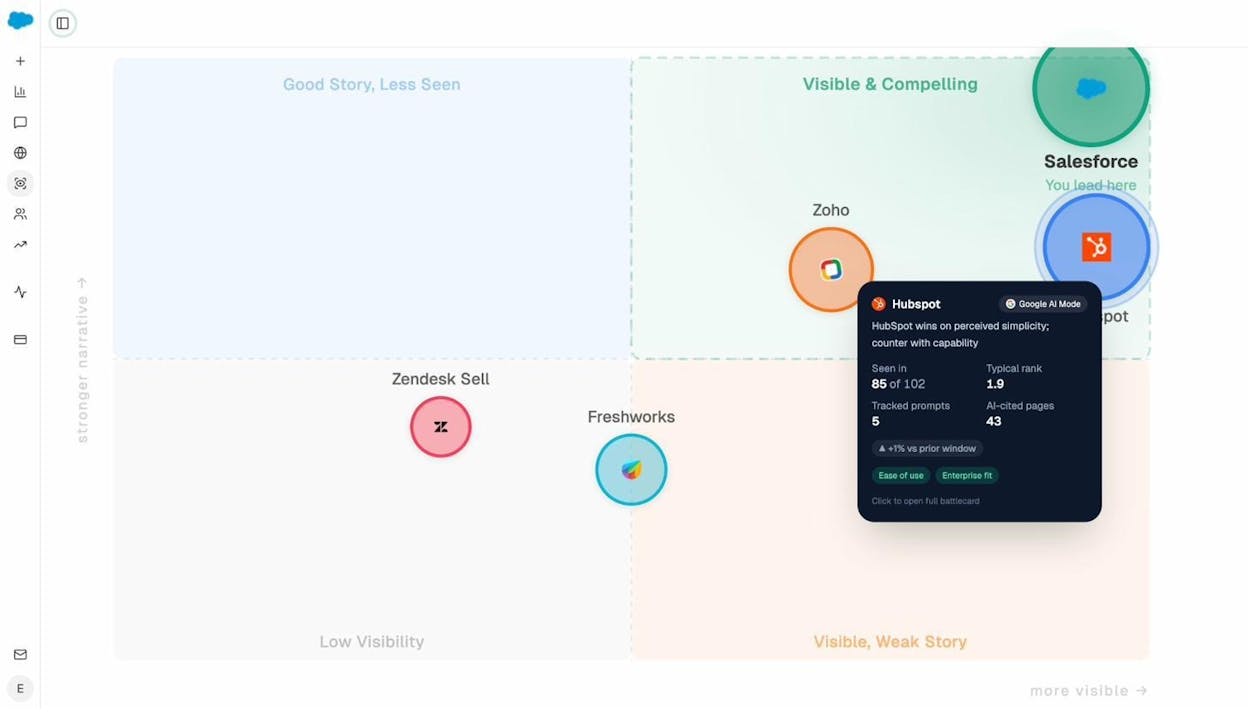
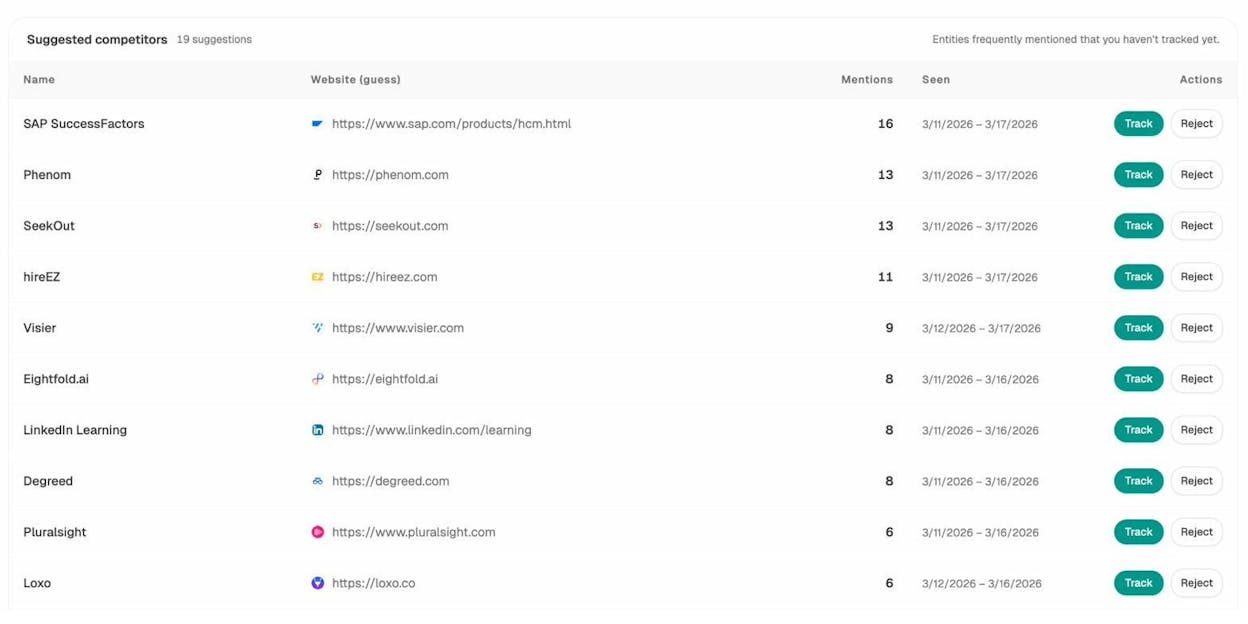
You can also use the Competitors dashboard to discover which brands AI engines mention alongside yours, how often they appear, and whether they’re gaining or losing ground:
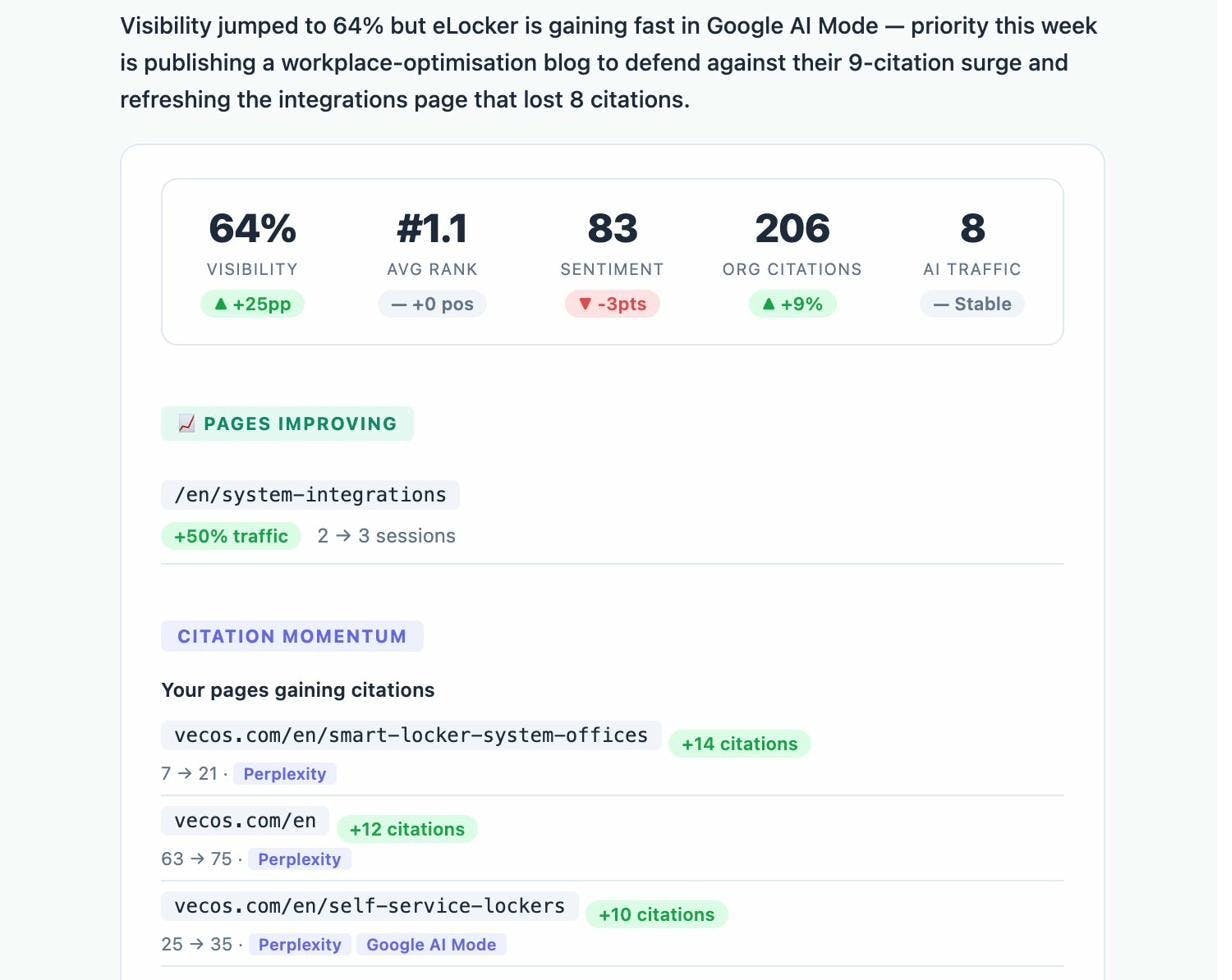
And if you prefer to stay on top of changes without logging in every day, Analyze AI sends weekly email digests with a summary of your AI visibility trends, competitive shifts, and key metrics:
For your traditional SEO metrics, use tools like Google Search Console alongside Analyze AI’s SERP Checker and Keyword Rank Checker to monitor rankings and identify opportunities.
7. Build SOPs to Scale
Every repeatable marketing task should have a standard operating procedure (SOP). An SOP is a step-by-step document — with screenshots — that shows exactly how to complete a task. This lets you delegate work to team members or virtual assistants without losing quality.
Tasks worth creating SOPs for:
-
Publishing a new product page (photography, copy, SEO optimization, internal linking).
-
Writing and publishing a blog post (keyword research, outline, draft, editing, promotion).
-
Setting up an email campaign (segmenting the list, writing the email, scheduling, reviewing performance).
-
Monitoring weekly analytics (pulling data, comparing to benchmarks, flagging issues).
-
Checking AI search visibility (reviewing the Analyze AI dashboard, noting competitive changes, updating tracked prompts).
A good SOP is specific enough that someone unfamiliar with the task can follow it and produce a consistent result. Use a shared document with numbered steps, screenshots for every non-obvious action, and a checklist at the end.
Compete on Value, Not Price
One final principle that sits above every tactic in this guide: don’t compete on price.
Giant retailers can absorb losses longer than you can. If you try to undercut Amazon or Walmart, you’ll burn through margin until you’re out of business. Instead, compete on things they can’t easily copy — expertise, community, customer experience, and brand story.
That also means avoiding constant discounts. If you train customers to wait for sales, they’ll never pay full price. Save promotions for genuine events (product launches, holidays, clearance) and focus the rest of your energy on building a brand people are willing to pay a premium for.
Final Thoughts
E-commerce marketing works best when you treat it as a system, not a collection of random tactics. SEO, paid ads, social media, email, content, and retargeting should all feed into each other — each channel building on the work of the others.
The stores that win long-term are the ones that build organic assets (search rankings, email lists, content libraries) alongside their paid channels. And increasingly, the stores that win are also the ones that show up in AI-generated answers where a new generation of shoppers is starting their product research.
SEO isn’t dead. It’s evolving. AI search is the newest organic channel, and the stores that start tracking and optimizing for it now will have a compounding advantage over those that wait.
If you want to see how your e-commerce brand shows up across AI platforms — and where your competitors are winning without you — try Analyze AI for free.

Ernest

Ibrahim


