



Summarize this blog post with:


In 50 days, YouTuber Ryan Trahan visited every U.S. state to raise money for St. Jude Children’s Research Hospital. He started with a $1M fundraising goal. He ended with $11M.
The series averaged 3.5 million views per episode. It racked up 176 million total views. And along the way, it quietly produced one of the smartest brand marketing plays of the year—from a company most people had never heard of.
That company is Lectric eBikes.
Lectric’s involvement didn’t look like a sponsorship. It didn’t feel like an ad. But it generated more brand awareness, organic search traffic, and AI visibility than most eight-figure ad budgets ever will.
Here’s what happened, why it worked, and what every marketer can learn from it.
Table of Contents
The campaign that made branded content feel unsponsored
Ryan Trahan’s “50 States in 50 Days” concept was simple: drive to all 50 states, stay in the most unique Airbnb in each one, and film a daily YouTube video while raising money for St. Jude.
Donations unlocked different levels of involvement. A $5,000 donation got your name read aloud in the video. A $50,000 donation triggered the “Wheel of Doom”—a spinning wheel that assigned Ryan and his wife Haley a random challenge, like navigating to their next stop without GPS. A $100,000 donation let the donor choose the challenge directly.
![[Screenshot: Ryan Trahan holding up a US map outline against a blue sky, from the series intro]](https://www.datocms-assets.com/164164/1776789511-blobid0.jpg?auto=format,compress&w=1248&fit=max)
This structure turned philanthropy into entertainment. Every donation moved the story forward. Every brand that participated became a character in the narrative, not a commercial interrupting it.
That’s the critical distinction. Traditional sponsorships sit outside the content. Lectric’s involvement became the content.
1. Unconventional marketing opportunities are everywhere
On Day 2 of the challenge, Lectric eBikes donated $100,000 to St. Jude through Ryan’s campaign. At the end of the video, Ryan read Lectric’s name alongside other major donors.
That single mention put Lectric in front of 6 million viewers.
![[Screenshot: Lectric eBikes $100,000 donation acknowledgment graphic with “Top Donor” badge from Ryan Trahan’s video]](https://www.datocms-assets.com/164164/1776789511-blobid1.png?auto=format,compress&w=1248&fit=max)
At Ryan’s scale, a standard YouTube integration costs between $30 and $50 per thousand views (CPM). So a one-time brand mention to 6 million viewers would normally run somewhere between $180,000 and $300,000.
Lectric got it for a $100,000 charitable donation.
But the real move came the next day.
The $570K play that generated $7M+ in media value
On Day 3, Lectric showed up in person and gifted Ryan a brand-new e-bike. Then they pledged an additional $10,000 for every day he rode it.
![[Screenshot: Lectric team gifting Ryan a bike, with subtitle text reading “we would love to give you this bike :)”]](https://www.datocms-assets.com/164164/1776789517-blobid2.jpg?auto=format,compress&w=1248&fit=max)
This wasn’t a paid product placement. It was a gift tied to a charitable commitment. And because Ryan genuinely liked the bike, it became part of his daily routine for the remaining 47 episodes.
Here’s the math:
|
Metric |
Value |
|---|---|
|
Episodes featuring the bike |
47 |
|
Average views per episode |
~5 million |
|
Total impressions |
~235 million |
|
Equivalent media value at $30–$50 CPM |
$7M+ |
|
Actual spend (donation + daily pledges) |
$570K |
|
Cost as % of media value |
<10% |
Lectric secured high-frequency brand placement across 47 episodes of one of the biggest YouTube series of the year. They spent less than 10% of what a traditional sponsorship would have cost. And because their product was woven into the story—not bolted on as an ad read—the integration felt authentic.
That authenticity is what made everything that came next possible.
Why this worked (and why most sponsorships don’t)
Most brand sponsorships fail because they interrupt the content. The viewer knows it’s an ad. The creator knows it’s an ad. Everyone tolerates it because that’s how creators get paid.
Lectric flipped this dynamic by making three choices:
They led with generosity, not a brief. The $100K donation came with no strings attached. There was no contract requiring Ryan to feature the bike. The charitable angle meant viewers saw Lectric as a good actor, not an advertiser.
They made the product useful, not just visible. An e-bike is genuinely helpful when you’re driving across 50 states in 50 days. Ryan didn’t have to fake enthusiasm. The product solved a real problem in the context of the show.
They tied ongoing value to ongoing exposure. The $10K-per-day riding pledge created a positive feedback loop: every time Ryan rode the bike, St. Jude got another $10K. Viewers actively wanted him to ride it. The audience became advocates for the brand placement.
This is the difference between a sponsorship and a story. Sponsorships buy attention. Stories earn it.
2. Getting talked about online is a massive, underrated asset
Once Lectric’s bike appeared in the series, the internet started talking—without being asked.
Fans on Reddit praised the brand for their generosity. Posts on X (formerly Twitter) highlighted the quality of the bikes. YouTube commenters asked where to buy one. None of this was paid or prompted.
![[Screenshot: Collection of Reddit posts from r/ryantrahan discussing Lectric eBikes, showing organic fan praise and discussion]](https://www.datocms-assets.com/164164/1776789522-blobid3.png?auto=format,compress&w=1248&fit=max)
This kind of organic conversation is valuable for two reasons that most marketers underestimate.
Reason 1: Social proof compounds
A single positive mention from a creator is useful. But hundreds of unprompted fan posts across Reddit, X, and YouTube comments create something much more powerful: social proof at scale.
When a potential customer Googles “Lectric eBikes review” and finds dozens of genuine fan discussions, the brand no longer needs to convince anyone. The audience has already done the selling.
This is what content marketers call earned media—coverage you didn’t pay for and can’t fully control. It’s also the hardest type of media to manufacture, which is exactly why it’s so persuasive.
Reason 2: User-generated content trains AI models
Here’s where it gets interesting for marketers paying attention to AI search.
AI tools like ChatGPT, Perplexity, and Google’s AI Overviews rely on publicly available content to generate their responses. That includes Reddit threads, forum discussions, news articles, and social media posts.
Reddit has signed licensing deals with both Google and OpenAI, giving these companies direct access to Reddit’s content for training their AI models.
![[Screenshot: News headlines about Reddit’s data licensing deals with Google and OpenAI]](https://www.datocms-assets.com/164164/1776789523-blobid4.png?auto=format,compress&w=1248&fit=max)
So when fans celebrated Lectric on Reddit, they weren’t just influencing other Reddit users. They were creating training data for AI systems that millions of people now use to research products and make buying decisions.
Every positive Reddit thread about Lectric becomes a data point that AI models can reference. Every genuine review becomes a signal that these models use to determine what brands to recommend.
This means that organic online conversation now has a dual impact: it influences humans directly through social proof, and it influences AI systems that then influence even more humans.
3. Online buzz translates directly into AI search visibility
Lectric’s story illustrates a pattern that every brand needs to understand: when people talk about you online, AI starts recommending you.
Before Ryan Trahan’s series, Lectric had modest visibility in AI search. When someone asked ChatGPT or Perplexity about e-bikes, Lectric might not have appeared at all—or it would have shown up far down the list.
After the series launched, Lectric’s AI impressions exploded. Search interest on Google Trends spiked. And across AI assistants, mentions of Lectric products grew from roughly 4,000 impressions per month to over 700,000.
This didn’t happen because Lectric optimized a landing page for AI search or ran an SEO campaign targeting AI-related keywords. It happened because the campaign generated so much genuine conversation that AI models had no choice but to surface the brand.
The mechanism: How conversations become AI recommendations
AI search engines don’t just pull from a brand’s website. They synthesize information from across the internet—review sites, Reddit, news outlets, YouTube transcripts, blog posts, and forums.
When a user asks ChatGPT “What are the best electric bikes under $1,500?”, the model draws on every relevant piece of content it has been trained on or can access. If hundreds of Reddit posts, YouTube comments, and news articles mention Lectric positively, the model is more likely to include Lectric in its recommendation.
This is fundamentally different from traditional SEO, where you optimize your own pages to rank in Google’s results. In AI search, you need other people and other websites to talk about you—because that’s where AI models pull their recommendations from.
For marketers, this means brand reputation and earned media are no longer just “nice to have” for brand perception. They directly impact whether AI recommends your product when someone asks for help making a purchase decision.
How to track your brand’s AI visibility
If you’re wondering how your brand currently shows up in AI search—or whether a campaign like this is moving the needle—you need a way to monitor AI mentions across ChatGPT, Perplexity, Google AI Mode, and other platforms.
Analyze AI tracks exactly this. Its Overview dashboard shows your brand’s visibility and sentiment across every major AI engine in a single view—so you can see at a glance how often you’re being mentioned and whether the tone is positive or negative.
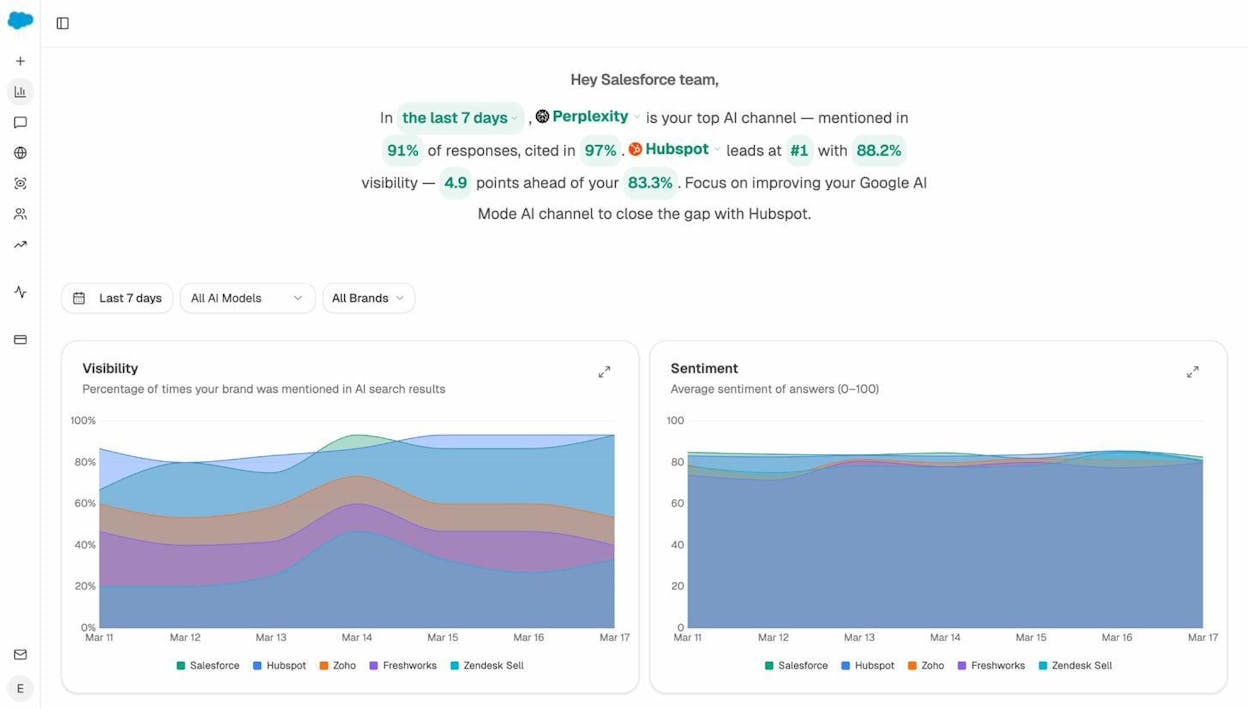
This is the kind of monitoring that would have shown Lectric’s team the exact moment their AI visibility started climbing—and which AI models were mentioning them most.
You can also use the Prompts dashboard to track specific questions users ask AI models about your industry, and see whether your brand shows up in the responses:
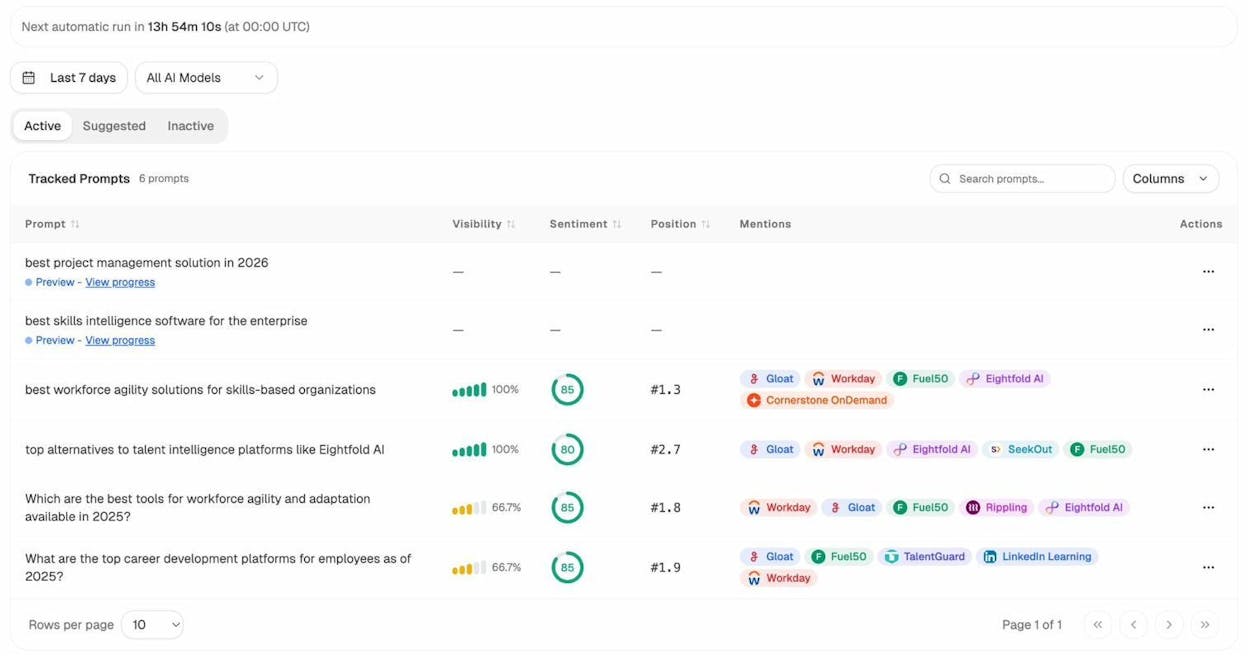
For Lectric, this would mean tracking prompts like “best electric bikes under $1,500” or “best e-bikes for commuting” and seeing whether they’re being mentioned—and where they rank relative to competitors like Rad Power Bikes or Aventon.
If you want to run a quick one-off search instead of tracking a prompt over time, Analyze AI’s Ad Hoc Search feature lets you type any question into ChatGPT, Perplexity, and Google AI Mode simultaneously and see the results side by side:
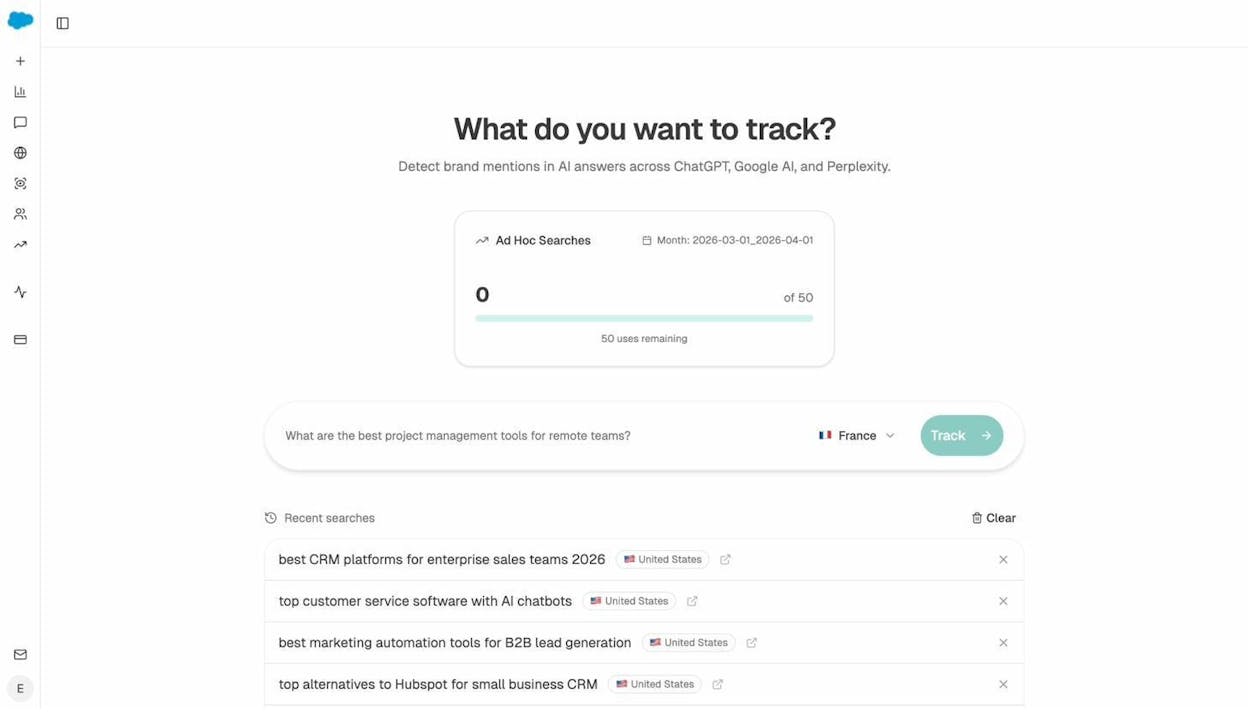
This is useful when you’re trying to validate a hypothesis quickly. For example, after a campaign goes live, you could search “best e-bike brands” across all AI engines and instantly see if your brand is showing up.
4. These aren’t vanity metrics—people buy on the back of this
Brand mentions in AI are worth paying attention to because they sit at the point of purchase.
When someone asks ChatGPT “What electric bike should I buy?”, they’re not browsing casually. They’re actively making a decision. If your brand shows up in that response—especially with positive sentiment—you’ve just entered the consideration set at the exact moment it matters most.
This is different from a billboard or a display ad, which interrupts someone who wasn’t thinking about your product. AI recommendations meet people at the point of intent.
Lectric’s campaign created a chain reaction:
-
Awareness: 235 million impressions across 47 YouTube episodes
-
Interest: Fans searched for Lectric on Google, visited the website, and read reviews
-
Discussion: Organic conversations on Reddit, X, and YouTube built social proof
-
AI training: Those conversations became training data for AI models
-
Recommendation: AI engines started recommending Lectric to people asking about e-bikes
-
Purchase: New customers bought the product and shared their own experiences
-
Flywheel: Customer posts generated more training data, reinforcing AI recommendations
Each step in this chain feeds the next. More customers means more content. More content means more AI training data. More training data means more AI recommendations. And the cycle continues.
This is the marketing flywheel in action. Once it starts spinning, it generates momentum without requiring constant ad spend to maintain.
How to track the flywheel for your brand
If you’re running a campaign designed to generate buzz—whether through creator partnerships, PR, events, or content marketing—you’ll want to monitor each stage of this flywheel.
Track earned media mentions. Use Analyze AI’s Sources dashboard to see which websites AI models are citing when they answer questions in your industry. This tells you where the training data is coming from—and whether your brand’s content is part of it.
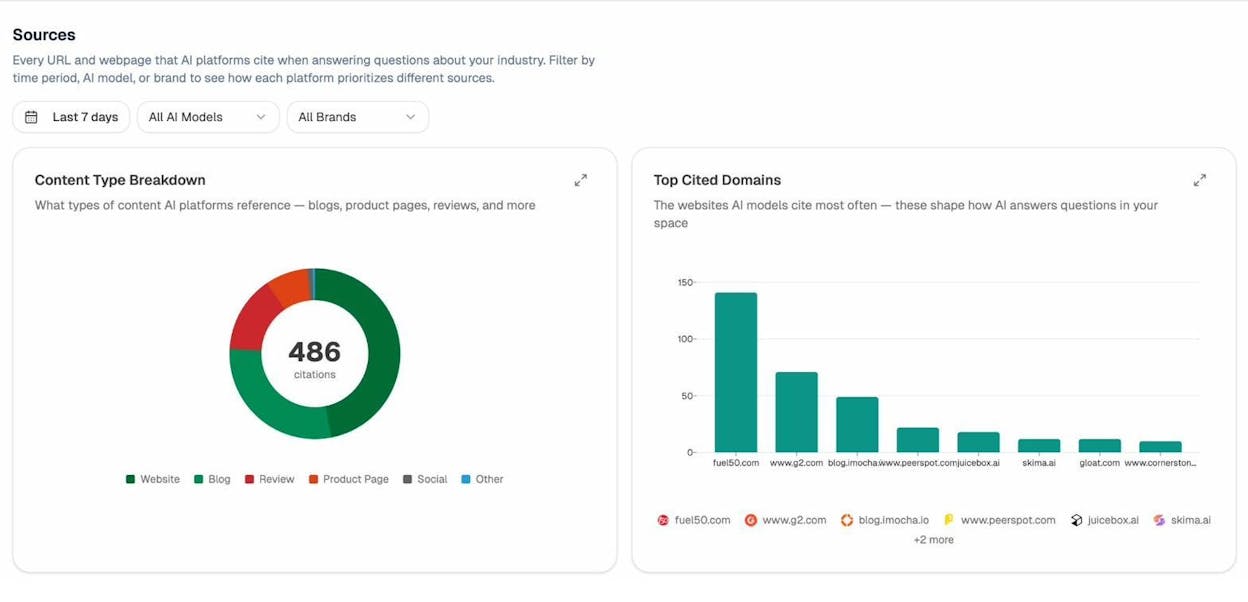
If you see competitors being cited heavily from review sites, Reddit, or industry blogs, that’s a signal that those content types matter in your space. You can then prioritize creating or earning content in those same channels.
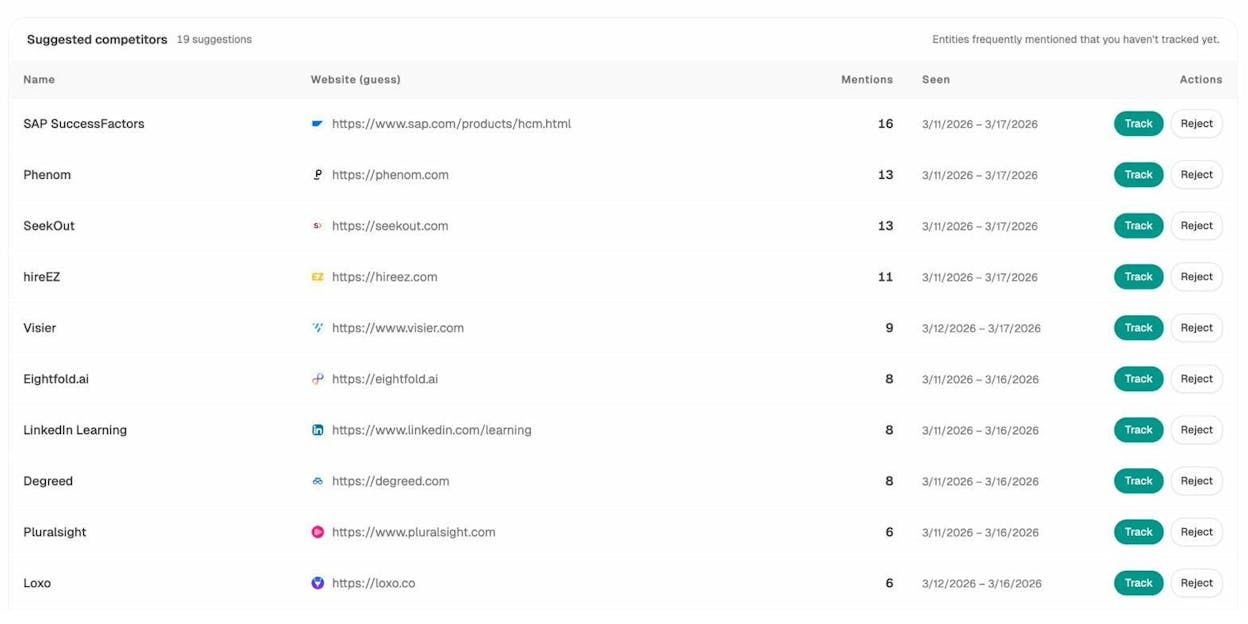
Monitor competitor movements. Analyze AI’s Competitors view shows suggested competitors—entities that AI models frequently mention alongside your brand. This helps you understand your competitive set in AI search, which may be different from your competitive set in traditional Google rankings.
Measure sentiment, not just mentions. Getting mentioned by AI is only half the story. The other half is what the AI says about you. Analyze AI’s Perception Map plots your brand and competitors on a matrix of visibility versus narrative strength—showing you whether your brand is visible and compelling, visible but weak, or invisible altogether.
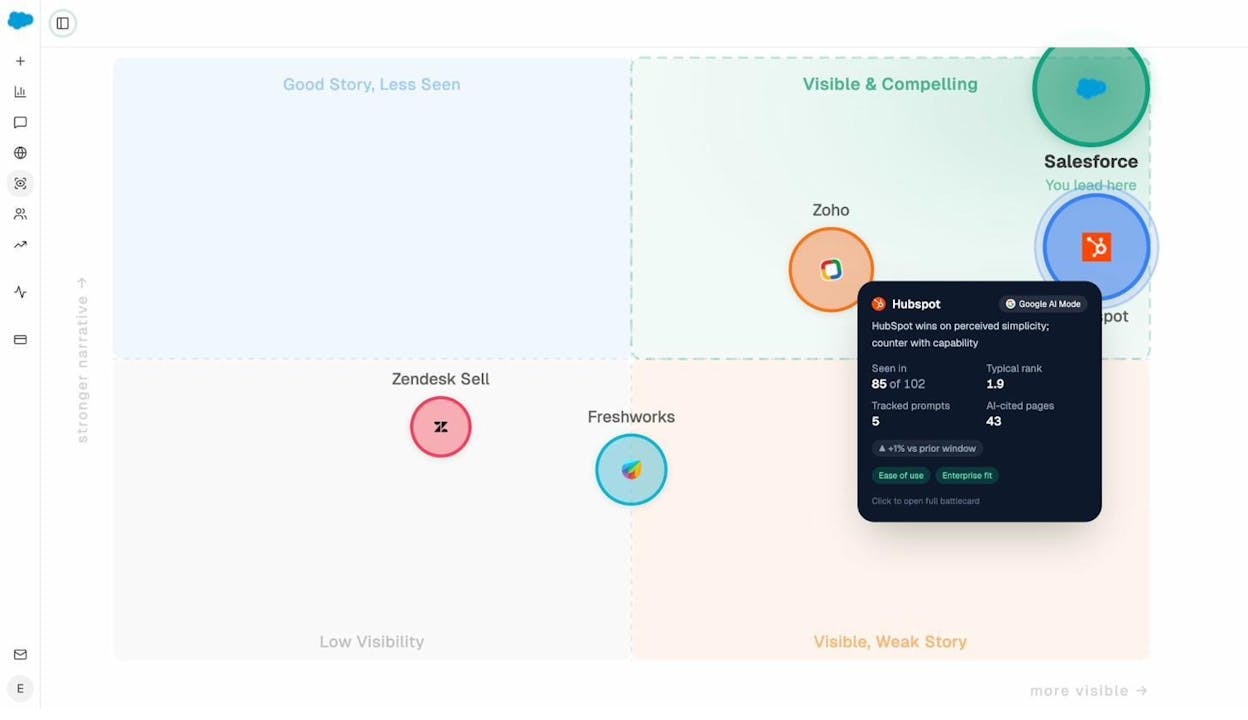
For a brand like Lectric, this would show them not just that they’re being mentioned more, but whether the narrative around their brand is positive, detailed, and compelling—or shallow and generic.
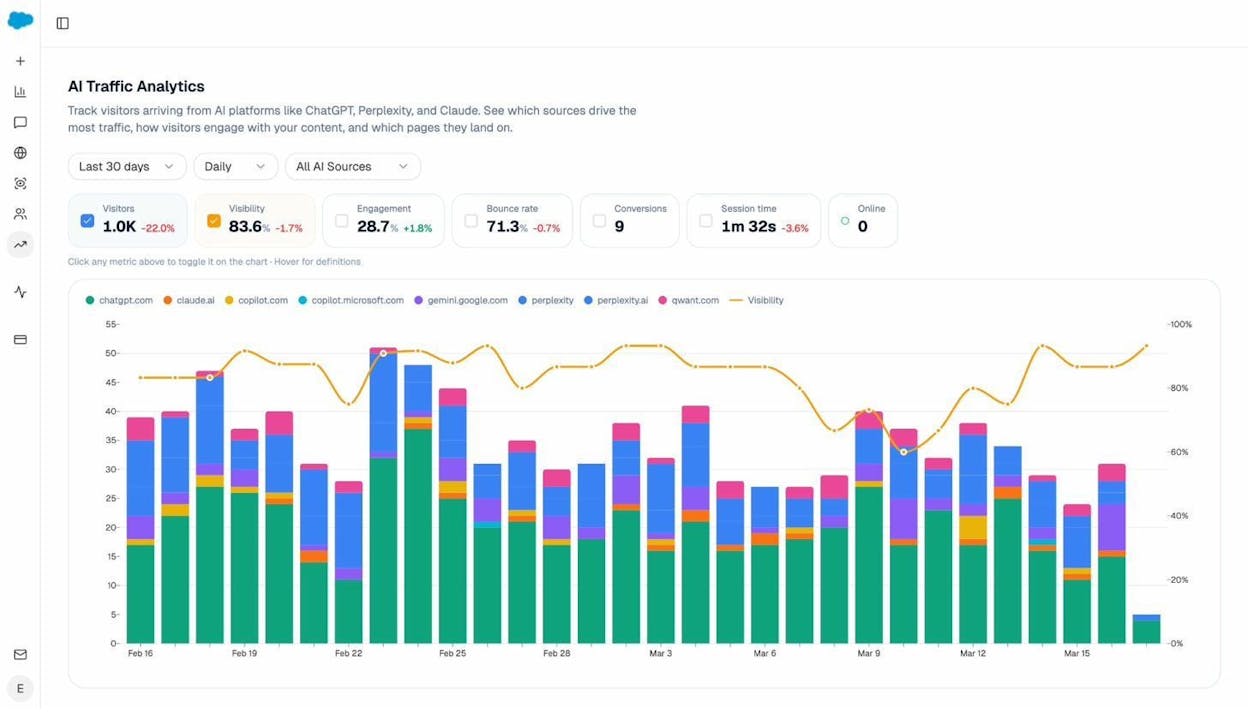
Check which pages drive AI traffic. If your campaign is generating AI search visibility, some of that traffic will land on your website. Analyze AI’s AI Traffic Analytics report shows which of your pages receive traffic from AI sources—so you can see what’s working and double down on the content types that AI engines prefer to cite.
5. How to replicate Lectric’s strategy for your brand
Lectric’s campaign worked because of a specific set of conditions. But the underlying principles apply to any brand willing to think beyond traditional advertising.
Here’s how to apply each lesson.
Find creator partnerships that fit your product naturally
The reason Lectric’s integration worked is because an e-bike was genuinely useful in the context of a cross-country road trip. Ryan didn’t have to force the product into the show. It fit.
Before approaching any creator, ask yourself: does my product solve a real problem in their content? If the answer requires mental gymnastics, it’s a forced integration, and audiences will see through it.
Look for creators whose content has a natural use case for your product. A camping gear brand should partner with outdoor creators. A project management tool should partner with creators who document their workflows. A food brand should partner with creators who cook.
The best integrations are the ones where the creator would use your product even without the sponsorship.
Lead with generosity, not a media buy
Lectric’s initial $100K wasn’t a sponsorship payment. It was a donation to a cause Ryan cared about. That framing changed everything.
When your first interaction with a creator is generous—a donation to their cause, a gift with no strings, a contribution to their community—you earn goodwill instead of buying airtime.
This approach requires a genuine alignment between your brand values and the creator’s mission. If you’re only doing it for the press, audiences and creators will notice.
Lectric’s philanthropy wasn’t manufactured for Ryan’s series. They already had a dedicated philanthropy page on their website before the partnership. The alignment was real, and that’s what made it credible.
Track your visibility across both Google and AI search
Here’s where most marketers drop the ball. They’ll run a great campaign, see a bump in social mentions, and then have no way to measure whether that buzz translated into AI search visibility.
Traditional SEO tools will show you Google rankings and organic traffic. But they won’t tell you whether ChatGPT is now recommending your brand when someone asks for product advice.
You need to track both channels. Use Google Search Console or a rank tracking tool to monitor your Google performance. And use Analyze AI to monitor your AI search visibility across ChatGPT, Perplexity, Google AI Mode, and Claude.
This dual-channel approach lets you see the full picture. A campaign might boost your Google search traffic, your AI mentions, or both—and you want to know which lever is moving.
Create content that AI models want to cite
Not all content is equally likely to get picked up by AI models. Based on research into how LLMs cite sources, AI models tend to favor content that is:
-
Original: First-party research, unique data, proprietary case studies
-
Comprehensive: Detailed guides that thoroughly cover a topic
-
Well-structured: Clear headings, logical flow, specific answers to specific questions
-
Hosted on authoritative domains: Sites with strong backlink profiles and editorial reputation
If you’re investing in content marketing alongside creator partnerships, make sure your content meets these criteria. When AI models go looking for sources to cite, your content should be the obvious choice.
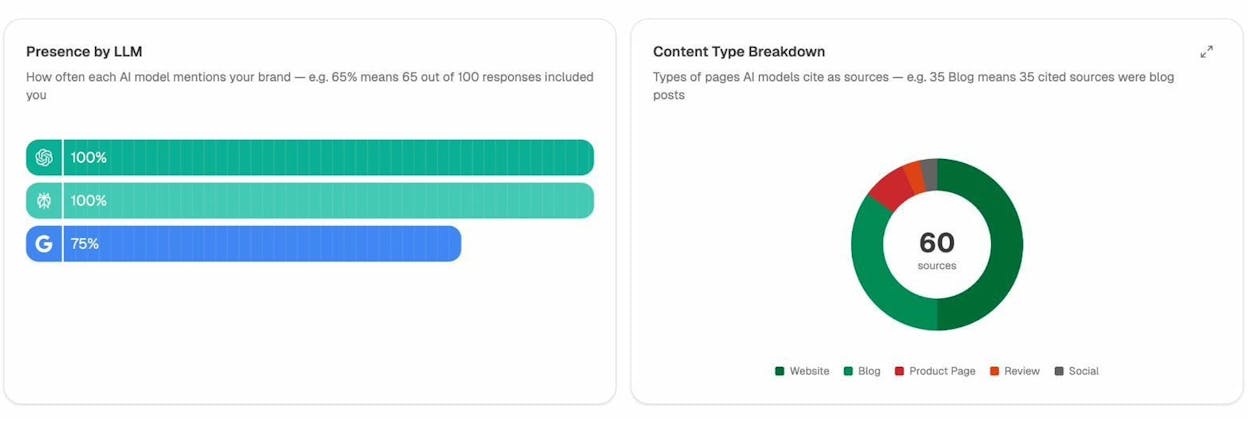
You can use Analyze AI’s Sources dashboard to see which types of content AI models currently cite in your space—blogs, review sites, product pages, or social posts—and then prioritize creating more of what works.
Build the flywheel, then monitor it
The real power of Lectric’s strategy isn’t any single tactic. It’s the flywheel: awareness drives interest, interest drives conversation, conversation drives AI training data, AI recommendations drive purchases, and purchases drive more conversation.
Once you’ve set this flywheel in motion—through a creator partnership, a PR campaign, a product launch, or any other brand activity—your job shifts from creating buzz to monitoring and reinforcing it.
Set up weekly email digests in Analyze AI to get automated updates on your AI visibility, sentiment changes, and competitor movements. This way you’ll know immediately if your momentum is growing or fading—without having to manually check every AI engine.
Lectric eBikes built a triple-win strategy through unconventional marketing:
-
They built massive brand awareness (235M+ impressions)
-
They supported a meaningful cause ($570K+ to St. Jude)
-
They spent a fraction of what traditional advertising would have cost
But the long-term impact goes beyond the campaign itself. The organic conversations generated by this partnership are now training data for AI models. When someone asks ChatGPT or Perplexity about electric bikes, Lectric shows up—not because they optimized for it, but because real people talked about them in genuine, positive ways.
This is the new marketing reality. SEO still matters. Google rankings still matter. But AI search is now an additional organic channel where your brand either shows up or it doesn’t. And the brands that show up are the ones people talk about.
If you’re planning an unconventional marketing campaign—a creator partnership, a charitable initiative, a bold PR play—don’t just measure impressions and clicks. Track your AI search visibility too. Because the conversations your campaign generates today will shape what AI recommends tomorrow.
The flywheel is spinning. The question is whether your brand is part of it.

Ernest

Ibrahim


