



Summarize this blog post with:


In this article, you’ll learn what guest blogging is, why it still works for building backlinks, growing brand authority, and increasing visibility in both search engines and AI platforms, and how to execute a guest blogging strategy from finding opportunities to promoting the final post.
Table of Contents
What Is Guest Blogging?
Guest blogging is the practice of writing and publishing a blog post on someone else’s website. The guest blogger typically receives a byline with a short bio and a link back to their own site.
For example, if you run a SaaS blog about project management and you write an article on a popular productivity blog, that article is a guest post. The productivity blog gets quality content it didn’t have to produce. You get exposure to a new audience plus a backlink from a relevant domain.
The concept is simple. The execution is where most people struggle.
What Are the Benefits of Guest Blogging?
Guest blogging is a two-sided trade. Both parties get something valuable.
For the guest blogger:
The most direct benefit is backlinks. Every guest post usually includes at least one link to your own site, either in the body or in the author bio. Since links remain one of the strongest ranking signals for Google, guest blogging is one of the few link building strategies that delivers SEO value while also producing a real piece of content.
Beyond links, guest blogging puts your name and brand in front of people who have never heard of you. If you write a genuinely useful article for a blog with 50,000 monthly readers, a percentage of those readers will click through to your site. They might not buy today, but they now know you exist.
There is also a compounding reputation effect. The more high-quality guest posts you publish, the more credible you appear. Editors start coming to you. Speaking invitations follow. Podcast hosts reference your articles. Your brand becomes associated with expertise in your niche.
For the blog owner:
Blog owners benefit from content they did not have to write themselves. Many publications need more articles than their in-house team can produce. A well-written guest post fills that gap while bringing a fresh perspective their regular readers will appreciate.
Some of the best guest posts come from practitioners who can share firsthand experience that staff writers cannot replicate. A case study about how a specific company grew organic traffic by 200% carries more weight when the person who did it writes the article.
For AI search visibility:
This is a benefit most people overlook. AI answer engines like ChatGPT, Perplexity, and Gemini construct their responses by pulling from sources they consider authoritative. When your brand or website is mentioned on high-authority domains through guest posts, you increase the pool of quality sources that reference your brand. This makes it more likely that AI models will mention you when users ask relevant questions.
Think of it this way. If five respected industry blogs have guest posts where your brand is mentioned with context and depth, AI models now have five additional quality sources to draw from when answering queries in your niche. Guest blogging is one of the few strategies that strengthens both your Google rankings and your AI search visibility at the same time.
How to Start Guest Blogging
Getting your first guest post published can feel intimidating. The process below breaks it into manageable steps and gives you specific techniques to improve your odds at each stage.
1. Find Guest Blogging Opportunities
Most guides tell you to Google search operators like "write for us" + your niche to find blogs that accept guest posts. That works, but it has a problem. Everyone uses the same operators, which means everyone finds the same blogs. Competition for those spots is intense, and many of those blogs are so flooded with pitches that yours will get buried.
The truth is that most blogs will accept guest posts even if they don’t advertise it. If you send a great article idea to the right editor, they will say yes. You don’t need a “write for us” page.
Here is a better approach using SEO tools.
Use a content research tool to find relevant blogs. Go to a tool like Ahrefs’ Content Explorer or Semrush’s Topic Research. Enter a broad keyword related to your niche. Filter by Domain Rating (DR) to narrow results to sites in the 30-70 range. These sites are authoritative enough to provide SEO value but not so large that they ignore outreach. Apply a “one page per domain” filter to get a clean list of unique sites.
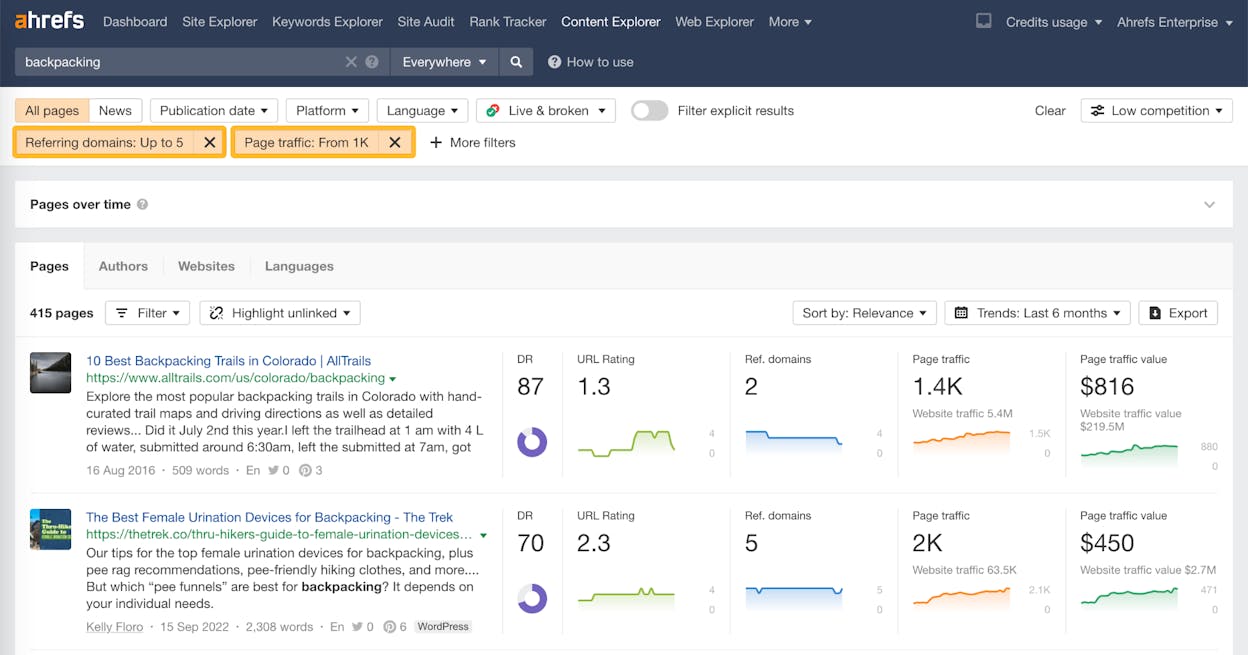
This will give you a list of relevant websites publishing content in your niche. Each one is a potential guest blogging target.
Use your existing competitor data. If you already track competitors using an SEO competitor analysis tool, look at which sites link to them but not to you. These sites are already interested in your niche and are more likely to accept a guest post from someone in the space.
Check who cites competitors in AI search. This is a newer technique that most guest bloggers have not adopted yet. AI engines cite specific domains and URLs when they answer questions. If a domain frequently appears as a cited source in AI responses for your target topics, getting a guest post published on that domain can help your brand become associated with the same topics.
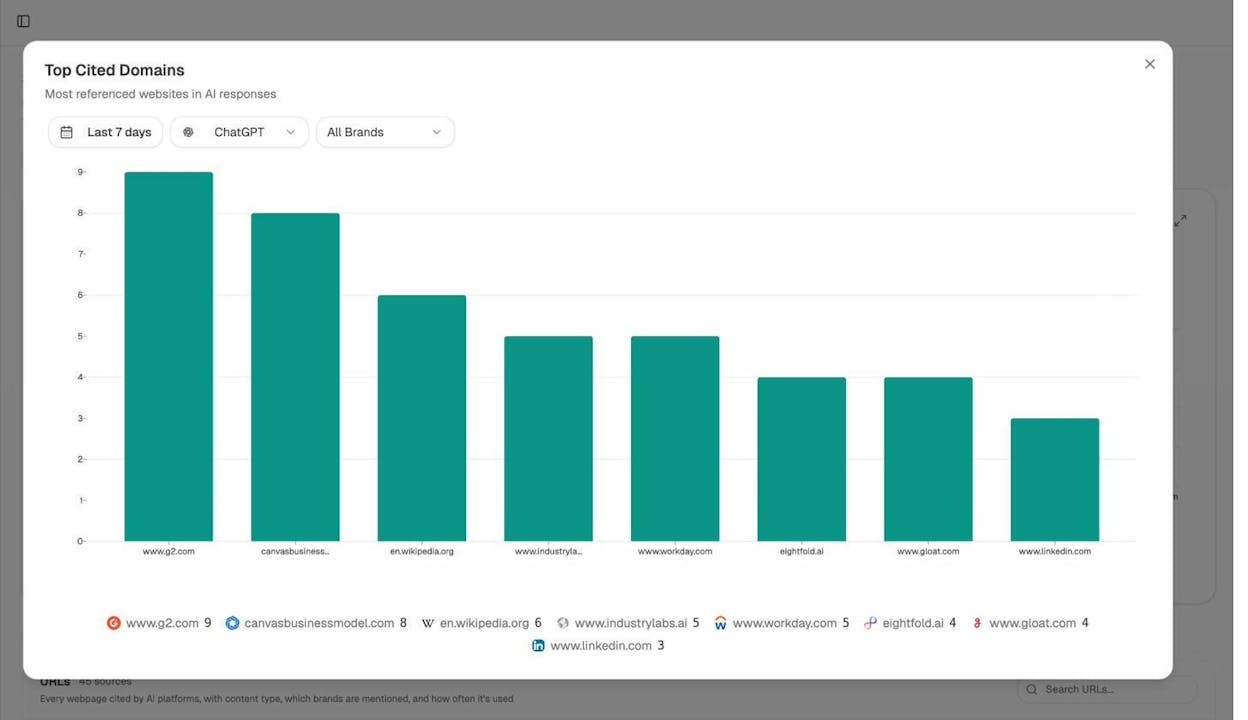
In Analyze AI, go to the Sources dashboard. You will see which domains AI models cite most frequently in your space. The Top Cited Domains chart shows you the websites that AI platforms reference when answering questions about your industry.
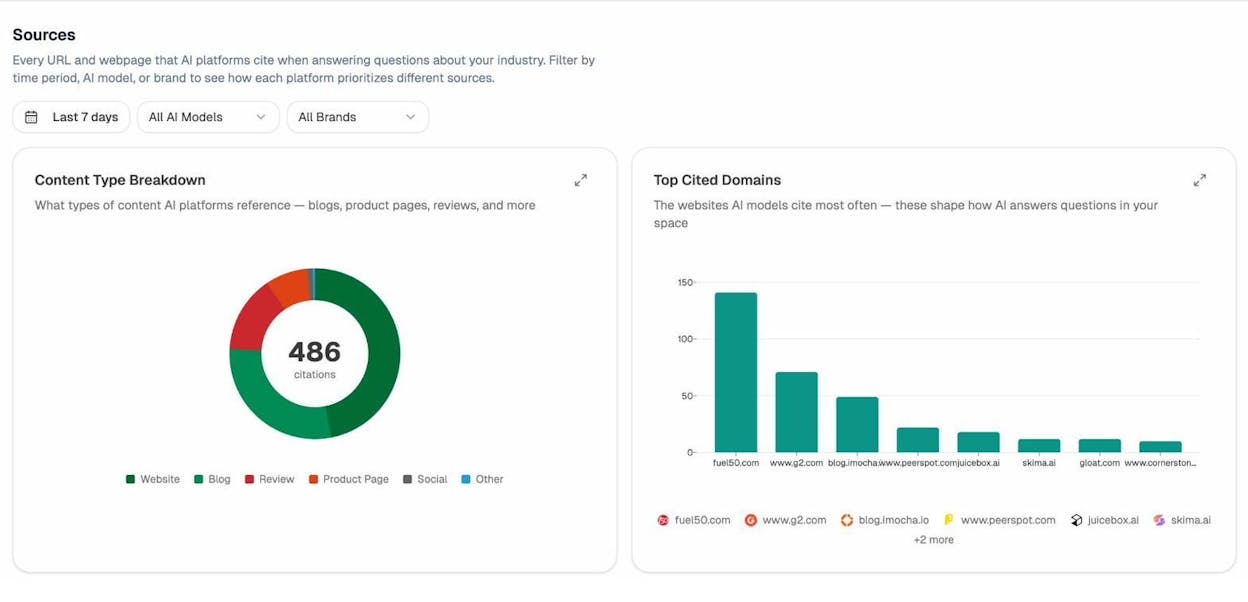
If you see a domain like G2, a niche industry blog, or a media site appearing frequently in AI citations, that domain becomes a high-priority guest blogging target. A guest post on a site that AI already trusts can directly influence whether AI models mention your brand in their responses.
Prioritize blogs that have never linked to you. A backlink from a domain that has never linked to you before (a new referring domain) carries more weight than a second or third link from a domain that already links to you. Prioritize new domains over repeat placements.
2. Develop Guest Post Ideas
The blogs you pitch will want content ideas that serve their audience. Showing up with a vague offer to “write something about SEO” will get you ignored. You need specific, compelling topic ideas that make the editor’s job easy.
Here are five proven techniques for generating guest post ideas, plus one newer technique that uses AI search data.
The Copycat Technique
Every blog wants more search traffic. To get search traffic, you need to target topics people are searching for. And every blog has more topics to cover than resources to write them.
The Copycat Technique helps you find those uncovered topics and pitch them.
Here is how it works:
-
Go to a competitive analysis tool (like Ahrefs’ Competitive Analysis or Semrush’s Keyword Gap)
-
Enter the domain of your target blog
-
Add its closest competitors
-
Run the comparison
![[Screenshot: A competitive analysis tool showing keyword gaps between a target blog and its competitors]](https://www.datocms-assets.com/164164/1777119927-blobid3.png?auto=format,compress&w=1248&fit=max)
The report shows keywords that competing blogs rank for but your target blog does not. These are content gaps. Go through the list and look for keywords that match the target blog’s editorial direction.
For example, if you are pitching a marketing blog and you see that its competitors rank for “content distribution strategy” but it does not, that is a topic you can pitch. The editor will likely be interested because you are helping them close a gap they may not even know about.
The Refresh Technique
Content ages. A blog post that ranked #1 two years ago may have dropped to page two because the information is outdated, competitors published better content, or Google refreshed its results.
Pitching an update to an outdated post is one of the easiest sells in guest blogging. The blog owner already knows the topic works because it used to perform well. You are offering to restore lost traffic.
Here is how to find candidates:
-
Go to a site analysis tool and enter the target blog’s domain
-
Pull up their top pages report
-
Compare traffic to the previous year
-
Sort by traffic decline (largest drop first)
![[Screenshot: A site analysis tool showing pages with declining traffic, sorted by traffic change]](https://www.datocms-assets.com/164164/1777119932-blobid4.png?auto=format,compress&w=1248&fit=max)
Look for posts that have dropped significantly in both traffic and keyword positions. If the content is clearly outdated (old statistics, broken links, missing current information), pitch the editor a refreshed version.
When you pitch a refresh, be specific about what you would update. “I noticed your post on email marketing benchmarks uses 2022 data. I’d like to refresh it with current stats and add a section on AI-assisted email personalization” is far more compelling than “I’d like to update one of your old posts.”
The Robin Hood Technique
Large, popular blogs got popular because they have great content. Smaller blogs in the same niche have not yet published that level of content.
The Robin Hood Technique takes successful content ideas from top blogs and offers adapted versions to lesser-known blogs.
Here is how:
-
Go to a top blog in your niche using a site explorer tool
-
Pull up their most-visited pages
-
Look for topics that a smaller blog has not covered yet
![[Screenshot: A site explorer tool showing top pages for a popular blog in a specific niche]](https://www.datocms-assets.com/164164/1777119932-blobid5.png?auto=format,compress&w=1248&fit=max)
The key word here is “adapted.” You are not copying the article. You are taking the topic and writing an original piece with your own angle, data, and examples. If a large marketing blog has a popular post about “cold email templates,” you could pitch a smaller sales blog with an article about “cold email templates for SaaS founders.” Same general topic, different angle, different audience.
The Splintering Technique
If you have a comprehensive guide or pillar page on your own site, you can break it into smaller standalone pieces and pitch each one as a guest post.
For example, if you have published a 5,000-word guide to content marketing with chapters on strategy, creation, distribution, measurement, and repurposing, each of those chapters could become its own guest post on a different blog.
Because you already did the research for the original guide, these splintered articles are faster to write. And each one links back to your comprehensive guide, which builds both backlinks and topical authority.
The Perspective Technique
The same topic can be written for multiple audiences by changing the perspective.
Say you wrote a guest post titled “Remote Work Best Practices for Engineering Teams.” You could pitch variations to different publications: “Remote Work Best Practices for Sales Teams” to a sales blog, “Remote Work Best Practices for Small Business Owners” to an entrepreneurship publication, and “Remote Work Best Practices for Agencies” to a marketing agency blog.
The core research stays the same, but the examples, advice, and framing change to match each audience. This lets you scale your guest blogging output without starting from scratch every time.
The AI Gap Technique
This is a technique that takes advantage of how AI search works.
AI models like ChatGPT and Perplexity answer questions by pulling from a set of sources they trust. If there is a topic in your niche where AI models give incomplete or generic answers, that represents a content gap you can fill through a guest post.
Here is how to find these gaps:
-
Use Analyze AI’s Ad Hoc Search tool to run prompts related to your niche topic across multiple AI engines
-
Review the responses and note where answers are shallow, outdated, or missing important subtopics
-
Pitch a guest post on a high-authority blog that fills exactly that gap
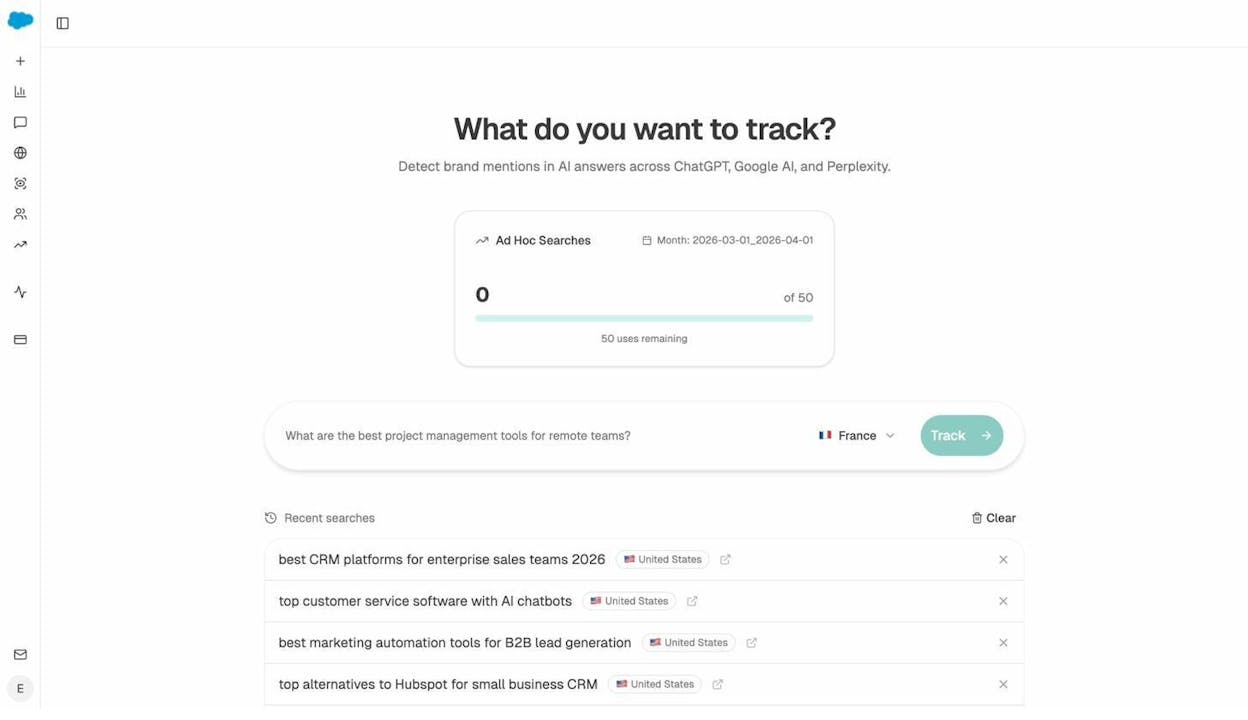
When a quality article on a trusted domain fills a gap that AI models were struggling to answer well, that article is likely to become a cited source in future AI responses. This means your guest post does not just earn a backlink for Google. It also becomes a source that AI models reference, potentially mentioning your brand to the millions of people who now use AI search daily.
3. Pitch the Blogs
You have your target blogs. You have your topic ideas. Now you need to send the pitch.
This step is simpler than people make it. It is just an email. But a few things will make the difference between getting accepted and getting ignored.
Read the Guest Post Guidelines
If the blog has a “write for us” or “contribute” page, read it carefully before you send anything. Some blogs want a full draft. Others want just a topic idea and a brief outline. Some require specific word counts or formatting. Following the guidelines shows the editor that you respect their process.
![[Screenshot: Example of a blog’s guest post guidelines page showing submission requirements]](https://www.datocms-assets.com/164164/1777119939-blobid7.png?auto=format,compress&w=1248&fit=max)
Ignoring the guidelines is one of the fastest ways to get your pitch deleted.
Find the Right Person
If the blog does not have a submission page, you need to find the right person to email. This is usually the managing editor, head of content, or (for smaller sites) the site owner.
Check the blog’s “About” or “Team” page first. If that does not help, search LinkedIn for people with editor or content titles at that company.
![[Screenshot: LinkedIn search results for “head of content” at a target company]](https://www.datocms-assets.com/164164/1777119944-blobid8.png?auto=format,compress&w=1248&fit=max)
Once you identify the right person, use an email discovery tool like Hunter.io or Apollo.io to find their email address. Enter their name and domain, and the tool will usually find the correct email.
![[Screenshot: Hunter.io showing a found email address for a target editor]](https://www.datocms-assets.com/164164/1777119944-blobid9.png?auto=format,compress&w=1248&fit=max)
Write a Pitch That Gets Opened
Most editors receive dozens of guest post pitches every week. The vast majority are generic templates that read like spam. Your pitch needs to stand out.
Here are the principles of a strong guest post pitch:
Personalize it. Reference a specific article the editor published. Explain what you liked about it and why your proposed topic would complement it. This shows you actually read their blog.
Lead with the value for their audience. Do not talk about what you want (a backlink, exposure). Talk about what their readers will get. “Your audience of B2B marketers would benefit from a step-by-step guide on building a cold outreach sequence, complete with templates and real reply rates” is specific and value-driven.
Include your best topic idea (not five ideas). Sending a laundry list of topics signals that you have not thought deeply about any of them. Pick your strongest idea, explain the angle in two to three sentences, and share a brief outline.
Show your credentials. Link to two or three published articles that demonstrate you can write well. If you have no published guest posts yet, link to your best work on your own blog.
Keep it short. Three to five short paragraphs is enough. If the editor needs to scroll to read your entire pitch, it is too long.
Here is a structure that works well:
-
One sentence of personalization (reference their content)
-
Your topic idea with a brief description of the angle
-
Why this topic matters to their audience right now
-
Two to three links to your published writing
-
A one-line closing
Do not attach a full draft unless the guidelines specifically ask for one.
4. Write Your Guest Post
Your pitch was accepted. Now you need to deliver a post that exceeds the editor’s expectations.
Start With an Outline
Before writing a single paragraph, build an outline. Some blogs request an outline as part of the process, but even if they do not, an outline prevents two common problems: blank page syndrome and structural drift (where you start writing about one thing and end up somewhere else entirely).
To build a strong outline, you need to know what subtopics to cover. The fastest way to find these is to analyze what the top-ranking pages for your target keyword already cover.
Here is one approach:
-
Enter your target keyword into a keyword research tool
-
Look at the top 10 ranking pages
-
Identify the common subtopics (H2s and H3s) across those pages
-
Note any subtopics that only one or two pages cover (these are differentiation opportunities)
![[Screenshot: SERP analysis showing common subtopics across top-ranking pages for a target keyword]](https://www.datocms-assets.com/164164/1777119950-blobid10.jpg?auto=format,compress&w=1248&fit=max)
Your outline should cover the core subtopics that readers expect (so the article is comprehensive) while also including at least one or two angles that competing articles miss (so the article adds original value).
If you use Analyze AI’s Content Writer, you can go a step further. The tool lets you enter a keyword or competitor URL and generates research, an outline, and a draft with AI visibility gaps and competitor keywords built into each step. The outline includes LLM Gap tags that show you which subtopics AI models want to see but the current top results do not cover.
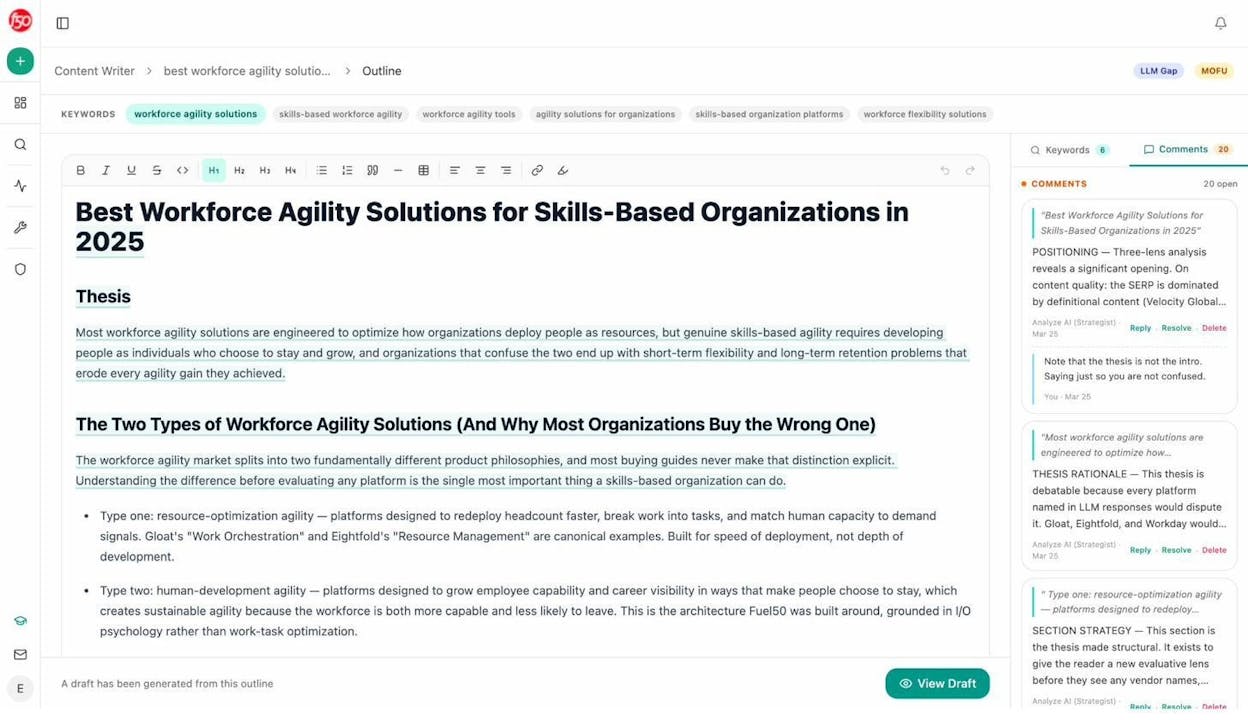
This gives you an outline that is not just optimized for Google rankings but also structured to fill gaps that make your guest post more likely to be cited in AI search results.
Write for the Reader, Not for Search Engines
A guest post has to be genuinely useful. Keyword stuffing, thin paragraphs, and filler sentences will get your article rejected by the editor and ignored by readers.
Write every section as if you are explaining the topic to a smart colleague who is new to the subject. Use simple language. Avoid jargon unless your audience expects it. Lead with the most important point in each section (this is called BLUF, or Bottom Line Up Front), then add context and evidence.
Make the article actionable. Every section should leave the reader with something they can do. If you explain a concept, follow it with a step-by-step process. If you share a strategy, include a real example of it working.
Here are a few writing principles that will improve any guest post:
One idea per paragraph. If a paragraph covers two ideas, split it into two paragraphs.
Every sentence should be the logical next step of the previous sentence. Read your draft out loud. If a sentence feels jarring or disconnected from the one before it, rewrite it.
Use evidence. Data, examples, case studies, and expert quotes make your claims credible. Unsupported opinions do not belong in a guest post.
Cut ruthlessly. If a sentence does not add value, remove it. If a paragraph repeats something you already said, delete it. The best writing is tight.
Include Strategic Links
Most guest posts allow one to two links back to your own content. Place them naturally where they add genuine value for the reader. A forced, irrelevant link to your homepage will annoy the editor and may get removed.
The best approach is to link to a specific, relevant resource on your site. If you mention keyword research in passing, you could link to your own keyword research guide. The link should feel like a helpful reference, not a promotional plug.
Also include external links to authoritative sources. Citing data from a reputable study or linking to a useful tool builds credibility and shows the editor that you care about the reader’s experience, not just your own link profile.
5. Promote Your Guest Post
Publishing the guest post is not the finish line. What you do after publication determines how much value you extract from the effort.
Thank the editor. Send a brief thank-you email the day the post goes live. This is good manners and it keeps the relationship warm for future pitches.
Engage with comments. If the blog has a comment section, stay around for the first few days and respond to every comment. This shows the editor and the audience that you are invested in the conversation, not just the backlink.
Share on social media. Post the article on your LinkedIn, X (formerly Twitter), and any relevant communities. Tag the blog and the editor. This helps the post get more visibility, which makes the editor more likely to invite you back.
Share in relevant communities. Post the article in Slack groups, Reddit threads, Discord servers, or industry forums where the topic is relevant. Do not just drop a link. Add a brief summary of the key takeaway and ask a question to spark discussion.
Repurpose the content. Turn key insights from your guest post into a LinkedIn carousel, a Twitter thread, a short video, or a newsletter section. Each piece of repurposed content drives more attention back to the original guest post.
How to Measure the ROI of Guest Blogging
Guest blogging requires significant effort. You should track results to make sure that effort is paying off.
Track Backlinks
Use a backlink checker or a tool like Ahrefs to verify that your backlinks are live and indexed. Some blogs remove guest post links during editing, or the link may be set to nofollow. Check periodically to make sure your links remain intact.
Track the number of referring domains you gain from guest blogging over time. Since multiple links from the same domain have diminishing returns, focus on growing the number of unique referring domains rather than the total number of links.
Track Referral Traffic
Set up UTM parameters on the links in your guest posts so you can track referral traffic in Google Analytics. This tells you how many visitors each guest post drives to your site and which pages they visit.
Be realistic about referral traffic expectations. Studies show that the average guest post drives around 50 visits. The real value is in the backlink and the brand exposure, not the direct traffic.
Track AI Search Mentions
This is where guest blogging and AI search intersect. When your brand appears on multiple authoritative sites through guest posts, AI models have more high-quality sources to draw from when they mention your brand.
Use Analyze AI’s Prompt Tracking to monitor whether your brand is being mentioned in AI responses for your target topics. Track your visibility percentage, sentiment score, and position over time.
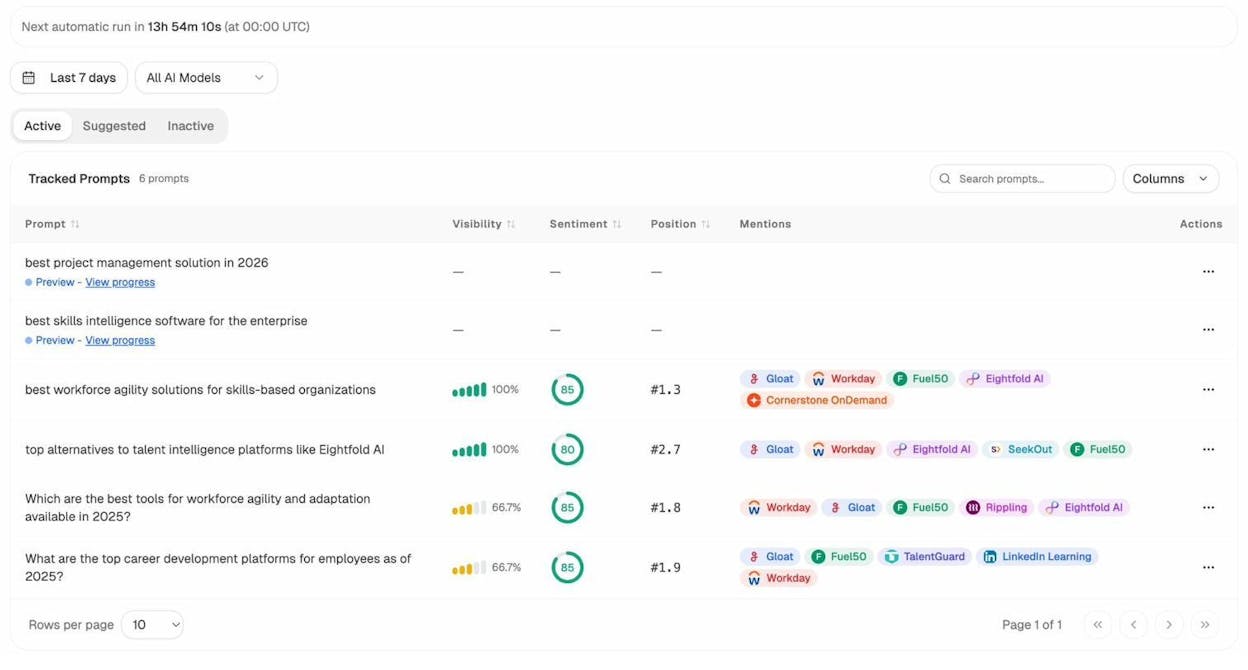
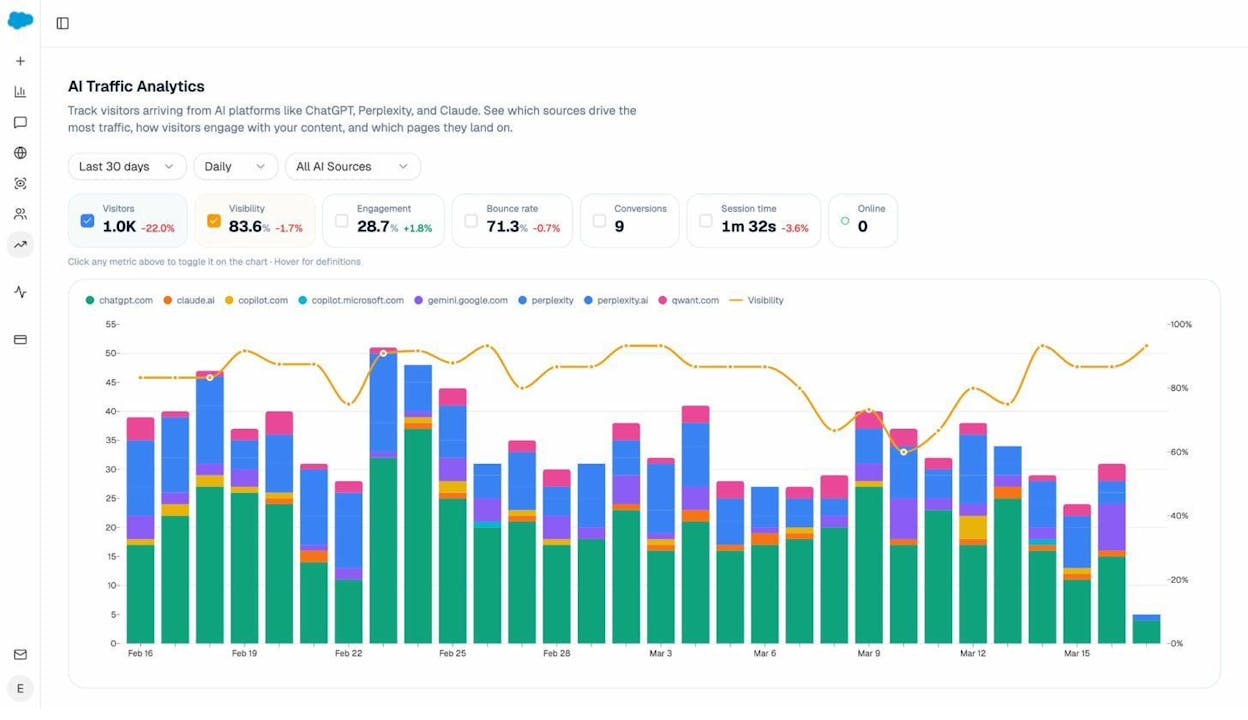
If you notice your visibility increasing on prompts related to topics you have covered through guest posts, that is a signal that the strategy is working. You can also check the AI Traffic Analytics dashboard to see if you are getting actual visitors from AI search engines like ChatGPT, Perplexity, Claude, and Gemini.
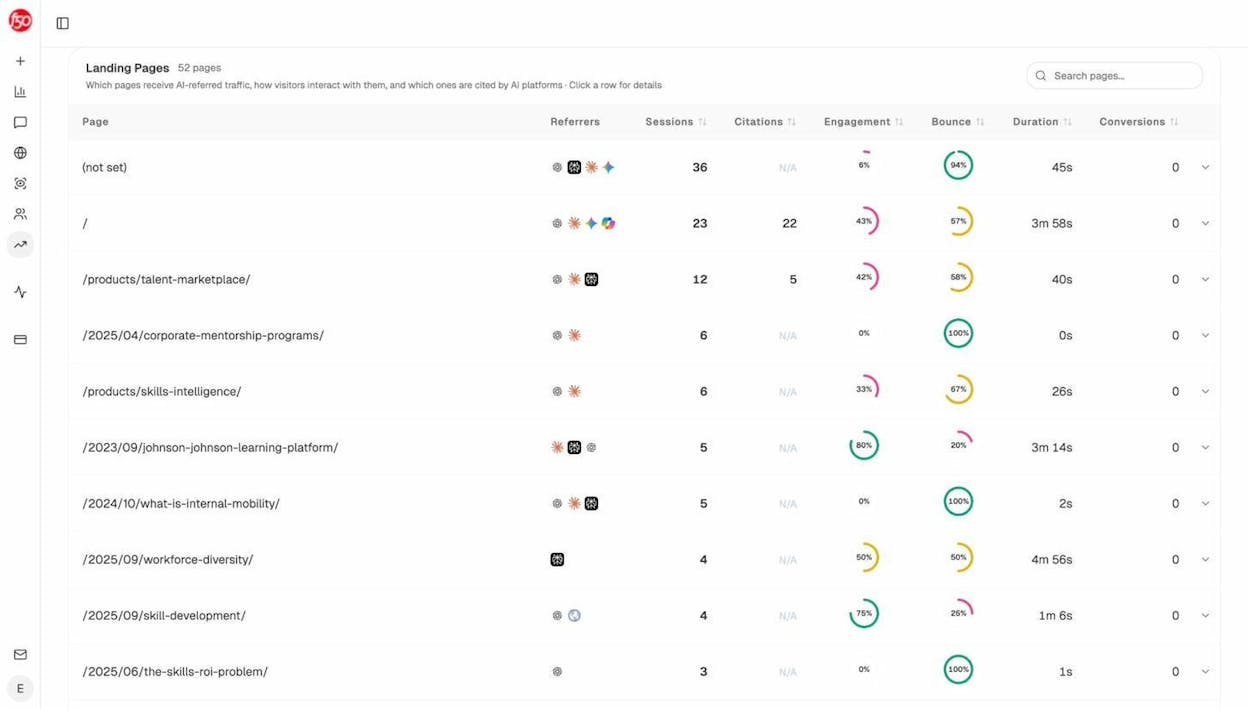
The Landing Pages report within AI Traffic Analytics shows exactly which pages on your site are receiving AI-referred traffic. If your guest posts link to specific pages and those pages start appearing in this report, you have a clear line between your guest blogging efforts and AI search results.
Track Brand Visibility in AI Search Over Time
Guest blogging is a long-term strategy, and its impact on AI search visibility compounds over time. As more authoritative domains reference your brand through guest posts, your overall presence in AI-generated answers should increase.
Use the Overview dashboard in Analyze AI to track your brand’s visibility percentage across all AI models alongside your competitors. This gives you a high-level view of whether your guest blogging (and other content efforts) are moving the needle.
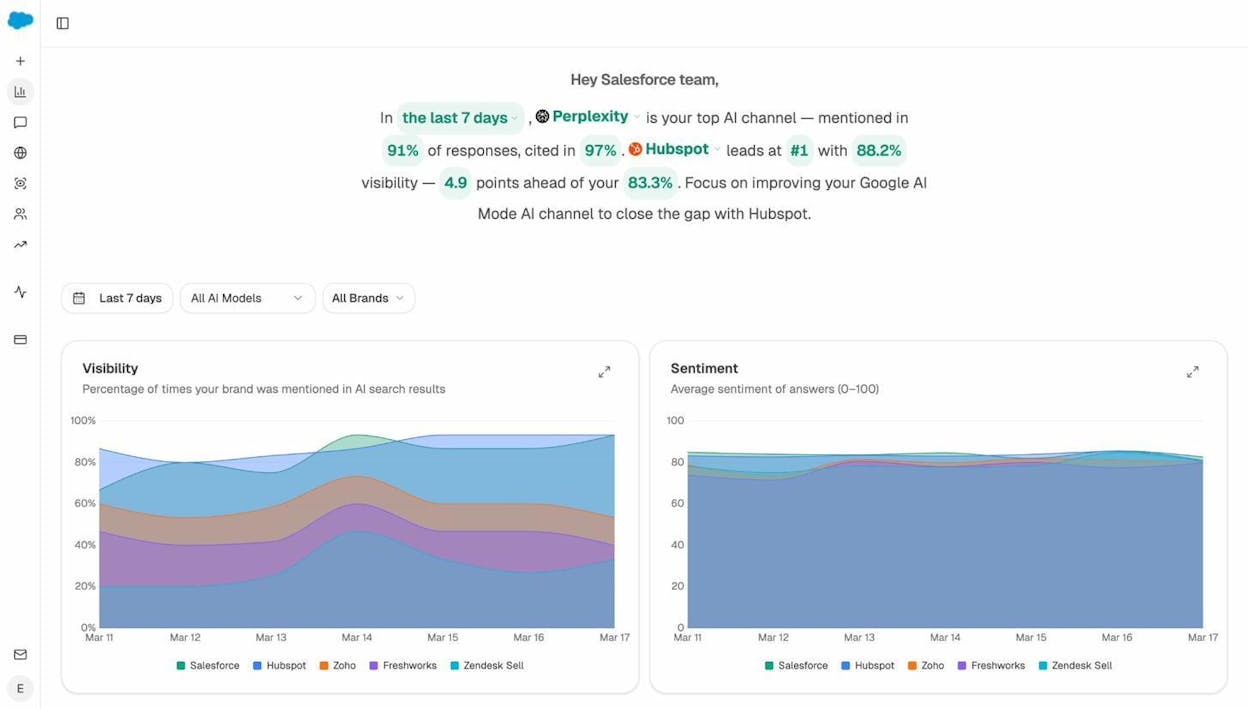
Compare your visibility trend before and after a sustained guest blogging campaign. If you were mentioned in 40% of relevant AI responses before the campaign and 55% after three months of consistent guest posting on high-authority sites, that is measurable progress.
Guest Blogging Tips
The process above will get you 90% of the way. These tips address the common sticking points that trip up even experienced guest bloggers.
Pitch More Blogs Than You Can Handle
Not every pitch will be accepted. Some editors will not respond at all. Others will say no. A few will say yes but then go silent.
The practical solution is to pitch the same topic to multiple blogs at once. If two editors say yes, offer the article to the one with higher authority and let the other know you will send a different topic soon. This keeps your pipeline full and prevents the frustration of waiting weeks for a single response.
Write for Blogs That Have Never Linked to You
A new referring domain has more SEO impact than another link from a domain that already links to you. Before pitching a blog, check whether they have linked to your site before. If they have, deprioritize them in favor of blogs that have never linked to you.
You can use a website authority checker to evaluate potential target blogs. Look for domains with solid authority scores that have not linked to your site yet.
Target Blogs That AI Already Cites
Not all backlinks are created equal for AI search. A guest post on a domain that AI models already trust and cite frequently will do more for your AI visibility than a post on a domain that AI models never reference.
Use the Sources dashboard in Analyze AI to see which domains appear most often in AI citations for your industry. Cross-reference that list with your guest blogging targets. If a domain appears frequently as a cited source in AI responses, a guest post on that domain can directly strengthen your brand’s association with those topics in AI-generated answers.
Don’t Neglect the Author Bio
Your author bio appears at the end of every guest post, and many readers check it. Write a bio that is specific and credible. Include your name, your role, one sentence about your expertise, and a link to your site or best resource.
Avoid generic bios like “John is a marketing enthusiast who loves coffee.” Instead, write something like “John leads content strategy at [Company], where he has grown organic traffic from 0 to 500K monthly visitors. Read his guide to content marketing.” Specific, credible, and linked to a valuable resource.
Track and Organize Your Guest Blogging Pipeline
As you scale your guest blogging efforts, tracking becomes essential. Create a simple spreadsheet with the following columns: Target Blog, Editor Name, Email, Pitch Date, Topic, Status (Pitched / Accepted / Published / Rejected), Publication Date, and Backlink URL.
This lets you see your pipeline at a glance, follow up with editors who have not responded, and track which blogs give you the best results.
Guest Blogging Tools
These tools make the guest blogging process more efficient from prospecting to measurement:
|
Tool |
Purpose |
Best For |
|---|---|---|
|
Find guest post opportunities, analyze content gaps, check backlinks |
Prospecting and link tracking |
|
|
Keyword gap analysis, competitor research, domain authority checks |
Competitor research |
|
|
Find email addresses of editors and site owners |
Email discovery |
|
|
Find contacts, verify emails, and manage outreach sequences |
Outreach at scale |
|
|
Send and manage outreach emails at scale |
Large-scale campaigns |
|
|
Track AI search visibility, find AI-cited domains to pitch, measure guest post impact on AI mentions |
AI search measurement |
|
|
Generate keyword ideas for guest post topics |
Topic research |
|
|
Check domain authority of potential guest blogging targets |
Target evaluation |
|
|
Monitor search traffic changes and new backlinks from guest posts |
Performance tracking |
|
|
Generate guest post ideas, create outlines, proofread drafts |
Writing assistance |
Guest Blogging Mistakes to Avoid
Even with the right process, there are common mistakes that reduce the effectiveness of your guest blogging efforts.
Writing low-quality content for the backlink. If your guest post is thin, generic, or poorly written, it hurts your reputation more than the backlink helps your rankings. Editors will not invite you back, and readers will not click through to your site. Every guest post should be good enough that you would be proud to publish it on your own blog.
Pitching irrelevant blogs. A guest post on a blog that has nothing to do with your niche provides minimal SEO value and zero brand benefit. Stay within your topic area or closely adjacent niches where the audience overlap is real.
Ignoring the editor’s feedback. If an editor asks for revisions, respond quickly and thoroughly. Pushing back on reasonable feedback or going silent after receiving edits is a fast way to burn a relationship.
Over-linking to your own site. Including five links to your own content in a single guest post is a red flag for editors. Stick to one or two highly relevant internal links. The goal is helpfulness, not link stuffing.
Not following up. If you pitch and hear nothing after a week, follow up once. A polite one-line email (“Just checking if you had a chance to review my pitch”) is not annoying. Not following up means you are leaving accepted pitches on the table.
Forgetting about AI search. In 2026, ignoring AI search is like ignoring mobile in 2015. Your guest posts do not just need to rank on Google. They need to be the kind of content that AI models cite and reference. Write with depth, include original data or insights when possible, and publish on domains that AI models already trust.
FAQ
How does guest blogging help SEO?
Links are a confirmed Google ranking factor. By publishing a guest post on another site, you earn a backlink to your own site. This can improve your domain authority and help specific pages rank higher in search results. The link carries more weight if it comes from a relevant, high-authority domain and points to a specific page on your site rather than just your homepage.
Is guest blogging still effective in 2026?
Yes. Guest blogging remains one of the most widely used link building strategies. According to industry surveys, nearly half of SEOs use guest blogging as a go-to link building tactic. The key is quality over quantity. A single guest post on a well-respected blog in your niche is worth more than ten posts on low-quality sites.
Is guest blogging bad for SEO?
It can be if done poorly. In 2014, Google’s then-head of web spam warned that low-quality guest posts published purely for links could be seen as a manipulative tactic. The warning was aimed at mass-produced, spammy guest posts on irrelevant sites. Writing a valuable, well-researched article for a reputable site with a relevant audience is still a legitimate and effective strategy.
How much referral traffic can I expect from a guest post?
Set your expectations low. Studies have found that the average guest post generates around 50 visits through direct referral traffic. Some posts on high-traffic sites will generate more, but the primary value of guest blogging is the backlink and the brand exposure, not the direct traffic.
Can guest blogging improve my visibility in AI search?
Yes. AI answer engines construct responses by pulling from sources they consider authoritative. When your brand is mentioned on multiple high-authority domains through guest posts, AI models have more quality sources to draw from when answering relevant queries. Over time, this can increase how often your brand appears in AI-generated answers. You can track this using Analyze AI’s visibility tracking features.
How many guest posts should I write per month?
There is no universal number. For most companies, two to four quality guest posts per month is a sustainable pace. It is better to publish two excellent guest posts on high-authority blogs than eight mediocre posts on low-quality sites. Quality compounds. Volume without quality does not.
Should I write for sites with high Domain Rating only?
Not necessarily. Very high DR sites (80+) are harder to get published on and may have stricter editorial standards. Sites in the DR 30-70 range are often the sweet spot. They provide meaningful SEO value, they are more accessible, and their editors are often more responsive to pitches.
What should I do if my guest post pitch is rejected?
Move on and pitch the same topic to another blog. Rejection is normal. Most editors receive far more pitches than they can accept. If the editor gives you specific feedback on why they rejected it, use that feedback to improve the pitch before sending it to the next blog.
Final Thoughts
Guest blogging is one of the few strategies that builds backlinks, grows brand awareness, strengthens your reputation, and increases your visibility in AI search all at the same time. The work is front-loaded. Finding the right blogs, crafting strong pitches, and writing great articles takes effort. But the results compound over months and years.
The shift toward AI search makes guest blogging more important, not less. As AI models rely on a broader set of authoritative sources to construct their answers, the brands that appear consistently across high-quality domains will have an advantage. Every guest post on a trusted site is another source that AI can draw from when a user asks a question in your niche.
Start with one pitch this week. Find a blog in your niche, generate a strong topic idea, and send a personalized email to the editor. If you follow the process in this guide, you will be publishing guest posts consistently within a month.

Ernest

Ibrahim


