



Summarize this blog post with:


In this article, you’ll learn the real differences between copywriting and content writing, where the two overlap, what skills each role demands, how much each pays in 2026, and how to decide which type of writer to hire or become. You’ll also learn how to optimize both copy and content for search engines and AI search engines so your writing actually gets found.
Table of Contents
What Is Content Writing?
Content writing is the craft of producing written material that informs, educates, or entertains a target audience. The goal is to build trust and attract readers over time rather than push for an immediate sale.
Content writers create assets like blog articles, email newsletters, social media posts, ebooks, whitepapers, case studies, and how-to guides. Most of these pieces are long-form. A typical blog article runs anywhere from 1,000 to 3,000 words, and some pillar pages go even longer.
The best content writing does not feel like marketing. It feels like a knowledgeable friend walking you through a problem. Think of a detailed guide on how to write an article or a breakdown of keyword types. The reader finishes the piece knowing something they did not know before.
Content writing is often tied to SEO. Companies invest in blog content to rank on Google, attract organic traffic, and build topical authority. But the best content writers think beyond rankings. They write pieces that earn links, get shared, and position their brand as the go-to resource in a niche.
What Is Copywriting?
Copywriting is the art of using words to persuade the reader to take a specific action. That action might be clicking a button, signing up for a trial, making a purchase, or filling out a form.
Copywriters produce landing page copy, product descriptions, PPC ad copy, email subject lines, sales pages, taglines, and calls to action. Their work is usually shorter than content writing, sometimes just a handful of sentences. But every word carries weight because the goal is conversion.
Good copywriting speaks directly to the reader’s pain and desire. Instead of explaining what a product does, it explains what the product does for them. A product description that says “noise-canceling headphones with 40mm drivers” is a spec sheet. One that says “block out the open office and focus for four uninterrupted hours” is copywriting.
The discipline draws heavily from direct-response advertising. Legends like David Ogilvy, Claude Hopkins, and Eugene Schwartz built frameworks that copywriters still use today: problem-agitation-solution, AIDA (Attention, Interest, Desire, Action), and headline formulas designed to stop a reader mid-scroll.
Copywriting vs. Content Writing: Key Differences
The simplest way to understand the split is this: content writing pulls readers in, and copywriting pushes them to act. But the differences run deeper than that.
|
Content Writing |
Copywriting |
|
|---|---|---|
|
Primary goal |
Educate, inform, or entertain |
Persuade and convert |
|
Typical length |
1,000 to 5,000+ words |
A few words to a few hundred |
|
Common formats |
Blog posts, newsletters, ebooks, guides |
Ads, landing pages, product pages, CTAs |
|
Tone |
Conversational and informative |
Direct, urgent, and benefit-driven |
|
Timeline to results |
Long-term (SEO rankings, authority) |
Short-term (clicks, signups, sales) |
|
Success metrics |
Organic traffic, time on page, backlinks |
Conversion rate, click-through rate, revenue |
|
SEO involvement |
Almost always |
Sometimes (SEO copywriting) |
|
Writing approach |
Depth, research, original insight |
Brevity, emotional triggers, clarity |
Purpose and Goals
Content writers are typically tasked with building a library of resources that attracts readers through search engines and social media. Their work compounds. A single well-written blog post can drive traffic for years.
Copywriters are typically tasked with improving a specific metric on a specific page. Their work is measured in conversion rates, click-through rates, and revenue per page. A great landing page rewrite can double signups overnight.
Length and Format
Content writing tends to be long. A thorough guide on SEO content strategy might run 3,000 words because the topic demands that level of depth.
Copywriting tends to be short. A Google Ad gives you 30 characters for a headline. A landing page hero section gives you maybe 10 words before the reader decides whether to keep scrolling. Every syllable matters.
That said, these are tendencies, not rules. Some long-form sales pages run thousands of words. Some content writing is short, like social media captions. The purpose of the writing determines whether it leans toward content or copy, not the word count.
Tone and Style
Content writing uses a conversational, informative tone. The writer positions themselves as a knowledgeable guide. They explain concepts, provide examples, cite data, and walk the reader through a process step by step.
Copywriting uses a more direct, benefit-driven tone. The writer positions the product or service as the solution to a specific problem. They lean on emotional triggers, urgency, social proof, and clear calls to action.
Metrics and Measurement
Content writing success is measured by organic traffic, keyword rankings, time on page, scroll depth, backlinks, and social shares. These metrics track how well the content attracts and holds attention over time.
Copywriting success is measured by conversion rate, click-through rate, cost per acquisition, and revenue generated. These metrics track how well the writing moves people from interest to action.
Where Copywriting and Content Writing Overlap
In practice, the line between these two disciplines is blurry. And the best writers live in that overlap.
SEO Copywriting
SEO copywriting combines both skills. You write content that ranks on Google AND converts readers into customers. This is exactly what Grow and Convert calls “pain point SEO.” You target keywords with buying intent, write content that genuinely helps the reader, and weave your product into the narrative as a natural solution.
For example, an article on “best content creation tools” is content writing because it educates. But it is also copywriting because each tool description positions a product and drives the reader toward a decision.
Product-Led Content
Another overlap is product-led content. This is long-form educational content where the product is woven into the how-to sections rather than bolted on at the end. The reader learns something useful AND sees how a specific tool solves their problem.
The key to making this work is honesty. If your product genuinely helps with the problem being discussed, show it in action. If it does not, leave it out. Readers can smell forced product mentions from paragraphs away.
The Hybrid Writer
The most valuable writers in 2026 can do both. They understand SEO well enough to choose the right keyword, research the search intent, and structure the content to rank. They also understand conversion well enough to write headlines that stop scrollers, CTAs that get clicks, and product descriptions that move units.
If you are building your writing career, learning both skills will make you far more hirable and far better paid.
What Makes Great Copy and Content?
Whether you are writing a blog post or a landing page, great writing shares three qualities.
It Grabs Attention and Holds It
Your intro is a handshake. If it is weak, the reader leaves. If it is strong, they stay.
For content writing, this means opening with a clear promise of what the reader will learn. No filler. No “since the dawn of time” openings. State what problem the article solves and get into it.
For copywriting, this means leading with the biggest benefit or the sharpest pain point. The headline does 80% of the work. If the headline fails, nobody reads the rest.
Here are a few practical techniques that work across both:
Use short sentences. Short sentences create pace. They pull the reader forward. They make complex ideas feel digestible.
Write in active voice. “We increased conversions by 40%” hits harder than “Conversions were increased by 40%.”
Cut ruthlessly. If a sentence does not advance the reader’s understanding or move them closer to action, delete it.
Lead with the point. Do not bury your best insight in paragraph three. Put it in paragraph one.
It Solves a Real Problem
Good writing meets the reader where they are. It understands their situation and gives them something they can use.
For content writing, that means going deeper than definitions. Anyone can define “content writing.” The value comes from explaining how to actually do it well, with specific examples, frameworks, and steps the reader can follow.
For copywriting, that means speaking to the underlying desire, not just the surface-level feature. People do not buy project management software because they want a Gantt chart. They buy it because they want to stop losing track of deadlines.
Take Bombas socks as an example. Their product copy does not just say the socks are comfortable. It explains the specific problems each feature solves: a seamless toe to prevent blisters, a blister tab to protect the back of your heel, a honeycomb support system for arch support. Every feature is tied to a benefit the reader feels.
![[Screenshot: Bombas product page showing feature-benefit copy for their socks]](https://www.datocms-assets.com/164164/1777066772-blobid1.jpg?auto=format,compress&w=1248&fit=max)
It Is Optimized for Search Engines
Great writing that nobody finds is wasted effort. Whether you are writing a blog post or a landing page, search engine optimization gives your work a chance to be discovered.
SEO for content writing starts with keyword research. You need to know what your audience is searching for, how competitive those terms are, and what kind of content Google currently ranks for those queries.
Use a tool like Analyze AI’s Keyword Generator to find relevant keywords. Then check their difficulty with the Keyword Difficulty Checker to make sure you are targeting terms you can realistically rank for.
![[Screenshot: Google search results page for “copywriting vs content writing” showing the types of content ranking]](https://www.datocms-assets.com/164164/1777066780-blobid2.png?auto=format,compress&w=1248&fit=max)
Once you pick a keyword, study the search intent. Look at the pages that currently rank. Are they listicles? How-to guides? Comparison posts? The format of top-ranking pages tells you what Google thinks the searcher wants.
Then optimize your content. Include your target keyword in your title, H1, URL, meta description, and naturally throughout the body. Use related terms and semantically connected phrases. Answer the questions that show up in Google’s People Also Ask box.
![[Screenshot: Google People Also Ask box for “copywriting vs content writing” showing related questions]](https://www.datocms-assets.com/164164/1777066780-blobid3.png?auto=format,compress&w=1248&fit=max)
For copywriting, SEO matters most on landing pages and product pages. A well-optimized product page can drive organic traffic that converts without paid ads.
It Is Discoverable in AI Search Engines Too
Here is where most guides on copywriting and content writing stop. But search is evolving. People are not just searching on Google anymore. They are asking ChatGPT, Perplexity, Gemini, and Copilot for recommendations.
When someone asks an AI engine “What’s the difference between copywriting and content writing?” or “Best tools for content writing,” the AI pulls its answer from sources it trusts. If your content is not among those sources, you are invisible to a growing share of your audience.
This matters for both content writers and copywriters. Content writers need their blog posts to be cited in AI-generated answers. Copywriters need their product and landing pages to show up when AI engines recommend solutions.
The principles are similar to traditional SEO but with a few important differences:
AI engines favor depth over keyword density. Thin content that barely scratches the surface of a topic rarely gets cited. AI models pull from sources that provide comprehensive, well-structured answers.
AI engines cite specific sources. Unlike Google, which shows a list of links, AI engines often cite the exact URL they pulled information from. Getting cited means earning direct visibility and click-throughs.
AI engines evaluate across multiple engines. Your brand might show up in ChatGPT but be completely absent from Perplexity or Gemini. You need to track your visibility across all of them.
You can use Analyze AI to see exactly how AI search engines portray your brand, where you appear, and where competitors beat you. The platform tracks your visibility, citations, and sentiment across ChatGPT, Perplexity, Gemini, Copilot, and other AI engines.
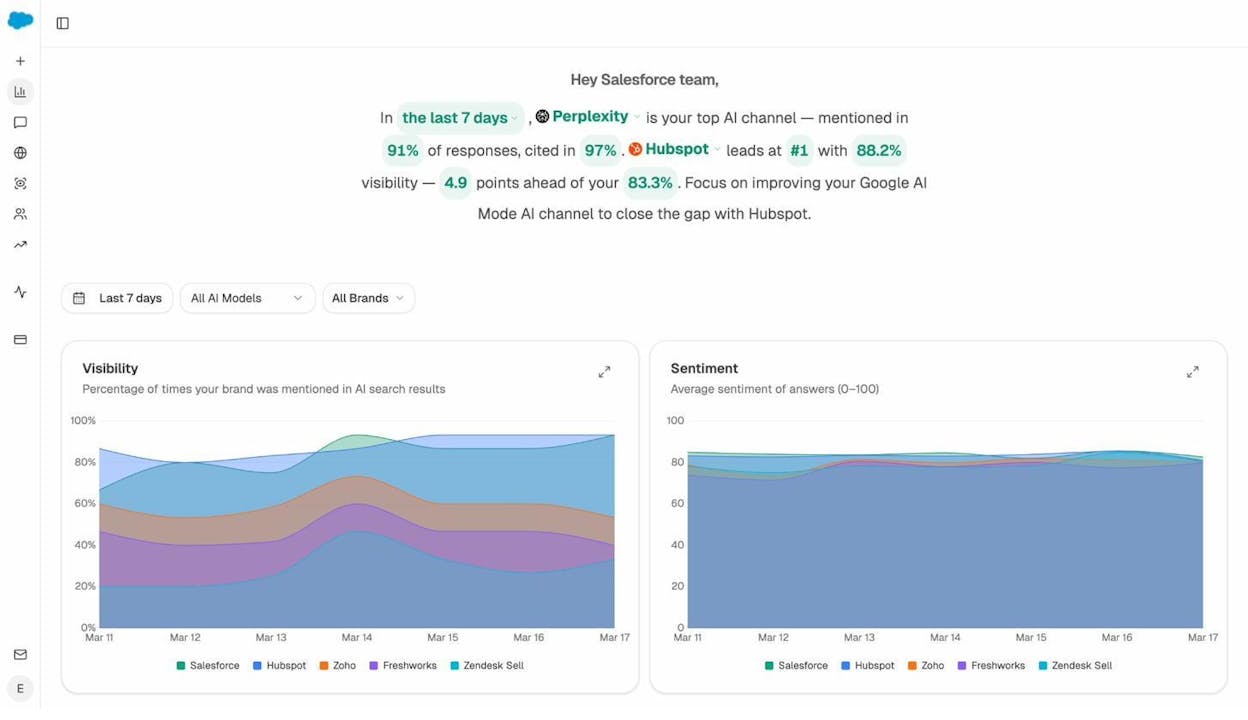
For instance, the Prompts dashboard shows you how often your brand appears in AI responses for the topics you care about, broken down by engine. If you are writing content about “content writing tips” and want to know whether AI engines cite your articles on that topic, this is where you check.
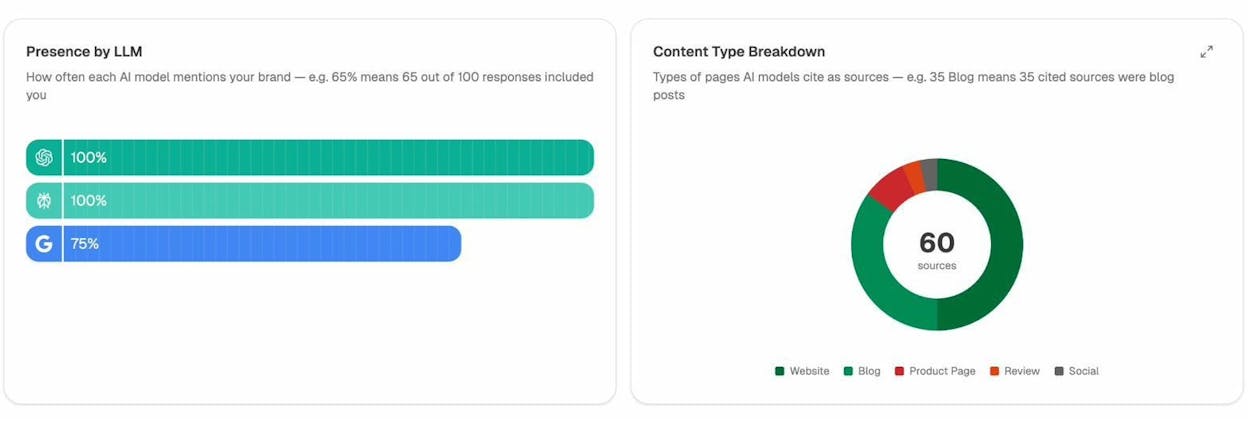
The Sources dashboard goes a level deeper. It shows which URLs and domains AI engines cite in your space. This tells you exactly what kind of content gets picked up, so you can create more of it.
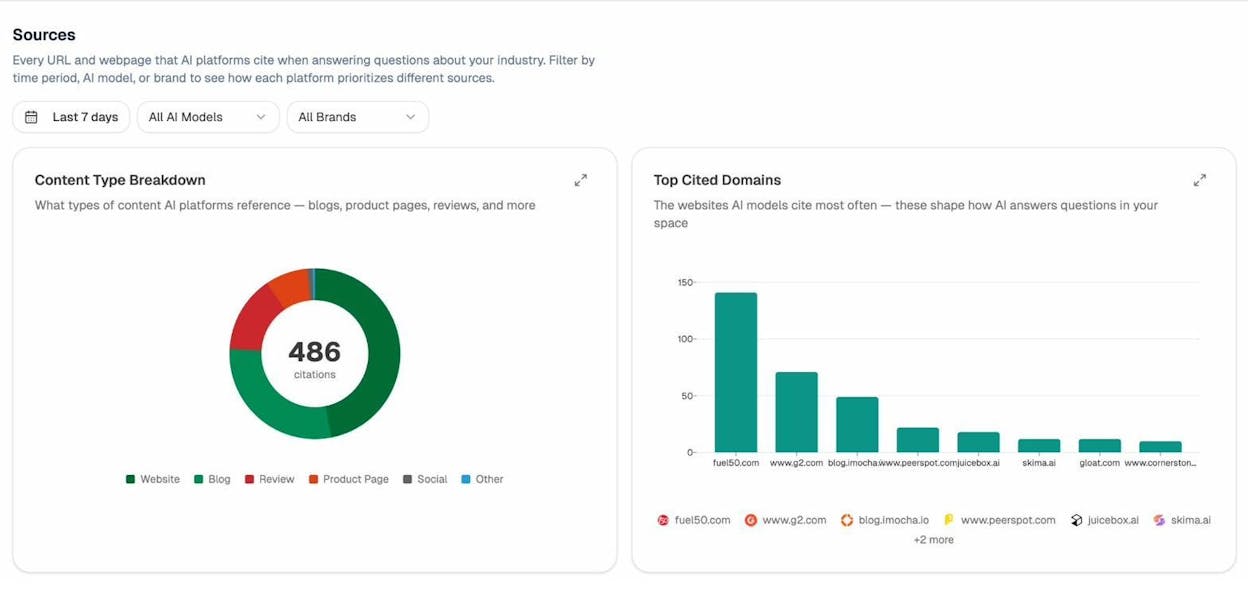
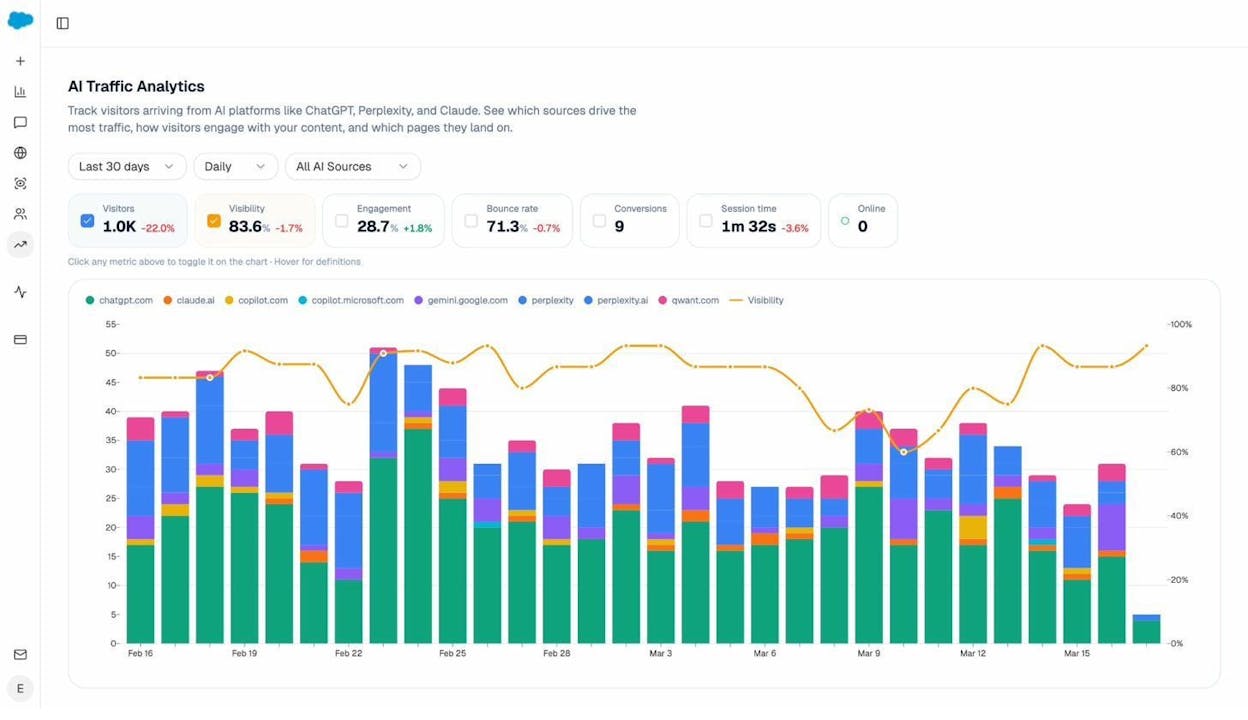
And the AI Traffic Analytics feature connects to your GA4 to show how many visitors actually come from AI search engines and which pages they land on. This closes the loop from “appearing in AI answers” to “driving real traffic and conversions.”
How to Write Content That Performs in Both Google and AI Search
If you want your content to rank on Google and get cited by AI engines, here is a practical process you can follow.
Step 1: Choose a Keyword with Real Search Demand
Start with keyword research. Use a keyword tool to find terms your audience is searching for. Look for keywords with decent search volume and manageable competition.
![[Screenshot: A keyword research tool showing search volume and difficulty for “copywriting vs content writing”]](https://www.datocms-assets.com/164164/1777066799-blobid8.png?auto=format,compress&w=1248&fit=max)
You can also use Analyze AI’s Keyword Generator to find related keywords and the SERP Checker to see what currently ranks.
Step 2: Study the Search Intent
Before you write a single word, look at what already ranks for your keyword. Open the top five results and ask yourself:
-
What format are they using? (Listicle, comparison, how-to, guide)
-
What topics do they cover?
-
What questions do they answer?
-
Where do they fall short?
Your article needs to match the intent (people searching “copywriting vs content writing” want a comparison, not a sales pitch) while going deeper than what already exists.
Step 3: Check What AI Engines Say About the Topic
This is the step most writers skip. Before you write, ask ChatGPT, Perplexity, and Gemini the same question your keyword targets. See what they say. Note which sources they cite.
You can do this manually, or use Analyze AI’s AI Search Explorer to run a prompt across multiple AI engines at once and see who gets cited.
This tells you two things: (1) what information AI engines currently associate with your topic, and (2) which competitors are already being cited. You need to create content that is more useful, more detailed, and more current than those cited sources if you want to earn the citation yourself.
Step 4: Structure Your Content for Readability and Citability
AI engines tend to cite content that is well-structured and gives clear, direct answers. Follow these principles:
Use clear headings. Break your content into logical sections with descriptive H2 and H3 tags. AI engines often pull content from specific sections rather than entire articles.
Lead each section with the answer. Put the most important point at the top of each section, then support it with details. This “bottom line up front” approach helps both human readers and AI models find the key takeaway quickly.
Use lists and tables where appropriate. Structured data is easier for AI models to parse and cite. A comparison table like the one in this article is more citeable than the same information written in paragraph form.
Include original data and specific examples. AI engines favor sources that add information not available elsewhere. Original research, proprietary data, expert quotes, and real case studies give your content an edge over generic explainers.
Step 5: Write the Content
Now write. Focus on clarity, depth, and flow. Every sentence should be the logical next step after the previous one. Every section should build on the last.
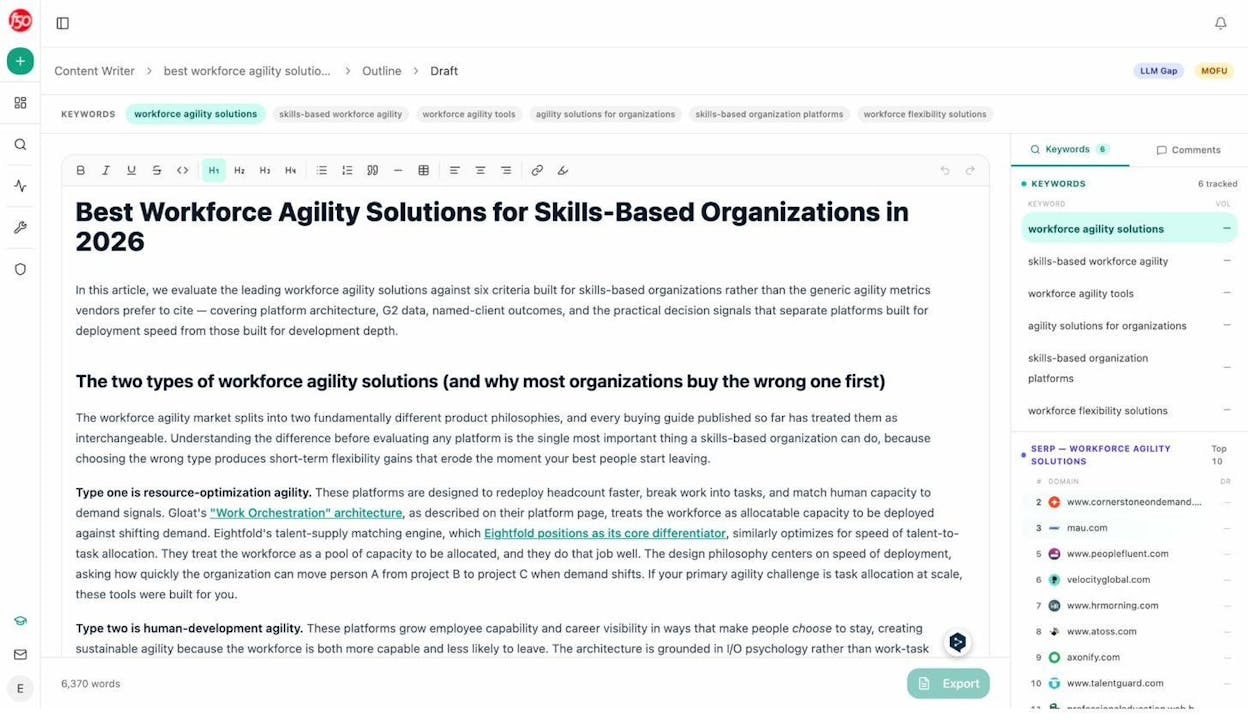
If you need help with the writing and optimization process, Analyze AI’s Content Writer takes you from idea to research to outline to draft. It analyzes what AI engines cite for your topic, identifies gaps in competitor content, and generates editorial comments so you know exactly where to strengthen your argument.
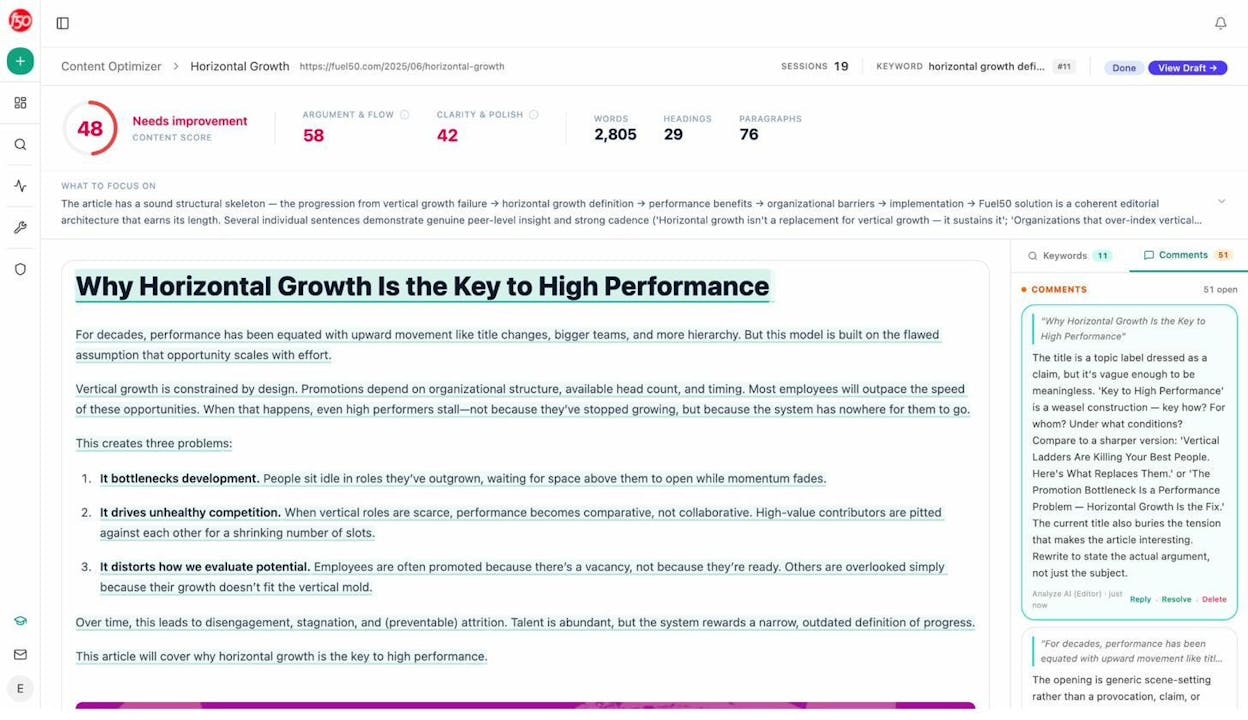
For existing content that needs improvement, the Content Optimizer fetches your page, scores it on argument strength and clarity, and generates specific suggestions to make it more visible to both search engines and AI engines.
Step 6: Optimize On-Page SEO
After your draft is complete, handle the on-page basics:
-
Include your target keyword in the title tag, H1, URL, and meta description
-
Use related keywords naturally throughout the content
-
Add internal links to relevant pages on your site
-
Add external links to authoritative sources
-
Optimize images with descriptive alt text
-
Make sure your page loads fast and is mobile-friendly
You can check your keyword coverage using a tool like the Keyword Rank Checker to see where you stand after publishing.
Step 7: Monitor Both Search and AI Search Performance
After publishing, track your performance in both channels.
For traditional search, monitor your keyword rankings, organic traffic, and backlinks.
For AI search, use Analyze AI to track whether your content starts getting cited in AI-generated answers. Check which engines pick it up, what position you hold, and how your visibility changes over time.
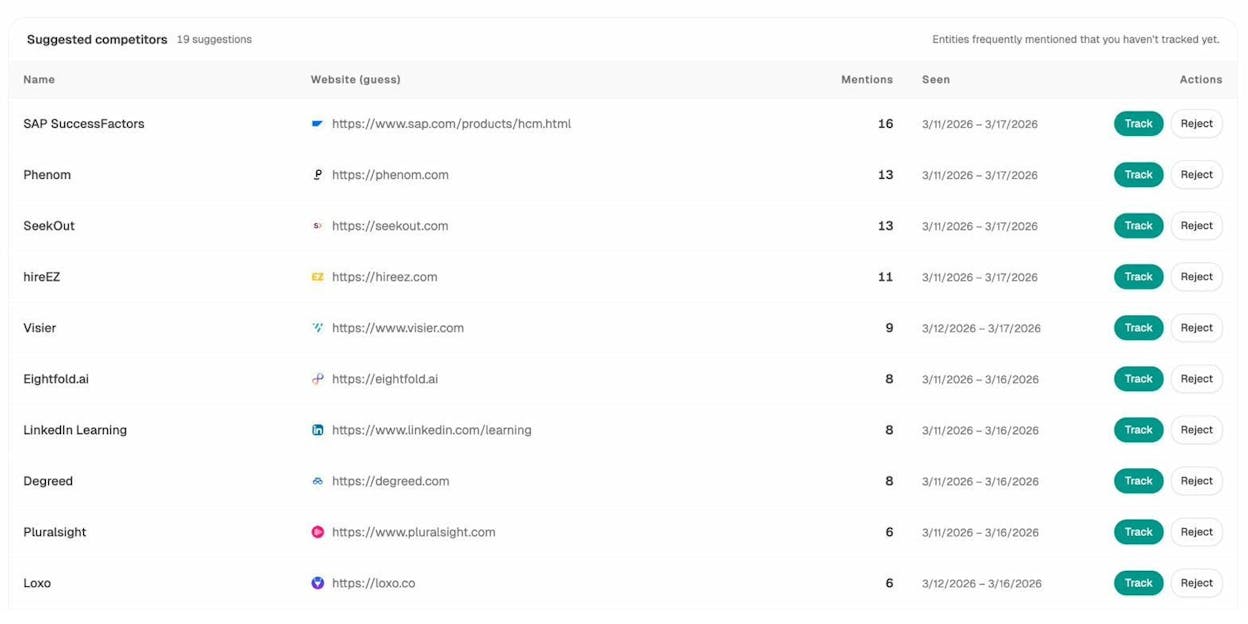
The Competitor Intelligence feature shows you who AI engines recommend instead of you and on which prompts, so you know exactly where to focus your efforts.
What Pays More: Content Writing or Copywriting?
Copywriting generally pays more than content writing. Here is what the data shows for 2026.
|
Content Writer |
Copywriter |
|
|---|---|---|
|
Median salary (PayScale) |
$58,371/year |
$63,151/year |
|
Average salary (Indeed) |
$22.95/hour (~$47,700/year) |
$74,774/year |
|
Average salary (Glassdoor) |
$84,112/year |
$84,257/year |
|
Senior level (Glassdoor) |
$62,400/year (PayScale) |
$137,062/year |
The gap widens significantly at the senior level. Senior copywriters earn an average of $137,062 per year according to Glassdoor, compared to $62,400 for senior content writers according to PayScale. The top 10% of copywriters can earn over $138,000 annually.
Why does copywriting pay more? Because the impact is easier to measure. When a copywriter rewrites a landing page and the conversion rate jumps from 2% to 4%, that translates directly to revenue. It is easy for a company to justify paying a premium for writing that produces measurable returns.
Content writing impact is harder to quantify. A blog post might take six months to rank and another six months to generate enough traffic to influence revenue. The compounding nature of content marketing makes it incredibly valuable over time, but the delayed feedback loop makes it harder to justify premium rates in the short term.
The exception: writers who do both. If you combine content writing skills with copywriting skills, and you understand SEO and AI search on top of that, you can charge significantly more than either role commands individually. These hybrid writers are the ones earning $100,000+ because they can do everything: attract traffic, educate readers, and convert them into customers.
Essential Skills for Content Writers and Copywriters
While both roles require strong writing fundamentals, they lean on different skill sets.
Content Writer Skills
Research skills. Content writers spend more time researching than writing. You need to find accurate data, identify expert perspectives, and synthesize information from multiple sources into a coherent narrative.
SEO knowledge. Understanding keyword research, search intent, on-page optimization, and content structure is non-negotiable for any content writer producing work for the web. Familiarity with AI search optimization is quickly becoming just as important.
Subject matter depth. The best content writers develop genuine expertise in their niche. They do not just summarize what others have written. They add original insights, challenge conventional wisdom, and bring firsthand experience to the page.
Long-form writing stamina. Writing 3,000+ coherent, well-structured words on a single topic is a different skill than writing 50 words of ad copy. Content writers need the endurance to maintain quality and flow across long pieces.
Editing and self-editing. Content writers often work with minimal editorial support. The ability to step back from your own draft, identify weaknesses, and rewrite without ego is essential.
Copywriter Skills
Persuasion and psychology. Copywriters study human behavior. They understand cognitive biases, emotional triggers, and decision-making frameworks. They know how to frame a message so it resonates on an emotional level.
Brevity. Saying more with fewer words is harder than it sounds. Copywriters learn to strip sentences down to their essential meaning. Every word earns its place.
Headline writing. Copywriters obsess over headlines because headlines determine whether anyone reads the rest. Learning to write headlines that stop scrollers is a specific, trainable skill.
A/B testing literacy. Good copywriters do not guess what works. They test variations and let data decide. Understanding how to design, run, and interpret A/B tests is part of the job.
Brand voice mastery. Copywriters often write for multiple brands. They need to switch between voices fluently, writing casual and playful for one brand and authoritative and precise for another.
Skills Both Need
Understanding the audience. Whether you are writing a 3,000-word guide or a 30-word headline, you need to know who you are writing for. What do they already know? What do they need to learn? What motivates them? What frustrates them?
Clean, simple language. Complicated writing is not impressive. It is a barrier. Both content writers and copywriters should aim for the clearest, simplest way to express an idea. Run your writing through the Hemingway Editor. Aim for a Grade 6-8 reading level.
Adaptability. The best writers can shift between content and copy depending on the project. They can write a 4,000-word SEO guide on Monday and a 50-word Facebook ad on Tuesday.
How to Hire the Right Writer for Your Business
If you are deciding between hiring a content writer or a copywriter, the answer depends on what you need right now.
Hire a Content Writer If You Need:
-
Blog articles that rank on Google and drive organic traffic
-
Email newsletters that keep subscribers engaged
-
Ebooks, whitepapers, or case studies for lead generation
-
Thought leadership content that builds brand authority
-
Product-led content that educates and naturally showcases your product
Hire a Copywriter If You Need:
-
Landing page copy that converts visitors into signups or buyers
-
PPC ad copy for Google Ads, Facebook Ads, or LinkedIn Ads
-
Product descriptions for an e-commerce store
-
Email sequences designed to drive purchases
-
Website homepage and feature page copy that sells
Hire a Hybrid Writer If You Need:
-
SEO content that ranks AND converts
-
Product-led blog content with strong CTAs
-
Someone who can handle your entire content funnel from awareness to conversion
The most effective approach for most growing businesses is to find a writer who can do both, or at least understands both disciplines well enough to write content that attracts traffic and moves readers toward a decision. These writers are harder to find and more expensive, but the return is worth it.
What to look for when hiring:
Look at their portfolio. Do their blog posts rank on Google? Do their landing pages have clear calls to action? Ask for conversion data or rankings data if possible.
Ask about their process. A strong writer should be able to explain how they approach keyword research, search intent analysis, content structure, and on-page optimization. If they also understand how AI search works, that is a significant advantage.
Test them. Give a paid test assignment that reflects the actual work they will be doing. A short blog post for a content writer. A landing page for a copywriter. Judge the output on clarity, persuasiveness, and how well it matches your brand voice.
How AI Is Changing Both Copywriting and Content Writing
AI writing tools have changed the landscape for both content writers and copywriters. But not in the way most people expected.
The early prediction was that AI would replace writers entirely. That has not happened. What has happened is that AI has raised the bar. When anyone can generate a 2,000-word blog post in 60 seconds, generic content becomes worthless. The content that still matters is content that brings original insight, real expertise, and a perspective that AI cannot replicate on its own.
For content writers, this means the job has shifted from “producing words” to “producing original thinking.” The research, the expert interviews, the firsthand data, and the unique angle are what make content valuable now. AI can help with drafts and outlines, but the thinking has to come from the writer.
For copywriters, AI tools can generate variations of headlines, CTAs, and product descriptions at speed. But the strategic thinking behind what to say, who to say it to, and how to position it still requires a human who understands the customer deeply.
The other major shift is the rise of AI search itself. As more people use ChatGPT, Perplexity, and other AI engines to find information, both content writers and copywriters need to think about a new distribution channel.
Content that gets cited by AI engines drives traffic without any additional cost. But earning those citations requires writing content that is genuinely comprehensive, well-structured, and authoritative. The same qualities that have always defined great content now have a new reward mechanism on top of traditional search.
This is why we believe AI search is not replacing SEO. It is an additional organic channel. The brands that treat it that way, investing in great content that works for both Google and AI engines, are the ones building compounding visibility. The brands that panic and abandon their SEO fundamentals are leaving traffic on the table.
If you want to see how your content performs in AI search, Analyze AI gives you a complete picture of your visibility across every major AI engine. You can track your brand mentions, see which pages get cited, monitor competitor activity, and get actionable recommendations for improving your content.
Final Thoughts
Copywriting and content writing are different disciplines with different goals. Content writing builds long-term traffic and authority. Copywriting drives short-term conversions and revenue. Understanding the difference helps you hire the right writer and develop the right skills.
But the real advantage belongs to writers and teams who can do both. A blog post that ranks on Google, gets cited by AI engines, and converts readers into customers is more valuable than a blog post that only does one of those things.
The playbook is straightforward. Write content that genuinely helps your audience. Optimize it for search engines. Make sure AI engines can find and cite it. And when it is time to convert, write copy that speaks to what your reader actually cares about.
The tools and channels will keep evolving. The fundamentals of great writing will not.

Ernest

Ibrahim


