



Summarize this blog post with:


In this article, you’ll find a practical playbook for ranking universities, K-12 schools, tutoring companies, and EdTech products in both Google and AI search. We’ll cover the constraints that make education marketing different from every other industry, how to plan around academic seasons, where the real commercial intent hides, and how to keep informational traffic alive in a world where AI Overviews and ChatGPT now answer most questions before users ever reach a website.
Table of Contents
1. Education SEO is constrained by money, governance, and decision dynamics
Most institutions operate with the operational complexity of an enterprise and the budget of a non-profit. Public universities, K-12 schools, community colleges, and most EdTech companies all share some version of this problem. They serve audiences with limited disposable income, they are influenced by government policy, and they run on infrastructure that is hard to change.
What that means in practice is that traffic and rankings are not the metric that matters. Most accredited institutions already have strong domain authority. They can rank for plenty of keywords without trying. Your job is to translate that visibility into enrolments, applications, demos, or lead form submissions.
Three forces will shape every decision you make:
-
Tight budgets across the funnel. Students, parents, and schools all care about cost. Your content has to address ROI, financial aid, scholarships, and free trials before it talks about features or prestige.
-
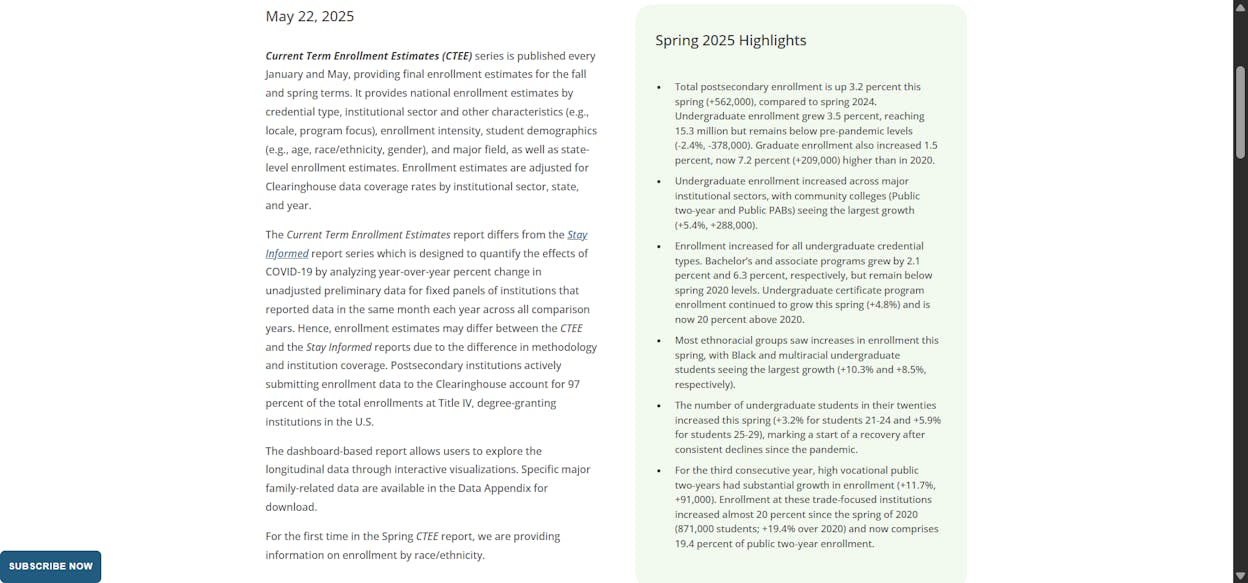
Declining demand for traditional pathways. Enrolment in four-year US colleges has been falling for over a decade, according to the National Student Clearinghouse Research Center. Career pivots, bootcamps, and online certifications are eating market share.
-
Distributed website ownership. Marketing rarely owns the CMS. IT, faculty heads, and external developers all have a say. Plan your roadmap around what you can ship, not what you’d ship in a perfect world.
The institutions that win are the ones that map content strategy back to specific funnel actions. A 50,000-click increase in informational traffic that doesn’t produce one application is a failure. A 5,000-click increase to “is a data science master’s worth it” that produces 200 applications is a win.
2. Build your strategy around end-users, not buyers
In most B2B work, you write for the buyer. Education is the rare industry where the buyer and the end user are almost never the same person. Parents buy for K-12 students. Faculty heads buy for teachers. Administrators buy for the whole school. The keyword may look like a buyer query, but the content that wins is the content that solves the end user’s problem.
Here’s a starting framework for student-facing campaigns:
|
Student segment |
Decision-making power |
Top pain points |
Content opportunity |
|---|---|---|---|
|
K-10 |
Parents and teachers decide |
Struggling with subjects, motivation, screen time |
Subject-help guides and tutor roundups written for parents |
|
Years 11-12 |
Shared with parents |
Exam prep, subject selection, university anxiety |
Exam hubs, “best subjects for [career]” guides, decision frameworks |
|
High school graduates |
Mostly autonomous |
Career uncertainty, debt aversion, alternatives |
Career path guides, ROI calculators, degree-vs-bootcamp comparisons |
|
Adult learners |
Fully autonomous |
Time, flexibility, employer recognition of credentials |
Online program guides, employer-aligned curriculum content |
|
International students |
Mixed (parents, agents) |
Visas, financing, housing, cultural fit |
Visa guides, scholarship lists, cost-of-living content |
A 50-keyword research project is not enough here. Interview at least three people from each segment before writing your editorial calendar. The vocabulary they use, the moment they start searching, and the questions they hesitate to ask are things you cannot infer from a keyword tool.
The same logic applies in AI search. When a parent types “what’s the best math program for my third grader” into ChatGPT, the engine surfaces a different set of brands than when an administrator types “K-5 math intervention curriculum.” Analyze AI’s Discover feature lets you generate the prompts each segment is using and shows which brands LLMs recommend for each one.
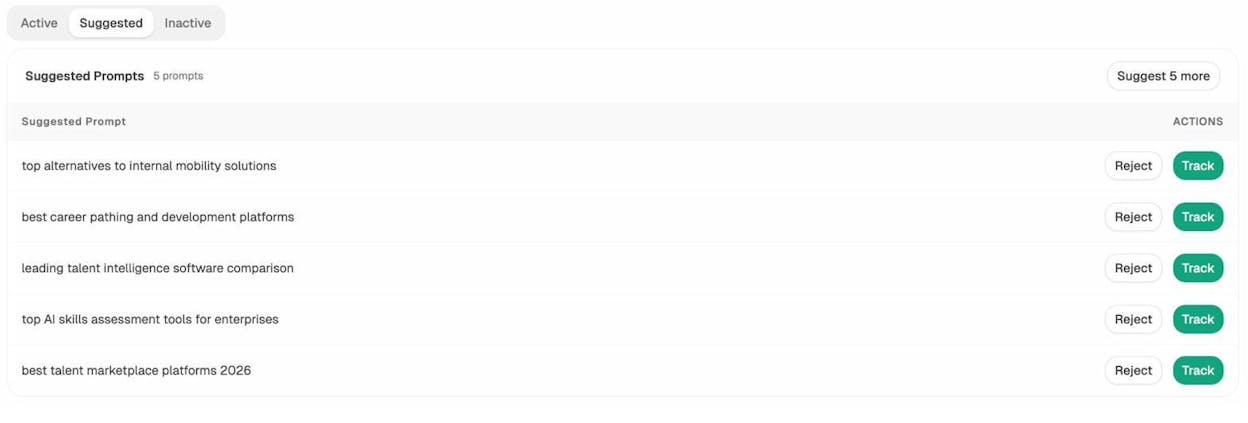
If suggested prompts come back with prompts you’ve never heard of mentioning competitors you’ve never tracked, that’s the gap. Track those prompts and build content that gets you into the answer set.
3. Plan content around academic seasons and long-term trends
Education has the most predictable demand cycle of any industry. Exam dates, application deadlines, intake windows, and school holidays repeat every year on a fixed calendar. Use this.
Map every major event your audience cares about onto your content calendar:
-
Application open and close dates for each program you offer
-
Major exam periods (SAT, ACT, AP, A-Levels, GCSEs, IB, IELTS, TOEFL)
-
School term starts and ends in your target regions
-
Scholarship and financial aid deadlines
-
Open days and campus visit windows
Each creates a search spike. The keyword “ap exam schedule” spikes every May. “When does college start” spikes in late July in the US and in January in Australia.
![[Description of screenshot: Google Trends interest-over-time graph for “ap exam schedule” showing yearly May spikes from 2019 through 2025]](https://www.datocms-assets.com/164164/1777676555-blobid3.png?auto=format,compress&w=1248&fit=max)
Pull this data from Google Trends for free, then use the Analyze AI Keyword Generator to find the long tail around each event.
Seasonal spikes only tell you when. They don’t tell you what’s growing. The harder question is whether the topic is in long-term decline. The keyword “lesson plans” still gets over a million searches per month, but the trend has been sliding since 2020 as teachers shift to platforms like TeachersPayTeachers and AI-assisted planning tools. If you build a 50-article lesson plan hub today, you’re investing in a shrinking pool.
The same seasonality applies in AI search, with one twist. Prompts about exam prep, applications, and back-to-school topics see the same time-of-year spikes in ChatGPT and Perplexity that they do in Google. But AI engines also surface adjacent prompts that don’t show up in keyword tools at all, like “compare the IB to A-levels for a student who wants to study medicine in the US.” Tracking those prompts year-round, with notifications when their visibility shifts, is what AI search monitoring is for.
4. Shift from TOFU dependence to MOFU and AI-resilient content
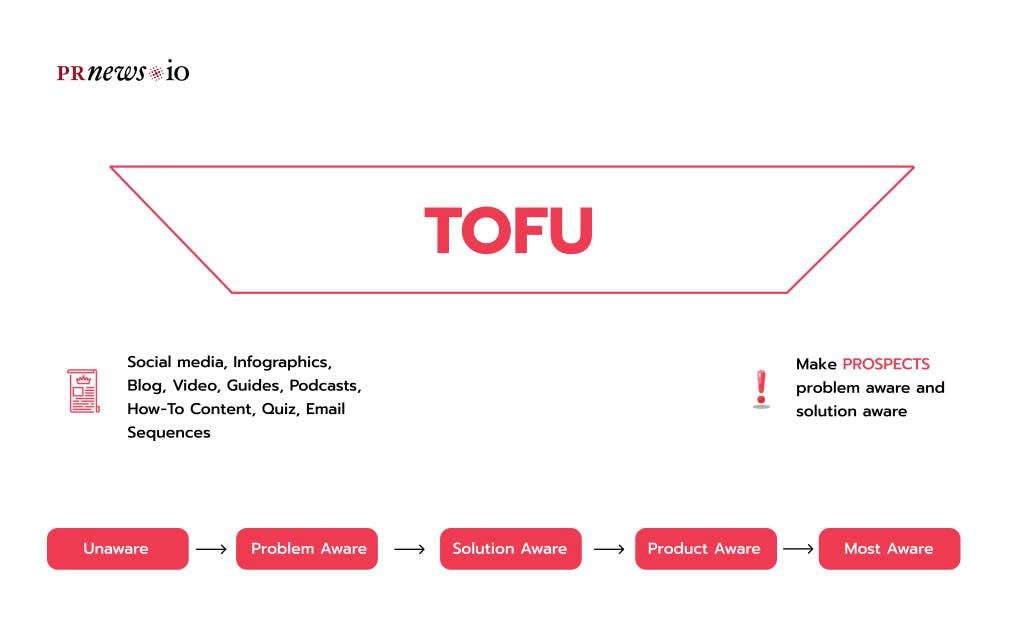
Education sites are heavily skewed toward top-of-funnel informational content. Harvard’s traffic, for example, comes overwhelmingly from informational keywords. The same is true for almost every university, online school, and EdTech blog. This was a fine strategy in 2018. It is no longer fine in 2026.
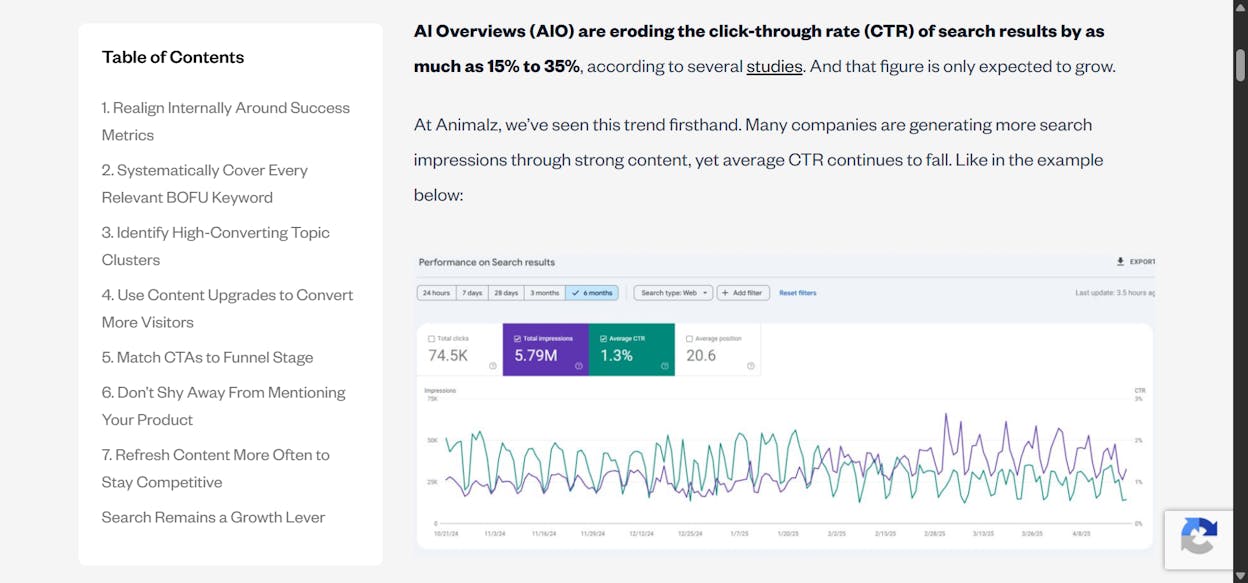
According to Animalz research, AI Overviews now erode click-through rates by 15% to 35% on the keywords they trigger. Education topics get hit harder than most because they’re predominantly informational. When someone searches “long division method” or “what is photosynthesis,” Google now answers directly. The blue links below get a fraction of the traffic they used to.
The institutions weathering this shift have moved budget into mid-funnel content that AI cannot easily replace. Mid-funnel content sits between awareness and decision. It helps a searcher commit to a path, not just understand a concept. For a university, that means “how to become a data scientist” instead of “what is data science”, “is an MBA worth it for product managers” instead of “what is an MBA”, ROI calculators that take inputs and produce a personalized answer, and named career outcome data with employers and salary bands.
This kind of content is harder for AI Overviews to synthesize because it depends on proprietary data, opinionated frameworks, or interactive components. Notebook Agency’s higher-ed client used this exact approach and earned over 50,000 clicks in year one, equivalent to roughly $500,000 in paid acquisition cost.
The smartest move is to look at which of your pages already attract AI traffic, then double down on the patterns that work. The AI Traffic Analytics view in Analyze AI shows which of your pages are referenced by ChatGPT, Perplexity, Gemini, and Copilot, how many sessions they generate, and which prompts cited them.
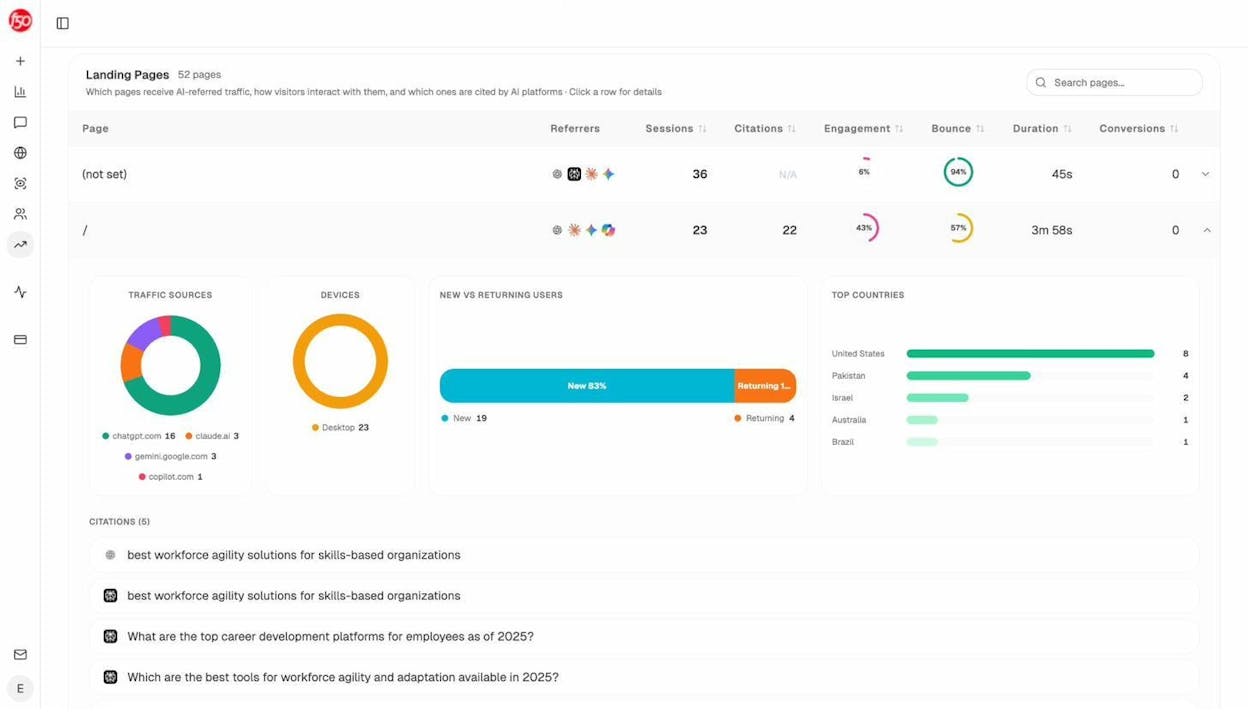
If a single comparison page is responsible for 70% of your AI-referred sessions, the format works. Build five more like it. If your generic explainer pages get zero AI traffic, that’s evidence AI Overviews are absorbing the demand and you’re better off retiring those URLs or merging them into deeper guides. For more on this shift, see our breakdown of GEO vs SEO and our SEO content strategy guide.
5. Find commercial intent without obvious BOFU keywords
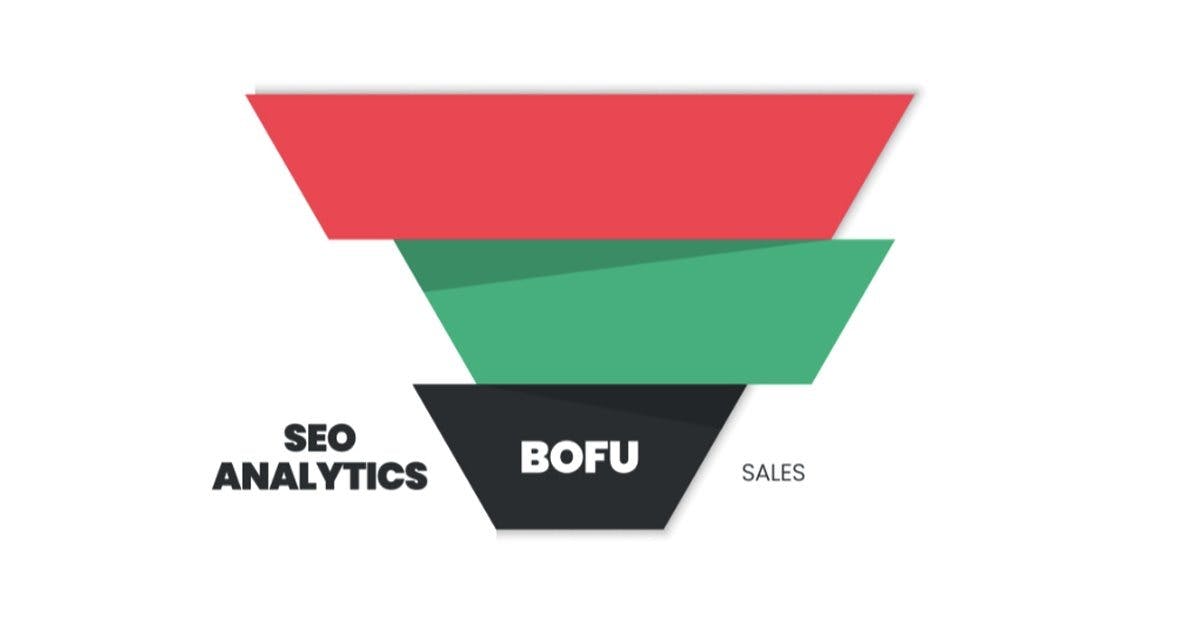
In most industries, you can identify bottom-of-funnel keywords by looking for purchase verbs and product modifiers. In education, those keywords often don’t exist or have ambiguous intent. A keyword like “bachelor of science” looks like a product page candidate. It is not. The vast majority of searchers are 16-year-olds asking what the degree even is.
The real BOFU patterns sit in three places.
Modifier-based commercial intent. Add a location, format, or duration to a degree term and the intent shifts. “Online MBA” has commercial intent. “MBA” does not. “Data science course in Toronto” has commercial intent. “Data science” does not. Use the SERP Checker to scan the top 10 results for each modified keyword. If page-one results are mostly program pages from universities, you’ve found a commercial query.
B2E commercial intent through teacher-facing content. EdTech companies selling to schools rarely rank for “tutoring software.” They rank for what teachers actually search for daily, like “year 4 fractions worksheet” or “small group reading intervention activities.” Third Space Learning built its commercial pipeline this way. The keywords don’t sell tutoring. They sell credibility to the teacher, who then advocates for the platform inside their school.
Commercial intent inside AI prompts. Searchers don’t type “best online MBA” into ChatGPT. They type “I’m a 32-year-old engineer who wants to move into product management, should I do an MBA, a PM bootcamp, or self-study, and which programs would suit me.” That single prompt is closer to a sales conversation than any keyword in Google.
Inside Analyze AI’s Prompts feature, you can see which prompts mention you, which mention competitors, and which mention nobody.
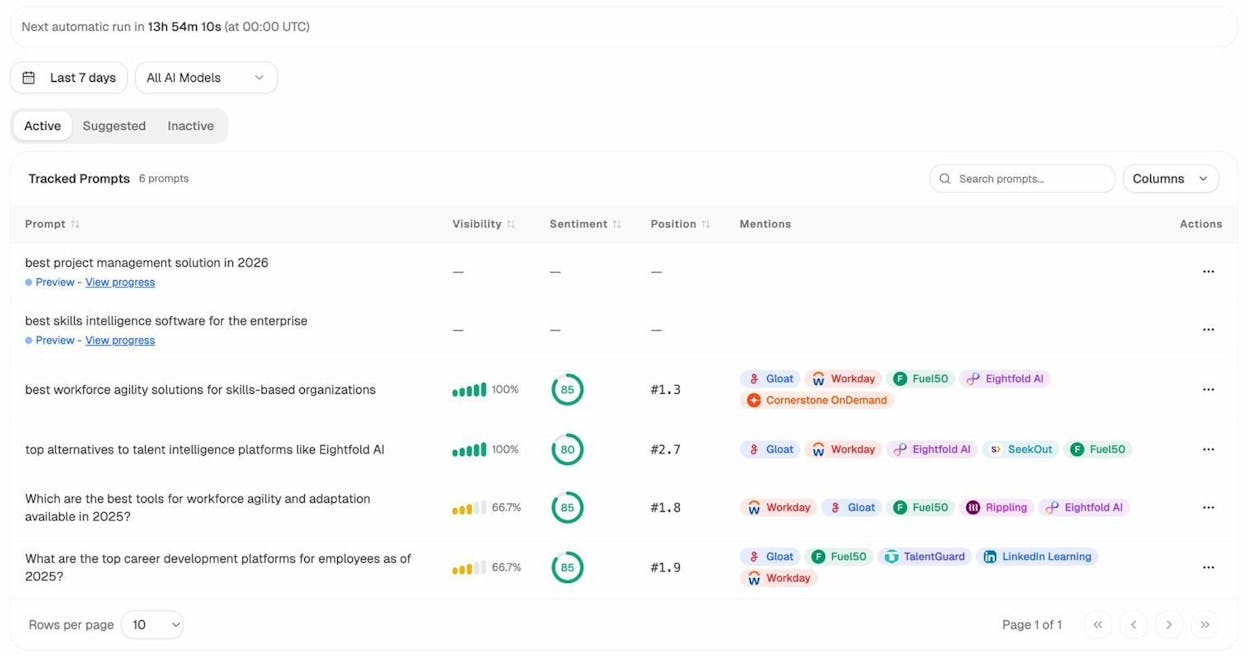
The prompts where competitors appear and you don’t are your most valuable opportunities. They have buyer intent, the audience is asking by name, and the cost of competing is producing one piece of content that LLMs will cite. Our guides on how to rank on ChatGPT and how to rank on Perplexity walk through the specific content patterns that get cited.
6. Build authority through citations, not just links
Education is one of the few sectors where backlinks come naturally. Press mentions, government reports, partner announcements, alumni stories, and research citations all generate links without outreach. If your Domain Rating is above 70, your time is better spent on content and technical work than on link building.
Check your authority before you decide. Drop your domain into the Analyze AI Website Authority Checker and compare against direct competitors. Within 5 points means no link gap. 20 points behind means there is one.
When you do need links, lean on assets you already have. The strongest education link sources are news and press pages, alumni success stories pitched to journalists, original research distributed to trade publications, scholarship pages that other schools link to, faculty bylined articles, local community partnerships, and Wikipedia pages for notable programs and departments. The University of Sydney’s news section alone has earned over 40,000 backlinks from 10,000+ websites, all by publishing news on their own domain instead of letting it live only on third-party press sites.
In AI search, the equivalent of a backlink is a citation. When ChatGPT, Perplexity, or Google’s AI Mode answers a question, it links to a small set of sources. Being one of those sources is what gets you visibility. Citations don’t follow PageRank, so a high domain rating helps but isn’t sufficient. What matters is whether your content matches the structure LLMs prefer (clear claims, named entities, dates, statistics) and whether you’re cited consistently across the engines that matter to your audience.
The Sources view in Analyze AI shows which domains LLMs cite when answering questions in your industry, broken down by content type and engine.
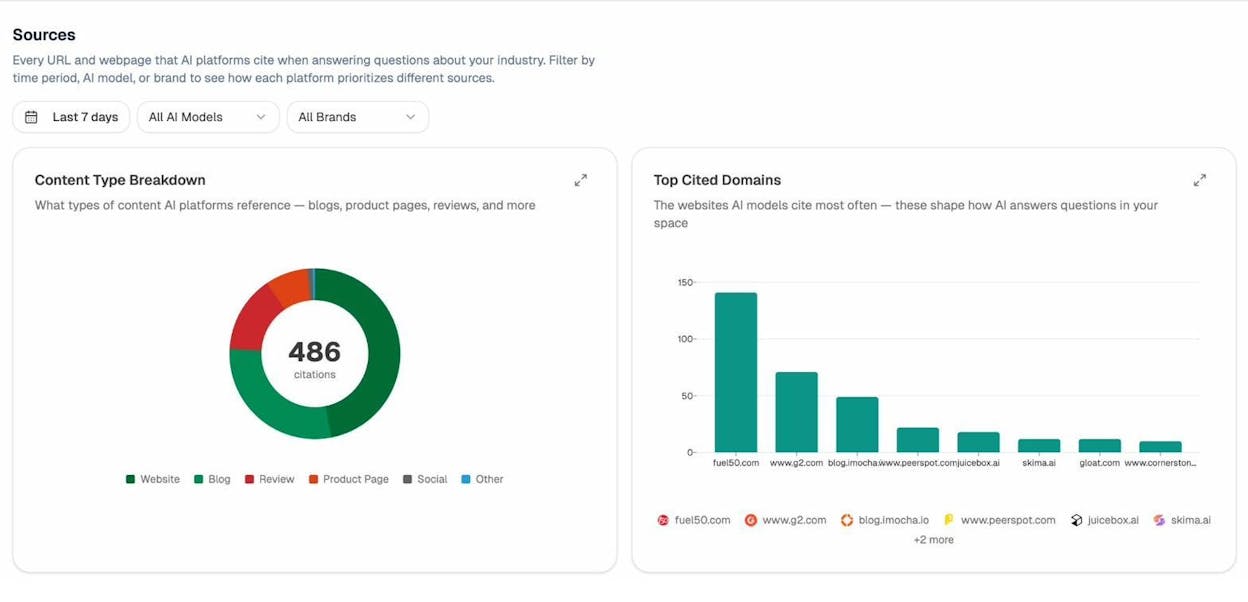
If LLMs cite Wikipedia, US News, and Niche far more than they cite you for college-comparison prompts, those are the structures and pages to study and learn from. For a deeper take, see our breakdown of off-page SEO for AI search.
7. Fix technical and governance bottlenecks before chasing new content
Most education SEO programs fail not because of weak strategy but because nobody can ship a change to the website. The CMS is locked behind IT. The page templates were built by an agency that no longer exists. The faculty director who owns “/programs/” hasn’t approved a new URL since 2019. These are governance problems, not technical ones.
Before you write a single new article, find out who owns publishing rights on each section, what the approval cycle is for a new page, which platforms run alongside the main site, who maintains redirects, and whether you have edit access yourself.
Once you have those answers, the highest-impact technical fixes in education sites are usually the same six things:
-
Redirecting old course pages that 404 after curriculum changes
-
Adding internal links from high-authority pages to orphaned program pages
-
Simplifying URL structures that include session IDs, query strings, or department codes
-
Removing thin event and newsletter pages or merging them into a single archive
-
Fixing duplicate content from program pages with shared boilerplate text
-
Adding clean structured data (Course, Organization, FAQPage) to help both Google and AI engines understand your offerings
Run the Analyze AI Broken Link Checker on your top 50 program pages first. Broken outbound links and 404s on high-traffic pages are the fastest wins you’ll find.
8. Reach international students with culturally adapted content
International recruitment is one of the largest revenue drivers for higher education, but it cannot be approached as a generic international SEO project. The standard “translate your site into 10 languages” playbook works in e-commerce and fails in education.
English is the dominant search language for studying in English-speaking countries even when the searcher is not a native English speaker. A prospective student in Vietnam looking at US universities is searching in English, not Vietnamese, because the application, classes, and campus life will all be in English. Translating into Vietnamese filters out the audience you actually want.
What changes is the supporting content. Indian families search for “GPA conversion to percentage” and “STEM OPT extension.” Nigerian students search for visa interview preparation and proof-of-funds documentation. Chinese students search for application strategy and standardized test waivers. The volume might be modest in each region, but the intent is high and the conversion path is direct.
The right approach is single-language, multi-region. Keep the language English. Create regional landing pages for each major source country. Address the local concerns specific to that audience inside otherwise English content.
In AI search, the regional pattern compounds. Different countries use different LLMs as their primary engine. Perplexity is more popular in some markets, ChatGPT dominates others, and Baidu’s Ernie or Yandex Alice show up where Google has less share. If 30% of your applicants come from China, you should be tracking how Chinese AI engines describe your institution, not just ChatGPT.
9. Win local search with brand differentiation, not just citations
Education is the rare industry that competes globally and locally at the same time. A flagship university recruits students from 80 countries and from the high school five blocks away. K-12 schools and tutoring companies fight almost entirely in their immediate area. Both audiences need different strategies, but local visibility is non-negotiable for both.
The local SEO baseline for any education brand is a fully populated Google Business Profile for every campus, a citation profile in education-specific directories (Niche, GreatSchools, Private School Review, Times Higher Education), recent reviews from current and recent families, inclusion in “best schools in [city]” listicles, and engagement with local press for student achievements and partnerships.
The harder work is brand differentiation. Most schools sound identical. They all “develop the whole child,” “prepare students for tomorrow’s challenges,” and “foster a love of learning.” Searchers cannot tell two schools apart from their websites alone, so they fall back on price, location, and rankings.
Your job is to give them a third axis. The University of Wyoming did this in 2018 with a campaign built around the line “the world needs more cowboys.” Stanford’s d.school built a brand around design thinking. KIPP built one around college-going culture for first-generation students. Each took a position that felt slightly risky and stuck with it for years.
Brand differentiation also shapes how AI engines describe you. When ChatGPT compares three universities, it draws from the language those schools use about themselves and the language third parties use about them. Generic descriptions produce generic answers. A sharp, repeated narrative gets reflected back.
The Perception Map in Analyze AI plots how visible you are versus how distinctive your story is across AI engines, against your competitors.
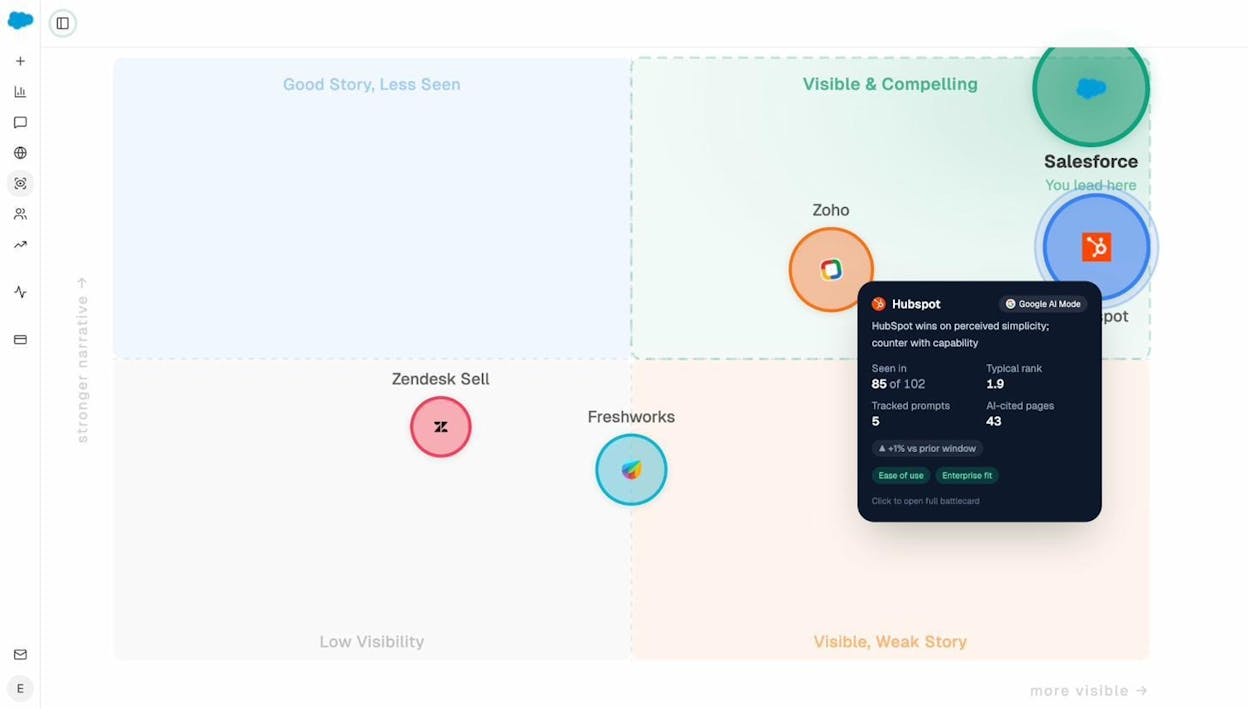
If you sit in the “Visible, Weak Story” quadrant, the SEO problem is downstream of a brand problem. More content won’t fix it. A sharper position will.
Final thoughts
Education SEO rewards patience and punishes shortcuts. The buying cycles are long, the stakeholders are many, and the metrics that prove value to leadership are not the same as the metrics that move on a weekly dashboard.
The institutions that win for the next decade will be the ones that treat search and AI search as one channel, not two. SEO is not dead and AI search is not replacing it. AI search is an additional surface where the same audiences ask the same questions in different formats. The institutions that show up in both, with content built around end-user pain instead of buyer vocabulary, will fill their seats.
Start with one segment. Pick three pain points. Write five pieces of mid-funnel content this quarter. Track them in Google and in Analyze AI so you can see what’s working in both channels. Then expand from there.

Ernest

Ibrahim


