



Summarize this blog post with:


In this article, you’ll find 60 affiliate marketing statistics for 2026, refreshed with the latest numbers from Authority Hacker, Forrester, eMarketer, Awin, Cognitive Market Research, and Influencer Marketing Hub. You’ll also see why the average affiliate income is misleading, and how AI search is starting to reshape where affiliates earn their traffic.
Table of Contents
Top affiliate marketing statistics for 2026
These are the nine numbers worth remembering if you read nothing else.
-
The global affiliate marketing industry is valued at roughly $18.5 to $20 billion in 2026, with forecasts pointing toward $31.7 billion by 2031. (Cognitive Market Research, 2025)
-
US affiliate marketing spend is projected to reach approximately $13 billion in 2026 and $16 billion by 2028. (eMarketer)
-
The average affiliate marketer earns $8,038 per month, but the median sits between $35,000 and $40,000 per year. (Authority Hacker)
-
81% of brands run an affiliate program, and 84% of publishers participate in one. (Rakuten Advertising)
-
Affiliate-referred customers deliver an average 12 to 15 ROAS for advertisers. (Cognitive Market Research, 2025)
-
78.3% of affiliate marketers use SEO as their primary traffic source. (Authority Hacker)
-
73% of B2B buyers now use AI tools like ChatGPT and Perplexity in their research process. (Averi, 2026)
-
Affiliate marketers with 3+ years of experience earn 9.45x more than beginners. (Authority Hacker)
-
63% of businesses are concerned about affiliate fraud, and 17% of affiliate traffic in 2022 was fraudulent. (AffiliateWP)
Affiliate marketing market size and growth
The affiliate channel keeps growing for one simple reason. It is performance-based. When ad costs on Meta and Google rise and organic reach falls, brands like a model where they only pay when a sale happens.
-
The global affiliate marketing industry was valued at $18.5 billion in 2024 and is projected to reach $31.7 billion by 2031, at an 8% CAGR. (Cognitive Market Research, 2025)
-
The affiliate marketing platform infrastructure layer (the software that powers programs) was valued at $22.58 billion in 2025 and is expected to reach $35.70 billion by 2033, at a 5.9% CAGR. (Grand View Research)
-
US affiliate marketing spend is projected to hit nearly $12 billion in 2025, $13 billion in 2026, and approach $16 billion by 2028. (eMarketer)
-
Affiliate marketing is responsible for 16% of all internet orders in the US. (Authority Hacker)
-
Major brands attribute 5% to 25% of their total online sales to affiliate marketing. (Authority Hacker)
-
North America accounts for over 40% of global affiliate marketing revenue. (Cognitive Market Research, 2025)
-
The UK’s affiliate spend grew 17% from 2022 to 2023, with over 50% of UK brands planning to increase their affiliate investments through 2026. (APMA)
-
Asia-Pacific is forecast to grow at over 8% CAGR from 2026 to 2033, the fastest of any region. (Grand View Research)
-
Over 107,000 companies worldwide operate within affiliate networks. (SaaSUltra, 2026)
What stands out is the gap between perception and adoption. Forrester’s research found that 92% of marketers consider affiliate marketing effective or highly effective, yet only 7% of marketing managers list it as a top budget priority. Affiliate is widely loved and quietly underfunded.
Affiliate marketing earnings statistics
The “average affiliate makes $8,038 a month” stat needs a footnote. Authority Hacker’s number is an arithmetic mean pulled high by top earners. The median is closer to $3,000 to $4,000 per month, and roughly 80% of affiliates earn under $80,000 per year.
Earnings track experience almost linearly.
|
Years in affiliate marketing |
Average monthly income |
|---|---|
|
Less than 1 year |
$636 |
|
1 to 2 years |
$4,196 |
|
3 to 5 years |
$10,789 |
|
6 to 10 years |
$12,847 |
|
10+ years |
$44,000+ |
Source: Authority Hacker affiliate marketing survey
The takeaway is that affiliate marketing rewards patience. The income jumps roughly 7x between year one and year two, then doubles again by year three.
-
The average affiliate website earns $149.76 RPM (revenue per 1,000 visitors). (Authority Hacker, 2024)
-
81.2% of affiliate marketers earn more than $20,000 per year. (AffiliateWP)
-
15% of affiliate marketers report annual earnings between $80,000 and $1 million. (Authority Hacker)
-
Just 3.78% of affiliate marketers earn over $150,000 per year. (Authority Hacker)
-
Roughly 1% of affiliate marketers earn over $1 million annually. (AffStat)
-
Affiliate marketing generates around $12 to $15 in revenue for every $1 spent. (Rakuten, Awin)
-
The average affiliate conversion rate is 1% to 2%, with top performers reaching 5% to 10%. (Authority Hacker, 2025)
-
65% of retailers say affiliate programs deliver up to 20% of their annual revenue. (Awin)
-
SaaS affiliate programs typically pay 20% to 70% commissions, often recurring. (Impact, 2025)
If you want a fast read on what your own pages pull in from organic search before you commit to an affiliate niche, run the URL through our free Website Traffic Checker.
Affiliate marketing traffic and acquisition statistics
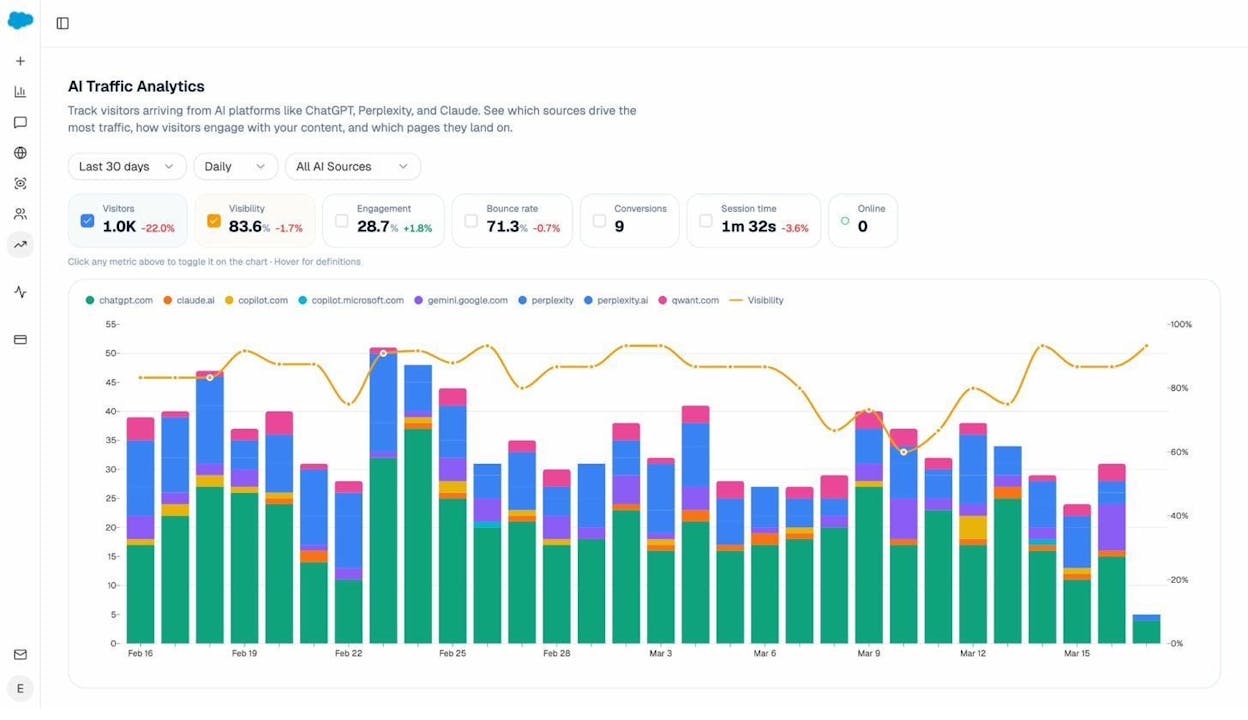
Where affiliate traffic comes from has shifted in two important ways since 2024. Social and video are eating a bigger slice. AI search is now showing up in measurable referral data.
![[Screenshot: AI Traffic Analytics dashboard showing traffic from ChatGPT, Perplexity, Claude, Gemini, and Copilot stacked over a 30-day period, with visibility line overlay]](https://www.datocms-assets.com/164164/1777767095-blobid1.png?auto=format,compress&w=1248&fit=max)
-
78.3% of affiliate marketers use SEO as their primary traffic source. (Authority Hacker)
-
80% of affiliate marketers also drive traffic through social media. Instagram and YouTube are the most-used platforms. (Rakuten)
-
Roughly 25% of affiliate traffic now comes from social platforms like Instagram, YouTube, and TikTok. (Impact, 2025)
-
Video content is projected to account for 55% of all affiliate traffic by year-end 2026. (Impact, 2025)
-
50% of affiliate traffic comes from mobile devices. (WeCanTrack)
-
56% of marketers say short-form video was their top investment in 2024, and that share is growing. (HubSpot, 2024)
-
Email marketing delivers the highest ROI for affiliate marketers, followed by SEO and content marketing. (AffStat)
-
94% of publishers work with more than one affiliate network to spread risk and find better commissions. (AffStat)
-
88% of consumers report buying a product after following an influencer’s recommendation. (Nielsen, 2021)
The 78% SEO number is the one that gets quoted most, but it hides a story. The same Authority Hacker survey found that 25.1% of affiliates were negatively affected by Google search algorithm updates. That is one in four. The risk of putting all your traffic in one channel is now a number you can put a percentage on.
This is also where AI search starts to matter for affiliates. LLM referral traffic converts at 1.66% for sign-ups compared to 0.15% from traditional search, an 11x improvement, according to aggregated 2026 LLM traffic studies. The volume is still small, but the conversion quality is high. Visitors arriving from a Perplexity citation or a ChatGPT recommendation tend to be pre-sold.
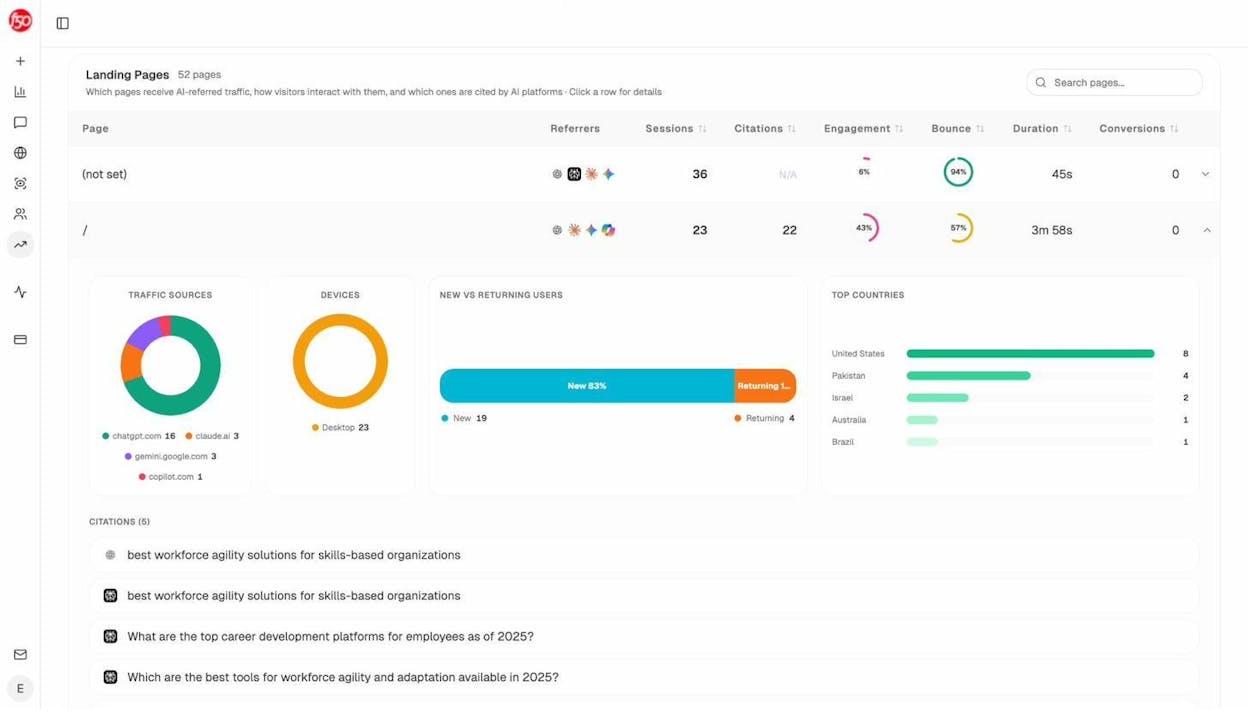
If you want to see which of your existing pages already pull traffic from ChatGPT, Perplexity, or Claude, AI Traffic Analytics shows you exact landing pages, engagement rates, and citation counts, broken out by engine.
![[Screenshot: AI Traffic Analytics landing pages view showing pages ranked by AI sessions, with traffic source breakdown by engine and citations per page]](https://www.datocms-assets.com/164164/1777767109-blobid3.png?auto=format,compress&w=1248&fit=max)
Affiliate marketing niches and average earnings
Niche choice is the single biggest predictor of income, ahead of experience and ahead of traffic source.
|
Niche |
Average monthly income |
|---|---|
|
Education and e-learning |
$15,551 |
|
Travel |
$13,847 |
|
Beauty and skincare |
$12,475 |
|
Gaming and esports |
$12,475 |
|
Technology |
$12,475 |
|
Finance |
$9,296 |
|
Health and wellness |
$8,038 |
|
Personal development |
$1,566 |
|
Parenting and family |
$1,145 |
Source: Authority Hacker affiliate marketing survey, 2024
Two patterns are worth flagging. First, the spread between top and bottom is roughly 13x. A travel affiliate makes more than ten times what a parenting affiliate makes for the same hours of work. Second, only the top seven niches clear $7,000 per month on average. Everything else clusters between $500 and $6,000.
-
Retail accounts for around 44% of global affiliate marketing revenue. (Influencer Marketing Hub)
-
Telecom holds a 25% share, travel and leisure 16%, and other categories the remaining 16%. (Influencer Marketing Hub)
-
The fashion niche makes up 23% of all affiliate programs, the largest share of any category. (Authority Hacker, 2025)
-
The home and garden niche grew 209.72% year-over-year. (Authority Hacker)
-
SaaS programs offer the highest commission rates, often 20% to 70%, frequently with recurring payouts. (Impact, 2025)
-
Finance affiliates can earn $50 to $200 per qualified lead under flat-fee CPA structures. (Cognitive Market Research, 2025)
-
In the UK, retail accounts for 48% of affiliate marketing spend, telecom 19%, travel 13%, and finance 8%. (APMA 2024 State of the Nation Report)
If you are weighing a niche decision, our guide on ecommerce SEO covers how to size a market before you commit, and our SEO content strategy breakdown shows the keyword research workflow that surfaces low-competition wedges.
Affiliate marketing platforms and networks
Amazon Associates remains the largest single affiliate program by a wide margin, but most successful affiliates spread their bets.
-
Amazon Associates holds approximately 46.21% of the global affiliate market share. (DesignRush, 2025)
-
Amazon Associates has over 900,000 active affiliates. (Electroiq, 2025)
-
75,659 companies use the Amazon Associates program, with 52% based in the United States. (Enlyft)
-
64% of companies on Amazon Associates have fewer than 50 employees. (Enlyft)
-
24.6% of affiliate marketers use ClickBank, 21.8% use ShareASale, and 20.5% use Commission Junction. (Authority Hacker)
-
49% of affiliate programs use a flat-rate CPA payout, while 42% use percentage-based CPS commissions. (Impact, 2025)
-
90% of affiliates say they prefer programs with recurring commissions or long cookie windows. (AffStat)
The market split between Amazon and everyone else matters because Amazon’s commission rates are low (typically 1% to 4% for most categories), but its conversion rate is high. SaaS and finance programs pay 10x to 50x more per sale, but the buyer journey is longer and the audience is narrower.
How AI search is reshaping affiliate marketing
This is the section most 2024 statistics articles do not have. AI search is small in volume but growing fast, and the dynamics are different enough that affiliates who understand them now will compound the advantage.
-
73% of B2B buyers now use AI tools like ChatGPT and Perplexity in their research process. (Averi, 2026)
-
ChatGPT accounts for 87.4% of all AI chatbot referral traffic. (AuthorityTech, 2026)
-
Perplexity accounts for 15% to 20% of AI referral traffic but provides inline linked citations on every answer. (AuthorityTech, 2026)
-
LLM referral traffic converts to sign-ups at 1.66%, compared to 0.15% from traditional search. (Aggregated 2026 LLM traffic studies)
-
Only 11% of domains are cited by both ChatGPT and Perplexity. The two engines pull from very different source pools. (Averi, 2026)
-
ChatGPT favors Wikipedia and encyclopedic content (47.9% of top citations). (Averi, 2026)
-
Perplexity heavily cites Reddit (46.7% of top citations). (Averi, 2026)
-
Google AI Overviews prefer YouTube and multi-modal content (23.3% of top citations). (Averi, 2026)
-
97% of digital marketing leaders who invested in generative engine optimization report measurable returns. (MarTech, 2026)
The pattern across all this data is the same. AI search is not a replacement for SEO. It is an additional organic channel that compounds with the work you already do. The brands earning AI citations are largely the brands that already rank in the top 10 organic results. The win is that one AI citation tends to be worth more than thousands of low-intent search visits, because the visitor arrives pre-qualified.
For an affiliate, the practical question is: which of my pages are already getting cited, and which competitors are taking citations on prompts I should be winning? The traditional SEO answer is to run a competitor analysis with Ahrefs or Semrush and look at backlinks and rankings. The AI search answer involves tracking the prompts your buyers actually ask AI engines, then mapping who gets cited and where you appear.
![[Screenshot: Tracked Prompts dashboard with visibility scores, sentiment, position, and competitor mentions per prompt across multiple AI models]](https://www.datocms-assets.com/164164/1777767115-blobid5.png?auto=format,compress&w=1248&fit=max)
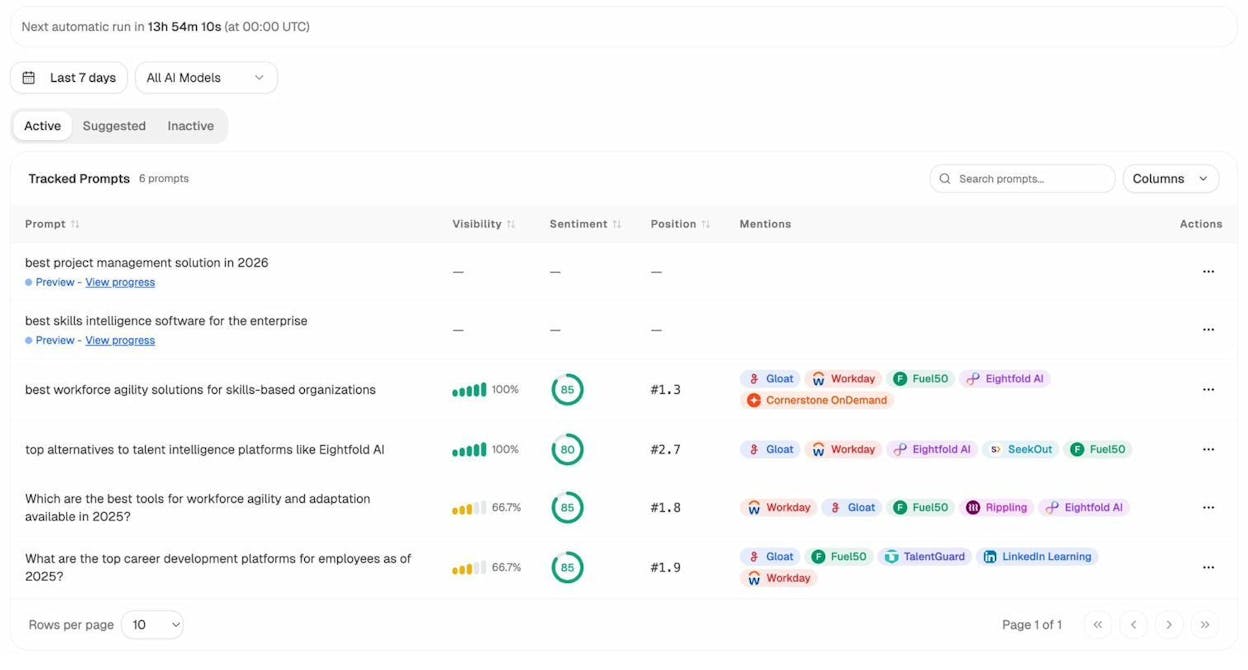
Prompt Tracking runs your priority prompts on a daily cadence across ChatGPT, Perplexity, Claude, Gemini, and Copilot. You see your visibility per prompt, your sentiment, your position in the answer, and which competitors keep showing up instead of you.
Once you know which competitors are winning AI answers in your niche, the next question is what sources those answers cite. Citation Analytics shows every URL and domain AI engines reference for your tracked topics, broken down by content type (blog, product page, review, social).
![[Screenshot: Sources page showing content type breakdown donut chart and top cited domains bar chart]](https://www.datocms-assets.com/164164/1777767121-blobid7.png?auto=format,compress&w=1248&fit=max)
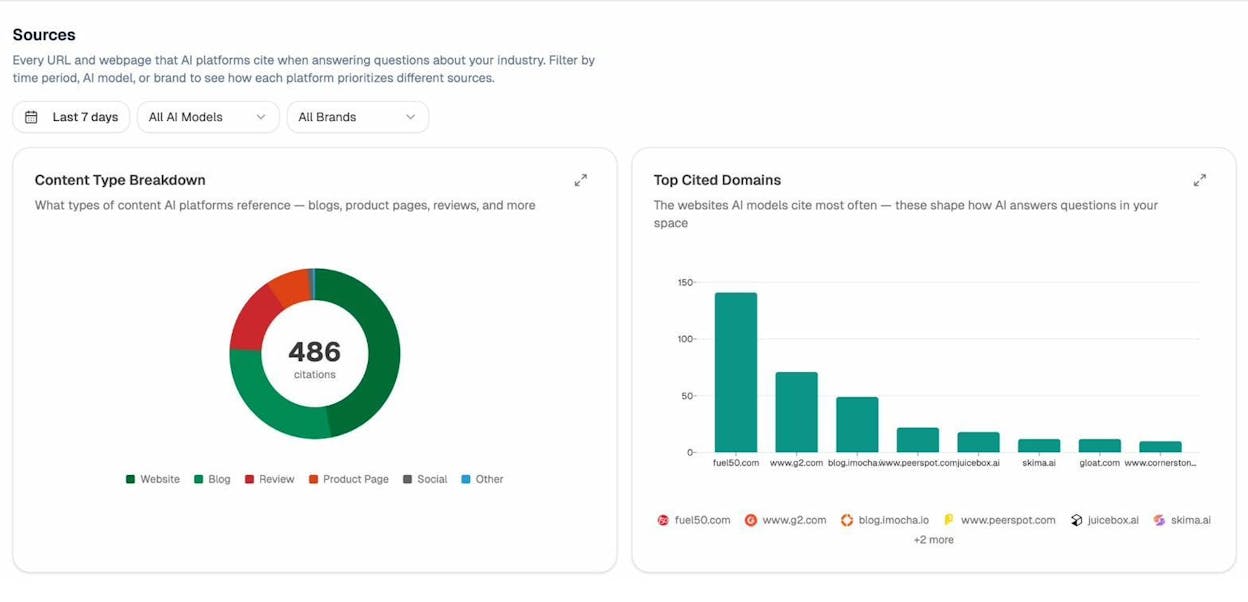
This is the AI search equivalent of a backlink gap analysis. If a competitor is being cited on a high-value prompt and you are not, you can see exactly which articles, reviews, or product pages are doing the work. From there you have two choices. Earn citations on those same domains, or publish stronger content that out-cites them on your own site.
The other use case worth flagging is competitive discovery. AI engines will surface brands you have never heard of, mentioned alongside your competitors, in answers to prompts you care about. Competitor Intelligence shows the entities that show up next to you in AI answers, ranked by mention frequency, so you can decide who to track next.
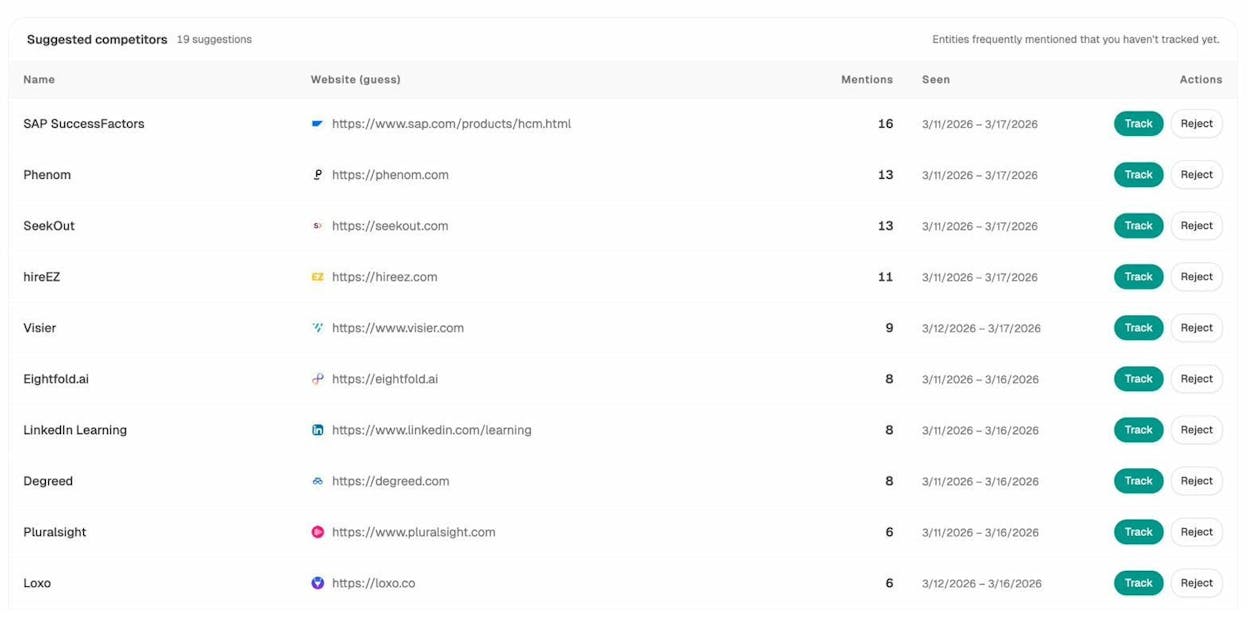
For a deeper look at the citation patterns themselves, our analyses of how to rank on Perplexity AI and how to rank on ChatGPT, both based on 65,000 prompt citations, break down source preferences engine by engine.
Affiliate marketing challenges and risks
Every affiliate marketing report from 2024 onward repeats the same three pain points.
-
45.3% of affiliate marketers say getting traffic is their biggest challenge. (Authority Hacker)
-
25.1% of affiliate marketers were negatively affected by search algorithm updates. (Authority Hacker)
-
47.4% of those affected changed their content strategy in response. (Authority Hacker)
-
31.3% of affiliate marketers earning six figures or more have considered quitting at some point. (Authority Hacker)
-
63% of businesses are concerned about affiliate fraud. (WPBeginner)
-
17% of affiliate traffic in 2022 was fraudulent (bots or fraudsters), up from 10% in 2020. (AffiliateWP)
-
Businesses lost $1.4 billion in revenue to affiliate fraud in 2020. (WPBeginner)
-
40% of media buyers in affiliate marketing say ad fraud is one of their biggest challenges. (Authority Hacker)
-
26.9% of marketers report inadequate support from affiliate managers as a major challenge. (Authority Hacker)
-
70% of affiliate platforms are moving beyond cookie-based tracking toward server-side, privacy-compliant solutions. (Global Tech Stack, 2025)
The fraud and traffic numbers go together. As the industry grew past $18 billion, it attracted more bad actors and forced legitimate publishers to compete for a smaller slice of trustworthy traffic. The affiliates who do well in 2026 are the ones who diversify their traffic mix, treat their email list as a real asset, and build content that survives algorithm changes.
Affiliate marketing future trends and projections
-
57% of marketers say they are increasing their affiliate marketing investment in 2026. (SaaSUltra, 2026)
-
65% of marketers plan to increase investment in influencer-affiliate hybrid campaigns by 2025. (Influencer Marketing Hub)
-
The creator economy is expected to exceed $250 billion globally in 2026, with creator-driven affiliate revenue projected to hit $1.3 billion by year-end. (Yahoo Finance, Impact, 2026)
-
Micro and nano-influencers now claim 45.5% of influencer marketing spending. (eMarketer, 2026)
-
Combining influencer and affiliate marketing tactics drives 46% more sales than either alone. (Impact, 2025)
-
79.3% of affiliate marketers are now using AI tools for content creation. (Authority Hacker, 2025)
-
90% of ecommerce businesses are projected to adopt affiliate marketing by 2026. (Global Tech Stack)
What this means for affiliates and brands in 2026
Five things to take from these 60 numbers.
First, the industry is bigger than the headlines suggest. At $18 to $20 billion globally and growing 8% to 10% per year, affiliate marketing is no longer a side hustle category.
Second, average earnings hide enormous spread. The $8,038 monthly average is real but unrepresentative. The realistic target for most full-time affiliates in their first three years is $3,000 to $10,000 per month, and the path runs through niche choice, content depth, and traffic diversification.
Third, niche matters more than effort. Education, travel, and beauty pay roughly 10x what parenting and personal development pay.
Fourth, traffic is the bottleneck. 45% of affiliates list it as their top problem and one in four was hit by a Google update. The hedge is to spread across SEO, email, social, and now AI search.
Fifth, AI search is small but compounds fast. The volume is a fraction of Google traffic today, but the conversion quality is roughly 11x higher and the brands building citation density now will be the ones AI engines trust by default in 18 months. SEO is not dying. It is gaining a sibling.
If you want to see how your brand currently appears in AI search answers, where competitors are winning citations, and which prompts to target first, start a free Analyze AI account and you’ll have your first visibility baseline within minutes.

Ernest

Ibrahim


