



Summarize this blog post with:


In this article, you’ll see the 100 most searched people on Google in the United States for May 2026, with monthly volumes pulled fresh from DataForSEO. You’ll also learn how to find people-oriented keywords in your niche for SEO, and the parallel tactic that fewer marketers are using yet, finding people-oriented prompts in AI search. By the end you’ll have a repeatable process you can run for any industry, plus a clear view of which celebrity, athlete, founder, or pundit your category is quietly orbiting around.
Table of Contents
How we built this list
We started with a candidate pool of roughly 220 names. The pool combined the people who appeared in major 2026 search reports, the celebrities who broke through in the past quarter (the Met Gala class, Grammy winners, breakout actors), and the athletes whose seasons are peaking right now. We then queried DataForSEO’s Google Ads search volume API for the United States in May 2026 and re-ranked the full set by monthly volume. The top 100 are below.
One transparency note. Google Ads suppresses search volume for major political figures, which means well-known politicians like Donald Trump, Barack Obama, and Joe Biden return null in this dataset even though they would otherwise rank near the top. Any tool that sources its volumes from Google Ads (Semrush, Ubersuggest, the Google Ads tool itself) has the same blind spot. If you build a celebrity content strategy from this kind of data, factor that gap in.
If you want to see how often any of these names get cited in answer engines like ChatGPT, Perplexity, or Gemini, you can check it free with the SERP checker.
The 100 most searched people on Google in May 2026 (U.S.)
|
# |
Person |
Monthly U.S. search volume |
|---|---|---|
|
1 |
Charlie Kirk |
13,600,000 |
|
2 |
Taylor Swift |
4,090,000 |
|
3 |
Sydney Sweeney |
4,090,000 |
|
4 |
Ozzy Osbourne |
3,350,000 |
|
5 |
Lebron James |
2,740,000 |
|
6 |
Bad Bunny |
2,740,000 |
|
7 |
Sabrina Carpenter |
2,740,000 |
|
8 |
Millie Bobby Brown |
2,240,000 |
|
9 |
Elon Musk |
1,830,000 |
|
10 |
Ariana Grande |
1,830,000 |
|
11 |
Michael Jackson |
1,500,000 |
|
12 |
Billie Eilish |
1,500,000 |
|
13 |
Adam Sandler |
1,500,000 |
|
14 |
Stefon Diggs |
1,500,000 |
|
15 |
Travis Kelce |
1,500,000 |
|
16 |
Pedro Pascal |
1,500,000 |
|
17 |
Jenna Ortega |
1,500,000 |
|
18 |
Jacob Elordi |
1,500,000 |
|
19 |
Selena Gomez |
1,220,000 |
|
20 |
Justin Bieber |
1,220,000 |
|
21 |
Michael B Jordan |
1,220,000 |
|
22 |
John Cena |
1,220,000 |
|
23 |
Drake Maye |
1,220,000 |
|
24 |
Cardi B |
1,220,000 |
|
25 |
Leonardo DiCaprio |
1,220,000 |
|
26 |
Sophie Rain |
1,220,000 |
|
27 |
Scarlett Johansson |
1,220,000 |
|
28 |
Anthony Edwards |
1,220,000 |
|
29 |
Caitlin Clark |
1,220,000 |
|
30 |
Jennifer Aniston |
1,000,000 |
|
31 |
Michael Jordan |
1,000,000 |
|
32 |
Kim Kardashian |
1,000,000 |
|
33 |
James Avery |
1,000,000 |
|
34 |
Jennifer Lawrence |
1,000,000 |
|
35 |
Teyana Taylor |
1,000,000 |
|
36 |
Drake |
1,000,000 |
|
37 |
Lady Gaga |
1,000,000 |
|
38 |
Nicki Minaj |
1,000,000 |
|
39 |
Rihanna |
1,000,000 |
|
40 |
Brad Pitt |
1,000,000 |
|
41 |
Zendaya |
1,000,000 |
|
42 |
Dolly Parton |
1,000,000 |
|
43 |
Miley Cyrus |
1,000,000 |
|
44 |
Nicole Kidman |
1,000,000 |
|
45 |
Zac Efron |
1,000,000 |
|
46 |
Blake Lively |
1,000,000 |
|
47 |
Patrick Mahomes |
1,000,000 |
|
48 |
Margot Robbie |
1,000,000 |
|
49 |
Glen Powell |
1,000,000 |
|
50 |
Aaron Judge |
1,000,000 |
|
51 |
Shohei Ohtani |
1,000,000 |
|
52 |
Rory McIlroy |
1,000,000 |
|
53 |
Coco Gauff |
1,000,000 |
|
54 |
Carlos Alcaraz |
1,000,000 |
|
55 |
David Corenswet |
823,000 |
|
56 |
Jake Paul |
823,000 |
|
57 |
Cristiano Ronaldo |
823,000 |
|
58 |
Emma Stone |
823,000 |
|
59 |
Emma Watson |
823,000 |
|
60 |
Mia Khalifa |
823,000 |
|
61 |
Bruno Mars |
823,000 |
|
62 |
Eminem |
823,000 |
|
63 |
Beyonce |
823,000 |
|
64 |
Mr Beast |
823,000 |
|
65 |
Lamine Yamal |
823,000 |
|
66 |
Kylie Jenner |
823,000 |
|
67 |
Keanu Reeves |
823,000 |
|
68 |
Tom Holland |
823,000 |
|
69 |
Olivia Rodrigo |
823,000 |
|
70 |
Giannis Antetokounmpo |
823,000 |
|
71 |
Kevin Durant |
823,000 |
|
72 |
Ja Morant |
823,000 |
|
73 |
Ryan Reynolds |
823,000 |
|
74 |
Stephen Curry |
823,000 |
|
75 |
Katy Perry |
823,000 |
|
76 |
Florence Pugh |
823,000 |
|
77 |
Tiger Woods |
823,000 |
|
78 |
Kanye West |
673,000 |
|
79 |
Jeff Bezos |
673,000 |
|
80 |
George Clooney |
673,000 |
|
81 |
Emma Myers |
673,000 |
|
82 |
Robert Pattinson |
673,000 |
|
83 |
Robert De Niro |
673,000 |
|
84 |
Jennifer Lopez |
673,000 |
|
85 |
George Washington |
673,000 |
|
86 |
Mark Wahlberg |
673,000 |
|
87 |
Jennifer Love Hewitt |
673,000 |
|
88 |
John Travolta |
673,000 |
|
89 |
Michael J Fox |
673,000 |
|
90 |
Harry Styles |
673,000 |
|
91 |
Shakira |
673,000 |
|
92 |
Will Smith |
673,000 |
|
93 |
Kendrick Lamar |
673,000 |
|
94 |
Travis Scott |
673,000 |
|
95 |
Dua Lipa |
673,000 |
|
96 |
Chris Hemsworth |
673,000 |
|
97 |
Cillian Murphy |
673,000 |
|
98 |
Jennifer Garner |
550,000 |
|
99 |
Aaron Taylor Johnson |
550,000 |
|
100 |
Joseph Quinn |
550,000 |
Five patterns worth flagging in this list
A ranking by itself is not very useful. The patterns inside it are. Five things stood out when we sorted this dataset.
The news-event tail outlasts the news event. Charlie Kirk sits at the top because his death in September 2025 produced a search spike that has not fully decayed eight months later. Ozzy Osbourne, who died in July 2025, is still pulling 3.35M monthly searches in May 2026. Search volume from a major life event tends to halve every two to three months and then settle at a new baseline that is usually 3 to 5 times the pre-event floor. If you are planning evergreen content tied to a recently deceased public figure, the window where you can rank fresh is roughly the first six months. After that you are competing with Wikipedia and the obituary pages.
Pop dominates, sports surges in season. Of the top 50, roughly 24 are musicians or actors, 12 are athletes, and the rest are influencers, founders, or one-name cultural figures. The athletes who break in (Caitlin Clark at #29, Patrick Mahomes at #47, Aaron Judge at #50) are the ones with active seasons and storylines in May. If you covered the same list in October you would see a different mix, with NFL players replacing baseball and basketball players. Volume is seasonal in a way most keyword research workflows ignore.
Tech founders punch above their cultural weight. Elon Musk at #9 with 1.83M monthly searches outranks every musician except Taylor Swift, Bad Bunny, Sabrina Carpenter, and Ariana Grande. Jeff Bezos at #79 still pulls 673K. Founder-name searches behave differently from celebrity searches. They pull more “how much is X worth”, “X net worth”, and “X companies” intents, which means the SERP is dominated by Forbes, Wikipedia, and finance publications rather than gossip sites. That is a different competitive set.
Round-number ties are an artifact of bucketing. You will notice 26 names tied at 1,000,000 and another long row tied at 823,000. Google Ads reports search volume in discrete buckets (550K, 673K, 823K, 1M, 1.22M, 1.5M, and so on), which means dozens of names that are genuinely close in volume look identical in the data. Treat the rank order inside any one bucket as roughly arbitrary. The bucket itself is what matters.
Last names beat first names plus last names for the very famous. “Beyonce” pulls 823K. “Beyonce Knowles” pulls a fraction of that. The same is true of Rihanna, Adele, Madonna, Drake, and Eminem. For one-name-famous people, the head term is the only term worth ranking for. For everyone else, the [first name][last name] form dominates and is usually three to five times the volume of the last name alone. Knowing which side of that line your target is on changes how you build the page title and the URL slug.
How to find people-oriented keywords in your niche
In almost every category, a small set of athletes, founders, performers, or experts shapes what people search for. A new tennis player wants to know which racket Carlos Alcaraz uses. Someone starting a new training plan wants to know how Caitlin Clark trains. A founder wants to know what software Jeff Bezos relied on at early Amazon. Each of those questions is a keyword you can rank for if you build the right page. Here is the workflow.
Step 1. Build a seed list of the famous people in your category. The fastest way is to go to Wikipedia’s “List of [your category] players/musicians/founders” and pull the top 30 to 50 names. For tennis, that is the current ATP and WTA top 30. For B2B SaaS, that is the founders of the top 50 venture-backed companies. Be greedy here. You can prune later.
Step 2. Run the seed list through a keyword tool. Paste the names into our keyword generator tool or your tool of choice. Pull every keyword that includes one of the names. ![[Description of screenshot to use: keyword generator tool output showing keyword variations for a celebrity name]](https://www.datocms-assets.com/164164/1778276042-blobid1.png?auto=format,compress&w=1248&fit=max)
Step 3. Filter for the intent your business serves. This is where most people stop too early. The raw output will include “[name] net worth”, “[name] wife”, “[name] age”. Those are not your keywords unless you run a celebrity gossip site. Filter for the modifier that maps to your business. If you sell tennis gear, filter for “racket”, “shoes”, “shorts”, “wristband”. If you sell beauty products, filter for “skin care”, “makeup”, “diet”, “workout”. If you sell software, filter for “stack”, “tools”, “software”, “uses”. ![[Description of screenshot to use: a keyword research tool with an “Include” filter applied for product-modifier terms, showing the filtered keyword list]](https://www.datocms-assets.com/164164/1778276049-blobid2.png?auto=format,compress&w=1248&fit=max)
Step 4. Validate volume and difficulty before you build the pages. Run the filtered list through our keyword difficulty checker. The pattern you usually see is that the head celebrity term is high difficulty (Wikipedia owns it) but the celebrity-plus-modifier term is low difficulty because no one has built a clean answer page for it yet. That is your opening.
Step 5. Build a category page per person, not a single comparison page. A page titled “What racket does Carlos Alcaraz use” will outrank a page titled “What rackets do top ATP players use” almost every time, because the former matches a single search intent precisely. Build one page per name and link them from a hub. The site Equipboard does this well for musicians and gear, and is worth studying as a template.
A useful related read once you have your initial keyword list is our breakdown of the 22 keyword types you should know for SEO and AI search and the step-by-step guide on how to use keywords in SEO.
How to find people-oriented prompts in AI search
The same intent that produces a keyword on Google produces a prompt in ChatGPT, Perplexity, or Gemini. The wording is a little different. People type “best tennis racket for beginners” into Google. They ask ChatGPT “what racket should I buy if I want to play like Carlos Alcaraz”. The intent is identical. The volume is meaningful and growing. The optimization workflow is what changes.
We do not believe AI search is replacing Google. We believe it is the next organic channel you should be tracking alongside Google. Here is how to do the people-oriented version of that work.
Step 1. Test which prompts you (and your competitors) appear in. Before you build a tracking campaign, run a one-off check. Type a celebrity-plus-modifier prompt into Analyze AI’s ad-hoc prompt search and see which engines name your brand and which name your competitors.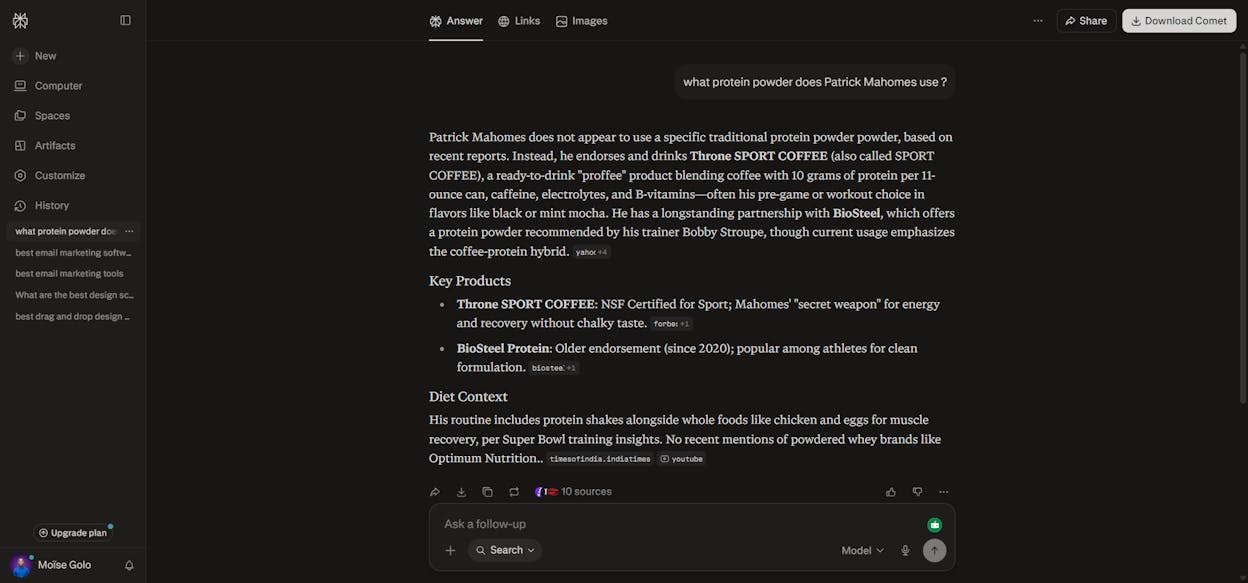
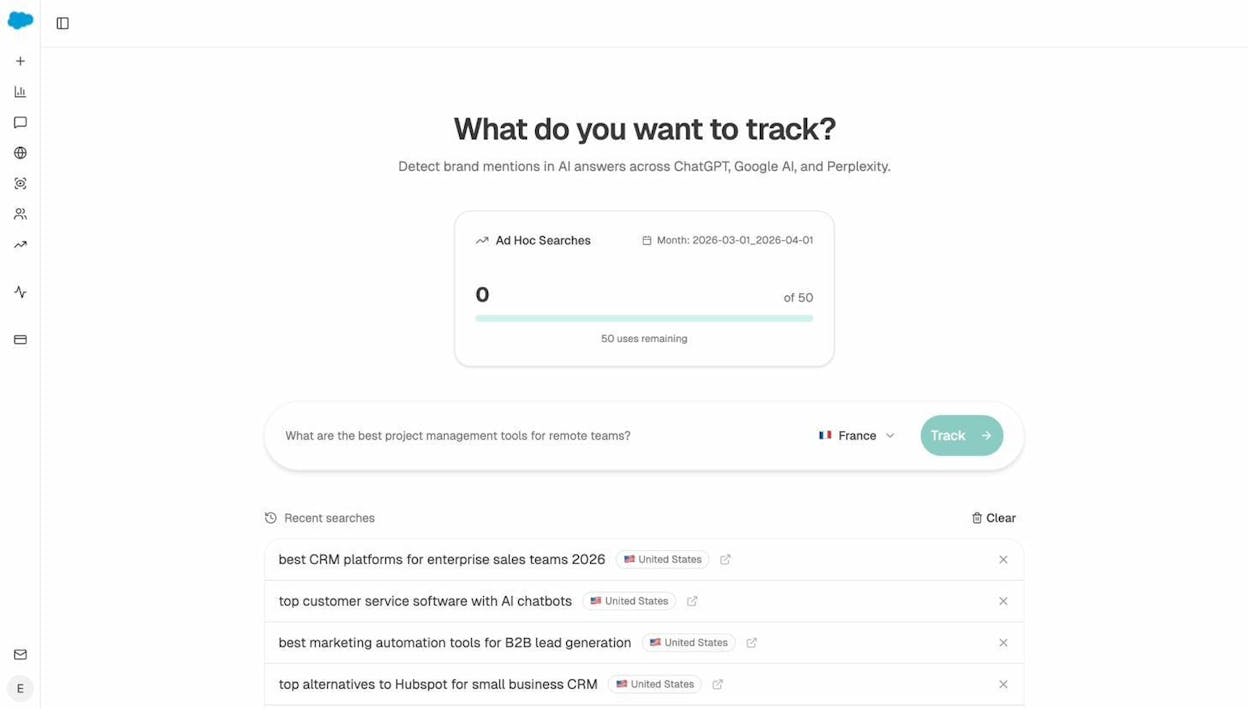
This step alone usually reveals a few things. You learn whether the engines have a confident answer for that prompt or whether they hedge. You learn which sources they cite. And you learn whether your brand is in the answer at all.
Step 2. Promote the most relevant prompts into a tracked cluster. Pick the 20 to 50 prompts that map to your business and add them to a prompt tracking campaign. From now on, you see how your visibility on those prompts moves week over week, by engine.
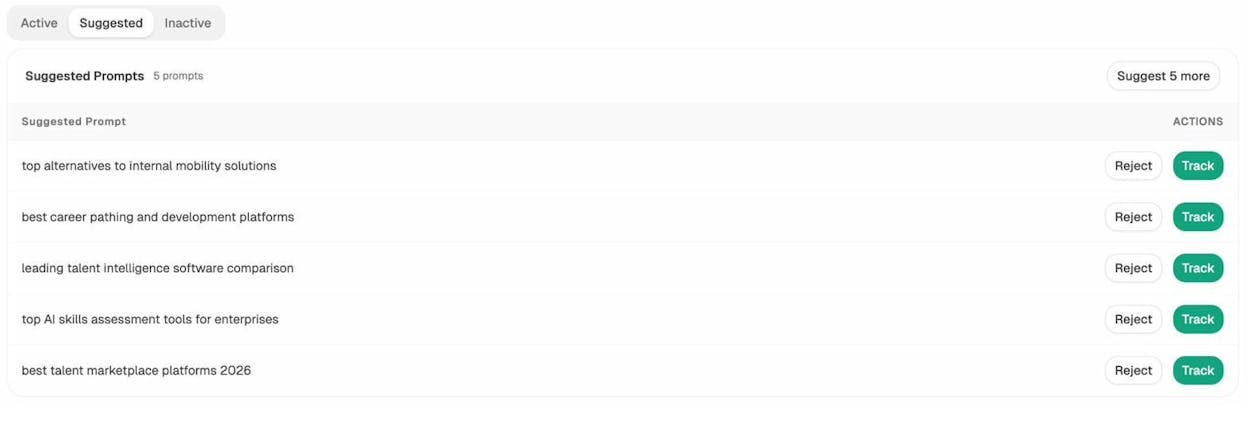
The reason this matters is that AI engines do not cache their answers. The same prompt produces a different answer this week than it did last week, depending on which sources got refreshed. Without a tracker, you are guessing.
Step 3. Look at which sources the engines actually cite. This is the part of the AI search workflow that has no Google equivalent. Open the citation analytics view for your tracked prompts and you will see exactly which domains the models pulled from to construct their answers. 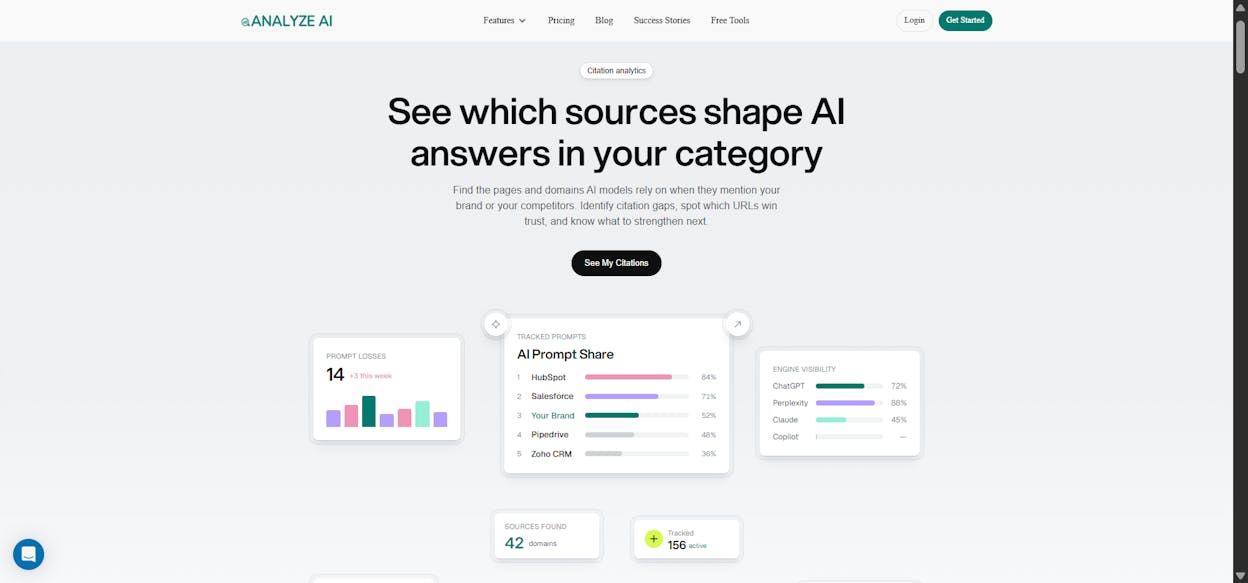
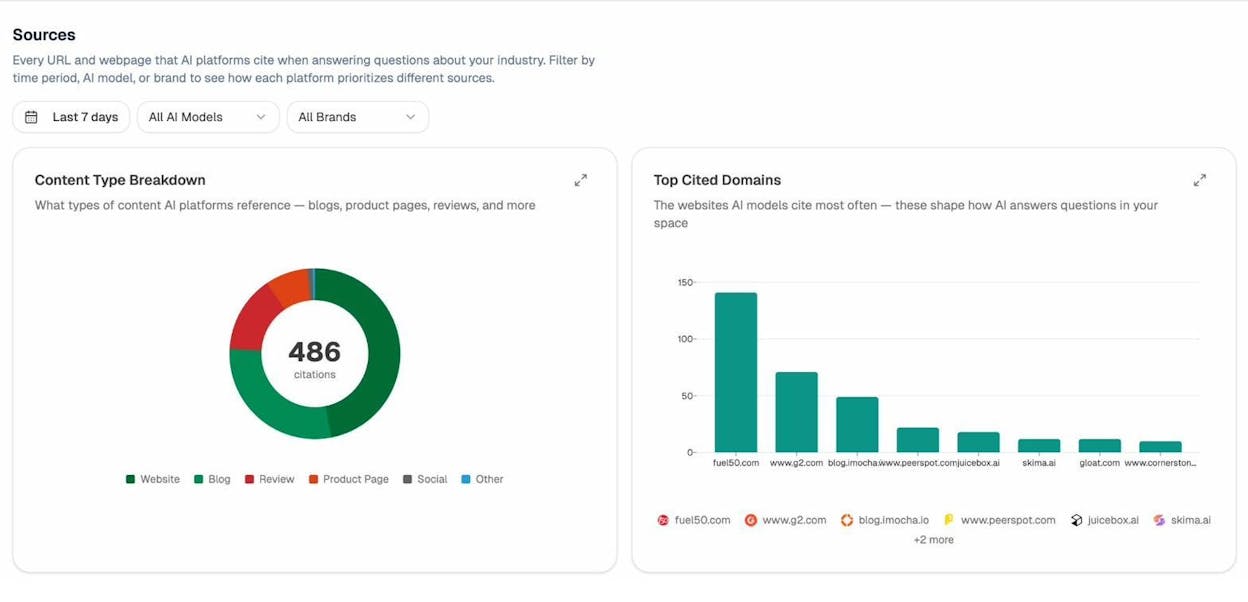
For people-oriented prompts the citation pattern is usually a mix of Wikipedia, the person’s own site, the brand site of whatever product they use (the gear page, the supplement page), and a small number of editorial sites that have done the original interview. Your job is to either earn citations on those domains or build the page that becomes the citation. Our breakdown of how to rank on ChatGPT and how to rank on Perplexity AI, both built from 65,000 real citation records, is the playbook for that work.
Step 4. Map who AI recommends instead of you. For every prompt where you are not cited, somebody else is. The competitor intelligence view shows you, prompt by prompt, which brands the AI named and how often.
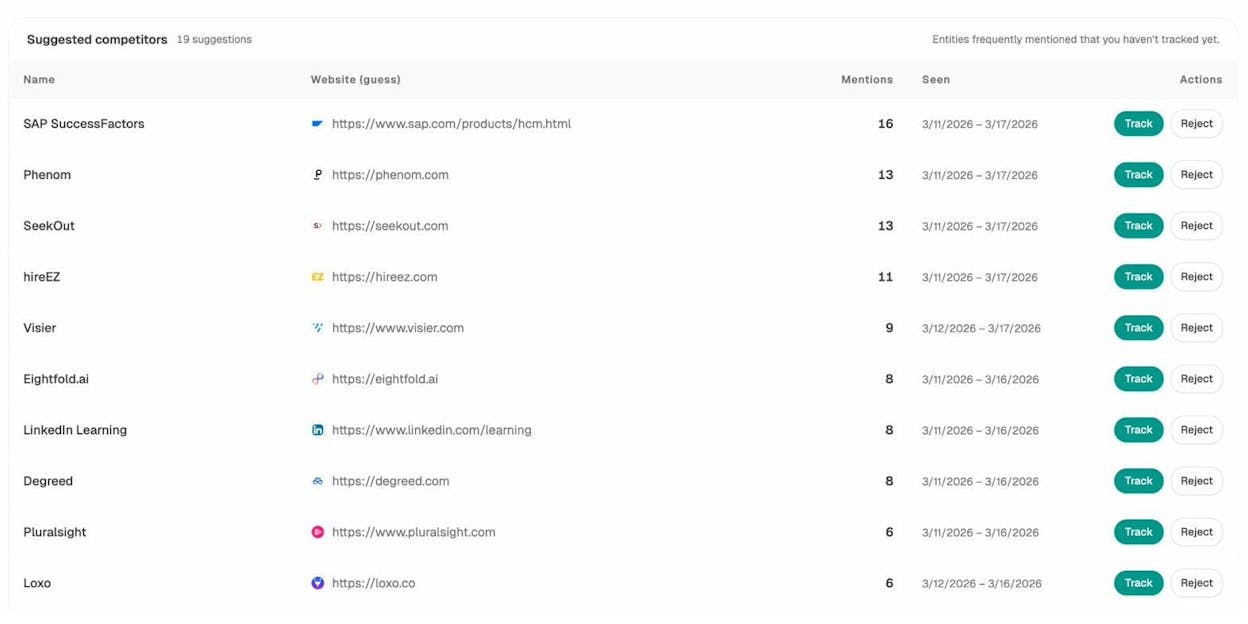
Most marketers stop at “we are not visible”. The useful question is “who is visible in our place”. The answer tells you which brand pages, blog posts, or review pages you need to outrank in the underlying source layer.
Step 5. Check which existing pages on your site are already pulling AI traffic and double down on what works. Open the AI traffic analytics view and sort by AI sessions. The pattern that almost always shows up is that one or two existing pages on your site are pulling 60 to 80 percent of your AI traffic, often pages you did not build for AI search at all. Those pages are your template.
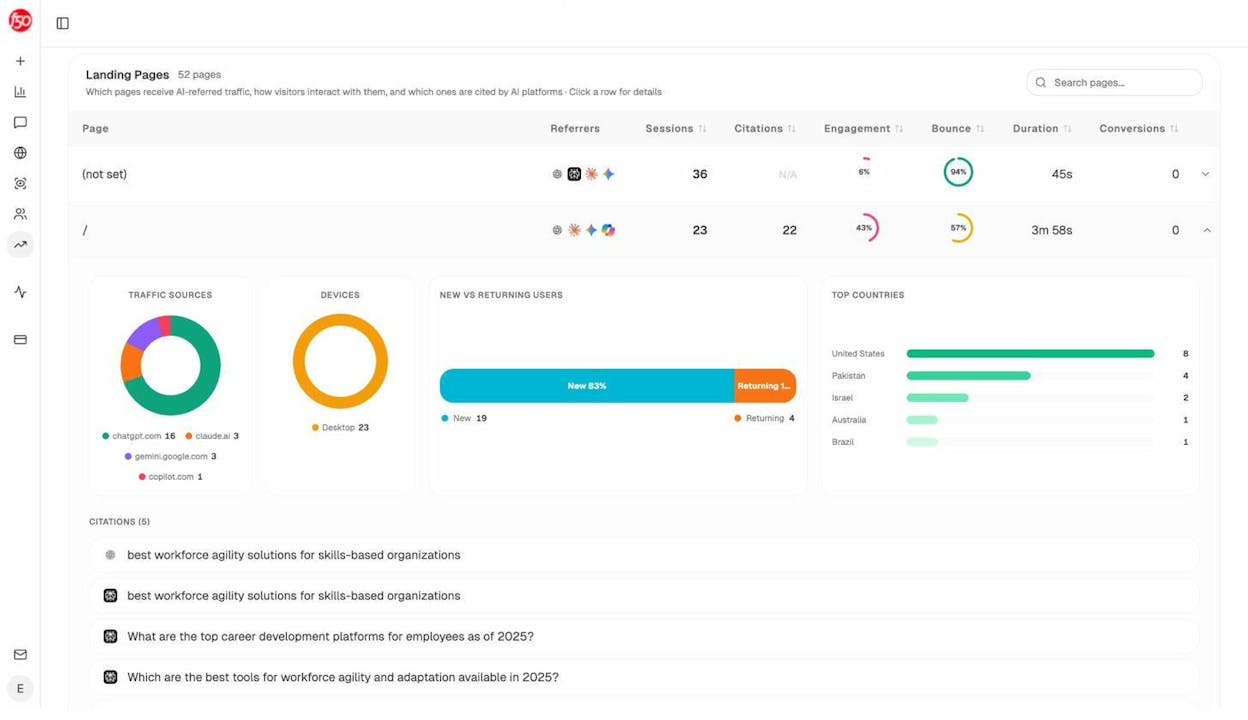
For a celebrity strategy specifically, the pages that tend to pull AI traffic are the ones with a clear named answer in the H1 (“What racket does Carlos Alcaraz use”), a definitive single answer in the first paragraph, and a structured data block with the product name and a link. The engines are looking for citable atoms, and that format gives them one.
Step 6. Watch the sentiment around the people you track. If your brand is recommended in the same answer as a celebrity, it inherits some of that celebrity’s sentiment. The perception map and AI sentiment monitoring views show you how the AI describes a person and how that description shifts when your brand appears alongside them. 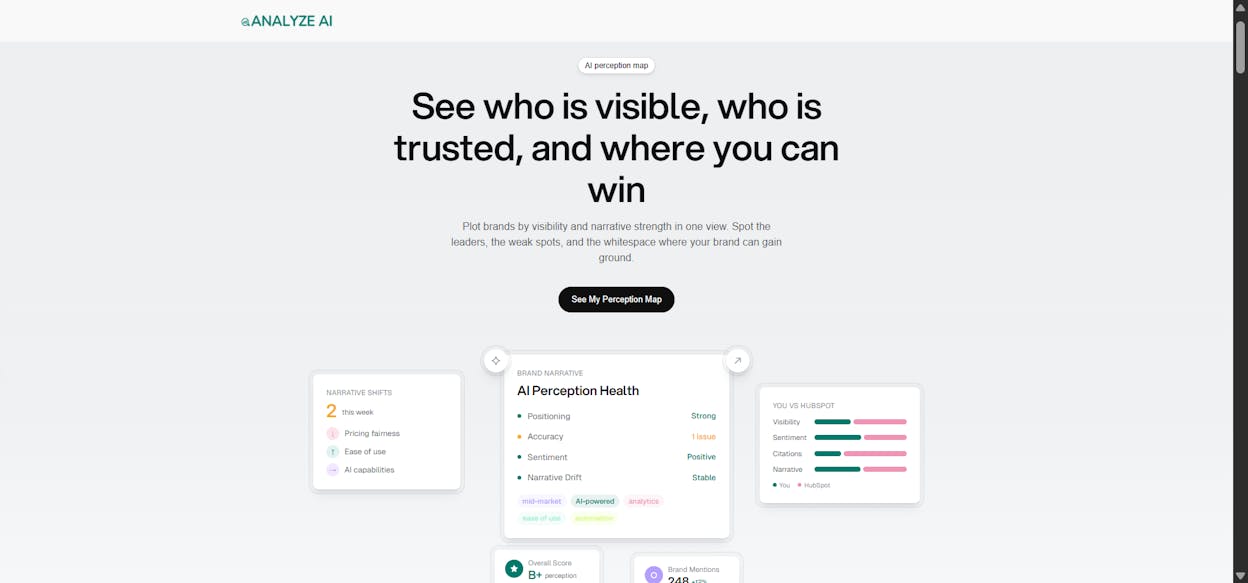
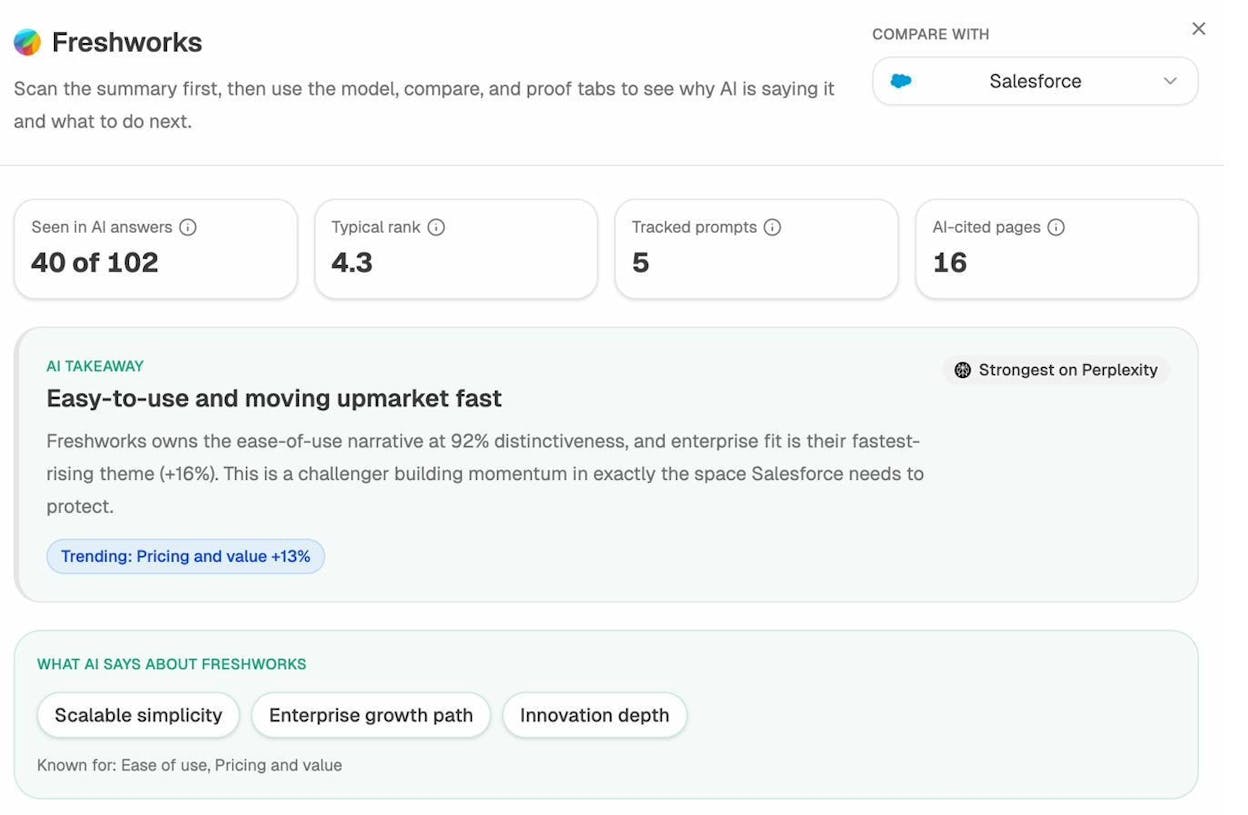
For most categories, this matters less. For categories where reputation is the product (financial advice, health, supplements, education), it matters a lot.
SEO vs AI search workflow, side by side
|
Step |
Google SEO |
AI Search |
|---|---|---|
|
Find candidates |
Keyword tool, [name] + modifier filter |
Ad-hoc prompt searches in Analyze AI |
|
Validate demand |
Monthly search volume, KD score |
Prompt frequency, engines that answer it |
|
Find the competitor set |
SERP top 10 |
Top cited domains and named brands per engine |
|
Build the page |
One page per [name] + intent |
Same page, plus structured data and a clear named answer in the first 100 words |
|
Track wins |
Rank tracker |
Prompt tracker by engine |
|
Measure ROI |
GA4 organic sessions and conversions |
AI traffic analytics by engine and landing page |
Both columns are organic channels. Both compound. Neither replaces the other.
Final word
The people on this list are not just trivia. They are commercial centers of gravity in their categories. Every name in the top 100 has at least a few thousand long-tail keywords clustered around them, and now also a few hundred AI prompts. The marketers who treat both as one connected workflow (find the right name, build a clean answer, track it on Google and in the answer engines) are the ones who compound visibility in 2026.
Run the SEO process this week. Run the AI search process the week after. Then put both on a monthly cadence and let the people you track tell you where your category is moving.

Ernest

Ibrahim


