



Summarize this blog post with:


In this article, you’ll get a side-by-side breakdown of NeuronWriter, Ahrefs, and Rankability so you can see exactly which tool fits your content workflow. You’ll learn where each platform excels, where each falls short, updated 2026 pricing for every plan, and the one gap all three share when it comes to AI search visibility. By the end, you’ll know which tool deserves your budget and which combination gives you the most complete coverage.
Table of Contents
TL;DR: Quick Comparison
|
NeuronWriter |
Ahrefs |
Rankability |
|
|---|---|---|---|
|
Best for |
Writers and editors who need NLP-guided optimization on a budget |
SEO teams who need backlink data, keyword depth, and site audits |
Agencies focused on AI search visibility and content optimization at scale |
|
Core strength |
Real-time content scoring with semantic NLP terms and SERP analysis |
Largest backlink index, keyword clustering, and full-site crawl diagnostics |
AI search tracking, content optimization credits, and white-label reporting |
|
Starting price |
$23/month (Bronze) |
$29/month (Starter) |
$199/month (Core) |
|
Free trial |
Yes (plus lifetime deals available) |
No full free trial |
No free trial |
|
AI search tracking |
No |
No (Brand Radar add-on only) |
Yes, built-in |
|
No |
No |
No |
|
|
Bottom line |
Best value content editor for solo creators and small teams |
Best data platform for keyword research and competitive analysis |
Best for agencies selling AI search as a service |
NeuronWriter: Best Budget-Friendly Content Editor
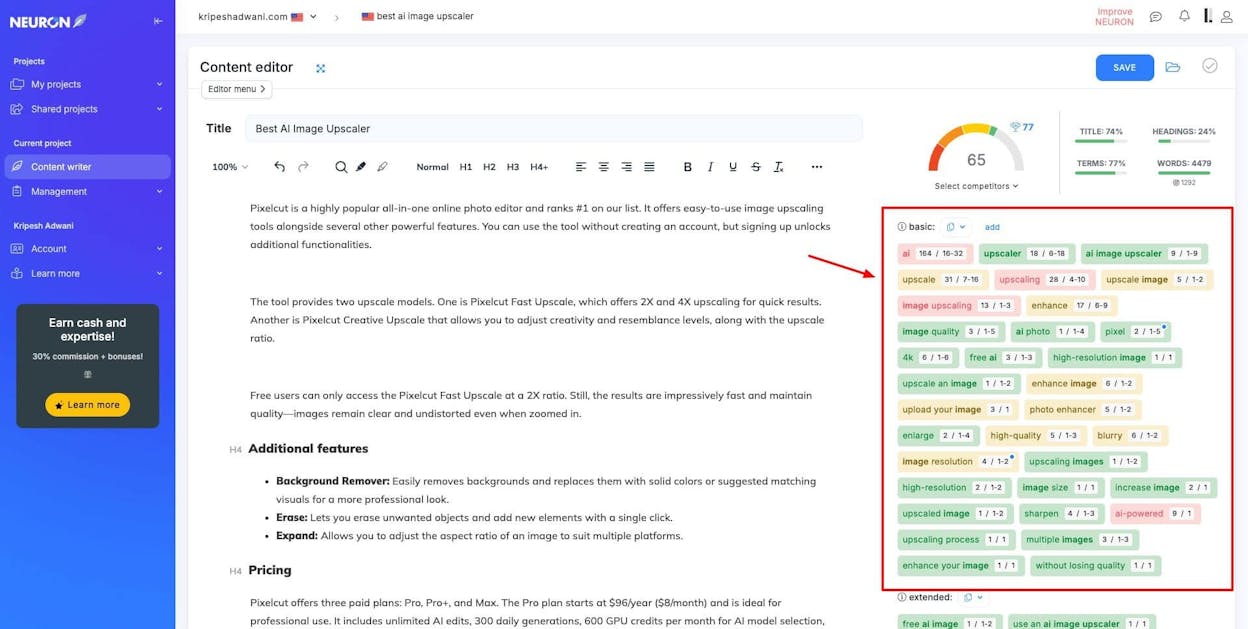
NeuronWriter helps writers and editors plan and optimize articles with real-time NLP feedback. You paste a target keyword, and the tool scans the top-ranking pages for that query. It pulls out the headings, questions, entities, and semantic terms those pages use. Then it scores your draft against that benchmark as you write.
The workflow stays inside a single workspace. Projects, briefs, and drafts live in one place, so you do not need spreadsheets or external docs to keep writers and editors aligned. When a piece is ready, you can export directly to WordPress and track performance through its Google Search Console integration.
Where NeuronWriter wins
The biggest advantage is simplicity at a low price. The Bronze plan starts at $23 per month. The Gold plan at $69 per month unlocks GSC integration, WordPress publishing, plagiarism checks, and advanced AI templates. A lifetime deal is also available, making it one of the cheapest content optimization tools on the market.
For teams that publish weekly, the real-time content score is the standout feature. You see which NLP terms are missing, how your readability compares to competitors, and what structural gaps exist. Writers who are not deeply technical can follow the color-coded indicators without needing to understand keyword difficulty formulas or SERP analytics.
Where NeuronWriter falls short
NeuronWriter focuses entirely on on-page optimization. You will not find backlink analysis, site audits, crawl diagnostics, or any technical SEO tools. If broken links, indexation problems, or domain authority gaps are your bottleneck, you will need a separate platform.
The AI writing engine works best as a support tool, not an author. Its drafts need editing for brand tone and factual accuracy. Performance slows during large-scale analyses, and topic coverage in niche or multilingual markets can feel thin.
Most importantly for 2026, NeuronWriter has no AI search visibility features. It cannot tell you whether ChatGPT, Perplexity, or Gemini mention your brand, which prompts drive traffic, or how your content performs in AI-generated answers. As more buyers shift research to AI engines, this blind spot becomes a real limitation for teams thinking beyond Google.
NeuronWriter pricing (2026)
|
Plan |
Monthly |
Annual (per month) |
Projects |
Analyses/month |
AI credits |
|---|---|---|---|---|---|
|
Bronze |
$23 |
$19 |
2 |
25 |
15,000 |
|
Silver |
$45 |
$37 |
5 |
50 |
30,000 |
|
Gold |
$69 |
$57 |
10 |
75 |
45,000 |
|
Platinum |
$93 |
$77 |
25 |
100 |
60,000 |
|
Diamond |
$117 |
$97 |
50 |
150 |
75,000 |
GSC and WordPress integrations unlock at the Gold plan and above. Verify the latest details on NeuronWriter’s official pricing page before purchasing.
Ahrefs: Best Data Platform for Keyword Research and Backlinks
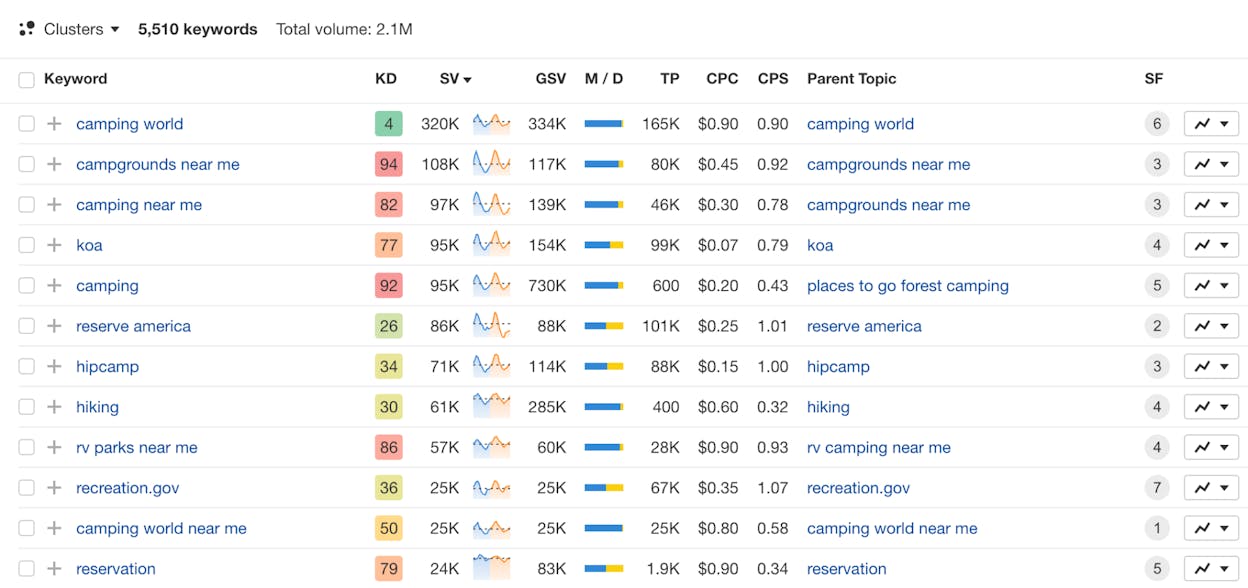
Ahrefs gives SEO professionals the full picture behind why pages rank. Its backlink index is one of the largest and most frequently updated in the industry, refreshing every 15 to 30 minutes. The keyword research tools go deeper than volume, showing click potential, intent categories, and traffic value estimates that help you prioritize targets by revenue potential rather than raw search volume.
Where Ahrefs really shines is in unifying technical and content intelligence. You can run a crawl audit to catch broken internal links or missing canonical tags, then jump to Content Explorer to see what top-performing pages in your niche actually look like. That combination of site health diagnostics and SERP visibility makes it a diagnostics engine, not just a reporting tool.
Where Ahrefs wins
The data scale is unmatched. Site Explorer lets you dissect any domain’s organic performance, break down which pages drive traffic, which keywords pull it in, and which backlinks sustain it. For competitive analysis and backlink gap analysis, Ahrefs remains the industry standard.
In 2026, Ahrefs added a $29/month Starter plan that genuinely lowers the barrier to entry. The AI Content Helper can now grade drafts against top-ranking pages and surface missing subtopics. These improvements make it more useful for content teams, not just data analysts.
Where Ahrefs falls short
The dashboard can overwhelm new users. With modules for backlinks, keywords, rank tracking, audits, and content analysis, knowing where to start requires process discipline. Some workflows still demand manual exporting or cross-referencing to see the full story.
Content optimization features remain lighter than tools built specifically for writing. You will not get line-by-line NLP guidance or live readability scoring inside an editor. Ahrefs tells you what to target, but you still need a separate environment to execute.
On AI search, Ahrefs introduced Brand Radar as an add-on through its Project Boost Max feature. But it does not track prompt-level visibility, AI traffic attribution, or sentiment across multiple LLMs. If you need to prove to your CMO that ChatGPT or Perplexity drive pipeline, Ahrefs cannot close that loop.
Ahrefs pricing (2026)
|
Plan |
Monthly |
Key limits |
|---|---|---|
|
Starter |
$29 |
Limited credits, basic features |
|
Lite |
$129 |
Essential tools with usage caps |
|
Standard |
$249 |
Expanded reports and crawl depth |
|
Advanced |
$449 |
Higher quotas, more user seats |
|
Enterprise |
$1,499 |
Custom reporting, API access, unlimited projects |
No full free trial is available. Regional pricing may vary, so verify current details on Ahrefs’ official pricing page.
Rankability: Best for Agencies Selling AI Search Services
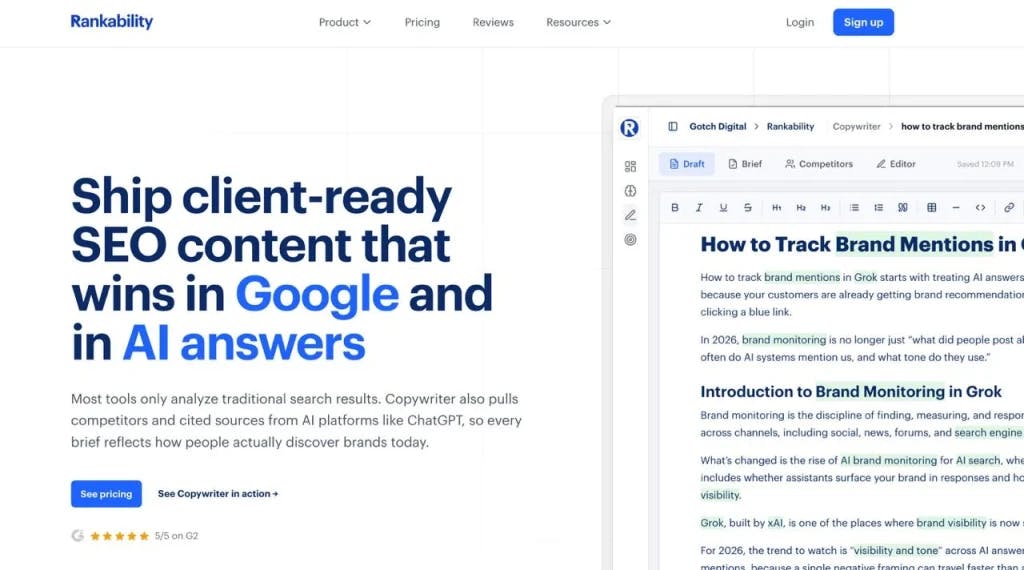
Rankability is built for agencies that want to sell AI search visibility as a service. It combines content optimization with AI search tracking, keyword research, and white-label reporting in a single platform. The content optimizer uses NLP analysis to score your coverage against top-ranking pages, while the AI search tracking module monitors how your content appears across ChatGPT, Perplexity, Gemini, and Google AI Overviews.
The platform’s structure follows a Plan, Produce, Prove, and Direct workflow that gives agency teams a clear mental model for onboarding new writers who are not deep SEO practitioners.
Where Rankability wins
The combination of content optimization and AI search tracking in one tool addresses real tool sprawl. Agencies that currently pay separately for a content optimizer, an AI writing tool, and a rank tracker can consolidate onto Rankability. White-label reporting is included on every plan, and API access is available across all tiers, which is unusual at this price point.
The content optimizer’s NLP analysis is strong. It analyzes your content against top-ranking pages and provides entity suggestions that go beyond basic keyword density. The AI search tracking gives you prompt-level monitoring that you can package into client reports.
Where Rankability falls short
The $199/month entry price with no free trial is a significant commitment. You are investing $2,388/year based on demos and marketing materials alone. The credit-based system powers everything from AI search scans to content briefs to optimization workflows, and the per-action costs are not published. That makes it hard to budget accurately before you are inside the platform.
Rankability does not include backlink analysis, crawl audits, or technical SEO diagnostics. If your agency handles technical SEO audits, you still need Ahrefs or a similar platform alongside it.
The platform caps at 15 seats on the highest plan, which may not work for larger organizations. And while the AI search tracking covers multiple engines, some teams report that the integration between content optimization and AI tracking still feels like two separate products sharing a dashboard.
Rankability pricing (2026)
|
Plan |
Monthly |
Seats |
Credits |
|---|---|---|---|
|
Core |
$199 |
3 |
25,000 |
|
Team |
$399 |
5 |
75,000 |
|
Agency |
$799 |
15 |
200,000 |
All plans include full platform access, white-label reporting, and API access. Save 17% with annual billing. Extra credits, seats, and client capacity can be added without changing plans.
The Gap All Three Share: Nobody Closes the Loop
Here is the pattern. NeuronWriter optimizes your writing. Ahrefs tells you what to target. Rankability tracks some AI search visibility. But none of them can do all of this at once:
-
Show you exactly which AI engines send traffic to your site and which landing pages convert that traffic into pipeline
-
Track prompt-level visibility, sentiment, and competitive positioning across ChatGPT, Perplexity, Claude, Copilot, Gemini, and more
-
Write and optimize content that is built to get cited by both search engines and AI models
-
Automate the entire workflow, from research to draft to publish to monitoring, without switching tools
This is the gap that Analyze AI fills. Not as a replacement for any single tool above, but as the agentic platform for SEO, AEO, content, and GTM ops that connects everything.
How Analyze AI Completes the Stack
Analyze AI is not just another AI search tracker. It is a programmable platform with four operating layers (Discover, Monitor, Improve, Govern) and an Agent Builder with 180+ nodes, 34 pre-built data recipes, and direct integrations with GA4, Google Search Console, DataForSEO, Semrush, HubSpot, Notion, WordPress, Slack, and every major LLM.
Here is what that means in practice.
Track real AI traffic, not just mentions
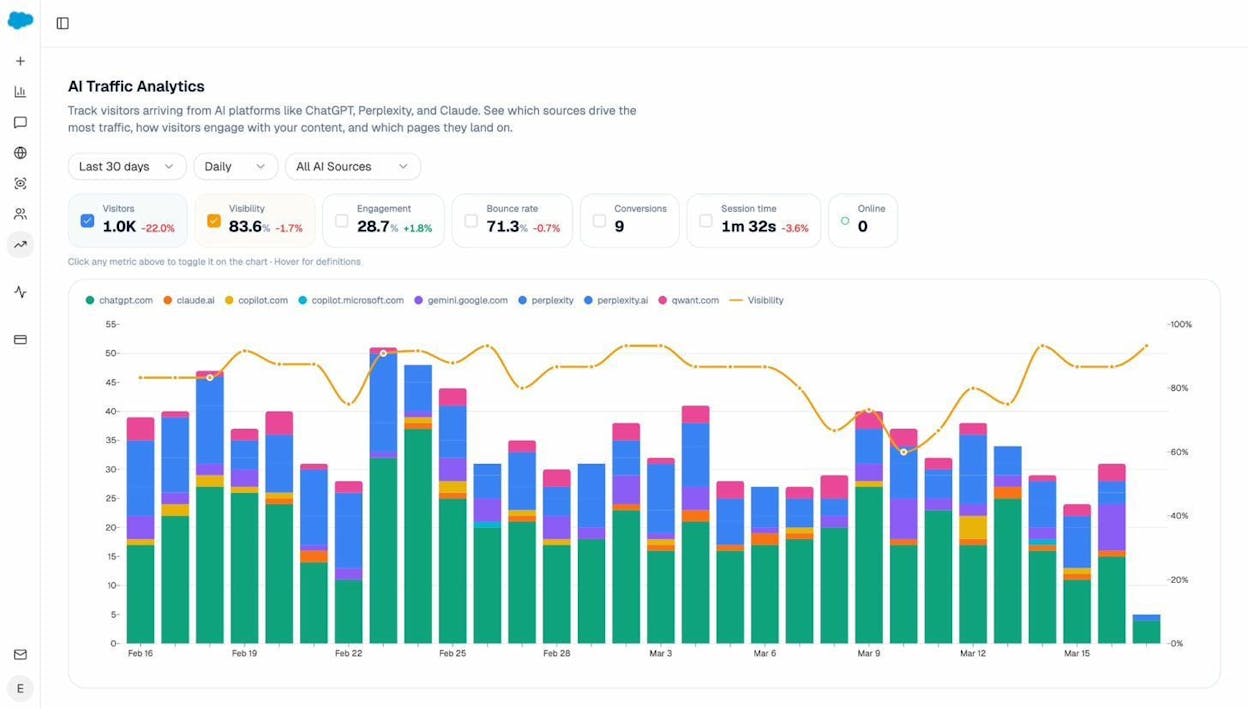
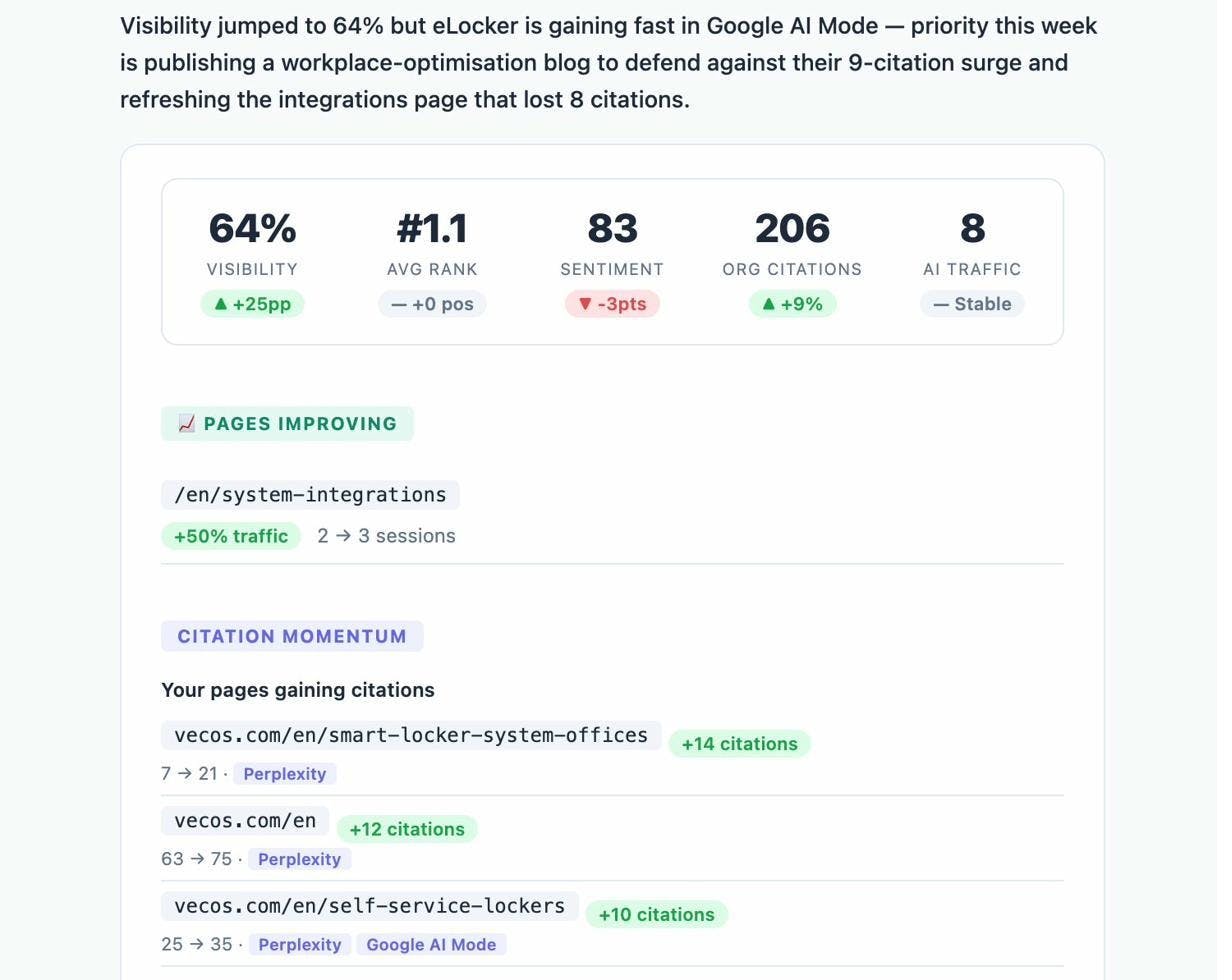
Most tools stop at “your brand was mentioned.” Analyze AI shows you the full journey from AI answer to landing page to conversion. You see exactly how many sessions come from ChatGPT vs. Perplexity vs. Claude, which pages those visitors land on, and what conversion events they trigger.
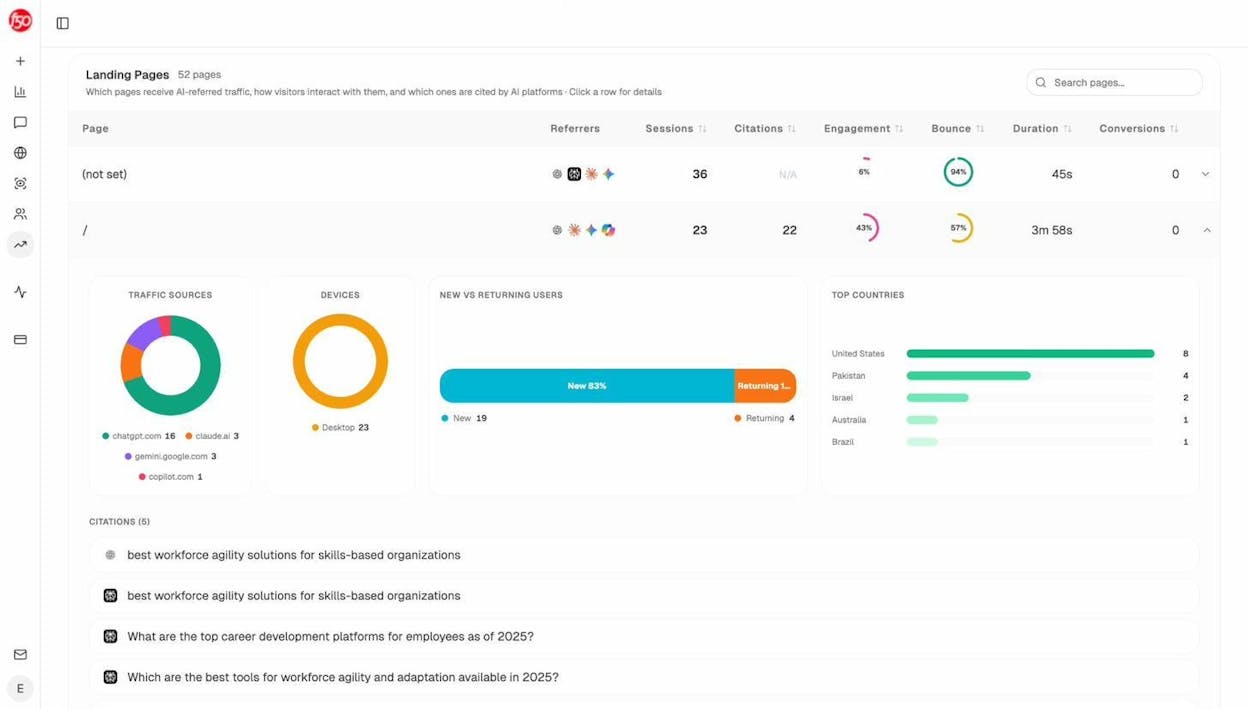
When your product comparison page gets 50 sessions from Perplexity and converts at 12%, while an old blog post gets 40 sessions from ChatGPT with zero conversions, you know exactly what to strengthen. That is attribution you can bring to your CMO. None of the three tools above can do this.
Monitor prompts and competitive positioning
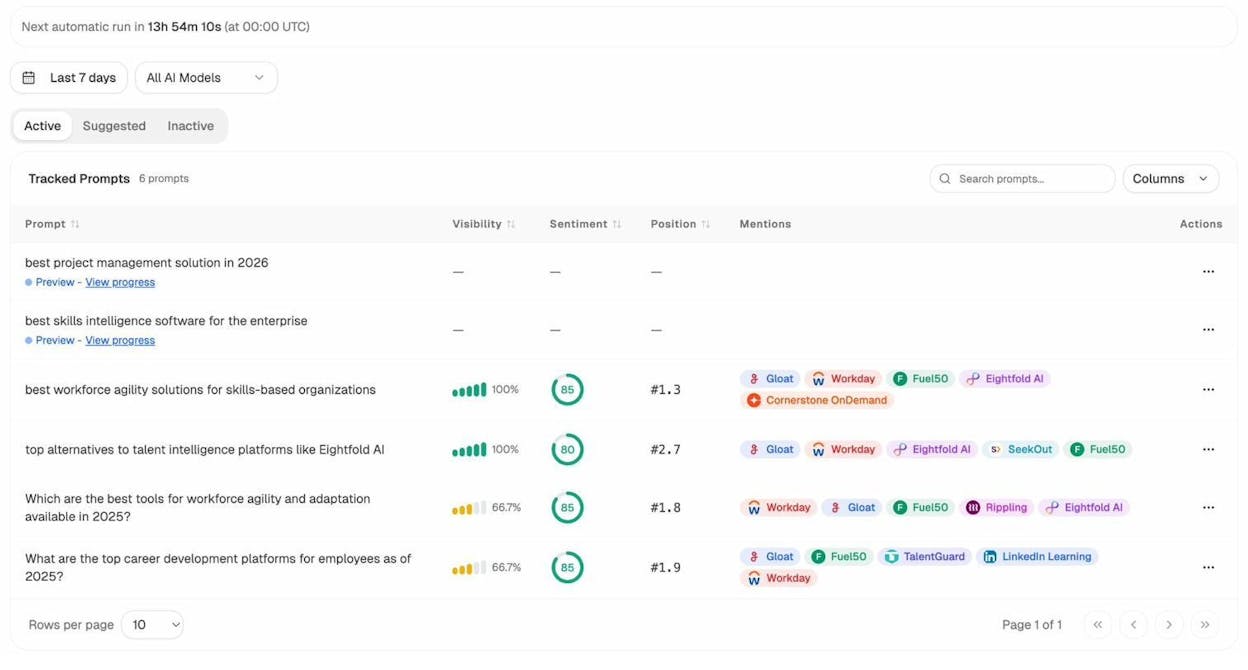
Analyze AI tracks specific prompts across all major LLMs. For each prompt, you see your visibility percentage, position relative to competitors, sentiment score, and which sources models cite when they generate their answers.
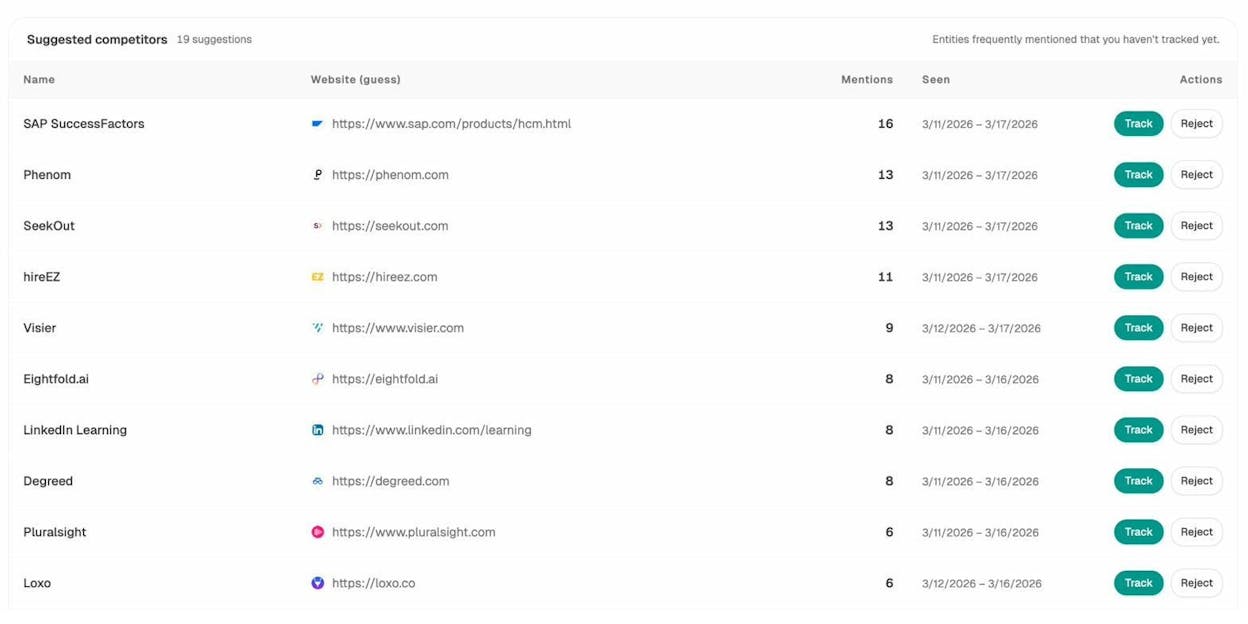
The Competitor Intelligence dashboard maintains a rolling scoreboard so you always know who is gaining ground and on which prompts. You can also use Ad Hoc Prompt Searches to test any prompt across engines before committing to a full tracking campaign.
Write and optimize content built to get cited
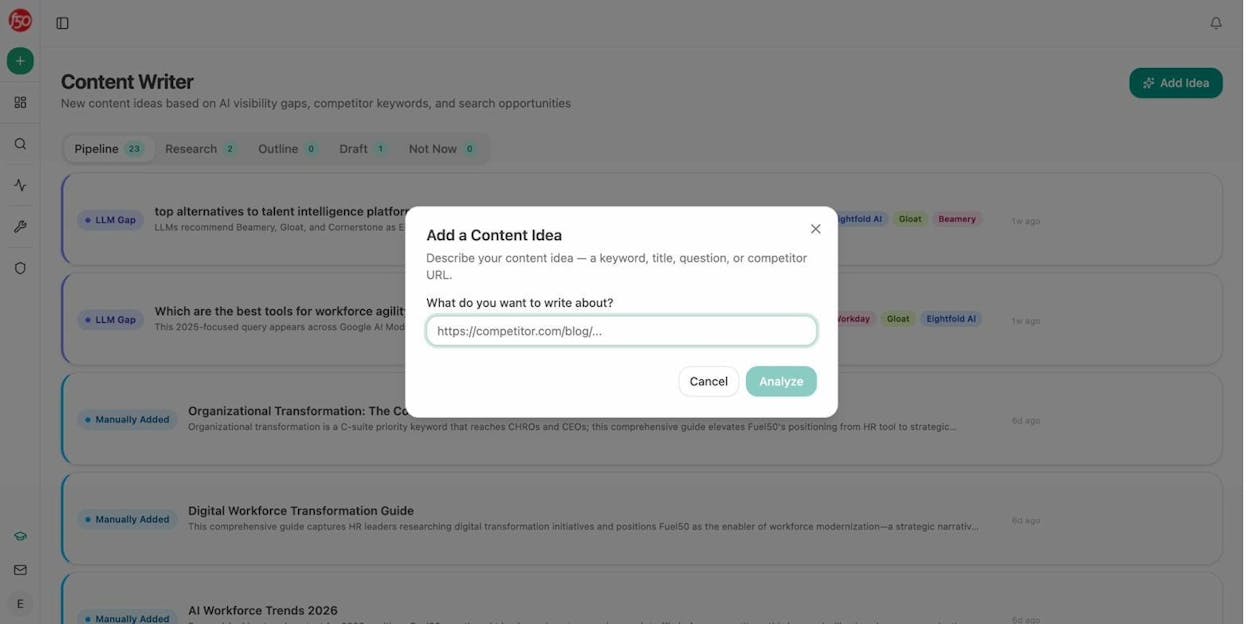
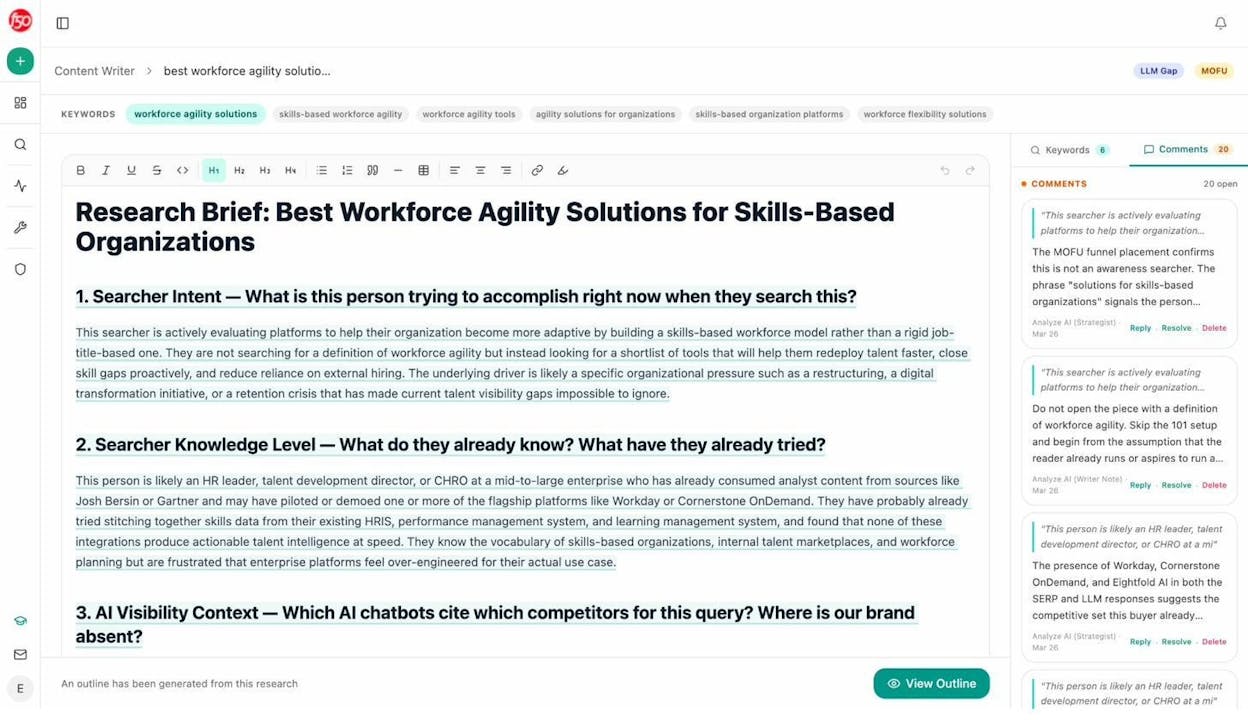
The AI Content Writer in Analyze AI does not just generate drafts. It starts with research that analyzes searcher intent, knowledge level, and AI visibility gaps. It adds editorial comments explaining why each section matters and what competitive angle to take. Then it builds an outline and a full draft with your brand voice injected from a 12-block Brand Vault.
The AI Content Optimizer works the other direction. Paste a URL, and it audits the page for both SEO and AEO readiness. It scores structure, entity coverage, claim density, and source mapping. Then it generates specific optimization ideas based on gaps, not generic suggestions.
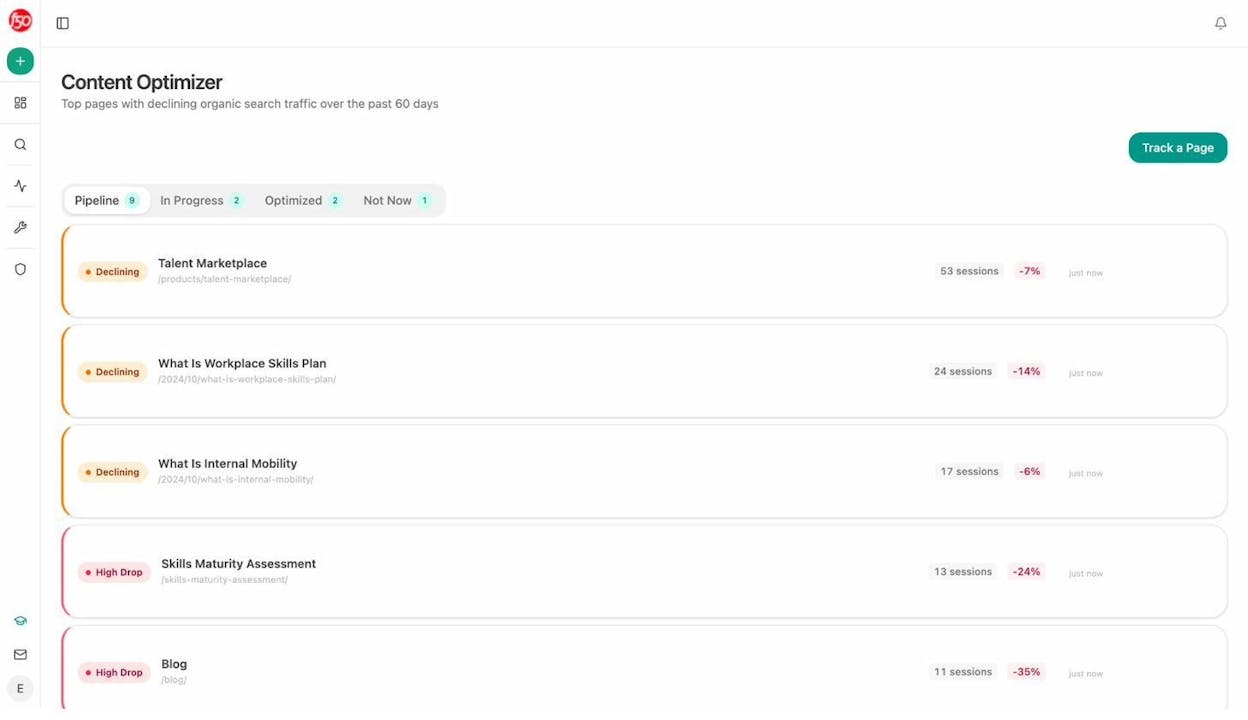
The difference from NeuronWriter or Rankability’s optimizer is that Analyze AI’s outputs are informed by what AI models actually cite in your category, not just what currently ranks on Google. You optimize for both channels simultaneously.
Automate everything with the Agent Builder
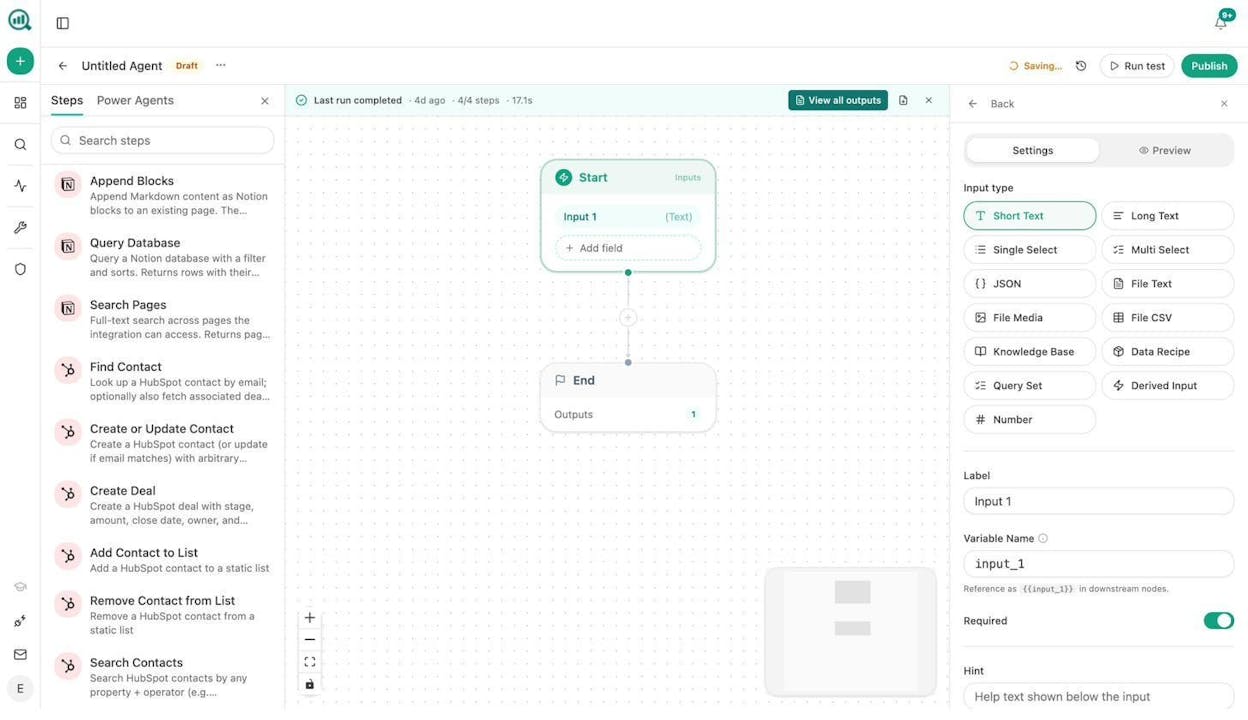
This is where Analyze AI separates from every tool on this list. The Agent Builder is not a simple automation layer. It is a programmable substrate with 180+ nodes across 16 categories. You can build agents that run on a schedule (like a virtual employee that never forgets), fire on webhooks (when a HubSpot deal closes or a CMS page publishes), or run on demand.
Here are real examples of what teams build with it.
Content teams build brief-to-publish pipelines. A brief moves to “approved” in Notion, and the agent generates research, builds an outline, writes a full draft with brand voice injected, scores it against the AEO Content Scorecard, and publishes to WordPress if it passes. If the score is too low, it sends the gaps to the writer via Slack. No manual handoffs.
Agencies build Monday client briefing packs. One scheduled agent loops over a client list, pulls each client’s AI visibility data plus GA4 plus GSC metrics, generates an executive summary in the agency’s brand voice, exports a branded DOCX, and emails each account team. Reporting day stops existing.
CMOs get a brand health bot. A Slack command triggers a webhook agent that pulls share-of-voice, sentiment alerts, and top cited sources. Then it formats a response and replies in Slack within seconds. The CFO asks “How are we doing in AI?” in a meeting and gets a real answer immediately.
The nodes include 27 DataForSEO integrations, 7 Semrush integrations, 8 Google Search Console nodes, 26 HubSpot nodes, full Notion and WordPress CRUD, email sending, image generation, CSV/Excel/PDF/DOCX exports, and custom JavaScript execution. You are not picking from a template library. You are composing from primitives.
Govern your brand narrative
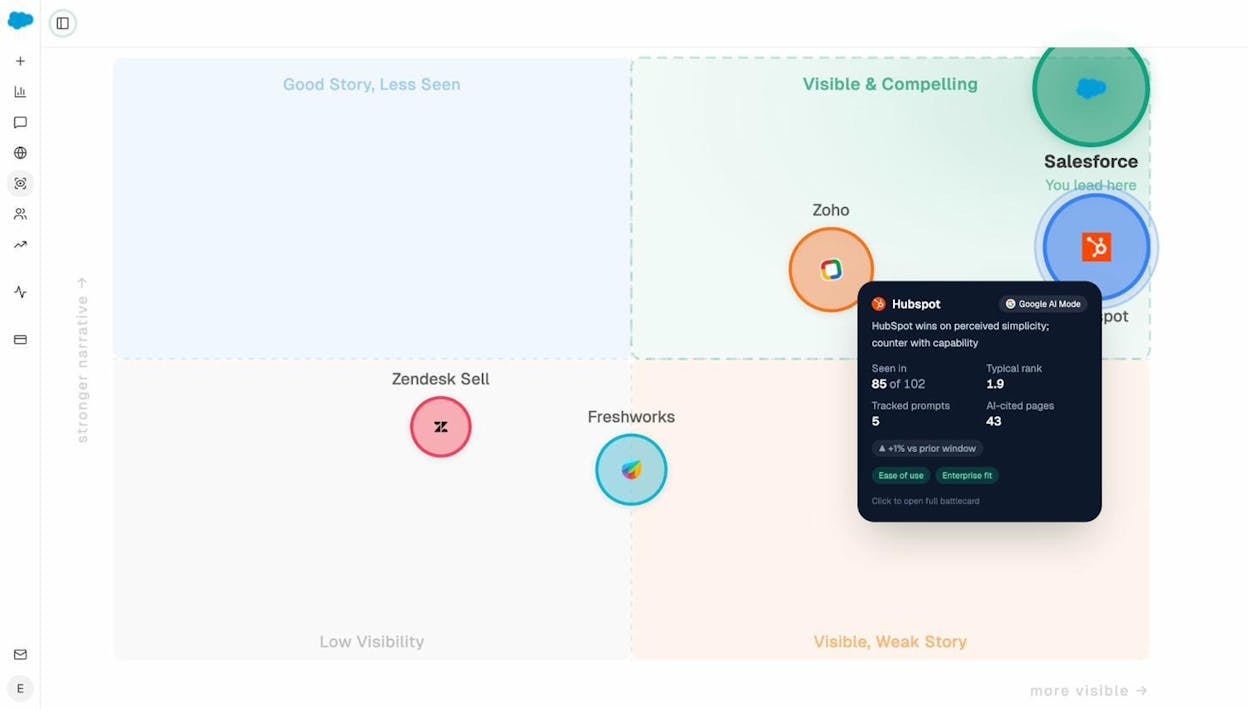
The Govern layer monitors how AI models frame your brand over time. The Perception Map positions all tracked brands on a quadrant of presence vs. narrative strength. AI Battlecards give you counter-strategies. Weekly Email Digests deliver prioritized actions every Monday without logging in.
So Which Tool Should You Pick?
The answer depends on where your workflow breaks down.
Pick NeuronWriter if your bottleneck is writing speed and you need a budget-friendly content editor. It is the best value tool for solo creators and small teams publishing weekly. Starting at $23/month, it removes guesswork from on-page optimization without technical complexity.
Pick Ahrefs if your bottleneck is understanding your competitive landscape. It is the definitive data platform for keyword research, backlink analysis, and site health diagnostics. The $29 Starter plan makes it more accessible than ever, and no other tool matches its data depth for traditional SEO.
Pick Rankability if you run an agency and want to sell AI search reporting as a service. It combines content optimization with AI visibility tracking and white-label reporting. The price is steep at $199/month, but if you bill clients for AI search audits, the ROI math works.
Pick Analyze AI if you need the complete loop. You need to track how AI engines represent your brand, prove that AI traffic drives pipeline, write content that gets cited by both Google and LLMs, and automate the entire workflow from research to publish to monitoring. Analyze AI is not an AI search layer on top of your stack. It is the agentic platform for SEO, AEO, content, and GTM ops that can pull data from GA4, GSC, Semrush, HubSpot, and every major LLM, then act on it automatically.
The best stack for most teams in 2026 is Ahrefs for data plus Analyze AI for everything else. NeuronWriter and Rankability solve real problems, but neither connects the dots between content creation, AI visibility, traffic attribution, and automated workflows the way Analyze AI does. And if your budget is tight, Analyze AI’s free tools (including a keyword generator, keyword difficulty checker, SERP checker, and broken link checker) give you a strong starting point before committing to a paid plan.

Ernest

Ibrahim


![7 LLMrefs Alternatives That Do More Than Track Mentions [2026]](/_next/image?url=https%3A%2F%2Fwww.datocms-assets.com%2F164164%2F1779313840-blobid0.png&w=3840&q=75)


