



Summarize this blog post with:


In this article, you’ll learn how to optimize your content for SEO, for conversions, for AI search engines like ChatGPT and Perplexity, and for social sharing. You’ll also learn which mistakes to avoid, how to measure your results, and which tools make the whole process easier.
Table of Contents
What Is Content Optimization?
Content optimization is the gap between publishing content and getting results from it. You can write the most detailed blog post in your industry, but if it targets a keyword nobody searches for, ignores what searchers actually want, or loads too slowly on mobile, it won’t perform.
The process covers several layers. At the top, there’s keyword targeting: making sure you’re writing about topics people search for. Below that, there’s intent alignment: structuring your content the way searchers (and increasingly, AI models) expect. Then there’s on-page optimization: title tags, meta descriptions, headings, and internal links. And finally, there’s the off-page layer: backlinks, brand mentions, and citations that signal authority to both Google and large language models.
What makes content optimization different from content creation is the mindset. Creation asks “what should I write about?” Optimization asks “how do I make this piece perform better than everything else out there?”
Every piece of content you publish has a ceiling. Content optimization raises that ceiling.
Why Is Content Optimization Important?
Content optimization matters because publishing is the starting line, not the finish line. The internet is flooded with content. WordPress alone publishes over 70 million blog posts every month. Without optimization, your content drowns.
Here is what content optimization does for you in practice:
It gets you traffic you would otherwise miss. Pages that don’t target the right keywords or match search intent simply don’t rank. A study by Backlinko found that the #1 organic result gets roughly 27.6% of all clicks. Drop to position 10, and you’re getting under 3%. Optimization is the difference between those two positions.
It makes your existing content work harder. Most companies already have dozens or hundreds of blog posts. Optimizing those existing posts is often faster and more effective than writing new ones from scratch. A content refresh that adds missing subtopics, updates data, and tightens the copy can move a page from page two to position three in weeks.
It compounds over time. When you optimize content well once, it can drive traffic for months or years. Paid ads stop the moment you stop paying. Optimized organic content keeps working.
It opens the door to AI search visibility. This is the new frontier. AI answer engines like ChatGPT, Perplexity, Google AI Mode, Claude, Gemini, and Copilot are pulling from the web to generate answers. If your content is well-optimized, well-cited, and authoritative, these models are more likely to reference you. That creates a second organic channel on top of traditional SEO. We’ll cover how to optimize specifically for AI search later in this guide.
How to Optimize Content for SEO
Before you worry about conversions or social shares, you need traffic. SEO optimization is what gets people to your page in the first place. Here are nine specific things you need to get right.
1. Target a Keyword with Real Traffic Potential
Optimizing for a keyword nobody searches for is a waste of your time. Even a #1 ranking won’t generate traffic if the search volume is zero.
To find keywords with traffic potential, start with a keyword research tool. Enter a broad seed keyword related to your topic, and look at the keyword suggestions it generates. You’re looking for terms with meaningful monthly search volume and a traffic potential estimate that shows the top-ranking pages actually get traffic.
Here’s what matters when evaluating a keyword:
Search volume tells you how many people search for that term per month. But don’t rely on it alone. Search volume measures the keyword itself, not the total traffic opportunity. A single page can rank for hundreds of related keywords.
Traffic potential is a better metric. It estimates how much total organic traffic the top-ranking page gets from all the keywords it ranks for, not just the one you’re looking at. Use this to gauge the real opportunity.
Keyword difficulty gives you a rough sense of how competitive the term is. If your site is new and has low authority, filter for lower-difficulty keywords first to find realistic opportunities. You can check this quickly with Analyze AI’s free Keyword Difficulty Checker.
![[Screenshot: Google Keyword Planner or any keyword research tool showing search volume and keyword difficulty for “content optimization” and related terms]](https://www.datocms-assets.com/164164/1777122814-blobid1.png?auto=format,compress&w=1248&fit=max)
If you want quick keyword ideas without a paid tool, try the Analyze AI Keyword Generator. Enter your seed term and it generates a list of related keywords with their volume and difficulty estimates.
![[Screenshot: Analyze AI Keyword Generator tool showing keyword suggestions]](https://www.datocms-assets.com/164164/1777122819-blobid2.png?auto=format,compress&w=1248&fit=max)
A common mistake: picking keywords based on volume alone. A keyword with 10,000 monthly searches but a difficulty score of 95 is a bad target for a new site. A keyword with 500 searches and a difficulty of 15 is a far better opportunity if you can rank for it.
For a deeper walkthrough on finding profitable SEO keywords, read our full keyword research guide.
2. Align Your Content with Search Intent
If your content doesn’t answer the question the searcher is actually asking, Google will not rank it. Search intent is the reason behind the search query, and Google has gotten very good at understanding it.
The easiest way to analyze search intent is to Google your target keyword and study the top 10 results. Look at three things:
Content type. Are the results blog posts, product pages, landing pages, or tool pages? If the top 10 are all blog posts, writing a product page for that keyword won’t work. Match the type.
Content format. Within blog posts, are they how-to guides, listicles, comparisons, or opinion pieces? If the SERP is full of step-by-step guides, write a step-by-step guide. If it’s full of listicles, write a listicle.
Content angle. What’s the hook of the top-ranking posts? Is it “for beginners”? “Free tools”? “In 2026”? The dominant angle reveals what searchers care about most.
![[Screenshot: Google SERP for “content optimization” showing the type of results, formats, and angles]](https://www.datocms-assets.com/164164/1777122820-blobid3.png?auto=format,compress&w=1248&fit=max)
Here’s a practical example. If you search “content optimization tools,” you’ll see the top results are all listicles reviewing multiple tools. The angle is usually “best” or “top picks” with a year attached. If you tried to rank with a single-product landing page, you’d be fighting the intent. Match the format, then beat the quality.
For keywords relevant to your business, you should also use Analyze AI’s free SERP Checker to analyze the current top results without leaving your workflow.
How search intent applies to AI search. AI answer engines like ChatGPT and Perplexity also rely on intent, but the way they use it is different. When someone asks ChatGPT “what is content optimization?”, the model synthesizes an answer from multiple sources. It favors content that gives direct, clear, comprehensive answers. Content that is vague, overly promotional, or thin on substance rarely gets cited. If your content does a better job of answering the question than competing pages, AI models are more likely to pull from it. This is one reason why optimizing for search intent benefits both Google and AI search simultaneously.
3. Cover Everything Searchers Want to Know
The most common reason content fails to rank isn’t bad writing. It’s incomplete coverage. Searchers come with questions, and if your page doesn’t address them, they bounce, and Google notices.
Here is how to make sure your content covers the topic thoroughly:
Step 1: Analyze the top-ranking pages. Open the top five results for your keyword. Note every subtopic, question, and angle they cover. If three out of five competitors have a section on “content optimization for mobile,” and you don’t, that’s a gap.
Step 2: Check “People Also Ask.” Google’s People Also Ask boxes reveal the follow-up questions searchers have. Address as many of these as make sense within your article.
![[Screenshot: Google’s People Also Ask section for “content optimization” showing related questions]](https://www.datocms-assets.com/164164/1777122825-blobid4.png?auto=format,compress&w=1248&fit=max)
Step 3: Use a content optimization tool. Tools like Analyze AI’s AI Content Optimization Tools help you systematically identify missing subtopics. They compare your content against top-ranking pages and flag concepts, entities, and questions you haven’t addressed.
Step 4: Add depth, not just breadth. Covering more subtopics is not the same as adding more words. Each subtopic needs enough detail to be useful on its own. If you mention “schema markup” as part of content optimization, don’t just namedrop it. Explain what it is, why it matters, and how to implement it.
The goal is not to write the longest article on the internet. It’s to write the most complete one. Every subtopic you cover should be there because it helps the reader, not because it pads your word count.
Why coverage matters for AI search too. AI models like ChatGPT, Claude, and Perplexity are trained on web content. When they generate answers, they pull from sources that cover topics comprehensively. If your page covers content optimization from keyword research all the way through measuring results, it becomes a better candidate for AI citation than a page that only covers title tags. Comprehensive content gets cited more because it answers more of the questions the model needs to address.
4. Make Your Content Easy and Enticing to Read
Most readers don’t read web pages from start to finish. They scan. They look for headings, bold text, and short paragraphs that let them jump to the section they care about.
Here’s how to optimize for readability:
Cut the fluff. Every sentence should move the reader forward. If a sentence restates something you already said, or uses vague phrases like “it goes without saying” or “needless to say,” delete it. Tools like Hemingway Editor flag overly complex sentences and passive voice.
Use short paragraphs. On the web, a “paragraph” can be one to three sentences. Long blocks of text make readers’ eyes glaze over. Break up your ideas into digestible chunks.
Add a table of contents. For posts over 1,500 words, a table of contents at the top gives readers a map and lets them jump directly to sections that interest them. Many CMS platforms and plugins generate these automatically.
Put important information first. Don’t bury your key insight on paragraph twelve. Journalists call this the “inverted pyramid” — lead with the most valuable information, then add supporting detail. If someone only reads the first two paragraphs of every section, they should still walk away with the key takeaways.
Use images, tables, and visuals. A well-placed screenshot, diagram, or comparison table breaks up walls of text and makes complex ideas easier to grasp. Throughout this article, you’ll notice we use screenshots and tables to show things in action rather than just describe them.
Bold key takeaways. When a sentence contains the single most important point in a section, bold it. Scanners will pick it up even if they skip everything else.
5. Write a Compelling Title Tag and Meta Description
Your title tag and meta description are the first things searchers see on the SERP. They are your ad copy. If they’re boring, vague, or don’t match what the searcher is looking for, nobody clicks.
Here are the principles of good title tags:
Match the search intent. If someone searches “content optimization guide,” your title tag should signal that your page is a comprehensive guide. Something like “Content Optimization: The Complete Guide” works. “10 Random Content Tips” does not.
Keep it under 60 characters. Google truncates title tags that are too long. Aim for 50 to 60 characters so the full title displays on the SERP.
Include your target keyword. Place it near the beginning when possible. This helps both Google and searchers see that your page is relevant to their query.
Add specificity. Numbers, dates, and specific outcomes make title tags more clickable. “Content Optimization: 9 Steps That Drive Rankings” is more compelling than “How to Optimize Content.”
For meta descriptions, you have about 120 to 155 characters. Use them to expand on your title tag. Describe what the reader will learn or get from your page. If you have room, include a secondary keyword.
![[Screenshot: Google SERP showing a well-optimized title tag and meta description vs. a generic one]](https://www.datocms-assets.com/164164/1777122826-blobid5.png?auto=format,compress&w=1248&fit=max)
6. Build Enough Backlinks (and Brand Mentions)
Backlinks remain one of Google’s top three ranking factors. Pages with more backlinks from authoritative, relevant websites tend to rank higher.
Here’s how to think about backlinks for content optimization:
Check how many backlinks you need. Look at the top-ranking pages for your keyword and note how many referring domains they have. If the average is 50 and you have 3, that’s likely holding you back. Use Analyze AI’s free Website Authority Checker to see where you stand.
Earn links through quality content. Original data, unique frameworks, and comprehensive guides attract links naturally. If your content contains something that other writers would want to reference, they’ll link to it.
Build links proactively. Guest posting, broken link building, and digital PR campaigns can accelerate link acquisition. The key is relevance: a link from a site in your industry is worth far more than a link from a random directory.
![[Screenshot: Any backlink checker tool showing referring domains for a top-ranking page]](https://www.datocms-assets.com/164164/1777122831-blobid6.png?auto=format,compress&w=1248&fit=max)
Why brand mentions matter as much as links. Here’s where content optimization is changing. Brand mentions — instances where your brand is mentioned on the web without a hyperlink — are increasingly important for AI search visibility. AI models don’t follow links the way Google’s crawler does. They process text. If your brand is mentioned frequently across authoritative sources in your industry, AI models associate your brand with that topic and are more likely to include you in their responses.
This means your content optimization strategy should include building brand mentions, not just backlinks. Getting quoted in industry publications, contributing to research reports, and being discussed on podcasts all build the kind of web presence that AI models notice.
7. Add Schema Markup for Rich Snippets
Rich snippets are search results that display extra information beyond the standard title, URL, and description. They might show star ratings, FAQ dropdowns, how-to steps, or recipe details.
Rich snippets don’t directly boost rankings, but they make your result more visually prominent on the SERP, which can increase your click-through rate significantly.
To qualify for rich snippets, you need to add schema markup to your pages. Schema markup is structured data code that tells search engines exactly what your content contains.
Here’s how to implement it:
Option 1: Use a CMS plugin. If you’re on WordPress, plugins like Yoast SEO or Rank Math add schema markup through simple form fields. You fill in the information, and the plugin generates the code.
Option 2: Use a schema markup generator. Tools like Merkle’s Schema Markup Generator let you create the code manually for more customization. You’ll paste the generated JSON-LD into your page’s HTML.
Option 3: Validate your schema. After adding markup, use Google’s Rich Results Test to verify it’s working correctly.
The most common schema types for content optimization are Article, FAQ, HowTo, and BreadcrumbList. Pick the ones that match your content format.
8. Win the Featured Snippet
Featured snippets are the answer boxes that appear at the top of Google’s results, above the #1 organic listing. Google pulls them from pages that already rank on page one, typically from positions 2 through 8.
This means featured snippets are a shortcut: if you already rank on page one but not in position one, winning the featured snippet can leapfrog you to the top.
Here’s how to optimize for featured snippets:
Step 1: Find your opportunities. Look at the keywords where you rank in positions 2 through 8 and where a featured snippet exists. These are your best opportunities because you’re already close.
![[Screenshot: Google showing a featured snippet for a content-related query]](https://www.datocms-assets.com/164164/1777122832-blobid7.png?auto=format,compress&w=1248&fit=max)
Step 2: Identify the snippet format. Featured snippets come in four formats: paragraph (a short text answer), list (numbered or bulleted), table, or video. Match the format that Google is already showing.
Step 3: Provide a concise, direct answer. For paragraph snippets, write a 40-to-60-word answer to the question immediately after the relevant heading. For list snippets, use a clear ordered or unordered list. Make it easy for Google to extract.
Step 4: Keep iterating. Winning a featured snippet often takes multiple attempts. If your first try doesn’t work, rephrase the answer, make it more specific, or try a different format.
9. Make Sure Your Pages Load Fast and Offer Good UX
Google uses page experience signals to influence rankings. If your page is slow, janky on mobile, or covered in intrusive pop-ups, it hurts your performance.
Here are the technical foundations you need:
Core Web Vitals. These are Google’s metrics for loading speed (Largest Contentful Paint), interactivity (Interaction to Next Paint), and visual stability (Cumulative Layout Shift). Use Google PageSpeed Insights to test your pages and get specific recommendations.
Mobile-friendliness. More than half of all web traffic comes from mobile devices. Your content needs to render properly on small screens. Test with Google’s mobile-friendly test and fix any issues your front-end team identifies.
HTTPS. Your site should use SSL/TLS encryption. This is a baseline requirement. If your URL still starts with “http://”, get a certificate installed.
No intrusive interstitials. Full-screen pop-ups that block content before the user has even read anything are a negative signal for Google, and they annoy readers. Use pop-ups sparingly and never before the reader has a chance to engage.
For a deeper audit of your site’s technical SEO health, use Analyze AI’s free SEO audit tools.
How to Optimize Content for Conversions
SEO brings traffic. Conversion optimization turns that traffic into leads, signups, and customers. Here’s how to make your content do both.
1. Target Keywords with Business Potential
Not all keywords are created equal. Some drive traffic but no revenue. Others attract exactly the kind of readers who become customers.
The way to separate them is to score each keyword’s business potential: how easy is it to naturally position your product or service as the solution within the content?
Here’s a simple scoring framework:
|
Score |
Criteria |
Example |
|---|---|---|
|
3 |
Your product is an essential solution to the problem |
“AI search analytics tools” for Analyze AI |
|
2 |
Your product helps significantly, but isn’t the only solution |
“Content optimization” for Analyze AI |
|
1 |
Your product can be mentioned, but it’s tangential |
“How to write a blog post” |
|
0 |
No natural product tie-in exists |
“History of search engines” |
Prioritize keywords that score 2 or 3. These are topics where you can demonstrate your product solving a real problem the reader has — without it feeling forced.
The worst content marketing is a blog post about a topic unrelated to the product, followed by a jarring call to action at the end. Readers see right through it. When your topic aligns with what your product actually does, the CTA feels like a natural next step instead of a sales pitch.
2. Show Your Product in Action
Telling readers your product is great is not convincing. Showing them how it works is.
This means using screenshots, walkthroughs, and real examples throughout your content. When you explain a concept and your product helps execute that concept, show it. Let the reader see the interface, the data, and the output.
That’s what we’re doing throughout this guide. When we discuss tracking AI search visibility, we show the Analyze AI dashboard. When we talk about identifying competitor gaps, we show the Competitors tab. The product isn’t forced into the narrative. It’s demonstrated at the point where it’s most useful.
This approach builds trust. Readers can evaluate the product themselves based on what they see, rather than relying on your claims. It also gives them a concrete sense of what they’ll get if they sign up.
3. Include Persuasive Calls to Action
After a reader has learned something valuable from your content, don’t leave them hanging. Tell them what to do next.
A good call to action has three qualities:
Relevance. It connects directly to what the reader just learned. If the section was about keyword research, the CTA should point to a keyword research tool or a deeper guide, not an unrelated product page.
Specificity. “Sign up for our newsletter” is vague. “Get weekly AI search visibility tips in your inbox” is specific.
Timing. Place CTAs where the reader has enough context to want to take the next step. This is usually after a section where you’ve demonstrated real value, not in the introduction where trust hasn’t been built yet.
Don’t be afraid to include multiple CTAs in a long post. A reader who skipped to section six shouldn’t have to scroll back to the top to find your signup link. Place CTAs at natural transition points throughout the article.
How to Optimize Content for AI Search Engines
This is where content optimization is headed. AI answer engines — ChatGPT, Perplexity, Google AI Mode, Claude, Gemini, Copilot — are a new organic channel. Not a replacement for SEO. An addition to it.
At Analyze AI, we believe GEO isn’t a replacement for SEO. It’s the next evolution. Search is expanding from ten blue links to prompt-shaped answers. Quality still governs visibility. Authority still comes from depth, originality, structure, and usefulness.
Let’s get into the specifics of how to optimize content so AI models cite you and send you traffic.
Why AI Search Visibility Matters
AI search is still a small percentage of total web traffic for most companies. But it’s growing fast. And it’s growing in a way that compounds.
Here’s why you should care:
AI referral traffic converts differently. Users who arrive at your site from a ChatGPT or Perplexity citation have already been told your brand is relevant. They come with a higher level of intent and often convert at higher rates than organic search visitors. One Analyze AI case study showed conversion rates of 5% to 8% from AI-referred traffic, well above the typical 1-2% blog benchmark.
AI visibility is compounding. As AI answer engines grow in usage, the brands that are visible in those answers today will get more citations tomorrow, because the models learn from the web and reinforce existing patterns.
The brands investing in AI search visibility now will have a durable advantage over those who wait. This is the same dynamic that played out with SEO in the early 2000s. The companies that took it seriously early built positions that were hard to displace.
How to Track Your AI Search Visibility
You can’t optimize what you don’t measure. The first step is understanding where your brand shows up (and doesn’t show up) in AI-generated answers.
In Analyze AI, you can track this across multiple AI platforms in one dashboard. The Overview screen shows your brand’s visibility percentage, sentiment score, and how you stack up against competitors:
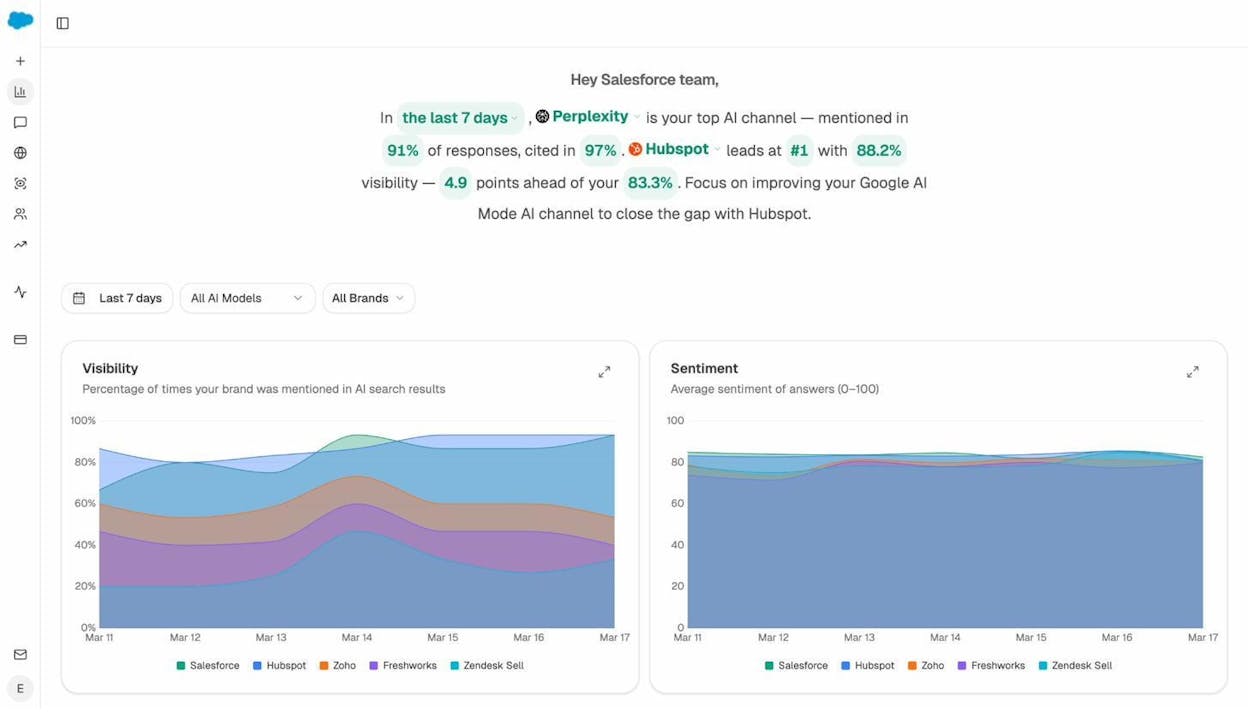
This gives you a snapshot. You can see which AI model is your strongest channel, which competitor leads, and where you need to focus.
To go deeper, use the Prompts tab. This shows every prompt you’re tracking, along with your visibility, position, and which competitors are mentioned alongside you:
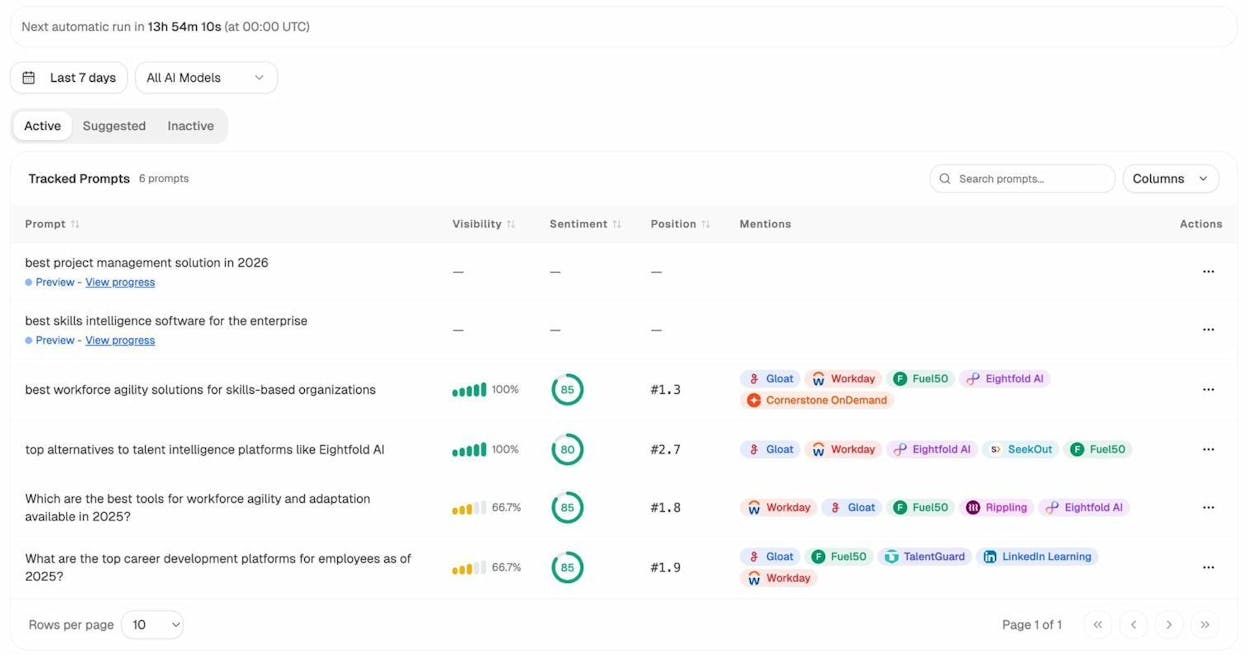
The Prompts tab is the AI search equivalent of a keyword rank tracker. Each prompt is like a keyword. Your visibility percentage is like your ranking. And the competitors listed beside each prompt show you who you’re competing against for AI mindshare.
Find the Prompts That Matter to Your Business
In SEO, you do keyword research to find what people search for. In AI search, the equivalent is prompt research. You need to find the prompts (questions people ask AI models) that are relevant to your business and track how your brand shows up in the responses.
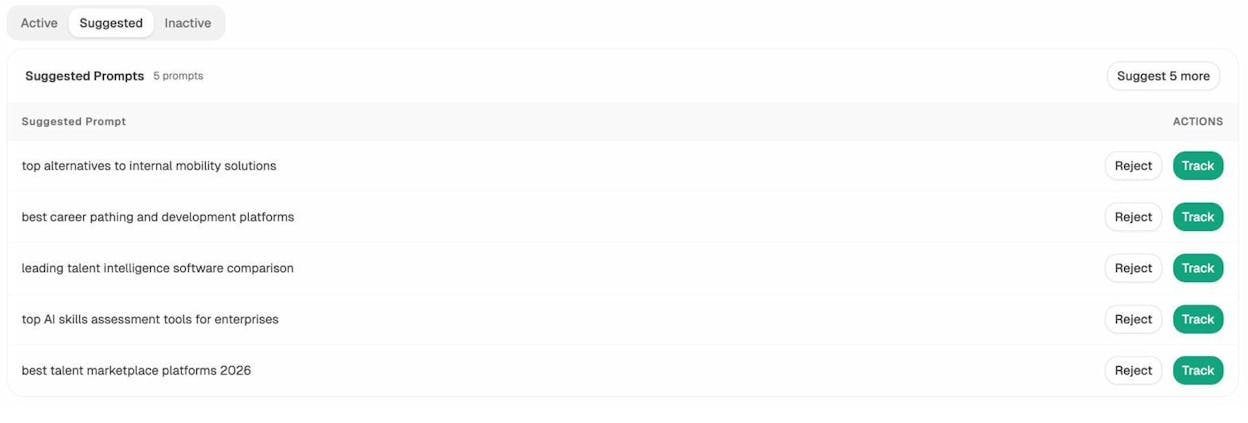
Analyze AI makes this easier with its Suggested Prompts feature. Based on your industry and the prompts you’re already tracking, the platform suggests new prompts you should monitor:
You can also use the Ad Hoc Prompt Search feature to test any prompt on the spot. Type in a question like “what are the best content optimization tools?” and see how AI models respond right now, including which brands get mentioned and which sources get cited:
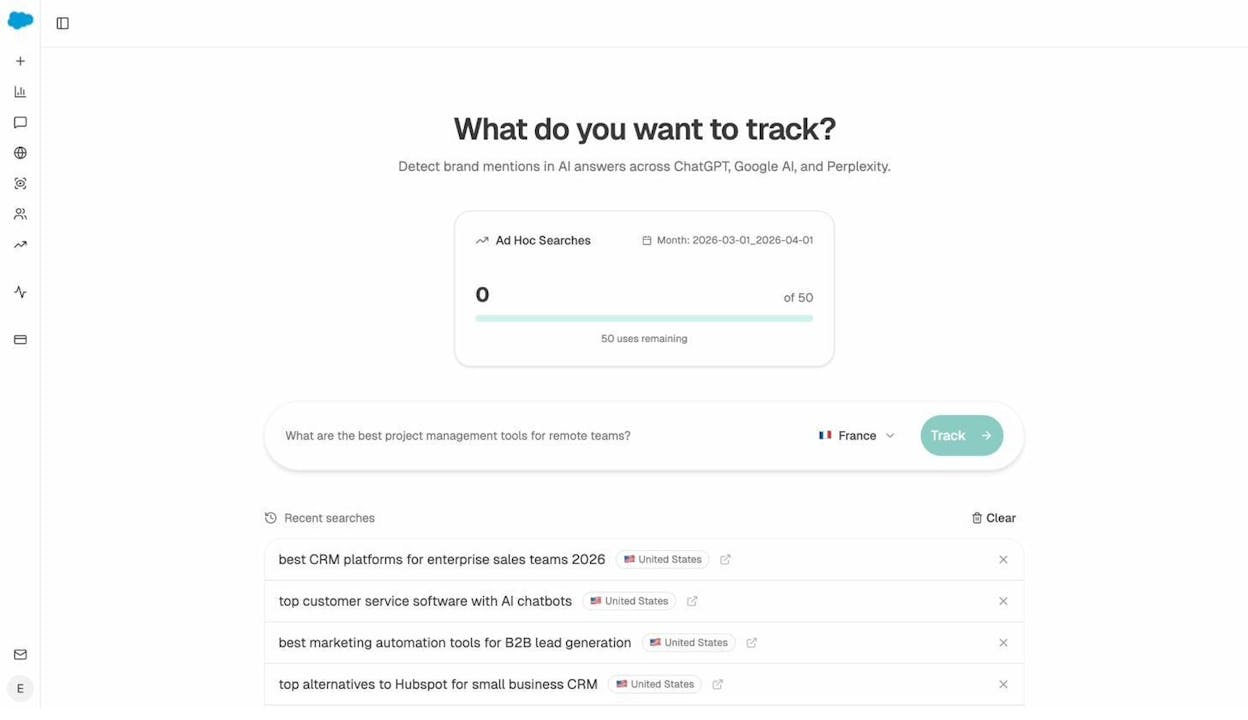
This is powerful for content optimization. If you write an article about content optimization and want to know whether AI models will cite it, you can test the relevant prompts and see where you stand before and after publishing.
Optimize Your Content for AI Citations
AI models don’t rank pages the way Google does. They synthesize answers from multiple sources and cite the ones they pull information from. To get cited, your content needs to have certain qualities.
Here’s what makes content citable by AI models:
Direct, clear answers. AI models extract information from content that provides direct answers to questions. If your page buries the answer in paragraph eight, behind a wall of anecdotes, the model might skip it in favor of a page that answers the question in the first paragraph.
Structured content. Headings, subheadings, lists, and tables make it easier for AI models to identify and extract specific pieces of information. Think of your content as a database of answers organized by topic.
Authoritative sources and data. AI models weigh the credibility of sources. Content that includes original data, cites reputable studies, and links to authoritative external sources signals expertise.
Comprehensive coverage. Models prefer sources that cover a topic fully. If a model needs to answer a complex question, it’s more likely to cite a comprehensive guide that covers all angles than a thin post that covers only one.
Entity clarity. Mention specific tools, people, companies, and concepts by name. AI models use named entities to connect information. If you write about “our tool” without naming it, models can’t associate the information with your brand.
Analyze Your Sources and Citations
One of the most actionable features for content optimization is understanding which sources AI models cite in your industry. The Sources tab in Analyze AI shows you every URL and domain that AI platforms reference when answering questions in your space:
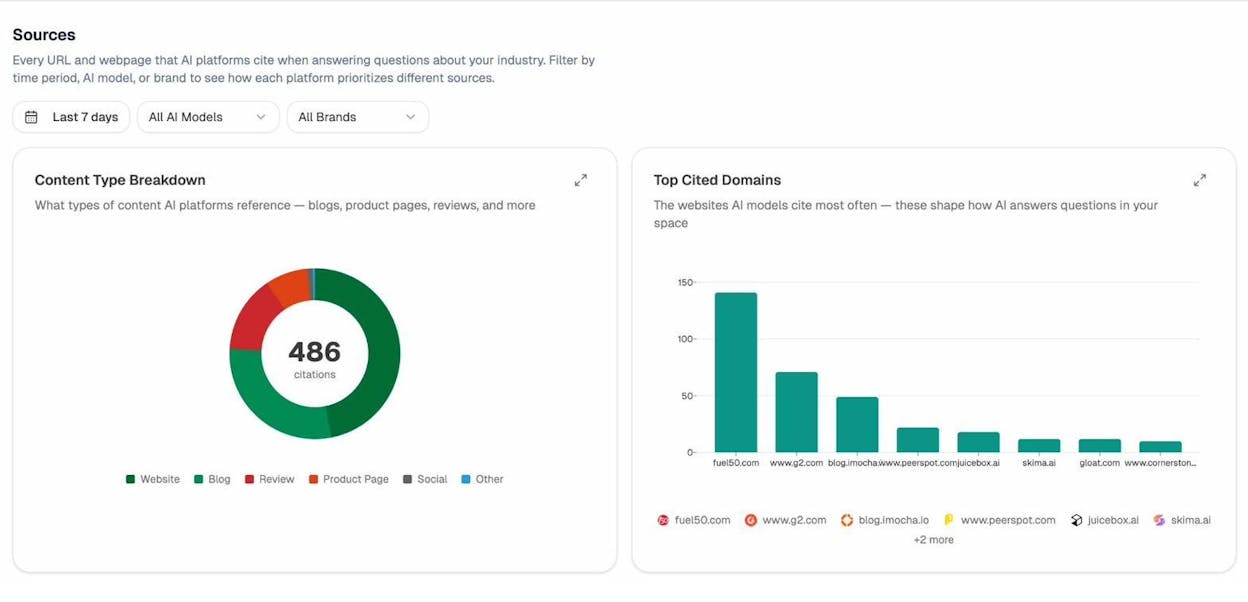
This data is gold for content optimization. If you see that AI models heavily cite G2 reviews and Wikipedia in your space, you know that getting listed on G2 and ensuring your Wikipedia presence is accurate will improve your AI visibility.
You can drill down by AI model to see which sources each platform trusts most:
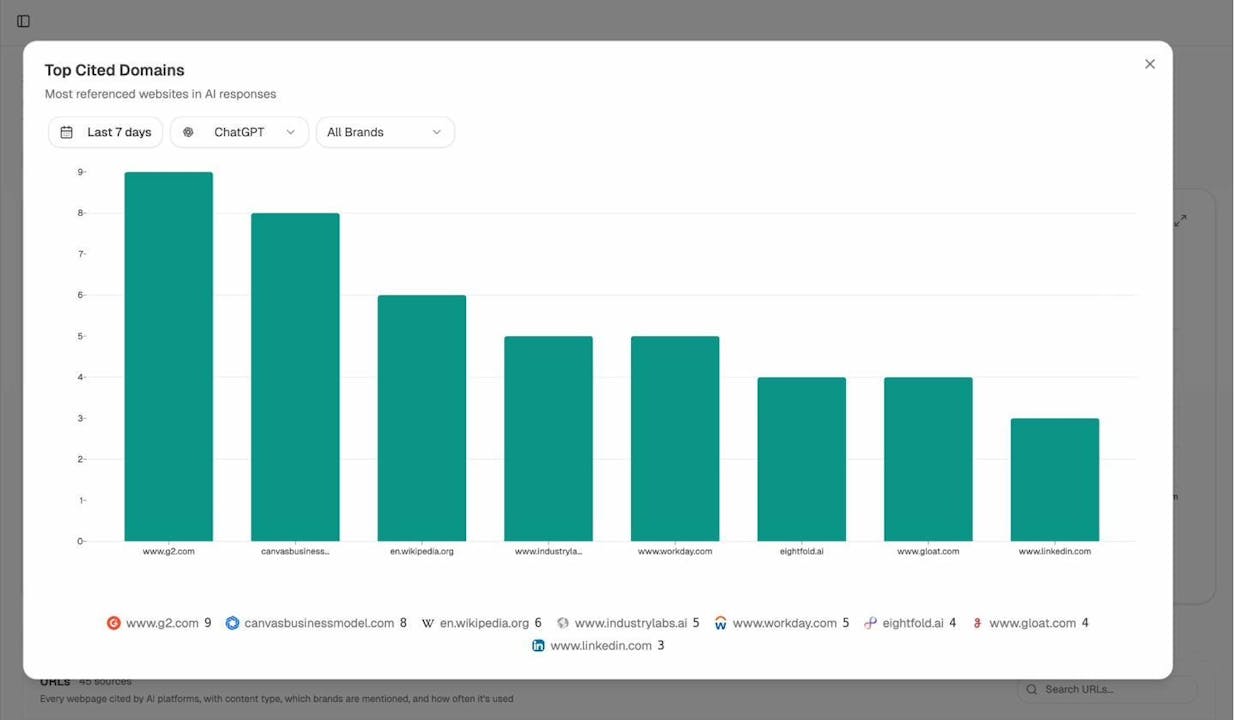
This tells you where to focus your off-page efforts. If Perplexity heavily cites a specific industry blog, getting mentioned or linked from that blog will increase your chances of appearing in Perplexity’s answers.
Study Your Competitors in AI Search
Just like SEO, AI search optimization requires competitive intelligence. You need to know who’s winning the prompts that matter to your business and why.
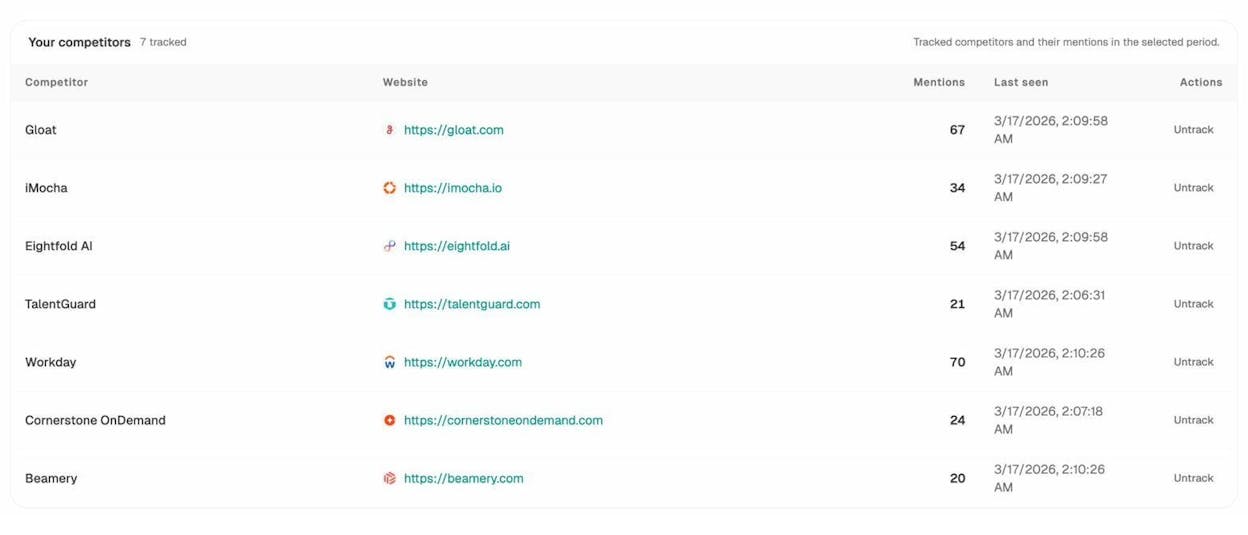
Analyze AI’s Competitors tab shows you who appears alongside your brand in AI responses, how often they’re mentioned, and how their visibility compares to yours:
The platform also suggests competitors you might not be tracking yet. These are brands that frequently appear in AI responses alongside you:
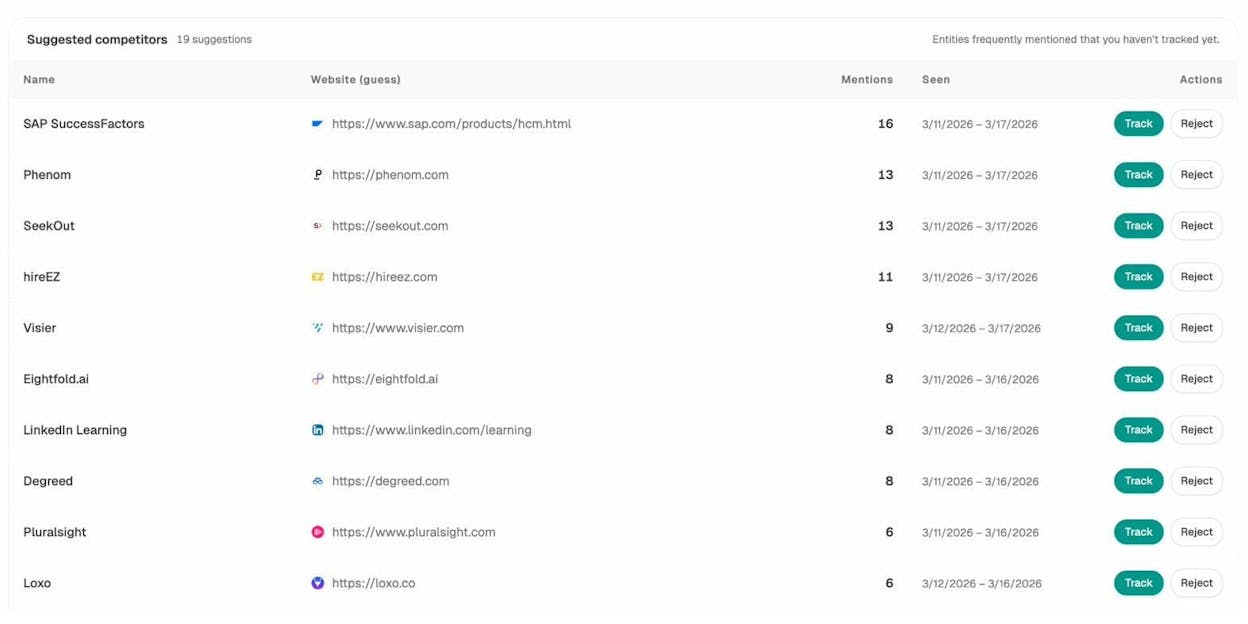
For content optimization, this competitive data tells you which pages and topics your competitors are winning on. If a competitor is cited more often for “content optimization tools” prompts, you need to audit their content for those topics and create something better.
Understand How AI Perceives Your Brand
AI models don’t just mention brands. They describe them. And those descriptions carry sentiment — positive, neutral, or negative. Understanding how AI models perceive your brand helps you shape your content strategy.
Analyze AI’s Perception Map visualizes where your brand and competitors sit on two axes: visibility (how often you’re mentioned) and narrative strength (how compelling the story AI tells about you is):
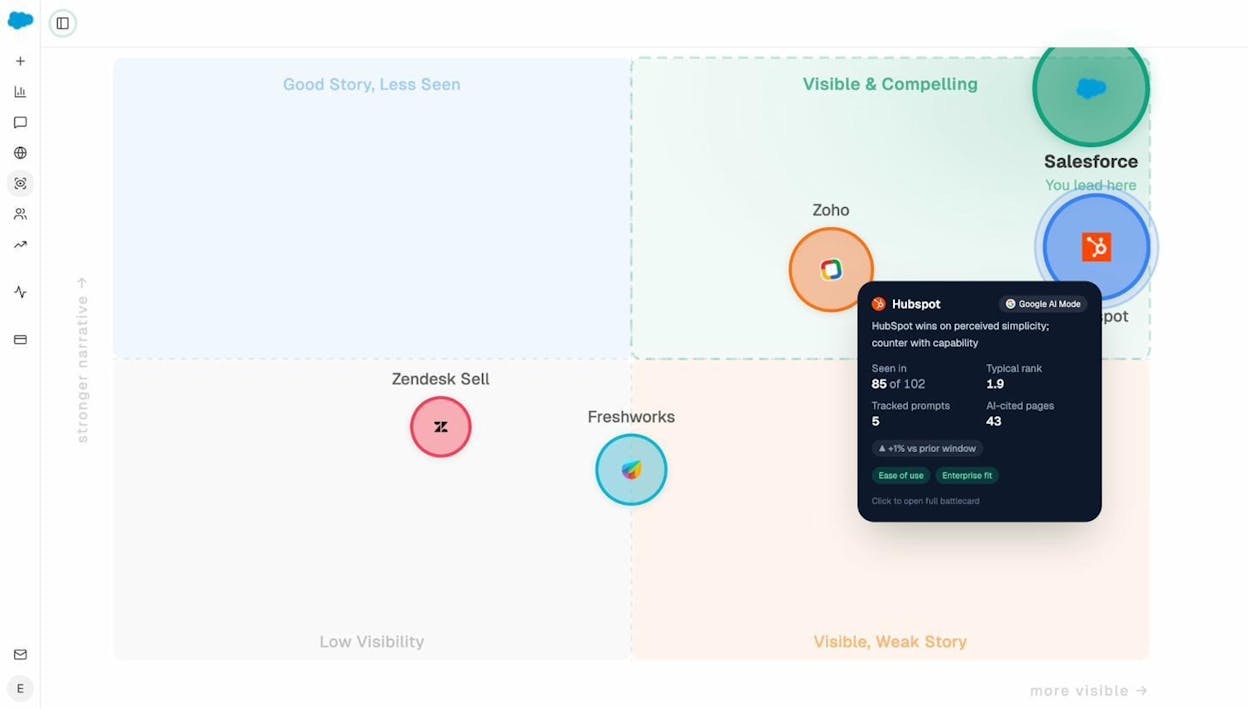
Brands in the “Visible & Compelling” quadrant (top right) are getting mentioned frequently with positive, detailed descriptions. Brands in “Visible, Weak Story” (bottom right) are mentioned often but described generically.
This matters for content optimization because the content you publish shapes how AI models describe you. If your content is generic and thin, AI models will describe you generically. If your content demonstrates unique expertise, methodology, or data, AI models will reflect that in their responses.
Measure and Attribute AI Traffic
The final piece of AI search optimization is attribution. You need to prove that your optimization efforts are driving real traffic.
Analyze AI’s AI Traffic Analytics connects to your Google Analytics (GA4) and shows you exactly how much traffic AI platforms are sending to your site, broken down by engine:
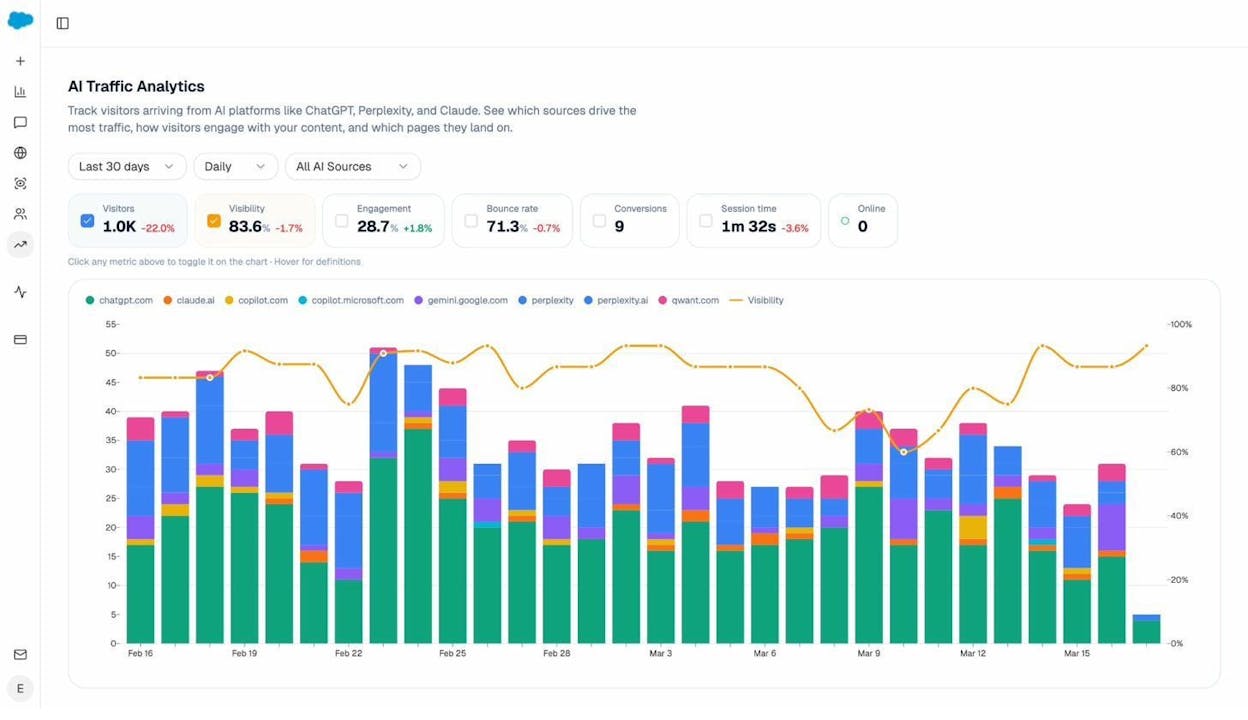
You can see which AI engines drive the most sessions, how engaged those visitors are (bounce rate, session time), and how many conversions come from AI traffic.
Even more powerful is the Landing Pages view. This shows you which specific pages on your site receive AI-referred traffic:
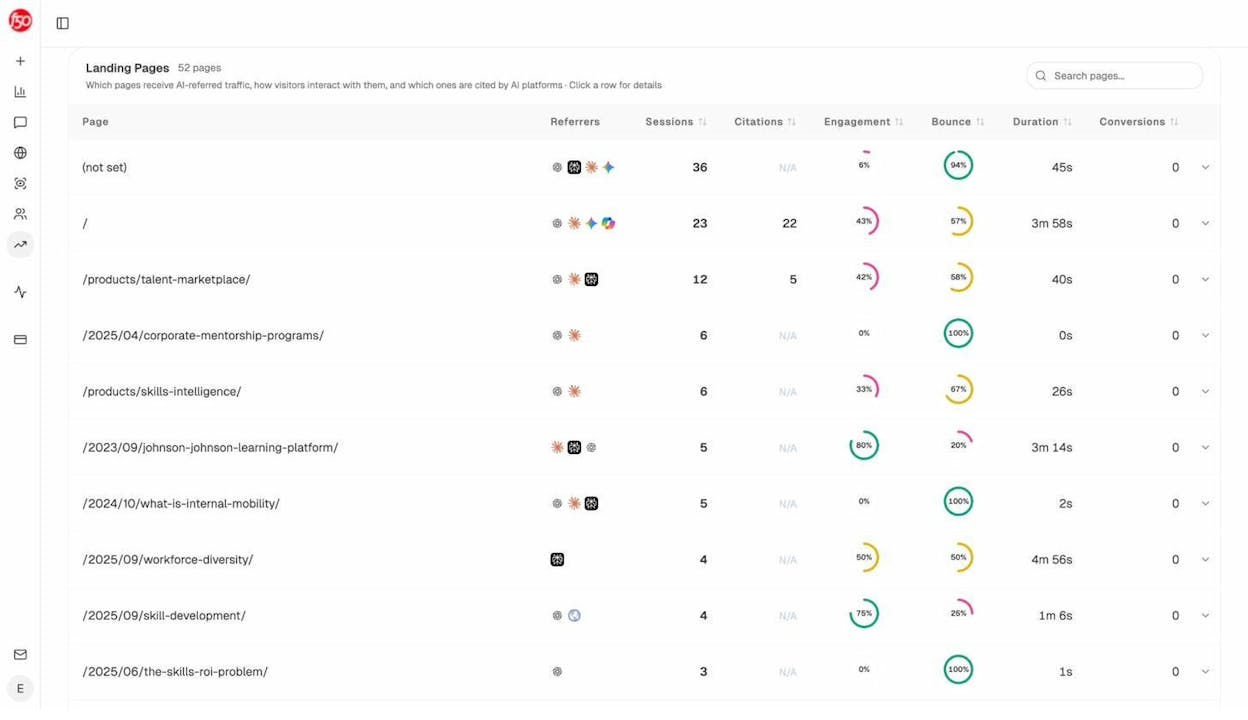
This data is essential for content optimization because it tells you which content formats and topics AI models prefer. If your “Complete Guide to X” gets 36 AI-referred sessions but your “5 Quick Tips for Y” gets zero, that’s a signal. Double down on the comprehensive guides.
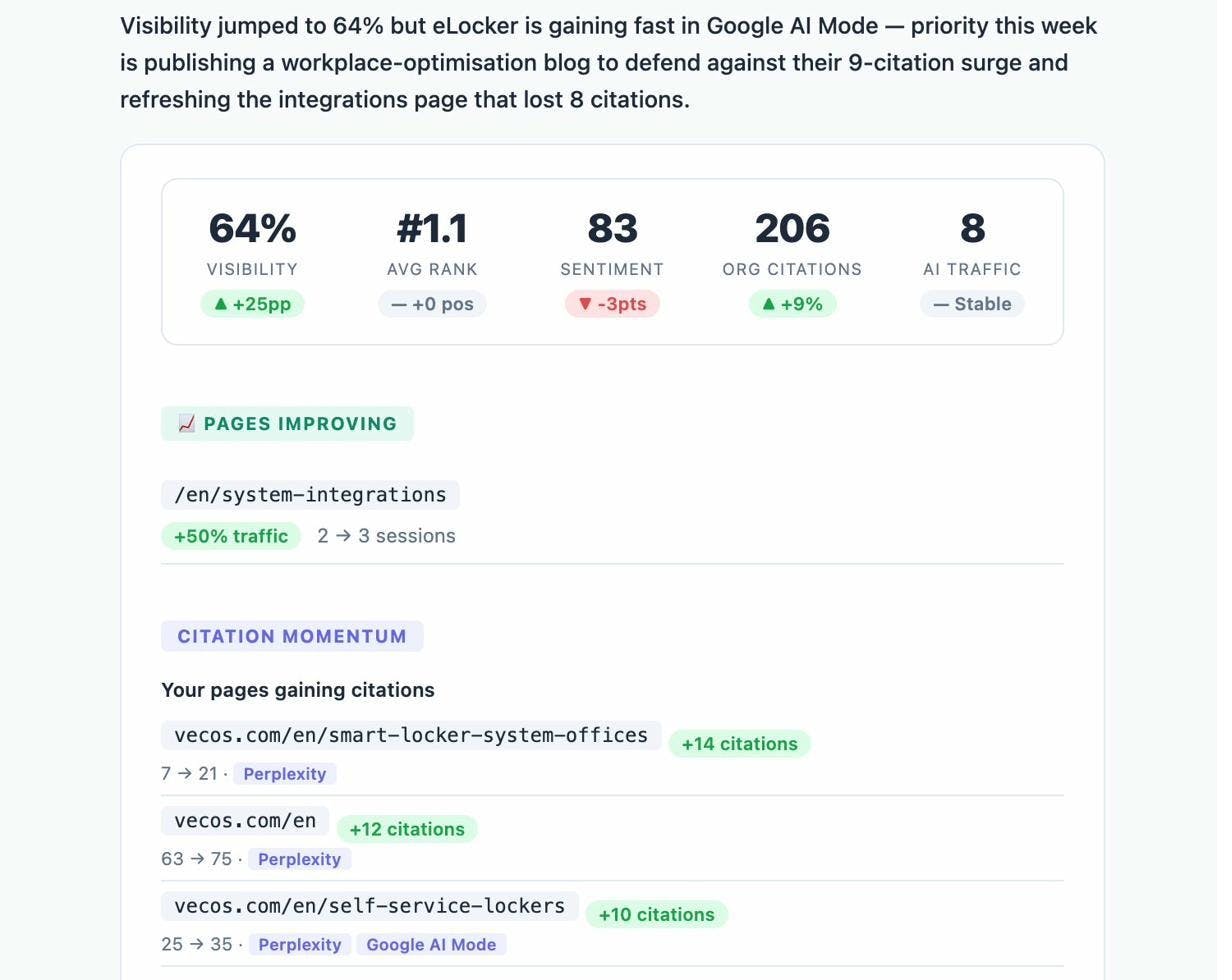
And if you want to stay on top of weekly changes without logging in every day, Analyze AI sends automated weekly briefings that highlight which pages are gaining or losing AI citations, competitor movements, and traffic changes:
How to Optimize Content for Social Shares
The more your content gets shared, the more eyeballs it gets. Social shares also build the brand mentions and web presence that influence both Google rankings and AI search visibility. Here’s how to make your content more shareable.
1. Include Expert Quotes
Original quotes from subject matter experts add credibility to your content and build in organic distribution. When you quote someone in your post, they’re likely to share it with their audience when it goes live.
Here’s how to find the right experts:
Look for active voices in your niche. Search your topic on LinkedIn and X (Twitter). Find people who regularly post about the subject, have engaged followings, and would add genuine insight to your piece.
Make it easy for them to participate. Don’t ask for a 500-word essay. Ask one specific, focused question. The more targeted your ask, the better the quote you’ll get.
Tag them when you publish. When the post goes live, tag the quoted experts on social media. Many will reshare, exposing your content to their entire network.
2. Share Original Insights and Data
Readers share content that contains information they haven’t seen before. Original data, proprietary research, unique frameworks, and first-person case studies all perform well because they give readers something new to share with their networks.
If you have data that nobody else has, use it. Run a study. Survey your customers. Analyze a dataset. These are the pieces that earn links and shares at scale because they can’t be replicated by anyone else.
3. Use Visuals That Communicate
Images aren’t decoration. They should communicate information that’s harder to convey in text alone.
Effective visuals for content optimization include screenshots of tools in action, comparison tables, process flowcharts, and data visualizations. Each visual should have a purpose: making a complex idea simpler, showing a step in a process, or summarizing data at a glance.
When shared on social media, posts with images consistently generate more engagement than text-only posts. A strong visual summary of your article’s key takeaways can become a shareable asset on its own.
How to Measure Content Optimization Success
Optimization without measurement is guesswork. Here’s what to track and how to tell if your optimization efforts are working.
SEO Performance Metrics
Organic traffic. The primary metric. Use Google Search Console or your analytics tool to track how much organic traffic each page receives over time. After optimizing a page, watch the traffic trend over the following 4-8 weeks.
Keyword rankings. Track where you rank for your target keyword and related terms. Tools like Analyze AI’s free Keyword Rank Checker let you check positions quickly.
Click-through rate (CTR). Check CTR in Google Search Console. If a page ranks well but has a low CTR, your title tag and meta description need work.
Impressions. Rising impressions without rising clicks means you’re gaining visibility but not enticing clicks. Optimize your title and description.
AI Search Visibility Metrics
AI visibility percentage. What percentage of tracked prompts include your brand in the response? Track this over time in a tool like Analyze AI.
AI-referred sessions. How many visitors are arriving from ChatGPT, Perplexity, Gemini, and other AI platforms? This is the traffic impact of your AI optimization.
Citation count. How many times are AI models citing your pages? More citations generally correlate with more AI-referred traffic.
Sentiment score. Are AI models describing your brand positively? A high visibility score with negative sentiment is worse than lower visibility with positive sentiment.
Conversion Metrics
Conversion rate. What percentage of visitors from organic search and AI referrals complete your desired action (signup, demo request, purchase)?
Business potential coverage. What percentage of your content targets keywords with a business potential score of 2 or 3? If most of your content is low-business-potential traffic, you might be optimizing the wrong pages.
What to Avoid When Optimizing Content
Not every optimization technique is worth your time. Some can actively hurt you.
Keyword stuffing. Cramming your target keyword into every paragraph makes your content unreadable and can trigger Google’s over-optimization penalties. Write naturally. Use your keyword in the title, the first paragraph, a few headings, and let it appear organically in the body.
Writing for length instead of depth. A 5,000-word article that repeats itself and pads every section with generic advice is worse than a 2,000-word article that covers the topic thoroughly with specific, actionable information. Google and readers don’t reward length. They reward completeness and usefulness.
Aggressive sales tactics in content. If every other paragraph pushes a product signup, readers leave. Content marketing works because it leads with value. The sales pitch should feel like a natural extension of the value, not an interruption.
Clickbait headlines. Sensational titles that overpromise create a gap between expectation and reality. Readers who feel tricked leave quickly, which increases bounce rates and hurts rankings.
Ignoring AI search entirely. Some marketers dismiss AI search because it currently drives a small percentage of overall traffic. This is like dismissing Google in 2003. The channel is growing, and the brands that optimize for it now will have a significant head start.
Over-optimizing for AI at the expense of SEO. The opposite mistake. Some companies are so focused on GEO that they neglect fundamental SEO. The best approach is to treat AI search as an additional channel that complements your SEO strategy, not replaces it. This is the core principle behind Analyze AI’s approach: GEO vs SEO is a false choice. You need both.
Content Optimization Tools
The right tools make the optimization process faster and more systematic. Here are tools worth considering for each stage of the process.
|
Tool |
What It Does |
|---|---|
|
Tracks AI search visibility, competitor mentions, source citations, and AI-referred traffic. Connects to GA4 for attribution. |
|
|
Free tool for finding keyword ideas with volume and difficulty data. |
|
|
Free tool to check how competitive a keyword is before targeting it. |
|
|
Free tool to analyze the current search results for any keyword. |
|
|
Free tool to find and fix broken links on your site that hurt UX and SEO. |
|
|
Free tool to estimate any website’s traffic volume. |
|
|
Free tool to check domain authority for backlink prospecting. |
|
|
Free tool for video SEO keyword research. |
|
|
Free tool from Google to monitor indexing, rankings, and clicks. Essential for any SEO workflow. |
|
|
Free tool to test Core Web Vitals and page speed, with specific recommendations for improvement. |
|
|
Highlights complex sentences, passive voice, and readability issues. |
|
|
Validates your schema markup and shows which rich results your page is eligible for. |
For a more comprehensive list, see our roundup of content marketing tools and AI content optimization tools.
Final Thoughts
Content optimization is not a one-time task. It’s an ongoing process. The content that ranks today might slip tomorrow as competitors publish better versions or as search behavior shifts.
The most important shift happening right now is that content optimization is no longer just about Google. AI search engines are a growing channel that rewards the same fundamentals — depth, clarity, authority, and usefulness — but surfaces them differently. The companies that treat AI search as a complementary organic channel alongside SEO, not a replacement for it, will build the most durable visibility.
Start with the fundamentals. Target the right keywords. Match search intent. Cover topics completely. Make your pages fast and readable. Build links and brand mentions. Measure your results.
Then layer on AI search optimization. Track your visibility across AI models. Study which sources get cited. Monitor your competitors. Attribute AI traffic to specific pages. Double down on what works.
If you want to see where your brand stands in AI search today, Analyze AI shows you exactly that — across ChatGPT, Perplexity, Claude, Gemini, Copilot, and Google AI Mode.

Ernest

Ibrahim


