



Summarize this blog post with:


In this article, you’ll learn what secondary keywords are, why they matter for both Google and AI answer engines like ChatGPT, Perplexity, and Claude, and exactly how to find and use them so a single page earns rankings for many related queries instead of just one. You’ll also see how to track which secondary keywords drive real traffic, including the slice that now comes from AI search.
Table of Contents
What Are Secondary Keywords?
Secondary keywords are search terms closely related to the primary keyword a page is built around. They are usually synonyms, common variations, or longer phrasings of the same idea.
If your primary keyword is “running shoes for flat feet”, your secondary keywords might include:
-
“best shoes for flat feet runners”
-
“running shoes with arch support”
-
“stability running shoes for flat feet”
-
“running shoes for fallen arches”
-
“running shoes for overpronation”
Each phrasing expresses roughly the same intent. Anyone typing one of them is shopping for the same kind of product. That overlap is what makes secondary keywords useful.
When you cover these variations naturally in one piece of content, search engines treat the page as a thorough answer to the topic, not a thin match for one query. The result is one page that ranks for many terms at once instead of five thin pages that compete with each other.
Why Secondary Keywords Matter for SEO (and Now AI Search)
Secondary keywords are not new. What changed is the payoff for using them well. Three forces are pushing in the same direction.
Search engines reward topical depth
Google has spent the last decade rewarding pages that cover a topic in full. Hummingbird (2013) shifted the focus from keyword matching to intent matching. BERT (2019) added a much better grasp of phrasing and context. Both updates favor pages that read like real explanations and not pages that repeat one phrase 30 times.
Secondary keywords are how you signal that depth without changing how you write. If your article on flat-feet running shoes naturally explains arch support, overpronation, and stability features, you cover the topic the way a knowledgeable person would and rank for all of those queries as a side effect.
One page can earn far more rankings than its primary
Our analysis of keyword diversification shows that the average page on the first page of Google ranks for many other related terms at the same time. Your page is rarely a one-keyword winner, and the size of its catch depends on how many related phrases the content addresses well.
AI answer engines pull from comprehensive content
The same depth that helps Google rankings is what gets your page surfaced inside ChatGPT, Perplexity, Claude, Gemini, and Google AI Overviews. We do not believe AI search is replacing SEO. We see it as another organic channel layered on top of search. The same content that earns Google rankings for “running shoes for flat feet” is the content that gets cited when a user asks Perplexity, “what running shoes work for flat feet without breaking down after 200 miles?”
The prompt is just a more conversational version of a secondary keyword. The page that covers the topic well wins both channels. For more on how the two channels interact, see our piece on GEO vs SEO.
Secondary Keywords vs Other Keyword Types
Three terms get used interchangeably and they are not the same thing. Here is a quick view.
|
Term |
Relationship to Primary |
Example (Primary: “running shoes”) |
|---|---|---|
|
Secondary keyword |
Same intent, different phrasing |
“running shoes for women”, “best running shoes 2026” |
|
Long-tail keyword |
Longer, more specific query |
“running shoes for marathon training over 40” |
|
LSI / related keyword |
Topically related, different intent |
“shin splints”, “Boston marathon”, “Brooks vs Hoka” |
The lines blur. A long-tail keyword can also be a secondary keyword if it shares intent. An LSI keyword usually cannot, because it points at a different question. For deeper coverage of these distinctions, see our guides on LSI keywords and long-tail keywords.
How to Find Secondary Keywords
You can find secondary keywords using nothing but Google and a spreadsheet. Adding a paid tool speeds it up. Adding AI search analytics surfaces a layer most teams miss entirely.
Here are five methods, ordered from free and simple to advanced.
Method 1: Mine the SERP using Google itself
Start with the search engine you are trying to rank in. It is also the best free keyword research tool you have.
Autocomplete
Type your primary keyword into Google and watch the suggestions. They reflect what real people search for.
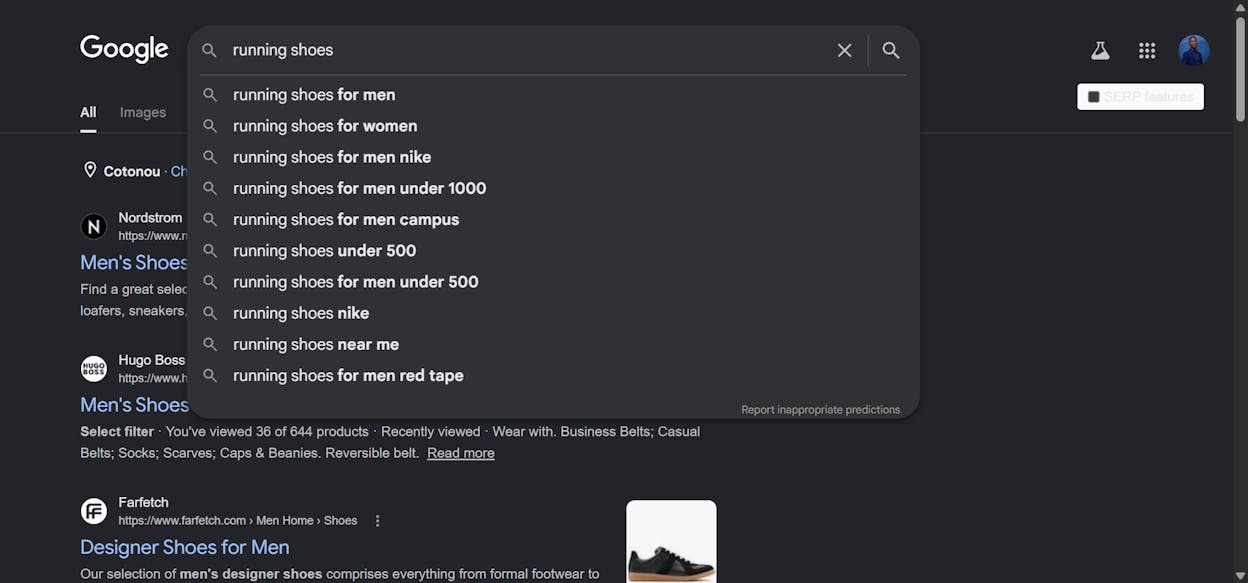
To expand the list, append modifiers one letter at a time:
-
“running shoes for a…”
-
“running shoes vs…”
-
“best running shoes…”
-
“how to choose running shoes…”
Each prefix and suffix surfaces a different cluster of secondary keywords.
People Also Ask
Scroll past the top results. The “People Also Ask” box lists questions Google has decided are related to your query.
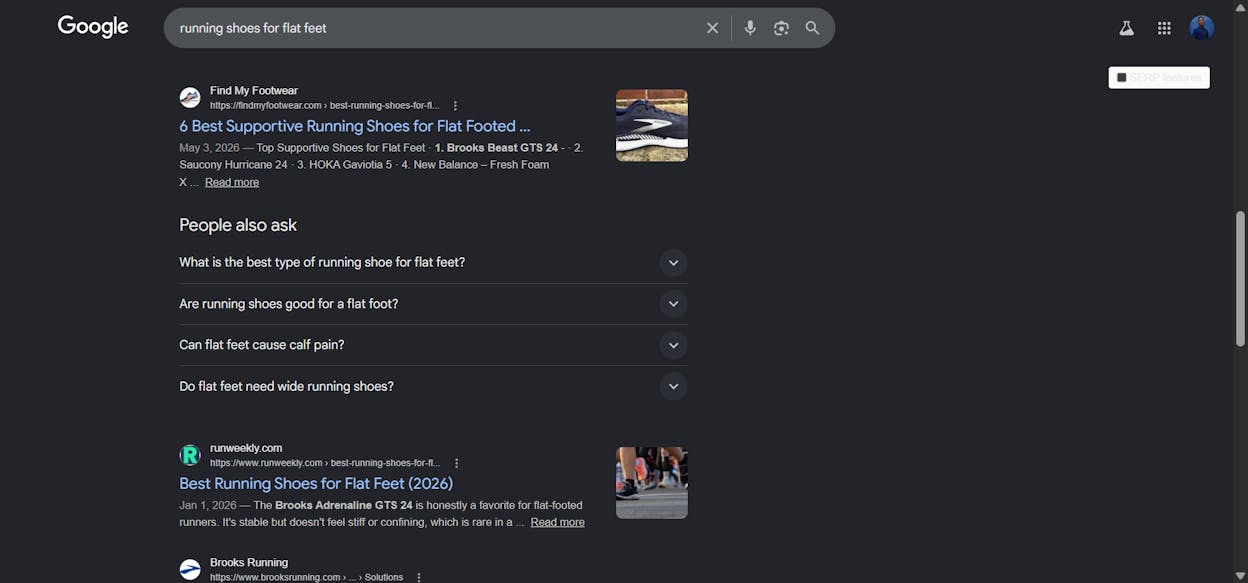
Click any question and Google adds more below. You can mine this section for hours and walk away with dozens of secondary keywords plus subhead ideas. For a deeper read on this feature, our guide on People Also Ask covers when to chase those boxes and when to ignore them.
Related Searches
Scroll to the bottom of the results page. The “Related searches” block shows queries that other users searched for after running yours.
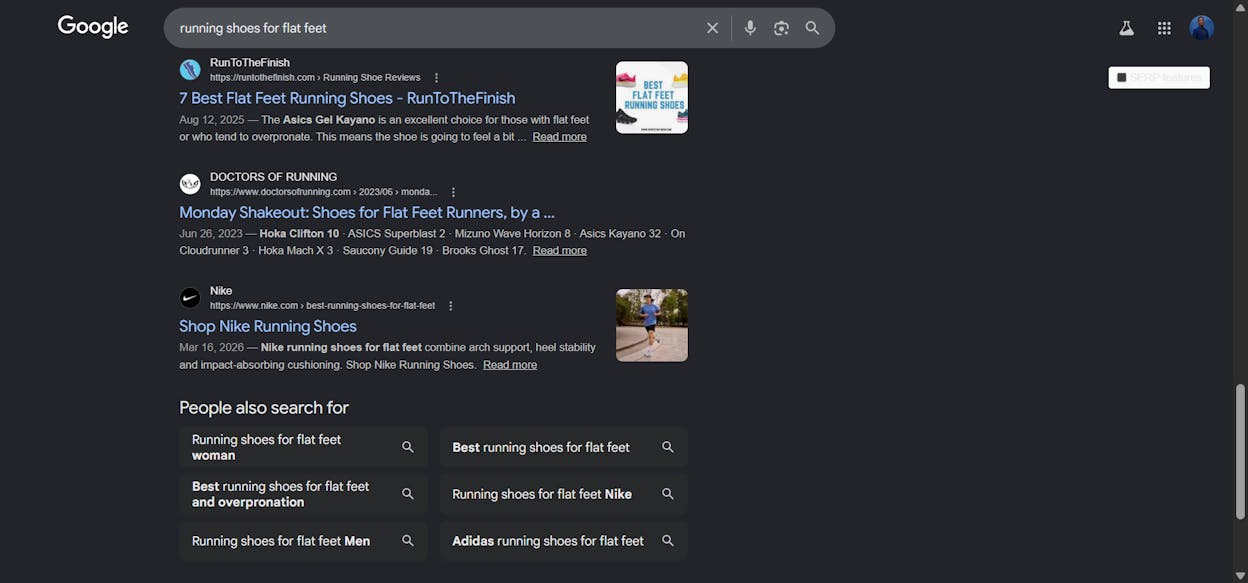
You will sometimes see overlap with Autocomplete. The unique ones are usually high-value.
Validation
Before you commit to a term, search it. If the top results overlap heavily with your primary keyword’s results, the term is a real secondary keyword. If the results are completely different, the intent is different and you should target it on a separate page.
Method 2: Use a keyword research tool
Google’s free features tell you what people search for. Keyword tools tell you how often, how hard each one is to rank for, and which terms are worth your time.
Free tools
You can use Google Keyword Planner (inside Google Ads) to see search volume ranges and competition levels for related terms.
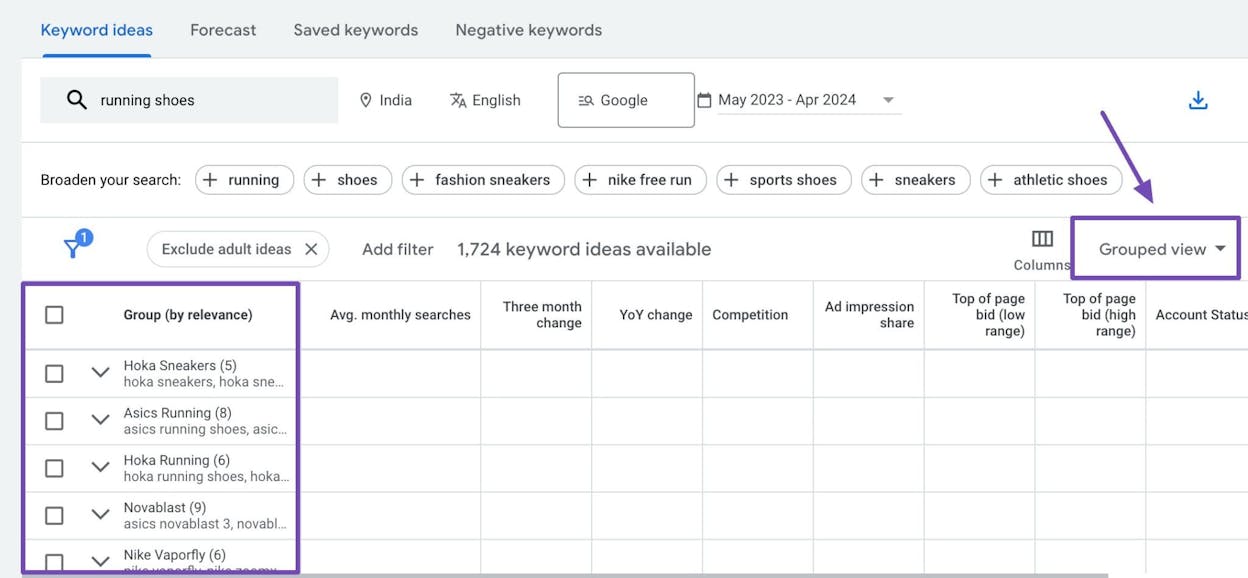
The ranges are not exact, but they separate high-volume terms from low-volume ones, which is what you actually need at this stage.
You can also use Analyze AI’s free keyword generator tool and the keyword difficulty checker to expand a list and prioritize without paying for a full SEO suite.
Paid tools
Tools like Ahrefs and Semrush give you exact volumes, keyword difficulty scores, click-through estimates, and SERP feature breakdowns. They also surface “matching terms” and “related keywords” reports automatically.
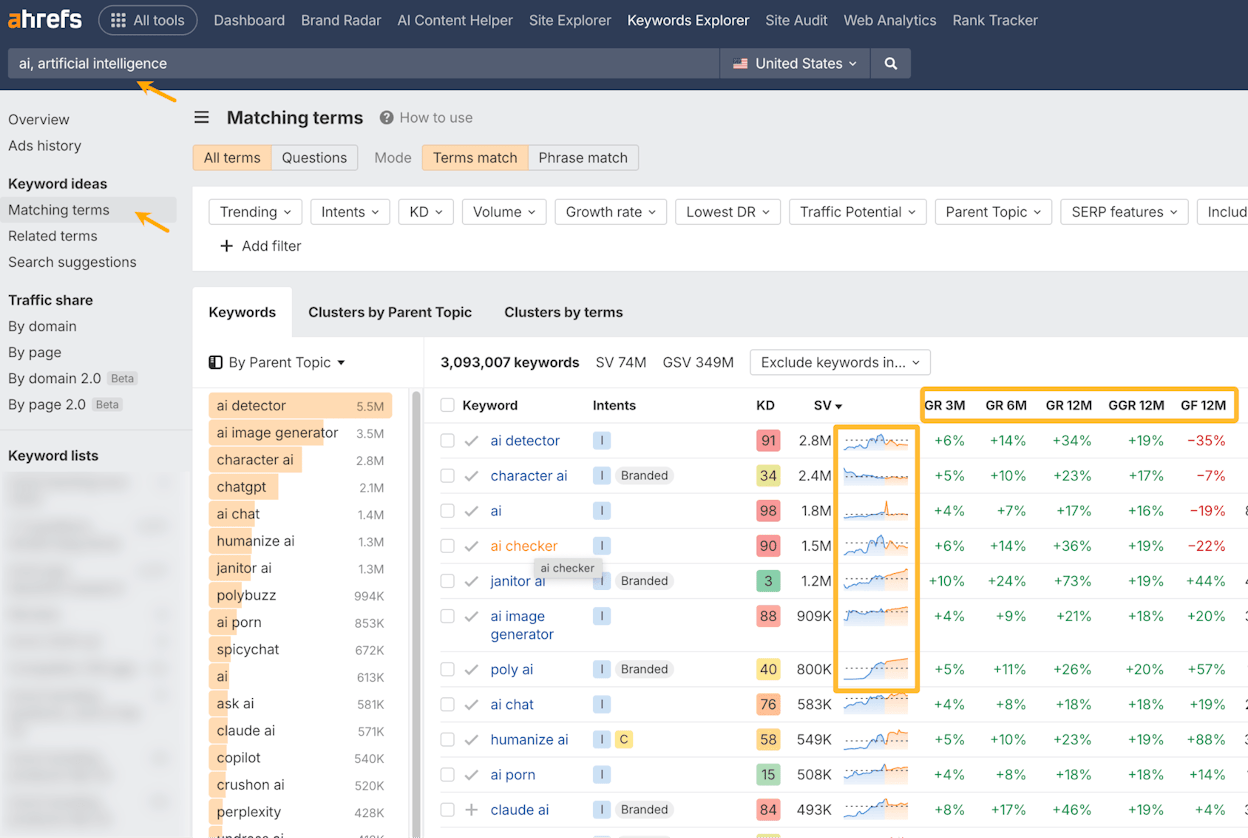
If your team already pays for one of these, use it. If not, the free options above will get you 80% of the way.
AnswerThePublic
For question-based secondary keywords (the ones that make great H2 and H3 headings), AnswerThePublic visualizes related questions in a wheel format.
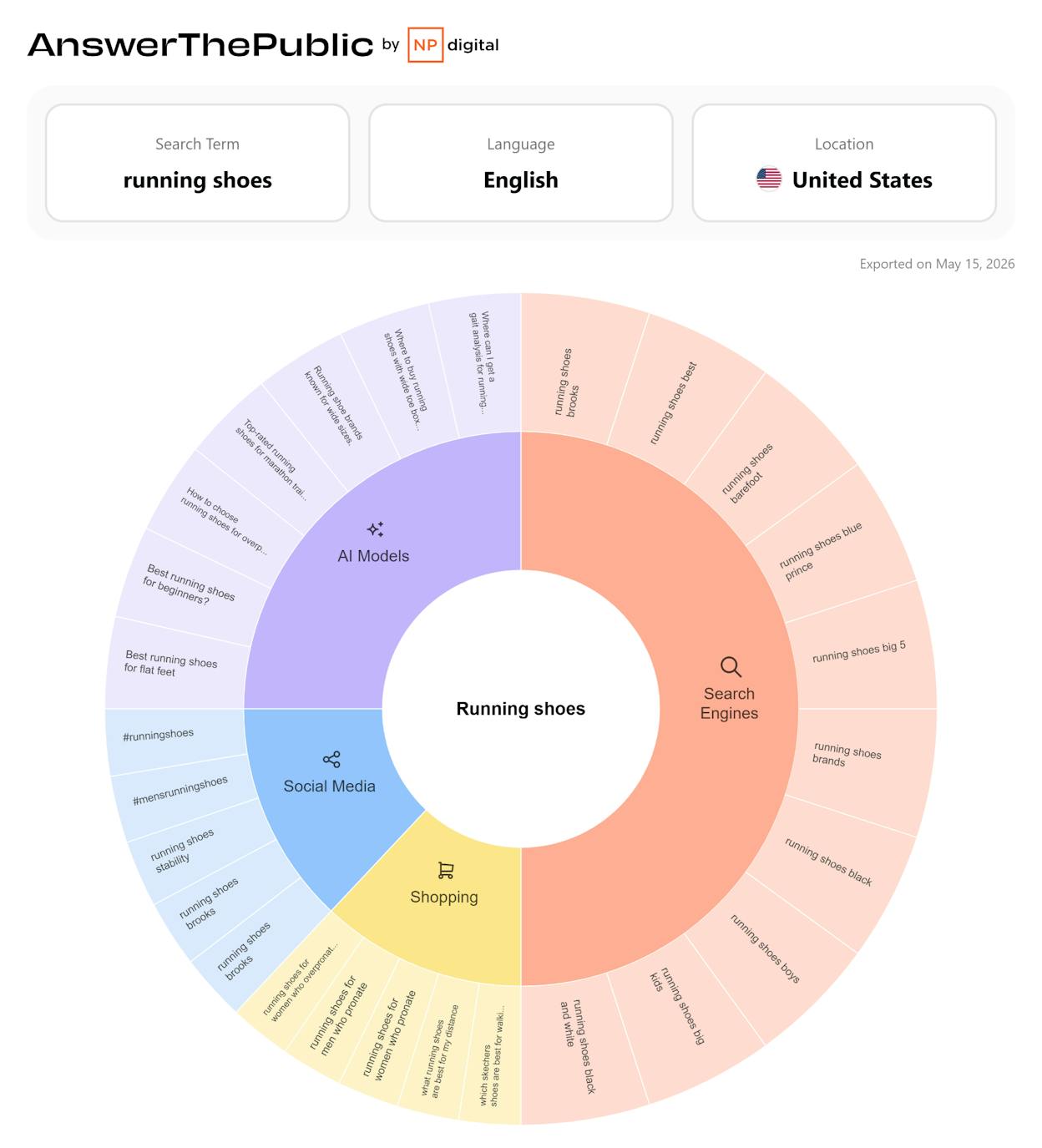
The free version limits daily searches but is more than enough for a single article.
Method 3: Mine your own Search Console
If your page is already published, Google Search Console is the underused secondary keyword source you have.
Open Performance > Search Results. Filter by the page URL. You will see every query that page already ranks for.
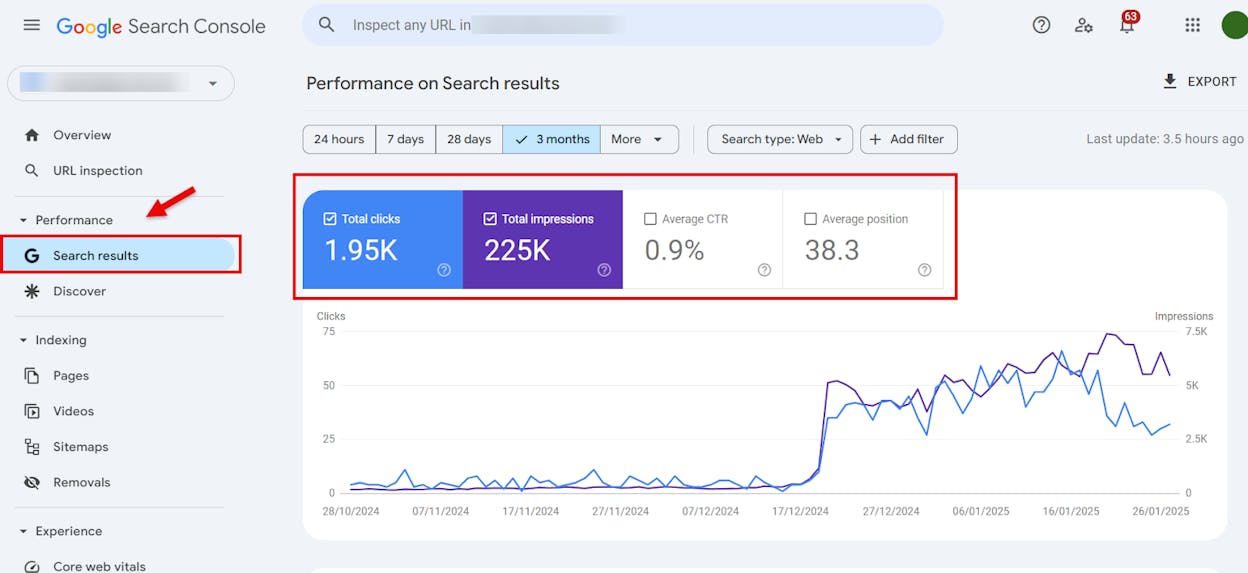
Sort by Impressions. Look for queries where the page ranks position 8 to 20 with decent impressions but low clicks. Those are secondary keywords you almost rank for. Reworking the relevant section of the page to address them more directly often pushes them onto page one.
You will also find queries you never targeted at all that send some traffic. If the intent matches your existing page, fold them in. If it differs, that is a signal to write a new piece. Our deeper read on GSC hidden queries walks through this audit step by step.
Method 4: Mine AI search prompts
This is the layer most secondary keyword guides skip. AI engines do not respond to “running shoes for flat feet”. They respond to:
-
“What running shoes work best for flat feet without breaking down quickly?”
-
“Comparing Brooks Adrenaline vs Hoka Arahi for overpronators”
-
“What shoes should I get if I have flat feet and shin splints?”
Each one is a secondary keyword in prompt form. They are longer, more conversational, and far more specific. If your content addresses these specific angles, you are far more likely to be cited when those prompts are asked.
Analyze AI’s Prompt Tracking lets you see which prompts mention you, which mention competitors but not you, and which prompts you should be tracking but aren’t.
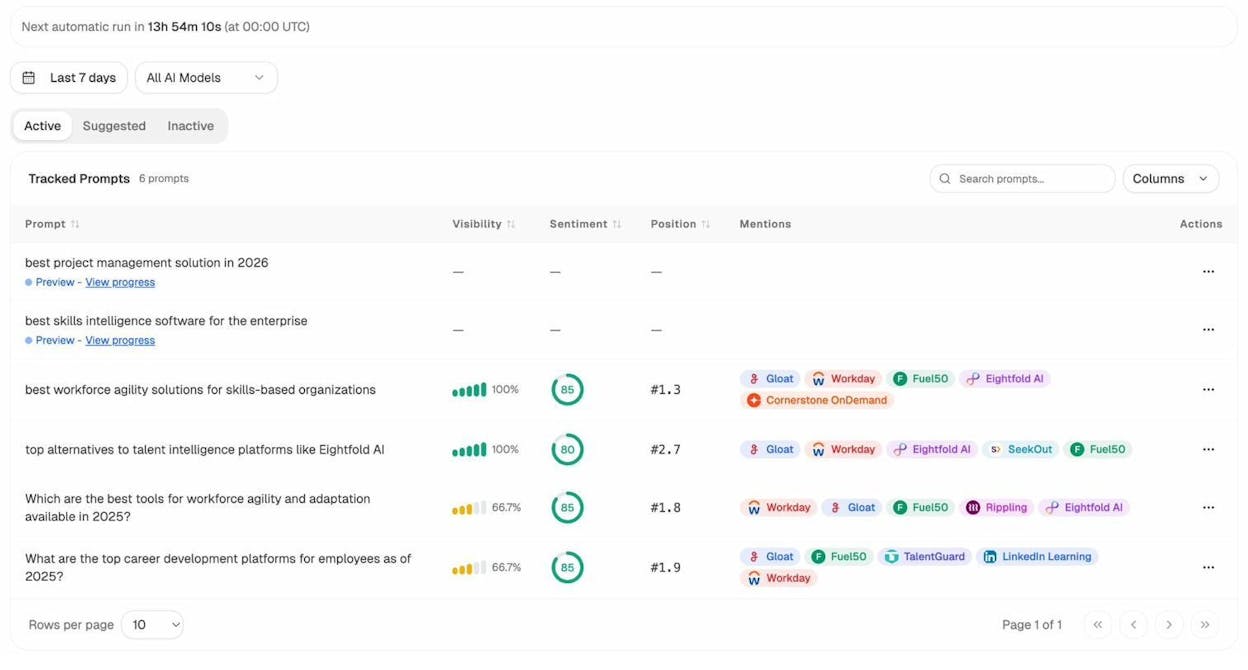
The Prompt Discovery feature suggests prompts based on your industry and existing tracking. These suggestions surface secondary keywords you would not pull from any traditional keyword tool.
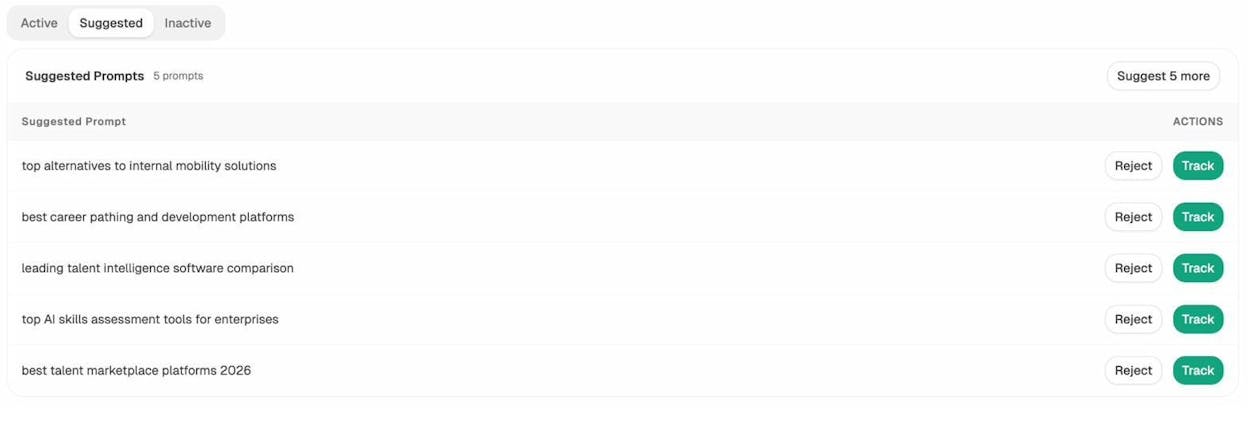
For competitive prompts where rivals get cited and you don’t, the Competitor Intelligence dashboard maps the gap directly.
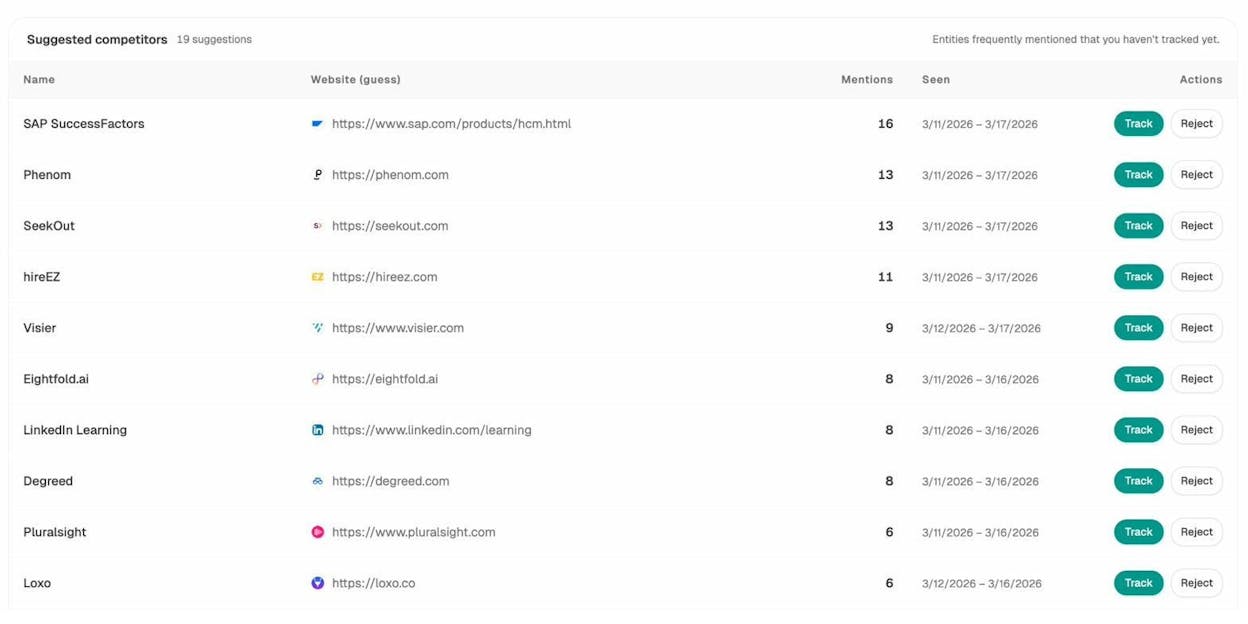
If a prompt related to your product consistently cites a competitor and not you, the prompt itself is a secondary keyword you should write content for.
Method 5: Talk to humans
Keyword tools show you what is already searched. They do not show you what your customers actually call your product, or how prospects describe problems on a sales call before they ever hit Google.
Ask your sales team:
-
What words do prospects use to describe their problem on the first call?
-
Which alternative products come up most often?
-
What questions repeat?
Ask your support team the same questions. Read three Reddit threads in your niche. Spend ten minutes in a relevant Slack community.
The phrases you collect this way often have zero search volume today and become valuable secondary keywords six months from now. They also feed straight into your AI prompt tracking, since they reflect how real people actually ask.
How to Use Secondary Keywords in Your Content
Finding the keywords is half the work. Using them well is the other half.
Write for the reader, layer the keywords second
The cleanest way to use secondary keywords is to forget about them while writing. Cover the topic thoroughly. Address the questions a real reader would have. Most secondary keywords appear naturally because they are part of the topic.
After the draft is done, run your secondary keyword list against it. If important terms are missing, look for natural places to add them. If a term still does not fit anywhere, drop it. The page is not the right home.
Place keywords where they carry weight
Some locations matter more than others.
Subheadings. A secondary keyword in an H2 or H3 carries weight for ranking and reader scanning. “How to Choose Running Shoes for Flat Feet” packs the primary phrase and a modifier into one heading.
First 100 words. The opening paragraph is where Google and AI engines confirm what the page is about. Include the primary keyword and one or two secondaries here.
Image alt text. Describe images accurately for accessibility. Where it fits, include a relevant keyword. Stuffing alt text helps neither rankings nor blind users. Our guide on alt text for SEO goes deeper on this.
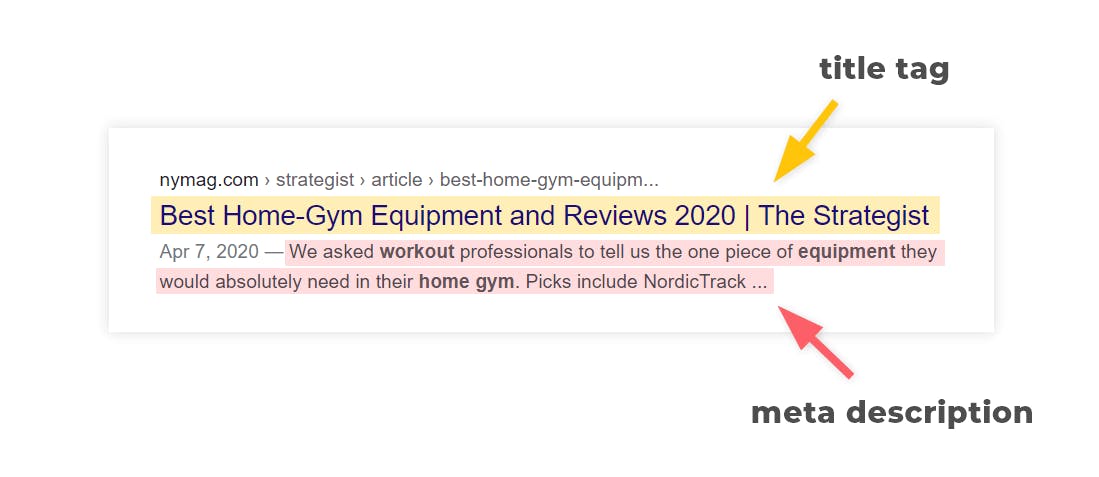
Meta description. Meta descriptions do not directly affect rankings, but they affect click-through. A naturally phrased meta description with one or two secondary keywords makes the result feel relevant for more searches.
Avoid keyword stuffing
There is a clear point where adding more keywords starts hurting. Google’s spam policies call this out explicitly, and stuffed copy reads strangely enough that visitors bounce back to the SERP, which is its own ranking signal.
Read your draft aloud. If you keep tripping over the same phrase or hearing yourself repeat awkward variants, trim. The version that flows when read aloud is the version that ranks.
Optimize against actual gaps, not vibes
Once your draft exists, compare it to what the top 5 ranking pages and AI-cited pages already cover. The Analyze AI Content Optimizer does this in one paste of a URL or draft. It pulls the entities, secondary keywords, and arguments competing pages cover, flags the ones you missed, and suggests where to add them.
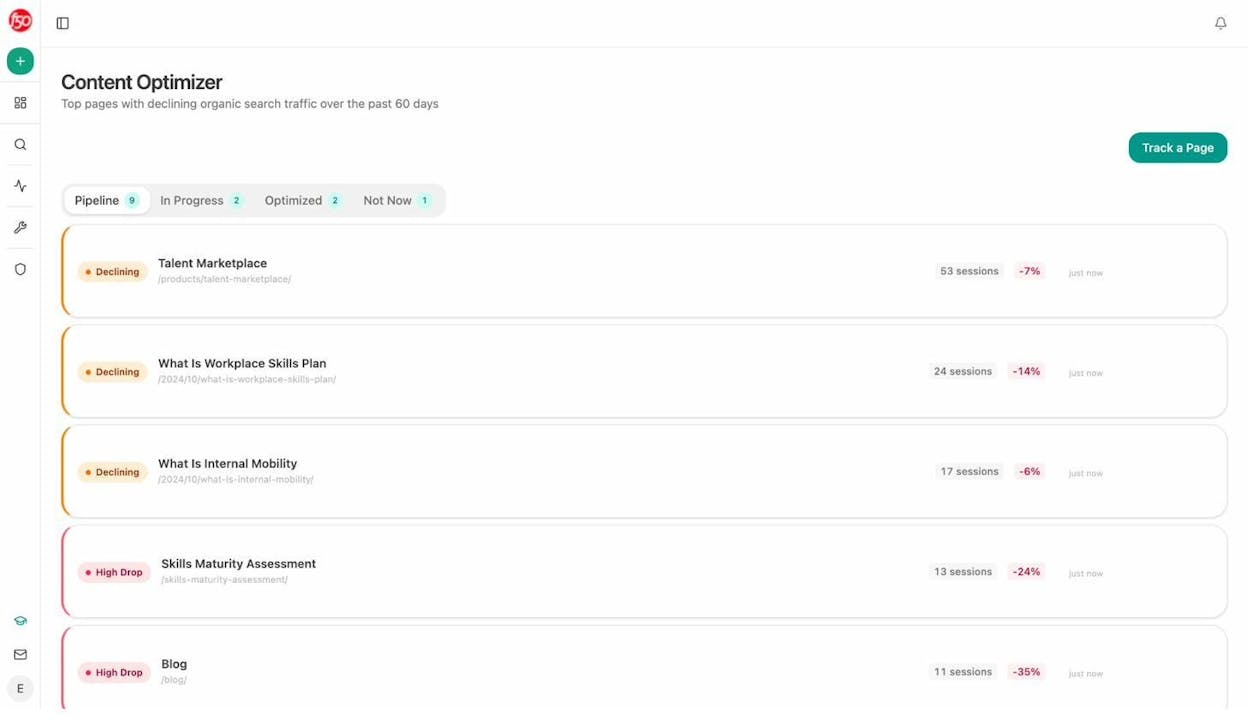
For new pieces, the Analyze AI Content Writer builds the brief, research, and outline with secondary keyword and prompt coverage already mapped, so the draft starts from a complete topical picture.
How to Track Secondary Keyword Performance Across Both Channels
Implementing secondary keywords without tracking them is a wasted exercise. The point is to measure whether a single page earns more rankings, more traffic, and more conversions than it would have without the work.
Track traditional search performance
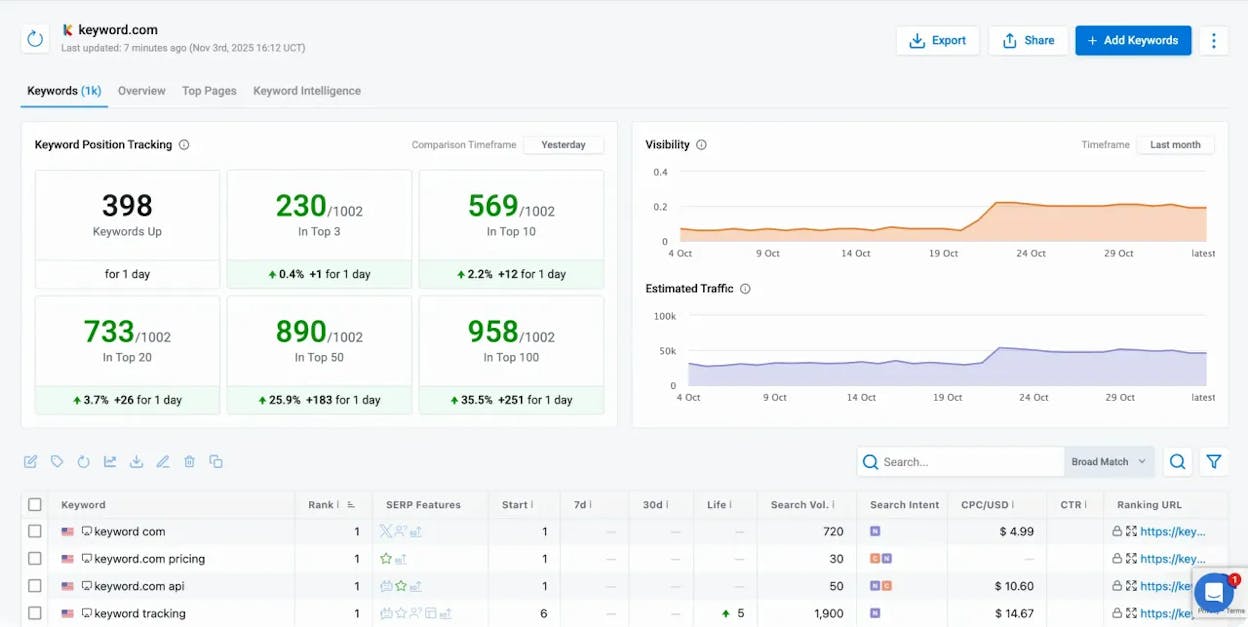
Google Search Console. Re-check the same page you optimized in Method 3 above. Look at the same queries 30 and 60 days after the update. You want impressions up, average position up, and clicks up. Set a comparison period in GSC to make this a one-screen view.
Rank trackers. If you want daily rank movement instead of GSC’s 7-day delays, most rank trackers (or our free keyword rank checker) let you watch primary and secondary keywords side by side.
Track AI search performance
Traditional rank trackers do not see AI engines. For that, you need analytics built for AI search. Two things matter here.
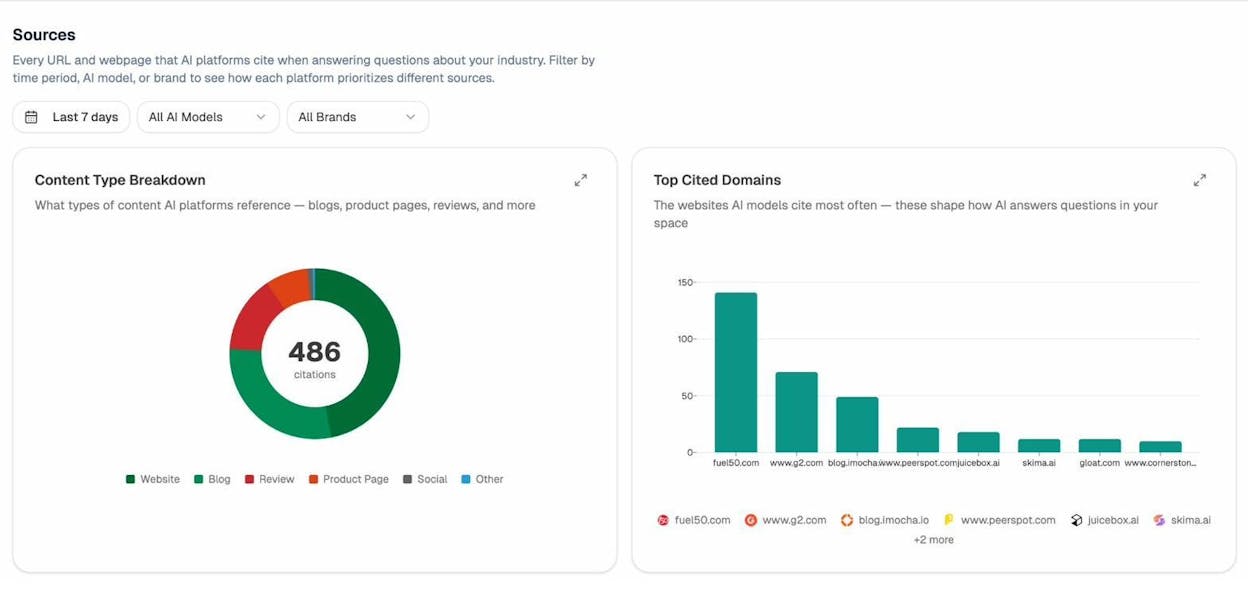
Prompt visibility and citations. Analyze AI tracks whether your brand appears in answers across ChatGPT, Perplexity, Claude, Gemini, and Copilot for the prompts you target. You can see how often you are mentioned, where you appear in the answer order, what sentiment surrounds you, and which competitors share the spotlight.
AI referral traffic. When AI engines cite your content, some users click through. That traffic shows up in GA4 but is often miscategorized. Analyze AI’s AI Traffic Analytics connects to GA4 to isolate these sessions and tie them to landing pages, engines, and conversions.
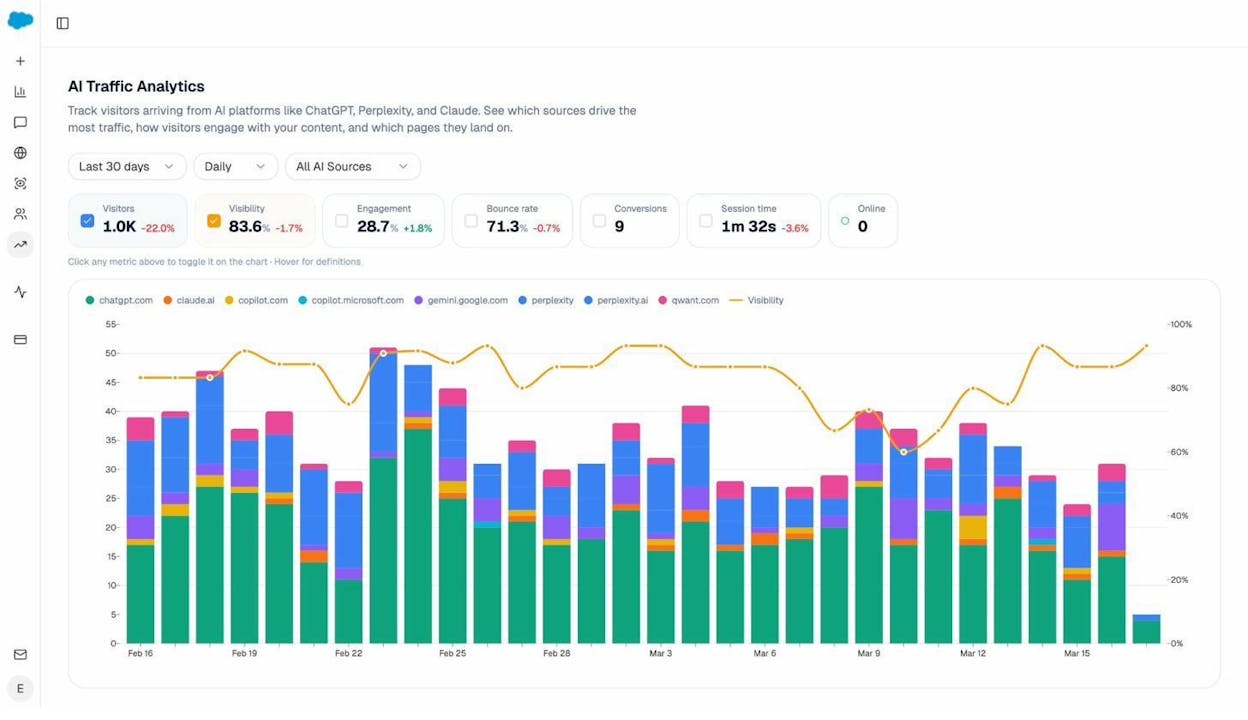
This closes the loop from secondary keyword strategy to actual business outcomes. You see whether the work is producing visibility, traffic, and pipeline rather than guessing.
Automate the loop with an agent
Once you understand which secondary keywords work for one page, you want to repeat the process across your entire site. Doing this by hand stops being realistic past a few dozen pages.
The Analyze AI Agent Builder is the part most teams underuse. Underneath the visibility tracker sits a programmable substrate with 180+ nodes and 34 pre-built data recipes wired directly into your GSC, GA4, and AI search data. You can build agents that run on a schedule or fire on an event.
A few high-leverage agents teams build for secondary keyword work:
-
Weekly opportunity finder. Pulls the keyword-opportunities recipe (positions 8 to 20 with rising impressions) every Monday and hands you a Notion task list of pages to refresh.
-
Competitor citation gap report. Runs the competitor-sources recipe across AI engines, surfaces prompts where rivals are cited and you are not, and emails the brief to the content team.
-
Content-refresh fleet. Loops over declining pages, checks AI-cited content for the topic, drafts the missing sections, and pings the editor in Slack.
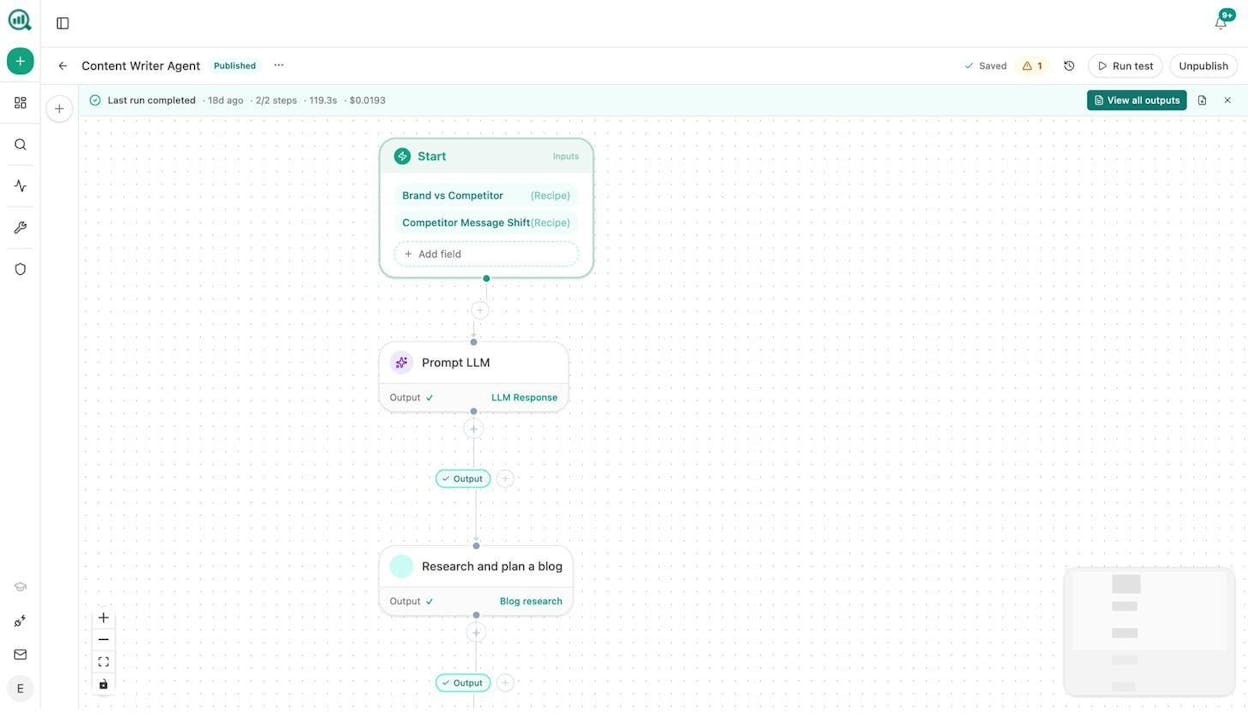
The agent fires whether or not anyone remembers to run it. The Monday list is on your desk Monday at 7am. The competitor brief is drafted before the CMO finds out. Treat the agent layer as the operations layer of your secondary keyword strategy and you stop doing the same audit by hand for the 40th time.
The Wrap
Secondary keywords are how one page wins many searches instead of one. Find them on the SERP, in keyword tools, in your own GSC, in AI prompts, and in customer language. Use them naturally, place them where they carry weight, and check the draft against gaps that competing pages already cover.
Track the result in both channels. Google Search Console shows you traditional rankings and clicks. Analyze AI shows you AI prompt visibility, citation share, and the GA4-attributed traffic AI engines drive to your site. Both channels respond to the same depth of content. SEO is not dead. It is being joined by AI search as a second organic channel, and the page that covers the topic thoroughly wins both.
To see which prompts already mention your brand, which competitors steal the citations you should be earning, and how much traffic AI engines actually send to your pages, start with Analyze AI.

Ernest

Ibrahim


