



Summarize this blog post with:


In this article, you’ll learn what zero-click search actually means, why it’s accelerating faster than most marketers realize, which search features are responsible, what the smartest teams are doing to adapt, and how to track the impact on your brand across both Google and AI search engines like ChatGPT, Perplexity, and Gemini.
Table of Contents
What Is a Zero-Click Search?
A zero-click search happens when someone types a query into a search engine and gets the answer directly on the results page, without clicking through to any website.
Google has been doing this for years with featured snippets and knowledge panels. But AI has taken it further. AI Overviews now synthesize information from multiple websites into a single summary at the top of search results. And AI search engines like ChatGPT, Perplexity, and Gemini skip the results page entirely. They just give the user a direct answer.
The result is the same. Your content gets used, but your website does not get visited.
This matters because the entire model of organic search was built on a trade. You create useful content, Google sends you traffic. That trade is breaking down. Google is keeping more users on its own pages, and AI search engines are answering queries in full without sending users anywhere.
A 2024 SparkToro study found that 60% of all Google searches ended without a click to any external website. In 2025, Ahrefs research showed that AI Overviews alone reduce clicks by 34.5%, with informational content taking the biggest hit.
![[Screenshot: Google search results page showing an AI Overview at the top answering a query completely, pushing organic results below the fold]](https://www.datocms-assets.com/164164/1777314145-blobid1.jpg?auto=format,compress&w=1248&fit=max)
And that is just the Google side of the equation. AI search engines like ChatGPT, Perplexity, Claude, and Gemini represent an entirely new category of zero-click search. When a buyer asks ChatGPT “what’s the best CRM for mid-market companies,” they get a direct recommendation. No click required. No SERP to scroll. No opportunity for your meta title to do its job.
The question is no longer whether zero-click search will affect your traffic. It already has. The question is what you do about it.
What Causes Zero-Click Searches?
Zero-click searches have been building for over two decades. Google introduced Images in 2001, Knowledge Panels in 2012, and Featured Snippets in 2014. Each one answered a few more queries on the results page itself.
But AI changed the game. Instead of pulling a snippet from one page, AI Overviews synthesize answers from multiple sources. And AI search engines bypass the results page altogether.
Here are the specific features driving zero-click search today.
AI Overviews
AI Overviews are AI-generated summaries that appear at the top of Google search results. They pull information from multiple web pages and combine it into a single answer.
![[Screenshot: A Google AI Overview appearing above organic results for a search query, showing a synthesized answer with small citation links]](https://www.datocms-assets.com/164164/1777314154-blobid2.png?auto=format,compress&w=1248&fit=max)
After Google’s March 2025 Core Update, AI Overviews doubled overnight. They now appear on roughly 18.9% of all US keywords, according to Ahrefs data. For logged-in users, the real number is likely higher.
AI Overviews do cite sources, linking to an average of 7 URLs. But those citations come with serious problems.
First, many citations are hidden behind tiny link icons or “show all” buttons. Users need to click once to find the source, then click again to reach the website. That is two clicks where there used to be one, and most users will not bother.
Second, AI Overviews often mismatch citations. They summarize your content but cite your competitor. Or they cite a source that did not actually make the claim being attributed to it.
Third, in some cases, AI Overviews cite no sources at all. They use your information but give you zero credit and zero traffic.
And here is the recursive problem. Research from Search Engine Journal found that nearly half of all AI Overviews link back to Google’s own properties. So even when there are citations, they often loop users back into Google’s ecosystem instead of sending them to the open web.
AI Mode
AI Mode is Google’s conversational search interface. Think of it as Google’s version of ChatGPT, built directly into the search experience.
![[Screenshot: Google’s AI Mode interface showing a conversational answer to a search query, with minimal links to external websites]](https://www.datocms-assets.com/164164/1777314199-blobid3.jpg?auto=format,compress&w=1248&fit=max)
AI Mode launched experimentally as a tab alongside “News” and “Images” in the US. Adoption is still early. But Google has been clear about the plan. AI Mode will gradually move to the main search page until it becomes the primary search interface.
When that happens, the default search experience will be a conversation, not a list of links. Getting a click will become the exception, not the rule.
AI Search Engines (ChatGPT, Perplexity, Gemini, Claude)
This is the part most zero-click search coverage misses.
Google’s AI features are reducing clicks within traditional search. But a separate shift is happening in parallel. Millions of users are skipping Google entirely and going straight to AI search engines.
When someone asks Perplexity “best project management tools for remote teams,” they get a full answer with citations. When someone asks ChatGPT the same question, they get a recommendation with reasoning. When someone asks Gemini or Claude, the same thing happens.
These are all zero-click searches, but they do not show up in your Google Search Console data. They do not trigger an AI Overview. They do not even register as a search. From Google’s perspective, they never happened.
This is why tracking zero-click search across both Google and AI search engines matters. Google Search Console only shows you one piece of the picture. You need AI traffic analytics to see the rest.
Featured Snippets
Featured snippets pull content directly from a single webpage and display it at the top of search results. They have been around since 2014 and are essentially a simpler, pre-AI version of AI Overviews.
Unlike AI Overviews, featured snippets cite just one source and display exact-match content from that source. They are more transparent and, in some cases, actually drive clicks. When a featured snippet cannot fully answer the question, it ends with ellipses or a “More items…” prompt that encourages users to click through.
![[Screenshot: A featured snippet in Google search results showing a partial answer with a “More items…” call-to-action]](https://www.datocms-assets.com/164164/1777314205-blobid4.png?auto=format,compress&w=1248&fit=max)
Featured snippets still reduce clicks overall, but they are less problematic than AI Overviews because they credit the source clearly and link directly to the page.
Knowledge Panels and Knowledge Cards
Knowledge panels display structured information about entities (people, companies, places) in a right-hand panel on Google’s results page. Knowledge cards do the same thing but in a smaller format for quick facts like weather, calculations, currency conversions, and definitions.
![[Screenshot: A Google knowledge panel showing company information including founding date, CEO, headquarters, and stock price]](https://www.datocms-assets.com/164164/1777314211-blobid5.png?auto=format,compress&w=1248&fit=max)
Both features answer factual queries without requiring a click. If someone searches “Salesforce CEO” or “USD to EUR,” they get the answer immediately on Google. No website visit needed.
Local Packs
Local packs show a cluster of local business listings with maps, opening hours, directions, and contact information directly in search results. For local queries like “coffee shops near me” or “best restaurants in Austin,” users can get everything they need without clicking through to any website.
Google’s Own Search Tools
Google has also built proprietary tools that compete directly with third-party websites. Google Flights, Google Hotels, Google Jobs, and Google Shopping all allow users to complete tasks (searching flights, applying for jobs, comparing prices) without leaving Google’s ecosystem.
This is not just zero-click search. It is zero-click commerce.
Why Zero-Click Search Matters More Than You Think
The traffic implications are obvious. Fewer clicks means fewer visitors, fewer leads, and fewer conversions from organic search.
But the second-order effects are what most marketers underestimate.
Your content becomes training data. When AI Overviews and AI search engines use your content to answer questions, they are extracting the value of your expertise without sending the user to experience your brand. You invested in creating that content. You are not getting the return.
Attribution is breaking. Google Search Console cannot separate clicks from AI Overviews versus traditional organic results. AI Mode clicks are lumped together with regular search. And AI search engine traffic (from ChatGPT, Perplexity, Gemini) often shows up as “direct” or “referral” in your analytics, making it hard to measure.
Impressions and clicks are decoupling. Many marketers are seeing their Google Search Console impressions stay flat or even increase while clicks drop. Your content is being shown more, but clicked less. This is what Ahrefs calls “the great decoupling.”
![[Screenshot: A Google Search Console graph showing impressions trending upward while clicks trend downward over the same period]](https://www.datocms-assets.com/164164/1777314218-blobid6.jpg?auto=format,compress&w=1248&fit=max)
AI search engines are a new discovery channel. While Google’s zero-click features reduce traffic from traditional search, AI search engines are creating a new organic channel. Brands that show up in ChatGPT, Perplexity, and Gemini recommendations are getting discovered by buyers who never even searched Google. This is not a replacement for SEO. It is an additional layer of organic visibility that most teams are not tracking yet.
The brands that treat this as a dual challenge (protecting Google traffic while building AI search visibility) will come out ahead. The brands that focus only on the Google side will miss the bigger shift.
What Content Gets Hit Hardest (and What Holds Up)
Not all content is equally affected by zero-click search. Understanding which content types are most vulnerable helps you prioritize where to invest your effort.
Most vulnerable: simple informational queries. Content that answers straightforward questions (definitions, how-to basics, listicles of facts) is the easiest for AI to summarize and the most likely to lose clicks. If your answer fits in a paragraph, AI Overviews will absorb it completely.
Moderately vulnerable: comparison and “best of” content. AI search engines love to answer “best X for Y” queries directly. But these queries involve nuance, preferences, and trade-offs that AI summaries often oversimplify. Detailed comparison content with original analysis, real testing, and specific use cases still holds up because the AI summary cannot capture the full depth.
Least vulnerable: content with original data, frameworks, or deep expertise. Original research, proprietary data, unique frameworks, step-by-step workflows with screenshots, and content built from first-hand experience is hard for AI to summarize without losing the substance. This is the kind of content that still earns clicks, because the summary is not a substitute for the full piece.
Growing in value: product-led content. Content that cannot be separated from your product (tutorials, use cases, templates that require your tool) is inherently click-worthy. AI can mention your product, but the user still needs to visit your site to use it.
|
Content type |
Zero-click risk |
Why |
|---|---|---|
|
Definitions and glossary pages |
Very high |
AI answers these in one sentence |
|
Simple how-to guides |
High |
Step lists are easy to summarize |
|
“Best of” listicles |
Moderate-high |
AI lists the options but oversimplifies |
|
In-depth comparisons with testing |
Moderate |
Nuance is hard to summarize |
|
Original data and research |
Low |
Data needs context that summaries lose |
|
Product tutorials and workflows |
Low |
Users need the product to follow along |
|
Thought leadership and opinion |
Low |
AI does not replicate perspective |
This table should shape your content strategy. Double down on what is hard to summarize. Reduce your investment in content that AI will answer for free.
7 Things Smart Marketers Are Doing About Zero-Click Search
Zero-click search is not going away. It is the new baseline. Here is what the smartest teams are doing to adapt.
1. Shifting to product-led and user-focused content
The era of creating content purely to rank for a keyword is ending. If your content does not connect to your product or provide unique value that AI cannot replicate, it is a donation to Google and AI training sets.
Smart teams are asking a new question before greenlighting any piece of content: “Can this topic be discussed without mentioning our product?” If the answer is yes, it is probably not worth the investment in a zero-click world.
This does not mean every article should be a product pitch. It means the best content naturally integrates your product because the product is relevant to the problem being solved.
At Analyze AI, we think about this in terms of what we call the usefulness test. If someone reads our article about tracking brand visibility in AI search, they should walk away with actionable knowledge regardless of whether they sign up. But the article naturally references our AI visibility tracking features because they are the best way to do what the article teaches.
That is the sweet spot. Content that is genuinely useful on its own, but made more useful by the product.
2. Creating content AI cannot summarize
If AI can summarize your content into a three-sentence answer, it will. And when it does, nobody clicks.
The content that survives zero-click search is the content that loses its value when compressed. Think original research with charts and methodology. Think step-by-step tutorials with screenshots at every stage. Think opinion pieces that build an argument across 2,000 words. Think frameworks that need context to understand.
This is what Animalz calls information gain. Your content needs to contain something the reader cannot get anywhere else. Not a different arrangement of the same facts, but net-new information.
Here are practical ways to create content AI cannot easily absorb:
Run original research. Survey your customers. Analyze your own data. Publish findings that did not exist before you created them. AI cannot summarize data that is not already on the web.
Go deep on methodology. Do not just say “do keyword research.” Show exactly how, with specific filters, step-by-step screenshots, and the reasoning behind each decision. Depth creates click-worthiness because the summary cannot substitute for the walkthrough.
Add expert perspectives. Interview practitioners. Pull quotes from real conversations, not recycled LinkedIn posts. First-hand accounts are hard for AI to synthesize because they are not structured as facts.
Build in visual explanations. Charts, diagrams, annotated screenshots, and interactive tools all require the user to visit your page. AI summaries cannot render your visuals.
3. Going deep on customer research
Generic content is the easiest content for AI to replace. If your article says the same thing as 50 other articles on the same topic, AI will just combine them all and give a better answer than any single one.
The antidote is specificity. Content built from real customer pain points, specific use cases, and nuanced questions that only someone who deeply understands the audience would think to ask.
Here is a practical framework for finding these opportunities.
Step 1: Mine your support tickets and sales calls. Look for the questions customers ask that go beyond the basics. What are the edge cases? What are the workarounds? What problems do they struggle to articulate clearly?
Step 2: Search community forums. Reddit, industry Slack groups, and LinkedIn comments are full of specific, nuanced questions that no one has answered well. These are the queries AI cannot answer confidently because there is no clear source material.
Step 3: Use competitive gap analysis. Tools like Ahrefs Content Gap show you the keywords your competitors rank for but you do not.
![[Screenshot: Ahrefs Content Gap tool showing competitor keywords with word count and difficulty filters applied]](https://www.datocms-assets.com/164164/1777314229-blobid7.png?auto=format,compress&w=1248&fit=max)
Filter for long-tail queries (6+ words) and question-based keywords (starting with “how,” “why,” or “what”). These are the complex queries that resist zero-click summaries.
Step 4: Layer in AI search gap analysis. Here is where most guides stop, and where you should keep going. Traditional competitive gap analysis only shows you gaps in Google rankings. But buyers are also asking questions in ChatGPT, Perplexity, and Gemini, and the brands that show up there are often different from the ones ranking in Google.
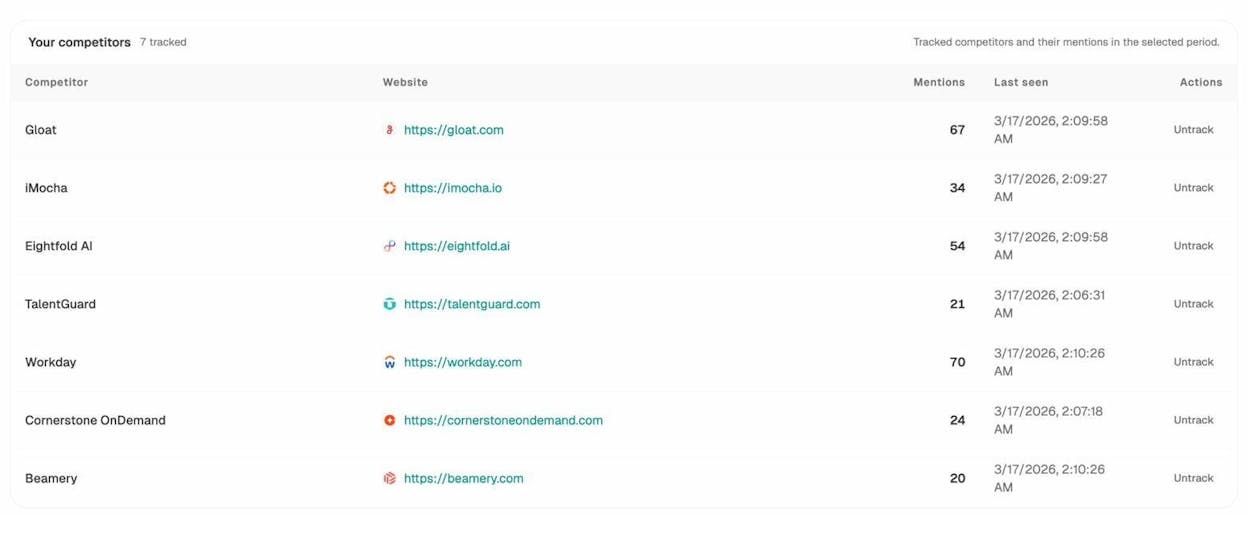
Use Analyze AI’s Competitors dashboard to see which brands AI search engines recommend instead of yours, and on which prompts.
Then check the Prompts dashboard to see exactly which questions trigger mentions of your competitors but not your brand.
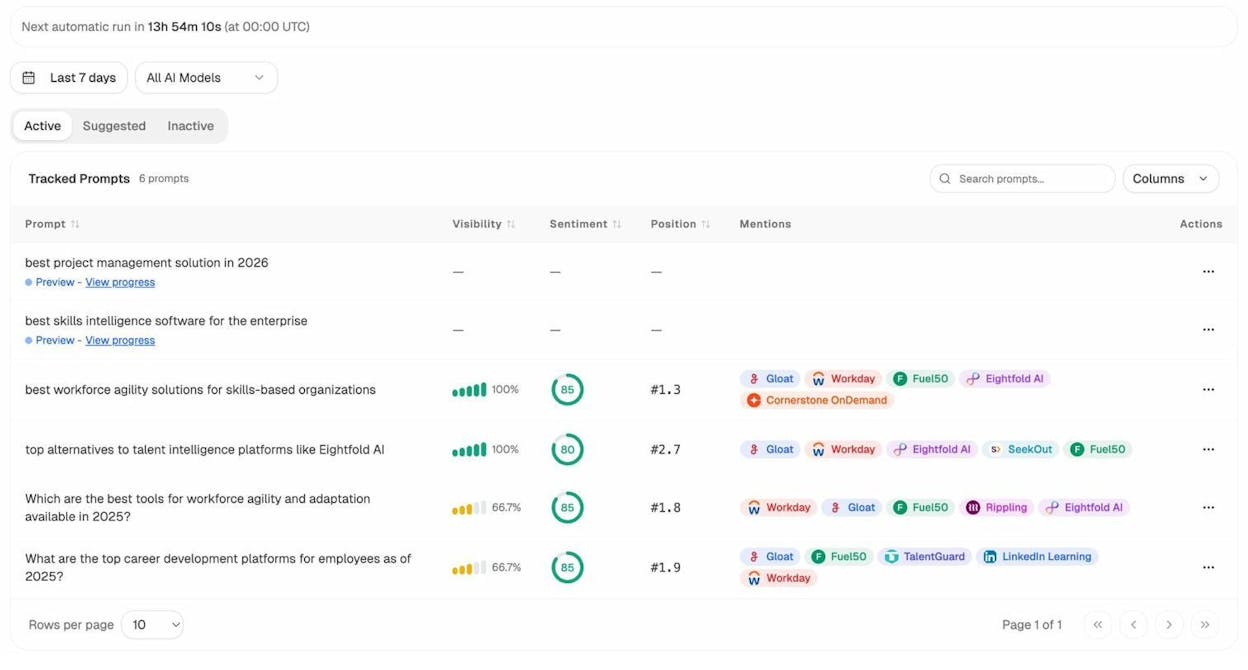
These AI search gaps represent content opportunities that do not show up in any traditional keyword research tool. A buyer asking Perplexity “best workforce agility solutions for skills-based organizations” might never type that into Google. But if your competitor shows up in the AI answer and you do not, you are losing influence at a critical moment in the buying journey.
4. Diversifying to new channels
Google used to be the channel. Now it is one of many. And the smartest marketing teams are making sure their business does not live or die based on Google’s product decisions.
Here is what diversification actually looks like in practice:
Distribute ideas, not just links. Instead of writing a blog post and sharing a link on LinkedIn, take the core insight and rewrite it natively for each platform. A LinkedIn post is not a blog summary with a link. It is a standalone piece of content that delivers value in the feed. Same for X, newsletters, and community forums.
Build on land you own. Email lists, communities, and direct relationships are channels no algorithm can take away. Every website visitor should have a path to join your email list, your Slack community, or your product. Rented attention (Google rankings, social media reach) should feed owned channels.
Show up where your buyers actually go. Your analytics will tell you which channels already send qualified traffic. For many B2B brands, LinkedIn referral traffic is growing while Google organic traffic is flat or declining. For some categories, Reddit and YouTube drive more qualified leads than search. Look at your data and follow the signal.
AI search engines are a channel too. This is the piece most diversification strategies miss. ChatGPT, Perplexity, Gemini, and Claude are sending real traffic to real websites. According to Ahrefs data, AI search is already driving measurable referral traffic, and for some brands, AI traffic converts at higher rates than Google organic because the users arriving are further down the funnel.
You can track exactly how much traffic AI search engines send you, which pages they land on, and how those visitors behave using AI Traffic Analytics in Analyze AI.
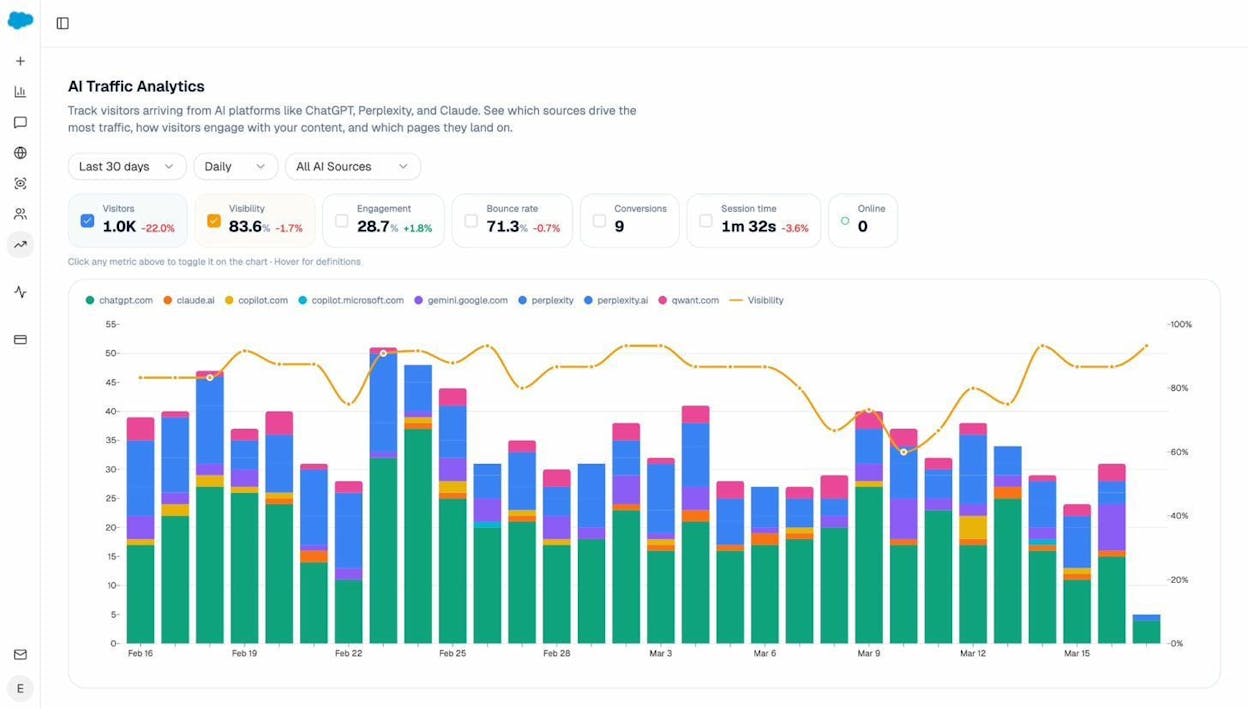
The Landing Pages view shows which of your pages receive AI-referred traffic, which AI engines cite them, and how visitors from each source engage with your content.
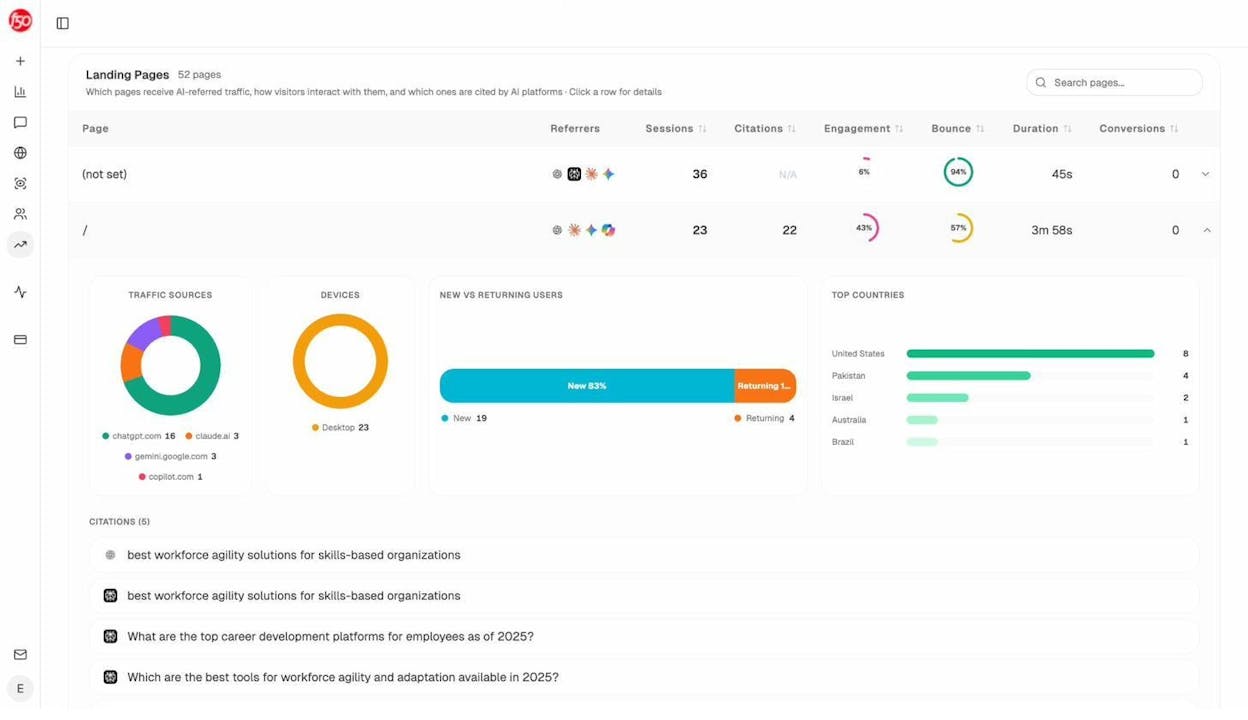
This data is invisible in Google Analytics or Google Search Console. Without it, you are flying blind on what could be your fastest-growing organic channel.
5. Investing in brand and PR
Here is the uncomfortable truth about zero-click search. When AI Overviews and AI search engines decide which brands to recommend, they are not just looking at your content. They are looking at your brand.
Ahrefs’ study of 75,000 brands found that branded web mentions had the strongest correlation with brand mentions in AI Overviews, at 0.664 Spearman correlation. Branded anchors came second at 0.527. Domain Rating was only 0.326.
In plain language: the brands that get talked about the most on the web are the brands AI recommends the most. Not the brands with the most backlinks. Not the brands with the highest domain authority. The brands with the strongest word-of-mouth.
This means brand building is no longer a nice-to-have that pays off “someday.” It is a direct input to your AI search visibility. And it requires a different kind of investment than traditional SEO.
Earn mentions, do not manufacture them. AI models are trained on broad web data. They pick up on genuine brand mentions across news articles, reviews, forums, social media, and industry publications. Paid placements and guest posts are less effective than earned coverage from real users, journalists, and industry voices.
Fuel public discourse. Encourage customers to share their experiences on platforms AI models trust. G2 reviews, Reddit discussions, industry forums, and social media conversations all contribute to how AI perceives your brand. Make it easy for happy customers to talk about you publicly.
Launch campaigns worth talking about. Data-driven research, industry benchmarks, and contrarian takes generate coverage and conversation. A single well-researched study can earn dozens of press mentions and hundreds of social shares, all of which feed into AI’s understanding of your brand.
Monitor how AI perceives your brand. Brand perception in AI search is not static. It shifts as new content gets published, as competitors earn coverage, and as AI models update. You need to track this continuously, not check it once a quarter.
Analyze AI’s Perception Map shows exactly where your brand sits relative to competitors across two dimensions: visibility (how often AI mentions you) and narrative strength (how positively AI talks about you).
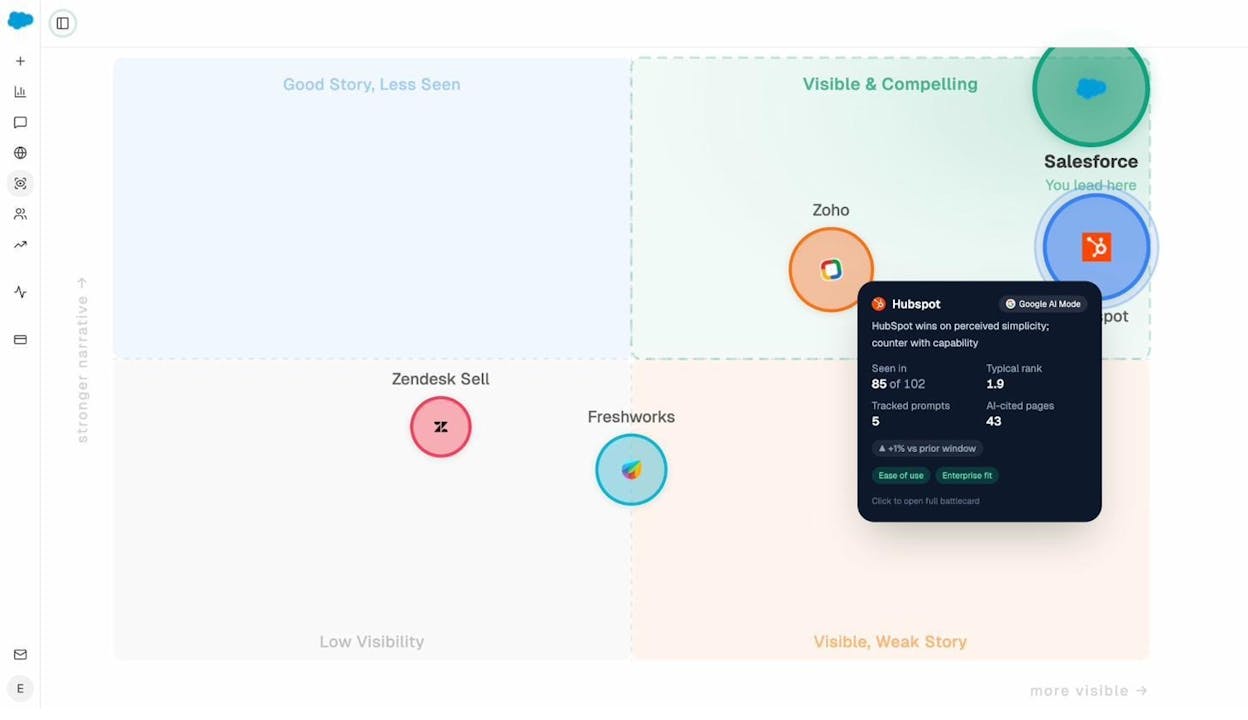
The top-right quadrant is where you want to be: visible and compelling. If your brand sits in the bottom-left (low visibility, weak story), you have work to do on both content and brand awareness. If you are in the bottom-right (visible but weak story), AI mentions you but does not recommend you, which means your brand narrative needs attention.
You can also track the sentiment of AI answers about your brand over time, and get alerts when AI models start framing your brand negatively.
6. Adapting content for AI search visibility
SEO and AI search are not opposing strategies. They are complementary organic channels. The content that ranks well in Google often performs well in AI search too, but with some adjustments.
Here is what you should know about making your content work in both channels.
Structure matters even more. AI models parse content structure to decide what is worth citing. Clear headings, logical hierarchy, and well-organized sections make it easier for AI to understand and reference your content. This overlaps heavily with good SEO practice.
Be the primary source. AI models prefer citing content that contains original information rather than content that aggregates other sources. If your article just summarizes what five other articles already said, AI has no reason to cite you. If your article contains original data, unique methodology, or first-hand expertise, AI has a reason to prefer you.
Cover the topic completely. AI models scan for comprehensiveness. If your article on “zero-click search” covers causes, impact, and tracking but skips practical responses, a competitor who covers all four angles will get cited instead. Use a framework like MECE (mutually exclusive, collectively exhaustive) to make sure you do not leave gaps.
Make your entities explicit. AI models identify entities (brands, products, concepts, people) and use them to match content to queries. Mention relevant entities clearly and in context. If you are writing about CRM software, mention specific products by name. If you are writing about a marketing strategy, reference the frameworks and thought leaders associated with it.
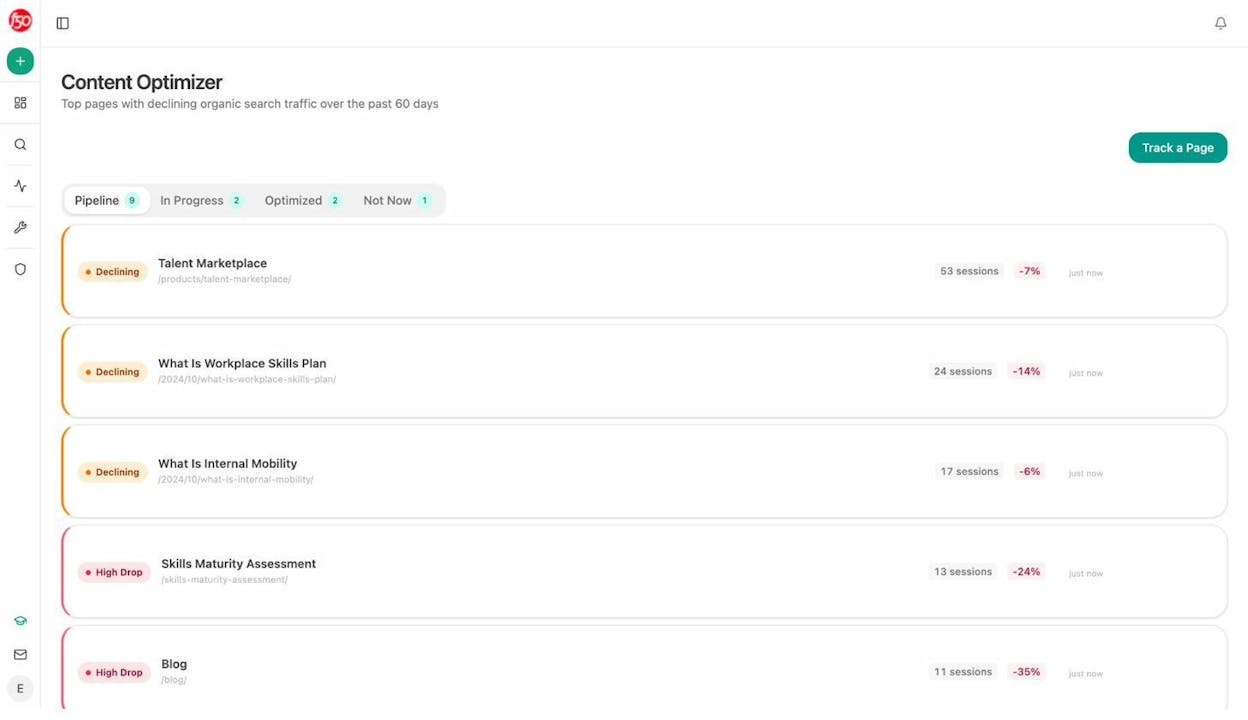
To find the gaps between your current content and what AI models expect, you can use Analyze AI’s Content Optimizer. Paste any URL and get a score based on argument quality and content clarity, plus specific suggestions for improving AI visibility.
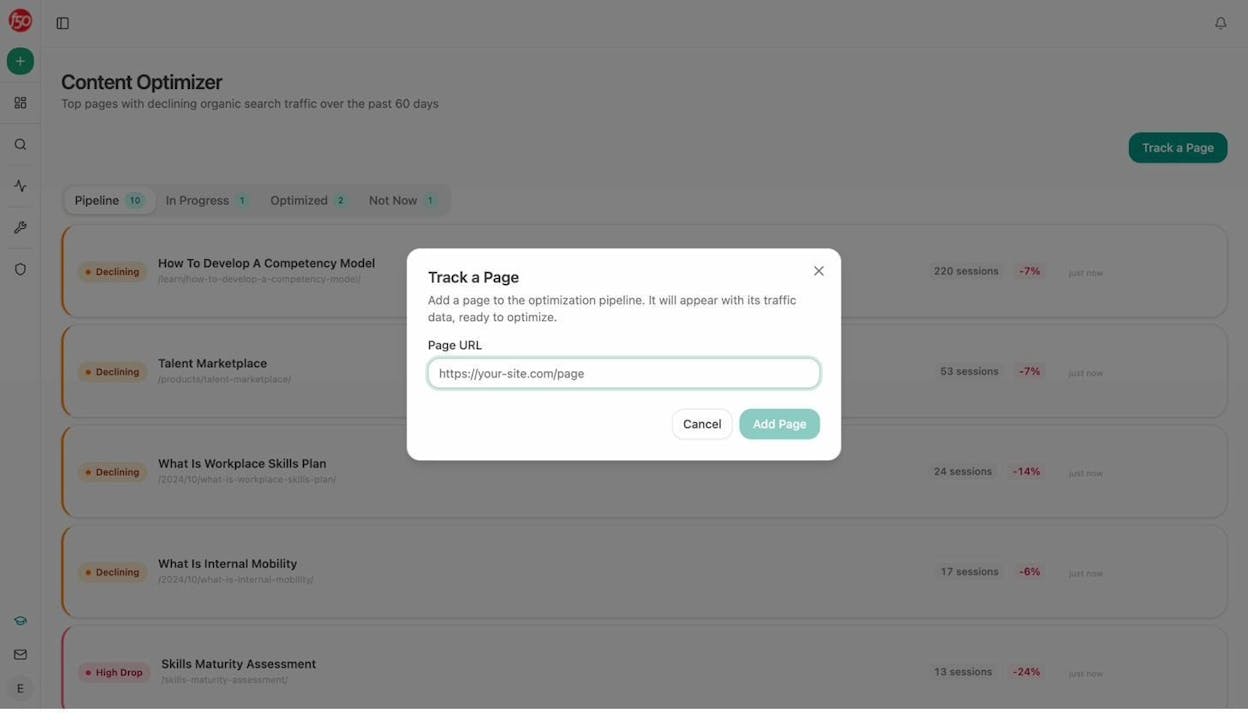
The Optimizer fetches your existing content, scores it, and generates line-by-line editorial comments that highlight where your argument is weak, where you are missing entities that AI expects, and where your structure could improve.
If you are creating new content from scratch, the Content Writer takes you from idea to research to outline to draft, with LLM visibility gaps, competitor keywords, and SERP data baked into every step.
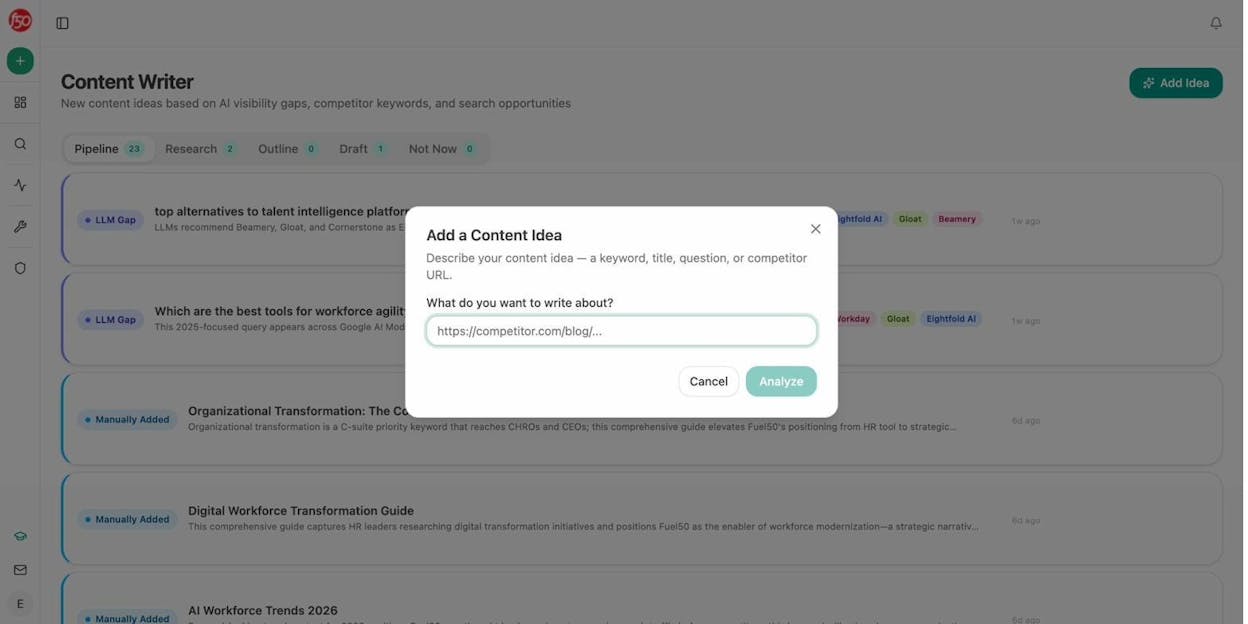
This is not about replacing your writing process. It is about making sure the content you create is structured to perform in both Google and AI search from the start.
7. Rethinking what success looks like
The old model was simple. Publish content, rank in Google, get clicks, convert visitors to customers. Every step was measurable.
Zero-click search breaks this funnel. Your content might be seen in an AI Overview but never clicked. Your brand might be recommended by ChatGPT but the user goes directly to your website by typing your URL, showing up as “direct” traffic. Your blog post might get cited by Perplexity, sending you a trickle of highly qualified visitors who convert at 3x the rate of Google organic.
None of this fits neatly into traditional SEO metrics. If you are still measuring success purely by organic traffic and keyword rankings, you are measuring the wrong things.
Here is what to track instead:
Brand mentions across AI search engines. How often do ChatGPT, Perplexity, Gemini, and Google AI Mode mention your brand when users ask questions in your category? This is the new “ranking.”
Share of voice in AI answers. When AI recommends solutions in your space, what percentage of recommendations include your brand versus competitors? This is the new “market share” for organic visibility.
AI-referred traffic and conversions. How many visitors come from AI search engines, which pages do they land on, and do they convert? This is the bottom-line metric that proves AI visibility is worth the investment.
Sentiment and narrative quality. What is AI actually saying about your brand? Positive visibility is valuable. Negative visibility is harmful. Neutral visibility is a missed opportunity.
Citation momentum. Are the number of AI citations to your content growing, shrinking, or flat? Tracking this weekly tells you whether your content strategy is working for AI search or not.
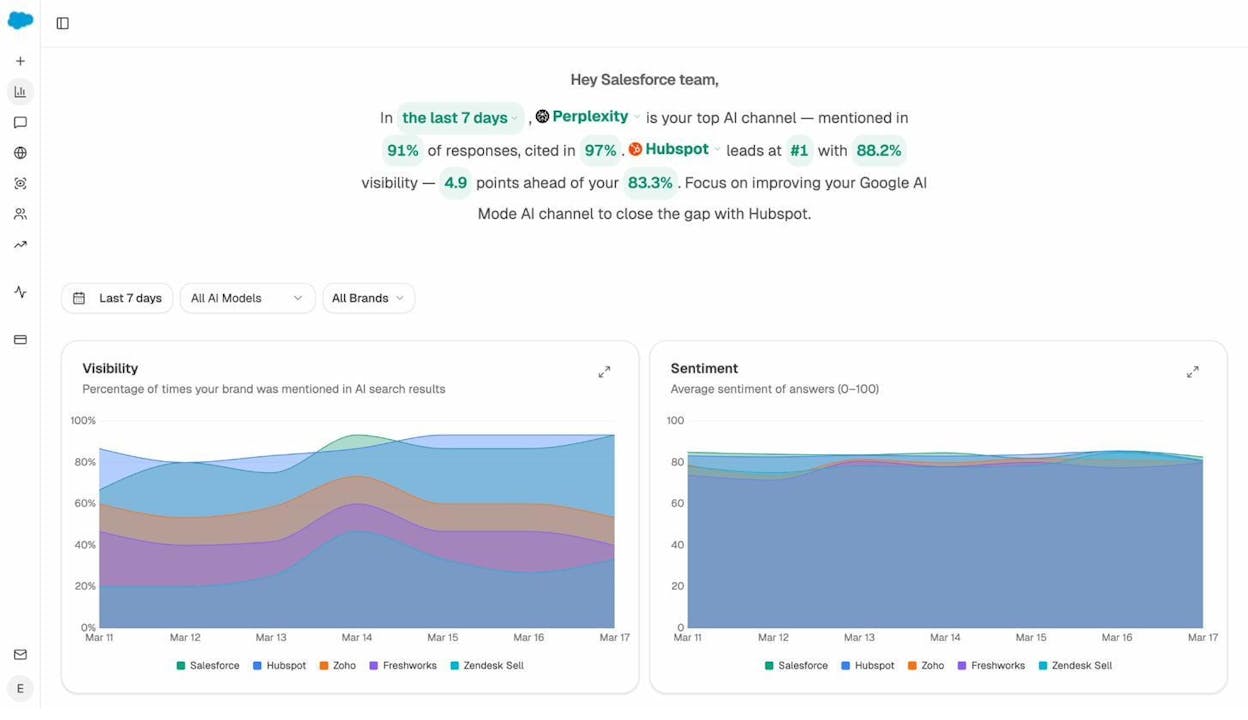
You can track all of these in one place with Analyze AI. The overview dashboard gives you a real-time snapshot of visibility, sentiment, competitor rankings, and citation trends.
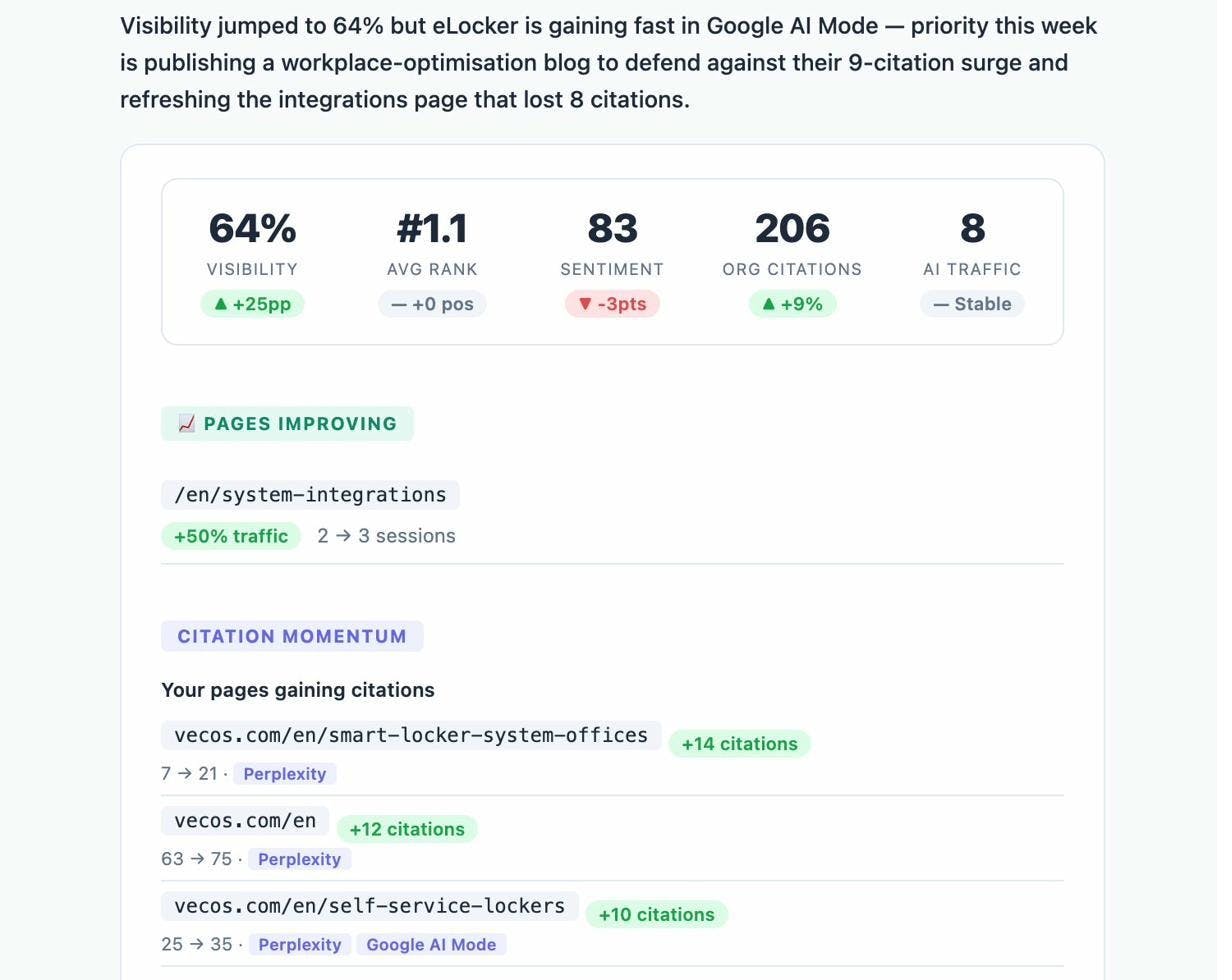
And if you do not have time to check the dashboard every day, weekly email digests deliver a prioritized summary of changes to your inbox every Monday. Visibility shifts, citation gains and losses, competitor movements, and specific actions to take that week.
How to Track Zero-Click Search
You cannot manage what you cannot measure. Here is how to track zero-click search across both Google and AI search engines.
Tracking zero-click impact in Google
Google does not make this easy. Google Search Console reports AI Overviews as position one, lumped together with regular featured snippets. You cannot separate AI Overview clicks from organic clicks.
Here is what you can do:
Monitor the impressions-to-clicks ratio. In Google Search Console, compare your impressions trend against your clicks trend over the past 12 months. If impressions are stable or growing while clicks are declining, zero-click features are absorbing your traffic. Filter by specific pages and queries to identify which content is most affected.
![[Screenshot: Google Search Console performance report filtered by a specific page, showing impressions and clicks diverging over time]](https://www.datocms-assets.com/164164/1777314290-blobid18.png?auto=format,compress&w=1248&fit=max)
Check for AI Overview presence on your target keywords. Search your most important keywords manually and note which ones trigger AI Overviews. You can also use the Analyze AI SERP Checker to see SERP features for any keyword without manual searching.
Track CTR trends by query type. Segment your Google Search Console data by query type (branded vs. non-branded, informational vs. transactional). You will likely see the biggest CTR drops on informational, non-branded queries, which are the ones AI Overviews target most aggressively.
Watch your direct traffic. If zero-click search is building brand awareness even without clicks, you should see some of that show up as increases in direct traffic and branded search volume. Users who see your brand mentioned in an AI Overview may not click through immediately, but they may remember your brand and search for it later.
Tracking your brand in AI search engines
Google search is only half the picture. Here is how to track your presence in AI search engines.
Track the prompts that matter to your business. Start by identifying the questions your ideal customers ask AI search engines. These are often different from the keywords they type into Google. They are longer, more conversational, and more specific.
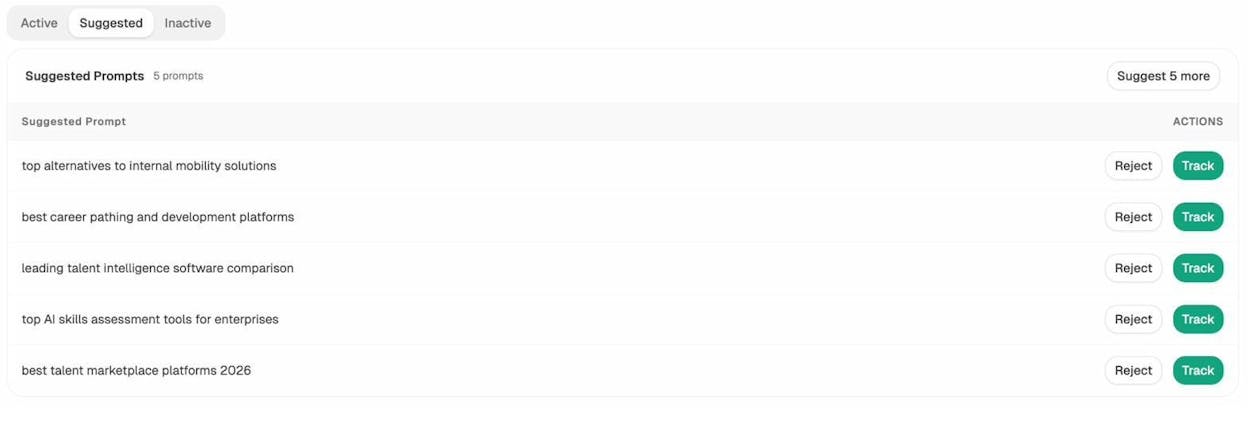
In Analyze AI, you can track these prompts in the Prompts dashboard. Add the prompts that matter to your business and see your visibility, position, sentiment, and which competitors appear alongside you in AI answers, across all major AI models.
Analyze AI also suggests prompts you might want to track based on your industry and competitors. These suggested prompts help you discover blind spots where buyers are asking questions you had not considered.
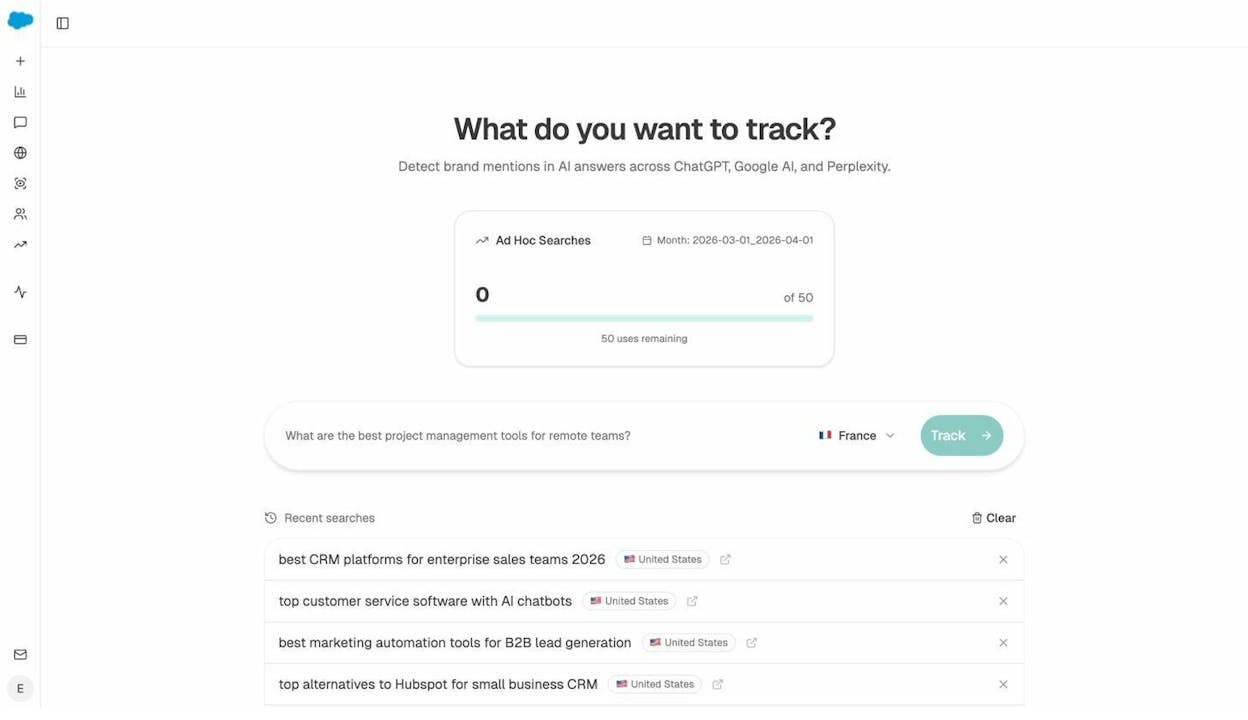
And for one-off research, Ad Hoc Searches let you run any prompt across ChatGPT, Google AI, and Perplexity to instantly see who gets mentioned and cited.
Track which sources AI trusts in your space. AI search engines cite specific URLs and domains in their answers. Knowing which sources they trust tells you where to focus your content and PR efforts.
The Sources dashboard in Analyze AI shows every URL and domain that AI platforms cite when answering questions in your space. You can see the content type breakdown (blogs, product pages, reviews, social) and identify the top cited domains.
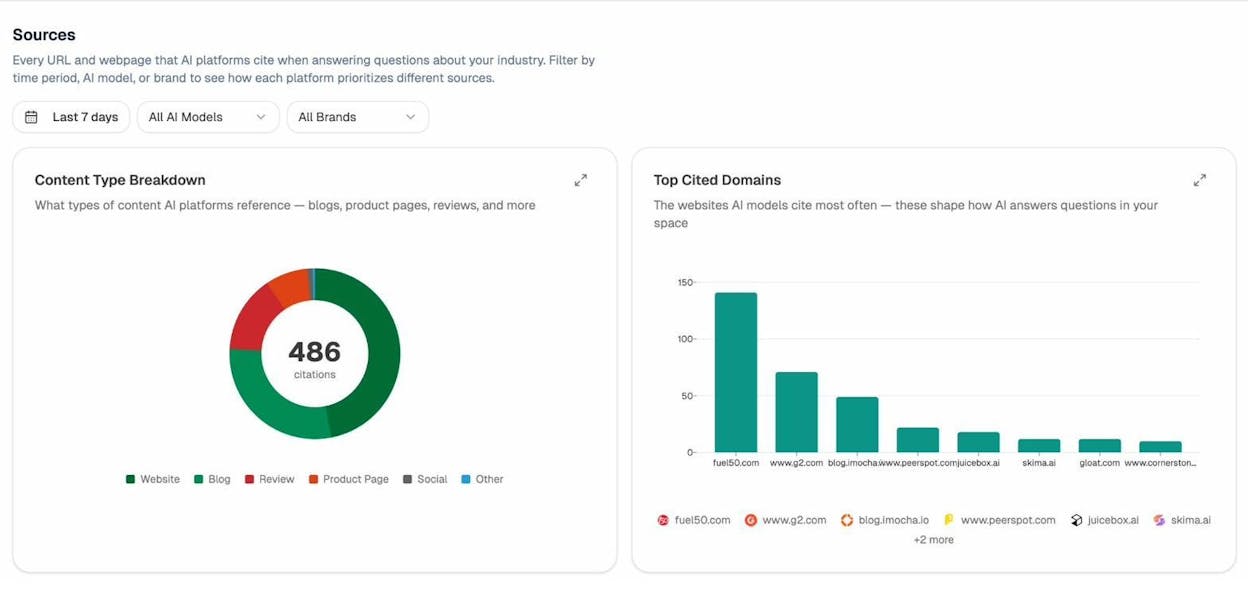
If G2 is the most-cited domain in your category but you have limited G2 presence, that is a clear gap to close. If a competitor’s blog is getting cited heavily, you know which content to analyze and outperform.
Track AI traffic to your website. AI search engines do send traffic. ChatGPT, Perplexity, Claude, and Gemini all include links in their responses, and some users click them. This traffic is small compared to Google today, but it is growing fast and often converts at higher rates because the users are further down the funnel.
Track it with AI Traffic Analytics, which breaks down visitors by AI source, shows which pages receive AI traffic, and connects citations to actual visits.
Putting it all together: a zero-click tracking dashboard
Here is a simple framework for tracking zero-click search impact across both Google and AI search engines:
|
What to track |
Where to track it |
Frequency |
|---|---|---|
|
Impressions vs. clicks trend (Google) |
Google Search Console |
Weekly |
|
AI Overview presence on key terms |
Manual search or SERP Checker |
Monthly |
|
CTR by query type (Google) |
Google Search Console |
Monthly |
|
Brand mentions in AI search engines |
Weekly |
|
|
Competitor visibility in AI answers |
Weekly |
|
|
AI traffic volume and conversions |
Weekly |
|
|
Citation sources and gaps |
Bi-weekly |
|
|
Brand sentiment in AI answers |
Monthly |
|
|
Direct traffic and branded search trends |
Google Analytics + Google Search Console |
Monthly |
Do not try to track everything at once. Start with the three most important questions: Is my Google CTR declining? Are AI search engines mentioning my brand? Is AI sending me any traffic? Build from there.
SEO Is Not Dead. It Is Evolving.
Every time search changes, someone declares SEO dead. It happened with mobile. It happened with voice search. It is happening now with AI.
It is wrong every time.
SEO is not dead. It is evolving. And the evolution this time is the addition of AI search as a complementary organic channel.
Here is what we believe at Analyze AI, and what we have written into our manifesto: the brands that show up in AI answers are the ones with clear, original, and useful content. The same content that performs well in Google organic search. The playbook is not fundamentally different. The distribution is just wider now.
Good content still wins. The difference is that your content now has to work for AI models too, not just Google’s algorithm. And you need to track your performance across both channels.
That means continuing to invest in SEO. Continue doing keyword research. Continue building authoritative content. Continue earning backlinks and improving technical SEO. Those foundations matter more than ever because they feed both Google rankings and AI visibility.
But add a new layer. Track your AI search presence. Monitor which prompts mention your brand and which do not. Analyze the sources AI trusts in your space. Optimize your content for AI citation, not instead of SEO, but alongside it.
The teams that treat AI search as an additional organic channel, rather than a replacement for SEO, will compound their visibility across both. The teams that panic and abandon SEO, or ignore AI search entirely, will lose ground on both fronts.
What Comes Next
Zero-click search is not the end of the story. It is the beginning of a larger shift.
AI agents are already starting to browse, compare, and take action on behalf of users. They are filling out forms, comparing pricing pages, and making purchasing recommendations without the user ever visiting a website. This is “post-click search,” and it takes zero-click to its logical extreme.
But that is a challenge for tomorrow. Today, the playbook is clear.
Stop building content that AI can summarize into a sentence. Start building content that earns clicks because the full piece is worth more than any summary. Diversify your channels so no single algorithm controls your traffic. Invest in brand so that when AI recommends solutions, your name comes up. And track your visibility across both Google and AI search engines so you know where you stand and where to go next.
The click is getting harder to earn. But it is not gone. And for the brands that adapt, the clicks that remain will be more valuable than ever.

Ernest

Ibrahim


