



Summarize this blog post with:


In this article, you’ll learn exactly how to build and grow an affiliate marketing blog that generates real income. You’ll see how to pick a profitable niche, find high-paying affiliate programs, create content that ranks on Google and gets cited by AI search engines, drive traffic through SEO, social media, and email, and use tools that make the whole process easier. Whether you’re starting from scratch or trying to grow an existing blog, every section includes actionable steps you can apply today.
Table of Contents
How Much Can You Make From Affiliate Marketing?
On average, affiliate marketing bloggers earn between $30,000 and $50,000 per year. But that number hides a wide range. Beginners typically earn under $10,000 in their first year, while experienced affiliate marketers in high-ticket niches pull in six or even seven figures annually.
How much you earn depends on three things: the niche you choose, the commission rates of the programs you promote, and how much traffic you can drive to your content.
Here’s a rough breakdown of what to expect at each stage:
|
Experience Level |
Typical Annual Earnings |
Time to Reach |
|---|---|---|
|
Beginner |
$0 – $10,000 |
0 – 12 months |
|
Intermediate |
$10,000 – $50,000 |
1 – 2 years |
|
Advanced |
$50,000 – $200,000 |
2 – 4 years |
|
Expert / High-Ticket |
$200,000+ |
3 – 5+ years |
The key insight most guides skip: the difference between a $10K and a $100K affiliate blog is rarely about traffic volume. It’s about promoting higher-commission products, building trust with a loyal audience, and diversifying your traffic sources beyond just Google.
How Affiliate Marketing and Blogging Work Together
The model is simple. You write blog posts that help people solve problems or make buying decisions. Inside those posts, you include affiliate links to products or services you recommend. When a reader clicks your link and makes a purchase, the brand pays you a commission.
![[Screenshot: Diagram showing the affiliate marketing and blogging cycle — reader searches → finds blog post → clicks affiliate link → makes purchase → blogger earns commission]](https://www.datocms-assets.com/164164/1776969800-blobid1.jpg?auto=format,compress&w=1248&fit=max)
This combination works well for a few reasons.
Low overhead. You don’t hold inventory, manage shipping, or deal with returns. Your only costs are hosting, a domain name, and whatever tools you use to create content.
No customer service. The company behind the product handles all support, refunds, and complaints. Your job is to help people decide if the product is right for them — not to manage their post-purchase experience.
Passive income potential. Once a blog post ranks on Google or starts getting cited in AI search results, it can generate traffic and commissions for months or years without additional work. This is the real appeal of affiliate blogging: you do the work once, and it keeps paying you.
AI search is expanding the opportunity. Here’s what most affiliate marketing guides miss entirely: people are no longer only searching on Google. They’re asking ChatGPT, Perplexity, Gemini, and Copilot for product recommendations. If your content gets cited by these AI platforms, you have a brand-new traffic channel that your competitors haven’t figured out yet.
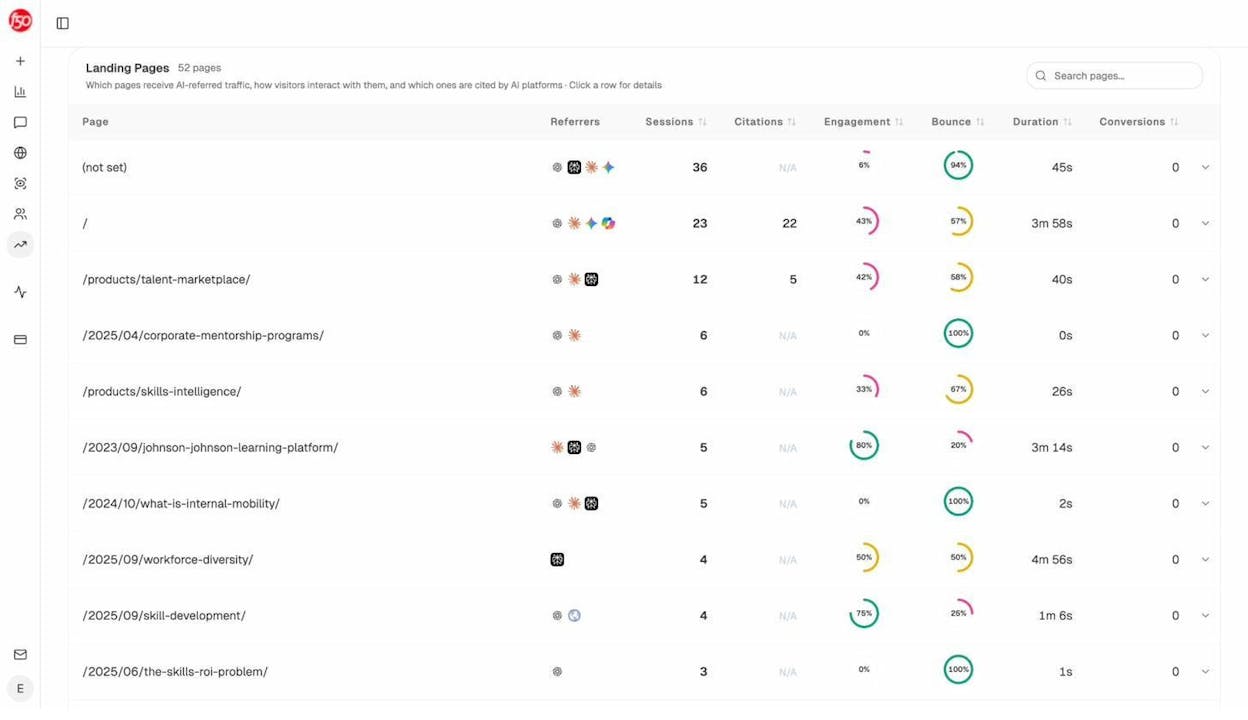
You can track whether AI engines are already sending visitors to your site using Analyze AI’s AI Traffic Analytics dashboard. It shows you exactly which AI platforms refer traffic to your pages, how those visitors behave, and which landing pages receive the most AI-referred sessions.
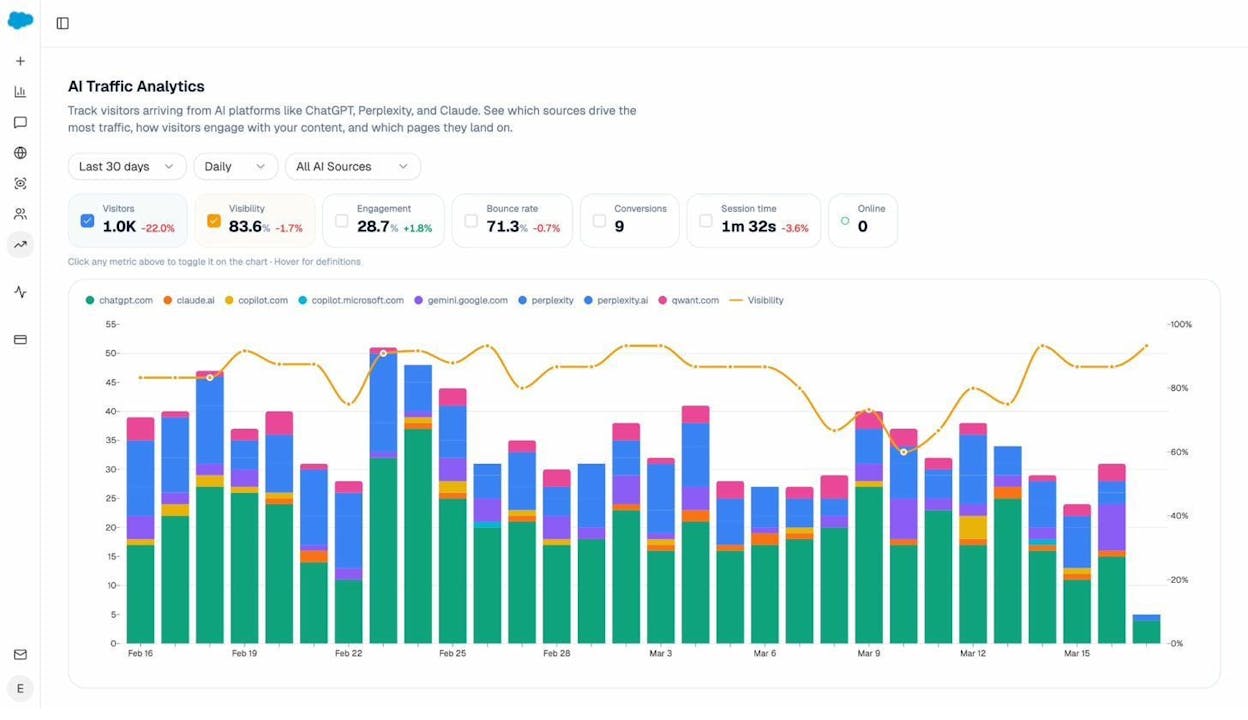
This data matters because it tells you whether your affiliate content is already getting picked up by AI search — and if it is, which pages are performing best so you can double down on what works.
How to Choose a Profitable Affiliate Niche
Picking the right niche is the single most important decision you’ll make as an affiliate blogger. Get it right and everything else becomes easier. Get it wrong and you’ll spend months creating content that barely earns anything.
A good affiliate niche has three qualities:
1. Products with decent commission rates. Amazon’s Associate program pays 1–3% on most items. That means you’d need to sell $10,000 worth of products just to earn $100–$300. Compare that to software affiliate programs that pay 20–50% recurring commissions. A single sale of a $100/month SaaS tool at 30% commission earns you $30 every month the customer stays subscribed.
2. Enough search volume to drive traffic. If nobody is searching for content in your niche, you won’t get traffic no matter how good your writing is. Use a free tool like Analyze AI’s Keyword Generator to check whether people are actually searching for topics in the niche you’re considering.
![[Screenshot: Analyze AI’s Keyword Generator tool showing keyword ideas for a sample niche query]](https://www.datocms-assets.com/164164/1776969818-blobid3.png?auto=format,compress&w=1248&fit=max)
3. A topic you can write about consistently. You don’t need to be an expert on day one. But you need to be genuinely interested in the topic, because you’ll be writing about it for months or years. If the thought of publishing 50 articles about kitchen appliances makes you want to quit, that’s not your niche.
Some of the most profitable affiliate niches right now include personal finance, software and SaaS tools, health and wellness, education and online learning, and technology. But profitability alone isn’t enough — you need a niche where you can compete.
How to Validate Your Niche With Search Data
Before you commit, run a quick validation:
Step 1. Go to Analyze AI’s Keyword Difficulty Checker and type in 5–10 keywords related to your niche. Look at the difficulty scores.
![[Screenshot: Analyze AI’s Keyword Difficulty Checker showing difficulty scores for sample niche keywords]](https://www.datocms-assets.com/164164/1776969819-blobid4.png?auto=format,compress&w=1248&fit=max)
Step 2. If most keywords have difficulty scores above 70, the niche is highly competitive and you’ll struggle to rank as a new site. Look for keywords with difficulty below 40 and monthly search volume above 500 — these are your low-hanging fruit.
Step 3. Check Google’s search results for those keywords. If the top results are all from massive authority sites, you may need to niche down further. For example, instead of “fitness equipment,” try “home gym equipment for small apartments.”
How to Validate Your Niche in AI Search
Here’s the added layer that gives you an edge. Beyond checking Google competition, you should also look at what AI search engines recommend when people ask about products in your niche.
Open ChatGPT or Perplexity and type prompts like “What are the best [product category] for [audience]?” or “What should I look for when buying [product]?” Look at what brands and websites get cited in the responses. If the AI engines are pulling from a handful of well-known sites and there’s room for a new voice, that’s a good sign.
You can systematize this with Analyze AI’s Ad Hoc Prompt Searches. Type in the prompts your potential readers might use, and see which brands and URLs are getting mentioned across multiple AI models.
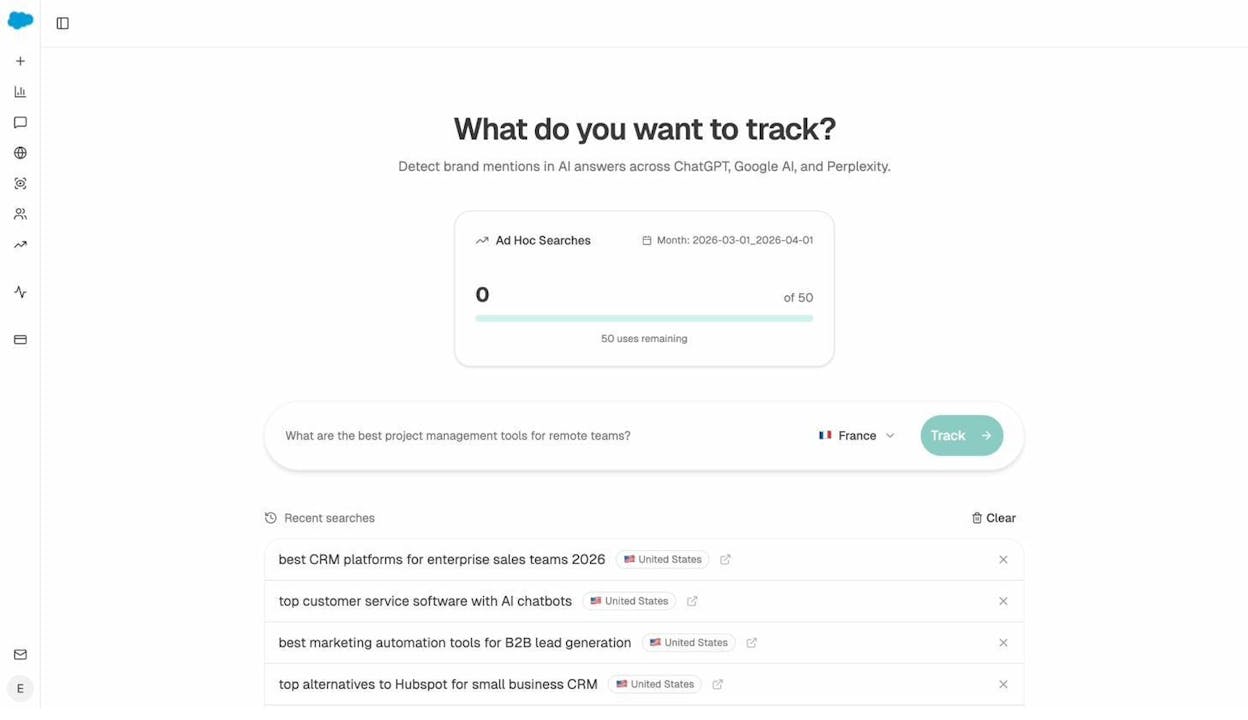
If very few affiliate blogs show up in AI responses for your niche, you have an early-mover advantage. Create the best content now, and AI models will start citing you as they update their training data and search indexes.
Where to Find Affiliate Programs
Once you’ve picked your niche, you need to find products to promote. There are four main ways to do this.
Affiliate Networks
Networks act as middlemen between you and brands. You sign up once and get access to thousands of affiliate programs. The biggest networks include:
-
ShareASale — Wide range of programs across every niche. Good for beginners.
-
CJ Affiliate (Commission Junction) — Strong selection of enterprise and mid-market brands.
-
Rakuten Advertising — Popular with large retail brands.
-
Impact — Growing fast, especially among SaaS and tech companies.
-
Awin — Strong in Europe and expanding globally.
The advantage of networks is convenience. You get a single dashboard to track all your earnings, and the payment processing is handled for you.
Amazon Associates
Amazon’s program is the easiest to get started with because nearly every physical product you can think of is available. The commission rates are low (1–3% on most categories), but the conversion rates are high because people already trust Amazon and often add other items to their cart — and you earn commission on everything they buy within 24 hours of clicking your link.
Amazon works best if your niche involves physical products. It’s a good starting point, but you should plan to diversify into higher-paying programs as your blog grows.
Direct Brand Partnerships
Many companies run their own affiliate programs outside of networks. Software companies, online course creators, and direct-to-consumer brands often offer higher commissions because they don’t have to pay a network fee.
To find these, search Google for “[product name] affiliate program” or look for an “Affiliates” or “Partners” link in the footer of websites you already use and trust.
![[Screenshot: Example of a Google search results page for “[niche] affiliate programs” showing listicles and brand program pages]](https://www.datocms-assets.com/164164/1776969832-blobid6.png?auto=format,compress&w=1248&fit=max)
The best direct partnerships come from products you actually use. Your recommendations will be more authentic, your content will be more detailed, and your readers will trust you more.
Spy on Competitors to Find Programs
One of the fastest ways to find profitable affiliate programs is to look at what your competitors are promoting. Visit the top blogs in your niche and pay attention to:
-
What products they link to in their navigation and sidebar
-
What brands appear in their “best of” and review posts
-
Any disclosure pages that list their affiliate partnerships
This tells you which programs are actually paying well enough for established bloggers to promote them.
How to Come Up With Blog Topics That Drive Affiliate Revenue
Not all blog posts are created equal when it comes to affiliate income. Some types of content naturally convert readers into buyers, while others are better for building authority and traffic. You need both, but knowing the difference will help you prioritize.
High-Converting Content Types for Affiliate Bloggers
“Best of” roundup posts — “Best running shoes for flat feet,” “Best email marketing software for small businesses.” These target people who are actively shopping and just need help deciding. They convert extremely well.
Product reviews — Detailed, honest reviews of a single product. These work especially well for high-ticket items where people do extensive research before buying.
Product comparisons — “Product A vs. Product B” posts. These capture people who’ve narrowed their options down and need a final push.
How-to tutorials that naturally include product recommendations — “How to start a podcast” where you recommend specific microphones, hosting platforms, and editing software. These build trust first and sell second.
Problem-solution posts — “How to fix [specific pain point]” where the solution involves a product you’re an affiliate for.
Study Competitors to Find Proven Keywords
The fastest way to find blog topics that will generate affiliate revenue is to study what’s already working for your competitors. Here’s how.
Step 1. Identify 3–5 successful blogs in your niche. These are sites that rank well on Google, publish regularly, and clearly monetize with affiliate links.
Step 2. Use a keyword research tool to see what keywords they rank for. Look specifically for keywords with commercial intent — terms that include words like “best,” “review,” “vs,” “alternative,” or “for [specific audience].”
![[Screenshot: A keyword research tool showing organic keywords for a competitor affiliate blog, filtered by commercial intent modifiers]](https://www.datocms-assets.com/164164/1776969837-blobid7.png?auto=format,compress&w=1248&fit=max)
Step 3. Filter for keywords with a keyword difficulty score below 30–40 and monthly search volume above 500. These are keywords where you have a realistic chance of ranking.
Step 4. Visit the competitor’s page that ranks for each keyword you like. Study how they structure the post, what products they promote, and how they use affiliate links. Take notes on what you can do better — more detail, better comparisons, more honest assessments of downsides.
Do Keyword Research From Scratch
If you’re entering a niche where you don’t have obvious competitors to study, you need to build your keyword list from scratch.
Step 1. Start with a broad seed keyword related to your niche. For example, if your niche is home coffee brewing, your seed keywords might be “coffee maker,” “espresso machine,” or “pour over coffee.”
Step 2. Plug those seeds into Analyze AI’s Keyword Generator to see related keyword ideas along with their search volume and difficulty.
![[Screenshot: Analyze AI’s Keyword Generator tool showing keyword ideas, search volumes, and difficulty scores for a coffee-related seed keyword]](https://www.datocms-assets.com/164164/1776969838-blobid8.png?auto=format,compress&w=1248&fit=max)
Step 3. Group the keywords by intent. Separate informational keywords (“how to make cold brew coffee”) from commercial keywords (“best cold brew coffee maker”). Both are valuable, but commercial keywords should be your priority for affiliate content.
Step 4. Check the SERP for each commercial keyword. If the top 10 results are dominated by sites with much higher authority than yours, look for longer-tail variations where you can compete. For example, instead of “best coffee maker,” try “best coffee maker under $100 for beginners.”
![[Screenshot: Analyze AI’s SERP Checker showing the top results for a sample affiliate keyword, including domain authority and page metrics]](https://www.datocms-assets.com/164164/1776969848-blobid9.png?auto=format,compress&w=1248&fit=max)
Step 5. Use Analyze AI’s Website Authority Checker to compare your site’s authority against the sites currently ranking. If the gap is too wide, focus on lower-competition keywords first and build your authority over time.
Find Blog Topics That AI Search Engines Care About
This is where most affiliate blogging guides stop. But there’s a new dimension to keyword research: understanding what questions people are asking AI chatbots and what content those chatbots are citing.
People are increasingly asking AI assistants questions like “What’s the best budget laptop for college students?” or “Which protein powder has the least artificial ingredients?” If your content is the one these AI engines cite in their response, you get a powerful new source of referral traffic.
Here’s how to find these opportunities:
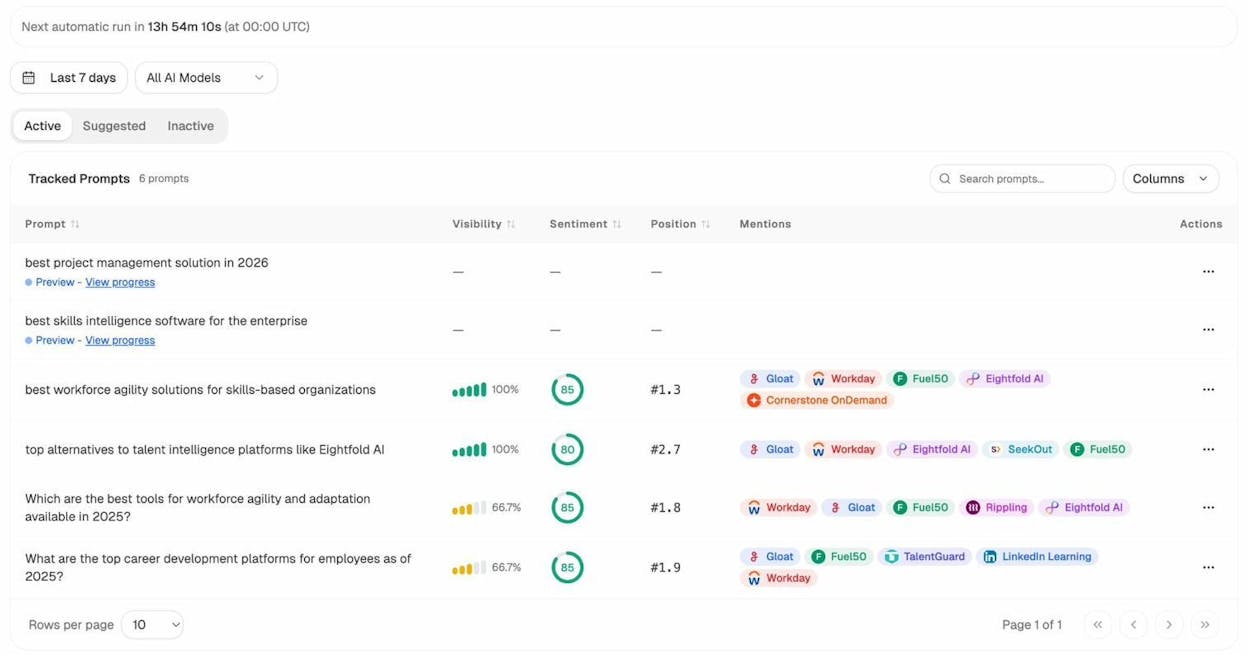
Step 1. In Analyze AI, go to the Prompts dashboard and look at the Suggested Prompts tab. This shows you prompts that are relevant to your industry where you’re not currently being mentioned.
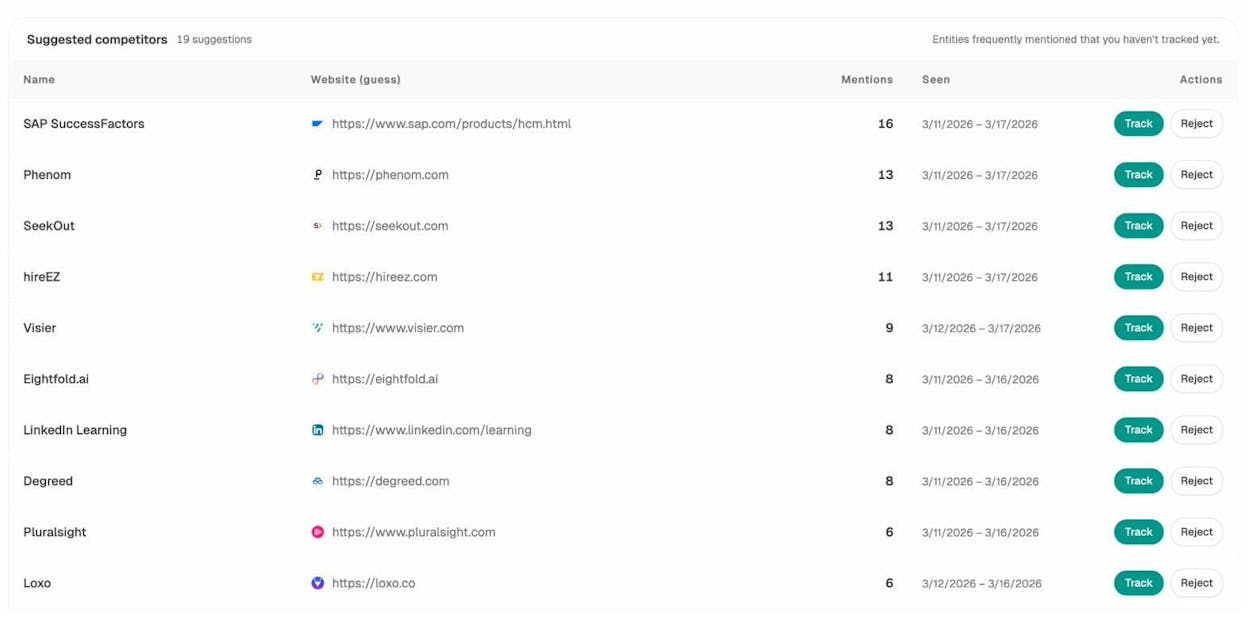
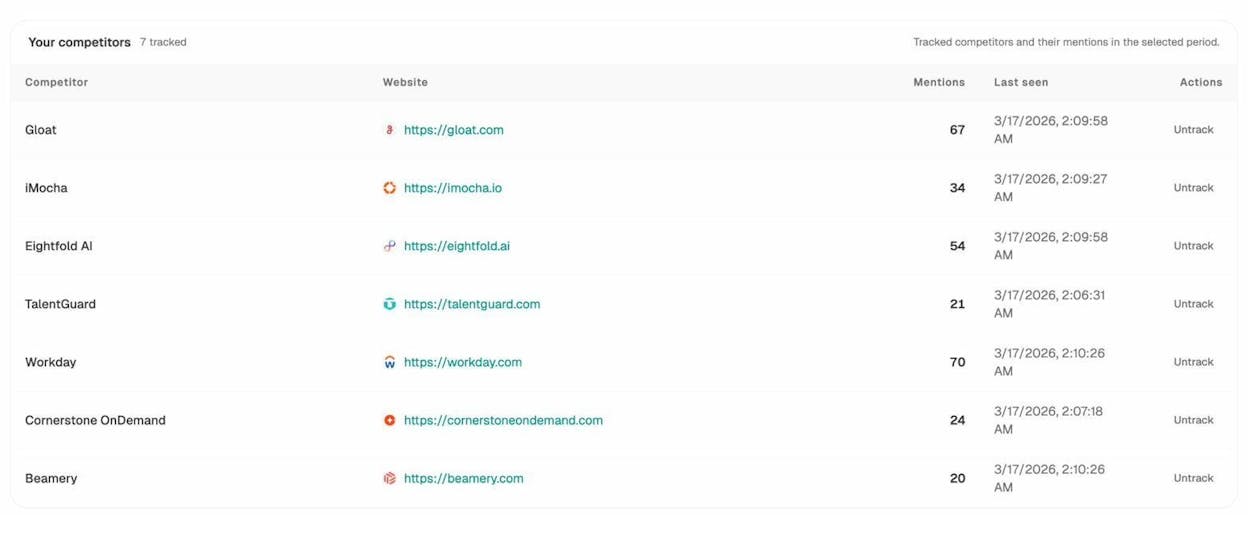
Step 2. Look at the Competitors tab to see which brands and sites are being mentioned in AI responses for your niche — but you’re not.
Step 3. Create content specifically designed to answer those prompts. Make it thorough, factual, and structured in a way that AI models can easily parse. This means clear headings, direct answers to questions, and original data or opinions that set your content apart.
How to Write Affiliate Content That Converts
Finding the right topics is only half the battle. You also need to write content that actually persuades readers to click your affiliate links and make a purchase. Here’s how to do it well.
Lead With Genuine Experience
The number one factor that separates high-converting affiliate content from low-converting content is authenticity. Readers can tell when a blogger has actually used a product versus when they’re just regurgitating the manufacturer’s description.
If you’ve used the product, talk about your actual experience. What did you like? What frustrated you? Who is this product perfect for, and who should avoid it? These are the details that build trust and drive conversions.
If you haven’t used the product, be transparent about it. Explain that you’ve researched it extensively, summarize what real users are saying, and link to credible third-party reviews. Never pretend you’ve used something you haven’t.
Structure Reviews for Scanners and Readers
Most visitors won’t read your entire review word-for-word. They’ll scan for the information they need and then decide whether to read more carefully or move on.
Design your content for this behavior:
-
Put your verdict and rating at the top of the review, not the bottom. Readers who are ready to buy don’t want to scroll through 3,000 words to find your recommendation.
-
Use clear headings for each section: Features, Pros, Cons, Who It’s For, Pricing, Alternatives.
-
Include a comparison table when reviewing multiple products. Tables let scanners compare options at a glance without reading every paragraph.
-
Add your own photos or screenshots whenever possible. Original images build credibility and help readers see the product in a real-world context.
![[Screenshot: Example of a well-structured affiliate review post with clear headings, a comparison table, and product images]](https://www.datocms-assets.com/164164/1776969863-blobid12.png?auto=format,compress&w=1248&fit=max)
Disclose Your Affiliate Relationships
Every affiliate post needs a clear disclosure that you may earn a commission from purchases made through your links. This isn’t optional — the U.S. Federal Trade Commission requires it, and many other countries have similar rules.
Place your disclosure at the top of the post, before any affiliate links appear. Something simple works: “This post contains affiliate links. If you purchase through these links, I may earn a commission at no extra cost to you.”
Beyond legal compliance, transparency builds trust. Readers respect bloggers who are upfront about how they make money.
Optimize for AI Search Visibility
To give your affiliate content the best chance of being cited by AI search engines, follow these principles:
Answer questions directly. Structure your content so that each section clearly answers a specific question. If your heading is “What’s the best budget coffee maker?”, the first sentence of that section should give a direct answer before diving into details.
Include original data or analysis. AI models prioritize content that adds new information to a topic. If you’ve tested a product and can share performance data, comparison metrics, or unique observations, include them. Original data is one of the strongest signals for AI citation.
Use structured formatting. Clear headings, numbered lists for steps, and comparison tables all make it easier for AI models to extract and cite your content. Unstructured walls of text are harder for AI to parse.
Keep your content updated. AI models are increasingly pulling from recent content. If your “Best [product] in 2025” post still has 2024 dates and discontinued products, it’s less likely to be cited. Set a reminder to update your top affiliate posts quarterly.
You can track how your content performs in AI search using Analyze AI’s Sources dashboard. It shows you every URL and webpage that AI platforms cite when answering questions in your industry — including your own pages.
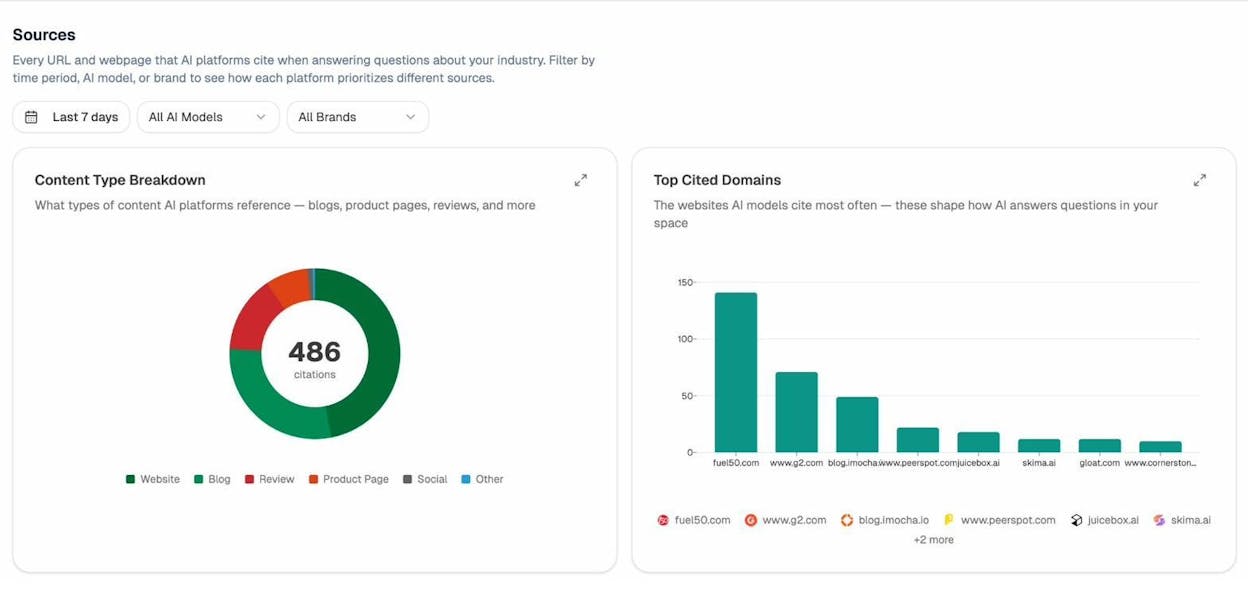
If your affiliate blog posts start showing up here, you know your AI search optimization is working.
Essential Tools for Affiliate Bloggers
Building a successful affiliate blog requires the right tools. Here are the ones that matter most, organized by what they help you do.
Content Management: WordPress
If you’re starting an affiliate blog, WordPress is the platform to use. It’s free, open-source, has thousands of plugins for every need, and powers over 40% of all websites on the internet.
Pair WordPress with a lightweight, fast theme (like GeneratePress or Astra) and essential plugins:
-
Rank Math or Yoast SEO — For on-page SEO optimization
-
WP Rocket or LiteSpeed Cache — For page speed
-
ThirstyAffiliates or Lasso — For managing and cloaking affiliate links
-
Imagify or ShortPixel — For image compression
![[Screenshot: WordPress dashboard showing a typical affiliate blog setup with key plugins installed]](https://www.datocms-assets.com/164164/1776969872-blobid14.png?auto=format,compress&w=1248&fit=max)
Affiliate Link Management: Lasso or ThirstyAffiliates
As your blog grows, you’ll have hundreds of affiliate links scattered across dozens of posts. Managing these manually is a nightmare. Lasso and ThirstyAffiliates both solve this by:
-
Letting you update a link in one place and have it change everywhere on your site
-
Creating clean, branded link URLs instead of ugly affiliate tracking URLs
-
Alerting you when linked products go out of stock or when links break
Use Analyze AI’s Broken Link Checker periodically to catch any dead affiliate links on your site. Broken links hurt both your user experience and your SEO.
SEO and Keyword Research Tools
You need at least one solid SEO tool to do keyword research, track your rankings, and analyze your competitors. Analyze AI offers a suite of free tools that cover the basics:
-
Keyword Generator — Find keyword ideas with volume and difficulty data
-
Keyword Difficulty Checker — Assess how hard it is to rank for a keyword
-
Keyword Rank Checker — Check where your pages rank for specific keywords
-
SERP Checker — Analyze the top search results for any keyword
-
Website Traffic Checker — Estimate competitors’ traffic to spot opportunities
-
Website Authority Checker — Compare domain authority to understand competitive gaps
For YouTube and Amazon affiliates, Analyze AI also provides free YouTube Keyword Tool and Amazon Keyword Tool to find keywords specific to those platforms.
AI Search Visibility: Analyze AI
This is the tool most affiliate bloggers don’t know about yet — and it’s the biggest untapped advantage.
Analyze AI tracks how your brand and content appear across AI search platforms like ChatGPT, Perplexity, Claude, Gemini, and Copilot. For affiliate bloggers, this means you can:
-
See which of your pages get cited by AI engines using the AI Traffic Analytics landing pages report
-
Track which affiliate-relevant prompts mention your content using the Prompts dashboard
-
Identify gaps where competitors appear in AI answers but you don’t using the Competitors view
-
Monitor how AI platforms perceive your brand using the Perception Map
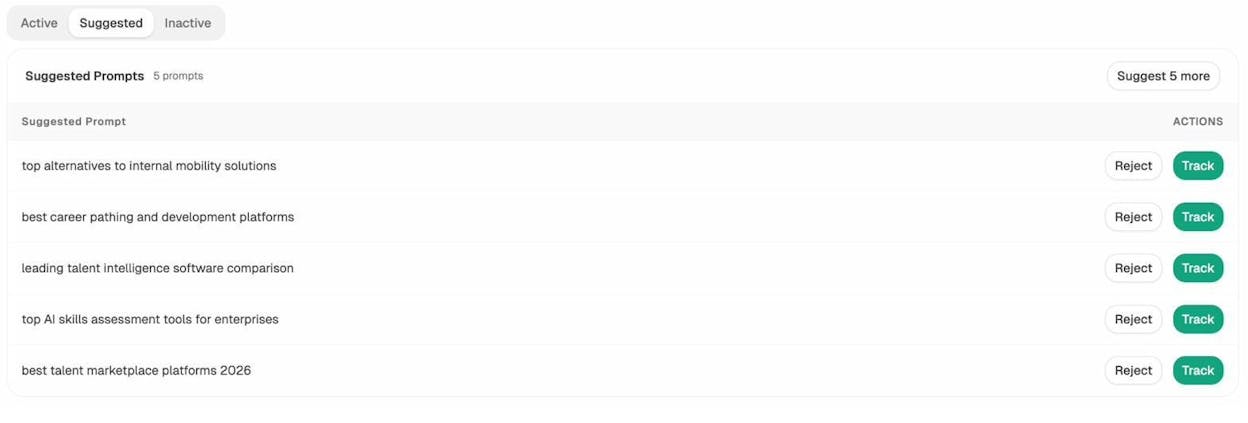
This data gives you a clear roadmap: create content for the prompts where you’re missing, optimize the pages that AI engines already reference, and track your progress over time.
Writing and Editing Tools
Good affiliate content requires clean, clear writing. These tools help:
-
Google Docs — For writing and collaboration. Free and easy to share with editors.
-
Hemingway App — For catching overly complex sentences and passive voice.
-
Grammarly — For grammar, spelling, and style suggestions.
-
Canva — For creating custom blog images, Pinterest pins, and comparison graphics without design skills.
-
Snagit — For taking and annotating screenshots (essential for tutorial-style affiliate content).
Affiliate Blog Traffic Strategies
Creating great content is necessary but not sufficient. You also need to drive traffic to that content. Here are the three most important channels for affiliate bloggers, plus the emerging fourth channel that most guides ignore.
Search Engine Optimization (SEO)
SEO is the backbone of most successful affiliate blogs. It takes time — typically three to six months to see meaningful results — but once your posts rank on Google, they generate traffic without ongoing effort.
The fundamentals of SEO for affiliate bloggers:
Target the right keywords. Use keyword research to find terms with commercial intent and manageable competition. Focus on long-tail keywords first, especially if your site is new.
![[Screenshot: Example of a keyword research tool showing long-tail affiliate keywords with volume, difficulty, and CPC data]](https://www.datocms-assets.com/164164/1776969880-blobid16.png?auto=format,compress&w=1248&fit=max)
Create content that matches search intent. If someone searches “best wireless earbuds under $50,” they want a comparison post with recommendations — not a 500-word essay about the history of wireless audio. Look at what currently ranks for your target keyword and create something better.
Build backlinks. Links from other websites tell Google your content is trustworthy and authoritative. The best way to earn backlinks as an affiliate blogger is to publish original research, create genuinely useful tools or resources, and write content so good that other bloggers naturally reference it. For a deeper dive into strategies, check out this guide on link building tools.
![[Screenshot: A backlink profile showing referring domains for a successful affiliate blog]](https://www.datocms-assets.com/164164/1776969885-blobid17.png?auto=format,compress&w=1248&fit=max)
Nail technical SEO. Make sure your site loads fast, is mobile-friendly, has a clean URL structure, and uses proper heading hierarchy. These basics are table stakes. Use a free tool like Google Search Console alongside Analyze AI’s free SEO tools to track your progress.
Fix and maintain link health. Broken links hurt your SEO and your user experience. Run your site through Analyze AI’s Broken Link Checker regularly to catch and fix dead links before they damage your rankings.
For a complete overview of SEO strategy in 2026, read our SEO content strategy guide.
Social Media Marketing
While SEO takes months to produce results, social media can drive traffic almost immediately. The tradeoff is that social media requires consistent effort — if you stop posting, traffic dries up.
The best social platforms for affiliate bloggers:
Pinterest — Extremely powerful for niches like home decor, fashion, food, fitness, and personal finance. Pinterest acts more like a visual search engine than a social network, and pins can drive traffic for months after posting.
YouTube — Video reviews and tutorials convert incredibly well for affiliate marketing. People want to see products in action before buying. If you can create even basic product videos, you’ll have an advantage over text-only bloggers. Use Analyze AI’s YouTube Keyword Tool to find what people are searching for on YouTube in your niche.
Twitter/X and LinkedIn — Better for B2B and software affiliate niches where your audience is professionals.
Instagram and TikTok — Good for visual, lifestyle-focused niches. Short-form video product recommendations can go viral and drive significant traffic.
The key to social media success for affiliate bloggers: don’t just share links to your blog posts. Create native content for each platform that provides value on its own — and then direct interested people to your blog for the full review or comparison.
Email List Building
An email list is the most valuable asset you can build as an affiliate blogger. Unlike search rankings and social media algorithms, you own your email list. Nobody can take it away from you.
Here’s how to build an email list that drives affiliate revenue:
Step 1. Create a lead magnet relevant to your niche. This could be a buying guide, comparison spreadsheet, discount code compilation, or mini-course. The lead magnet should be genuinely useful, not just a repackaged version of your blog content.
Step 2. Add email opt-in forms to every blog post. Place them within the content (not just in the sidebar, which most people ignore). In-content opt-ins convert 2–5x better than sidebar forms.
![[Screenshot: Example of an in-content email opt-in form on an affiliate blog, offering a niche-specific lead magnet]](https://www.datocms-assets.com/164164/1776969890-blobid18.png?auto=format,compress&w=1248&fit=max)
Step 3. Send a welcome email sequence that builds trust before promoting anything. Share your best content, tell your story, and explain why you recommend the products you do. Don’t start sending affiliate promotions until email three or four.
Step 4. Send a regular newsletter (weekly or biweekly) that mixes valuable content with product recommendations. The ratio should lean heavily toward value — aim for 80% helpful content, 20% affiliate promotions.
Email marketing works especially well for high-ticket affiliate products where the buying cycle is longer. Someone might not buy a $500 product after reading a single blog post, but after receiving five helpful emails from you, they trust your recommendation enough to purchase.
AI Search: The Emerging Fourth Channel
This is the channel that separates forward-thinking affiliate bloggers from everyone else. And it’s the reason we’re covering it in this guide — not because it replaces SEO, but because it’s a new organic channel that works alongside everything you’re already doing.
People are increasingly using ChatGPT, Perplexity, Gemini, and Claude to research purchases. When someone asks “What’s the best VPN for streaming?” and the AI engine cites your blog post in its response, that’s high-quality referral traffic you didn’t have to pay for or wait six months to earn through traditional SEO.
Here’s how to build your presence in AI search:
Step 1. Track your current AI visibility. Use Analyze AI to see if your blog is already being cited by AI engines. Check the AI Traffic Analytics dashboard to see if any AI-referred visitors are landing on your site.
Step 2. Identify the gaps. Go to the Competitors view in Analyze AI to see which sites and brands are being mentioned in AI responses for your niche — but your blog isn’t.
Step 3. Create content that fills those gaps. Write the most thorough, accurate, and well-structured content you can for the topics where you’re currently invisible in AI search.
Step 4. Monitor your progress over time with Analyze AI’s weekly email digests, which tell you whenever your visibility changes across AI platforms.
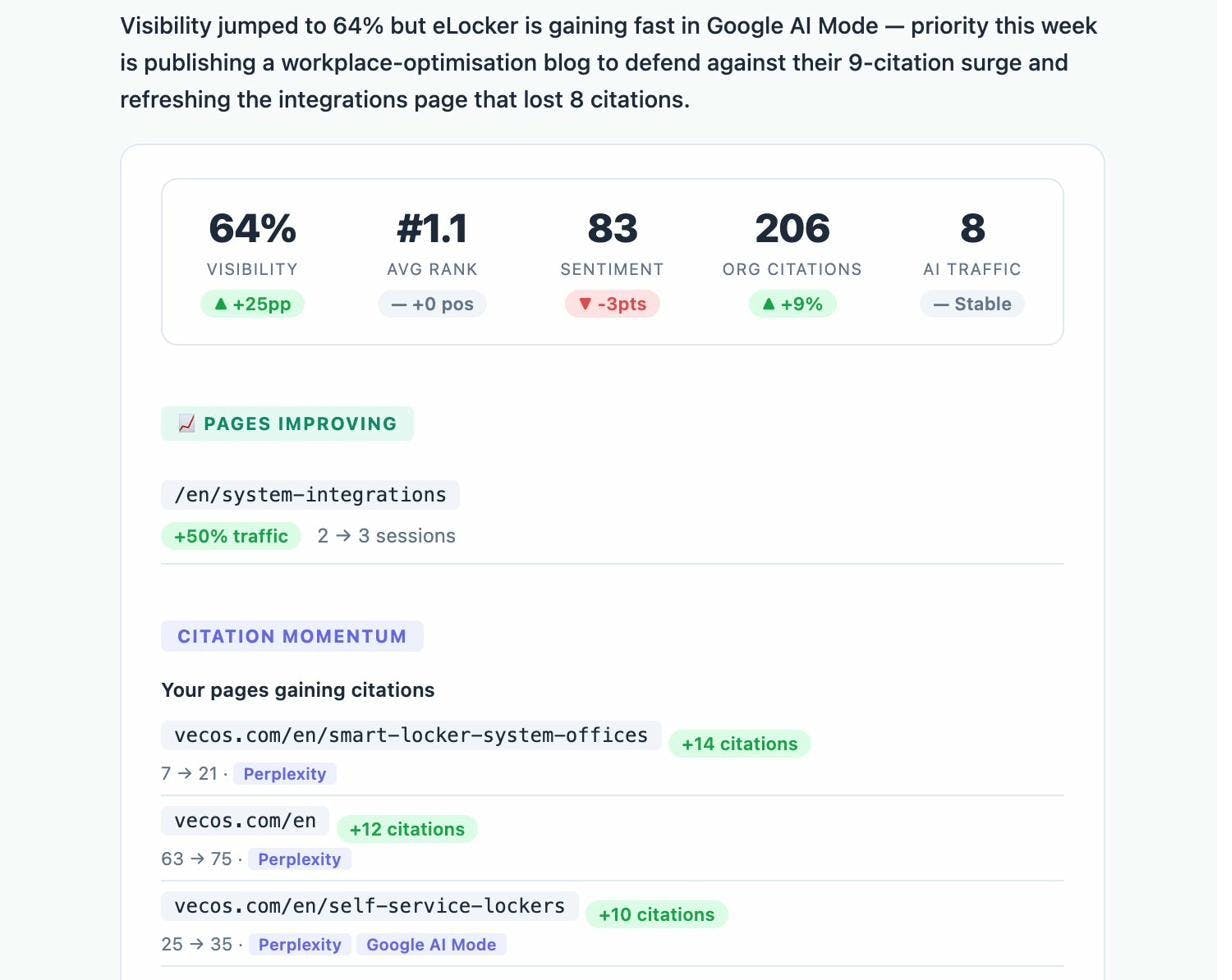
The bloggers who start optimizing for AI search now will have a significant head start over those who wait. AI search traffic is growing rapidly, and the content that gets cited early tends to maintain its position as these models update.
How to Maximize Your Affiliate Earnings
Driving traffic and earning commissions is the baseline. Here’s how to increase your earnings beyond that.
Negotiate Higher Commission Rates
Once you’re sending consistent traffic and sales to an affiliate partner, you have leverage to negotiate better rates. This won’t work with large programs like Amazon, but smaller and mid-size brands are often willing to increase commissions by 2–5% for affiliates who deliver results.
Reach out to your affiliate manager directly. Show them your traffic numbers, conversion rates, and total sales. Frame the request as a win-win: a higher commission means you’ll invest more effort in promoting their product, which means more sales for them.
Focus on Recurring Commission Programs
A one-time $50 commission is nice. A recurring $15/month commission from a SaaS subscription is much better — that’s $180 per year per customer, and it compounds as you refer more subscribers.
Prioritize affiliate programs with recurring commissions, especially in niches like software, online tools, subscription boxes, and membership programs. Over time, recurring commissions can become the majority of your income.
Update and Optimize Existing Content
One of the fastest ways to increase affiliate revenue is to improve content that’s already performing. Find your blog posts that rank on page two of Google or in positions 5–10 on page one. These are posts that are close to driving significant traffic but need a boost.
To improve them:
-
Update the content with current information, new products, and fresh screenshots
-
Add more depth to sections that are thin compared to competitors
-
Improve your internal linking to these posts from other pages on your site
-
Refresh the title tag and meta description to improve click-through rate
For guidance on content optimization, check out this content marketing reporting guide to understand which metrics matter most.
Diversify Your Affiliate Programs
Don’t put all your eggs in one basket. If a single affiliate program accounts for more than 50% of your income, you’re one program change away from a financial crisis.
Spread your affiliate relationships across multiple programs. If Amazon cuts commission rates (which they’ve done before), you want other income streams to fall back on. Ideally, no single program should account for more than 30% of your total affiliate revenue.
Track What’s Working in AI Search — and Double Down
Use Analyze AI’s Perception Map to understand how AI engines perceive your brand and content. This tells you whether you’re seen as trustworthy, authoritative, and relevant in your niche — all factors that influence whether AI engines cite you.
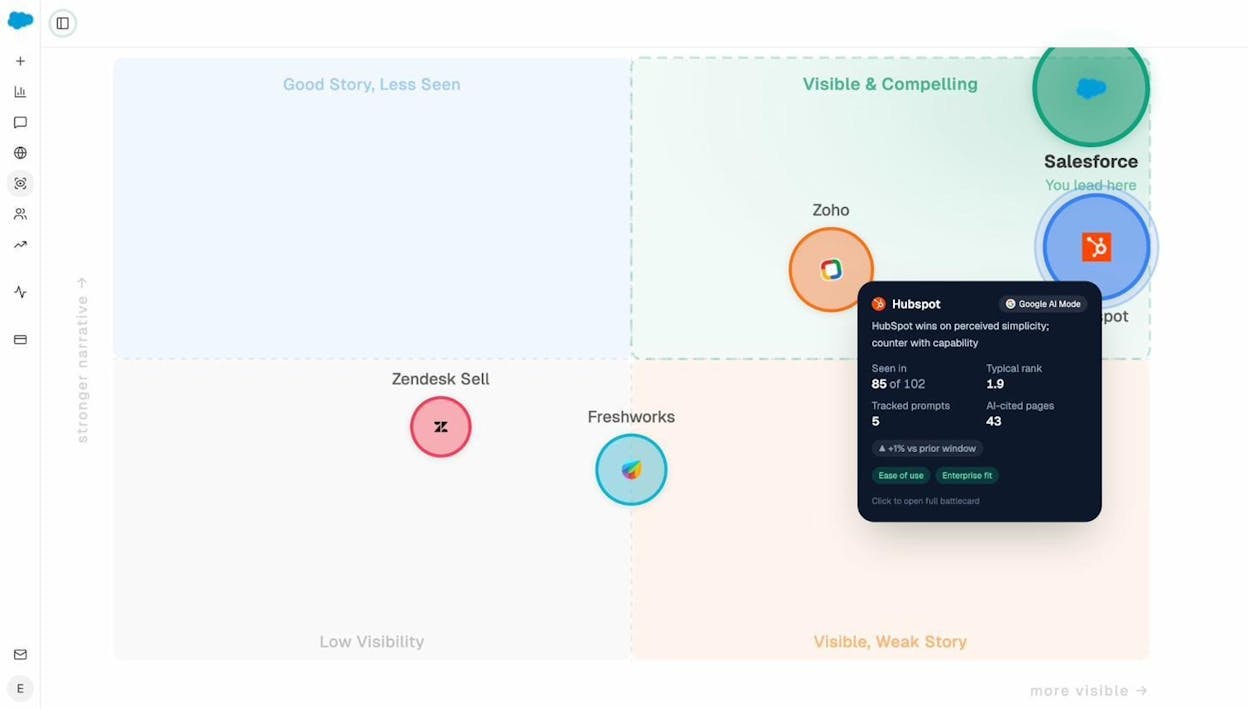
If the perception data shows that AI engines associate your blog with specific topics, lean into those topics. Create more content in those areas. If AI engines aren’t associating you with topics you want to own, create targeted content to shift that perception.
Common Mistakes to Avoid
After years of doing affiliate marketing and watching hundreds of bloggers try (and many fail), these are the mistakes that kill affiliate blogs:
Promoting products you haven’t researched. Your readers will notice. One bad recommendation can destroy months of trust-building.
Writing thin, generic content. “Best [product] 2026” posts that read like a list of Amazon descriptions won’t rank, won’t convert, and won’t get cited by AI engines. Add original analysis, real opinions, and genuine detail.
Ignoring SEO fundamentals. Social media traffic is valuable, but SEO traffic is what makes affiliate blogging sustainable long-term. Don’t skip keyword research, on-page optimization, and link building.
Neglecting site speed and mobile experience. If your blog takes more than three seconds to load, you’re losing visitors before they even see your content. Compress images, use a caching plugin, and test your site on mobile regularly.
Not disclosing affiliate relationships. Beyond the legal requirement, hiding your affiliate relationships erodes trust. Be upfront about how you make money.
Forgetting about AI search entirely. The affiliate bloggers who treat AI search as “not my problem” will look back in two years and wish they’d started earlier. Set up Analyze AI tracking now, even if AI search is a small percentage of your traffic today.
Frequently Asked Questions
How do I start an affiliate marketing blog?
Pick a niche, buy a domain and hosting, install WordPress, join relevant affiliate programs, and start creating content. The whole setup can be done in a weekend. The harder part — creating consistent, high-quality content and building traffic — takes months of effort. For a complete SEO content strategy to guide your content creation, start there.
How much can a beginner affiliate blogger make?
Most beginners earn between $0 and $10,000 in their first year. It typically takes six to twelve months to start earning any meaningful affiliate income, and around two years to generate enough to replace a full-time salary. The timeline depends on your niche, the quality of your content, and how aggressively you build traffic.
Is affiliate marketing still worth it in 2026?
Yes. The affiliate marketing industry continues to grow at roughly 10% per year and is projected to be worth over $27 billion by 2027. What has changed is that competition is higher, so the bar for content quality is higher too. You can’t just publish mediocre listicles and expect to rank anymore. You need genuine expertise, original content, and a multi-channel traffic strategy that includes both SEO and AI search.
Can you start affiliate marketing with no money?
Almost. You can start with just the cost of web hosting (around $3–5/month) and a domain name ($10–15/year). That’s roughly $50 for your first year. Everything else — keyword research, content creation, social media promotion — can be done with free tools. Analyze AI’s free tools cover keyword research, SERP analysis, and rank tracking without requiring a paid subscription.
How long does it take to make money from affiliate blogging?
Expect six to twelve months before you see your first meaningful affiliate commission. Most successful affiliate bloggers report that it takes about two years of consistent effort before their blog generates enough income to be considered a serious revenue stream. The timeline shortens significantly if you choose a less competitive niche and focus on lower-competition keywords.
Should I worry about AI search replacing Google?
No. AI search is not replacing Google. It’s an additional channel. People still use Google for navigational searches, local queries, and quick information lookups. AI search is strongest for research-heavy, conversational queries — which happens to overlap heavily with the type of content affiliate bloggers create. The smart play is to optimize for both, not choose one over the other. You can read more about this perspective in the Analyze AI manifesto.
Final Thoughts
Affiliate marketing and blogging remain one of the best low-overhead business models for generating recurring, passive income. The fundamentals haven’t changed: pick a good niche, create content that genuinely helps people, build traffic through SEO and other channels, and promote products you believe in.
What has changed is the landscape. AI search is creating a new organic channel that rewards the same qualities as good SEO — clarity, depth, originality, and trustworthiness. Bloggers who recognize this shift and start tracking their AI visibility today will be the ones dominating both Google and AI search results tomorrow.
Start by setting up your blog, choosing your niche, and creating your first piece of content. Then layer in the analytics — track your search rankings, monitor your AI visibility, and let the data guide your next move.
The opportunity is real. The work is hard. But the rewards compound over time. Start now.

Ernest

Ibrahim


