



Summarize this blog post with:


In this article, you’ll get an honest breakdown of the seven AI lead generation tools that are actually worth paying for right now. You’ll learn what each tool does best, where each one falls short, how their pricing really works once you factor in credits and overages, and how to wire multiple tools into automated workflows that run your entire GTM motion without you babysitting every step.
Table of Contents
Can You Actually Use AI for Lead Generation?
Yes. And it is one of the strongest use cases for AI because you are working with structured data, clear signals, and repeatable processes.
Prospecting, data enrichment, email personalization, and lead scoring all follow patterns. AI handles patterns well. When you combine an AI layer with B2B databases and your existing sales stack, you automate the work that used to require a full SDR team.
But AI is not a magic button. You still need to know your ideal customer profile and what messaging works for your market. AI helps you do it faster and across more accounts. It does not replace the thinking behind it.
The tools below range from single-purpose email finders to full agentic platforms that can automate your entire marketing operation. What matters is picking the one that matches your team size, your budget, and where you are losing the most time today.
What to Look for in an AI Lead Generation Tool
Before you start comparing features, get clear on the six things that actually separate a useful tool from an expensive distraction.
|
Criteria |
What it means in practice |
|---|---|
|
Data quality |
Does the tool verify emails, phone numbers, and company info before you use it? Bad data means bounced emails and wasted sequences. |
|
Agentic capabilities |
Can the platform make decisions on its own? Researching prospects, scoring leads, adjusting outreach based on signals, all without you clicking buttons. |
|
Outreach automation |
How well does it handle multi-step sequences across email, LinkedIn, calls, or other channels? |
|
Personalization depth |
Can the AI go beyond inserting a first name? Can it pull in specific details about a prospect’s company, recent news, or buying signals? |
|
Integrations |
How easily does it connect with your CRM, Slack, calendar, CMS, and whatever else your team already uses? |
|
Pricing at scale |
Most tools look cheap at the entry level. How does the cost change when you add more users, contacts, or send volume? Credit-based models get expensive fast. |
These are not the only factors, but they are the ones that determine whether you will still be happy with your choice three months from now.
7 Best AI Lead Generation Tools in 2026
Here is every tool we are covering, with quick links to each section:
-
Apollo
-
Clay
-
Analyze AI
-
Lemlist
-
Instantly
-
ZoomInfo
-
Hunter.io
1. Apollo
Best for: SDR teams and founders who want an all-in-one outbound platform.
Pricing: Free plan available. Paid plans start at $49/user/month (annual) or $59/user/month (monthly).
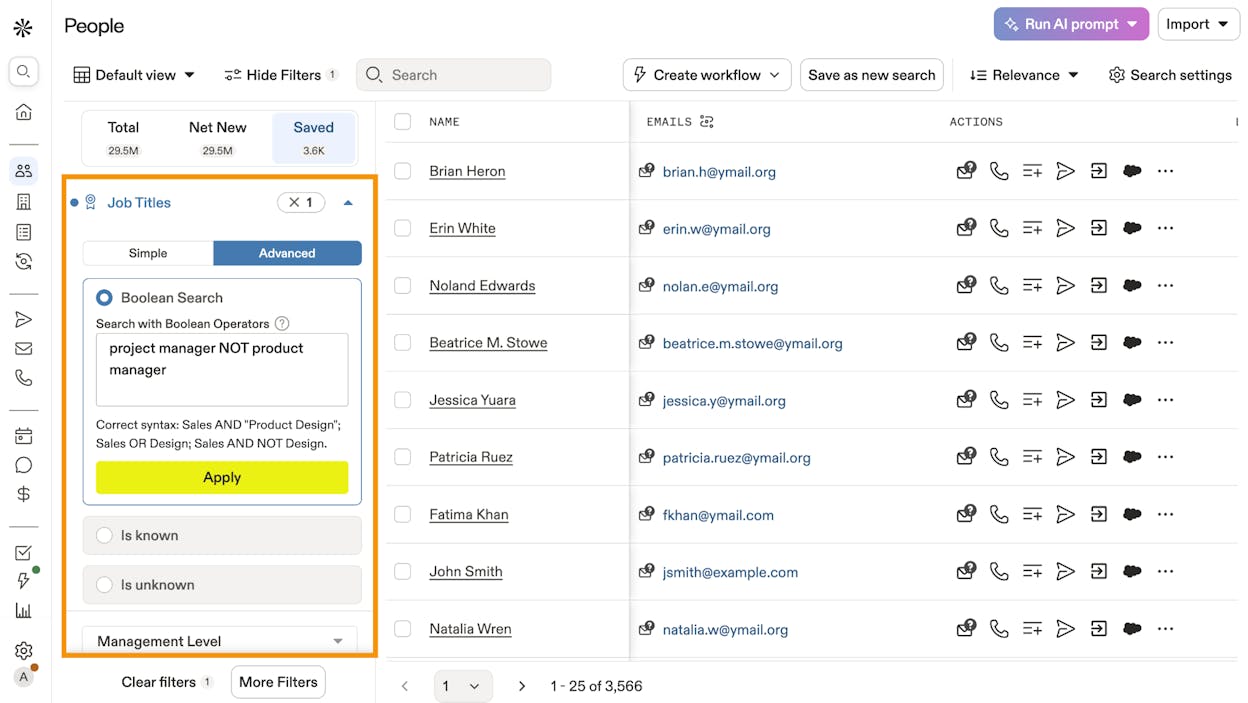
Apollo is an all-in-one sales platform that covers the full outbound workflow. You get access to a B2B database with over 210 million contacts, built-in email sequencing, a dialer, and CRM sync. For teams that want to find leads and run outreach from one place, Apollo is the fastest way to start.
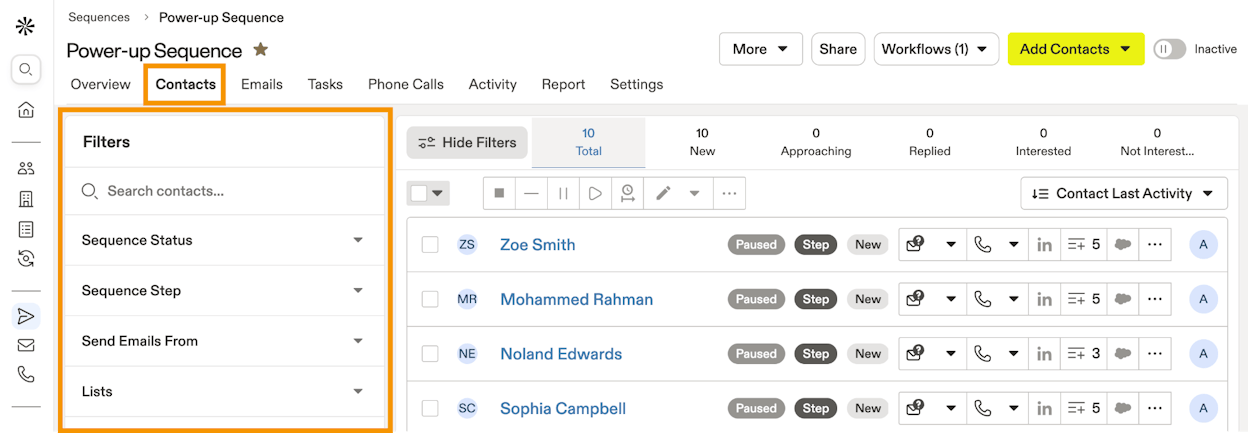
Where Apollo shines is its ICP filtering. You can narrow down contacts by job title, company size, industry, tech stack, and intent signals. From there, you build multi-step sequences combining emails, calls, and LinkedIn touches. The AI writing assistant helps personalize messages, and the platform tracks engagement across every channel.
The pricing looks simple on the surface, but it is credit-based. Your Basic plan includes 1,000 export credits per month. If your team burns through those quickly, you are paying $25 per 1,000 additional credits. Active outbound teams regularly report spending $150 to $400 per user per month once overages are factored in.
What works well: Massive database with precise ICP filtering. Built-in sequencing and dialers. Competitive pricing for what you get at the lower tiers.
What could be better: Credit-based model gets unpredictable at scale. Contact data can sometimes be outdated. Enterprise pricing jumps significantly.
Reviews: 4.7/5 on G2 (9,500+ reviews). 4.5/5 on Capterra (387+ reviews).
2. Clay
Best for: Growth and GTM teams that need highly accurate, multi-source data enrichment.
Pricing: Free plan available. Launch plan starts at $185/month. Growth plan at $495/month.
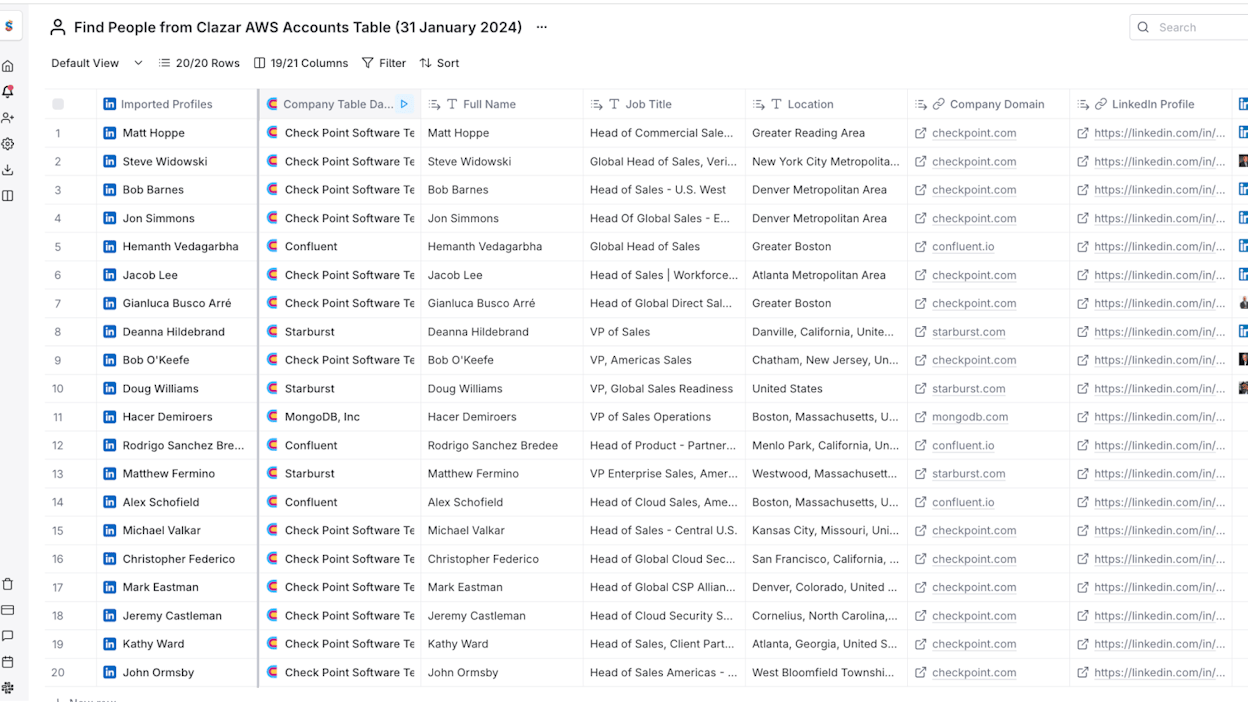
Clay is the platform that made waterfall enrichment a standard GTM expectation. Instead of relying on a single database, Clay chains together 150+ data providers to fill in contact information. If the first provider does not have a phone number, it checks the second. Then the third. This approach dramatically reduces the gaps you get with single-source tools.
Clay also has Claygent, an AI agent that can crawl the web and find deeply personalized information about your prospects. It can pull details from a prospect’s LinkedIn activity, recent company news, job changes, and more. When you use this data in your outreach, your emails feel like they were written by someone who actually did their homework, not by an AI that swapped in a first name.
The tradeoff is complexity and cost. Clay’s pricing uses a dual-credit system for data credits and actions. A basic contact enrichment (name, email, title) costs roughly 14 credits. Full enrichment with phone and social profiles can cost 75 credits per lead. On the Growth plan, that works out to about $0.65 to $1.20 per fully enriched contact. For teams running thousands of contacts per month, the bill adds up.
What works well: Waterfall enrichment gives you the most accurate data available. Claygent pulls in deeply personalized prospect details. Strong enterprise adoption and 100% enterprise retention rate.
What could be better: Starts at $185/month, which is steep for small teams. Significant learning curve for table logic and enrichment setup. Not ideal if you just need a simple email finder.
Reviews: 4.7/5 on G2 (193+ reviews). 4.8/5 on Product Hunt (39+ reviews).
3. Analyze AI
Best for: Marketing, content, and GTM teams that want to automate lead generation alongside SEO, content production, and AI search visibility, all from one platform.
Pricing: Free trial available. Simple, transparent pricing without credit-based overages.
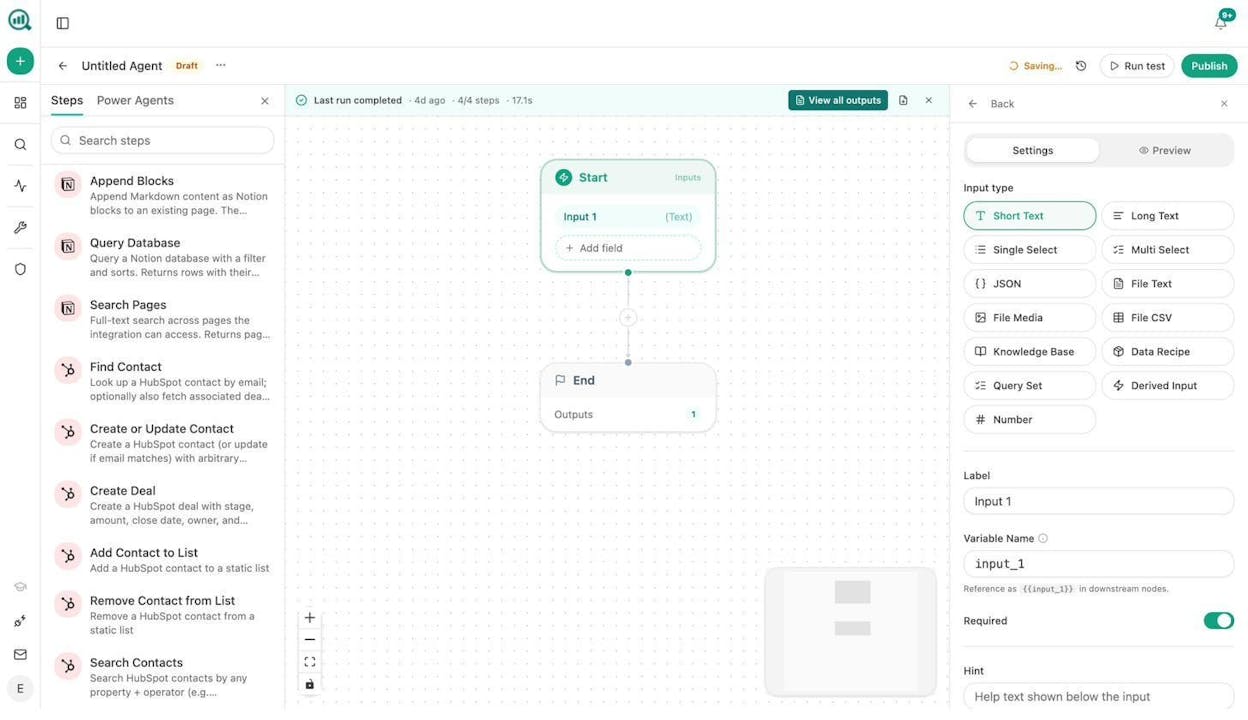
Most lead generation tools solve one part of the pipeline. Analyze AI solves the pipeline. It is an agentic platform for SEO, AEO, content, and GTM ops, with a 180+ node Agent Builder that connects to HubSpot, GA4, Google Search Console, Semrush, DataForSEO, WordPress, Notion, Mailchimp, and more. That means you can build agent workflows that handle everything from lead enrichment to content writing to competitive intelligence, without switching between five different tools.
Here is what makes Analyze AI different from every other tool on this list. The others give you features. Analyze AI gives you a substrate. With 180+ nodes, 34 pre-built data recipes, and three trigger modes (manual, scheduled, webhook), you can compose workflows with billions of possible configurations. You are not picking from a curated template library. You are composing from primitives.
For lead generation specifically, here is what you can build:
Personalized outreach at scale. Wire up a workflow that takes a prospect domain, runs it through DataForSEO Domain Overview, pulls company data, finds the right contact using Hunter or Tomba email nodes, enriches with recent news, then uses the Prompt LLM node to write a personalized email grounded in actual research. The Send Email node delivers it. Schedule this agent to run daily, and your outreach pipeline runs itself.
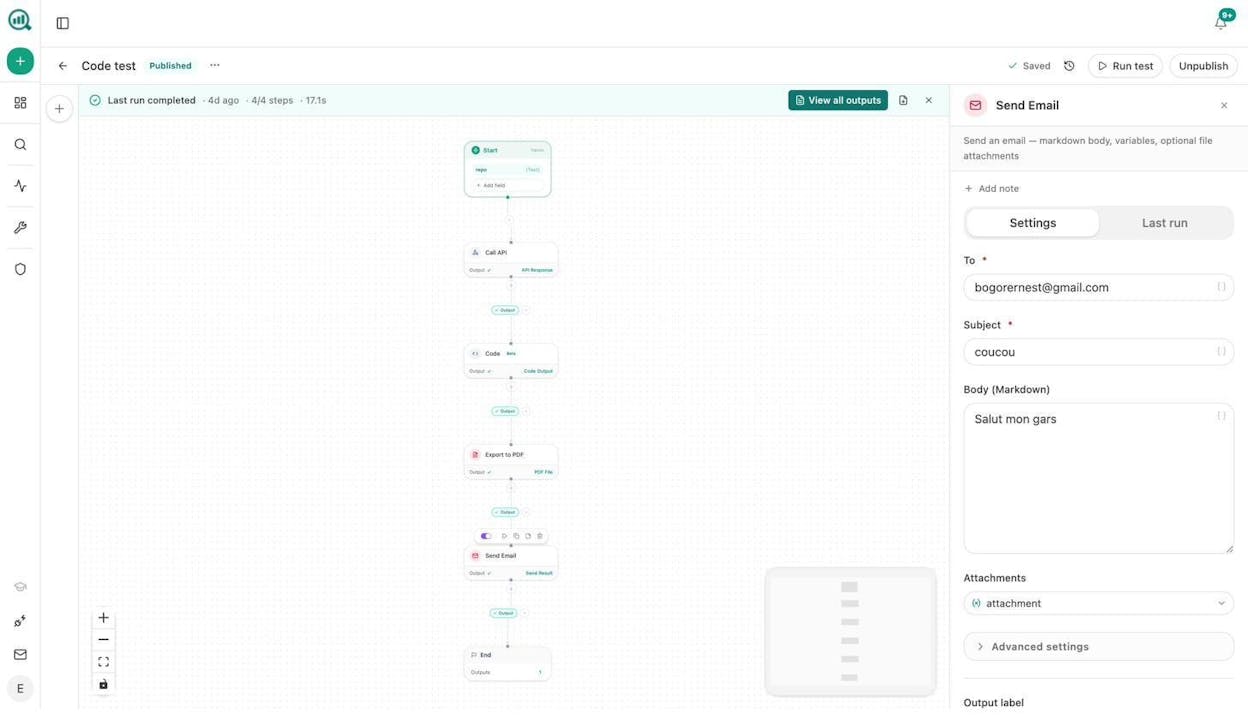
Account research on autopilot. When a deal stage changes in HubSpot, a webhook triggers your agent. The agent researches the company, pulls recent news, finds key people using Tomba, and generates a DOCX research brief that gets attached directly to the HubSpot deal. Your AE walks into the discovery call fully prepared, without spending an hour on manual research.
Content that generates leads. Unlike pure outbound tools, Analyze AI also has a full Content Writer and Content Optimizer that produce SEO and AEO-optimized content at scale. Your content attracts inbound leads while your agents handle outbound. That is the full loop.
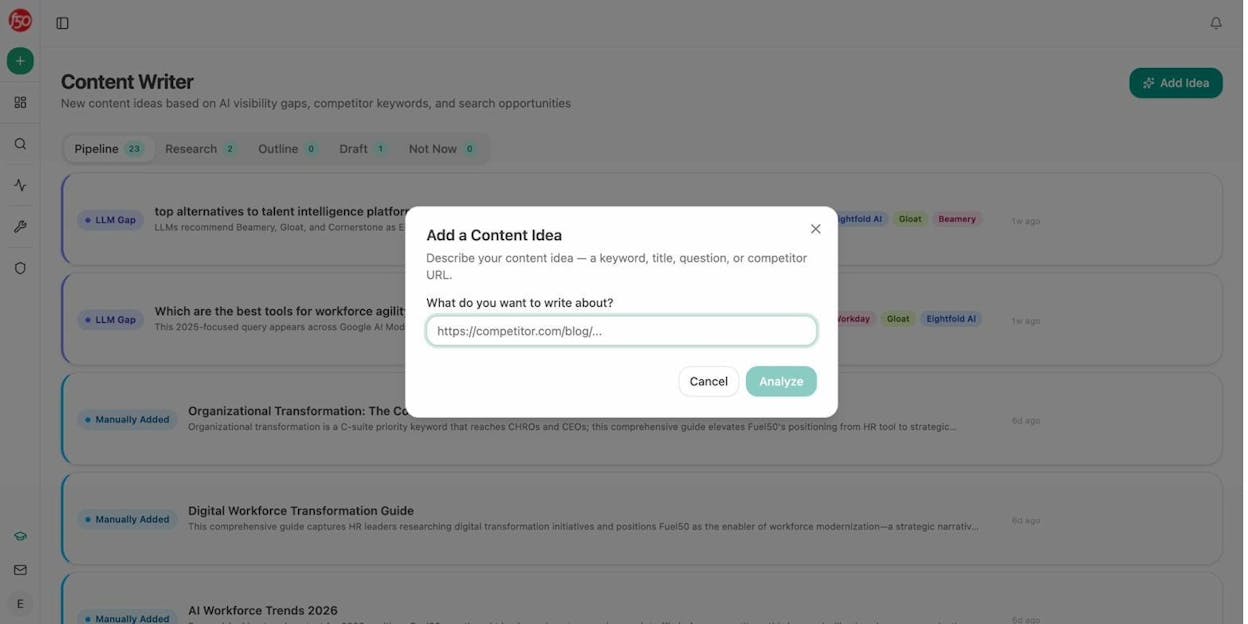
AI search as a lead generation channel. Here is something no other tool on this list does. Analyze AI tracks your brand visibility across ChatGPT, Perplexity, Gemini, Claude, and Copilot. It shows you which prompts mention your brand, which ones mention competitors instead, and which pages those AI engines cite. You can then build agents that monitor competitor gaps, create content to fill those gaps, and publish it automatically. This turns AI search into a consistent source of qualified traffic, and leads.
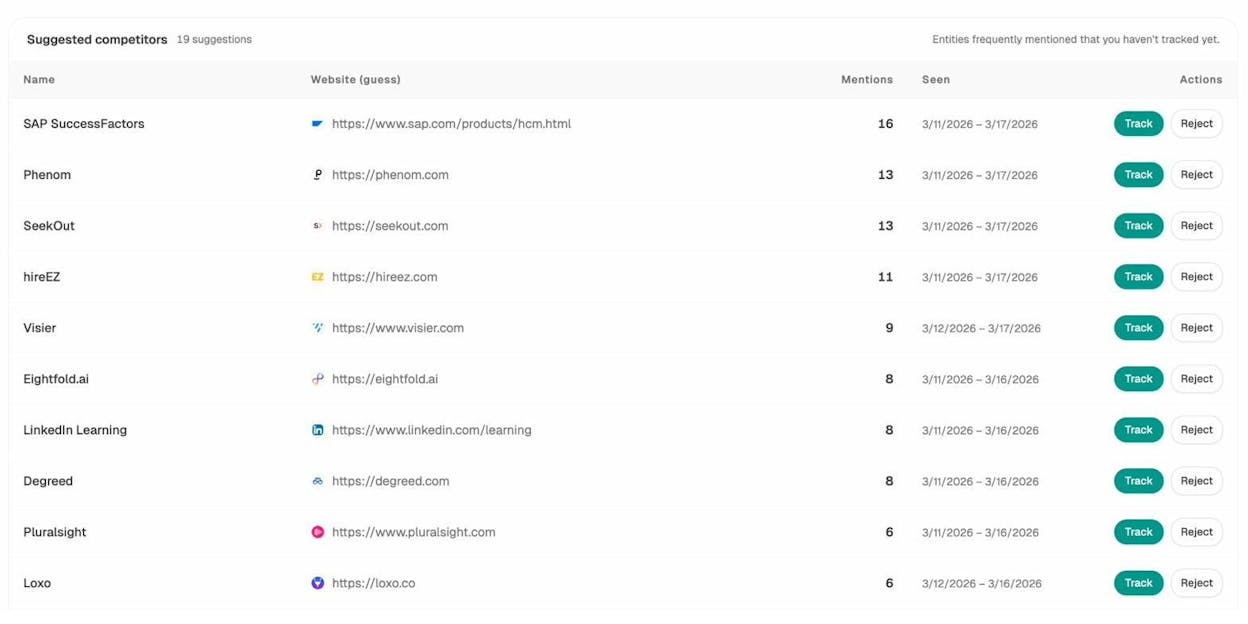
The Agent Builder is not an automation add-on. It is the product. Every node works with the SEO, AI visibility, and content data already inside the platform. A CMO can schedule a Monday board prep agent that pulls visibility scores, GA4 data, HubSpot deals, and competitive intelligence into a single executive summary, delivered to their inbox before they finish their morning coffee. An agency can loop one agent across every client, generating personalized reports and briefs without building anything from scratch.
What works well: 180+ nodes covering research, enrichment, content creation, CRM, and distribution. 34 pre-built data recipes eliminate the setup work for common workflows. Full content pipeline from research to publish. The only tool on this list that also handles AI search visibility and content optimization. Free trial lets you test before committing.
What could be better: Not a dedicated B2B contact database like Apollo or ZoomInfo, though it integrates with Hunter and Tomba for email enrichment. The platform’s full power shows when you invest time building workflows.
4. Lemlist
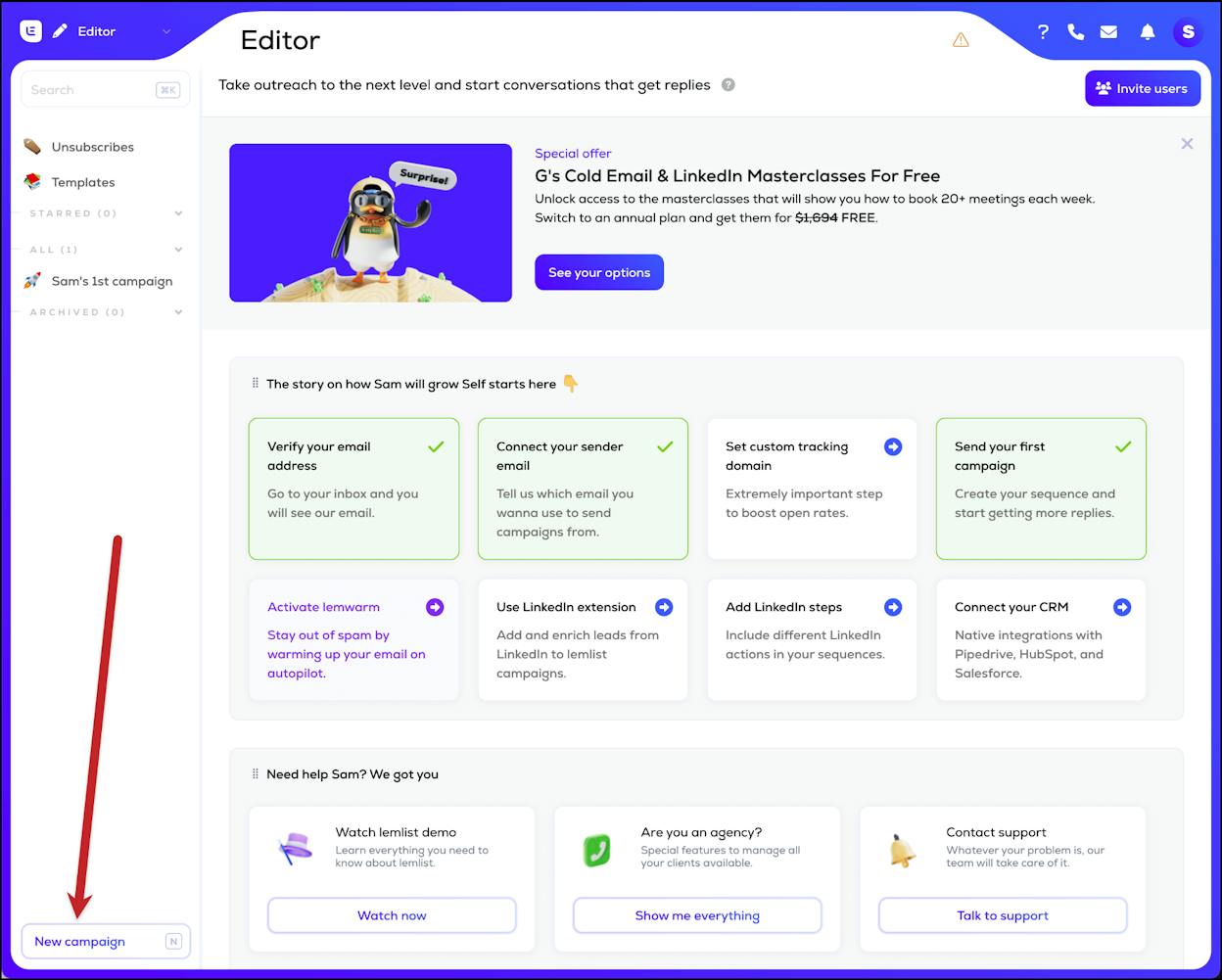
Best for: Sales teams at startups who want deeply personalized outbound with custom images and videos.
Pricing: Starts at $79/user/month for Email Pro. Multichannel Expert is $109/user/month. Enterprise is custom.
Lemlist started as an email personalization tool and evolved into a full AI lead generation platform. Its standout feature is still custom image and video personalization. You can create emails where the prospect’s name, company logo, or a custom screenshot appears in a personalized image. It sounds gimmicky, but it works. Personalized images consistently outperform plain-text emails in open rates and replies.
The platform now includes a 600M+ leads database, built-in enrichment, and multichannel outreach across email, LinkedIn, calls, and WhatsApp. AI agents can pull buying signals and enrich leads automatically. You get the full funnel from lead discovery through sequencing and follow-up.
The catch is that there is no free plan. LinkedIn and WhatsApp automation only show up on the higher-tier Multichannel Expert plan at $109/user/month. If you need advanced data enrichment or waterfall logic, Clay is still the better choice for that specific job.
What works well: Custom image and video personalization is a real differentiator. Full-funnel capability from discovery to outreach. 600M+ contact database is substantial.
What could be better: No free plan. LinkedIn and WhatsApp automation locked to higher tiers. Data enrichment is not as deep as Clay’s waterfall approach.
Reviews: 4.6/5 on G2 (1,424+ reviews). 4.6/5 on Capterra (386+ reviews).
5. Instantly
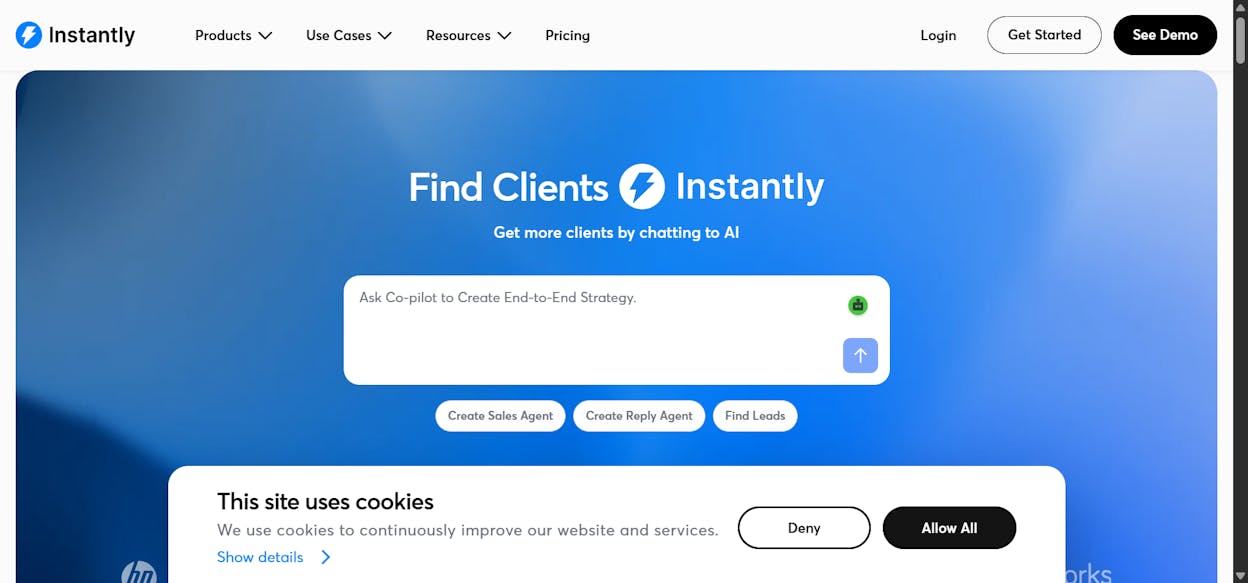
Best for: Agencies and solo founders running high-volume outbound campaigns for multiple clients.
Pricing: Growth plan starts at $47/month. Hypergrowth is $97/month. Light Speed is $358/month.
Instantly is built for email volume. Every plan includes unlimited email accounts and unlimited warmup, a significant advantage if you are running campaigns across multiple domains or clients. Smart triggers adjust sequences based on open rates and replies, and website visitor tracking helps you prioritize leads already showing intent.
The platform also routes inbound form submissions, books meetings, and triggers follow-up campaigns. You can integrate with Slack, Google Calendar, and your CRM.
Where Instantly falls short is multichannel. If you need LinkedIn, WhatsApp, or call outreach, you will need another tool. The Growth plan caps you at 1,000 uploaded contacts, and despite marketing to enterprise brands, Instantly is better suited for service businesses and agencies.
What works well: Unlimited email accounts and warmup on every plan. Smart triggers adapt outreach based on engagement. Website visitor tracking surfaces warm leads. $47/month starting price is very accessible.
What could be better: Focused almost entirely on email. The 1,000 contact limit on Growth is restrictive. Better for agencies than enterprise teams.
Reviews: 4.8/5 on G2 (4,057+ reviews). 3.8/5 on Trustpilot (1,028+ reviews).
6. ZoomInfo
Best for: Large enterprises and mid-market teams that need the largest B2B contact database available.
Pricing: Custom pricing only. Requires a sales call. Enterprise contracts typically range from $15,000 to $40,000+ annually.
ZoomInfo has the largest B2B database on the market. That is why other tools, including Clay, integrate with it as a data provider. The platform has been around for over a decade, which means the data is continuously refined in ways that newer databases cannot match.
With its newer AI features, ZoomInfo acts as a copilot for account summaries, next-best-action recommendations, and intent signals. It covers sales, marketing, and talent use cases across three product lines.
ZoomInfo is not for every company. If you are a startup or solo founder, the cost is prohibitive. It is designed for Fortune 1000 companies and mid-market teams running complex, high-volume sales motions where data accuracy at scale justifies the premium.
What works well: Largest B2B database available. Intent signals help prioritize the right leads at the right time. Mature, reliable data. Trusted by enterprise teams globally.
What could be better: No public pricing. Requires a sales call, which typically means expensive. Complex platform with a steep learning curve. Overkill for small teams.
Reviews: 4.5/5 on G2 (9,052+ reviews). 4.1/5 on Capterra (317+ reviews).
7. Hunter.io
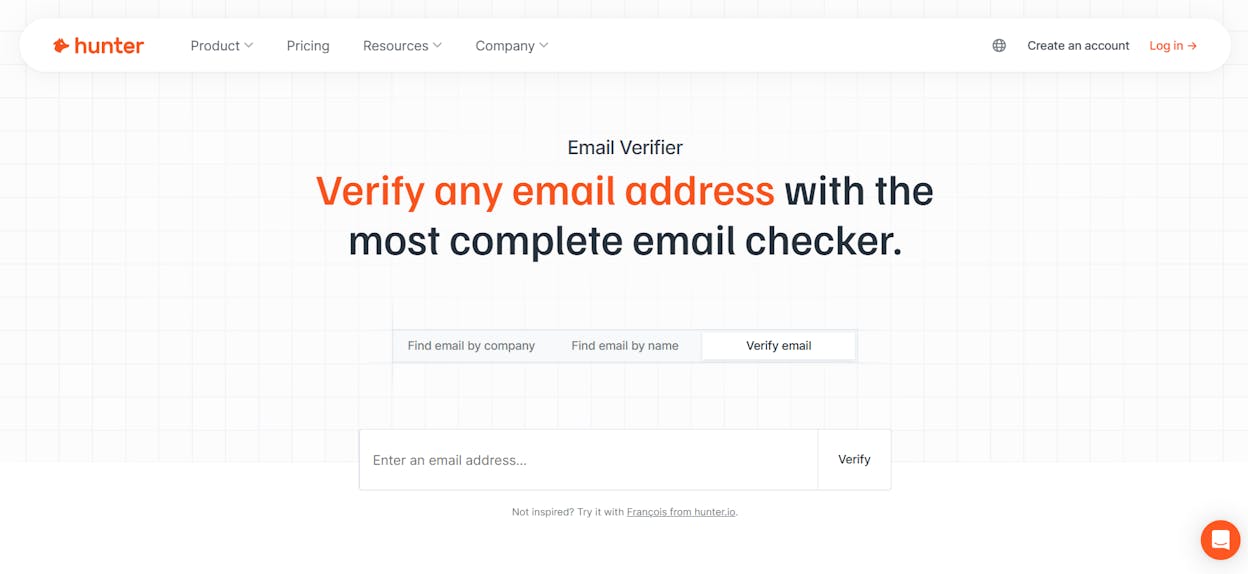
Best for: Anyone who needs a reliable, budget-friendly way to find and verify specific email addresses.
Pricing: Free plan with 50 credits/month. Starter at $49/month. Growth at $149/month. Scale at $299/month.
Hunter.io is the most reliable email finder and verifier available. It uses domain crawling and pattern matching to find email addresses, then verifies deliverability through server checks. You can bulk upload CSV files to verify entire contact lists before running outreach.
If you are doing targeted outreach to specific people you already know you want to reach, Hunter.io is the tool. Use it alongside a platform like Apollo or Analyze AI (which integrates Hunter as a native node in its Agent Builder) to combine email discovery with full workflow automation.
Every plan includes unlimited team members. The free plan gives you enough credits for targeted outreach to a handful of high-value prospects each month.
What works well: Most reliable email finder and verifier available. Bulk CSV verification saves time cleaning contact lists. Generous free plan for targeted outreach. Unlimited team members on every plan.
What could be better: Not a full lead gen platform. AI features are still maturing. No data enrichment beyond email addresses.
Reviews: 4.4/5 on G2 (634+ reviews). 4.6/5 on Capterra (705+ reviews).
Quick Comparison: All 7 Tools at a Glance
|
Tool |
Best for |
Starting price |
Free plan |
Agentic features |
AI search layer |
|---|---|---|---|---|---|
|
Apollo |
All-in-one outbound |
$49/user/mo |
Yes |
Limited |
No |
|
Clay |
Data enrichment |
$185/mo |
Yes |
Claygent |
No |
|
Analyze AI |
Full GTM automation |
Free trial, then paid |
Free trial |
180+ node Agent Builder |
Yes |
|
Lemlist |
Personalized outreach |
$79/user/mo |
No |
Basic AI agents |
No |
|
Instantly |
Volume email outreach |
$47/mo |
No |
Smart triggers |
No |
|
ZoomInfo |
Enterprise B2B data |
Custom (sales call) |
No |
AI copilot |
No |
|
Hunter.io |
Email finding/verification |
$49/mo |
Yes |
No |
No |
Which AI Lead Generation Tool Should You Pick?
The right tool depends on where you are losing the most time today.
If you need a single platform for lead discovery, outreach, and CRM sync, start with Apollo. It is the fastest path to running outbound with real data.
If your outreach is failing because of bad contact data, Clay’s waterfall enrichment will fix that.
If you want to automate your entire GTM operation, from content production to lead enrichment to AI search visibility, Analyze AI is the platform that does all of it. It is the only tool here with a 180+ node Agent Builder that connects your CRM, content pipeline, SEO data, and AI visibility into one programmable substrate. You can start a free trial and build your first agent workflow in minutes.
If you are an agency running outbound for clients at high volume, Instantly is hard to beat at $47/month. And if you just need to find and verify an email address, Hunter.io is still the best at that job.
The real leverage comes from connecting these tools. The best GTM teams build workflows that chain lead discovery, enrichment, content, and distribution together. That is where agentic platforms change the math, turning a full-time job into a background process that runs while you close deals.

Ernest

Ibrahim


