



Summarize this blog post with:


Every tool here is one I have used for marketing work. Some are broad platforms I use for general automation. Others are built specifically for SEO and AI search operations. I will tell you which ones overlap, which ones are expensive for what you get, and which ones have become hard to live without.
In this article, you’ll get a breakdown of the eight agentic AI tools I rely on to run content, SEO, AEO, and GTM operations every week. For each tool, you’ll see what it actually does, what it costs, who it works best for, and where it falls short. You’ll also learn how to evaluate these tools based on what your marketing team actually needs, not what the landing page promises.
Table of Contents
What Makes an AI Tool “Agentic” for Marketing
A traditional automation tool follows a fixed path. If a new blog post is published, then share it to social. Agentic AI tools go further. You give them a goal, and they figure out the steps. They can pull data from your analytics, draft content based on what they find, check competitor pages, and push the result to your CMS without you mapping every step.
For marketing teams, this changes how you handle content refreshes, keyword research, competitor tracking, and reporting. Instead of building a rigid 12-step Zap, you describe what you want and the agent adapts. The best agentic tools also connect to your existing stack, whether that is Google Analytics, HubSpot, Google Search Console, Semrush, or your CMS.
The tools on this list range from full marketing operations platforms to general-purpose workflow builders. The key difference between them is how much marketing context is built in versus how much you have to build yourself.
Quick Comparison
|
Tool |
Best For |
Marketing-Specific? |
Starting Price |
Free Plan |
|---|---|---|---|---|
|
Analyze AI |
SEO, AEO, content, and GTM ops at scale |
Yes |
Free trial available |
Free trial |
|
n8n |
Technical teams wanting full control |
No |
$24/mo |
Free trial |
|
Zapier |
Business owners layering AI on proven automation |
No |
$29.99/mo + $50/mo for Agents |
Yes |
|
Claude |
AI copilot for daily marketing tasks |
No |
$20/mo |
Yes |
|
Relay.app |
Beginners automating simple tasks |
No |
$38/mo |
Yes |
|
CrewAI |
Enterprise multi-agent systems |
No |
Custom pricing |
No |
|
Cursor |
Developer-marketers building custom agents |
No |
$20/mo |
Yes |
8 Best Agentic AI Tools for Marketing in 2026
1. Analyze AI
Best for: Marketing teams that need SEO, AEO, content creation, content optimization, competitor intelligence, and AI search visibility in one platform
Starting price: Free trial available. Paid plans scale with usage.
Why it is on this list: Most tools on this list are general-purpose workflow builders. You can make them do marketing work, but you have to wire everything together yourself. Connect your analytics, write the prompts, build the logic, map the outputs.
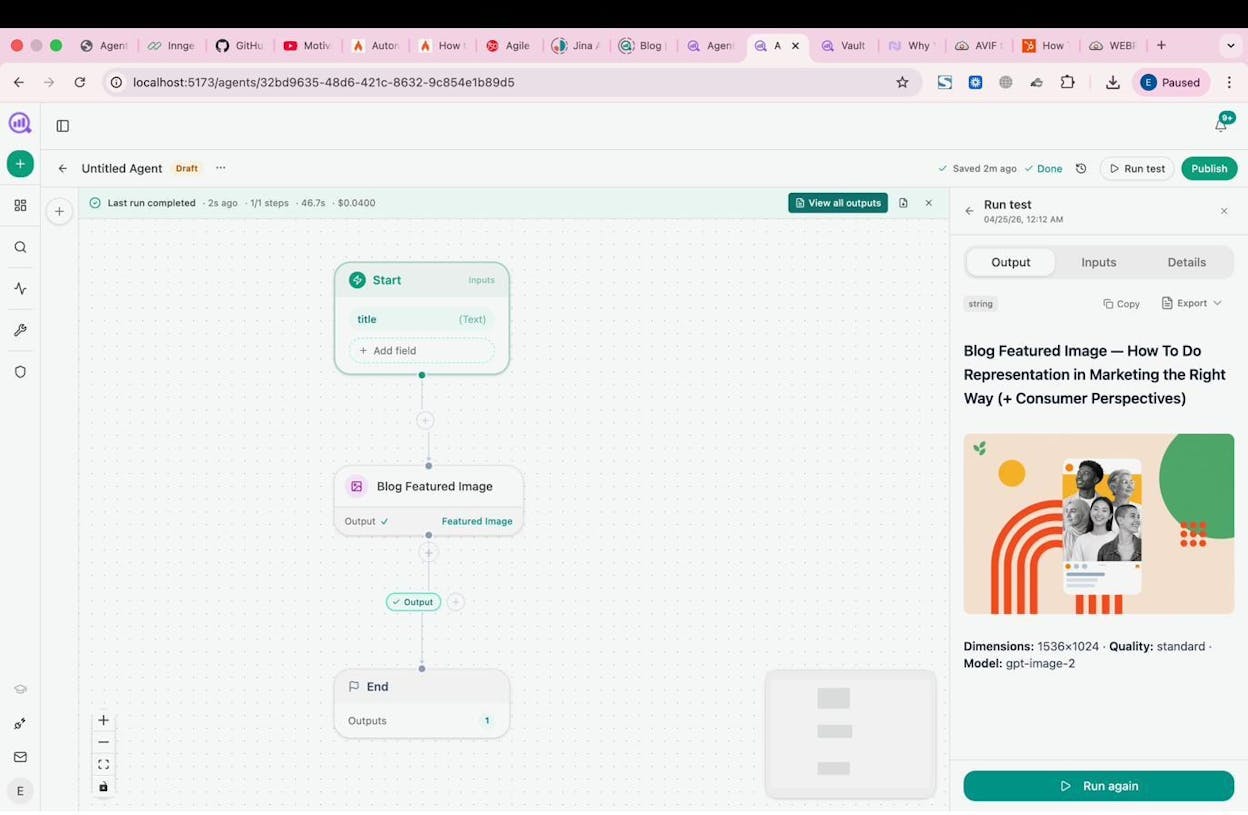
Analyze AI is different because the marketing context is already built in. Your SEO data, AI visibility data, competitor intelligence, brand voice, Google Analytics, and Search Console data are all connected from day one. The Agent Builder sits on top of that data, so every agent you create already knows your brand, your competitors, and your performance.
That matters because the gap between “we have an AI workflow tool” and “we actually ship work with it” is almost always the data wiring. Analyze AI closes that gap.
What you can actually build
The Agent Builder has 180+ nodes, 34 pre-built data recipes, and integrations with GA4, Google Search Console, HubSpot, WordPress, Notion, Semrush, DataForSEO, Slack, and every major LLM (Claude, GPT-4, GPT-5, Gemini, Perplexity). The combination of these nodes means you can build workflows for practically any marketing operation.
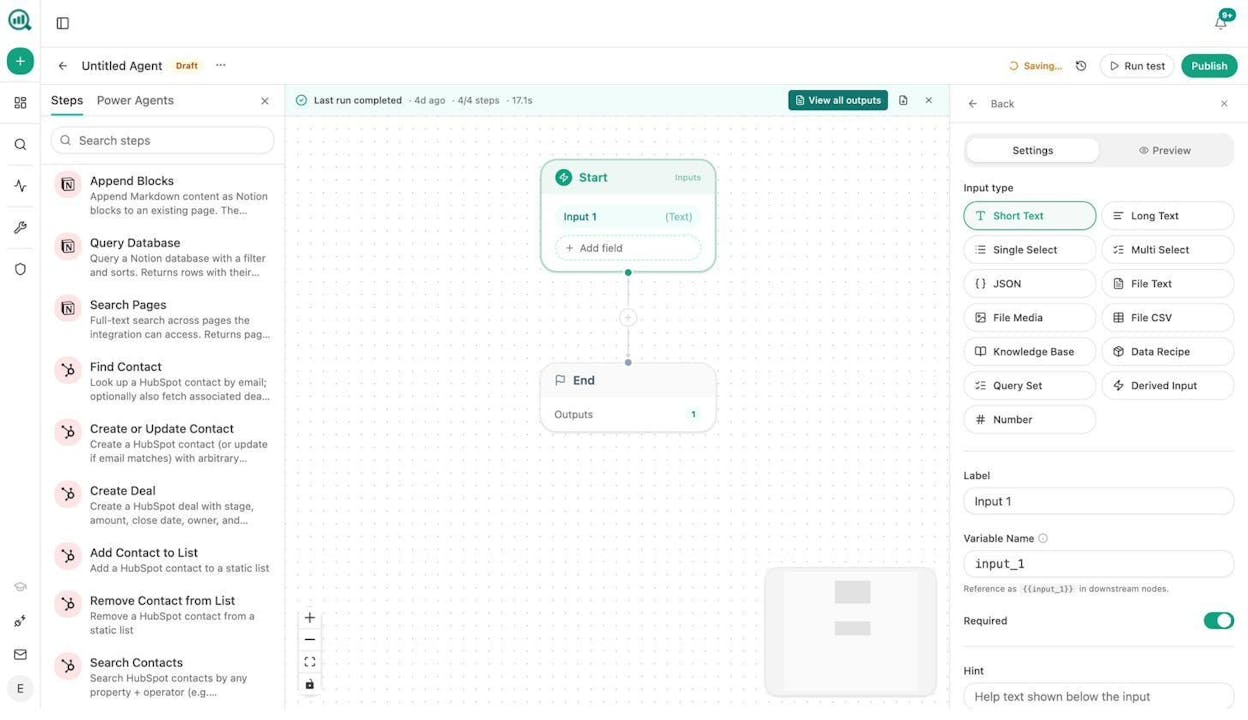
Here are real workflows marketing teams run with it:
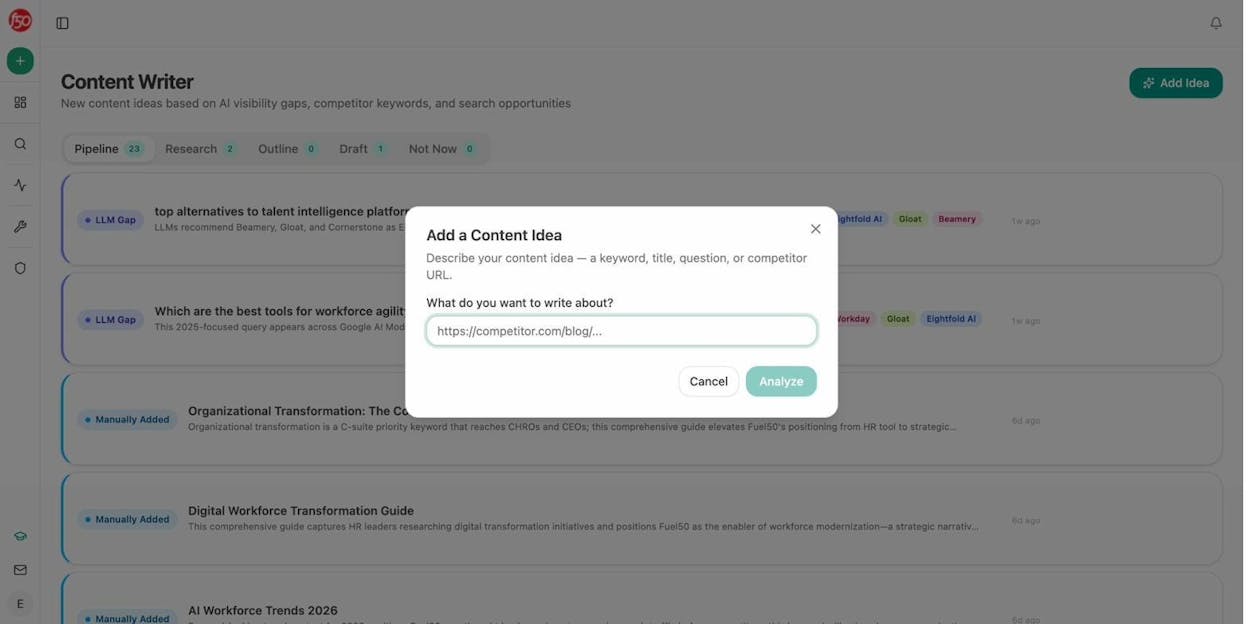
Content at scale. A scheduled agent runs every Sunday night, pulls uncovered AI prompts from the last 14 days, cross-references them with keyword opportunities from DataForSEO, and assembles an editorial calendar in Notion with one brief per piece. The Content Writer then takes each brief through research, outline, and full draft with your brand voice injected automatically. The drafts go through an AEO content scorecard before anything publishes.
Content refresh at scale. A weekly agent pulls your declining pages from GA4 and your stale content list, scrapes each page, rewrites it for freshness and AI search readiness, diffs the changes, and publishes updates to WordPress if the score passes your threshold. The “quietly losing rankings” problem solves itself.
Keyword research at scale. DataForSEO and Semrush nodes give you keyword ideas, search volumes, difficulty scores, and competitor keyword overlap, all inside a single workflow. Pipe the output into a brief generator and you skip the manual spreadsheet stage entirely. Analyze AI also offers a free keyword generator, keyword difficulty checker, and keyword rank checker if you need quick one-off checks.
Internal linking at scale. A scheduled agent loops through your sitemap, pulls GSC top keywords for each page, uses an LLM to suggest three internal links per page, and pushes the suggestions to Notion or directly to your CMS. No more manual crawling through 2,000 pages to find link opportunities. For a deeper walkthrough, see our guide on internal linking for SEO.
Link outreach. Tomba and Hunter.io nodes find author emails behind any blog post or LinkedIn URL. Combine those with a DataForSEO news research node, a brand context injector for personalized messaging, and an email sender, and you have an outreach pipeline that runs without manual prospecting.
Image design. Blog featured images, social media images, infographics, and inline illustrations are all nodes in the builder. Each one is brand-kit-aware, so your generated images follow your style guide automatically.
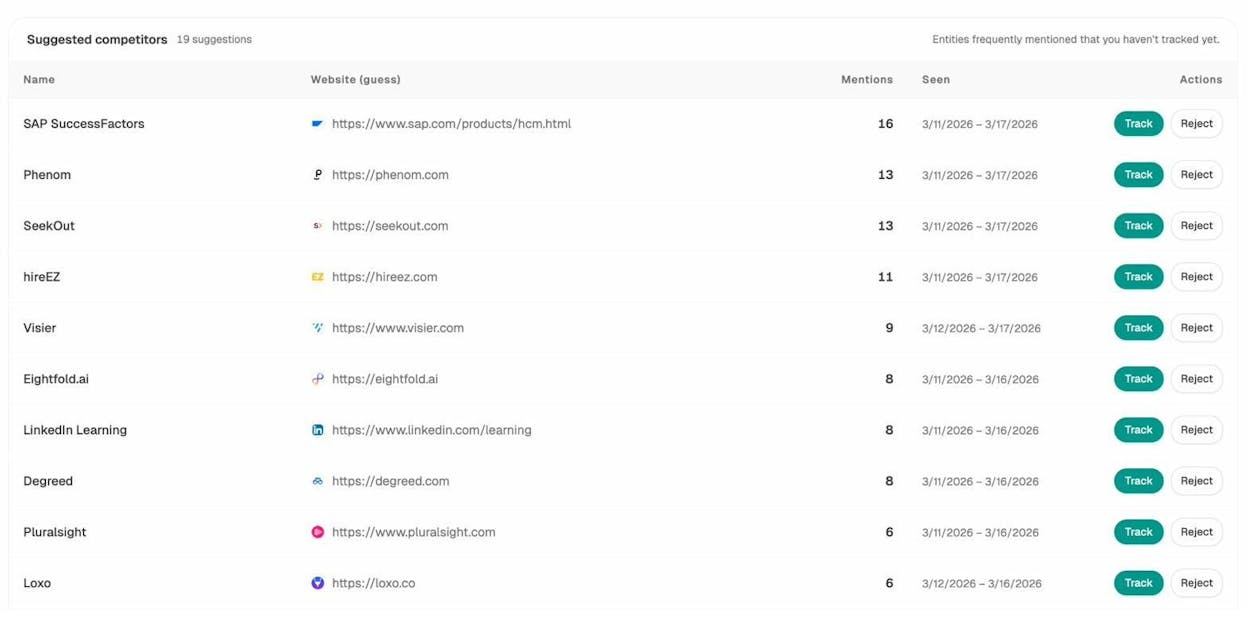
Competitor intelligence. The Competitors dashboard shows side-by-side visibility, sentiment, and citation comparisons across every AI engine. Competitor-gap recipes surface prompts where competitors outrank you. The AI Battlecards feature generates real-time competitive positioning you can hand directly to sales.
Reporting. Agents can compile weekly executive summaries, client retainer reports, or board-grade intelligence packs and push them to Slack or email on a schedule. For agencies, one workflow runs per client. Reporting day stops existing.
What makes it different from general-purpose tools
Three things separate Analyze AI from the other platforms on this list.
First, the data is already in the room. Your AI visibility scores, your GA4 sessions, your GSC rankings, your competitor citation data, your brand vault rules are all accessible as nodes and data recipes. On a tool like Zapier or n8n, you would need to wire up four or five integrations to get the same input that a single data recipe provides in Analyze AI.
Second, the Content Writer and Content Optimizer produce higher quality outputs than what you get from generic LLM prompts. The Writer generates research with cited sources and editorial comments, structures outlines with keyword mapping, and drafts with brand voice injection. The Optimizer pulls your live page, audits it for argument flow, clarity, and AEO readiness, and generates a rewrite with visible editorial reasoning at every step.
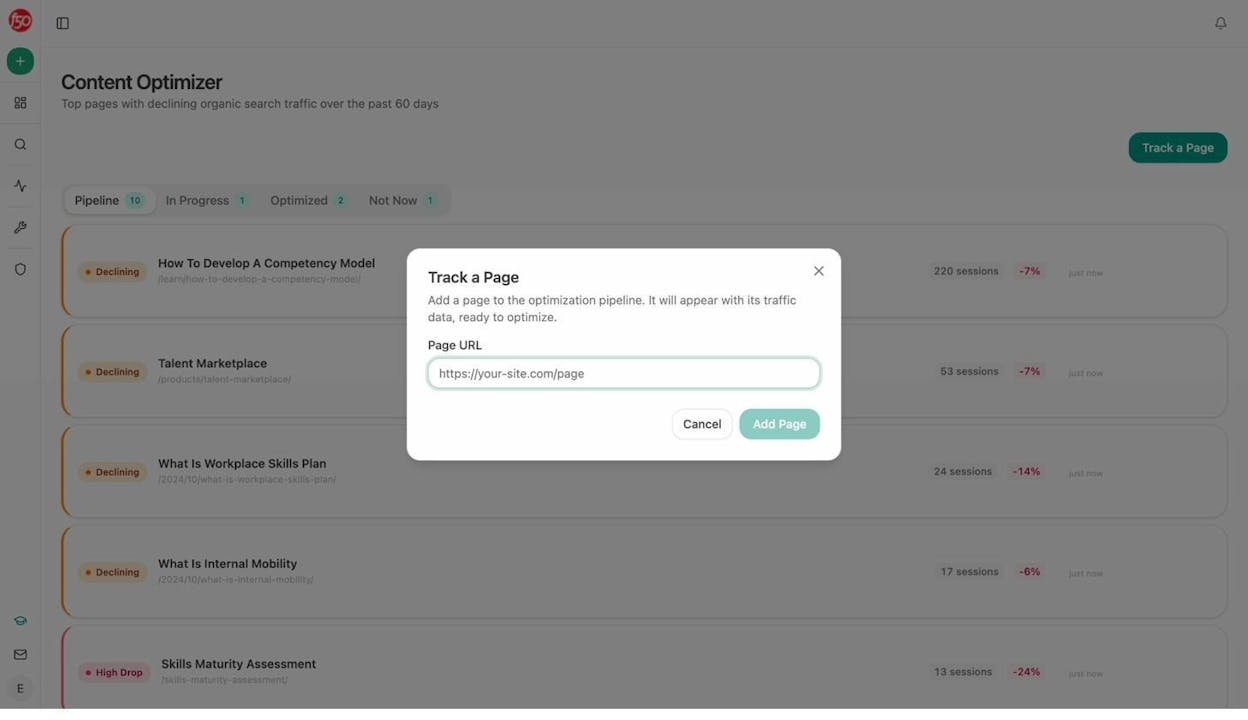
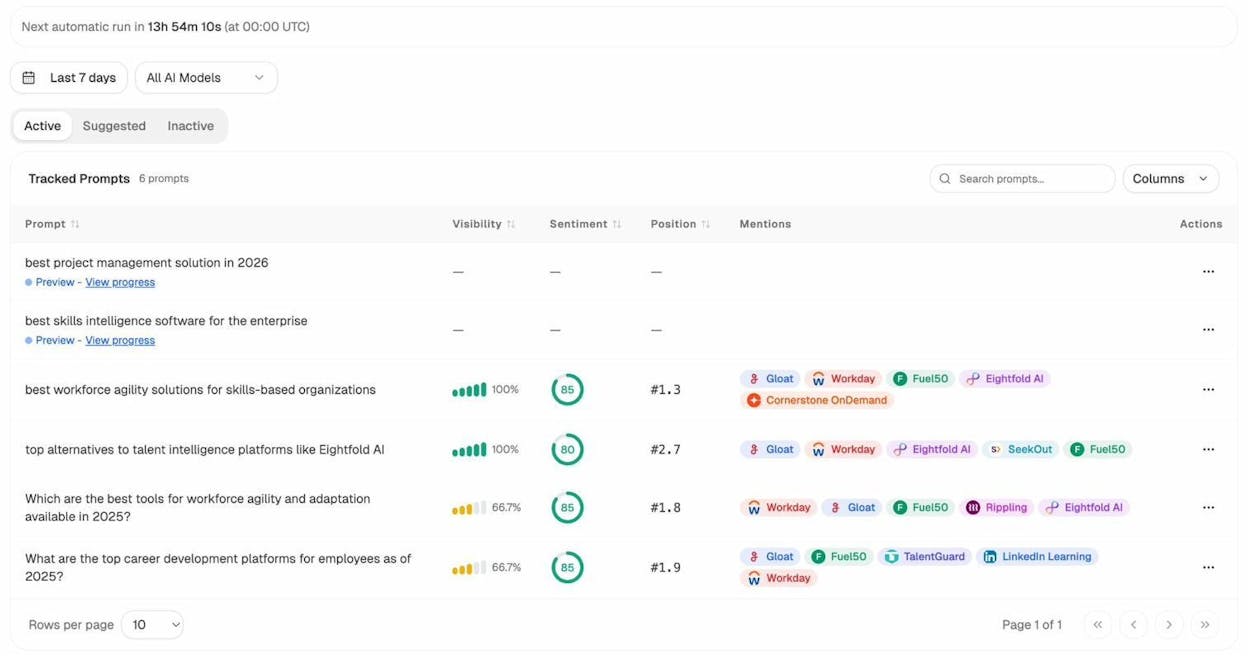
Third, AI search visibility is treated as a first-class channel alongside traditional SEO. Prompt Tracking monitors how your brand appears across ChatGPT, Perplexity, Gemini, Claude, and Copilot. AI Traffic Analytics connects to your GA4 and shows exactly which AI engine sent each session, which pages received the traffic, and what those visits converted into. The Perception Map positions your brand against competitors on a 2D quadrant of presence versus narrative strength. None of the other tools on this list offer this.
This is not about choosing between SEO and AI search. The brands that win in 2026 treat AI search as an additional organic channel, not a replacement for Google. Analyze AI is built for that philosophy.
Verdict: If your team does content, SEO, or any kind of marketing operations, Analyze AI gives you the most leverage per dollar. The Agent Builder alone replaces the functionality of multiple tools on this list, and the built-in Writer, Optimizer, and AI visibility features mean you are not just automating workflows but actually improving the work that gets done. Start with the free trial and see how much of your manual process collapses.
2. n8n
Best for: Technical marketing teams that want self-hosting and full workflow control
Starting price: Starter at $24/month (cloud-hosted)
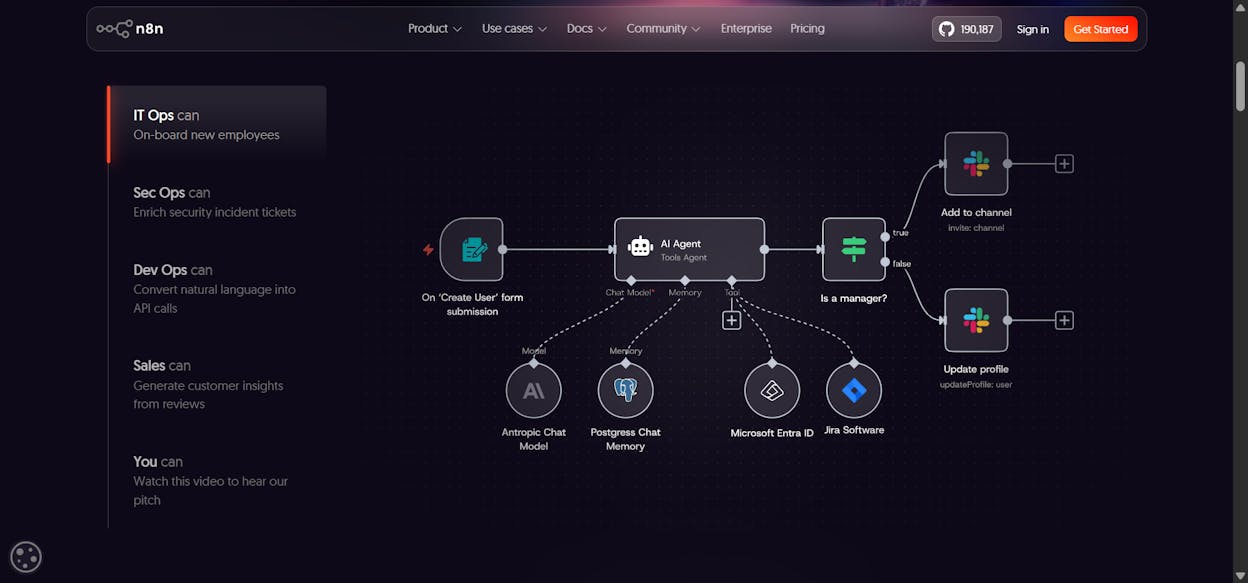
n8n is an open-source workflow builder designed for technical teams. It has a large template library and a visual canvas similar to Gumloop, but with a steeper learning curve. You need your own API keys for any AI models you use.
The self-hosting option makes n8n popular with security-conscious teams. If your company requires on-premise deployment or wants to avoid cloud-hosted data processing, n8n is one of the few options that supports that.
For marketing, n8n works well for teams that already have a developer or technical ops person who can build and maintain workflows. You can create content pipelines, reporting automations, and data enrichment workflows. The template library gives you starting points, but most marketing-specific workflows require customization.
Where it falls short for marketing: The learning curve is real. If your content team or marketing manager cannot work with APIs and JSON, n8n will sit unused. The pricing also scales up once you add AI models, as each requires a separate subscription.
3. Zapier
Best for: Business owners layering AI on top of existing automation
Starting price: Free plan available. Professional at $29.99/month. Agents add-on starts at $50/month.
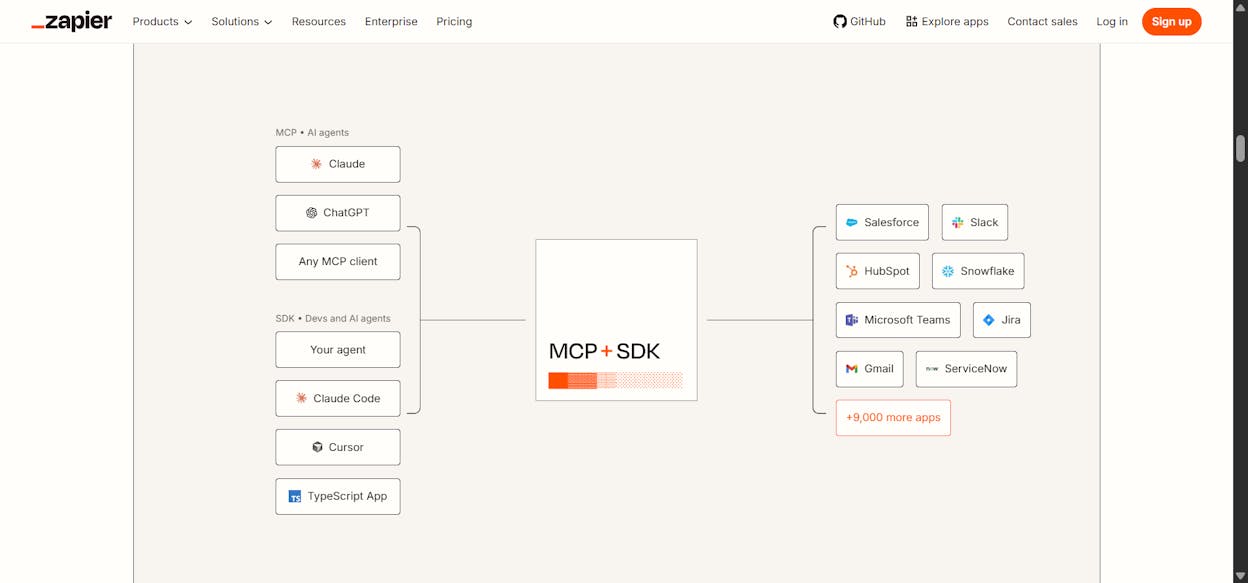
Zapier is the most established automation platform on this list. It connects to 8,000+ apps and has been around for over a decade. The AI agent add-on is newer and layers agentic capabilities on top of traditional if-this-then-that workflows.
For marketing, Zapier shines for connecting tools that do not natively integrate. Push new blog posts to social media, sync form submissions to your CRM, or trigger email sequences based on user behavior. The integration library is unmatched.
The catch is that Zapier’s AI features feel bolted on rather than native. The agent builder is a separate add-on with separate pricing, and the platform’s core DNA is still rigid automation. If you need true agentic flexibility where the AI reasons through problems and adapts, you will hit limits faster than with tools built for that from the start.
Where it falls short for marketing: The combined cost of a Professional automation plan plus the Agents add-on ($80+/month) gets expensive quickly. And for marketing-specific tasks like content optimization, keyword research, or AI search visibility tracking, you still need separate tools.
4. Claude
Best for: Marketers who want an AI copilot for daily work
Starting price: Free plan available. Pro at $20/month.
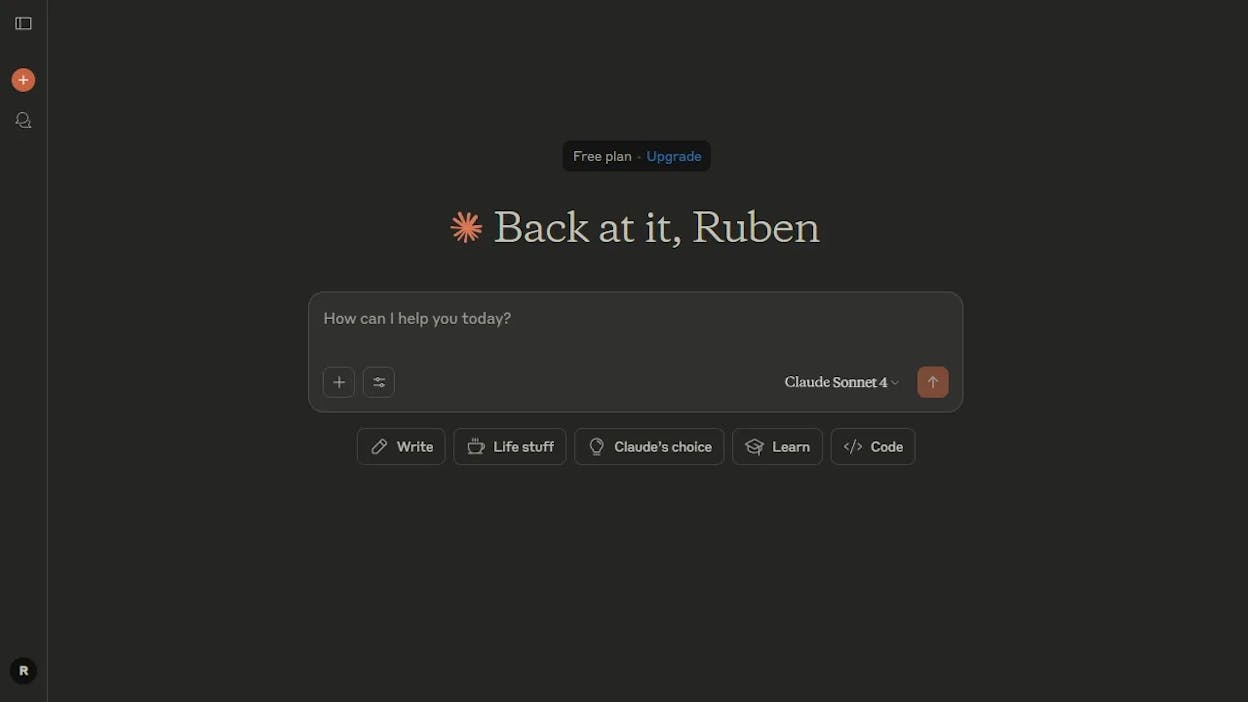
Claude is an LLM built by Anthropic. It is excellent at writing, research, analysis, and code generation. With Claude Projects, you can create persistent workspaces with custom instructions that act as specialized agents for different marketing tasks.
For marketing, Claude is the best general-purpose AI assistant available. Use it to draft blog posts, analyze competitor content, rewrite landing pages, or brainstorm campaign angles. The web search and file analysis capabilities make it useful for quick research tasks that used to take hours.
The limitation is that Claude is a copilot, not an operations platform. It cannot run scheduled tasks, trigger workflows based on events, or connect to your analytics and CMS without additional tooling. You pair Claude with a workflow builder (like Analyze AI’s Agent Builder or Gumloop) to turn its reasoning capability into actual automated processes.
Where it falls short for marketing: Claude does not have marketing data. It cannot pull your GA4 metrics, track your AI visibility, or publish to your CMS. It is an excellent thinking partner, but it does not replace the need for a platform that connects intelligence to action.
5. Relay.app
Best for: Beginners automating simple marketing tasks
Starting price: Free plan available. Professional at $38/month.
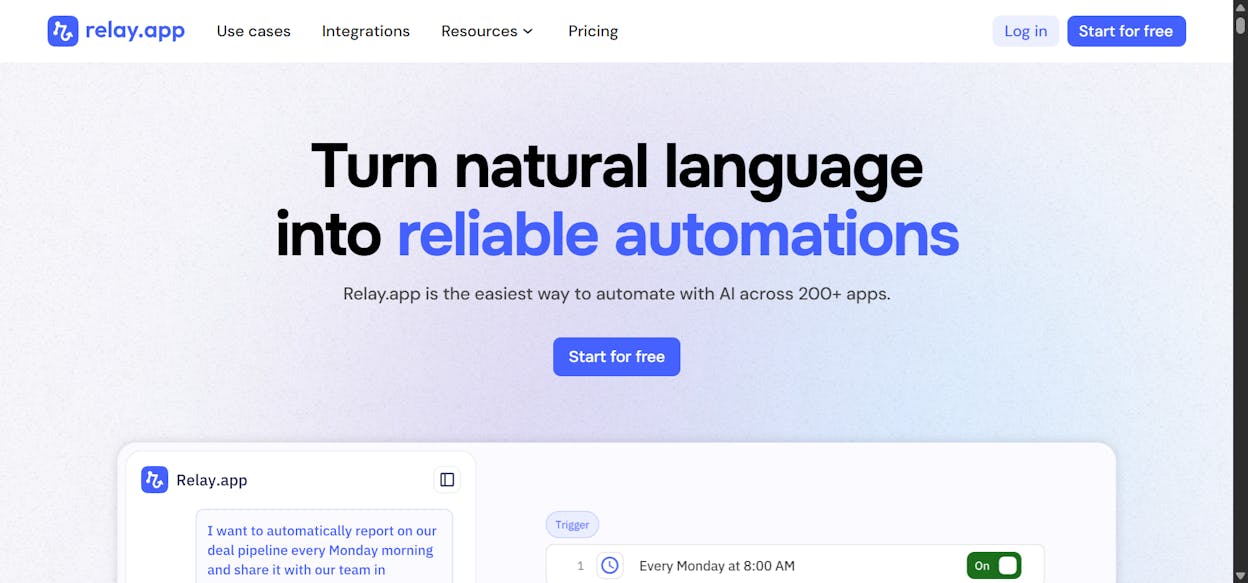
Relay.app is a simpler alternative to Zapier and Gumloop. It has a clean interface and a generous free plan with 500 AI credits per month (covering GPT, Claude, and Gemini). It is great for straightforward tasks like meeting follow-ups, daily news tracking, or simple content distribution workflows.
For marketing, Relay.app works best for solo operators or small teams that need basic automation without a learning curve. You can set up a workflow in minutes and the interface is far less intimidating than n8n or even Zapier.
Where it falls short for marketing: Relay.app is limited when you need complex, multi-step workflows. It feels more like a workflow builder than an agentic AI tool. If your marketing operations involve content pipelines, competitor monitoring, or anything that requires adaptive decision-making, you will outgrow Relay.app quickly.
6. CrewAI
Best for: Enterprise companies building multi-agent systems at scale
Starting price: Custom pricing (demo required)
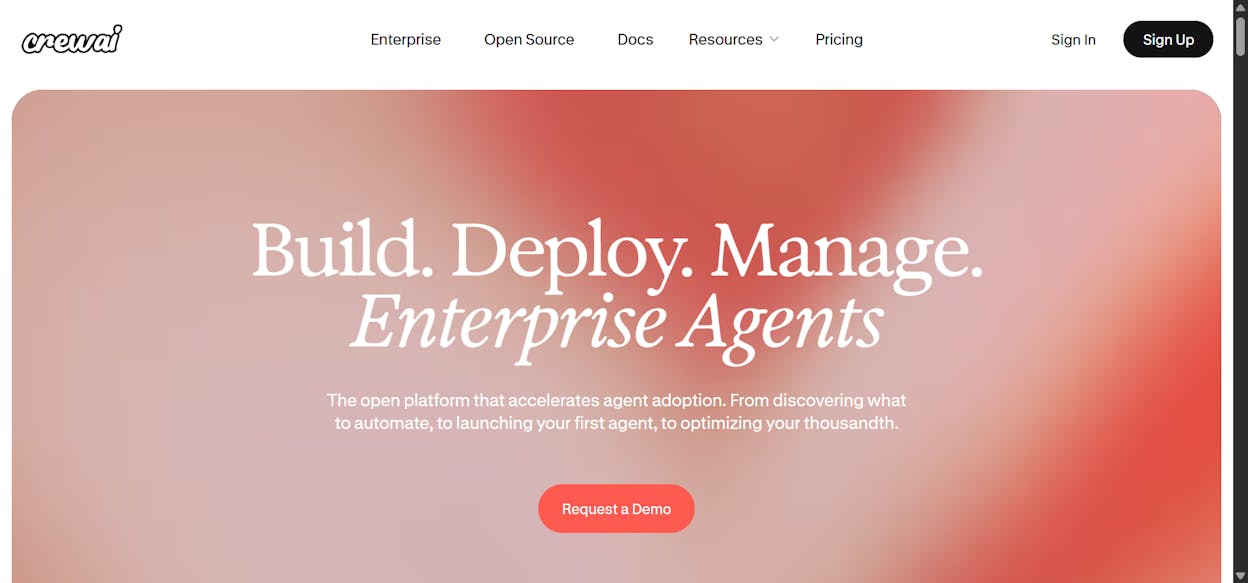
CrewAI is an enterprise multi-agent platform used by companies like Deloitte, Oracle, and KPMG. It lets you build, deploy, and monitor multiple AI agents that work together on complex tasks. The agent performance tracking is a standout feature.
For marketing at enterprise scale, CrewAI can orchestrate agents across content production, reporting, and operations. You can create “crews” that handle different parts of your marketing workflow and monitor their output quality over time.
Where it falls short for marketing: CrewAI requires a sales call and is designed for large organizations. It has no public pricing, no free plan, and the setup complexity is overkill for any team under 50 people. If you are a startup, agency, or mid-market company, look at Analyze AI or Gumloop instead.
7. Cursor
Best for: Technical marketers who want complete flexibility
Starting price: Free plan available. Pro at $20/month.
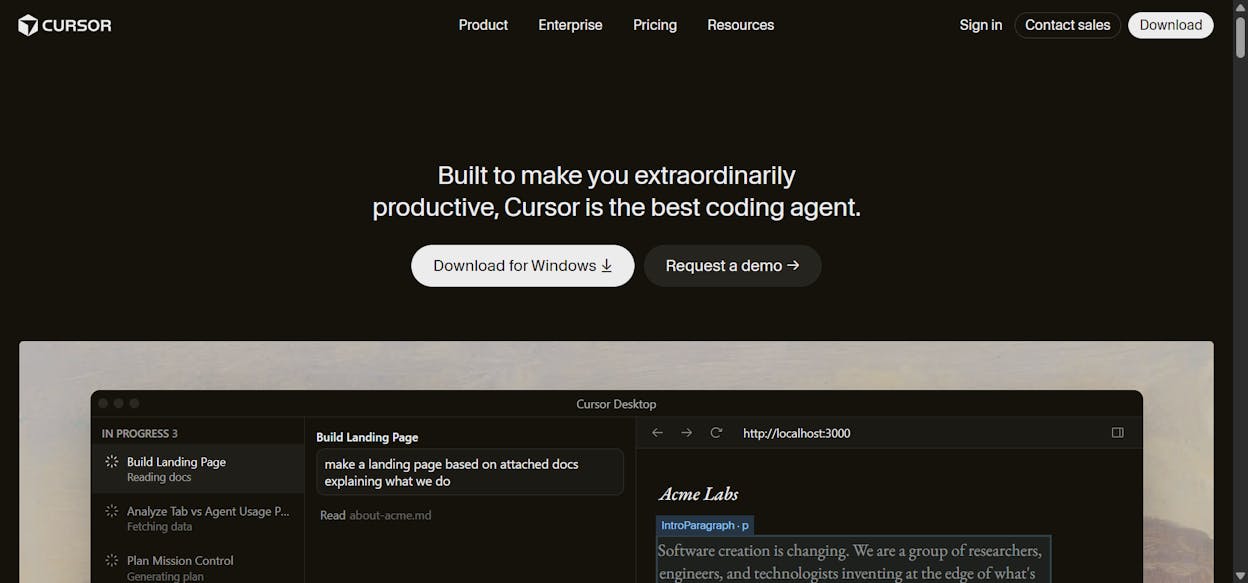
Cursor is an AI-powered code editor. It is not a traditional marketing tool, but technical marketers use it to build custom agents, internal tools, and automation scripts that no drag-and-drop builder can handle.
You create markdown instruction files (similar to Claude Projects) and Cursor’s AI follows them to build whatever you need. It is LLM-agnostic, so you can use Claude, GPT, or Gemini under the hood.
Where it falls short for marketing: Cursor requires coding knowledge. It runs locally on your computer, which means your agents are not cloud-hosted and cannot be shared easily with non-technical team members. For marketing teams without a developer, Cursor is not practical.
How to Pick the Right Tool for Your Team
The right choice depends on where your team sits on two axes. How technical you are, and how marketing-specific your needs are.
If you need marketing-specific automation with AI search built in, Analyze AI is the clear pick. It is the only platform on this list where your SEO data, AI visibility data, competitor intelligence, brand voice, and content pipeline are all connected natively. The Agent Builder replaces the need for multiple general-purpose tools, and the Writer and Optimizer produce outputs that are better than generic LLM prompts because of the editorial process built into each step. Start with the free trial and test it against your current stack.
If you need general-purpose automation without marketing context, Gumloop or Zapier work well depending on your budget and technical comfort. Gumloop is more AI-native and affordable. Zapier has the largest integration library.
If you have a technical team and want full control, n8n gives you self-hosting and open-source flexibility. Pair it with Claude for the reasoning layer.
If you are just getting started with AI, Claude’s free plan is the lowest-friction entry point. Use it as a copilot for daily marketing tasks and graduate to a workflow builder once you know which processes to automate.
Most of these tools offer free plans or trials. Test the ones that match your use case and see which one actually saves your team time, not just promises to.

Ernest

Ibrahim


