



Summarize this blog post with:


In this article, you’ll learn which AI agent platforms actually work for enterprise marketing teams, what separates a real agent builder from a chatbot with integrations, and how to pick the right tool based on your team’s size, workflows, and budget. You’ll also see how each platform handles the workflows marketing teams run most often, from content production at scale to competitive intelligence and AI search visibility.
Table of Contents
What Is an Enterprise AI Agent (and Why Marketing Teams Need One)?
An enterprise AI agent is software that connects to your tools, reasons through multi-step tasks, and executes them without manual intervention at every stage. The “enterprise” part means role-based access controls, audit logs, SSO, and governance over what data agents can touch.
For marketing teams, the use case is more specific. You are dealing with content calendars, keyword research, CMS publishing, CRM updates, competitive monitoring, and an increasingly fragmented search landscape that now includes AI answer engines like ChatGPT, Perplexity, and Google AI Mode. The right agent platform should handle all of this without forcing you to duct-tape five different tools together.
Here is what enterprise marketing teams typically automate with agents: content operations (brief generation, research, drafting, optimization, CMS publishing), competitive intelligence (tracking competitor messaging shifts and AI search appearances), SEO and AI search visibility (keyword research, rank tracking, content audits, monitoring how AI engines represent your brand), lead enrichment and outreach (enriching HubSpot leads, finding decision-maker emails), and reporting (assembling executive reports on a schedule so your team stops spending Monday mornings building slides).
The common thread is that marketing teams deal with high-volume, repeatable workflows that touch a dozen different tools. The agent platform that wins is the one that connects to those tools natively and lets you compose workflows from real data, not just prompts.
5 Best AI Agent Platforms for Enterprise Marketing Teams
Here are the five platforms worth evaluating in 2026:
-
Analyze AI
-
Gumloop
-
Jasper
-
Workato
-
Glean
1. Analyze AI
-
Best for: Marketing teams that need SEO, AEO, content ops, and GTM workflows in one platform with a deep agent builder
-
Pricing: Free trial available, Growth and Pro tiers, Custom enterprise pricing
-
Differentiator: 180+ agent nodes, 34 pre-built data recipes, native integrations with GA4, GSC, Semrush, DataForSEO, HubSpot, WordPress, and every major LLM
Analyze AI is the platform on this list that was built specifically for the workflows marketing teams run daily. It combines AI search analytics, a content writer, a content optimizer, competitive intelligence, and an agent builder with 180+ nodes that connects to the entire marketing data stack.
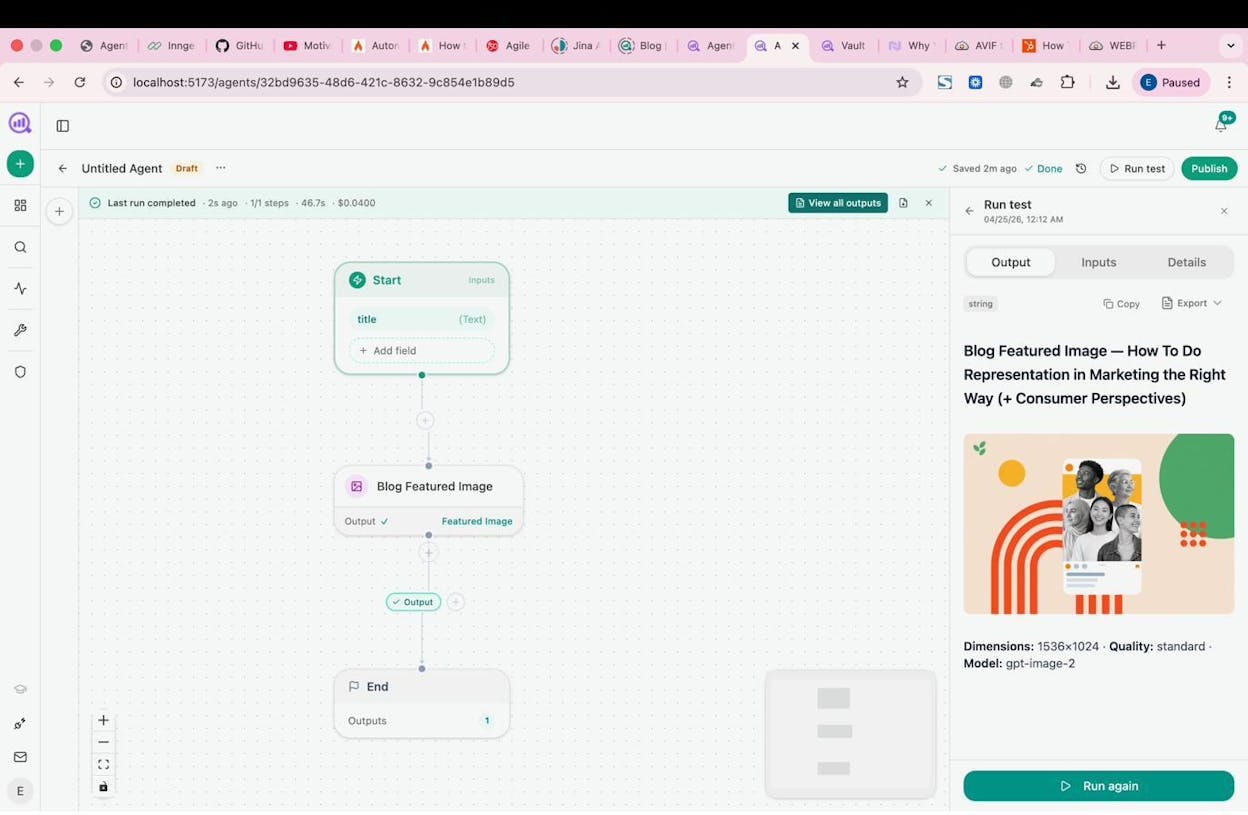
The agent builder is the core differentiator. This is not a simple “connect two apps and trigger an action” automation layer. You have nodes for GA4, Google Search Console, Semrush (7 endpoints), DataForSEO (27 endpoints), HubSpot (26 read/write operations), WordPress, Notion, Contentful, Mailchimp, and more. You can build agents that pull keyword data, research competitors, generate a full article draft with brand voice injection, score it for AI search optimization, and publish it to your CMS. All from one workflow.
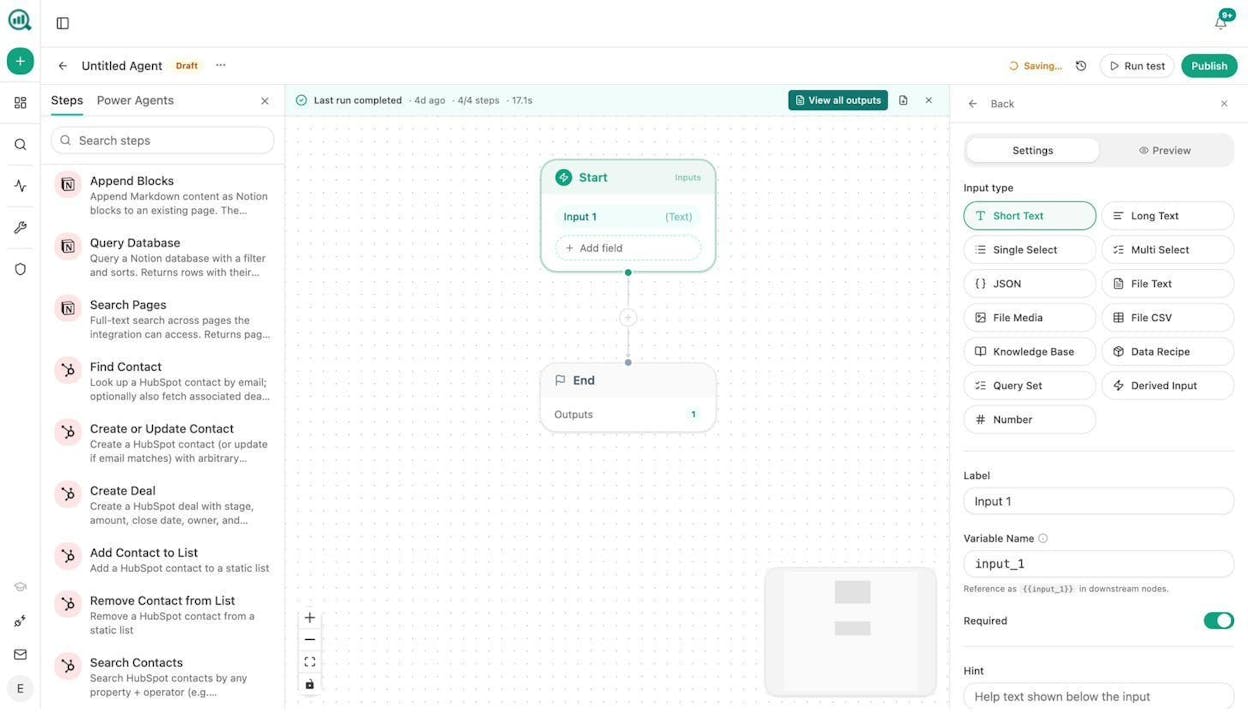
What makes the agent builder different from the competition. Most agent platforms give you LLM prompting plus a few integrations. Analyze AI gives you 34 pre-built data recipes that eliminate the setup work. A “competitor gaps” recipe pulls every prompt where competitors outrank you. A “declining pages” recipe identifies content losing traffic. An “exec one-pager” recipe assembles a board-ready summary. These recipes plug directly into any agent workflow as a single node.
The three trigger modes (manual, scheduled, webhook) turn agents into always-on operators. A content refresh agent can run weekly, identify stale pages from your GA4 data, scrape each page, rewrite it with brand voice rules from the Brand Vault, and publish the update to WordPress. No one clicks anything. The work just happens.
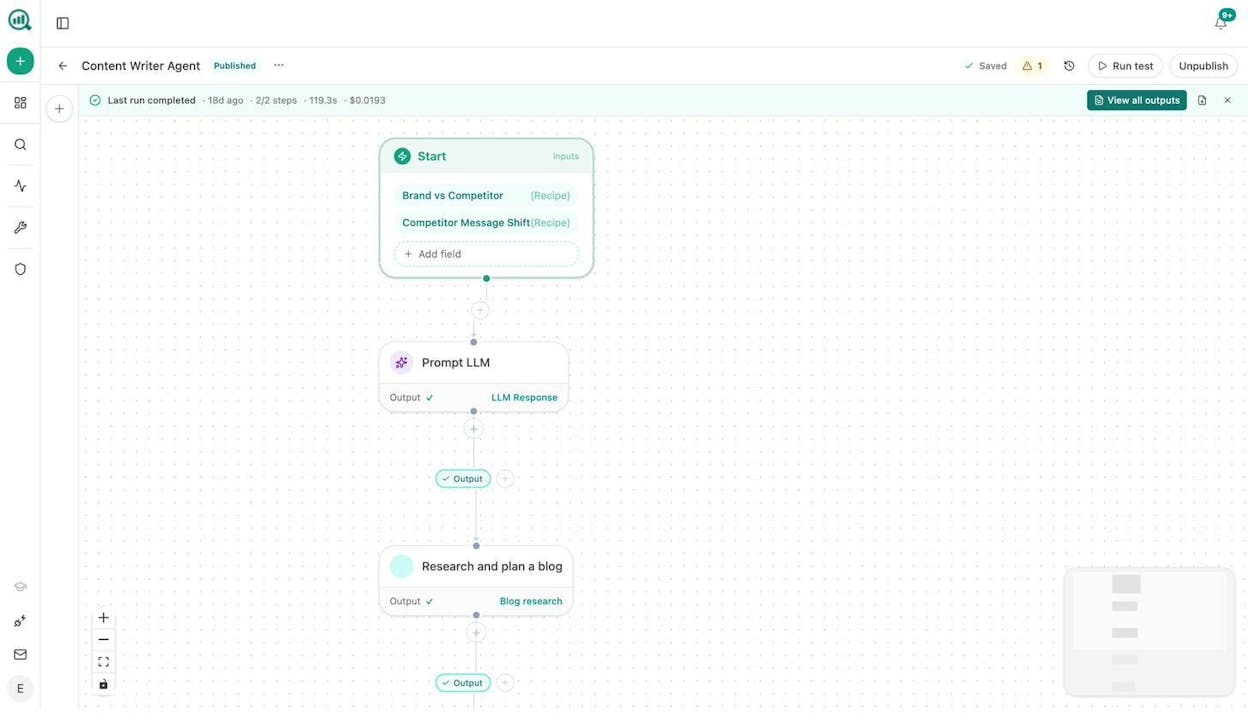
Here is a real example of what a content team can build. The workflow above shows a content writer agent that runs as a pipeline. It starts with a keyword, runs research using DataForSEO and Semrush nodes, generates an outline, produces a full draft with brand voice injection from the Brand Vault, then scores the draft with the AEO Content Scorecard. If the score clears the threshold, it publishes to WordPress with a generated featured image. If it does not, it sends the gaps to Slack for a human writer to review.
That is one agent. Teams build dozens across content, SEO, PR, sales enrichment, and reporting. The combinatorics of 180+ nodes means you are composing from primitives, not picking from a curated template library.
AI search visibility is built in, not bolted on. Analyze AI tracks how your brand appears across ChatGPT, Perplexity, Google AI Mode, Gemini, Copilot, Grok, DeepSeek, and Claude. You can see your visibility share compared to competitors, which sources AI models cite, what sentiment they attach to your brand, and where you are completely absent.
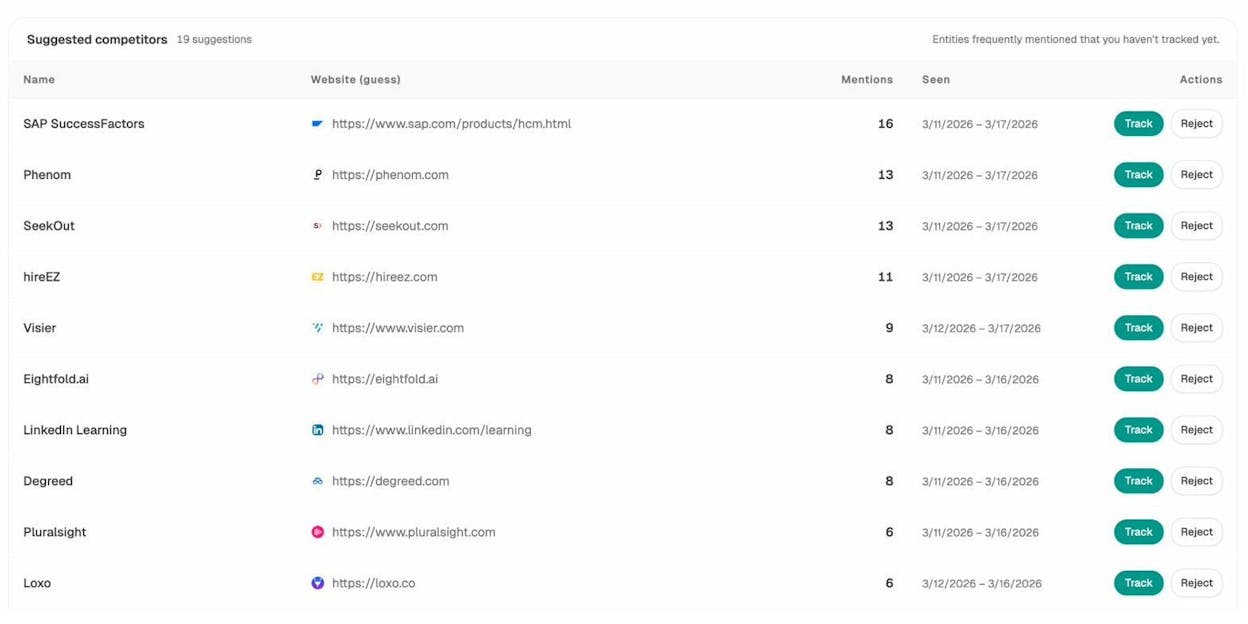
This matters because AI search is not replacing SEO. It is adding a second organic channel. The teams that treat both channels seriously are the ones compounding visibility. Analyze AI is built on that belief. You get traditional SEO tools (keyword research, content optimization, rank tracking) alongside AI search analytics, and the agent builder ties them together.
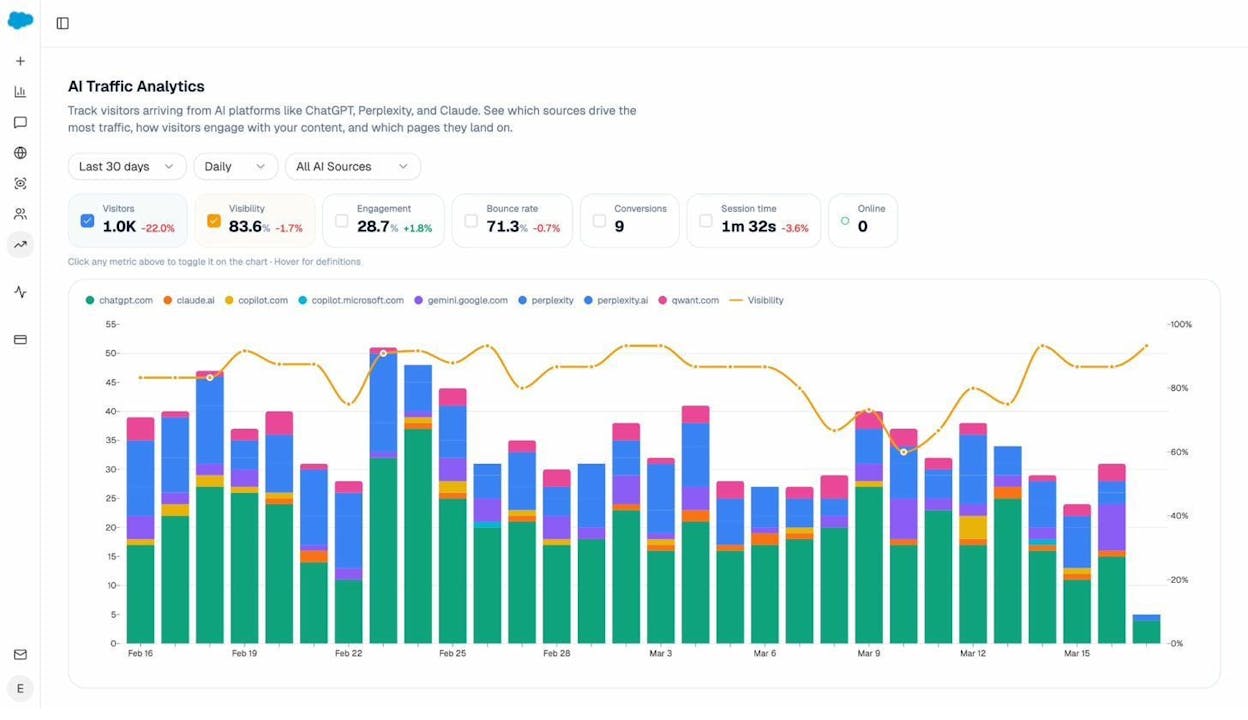
The AI Traffic Analytics dashboard connects to your GA4 and shows which AI engines send traffic, which landing pages receive it, and what those visitors do after they arrive. This closes the loop that most AI search tools leave open. You see visibility, and then you see whether that visibility converts.
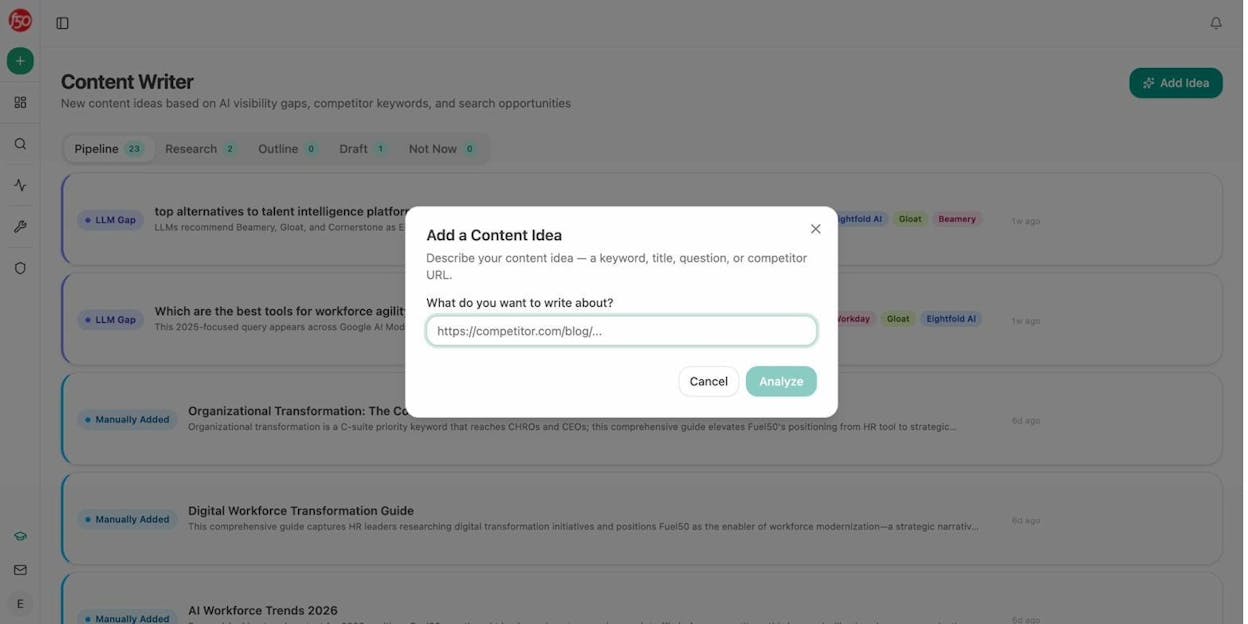
Content Writer and Content Optimizer are built into the platform. Unlike tools where you need separate subscriptions for writing and optimization, Analyze AI includes both. The Content Writer runs a multi-step pipeline (research, outline, draft) with AI strategist comments at every stage. The Content Optimizer fetches your existing page, audits it for gaps, and rewrites sections with your brand voice applied.
What I like about Analyze AI:
-
The agent builder is genuine infrastructure, not a template gallery. 180+ nodes, 34 data recipes, three trigger modes, and native integrations with GA4, GSC, Semrush, DataForSEO, HubSpot, WordPress, Notion, Mailchimp, and every major LLM.
-
AI search visibility is native. You see brand mentions, citations, sentiment, and competitive positioning across every major AI engine without needing a separate tool.
-
Content Writer and Content Optimizer produce better outputs because they run multi-step pipelines with research, brand voice injection, and AEO scoring built in.
-
The Brand Vault stores 12 blocks (tone, style, claims, proof points, competitor contrast, disallowed phrases) and injects them into any agent workflow automatically.
-
Free tools suite including a keyword generator, keyword difficulty checker, SERP checker, website authority checker, and broken link checker.
-
Free trial available. You can test the platform before committing.
What I do not like:
-
The platform is deep. New users may need the onboarding call to understand the full agent builder surface area.
-
Some CRM and workspace integrations (Gmail, Google Sheets, Slack) are listed as coming soon, though HubSpot, WordPress, Notion, and Mailchimp are fully live.
Analyze AI pricing: Growth tier includes 3 AI engines, 25 tracked prompts per day, 1 Content Writer and 1 Content Optimizer workflow, unlimited competitor tracking, and AI traffic analytics with GA4. Pro adds more engines, higher prompt volumes, and additional writer/optimizer workflows. Custom plans include all engines and unlimited workflows. All plans include a free trial and priority support.
2. Gumloop
-
Best for: Enterprise teams that want to share general-purpose AI agents across departments
-
Pricing: Free plan (5k credits/month, 1 seat), Pro starts at $37/month, Enterprise is custom
-
Differentiator: Gumstack security layer and multi-agent orchestration across teams
Gumloop is a general-purpose AI agent builder designed for companies that want to deploy agents across multiple departments. It is not marketing-specific, but it handles a wide range of use cases from data analysis to CRM management to customer support.
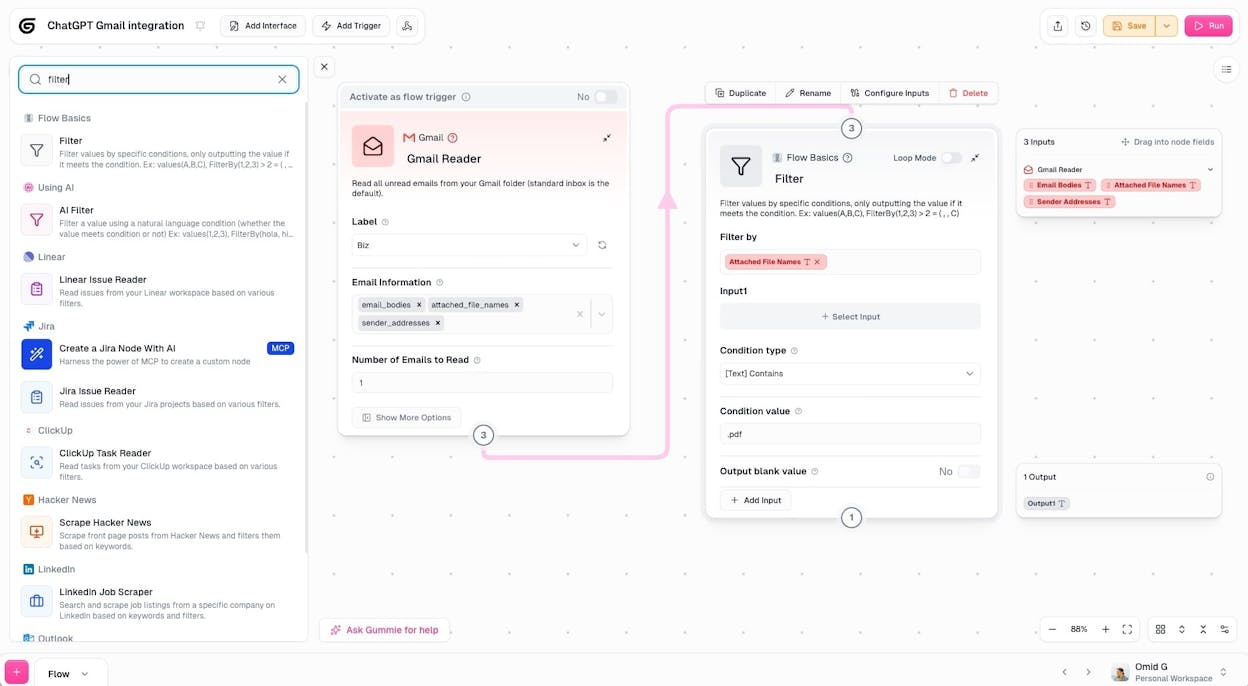
The platform uses a visual workflow builder where you drag nodes, connect them, and deploy agents that your team can interact with through Slack, Microsoft Teams, or a chat interface. Gumloop is LLM-agnostic, so you can use Claude, GPT, or Gemini inside any workflow without managing separate API keys.
What sets Gumloop apart for enterprise buyers is Gumstack, their security layer. It gives IT teams visibility into which agents are running, what tools they call, what data they access, and who deployed them. For companies worried about AI governance, this is a strong selling point.
What I like about Gumloop:
-
The self-serve onboarding is smooth. You can sign up and build your first agent without talking to sales.
-
Gumstack gives security teams a single dashboard for every MCP client and server across the organization.
-
Used by Shopify, Instacart, Gusto, and Ramp, so it has been tested at scale.
-
Multi-agent orchestration lets you spin up specialized agents for different teams and coordinate them from one interface.
What I do not like:
-
It is not built for marketing workflows specifically. You will not find native SEO, content, or AI search nodes. You would need to connect external APIs for keyword data, rank tracking, or content scoring.
-
The template library is still growing compared to tools that have been around longer.
-
The learning curve in the first 20 minutes can feel steep before the interface clicks.
Gumloop pricing: Free at $0/month (5k credits, 1 seat, 1 active trigger). Pro starts at $37/month (20k+ credits, unlimited seats, team analytics). Enterprise is custom with RBAC, SCIM/SAML, audit logs, and VPC deployment.
Gumloop reviews: G2 rating of 4.8/5 (7+ reviews). Product Hunt rating of 5/5 (9+ reviews).
3. Jasper
-
Best for: Marketing teams focused on content production and brand voice consistency
-
Pricing: Pro starts at $59/month (billed annually), Business is custom
-
Differentiator: Marketing-specific AI writing with deep brand voice controls
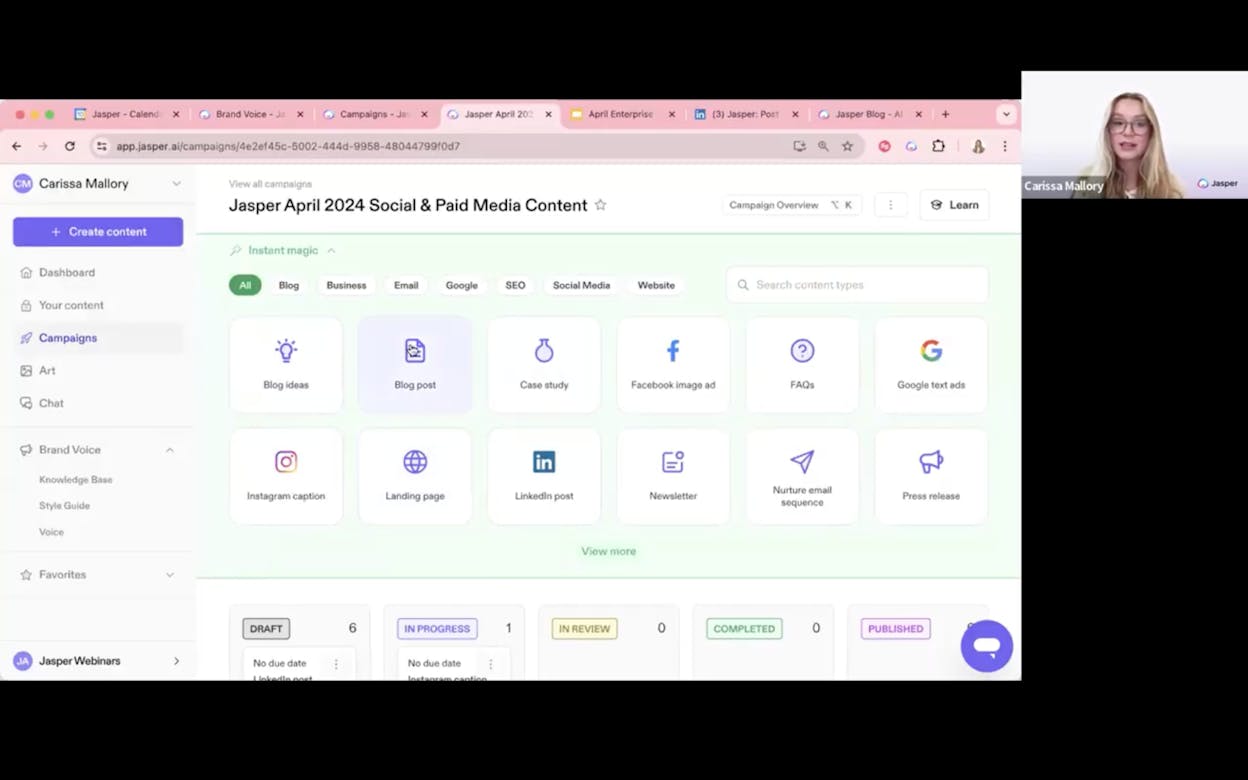
Jasper is an AI content platform built for marketing teams that need to produce on-brand content quickly. It is more of a writing and campaign tool than a full agent builder, but many enterprise marketing teams evaluate it alongside agent platforms.
Jasper’s strength is brand voice. You can train the AI on your company’s tone and style guidelines, and it maintains consistency across blog posts, ad copy, email campaigns, and social content. The Business plan adds a no-code AI App Builder for custom workflows, though it is not as deep as a full node-based agent builder.
What I like about Jasper:
-
Brand voice training is one of the best in the market. It learns your writing style and applies it consistently across all outputs.
-
The template library covers most marketing formats out of the box.
-
The Business plan supports unlimited brand voices, making it viable for agencies managing multiple clients.
-
7-day free trial on Pro lets you test before committing.
What I do not like:
-
No native SEO data integration. You need separate tools for keyword research, rank tracking, and content auditing.
-
No AI search visibility. Jasper does not track how your brand appears in ChatGPT, Perplexity, or other AI engines.
-
No agent builder with the depth of Analyze AI or Gumloop. The AI App Builder is limited compared to a node-based workflow system with 180+ nodes.
-
Pricing adds up quickly. Pro is $59/seat/month, and most marketing teams need multiple seats.
Jasper pricing: Pro starts at $59/month (annually) or $69/month (monthly) per seat. Business is custom pricing with unlimited brand voices, groups, and advanced collaboration. No free tier.
Jasper reviews: G2 rating of 4.7/5 (1,268+ reviews).
4. Workato
-
Best for: Large enterprises that already use an iPaaS and want to extend it into an AI agent layer
-
Pricing: Custom pricing based on platform edition and usage
-
Differentiator: One of the deepest integration libraries in the market (1,000+ connectors) built over a decade
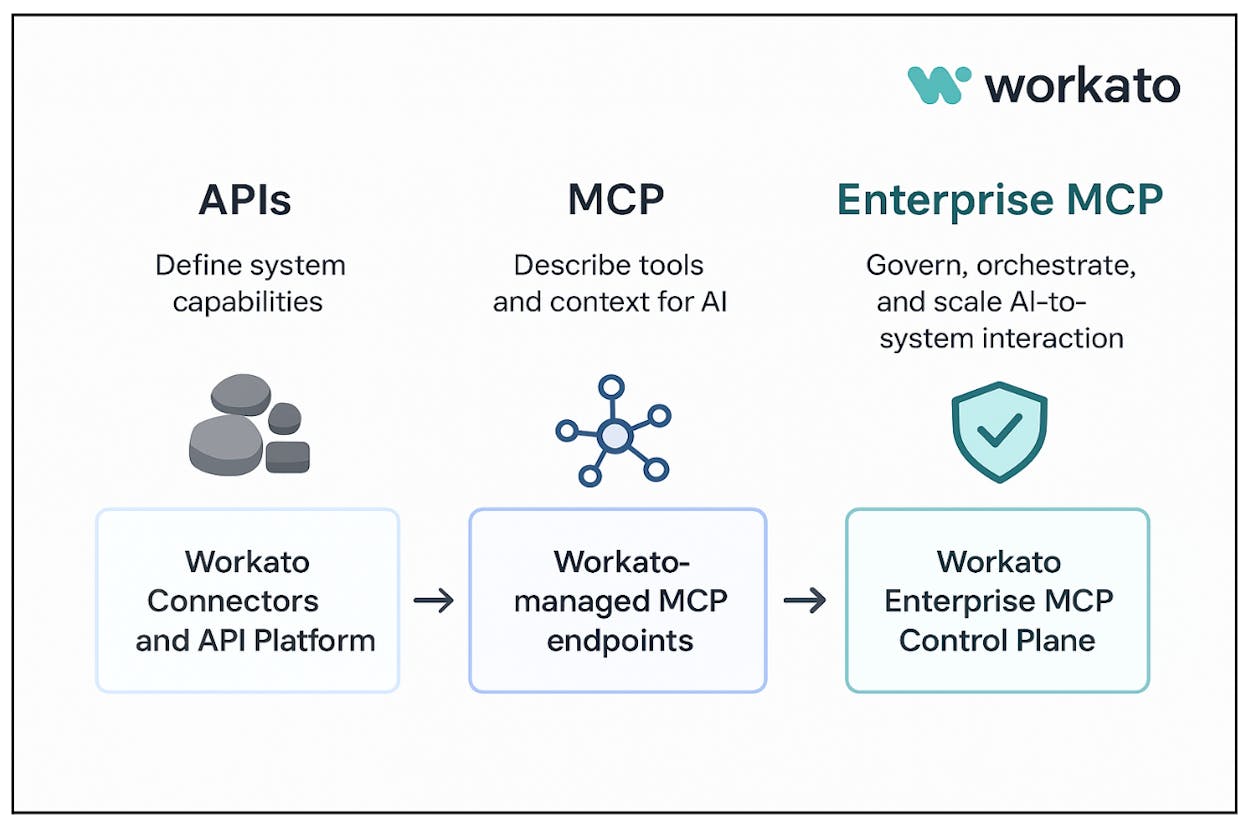
Workato is an enterprise automation platform that has expanded from iPaaS (integration platform as a service) into agentic AI. It sits between your LLMs and your enterprise tools like Salesforce, NetSuite, Workday, and ServiceNow, handling authentication, governance, and data orchestration.
For marketing teams, Workato is relevant when your workflows touch enterprise systems of record. If your lead routing depends on Salesforce, your campaigns trigger from NetSuite data, or your reporting pulls from Workday, Workato’s integration depth is hard to match. The platform includes Agent Studio for building agents and pre-built “Genies” for common marketing functions.
What I like about Workato:
-
Integration depth is exceptional. Over a decade of connector development means it works with nearly every enterprise tool.
-
Recognized as a Leader in the Gartner Magic Quadrant for iPaaS eight times.
-
Pre-built Genies give larger teams a faster starting point for common marketing workflows.
What I do not like:
-
No native SEO, content, or AI search capabilities. It is an integration layer, not a marketing platform.
-
Pricing is not transparent. Every conversation starts with sales.
-
The learning curve is steeper than AI-native platforms because the product is rooted in traditional iPaaS concepts.
-
Overkill for teams that primarily need content and SEO workflows.
Workato pricing: Not publicly listed. Plans are based on platform edition plus usage. Every edition includes unlimited connections, workflows, and collaborators.
Workato reviews: G2 rating of 4.7/5 (752+ reviews). Gartner Peer Insights rating of 4.9/5 (559+ reviews).
5. Glean
-
Best for: Enterprises that want employees to find and synthesize information across their entire tech stack
-
Pricing: Not publicly listed, demo required
-
Differentiator: AI search across 100+ connected apps with strict permission controls
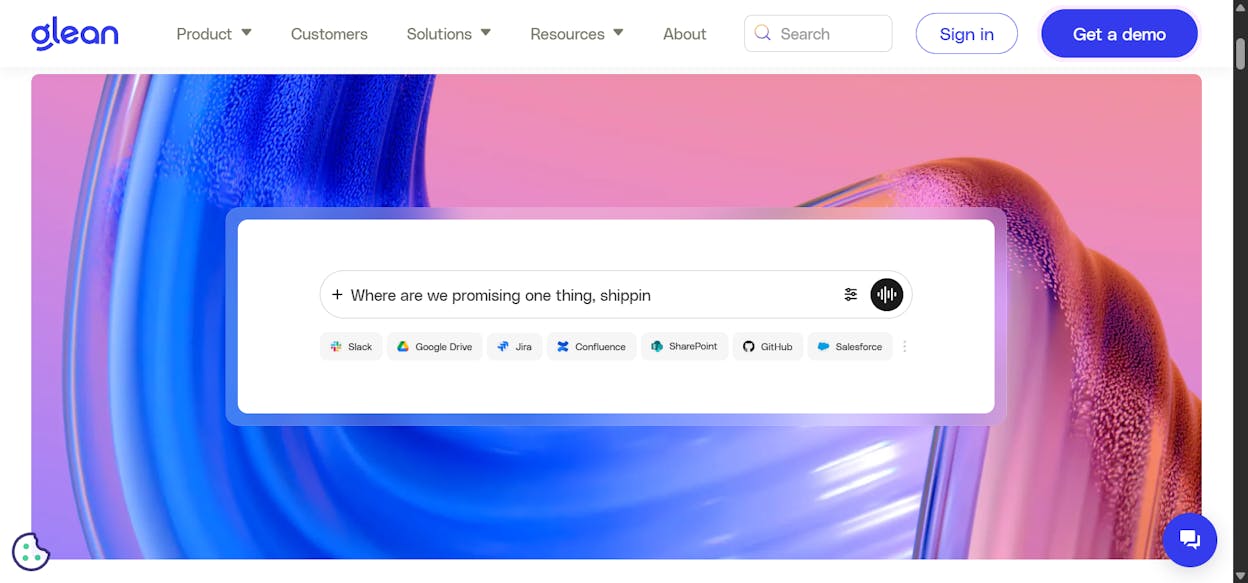
Glean is an enterprise AI assistant that indexes content across Slack, Google Drive, Confluence, Salesforce, Jira, GitHub, Notion, and 100+ other apps. It gives your team a single place to ask questions and get answers grounded in your company’s actual data.
For marketing teams, Glean is useful when you need to find assets, surface past campaign data, or understand what other departments have produced. It is more of a knowledge layer than an agent builder, though Glean has recently expanded into agents with an Agent Builder and prebuilt Agent Library.
What I like about Glean:
-
The search experience across enterprise knowledge is excellent. It genuinely understands context across different tools.
-
Permissions are strict. Employees only see what they are authorized to access in your connected stack.
-
Used by Webflow, Grammarly, Zapier, and Pinterest.
What I do not like:
-
Better at retrieving information than executing multi-step marketing workflows.
-
No native SEO, content creation, or AI search visibility features.
-
Pricing is not public. You need a sales call to get a quote.
-
The agent-building side of the product is newer and less mature than dedicated agent platforms.
Glean pricing: Not publicly listed. Custom quotes based on company size and needs.
Glean reviews: G2 rating of 4.7/5 (152+ reviews). Gartner Peer Insights rating of 4.4/5 (121+ reviews).
How to Choose the Right AI Agent Platform for Your Marketing Team
The right platform depends on what your team actually does every day. Here is a quick comparison to help you decide.
|
Factor |
Analyze AI |
Gumloop |
Jasper |
Workato |
Glean |
|---|---|---|---|---|---|
|
Marketing-specific workflows |
Yes, built-in |
No, general purpose |
Content only |
No, general purpose |
No, knowledge search |
|
Agent builder depth |
180+ nodes, 34 recipes |
Visual builder, growing |
Basic AI App Builder |
Deep iPaaS + agents |
New, growing |
|
SEO and content tools |
Native (Writer, Optimizer, keyword data) |
No |
Writing only |
No |
No |
|
AI search visibility |
Native (6+ engines) |
No |
No |
No |
No |
|
CRM integration |
HubSpot (26 operations) |
Via APIs |
No |
Deep (Salesforce, NetSuite) |
Read-only search |
|
Free trial or free plan |
Free trial |
Free plan |
7-day trial |
No |
No |
|
Pricing transparency |
Published tiers |
Published tiers |
Published tiers |
Custom only |
Custom only |
If your team’s primary challenge is content production, SEO, AI search visibility, and marketing operations, Analyze AI is the platform built for that. It is the only tool on this list that combines a deep agent builder with native SEO data, content creation, content optimization, and AI search analytics in one place.
If you need a general-purpose agent builder with strong security controls, Gumloop is solid. If content writing with brand voice consistency is your main need, Jasper handles that. If your workflows depend on enterprise systems of record, Workato’s integration depth is unmatched. And if finding information across a sprawling tech stack is the bottleneck, Glean solves that problem.
The broader point is this. AI search is not replacing SEO. It is adding a second organic channel. The marketing teams that build agents to cover both channels are the ones that will compound visibility over the next two years. The ones that wait will be playing catch-up.
Start your free trial of Analyze AI and see how the agent builder fits your team’s workflows.

Ernest

Ibrahim


