



Summarize this blog post with:


Most “best AI agent framework” articles evaluate these tools by how well they chain LLM calls together. That is useful if you are an engineer building a chatbot. It is useless if you are a content lead trying to publish 20 optimized articles a month, or a CMO trying to figure out why your brand is invisible in ChatGPT results.
Marketing teams do not need a framework that “orchestrates multi-agent reasoning loops.” They need one that connects to Google Search Console, pulls keyword gaps, drafts a brief in their brand voice, and publishes to WordPress without a developer in the room.
In this article, you’ll learn what an AI agent framework actually does for marketing teams, how to evaluate one based on the workflows you run every week, and which of the six platforms I tested handles content production, keyword research, competitive analysis, and AI search visibility at scale. You will also see where each platform falls short so you can skip the trial-and-error I went through.
Table of Contents
What Is an AI Agent Framework?
An AI agent framework is a platform that lets you build AI-powered workflows where each step can reason, decide, and take action across your tools. Instead of writing a prompt in ChatGPT and copy-pasting the output into a spreadsheet, you wire together a sequence of nodes that handle research, writing, optimization, distribution, and reporting on their own.
The difference between an agent and a basic automation tool like Zapier is decision-making. An agent can look at your keyword research data, decide which topics have the best opportunity score, generate a brief based on competitor gaps, and flag pieces that need human review before publishing. A Zapier zap just moves data from point A to point B.
For marketing teams specifically, the right framework replaces the manual work between tools. The “pull data from GSC, paste into a sheet, send to the writer, wait for the draft, run it through an optimizer, then format for WordPress” cycle that eats 4 to 6 hours per article.
How I Evaluated Each Framework for Marketing
I tested each platform on 10 workflows that a real marketing team runs weekly. Not hypothetical “what if” scenarios. Actual work.
Here is what I scored each one on:
|
Criteria |
Why It Matters for Marketing |
|---|---|
|
Marketing-specific integrations |
Does it connect to GA4, GSC, CMS platforms, CRMs, and SEO tools natively? Or do you need custom API calls for everything? |
|
Content production pipeline |
Can it handle research, outlining, drafting, and optimization in a single workflow? |
|
Brand voice control |
Can you inject tone guidelines, approved messaging, and disallowed phrases automatically? |
|
AI search visibility |
Does it help you track and improve how your brand shows up in ChatGPT, Perplexity, and Gemini results? |
|
Scheduling and triggers |
Can workflows run on a schedule or fire from a webhook without human intervention? |
|
Scale without developers |
Can a content manager or marketing ops person build and maintain these workflows? |
|
Pricing transparency |
Is the cost predictable at 50 or 500 workflow runs per month? |
Most frameworks checked one or two of these boxes. Only one checked all seven.
5 Best AI Agent Frameworks for Marketing Teams
Here is the shortlist:
-
Analyze AI (best for marketing, SEO, AEO, content, and GTM ops at scale)
-
n8n (best for self-hosted workflow automation with code flexibility)
-
CrewAI (best for developers building multi-agent systems)
-
LangChain (best for engineers who want full architectural control)
-
AutoGen (best for research-grade multi-agent experiments)
1. Analyze AI
-
Best for: Marketing teams, agencies, and content operations that need to run SEO, AEO, content production, and competitive intelligence workflows at scale
-
Pricing: Free trial available. Plans scale by tracked prompts, competitors, and workflow volume
-
What I like: The only platform on this list built specifically for marketing. 180+ nodes, 34 pre-built data recipes, and native connections to GA4, GSC, Semrush, DataForSEO, HubSpot, WordPress, Notion, and every major LLM
Analyze AI is the agentic platform for SEO, AEO, content, and GTM operations. While every other tool on this list was built for general-purpose automation and then adapted for marketing use cases, Analyze AI was built from the marketing stack outward.
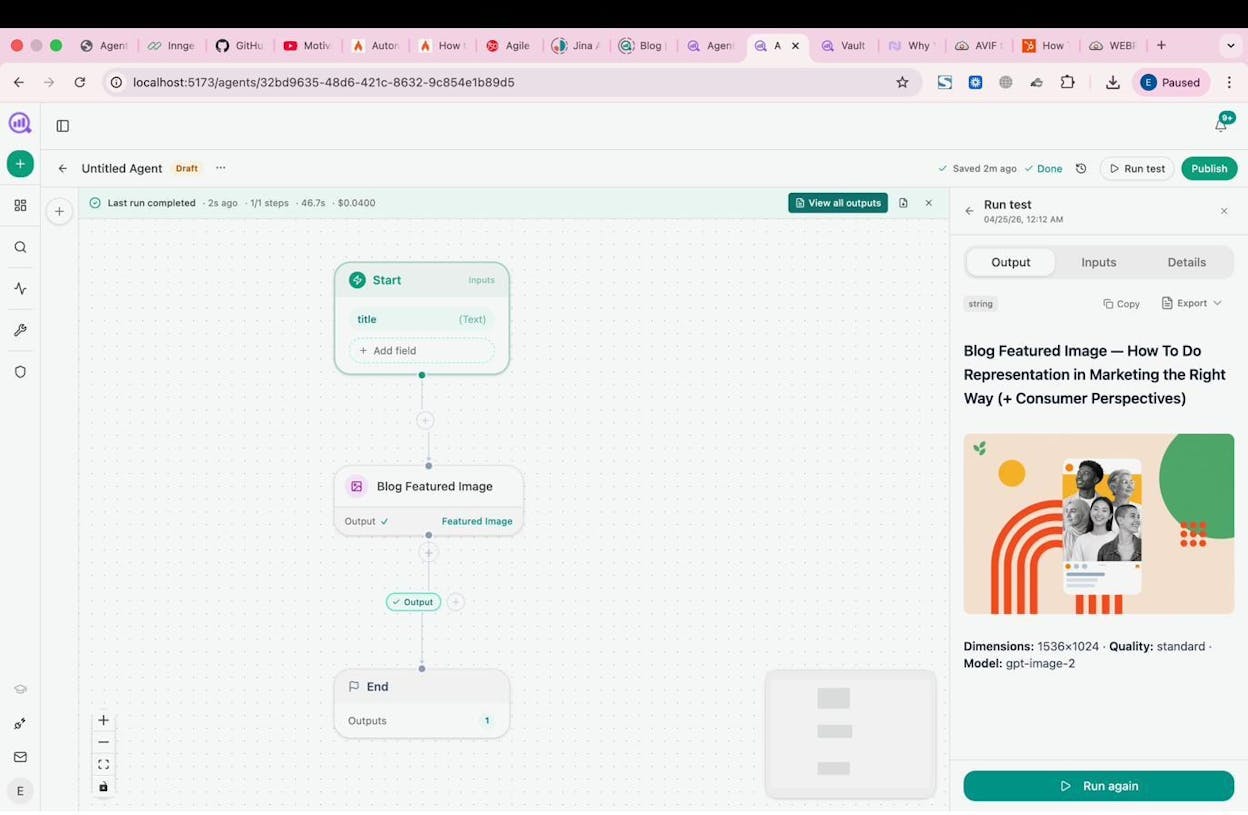
The Agent Builder is the core of the platform. It gives you 180+ production-ready nodes across 16 categories. You are not picking from a template library. You are composing from primitives. Research nodes pull data from DataForSEO, Semrush, and Google Search Console. Content nodes handle briefing, outlining, drafting, and optimization. Distribution nodes push to WordPress, Notion, Contentful, Sanity, and HubSpot. Logic nodes let you branch, loop, wait, and set conditions.
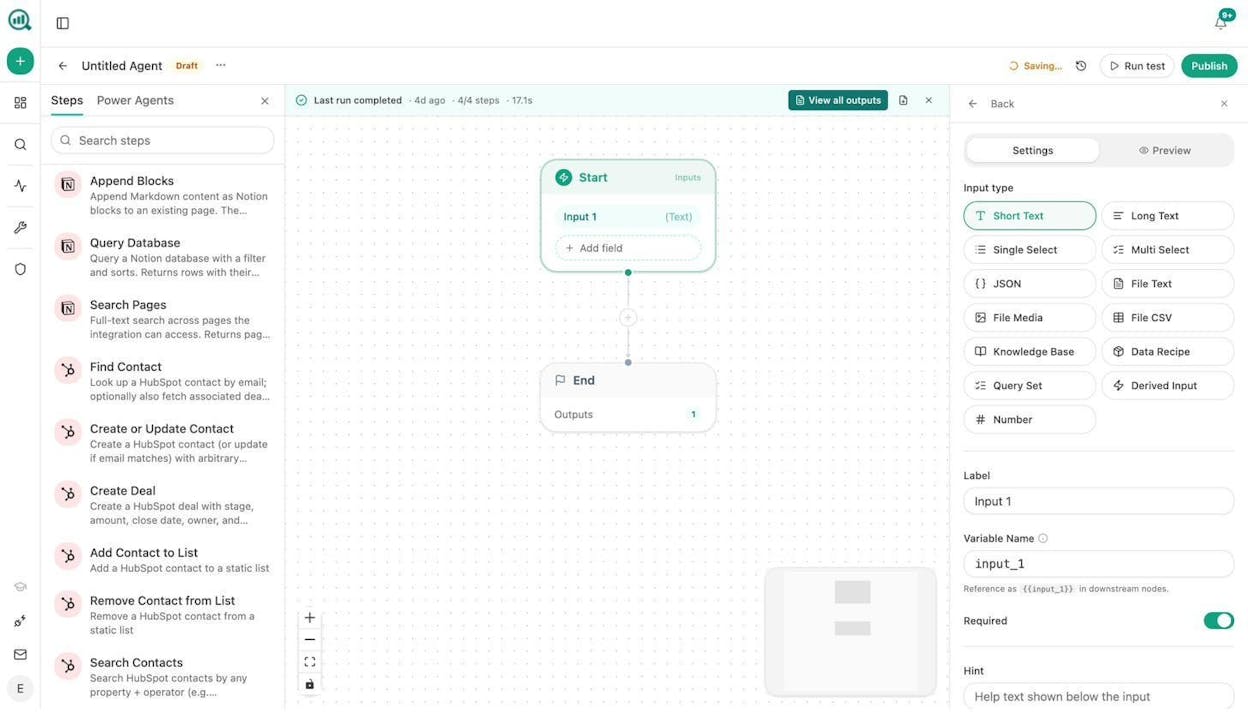
The practical difference is this. In n8n or Gumloop, building a content refresh workflow means stitching together 8 to 12 generic API nodes, writing custom prompts, and hoping the output is usable. In Analyze AI, you drop in a declining-pages data recipe (which pulls from GA4 automatically), feed it into a content optimization node that already knows your brand voice from the Knowledge Base, and gate publishing on a quality score. The infrastructure for content optimization is built in.
Here is what real teams build with it:
-
Content refresh at scale. A scheduled agent finds pages losing traffic, scrapes the current content, rewrites for freshness and AEO readiness, and publishes the update. Runs weekly. No human involved unless the quality score falls below threshold.
-
Keyword research at scale. Connect the DataForSEO and Semrush nodes to pull keyword opportunities, cluster them by topic, and generate editorial briefs. One workflow replaces the 3-hour keyword research process your team does manually.
-
Internal linking at scale. Loop through your sitemap, analyze on-page SEO for each URL, match against GSC top keywords, and suggest 3 internal links per page. Output to Notion or directly as a pull request via the Call API node.
-
Link outreach. Use the Tomba and Hunter.io nodes to find journalist and author emails, research their recent coverage, generate personalized pitches in your brand voice, and send them. Log everything to HubSpot.
-
Competitive intelligence. Pull competitor visibility data, citations, sentiment, and source landscapes across every AI engine. Get a Monday morning briefing in Slack before your first meeting.
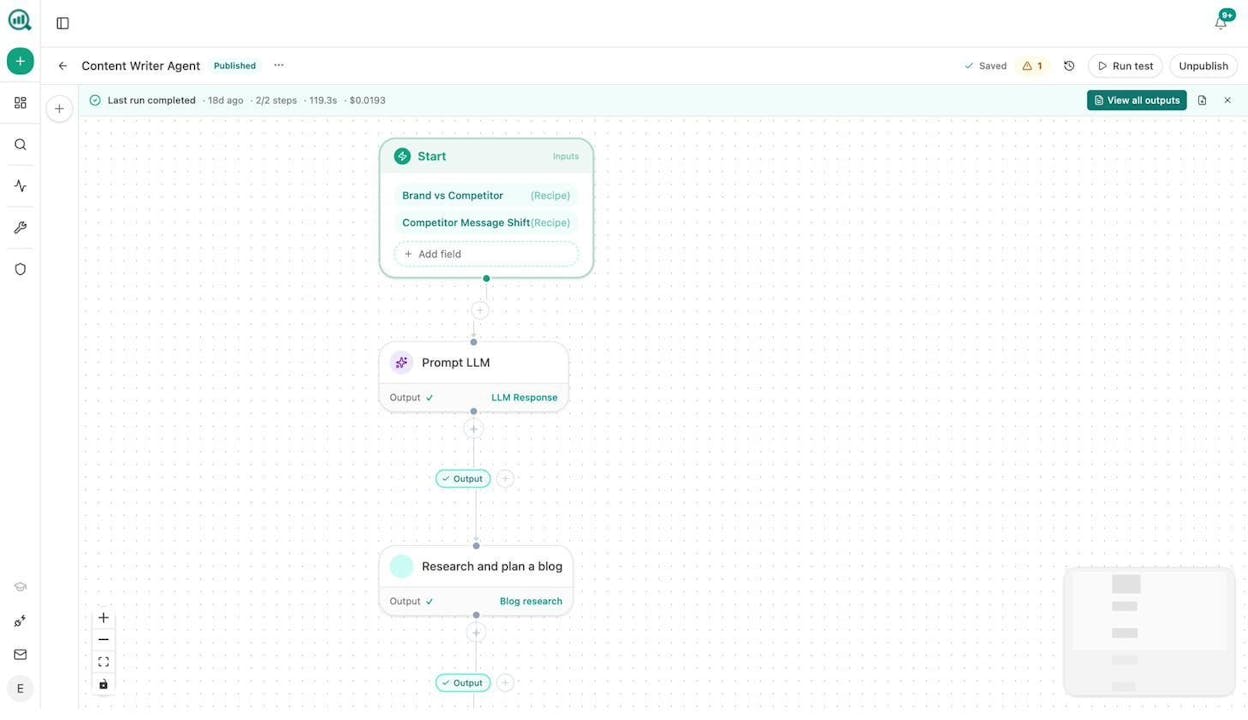
The Content Writer and Content Optimizer deserve separate mention. These are not generic “write me an article” tools. The Writer runs a multi-step pipeline. It starts with competitive research, builds an outline with strategic comments from the AI strategist, generates a full draft with brand voice injection, and scores the piece on AEO readiness before you ever see it. The Optimizer does the same for existing content. It fetches the live page, identifies gaps against top-performing competitors and AI citation patterns, and rewrites with editorial-quality comments explaining every change.
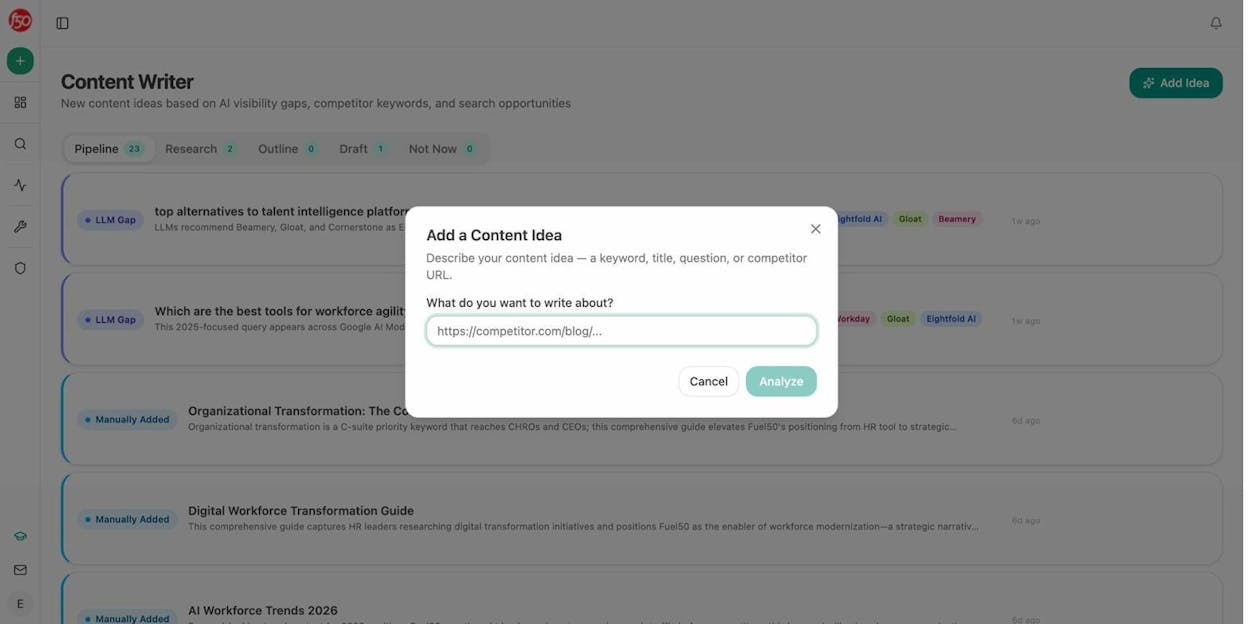
These produce better outputs than what you get from general-purpose agent frameworks because the underlying data is already in the room. The agent does not need you to paste in “context” from five different tools. It reads your visibility data, your GSC performance, your competitor positioning, and your brand vault natively.
What makes Analyze AI different from every other framework on this list:
The Agent Builder is not an automation layer bolted onto a monitoring product. It is the substrate. With 180+ nodes across GA4, GSC, Semrush, DataForSEO, HubSpot, WordPress, Notion, Contentful, Mailchimp, Hunter.io, Tomba, and every major LLM, the number of workflow combinations runs into the billions. You can build a Monday board prep for your CMO, a pitch-deck generator for your agency’s sales team, a crisis early-warning system for your PR team, or a full editorial calendar that generates and publishes itself on a weekly cadence.
Three trigger modes make this work in production. Manual for on-demand tasks. Scheduled (cron-based) for recurring intelligence. Webhook for event-driven reactions, like when a HubSpot deal closes or a form submission lands. A scheduled agent is a virtual team member that never forgets, never goes on vacation, and costs cents per run.
Where Analyze AI could improve:
-
The platform has a learning curve if you have never worked with node-based builders before. The Sheets feature helps flatten that curve for spreadsheet-native teams.
-
Some CRM and CMS integrations (Gmail, Google Sheets, Slack) are in active development. The Call API node fills the gap in the meantime.
You can start a free trial and build your first agent today.
2. n8n
-
Best for: Technical marketing teams that want self-hosted workflow automation with code flexibility
-
Pricing: Starter at $24/month (2,500 executions). Pro at $60/month. Business at $800/month
-
What I like: 400+ integrations. Self-hosting option for teams with compliance requirements
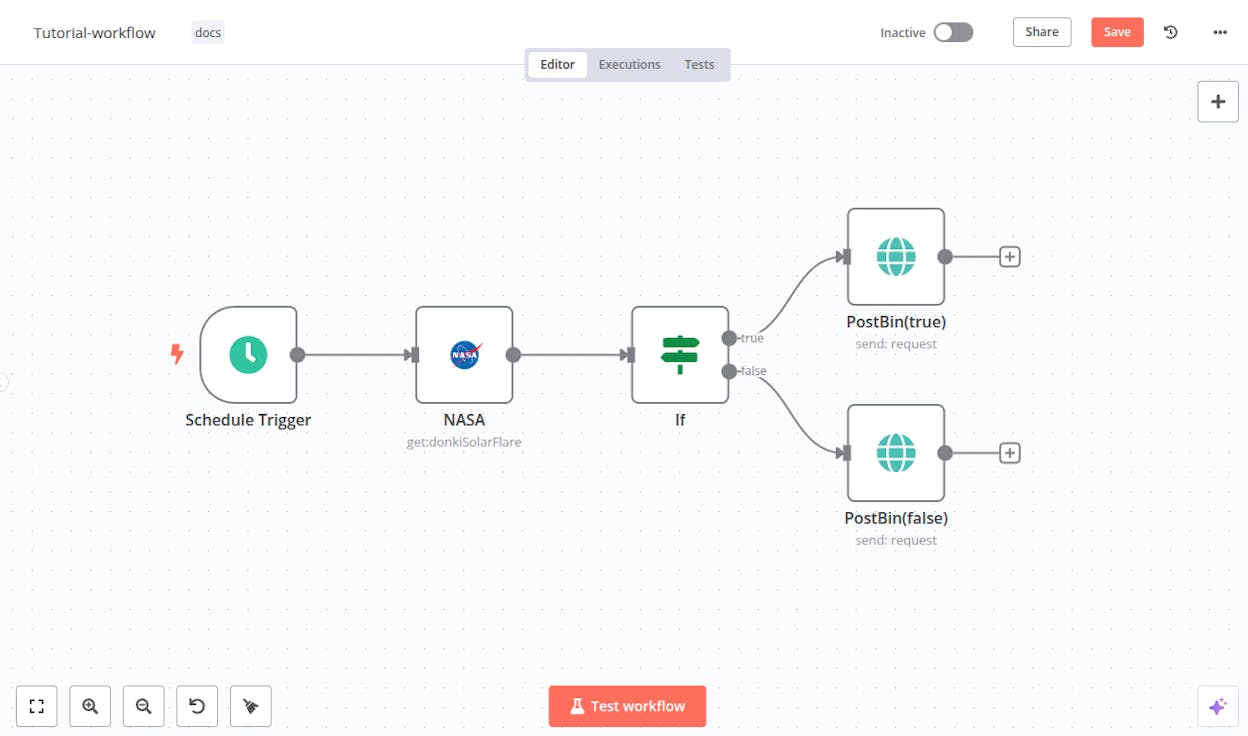
n8n is a low-code workflow builder with 400+ integrations. You can mix no-code blocks with custom JavaScript or Python, which makes it more flexible than Gumloop for teams with some technical skill. The debugging experience is solid, and the self-hosting option is a genuine advantage for regulated industries.
Where n8n falls short for marketing: Like Gumloop, it is a horizontal tool. There is no native content writing pipeline, no brand vault, and no AI search visibility layer. You are building all of that from scratch. The pricing also jumps dramatically from Pro ($60) to Business ($800), which catches many mid-size teams off guard.
3. CrewAI
-
Best for: Developers who want an open-source framework for multi-agent orchestration
-
Pricing: Free plan available. Professional at $25/month (100 executions)
-
What I like: Purpose-built for multi-agent systems where specialized agents collaborate
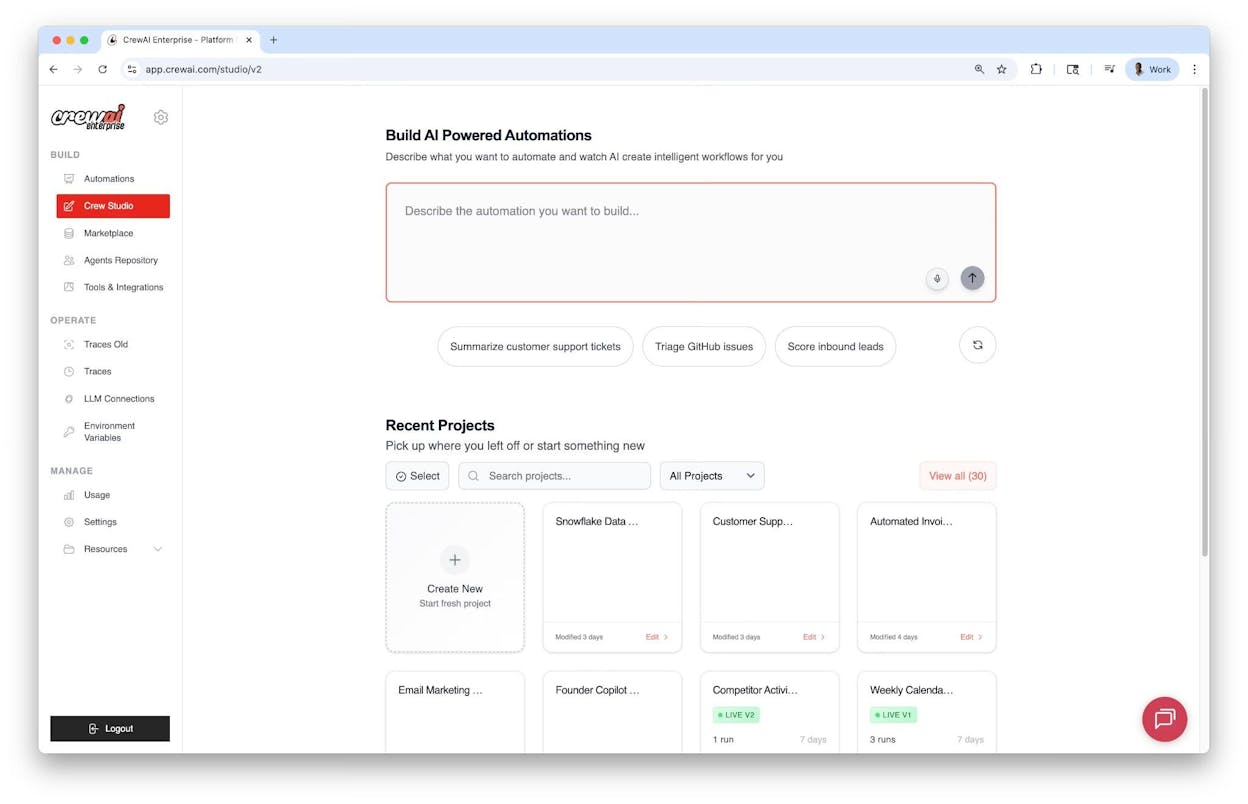
CrewAI lets you define a “crew” of specialized AI agents (researcher, planner, writer, reviewer) and have them collaborate on tasks. This is architecturally sound. Instead of one bloated agent trying to do everything, you get focused agents that hand off context cleanly.
For marketing, the idea of a research agent feeding a writing agent that hands off to an editing agent is appealing. But the execution requires Python fluency. CrewAI leans technical, and the visual editor is still catching up to the code-first experience.
The real limitation for marketers: CrewAI gives you the orchestration framework but none of the marketing data. There are no native connections to GA4, GSC, or any SEO tool. No pre-built content pipelines. No brand voice injection. You are building every marketing-specific piece yourself, which means you need both a developer and a marketer in the room to get value.
The Professional plan at $25/month with only 100 workflow executions is also restrictive for any team producing content at volume.
4. LangChain
-
Best for: Engineers who want a flexible, code-first framework for custom AI applications
-
Pricing: Free and open-source. LangSmith starts at $39/seat per month for teams
-
What I like: Largest open-source AI community (127k+ GitHub stars). Mature debugging and evaluation tooling via LangSmith
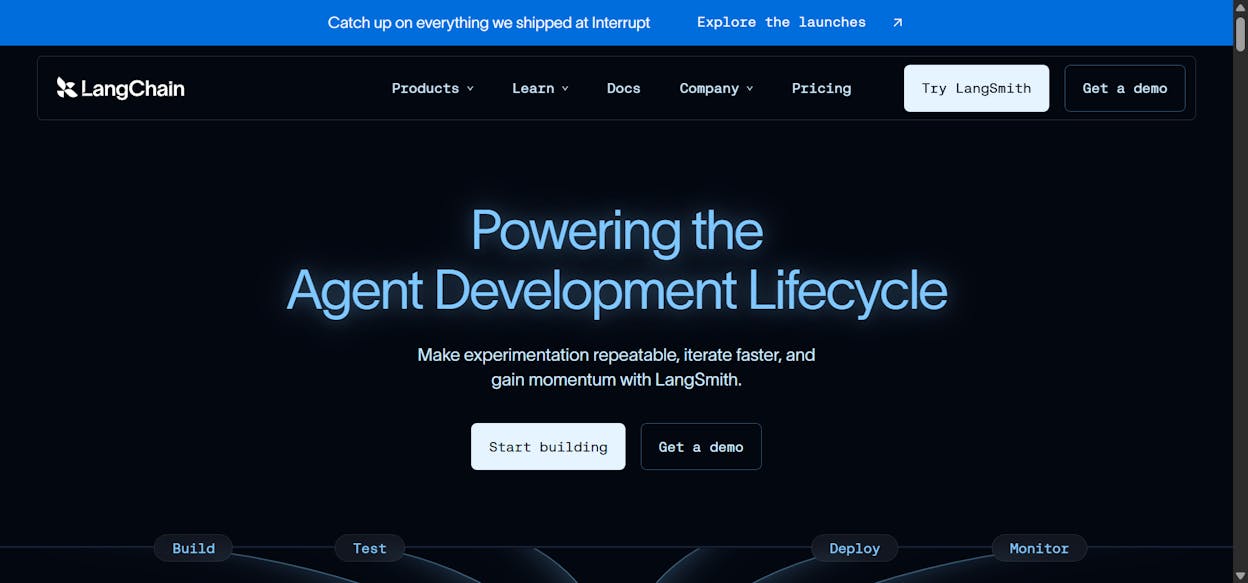
LangChain is the Swiss Army knife of AI frameworks. It supports Python and JavaScript, gives you modular building blocks for prompts, memory, tools, and chains, and lets you build anything from single agents to multi-step RAG applications.
For marketing teams, the flexibility is a double-edged sword. You can build a content production pipeline, but you are starting from zero. Every integration, every data source, every quality check is custom code. If you want to explore code-first approaches to SEO automation, LangChain is worth studying. Just know that “studying” is the right word.
5. AutoGen
-
Best for: AI researchers and engineers exploring event-driven multi-agent architectures
-
Pricing: Free and open-source. You pay for LLM API calls
-
What I like: Backed by Microsoft Research. Strong observability and debugging for understanding agent decision-making
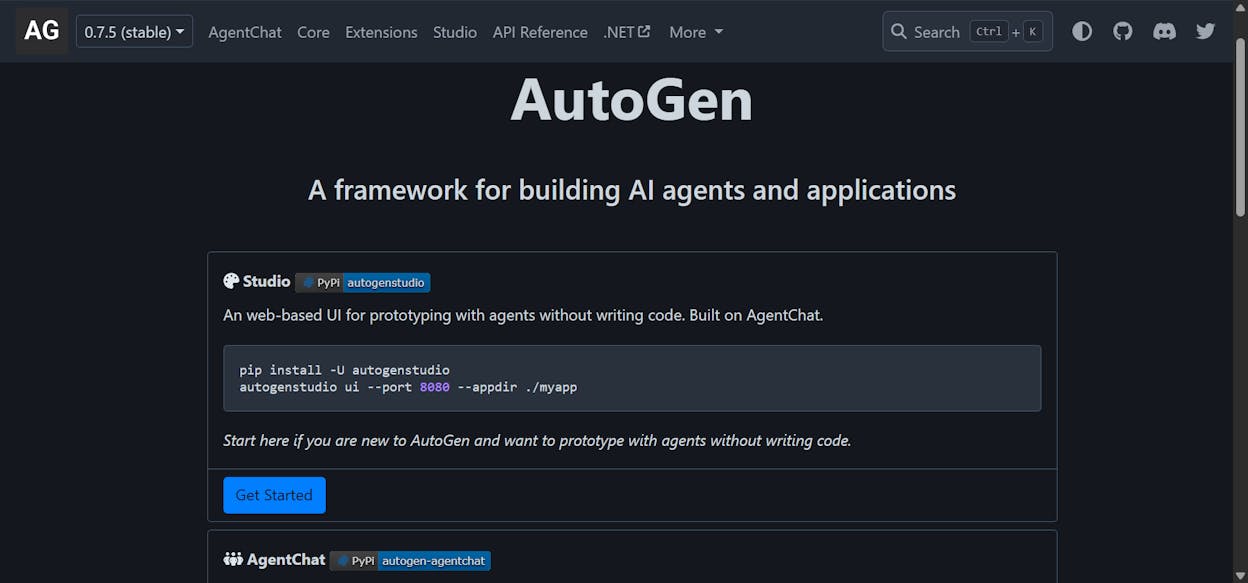
AutoGen is Microsoft Research’s framework for building multi-agent systems with an event-driven architecture. Agents communicate through messages, run in parallel, and handle long-running background tasks. The observability layer is genuinely impressive for tracing agent decision-making.
For marketing teams, this is the wrong tool. There is no hosting, no managed infrastructure, no integration marketplace, and no marketing-specific functionality. AutoGen is a research framework. Using it for marketing automation is like using a Formula 1 engine to power a delivery van.
How AI Search Changes Which Framework You Need
Here is where most “AI agent framework” reviews stop. They evaluate the tools on traditional automation criteria and never mention that AI search is now an organic channel that marketing teams need to manage.
Your buyers are asking ChatGPT, Perplexity, and Gemini for product recommendations. When those AI engines answer, they pull from sources, cite specific URLs, and rank brands by visibility. If your framework cannot help you track, improve, and automate your presence in those answers, you are optimizing for half the search landscape.
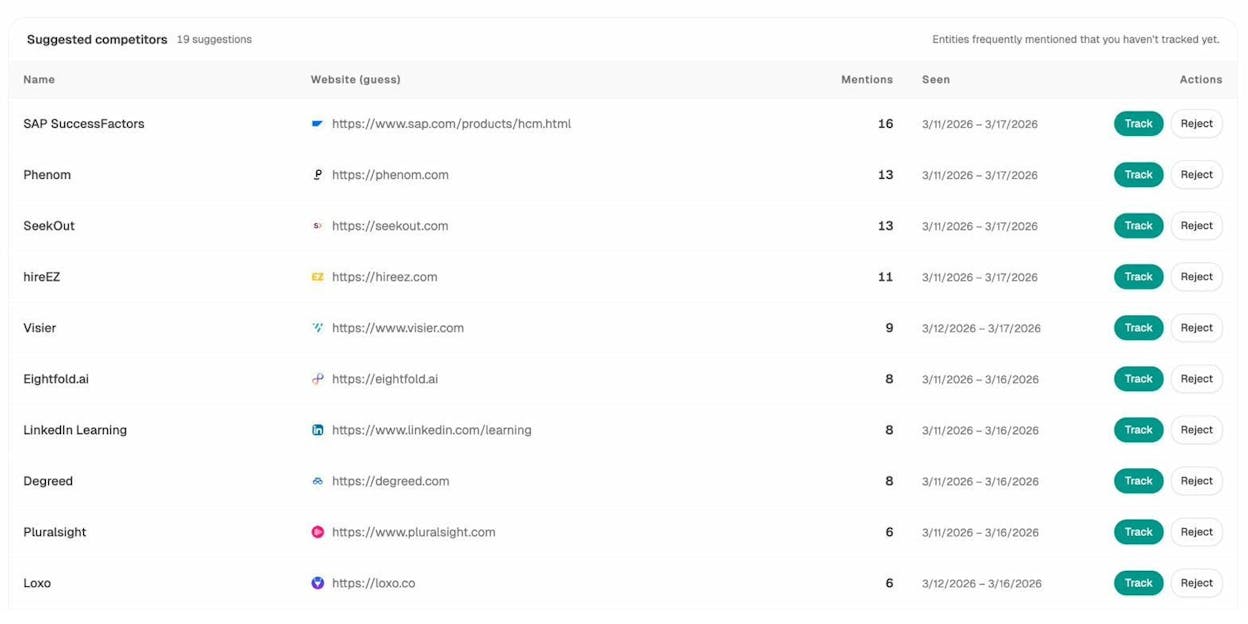
This is where the gap between Analyze AI and every other framework on this list becomes clear. Analyze AI tracks AI search visibility across every major engine, shows you which prompts mention your competitors but not you, identifies which sources AI models trust in your category, and gives you weekly action plans to close gaps.
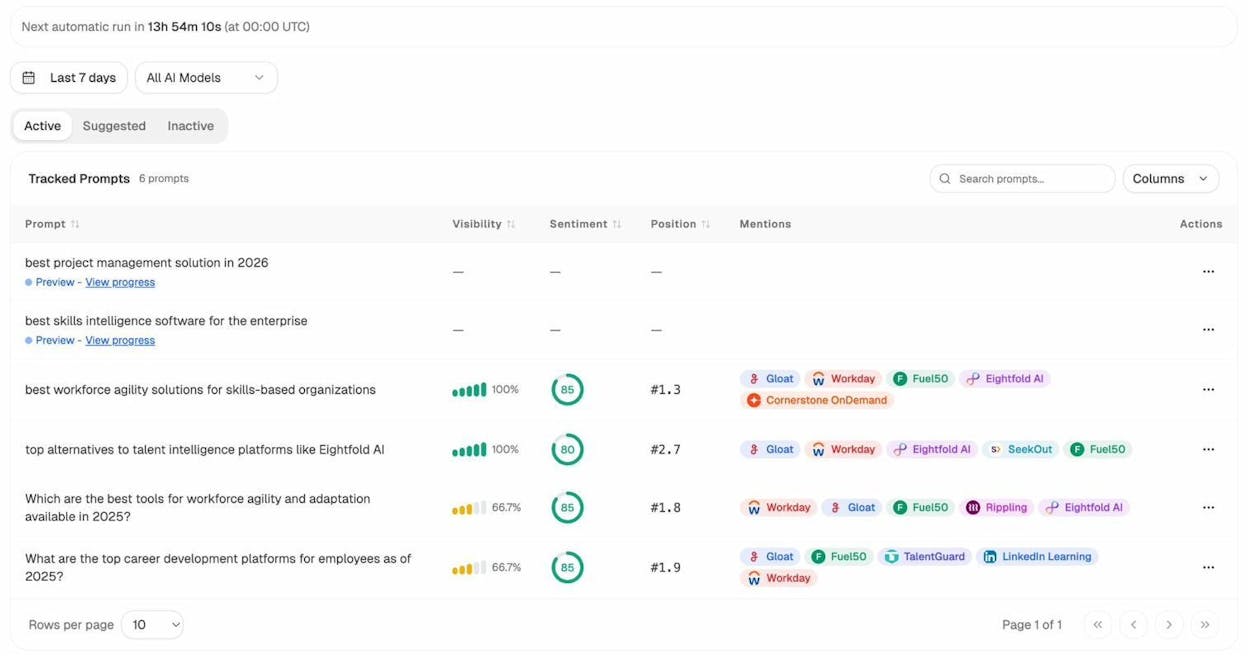
And because these insights live inside the same Agent Builder, you can automate the response. A scheduled agent can detect a drop in AI visibility on Monday morning, identify which prompts caused it, generate a content brief to close the gap, and push it to your editorial queue in Notion. By the time you open your laptop, the remediation plan is already waiting.
None of the other five frameworks on this list can do this. Not because they lack technical capability, but because they lack the data layer. They do not know what ChatGPT is saying about your brand, which sources Perplexity trusts, or where Gemini ranks your competitors above you.
SEO is not dead. AI search is an additional organic channel alongside the one you already manage. The right framework helps you compound visibility across both.
Which AI Agent Framework Should You Pick?
The answer depends on your team and your use case.
If your primary need is marketing-specific (content production, keyword research, competitive intelligence, AI visibility, CRM-connected workflows), Analyze AI is the only platform that ships with the data, the nodes, and the pipelines built for that work. The Agent Builder with 180+ nodes across GA4, GSC, Semrush, DataForSEO, HubSpot, WordPress, and every major LLM gives you billions of workflow combinations without writing code. Start with a free trial and build your first agent in minutes.
If your primary need is general-purpose automation and you are non-technical, Gumloop is a clean starting point. Just know that you will build every marketing workflow from generic parts.
If your team has engineers and you want infrastructure control, n8n for visual workflows or LangChain for full code-first flexibility are both strong options.
If you are researching multi-agent architectures for academic or R&D purposes, CrewAI and AutoGen are worth exploring.
Whatever you pick, make sure it handles both traditional SEO and AI search visibility. The teams that compound across both channels now will be the hardest to catch in 12 months.

Ernest

Ibrahim


