



Summarize this blog post with:


In this article, you’ll learn three repeatable ways to find an affiliate niche that pays well, ranks fast, and holds up over time. You’ll also see how to vet each idea before you commit, and how to spot the same opportunities inside AI search engines like ChatGPT, Perplexity, and Gemini, where a growing share of product research now happens.
Table of Contents
What makes a good affiliate niche?
A good affiliate niche has five things working in its favor.
The first is traffic potential. The whole point of going after a niche is that people search for things inside it. If nobody is searching, your articles will not earn clicks no matter how good they are. Look at the total organic search demand the top page in the niche pulls in across all the keywords it ranks for, not the volume of one head term.
The second is low competition. Some niches are dominated by brands with thousands of backlinks and decades of trust. Skip those. Pick niches where the top-ranking pages are run by individuals or small teams you could realistically beat with better content.
The third is a strong affiliate program. The percentage of commission matters, but it is not the only thing that matters. A 3% commission on a $1,500 mattress can outperform a 50% commission on a $19 ebook. Cookie window matters too, and so does whether the program pays a one-time commission or recurring revenue. The table below summarizes what to look at.
|
Program trait |
What good looks like |
Why it matters |
|---|---|---|
|
Commission rate |
5%-30% on physical goods, 20%-50% on software |
Higher rates mean fewer conversions for the same revenue |
|
Cookie window |
30 days or more |
Buyers rarely convert on the first click |
|
Payment model |
Recurring (for subscriptions) or one-time on high-AOV items |
Recurring compounds. High AOV reduces the need for volume |
|
Terms |
No exclusivity clauses, allow paid traffic if relevant |
Restrictive terms cap your growth |
|
EPC (earnings per click) |
Public and competitive |
Tells you what top affiliates already earn |
The fourth is a topic you know or want to learn. You will write hundreds of words about a single product on this niche over the next year. If you do not care, the writing will read that way, and search engines have gotten very good at telling the difference.
The fifth is AI search opportunity. ChatGPT, Perplexity, and Gemini now answer a growing share of “best X” and “cheapest X under $Y” queries directly. If your niche is one where AI engines mostly cite Reddit threads and other affiliate sites, that is an open door. If they cite only manufacturer pages, the door is mostly closed for affiliates.
Here are three methods we use to find niches that hit those five marks.
1. Use keyword modifiers to find affiliate keywords (Easy)
The fastest way to find an affiliate niche is to look for the keywords that affiliate sites already rank for. Three modifier patterns dominate this space.
“Best [product]” pulls people who are ready to compare options. “[Product A] vs [Product B]” pulls people who have narrowed to two. “[Product] review” pulls people deciding whether to buy a specific item.
These patterns work because anyone typing them is closer to a purchase than someone typing “what is [product].” That is the whole reason affiliate marketing exists.
To pull a list of these keywords for any seed topic, open a keyword tool. Ahrefs’ Site Explorer works, and so does our free keyword generator tool if you want to start without a paid subscription.
![[Screenshot of the keyword generator tool with “wireless headphones” entered as the seed topic]](https://www.datocms-assets.com/164164/1778513398-blobid1.png?auto=format,compress&w=1248&fit=max)
Drop in your seed topic. Open the matching terms or related keywords report. Add an include filter for the modifiers (“best,” “review,” “vs,” “cheapest,” “alternative”) with the “any word” option turned on. Run it.
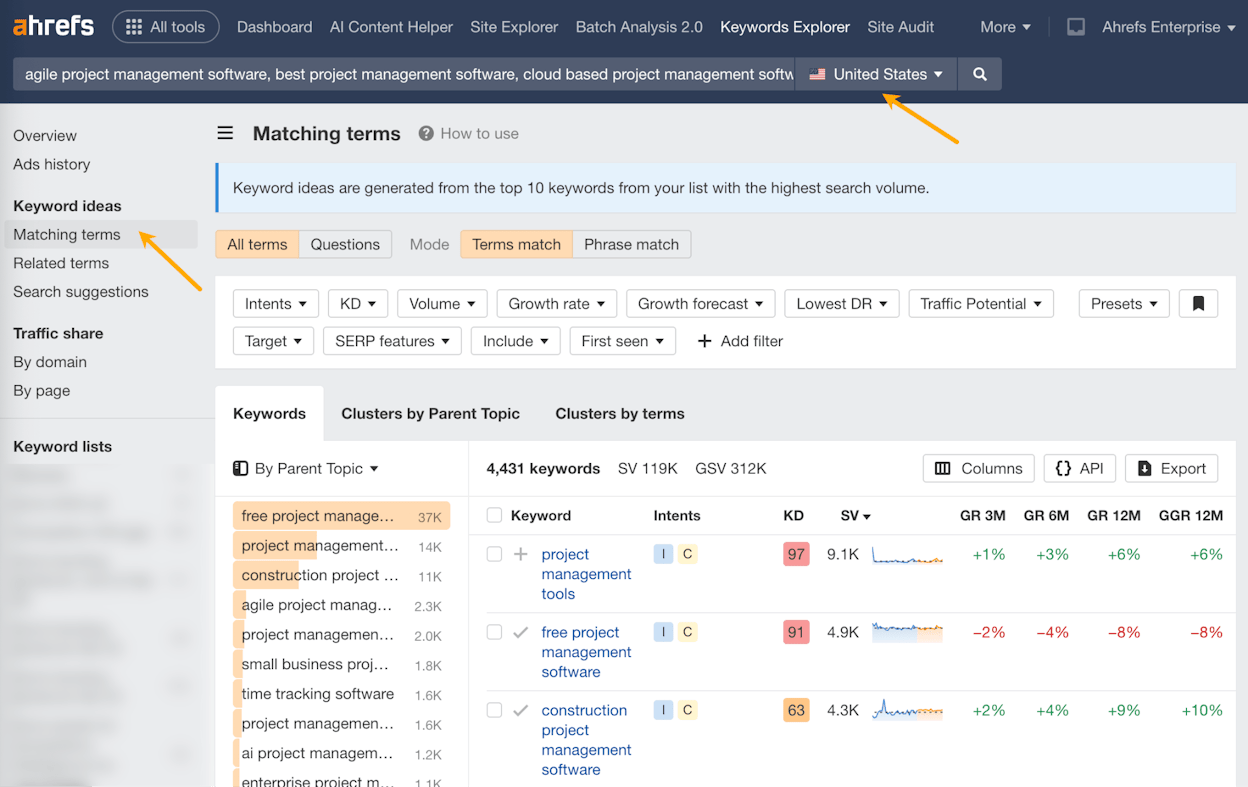
You will get a list of mostly commercial-intent keywords. Now layer a keyword difficulty filter from 10 to 25. Anything above 25 will require more authority than a new affiliate site has. Anything below 10 often signals very low search volume.
Sort the remaining keywords by traffic potential. Click into the highest ones one by one. The goal is to find a sub-niche, not a keyword. If “best wireless headphones for running” has good traffic and low difficulty, the sub-niche is probably running headphones, not wireless headphones in general.
You can sanity-check the difficulty score with our free keyword difficulty checker, which pulls the same SERP signals without the paywall. For more on how the metric is calculated and what a usable score actually looks like, see our guide on SEO keywords.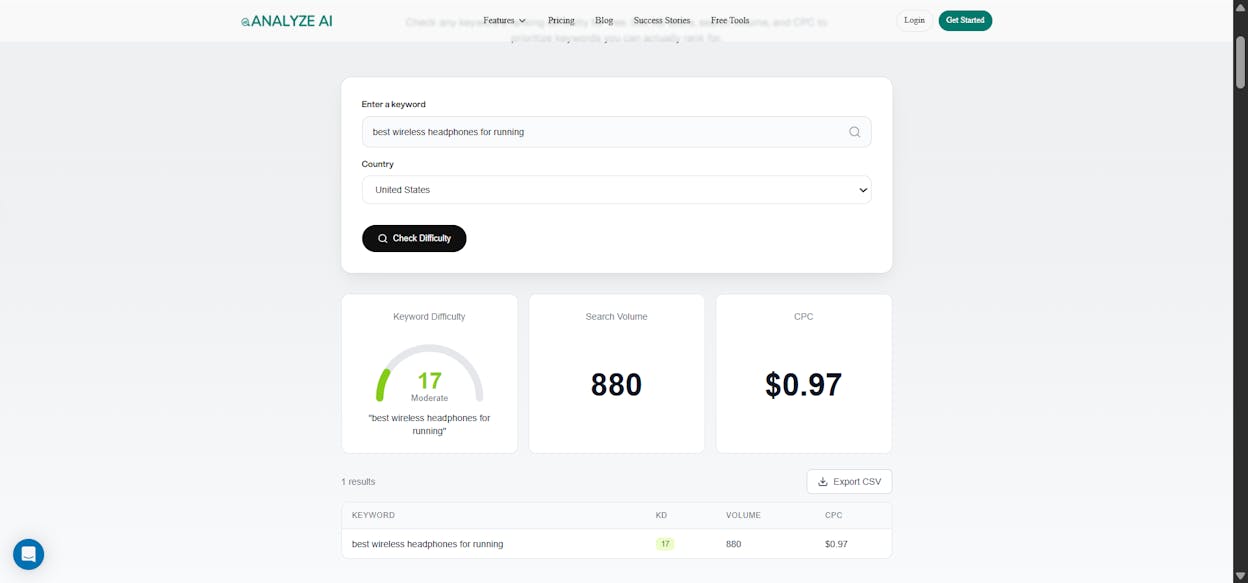
How to do the same in AI search
The modifier trick works in AI search too, but the modifiers shift. People type into AI engines the way they speak. Instead of “best wireless headphones,” they ask “what are the best wireless headphones under $200 for running outside?” The longer, conversational prompt is the one you want to rank for, because that is where AI engines pull narrow product recommendations from.
Open Analyze AI’s prompt discovery feature. Add your seed topic. The tool surfaces the prompts buyers run on ChatGPT, Perplexity, Gemini, and Copilot in your category, including the long ones humans actually type.
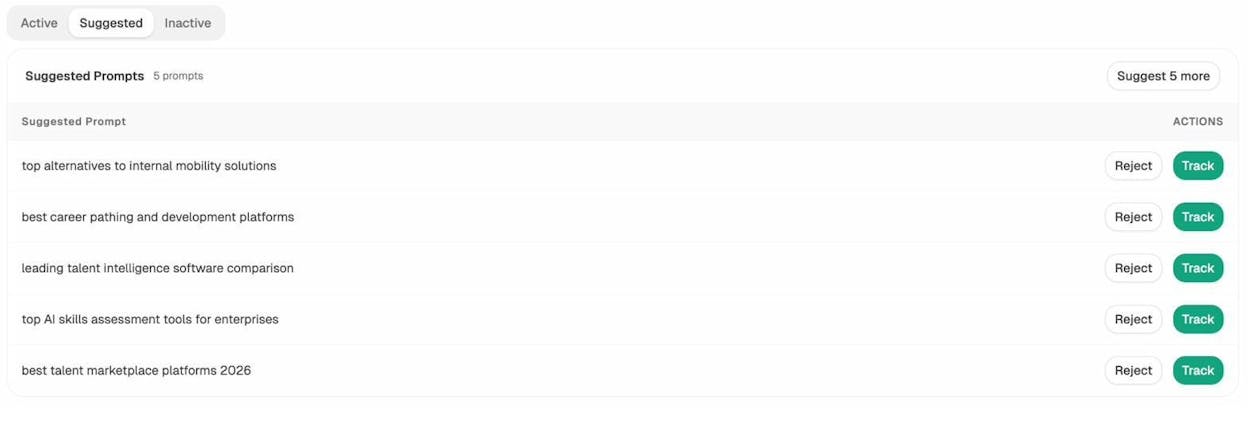
Track the ones with affiliate intent (“best,” “top,” “alternatives to,” “cheapest”). For a faster check on a single prompt, run it through the AI Search Explorer ad hoc search. It will show you which sites get cited in the answer.
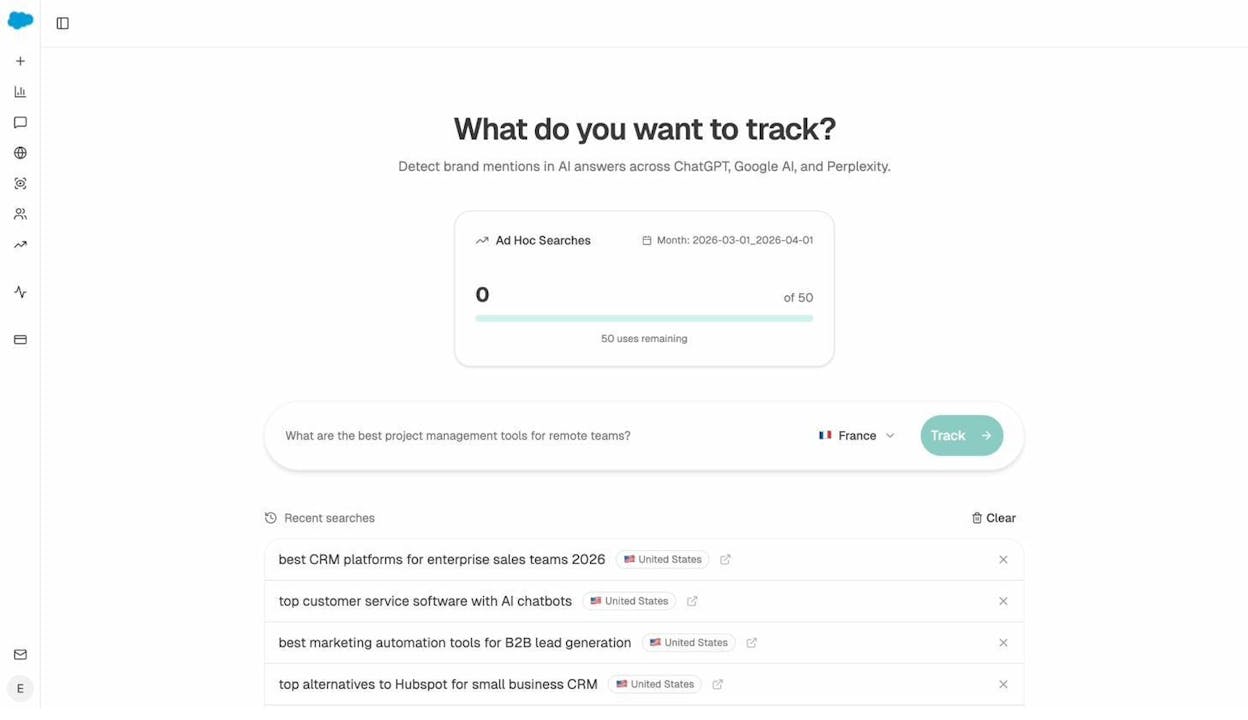
If the cited sources are mostly affiliate sites, that prompt is winnable. If the cited sources are mostly DTC brand pages, the niche is harder for affiliates because AI engines are routing buyers straight to the seller. We covered this dynamic in more depth in our piece on AI keyword research.
2. Use Flippa to discover already-profitable niches (Medium)
Method one tells you what could work. Method two tells you what already does.
Go to Flippa.com. Click “Amazon” under the search bar to filter the marketplace to Amazon affiliate sites, since Amazon Associates is still the most widely used program. In the sidebar, set the following filters.
-
Revenue generating: Yes
-
Asset type: Websites and online businesses
-
Website type: Blog
-
Age: 0-3 years
-
Status: Recently sold
Apply the filters. You will get a list of small affiliate sites that someone paid real money for in the last few months. Each listing shows the niche, monthly profit, and (usually) the topics covered.
You are not buying a site. You are reverse-engineering what someone else proved works. Scroll until something catches your eye. If you find a pickleball gear site making $400 a month that sold for $12,000, “pickleball” is probably a real niche.
The next step is to check whether the niche still has room. The original buyer is now competing in it. Pull the seed term into your keyword tool and look at three things.
The first is whether traffic potential is still rising or falling. Google Trends is the fastest way to confirm direction. The second is whether the top ten Google results are dominated by big brands or by small affiliate sites. The third is whether a sub-niche inside it (“best pickleball paddles for intermediate players”) has lower difficulty than the head term.
If you find a sub-niche that is rising, low-difficulty, and full of affiliate sites in the top ten, it is open.
How to do the same in AI search
The Flippa method tells you what worked in Google over the last few years. AI search needs a different signal because the data is fresher.
Open the Sources dashboard in Analyze AI. Filter by the category you are researching. The dashboard shows every URL that AI engines cited when answering questions in that space, the type of content (review, blog, product page), and which brands the citation mentioned.
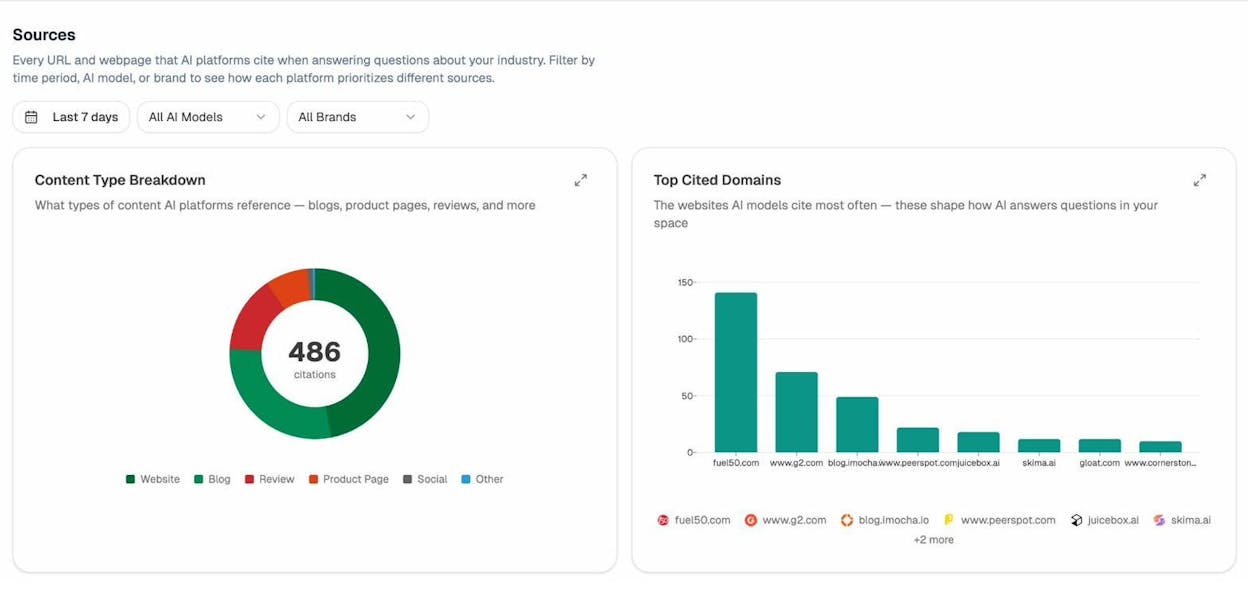
The chart you want to read is “Top Cited Domains.” If the same three or four affiliate sites show up across thousands of citations, that niche is being dominated by a small group. Two things follow from that.
The first is that the niche is monetizable enough for those sites to keep producing content. The second is that you can study them. Open one. Read what they cover. The pages they rank for are the pages you should plan to rank for.
For a deeper look, switch to the URLs view. You will see exactly which articles get cited the most.
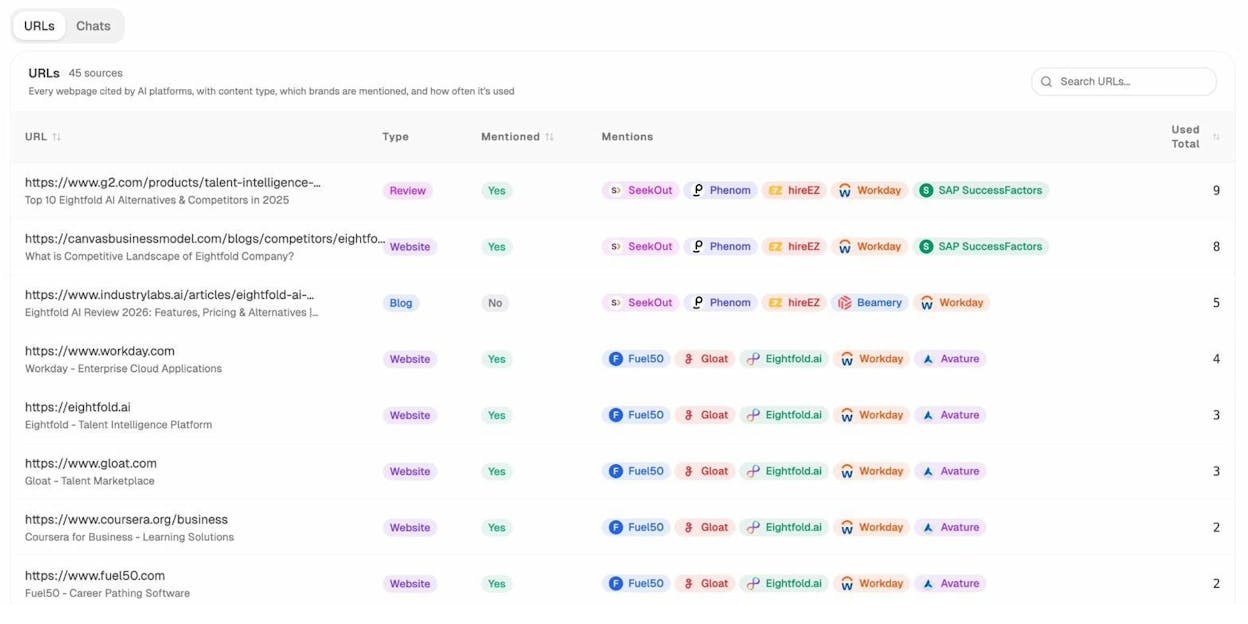
If a “top 10 X for Y” article from a site you have never heard of is cited nine times in a week, that single article template is your blueprint.
Once you have your own site live, the same dashboard turns inward. The AI traffic analytics view shows which of your pages received AI-referred sessions and which received citations, so you can see the article-level patterns that work and double down on them.
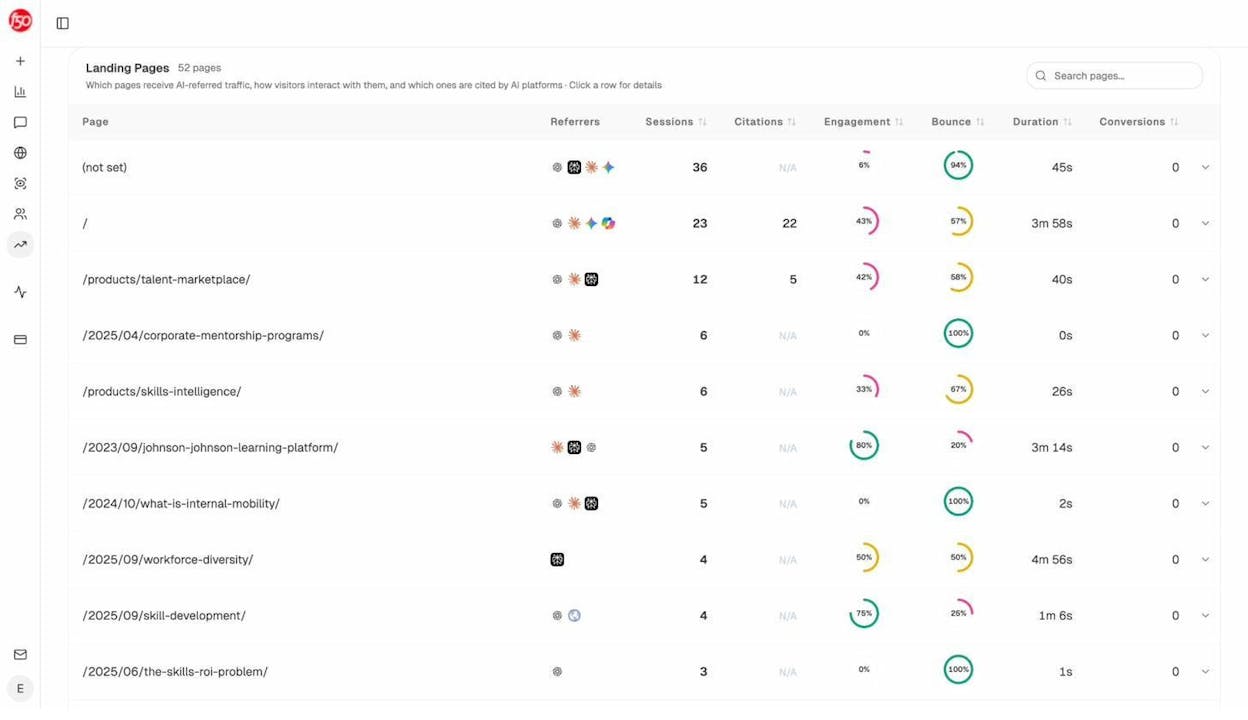
This is also how we recommend doing SEO competitor analysis for the AI surface, because the patterns that hold for organic search do not always hold for ChatGPT or Perplexity.
3. Use footprints to find affiliate websites (Advanced)
Footprints are bits of text that show up on every site in a program. The most common one is the Amazon disclosure, which reads “a participant in the Amazon Services LLC Associates Program.”
Search engines and crawlers can find every site that includes that exact phrase. Tools like Ahrefs Web Explorer let you combine the disclosure text with an “outlink to amazon.com” filter, which removes inactive sites that just have the disclaimer in the footer and never link out.
The Web Explorer query looks like this.
incontent:a participant in the Amazon Services LLC Associates Program
AND outlinkdomain:amazon.com OR outlinkdomain:amzn.to
![[Screenshot of Ahrefs Web Explorer showing the footprint search results with the query above]](https://www.datocms-assets.com/164164/1778513435-blobid10.png?auto=format,compress&w=1248&fit=max)
Add a language filter and a topic filter. You will get a list of active Amazon affiliate sites in your space. Pick a few. Run them through Site Explorer and look at their top pages and organic keywords reports. The patterns will repeat. Five sites in a niche all ranking for “best [X] for [Y]” articles tells you that template works in that niche.
This method is not limited to Amazon. Other programs leave footprints too.
-
ShareASale sites usually mention “shareasale.com” in disclosure or contain shareasale tracking links
-
Impact links route through “impact.com”
-
ClickBank uses “hop.clickbank.net” tracking domains
-
CJ Affiliate uses “anrdoezrs.net” or “dpbolvw.net” tracking domains
Once you learn the footprint for one program, the rest fall into place. You can also check the FTC affiliate disclosure guidelines to find the standard phrasings publishers are required to use, which makes for clean footprint text.
Footprints for AI search
The same logic applies to AI search, but the footprint is not text on a page. It is a citation pattern.
Open the Competitors dashboard inside Analyze AI. Add the affiliate sites you found through your footprint search. The dashboard tracks how often each one is cited in AI answers across ChatGPT, Perplexity, and Gemini, plus which prompts trigger the citations.
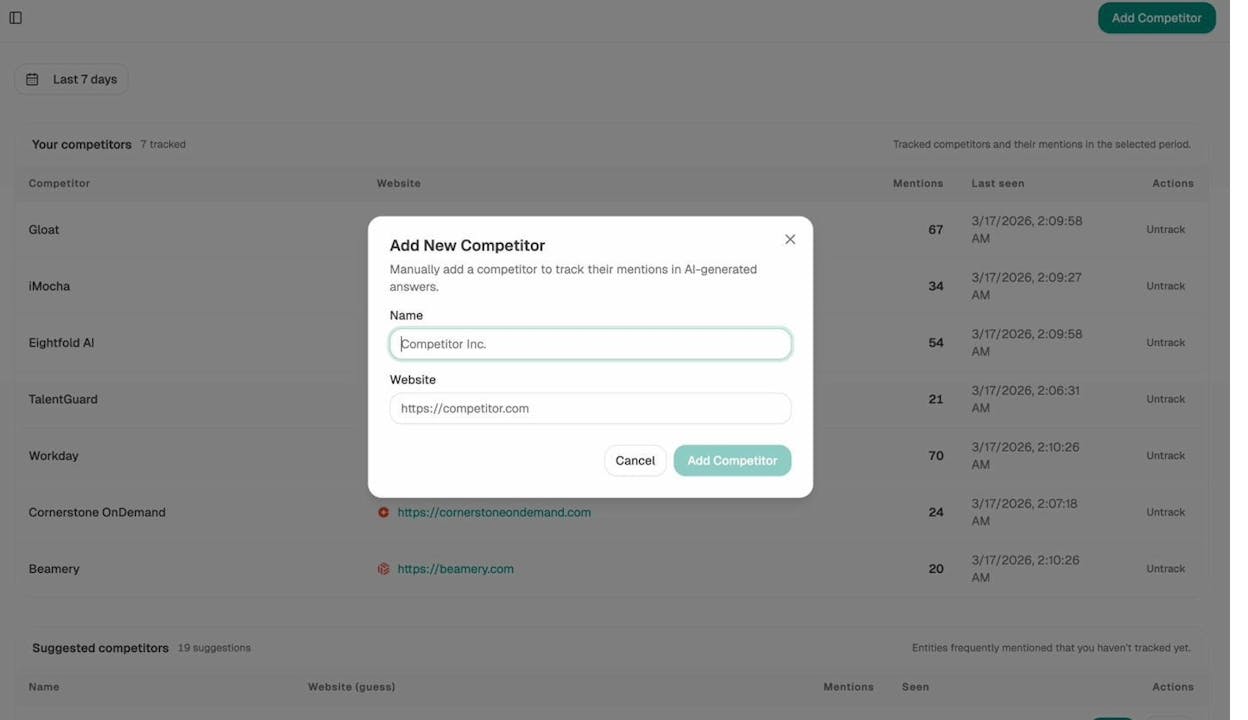
The output is a leaderboard of who actually wins in AI search for the niche you are researching. If one site is cited 70 times a week and another is cited 4, the gap tells you who built a content moat and who did not.
Then open the prompts view to see which questions cite each site. Those prompts are the ones to reverse-engineer your content around. We walk through this process in more detail in our guide on how to get mentioned in AI search.
How to vet a niche before you commit
Methods one through three will give you a list of candidate niches. The work that separates a hobby from a business is the vetting that comes next. Run every candidate through the five checks below.
1. Affiliate program quality. Pull the program’s terms. Look at commission rate, cookie window, and whether commissions are recurring or one-time. Search “[program name] EPC” to see what other affiliates earn per click. If the EPC is below $0.20, the program is probably not worth building a site around.
2. SERP saturation. Open the top ten results for your main keyword. Count how many are affiliate sites versus brand sites versus forums. If at least four are affiliate sites and at least one is small (under DR 40 on our website authority checker), the niche is open. If nine of ten are big brand pages, it is not.
3. AI search saturation. Run the same keyword as a buyer-style prompt through the AI Search Explorer. If AI answers cite multiple affiliate sites, the niche pays in AI search. If AI answers cite only manufacturers and DTC brands, expect AI traffic to flow to sellers, not to you.
4. Seasonality and trend trajectory. Plug the seed term into Google Trends. A niche that doubled in the last 18 months is a different proposition from one that flat-lined or declined. Match your effort to the trajectory.
5. Buyer intent depth. Count how many sub-keywords with clear commercial intent exist below the head term. A niche with 5 commercial sub-keywords will run dry in a year. A niche with 200 will keep your content calendar full for years.
If a niche passes all five, build it. If it fails one or two, look harder. If it fails three, move on.
10 examples of profitable affiliate niches
Below are ten niches that pass most or all of those checks today. Each is a starting point, not a verdict, but every one has at least one working affiliate site you can study.
|
Niche |
Traffic potential (head term) |
Typical commission range |
AI search saturation |
Notes |
|---|---|---|---|---|
|
Robot vacuums |
60k+ |
3%-8% (Amazon, Walmart, brand stores) |
Mixed (affiliates and brands) |
High AOV, frequent product cycles |
|
Travel car seats |
28k |
3%-10% (specialty programs higher) |
Affiliate-heavy |
Strict safety regulations create informational gaps |
|
Indoor golf simulators |
35k |
4%-10% |
Affiliate-heavy |
High AOV ($500-$5,000), strong specialty programs |
|
Wireless earbuds |
26k |
3%-8% (Adorama, B&H higher) |
Brand-heavy in AI |
Hard niche for affiliates in AI search |
|
Online guitar lessons |
1.2m on the head term |
25%-30% (MasterClass, Guitar Tricks) |
Affiliate-friendly |
Recurring commissions on subscriptions |
|
Woodworking tools |
4k |
1%-10% |
Affiliate-heavy |
Long-tail-rich, evergreen |
|
Car audio equipment |
41k |
4%-10% (specialty programs) |
Affiliate-heavy |
Strong “vs” and “review” keyword pool |
|
Sustainable home goods |
1k-5k |
5%-20% |
Affiliate-friendly |
Smaller programs pay more on lower volume |
|
Container gardening |
1.5k |
3%-25% (Seeds Now and similar) |
Affiliate-heavy |
Seasonal, but trends rising |
|
Hotels with private pools |
500 |
5%-50% (Agoda, TripAdvisor) |
Affiliate-heavy |
Tiny volume, strong intent, easy to dominate |
The right niche for you will not be the one with the highest traffic potential. It will be the one where program structure, your interest, and the AI and Google saturation line up.
Final thoughts
Finding an affiliate niche is mostly a research problem, not a creative one. The three methods above (keyword modifiers, Flippa reverse-engineering, and footprint analysis) will give you more candidates than you can act on in a year. The vetting checklist will narrow the candidates down to ones worth building.
The new variable is AI search. Buyers who used to type “best running shoes” into Google now ask Perplexity for a recommendation and click through to one or two cited pages. If your niche is one where AI engines route those clicks to small affiliate sites, the opportunity has the same shape it has always had, just on a different surface. If you want to track that surface as you build, our AI visibility tracking and AI traffic analytics tools were built for it.
If you end up using Analyze AI, we run an affiliate program of our own with recurring commissions. The same checklist above applies to it as to anything else.

Ernest

Ibrahim


