



Summarize this blog post with:


In this article, you’ll learn nine holiday marketing strategies that drive real revenue during peak shopping season. Each strategy covers the SEO playbook, the tactical execution, and how to extend your reach into AI search, where a growing number of buyers now start their research.
Table of Contents
1. Start Preparations at Least Two Months Before the Holiday Season
Holiday campaigns need lead time. Pages need three to six months to rank in Google. Email sequences need to be written, designed, and tested. If you’re coordinating with influencers or retail partners, you need weeks just to align on creative assets and timelines.
Start too late, and you’re competing against brands that locked in their keywords, built their landing pages, and warmed up their email lists months ago.
Here is a rough timeline that works for most teams:
|
Timeframe |
What to Do |
|---|---|
|
4–6 months before |
Keyword research, content planning, create evergreen holiday pages |
|
2–3 months before |
Publish seasonal content, build internal links, begin outreach |
|
1 month before |
Launch email teasers, finalize ad creative, set up retargeting |
|
2 weeks before |
Go live with promotions, influencer campaigns, daily email sends |
|
During the holiday |
Monitor performance, adjust bids, restock inventory, send reminders |
|
1 week after |
Analyze results, redirect expired pages, document what worked |
But don’t panic if you’re reading this late. Most of the strategies below still apply, even in a compressed timeline. And every piece of content you create now is an investment in next year’s holiday season too.
Why AI search makes early prep even more important
Traditional SEO gives you months of buffer. You publish, Google crawls, and rankings build gradually. AI search engines like ChatGPT, Perplexity, and Gemini work differently. They pull from content that is already well-cited, well-structured, and broadly referenced across the web.
That means the content you publish today won’t just help you rank in Google during the holidays. It also feeds the knowledge base that AI models draw from when shoppers ask questions like “best Black Friday deals on running shoes” or “affordable Christmas gift ideas for teens.”
The earlier your holiday content exists, the more time it has to earn backlinks, social shares, and third-party mentions, all of which increase the chances that AI models pick it up and cite it in their answers.
2. Target Seasonal Keywords
People search for holiday-specific keywords during the shopping season. You should be creating pages to capture that demand.
For example, a travel eSIM company might target keywords around Christmas markets or New Year’s travel destinations. A golf equipment store might go after “black friday golf deals” or “golf clubs black friday.”
Here’s how to find these keywords:
-
Open a keyword research tool like Analyze AI’s Keyword Generator or Google Keyword Planner.
-
Enter one or a few seed keywords related to your products.
-
Filter results by holiday modifiers like “Black Friday,” “Cyber Monday,” “Christmas,” “Valentine’s Day,” or “holiday.”
![[Screenshot: Google Keyword Planner showing keyword ideas filtered for “black friday” + your product category, with search volume and competition columns visible]](https://www.datocms-assets.com/164164/1777051586-blobid1.png?auto=format,compress&w=1248&fit=max)
Don’t stop at obvious holiday terms. Many shoppers don’t search for the holiday by name. They search for the person they’re buying for. Keywords like “gifts for dad,” “gifts for wife,” or “best presents for teens” spike every November and December.
To find these, add modifiers like “for dad,” “for mom,” “for husband,” “for wife,” and “for kids” to your seed keywords.
![[Screenshot: Google Keyword Planner or keyword tool showing gift-related keyword variations with monthly search volume trends]](https://www.datocms-assets.com/164164/1777051598-blobid2.png?auto=format,compress&w=1248&fit=max)
Use Analyze AI’s Keyword Difficulty Checker to evaluate whether you can realistically rank for your target terms. Focus on keywords where the difficulty is within your domain authority range and the search volume justifies the effort.
How to find what holiday shoppers ask AI
More and more buyers are skipping Google entirely and asking AI assistants for holiday recommendations. Queries like “what are the best tech gifts under $100 for Christmas 2026” or “compare Black Friday deals on noise-cancelling headphones” are becoming standard.
The problem is that you can’t see these queries in Google Search Console. They happen inside ChatGPT, Perplexity, Gemini, and Copilot.
Analyze AI’s Prompt Discovery feature solves this. It surfaces the actual prompts people use in AI search engines within your industry, so you can see what holiday questions your buyers are asking, and whether your brand shows up in the answers.
You can also use the AI Search Explorer to run a one-off search across ChatGPT, Perplexity, and Gemini. Type in a holiday prompt like “best Christmas gifts for remote workers” and see which brands appear, which sources get cited, and where the gaps are.
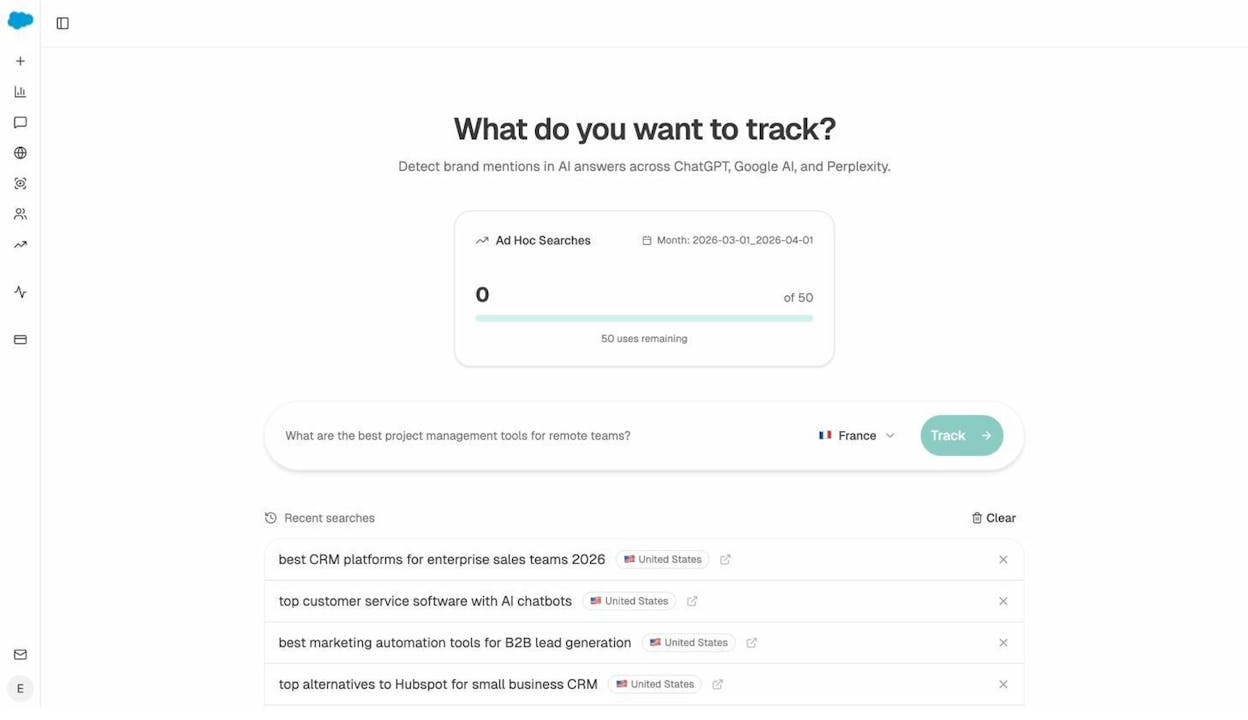
If your brand doesn’t show up for holiday prompts that matter to your business, you know exactly where to focus your content efforts.
3. Update Seasonal Content Instead of Creating New Pages Every Year
Holidays are seasonal within a single year, but they’re evergreen across decades. Valentine’s Day, Thanksgiving, Black Friday, and Christmas aren’t going anywhere. People will always be shopping during these periods.
From an SEO perspective, this means search intent doesn’t shift much year over year. The person searching “best Black Friday laptop deals” in 2026 wants roughly the same thing as the person who searched it in 2025.
So instead of creating a brand new page every year, build one evergreen page per holiday topic and update it annually. This approach preserves your link equity, continues to build domain authority on that URL, and gives you a compounding advantage over competitors who start from scratch each season.
Here’s how to do it:
-
Pick your highest-value seasonal keywords.
-
Create one comprehensive page for each keyword.
-
Set a calendar reminder to update that page one to two months before the holiday.
-
Refresh the content with new dates, updated product recommendations, fresh data, and current offers.
-
Keep the same URL. Don’t create /black-friday-2025, /black-friday-2026, etc.
If you’ve already created separate seasonal pages in previous years, redirect them to your evergreen page using 301 redirects. This consolidates all the link equity those old pages earned into your one authoritative URL.
Use Analyze AI’s Content Optimizer to audit your existing holiday pages before updating them. Paste in the URL, and it will score the page on argument strength and editorial flow, highlight gaps in your content, and generate specific suggestions for improvement.
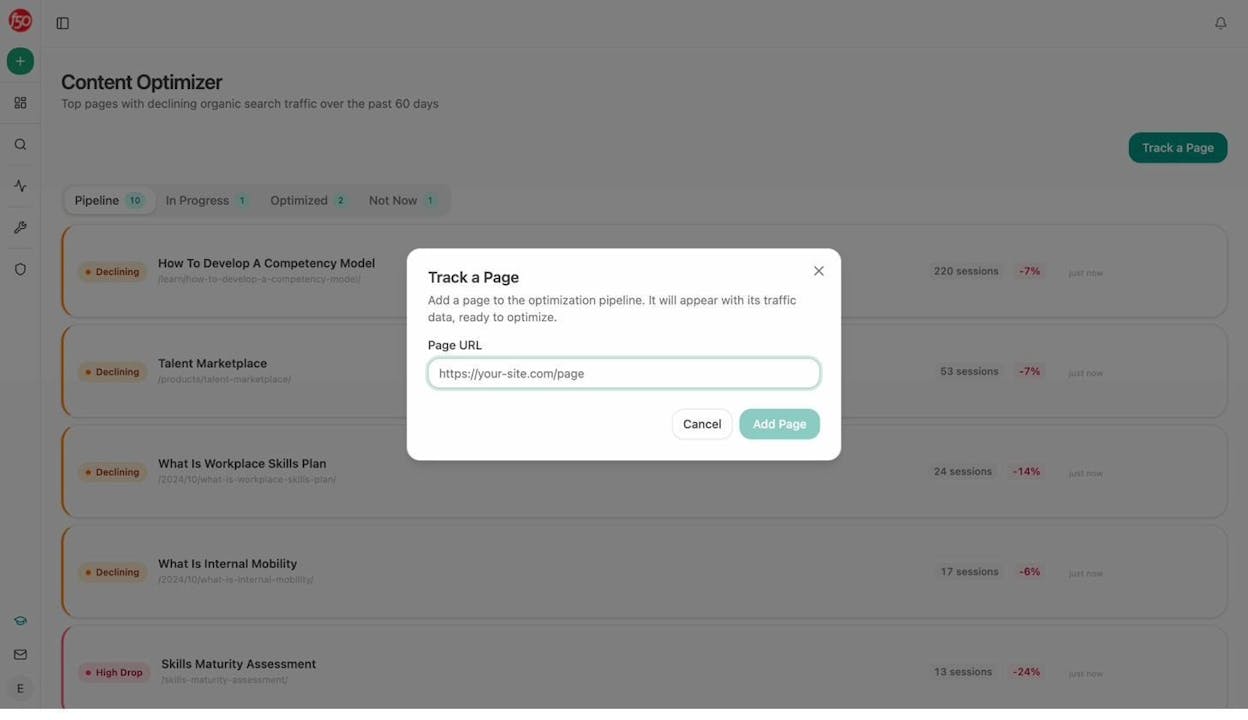
This is especially useful for seasonal pages that ranked well last year but may need structural updates to compete this year, both in Google and in AI search results.
Why this matters for AI search too
AI models don’t just pull from fresh content. They rely heavily on pages that have accumulated citations, backlinks, and references over time. A single holiday page that’s been updated and cited for three consecutive years carries more weight in AI answers than a brand new page with no history.
When you keep one URL and update it, you’re building the kind of authority signal that both Google and AI models reward.
4. Add Internal Links to Your Holiday Pages
Internal links pass PageRank around your site. When you add internal links from high-authority pages to your holiday landing pages, you boost those pages’ ability to rank in Google.
This is one of the fastest tactics you can execute, even if you’re starting your holiday prep late.
Here’s how to do it:
-
Make a list of your most important holiday pages (deals pages, gift guides, seasonal landing pages).
-
Identify your highest-authority pages using a Website Authority Checker or your SEO tool of choice.
-
Look for contextual opportunities on those high-authority pages to link to your holiday content.
-
Add the links using descriptive anchor text (e.g., “our Black Friday deals” rather than “click here”).
![[Screenshot: Your CMS or blog editor showing a contextual internal link being added from an existing blog post to a holiday deals page, with anchor text highlighted]](https://www.datocms-assets.com/164164/1777051611-blobid5.png?auto=format,compress&w=1248&fit=max)
The key is relevance. Don’t force links where they don’t make sense. A blog post about product care tips can naturally link to a holiday gift guide that features those products. A post about industry trends can link to a seasonal deals page if the context supports it.
The middleman method
There’s a more advanced version of this strategy that’s worth knowing. Instead of linking directly from your blog to a holiday page, create a “middleman” piece of content that naturally attracts backlinks, like a data study or a roundup post tied to a seasonal trend.
For example, you could publish a post like “How Much the Average Family Spends on Holiday Gifts by State” and pitch it to local journalists. As that post earns backlinks, you add internal links from it to your holiday deals pages. The backlink equity flows through the middleman to your commercial pages.
5. Discover What Sources AI Models Trust in Your Space
This is a strategy most brands completely overlook during the holiday season, and it’s one of the highest-leverage plays available.
When someone asks ChatGPT or Perplexity “best holiday gifts for runners,” the AI doesn’t generate recommendations from thin air. It pulls from specific sources, review sites, blogs, product pages, and editorial content that it has learned to trust.
If those sources aren’t yours, your brand won’t appear in AI-generated holiday recommendations. And increasingly, that’s where buyers are starting their research.
Here’s how to find and earn the sources AI trusts:
-
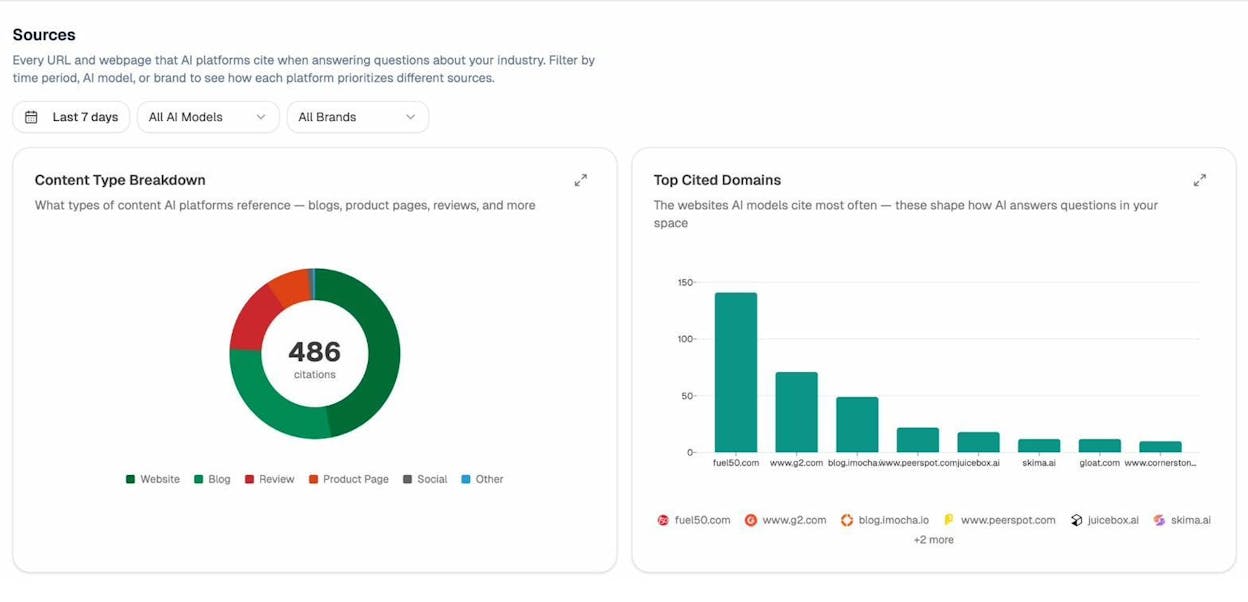
Go to Analyze AI’s Sources dashboard. It shows every URL and domain that AI engines cite when answering questions in your industry.
-
Look at the “Top Cited Domains” chart. These are the sites AI models reference most often. If you’re not among them, you know which publications to target for guest posts, product reviews, or PR placements.
-
Check the “Content Type Breakdown” to see whether AI models in your space prefer blog posts, product pages, review sites, or documentation. This tells you what format your holiday content should take.
-
Identify gaps. If your competitors are getting cited on G2 or Capterra but you’re not, prioritize getting listed and reviewed on those platforms before the holiday rush.
This isn’t abstract brand awareness work. It directly impacts whether AI recommends your products when shoppers ask for holiday gift ideas.
6. Play to Shoppers’ Ethics, Not Just Their Greed
The holiday season is about deals. Everyone knows that. Your customers are looking for flash sales, big discounts, and generous offers.
But the holiday season is also about giving, warmth, and community. And research from PwC shows that consumers are willing to pay nearly 10% more for sustainably produced or sourced goods, even during economic pressure.
Adding a social responsibility element to your holiday promotions can help your offer stand out in a crowded inbox. Here are a few ways to do it:
Tie purchases to a cause your audience cares about. A pet products company might donate to animal shelters for every order placed during the holidays. A kids’ clothing brand might partner with a children’s literacy nonprofit. The key is alignment. Don’t plant trees if your audience cares about ocean conservation.
Be specific about the impact. “A portion of proceeds goes to charity” is vague and forgettable. “Every order over $50 provides 10 meals through our partnership with the local food bank” is concrete and motivating.
Don’t pay lip service. Consumers can spot performative social responsibility from a mile away. If you make a commitment, follow through and share the results after the campaign ends.
For example, Wild, a bathroom products brand, ran a Black Friday campaign in 2022 that combined a 25% discount with a promise to plant 100,000 trees over 10 days. It wasn’t just a discount. It was a reason to choose Wild over every other brand offering 25% off.
How ethical positioning shows up in AI search
AI models increasingly factor brand sentiment into their recommendations. When ChatGPT or Perplexity answer “best sustainable gifts for the holidays,” they pull from brands that have been positively covered for their social responsibility efforts.
You can track how AI models perceive your brand’s ethical positioning using Analyze AI’s Perception Map. It shows the narrative AI builds about your brand across engines, including whether models frame you as sustainable, ethical, or community-oriented.
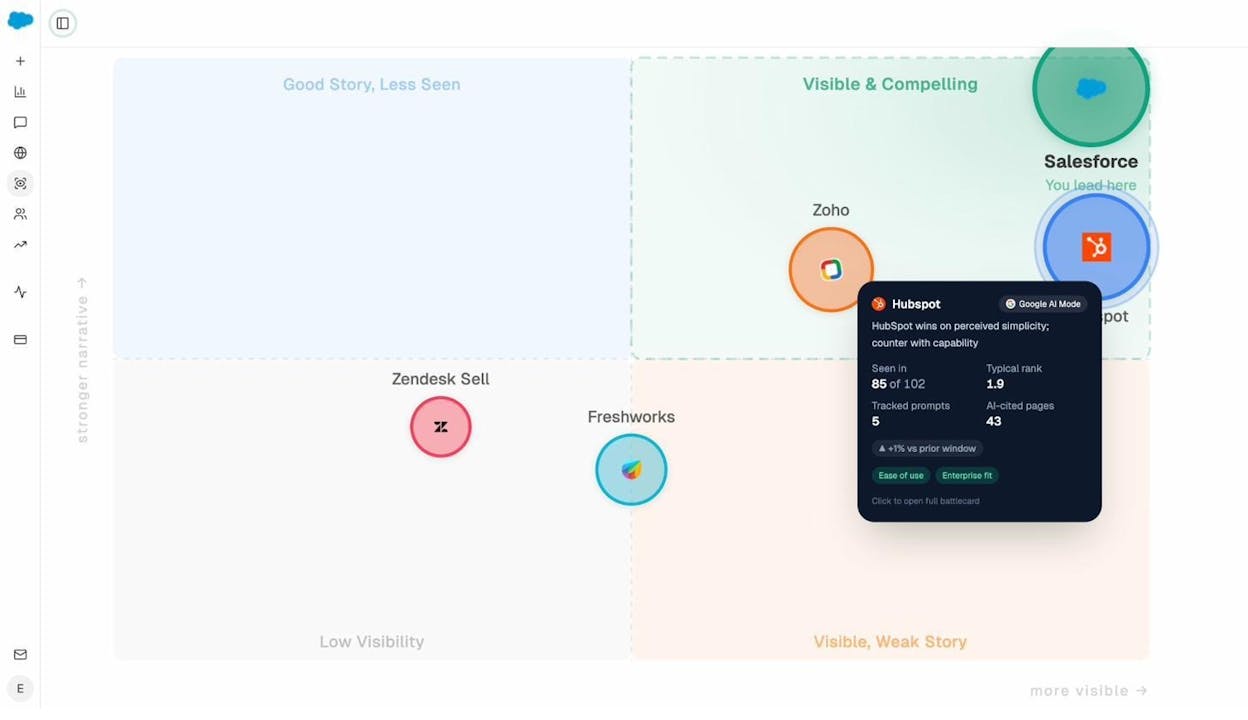
If your ethical initiatives aren’t showing up in AI answers, it usually means the coverage isn’t broad enough yet. Earning mentions in third-party review sites, press outlets, and industry blogs strengthens the signal that AI models pick up on.
7. Partner with Influencers to Build Awareness of Your Holiday Campaigns
Influencer marketing expands the reach of your holiday campaigns and drives social media engagement with your brand. But most brands approach it poorly during the holidays, choosing influencers based on follower count rather than audience alignment.
Here’s a smarter framework for holiday influencer partnerships:
Target smaller, more relevant influencers. A micro-influencer with 15,000 engaged followers in your exact niche will outperform a macro-influencer with 500,000 followers across broad topics. Look for creators who could genuinely be your customers and whose audience matches your buyer profile.
Structure deals around performance. Instead of flat fees, offer a performance-based commission. Something in the range of 20–25% of the revenue they generate. This filters out influencers whose audiences aren’t as engaged as they claim, and it keeps motivation high throughout the campaign.
Consider a tiered commission structure. Offer bonuses when influencers hit revenue milestones, or give commissions on the lifetime revenue of customers they bring in, not just the first purchase. This incentivizes long-term brand advocacy rather than one-off promotional posts.
Compare the cost to your paid ad spend. If you’re spending $5 per click on Meta ads, an influencer who drives the same traffic at $2 per click equivalent is a better investment. Use your ad spend as a benchmark for evaluating influencer ROI.
![[Screenshot: Example of a micro-influencer’s Instagram post promoting a holiday sale, showing engagement metrics like likes, comments, and saves]](https://www.datocms-assets.com/164164/1777051624-blobid8.jpg?auto=format,compress&w=1248&fit=max)
The timing of influencer campaigns matters too. Launch influencer content one to two weeks before your sale goes live. This builds anticipation and primes the audience so they’re ready to buy when the offer drops.
AI search picks up influencer content too
When influencers create content that mentions your brand in the context of holiday recommendations, that content becomes part of the corpus AI models draw from. A YouTube video titled “My Favorite Holiday Gifts Under $50” that features your product can show up in AI-generated gift recommendations, especially if it earns views, engagement, and backlinks.
The more your brand is mentioned across diverse, high-quality sources, the stronger your signal becomes in AI answers.
8. Stand Out in Your Customers’ Inboxes with Unique Holiday Emails
Holiday email marketing is a high-stakes game. Your customers’ inboxes are flooded with promotional emails from every brand they’ve ever bought from. The difference between a campaign that drives revenue and one that gets deleted comes down to timing, relevance, and creativity.
Start early, but don’t be reckless
The standard advice is to start your email campaigns early to beat the inbox clutter. That’s true, but there’s a limit. Launch too early, and you reduce the urgency of your offer and risk cheapening your brand. Launch too late, and you’re buried under hundreds of other promotional emails.
A reasonable approach is to start teasing your holiday deals one month before the sale goes live. Send VIP early-access emails to your best customers two weeks before. Then launch the full campaign one week before.
Segment your list ruthlessly
Generic blast emails underperform segmented campaigns by a wide margin. Before the holiday season, segment your list by:
|
Segment |
What to Send |
|---|---|
|
Past holiday buyers |
Early-access offers, loyalty rewards, “back by popular demand” items |
|
High-value customers (top 10% by LTV) |
Exclusive bundles, VIP discounts, early shipping guarantees |
|
Browse abandoners |
Product-specific reminders with holiday urgency messaging |
|
Cart abandoners |
“Your cart is waiting” emails with countdown timers |
|
New subscribers (last 90 days) |
Welcome + holiday intro offer to drive first purchase |
|
Lapsed customers (no purchase in 6+ months) |
Win-back offer tied to holiday savings |
Make your emails interactive
Static promotional emails are forgettable. Interactive elements grab attention. Some ideas that work well during the holidays:
Mystery discount emails. Instead of stating the discount upfront, create a “reveal your offer” email where customers click to see their personalized discount. This creates curiosity and drives higher click-through rates.
Countdown timers. Embed a live countdown to when your sale ends. The visual urgency drives action, especially in the final 48 hours.
Gift finder quizzes. Link to a short quiz (five to seven questions) that helps customers find the right gift based on the recipient’s interests, age, and budget. This reduces decision fatigue and increases conversion.
Last-minute gift solutions. Send targeted emails two to three days before the holiday highlighting gift cards, digital products, or expedited shipping options. Subject lines like “Running Late? We’ve Got You Covered” perform well because they solve a real problem.
![[Screenshot: Example of a holiday email with a countdown timer and a “reveal your discount” CTA button]](https://www.datocms-assets.com/164164/1777051626-blobid9.png?auto=format,compress&w=1248&fit=max)
9. Run Retargeting Ads to Bring Back Window Shoppers
As the holiday season approaches, people start browsing. They check your deals page, add items to their cart, compare prices across competitors, and then get distracted. Life gets in the way.
Retargeting lets you bring those window shoppers back.
Here’s how it works in practice:
-
A visitor discovers your holiday page through Google, social media, or an AI search engine.
-
Your ad platform (Google Ads, Meta Ads, etc.) sets a tracking cookie on their browser.
-
When the visitor leaves your site and browses the web, you can show them targeted ads that remind them of what they left behind.
The key to effective holiday retargeting is matching your ad to where the shopper is in the buying process:
|
Shopper Stage |
What They Did |
Retargeting Ad Goal |
|---|---|---|
|
Awareness |
Visited your deals page but didn’t browse products |
Drive them back to explore specific product categories |
|
Consideration |
Viewed specific products but didn’t add to cart |
Show the product they viewed with holiday urgency (“Only 3 days left”) |
|
Intent |
Added items to cart but didn’t check out |
Remind them their cart is waiting, offer free shipping or a small bonus |
|
Post-purchase |
Already bought something |
Cross-sell complementary products or gift add-ons |
A few practical tips for holiday retargeting:
Set frequency caps. Showing the same ad 20 times in a week makes your brand feel desperate, not desirable. Cap display retargeting at three to five impressions per day per user.
Create urgency without lying. Countdown timers and “limited stock” messages work, but only if they’re true. Fake scarcity damages trust, especially during the holidays when customers are already skeptical.
Don’t forget post-purchase retargeting. Someone who bought a coffee maker for their spouse might also want the matching mug set, a bag of premium beans, or a gift card for a friend who’s hard to buy for. The holiday season is ideal for cross-sell and upsell retargeting.
![[Screenshot: A retargeting ad example in Meta Ads Manager showing a dynamic product ad with holiday creative and a “Complete Your Purchase” CTA]](https://www.datocms-assets.com/164164/1777051630-blobid10.png?auto=format,compress&w=1248&fit=max)
10. Track Your Holiday Performance Across Both Search and AI Channels
Most brands measure holiday marketing success through a narrow lens. They look at revenue, conversion rates, and ROAS from their ad platforms. That’s necessary, but it’s not enough.
If you’re only tracking Google and paid channels, you’re missing the growing share of holiday traffic that comes from AI search. Buyers who ask ChatGPT for gift recommendations, use Perplexity to compare Black Friday deals, or ask Gemini for product reviews are part of your funnel, but they don’t show up in traditional analytics unless you’re specifically tracking them.
Here’s how to get a complete picture of your holiday marketing performance:
Track AI search traffic alongside organic and paid
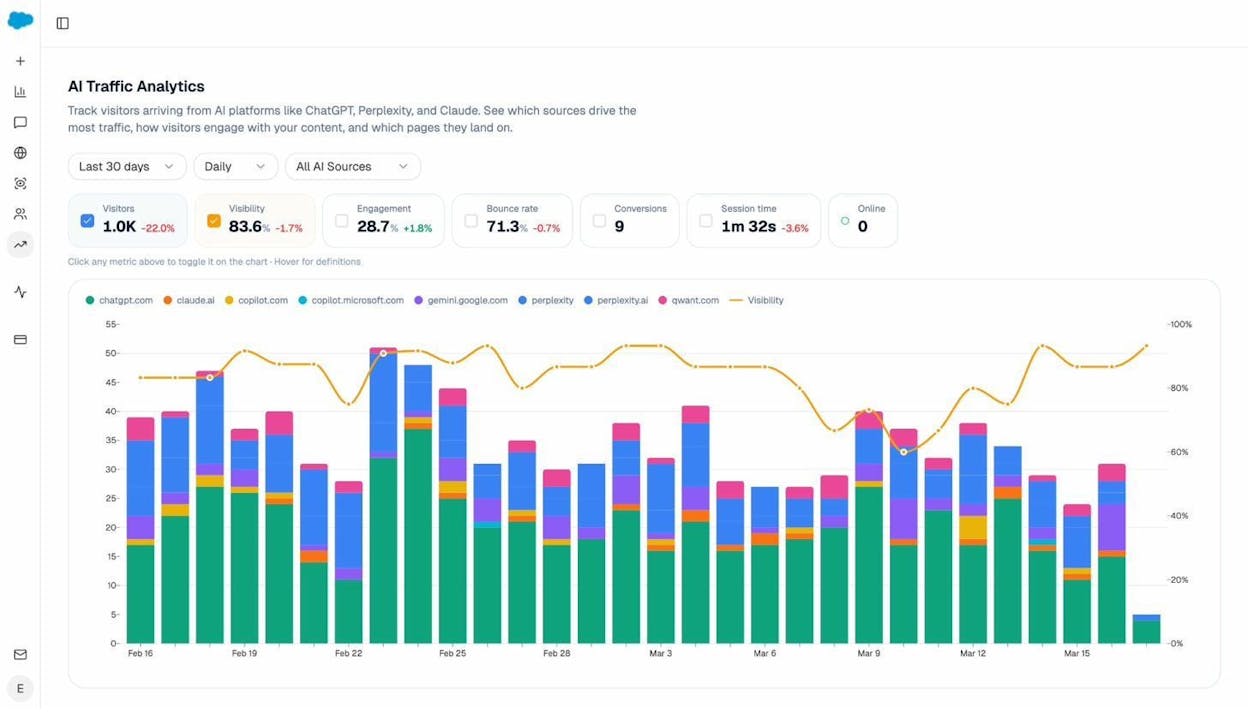
Connect your site to Analyze AI’s AI Traffic Analytics to see how many visitors arrive from ChatGPT, Perplexity, Gemini, Copilot, and other AI engines. The dashboard breaks down sessions by source, shows which landing pages receive AI-referred traffic, and tracks engagement metrics like bounce rate and session duration.
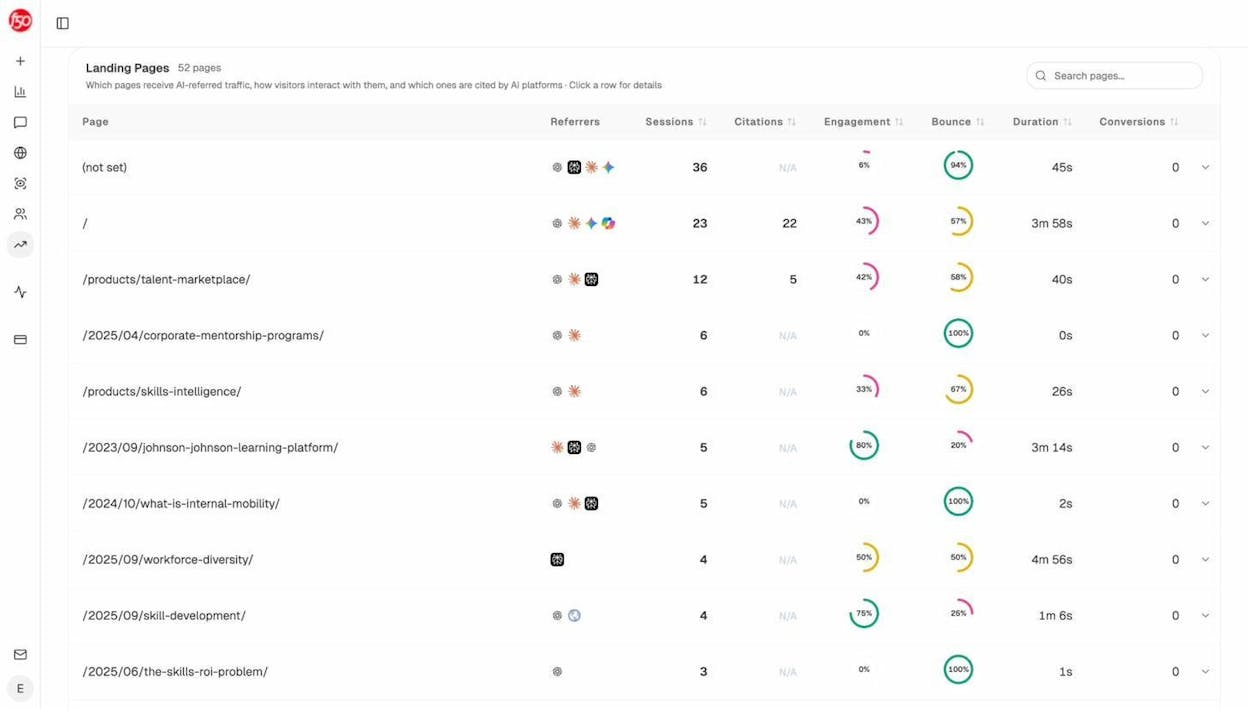
Drill into the Landing Pages view to see which specific pages receive AI-referred traffic. During the holiday season, this tells you which holiday pages are getting picked up by AI models and which ones need more work.
Monitor your visibility on holiday-specific prompts
Set up prompt tracking for your most important holiday queries. Add prompts like “best Black Friday deals on [your product category],” “top Christmas gifts for [your audience],” and “affordable holiday gifts under $50.”
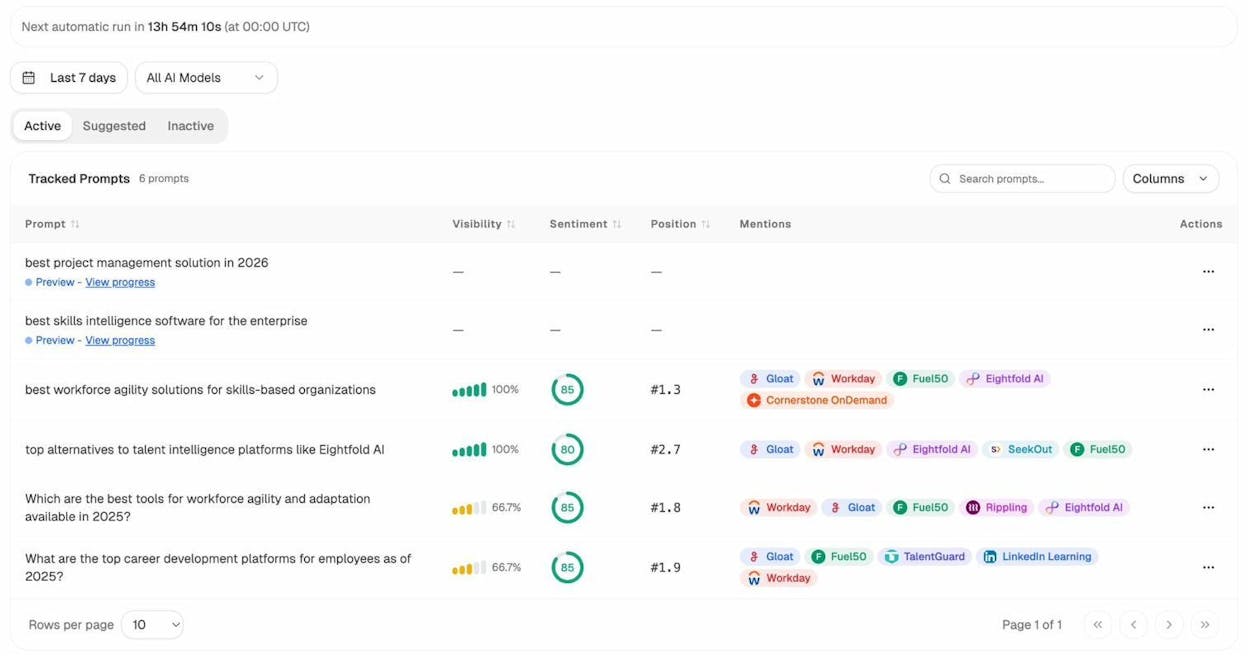
Analyze AI runs these prompts daily across all major AI engines, so you can see whether your visibility is improving or declining as the holiday season progresses. If a competitor suddenly overtakes you on a high-value prompt, you’ll know immediately and can adjust your strategy.
Watch for competitor moves
During the holidays, competitors ramp up their marketing too. Use Analyze AI’s Competitor Intelligence to see which brands AI engines recommend alongside yours, and which ones are gaining ground.
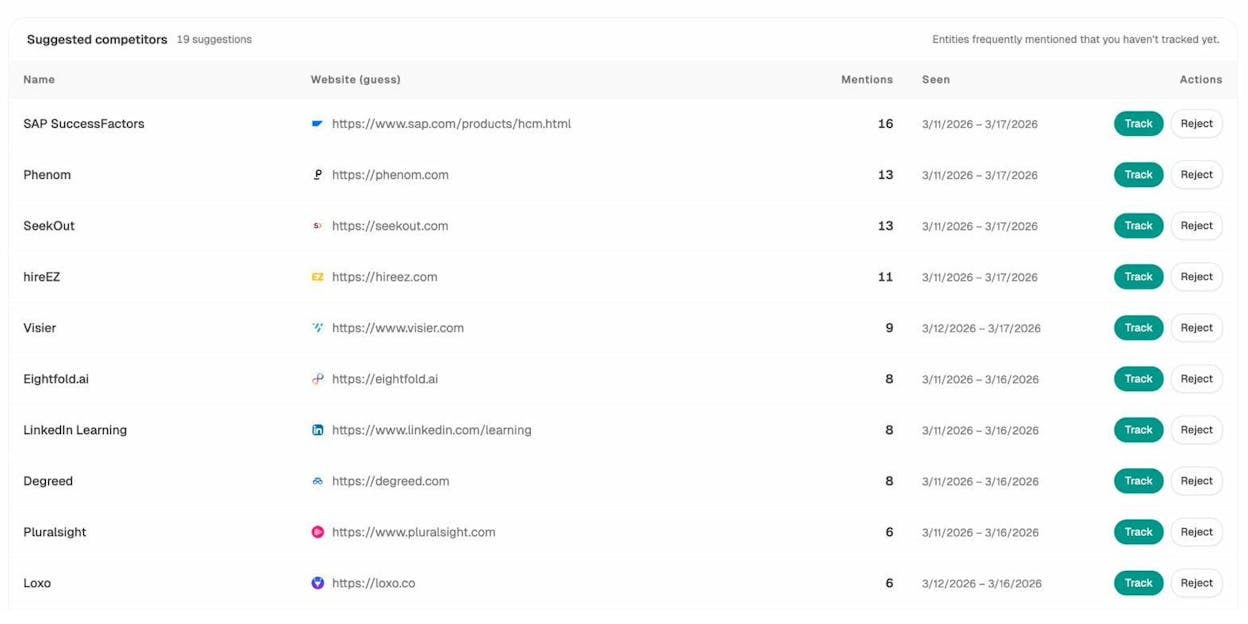
If a new competitor starts appearing in AI answers for your holiday keywords, investigate what content they published and which sources they’re getting cited on. Then close the gap.
Get a weekly summary without logging in
If you don’t have time to check dashboards every day during the holiday rush, Analyze AI’s Weekly Email Digests deliver a prioritized summary to your inbox every Monday. The digest includes visibility changes, citation momentum, competitor shifts, and specific actions to take.
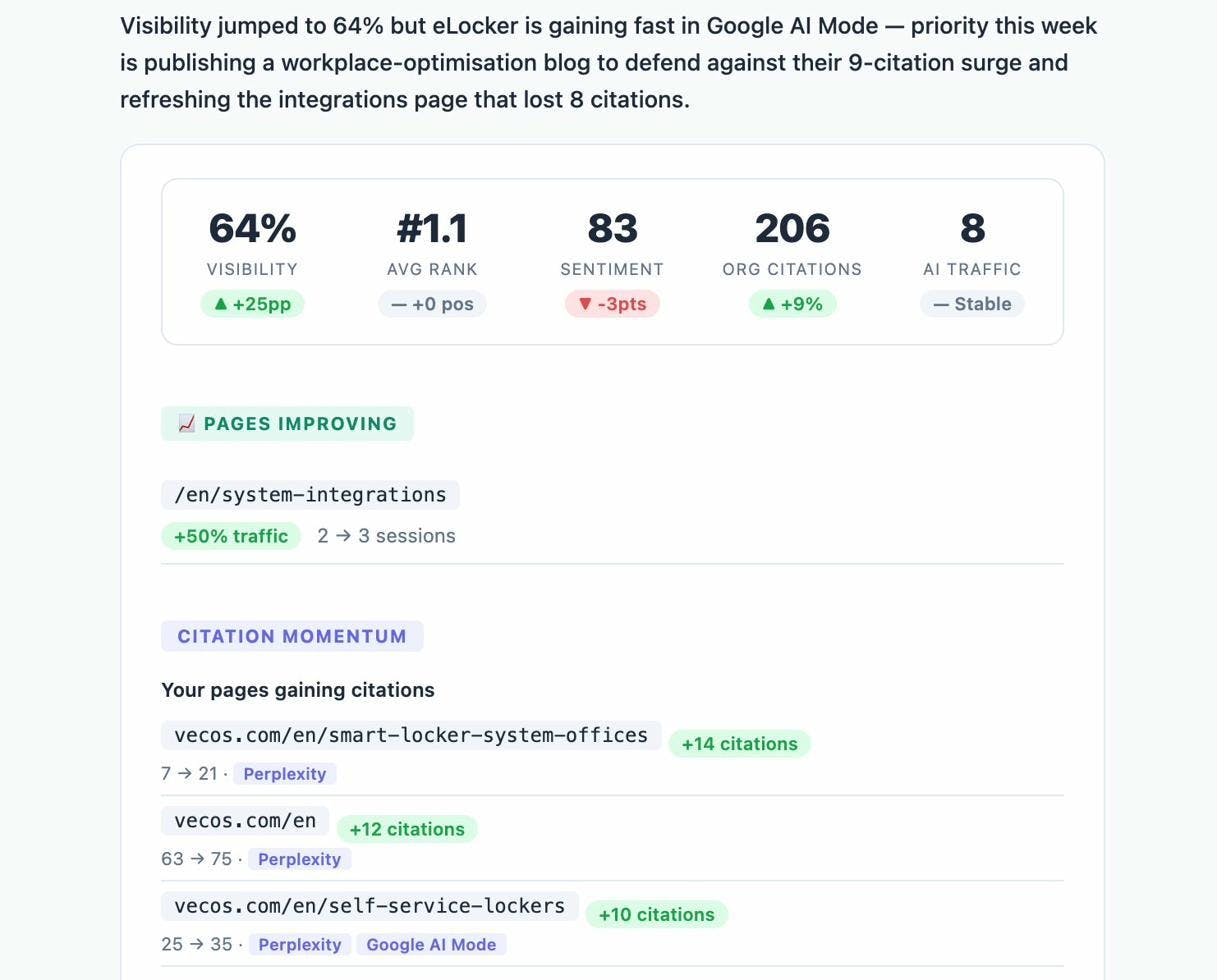
This is especially useful during the holidays when your team is running at full capacity and doesn’t have bandwidth for manual reporting.
A Holiday Marketing Checklist You Can Use Right Now
Here’s everything from this article distilled into a checklist you can hand to your team:
|
Task |
When |
Status |
|---|---|---|
|
Research seasonal keywords for your product categories |
4–6 months before |
☐ |
|
Create or update evergreen holiday landing pages |
3–4 months before |
☐ |
|
Set up prompt tracking for holiday queries in Analyze AI |
3 months before |
☐ |
|
Build internal links from high-authority pages to holiday pages |
2–3 months before |
☐ |
|
Audit existing holiday content with Analyze AI Content Optimizer |
2 months before |
☐ |
|
Identify and pitch influencer partnerships |
2 months before |
☐ |
|
Check which sources AI models trust in your space (Sources dashboard) |
2 months before |
☐ |
|
Segment your email list for holiday campaigns |
6 weeks before |
☐ |
|
Create retargeting audiences and ad creative |
1 month before |
☐ |
|
Send teaser emails to VIP and past holiday buyer segments |
1 month before |
☐ |
|
Launch influencer campaigns |
2 weeks before |
☐ |
|
Go live with holiday promotions and email campaigns |
1 week before |
☐ |
|
Monitor AI search visibility daily during peak season |
During |
☐ |
|
Run retargeting ads for cart and browse abandoners |
During |
☐ |
|
Analyze results, redirect expired pages, document learnings |
1 week after |
☐ |
Final Thoughts
Holiday marketing is competitive. Every brand in your space is fighting for the same attention, the same keywords, and the same inbox real estate. The brands that win are the ones that start early, execute consistently, and measure everything.
But here’s the part most brands miss. The holiday season isn’t just about what happens in Google and email anymore. A growing share of buyers are starting their holiday research in AI search engines. They’re asking ChatGPT for gift ideas, using Perplexity to compare deals, and relying on Gemini to narrow down their options.
SEO isn’t dead. It’s evolving. And the teams that treat AI search as an additional organic channel, rather than ignoring it or treating it as a replacement for SEO, will have a compounding advantage over the ones still running last year’s playbook.
If you want to see where your brand stands in AI search heading into the holiday season, Analyze AI can show you in minutes. Set up your holiday prompts, connect your GA4, and start tracking before your competitors do.

Ernest

Ibrahim


