



Summarize this blog post with:


SEO is not that complicated. At its core, it’s really just three steps:
-
Find what people are searching for.
-
Create content that gives them exactly what they want.
-
Prove to Google (and now AI engines) that your content deserves to rank.
That’s the entire process. Everything else — keyword clustering, on-page optimization, link building — is a subset of these three steps.
Now, there is one more thing to understand. SEO is evolving. People are still searching on Google, but they’re also getting direct answers from AI engines like ChatGPT, Perplexity, and Gemini. This doesn’t mean SEO is dead — far from it. It means there is now an additional organic channel you should optimize for alongside traditional search. The brands that win are the ones that show up in both places.
In this article, you’ll learn the three core steps of SEO — finding what people search for, creating content that matches their needs, and earning the trust signals that push your pages to the top. You’ll also learn how to extend each step into AI search, so your brand shows up not just on Google but in ChatGPT, Perplexity, Gemini, and other AI engines that are quickly becoming the way people discover products and information.
Table of Contents
1. Find what people are searching for
The starting point of SEO is understanding what your target customers are typing into search engines. SEOs call this process keyword research.
To do keyword research, you need a keyword research tool. These tools search vast databases to find the exact phrases people use when looking for information, products, or answers.
There are free options you can start with right now. Analyze AI’s free keyword generator is one of them. Brainstorm a word that defines your industry, and enter it into the tool.
For example, if you own a coffee equipment store, you might enter “coffee.” The tool will then show you popular keywords containing that term.
![[Screenshot: Analyze AI’s free keyword generator showing results for “coffee” — displaying keyword ideas with search volume and difficulty metrics]](https://www.datocms-assets.com/164164/1776982587-blobid1.png?auto=format,compress&w=1248&fit=max)
Look through the results and note down keywords that are relevant to your business. Not every keyword will be a fit. Topics like “starbucks coffee” or “comedians in cars getting coffee” probably aren’t relevant to a coffee equipment store, since they’re about a chain and a TV show, not equipment.
But keywords like “how to make cold brew coffee” or “how to grind coffee beans” are strong candidates. You can likely create useful content around these topics and naturally weave in the specialty equipment you sell.
Repeat this process for other seed words. Try “espresso,” “latte,” “cappuccino,” or any other term your customers would use.
How to go deeper with keyword research
The free keyword generator gives you a solid starting point. But if you want a more complete picture, here are a few techniques to expand your keyword list:
Use Google Autocomplete. Start typing your keyword into Google’s search bar and see what suggestions appear. These are real queries that people search for frequently.
![[Screenshot: Google search bar showing autocomplete suggestions for “coffee grinder” — displaying suggestions like “coffee grinder manual,” “coffee grinder electric,” “coffee grinder burr vs blade”]](https://www.datocms-assets.com/164164/1776982595-blobid2.png?auto=format,compress&w=1248&fit=max)
Check “People Also Ask.” After you search a keyword on Google, look for the “People Also Ask” box. These are related questions searchers commonly have. Each question is a potential topic for your content. You can learn more about optimizing for these in our guide on People Also Ask.
![[Screenshot: Google “People Also Ask” section showing related questions for a coffee-related search]](https://www.datocms-assets.com/164164/1776982604-blobid3.png?auto=format,compress&w=1248&fit=max)
Look at “Related Searches.” Scroll to the bottom of Google’s search results page. You’ll find a section of related searches that give you even more keyword ideas.
![[Screenshot: Google “Related Searches” section at the bottom of a search results page]](https://www.datocms-assets.com/164164/1776982607-blobid4.png?auto=format,compress&w=1248&fit=max)
Use Analyze AI’s free tools. Beyond the keyword generator, you can also use the Keyword Difficulty Checker to see how hard a keyword is to rank for, the SERP Checker to analyze what’s currently ranking, and the Keyword Rank Checker to see where your site currently stands.
Spy on competitors. One of the fastest ways to find good keywords is to look at what your competitors already rank for. Enter a competitor’s URL into a tool like Analyze AI’s Website Traffic Checker to see which pages drive their organic traffic. Those topics are proven to attract searchers in your space.
Don’t forget: people also search on platforms beyond Google
Keyword research isn’t limited to Google. Depending on your business, your customers might also search on YouTube, Amazon, or Bing.
If you sell physical products, Amazon keyword research helps you understand what shoppers search for on the world’s largest marketplace. If you create video content, YouTube keyword research reveals what people want to watch. And if you want to capture traffic from Microsoft’s search engine, the Bing Keyword Tool has you covered.
What people ask AI engines (and why it matters)
Here’s where things get interesting. People don’t just search on Google anymore. Millions of users now type questions into ChatGPT, Perplexity, Gemini, and Copilot to get direct answers.
The difference is in how they search. On Google, someone might type “best coffee grinder.” In an AI engine, they’re more likely to ask “What’s the best coffee grinder for pour-over coffee under $100?” — a longer, more conversational prompt.
This means there’s a whole new layer of “keywords” to research: the prompts people use in AI search.
Analyze AI helps you track this. In the Prompts dashboard, you can monitor the specific prompts that matter to your brand. You can see your visibility score (how often AI engines mention you), your sentiment (how positively AI talks about your brand), your position (where you rank in the AI answer), and which competitors show up alongside you.
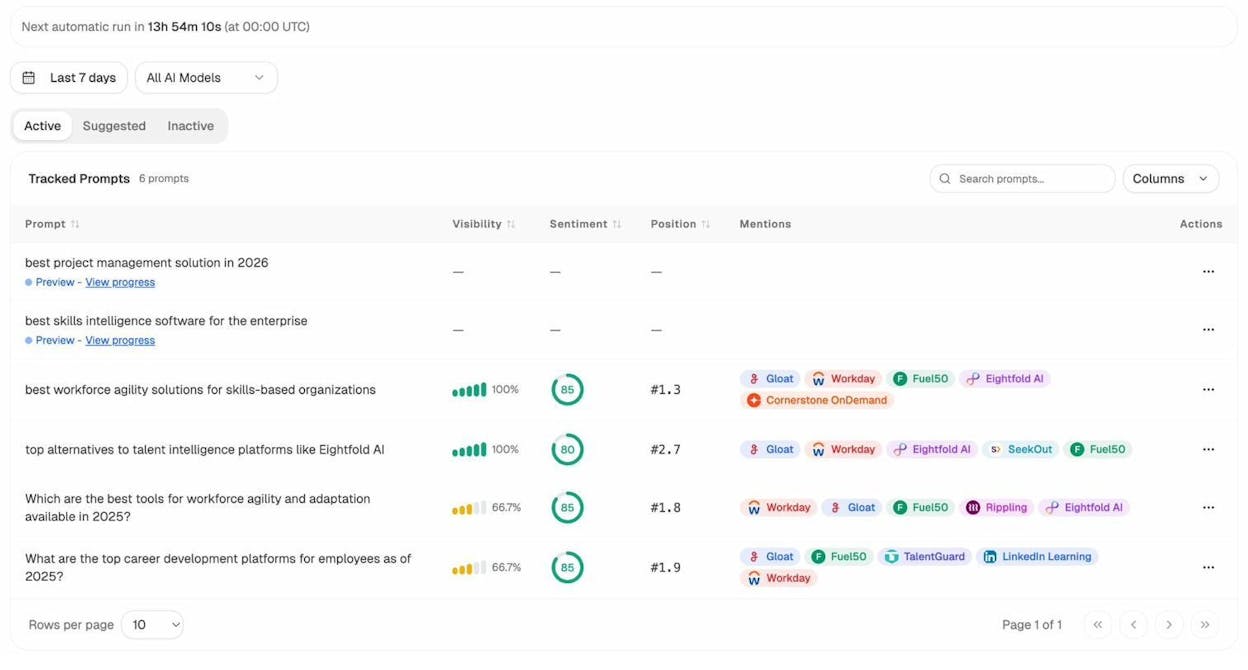
Analyze AI also suggests new prompts for you to track. These are prompts that AI engines frequently answer in your space — prompts where your competitors show up but you might not. This is the AI search equivalent of finding new keyword opportunities.
You can also run ad hoc prompt searches to test any question across multiple AI engines at once and see exactly how each one responds.
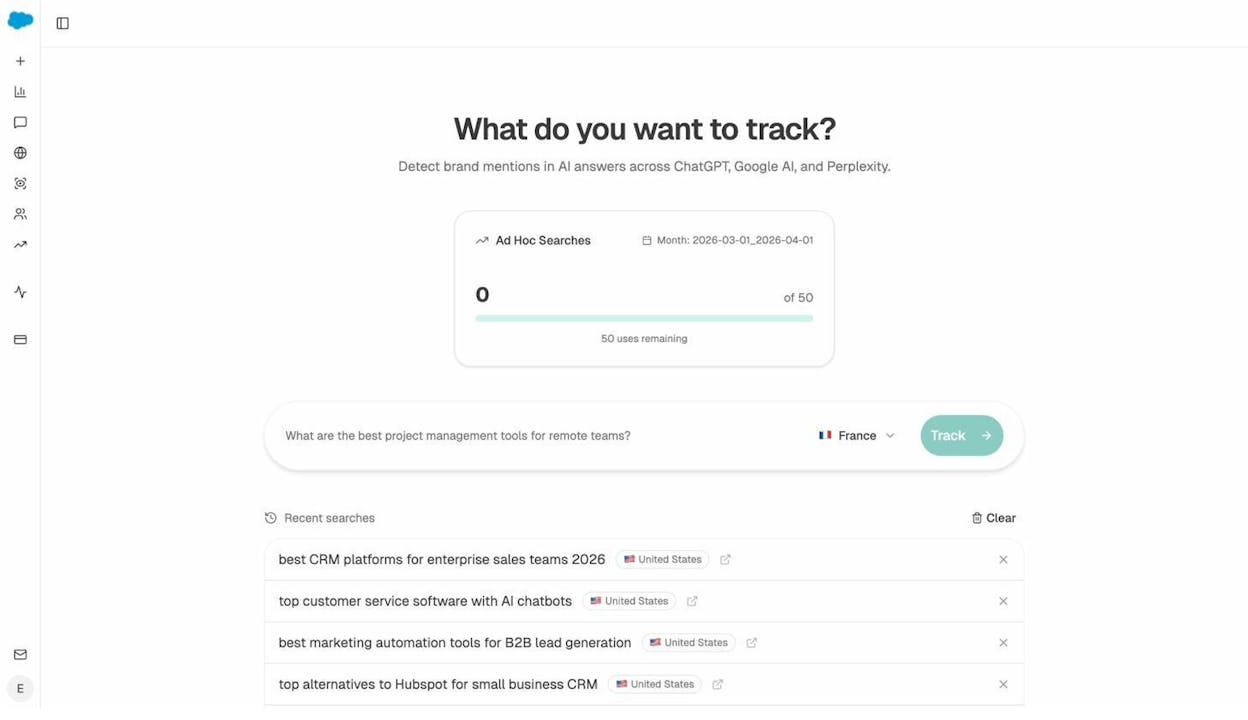
Think of it this way: keyword research tells you what people search for on Google. Prompt research tells you what people ask AI. You need both.
Further reading:
2. Create content that gives people what they want
Finding keywords is only step one. Now you need to create content that searchers actually find useful. If your content doesn’t match what they’re looking for, it won’t rank — no matter how many keywords you sprinkle in.
Google wants to rank results that genuinely help people. So does every AI engine that recommends content. Your job is to be that helpful result.
Here’s how.
Understand the reason behind the search
Every time someone types a query into Google, there’s a reason behind it. Maybe they want to learn something, navigate to a specific website, compare products, or buy something. In SEO, we call this reason search intent.
For some queries, the intent is obvious. If someone searches “how to make cold brew coffee,” they want a how-to guide. Simple.
But what about “best coffee machine”? Are they looking for one person’s top pick, a review of a specific machine, or a ranked list of options? The intent isn’t immediately clear.
Here’s the shortcut: look at what Google already ranks. The top-ranking pages are Google’s best guess at what searchers want. Use them as a proxy for intent.
For example, if you search “pour over coffee maker,” you’ll see that most results are blog posts listing the best options — not product pages. This tells you searchers are in research mode, not buying mode. Trying to rank a product page here would be a mistake.
![[Screenshot: Google search results for “pour over coffee maker” showing blog post listicles, not product pages — highlighting the research intent of the query]](https://www.datocms-assets.com/164164/1776982619-blobid7.png?auto=format,compress&w=1248&fit=max)
Do this for every keyword before you start writing. Open the top five or ten results and note the patterns. What type of content ranks? Blog posts? Videos? Product pages? Guides? Match that format.
Cover everything searchers want to know
Once you understand the intent, you need to cover the topic thoroughly. If searchers expect certain subtopics, include them. If you leave gaps, they’ll bounce back to the search results and click a competitor’s page instead.
For example, say you’re writing about “how to grind coffee beans.” As a coffee expert, your instinct might be to explain which grinder to buy and how to use it. That makes sense.
But if you check the top-ranking pages, you’ll see that they all cover alternative methods — grinding beans with a blender, a rolling pin, or even a mortar and pestle. Why? Because many searchers don’t own a grinder. They’re looking for workarounds.
![[Screenshot: A top-ranking article for “how to grind coffee beans” that covers multiple methods including non-grinder alternatives — showing the expanded scope of the content]](https://www.datocms-assets.com/164164/1776982622-blobid8.png?auto=format,compress&w=1248&fit=max)
If you skip these alternatives, your content won’t serve a big chunk of the audience. That doesn’t mean you need to recommend every method. If rolling pin grinding produces terrible results, say so. But you still need to address it.
The principle is simple: look at what the top pages cover, then cover it better. Add what they miss. Remove what doesn’t work. Bring your own experience and perspective to every section.
Showcase your experience or expertise
People want to learn from someone who actually knows what they’re talking about. Google’s quality raters specifically look for experience, expertise, authority, and trust (E-E-A-T) signals.
The best way to demonstrate this is to write from personal experience. If you’re reviewing coffee machines, actually test them. If you’re explaining a brewing method, show your own results. If you have years of experience in your field, let that show in your writing.
For example, if you’re writing about the best cold brew method, don’t just restate what every other article says. Share what happened when you tried each method. Show photos. Mention what surprised you. Give the kind of detail that only comes from doing the work yourself.
This serves two purposes: it builds trust with your readers, and it creates content that competitors can’t easily replicate by spinning up an AI article.
Make your content work for AI engines too
Here’s the extra step most SEO guides skip: the content you create for Google also needs to work for AI engines. This isn’t a completely separate task — it’s an extension of what you’re already doing.
AI engines like ChatGPT and Perplexity pull information from web content to generate their answers. The content they tend to cite shares a few characteristics:
-
Clear, direct answers. AI engines prefer content that states facts and answers upfront, not content that buries the answer under filler paragraphs. Lead each section with the key point (a practice called BLUF — bottom line up front).
-
Well-structured information. Use descriptive headings, logical flow, and organized sections. AI models parse structured content more easily.
-
Original data and perspectives. AI engines cite content that adds unique value — original research, proprietary data, expert opinions, and firsthand experience.
-
Comprehensive coverage. Content that thoroughly addresses a topic from multiple angles gets referenced more often than shallow overviews.
You can read more in our data study on how LLMs cite sources, where we analyzed over 83,000 AI citations. One key finding: only 17% of AI citations come from a brand’s own website. The rest come from third-party sources like review sites, industry blogs, and forums. This means earning mentions on trusted external sites matters just as much as optimizing your own content.
To check whether your existing content is showing up in AI answers, use Analyze AI’s Sources dashboard. It shows every URL and domain that AI engines cite in your space, broken down by content type — websites, blogs, reviews, product pages, and more.
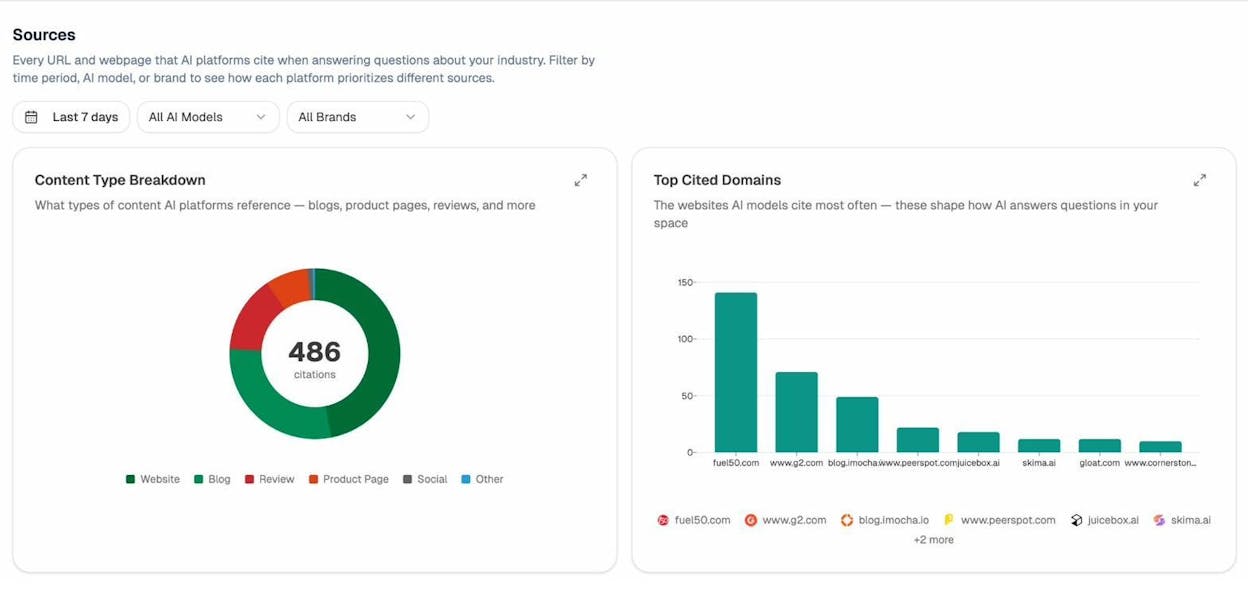
If your domain isn’t among the top cited sources, that’s a gap you can close. And if competitors’ domains appear heavily, you know exactly where you need to earn citations.
You can also use the Content Writer feature to go from idea to research to outline to draft — with AI visibility gaps, competitor analysis, and editorial comments built into every step.
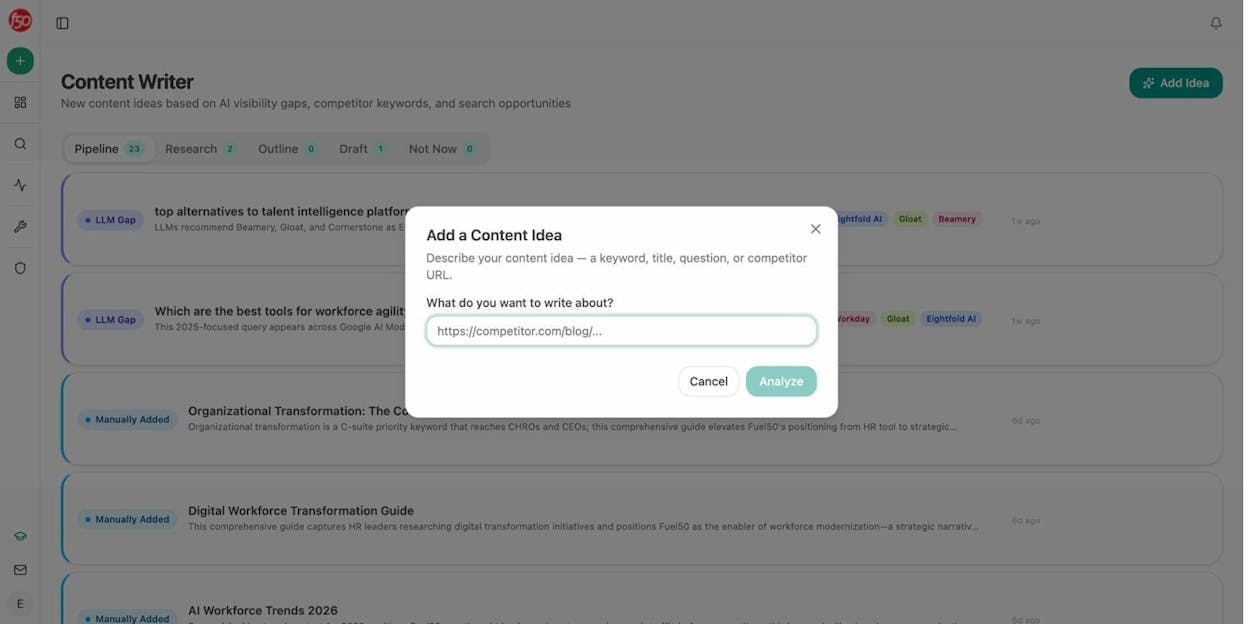
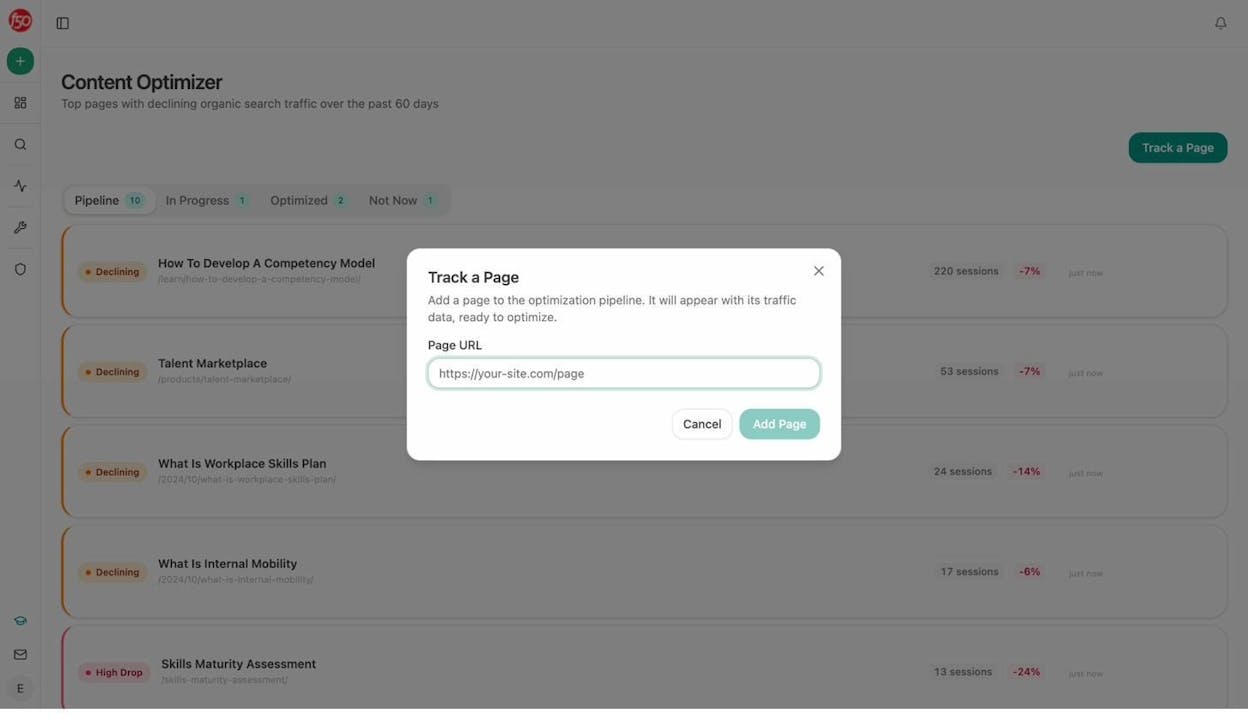
And if you already have existing content, the Content Optimizer analyzes any URL and gives you specific suggestions to improve both SEO performance and AI citability.
Further reading:
3. Prove to Google (and AI engines) that your content deserves to rank
You’ve found the right keywords. You’ve created content that matches search intent. Now comes the hardest part: convincing Google that your page deserves to rank above all the other pages targeting the same topic.
This is where links come in. Links from other websites are one of Google’s most important ranking factors. Google itself has confirmed this. The logic is straightforward: links act as votes of confidence. When another website links to your content, it’s telling Google “this page is worth reading.”
Pages with more quality backlinks tend to rank higher. Period.
So how do you get links?
Help visitors find your page with internal links
The simplest starting point is internal linking — linking from your existing pages to your newly published content.
Internal links do three things: they help visitors discover your new content, they help Google discover and crawl your new pages, and they pass “link equity” (ranking power) from established pages to new ones.
Here’s the key: you don’t want to add internal links from just any page. You want to add them from pages that already get traffic. A link from a page no one visits doesn’t help much.
Here’s how to find internal link opportunities:
-
Use a site audit tool (or even Google Analytics) to identify your pages with the most organic traffic.
-
Search within those pages for mentions of your new topic.
-
If the topic is mentioned but not linked, add an internal link.
![[Screenshot: Using Ctrl+F (or Cmd+F) on a high-traffic blog post to search for a keyword phrase that could be turned into an internal link to a new article]](https://www.datocms-assets.com/164164/1776982636-blobid12.png?auto=format,compress&w=1248&fit=max)
For example, if you just published a guide about cold brew coffee, search your existing articles for the phrase “cold brew.” Wherever it appears unlinked, add a link to your new guide.
This takes 15 minutes and can meaningfully speed up how fast Google discovers and ranks your new content. For more on this, see our full guide on internal linking for SEO.
Persuade other websites to link to you
Internal links are a start, but the real ranking power comes from external links — links from other websites pointing to yours.
One of the most accessible ways to earn external links is through guest blogging. The concept is simple: you write a high-quality article for another website in your industry, and in return, they let you include a link back to your site.
To find guest blogging opportunities, use Google search operators. Search for [your topic] "write for us" or [your topic] "guest post" in Google. This surfaces websites that actively accept guest contributions.
![[Screenshot: Google search results for ‘coffee “write for us”’ showing websites accepting guest posts in the coffee niche]](https://www.datocms-assets.com/164164/1776982640-blobid13.png?auto=format,compress&w=1248&fit=max)
Go through each result, read their submission guidelines, and pitch a topic that provides genuine value to their audience. The better the content you offer, the more likely they are to accept it and the more valuable the link will be.
Other effective ways to earn backlinks include:
-
Creating original research or data. Content with unique data attracts links naturally because it becomes a source other writers cite. For example, publishing a study on coffee brewing temperatures would give industry bloggers a reason to link to you.
-
Building useful free tools. Interactive tools and calculators attract links because they provide ongoing value. This is one reason we built free SEO tools at Analyze AI — they serve our audience and earn links at the same time.
-
Getting mentioned in industry roundups and reviews. When journalists or bloggers write “best of” lists in your industry, make sure they know about your product or service.
You can use the Website Authority Checker to evaluate the authority of sites you’re considering for guest posts. You can also check for broken links on target websites and offer your content as a replacement — this is a classic link building technique called broken link building.
Build the kind of brand that AI engines recommend
Here’s the part that most SEO tutorials leave out: earning trust in AI search works differently from earning trust on Google.
On Google, backlinks are the primary trust signal. In AI search, trust is built through brand mentions, citations, and sentiment across the sources that AI engines pull from.
When someone asks ChatGPT “what’s the best coffee grinder?”, the AI doesn’t look at backlink profiles. It draws on its training data and, in some cases, real-time web content to form its answer. The brands it recommends are the ones that consistently appear in trusted sources — review sites, industry publications, forums like Reddit, comparison articles, and product databases.
This means your off-page SEO strategy needs to expand beyond link building. You need to think about:
-
Earning mentions on the sites AI engines cite most. Every industry has a set of domains that AI engines rely on. In SaaS, that might be G2, Capterra, and industry blogs. In e-commerce, it might be review sites and Reddit threads.
-
Ensuring your brand narrative is accurate. AI engines form a “perception” of your brand based on what they read about you across the web. If that perception is inaccurate or negative, it hurts your visibility.
-
Monitoring where competitors show up and you don’t. If a competitor gets recommended by AI and you don’t, the question is: what sources is the AI citing, and how can you get mentioned there too?
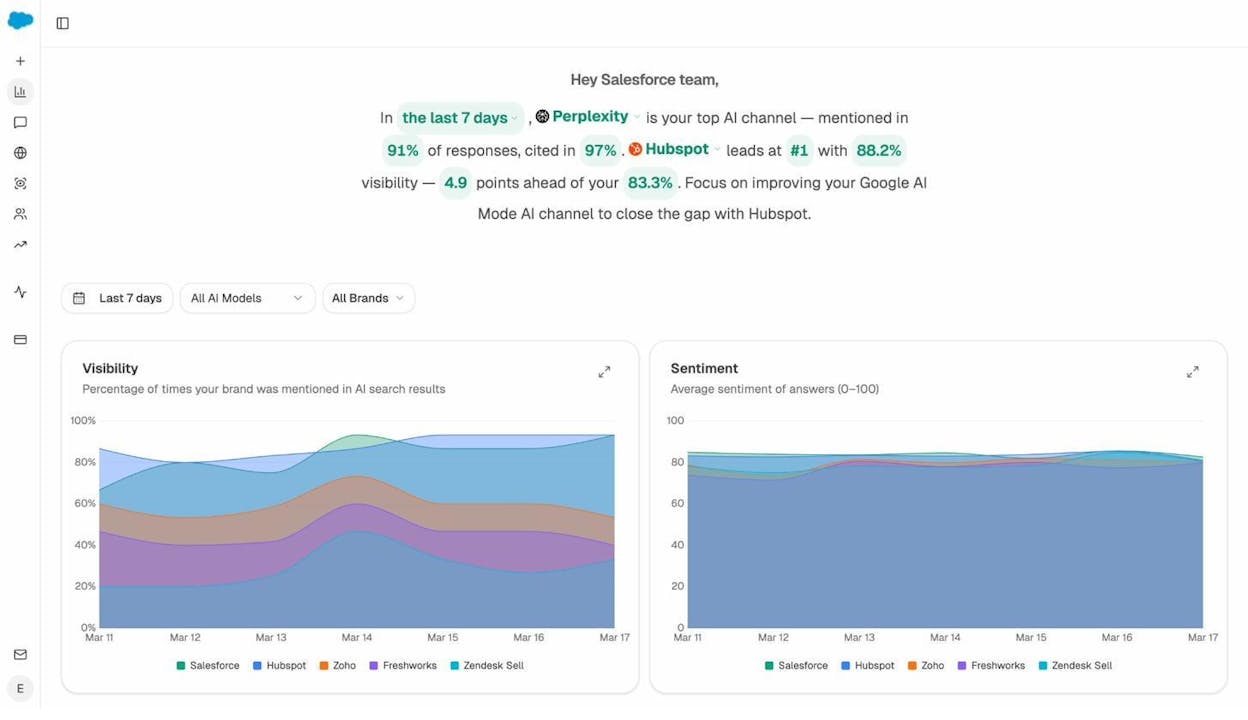
Analyze AI makes this concrete. The Overview dashboard gives you a high-level view of your brand’s AI visibility and sentiment, compared to your competitors, across all major AI engines.
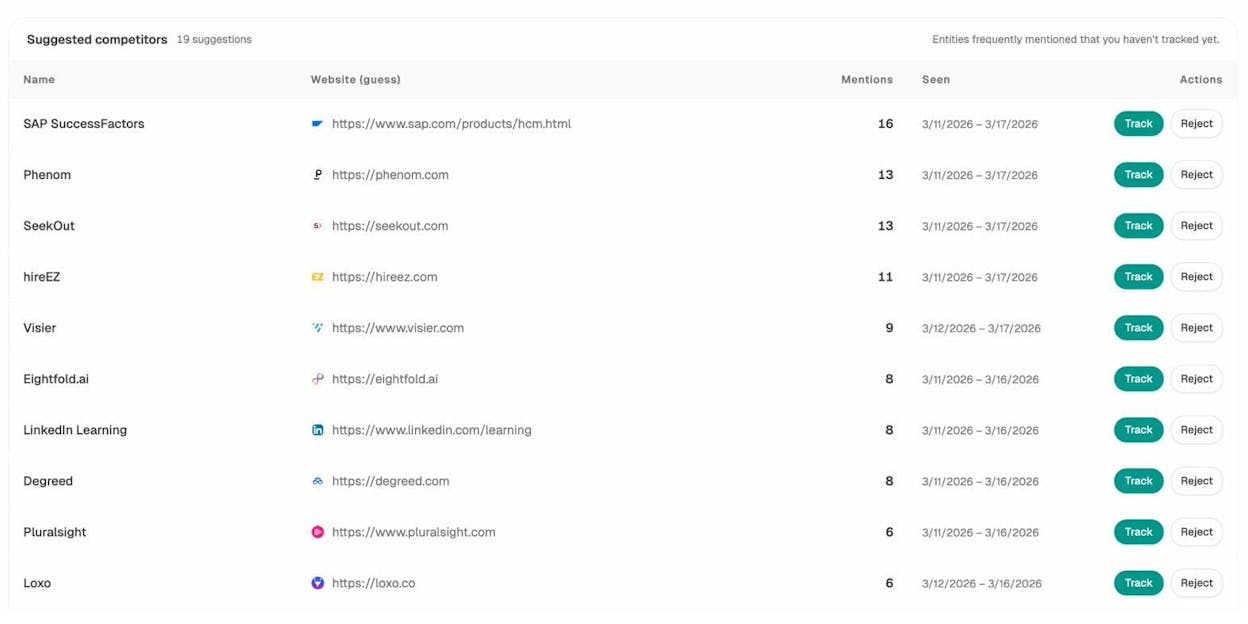
The Competitors dashboard shows you exactly who AI engines mention alongside your brand — and surfaces “suggested competitors” you may not be tracking yet. These are brands that appear frequently in AI answers in your space.
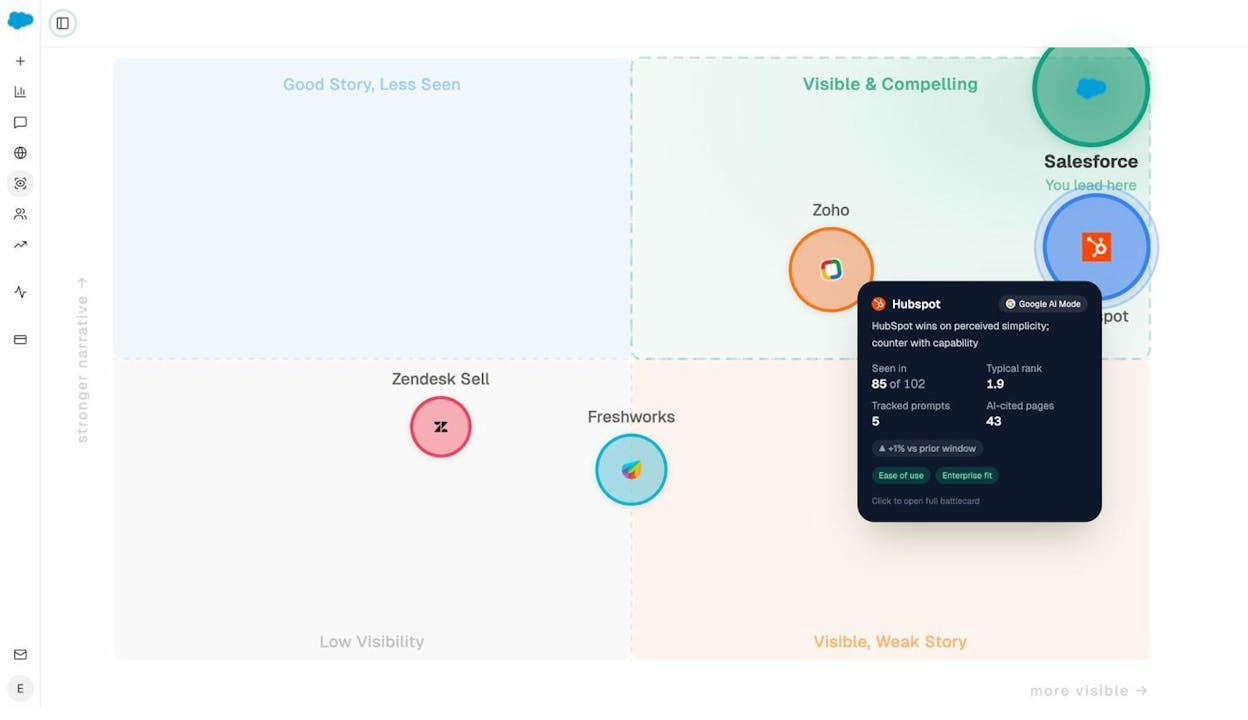
And the Perception dashboard reveals the exact narrative that AI engines construct about your brand. It breaks down how each AI engine describes you, what themes they emphasize, and whether the sentiment is positive, negative, or neutral. If AI is framing your brand incorrectly, this is where you catch it.
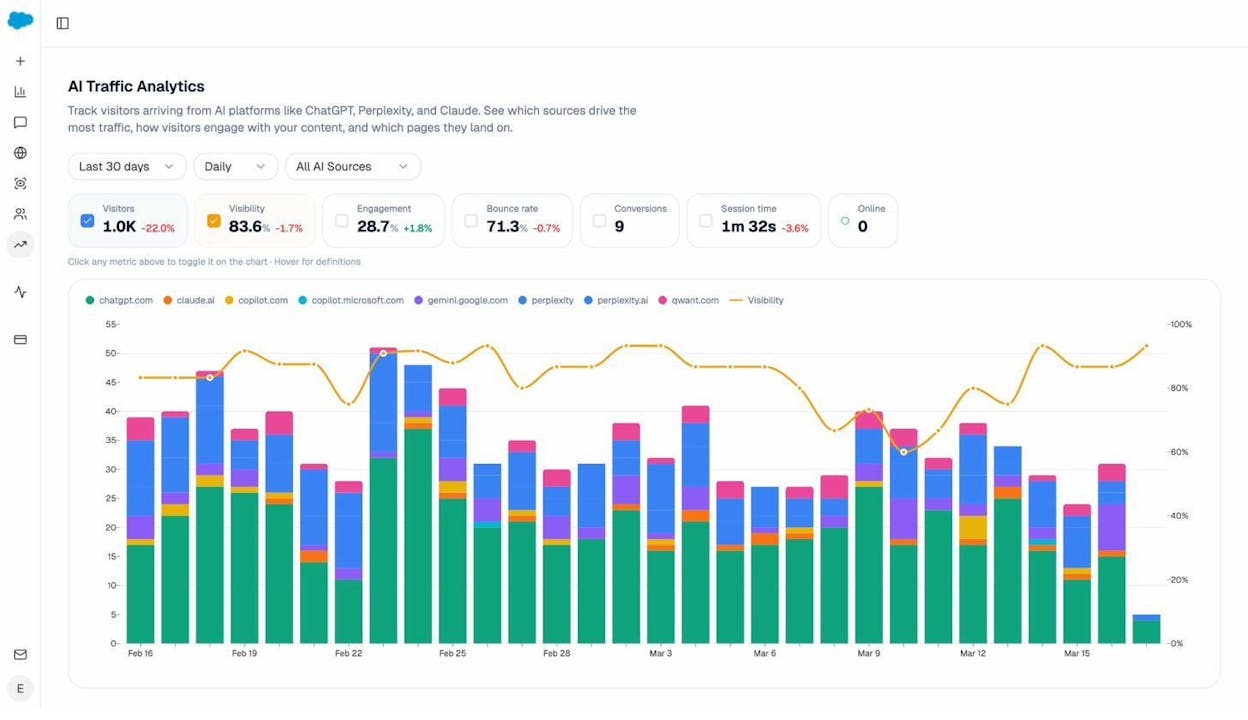
Finally, the AI Traffic Analytics report shows you real traffic data — how many visitors arrive at your site from AI engines like ChatGPT, Perplexity, Gemini, and Copilot, plus which specific pages they land on. This tells you which of your pages already perform well in AI search, so you can double down on what works.
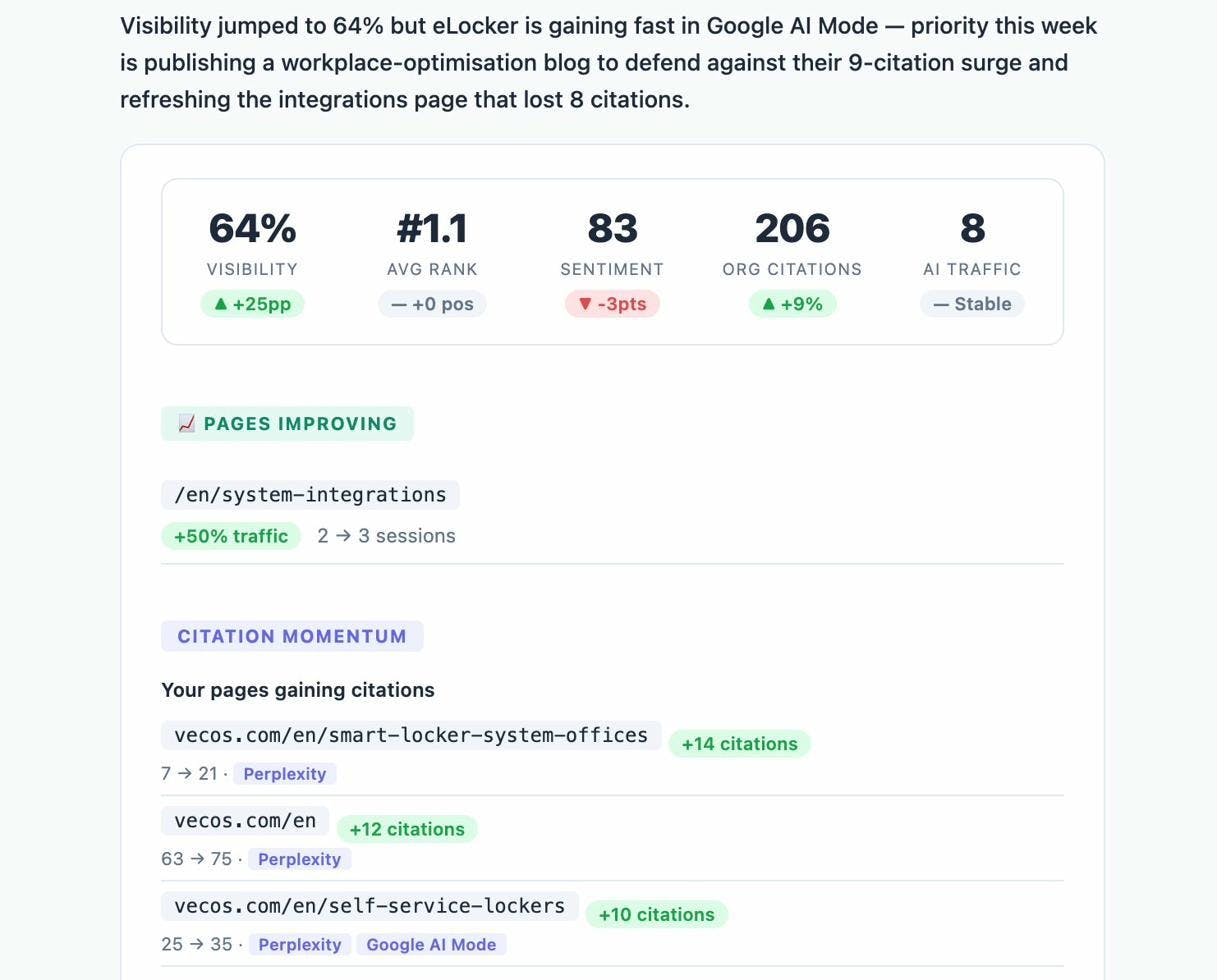
You can even get a weekly email digest every Monday with prioritized actions — citation changes, competitor shifts, and new opportunities — delivered to your inbox without needing to log in.
Further reading:
A quick note on technical SEO
The three steps above cover the strategic foundation of SEO. But there’s one more piece worth mentioning: technical SEO.
Technical SEO is about making sure your website doesn’t have problems that prevent Google (or AI crawlers) from accessing and understanding your content. It includes things like:
-
Site speed. Pages that load slowly frustrate users and hurt rankings. Use Google’s PageSpeed Insights to check your site.
-
Mobile-friendliness. Most searches now happen on mobile devices. Your site needs to work well on every screen size.
-
Crawlability. If Google’s bots can’t crawl your pages, they can’t rank them. Check for issues like broken links (use our Broken Link Checker), blocked pages in your robots.txt file, and missing or incorrect sitemaps.
-
HTTPS. Your site should use HTTPS encryption. This is a confirmed ranking factor and a trust signal for users.
-
Structured data. Adding structured data (schema markup) to your pages helps search engines understand your content better. It can also make your results appear with rich snippets — star ratings, FAQs, how-to steps — which increases click-through rates.
For AI crawlers specifically, there’s one extra consideration: most AI crawlers do not render JavaScript. If important content on your site is loaded through JavaScript, it may be invisible to AI engines. Make sure your key pages have their content in the HTML source, not only rendered via client-side JavaScript.
You can learn more about the different types of SEO to get a full picture of what else you can optimize.
Final thoughts
SEO isn’t complicated. You need to:
-
Find what people search for — using keyword research tools and, increasingly, AI prompt research.
-
Create content that matches their intent — thorough, experienced, and structured for both humans and AI engines.
-
Prove your content deserves to rank — through internal links, backlinks, brand mentions, and AI citations.
Does this mean it’s easy? No. You’re competing with people who do the same thing, so it takes real effort to win, especially in competitive industries. SEO also takes time — you won’t see results overnight.
But the fundamental truth hasn’t changed: the brands that create the best content and earn the most trust will win in search. The only difference now is that “search” includes more than just Google. It includes ChatGPT, Perplexity, Gemini, Copilot, and whatever comes next.
The way people find you is changing. The reason they choose you is not. Build great content. Earn trust. Show up everywhere that matters.
If you want to see how your brand currently appears in AI search — which engines mention you, what they say about you, and where competitors win — start with Analyze AI. It’s designed for teams that want to compound what works, not chase what’s new.

Ernest

Ibrahim


