



Summarize this blog post with:


Semantic SEO sounds like a different discipline. It is not. It is the same SEO you have always done, just more careful about meaning than word strings. The brands that do it well show up in Google and in AI answers, because both systems now work the same way underneath.
In this article, you’ll learn what semantic SEO actually means, how Google and large language models (LLMs) read meaning instead of keywords, and the seven habits that get your brand surfaced as a trusted source in both traditional search and AI answers from ChatGPT, Perplexity, Gemini, and Copilot.
Table of Contents
What semantic SEO actually means
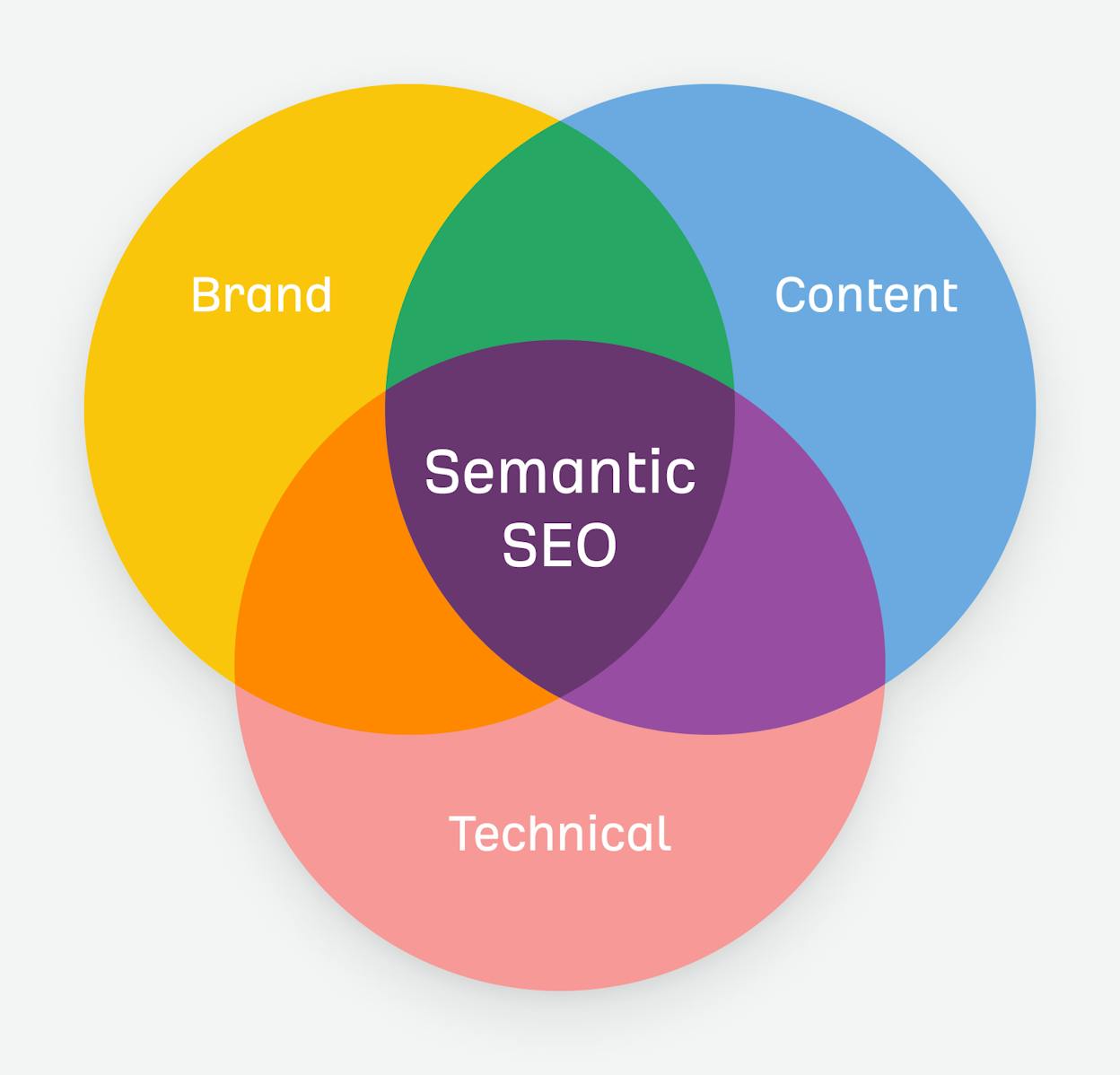
The word semantic comes from the Greek sēmantikos, meaning “of significance” or “relating to meaning.” Semantic SEO, then, is the practice of optimizing for what your content means, not just for the exact words it contains.
This matters because machines do not read like humans. To a search engine, “dog” and “puppy” are unrelated until it has seen enough text to learn that the two words appear in similar contexts. Once it does, it can match a query about “small hypoallergenic dogs” to a page that talks about “low-shedding breeds for apartments” even when the exact words never appear together.
The basis of semantic SEO is making your meaning easy for machines to detect. That means giving them clear signals about who you are, what you do, and what you should be cited for.
How search engines and AI models interpret meaning
Search engines and AI models use three retrieval methods. Each one shapes how your content gets surfaced.
|
Method |
How it works |
Example |
|---|---|---|
|
Lexical |
Matches the exact characters in the query against indexed pages. |
Google Scholar still works this way. A search for “red leather shoes” only returns pages with those exact words. |
|
Semantic |
Converts queries and pages into mathematical vectors and ranks results by closeness in meaning. |
A query for “comfortable red shoes for dancing” returns pages about ballroom flats, even if those words never appear. |
|
Hybrid |
Runs a lexical base and layers semantic ranking on top of it. |
Google, Bing, and Baidu all work this way today. |
LLMs sit at the far semantic end. They embed both your content and the user’s query into a vector space, then surface the closest match by meaning. That is why an article about “low-shedding apartment dogs” can be cited in a ChatGPT answer about “hypoallergenic small breeds,” with zero word overlap.
This changes the rules in two ways:
-
Your content has to mean what you want it to mean. Burying the actual topic under clever copy or jargon makes you invisible to LLMs.
-
Showing up for an exact-match keyword is no longer enough. You also need to be the page that best matches the underlying question behind the keyword.
It is also why we believe SEO is not dead. (You can read our full take in the Analyze AI manifesto.) Both systems now reward the same thing. They want clear, well-structured content built around real topics. Ranking on Google and getting cited in AI answers are converging into one practice. Semantic SEO is the name for it.
Why semantic SEO matters more in the AI search era
In a traditional Google result, your page either ranks or it does not. The blue link shows your title and meta description word for word. You know what the searcher will see.
AI answers do not work that way. ChatGPT, Gemini, and Perplexity rewrite your content into their own prose. They decide which attributes to mention, which competitors to compare you against, and what tone to use when describing your brand. You can be cited and still misrepresented.
So the SEO question has changed. It used to be “do I rank?” Now it is also:
-
Is the brand described accurately?
-
Is it framed as the trusted source for the right topics?
-
Is the sentiment around the brand positive or neutral?
-
Are the right attributes attached to the brand name?
These are semantic questions. Answering them is the work of semantic SEO.
The seven habits of brands that win at semantic SEO
Doing semantic SEO well does not require a new tool stack. It requires applying a meaning-first lens to the SEO work you already do. Here are the seven habits we see in brands that consistently show up in both Google and AI answers.
1. Define your brand so machines can recognize it
Machines cannot infer meaning from your brand name alone. “Apple” could be the fruit. “Nike” could be the Greek goddess. “Adidas” has no meaning outside of itself. Until a machine has read enough to attach a definition to your name, you do not exist as an entity.
The work is to codify what your brand stands for and repeat it consistently across every surface a crawler can read:
-
Your homepage and About page
-
Author bios and team profiles
-
Press releases and media kits
-
Wikipedia, Crunchbase, G2, and other databases that LLMs train on
-
Schema markup on every page (more on this in habit six)
Then go a step further. Check what AI models are actually saying about you today. The Perception map in Analyze AI plots your brand and your competitors on two axes. The vertical axis is how strong your story is when you do show up. The horizontal axis is how visible you are in AI answers.
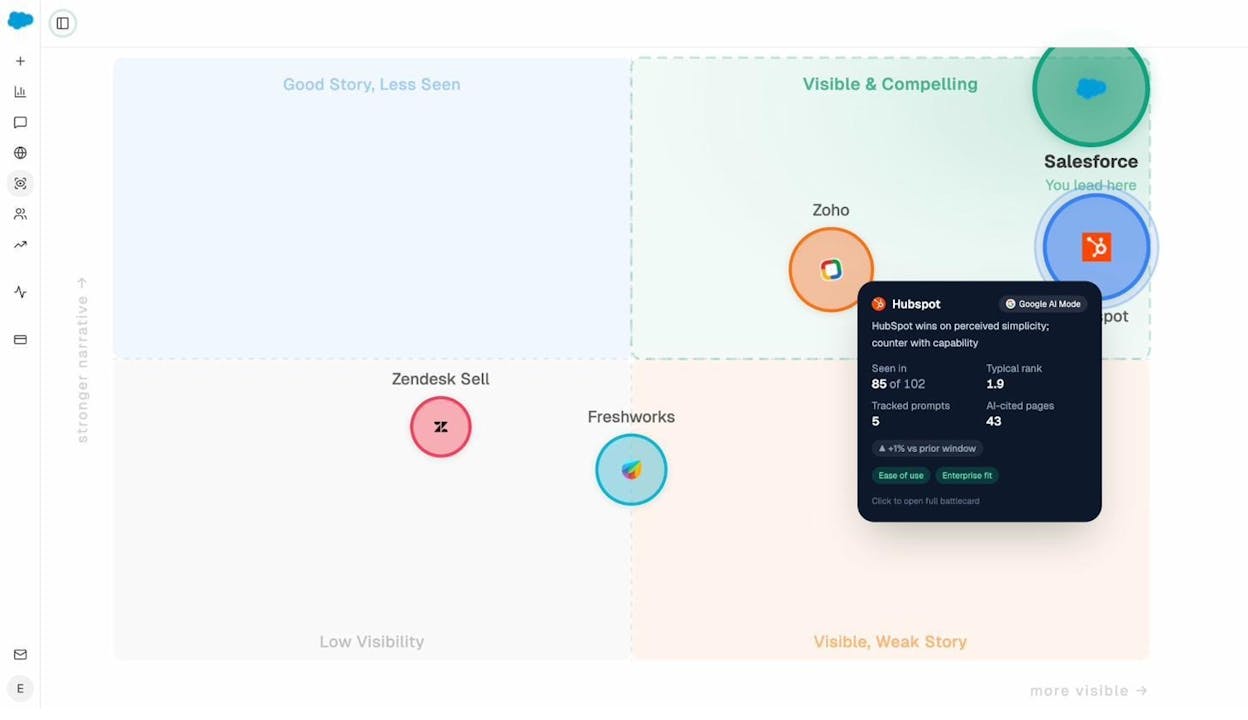
A brand in the bottom-right (visible but with a weak story) is being mentioned without being defined. A brand in the top-left (strong story, low visibility) has the right narrative but isn’t being repeated enough. If LLMs are describing you the way you describe yourself, your codified brand identity is doing its job. If not, you have a definition gap to close.
2. Connect your brand to the attributes people care about
Once machines can identify you, they need to associate you with something specific. This is where most brands stop. They optimize for “CRM software” but never become the brand AI cites when someone asks about “the easiest CRM for solo founders” or “the most affordable CRM with built-in calling.”
Notice the difference. The first is a topic. The second is a topic plus an attribute. Brands win in semantic search by owning attributes, not just topics:
-
Apple owns innovative technology
-
Nike owns performance footwear
-
HubSpot owns inbound marketing
To find the attributes worth owning, you need to know which words AI is already attaching to brands in your space. The Proof view inside Analyze AI’s Perception module shows the exact phrases that LLMs repeat when describing each tracked brand, color-coded by sentiment.
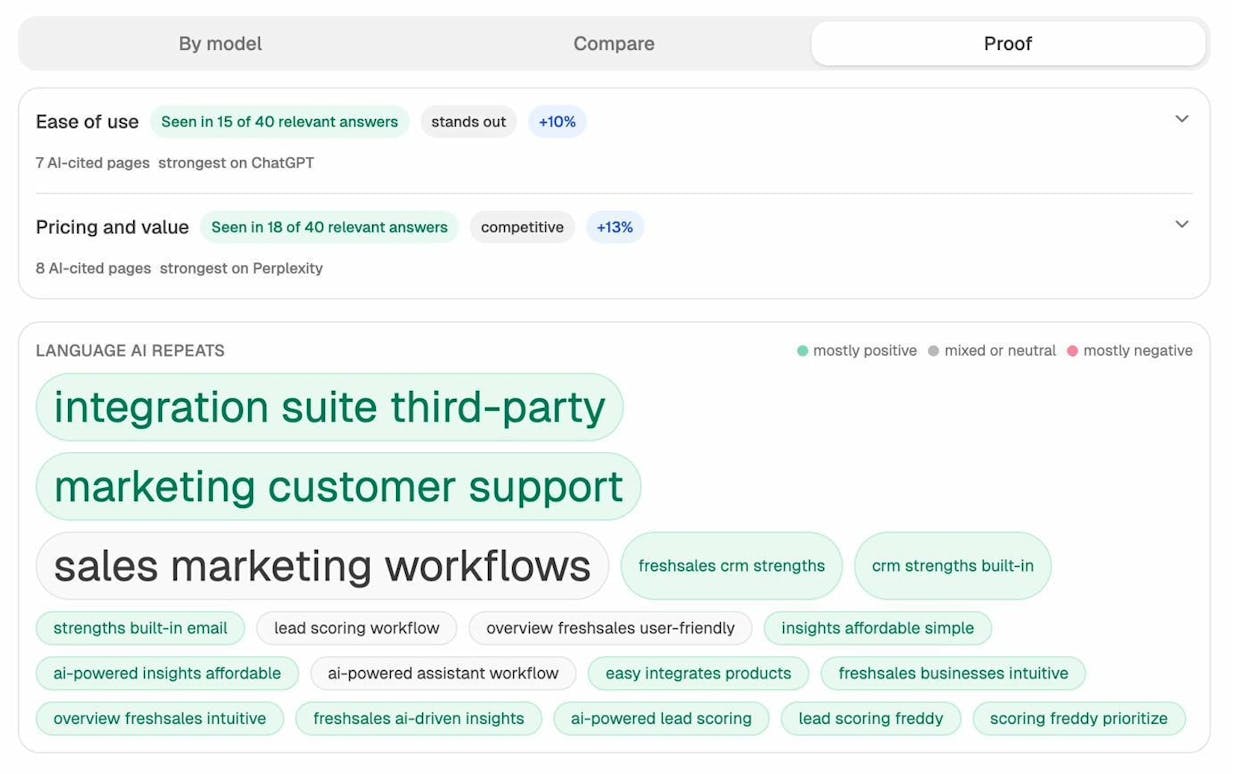
Two things to do with this view:
-
Find the attributes your competitors own. If “ease of use” gets repeated about a competitor 15 times in 40 relevant answers, that’s an attribute you have to either reclaim or sidestep. Reclaiming it means publishing comparison pages, customer proof, and product copy that anchors your brand to the same word. Sidestepping it means finding a different attribute the category does not own yet.
-
Find phrases AI repeats about you that you didn’t ask for. If your brand keeps getting tagged with a neutral-sounding phrase like “another option,” that’s a positioning problem. Fix it on your homepage and product pages first, then in your off-site placements.
One piece of advice from a project we ran. Pick one attribute per topic. Brands win by being the most associated with one thing, not the loosely associated with five.
3. Build a semantic information architecture
Most SEOs treat information architecture as URL structure. It is much wider than that. Information architecture covers your navigation, your internal linking, your taxonomies (categories and tags), the labels on your pages, and the filter systems on collection pages.
The fastest way to get this right is the entity-attribute-value (EAV) model:
|
Concept |
What it is |
Example for an e-commerce store selling saws |
|---|---|---|
|
Entity |
The object you are organizing |
Products, categories |
|
Attribute |
A characteristic of the entity |
Power source, blade size, use case |
|
Value |
The specific value of the attribute |
Cordless, 10-inch, woodworking |
The entities are your products. The attributes come from your category. The values come from keyword research, specifically from the modifiers people add when they search.
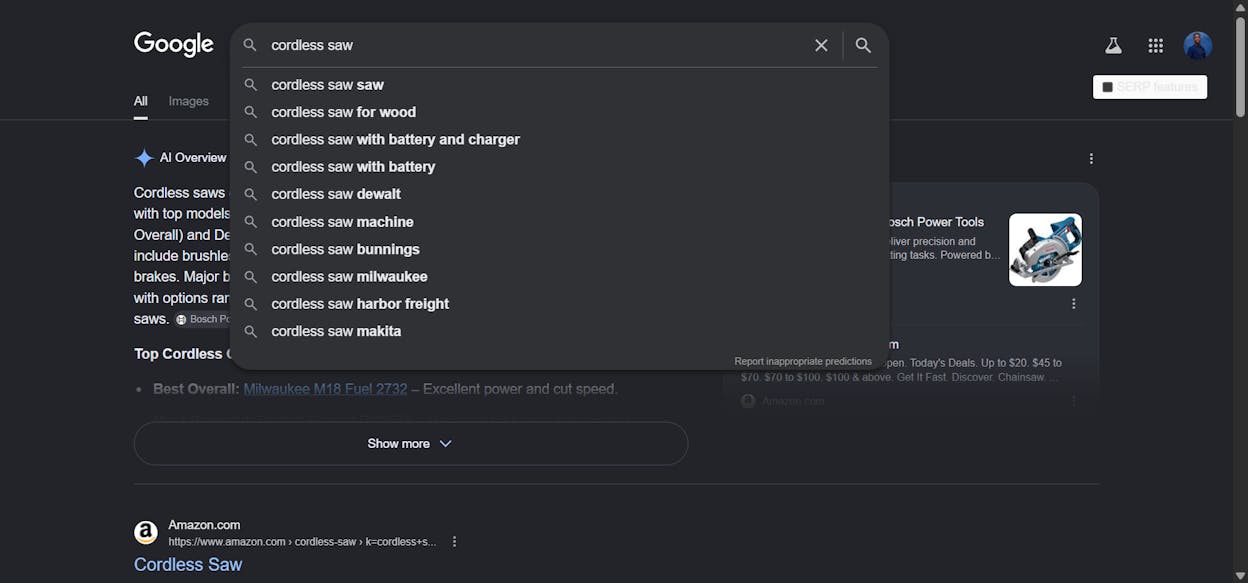
Once you have the EAV mapped out, you build collection pages, filters, and internal links around the values that have real search demand. (Our keyword clustering guide walks through how to group these systematically.) For deeper keyword work, our free keyword generator tool and keyword difficulty checker cover the basics.
For AI search, the equivalent question becomes which prompt clusters AI models actually run when answering questions in your industry. You do not get to see this in a search engine. You do see it in a prompt-tracking tool. Analyze AI suggests prompts based on your category and competitor set, and you choose which to track.
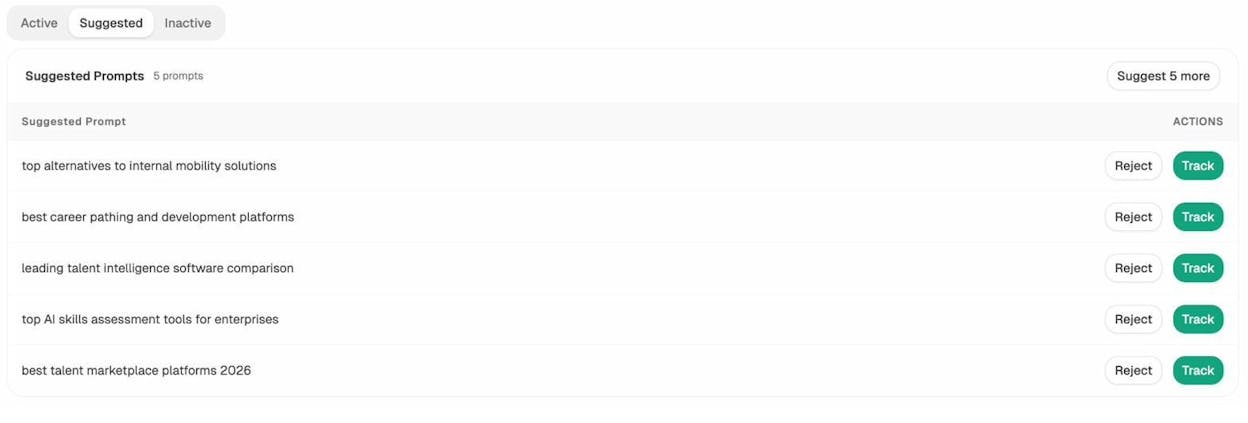
Each suggested prompt is a cluster of intent that LLMs are already serving answers for. Treat them the same way you’d treat a keyword cluster in traditional SEO. Build a page (or update an existing one) that maps cleanly to that intent, with the entities, attributes, and values that make the meaning unmistakable.
4. Add information gain to every page
This is where most semantic SEO advice goes off the rails. People hear “semantic” and start cramming entities and synonyms into pages. That is keyword stuffing with extra steps.
Real semantic SEO rewards information gain. That means the new ideas, data, opinions, or examples your page adds to the conversation. If a search engine or LLM can summarize your page using only words it has already read on five other pages, you have added zero gain. You will not be cited.
The framing we use is from Animalz’ “Information Gain” piece. Every piece you publish should answer the question “what does this contribute that nothing else does?” Possible answers include:
-
Original data from a study you ran
-
A counter-thesis to the dominant view in your space
-
A specific case study with numbers
-
A framework that connects ideas no one has connected before
-
A practitioner workflow that experts will recognize
To know what hasn’t been said yet, you need to see what has been said. The Sources view in Analyze AI shows you every URL AI platforms cite when answering questions in your industry, broken down by content type and top cited domains.
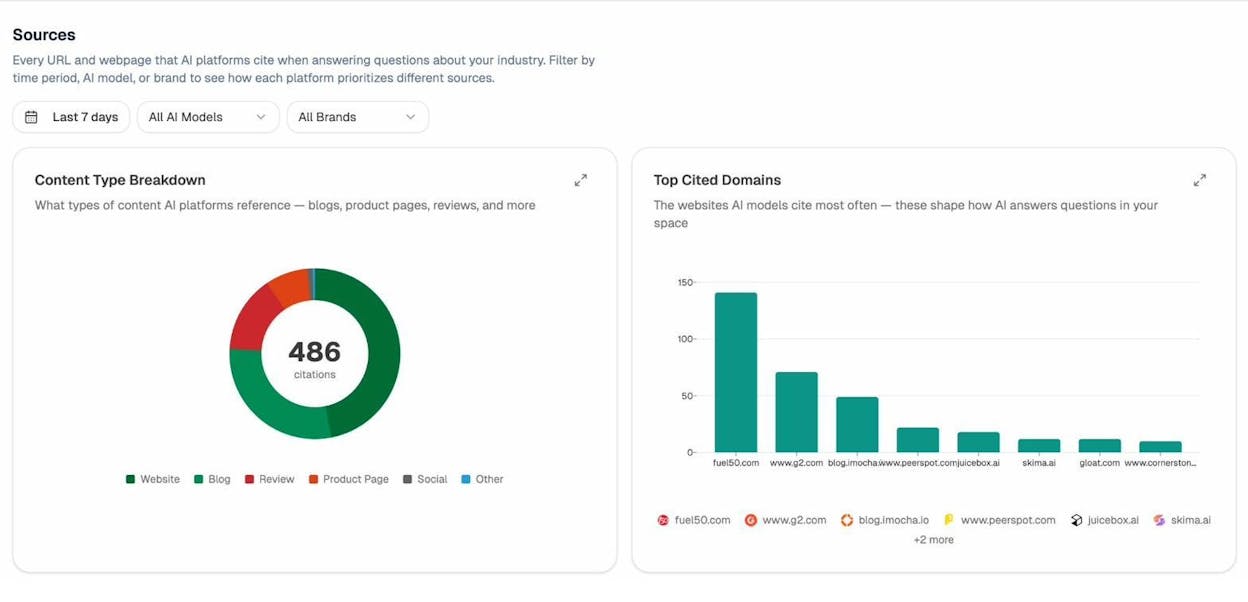
Two patterns worth looking for:
-
Topics that get cited from non-domain-expert sources. If LLMs are quoting general-purpose news sites or aggregators on a topic in your space, that is a gap a domain-expert page would fill instantly.
-
Domains that dominate citation share. Look at what they actually publish. Then write the version of that article that adds the data point or angle they’re missing.
This is the muscle that separates compounding SEO programs from one-and-done content factories. (Ahrefs makes the same case in their guide on how to stand out in an ocean of AI content.)
5. Close topic gaps on pages that already exist
Updating old content is one of the higher-ROI activities in SEO. Done right, it is also one of the more semantic.
A page that ranks (or used to rank) for a primary keyword almost always ranks for a long tail of related keywords. When traffic declines, it is rarely because the primary keyword stopped being relevant. It is because competitors started covering related sub-topics more deeply, and your page lost ground on the long tail.
Closing those gaps is a meaning-level fix, not a keyword-level fix.
Here is the workflow we use:
-
Pull a page that has been declining for 60+ days. (Our free keyword rank checker and website traffic checker cover the basics.)
-
Pull the keywords it has lost visibility for, ordered by traffic loss.
-
Look for clusters in those lost keywords. Almost always, the lost terms group around two or three sub-topics the page covers thinly or not at all.
-
Rewrite the page to cover those sub-topics with the same depth as the primary topic.
In Analyze AI’s Content Optimizer, this workflow is automated. The tool surfaces declining pages, identifies the topic gaps versus the cited competitors, and tracks each rewrite from draft through QA against the gap list.
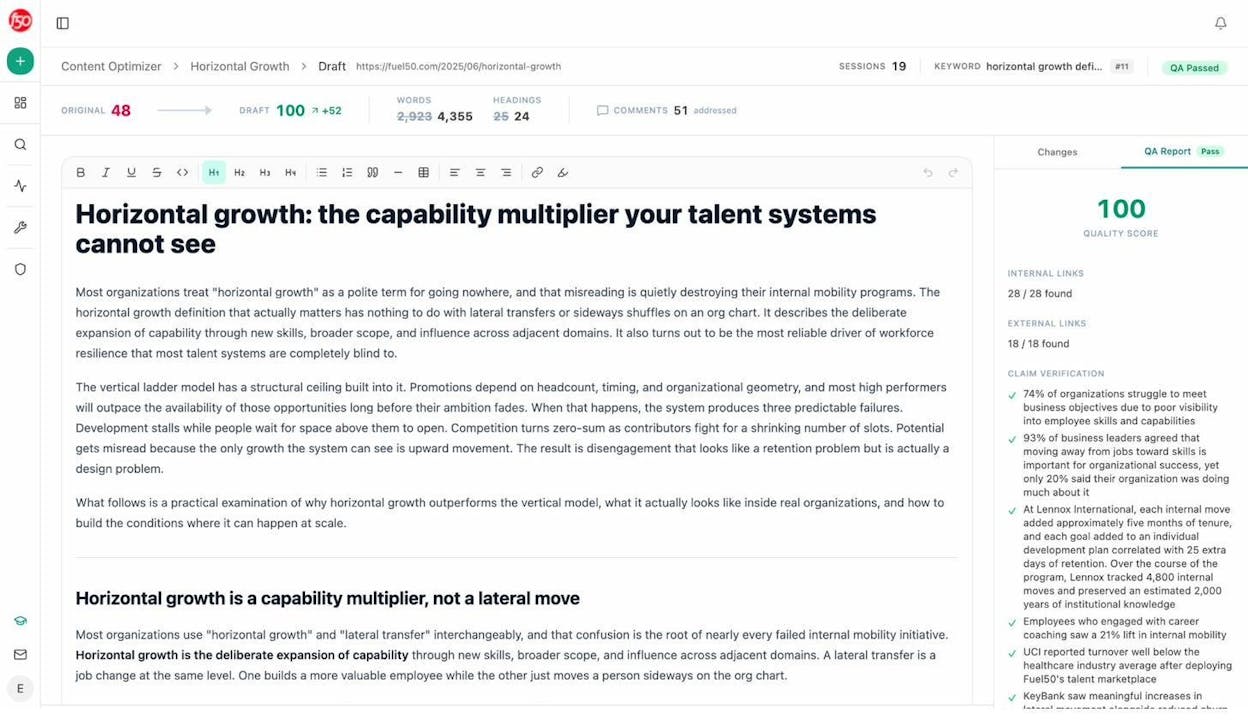
Two things to look for:
-
Sub-topics in lost keywords that the page never explicitly named. If the page is about the “6-year exemption rule” but lost rankings for “capital gains tax 6-year rule,” the missing semantic link is “capital gains tax.” Add a section that names it.
-
Sub-topics that competitor cited pages cover and yours doesn’t. These are direct depth gaps. Match or beat the depth.
Our guide on SEO content strategy walks through how to scale this across a full content library.
6. Use schema and semantic HTML to remove ambiguity
Schema markup is a translation layer between your content and the machines reading it. Used well, it tells search engines exactly what each entity on the page is, what it is connected to, and how it is described.
Used badly, it does the opposite. Marking up things that aren’t on the page or that aren’t true is one of the fastest ways to be ignored.
Two pieces to get right:
Schema markup. At minimum, every site should have:
-
Organization schema on the homepage that defines the brand entity
-
Product or Service schema on commercial pages
-
Article schema on blog posts with author and date
-
FAQ or HowTo schema where the content actually answers questions or shows steps
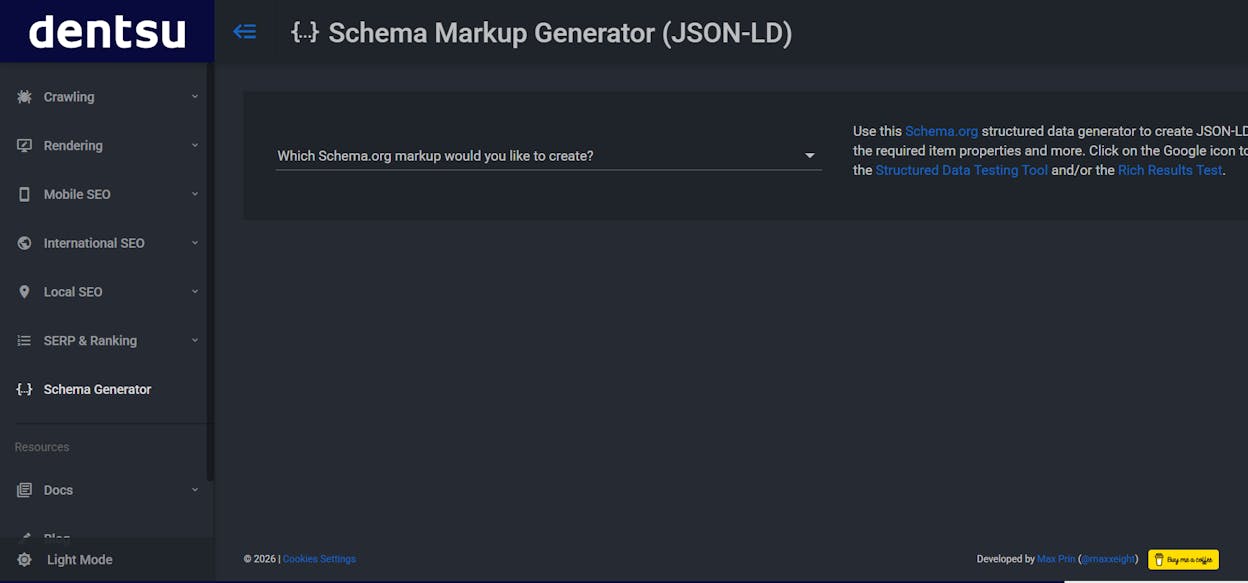
You can generate clean JSON-LD with the Schema.org generator from technicalseo.com.
Semantic HTML. Use the right tag for the right job. Headings are for structure, not for styling. Tables should be marked up as <table>, not nested divs. Lists should use <ul> or <ol>. Navigation goes in <nav>, the main content in <main>, the footer in <footer>. This is basic, but most CMS templates ship with <div> soup, and AI crawlers (which usually do not render JavaScript) will read whatever is in the raw HTML.
A reminder. Most sites with weak schema still get crawled and cited. Schema is an accelerator, not a prerequisite. Spend time on it after the higher-leverage habits in this guide.
7. Earn mentions in the right context
Links and brand mentions still matter, but the bar has changed. Modern search engines and LLMs do not just count mentions, they read the surrounding context, the sentiment, and the entities the mention is sitting next to.
A mention of your brand on a high-authority site that frames you negatively can hurt you. A mention on a smaller site that frames you accurately and connects you to the right attributes can help you. The shift from quantity to quality of context is the second-order effect of semantic search.
Two practical questions to ask:
-
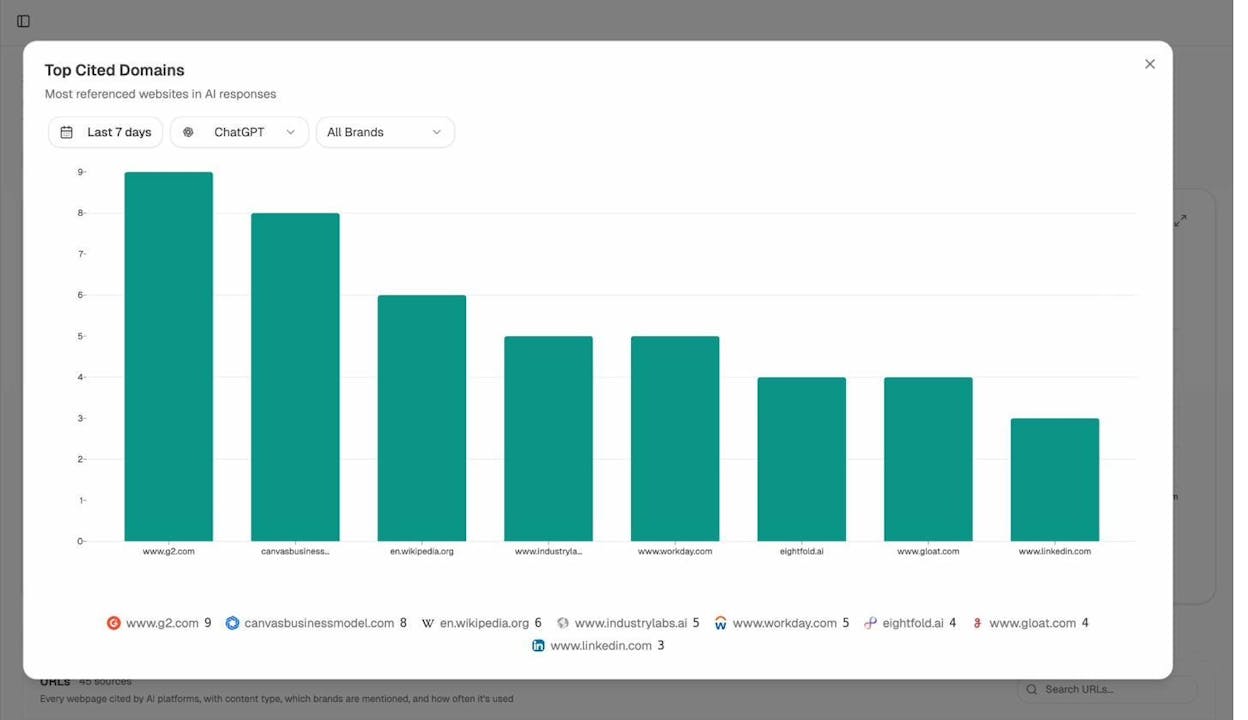
Who is talking about you, and how? Pull the list of URLs and domains that mention your brand in AI citations. Look at the framing. Look at the competitors you’re being grouped with.
-
Who is talking about your competitors but not you? This is the gap to close. The Competitors module surfaces sites that mention competitors regularly without mentioning you, sorted by how often.
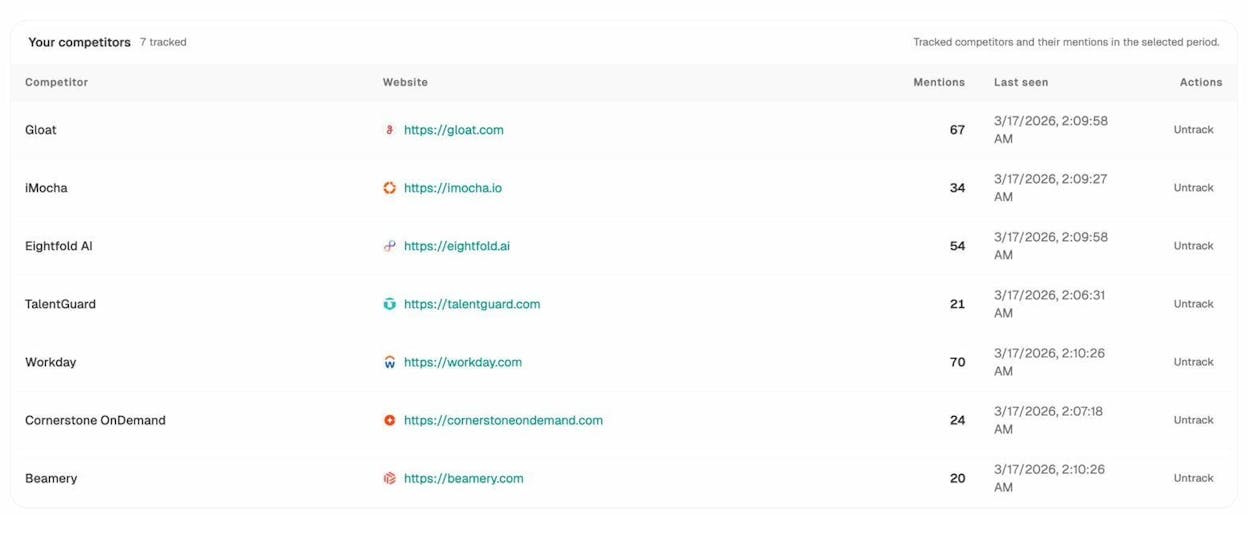
Closing the gap means traditional digital PR (guest posts, expert quotes, original studies that get cited) plus brand reputation work that ensures the framing is accurate when you do get mentioned. Our guide on how to outrank competitors in AI search goes deeper on the citation side.
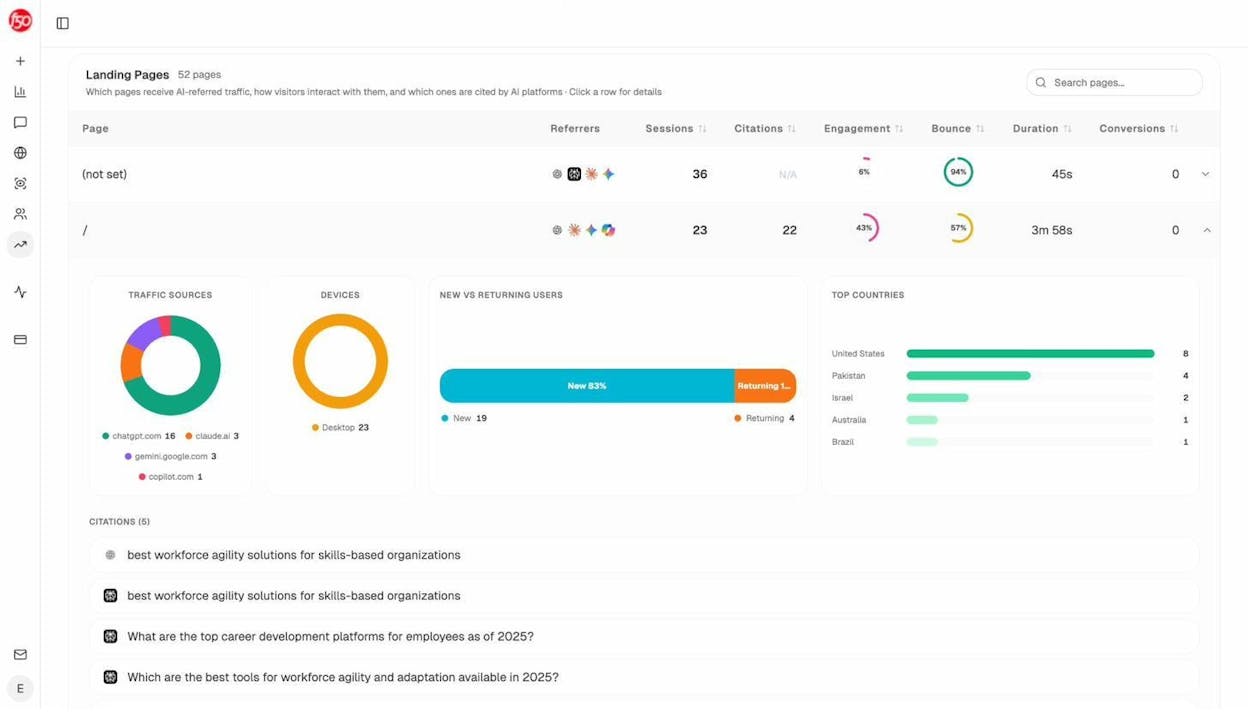
You can also work backwards from your AI traffic. Pages that already get visits from ChatGPT, Perplexity, or Gemini are pages already being cited. Doubling down on them (fresher data, deeper coverage, sharper attributes) compounds faster than starting from zero.
Final thoughts
Semantic SEO is not a new discipline. It is the original one. The reason it gets a different name now is that meaning has gone from being a tiebreaker to being the main scoring rubric. Google has been adding semantic processes for years. LLMs are almost entirely semantic. The two are converging.
Do SEO with meaning at the center (a clear brand identity, the right attributes, an information architecture built around how people actually search and ask, content with real information gain, and mentions in the right context) and you do not need a separate AI search playbook. You have one playbook that works for both.
That, ultimately, is what we built Analyze AI for.

Ernest

Ibrahim


![Link Prospecting: How to Find Quality Backlinks for Your Website [With Template]](/_next/image?url=https%3A%2F%2Fwww.datocms-assets.com%2F164164%2F1778017297-blobid0.png&w=3840&q=75)