



Summarize this blog post with:


We pulled together data from five public salary datasets, three job market studies, and 3,900 active US SEO job listings to build the picture below. Most figures reflect US salaries as of Q1 2026. Where useful, we cross-checked against the US Bureau of Labor Statistics’ marketing specialists data for sanity.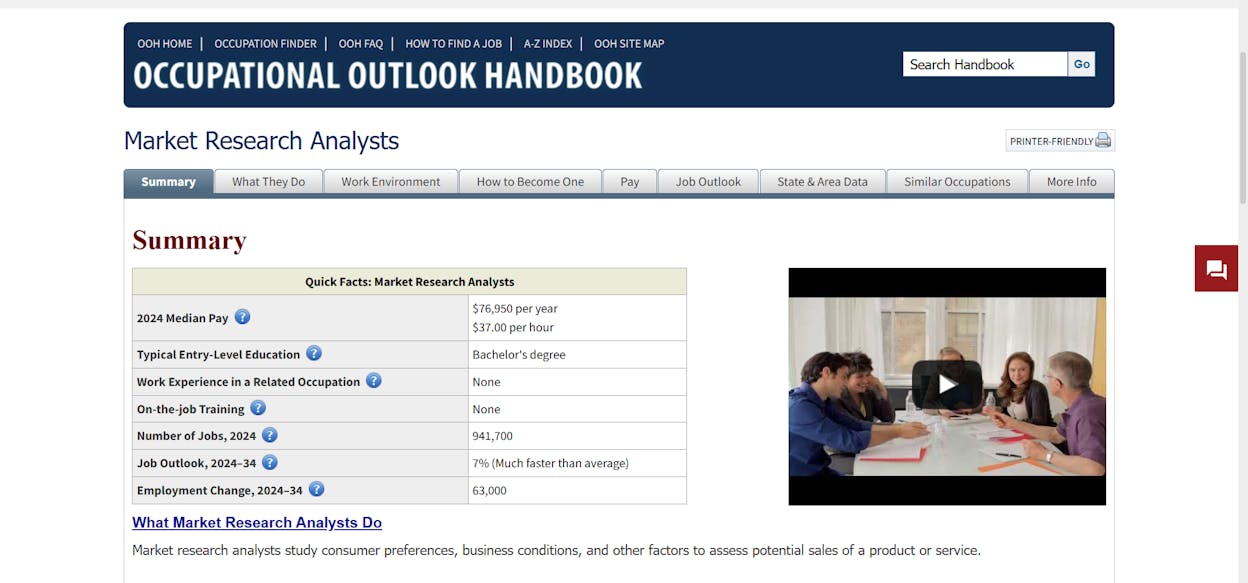
In this article, you’ll see what SEOs are actually earning in 2026, broken down by role, experience, employer type, and location. You’ll also get the first clear look at compensation for the new wave of AI search roles, the skills that command the biggest premiums right now, and a practical playbook for growing your own salary inside this changing market.
Table of Contents
Top takeaways from 2026 SEO salary data
Before we get into role-by-role detail, here is what stood out:
-
The median SEO salary in the US sits around $83,629, with most practitioners earning between $62,722 and $117,081 per year (Glassdoor, March 2026).
-
Senior SEO roles pay almost double the rest. The Semrush 3,900-listing study found a median of $130,000 for senior roles versus $71,630 for everyone else.
-
AI search has become a paid skill. GEO/AEO mentions appear in roughly 31% of senior SEO listings, and dedicated AI search roles like Capital One’s “Senior Digital Marketing Associate, AEO/GEO” are now showing up at premium pay bands.
-
Director-level pay grew about 11% year over year at the manager-and-above tier, driven by the AI skill premium.
-
Senior leadership roles dominate hiring. Director, VP, and Head-level postings account for 59% of all SEO listings.
-
In-house still wins on pay. 65% of SEO openings are in-house, and in-house practitioners with 10-15 years of experience earn roughly $16,000 more than agency peers at the same level.
-
Remote roles make up over 40% of all SEO postings.
Here is the full role summary.
|
Role |
Median US base salary (2026) |
Typical range |
Source |
|---|---|---|---|
|
Entry-level SEO Specialist |
$58,860 |
$44,145 - $80,500 |
Glassdoor |
|
SEO Specialist |
$85,999 |
$65,263 - $114,000 |
Glassdoor |
|
SEO Analyst |
$85,261 |
$63,946 - $115,133 |
Glassdoor |
|
Technical SEO Specialist |
$89,025 |
$69,169 - $144,959 |
Glassdoor |
|
SEO Strategist |
$94,575 |
$74,497 - $150,344 |
Glassdoor |
|
SEO Manager |
$143,456 |
$107,592 - $194,000 |
Glassdoor |
|
Director of SEO |
$172,331 |
$136,917 - $271,183 |
Glassdoor |
|
Head of SEO |
$182,143 |
$136,695 - $318,505 |
Glassdoor |
|
VP of SEO |
$191,850 |
$150,000 - $250,000+ |
Previsible |
|
GEO/AEO Specialist |
$75,000 - $174,000 |
Highly variable |
Active job postings |
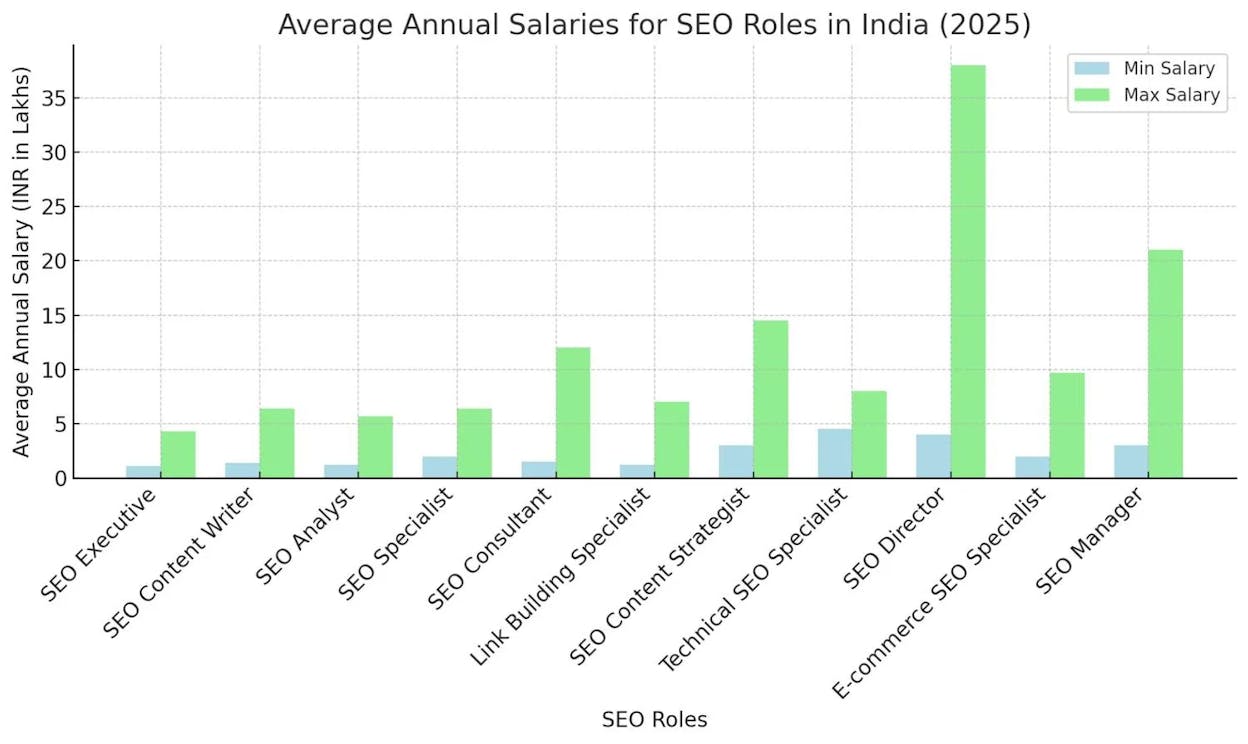
The shape of the 2026 SEO salary curve
Two patterns explain almost everything in the table above.
The first is that the curve has steepened sharply at the senior end. Five years ago, the gap between an SEO Specialist and a Director sat at roughly 2x. Today, it is closer to 2.5x to 3x in the same dataset, and Heads of SEO at high-growth companies are pulling in over $300,000 in total comp. The Semrush study put it most clearly. Senior SEO roles now earn nearly double the median of every other SEO role combined.
The second is that the floor has held steadier than people expected. Despite three years of “SEO is dying” headlines, entry-level SEO Specialists still command around $58,860 on average, and remote SEO Specialists with mid-range experience cluster around $81,782 in total comp (Built In). What has changed is what an entry-level SEO actually does. Junior keyword research, on-page audits, and meta-tag work have largely been absorbed by AI tooling, and the work that survives at that tier is increasingly editorial and analytical.
SEO salary by years of experience
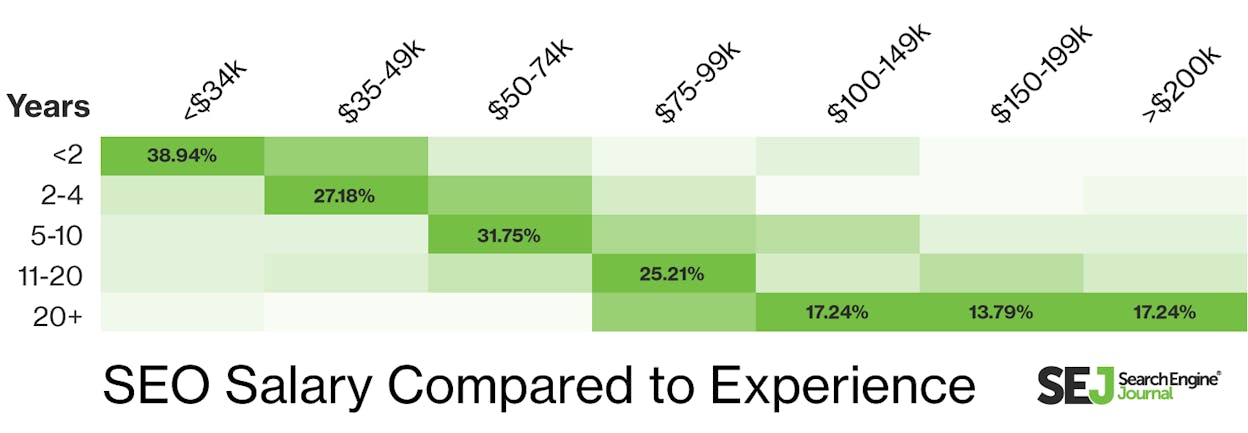
Pay scales much more cleanly with experience than with title. Pulling together PayScale, Glassdoor, and the 2026 PPC Salary Survey (which captures comparable digital marketing data):
|
Experience |
US median base |
Notes |
|---|---|---|
|
0-1 years |
$44,597 |
Entry-level Specialist range |
|
1-4 years |
$59,099 |
Most common SEO Specialist tier |
|
5-9 years |
$87,500 - $103,860 |
Mid-career, includes Manager and Strategist |
|
10-15 years |
$123,545 (in-house) / $202,895 (freelance) |
Largest split between paths |
|
15+ years |
$140,000+ |
Director, Head, and VP territory |
The 10-15 year bracket is where compensation paths diverge the most. A senior in-house IC earns around $123,545 at the median, but a freelance specialist with the same experience pulls $202,895. That is a $79,000 premium for going independent, and it only exists if you have built a portfolio worth that price. Without it, freelance SEO income tends to sit well below in-house comp.
SEO salary by role
SEO Specialist
The SEO Specialist title is the most common in the field and the most variable. Glassdoor pegs the average at $85,999, but Built In’s anonymous data shows a much wider $38K to $130K range depending on company stage and location. Most specialists work in-house (about 65%) and concentrate on content, keyword research, and on-page work.
If you want to push your specialist salary into the top quartile, the lever is technical depth. Specialists who own technical SEO audits, schema, Core Web Vitals, and basic SQL or Python sit roughly $10K to $15K above generalists at the same experience level.
SEO Analyst
Analysts earned a median of $85,261 in 2026, with top earners crossing $149,716. The role skews heavily in-house (about 60%) and concentrates in retail, financial services, and IT. The biggest pay variable here is whether you can connect organic visibility to revenue. Analysts who are fluent in GA4, Looker Studio, BigQuery, and attribution modeling are now the highest earners in the role.
Technical SEO Specialist
Technical SEO is the highest-paying specialism inside the IC track at $89,025 median, with top earners reaching $144,959. The skill stack that drives this premium is well-defined. It includes log file analysis, JavaScript SEO, internationalization, large-scale crawling, and structured data implementation. If you can run a technical audit on a 500,000-page enterprise site without flinching, you sit in the top 10% of the field.
SEO Manager
This is where the biggest jump happens. Glassdoor’s median for SEO Manager is $143,456, with the typical range running from $107,592 to $194,000. The role usually sits 5 to 7 years into a career, owns 2 to 5 direct reports, and is held accountable to organic revenue, not just rankings.
The interesting variance is by industry. Financial Services pays SEO Managers a $142,341 median. IT pays $121,037. Education and Media sit closer to $102K to $104K (Glassdoor, 2026).
SEO Director
A Director of SEO earns a $172,331 median in the US, with the typical range from $136,917 to $219,538. Top-paying Directors at large enterprise companies reach $271,183. The role is heavily in-house (almost no Directors work in agencies anymore) and most spend 60% to 70% of their time on stakeholder management, roadmap prioritization, and cross-functional alignment with engineering and product.
Head of SEO and VP of SEO
These two titles often blur together but the pay difference is meaningful. Head of SEO sits at $182,143 median, with top earners at $318,505 (Glassdoor). VP of SEO, captured separately by Previsible’s 2025 State of SEO Jobs Report, sits at $191,850. ZipRecruiter’s separate Head of SEO data lands at $150,578, lower because it includes more mid-market companies.
In both roles, equity becomes the swing variable. A Head of SEO at a Series B SaaS company often earns less in base than an SEO Manager at Meta, but their total comp package, including equity refresh, can be 2 to 3 times higher over a four-year vest.
SEO salary by employer type
In-house roles dominate hiring (65% of all listings) and pay better at the top of the curve. Agency roles trail by roughly 13% to 25% at senior levels but offer faster exposure to multiple verticals early on.
|
Employment type |
Median US salary |
Best for |
|---|---|---|
|
In-house |
$113,333 |
Long-term comp growth, equity, stable budgets |
|
Agency |
$97,500 |
Variety, faster skill compounding in early career |
|
Freelance |
$89,313 |
Top earners exceed $200K with the right portfolio |
The gap is widest at the 10-15 year mark, where in-house edges out agency by roughly $16,000 on the median. The trend is widening, not narrowing, because platforms automate more of the execution work that agencies historically billed for.
Where SEOs make the most money
City matters less than it used to (over 40% of SEO roles are remote) but the spread is still meaningful. The highest-paying US metros for SEO roles in 2026:
-
San Francisco, CA, 27% above the national average
-
Menlo Park, CA, 25% above
-
San Mateo, CA, 24% above
-
New York City, NY, 18% above
-
Seattle, WA, 12% above
-
Austin, TX, 8% above
-
Boston, MA, 7% above
Internationally, US salaries lead. UK salaries for senior practitioners (10-15 years) sit at roughly £50,000 in 2026, down from £60,000 the year prior. Berlin runs higher at €76,000 for the same experience tier.
The new tier: AI search and GEO/AEO roles
This is the biggest shift in the SEO job market since “content marketing” became a job title.
Generative Engine Optimization (GEO), Answer Engine Optimization (AEO), and AI search roles went from rare to a named position on roughly 38% of in-house SEO teams in two years. The job titles still vary, but real recent postings tell the pay story.
|
Role |
Company |
Salary range |
|---|---|---|
|
AEO & SEO Manager |
Experian |
$100K - $174K |
|
Growth Marketing Specialist - GEO/AEO |
Odoo |
$75K - $95K |
|
AI SEO/GEO Specialist |
Caterpillar |
$106,200 - $165,800 |
|
Sr. Product Manager, Organic Growth (SEO/GEO/AEO) |
Zapier |
CA$170,700 - CA$256,100 + equity |
|
Senior Digital Marketing Associate, AEO/GEO Lead |
Capital One |
Financial services premium tier |
|
Director of Discoverability AEO/SEO |
ADT |
Enterprise leadership tier |
|
GEO Lead (contract, hospitality client) |
Eliassen |
$75 - $80 per hour ($156K - $166K annualized) |
The pattern is consistent. Adding AI search ownership to an existing SEO role pushes pay 15% to 25% above the same role without it. Standalone AI search roles command a premium when paired with traditional SEO experience, and a discount when they are sold as “GEO only” without SEO depth behind them.
This is exactly the position we hold at Analyze AI. Our manifesto puts it bluntly. SEO is not dead, and AI search is not its replacement. AI search is an additional organic channel that sits alongside SEO. The salary data above is the market quietly agreeing.
If you want to add this layer to your skill stack, two starting points are useful. Our guide to generative engine optimization covers the foundational concepts, and our breakdown of GEO vs SEO shows what stays the same and what is genuinely new.
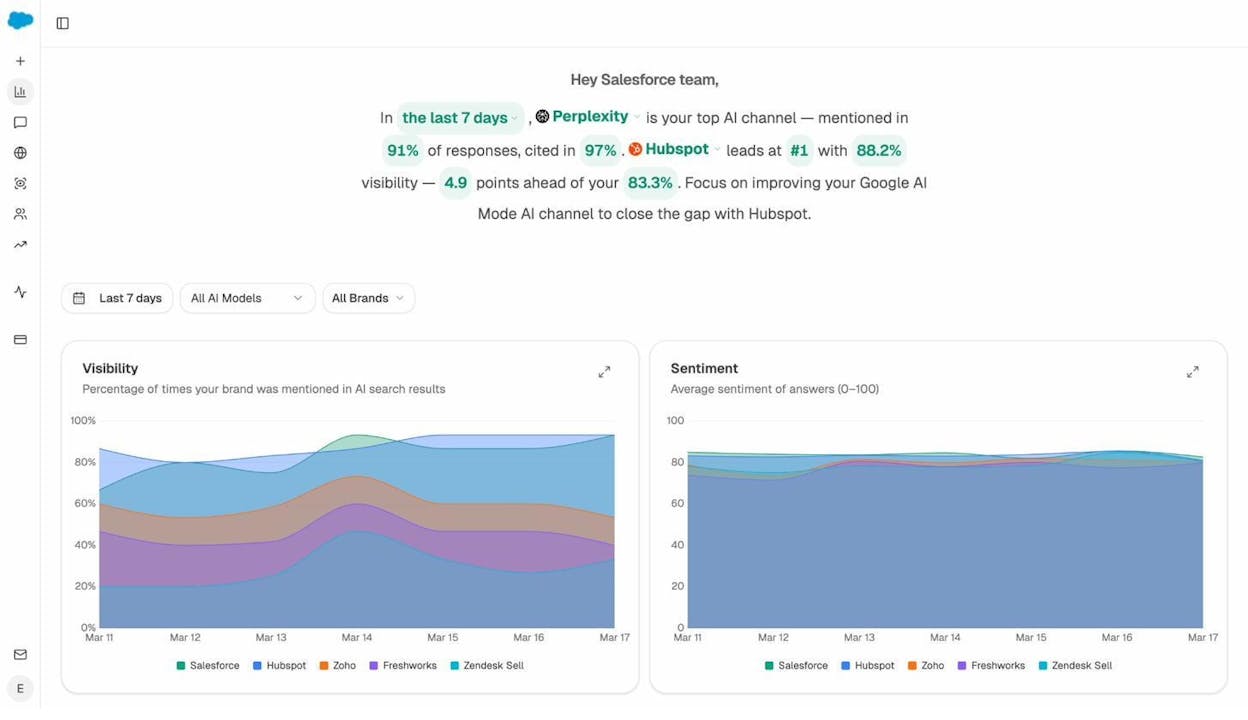
That dashboard is what AI search visibility tracking looks like in practice. The same way an SEO Specialist learned to read Google Search Console, the next generation of SEOs need to read this view. It shows which prompts surface your brand across ChatGPT, Perplexity, and Gemini, where you are losing share to competitors, and which pages of yours are being cited.
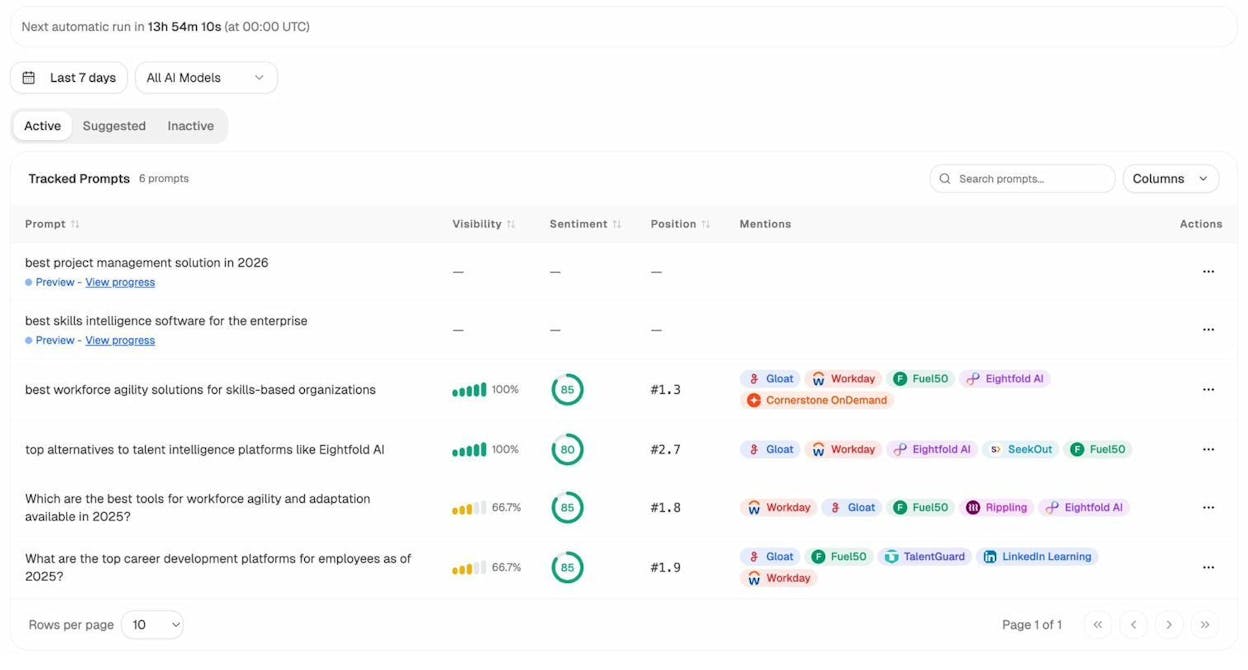
The prompt-tracking view replaces what keyword tracking used to be. Instead of monitoring positions on a SERP, you are monitoring whether you appear in AI-generated answers to the prompts your buyers are typing.
Skills that command higher SEO salaries in 2026
The Semrush study and the Previsible report converge on the same skill list. Ranked by pay impact:
-
AI search and LLM optimization. Mentioned in 31% of senior SEO listings. Roles requiring it pay 15% to 25% above equivalents that don’t.
-
Revenue attribution. Connecting organic to pipeline and revenue is the single most-cited high-value skill by hiring managers.
-
Project management. Appears in 31% of senior listings and 37.1% of non-senior ones.
-
Experimentation. A/B testing and SEO experimentation appear in 23.9% of senior roles versus 14% of others.
-
Technical SEO at scale. Log file analysis, JavaScript rendering, large-site crawling.
-
Communication. Ranked first among non-senior skills (39.4%) and second among senior skills (26.5%).
-
Python and SQL. Increasingly expected at the analyst and senior levels.
-
Digital PR. The fastest-growing link-acquisition skill, appearing in roughly 18% of senior listings.
Notice what’s missing. Keyword research and on-page SEO best practices still appear in around 21% and 20% of non-senior listings, but they are no longer differentiators. AI tools have commoditized them.
How to grow your SEO salary in 2026
The patterns above suggest a clear playbook. None of these is theoretical.
1. Move in-house if you’ve been agency-side for more than five years
The biggest single-step pay increase available to most SEOs is the agency-to-in-house move. The median premium at the 10-15 year level is $16,000, and in-house roles also come with equity, which agencies rarely offer. Use our SEO competitor analysis framework when applying. You’ll want to walk into the interview with a competitor visibility map for the company you’re applying to.
2. Add AI search to your scope, not your title
The Experian and Capital One job postings show what is happening. Companies are appending AEO/GEO ownership to existing SEO roles before creating standalone AI search teams. If you can credibly run both, you sit in the highest-paying overlap of the market right now.
To get started, walk through our 4 pillars of an effective SEO strategy for AI search. On the SEO half, pair our free SERP checker and keyword rank checker with our keyword difficulty checker. On the AI search half, our Answer Engine Optimization guide is the fastest read into the discipline.
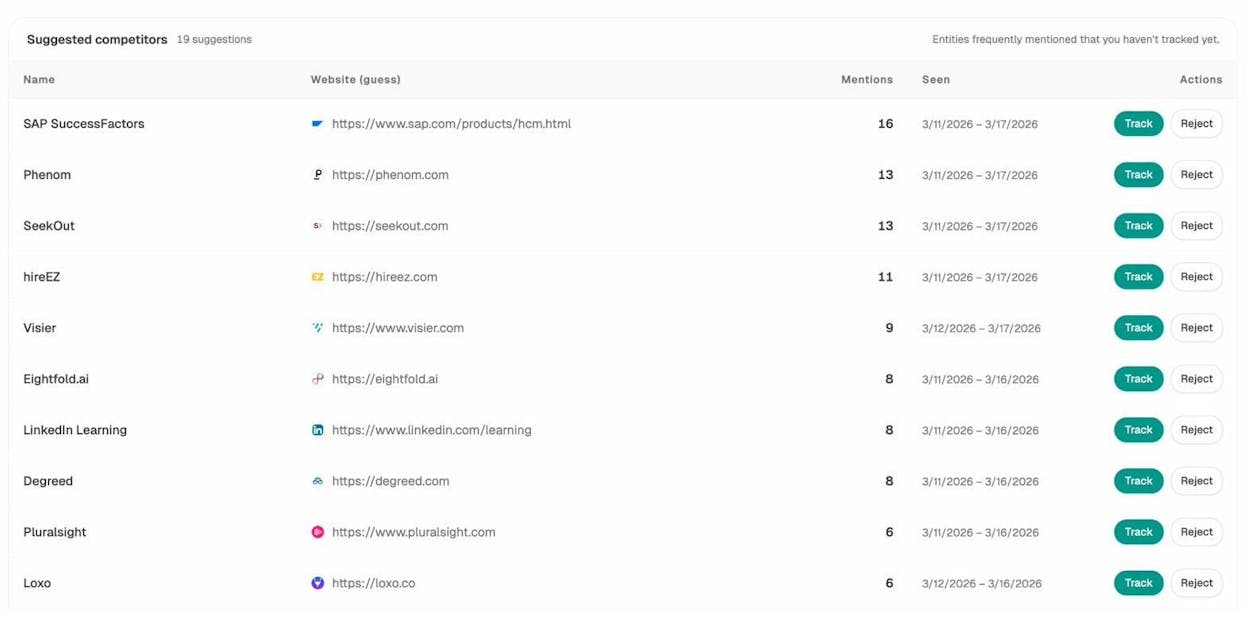
The competitor view in Analyze AI is what an interviewer wants to see when you say “I can run AI search.” You walk in with a list of the prompts where your future employer is losing share to a named competitor, and a one-page plan to close it. That is a portfolio piece no junior can fake.
3. Build a revenue attribution story for your last role
Hiring managers in 2026 are tired of “I drove a 40% increase in organic traffic.” They want to see organic-to-pipeline. If you can walk into an interview with a slide that shows organic sessions to qualified leads to closed revenue for the last quarter you owned, you instantly clear the bar that 80% of candidates fail at.
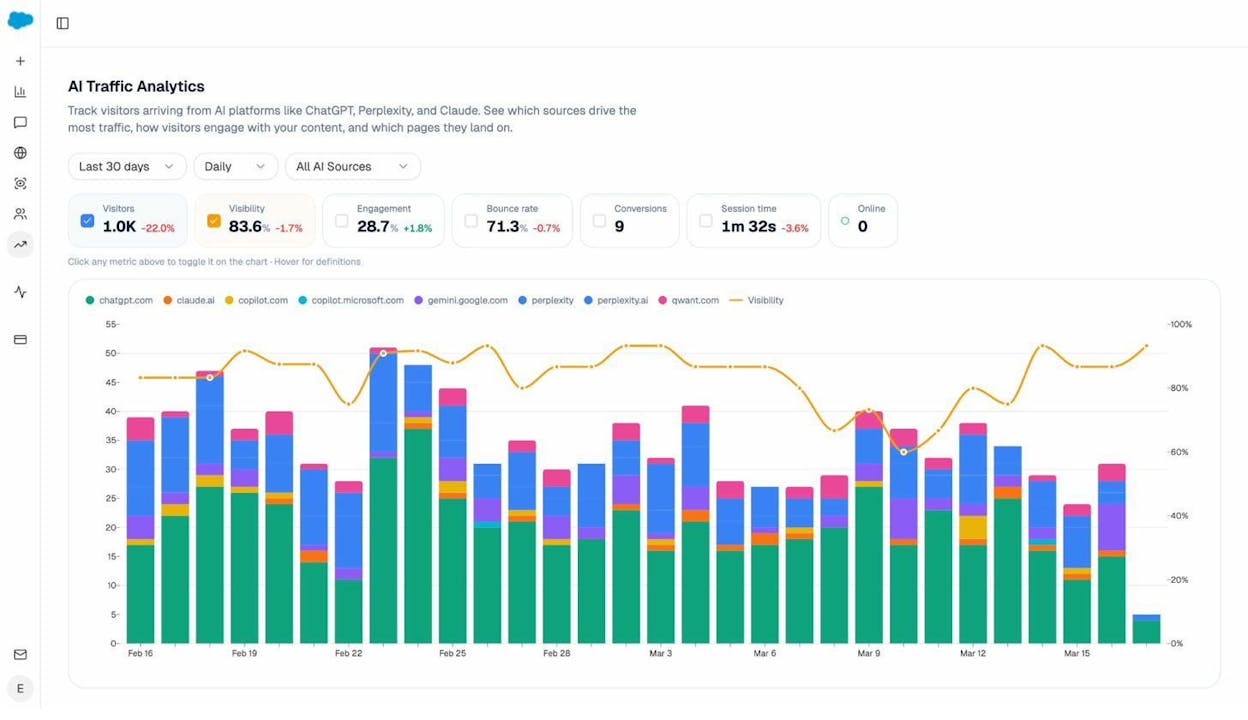
Combine your existing Google Analytics 4 data with AI traffic analytics to also show traffic that originated from ChatGPT, Perplexity, and other AI sources. That second curve is brand new, growing fast, and almost no candidate brings it to interviews yet.
4. Specialize publicly
The single fastest way to move from $85K to $130K is to become known for one thing in public. The Semrush data shows technical SEO Specialists earning at the top of the IC band. That premium exists because companies struggle to evaluate technical depth in interviews, so they over-index on candidates who have a public track record.
Pick one specialism (technical, GEO/AEO, programmatic SEO, ecommerce SEO) and ship one substantive piece of writing or one conference talk per quarter on it. Our ecommerce SEO guide and 50 generative engine optimization statistics post are useful starting frames if you want to write in either direction.
5. Know your market data before you negotiate
Walk into every offer conversation with the exact Glassdoor and Built In numbers for your title, location, and company size. The single most common mistake mid-career SEOs make is anchoring to their last salary instead of to the market. The data in this article is your starting point. Refresh it the week before your conversation.
6. Pick the company stage that matches your goal
If your goal is highest base salary, target enterprise (1,000+ employees). The Semrush study shows the top of the senior pay band sits there. If your goal is highest total comp including equity, target Series B to D SaaS. Heads of SEO at companies like Hipcamp, Autodesk, and iVisa.com appear in Glassdoor’s top-paying list precisely because of equity packages. If your goal is freelance income, your portfolio (not your network) is the constraint.
Final thoughts
The 2026 SEO salary picture is a story of two divergent paths. The senior end of the market is paying more than ever, propelled by AI search expertise and the growing strategic weight of organic. The junior end is being slowly absorbed by AI tooling, with the surviving entry-level roles requiring more analytical depth than they used to.
The SEOs who will earn the most over the next five years are the ones who treat AI search the way the best SEOs treated mobile in 2014. Not as a replacement for what they already do, but as a parallel channel that demands its own discipline. The pay data in this article is the market making that bet quietly, role by role and listing by listing.
If you want a deeper view into how the AI search side of that equation actually works, our pieces on how to rank on ChatGPT and how to get mentioned in AI search are the natural next reads.

Ernest

Ibrahim


![Link Prospecting: How to Find Quality Backlinks for Your Website [With Template]](/_next/image?url=https%3A%2F%2Fwww.datocms-assets.com%2F164164%2F1778017297-blobid0.png&w=3840&q=75)