



Summarize this blog post with:


In this article, you’ll learn the exact 7-step brand SEO framework that helps you define, audit, and amplify your brand across Google, AI search engines, and every other platform where your audience looks for solutions. You’ll get actionable templates, real examples, and a repeatable process for ensuring your brand shows up accurately and favorably wherever people search.
Table of Contents
Templates
What Is Brand SEO?
Brand SEO is the process of building, clarifying, and controlling how your brand appears across every search surface. That includes Google, but it also includes ChatGPT, Perplexity, Gemini, Copilot, Reddit, YouTube, and any other place your audience goes to find answers.
Most SEOs think of branding as something the marketing team handles. Logos. Taglines. Brand guidelines. That is one layer of branding. But brand SEO goes deeper. It ensures that search engines and AI models understand your brand as a distinct entity, connect it to the right topics and categories, and surface it accurately when people ask questions in your space.
Think about what happens when someone asks ChatGPT to recommend a project management tool. The model pulls from a trained understanding of which brands are connected to that topic. If your brand has weak entity associations, inconsistent messaging across the web, or thin presence on the platforms these models cite, you will not show up. Your competitor will.
Brand SEO fixes that.
It starts with a solid brand foundation. Without that, no amount of keyword targeting or link building will help you gain visibility in AI-powered search systems. The brands that win in these environments are the ones with clear identity, consistent presence, and deep topic associations across the web.
Why SEOs Can’t Ignore Branding Anymore
For years, the SEO playbook was simple. Find high-volume non-branded keywords, create content, build links, and rank. Branding was a nice-to-have.
That playbook is breaking. Here is why.
Google now rewards brand signals directly. Research from Mark Williams-Cook revealed that Google uses a site quality score to classify websites. Sites that fall below a certain threshold do not qualify for rich snippet visibility. That score is calculated based on brand search volume, user click behavior, and branded anchor text from around the web. In other words, stronger brands get more SERP real estate.
AI search engines prioritize recognizable brands even more aggressively. When ChatGPT, Perplexity, or Gemini generates an answer, it draws from a compressed understanding of the web. Brands with clear entity relationships, consistent messaging, and high-authority mentions get recommended. Brands without those signals get ignored or, worse, described inaccurately.
Your brand is already being vectorized. Large language models treat your brand as an entity in an embedding space. They map related topics, products, people, and attributes around that entity. When the entity connections are strong and accurate, the model can summarize your brand favorably. When they are weak or contradictory, the model either skips you entirely or produces hallucinations about what you do.
This creates three concrete risks that every SEO needs to address:
-
Misidentification. If your brand name is ambiguous, AI models may confuse you with another entity entirely.
-
Incorrect topic associations. If your brand is not clearly connected to your core product categories, AI models will connect your competitors to those categories instead.
-
Narrative gaps. If there is limited or conflicting information about your brand online, AI models will fill those gaps with assumptions. Some of those assumptions will be wrong.
Brand SEO is how you close these gaps. And the sooner you do it, the harder it becomes for competitors to displace you.
Here is the exact 7-step framework I use.
1. Set Up Your Brand’s Online Foundation
Before you can optimize your brand for search, you need to define it clearly. This sounds obvious, but most companies skip this step or do it poorly. They have a vague “About Us” page, inconsistent descriptions across their social profiles, and no clear articulation of what makes them different.
Start by defining your brand identity using the “5 Ws and How” framework. This gives you a structured way to think through every dimension of your brand that matters for search visibility.
The “Who” Element
There are two sides to “who.” First, who do you serve? Second, who is behind the brand?
For your audience, make the value proposition obvious everywhere your brand appears online. Obsidian, the knowledge management app, does not lead with features. Its tagline across search results is about the benefit it delivers to users. That clarity of “who this is for” should show up in your homepage title tag, meta description, social profiles, and business listings.
![[Screenshot description: A Google search result for a SaaS brand showing a benefit-driven tagline in the meta description, not a feature list]](https://www.datocms-assets.com/164164/1777453859-blobid1.png?auto=format,compress&w=1248&fit=max)
For your team, create dedicated profile pages for key people. This matters for E-E-A-T (Experience, Expertise, Authoritativeness, Trustworthiness). Google and AI models evaluate whether the people behind a brand have genuine expertise. Individual profile pages with industry credentials, published work, and social proof build that signal.
![[Screenshot description: An example of a well-structured team profile page showing headshot, role, bio with expertise markers, and links to published work]](https://www.datocms-assets.com/164164/1777453864-blobid2.png?auto=format,compress&w=1248&fit=max)
The “What” Element
What does your business do? What product categories and topics do you want to own in search?
The biggest mistake here is lumping everything onto a single page. If you offer multiple products or services, create dedicated landing pages for each one and include the most important ones in your main navigation. This helps search engines understand the distinct topics your brand covers. It also helps AI models map your brand to specific product categories.
For example, if you sell CRM software with separate modules for sales, marketing, and customer service, each module deserves its own landing page with unique content. Not a tabbed section buried on a features page.
You should also create pages for unique differentiators. If your product has a distinctive capability, that matters to your audience, and it deserves its own page. These pages become anchors that search engines and AI models use to connect your brand to specific attributes.
The “Where” Element
Location matters if your business has a physical presence, serves specific regions, or operates in particular markets. Create location-specific landing pages if appropriate. These pages should include unique content for each location, not just template pages with the city name swapped out.
Even for digital-only businesses, “where” can refer to which markets, regions, or languages you serve. If you operate in multiple countries, make sure your brand messaging is localized and consistent across each market.
The “Why” Element
Why does your brand exist? Why do you approach your work in a specific way?
Purpose-driven branding is not just a feel-good exercise. It earns links, mentions, and press coverage. Brands with a clear “why” get featured in publications because their story is worth telling. That coverage feeds directly into brand signals that search engines and AI models use to evaluate authority.
Your “why” should be visible on your homepage, About page, and any press or media assets. It should show up in your founder’s LinkedIn profile and in how you describe your company on third-party platforms.
The “How” Element
For most brands, the “who,” “what,” or “why” is enough to define a clear identity. But some businesses operate across multiple verticals or audiences. In those cases, the unifying thread might be your process rather than your product.
If your brand’s differentiator is how you deliver results, make that process explicit. Name it. Create a page for it. Reference it consistently across your marketing.
Put It All Together
The output of this exercise should be a clear, documented brand identity that you can reference when creating or auditing any piece of content. Every page on your site, every social profile, every business listing should reflect these core elements consistently.
![[Screenshot description: A brand identity template document with fields for each of the 5 Ws and How, filled in with example content]](https://www.datocms-assets.com/164164/1777453864-blobid3.png?auto=format,compress&w=1248&fit=max)
2. Audit Your Existing Brand and Its Visibility in Search
Once your brand foundation is defined, you need to audit what is already out there. This means checking your owned channels for inconsistencies and then looking at how the broader web, and AI models, currently perceive your brand.
Audit Your Owned Channels First
Start with your website, social profiles, business listings, and any other channels you control directly. Look for:
-
Inconsistent brand name usage. Is your brand name spelled the same way everywhere? Are old versions of your name still floating around?
-
Outdated messaging. Do old taglines, descriptions, or positioning statements still appear on some profiles?
-
Missing or incorrect business details. Is your address, phone number, or category information accurate on Google Business Profile, Bing Places, Apple Maps, and industry directories?
-
Weak About and Team pages. Does your website clearly explain who you are, what you do, and why you are credible?
Make a list of every inconsistency you find. You will need to clean these up because they become sources of confusion for AI models that scrape and synthesize information about your brand.
Audit Your Earned Visibility
Next, look at how your brand appears on third-party sites. Check review platforms, forums, industry directories, news articles, and discussion threads for mentions of your brand. Pay attention to:
-
Accuracy. Are third-party descriptions of your brand correct?
-
Sentiment. Is the overall tone of mentions positive, negative, or neutral?
-
Authority. Are you being mentioned on sites that search engines and AI models trust?
-
Completeness. Are there important topics or product categories that your brand should be connected to but is not?
![[Screenshot description: A Google Search Console dashboard filtered to branded keywords, showing impressions, clicks, and CTR for brand-name queries]](https://www.datocms-assets.com/164164/1777453871-blobid4.png?auto=format,compress&w=1248&fit=max)
You can use Google Search Console to filter for branded keyword performance. Check your branded search volume trends over time, and look at which branded queries you are and are not ranking for.
For entity verification, try searching Carl Hendy’s Knowledge Graph API Search Tool to see if Google recognizes your brand as a distinct entity. If it does not, or if it confuses your brand with something else, that is a clear gap to close.
Audit Your AI Search Visibility
This is the step most brand SEO guides skip entirely. It is also the most important one for 2026 and beyond.
AI search engines like ChatGPT, Perplexity, and Gemini are generating answers about your brand right now. The question is whether those answers are accurate and favorable.
You can do this manually by asking each AI engine questions about your brand and category. But that approach does not scale. To do this systematically, you need a tool that tracks your brand’s visibility across AI engines over time.
Analyze AI does this automatically. When you set up a project, the Overview dashboard immediately shows you how your brand compares against competitors across every major AI engine. You can see your visibility score, average position, sentiment, total citations, and AI-referred traffic in one view.
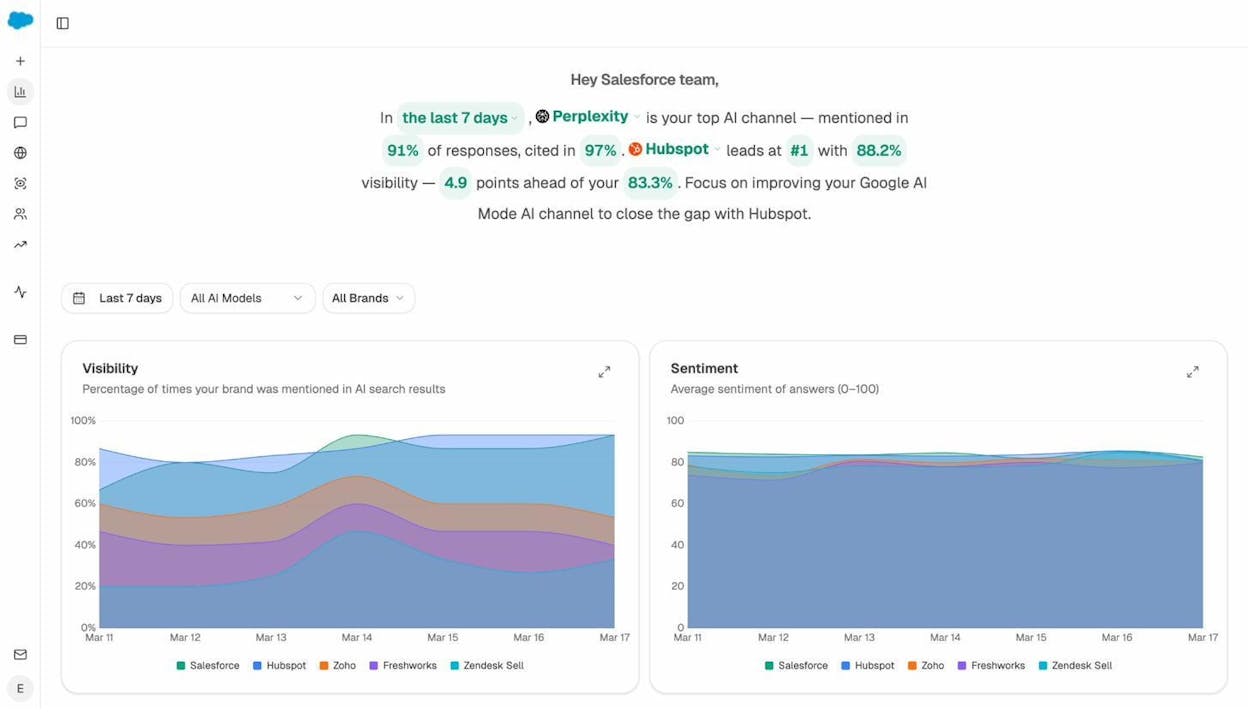
This gives you a baseline. If your visibility is 40% while your top competitor is at 80%, you know the gap. If your sentiment score is trending negative on one engine, you know where to focus.
The Perception Map takes this a step further. It plots your brand and competitors on a two-axis grid showing visibility (how often you appear) versus narrative strength (how compelling your story is). A brand in the “Visible and Compelling” quadrant is winning. A brand in the “Low Visibility” quadrant has work to do.
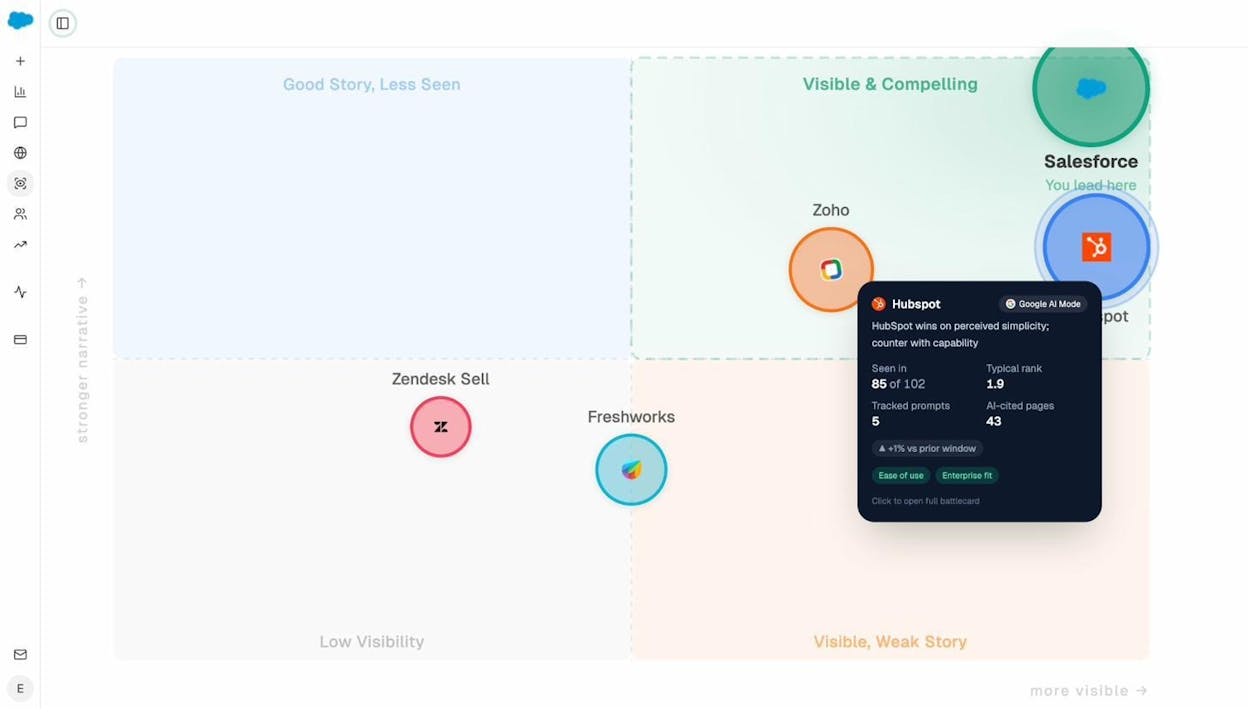
Click on any competitor’s bubble to see their typical rank, how many prompts they appear in, which pages AI engines cite, and the themes AI associates with them. This is gold for understanding how AI models currently frame your competitive landscape.
Fix What You Find
How you fix inconsistencies depends on where they live:
-
Owned channels (social profiles, business listings, your website). Log in and update directly.
-
Forums and discussion threads. Join the conversation and clarify misinformation where your brand is being discussed.
-
Third-party websites. Reach out to the author or editor and request a correction.
-
AI model outputs. You cannot edit AI responses directly. But you can improve the underlying signals. Update the sources that AI models cite. Create new, authoritative content that corrects inaccurate narratives. Over time, AI models will reflect those changes.
The key is to document every issue you find and prioritize fixes by impact. Start with your most visible channels, then work outward.
3. Find the Topics Your Audience Searches (and on What Platforms)
With your brand foundation set and your audit complete, the next step is to find untapped topic opportunities. This is where brand SEO and traditional keyword research intersect.
Start with Keyword Research
Use a keyword research tool to explore the topics your audience searches for. Look for keywords that relate to your product category, your specific features, and the problems you solve.
![[Screenshot description: A keyword research tool showing search volume, keyword difficulty, and related keywords for a product category term like “CRM software”]](https://www.datocms-assets.com/164164/1777453877-blobid7.png?auto=format,compress&w=1248&fit=max)
The goal is not just to find high-volume terms. For brand SEO, pay attention to the modifiers and attributes people include in their searches. These modifiers reveal what features, qualities, and characteristics your audience cares about most. And they should inform your brand messaging.
For example, if people frequently search for “affordable CRM for small business,” and your product fits that description, your brand messaging should emphasize value and accessibility. If they search for “enterprise CRM with AI automation,” your messaging should highlight scale and advanced capabilities.
Use the Analyze AI Keyword Generator to find related terms, or the Keyword Difficulty Checker to evaluate how competitive a term is before committing resources.
Discover What People Ask AI Engines
Here is where brand SEO for 2026 gets interesting. People are not just searching on Google anymore. They are asking ChatGPT, Perplexity, and Gemini questions like “What is the best CRM for startups?” and “How does Brand X compare to Brand Y?”
These AI prompts are a separate search channel with different ranking mechanics. To win in AI search, you need to know what prompts your audience is asking and how AI engines are answering them.
Analyze AI’s Prompt Discovery feature shows you the exact prompts that matter in your category. You can see which prompts your brand appears in, which prompts it is missing from, your visibility score per prompt, your average position, and which competitors show up alongside you.
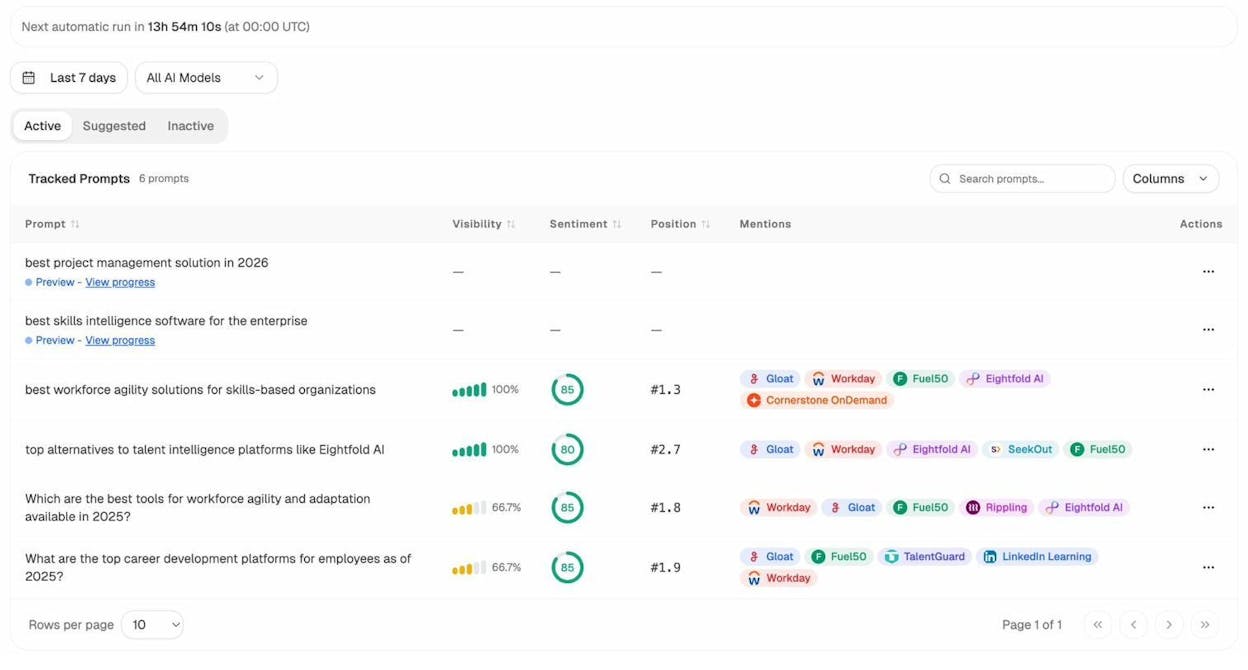
Look at the prompts where you have zero visibility. These are your blind spots. Competitors are being recommended instead of you, and every day that continues, those AI models reinforce that pattern.
You can also use the AI Search Explorer to run ad hoc prompts across multiple AI engines simultaneously. Type in a question, select the engines and region, and see exactly who shows up in the responses.
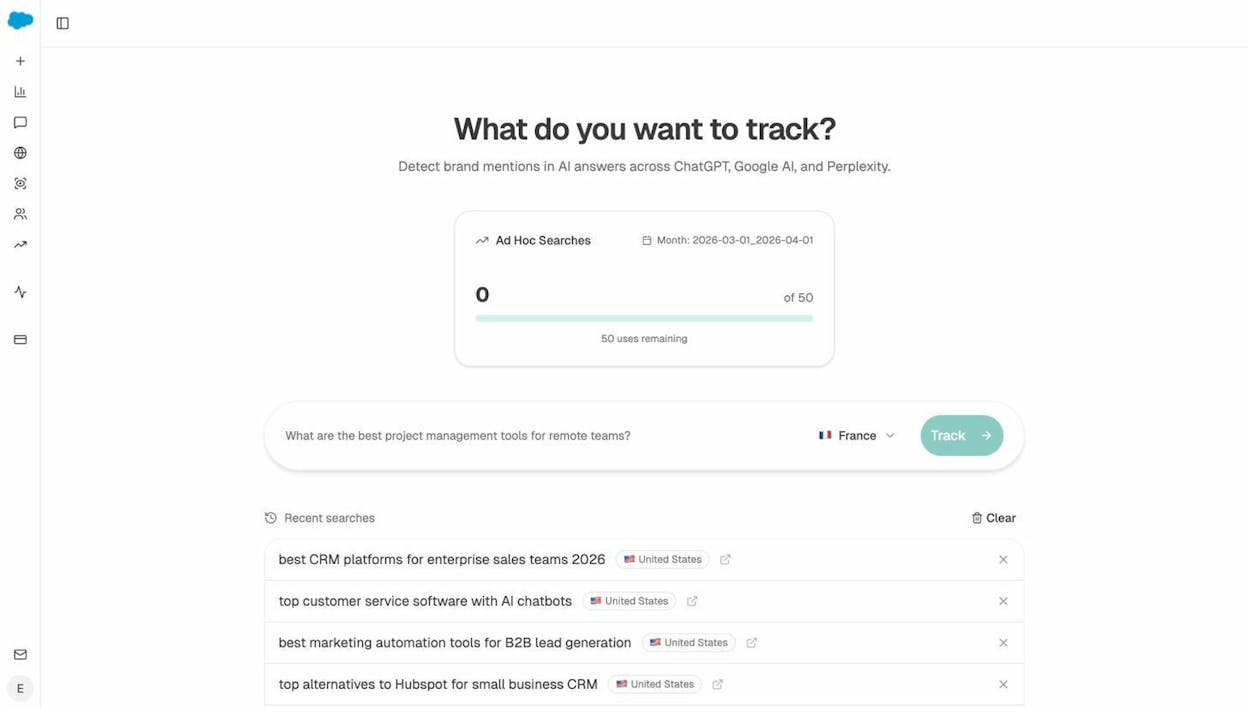
This is invaluable for validating assumptions before building a full tracking campaign. Before you invest in content for a specific topic, run the prompt and see who currently owns the answer. That tells you exactly what you are competing against.
Identify Which Platforms Your Audience Uses
Brand SEO is not just about Google and AI chatbots. Your audience’s search journey may span Reddit, YouTube, G2, Capterra, LinkedIn, and industry-specific forums. You need to show up on the platforms that matter for your space.
Check where your competitors are active and where discussions about your product category are happening. Look for threads, reviews, and conversations where your brand could (and should) be participating.
Use the Analyze AI Website Traffic Checker to evaluate competitor traffic patterns, or the Website Authority Checker to assess the domain strength of platforms where you want to earn mentions.
4. Analyze Competitors and Protect Your Branded Real Estate
Now that you understand your topic landscape, it is time to do a brand gap analysis. This is different from a standard SEO content gap. It is about finding gaps in your brand’s positioning, perception, and visibility compared to competitors.
Do a Brand Gap Analysis
The question here is simple. For the topics and categories you want to own, how closely is your brand associated with them compared to competitors?
This is not about who has more content. It is about who the market, and AI models, perceive as the authority. A competitor with half your content volume but stronger entity associations, more authoritative mentions, and better brand sentiment can outrank you in both Google and AI search.
In traditional SEO, you would use tools to compare keyword rankings and backlink profiles. For brand SEO, you also need to compare how AI engines perceive each brand.
Analyze AI’s Competitor Intelligence feature does this. You add your brand and competitors, and the platform tracks how often each one is mentioned across AI engines, which prompts each brand appears in, and how the AI narrative frames each one.
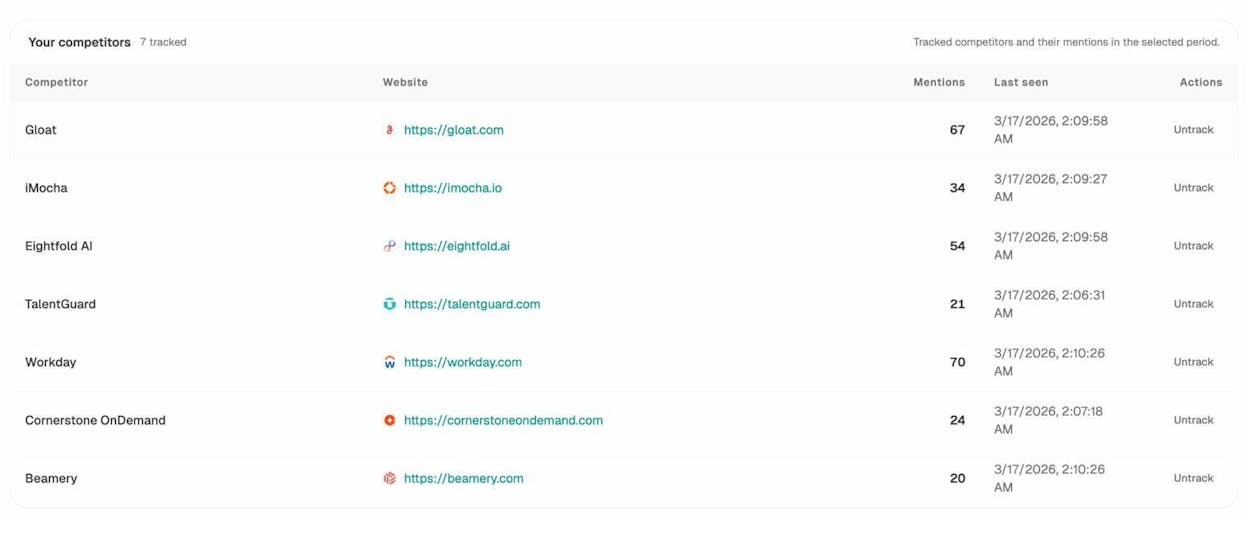
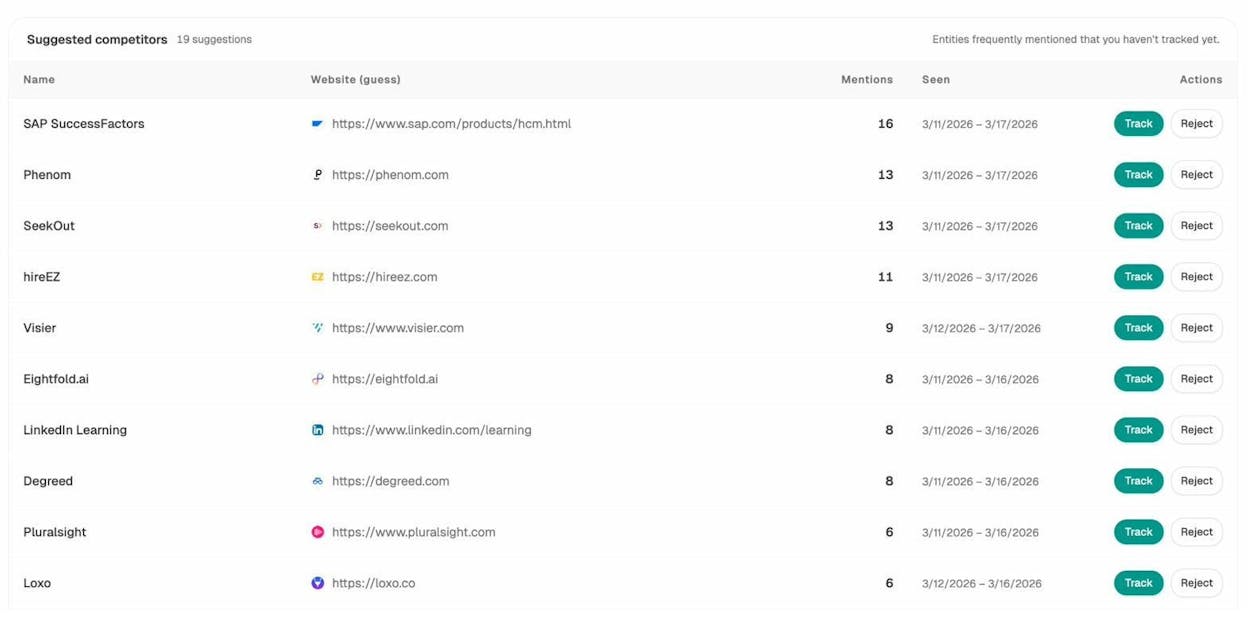
The platform also suggests competitors you might not be tracking yet. These are entities that frequently appear alongside your brand in AI responses but that you have not yet added to your competitive set.
Understand How AI Frames Your Competitors
Knowing that a competitor shows up more often than you is useful. But knowing how AI frames them is even more valuable.
Open a competitor’s AI Battlecard in Analyze AI to see the AI Takeaway summary, the themes and attributes AI associates with them, and how their narrative differs across engines like Perplexity, ChatGPT, and Google AI Mode.
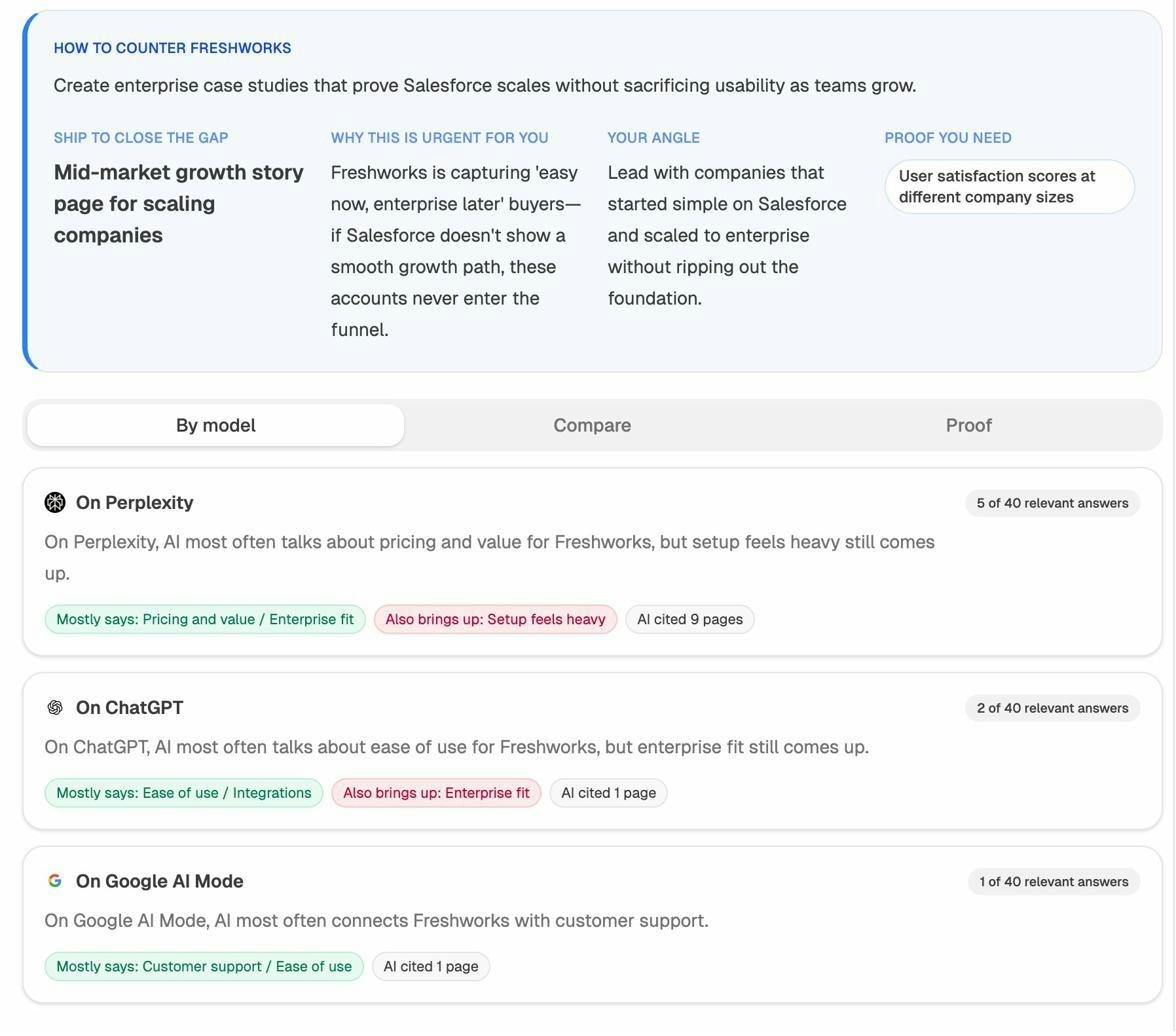
Each battlecard includes specific counter-strategy suggestions. It tells you what content to create, what angle to take, and what proof points you need to shift the AI narrative in your favor. This is the kind of competitive intelligence you can actually act on.
Protect Your Branded Search Results
Your branded SERPs, the results that appear when someone searches for your brand name, are your most valuable real estate. If a competitor, an affiliate, or a review site outranks you for your own name, you are losing clicks and credibility.
Check your branded search results regularly. Look for:
-
Competitors bidding on your brand name in paid search
-
Third-party sites outranking you for “[your brand] reviews” or “[your brand] alternatives”
-
Outdated or inaccurate information appearing on the first page
-
AI overviews or featured snippets that mention competitors in your branded results
To reclaim branded search visibility, make sure you have:
-
A complete, optimized Google Business Profile
-
A detailed About page on your website
-
Active, consistent social profiles across major platforms
-
Clean citations across industry directories
-
A Wikipedia page if your brand qualifies
The goal is to own as much of page one as possible for your brand name. Do not leave space for competitors to step in.
5. Implement SEO for Brand Awareness
You have done the strategy, audit, research, and analysis. Now it is time to implement. If you have followed the steps above, you should have a prioritized list of tasks in your project management tool.
Here are the most common implementation tasks for brand SEO, organized by impact:
High-Impact Foundational Tasks
-
Create or update Google Business Profile, Bing Places, and Apple Maps listings
-
Redesign your Home and About pages with consistent messaging and E-E-A-T elements
-
Create individual profile pages for leadership and key team members
-
Add or update Organization schema markup to codify your brand’s technical identity for search engines
-
Clean up inconsistent citations and mentions on third-party sites you control
-
Optimize branded image files (logos, favicons, OG images) to appear correctly in search results and social shares
Content and Topic Alignment Tasks
-
Create a topical map that connects your brand to the specific topics, features, and attributes you want to own
-
Build dedicated landing pages for each core product or service
-
Develop content around branded and modified-branded keywords (e.g., “[brand] vs [competitor]”, “[brand] pricing”, “[brand] tutorial”)
-
Ensure all content includes clear author attribution linking back to team profile pages
-
Use internal linking to reinforce topical connections between your brand’s pages
AI Search Optimization Tasks
The previous tasks build your traditional SEO foundation. These tasks extend that foundation into AI search.
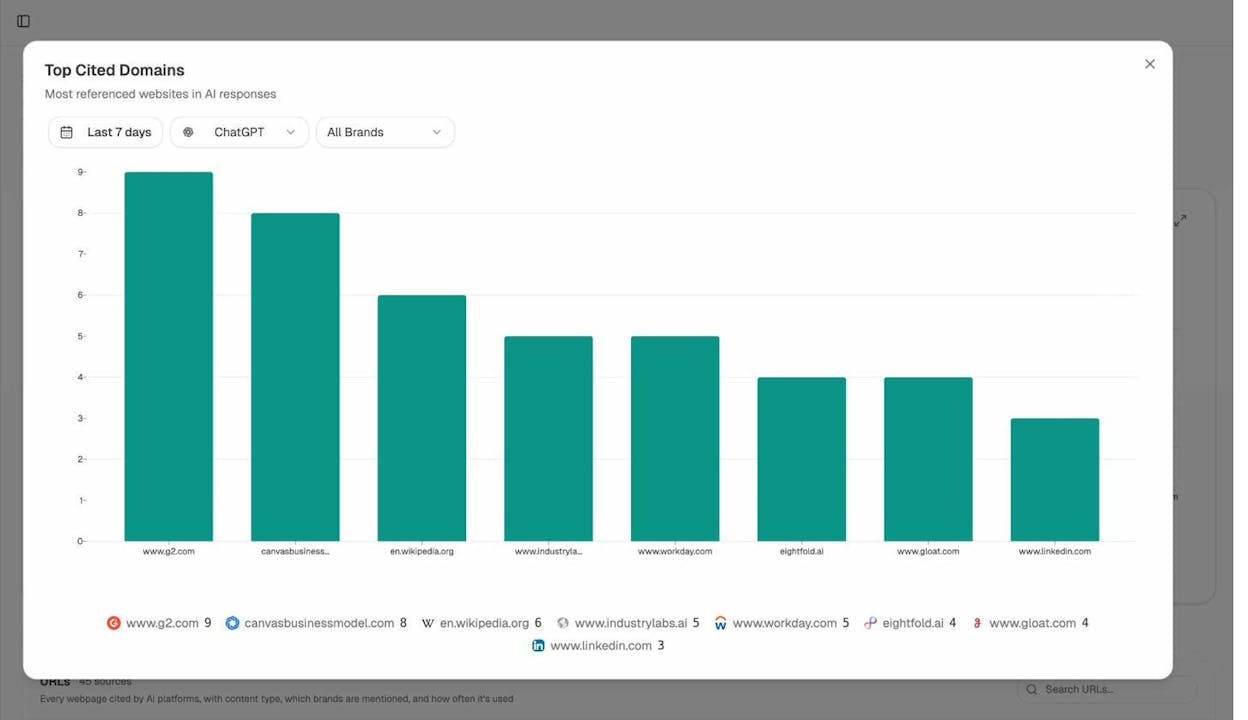
Understand what sources AI engines trust in your category. Before you create content for AI visibility, you need to know what AI engines are actually citing. Analyze AI’s Citation Analytics shows you the exact domains and content types that AI engines reference when answering questions in your space.
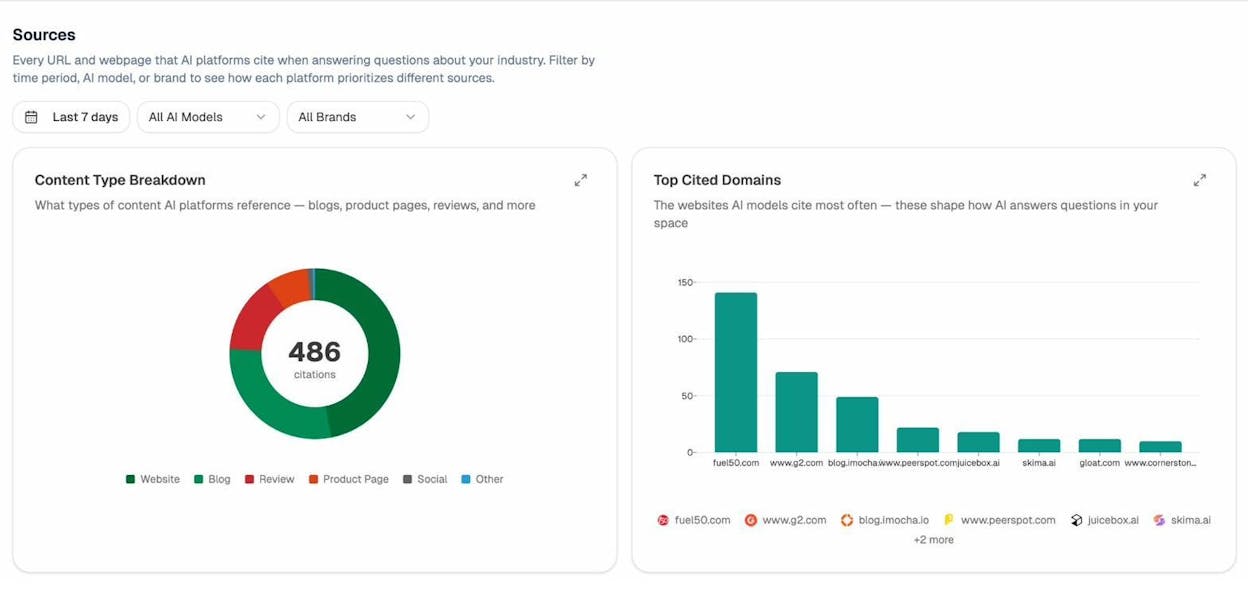
This data is critical. If AI engines in your category primarily cite blog posts and review sites, that tells you where to focus your content efforts. If they cite product documentation and Wikipedia, you need a different strategy.
You can also filter by specific AI engine. ChatGPT might rely heavily on G2 and Wikipedia, while Perplexity might prioritize original blog content and product pages. Knowing this lets you tailor your approach for each engine.
Optimize existing content for AI citations. You do not always need new content. Sometimes your best opportunity is improving pages you already have. The Content Optimizer in Analyze AI identifies your top pages with declining organic search traffic and shows you exactly how to improve them for both search engines and AI visibility.
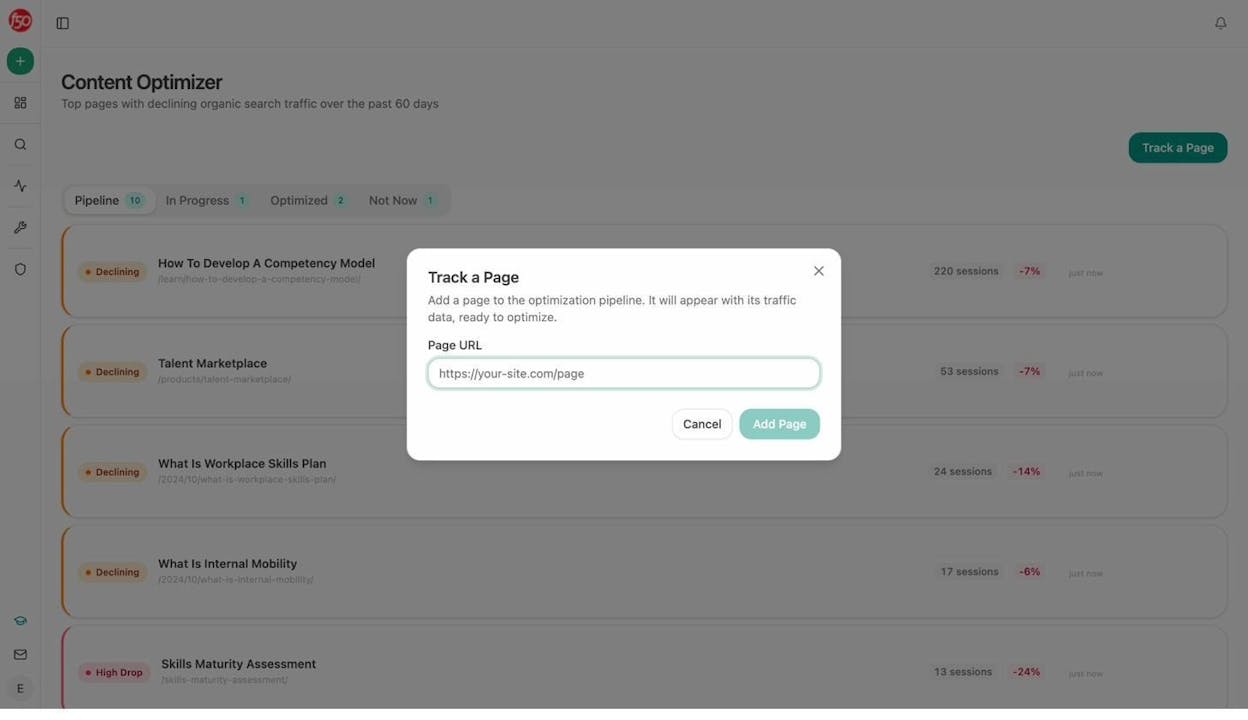
Paste a URL into the optimizer and it fetches the page content, scores it, and provides line-by-line suggestions. The suggestions are based on real gaps, things like missing entity mentions, weak argument structure, opportunities to add comparison tables, and missing structured data.
Create new content built for AI citations. When you need new content, the Content Writer in Analyze AI takes you from idea to draft with AI visibility baked in at every step. It starts with research (including which AI engines cite which competitors for your target topic), produces an outline with editorial comments, and generates a draft with LLM Gap tags marking where AI visibility opportunities exist.
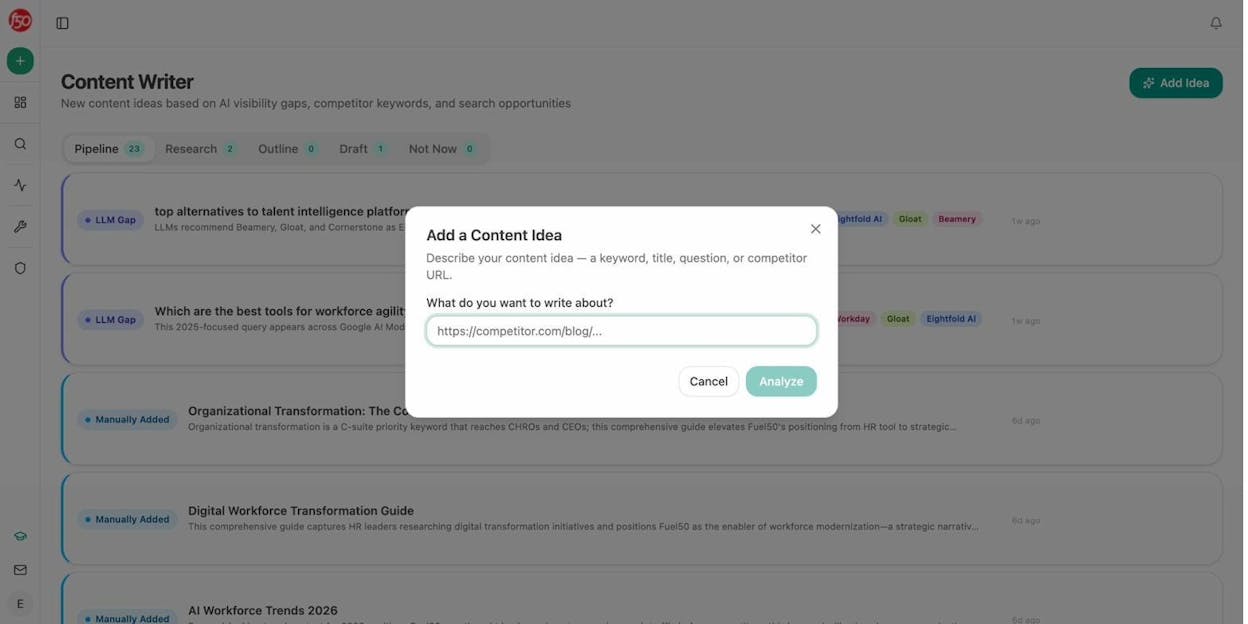
The research step is particularly valuable. It shows you which competitors AI engines recommend for your target keyword, what sources those engines cite, and what themes and arguments appear in AI responses. You can use this intelligence to write content that directly addresses the gaps in current AI coverage.
6. Promote Your Brand to Build Awareness
Implementation without promotion is wasted effort. In 2026, good SEO plus lazy marketing does not cut it. You need active distribution and promotion across every platform where your audience searches.
Show Up Where the Conversations Are Happening
Based on your research in Step 3, you know which platforms your audience uses. Now you need a presence on each one. That does not mean creating an account and abandoning it. It means actively participating in relevant conversations.
On Reddit, find subreddits where your product category is discussed and contribute genuinely useful answers. Do not spam. Add value. Over time, your brand will become a trusted name in those communities. And those Reddit threads are exactly the kind of content that AI engines cite in their responses.
On review platforms like G2, Capterra, and TrustPilot, make sure your product listing is complete and accurate. Respond to reviews, both positive and negative. Active engagement on review sites signals brand health to both search engines and AI models.
On LinkedIn, your team should be publishing content that reinforces your brand’s expertise. Every LinkedIn post from your CEO, your head of product, or your subject matter experts becomes a potential signal that AI models use to understand your brand’s authority.
Earn Authoritative Brand Mentions
Think of link building for brand SEO like PR. The goal is not just a backlink. It is getting your brand mentioned on the authoritative publications, blogs, and resources that both search engines and AI models trust.
Focus on:
-
Guest posts and contributed articles on industry publications
-
Podcast appearances and interviews
-
Original research and data studies that other outlets will reference
-
Expert commentary on trending topics in your space
-
Partnerships and co-marketing with complementary brands
Even unlinked brand mentions have value. AI models recognize brand mentions in text regardless of whether they include a link. A mention of your brand in a trusted publication still contributes to your entity signals and brand authority in AI search.
Get Cited by the Sources AI Trusts
Here is a tactical insight most brand SEO guides miss. You can reverse-engineer which sources AI engines trust in your category and focus your promotion efforts on earning mentions on those specific sites.
Go back to the Citation Analytics data from Step 5. If G2 is the most-cited domain in your category, invest heavily in your G2 profile, collecting reviews, and optimizing your listing. If a specific industry blog is frequently cited, pitch them a guest article or get your product featured in their reviews.
This is not guesswork. You know exactly which domains AI engines cite. Go earn a presence on those domains.
7. Track and Monitor Your Brand’s Visibility Everywhere People Search
The final step is setting up ongoing monitoring so you can track progress, catch problems early, and keep your brand SEO efforts compounding over time.
Track Traditional Brand SEO Metrics
Set up a dashboard that monitors:
-
Branded search volume and trends over time
-
Rankings for branded and modified-branded keywords
-
Branded backlinks (new, lost, and total)
-
Share of voice for branded terms
-
SERP feature ownership for your brand name
-
Branded traffic from Google Analytics or Search Console
![[Screenshot description: A Google Search Console performance report filtered to branded queries showing clicks, impressions, CTR, and position over 12 months]](https://www.datocms-assets.com/164164/1777453908-blobid17.png?auto=format,compress&w=1248&fit=max)
Use Google Search Console to track branded keyword performance and set up alerts for significant changes. A sudden drop in branded search volume or a spike in branded queries you are not ranking for are both signals that need investigation.
Track AI Search Visibility
This is where most monitoring setups fall short. Your brand’s visibility in AI search is a distinct channel that needs its own tracking.
Analyze AI’s AI Visibility Tracking monitors your brand’s presence across ChatGPT, Perplexity, Gemini, Copilot, and other AI engines on a daily cadence. You can see visibility trends, position changes, sentiment shifts, and competitive movement over time.
For traffic attribution, connect your Google Analytics (GA4) to see exactly how many visitors come from AI engines, which pages they land on, and whether they convert. The AI Traffic Analytics dashboard breaks this down by engine, landing page, and time period.
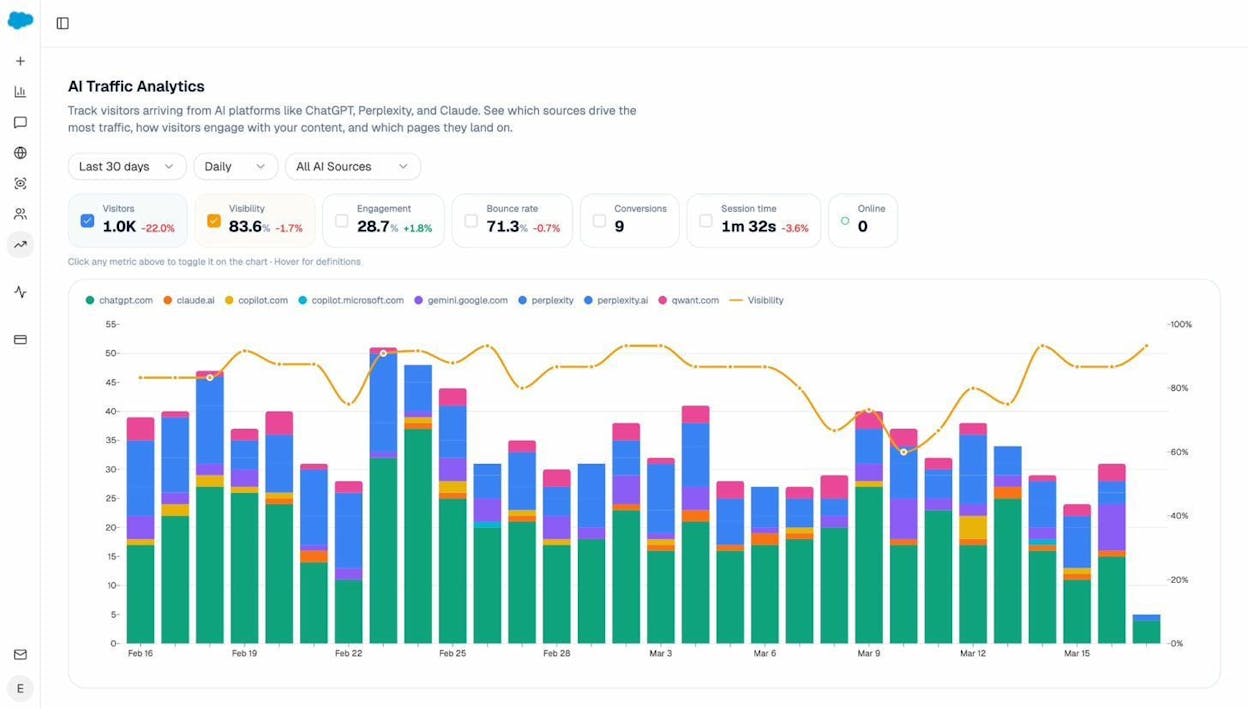
This closes the loop between AI visibility and business outcomes. You can see that Perplexity sent 200 sessions this month, that 15 of those converted, and that your blog post on pricing comparisons was the top landing page. That is the kind of data that justifies continued investment in brand SEO.
Set Up Automated Alerts
You should not need to log into a dashboard every day to catch problems. Set up alerts that notify you when something important changes.
Analyze AI’s Weekly Email Digests send you a summary every Monday with your visibility score, rank changes, sentiment shifts, citation momentum, and prioritized actions. If a competitor overtook you on key prompts, the digest tells you. If your sentiment dropped, you know immediately.
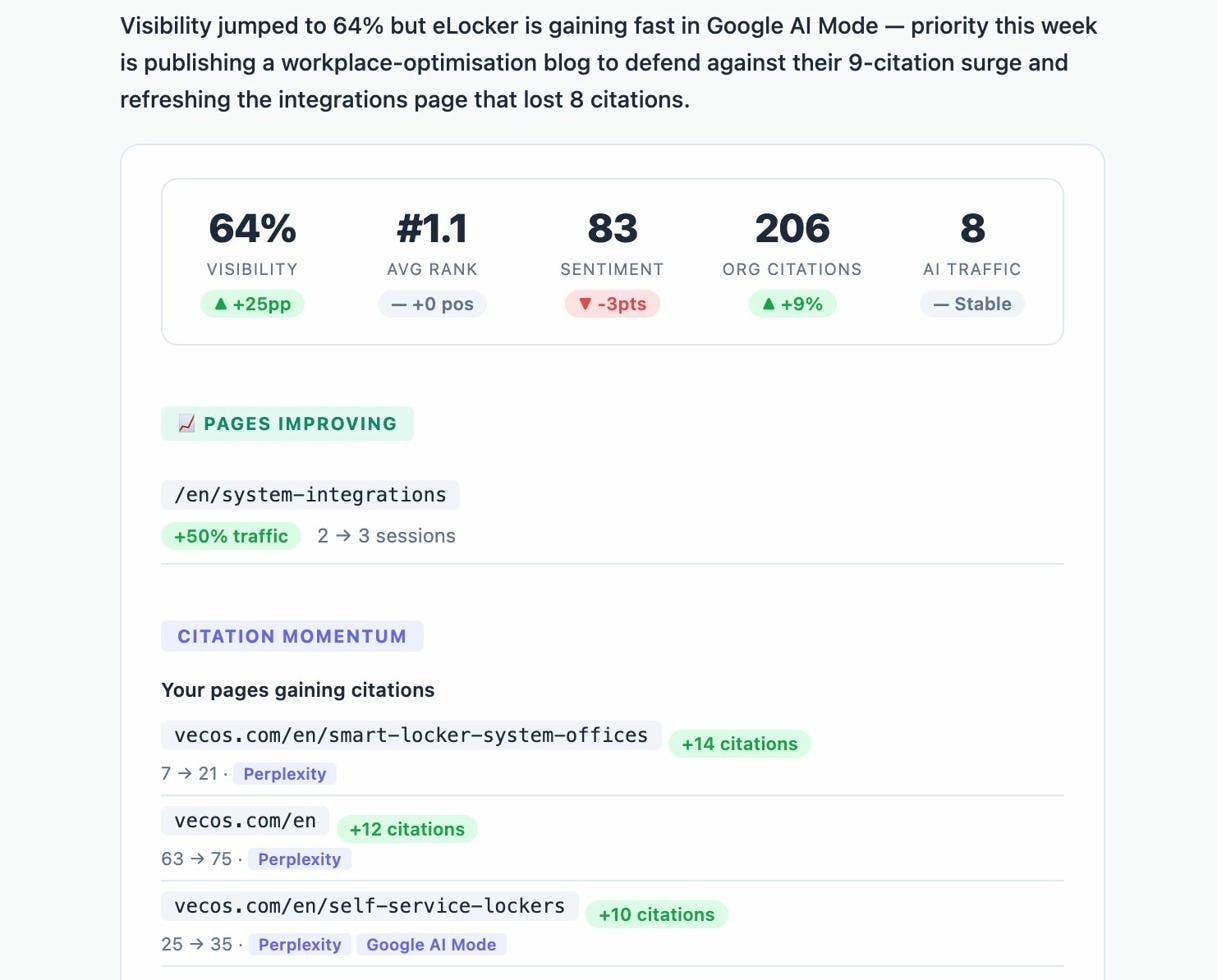
The digest includes specific pages gaining or losing citations, which engines are driving changes, and what actions to prioritize for the week ahead. It turns brand monitoring from a reactive task into a proactive weekly habit.
Monitor Brand Sentiment Across AI Engines
Visibility is only half the equation. How AI engines talk about your brand matters just as much as whether they mention you. A brand that appears frequently but with negative sentiment is in worse shape than one that appears occasionally with strong positive framing.
Use AI Sentiment Monitoring to track the narrative AI builds about your brand over time. This shows you the exact themes, attributes, and risk terms AI engines associate with your brand, and how those change week over week.
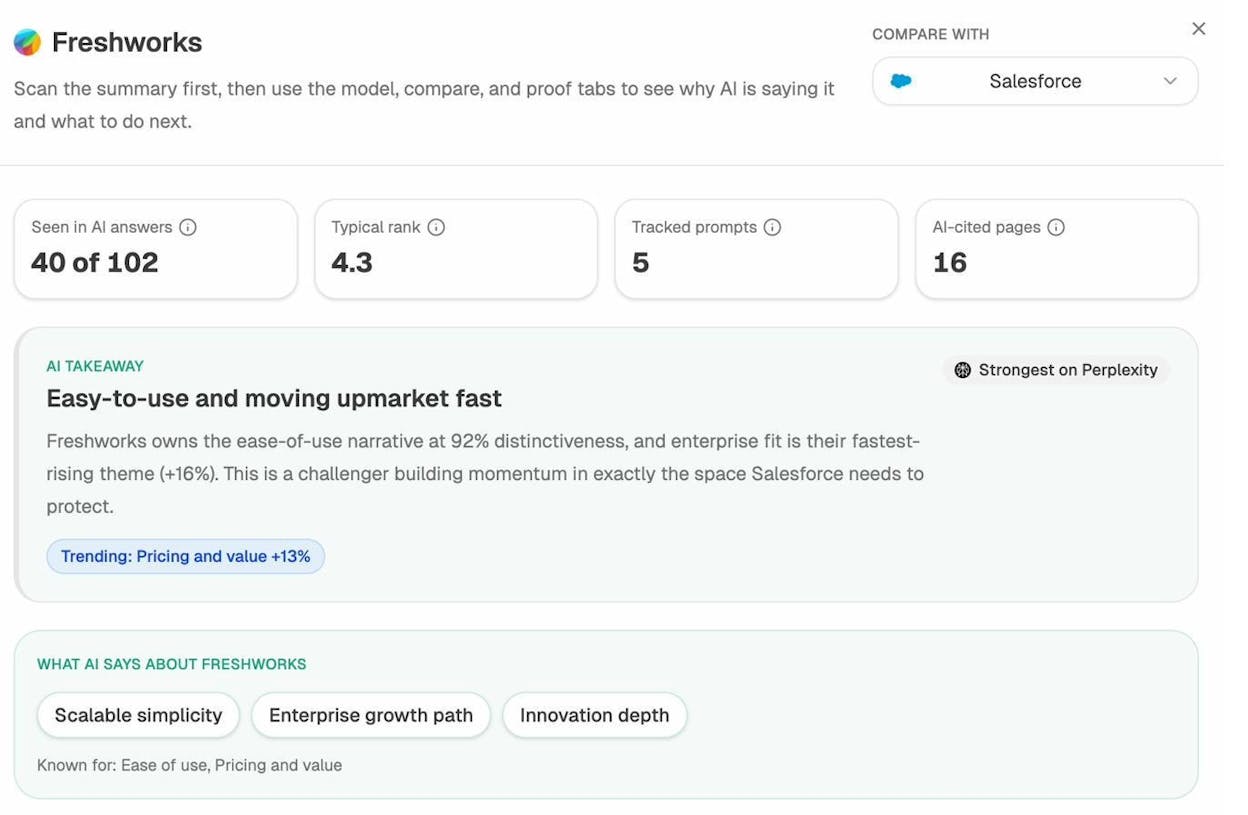
If you notice a negative narrative forming (for example, an AI engine starts associating your brand with “expensive” or “difficult to set up”), you can address it proactively. Update your website copy to counter that narrative with evidence. Create case studies that demonstrate value. Publish pricing comparison content that reframes the conversation. Over time, AI models will reflect those updated signals.
Brand SEO Checklist: Your Quick-Reference Implementation Guide
|
Step |
Key Actions |
Tools/Resources |
|---|---|---|
|
1. Define Brand Foundation |
Complete the 5 Ws and How framework. Document brand identity. Ensure consistent messaging across all owned channels. |
Brand Identity Template, style guide |
|
2. Audit Existing Visibility |
Audit owned channels for inconsistencies. Check earned mentions and sentiment. Audit AI search visibility and entity recognition. |
Google Search Console, Analyze AI Overview, Knowledge Graph API |
|
3. Find Topics and Platforms |
Research keywords and modifiers. Discover AI prompts in your category. Identify active platforms for your audience. |
|
|
4. Analyze Competitors |
Run brand gap analysis. Review AI battlecards. Protect branded SERP real estate. |
|
|
5. Implement |
Build brand foundation pages. Optimize existing content for AI citations. Create new content with AI visibility gaps addressed. |
Schema markup, Content Optimizer, Content Writer |
|
6. Promote |
Earn mentions on authoritative sites. Participate in community discussions. Target sources AI engines cite most. |
|
|
7. Track and Monitor |
Track branded SEO metrics. Monitor AI visibility and sentiment. Set up automated weekly digests. |
Google Analytics, AI Visibility Tracking, Weekly Digests |
Final Thoughts
Brand SEO is not a one-time project. It is an ongoing discipline that compounds over time. The brands that start building their search foundation now, across both traditional and AI search, will be the ones that are hardest to displace a year from now.
The core principle is simple. Make your brand easy for humans and machines to understand. Be clear about who you are, what you do, and why you are credible. Then get that message in front of the right audiences on the right platforms, consistently.
SEO is not dead. But it is evolving. AI search is a new organic channel that sits alongside traditional search, not a replacement for it. The brands that treat it as an addition to their existing strategy, rather than an either-or choice, will win the most visibility across all search surfaces.
Start now.
Further Reading

Ernest

Ibrahim


