



Summarize this blog post with:


In this article, you’ll learn what actually happens when you disavow “toxic” backlinks flagged by SEO tools, why the results may surprise you, what Google has said about the practice, when disavowing makes sense (and when it doesn’t), how to properly audit your backlink profile instead of blindly following a tool’s recommendations, and how to think about link signals in a world where AI search engines are becoming another organic channel alongside Google.
Table of Contents
What Are “Toxic” Backlinks?
Before we get to the experiment, we need to define what we’re talking about. Because the term “toxic backlinks” is one of the most misleading phrases in SEO.
A toxic backlink is a link pointing to your site that an SEO tool has flagged as potentially harmful to your search rankings. Different tools use different criteria to identify them. Some look at domain authority. Others look at spam scores, anchor text ratios, or link velocity patterns. The problem is that none of these tools agree on what counts as “toxic.”
A link that one tool flags as dangerous, another tool might ignore entirely. That should tell you something about how reliable these labels are.
Google’s own documentation on the disavow tool never uses the word “toxic.” Instead, Google talks about “spammy, artificial, or low-quality links” and specifically ties the disavow tool to manual actions. That distinction matters.
Here is how most SEO tools categorize backlinks:
|
Link Category |
What Tools Look For |
What Google Actually Cares About |
|---|---|---|
|
“Toxic” |
Low domain authority, foreign language sites, exact-match anchors, link farms |
Whether the link was part of a deliberate scheme to manipulate rankings |
|
“Potentially Toxic” |
New or unknown domains, thin content pages, irrelevant niches |
Very little, unless part of a larger pattern of manipulation |
|
“Healthy” |
High-authority sites, relevant content, editorial placement |
Whether the link is a genuine endorsement of your content |
The key insight is that Google has gotten very good at ignoring low-quality links on its own. You don’t need to tell Google to ignore a spammy directory listing from 2012. Google already knows.
As Google’s John Mueller has said on Reddit: the disavow file is rarely needed and most sites never need to use it.
The Experiment: What Happens When You Actually Disavow
Several well-documented experiments have tested what happens when you disavow “toxic” backlinks flagged by SEO tools. The most rigorous one comes from Ahrefs, where their Head of Content Joshua Hardwick ran a controlled test across three blog posts.
Here is what he did:
The setup. On July 26, 2024, he exported all “toxic” and “potentially toxic” backlinks to three Ahrefs blog posts from a well-known SEO tool. There were 129 URLs in total. He submitted all 129 to Google Search Console’s disavow tool.
![[Screenshot: Google Search Console disavow tool upload interface showing a .txt file being submitted]](https://www.datocms-assets.com/164164/1777318695-blobid1.png?auto=format,compress&w=1248&fit=max)
The measurement period. He compared 20 days before the disavow against 20 days after. He used both Google Search Console and Ahrefs’ organic traffic estimates to track changes.
Why 20 days? Google began rolling out a Core Update on August 15th, so he cut the experiment short to avoid confounding variables. Three weeks is enough time for Google to process a disavow file and for any ranking changes to show up.
The Results, Page by Page
Here’s what happened across all three test pages:
|
Page |
Before (20 days) |
After (20 days) |
Change |
Trend Before |
Trend After |
|---|---|---|---|---|---|
|
SEO pricing guide |
574 visits |
505 visits |
-12% |
Flat |
Flat |
|
Top YouTube searches |
291 visits |
267 visits |
-8.25% |
Trending up |
Trending down |
|
Top Bing searches |
156 visits |
176 visits |
+12.82% |
Trending up |
Still trending up |
|
Combined |
1,021 visits |
948 visits |
-7.1% |
Slightly up |
Slightly down |
The overall result was a 7.1% traffic drop. But the page-level data tells a more nuanced story.
Page 1 (SEO pricing guide): Traffic dropped 12%, but Ahrefs’ own data showed the page had already been declining for months. The disavow might have had a small positive effect by stabilizing a downward trend, or it might have done nothing. Hard to tell.
Page 2 (Top YouTube searches): This was the clearest signal. Traffic was trending upward before the disavow and reversed direction afterward. Both GSC and Ahrefs data agreed. Disavowing likely had a negative impact here. About 10 days after the disavow, there was a noticeable drop in estimated traffic.
Page 3 (Top Bing searches): Traffic actually grew by nearly 13% after disavowing. But Ahrefs’ own data showed the trend was basically flat before and after. The GSC numbers likely reflected normal fluctuation, not a causal effect.
What the Expert Said
When Hardwick asked Ahrefs’ Technical SEO Product Advisor Patrick Stox to interpret the data, Stox pointed out that GSC data includes seasonality and luck. He recommended looking at Ahrefs’ average search volume data for a more consistent measure of whether rankings and visibility actually changed.
By that measure, disavowing had little to no impact on rankings or visibility overall.
This Wasn’t the First Test
This experiment built on a more dramatic one from 2021, where Patrick Stox disavowed all links to the same three blog posts. Not just the “toxic” ones. Every single backlink.
The result? Traffic fell off a cliff.
That earlier experiment proved something important: links clearly still help pages rank. Good backlinks are a ranking factor. If an SEO tool incorrectly labels some of those helpful links as “toxic” and you disavow them, you’re telling Google to ignore signals that were actually helping you.
What Does All of This Mean?
The interpretation is straightforward. Blindly disavowing “toxic backlinks” flagged by SEO tools is unlikely to help your rankings. At best, it does nothing. At worst, it hurts you by removing links that were actually contributing to your rankings.
Here’s why:
SEO tools can’t read Google’s mind. No third-party tool knows exactly how Google evaluates links. They’re making educated guesses based on observable metrics. Some of those guesses are wrong.
Google already ignores most bad links. Google’s algorithms have evolved significantly. As far back as Penguin 4.0 (September 2016), Google shifted from penalizing sites with bad links to simply ignoring those links. If Google is already ignoring a link, disavowing it does nothing.
The truly harmful links are rare. Marie Haynes, a well-known SEO consultant who has worked extensively on link-related penalties, has noted that the genuinely toxic links capable of harming a site algorithmically are rarely the ones returned by SEO tools. The dangerous links are the ones that were part of deliberate manipulation schemes. Think paid link networks, private blog networks (PBNs), and large-scale link exchanges.
When Should You Actually Disavow Backlinks?
Disavowing is not always a bad idea. There are two scenarios where it makes sense:
1. You have a manual action for unnatural links in Google Search Console. This is the clearest signal. Google has explicitly told you there’s a problem. In this case, a thorough link audit followed by a disavow file is the right course of action.
![[Screenshot: Google Search Console showing a manual action notification for unnatural links]](https://www.datocms-assets.com/164164/1777318705-blobid2.jpg?auto=format,compress&w=1248&fit=max)
2. You have a large number of links you know were built manipulatively. If you (or a previous SEO agency) bought links, participated in link schemes, or used PBNs, those links could eventually trigger a manual action. Getting ahead of it with a proactive disavow makes sense.
Marie Haynes has confirmed these are the only two scenarios where she recommends disavowing to her clients. Outside of these situations, the disavow tool is more likely to cause harm than to help.
What about negative SEO?
Some SEOs worry about competitors building spammy links to their sites to trigger penalties. This is called negative SEO. While it’s theoretically possible, Google has said they can generally identify and ignore these attacks. If you genuinely believe you’re being targeted, disavowing the suspect links is reasonable. But this is extremely rare, and most “negative SEO” concerns are really just normal web spam that Google was already ignoring.
What to Do Instead of Disavowing “Toxic” Backlinks
If disavowing is not the answer for most sites, what should you do about your backlink profile? Here are the steps that actually matter.
1. Focus on building high-quality links instead
The time you spend worrying about “toxic” backlinks is time you could spend earning links that genuinely improve your rankings. Quality content that attracts editorial links will always outperform link cleanup efforts.
This means creating content with original research, unique data, expert insights, or genuinely useful tools. These are the kinds of pages that earn links naturally. And those natural links are what Google values most.
![[Screenshot: Example of a high-quality resource page that earns backlinks organically]](https://www.datocms-assets.com/164164/1777318741-blobid3.png?auto=format,compress&w=1248&fit=max)
2. Audit your link profile for actual manipulation, not “toxicity scores”
If you want to review your backlinks, don’t rely on a tool’s toxicity score. Instead, look for patterns that indicate deliberate manipulation:
Links you paid for. If you hired an agency that bought links on your behalf, identify and disavow those specific links.
Links from private blog networks. PBN links are typically on domains with thin content, no real audience, and a sole purpose of passing PageRank. These are the links Google actually cares about.
Links with manipulative anchor text. If hundreds of links pointing to your site all use the exact same commercial anchor text (“best cheap shoes online”), that’s a red flag. Not because any single link is toxic, but because the pattern suggests manipulation.
Large-scale link exchanges. “I’ll link to you if you link to me” at scale is a link scheme. A few natural reciprocal links between related sites are fine. Hundreds are not.
Use a tool like Analyze AI’s Broken Link Checker to identify broken backlinks that could be reclaimed rather than disavowed. Often, what looks like a “toxic” link is actually a broken one that was once valuable. Fixing the destination page or setting up a redirect recovers that link equity instead of throwing it away.
3. Monitor your Google Search Console for actual manual actions
Instead of spending hours analyzing toxicity scores, check Google Search Console regularly for manual actions. Go to Security & Manual Actions > Manual actions. If there’s nothing there, you don’t have a link penalty. Period.
![[Screenshot: Google Search Console Security & Manual Actions page showing “No issues detected”]](https://www.datocms-assets.com/164164/1777318751-blobid4.png?auto=format,compress&w=1248&fit=max)
This is the single most reliable indicator of whether Google thinks your links are a problem. No manual action means no problem.
4. Improve your content instead
The biggest leverage in SEO today comes from content quality, not link cleanup. Google’s algorithm updates increasingly reward content that demonstrates genuine expertise, provides comprehensive answers, and serves user intent better than competing pages.
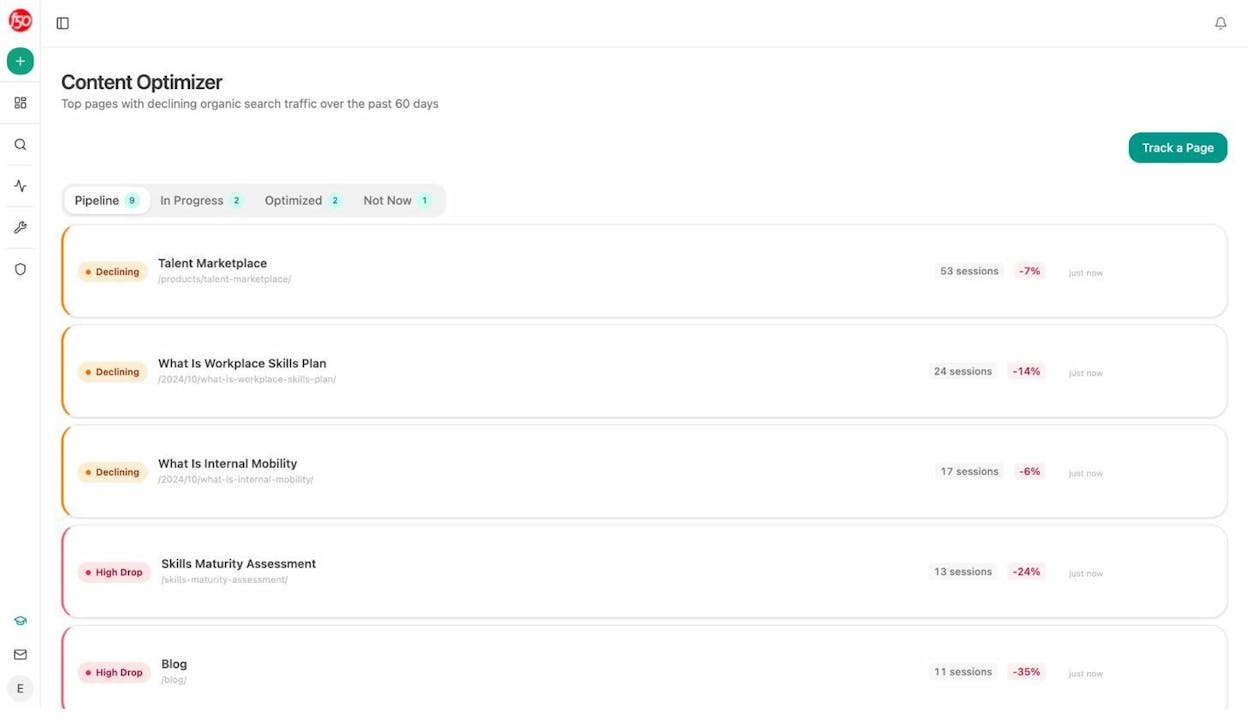
Run your key pages through Analyze AI’s Content Optimizer to identify argument gaps, structural issues, and areas where your content falls short of what searchers need. The Content Optimizer fetches your existing page, scores it on argument strength and clarity, generates editorial comments, and produces an optimized draft.
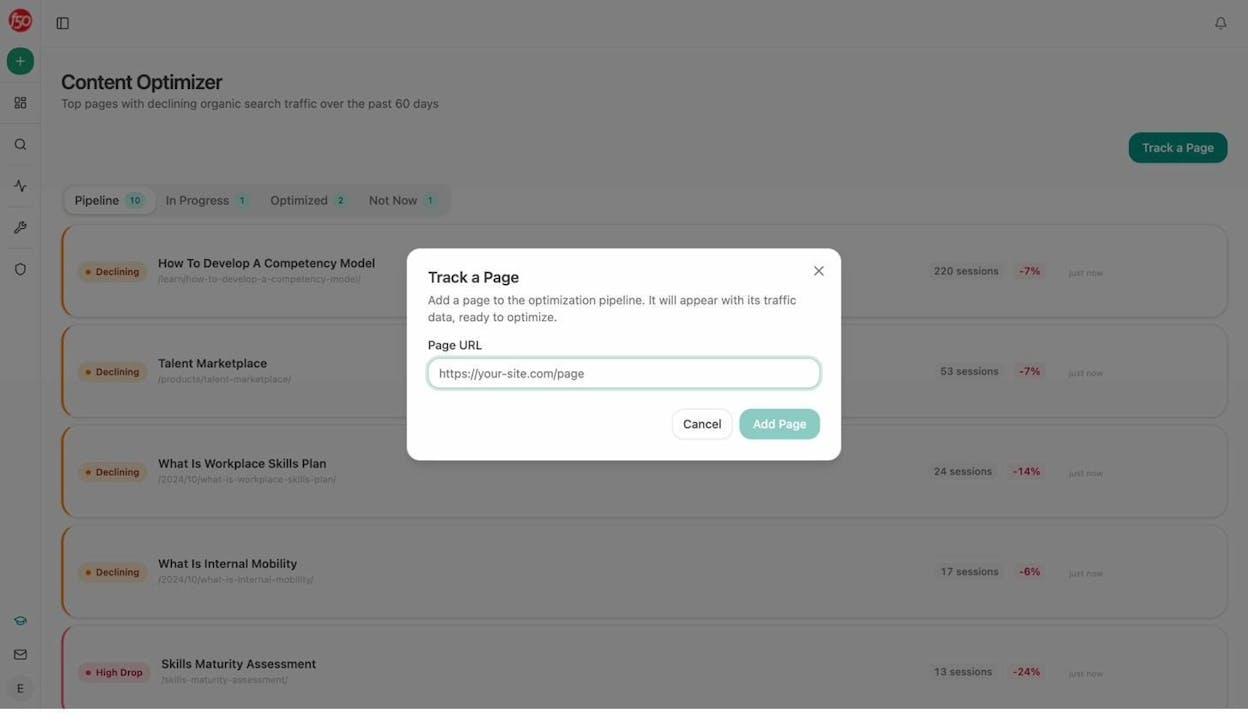
This is a better use of your time than disavowing links. A page with excellent content and a few “toxic” backlinks will outrank a mediocre page with a perfectly clean link profile every time.
5. Track your actual search performance
Instead of obsessing over link quality metrics in third-party tools, focus on the metrics that matter: rankings, organic traffic, and conversions.
Use Analyze AI’s SERP Checker to monitor your positions for target keywords. Use Google Search Console to track impressions, clicks, and average position over time. These are the numbers that tell you whether your site is healthy.
If your rankings and traffic are stable or growing, your backlink profile is fine. Regardless of what a toxicity score says.
How This Changes in a World With AI Search
Here’s something most articles about toxic backlinks miss entirely. Search is no longer just Google.
People are increasingly getting answers from ChatGPT, Perplexity, Gemini, Claude, and Copilot. These AI search engines don’t use PageRank. They don’t look at your backlink profile to decide whether to cite your content. They decide based on content quality, relevance, authority signals, and how well-structured your information is.
This doesn’t mean SEO is dead. Far from it. SEO and AI search are complementary channels, and the skills that make you good at one often make you good at the other. But it does mean that the energy you spend worrying about “toxic” backlinks would be better spent making your content visible across all search channels.
What AI search engines actually care about
AI search engines decide which sources to cite based on factors that look nothing like a backlink profile audit:
Content depth and accuracy. AI models favor content that thoroughly covers a topic with correct, well-sourced information. Surface-level content gets skipped.
Structured, clear writing. Content that is well-organized with clear headings, logical flow, and direct answers to questions is more likely to be cited.
Recency and freshness. AI models weigh recent content more heavily for topics where timeliness matters.
Domain authority in the broad sense. Not domain authority as measured by any specific tool, but whether your site is recognized as a legitimate, authoritative source in your space. This comes from being cited by other reputable sources, having consistent expert content, and being referenced across the web.
Entity coverage. AI models understand entities (people, brands, concepts, products). Content that covers relevant entities thoroughly is more likely to appear in AI answers.
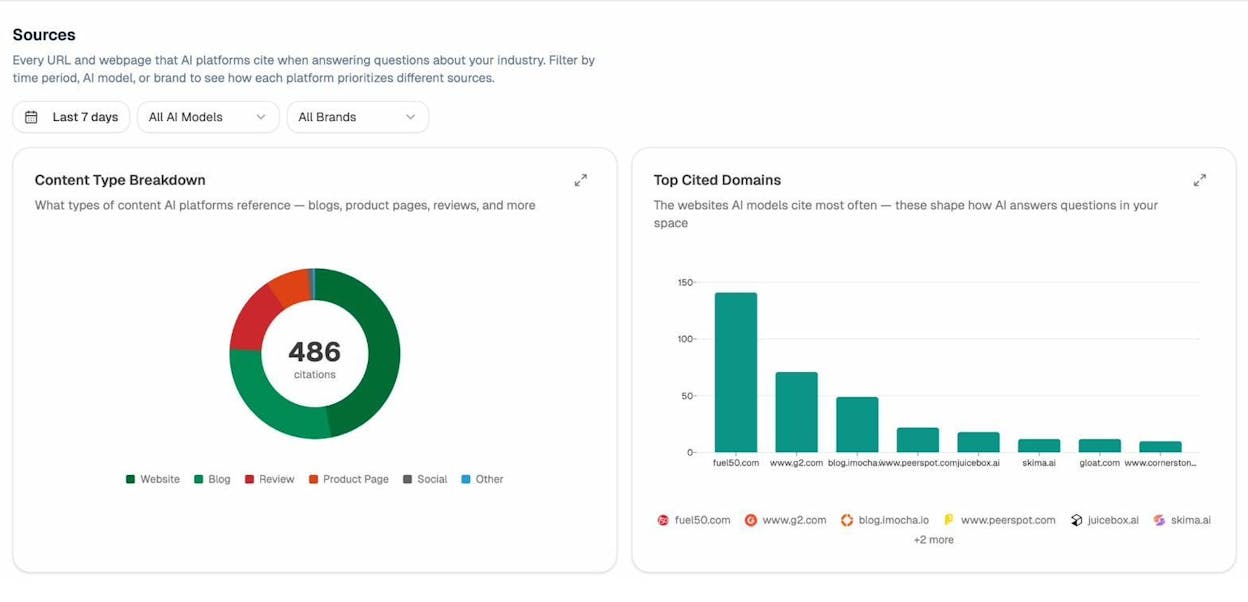
You can see exactly which domains and URLs AI engines cite in your space using Analyze AI’s Sources dashboard. It shows every URL and webpage that AI platforms cite when answering questions about your industry, broken down by content type and by domain.
How to check your AI search visibility
While you’re spending time worrying about whether a backlink is “toxic,” your competitors might be winning the prompts that matter in AI search. Here is how to find out.
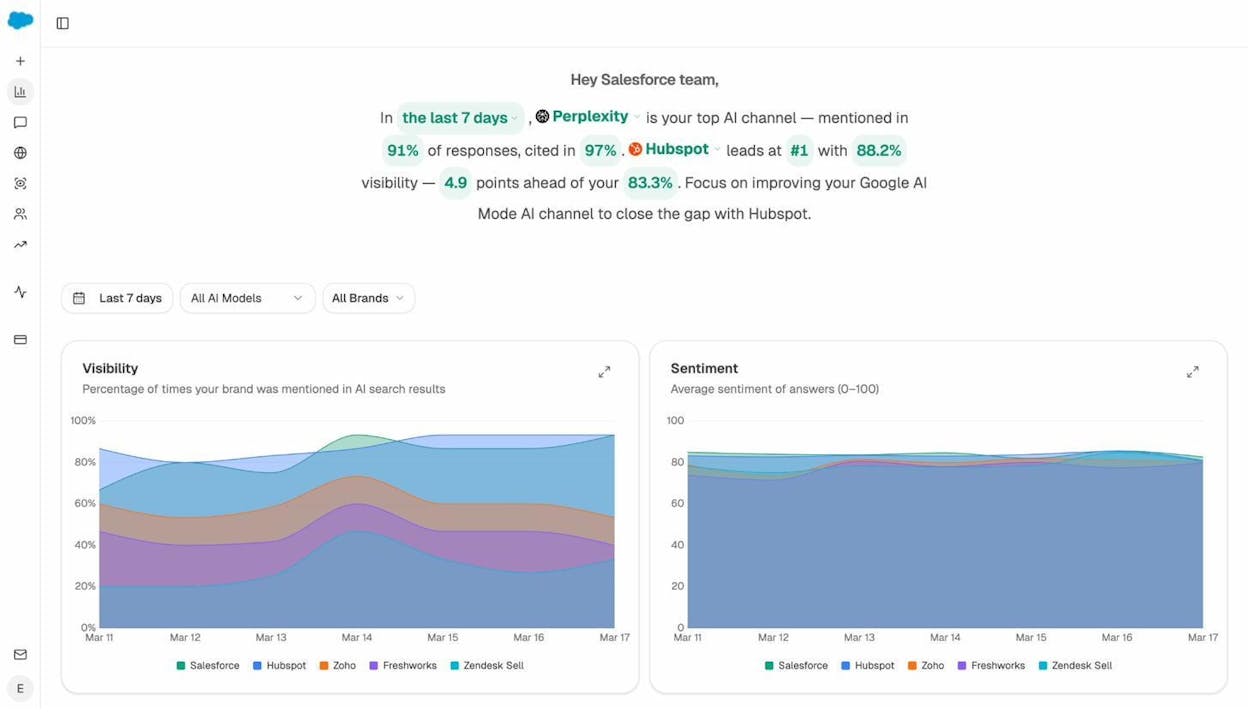
Step 1: See where you appear (and where you don’t). In Analyze AI, your Overview dashboard shows your brand’s visibility percentage across AI engines, your sentiment scores, and how you compare to competitors. If your visibility is low or declining, that’s where your attention should go, not backlink cleanup.
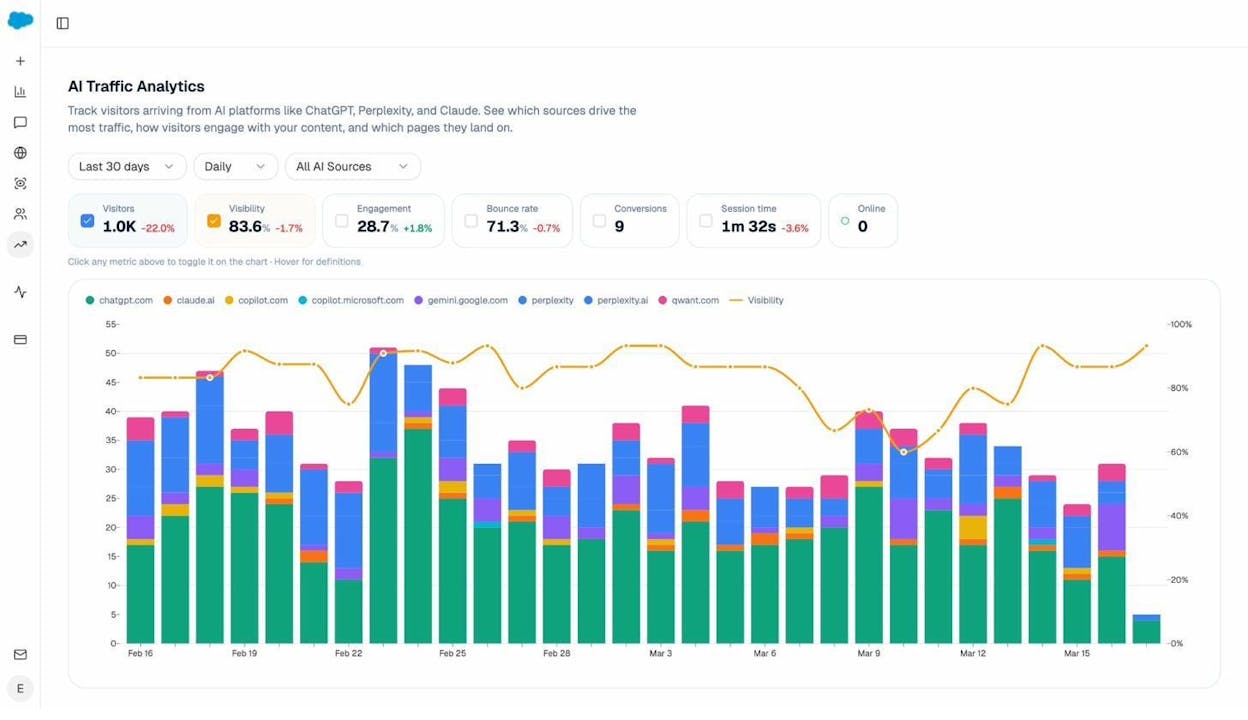
Step 2: Identify which AI engines are sending you traffic. Analyze AI’s AI Traffic Analytics connects to your GA4 data and shows exactly how many visitors arrive from ChatGPT, Perplexity, Gemini, Claude, Copilot, and other AI sources. You can see sessions, engagement rates, bounce rates, and conversions broken down by AI engine.
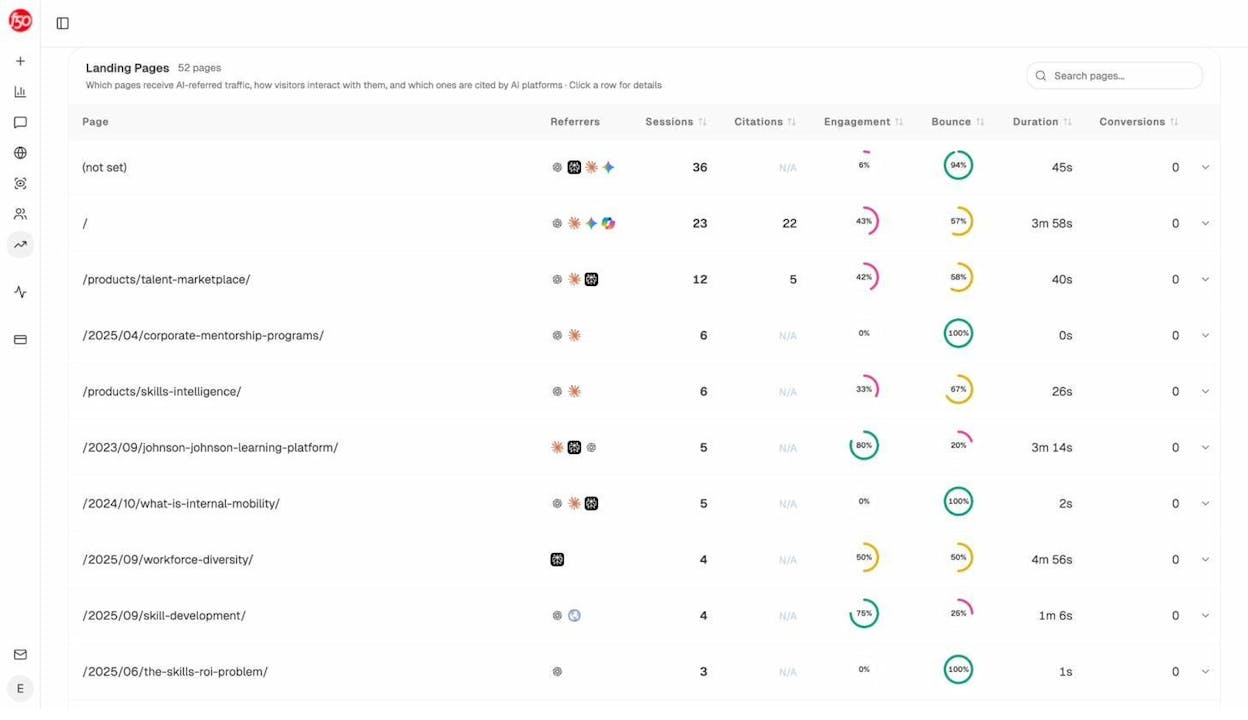
Step 3: Find which pages AI engines actually send traffic to. The Landing Pages view shows which of your pages receive AI-referred traffic, how visitors interact with them, and which ones are cited by AI platforms. This tells you what’s working. Double down on the content formats and topics that already attract AI traffic.
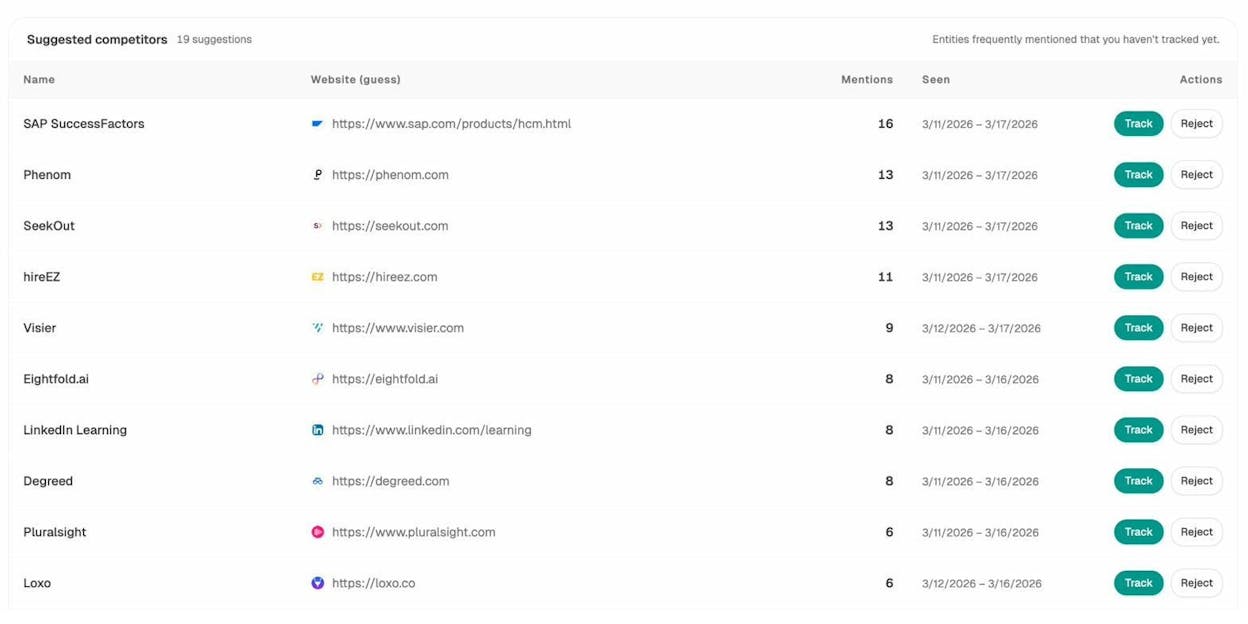
Step 4: See who your competitors are in AI search. The Competitors dashboard in Analyze AI shows you entities that AI engines frequently mention alongside your brand. These might be different from your traditional SEO competitors. A brand that barely registers in Google search might dominate AI answers in your space.
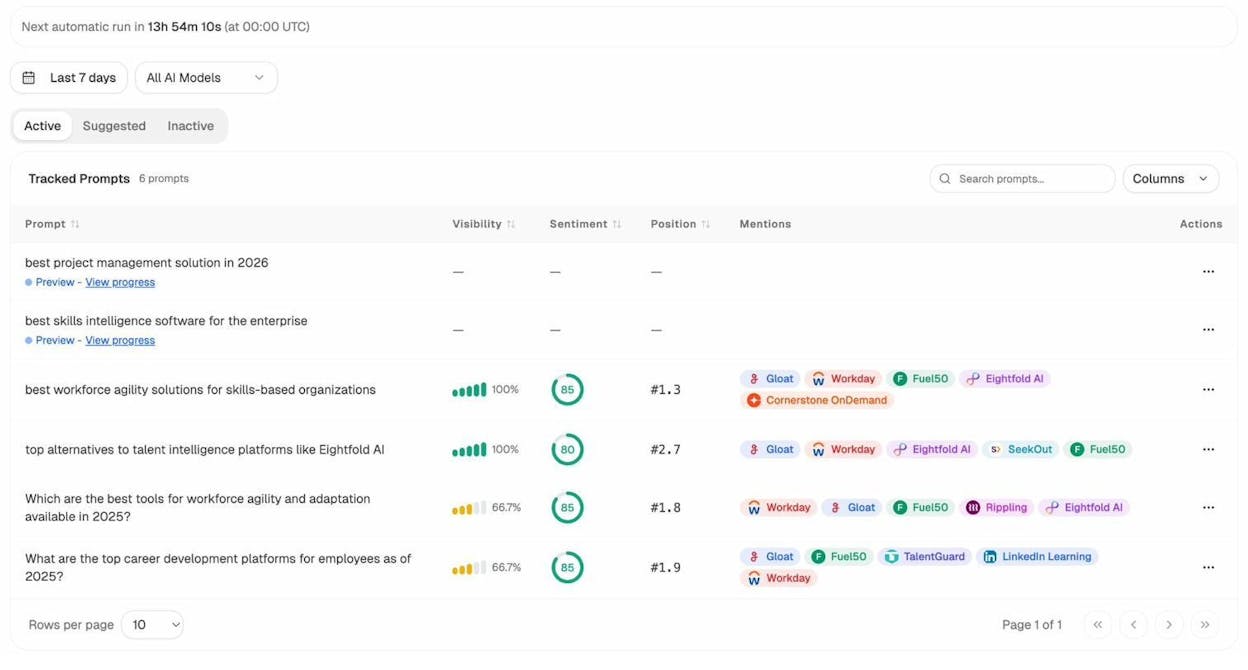
Step 5: Track the prompts that matter. In Analyze AI’s Prompts dashboard, you can see the specific prompts and questions where your brand appears (or doesn’t), which AI engines mention you, and how your positioning compares to competitors. These are the “keywords” of AI search.
The connection between backlinks and AI citations
Here’s the interesting part. While AI engines don’t use backlinks directly, there is an indirect relationship. Sites with strong backlink profiles tend to have strong domain authority in the traditional sense. They tend to be cited by reputable publications. And reputable publications are exactly the kind of sources that end up in AI training data and retrieval systems.
So good backlinks do help with AI search, just not in the way you might think. They help because they’re a signal of genuine authority, which is the same thing AI engines look for when deciding what to cite.
This is another reason not to disavow “potentially helpful” backlinks. You might be removing signals that contribute to your site’s perceived authority, both in traditional search and in AI search.
A Step-by-Step Backlink Audit That Actually Helps
If you want to properly evaluate your backlink profile without falling into the “disavow everything a tool flags” trap, here is a practical process.
Step 1: Check for manual actions first
Log in to Google Search Console. Navigate to Security & Manual Actions > Manual actions. If the page says “No issues detected,” you can skip the rest of this audit for now. Your link profile is not causing you problems.
![[Screenshot: Google Search Console manual actions page]](https://www.datocms-assets.com/164164/1777318782-blobid13.png?auto=format,compress&w=1248&fit=max)
Step 2: Review your link building history
Ask yourself (or your team, or your previous SEO agency) these questions:
-
Did we ever pay for links?
-
Did we ever participate in link exchanges at scale?
-
Did we ever use a PBN or guest post network?
-
Did we ever hire someone on Fiverr or similar platforms to “build backlinks”?
If the answer to all of these is no, you almost certainly don’t need to disavow anything.
Step 3: Look for manipulative patterns, not individual “toxic” links
If you have a history of link building that might cross the line, open your backlink report in your preferred SEO tool. But don’t sort by “toxicity score.” Instead, look for:
Clusters of links from the same network. If 50 links all come from sites that share the same IP, same design template, and same thin content, those might be PBN links.
Unnatural anchor text distribution. If 40% of your anchors are exact-match commercial keywords (“best CRM software”), that’s a manipulation signal. Natural anchor text is messy and varied. It includes brand names, URLs, “click here,” and random phrases.
Links from obviously fake sites. Sites with auto-generated content, no contact information, and thousands of outbound links to unrelated sites are the kind of links that could be concerning. But even then, Google is usually already ignoring them.
Use Analyze AI’s Website Authority Checker to quickly assess the domains linking to you. This helps you separate legitimate low-authority sites (small blogs, niche publications) from genuinely spammy domains.
Step 4: Build a targeted disavow file (only if needed)
If you found links from Step 3 that were clearly part of a manipulation scheme, add only those specific domains or URLs to a disavow file. Don’t include everything a tool flags as “potentially toxic.”
Your disavow file should look like this:
# Links from PBN network identified in audit
domain:spammy-pbn-domain1.com
domain:spammy-pbn-domain2.com
# Paid links from previous agency
https://example.com/paid-post-about-our-product
Submit this file in Google Search Console under Links > Disavow Links. Be conservative. When in doubt, leave the link in place.
Step 5: Shift your focus to what actually moves the needle
After your audit, redirect your energy toward the activities that actually improve search performance:
Create content worth linking to. Original research, comprehensive guides, and useful free tools earn links naturally.
Optimize existing content. Use the Analyze AI Content Optimizer to find pages with declining traffic and improve them before they lose rankings entirely.
Build visibility across all search channels. Track your presence in both traditional search and AI search. The brands winning today are the ones showing up everywhere their audience searches.
Monitor your competitive landscape. Use Analyze AI’s Competitor Intelligence to see where competitors outrank you in AI search. These gaps are often easier to close than traditional SEO gaps because AI search is still a relatively new channel.
Key Takeaways
Don’t disavow blindly. The data from multiple experiments shows that disavowing “toxic” backlinks flagged by SEO tools rarely helps and can actively hurt your rankings.
Check for manual actions first. If Google Search Console shows no manual actions, your link profile is almost certainly fine.
Disavow only when you know you have manipulative links. Paid links, PBN links, and large-scale link schemes are the only links worth disavowing. And only if you know they exist because of your own link building history.
Google is already ignoring bad links for you. Since Penguin 4.0, Google’s algorithm devalues spammy links rather than penalizing sites for having them. The disavow tool is a safety net for edge cases, not a regular maintenance tool.
Spend your time on what works. Better content, stronger SEO fundamentals, and visibility across AI search engines will move your rankings more than any link cleanup ever will.
AI search is the channel most SEOs are still ignoring. While your competitors obsess over “toxic” backlinks, start building visibility in ChatGPT, Perplexity, and Gemini. Use Analyze AI to track where you appear, where you don’t, and what to fix to show up in the answers that drive pipeline.

Ernest

Ibrahim


