



Summarize this blog post with:


In this article, you’ll learn how online businesses are actually valued, why most website value calculators get it wrong, and how to calculate a realistic sale price for your website step by step. You’ll also learn why AI search visibility is becoming a factor buyers care about, and six proven ways to increase your website’s value before you sell.
Table of Contents
How Are Online Businesses Valued?
If your website doesn’t get traffic or generate income, it’s probably not worth anything beyond the domain name itself. Domain valuation is a separate topic entirely.
But if your site earns money and attracts visitors, it qualifies as an online business. And online businesses are valued using a combination of three core factors and one emerging factor that most sellers overlook.
The value of your website comes down to:
-
The income you generate and where that income comes from
-
Your website’s traffic and the quality of that traffic
-
Additional assets like backlinks, email lists, and social media audiences
-
Your brand’s visibility in AI search engines
Let’s break down each one.
Income Multiple
The most common and highest-paying method of valuing a website is a direct multiple of your monthly net profit. Net profit is how much your business takes home after all expenses.
A typical website sells for between 30x and 45x its monthly net profit. So if you earn $10,000 per month in net profit, your website can likely sell for $300,000 to $450,000.
Where your site lands in that range depends on several factors.
Multiple income streams. Websites that rely on a single revenue source like Google AdSense or the Amazon Associates program sell for less than websites with a mix of display ads, affiliate commissions, and their own digital or physical products. A diversified revenue base signals lower risk to buyers.
Dependence on paid advertising. If your revenue depends on complex paid ad campaigns that require expertise to manage, that lowers the sale price. Buyers want businesses that don’t collapse the moment they take over.
Standard operating procedures (SOPs). An SOP is a document that details exactly how to perform tasks within your business. Things like how you publish content, how you build links, or how you manage customer service. SOPs make it easier for a new owner to run the business from day one, and they push the multiple higher.
Revenue trend. Buyers pay more for websites with revenue that’s growing month over month. A flat or declining revenue trend lowers the multiple. This is one reason why timing your sale matters.
Website Traffic
The second most common way of valuing a website is based on how much traffic it gets. This is the method most online website value calculators use. And it’s the least reliable.
Here’s why. Traffic alone doesn’t tell you anything about income. A site can get 500,000 monthly visitors and barely break even because it has no monetization strategy. Meanwhile, a niche site with 20,000 monthly visitors and a strong affiliate setup might net $15,000 per month.
That said, traffic quality still matters to buyers. It affects the income multiple.
Organic traffic is worth more than paid traffic. Organic search traffic takes time and effort to build. It requires quality content, strong backlinks, and consistent SEO work. That effort creates a moat. Paid traffic, by contrast, stops the moment you stop paying. Buyers know this, and they value organic traffic accordingly.
Diversified traffic sources reduce risk. If 90% of your traffic comes from a single Google keyword, one algorithm update can wipe you out. Buyers prefer websites that draw visitors from multiple channels. Search, social media, email, referral links, and AI search all contribute to a more resilient traffic profile.
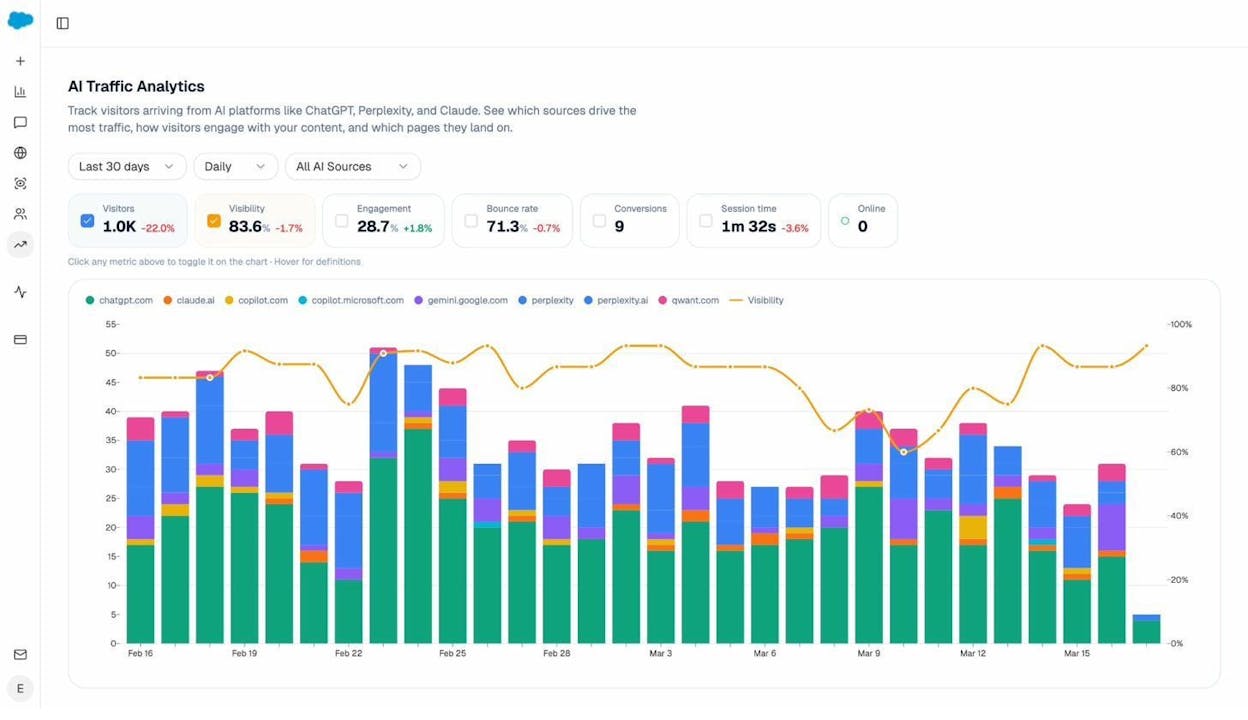
AI-referred traffic is the newest signal buyers look at. More people are getting answers and recommendations from ChatGPT, Perplexity, Gemini, and other AI search engines. If your website gets cited and linked by these platforms, it represents a traffic source that most competing websites haven’t even thought about yet. That makes it valuable.
You can check how much traffic your website receives from AI platforms using Analyze AI’s AI Traffic Analytics. It shows you which AI sources drive the most visitors, which pages they land on, and how engaged those visitors are.
Other Valuation Factors
Beyond net profit and traffic, several other factors can push your income multiple higher.
Domain authority and backlinks. The strength of your backlink profile matters. A site with hundreds of links from authoritative publications like Forbes, Healthline, or TechCrunch is harder to replicate than a site propped up by low-quality links from private blog networks. Buyers look at this closely.
You can check your domain authority for free with Analyze AI’s Website Authority Checker.
Email list. An engaged email list is a direct line to potential customers. Raw subscriber count matters less than open rates and click-through rates. An email list with 5,000 subscribers and a 35% open rate is worth more than one with 50,000 subscribers and a 5% open rate.
Social media following. Similar to email, what matters is engagement, not follower count. A YouTube channel with 10,000 subscribers and strong watch time adds more value than an Instagram account with 100,000 followers and no meaningful interaction.
Proprietary assets. Anything unique and hard to duplicate adds value. Custom-built tools, proprietary datasets, exclusive partnerships, and original research all fall into this category. If you’ve built something a competitor can’t just copy and paste, that’s a premium asset.
Why AI Search Visibility Now Matters in Website Valuation
Here’s the valuation factor almost nobody is talking about yet.
AI search engines like ChatGPT, Perplexity, Google AI Mode, and Claude are changing how people discover brands and products online. When someone asks ChatGPT for a recommendation, the brands it mentions get direct exposure to a potential buyer. No click required.
This matters for website valuation for two reasons.
First, AI search visibility is an emerging traffic source. Websites that are consistently cited in AI responses receive referral traffic from these platforms. That traffic is growing, and buyers who understand the trend will pay a premium for it.
Second, AI search visibility is a signal of brand authority. AI models tend to mention brands with strong, consistent, original content across the web. If ChatGPT and Perplexity regularly recommend your brand, it means your content and reputation are strong enough to be recognized by the models that millions of people rely on daily.
You can audit your brand’s AI search visibility using a tool like Analyze AI. It tracks how often your brand is mentioned across AI platforms, what competitors show up alongside you, and what sentiment AI models associate with your brand.
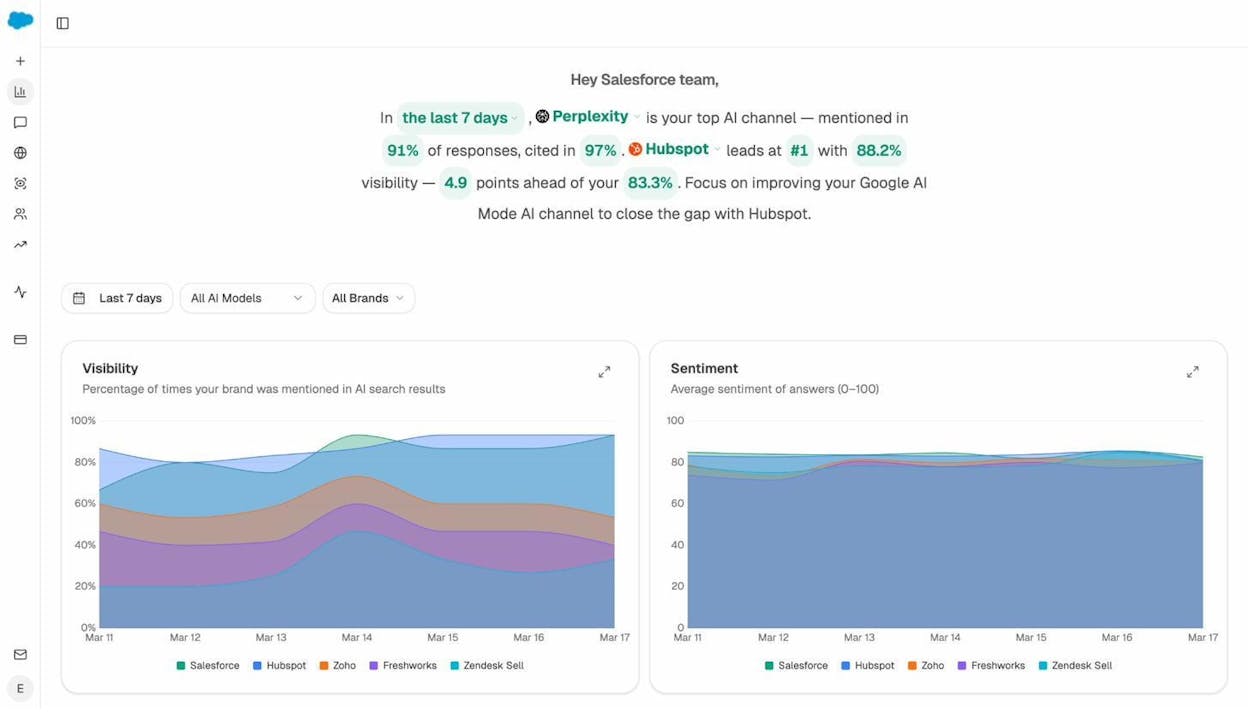
This data gives you a concrete answer to a question buyers will increasingly ask. “Does this brand show up when people search for solutions in AI?”
How to Calculate Your Website’s Worth (Step by Step)
Now that you understand what drives a website’s value, let’s calculate yours. Each step builds on the previous one. The more steps you complete, the more accurate your valuation becomes.
Step 1. Create a Financial Spreadsheet
The first and most important step is documenting your financials. Open a spreadsheet and set up three sections.
Section 1. Revenue. Create a row for each revenue source. This could include display advertising, affiliate commissions, product sales, service income, sponsored content, or subscription fees. Add a column for each of the last 12 months and fill in the actual numbers.
![[Screenshot: Example financial spreadsheet with revenue rows broken down by source, columns for each month, totaling monthly revenue]](https://www.datocms-assets.com/164164/1777318023-blobid3.jpg?auto=format,compress&w=1248&fit=max)
Section 2. Expenses. List every recurring expense. Hosting, domain renewal, email marketing software, content creation costs, paid advertising spend, freelancer payments, SaaS tools, and anything else you pay for to run the business.
Section 3. Add-backs. These are expenses the new owner won’t incur. Common add-backs include your own salary, one-time development costs, personal expenses run through the business, and growth investments like a link building campaign that already produced results.
Once you have all three sections filled in, calculate your net profit using this formula.
Revenue - Expenses + Add-Backs = Net Profit
Do this for each of the last 12 months. Then add all 12 months together and divide by 12 to get your average monthly net profit.
Finally, multiply your average monthly net profit by 30 (conservative) and 45 (optimistic) to get a realistic range.
Example: If your average monthly net profit is $7,500, your website is likely worth between $225,000 and $337,500.
|
Monthly Net Profit |
30x Multiple (Conservative) |
37x Multiple (Mid-Range) |
45x Multiple (Optimistic) |
|---|---|---|---|
|
$2,000 |
$60,000 |
$74,000 |
$90,000 |
|
$5,000 |
$150,000 |
$185,000 |
$225,000 |
|
$10,000 |
$300,000 |
$370,000 |
$450,000 |
|
$25,000 |
$750,000 |
$925,000 |
$1,125,000 |
|
$50,000 |
$1,500,000 |
$1,850,000 |
$2,250,000 |
Step 2. Audit Your Traffic Quality
Your financials tell you what your website earns. Your traffic data tells a buyer how sustainable those earnings are.
Start by pulling up Google Analytics and documenting the following for the last 12 months.
Traffic by source. What percentage comes from organic search, direct, referral, social, email, and paid? The higher your organic percentage, the better. Organic traffic indicates a sustainable acquisition channel that doesn’t require ongoing ad spend.
![[Screenshot: Google Analytics traffic acquisition report showing channel breakdown with organic search highlighted]](https://www.datocms-assets.com/164164/1777318033-blobid4.jpg?auto=format,compress&w=1248&fit=max)
Traffic trend. Is your overall traffic growing, flat, or declining? A positive trend raises your multiple. A sharp decline will concern any buyer and requires an explanation.
Top landing pages. Which pages drive the most traffic? If your top 3 pages account for 80% of your traffic, that’s a risk factor. Buyers prefer websites where traffic is distributed across many pages.
Geographic breakdown. Traffic from high-CPM countries like the United States, United Kingdom, Canada, and Australia is more valuable to advertisers and affiliates than traffic from lower-CPM regions.
If your site doesn’t generate much income and you want a traffic-based estimate, you can use Analyze AI’s Website Traffic Checker to get estimated monthly traffic and traffic value for any domain.
Step 3. Check Your Domain Authority and Backlink Profile
A strong backlink profile doesn’t just help you rank in Google. It also makes your website more attractive to buyers.
Start by checking your domain authority score. You can do this for free using Analyze AI’s Website Authority Checker.
![[Screenshot: Analyze AI’s Website Authority Checker showing domain rating, backlinks, and referring domains for a sample website]](https://www.datocms-assets.com/164164/1777318038-blobid5.png?auto=format,compress&w=1248&fit=max)
But the raw authority score only tells part of the story. You need to dig into where your backlinks actually come from.
What to look for in your backlink profile:
High-authority referring domains. Links from major publications, government sites (.gov), educational institutions (.edu), and well-known industry sites carry the most weight. These links are difficult and expensive to acquire, making them valuable assets.
Diversity of referring domains. One hundred backlinks from 80 different domains is far more valuable than 100 backlinks from 5 domains. Diversity signals natural link acquisition.
Link quality versus quantity. A buyer who understands SEO will spot a backlink profile built through private blog networks or spammy guest posting. These links carry risk because Google can devalue them at any time, destroying your organic traffic overnight.
Anchor text distribution. A natural backlink profile has varied anchor text. If most of your backlinks use the exact same keyword-rich anchor text, it looks manipulative and may be penalized.
You can use Analyze AI’s Broken Link Checker to find and fix any broken backlinks on your site before a buyer runs their own audit.
Step 4. Measure Your AI Search Visibility
This step is optional today, but it won’t be for long. As AI search continues to grow, buyers will want to know whether your brand shows up in AI-generated answers.
Here’s how to audit your AI search visibility.
Check if your brand is mentioned in AI responses. Go to ChatGPT, Perplexity, and Google AI Mode. Type in the main queries your target audience would use when looking for products, services, or information in your niche. See if your brand gets mentioned, and what your competitors’ presence looks like.
![[Screenshot: ChatGPT conversation showing brand mentions in a product recommendation query for a given industry]](https://www.datocms-assets.com/164164/1777318039-blobid6.png?auto=format,compress&w=1248&fit=max)
Use a monitoring tool to track visibility over time. Manually checking AI responses doesn’t scale. A tool like Analyze AI can track your brand’s mentions, citations, and sentiment across ChatGPT, Perplexity, Gemini, Google AI Mode, and other AI search engines automatically.
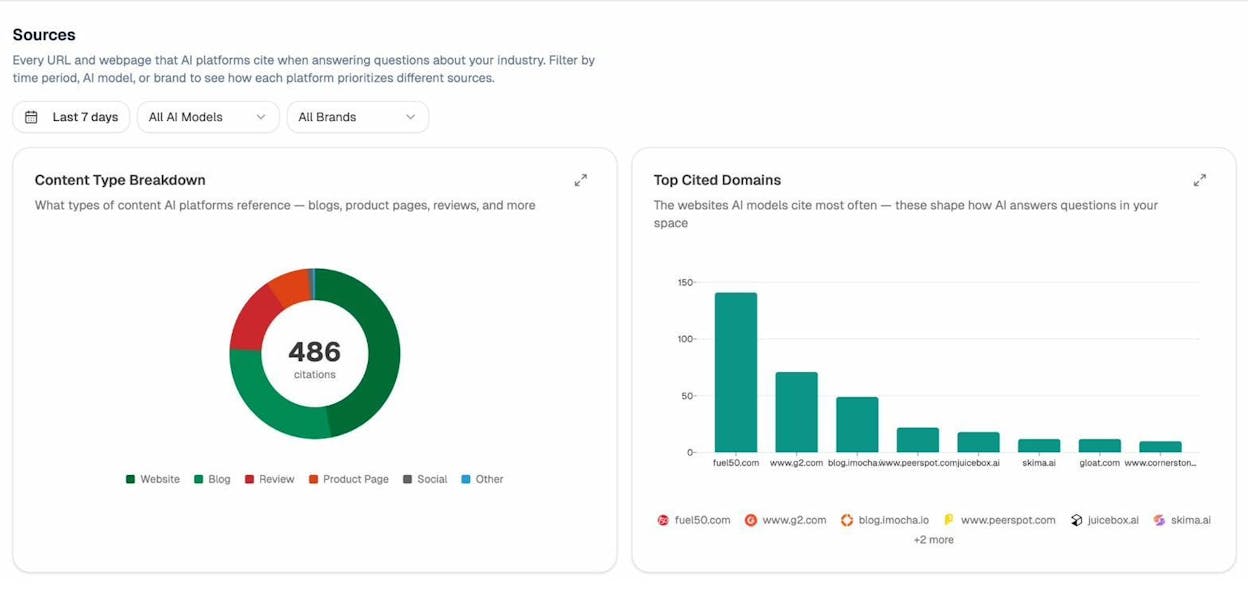
Identify which of your pages AI platforms cite. Different AI platforms pull from different sources. Analyze AI’s Sources dashboard shows you exactly which URLs and content types AI models reference when answering questions in your industry. If your pages show up frequently, that’s a strong signal of content authority.
See which pages receive AI-referred traffic. Analyze AI’s AI Traffic Analytics includes a Landing Pages breakdown. This shows which of your pages are receiving visitors from AI platforms, along with engagement metrics like session duration and bounce rate.
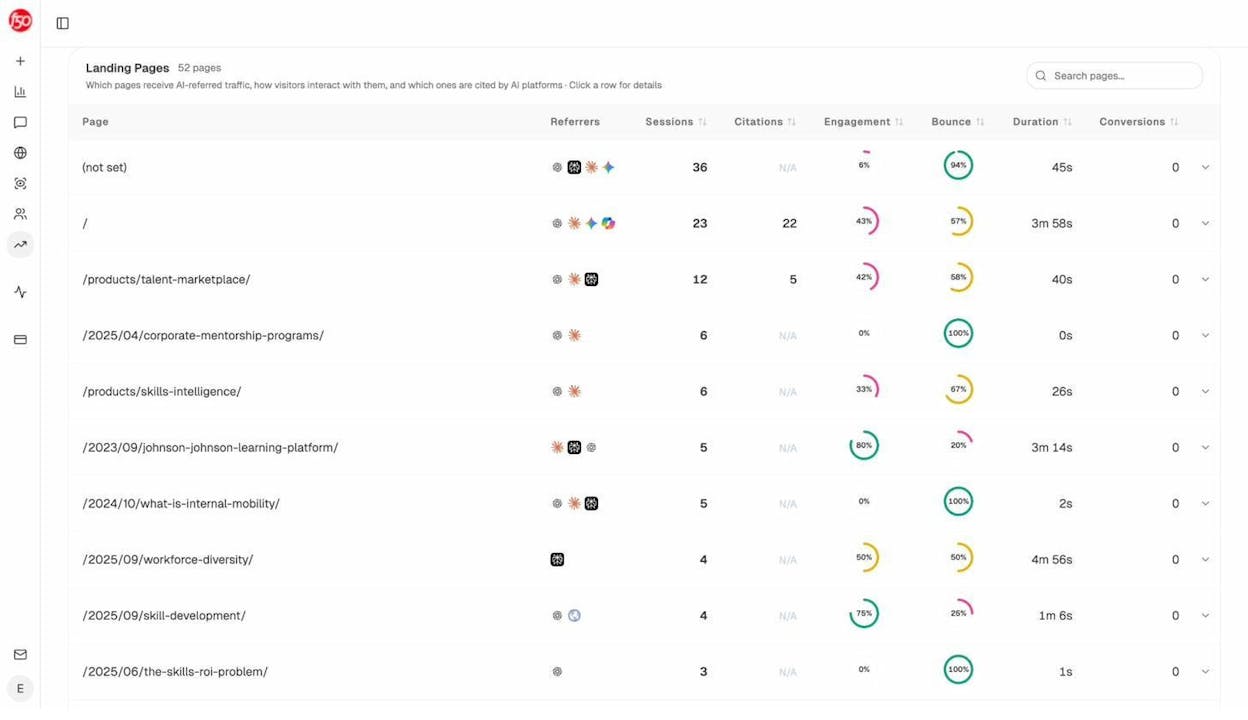
This data tells you which pages are already working in AI search. A buyer looking at this data would see a clear picture of AI-driven growth potential.
Step 5. Contact Website Valuation Companies
Once you have your financials, traffic data, backlink audit, and AI visibility data in order, it’s time to get a professional opinion.
Website brokers like Empire Flippers and Flippa offer free valuations. You fill out a form with your site’s details, and they’ll give you an estimated sale price within a few days.
I recommend going through this process even if you don’t plan on using their brokerage services. It gives you a market-informed baseline for your sale price. These companies do this every day, so they know what buyers are currently willing to pay.
When you sign up, you’ll get access to a seller dashboard where you can answer questions, provide documentation, and eventually receive offers.
Other valuation services to consider:
FE International specializes in SaaS, e-commerce, and content businesses. They focus on deals above $50,000 and provide detailed valuations.
Quiet Light works with online businesses across multiple models and provides advisor-led valuations with buyer matching.
Step 6. Look for Buyers Yourself for the Best Deal
Brokers offer a lot of convenience. They find buyers, handle negotiations, manage the transition, and provide legal support. But that convenience comes at a cost. Most brokers charge between 8% and 15% of the sale price.
On a $300,000 sale, that’s $24,000 to $45,000 in fees.
If you’re willing to put in the work, finding your own buyer and hiring an attorney for the legal side can save you a significant amount of money.
Where to find buyers:
Competitors. Reach out directly to competitors in your niche. If they’re investing in content and SEO, they may see the value in acquiring your site’s traffic, rankings, and authority rather than building it from scratch.
Adjacent businesses. Think about companies that serve the same audience but don’t compete directly. If you run a blog about outdoor gear, a camping equipment manufacturer might be interested. If you run a personal finance site, a fintech startup might see your audience as a growth shortcut.
Online communities. There are active communities on Twitter, Reddit, and private Slack groups where website buyers and sellers connect. The r/juststart and r/Flipping subreddits, for example, have active discussions about website acquisitions.
LinkedIn outreach. Identify potential acquirers through LinkedIn and reach out directly. Be clear about what you’re offering and include high-level financials in your pitch.
This approach requires more effort than working with a broker. But if your site is worth $200,000 or more, the savings can justify the extra work.
Six Ways to Increase Your Website’s Sale Price
You now know what your website is worth. Here’s how to make that number bigger before you sell.
1. Diversify Your Income Streams
Websites with multiple revenue sources sell for higher multiples than those dependent on a single income stream. The logic is simple. If one revenue channel drops, the others keep the business alive.
If you currently rely on a single source like Google AdSense or Amazon Associates, consider adding complementary streams.
Display advertising. Join a premium ad network like Mediavine or Raptiv (formerly AdThrive) if your traffic qualifies. They pay significantly more than Google AdSense per impression.
Direct affiliate partnerships. Amazon’s affiliate program is easy but pays low commissions, typically 1% to 4%. If you can negotiate direct partnerships with brands you promote, commission rates of 10% to 30% are common. The key is demonstrating that you actually drive sales.
Digital products. An ebook, course, template, or tool related to your content can generate recurring revenue with minimal ongoing effort once created.
Sponsored content. If your site has strong traffic and a defined audience, brands will pay for sponsored posts and reviews.
2. Negotiate Higher Affiliate Rates
If you already work with affiliate partners, asking for a higher commission rate is one of the easiest ways to increase your income without any additional traffic.
Most affiliate managers expect this conversation. If you’ve been sending consistent sales, they’ll often agree to a rate bump without much pushback.
When you reach out, lead with data. Tell them how many sales you’ve referred, over what time period, and what your current rate is. Then propose a new rate that’s 25% to 50% higher. The worst they can say is no.
3. Reduce Operating Costs
Every dollar you save in expenses adds $30 to $45 to your website’s sale price through the multiplier effect.
Audit your subscriptions and tools. Cancel anything you’re not actively using. Switch annual billing on tools you plan to keep since most SaaS products offer a discount for yearly payment. Review freelancer contracts and see if any tasks can be automated or handled in-house.
This isn’t about cutting corners on quality. It’s about eliminating waste. Buyers look at your expense report closely, and a lean operation signals a well-managed business.
4. Diversify Your Traffic Sources
Just like diversifying revenue, diversifying traffic reduces risk and increases your multiple.
If you rely heavily on organic search, build complementary channels.
Start a YouTube channel. Video content often ranks in Google search results and drives referral traffic back to your website. It also creates a second audience that isn’t dependent on Google’s algorithm.
Build an email list. Email is the one traffic source you fully own. No algorithm changes, no platform risk. A large, engaged email list adds direct value to your website’s sale price.
Post on social media. Cross-posting content summaries on LinkedIn, Twitter, and relevant industry forums drives referral traffic and builds brand awareness.
Optimize for AI search. This is the traffic source with the most upside right now because so few websites are doing it. AI search platforms like ChatGPT, Perplexity, and Google AI Mode are recommending brands and linking to content every day. If your site gets cited in those answers, you gain a traffic channel your competitors probably haven’t touched yet.
You can use Analyze AI’s Prompt Tracking to monitor the specific prompts where your brand appears in AI responses. This tells you exactly what topics AI models associate with your brand, and where you have gaps you could fill with new content.
5. Create Standard Operating Procedures
SOPs make your business transferable. Without them, the buyer is buying a job, not a business. With them, they’re buying a system they can hand off to employees or virtual assistants on day one.
Every repeatable task in your business should have an SOP. Content creation and publishing. Link outreach. Social media posting. Customer support. Email marketing. Financial reporting.
A good SOP includes the objective of the task, each step written in plain language, screenshots showing what each step looks like, and links to any tools or templates used.
The more comprehensive your SOPs, the easier the transition for a buyer. And the easier the transition, the higher the multiple.
Here’s a useful guide on creating SOPs from Sweet Process if you need a place to start.
6. Build Your AI Search Visibility
This is the highest-leverage thing you can do to future-proof your website’s value. Here’s why.
AI search is growing fast. More people are using ChatGPT, Perplexity, and Google AI Mode every day to find answers, compare products, and make purchase decisions. Brands that show up in those AI-generated answers get exposure, traffic, and trust.
Most website owners are not tracking or optimizing for this channel yet. That means building AI search visibility now gives you a competitive advantage that’s hard to replicate.
Here’s how to start.
Audit your current AI visibility. Use Analyze AI to see how often and where your brand appears in AI search responses. Track visibility over time and compare against competitors.
Identify competitor gaps. Analyze AI’s Competitors dashboard shows you where competitors are mentioned and you’re not. Each of those gaps is an opportunity to create content that closes the visibility gap.
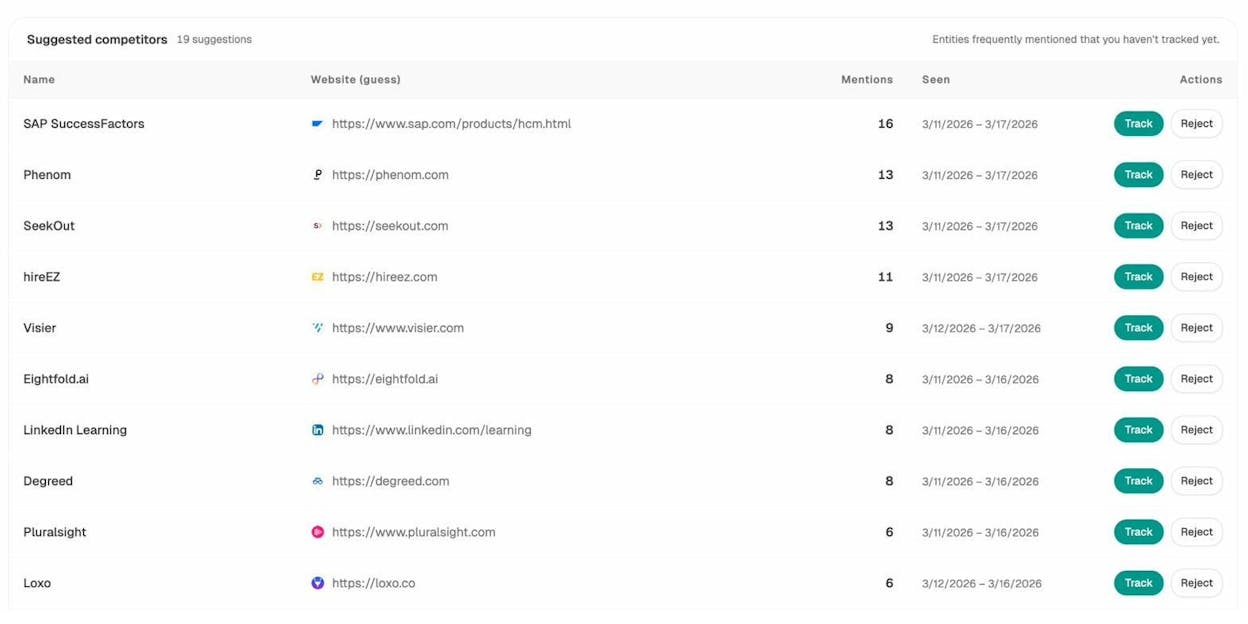
Create content that AI models want to cite. AI models favor content that is original, well-structured, factually accurate, and broadly referenced across the web. This aligns perfectly with good SEO practice. Write comprehensive, helpful content. Get it cited by other reputable sites. The same content that ranks well in Google tends to get cited in AI responses too.
You can use Analyze AI’s Content Writer to identify content ideas based on gaps in AI search responses and build outlines informed by competitor keywords and SERP data.
Track what’s working. Use Analyze AI’s AI Traffic Analytics to see which of your pages actually receive traffic from AI platforms. Double down on the topics and formats that work.
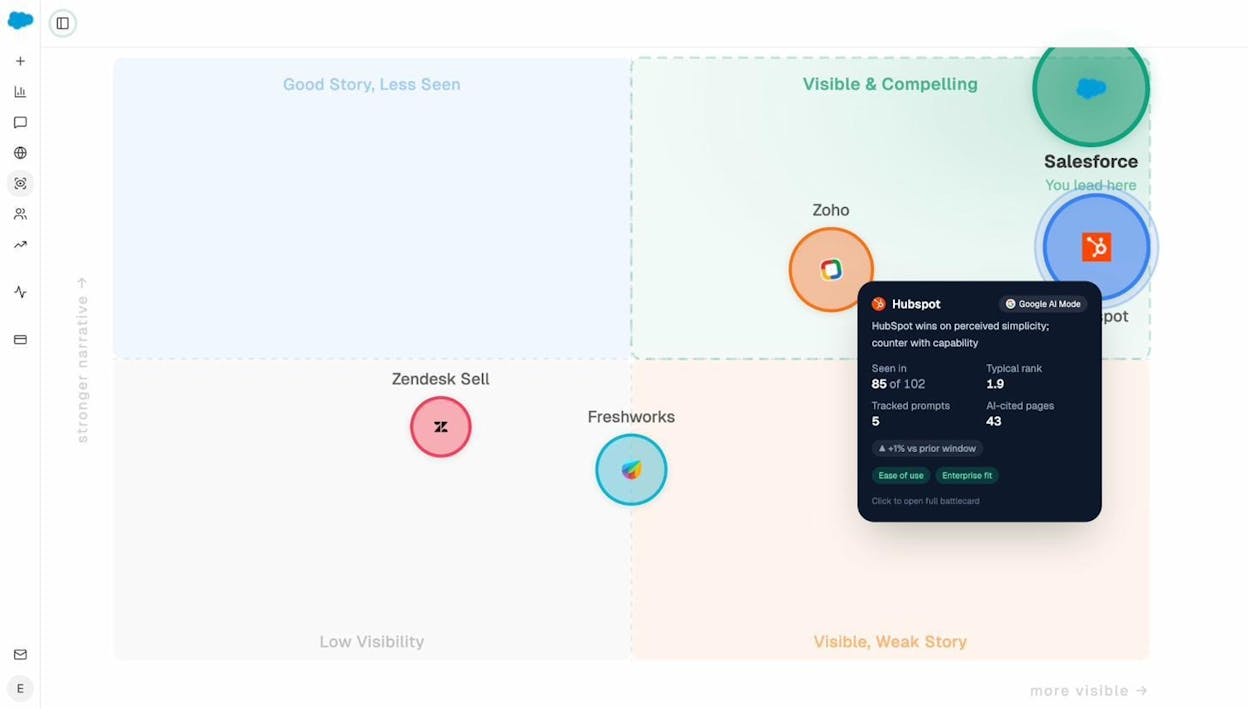
Understand how AI perceives your brand. Analyze AI’s Perception Map plots your brand and competitors on a visibility-versus-narrative matrix. It shows whether AI models see your brand as visible and compelling, or visible with a weak story. This insight helps you shape your content strategy to improve how AI presents your brand to users.
Building AI search visibility doesn’t require abandoning your SEO strategy. The two channels reinforce each other. Great content that ranks well in Google also tends to get cited by AI models. SEO is evolving, not dying. AI search is an additional organic channel that compounds the work you’re already doing.
Should You Sell Your Website?
At this point, you know what your website is worth, how to calculate it accurately, and how to increase the number.
Before you sell, ask yourself a few honest questions.
Is the timing right? If your revenue and traffic are growing, waiting six months could add tens of thousands of dollars to your sale price. If things are declining, selling sooner might be smarter.
Are you sure you can’t grow it further? Sometimes the best investment is keeping the asset. If there are clear growth opportunities you haven’t tapped yet, like AI search optimization, expanding to new content verticals, or launching a digital product, you might be better off pursuing those first.
Do you have a plan for the proceeds? Selling a profitable website only makes sense if you have a better use for the capital. Whether that’s starting a new project, investing, or just taking a break, have a clear plan for what comes next.
If you’ve thought it through and you’re ready, you now have everything you need to sell at the right price.

Ernest

Ibrahim


