



Summarize this blog post with:


Some SEO tools will scan your backlink profile and spit out a terrifying list of “toxic” links.
But here’s the thing. Google’s own John Mueller has called the concept of toxic links a term “made up by certain SEO tools.” And yet, a slight majority of SEOs still believe toxic backlinks are real and worth worrying about.
So who’s right? Can bad links hurt your site? Should you spend time cleaning up your backlink profile? And does any of this matter now that AI search engines like ChatGPT, Perplexity, and Claude are sending real traffic to websites?
In this article, you’ll learn what toxic backlinks actually are (and aren’t), whether they can hurt your rankings, how to find the ones that matter, when to disavow them, and why AI search engines are changing the way we should think about link quality entirely.
Table of Contents
Spammy, Manipulative, and Toxic Links Are Not the Same Thing
Before we can figure out whether toxic backlinks are worth losing sleep over, we need to define our terms. The SEO industry throws around “spammy,” “manipulative,” and “toxic” as if they’re interchangeable. They’re not.
Spammy Links
Every website on the internet attracts spammy backlinks. These are low-quality links from scraped content, auto-generated pages, foreign-language directories, or random sites that make no sense. You didn’t ask for them. You didn’t build them. They just showed up because the internet is full of bots and spammers.
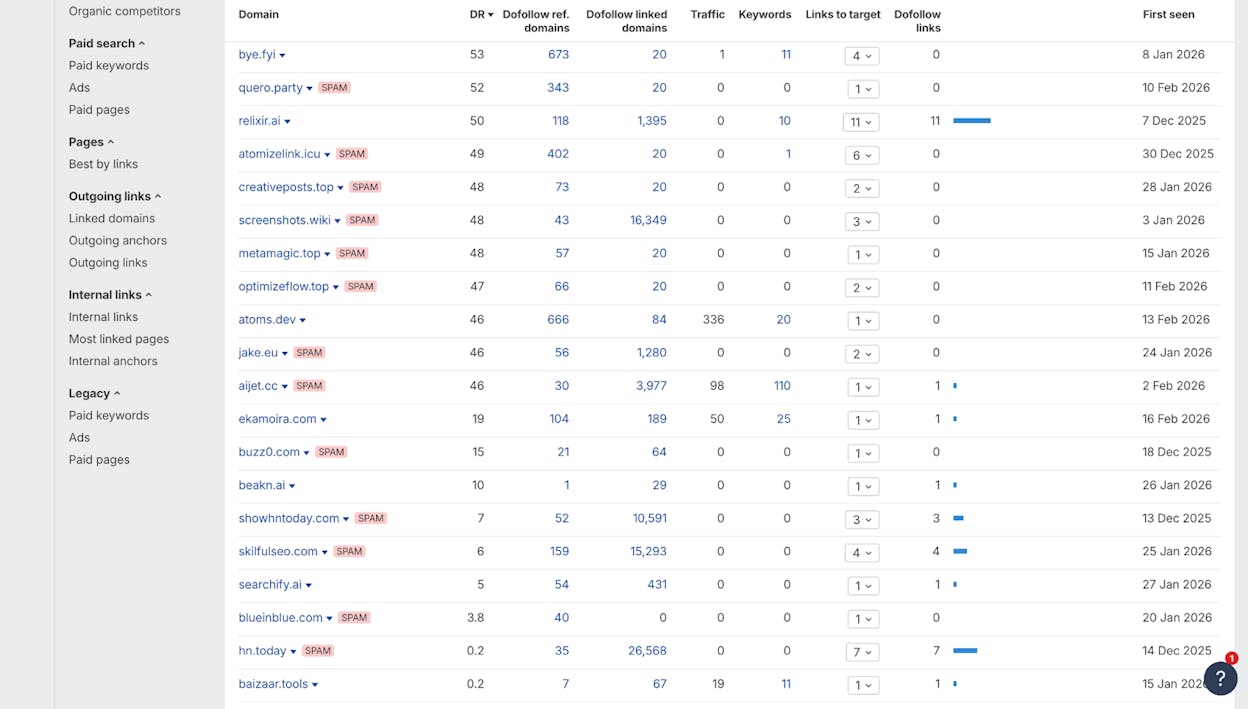
If you run any site through a backlink analysis tool, you’ll find links like these. That’s normal. It happens to Ahrefs. It happens to the New York Times. It happens to your site.
Further reading: 6-Step SEO Competitor Analysis (+ Track AI Search Rivals)
Manipulative Links
These are links that someone built or bought specifically to improve Google rankings. Think private blog network (PBN) links, paid guest posts on low-quality sites, link exchanges at scale, or any links described in Google’s link spam documentation.
Google’s guidelines are specific about what they consider manipulative:
-
Buying or selling links for ranking purposes
-
Excessive link exchanges
-
Large-scale guest posting campaigns with keyword-rich anchor text
-
Using automated programs to create links
-
Requiring a link as part of a terms of service or contract
-
Text ads or advertorials that pass PageRank
The key word here is intent. Manipulative links exist because someone tried to game the system. Spammy links exist because the internet is messy.
Toxic Links
Here’s where it gets interesting. “Toxic backlinks” is a term coined by SEO tools—not by Google. Tools like Semrush assign a “toxicity score” to links based on markers they’ve chosen: low domain authority, suspicious anchor text patterns, links from penalized sites, and so on.
Google doesn’t use the word “toxic” to describe links. They talk about “link spam” and “unnatural links.” The distinction matters because when an SEO tool labels a link as “toxic,” it’s making a judgment call based on its own criteria—not based on how Google actually processes that link.
|
Link Type |
What It Is |
Who Created It |
Should You Worry? |
|---|---|---|---|
|
Spammy |
Low-quality links every site attracts naturally |
Bots, scrapers, random spammers |
Almost never |
|
Manipulative |
Links built or bought to game rankings |
You (or someone you hired) |
Yes, at scale |
|
Toxic |
Links an SEO tool flags as potentially harmful |
The SEO tool’s algorithm |
Usually not |
This distinction is the foundation of everything that follows. Keep it in mind.
Will Spammy Links Hurt Your Rankings?
If you asked this question before September 2016, the answer was probably yes. Google’s Penguin algorithm used to penalize entire sites for having too many low-quality backlinks—even ones you didn’t build yourself.
Then came Penguin 4.0.
This update fundamentally changed how Google handles bad links. Instead of demoting sites, Google switched to a system that tries to ignore bad links.
As Google put it at the time: “Penguin now devalues spam by adjusting ranking based on spam signals, rather than affecting ranking of the whole site.”
That was a massive shift. It meant Google was essentially saying: “We’ll handle the spam. You focus on building good content.”
Since then, Google’s position has been consistent. John Mueller has said publicly that when you see individual spammy links pointing to your site, you should “completely ignore those” because Google has seen them so many times that their systems are “very good at just ignoring them.”
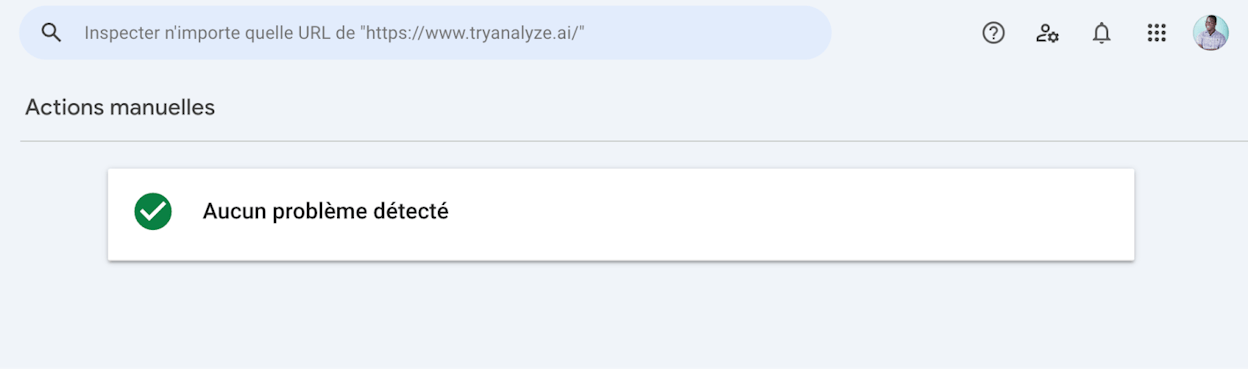
But is Google actually that good at ignoring spam links? Not everyone is convinced. In polls of SEO professionals, a sizable chunk (around 38% in one LinkedIn poll) still disavow spammy links just to be safe.
Does that mean they’re right? Not necessarily. It means they don’t trust Google’s claims and prefer to be cautious. That’s a reasonable position, but it doesn’t mean the links are actually hurting them.
The person whose opinion carries the most weight here is Dr. Marie Haynes. She spent over a decade specifically studying Google’s algorithms and auditing link profiles for business owners. Until recently, she sold link audit and disavow services—meaning she had a financial incentive to tell people their spammy links were dangerous.
And yet, she’s been publicly stating since at least 2022 that disavowing low-quality spammy links “likely does not help improve rankings” because “Google’s algorithms are already ignoring these links.”
When someone with a financial interest in selling you link audits tells you that you probably don’t need one, that’s worth paying attention to.
The bottom line: For most sites, spammy backlinks are background noise. Google ignores them. Worrying about them is usually a waste of time.
Will Manipulative Links Hurt Your Rankings?
Yes. If you’ve been buying or building links at scale to manipulate rankings, those links can absolutely hurt you.
But the key phrase is “at scale.” Google isn’t going to tank your site because you did one link exchange with a friend’s blog or accepted a single paid guest post link. They’re looking for patterns.
Danny Richman, founder of Richman SEO Training, put it clearly in a post on X: “I don’t believe in toxic links. I do believe in toxic link profiles.” He elaborated: “I don’t believe any single link — in isolation — is harmful. However, a ton of crappy links pointing to a site is a whole different story.”
Marie Haynes echoes this. She has stated that outside of manual actions, she would only recommend a client disavow links if the site has “a very large number of links that [they] feel the webspam team would consider to be ‘manipulative.’”
There are two ways Google acts on manipulative link profiles:
1. Manual Actions
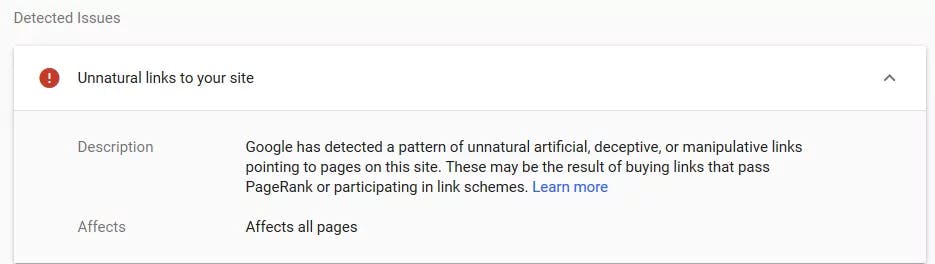
If Google’s webspam team catches you, they can slap your site with a manual action for “unnatural links.” This is Google explicitly telling you: “We’ve reviewed your site, and we believe you’ve been trying to game rankings with bad links.” You’ll see this notification in Google Search Console, and your rankings will drop until you clean up the links and submit a reconsideration request.
2. Algorithmic Demotion
Even without a manual action, Google can algorithmically reduce your visibility. John Mueller has explained that when Google sees “a very strong pattern” of spammy links, their algorithms can decide they’ve “lost trust” with a website and take a “more conservative” approach to ranking it.
The difference is that with a manual action, you know exactly what happened and can fix it. With an algorithmic demotion, you’re left guessing.
The bottom line: Manipulative links can hurt you, but only when there’s a clear pattern. A few questionable links won’t sink your site. A link profile dominated by paid, PBN, or link scheme links might.
What the Google API Leak Revealed About Link Quality
In May 2024, a massive leak of internal Google API documentation gave SEOs their first real look at some of the signals Google tracks. While we should be careful not to over-interpret leaked documentation (we don’t know which signals are active or how they’re weighted), a few things stood out related to link quality.
The leaked documents referenced internal attributes like “BadBackLinks” and signals related to link spam detection. This suggests that Google does maintain some form of internal link quality classification—even if they don’t call it “toxic” publicly.
More interesting was evidence that Google tracks link patterns at both the page and site level, consistent with what John Mueller and Marie Haynes have said about patterns mattering more than individual links.
The leak also confirmed what many SEOs suspected: Google uses anchor text analysis as part of its spam detection. Over-optimized anchor text profiles (like a site where 80% of backlinks use the exact same keyword-rich anchor) are a strong signal of manipulation.
None of this changes the practical advice. It just confirms that Google’s link evaluation is more nuanced than a simple “toxic or not” binary—and that SEO tools trying to replicate this with a single score are oversimplifying a complex system.
Further reading: The 9 Best Backlink Building Tools in 2026
How to Find Truly Toxic Links That May Be Hurting Your Rankings
Here’s where most articles go wrong. They tell you to plug your site into an SEO tool, look at the “toxic” score, and start disavowing everything flagged red. That approach can do serious damage.
Patrick Stox at Ahrefs ran an experiment where he disavowed links flagged by SEO tools. Traffic dropped. When he removed the disavow file, traffic recovered. The “toxic” links were actually helping.
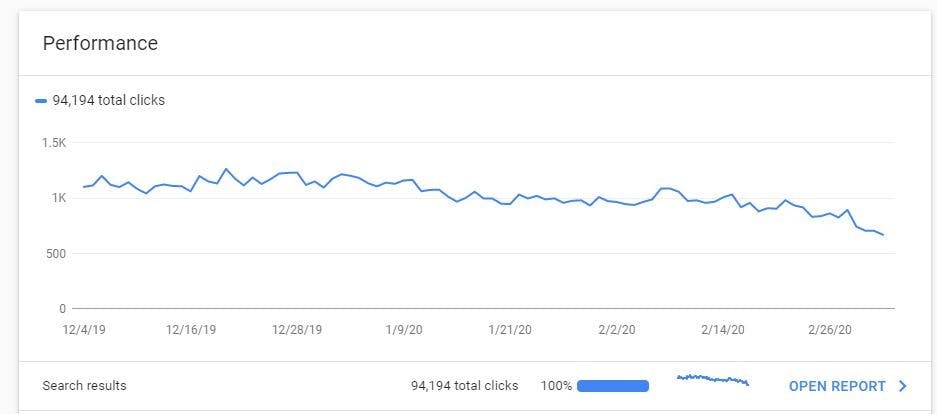
Another Redditor reported a 60% traffic drop after disavowing links that one SEO tool flagged as toxic. That’s the real danger here: blindly trusting automated toxicity scores can cost you links that are actually passing value.
So instead of relying on automated scores, here’s how to do a manual backlink audit that actually works:
Step 1: Check for Manual Actions First
Before anything else, log into Google Search Console and navigate to Security & Manual Actions > Manual actions. If you see a clean report with no issues, you’re already in better shape than you might think.
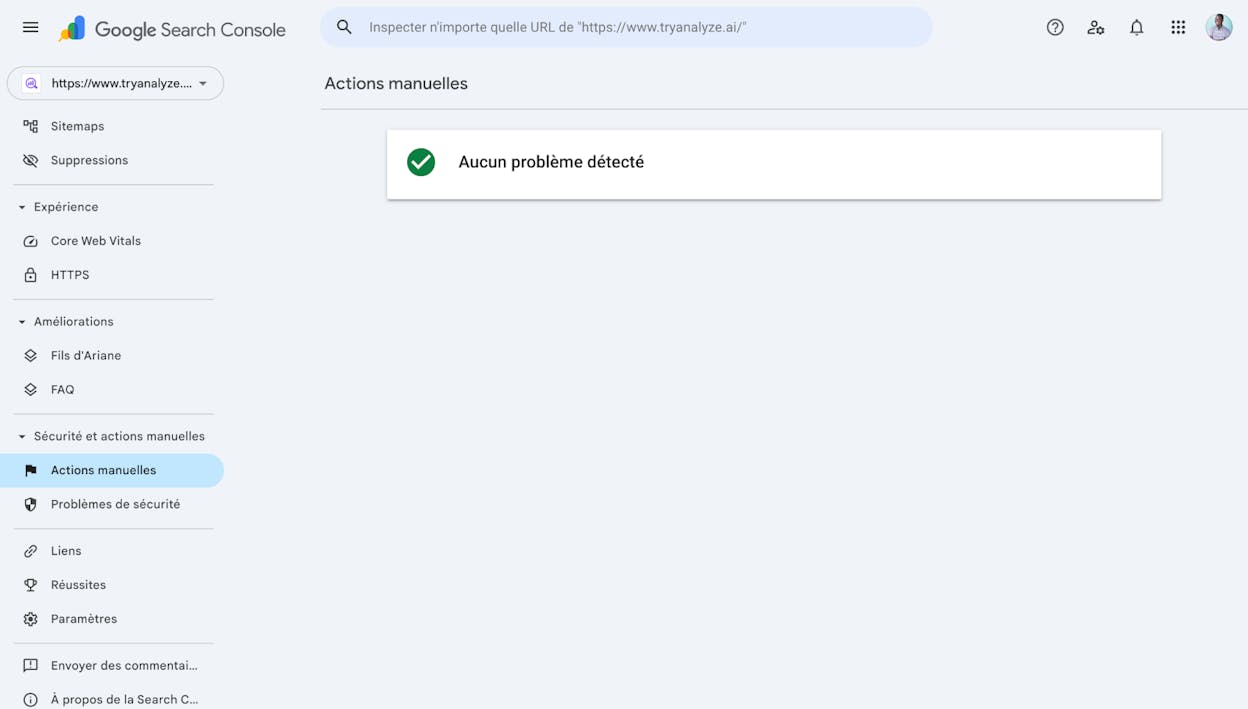
If you do have a manual action for “unnatural links pointing to your site,” that’s the one situation where a thorough link audit and disavow is genuinely necessary.
Step 2: Review Your Anchor Text Profile
Open your backlink analysis tool of choice (Ahrefs, Semrush, or Moz all work) and look at the Anchors report. This shows the words and phrases people use when linking to your site.
A natural anchor text profile looks diverse: branded anchors (your company name), naked URLs, generic phrases (“click here,” “this article”), and a small percentage of keyword-rich anchors.
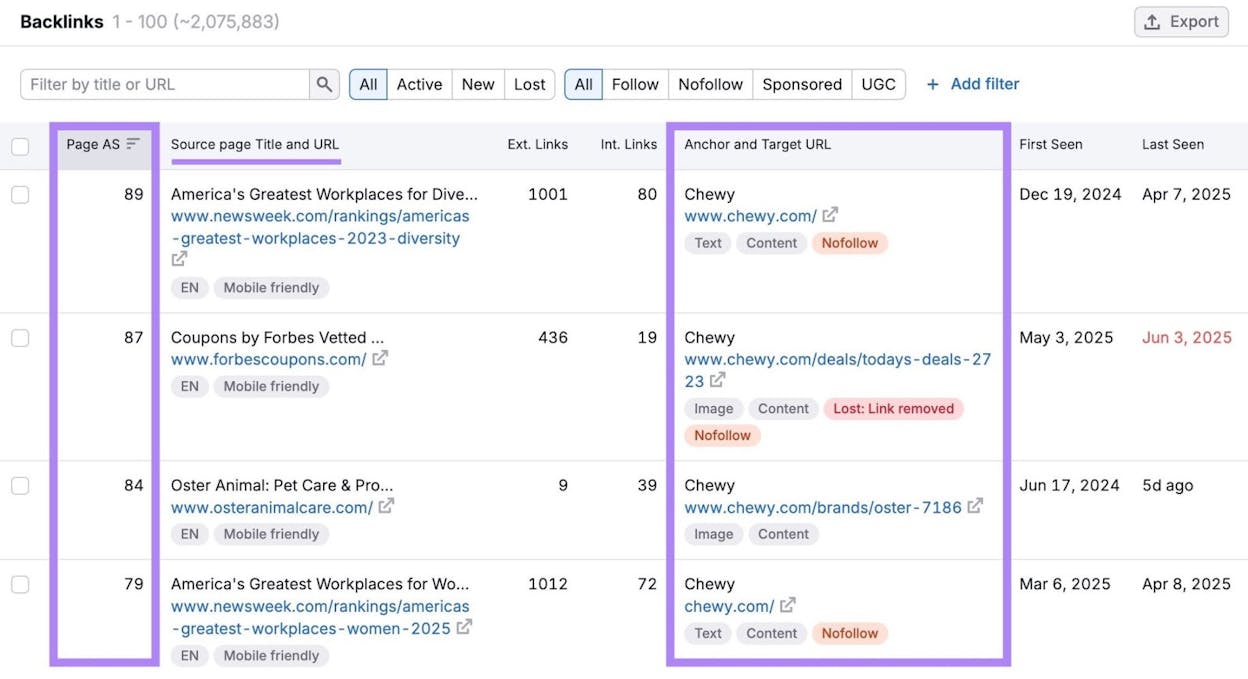
An unnatural anchor text profile looks suspicious: a disproportionate number of exact-match keyword anchors, especially for commercial terms you’re trying to rank for.
If your anchor text distribution looks natural, you probably don’t have a manipulative link problem.
Step 3: Look for Patterns, Not Individual Links
If the anchor text report raised concerns, dig into the actual backlinks. But resist the urge to evaluate links one by one. You’re looking for patterns:
-
Clusters of links from the same type of site (e.g., dozens of links from low-quality guest post farms)
-
Sudden spikes in link acquisition that coincide with link-building campaigns
-
Links from completely irrelevant niches (e.g., a SaaS company getting hundreds of links from casino or pharmaceutical sites)
-
Identical or templated anchor text across many referring domains
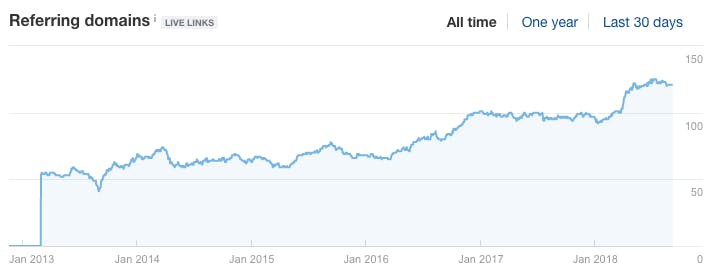
A healthy backlink profile grows gradually. A manipulated one shows unnatural spikes and patterns.
Further reading: Off-Page SEO: 11 Strategies That Work + AI Tracking
Step 4: Cross-Reference with Traffic Data
If you’ve identified suspicious link patterns, check whether your traffic trends correlate. Did traffic drop around the same time as a spike in suspicious backlinks? Did a Google core update affect your rankings?
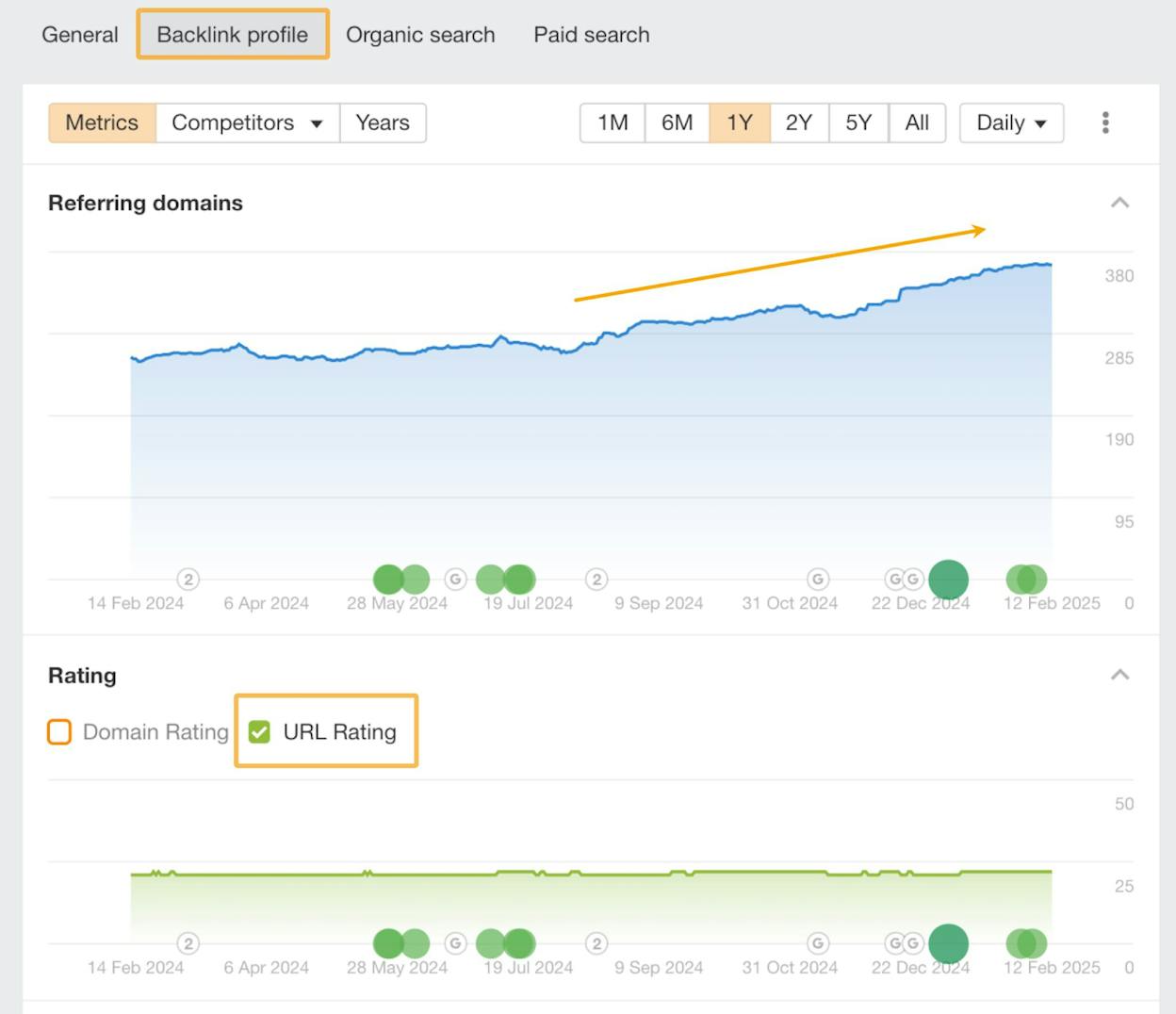
Correlation isn’t causation, but it gives you context. A traffic drop coinciding with a backlink spike is worth investigating further. A stable traffic trend alongside some spammy links means those links probably aren’t doing anything.
Step 5: Use Analyze AI’s Broken Link Checker for Your Own Site
While you’re auditing your backlink profile, it’s also worth checking whether your own site has broken outbound links. Broken links pointing from your site to dead pages can hurt user experience and may send negative quality signals.
Use Analyze AI’s free Broken Link Checker to scan your site for any broken outbound links. Fix or remove them as part of your overall link hygiene.
You can also check your site’s authority score using the Analyze AI Website Authority Checker to benchmark where you stand before and after any cleanup.
Should You Disavow “Toxic” Links?
The answer depends on your specific situation. Here’s a decision framework:
Scenario 1: You Have a Manual Action
Disavow: Yes. This is the one scenario where a thorough backlink audit and disavow file are genuinely necessary. Google has explicitly told you that unnatural links are hurting your site. Follow Google’s disavow documentation, clean up what you can by requesting removals, and disavow the rest.
Scenario 2: You’ve Built Links at Scale and Suspect Algorithmic Impact
Disavow: Probably yes. If you (or a previous SEO agency) ran aggressive link-building campaigns—PBN links, mass guest posting with keyword-rich anchors, link schemes—and you’ve noticed a pattern of declining rankings, a manual audit followed by a targeted disavow makes sense.
Marie Haynes has said there are two situations where she recommends a thorough link audit: when a site has a manual action, and when a site has “a very large number of links that we feel the webspam team would consider to be manipulative.”
Scenario 3: You Just Have Spammy Links That Accumulated Naturally
Disavow: No. Every site attracts spam. If you haven’t actively built or bought links, those spammy backlinks are almost certainly being ignored by Google already. Marie Haynes has noted that while there’s “no harm in disavowing these links other than the time spent analyzing them, there is likely no benefit either.”
Scenario 4: An SEO Tool Flagged a Bunch of Links as “Toxic”
Disavow: Probably not. As we’ve covered, SEO tools use their own criteria to label links as toxic. Those criteria don’t necessarily reflect how Google processes those links. Disavowing links based solely on a tool’s toxicity score can actually hurt you by removing links that were passing value.
Sam McRoberts, CEO of VUVU Marketing, has pointed out that “the links marked as toxic by most SEO tools are very often neutral at worst, not toxic.”
Scenario 5: You Suspect a Negative SEO Attack
Disavow: Maybe. Negative SEO—where a competitor sends a flood of spammy links to your site hoping to trigger a penalty—is theoretically possible. Google’s Gary Illyes has said he’s “looked at hundreds of supposed cases of negative SEO, but none have actually been the real reason a website was hurt.”
That said, if you see a sudden, massive influx of low-quality backlinks from unrelated sources and your traffic drops at the same time, it’s worth investigating. In this narrow case, a precautionary disavow of the obvious attack links is reasonable.
|
Scenario |
Disavow? |
Why |
|---|---|---|
|
Manual action for unnatural links |
Yes |
Google explicitly told you to |
|
Scaled link building + ranking drops |
Probably yes |
Pattern of manipulation exists |
|
Natural spam accumulation |
No |
Google already ignores these |
|
SEO tool flagged “toxic” links |
Probably not |
Tool criteria ≠ Google’s criteria |
|
Suspected negative SEO attack |
Maybe |
Only if evidence is strong |
But What About AI Search? Do Toxic Backlinks Affect AI Visibility?
Here’s something the current conversation about toxic backlinks completely misses: the rise of AI search engines as a meaningful traffic source.
ChatGPT, Perplexity, Claude, Google’s AI Overviews, and Microsoft Copilot don’t just rank websites the way traditional search does. They synthesize answers from multiple sources and cite the pages they reference. This means your visibility in AI search depends on different factors than your position in Google’s ten blue links.
At Analyze AI, we believe that SEO isn’t dying—it’s evolving. AI search is a new organic channel that works alongside traditional SEO, not a replacement for it. And when it comes to backlinks, the AI search layer adds important nuance to the toxic backlinks debate.
AI Engines Don’t Use Your Backlink Profile the Way Google Does
When ChatGPT or Perplexity generates an answer, it pulls from content it was trained on and, in some cases, retrieves live web pages. Its citation decisions are based on factors like content relevance, authority signals, and how well a page answers the specific prompt—not on a traditional backlink graph.
This means that even if your site has a messy backlink profile in Google’s eyes, AI engines may still cite your content if it’s genuinely helpful, well-structured, and authoritative on the topic. Conversely, a site with a “clean” backlink profile but thin content probably won’t get cited by AI engines either.
The practical implication is clear: time spent obsessing over low-level spammy backlinks might be better spent improving the content quality and structure that AI engines actually evaluate when deciding what to cite.
Further reading: How To Get Mentioned in AI Search (From 65k Citations Data)
What Actually Drives AI Citations
Research from Analyze AI’s analysis of 83,670 AI citations reveals that the sources AI models rely on tend to share several characteristics:
-
Depth and specificity: Pages that go deep on a topic with specific data, examples, and actionable guidance get cited more often than surface-level overviews.
-
Structured content: Clear headings, tables, and organized information make it easier for AI models to extract and cite specific answers.
-
Domain authority and trust: AI engines still lean toward citing well-known, trusted domains—though emerging authoritative content can break through.
-
Freshness: Up-to-date content with recent data gets preference, especially for topics that change frequently.
If you want to understand how AI engines are citing your content and your competitors’, Analyze AI’s Citation Analytics shows exactly which URLs are being referenced, how often, and across which AI engines.
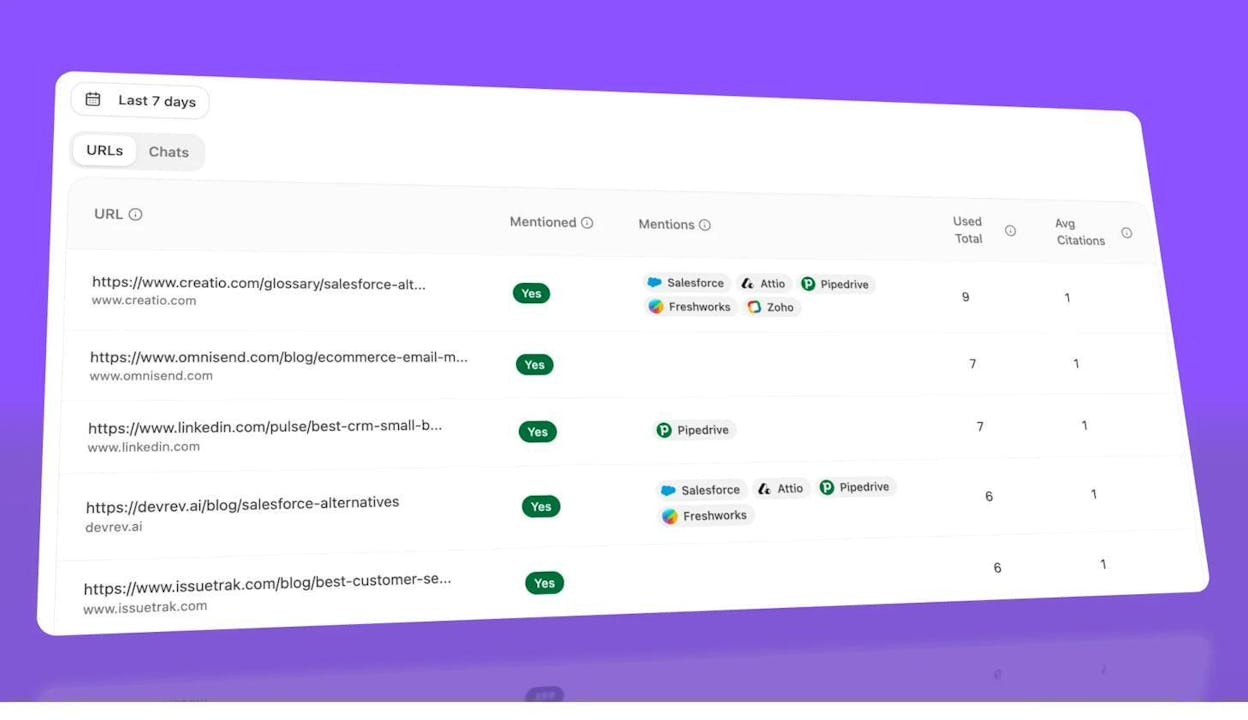
Monitor What AI Engines Say About Your Brand
Beyond citations, AI search engines can shape how people perceive your brand. When someone asks ChatGPT about your industry and your competitor gets mentioned favorably while you don’t show up at all, that’s a visibility gap that no amount of backlink cleanup will fix.
With Analyze AI’s Competitor Overview, you can track which competitors get mentioned alongside your brand in AI-generated answers, how often they appear, and how sentiment breaks down across different AI engines.
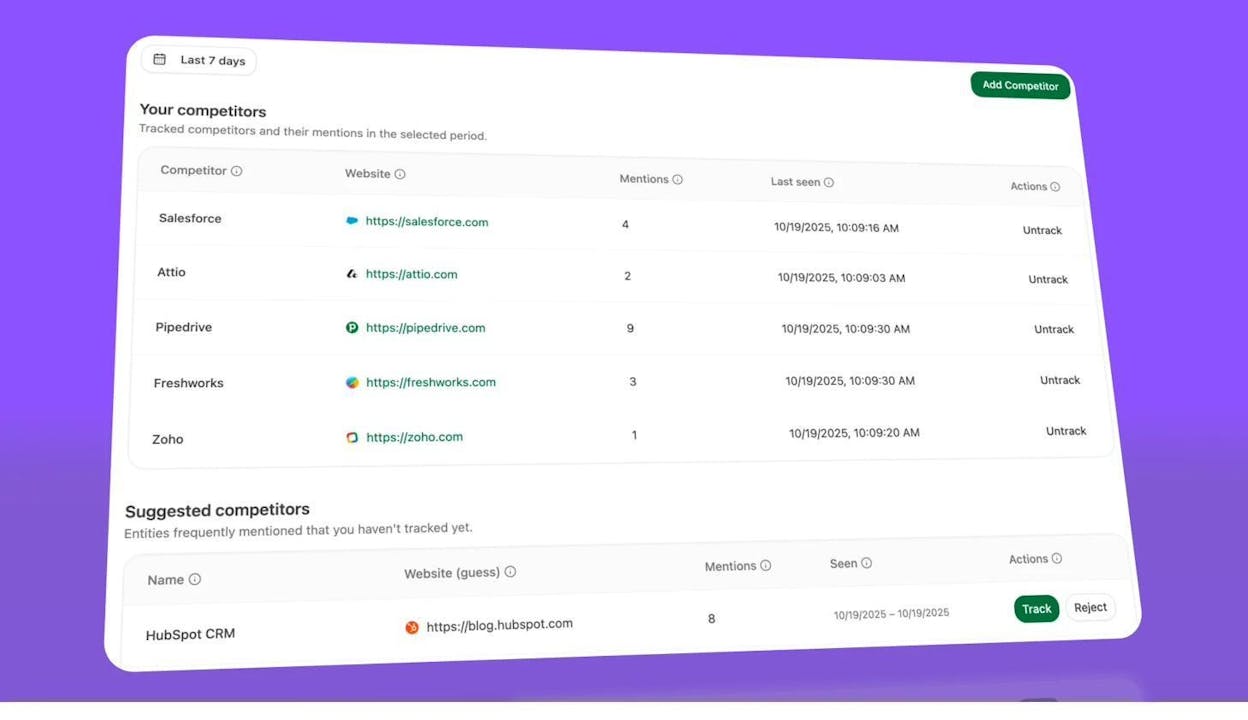
This gives you a completely different view of your competitive landscape than a traditional backlink analysis. You might find that a competitor with fewer backlinks than you is dominating AI search citations because their content is better structured for AI retrieval.
Track the AI Traffic You’re Already Getting
Many sites are already receiving traffic from AI search engines without knowing it. ChatGPT, Perplexity, Copilot, and Claude all send referral traffic when users click through to cited sources.
Analyze AI’s AI Referral Traffic dashboard connects to your GA4 data and shows exactly how much traffic AI engines are sending, which pages receive it, and how it trends over time.
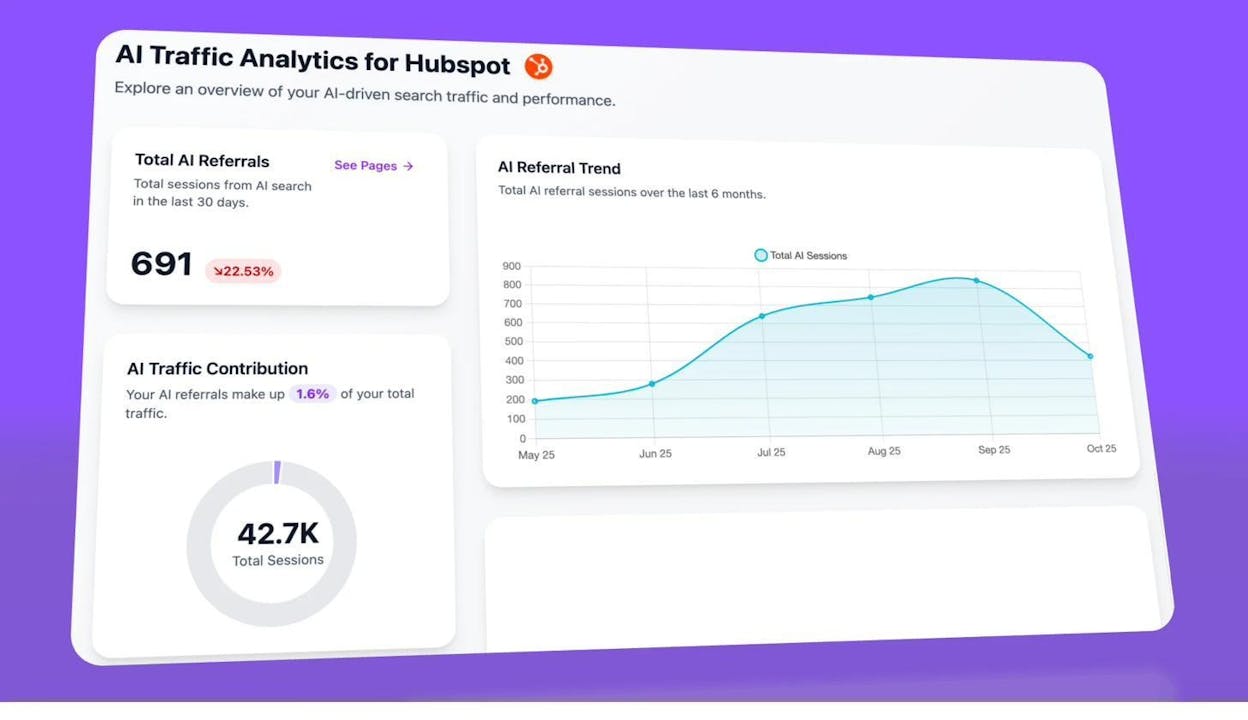
You can even drill down to see which specific pages AI engines are sending traffic to, so you can double down on what’s working.
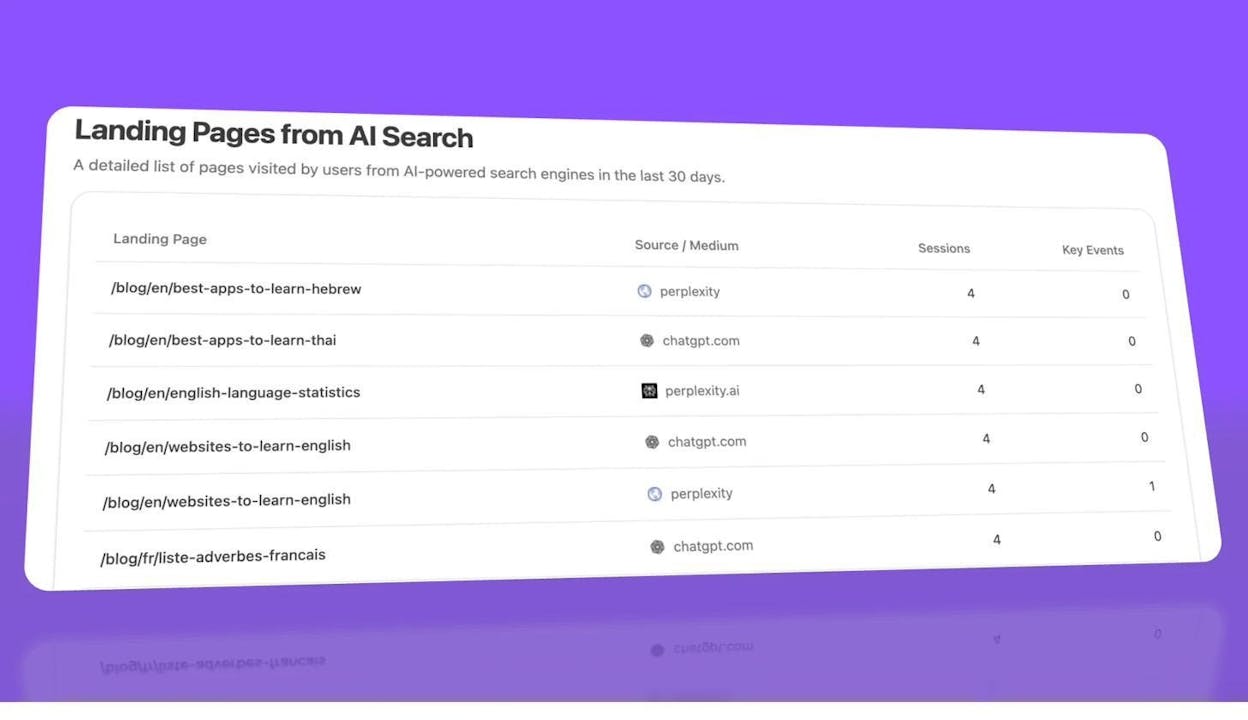
This is the data that matters today. Instead of spending hours auditing whether a random backlink from a Turkish spam site is “toxic,” you could be identifying which of your pages AI engines prefer to cite and optimizing more content in that format.
See Which Engines Drive Your AI Traffic
Not all AI search engines behave the same way. Perplexity might send you significant traffic while Claude sends almost none—or vice versa. Understanding your engine mix helps you prioritize where to focus your generative engine optimization efforts.
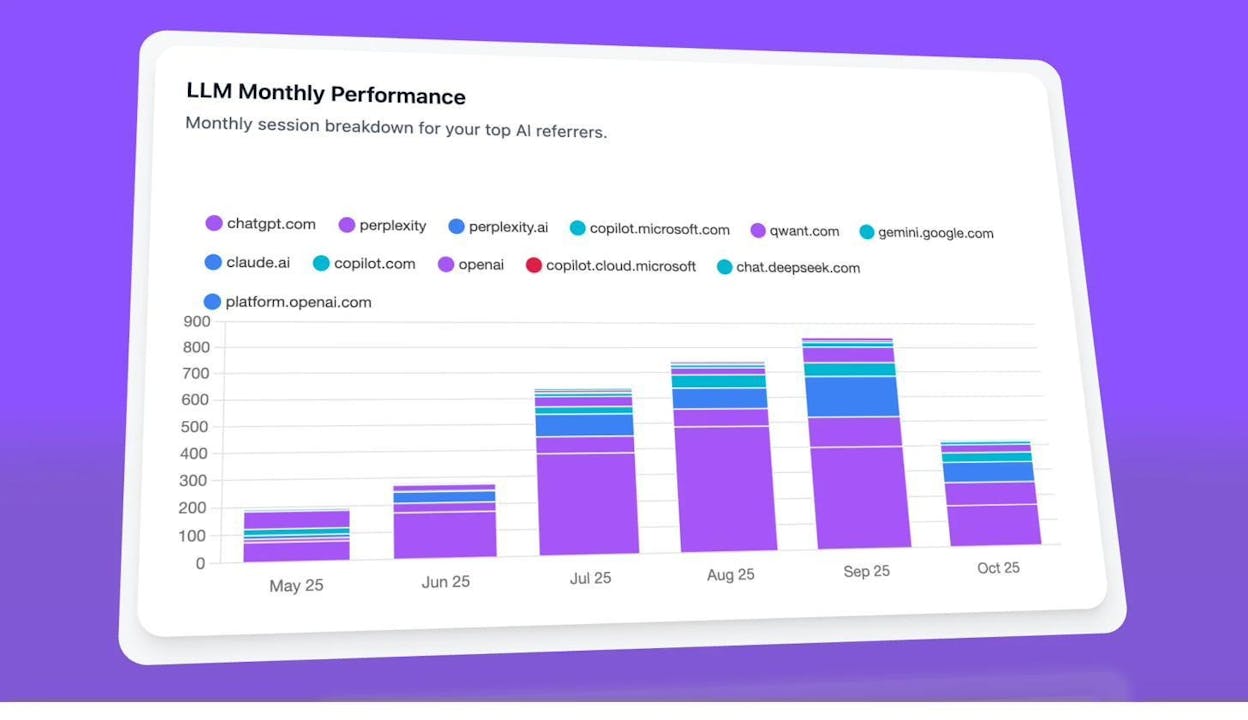
With Analyze AI’s analytics by engine, you can compare month-over-month contribution from each AI platform and allocate your optimization time accordingly.
How to Prioritize: Backlink Cleanup vs. AI Visibility
Given everything we’ve covered, here’s a practical prioritization framework for SEO teams in 2026:
Do first: 1. Check Google Search Console for manual actions. If you have one, fix it. 2. Set up Analyze AI to track your AI search visibility and referral traffic. You need baseline data. 3. Review your anchor text profile for obvious signs of past manipulation.
Do if needed: 4. Run a manual backlink audit only if you find manipulative patterns (not because a tool flagged spam). 5. Disavow links only in the specific scenarios outlined in the decision framework above.
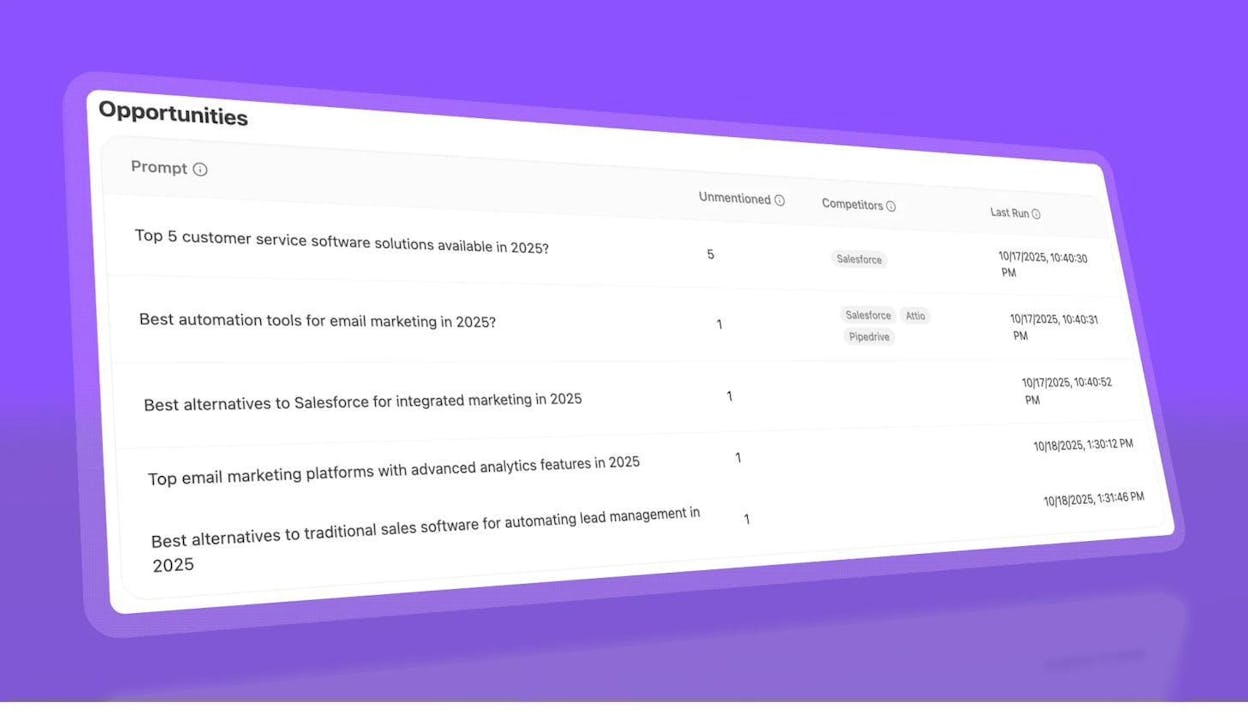
Do instead of chasing “toxic” links: 6. Audit which pages AI engines cite most and create more content in that format. 7. Use Analyze AI’s Opportunities dashboard to identify prompts where competitors get mentioned and you don’t. 8. Track competitor mentions across AI engines and create content that fills the gaps. 9. Improve content structure (headings, tables, data, specificity) to make your pages more citable.
The point isn’t that backlink health doesn’t matter. It does. But the marginal return on auditing your 10,000th spammy link is near zero. The marginal return on getting cited in ChatGPT’s answer to a high-intent prompt in your industry? That’s real, measurable traffic and brand visibility.
Further reading: How To Rank on ChatGPT (Based on 65,000 Citation Data)
Final Thoughts
“Toxic backlinks” is a term created by SEO tools to sell you a solution to a problem that, for most sites, doesn’t exist. That doesn’t mean bad links can’t hurt you—manipulative link patterns and manual actions are real. But the vast majority of “toxic” labels assigned by automated tools point to links that Google is already ignoring.
The more productive question for SEO teams today isn’t “how do I clean up toxic backlinks?” but rather “how do I build the kind of content authority that compounds across both traditional search and AI search?”
Backlinks still matter. But in a world where AI search is becoming a real organic channel, the brands that win will be the ones focused on content quality, domain authority, and measurable AI visibility—not the ones chasing phantom toxicity scores.
If you want to see how your brand appears across AI search engines and start tracking the metrics that actually matter, try Analyze AI.

Ernest

Ibrahim


