



Summarize this blog post with:


In this article, you’ll learn what keywords are, why they matter for both traditional search and AI-powered answer engines, how to find the right ones, how to choose between them, and how to optimize your content so it ranks—whether someone types a query into Google or asks ChatGPT.
Table of Contents
What Are Keywords?
Keywords are the words and phrases people type into search engines to find information, products, or answers. If you searched Google for “best running shoes for flat feet,” that entire phrase is a keyword.
Outside of marketing, most people call them “searches” or “queries.” They mean the same thing. Whether someone types two words or twelve, it’s still a keyword.
Here’s where it gets interesting: keywords no longer live inside Google alone. When someone opens ChatGPT and types “what CRM should a 10-person sales team use?”—that’s also a keyword. The format is different (more conversational, more specific), but the underlying behavior is the same. A person has a question and they need an answer.
This matters because the landscape has changed. People still search Google billions of times per day. But a growing number of those queries now also run through AI answer engines like ChatGPT, Perplexity, Claude, Gemini, and Copilot. If your content only accounts for traditional search, you’re leaving an emerging channel on the table.
That said, SEO is not dead—it’s evolving. AI search is a complementary organic channel, not a replacement for the work that has always driven organic growth: quality content, technical clarity, and relevance.
Why Are Keywords Important?
Keywords are important because they connect your content to the people searching for it. Without keywords, search engines (and AI models) have no reliable way to understand what your page is about or whether it’s relevant to a given query.
Here’s a practical example. Say you run a SaaS company that sells project management software. If your website doesn’t mention phrases like “project management tool,” “task management software,” or “team collaboration app,” Google won’t know to show your pages when someone searches for those terms. You’ll be invisible.
Now consider the flip side. If you create content around a keyword like “how to manage remote teams”—a phrase with thousands of monthly searches—and your page is the most helpful result, Google will rank it. That means free, recurring traffic from people who are exactly your target audience.
The same logic applies to AI search. When someone asks Perplexity “what’s the best project management tool for startups?”, the AI model pulls its answer from content it considers authoritative and relevant. If your content covers that topic well, you can earn a citation—and traffic—from that answer.
![[Screenshot: Analyze AI’s AI Traffic Analytics dashboard showing visitors from ChatGPT, Perplexity, Claude, Gemini, and Copilot broken down by source]](https://www.datocms-assets.com/164164/1774876873-blobid1.jpg?auto=format,compress&w=1248&fit=max)
The screenshot above is from Analyze AI, which tracks visitors arriving from AI platforms. The key takeaway: AI search is already sending measurable traffic to websites. Keywords are the bridge between your content and that traffic—in both traditional and AI search.
How to Show Up in Search Results for Keywords
There are three main ways your website can appear when someone searches a keyword.
1. PPC (Pay-Per-Click Advertising)
PPC lets you pay to appear at the top of Google’s search results for specific keywords. You bid on keywords through platforms like Google Ads, and when someone searches that keyword and clicks your ad, you pay a fee.
For example, if you sell accounting software, you might bid on the keyword “small business accounting software.” Your ad would appear above the organic results, labeled with a small “Sponsored” tag.
![[Screenshot: Google search result showing paid ads at the top labeled “Sponsored”]](https://www.datocms-assets.com/164164/1774876878-blobid2.png?auto=format,compress&w=1248&fit=max)
PPC is fast—you can start getting clicks within hours. But the moment you stop paying, the traffic stops. It’s a faucet you can turn on and off.
2. SEO (Search Engine Optimization)
SEO is the process of optimizing your web pages so they rank in Google’s organic (non-paid) results. Unlike PPC, you don’t pay for each click. Instead, you earn your position by creating content that Google considers the best, most relevant result for a given keyword.
The tradeoff: SEO takes time. It can take weeks or months for a new page to rank. But once it does, the traffic is essentially free and compounds over time.
For example, a well-optimized blog post targeting “how to use keywords in SEO” can bring in hundreds of visitors every month for years without any ongoing cost.
3. AI Search Optimization
This is the newest channel. When someone asks an AI model a question, the model generates an answer—and often cites sources. If your content gets cited, you receive traffic from that AI engine.
This is different from SEO in a few key ways. AI models don’t rank a list of ten blue links. Instead, they synthesize an answer and reference the sources they drew from. Your goal isn’t to rank #1 in a list—it’s to be cited in the answer.
What earns citations? The same qualities that earn high Google rankings: depth, originality, clear structure, and authority. The difference is that AI models also care about how clearly information is organized (because they need to extract and cite it), and they pull from multiple sources to construct a single answer.
You can track whether your brand appears in AI answers using a tool like Analyze AI. It monitors your visibility across ChatGPT, Perplexity, Claude, Gemini, Copilot, and more—and ties that visibility to actual traffic and conversions.
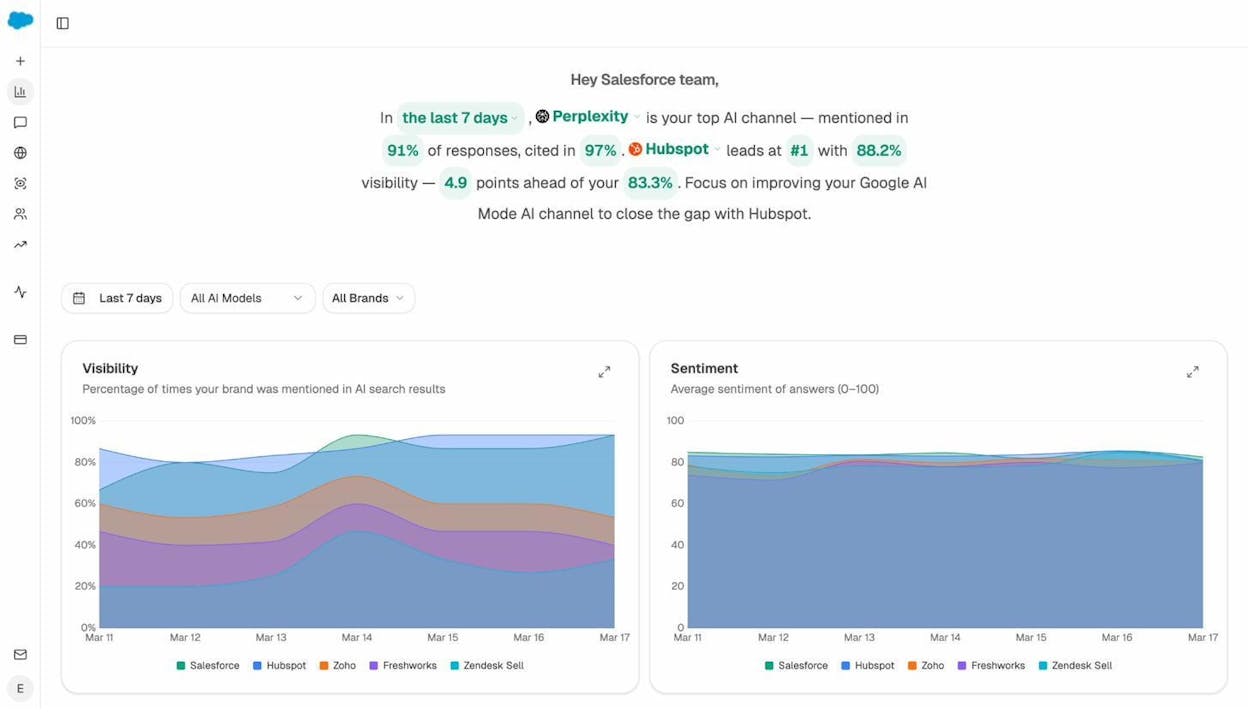
How to Find Keywords
Most people have a rough idea of what keywords they want to rank for. But “rough idea” isn’t a strategy. You need to discover the full range of terms your audience searches for—including ones you’d never think of on your own.
Here’s how.
Step 1: Start With Seed Keywords
Seed keywords are broad terms related to your business. They’re your starting point, not your final list.
If you sell email marketing software, your seed keywords might be: “email marketing,” “newsletter tool,” “email automation,” and “drip campaigns.”
Where to find seed keywords:
Brainstorm based on your product. What problem does it solve? What category does it belong to? What would a customer type into Google when looking for something like it?
Look at competitor websites. Browse their navigation menus, blog categories, and landing page headlines. These reveal the terms they’re targeting.
Ask your sales and support teams. They hear the language your customers use every day. That language often matches what people search for.
Use ChatGPT or Claude. Paste your seed keywords and ask: “Suggest 20 related keyword ideas for each of these topics.” You won’t get search volume data, but you’ll get useful brainstorming material fast.
Step 2: Expand With a Keyword Research Tool
Once you have seed keywords, plug them into a keyword research tool to discover related terms, search volumes, and difficulty scores.
Here are several options depending on your budget:
|
Tool |
Type |
Best For |
|
Analyze AI Keyword Generator |
Free |
Generating keyword ideas quickly |
|
Analyze AI Keyword Difficulty Checker |
Free |
Checking how hard a keyword is to rank for |
|
Google Keyword Planner |
Free |
PPC-oriented research, rough volume estimates |
|
Google Search Console |
Free |
Finding keywords you already rank for |
|
Mangools KWFinder |
Paid |
Beginner-friendly with clean interface |
|
SE Ranking |
Paid |
Affordable all-in-one SEO platform |
Plug your seed keywords into a keyword research tool. For example, entering “email marketing” into Analyze AI’s free keyword generator instantly returns related ideas like “email marketing for small business,” “best email marketing platforms,” and “email drip campaign examples”—along with difficulty ratings to help you prioritize.
Step 3: Find Keywords People Ask AI Models
Here’s where traditional keyword research falls short. People phrase questions differently in AI search than in Google. A Google search might be “best CRM software.” The same person might ask ChatGPT: “What CRM should a 10-person B2B sales team use if they need strong Salesforce integration?”
AI prompts tend to be longer, more conversational, and more specific. You can’t find these in a traditional keyword tool because they don’t have tracked search volumes.
This is where Analyze AI’s prompt tracking comes in. It shows you the actual prompts people use when asking about topics in your industry—and whether your brand appears in the answers.
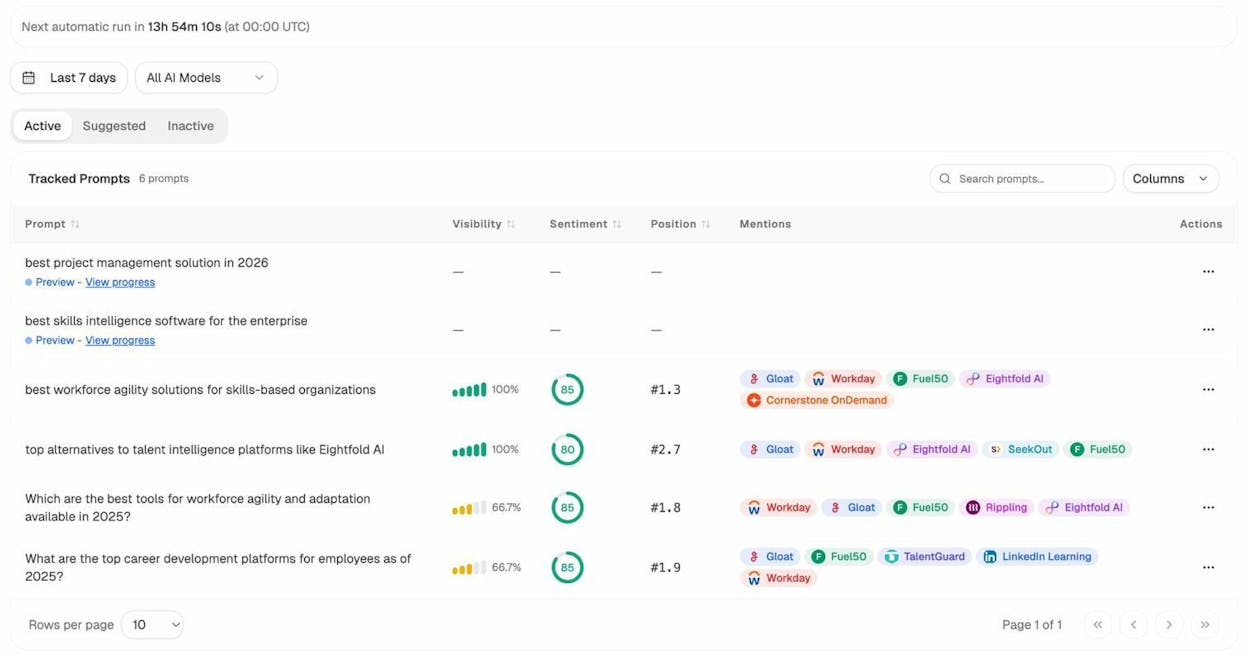
In the screenshot above, you can see tracked prompts along with visibility percentage, sentiment scores, ranking position, and which brands are being mentioned. This tells you not just what people are asking AI models, but who’s winning those conversations—and where you’re missing.
You can also use the “Suggested” tab to discover new prompts that Analyze AI recommends based on your industry cluster. One click adds them to your tracking set, so you can monitor visibility over time without manual guesswork.
How to Choose the Right Keywords
Finding keywords is easy. Choosing the right ones to invest in is harder. Here are the four factors that matter most.
1. Search Volume
Search volume tells you how many times a keyword is searched per month. Higher volume generally means more potential traffic.
But volume alone is misleading. A keyword with 50,000 monthly searches is useless if it’s completely irrelevant to your business. And a keyword with 200 monthly searches might be worth its weight in gold if every searcher is a potential customer.
You can check search volume using Analyze AI’s free SERP Checker or any keyword research tool.
The important nuance: search volume doesn’t always predict traffic. A page ranking #1 for a keyword with 1,000 monthly searches might actually get 5,000 visits per month because it also ranks for hundreds of related terms. This is why it’s smart to look at the traffic the current top-ranking pages actually receive, not just the search volume of a single keyword.
2. Search Intent
Search intent is the reason behind a search. Understanding it is arguably the single most important part of keyword selection.
There are four main types of search intent:
|
Intent Type |
What the Searcher Wants |
Example Keywords |
|
Informational |
To learn something |
"what is keyword research," "how to build backlinks" |
|
Navigational |
To find a specific page or brand |
"Google Analytics login," "Analyze AI pricing" |
|
Commercial |
To compare options before buying |
"best keyword research tools," "Mangools vs SE Ranking" |
|
Transactional |
To buy or take action |
"buy running shoes online," "SE Ranking pricing plans" |
Why does this matter? Because Google ranks different types of content for different intents. If someone searches “best project management tools,” the top results are comparison blog posts—not product homepages. If you try to rank your product page for that keyword, it won’t work because the intent doesn’t match.
How to check intent: Google the keyword and look at the top 10 results. What type of content dominates? Blog posts? Product pages? Videos? The pattern tells you what Google (and searchers) expect to see.
![[Screenshot: Google search results for a keyword showing the types of content that rank — blog posts, listicles, etc.]](https://www.datocms-assets.com/164164/1774876886-blobid5.png?auto=format,compress&w=1248&fit=max)
Search intent applies to AI search too. When someone asks ChatGPT a comparison question like “what’s the best CRM for startups?”, the model constructs a comparison-style answer. If your content is structured as a clear, well-organized comparison, it’s more likely to be cited. But if your content is a generic product page, it probably won’t be.
3. Business Value
Not all keywords are worth pursuing—even high-volume ones with clear intent. You also need to ask: does this keyword bring people who could become customers?
Here’s a framework. Assign each keyword a value from 0 to 3:
|
Score |
Description |
Example (for a CRM company) |
|
3 |
Searcher is looking for exactly what you sell |
"best CRM for small sales teams" |
|
2 |
Searcher has a problem your product solves |
"how to track sales pipeline" |
|
1 |
Searcher is in your industry but not close to buying |
"what is a sales pipeline" |
|
0 |
Keyword is irrelevant to your product |
"how to negotiate salary" |
Focus most of your effort on keywords that score 2 or 3. They’re the ones that drive actual business results, not just pageviews.
You can also use CPC (cost-per-click) data as a rough proxy for value. If advertisers are paying $15 per click for a keyword, it’s likely valuable. If CPC is $0.10, the commercial value is probably low.
4. Keyword Difficulty
Keyword difficulty estimates how hard it will be to rank for a given keyword. Most SEO tools score it on a scale from 0 to 100, based primarily on how many high-quality backlinks the current top-ranking pages have.
You can check this for free using Analyze AI’s Keyword Difficulty Checker.
High difficulty doesn’t mean impossible. It means you’ll need strong content and likely some backlinks to compete. If the keyword is extremely valuable to your business, it might still be worth targeting as a long-term play.
Low difficulty doesn’t mean easy. A keyword with a difficulty score of 10 might still be hard to rank for if the current results are from major brands or if the content quality bar is high.
New websites should start with lower-difficulty keywords. Build topical authority and backlinks with easier wins first, then work your way up to more competitive terms.
Finding Keyword Opportunities in AI Search
Traditional keyword difficulty only tells you about Google. But what about AI search?
A keyword that’s fiercely competitive in Google might be wide open in AI answers. If your competitor dominates the Google SERP but their content isn’t structured for AI citation, you could earn visibility in ChatGPT and Perplexity answers even while they outrank you in Google.
Analyze AI’s Competitor Overview shows you exactly where competitors appear in AI answers and where they don’t. This reveals gaps you can exploit.
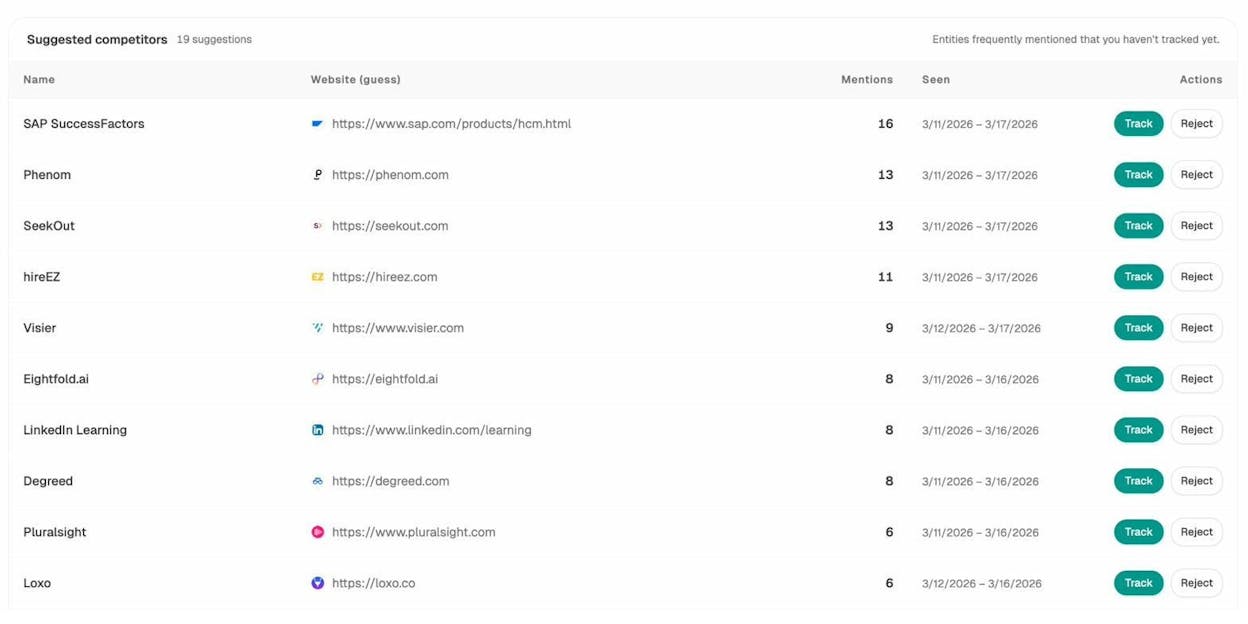
In this view, you can see which competitors are being mentioned most frequently in AI answers. If a competitor appears in 16 prompts and you appear in zero, that’s a clear opportunity. Track them, study the prompts where they appear, and create content that addresses those same topics more thoroughly.
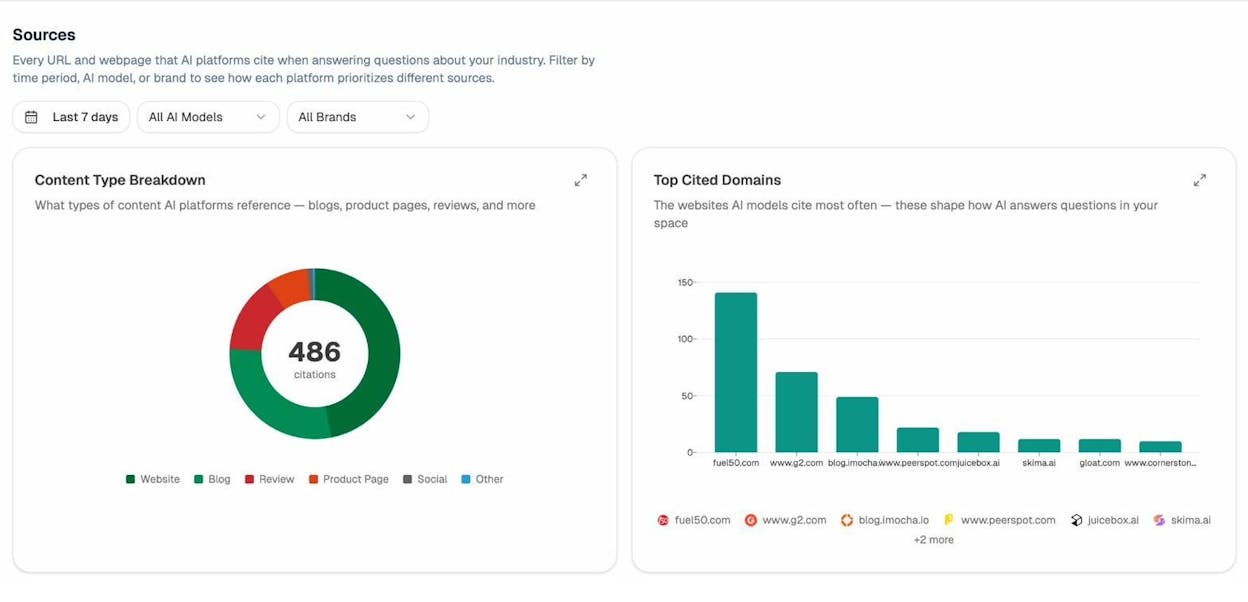
Similarly, Analyze AI’s Sources tab shows which domains AI models cite most often in your industry. If a particular blog or review site is frequently cited, earning a mention or backlink from that source increases your chances of being cited by AI models too.
How to Optimize Content for Keywords
Most optimization guides will tell you to put the keyword in your title tag, URL, and sprinkle it throughout your content. That advice isn’t wrong, but it’s incomplete. Those are table-stakes tactics, not a strategy.
The real way to optimize for a keyword is to match search intent and cover the topic comprehensively. Here’s how to do it step by step.
Step 1: Analyze the Top-Ranking Pages
Google the keyword you’re targeting. Study the top five results. Ask yourself:
What type of content ranks? Blog posts? Product pages? Videos? How-to guides? Your content needs to match this format.
What angle do they take? If every top result for “backlinks” is a “what are backlinks?” guide, that’s the angle searchers expect. Don’t try to rank a link-building service page for that keyword.
What subtopics do they cover? If every top result includes sections on “why backlinks matter” and “types of backlinks,” your content should cover those topics too. Missing key subtopics signals to Google that your page is incomplete.
![[Screenshot: Google search results showing the common structure and angle of top-ranking pages for a keyword]](https://www.datocms-assets.com/164164/1774876895-blobid8.png?auto=format,compress&w=1248&fit=max)
Step 2: Create Content That’s Genuinely Better
Don’t just match the competition—beat it. Here’s what “better” actually means:
More depth. Cover subtopics that competitors mention only briefly. Add step-by-step instructions where they give vague advice.
Original information. Include your own data, case studies, screenshots, or expert insights. Content that offers something readers can’t find anywhere else is hard to outrank.
Better structure. Use clear headings, short paragraphs, and a logical flow that makes the content easy to skim and read. This also helps AI models extract and cite your content.
More current. If top results reference outdated tools, old statistics, or deprecated features, your content should include the latest information.
Step 3: Handle On-Page SEO Basics
Once your content is written, make sure these fundamentals are in place:
Title tag. Include your primary keyword naturally. Keep it under 60 characters so it doesn’t get cut off in search results. You can generate ideas using Analyze AI’s free SEO Title Generator.
URL slug. Use a short, descriptive URL that includes the keyword. For this article, the slug is /blog/what-are-keywords.
Meta description. Write a compelling description that includes the keyword and gives people a reason to click. Keep it under 160 characters. Analyze AI’s free Meta Description Generator can help here.
Headings (H2, H3). Use your primary keyword and related terms in subheadings where it makes sense. Don’t force it—clarity matters more than keyword placement.
Image alt text. Describe your images accurately and include keywords where relevant. This helps with image search and accessibility. Analyze AI’s Image Alt Text Generator makes this easy.
Internal links. Link to other relevant pages on your site. This helps search engines understand your site structure and distributes page authority. For more tactics, see our guide on internal linking for SEO.
Step 4: Optimize for AI Search Citation
Everything above helps with traditional SEO. But to increase your chances of being cited by AI models, add these practices:
Use clear, factual statements. AI models prefer content that makes direct claims they can extract. “The average email open rate in 2025 is 21.3%” is more citable than “email open rates vary a lot.”
Structure content with definitive headings. When your H2 is “What Is Keyword Research?” and the first sentence directly answers that question, AI models can easily pull that into their responses.
Include comparison tables and data. AI models frequently cite content that contains structured comparisons, statistics, and concrete examples.
Earn citations from authoritative sources. AI models weight sources that other trusted sites link to. The more backlinks and brand mentions you have, the more likely AI models are to cite your content. You can track your citation sources using Analyze AI’s citation analytics.
Monitor and iterate. Use Analyze AI’s AI Traffic by Page report to see which of your pages receive traffic from AI engines. Double down on the formats and topics that are working.
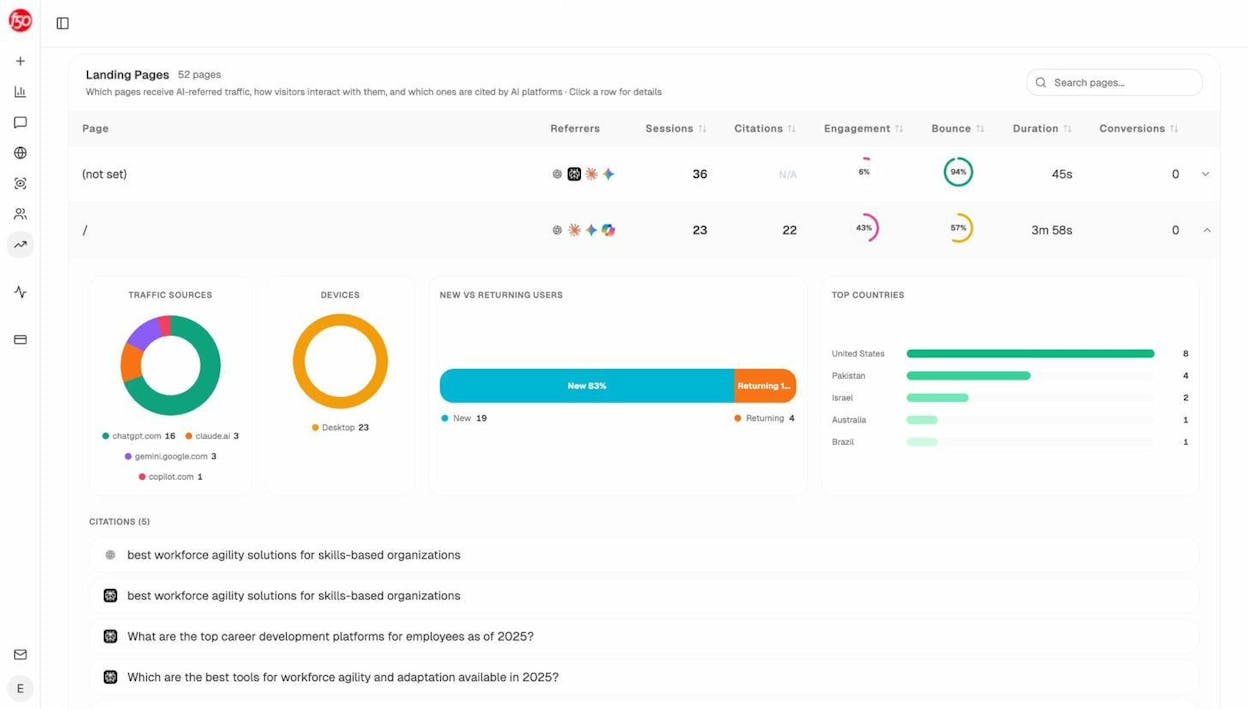
In this screenshot, you can see which landing pages receive AI-referred traffic, which AI engines are sending visitors, and how engaged those visitors are. This data lets you reverse-engineer what’s working: if a specific blog post gets strong AI traffic with low bounce rates and decent session duration, study its structure and replicate that approach across other content.
What Are Long-Tail Keywords?
Long-tail keywords are search queries with relatively low individual search volume. Despite the name, they’re not defined by length—they’re defined by specificity and search volume.
A one-word keyword like “shoes” gets millions of searches per month. A long-tail keyword like “best waterproof trail running shoes for wide feet” might get 50. But that searcher knows exactly what they want, which makes them far more likely to convert.
Here’s the math that makes long-tail keywords powerful: individually, they don’t drive much traffic. Collectively, they account for the vast majority of all searches. If you rank for 200 long-tail keywords that each bring 30 visitors per month, that’s 6,000 monthly visitors—often more qualified than what you’d get from a single head term.
Long-tail keywords are especially relevant for AI search. When someone asks ChatGPT a question, it’s almost always a long-tail query by nature: “What’s the best CRM for a B2B SaaS company with under 20 employees?” That specificity is exactly what long-tail content addresses.
Supporting Long-Tail Keywords vs. Topical Long-Tail Keywords
Not all long-tail keywords work the same way. There are two distinct types, and confusing them leads to wasted effort.
Supporting long-tail keywords are unpopular ways of searching for a popular topic. For example, “ways to shed pounds,” “how to drop weight fast,” and “tips for losing weight” are all supporting long-tail keywords for the head term “how to lose weight.” They share the same search intent, and Google ranks the same pages for all of them.
This means you don’t need to create separate pages for supporting long-tail keywords. If you write the best possible article on “how to lose weight,” it will naturally rank for all the supporting variations.
Topical long-tail keywords represent a distinct topic with its own search intent. For example, “keyword cannibalization” is a topical long-tail keyword. It only gets a few hundred searches per month, not because there’s a more popular way to phrase it, but because the topic itself is niche.
The distinction matters for two reasons:
1. Topical long-tail keywords deserve their own page. Because they represent unique topics, they need dedicated content to rank.
2. Topical long-tail keywords are often easier to rank for. Fewer people compete for niche topics, so you need fewer backlinks and less authority to reach the top.
How to Find Long-Tail Keywords
Here are three practical methods:
Use keyword tools with filters. In any keyword research tool, filter for keywords with low search volume (under 500/month) and low difficulty. If a keyword is the most popular way to phrase its topic (not just a variation of a head term), it’s a topical long-tail worth targeting.
Mine Google’s “People Also Ask” box. These questions are gold for finding long-tail queries that real people search for. Each question you click generates more questions, so you can build a large list quickly.
![[Screenshot: Google’s People Also Ask box showing expandable questions related to a search query]](https://www.datocms-assets.com/164164/1774876901-blobid10.png?auto=format,compress&w=1248&fit=max)
Check AI prompt data. If you’re using Analyze AI, look at your prompt suggestions. AI prompts are inherently long-tail—they’re specific, conversational, and often reveal topics that traditional keyword tools miss entirely. The “Suggested” tab in Analyze AI surfaces prompts your competitors appear for that you don’t, giving you a ready-made list of topical gaps to fill.
Use specialized keyword tools for other platforms. If your audience searches on platforms beyond Google, explore niche keyword opportunities with tools like Analyze AI’s YouTube Keyword Tool, Bing Keyword Tool, or Amazon Keyword Tool.
Keywords and AI Search: What’s Changing (and What’s Not)
There’s a lot of panic in the marketing world about AI search replacing SEO. Here’s the reality: SEO is not dead. It’s evolving.
Google still drives the vast majority of organic traffic. But AI answer engines like ChatGPT, Perplexity, and Gemini are becoming a meaningful secondary channel. The brands that treat AI search as an addition to their SEO strategy—not a replacement—are the ones seeing compounding returns.
Here’s what’s changing about keywords in the age of AI search:
Keywords are getting longer and more conversational. In Google, people search for “best CRM.” In ChatGPT, they ask “What’s the best CRM for a 10-person startup that integrates with Slack and HubSpot?” Your content needs to address both types of queries.
Intent matters even more. AI models don’t just match keywords to pages. They try to understand what the person actually wants and construct a helpful answer. Content that deeply understands and addresses user intent earns more citations.
Structured content wins. AI models need to extract specific pieces of information from your content. Clear headings, direct answers, comparison tables, and well-organized sections make your content easier to cite.
Brand authority compounds. AI models tend to cite sources that are widely referenced across the web. Building domain authority, earning backlinks, and getting mentioned on other sites increases your chances of being cited in AI answers.
Here’s what’s not changing:
Quality content is still the foundation. There’s no hack or shortcut for AI search visibility. The same content principles that work in SEO—depth, originality, structure, usefulness—work in AI search.
Keyword research is still the starting point. You still need to understand what your audience is searching for and what they want. The tools and methods are expanding (prompt tracking, AI citation analysis), but the fundamental process is the same.
Technical SEO still matters. AI models heavily rely on web crawlers and indexed content. If your site has technical problems that prevent proper crawling and indexing, you’ll struggle in both traditional search and AI search.
How to Track Your Keyword Performance Across Both Channels
For traditional SEO, use Google Search Console to monitor which keywords your pages rank for, how many impressions and clicks they receive, and how your rankings change over time. You can also use Analyze AI’s Keyword Rank Checker for quick spot-checks.
For AI search, use Analyze AI to track which prompts your brand appears in, which competitors appear alongside you, which pages drive AI traffic, and which sources AI models cite in your space.
Putting It All Together: A Keyword Action Plan
Here’s a simple framework to turn everything in this article into action:
1. Build your seed keyword list. Brainstorm 10–20 broad terms related to your business. Check competitor sites for additional ideas.
2. Expand with a keyword tool. Use Analyze AI’s Keyword Generator, Google Keyword Planner, or any keyword research tool to turn seeds into hundreds of keyword ideas.
3. Filter and prioritize. For each keyword, evaluate search volume, intent, business value, and difficulty. Focus on keywords that score 2 or 3 on the business value scale and have difficulty levels you can realistically compete at.
4. Check AI search opportunity. Use Analyze AI to see whether competitors are visible in AI answers for your target topics. If there’s a gap, prioritize those keywords—you can capture AI traffic before the space gets crowded.
5. Create content that matches intent. Study the top-ranking pages. Match the content type, angle, and depth. Then go further: add original data, step-by-step instructions, and clear structure that both search engines and AI models can parse.
6. Optimize for both channels. Handle on-page SEO basics (title tag, URL, meta description, internal links). Structure your content for AI citation (direct answers under clear headings, comparison tables, concrete data).
7. Monitor and iterate. Track rankings in Google Search Console. Track AI visibility in Analyze AI. Double down on what’s working. Fix what isn’t.
Keywords are the foundation of every organic growth strategy—whether that traffic comes from Google, ChatGPT, Perplexity, or the next search engine that doesn’t exist yet. The brands that master keyword research and apply it across both traditional and AI search channels will compound their advantage over time.
To dig deeper into keyword strategy, explore our guides on SEO keywords, keyword types, keyword clustering, and AI keyword research.

Ernest

Ibrahim


![Link Building Outreach: A Step-by-Step Guide [With Templates]](/_next/image?url=https%3A%2F%2Fwww.datocms-assets.com%2F164164%2F1774864954-blobid0.png&w=3840&q=75)
