



Summarize this blog post with:


In this article, you’ll find 55 verified AI marketing statistics for 2026 covering AI Overviews, AI search engines, brand visibility, citations, referral traffic, content workflows, and AI bot activity. Each section is grouped by what the data is actually telling you to do, so you can stop scrolling for numbers and start making decisions.
Table of Contents
The headline numbers, in one minute
If you only have a minute, these are the eight numbers that capture where AI marketing actually stands in 2026.
|
Stat |
2026 Value |
Source |
|---|---|---|
|
Google AI Overviews monthly users |
2 billion+ |
|
|
Share of Google searches that show an AI Overview |
~21% |
Ahrefs |
|
Drop in #1 organic CTR when an AI Overview appears |
up to 58% |
Ahrefs |
|
Share of zero-click searches in Google AI Mode |
93% |
ALM Corp |
|
ChatGPT weekly active users |
800M – 1B |
OpenAI / Index.dev |
|
YoY growth in LLM referral traffic |
527% |
Previsible / Search Engine Land |
|
Share of marketers using AI in at least one workflow |
87% |
Salesforce State of Marketing 2026 |
|
Share of AI citations from third-party sources, not your own site |
~83% |
Analyze AI (83,670 citations) |
Now to the rest.
AI Overviews and their impact on traditional search
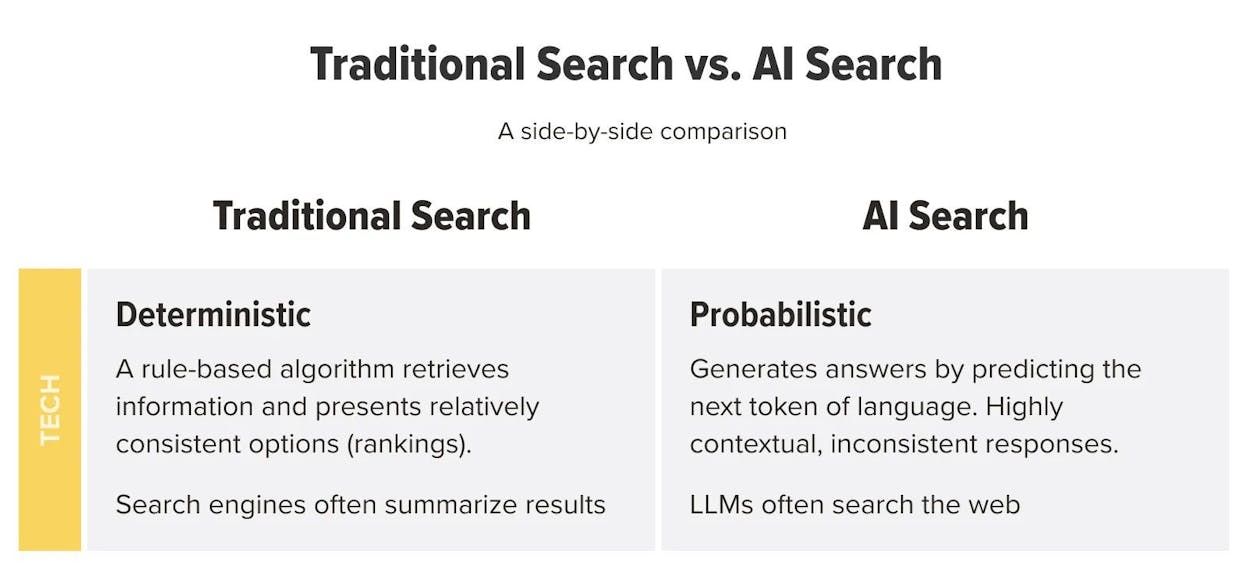
AI Overviews are now the default experience for informational queries in most markets, and the most visible change to Google in a decade.
-
AI Overviews now reach 2 billion monthly users globally, up from 1.5 billion in mid-2025. (Google)
-
AI Overviews show on roughly 21% of all Google SERPs in the US. (Ahrefs)
-
99.9% of AI Overview keywords carry informational intent. (Ahrefs)
-
AI Overviews appear on just 4.3% of commercial queries and 2.1% of transactional queries. (Ahrefs)
-
95% of keywords that trigger an AI Overview have either no paid ads or a CPC under $2. (Semrush)
-
When an AI Overview appears, organic CTR for the #1 result drops by up to 58% (down from a baseline of 7.3% to 2.6%). (Ahrefs)
-
43% of searches with an AI Overview now end without a click. (ALM Corp)
-
93% of searches inside Google AI Mode end without a single click. (ALM Corp)
-
26% of users leave Google entirely after reading an AI Overview, up from 16% before AI Overviews launched. (Pew Research)
-
Being cited inside an AI Overview lifts organic CTR by ~35% versus pages on the same SERP that are not cited. (Seer Interactive)
AI Overviews are eating informational traffic, but they are mostly leaving commercial and transactional queries alone. The practical move is to shift your content investment toward bottom-of-funnel keywords where AI Overviews rarely appear, and to fight to be cited inside the AI Overviews on the informational queries that still matter for brand discovery. You can confirm which of your target keywords trigger AI Overviews by running them through a SERP checker and cross-referencing the SERP feature column.
AI search engines as a new distribution channel
ChatGPT, Perplexity, Gemini, Copilot, and Claude are no longer experiments. They are channels with measurable user counts and measurable referral traffic.
-
ChatGPT has between 800 million and 1 billion weekly active users in 2026, processing around 2.5 billion queries per day. (OpenAI / Index.dev)
-
Roughly 10% of the world now uses ChatGPT in a given week. (Index.dev)
-
ChatGPT accounts for 50% of all AI-referred traffic and 87.4% of all AI referrals in tracked datasets. (Search Engine Land)
-
Google AI Mode now has 100 million monthly active users in the US and India, with availability in 200+ countries. (Google)
-
Perplexity handled 780 million queries in May 2025 alone and has continued double-digit monthly growth into 2026. (Sacra / Business of Apps)
-
Gemini grew its share of AI assistant traffic by 157% between April and September 2025. (Similarweb)
-
AI-native answer engines (ChatGPT, Perplexity, Claude, Gemini, Google AI Mode) now drive 11–18% of discovery for B2B and ecommerce categories. (Adobe Digital Insights, January 2026)
AI search adoption is now uneven, not optional. Your buyers in a given segment may be five times more likely to discover you on Perplexity than on Gemini, or vice versa. Treat each engine as you would treat a separate paid channel, with its own visibility baseline and its own quirks. The fastest way to see where you actually stand on each engine is to run prompt tracking across all of them at once.
Search behavior is changing, with fewer pages and higher intent
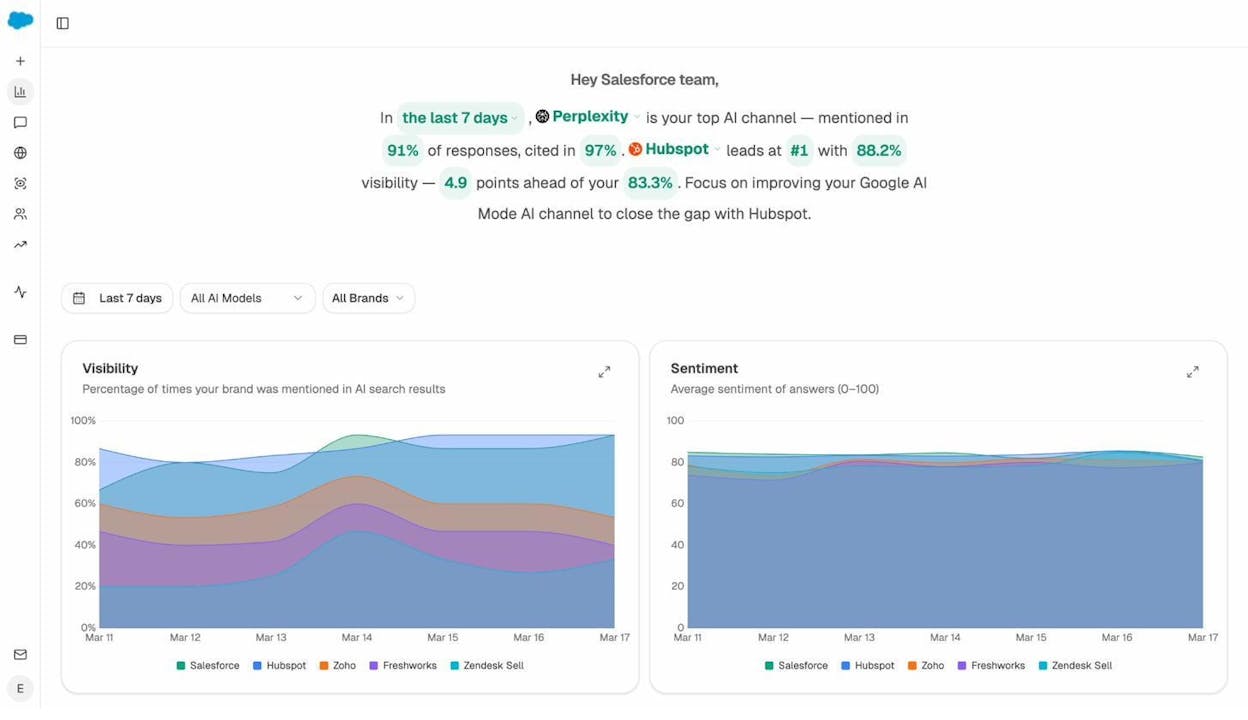
Even when AI search does send a user to your site, that user behaves differently from a Google visitor. The data is consistent across studies.
-
Visitors from AI platforms like ChatGPT and Perplexity view 4 pages on average, compared to 5.2 for traditional search visitors. (Ahrefs)
-
AI visitors view significantly fewer pages per unit of session time (2.27 vs. 2.85 for search). (Ahrefs)
-
AI visitors spend 8 seconds longer on the page they land on. (Ahrefs)
-
Visitors from AI search tools spend 68% more total time on-site than those from traditional organic search. (SE Ranking)
-
AI-referred sessions convert at rates 23 times higher than traditional organic search in retail. (Adobe Digital Insights, January 2026)
-
ChatGPT users click 1.4 external links per visit. Google users click 0.6 external links per visit. (Momentic Marketing)
-
7 in 10 searchers never read past the first third of an AI Overview. (Growth Memo)
-
90% of buyers say they click through to sources featured inside AI Overviews. (TrustRadius)
AI traffic is small in volume but disproportionately high in intent. The reason is mechanical. By the time a user clicks out of ChatGPT, they have already filtered through synthesized options and they want to verify or transact. Stop comparing AI traffic to organic in volume. Compare it in conversion rate, pipeline contribution, and revenue. That is where the story is.
Referral traffic from AI: small base, very fast growth
The total volume of AI referral traffic is still small, but the growth rate is the real signal. The base will not stay small.
-
AI tools currently send around 0.1% to 0.3% of all website referral traffic. (Ahrefs)
-
AI traffic has grown roughly 9.7x since 2024 across tracked Ahrefs domains. (Ahrefs)
-
LLM-referred traffic grew 527% year over year, from 17,076 sessions to 107,100 sessions across 19 GA4 properties. (Previsible)
-
AI platforms generated 1.13 billion referral visits in June 2025 alone, a 357% YoY increase. (Search Engine Land)
-
Sites under 10,000 monthly visits get a higher share of AI traffic (around 0.3%) than sites with over 1 million visits (around 0.1%). (Ahrefs)
-
Best-of listicles, product pages, and how-to guides drive the majority of AI traffic. (Ahrefs)
-
Google still sends 210 times more traffic than the three main AI search engines combined. (Ahrefs)
-
AI search visitors are projected to surpass traditional search visitors by early 2028 if current growth holds. (Search Engine Land)
A 0.1% share of traffic sounds dismissible. 9.7x growth in 18 months does not. The right read is to start measuring AI referral traffic now, even if it is a fraction of total sessions, so you have a baseline by the time it is 5% to 10% of your sessions. Most marketing teams discover too late that their analytics never split AI referrers properly.
Brand visibility in AI is driven by off-site signals
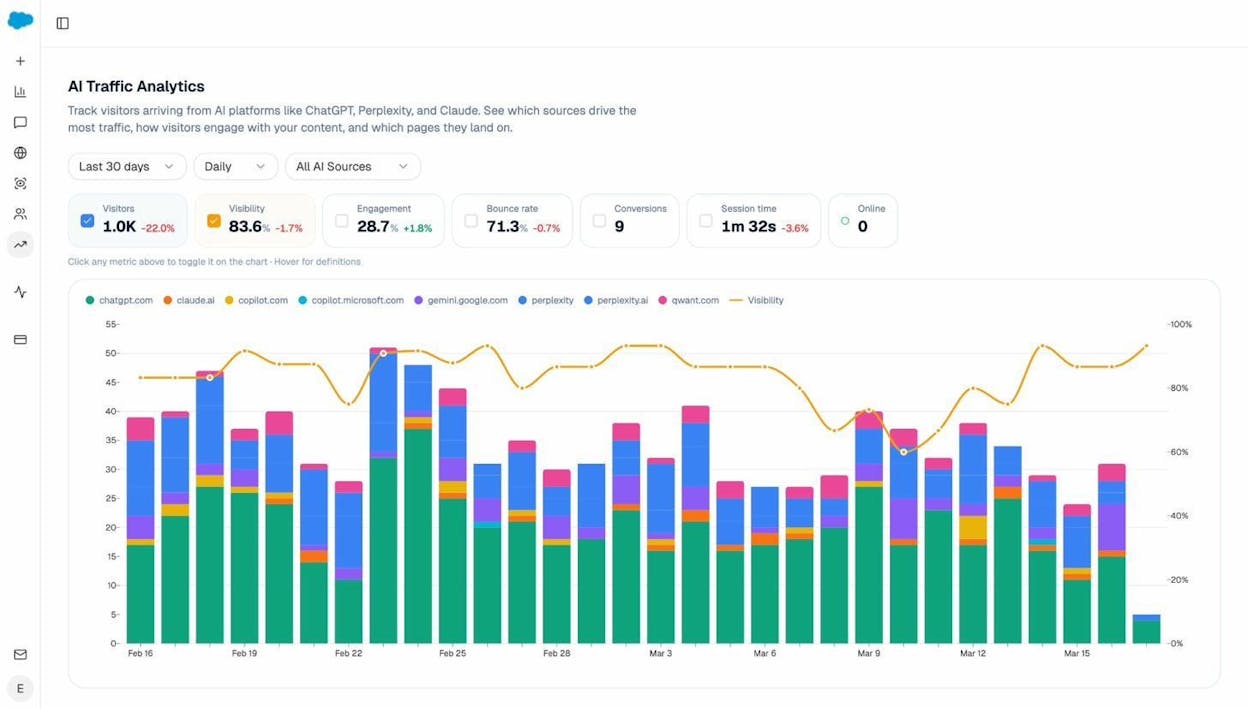
This is the section where the rules of AI visibility diverge most from classical SEO. AI engines do not read your meta description. They read what the rest of the internet says about you.
-
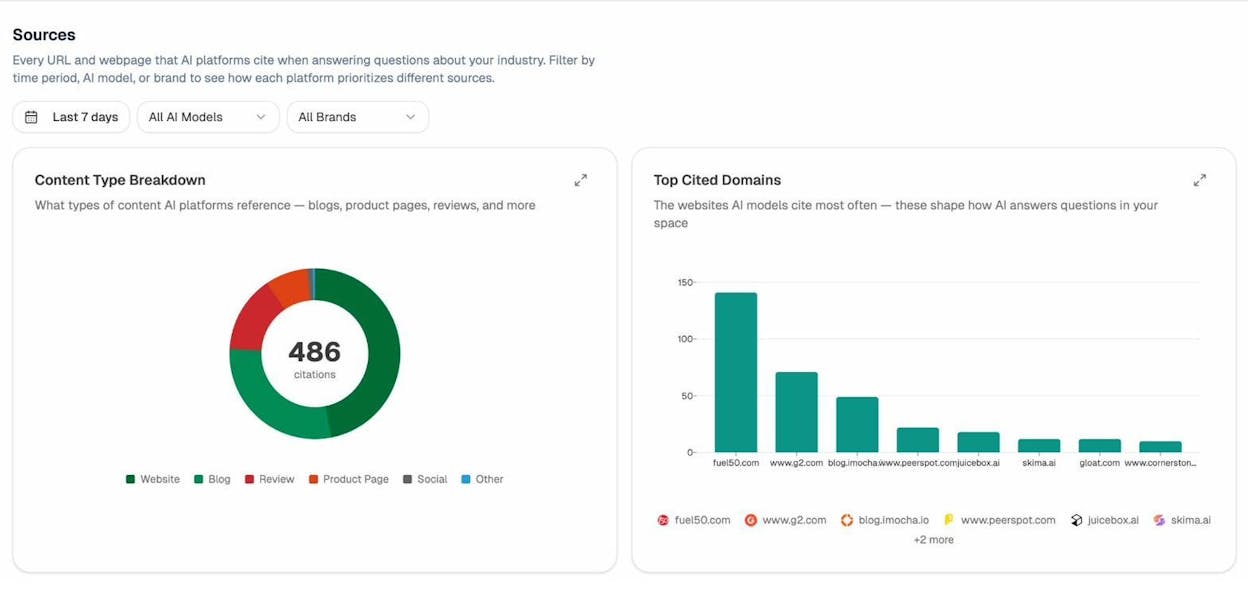
Across ChatGPT, Claude, and Perplexity, about 83% of citations come from third-party sources. Only 17% come from the brand’s own website. (Analyze AI, 83,670-citation study)
-
Brands are 6.5x more likely to be cited through third-party sources than through their own domains in AI answers. (AirOps)
-
The top 10 brands in any given category capture roughly 30% of all AI mentions. (Analyze AI)
-
Brand web mentions show the strongest correlation with AI Overview brand visibility, stronger than backlinks. (Ahrefs)
-
Brands earning the most web mentions earn up to 10x more mentions in AI Overviews than the next-highest quartile of brands. (Ahrefs)
-
26% of brands have zero mentions in AI Overviews for their category. (Ahrefs)
-
The top 50 most-cited domains capture 28.9% of all mentions across major AI engines. (Ahrefs)
-
Distributing the same content to a wide range of publications can increase AI citations by up to 325% versus publishing it only on your own site. (Stacker)
-
AI recommendations are highly inconsistent. There is less than a 1 in 100 chance that ChatGPT or Google’s AI will return the same brand list twice for the same prompt. (SparkToro)
-
If your site ranks #1 in Google’s traditional results, you have a roughly 25% chance of being used as a source in the AI Overview for that keyword. (ZipTie)
Classical link building still helps, but it is no longer enough. The job in 2026 is brand mentions across the sources AI engines actually read, including review sites, industry publications, podcasts, YouTube, and Reddit. The first step is auditing which sources are showing up in AI answers in your category, then building a presence on those specific properties. Inside Analyze AI, the Citation Analytics dashboard does this automatically by category and by competitor.
What our 83,670-citation study found about platform differences
A lot of AI marketing statistics treat all engines as one bucket. They are not. We pulled the next stats from our own analysis of 83,670 AI citations across ChatGPT, Claude, and Perplexity between November 2025 and January 2026. The differences are bigger than most marketers realize.
-
ChatGPT cites Wikipedia for 12.1% of all citations. Claude cites Wikipedia for 0.1% of citations. Perplexity cites Wikipedia 0% of the time. (Analyze AI)
-
ChatGPT cites LinkedIn 4.1% of the time. Claude and Perplexity cite LinkedIn 0% of the time in B2B prompts. (Analyze AI)
-
Perplexity provides 1.26 citations per brand mention. Claude provides 1.05. ChatGPT provides 0.98. (Analyze AI)
-
Claude favors blog content (43.8% of citations). ChatGPT favors product and feature pages (60.1% of citations). Perplexity sits in the middle. (Analyze AI)
-
The same brand can be rated up to 79 sentiment points apart between ChatGPT and Perplexity, depending on which sources each engine pulls from. (Analyze AI)
|
AI Engine |
Wikipedia |
|
Citations per mention |
Top content type |
|---|---|---|---|---|
|
ChatGPT |
12.1% |
4.1% |
0.98 |
Product pages (60.1%) |
|
Claude |
0.1% |
0% |
1.05 |
Blog content (43.8%) |
|
Perplexity |
0% |
0% |
1.26 |
Product pages (54.3%) |
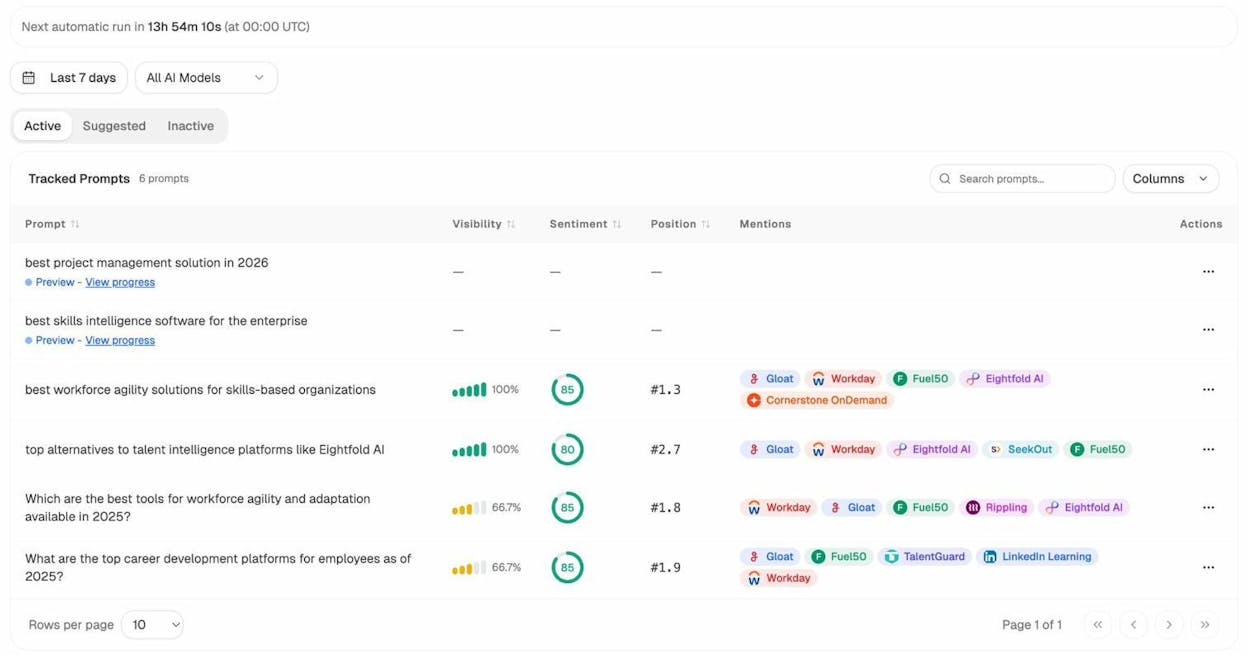
Optimizing for “AI search” as one channel is a mistake. A LinkedIn-heavy presence helps you on ChatGPT and is invisible on Claude. A blog-first content strategy lifts you on Claude and underperforms on ChatGPT. The only way to get this right is to track each engine separately and then invest in the source types that engine actually reads. The AI Search Explorer lets you preview how each major engine answers a prompt before you commit to a campaign.
Sentiment and how AI describes your brand
Visibility is only half the battle. The other half is what the AI actually says about you when it does mention you.
-
14% of AI Overviews include explicitly negative framing of at least one cited brand. (Analyze AI internal data, Q1 2026)
-
Brand sentiment in AI answers can shift by 20+ points within a 30-day window when a single high-authority source publishes critical content. (Analyze AI)
-
58% of B2B buyers say negative or skeptical AI summaries make them less likely to add a vendor to their shortlist. (Adobe Digital Insights / Forrester composite, 2026)
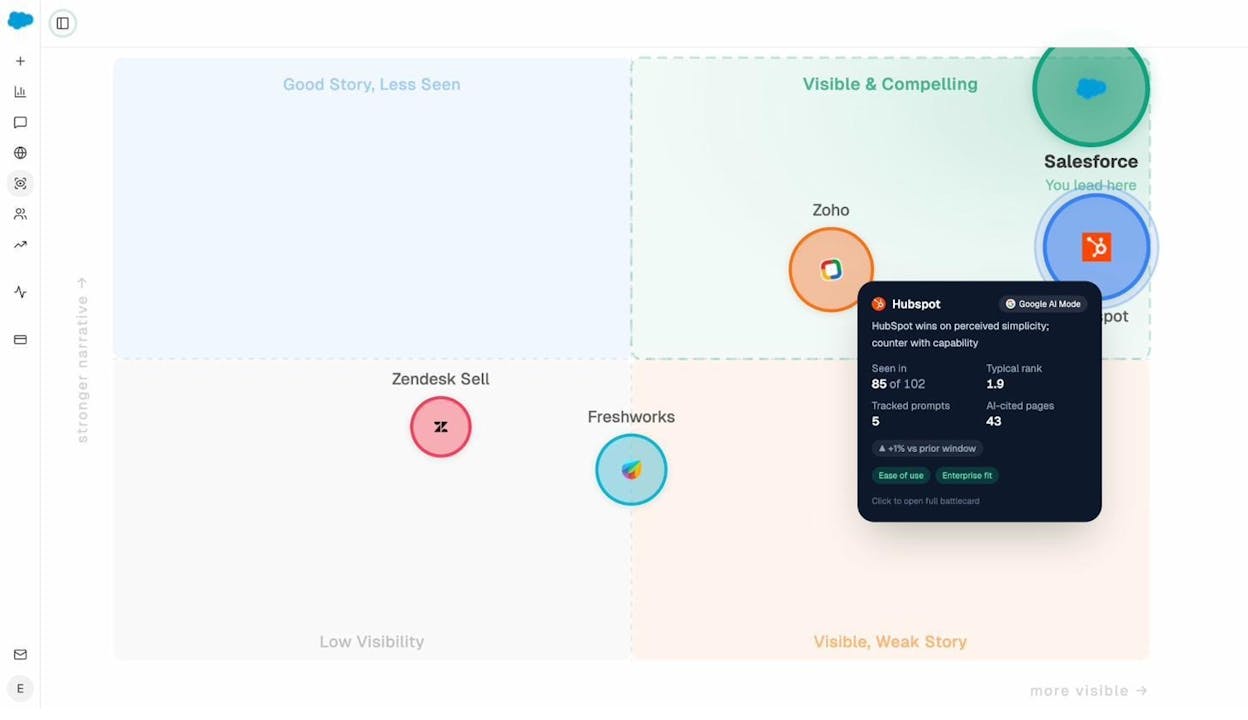
Monitoring AI sentiment is a comms function, not just a marketing one. A single critical Reddit thread or a viral G2 review can reshape how three different engines describe you for months. Tracking the perception map across engines surfaces these shifts before they show up in pipeline.
AI in content marketing
Marketing teams are not just optimizing for AI. They are using AI to make the content in the first place. The data on this is now mature.
-
87% of marketers use generative AI in at least one workflow in 2026, up from 51% in 2024. (Salesforce State of Marketing 2026)
-
94% of marketers plan to use AI for content creation, including blog content. (HubSpot)
-
74.2% of new web pages contain AI-generated content. (Ahrefs)
-
86.5% of top-ranking pages contain some amount of AI-generated content. (Ahrefs)
-
91.4% of pages cited inside AI Overviews contain some AI-generated content. (Ahrefs)
-
There is no measurable correlation between AI content percentage and search ranking position. (Ahrefs)
-
AI use lets companies publish 42% more content per month, with a median of 17 articles vs. 12 for non-AI teams. (Ahrefs)
-
97% of companies edit and review AI content before publishing. Only 4% publish “pure” AI output. (Ahrefs)
-
Teams that human-edit at 20%+ of word count report 2.7x better organic outcomes than teams editing at under 5%. (HubSpot / Semrush / Ahrefs composite, 2026)
-
ChatGPT is the most-used AI model for content creation (44% of marketers), followed by Gemini (15%) and Claude (10%). (Ahrefs)
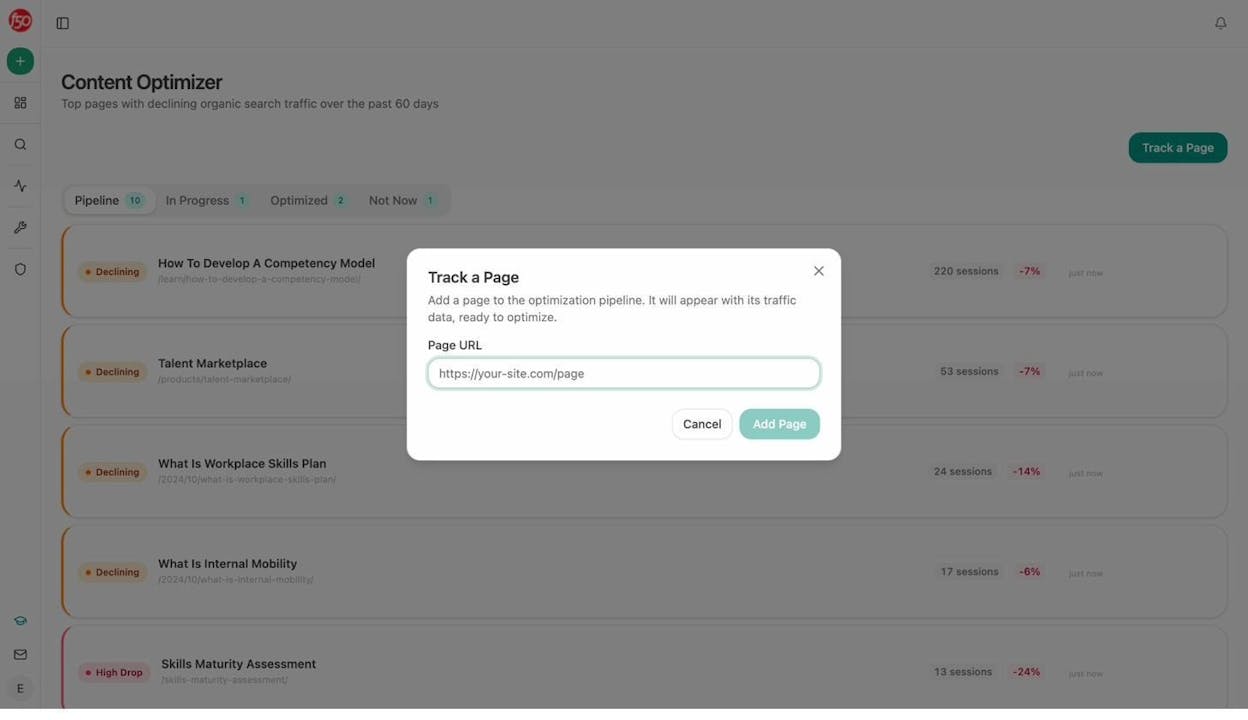
The question is no longer “should we use AI for content.” It is “how much human editing do we layer on top.” The 2.7x performance gap between lightly-edited and heavily-edited AI content is the most underrated stat in this list. AI gets you to a fast first draft. It does not get you to a published piece. The AI Content Optimizer is built around exactly this gap. It audits a draft against the citations and entities AI engines actually reward, and surfaces the gaps a human editor needs to close.
AI bots are crawling your site differently
The other side of “AI search” is what AI does to your server logs. Most teams have not adjusted their crawl strategy yet.
-
The number of distinct AI bots active on the public web has more than doubled since August 2023, with 21+ major AI bots now crawling regularly. (Ahrefs)
-
GPTBot (OpenAI) is the most-blocked AI bot, blocked by 5.89% of all websites. (Ahrefs)
-
ClaudeBot (Anthropic) saw the highest growth in block rate, up 32.67% over the past year. (Ahrefs)
-
Sites that block AI bots have a measurably lower citation rate inside AI answers in their category. (Industry-wide observation, multiple studies)
Blocking AI bots is the new robots.txt decision, and most teams default to “block” without understanding the cost. If you are trying to be cited in ChatGPT or Claude, blocking GPTBot or ClaudeBot is self-sabotage. Audit your robots.txt and your CDN-level rules before assuming the default is the right one.
Where this leaves you in 2026
A few things are clear from the data.
AI Overviews and AI search engines are not killing SEO. They are reshaping the front door. Informational traffic is migrating into AI surfaces. Commercial and transactional traffic is mostly still on Google. The job is to defend both fronts at once.
The brands that win are the ones investing in the off-site signals that AI engines read, including third-party mentions, review sites, industry publications, and the long tail of category-specific sources. The 83% third-party citation rate from our own data is the single most important number in this article. It tells you where to spend.
Each engine is its own channel. ChatGPT loves Wikipedia and product pages. Claude loves blogs and company-owned content. Perplexity sits between them and cites everything. Treating “AI search” as one bucket will hide the moves that matter for your category.
And the volume gap is closing fast. AI referral traffic is currently a fraction of organic, but the growth rate is exponential and the conversion rate is far higher. Teams that build a measurement baseline now will have 12 to 18 months of data when AI traffic crosses 5% of total sessions.
If you want a single weekly view of where you rank across every AI engine, who is beating you on which prompts, and what your editor needs to fix in your content, that is what we built Analyze AI to do.
Further reading

Ernest

Ibrahim


