



Summarize this blog post with:


In this article, you’ll find the 21 marketing interview questions hiring managers ask most often in 2026, what each question is really testing, and a clear answer framework you can adapt to your own background. Two things make this list different from the rest. First, every answer comes with what good looks like, not just commentary on the question. Second, AI search has reshaped how a few of these questions get evaluated in 2026, and the answers below have been updated to reflect that. Whether you are interviewing for a junior coordinator or a head of marketing seat, the questions below will come up. Treat each one as a small test of how you think rather than a script to memorize.
Table of Contents
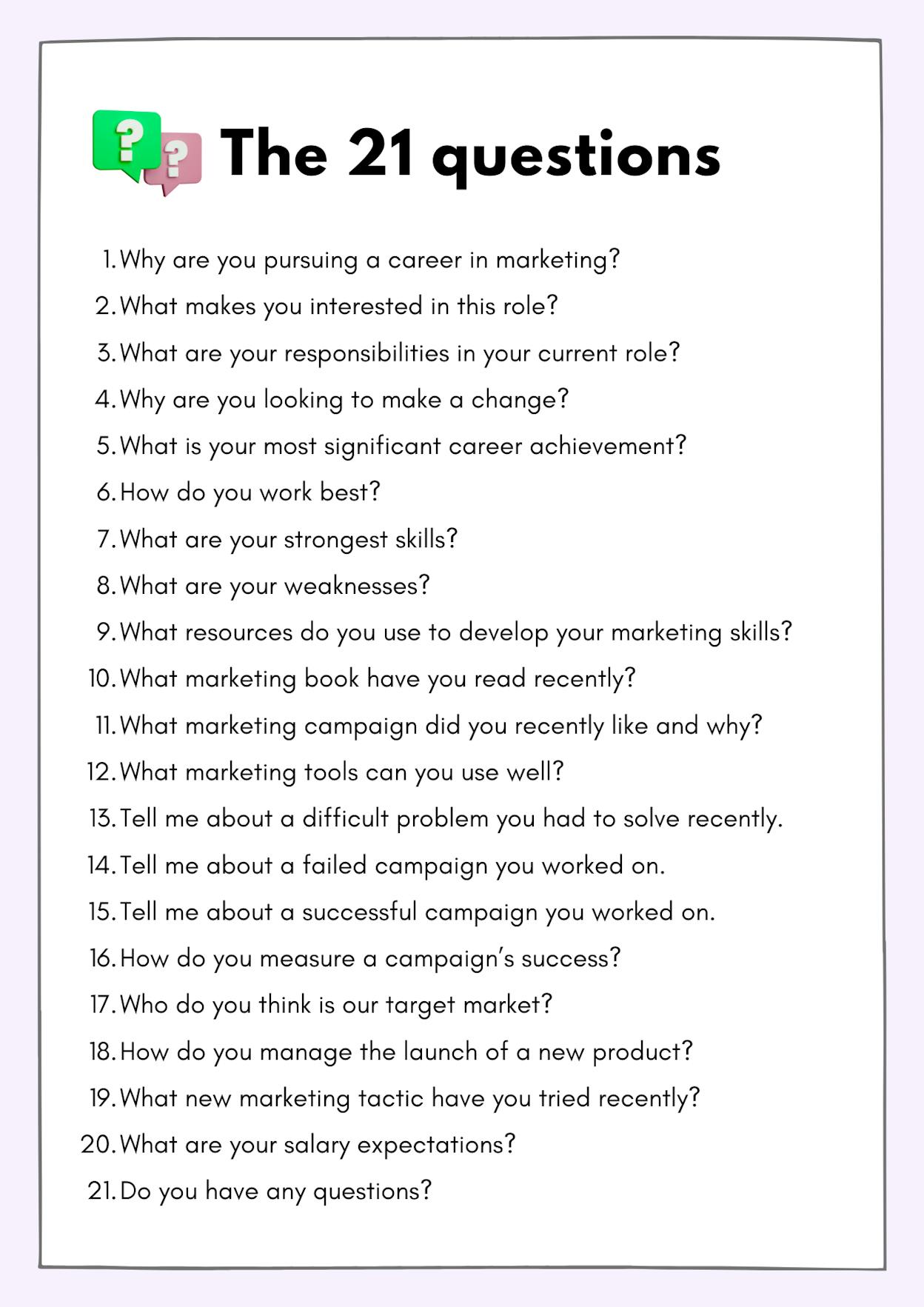
The 21 questions
-
Why are you pursuing a career in marketing?
-
What makes you interested in this role?
-
What are your responsibilities in your current role?
-
Why are you looking to make a change?
-
What is your most significant career achievement?
-
How do you work best?
-
What are your strongest skills?
-
What are your weaknesses?
-
What resources do you use to develop your marketing skills?
-
What marketing book have you read recently?
-
What marketing campaign did you recently like and why?
-
What marketing tools can you use well?
-
Tell me about a difficult problem you had to solve recently.
-
Tell me about a failed campaign you worked on.
-
Tell me about a successful campaign you worked on.
-
How do you measure a campaign’s success?
-
Who do you think is our target market?
-
How do you manage the launch of a new product?
-
What new marketing tactic have you tried recently?
-
What are your salary expectations?
-
Do you have any questions?
1. Why are you pursuing a career in marketing?

This is a warm-up, but it tells the interviewer how genuine your interest is. The worst answer is generic, like liking people. The best answers connect your motivation to something specific about the work itself, like the constant learning, the mix of analytical and creative thinking, or the chance to build a brand from scratch.
Sample answer: “I like that marketing rewards you for understanding people. You can be technically right and still fail if you do not understand why someone makes a decision. That blend of psychology, data, and creativity is what keeps me in the field.”
2. What makes you interested in this role?

Hiring managers ask this to weed out candidates spraying the same application across LinkedIn. There is a real reason you applied. Maybe the role is the next step for your career, the company is solving a problem you find interesting, or you already use the product.
The structure that works is one sentence about why the role fits your trajectory, then one sentence about something specific you noticed about the company. Specificity is the proof you did your homework. “I read your latest report on demand generation” beats “I love the company culture” every time.
3. What are your responsibilities in your current role?
Unless this is your first job, expect a few questions about your past work. The only wrong way to answer is to inflate your impact, which almost always backfires when the interviewer probes for details.
Cover three things in order. What you own, who you work with, and what success looks like. For example, “I own paid acquisition for our SMB segment. I work with a content lead and a designer, and our quarterly target is qualified pipeline.” That answer takes thirty seconds and gives the interviewer enough hooks for follow-ups they actually care about.
4. Why are you looking to make a change?
This question signals two things. The first is your honesty about your current situation. The second is whether your reasons for leaving will repeat at the new role.
Acceptable reasons include limited room to grow, wanting more ownership, a shift in specialization, compensation, or a desire to work on a product you find more meaningful. Avoid trashing your current manager or company. Even if it is true, it lands as a yellow flag.
5. What is your most significant career achievement?

If you have a few years of experience, expect to share your proudest win. Most candidates default to a campaign result, which is fine, but the strongest answers are not always purely performance based. A new process, a hire who ended up running a function, a content engine you built, or a positioning shift can all be more impressive than a single revenue number.
Use a tight three-part structure that covers the situation, what you did, and the result. Numbers help, but the story of how you got there is what makes it memorable.
6. How do you work best?

This question tests whether you will fit the team. Both sides lose if you misrepresent yourself and end up in the wrong environment.
Be honest. Do you prefer a structured roadmap or do you create your own priorities? Do you produce your best work in a quiet office or in async collaboration? Do you want frequent check-ins or quarterly goals and space? The interviewer is mapping your answer to how the team actually operates.
7. What are your strongest skills?
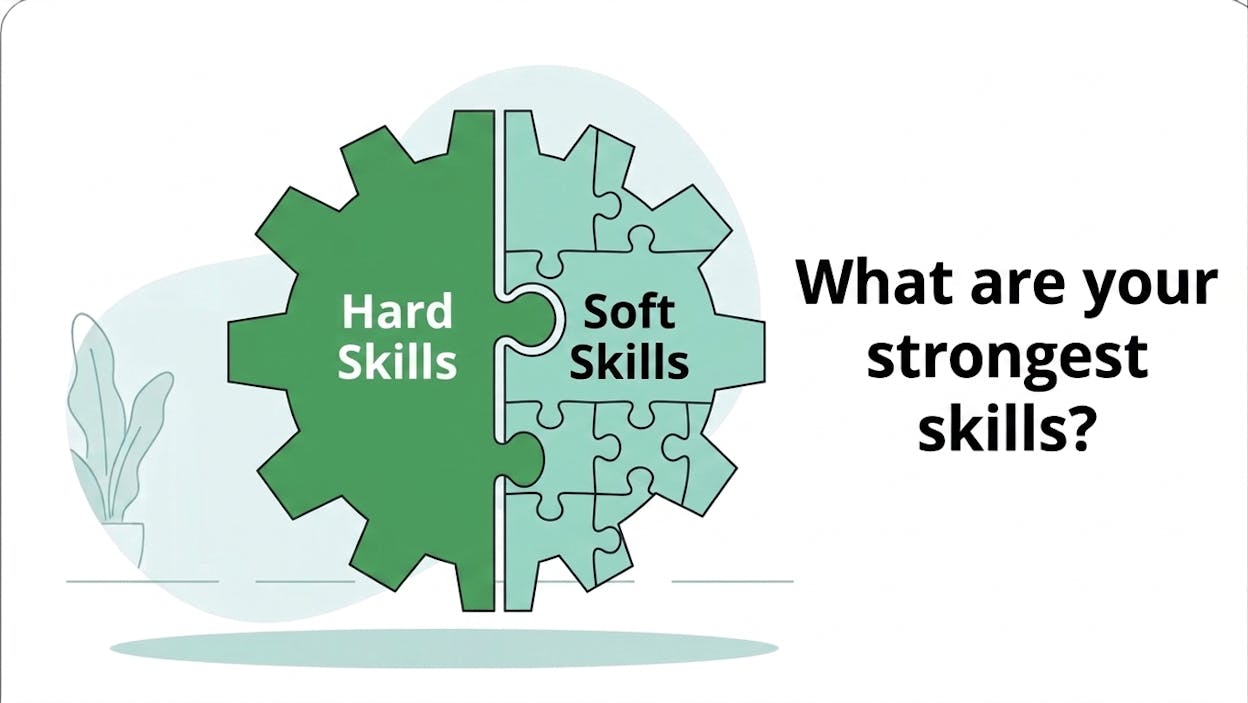
This is your moment to pitch. Mention a mix of hard and soft skills, but lead with the ones most relevant to the job description. Hard skills might include SEO, analytics, lifecycle email, paid social, or copywriting. Soft skills travel with you to any role, like writing clearly, breaking down ambiguous problems, or driving cross-functional projects without authority.
The best answers prove the skill with a one-line example. “I write well” is weaker than “I write well, which is how I got our customer-facing newsletter from 2,000 to 30,000 subscribers in a year.” For a deeper view of which marketing skills hiring managers care about in 2026, our 9 top marketing trends to watch in 2026 post is a good primer.
8. What are your weaknesses?
Skip the rehearsed humblebrag about working too hard. Interviewers see through it instantly.
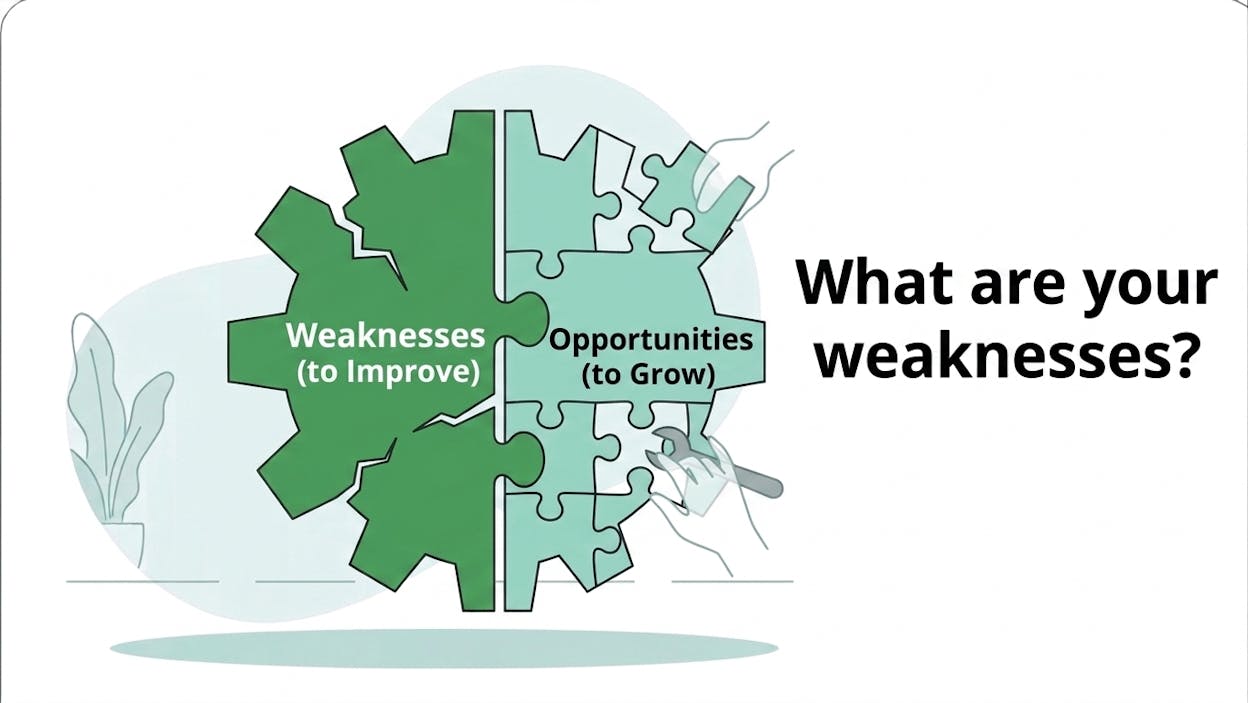
Pick a real weakness that does not disqualify you from the role. Cover three parts. Name the weakness, explain why you know it is one, and describe what you have done about it. For example, “I struggle to delegate creative work because I have a strong opinion on how it should land. I have started writing tighter briefs and trusting the team, which has cut my involvement by half.” A specific, evidenced weakness signals more maturity than a perfect-sounding non-answer.
9. What resources do you use to develop your marketing skills?
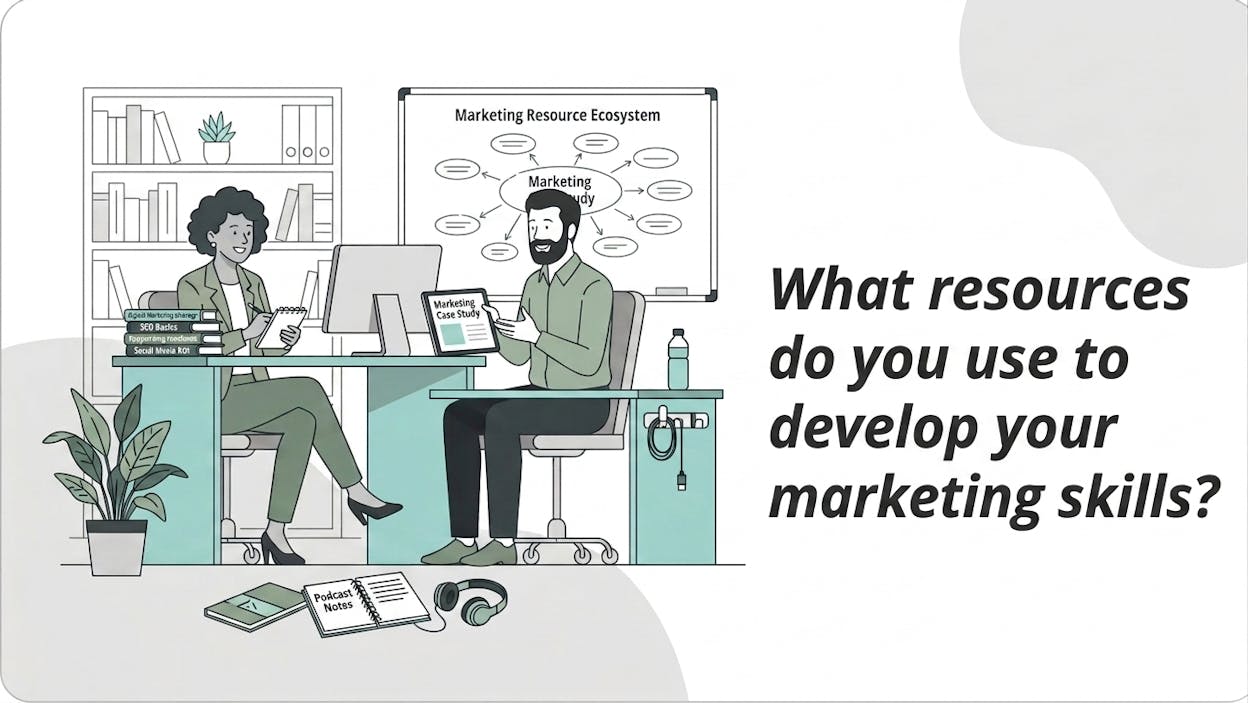
The interviewer is using this as a proxy for how you think about your craft. A strong answer mixes formats, like one or two newsletters you actually read, a podcast you listen to consistently, and a couple of operators whose work shaped how you think.
Animalz, Grow and Convert, Lenny’s Newsletter, and Marketing Against the Grain are all reasonable picks in 2026. Whatever you name, be ready to explain what you got from it. Listing names without substance signals you copied a “best of” article.
10. What marketing book have you read recently?
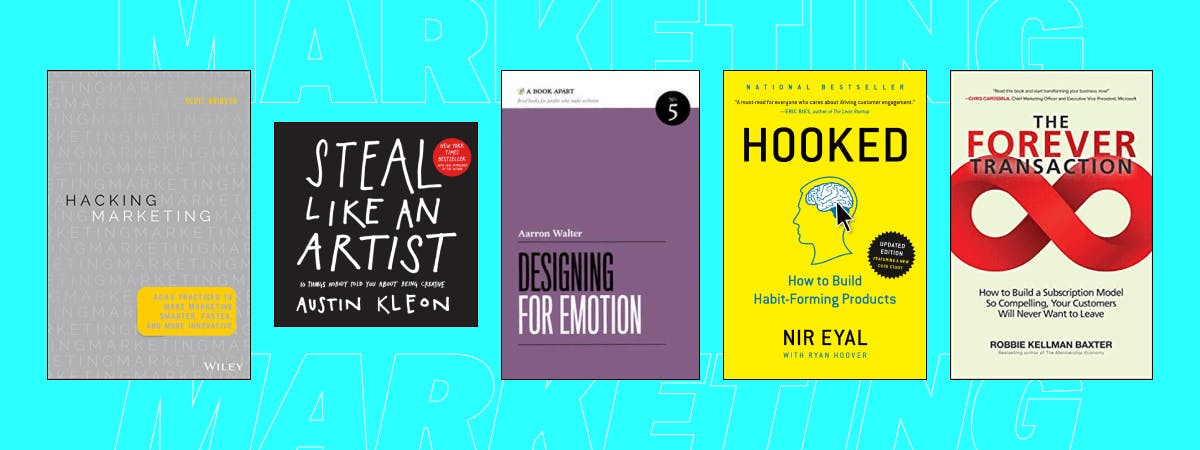
Marketing books do not need to be explicitly about marketing. Obviously Awesome by April Dunford on positioning, Demand-Side Sales 101 by Bob Moesta on jobs to be done, and Building a StoryBrand by Donald Miller all teach you something useful about how customers decide.
If you do not read books, do not pretend. Steer the conversation toward whatever long-form medium you do consume, like industry reports, podcast interviews, or essay-length newsletters. The point is that you keep learning.
11. What marketing campaign did you recently like and why?
Marketers are expected to dissect why a campaign works, not just say it was funny. A great recent example is Liquid Death’s branding playbook, which turned canned water into a lifestyle brand with a heavy-metal visual identity that felt nothing like the wellness category it competes in.
Pick something current and explain three things. What made it stand out, what business outcome it likely drove, and what you would steal for your own work.
12. What marketing tools can you use well?
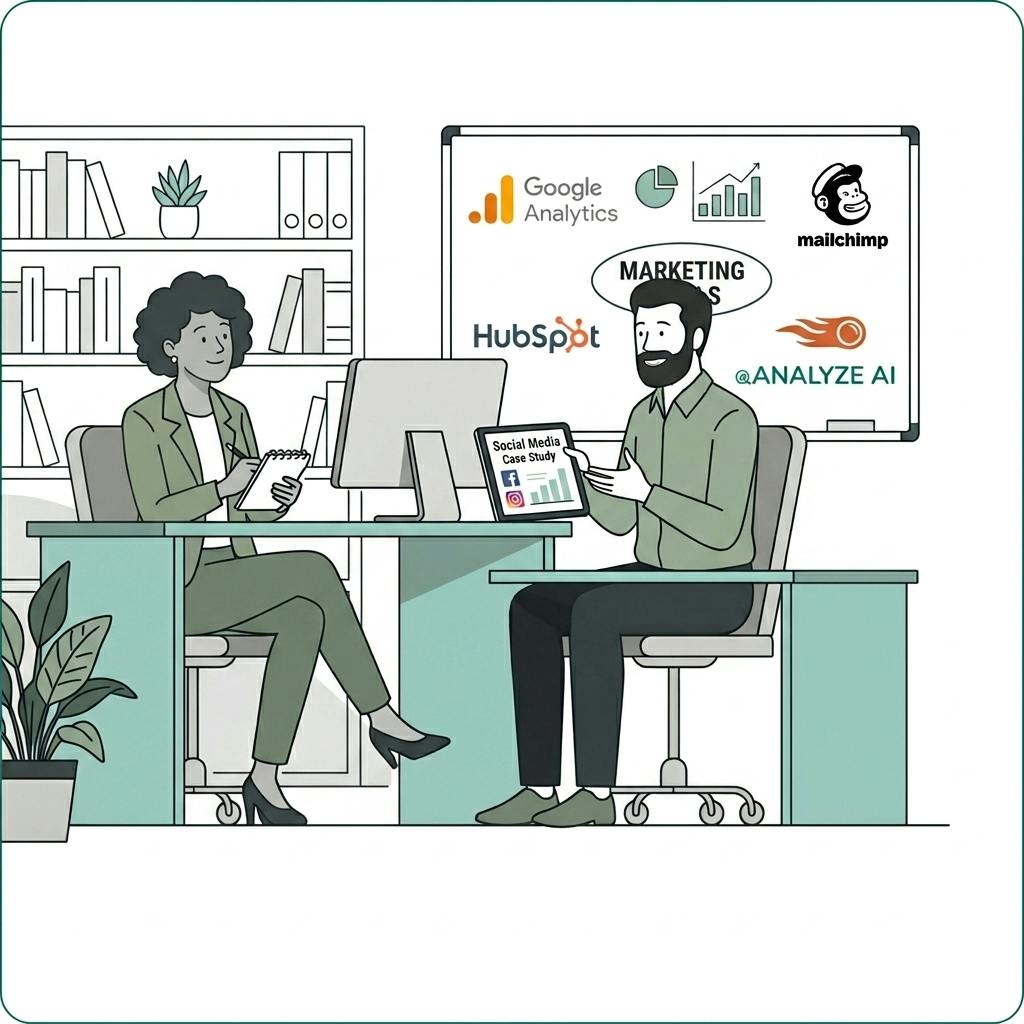
Most marketing roles assume baseline fluency with a few categories. Spreadsheets and a BI layer for analysis. An analytics platform like GA4. A CRM like HubSpot or Salesforce. An SEO platform. An email or lifecycle tool. A project management tool. In 2026, AI tools are no longer optional. Hiring managers expect you to use ChatGPT, Claude, or Gemini in your daily workflow and to know which tasks AI is good at and which it is not.
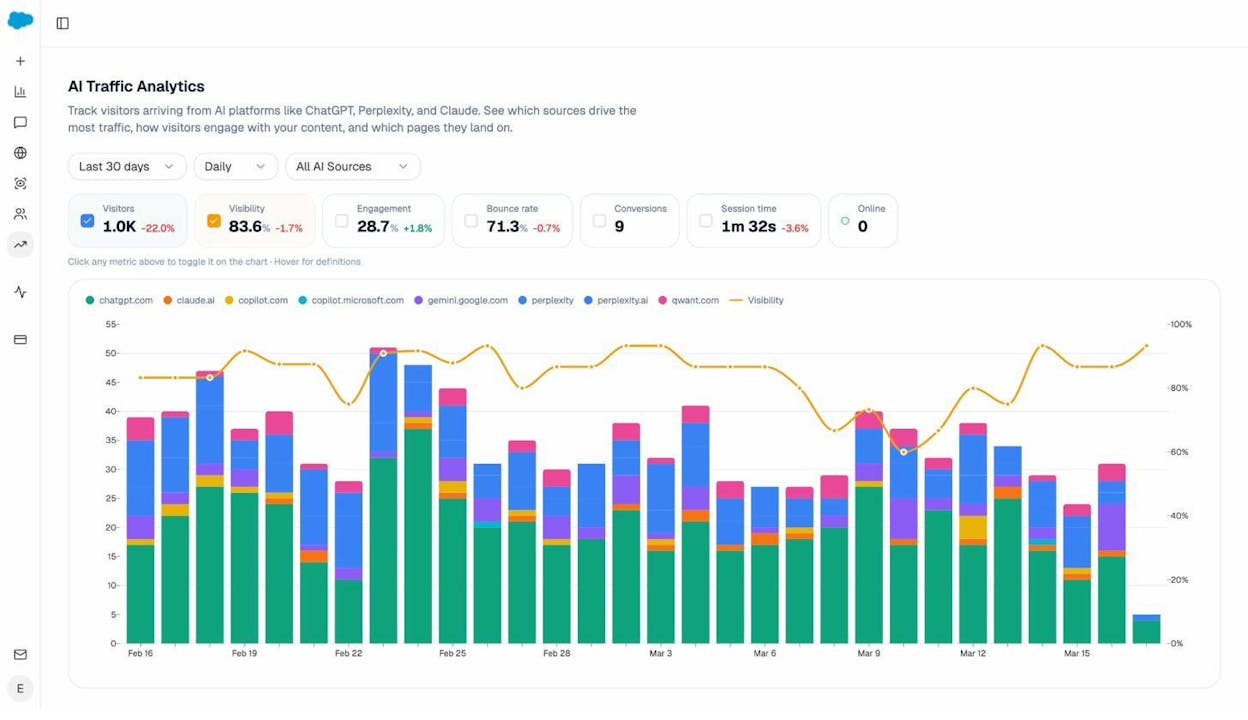
There is also a newer category most candidates have never heard of, and it is AI search visibility tools. As more buyers research products through ChatGPT, Perplexity, and Google AI Mode, marketers are tracking how often AI assistants mention their brand and in what context. Tools like Analyze AI sit in this category. Naming it in an interview signals you are paying attention to where buyer behavior is shifting.
Give one or two sentences per category, with a concrete example of what you have used the tool for. Our roundup of the 33 top digital marketing tools for every budget covers the full stack.
13. Tell me about a difficult problem you had to solve recently.
This is a problem-solving question dressed up as a story. Use the situation, action, result format and keep the situation short. Most candidates spend two minutes setting up the scene and twenty seconds on what they actually did. Flip that. Show how you broke down the problem, what tradeoffs you considered, and what data you used to make the call. A “gut feeling” answer is fine if you also explain what shaped the gut.
14. Tell me about a failed campaign you worked on.
Failures are a better signal of seniority than wins. Anyone can take credit for a campaign that worked. Owning a failure and explaining what you took from it is harder.
Pick a real failure with consequences. Skip the “we missed our goal by 3%” story. Talk about a campaign that genuinely did not work, why you were wrong about the assumption, and what you do differently now. Cover hypothesis, what happened, why, and the principle you took into the next project. Interviewers remember the principle more than the campaign.
15. Tell me about a successful campaign you worked on.
The trap here is overclaiming. If you were a contributor to a big campaign, do not present yourself as the architect. Hiring managers cross-reference these stories against your resume and sometimes against a former colleague.
Pick a campaign where your role was clear. Cover what the campaign was, what you specifically owned, what the team did around you, and the outcome. If you can also say what you would do differently next time, you signal that even your wins came with lessons. That is a senior trait.
16. How do you measure a campaign’s success?
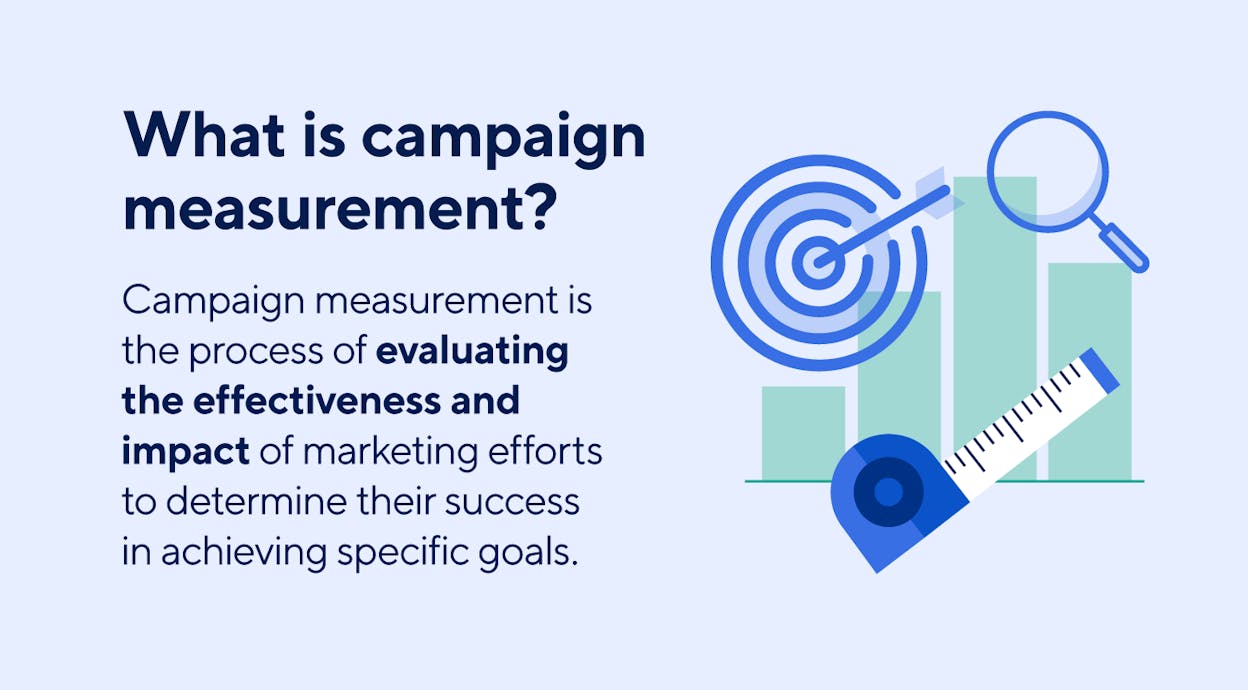
The best short answer is “it depends,” followed by a real example. Walk through how you would think about it. Awareness campaigns get measured on reach, lift studies, and brand search volume. Demand generation gets measured on qualified pipeline and revenue influenced. Content gets measured on organic traffic, conversions, and increasingly on share of voice.
In 2026, there is a new layer that hiring managers will reward you for mentioning. AI search visibility is becoming a tracked KPI for content and brand teams. The metrics here are different from SEO and include how often your brand appears in answers from ChatGPT, Perplexity, and Google AI Mode, the sentiment of those mentions, your citation share against competitors, and the AI referral traffic that lands on your site.
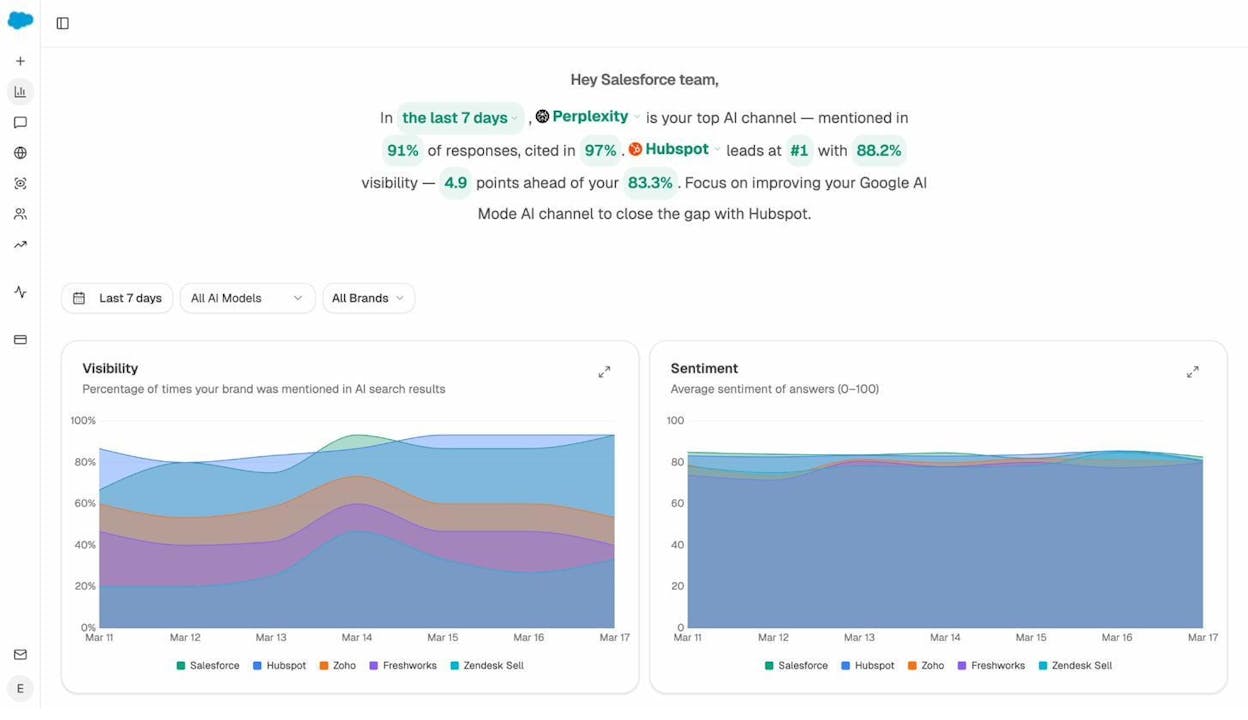
The candidate who can speak to both traditional and AI search KPIs sounds like they have been paying attention. Our breakdown of GEO vs SEO walks through how the two disciplines fit together.
17. Who do you think is our target market?
This is the homework question. There is no faster way to fail an interview than to admit you have not looked closely at the company’s website, customers, or product.
Build your answer in two passes. First, the obvious one from their site, pricing page, and case studies. Second, the less obvious segments you can infer from where they show up in market conversations. In 2026, you can do that second pass in fifteen minutes by asking ChatGPT or Perplexity questions like “best [category] for [segment]” and seeing where the company appears, who they get compared to, and what attributes get associated with their name. Tools like Analyze AI’s ad-hoc prompt search let you do this systematically.
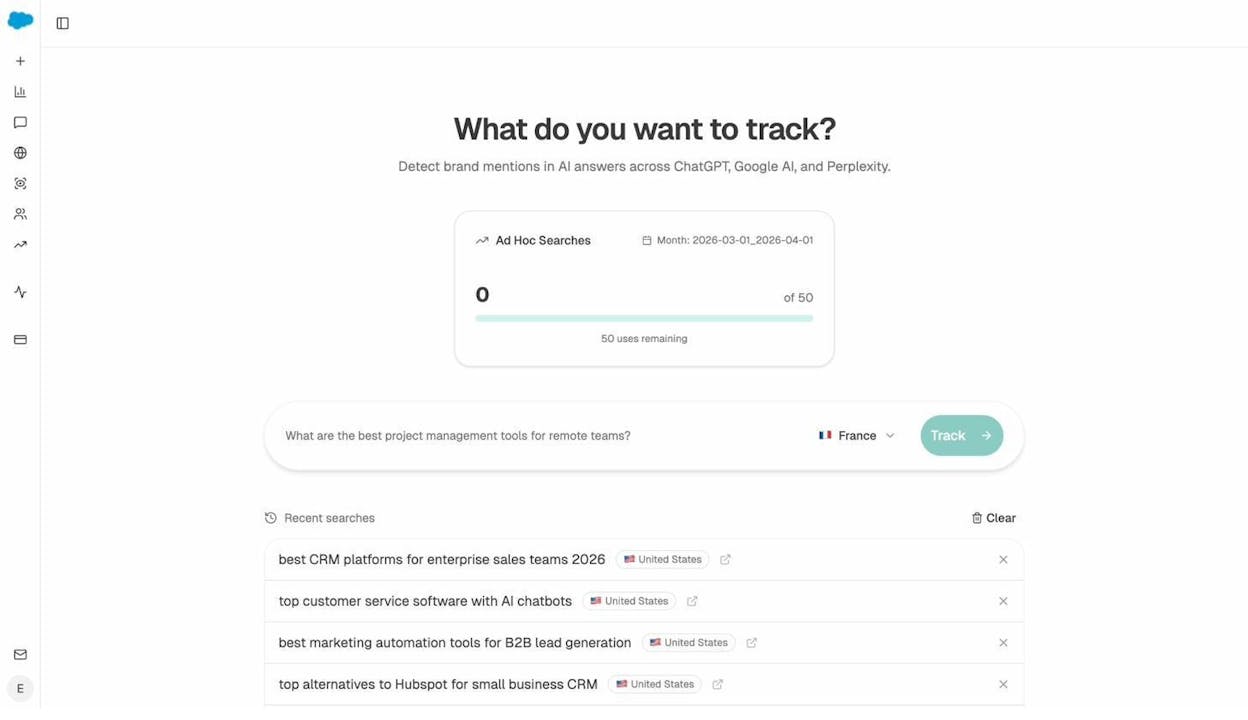
Show your work in the answer. “I asked ChatGPT what the best tools are in your category and noticed you appear most often when prompts mention enterprise and integration. That suggests your sweet spot is mid-market and up.” That signals research, current tooling, and analytical thinking in one breath.
18. How do you manage the launch of a new product?
Senior marketers can speak to this for an hour. Junior marketers tend to freeze. Either way, put yourself in the role you are interviewing for and answer for that scope.
For a content role, talk about the launch content plan, the supporting assets, and how you would brief the team. For a head of marketing role, talk about the full go-to-market plan covering positioning, target segment, channel mix, pricing communication, sales enablement, launch beats, and the metrics that will tell you if it landed. The answer should sound like a project plan, not a wish list.
19. What new marketing tactic have you tried recently?
Hiring managers ask this to separate marketers who experiment from marketers who execute the same playbook every quarter. The right tactic to mention is one that fit your strategy, not one trending on LinkedIn last month.
In 2026, the answer that lands hardest is generative engine optimization, often shortened to GEO or AEO. Walk through how you identified the prompts your buyers ask AI assistants, audited which competitors get cited for those prompts, and the changes you made to your content to start appearing yourself.
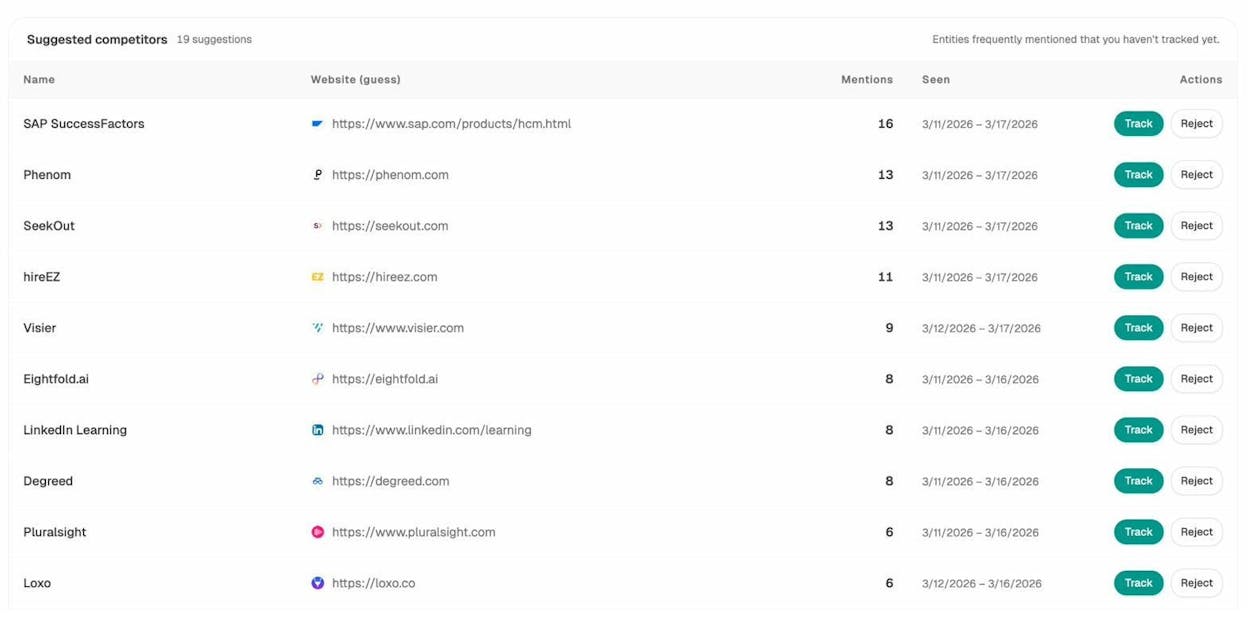
If GEO is not your area, pick something else recent, like a partner-led webinar series, a customer-driven referral motion, or a podcast as a paid acquisition channel. Show that you read the data, formed a hypothesis, ran the test, and learned something. Our guide to answer engine optimization is a useful reference.
20. What are your salary expectations?
Money is the most uncomfortable part of the interview for many candidates, which is why preparation matters. Walk in with a number.
Pull salary ranges from Levels.fyi, LinkedIn Salary, Glassdoor, and the U.S. Bureau of Labor Statistics. Talk to peers in similar roles at similar-stage companies. For fully remote roles, you can usually anchor to U.S. ranges even if you are based elsewhere.
In the interview, give a range with the bottom at your acceptable number, not your stretch number. The worst outcome for both sides is to discover at the offer stage that the gap between your number and the budget is too wide to bridge.
21. Do you have any questions?
Always. Saying no signals you are not really interested. Bring two to three written down so you do not blank.
The questions worth asking are about the work, the team, and how success is defined. Examples that always land: “What does great look like in this role at the six-month mark?” “What is the biggest open problem the team is trying to solve right now?” “How do decisions get made between marketing and product?” Avoid questions you could have answered from the website.
Bonus: 4 AI search interview questions to expect in 2026
Most marketing interview guides on the internet were written before AI search changed the field. In 2026, expect these questions if your interviewer’s buyers research through ChatGPT, Perplexity, or Google AI Mode.
|
Question |
What they’re really asking |
|---|---|
|
How is AI search changing how buyers find brands? |
Whether you understand AI assistants now sit between buyers and traditional search results, and the brands cited in those answers tend to win consideration. |
|
How would you measure our visibility in AI answers? |
Whether you know AI search has its own KPIs, like citation count, share of voice across prompts, sentiment of mentions, and AI referral traffic. |
|
Do you think SEO is dead? |
A trap. The honest answer is no. AI search runs on top of the same content and authority signals SEO has always rewarded, and most AI assistants still pull from top-ranking pages. SEO is evolving into a broader discipline that includes AI search. |
|
What would you do in your first 90 days to improve our AI search presence? |
Whether you can move from awareness to a real plan, like auditing current visibility, identifying the prompts your buyers ask, and fixing the content gaps causing competitors to be cited instead of you. |
For a deeper baseline on how AI assistants pick which brands to cite, our analysis of 83,670 AI citations and our guide on how to get mentioned in AI search are good places to start.
Final thoughts
Most marketing interviews follow the same script. The candidates who stand out are the ones who treat each question as an invitation to think out loud, rather than a prompt to recite. Prepare clear answers for the 21 questions above, do your homework on the company, and add a working understanding of how AI search is reshaping the field. That last part is what increasingly separates current candidates from the ones a year behind.
Good luck with your next interview.

Ernest

Ibrahim


