



Summarize this blog post with:


In this article, you’ll see what every recent study agrees on about AI traffic, what the data still gets wrong, and how to find the AI traffic your analytics is hiding from you. You’ll also get a concrete process for turning whatever AI visits you do receive into a real channel rather than a dashboard curiosity.
Table of Contents
Top findings
-
63% of websites receive at least some AI traffic, according to the Ahrefs study of 3,000 sites that started this conversation.
-
AI now drives roughly 1.08% of all web traffic on average, up from 0.02% in 2024, according to a Conductor study of 13,770 domains and 3.3 billion sessions.
-
ChatGPT sends 87.4% of all AI referral traffic across major industries.
-
Gemini referrals grew 388% year over year between September and November 2025, outpacing every other AI source.
-
AI visitors convert 4.4x better than organic search visitors, with ChatGPT-referred users converting at 15.9% versus Google’s 1.76%.
-
The smallest websites get the largest share of their total traffic from AI, even when their absolute numbers are tiny.
63% of sites receive AI traffic, and the share keeps growing
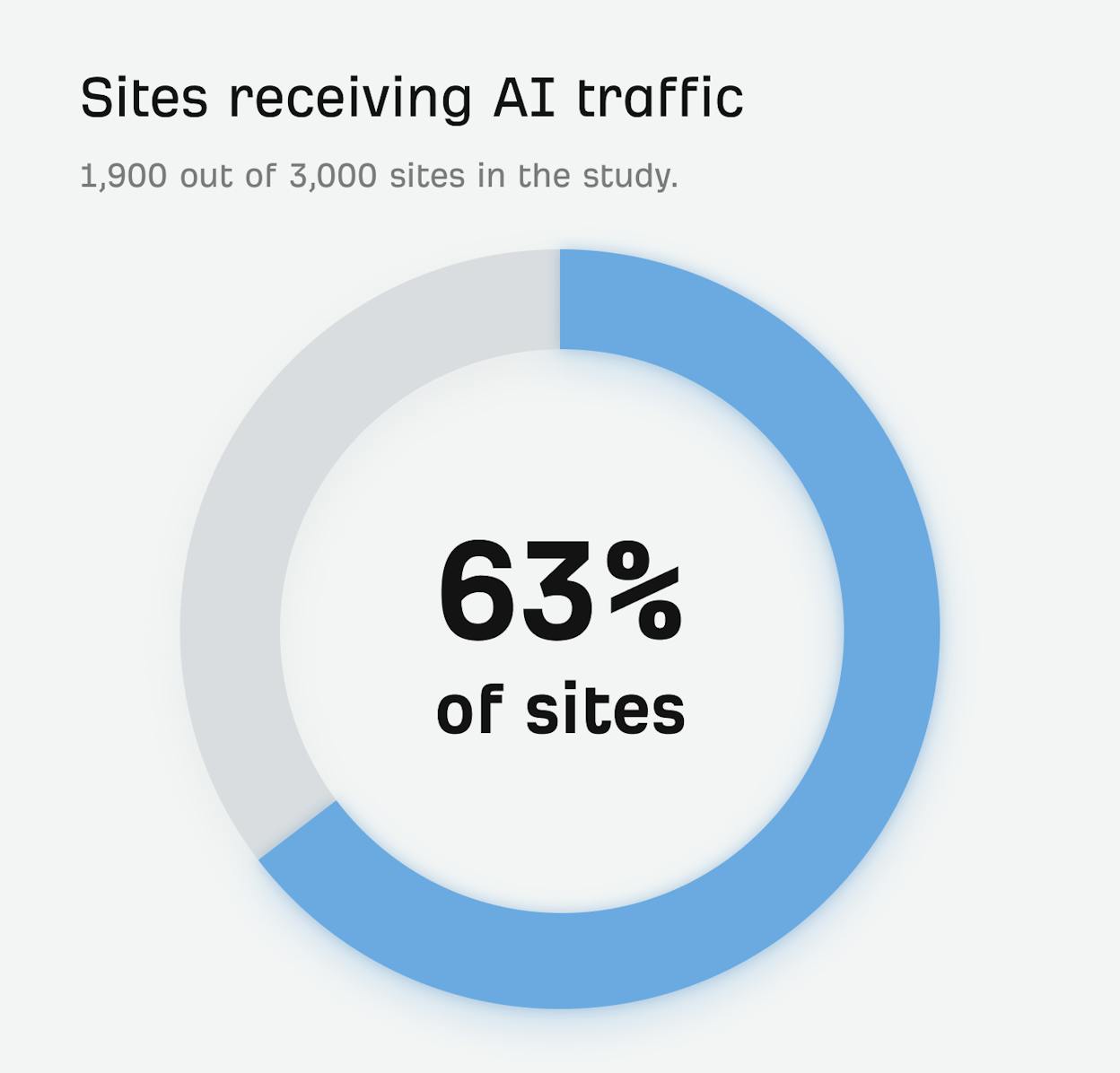
The 63% number comes from the Ahrefs study of 3,000 sites published in February 2025. Of those sites, 1,900 received at least one visit from an AI source. That gave the average website roughly a two-in-three chance of being touched by AI traffic.
That snapshot was already conservative when it was published. Newer datasets show AI sources reaching far more sites than the original study could see.
Semrush analyzed over a billion lines of clickstream data from a 200-million-user panel between October 2024 and February 2026. They found that ChatGPT alone referred traffic to roughly 71,000 unique domains per month at the start of the study. By October 2025, that number peaked at around 260,000 domains. The footprint expanded almost 4x in twelve months.
Conductor’s 2026 AEO and GEO Benchmarks Report studied 13,770 domains across 10 industries between May and September 2025. AI referral traffic averaged 1.08% across the entire dataset, up sharply from negligible numbers a year earlier. SE Ranking’s analysis put global AI traffic at roughly 0.15% in 2025, a 7x jump from 0.02% in 2024.
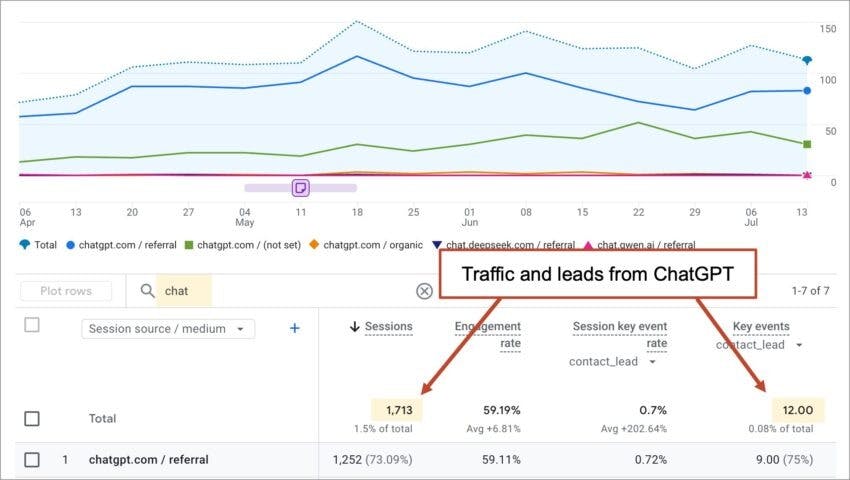
These numbers all look small. They are also growing several times faster than search referrals right now. ChatGPT outbound referrals grew 206% comparing January 2025 to January 2026, according to the Semrush clickstream study. Google’s organic traffic grew about 1.2% over the same period.
The takeaway is straightforward. Two-thirds of sites are seeing some AI traffic. The share of total traffic AI sends is small but compounding fast. And the data you can see in your analytics is the floor, not the ceiling. We will cover why later in the article.
98% of AI traffic comes from three platforms (but the leaderboard is shifting)
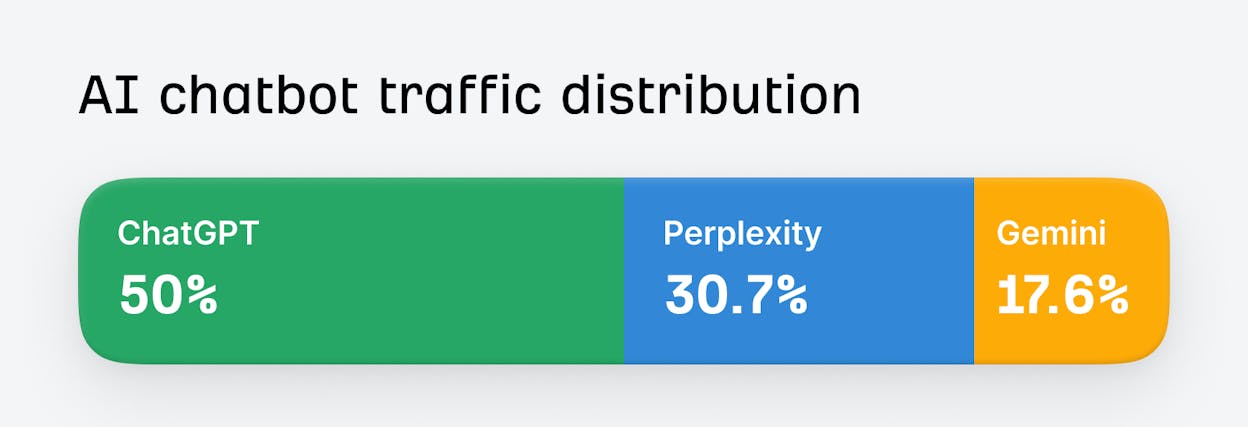
The Ahrefs study found that ChatGPT, Perplexity, and Gemini sent 98% of all AI traffic between them. ChatGPT drove 50%, Perplexity 30.7%, and Gemini 17.6%.
Those proportions have changed substantially since.
Conductor’s late-2025 data put ChatGPT’s share of AI referrals at 87.4%, Perplexity at a distant second, and Gemini, Copilot, and Claude trailing further behind. SE Ranking’s January-to-April 2025 study found ChatGPT at 77.97%, Perplexity at 15.10%, and Gemini at 6.40%. Methodologies differ, but the pattern is consistent. ChatGPT has pulled away from the rest of the field.
|
AI platform |
Share of AI referrals (Conductor, 2025) |
Share of AI referrals (SE Ranking, 2025) |
|---|---|---|
|
ChatGPT |
87.4% |
77.97% |
|
Perplexity |
~6% |
15.10% |
|
Gemini |
~3% |
6.40% |
|
Copilot |
~2% |
not separated |
|
Claude |
<1% |
0.17% |
|
DeepSeek |
<0.5% |
0.37% |
The interesting story in the table is what is happening underneath the leader. Gemini’s referral traffic grew 388% year over year between September and November 2025, according to Similarweb data published by Digiday. Gemini’s monthly active users grew 30% to 346 million over the same window, while ChatGPT’s grew 5% to 810 million. Gemini is small but accelerating from a low base, and Google’s distribution advantage means that gap may close faster than people expect.
If you plan to invest your AI optimization effort, prioritize in this order based on current evidence: ChatGPT first, then Perplexity, then Gemini. Treat Copilot and Claude as worth tracking but not worth designing for yet. Each platform retrieves and ranks differently, so the tactics you use for ChatGPT will not perfectly transfer. We covered the platform-specific patterns in detail in How to Rank on ChatGPT and How to Rank on Perplexity AI.
AI traffic is small in volume but bigger in value
The 0.17% number from the Ahrefs study is the one most marketers fixate on. The full picture is more useful than that single figure.
Three things are true at the same time. AI traffic is a small share of total visits today. AI traffic is growing several times faster than search traffic. And AI visitors convert at a much higher rate than organic visitors when they do click through.
That last point is where most studies bury the lead. Here is the conversion data we could find.
|
Source |
Conversion rate |
|---|---|
|
ChatGPT |
15.9% |
|
Perplexity |
10.5% |
|
Claude |
5.0% |
|
Gemini |
3.0% |
|
Google organic |
1.76% |
Source: Seer Interactive analysis, June 2025.
Semrush’s July 2025 study put it more simply. LLM visitors convert 4.4x better than organic search visitors on average. Conductor reported AI traffic converting at 1.66% on sign-ups versus 0.15% for traditional search. SE Ranking found AI-referred users spend 68% more time on site than organic visitors do.
The reason is intent. AI tools act as a filter. By the time someone clicks a citation in ChatGPT or Perplexity, the model has already explained the basics, named the options, and pointed them toward the source. The visitor arriving on your page is later in the buying journey than a Google searcher typing the same query would be.
That reframes how to think about the volume question. A site getting 175 AI views per month for every 143,173 total views is not getting 0.12% of useful traffic. It is getting 0.12% of its visits from a channel where each visit may be worth several times an organic click. The right way to size AI traffic is by revenue or pipeline contribution, not raw sessions.
To get there, you need to know which AI source sent each visitor, which page they landed on, and what they did next. Most analytics tools do not do this well out of the box. They were built for a search-engine world.
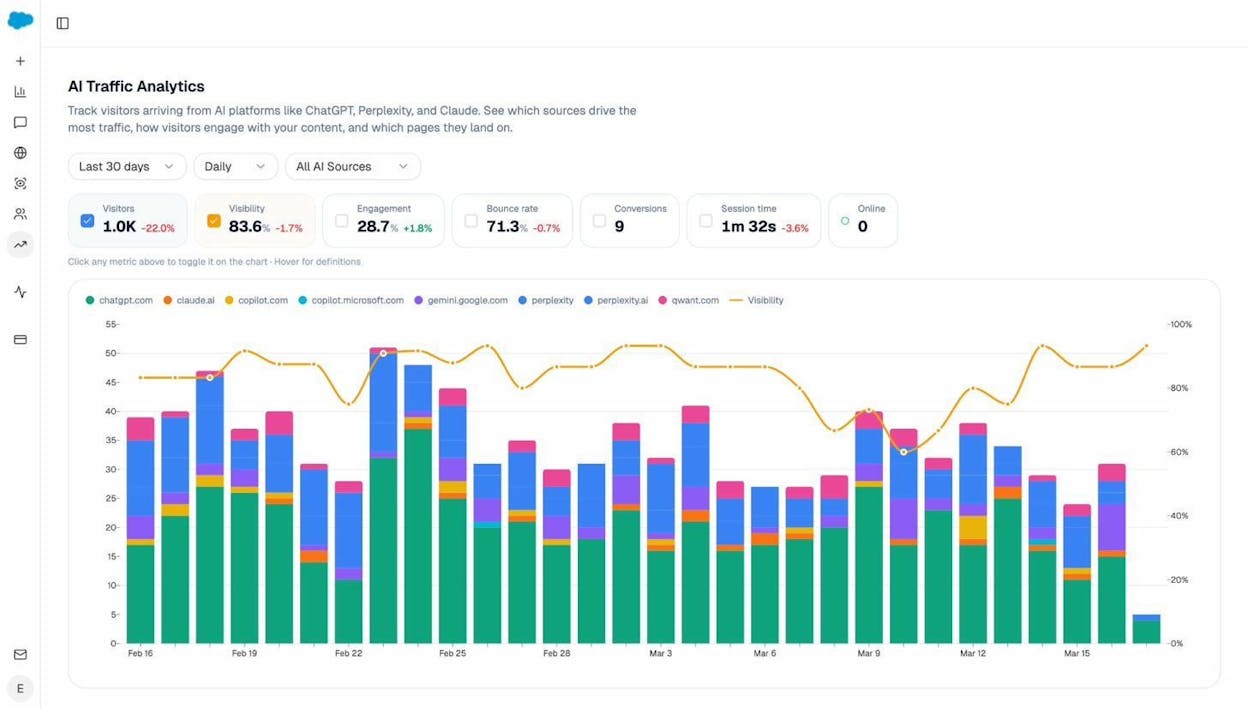
Inside Analyze AI’s AI Traffic Analytics, you can see referrals broken down by AI source, by landing page, and by conversion event. That last column is the one most teams are missing.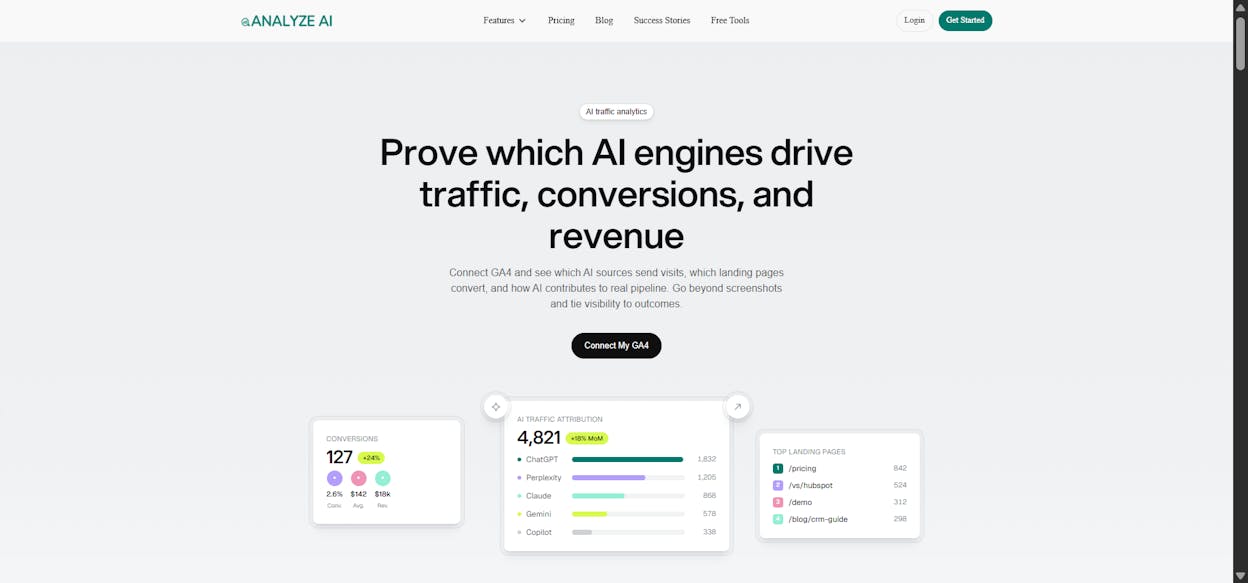
Smaller websites get a bigger AI traffic share (proportionally)
Across cohorts, the Ahrefs study found that smaller sites picked up more of their total traffic from AI than larger sites did.
|
Site size |
AI share of views |
AI share of visitors |
|---|---|---|
|
Under 999 monthly visitors |
0.37% |
0.56% |
|
1,000 to 9,999 monthly visitors |
0.19% |
0.29% |
|
Over 10,000 monthly visitors |
0.09% |
0.13% |
The pattern looks counterintuitive at first. Marketers often say AI loves to mention big brands, and that is true at the citation level. But citations are not traffic. A small SaaS company that ranks for a few specific long-tail prompts can capture a meaningful share of those prompt responses, and those clicks all land on a small base of total visits. The ratio looks healthy even when the absolute numbers do not.
There is a second pattern in the cohort data that matters more for strategy. Smaller sites get less diversity in their AI sources. ChatGPT sent 67.4% of AI traffic to the smallest cohort, compared to 43.4% for the largest. Larger sites appear in Perplexity and Gemini answers more often, because those platforms tend to surface a wider mix of sources.
If you run a smaller site, focus your first AI optimization push on ChatGPT. It is the source most likely to send you visible traffic, and the patterns of what gets cited there are well documented. We dug into 65,000 ChatGPT citations in How To Get Mentioned in AI Search if you want the playbook.
Your AI traffic is being underestimated, and how to surface the rest
Every study cited above carries the same caveat. The numbers represent visible AI traffic only. A meaningful share of AI visits get bucketed into “direct” or other sources because the AI platform either strips the referrer header or never sends one in the first place.
Ahrefs ran a small test on Copilot in late 2024 and found that Copilot’s referrer information had stopped flowing through to analytics around October 2024. Mistral and Jasper showed the same pattern. Even traffic that originates from a clear AI source will appear in your analytics as direct traffic if the referrer is not preserved.
There is a second blind spot most analytics tools never close. AI visitors do not always convert on the same session. Someone might see your brand mentioned in a ChatGPT answer, search for you on Google later, and convert through a branded query. Your analytics will attribute that conversion to organic search. The AI mention that sparked the journey shows up nowhere.
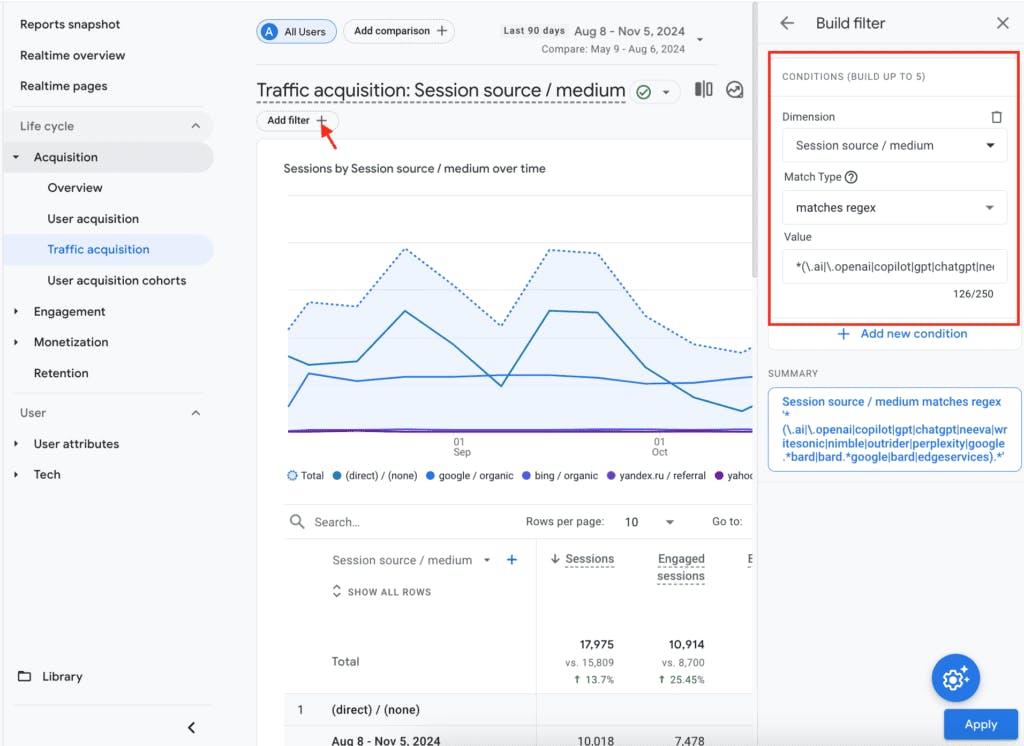
This is why looking at AI traffic only through your analytics view will systematically understate the channel. To see the full picture, you need three additional layers of data: which prompts surface your brand, which sources AI engines cite for those prompts, and how your direct traffic moves alongside your AI citation activity. This is the gap Analyze AI was built to close.
How to find your AI traffic and turn it into a strategy
Knowing AI traffic exists is not the same as knowing how to grow it. The next four steps cover the workflow we recommend to teams just starting on AI search.
1. Track every prompt where your brand or competitors appear
Start by figuring out what AI users are actually asking that should surface your brand. Brainstorming prompts manually is slow and incomplete. The faster way is to start from the prompts your competitors already win on.
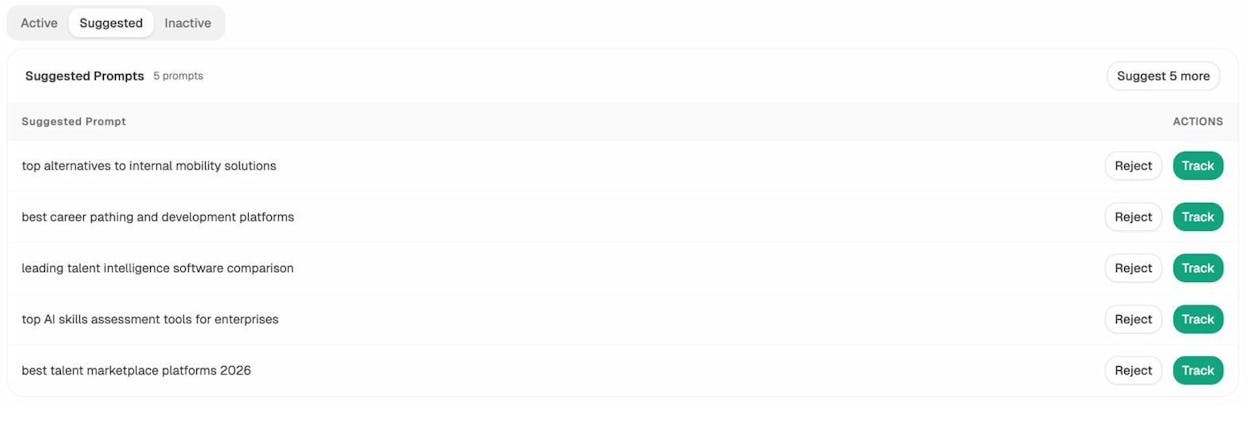
Inside Prompt Tracking, you can monitor a curated list of prompts and see where your brand appears, where competitors appear instead, and how that mix changes over time. The Prompt Discovery feature suggests new prompts based on your category, your existing visibility, and the prompts your competitors are winning. You can also run Ad Hoc Prompt Searches to test a single prompt across all major AI engines in one place.
2. Track which sources AI engines cite (yours and your competitors’)
Once you know which prompts matter, the next question is which pages and domains get cited when those prompts run.
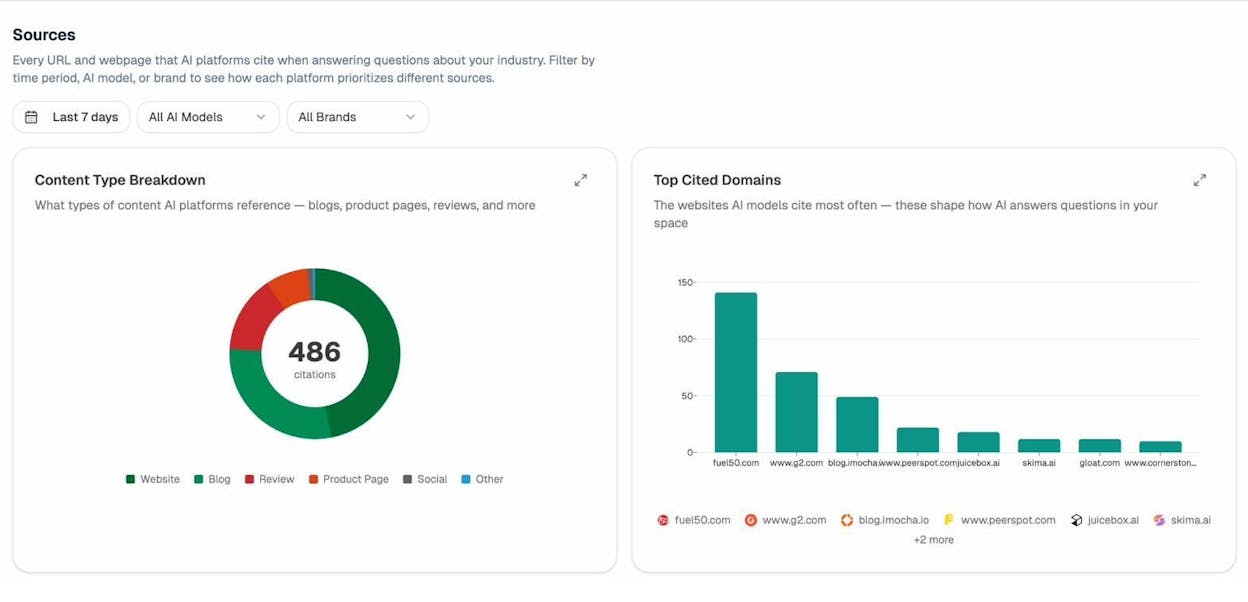
Inside Citation Analytics, you can see the domains AI engines cite most often in your category, the content type breakdown (blog, product page, review, video), and which of your own URLs are picking up citations. This data is what tells you whether AI is reading your blog, your product pages, or third-party sources when answering questions about your space.
Our internal analysis of 83,670 AI citations found that 82.9% of citations come from third-party sites, not from the brand’s own domain. Knowing which third parties matter most in your category is half the battle.
3. See which of your pages earn AI traffic and which do not
Now overlay your own analytics against the citations you are earning. The pages that get cited in AI answers and also receive AI referral traffic are your high-value templates. Find them, study what they do well, and build more of them.
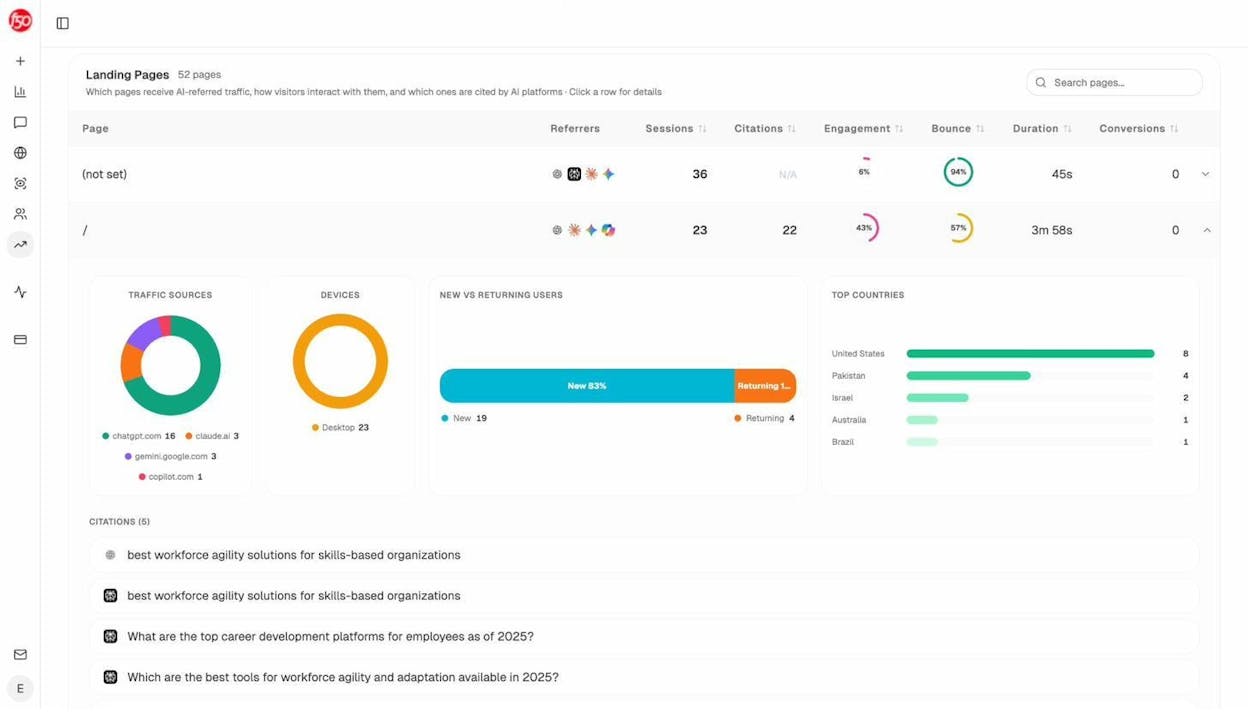
Sort your AI-receiving landing pages by AI sessions, by AI conversion rate, and by AI citations. The pages at the top of all three lists are your AI traffic magnets. Reverse-engineer what those pages have in common (the content depth, the structure, the freshness, the entities they mention) and apply that pattern to similar pages that are not yet performing.
A few patterns we see consistently. Pages that lead with a clear, direct answer in the first 100 words tend to get cited more often. Pages with strong internal entity coverage (mentioning related products, concepts, and competitors by name) tend to surface in more prompt variations. Pages that have been refreshed in the last 12 months tend to outperform older content, since AI engines cite content that is roughly 25% fresher than what typically ranks in Google.
4. Find opportunities where competitors win and you do not
A highly actionable layer of AI search data is the gap between your visibility and your competitors’.
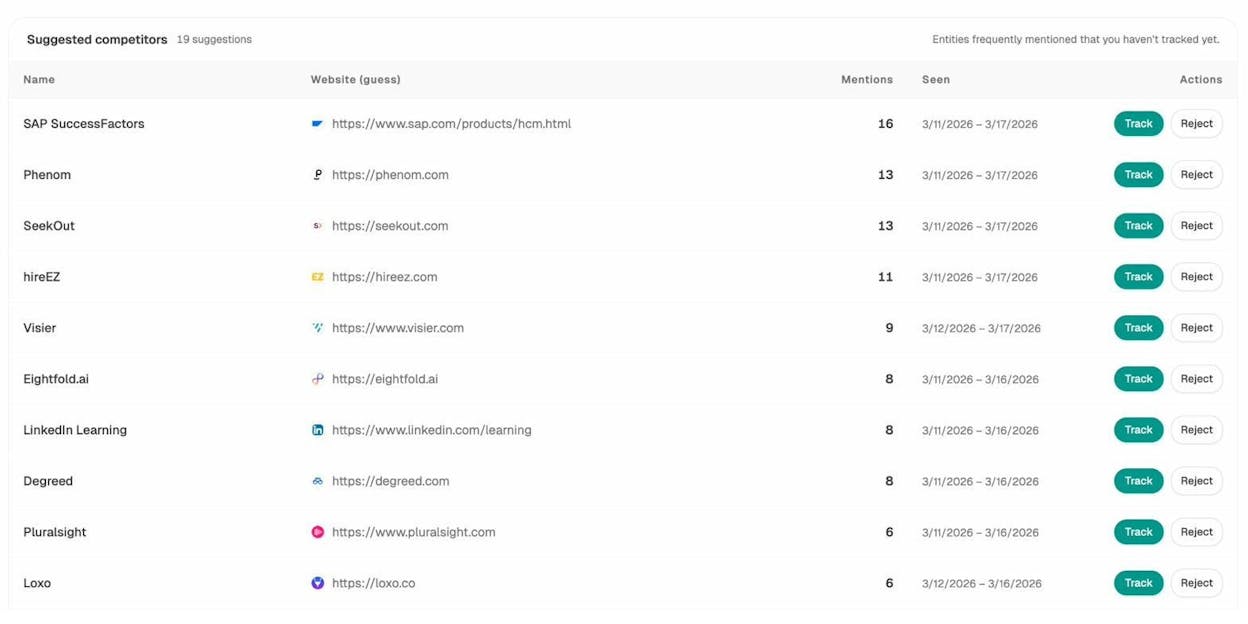
Inside Competitor Intelligence, you can see prompts where one or more of your competitors are cited and you are not. Each gap is a content brief waiting to be filled. The prompts already exist, the demand is already there, and you have a measurable target to beat.
We covered the full process in 6-Step SEO Competitor Analysis (+ Track AI Search Rivals), but the short version is this. Identify prompts where you have a meaningful visibility gap. Look at which sources AI cites for those prompts. Build a page that covers the topic better than the cited sources. Then track whether that page starts earning citations and AI traffic over the next 30 to 60 days.
What to do once you can see your AI traffic
Once you have visibility into AI traffic, citations, and competitor gaps, the actions write themselves. Here is the short list of moves that consistently produce results across the teams we work with.
-
Refresh the pages that already earn AI traffic. Pages with citations decay just like pages with rankings. Update them every 6 to 12 months and track citation trend lines after each refresh.
-
Build content for the prompts where you have a gap and a competitor wins. The quickest AI visibility wins come from filling specific demand, not from generic SEO content.
-
Mention competitors and adjacent products by name in your content. Entity-rich content gets cited more, because AI engines are pattern-matching to recognize what your page is about.
-
Watch your direct traffic for unexplained spikes on individual pages. A sudden jump in direct visits to one URL often signals an AI citation that is not flowing through as a clean referrer.
-
Add a “How did you hear about us?” question to your sign-up or contact form. This catches the AI conversions your analytics misses. Ahrefs reported over 14,000 self-attributed ChatGPT users from this method alone.
If you want a deeper playbook on optimizing for AI search alongside traditional search, 4 Pillars of an Effective SEO Strategy for AI Search and What Is Generative Engine Optimization (GEO)? are good next reads.
Final thoughts
Two-thirds of websites are receiving AI traffic right now. That share is climbing every month. The volume is still small relative to organic search, and according to SparkToro, 95% of Americans still use traditional search engines monthly, so search is not going anywhere. But the AI channel is real, the traffic is high-intent, and the visibility advantage compounds for brands that start tracking it now.
The teams that will win this transition are not the ones throwing out SEO and chasing every “GEO is the new SEO” headline. They are the ones treating AI search as a second organic channel, measuring it properly, and feeding the data back into the same content engine that already powers their search performance.
The data the studies cannot yet show is the data on your own site. Find it, track it, and act on it before your competitors do.

Ernest

Ibrahim


