



Summarize this blog post with:


In this article, you’ll see the 50 bootstrapped SaaS companies pulling the most US organic search traffic in 2026, the exact pages doing the work, and the small set of repeatable plays that explain why these specific companies show up year after year. We pulled fresh traffic data from the DataForSEO Labs API and analyzed every winner’s top-performing pages to find the patterns. We also added something the original Ahrefs version of this list left out: how the same plays carry over into AI search, and how to check if you are showing up there too.
Table of Contents
A note on methodology
The sample of 1,600 SaaS companies comes from public bootstrapped SaaS lists. We re-ran traffic numbers in March 2026 using the DataForSEO Labs bulk traffic estimation endpoint, scoped to US Google. The numbers below show US-only organic traffic, which is more useful for benchmarking against the SERP you compete on than global aggregates.
Top 50 bootstrapped SaaS companies in 2026
Ranked by estimated US organic traffic, March 2026.
|
Rank |
Company |
US Organic Traffic |
Signature Play |
|---|---|---|---|
|
1 |
SavvyCal |
9,883,009 |
Programmatic world clock pages |
|
2 |
Smallpdf |
4,305,857 |
Free PDF conversion tools |
|
3 |
IPQS |
2,207,931 |
Free phone lookup tool |
|
4 |
Ahrefs |
1,753,026 |
Free SEO + writing tools |
|
5 |
BambooHR |
1,617,026 |
HR glossary + brand |
|
6 |
Clockify |
1,579,689 |
Free time calculators |
|
7 |
ExpressVPN |
859,333 |
Branded + IP tools |
|
8 |
JetBrains |
769,083 |
Documentation at scale |
|
9 |
MXToolbox |
726,271 |
Free DNS + email tools |
|
10 |
Todoist |
563,806 |
Productivity templates |
|
11 |
Surfshark |
562,085 |
Brand search + free tools |
|
12 |
Buzzsprout |
469,343 |
Podcast education content |
|
13 |
Elfsight |
379,427 |
Widget gallery pages |
|
14 |
Toggl |
310,180 |
Time tracking guides |
|
15 |
SpyFu |
276,381 |
Competitor research data |
|
16 |
Mangools |
236,085 |
SEO tutorials |
|
17 |
Oxylabs |
198,146 |
Proxy + scraping content |
|
18 |
Aha! |
194,529 |
Roadmap glossary |
|
19 |
Zadarma |
190,971 |
Telephony glossary |
|
20 |
Mailtrap |
179,865 |
Email testing docs |
|
21 |
Crowdin |
165,354 |
Localization platform docs |
|
22 |
Filemail |
160,152 |
Free file transfer pages |
|
23 |
Vector Magic |
155,294 |
Free image converter |
|
24 |
Surfer |
153,535 |
SEO guides |
|
25 |
BuiltWith |
145,702 |
Programmatic site lookups |
|
26 |
OpenWeather |
137,810 |
Weather API docs |
|
27 |
TeamGantt |
136,616 |
Free Gantt templates |
|
28 |
Yardi |
113,407 |
Real estate education |
|
29 |
Kaspr |
82,240 |
LinkedIn outreach guides |
|
30 |
Helpjuice |
78,505 |
Knowledge base templates |
|
31 |
GetResponse |
75,463 |
Email marketing guides |
|
32 |
Float |
70,489 |
Resource planning content |
|
33 |
ShortPixel |
65,985 |
Image optimization tutorials |
|
34 |
BrightLocal |
61,022 |
Local SEO research |
|
35 |
Wisepops |
44,799 |
Popup design library |
|
36 |
Uptime.com |
39,926 |
Status page templates |
|
37 |
vFairs |
37,006 |
Virtual event playbooks |
|
38 |
DeviceAtlas |
31,716 |
Device intelligence pages |
|
39 |
Homerun |
31,048 |
Hiring templates |
|
40 |
Doofinder |
29,195 |
Site search guides |
|
41 |
Wappalyzer |
27,484 |
Tech stack lookups |
|
42 |
GTranslate |
24,924 |
Translation widget pages |
|
43 |
Slickplan |
24,895 |
Sitemap templates |
|
44 |
La Growth Machine |
24,207 |
Outbound playbooks |
|
45 |
WordToHTML |
23,979 |
Free conversion tool |
|
46 |
Voucherify |
20,846 |
Promotion code engine docs |
|
47 |
MeetingRoom365 |
7,288 |
Niche scheduling content |
|
48 |
Referral Factory |
3,763 |
Referral program templates |
|
49 |
Glassnode |
3,645 |
On-chain analytics studies |
|
50 |
GetMyInvoices |
1,654 |
Invoice automation guides |
A few of these will surprise you. SavvyCal, a small calendar booking app, is now sitting at almost ten million visits a month, mostly from a programmatic SEO play built in the last twelve months. We will get into that one first.
The five companies pulling the most weight
Rather than give every company a paragraph, we did a deeper pass on the top five so you can see the actual page that does the work. The pattern across all five is the same: one or two pages, ranking for very high-volume informational keywords, doing the bulk of the lifting. None of these companies “rank for everything.” They rank for the right thing.
1. SavvyCal: 9.8M visits from a single programmatic play
SavvyCal sells calendar scheduling. Their main product pages target keywords like meeting scheduler and calendly alternative and have always been competitive. None of that is what is driving 2026 traffic.
In late 2024 the team launched time.savvycal.com, a subdomain of programmatic world clock pages. Each page targets a single time-zone query like what time is it in California USA (550K monthly searches in the US) or hawaii time (246K). At time of writing, SavvyCal ranks in positions 4 to 6 for these terms, which is generating an estimated 50,000+ monthly visits per page across hundreds of city and country pages.
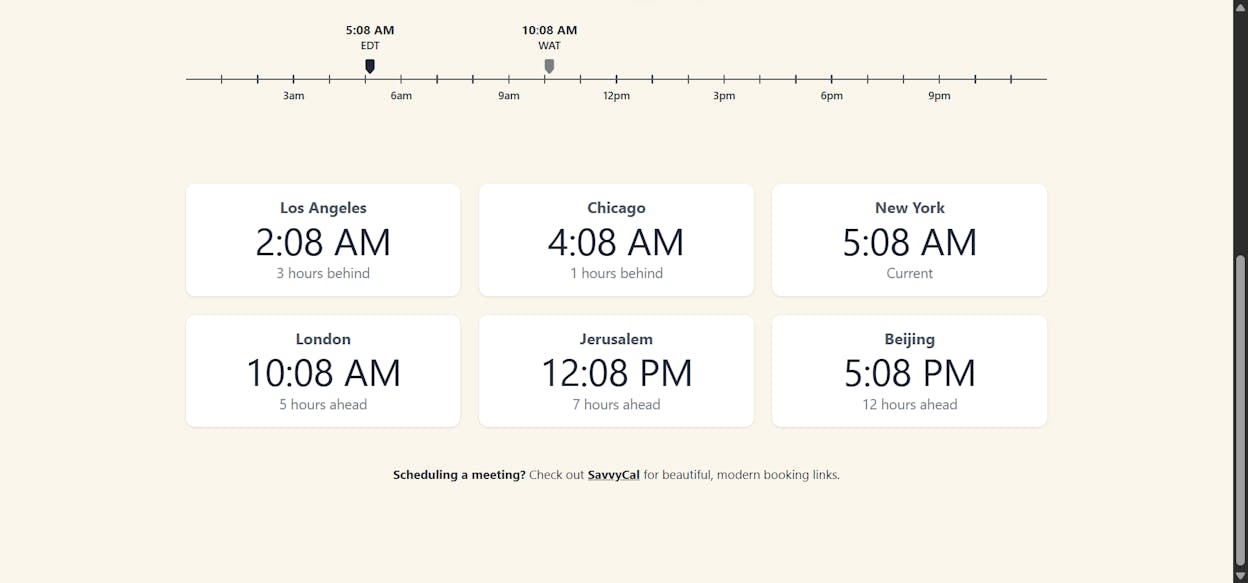
This is a textbook programmatic SEO move executed against a topic that is adjacent to their product. People asking what time it is in Los Angeles are very often trying to schedule something. The CTA on every page nudges them toward booking a meeting. The play is cheap to maintain (one template, an API for time data) and would be hard for Calendly to copy without looking like a knockoff.
The lesson is not “go build time-zone pages.” The lesson is to find the high-volume informational query that sits one inch from your product and own it programmatically.
2. Smallpdf: 4.3M visits, still the PDF kingpin
Smallpdf has been at the top of this list for years and the formula has not changed: free, single-purpose PDF tools that target massive informational keywords. Their five top pages alone account for over 2 million monthly visits.
|
Page |
US monthly traffic |
|---|---|
|
smallpdf.com/merge-pdf |
547,556 |
|
smallpdf.com/pdf-to-word |
494,262 |
|
smallpdf.com/compress-pdf |
493,139 |
|
smallpdf.com/jpg-to-pdf |
303,669 |
|
smallpdf.com/edit-pdf |
293,994 |
![[Screenshot of smallpdf.com/merge-pdf showing the drag-and-drop file upload interface]](https://www.datocms-assets.com/164164/1778087719-blobid2.png?auto=format,compress&w=1248&fit=max)
What is interesting in 2026 is that these pages are increasingly cited inside AI Overviews and ChatGPT answers when users ask questions like how do I merge two PDFs. The free tool is the answer the AI links to. Smallpdf did not have to do anything new for this to happen. They built the canonical page for the canonical query, and every AI model trained or retrieving on the open web found it. That is a very old SEO idea paying off in a new place.
3. IPQS: 2.2M visits from two pages
IP Quality Score sells fraud and bot detection. Their entire growth story for the last two years is about two pages: the free phone number lookup tool (956K monthly visits) and the reverse phone number lookup page (1.1M visits). Together they represent 94% of IPQS organic traffic.
Both pages target massive consumer keywords (phone number lookup alone has hundreds of thousands of monthly searches in the US) with the simplest possible UI: an input box, a search button, a result card. The page has barely been redesigned since 2020. Eighty-four referring domains. A design that is generously described as functional.
It still wins. Why? Because the page is the answer. Users who type phone lookup into Google want to look up a phone number, not read a 2,000-word article about phone lookups. Free tools that perfectly match search intent will outrank long-form content on the same keyword every time.
![[Screenshot of ipqualityscore.com/free-phone-number-lookup showing the simple search interface and result table]](https://www.datocms-assets.com/164164/1778087721-blobid3.png?auto=format,compress&w=1248&fit=max)
4. Ahrefs: 1.7M visits from a portfolio approach
The Ahrefs strategy is the most diversified in the top five. Their growth comes from three things stacked together: a deep blog and guides library (over 2,000 articles), a free tool suite (paragraph rewriter, paraphrasing tool, Instagram caption generator, backlink checker), and programmatic plays like their website rankings pages.
Their free writing tools are a clean case study. Ahrefs noticed that AI writing tools were getting massive search volume and zero good free alternatives, built free versions, and let them rank. The paragraph rewriter alone pulls over 100K monthly US visits. None of these tools sells their core SEO product directly. They build top-of-funnel awareness for a brand that already converts well.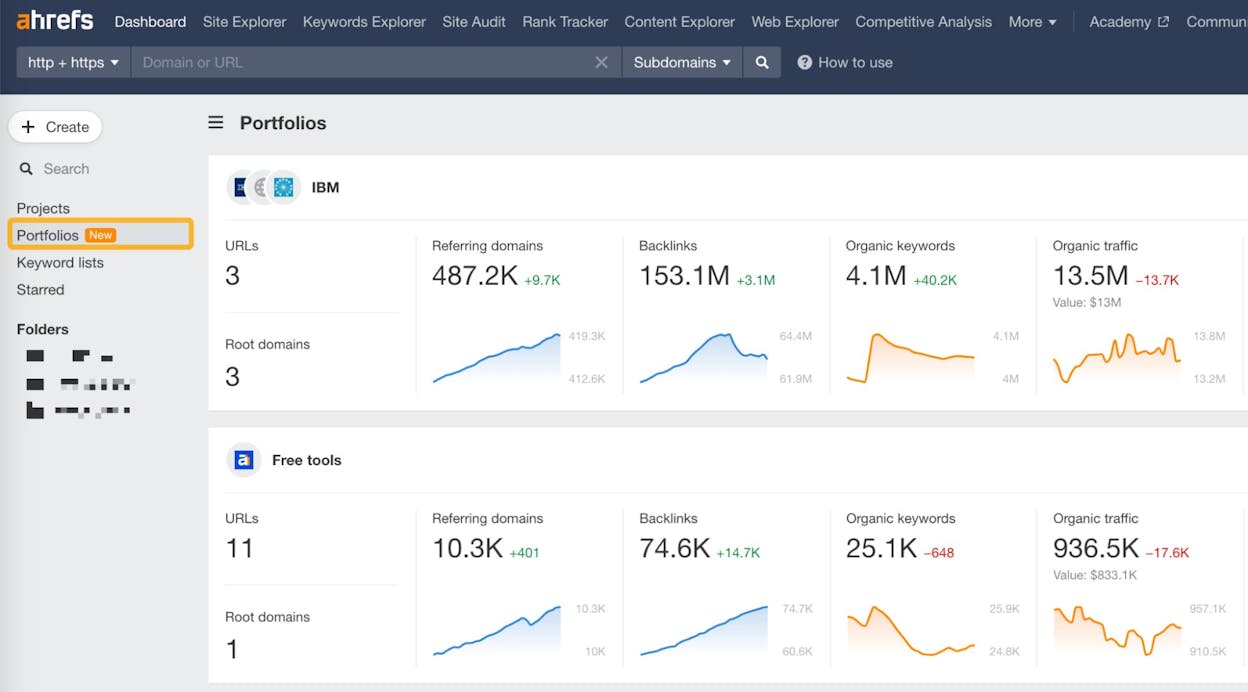
The takeaway is that no single play hit the jackpot. Ahrefs ran four playbooks in parallel and let the data tell them which one to scale.
5. BambooHR: 1.6M visits from a glossary nobody talks about
BambooHR sells HR software. Their second-highest-traffic page is not a product page or a blog post. It is /resources/hr-glossary/generation-y, pulling 147K monthly visits.
|
Page |
US monthly traffic |
|---|---|
|
bamboohr.com (homepage) |
205,961 |
|
bamboohr.com/resources/hr-glossary/generation-y |
147,884 |
|
bamboohr.com/blog/part-time-vs-full-time |
79,102 |
|
bamboohr.com/resources/hr-glossary/generation-x |
62,491 |
|
bamboohr.com/resources/hr-glossary/millennials |
55,094 |
![[Screenshot of bamboohr.com/resources/hr-glossary showing the alphabetical index of HR glossary terms]](https://www.datocms-assets.com/164164/1778087754-blobid5.png?auto=format,compress&w=1248&fit=max)
The play is a workplace-themed glossary aggressively targeting “what is X” queries that HR people, students, and journalists all search. Each entry is short, well-cited, and link-worthy. Glossary pages are unglamorous, but they compound: every time a journalist needs a definition of “millennial” for a working-age article, BambooHR is the first link, which feeds them backlinks, which lifts the rest of the site.
If you are in a category with vocabulary (HR, finance, healthcare, security), a glossary is the most underpriced asset you can build.
The five plays that show up across the whole list
Looking at all 50 companies, almost every winning page falls into one of these categories. If you want to copy the strategy, copy these.
Free single-purpose tools
This is the dominant play. Twenty-two of the 50 companies rank in the top five for at least one branded “free X tool” keyword. The pattern is always the same: one input, one output, no signup required. Smallpdf, IPQS, MXToolbox, Vector Magic, Filemail, WordToHTML, Wappalyzer, and BuiltWith all run this play.
The criteria for a tool that will rank: the search intent is the tool itself, not content about the tool; the keyword has high US volume; you can build the tool with a small engineering investment; the tool can sit on your domain without breaking site architecture.
This is also where Analyze AI’s free tools collection lives, including a SERP checker, keyword difficulty checker, and website traffic checker. The same logic applies whether you are bootstrapped or funded.
Programmatic content built on a real data source
SavvyCal’s world clock pages, BuiltWith’s per-domain technology lookups, Clockify’s military time converter pages, and Ahrefs’ top-websites-by-country pages are all the same idea: a template plus a database equals thousands of pages, each targeting a long-tail search.
The teams that win here use real, fresh data and build pages that satisfy a specific query better than a human-written article would. Thin programmatic pages get deindexed within a quarter. Our SEO content strategy guide breaks down how to scope a programmatic play.
Localization
This was the biggest driver in the 2024 version of this list and it remains underused. Smallpdf’s Spanish, Portuguese, and Indonesian subfolders, BuiltWith’s Korean subfolder, and Ahrefs’ French and Swedish localized pages all generate large traffic with relatively low effort.
If you already rank in English, translating your top 50 pages into one or two languages where you have product traction is one of the highest ROI moves available. The pages are pre-validated by US data; you are just unlocking new geographies.
Glossaries and educational content
BambooHR, Aha!, Zadarma, Helpjuice, and GetResponse all have glossary or knowledge-base sections that pull massive traffic. These pages are unglamorous and journalist-friendly, which makes them link magnets. They also age extremely well; a definition of “OKR” needs an annual touch-up at most.
If you are starting a glossary, our guide on keyword types walks through how to identify the term-level queries worth defining.
Branded search at scale
ExpressVPN, Surfshark, and BambooHR get a meaningful chunk of their organic traffic from people Googling their brand name plus a modifier (Surfshark login, BambooHR pricing, ExpressVPN download). The signal is clear: brand investment pays off in search, even if you cannot directly attribute it.
If your team has been told brand spend is unattributable, the bootstrapped winners on this list are evidence that it shows up in organic traffic on a 6-12 month delay.
How to add AI search to the same playbook
The same pages that win on Google are increasingly the pages cited inside ChatGPT, Perplexity, Gemini, and Copilot answers. AI search introduces new questions traditional SEO tools cannot answer: which prompts is your brand cited for, which competitors show up alongside you, and how much traffic is now coming from AI engines.
Track which AI engines are sending traffic to your top pages
The first thing the bootstrapped winners on this list should be doing in 2026 is checking how much of their organic traffic is now arriving from AI sources. Smallpdf and IPQS pages are almost certainly being recommended inside ChatGPT answers. The question is how much that is worth.
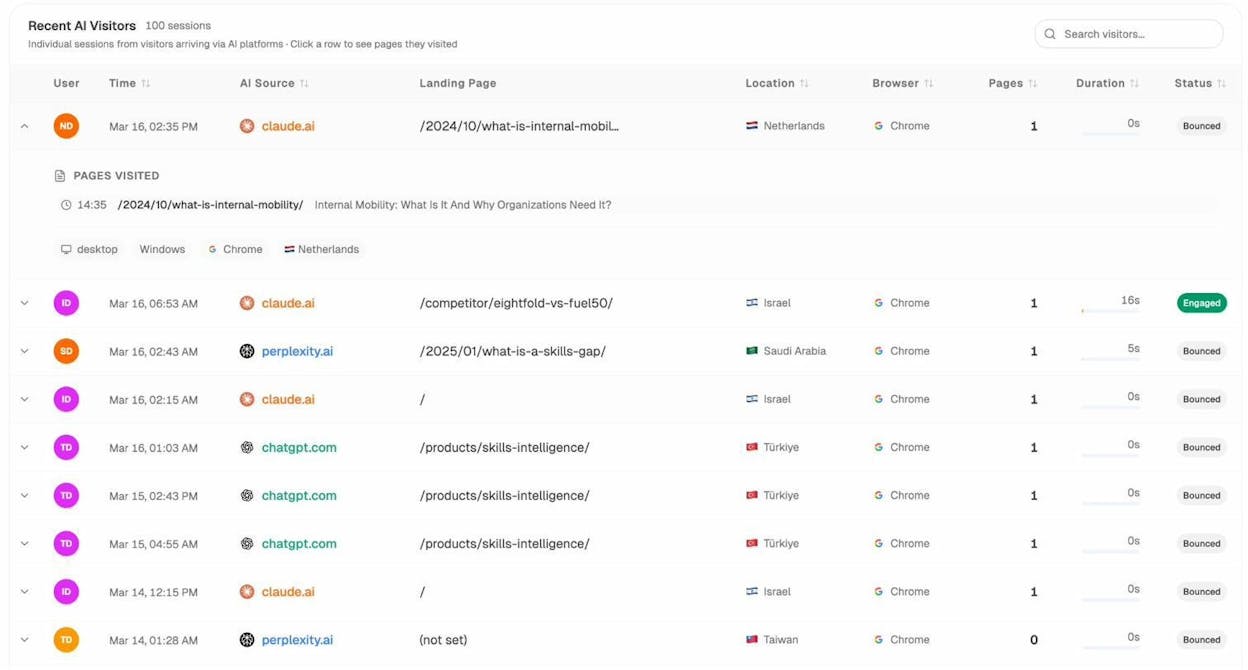
Analyze AI’s AI traffic analytics breaks visitor counts down by AI engine, so you can see whether ChatGPT, Perplexity, or Gemini is sending you the most volume, and which pages they land on.
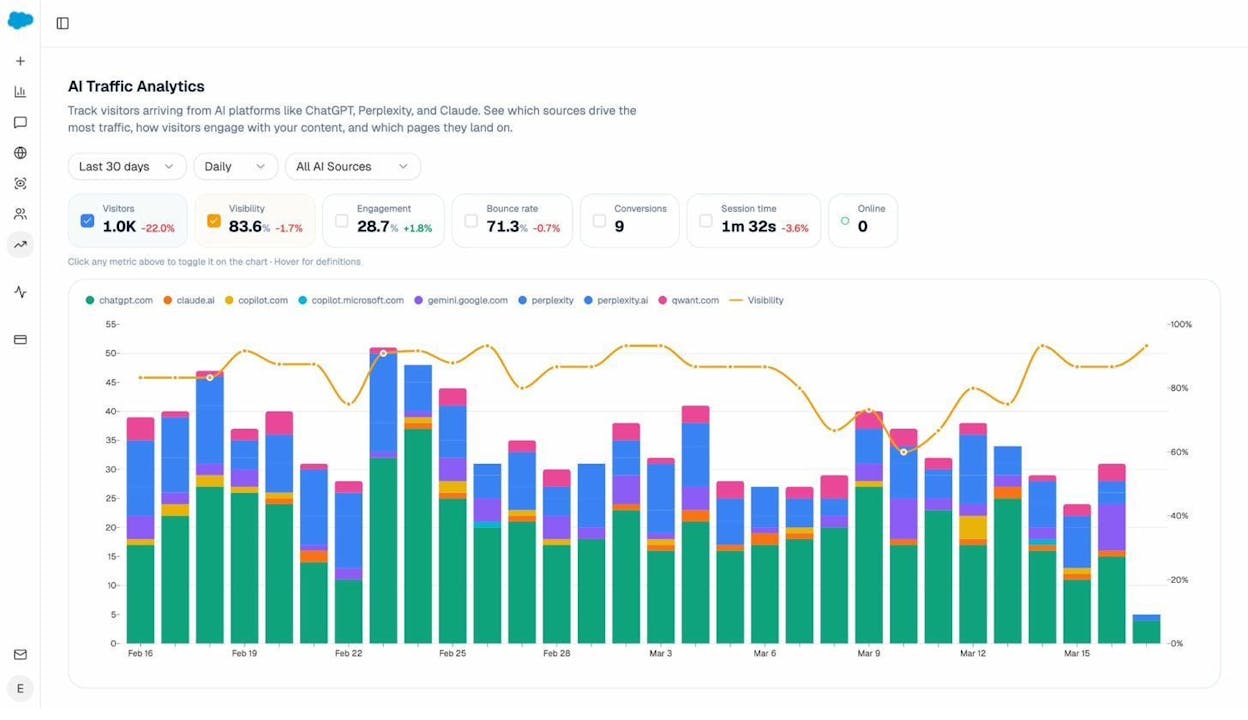
You can drill into individual AI sessions to see the exact landing pages and behavior, which tells you which pages AI engines actually send users to, not just cite.
Find the prompts where competitors win and you don’t
The AI search equivalent of keyword research is prompt research. Instead of finding keywords your competitors rank for, you find prompts that mention your competitors and don’t mention you. Analyze AI’s prompt discovery and tracking does this automatically: it surfaces prompts in your category, runs them across multiple AI engines on a schedule, and tells you whose brand gets cited most often.
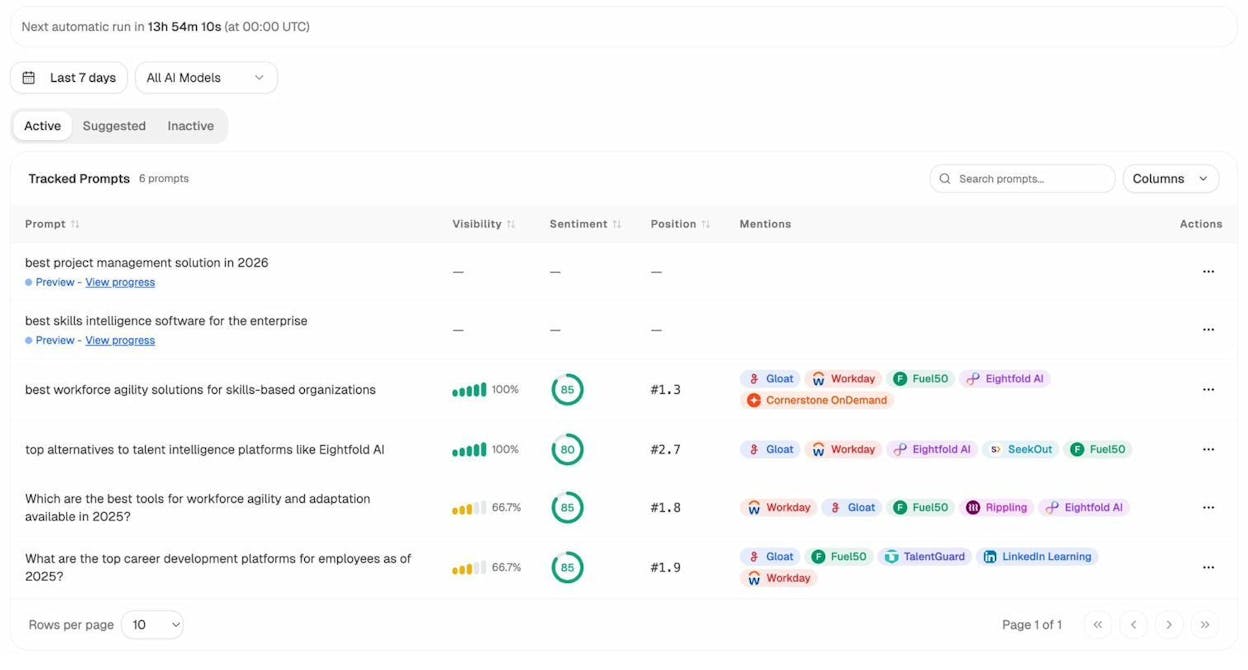
This is how the SavvyCal-style move translates to AI search. You are looking for the prompt that sits one inch from your product and is currently being answered with a competitor name. Then you build the page that becomes the answer.
See which pages AI models cite when answering questions in your space
Once you know which prompts matter, the next question is which sources AI models pull from when answering them. Analyze AI’s citation analytics shows the exact URLs cited per prompt, broken down by content type (blog, product page, review, social) and ranked by frequency.
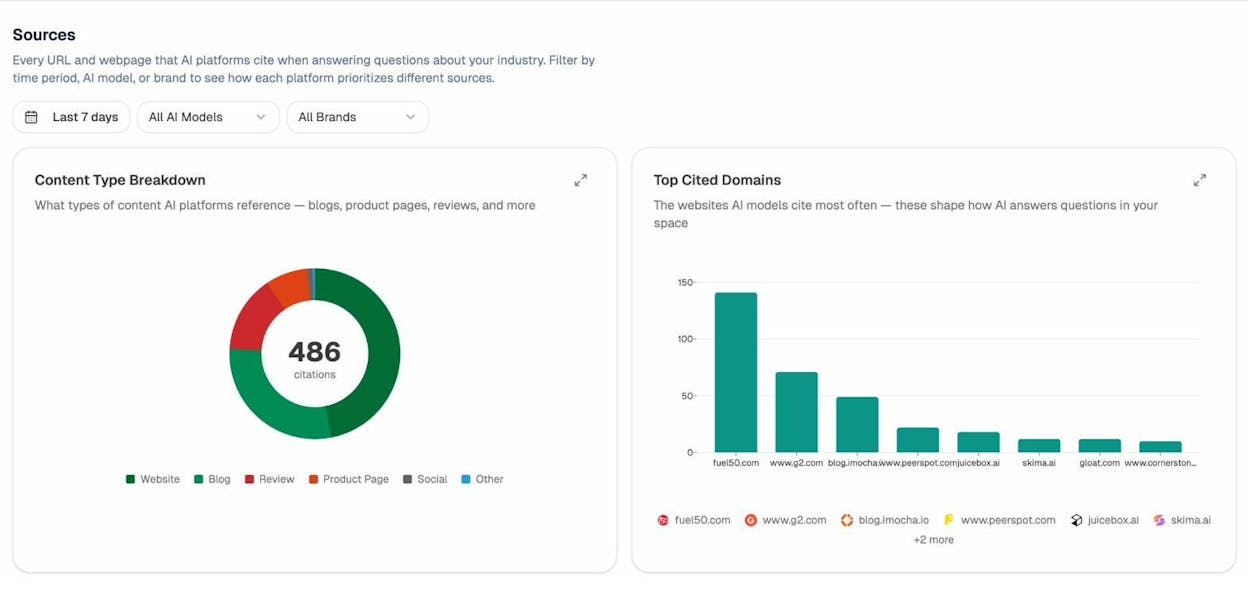
If your category’s top cited domains are review sites and listicles, that is where you need to be present. If they are competitor blogs, your content gap is clear.
Discover competitors you didn’t know AI was citing
The bootstrapped SaaS list above is built on a known set of competitors. AI search has surfaced an entirely new layer: tools that AI engines cite frequently in your category, even when no human ranks them on a top-50 list. Analyze AI’s competitor intelligence flags these as suggested competitors based on how often they appear in answers about your space.
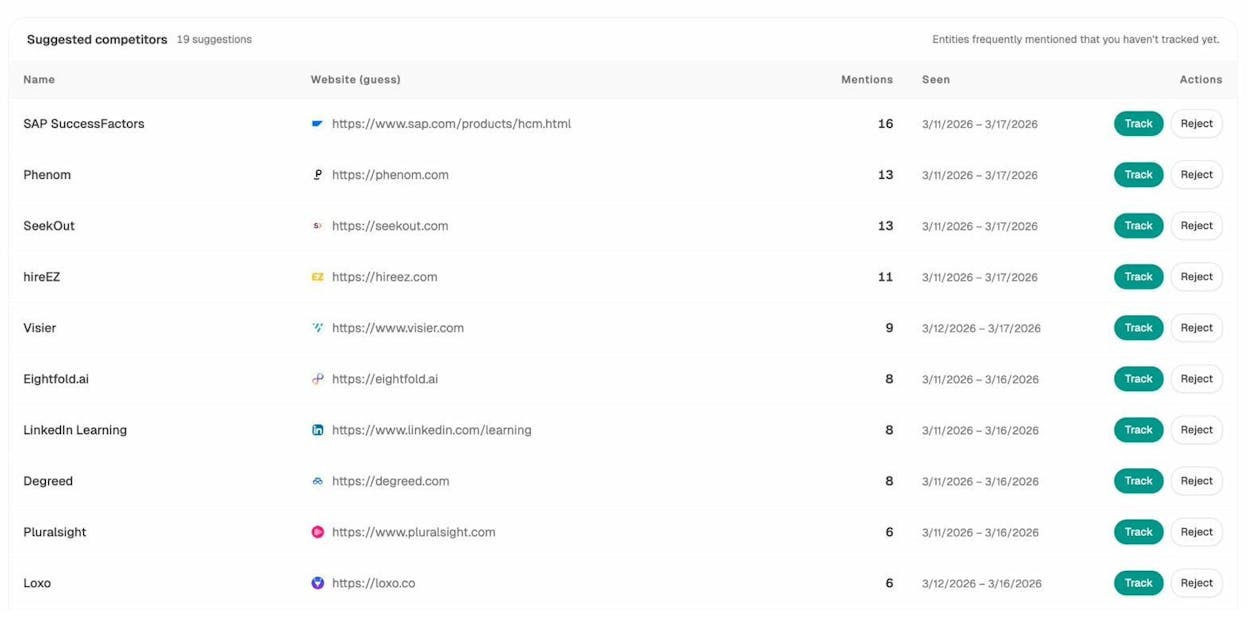
Half the brands you compete with in AI search are not on any analyst’s quadrant or G2 grid. They are just companies whose content keeps getting recommended.
Treat AI search as another organic channel, not a replacement
The framing matters. SEO is not dead. The bootstrapped winners on this list still get most of their traffic from Google, and even their AI citations exist because they ranked on Google first. AI search is a second organic channel layered on top of the first, and the same content investments compound across both.
That is the premise of our SEO pillars for AI search framework and the position we lay out in our manifesto. For tactical depth on the AI side, our guides on how to rank on ChatGPT and how to get mentioned in AI search work through the patterns from 65,000 AI answers.
The actual lesson from this list
The 50 companies above have wildly different products, sizes, and end markets. Their plays are short and repeatable: build a free tool that is the answer to a high-volume query, ship a programmatic play built on real data, translate your best pages into your top non-English markets, write a glossary, invest in brand. None of this is new. What is new is that these same pages are now getting cited inside AI answers, which means the ROI of building them just went up.
If you are running a bootstrapped SaaS in 2026, the question is not whether to chase SEO or AI search. It is which one of these five plays you can ship first, and how you will know it is working in both places.

Ernest

Ibrahim


