



Summarize this blog post with:


In this article, you’ll learn the three main approaches to SEO outreach—shotgun, sniper, and a hybrid method—along with step-by-step instructions for each, real email templates you can copy, and benchmarks for what “good” response rates actually look like. You’ll also learn how AI search engines are creating a new kind of outreach opportunity that most marketers are ignoring entirely.
Table of Contents
What Is SEO Outreach?
SEO outreach is the process of contacting website owners, editors, and publishers to earn backlinks to your website. The goal is straightforward: get other sites to link to your content so you rank higher in search results and drive more referral traffic.
Links remain one of the strongest ranking factors in Google’s algorithm. But beyond rankings, a link from a respected industry publication does two other things. It sends qualified visitors directly to your site. And it builds the kind of domain authority that makes every future piece of content easier to rank.
The problem is that high-quality backlinks don’t appear on their own. You need to earn them. And earning them means reaching out to real people with a pitch that gives them a reason to care.
Before you send a single email, you need three things in place: something valuable to offer, the right people to contact, and a pitch that makes them want to respond.
Step 1: Create Something Worth Linking To
Every failed outreach campaign shares the same root cause—there’s nothing worth linking to.
If your pitch boils down to “please link to my blog post,” you’re asking a stranger to do you a favor for no reason. Publishers link to content that makes their own work better. Your job is to create something that does exactly that.
Here are nine types of content that publishers consistently link to, along with how to pitch each one:
|
Content Type |
What It Is |
How to Pitch It |
|---|---|---|
|
Original research |
A study or analysis with data no one else has published |
“We analyzed 10,000 [X] and found that [surprising finding]. Here’s the full report.” |
|
New statistics |
Fresh data points relevant to your industry |
“We compiled 50+ [industry] statistics for 2026. Your readers might find [specific stat] useful.” |
|
Survey results |
First-party survey data from your audience or customers |
“We surveyed 500 [professionals/users] about [topic]. The results challenge some common assumptions.” |
|
Expert roundups |
Curated quotes from recognized names in the field |
“We gathered opinions from 15 [industry] leaders on [controversial topic]. Your audience might find [specific expert]’s take interesting.” |
|
Comprehensive guides |
The most thorough resource on a specific topic |
“We just published a 5,000-word guide on [topic] that covers [angle no one else has addressed].” |
|
Free tools or calculators |
Interactive resources that solve a specific problem |
“We built a free [tool type] that helps [audience] do [specific task]. It might be a useful addition to your [specific article].” |
|
Infographics or visual data |
Complex data presented in a shareable visual format |
“We turned [data source] into a visual breakdown. It covers [specific insight] and could complement your article on [topic].” |
|
Video tutorials |
Step-by-step walkthroughs that are hard to replicate in text |
“We filmed a detailed walkthrough of [process]. It shows [specific technique] that your readers have been asking about.” |
|
Templates and frameworks |
Ready-to-use documents that save the reader time |
“We created a free [template type] for [use case]. Your readers writing about [topic] might find it helpful.” |
Notice the pattern: every pitch ties the content back to the publisher’s audience. You’re not asking for a link. You’re offering something their readers will find useful.
A quick test before you pitch: Would you link to this content if you found it while writing an article on the same topic? If the answer is no, your content isn’t ready for outreach yet. Go back and make it better.
Step 2: Find the Right People to Contact
Sending a great pitch to the wrong person is the same as not sending it at all. You need to find publishers who have already written about your topic and have an audience that cares about it.
Use a Content Explorer Tool
The fastest way to find link prospects is with a content explorer tool. Enter your topic and you’ll get a list of every article published on that subject, sorted by traffic, backlinks, or social shares.
![[Screenshot: Content explorer tool showing search results for a broad SEO topic, with columns for traffic, referring domains, and domain rating]](https://www.datocms-assets.com/164164/1777062110-blobid1.png?auto=format,compress&w=1248&fit=max)
For example, if you created a new set of SEO statistics, you’d search for “SEO statistics” and filter for pages with high domain authority. Every result is a potential outreach target—someone who has already written about your topic and might want to reference your new data.
Once you find a suitable page, add it to your outreach spreadsheet. Track the URL, the author’s name, their email address, and any notes about their content that you can use to personalize your pitch later.
![[Screenshot: A sample outreach tracking spreadsheet with columns for URL, contact name, email, status, and notes]](https://www.datocms-assets.com/164164/1777062118-blobid2.jpg?auto=format,compress&w=1248&fit=max)
Use Your Existing Network
Before you cold-email strangers, look at who you already know. Industry contacts, podcast guests you’ve been on with, people who’ve shared your content on social media—these are warm leads. Outreach to someone who already knows your name converts at a much higher rate than cold emails.
Set Up Alerts for New Opportunities
Outreach isn’t a one-time activity. Set up Google Alerts or use a keyword tracking tool for your target topics so you get notified whenever someone publishes new content. Fresh articles are the best outreach targets because the author is still actively working on the topic and more likely to add a reference.
Check Who’s Linking to Competing Content
If a competitor has a similar piece of content with dozens of backlinks, every site linking to them is a potential outreach target for you. Use a backlink checker to pull their link profile, then filter for editorial links from relevant sites. These publishers have already shown they’re willing to link to content on your topic. You just need to show them why your version is better.
![[Screenshot: Backlink checker tool showing referring domains to a competitor’s article, with domain rating and anchor text columns]](https://www.datocms-assets.com/164164/1777062125-blobid3.png?auto=format,compress&w=1248&fit=max)
Step 3: Write a Pitch That Gets a Response
You’ve built something worth linking to. You’ve found the right people. Now you need to get them to open your email, read it, and take action.
The average cold outreach email gets a response rate between 1% and 5%. The best campaigns—ones with strong personalization and a genuinely valuable offer—can hit 10% to 15%. Everything about your pitch should aim for the upper end of that range.
Here are the three outreach approaches, ranked from least to most effective.
1. Shotgun: The “Spray and Pray” Method
The shotgun approach sends the same generic email to a large list of prospects with zero personalization. No custom subject line. No mention of the recipient’s name or content. Just a mass email with your link and a hope that someone bites.
How to Pitch (With Template)
A shotgun outreach email looks like this:
Subject: New [topic] resource
Hi there,
I wanted to share a new resource we’ve put together on [topic]. It covers [brief description].
I thought it might be a good fit for your audience. You can check it out here: [link]
If you find it useful, feel free to share it or reference it in your content.
Thanks for your time.
That’s it. No personalization. No reference to anything the recipient has published. No specific reason for them to care.
When to Use It
The shotgun method works in exactly one scenario: when you have a massive list of low-priority prospects and your primary goal is speed, not conversion rate. It’s also a reasonable starting point if you’re brand new to outreach and want to test whether your linkable asset resonates before investing time in personalization.
Pros
It’s fast. You can send 200 emails in the time it takes to write 5 personalized ones. It requires no research beyond finding email addresses. And if your content is genuinely exceptional, some people will link to it regardless of how impersonal the pitch is.
Cons
Response rates are typically below 1%. It can damage your sender reputation if too many recipients mark your emails as spam. And if you’re pitching high-authority publishers—the ones whose links actually move the needle—a generic email signals that you didn’t care enough to learn anything about them.
2. Sniper: The Fully Personalized Method
The sniper approach is the opposite of shotgun. Every email is 100% custom-written for a single recipient. You research their content, reference specific articles they’ve written, explain exactly why your resource would help their readers, and make the pitch feel like a genuine conversation between two people who care about the same topic.
How to Pitch (With Template)
A sniper outreach email looks like this:
Subject: Quick thought on your [specific article title]
Hi [First Name],
I just read your piece on [specific topic]—the section about [specific detail from their article] was especially useful. It actually inspired me to look into [related angle].
We recently published [brief description of your content] that builds on some of the points you raised, specifically around [specific overlap between your content and theirs].
I think your readers would find it helpful, especially the section on [specific section of your content]. Here’s the link if you’d like to take a look: [link]
Either way, keep up the great work on [their blog/site name].
Best, [Your name]
The Three Questions to Answer Before You Hit Send
Before writing any sniper email, answer these three questions:
Why should they open your email? Your subject line needs to create curiosity without being clickbait. Referencing their specific article or a topic they care about works better than anything generic.
Why should they care about your content? Make a direct connection between what they’ve already published and what you’re offering. Show that you understand their audience.
Why should they actually link to you? Give them a concrete reason. Maybe your content has data they don’t. Maybe it covers a subtopic they glossed over. Whatever the reason, make it explicit.
The 9-Point Outreach Email Checklist
Before you send any personalized outreach email, run through this checklist:
-
Personalize it. Use their name and reference something specific about their work—not just their website name, but an actual article or point they made.
-
Write a subject line that earns the open. Keep it short, specific, and relevant. Avoid anything that sounds like a sales pitch.
-
Sound human. Write the way you’d talk to a colleague. Drop the corporate tone.
-
State your purpose early. Don’t bury the ask in paragraph three. Tell them why you’re emailing within the first two sentences.
-
Show the benefit to them. Frame your pitch around how their readers benefit, not around what you want.
-
Include a clear call to action. Tell them exactly what you’d like them to do. “Would you consider linking to it from your [specific article]?” is better than “Feel free to check it out.”
-
Express genuine appreciation. Acknowledge their work. Make it specific, not formulaic.
-
Proofread everything. A typo in an outreach email tells the recipient you didn’t care enough to check.
-
Check compliance. Make sure your email complies with CAN-SPAM, GDPR, or whatever privacy regulations apply in the recipient’s country.
Pros
Higher response rates—typically 5% to 15% for well-executed sniper campaigns. Builds real relationships with publishers that pay off over time. And when you do land a link, it’s usually from a high-authority site that actually moves your rankings.
Cons
It doesn’t scale. A single sniper email can take 20 to 30 minutes to research and write. You need strong communication skills and enough industry knowledge to reference the prospect’s content intelligently. And it requires follow-up emails—most links from sniper outreach come after the second or third touchpoint, not the first.
3. Scoped Shotgun: The Hybrid Method (Recommended)
The scoped shotgun approach combines the scalability of shotgun with the personalization of sniper. It uses dynamic variables—placeholders that automatically populate with recipient-specific information—to create emails that feel personal but can be sent at scale.
This is the method most experienced outreach professionals use, and it’s what we recommend for anyone serious about link building.
How Dynamic Variables Work
A dynamic variable is a placeholder in your email template that gets replaced with a unique value for each recipient when the email is sent. Common variables include:
-
{{first_name}} — The recipient’s first name
-
{{site_name}} — The name of their website or blog
-
{{article_title}} — The title of a specific article you’re referencing
-
{{value_topic}} — A brief description of what you’re offering
-
{{custom_line}} — A one-sentence observation about their content
To use dynamic variables at scale, you’ll need an outreach tool like Buzzstream, Pitchbox, or Hunter.io. These tools let you create templates with variables, upload your prospect list with the corresponding data, and send personalized emails in bulk.
How to Pitch (With Template)
A scoped shotgun email looks like this:
Subject: Resource for your {{article_title}} piece
Hi {{first_name}},
{{custom_line}}
We’ve just {{value_topic}}, and I thought it might be a useful reference for your readers.
Here’s the link if you’d like to check it out: [link]
Happy to answer any questions about the methodology or data.
Best, [Your name]
The key is the {{custom_line}} variable. This is where you add a one-sentence observation about the recipient’s content. It takes 60 seconds per prospect to write—far less than a full sniper email—but it’s enough to show you’ve actually read their work.
Here are examples of how you’d fill in the {{value_topic}} variable for different types of content:
-
Original research: “analyzed page speed data across 1,000 SaaS websites and found that the average load time has increased 23% since last year”
-
New statistics: “compiled 80+ content marketing statistics from 2026 studies, organized by topic and source”
-
Survey results: “surveyed 400 SEO professionals about their link building strategies and budgets”
-
Expert quotes: “gathered insights from 12 enterprise marketers on how they’re adapting to AI search”
Pros
Scales much better than sniper outreach while maintaining enough personalization to avoid the spam folder. Response rates are typically 3% to 8%—lower than pure sniper, but you can send 10x the volume in the same amount of time. And once you’ve built your template, you can reuse it for every outreach campaign by changing the variables.
Cons
Requires an outreach tool (most cost $30 to $100/month). The initial setup—building your template, filling in the variables for each prospect—takes more time than shotgun. And if your {{custom_line}} is generic or lazy, recipients will notice, and your response rate will drop to shotgun levels.
Tip: More variables doesn’t mean better personalization. Start with {{first_name}}, {{article_title}}, and {{custom_line}}. Add more only if they genuinely improve the email. Overloading your template with variables often makes it feel like a Mad Libs exercise, which is worse than no personalization at all.
How to Follow Up Without Being Annoying
Most outreach guides skip this section, but follow-ups are where the majority of links actually come from. Research from Backlinko and other outreach studies suggests that a single follow-up email can increase response rates by 40% to 60%.
Here’s a follow-up cadence that works:
|
Touchpoint |
Timing |
What to Say |
|---|---|---|
|
Initial email |
Day 1 |
Your main pitch (use one of the templates above) |
|
Follow-up #1 |
Day 4–5 |
Short, friendly reminder. Add one new detail or angle they might find interesting. |
|
Follow-up #2 |
Day 10–12 |
Final check-in. Mention a recent update to your content or a new data point. |
|
Move on |
After follow-up #2 |
If there’s no response after three emails, stop. Sending more does more harm than good. |
Keep your follow-ups short—three to four sentences maximum. Avoid guilt-tripping (“Just checking if you saw my last email…”) and instead add new value each time. A new statistic from your research, a mention of someone else who recently linked to it, or a note about an update you made to the content.
Outreach Metrics: What “Good” Looks Like
Outreach without measurement is just sending emails into the void. Track these numbers for every campaign:
|
Metric |
What It Tells You |
Benchmark |
|---|---|---|
|
Open rate |
Whether your subject lines are working |
40–60% is good |
|
Reply rate |
Whether your pitch resonates |
5–15% for personalized, 1–3% for generic |
|
Link placement rate |
Whether your content is actually worth linking to |
2–5% of all emails sent |
|
Links per 100 emails |
Your overall outreach efficiency |
2–5 for hybrid, 5–10 for sniper |
If your open rate is high but your reply rate is low, the problem is your pitch, not your subject line. If both are low, your prospect list may be off-target.
How AI Search Is Changing the Outreach Landscape
Here’s what most outreach guides won’t tell you: the link building landscape is shifting. Traditional outreach still works—and will continue to work—but there’s a new channel that most marketers are completely ignoring.
AI search engines like ChatGPT, Perplexity, Gemini, and Copilot now cite sources when they answer questions. When an AI engine recommends your product or links to your content, it drives real traffic to your site. And unlike a backlink that sits on a static page, an AI citation appears every time someone asks a relevant question—potentially thousands of times per day.
This doesn’t replace traditional outreach. SEO is not dead, and link building still matters. But AI citations represent an additional organic channel that compounds over time, and the brands that get cited are the ones with clear, original, and useful content.
How to Find AI Citation Opportunities
Instead of only researching who links to competitors in Google, you can also research which sources AI engines trust in your space. Analyze AI’s Sources dashboard shows every URL and domain that AI platforms cite when answering questions about your industry.
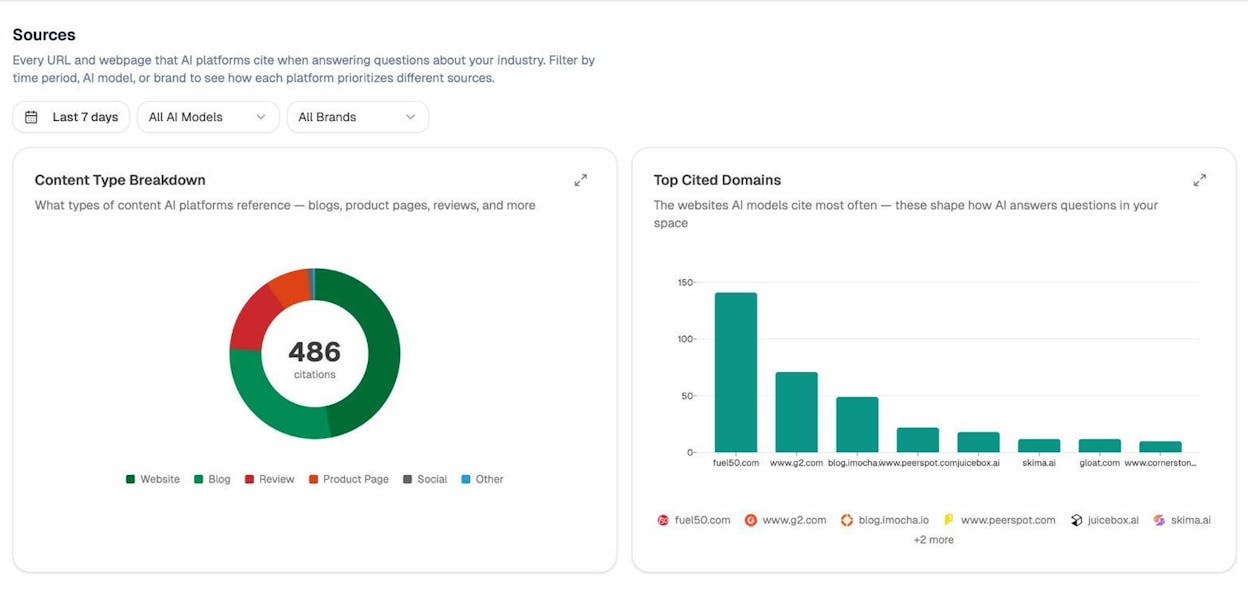
This data reveals patterns you can act on. If AI engines consistently cite G2 reviews, industry blogs, and Wikipedia in your niche, those are the publications you should be earning links and mentions from—not just for Google rankings, but for AI visibility too.
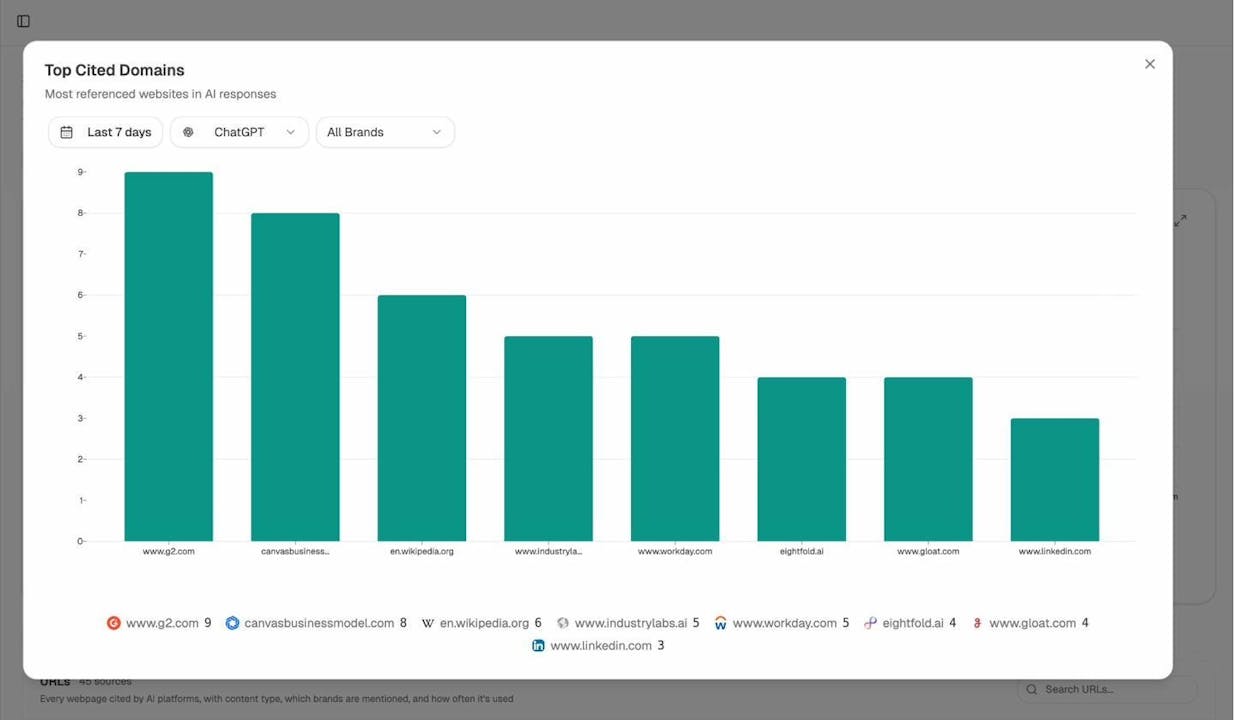
You can drill into specific engines to see which domains each one trusts most:
How to See Where Competitors Win in AI Search
Traditional outreach starts with checking who links to your competitors. AI-informed outreach adds another layer: checking who AI engines recommend instead of you.
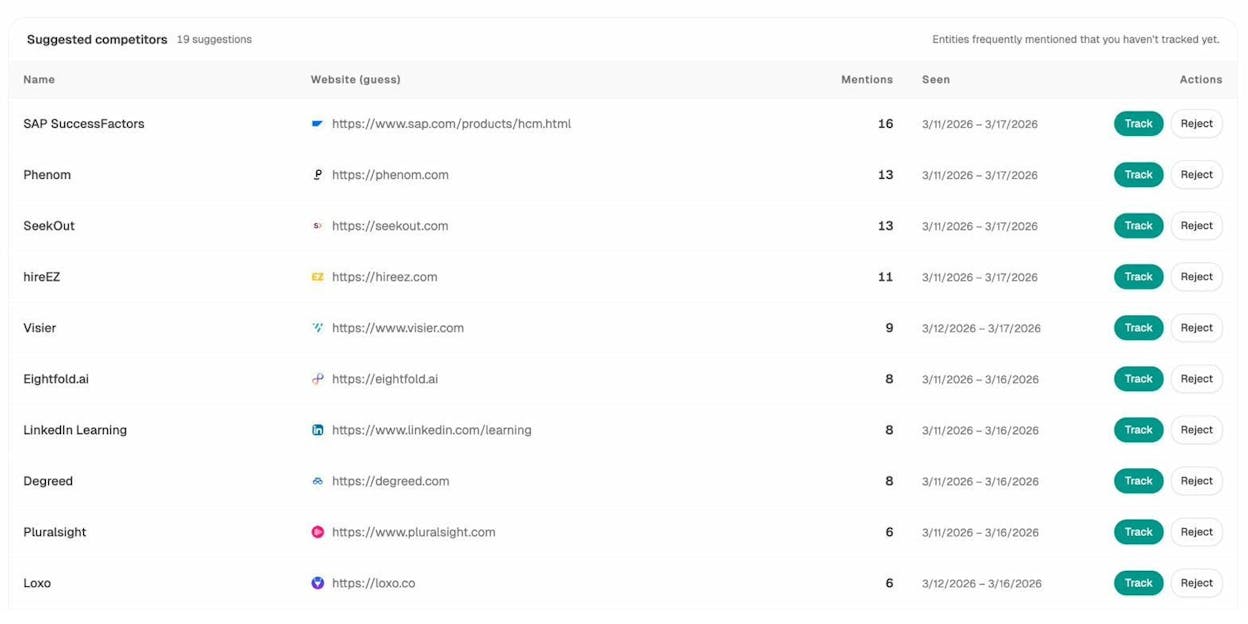
Analyze AI’s Competitors dashboard surfaces brands that get mentioned in AI responses alongside yours—or instead of yours. If a competitor is getting cited on prompts where your brand doesn’t appear, that’s a gap you need to close.
How to Validate Outreach Topics With AI Prompts
Before investing hours into creating a linkable asset, test whether AI engines already surface content on your topic. Analyze AI’s Ad Hoc Prompt Search lets you run a one-off query across ChatGPT, Perplexity, and Gemini to see who shows up and what sources get cited.
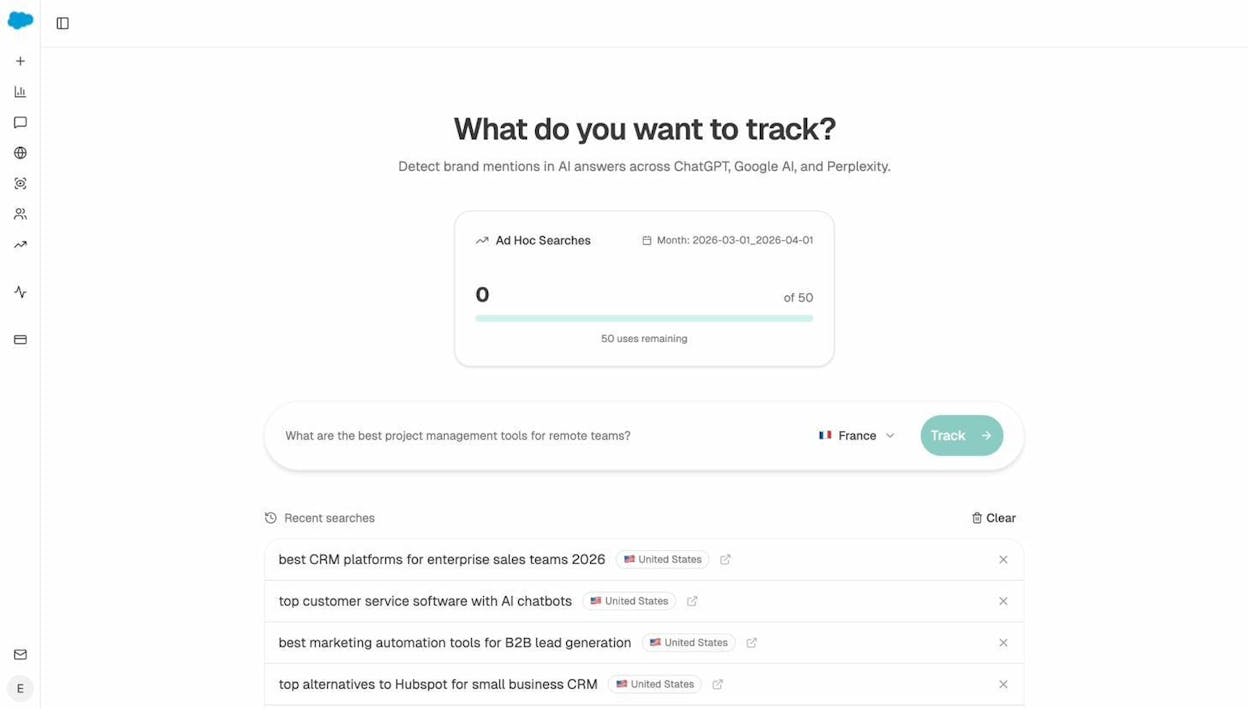
If no one is getting cited for your topic, that’s a wide-open opportunity. If established players dominate, you know exactly what bar your content needs to clear.
How to Track AI Traffic From Your Outreach Content
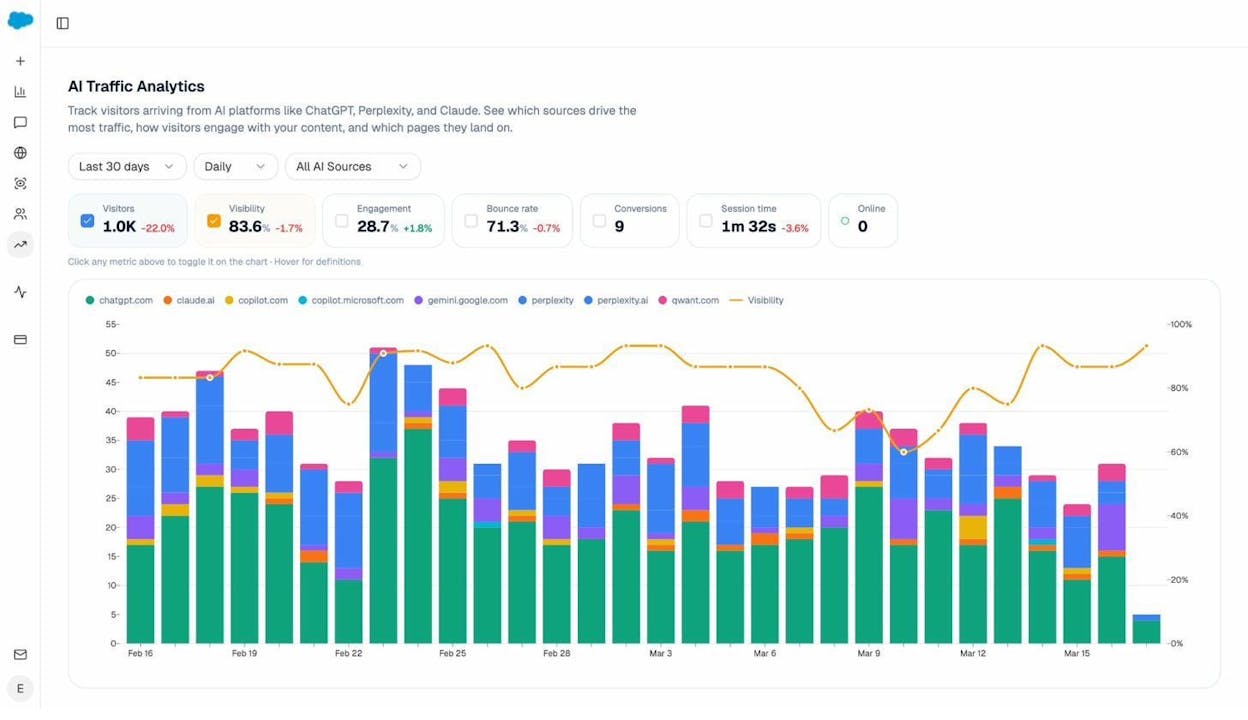
After your outreach content earns links and starts ranking, you want to know whether it’s also driving AI referral traffic. Analyze AI’s AI Traffic Analytics dashboard tracks visitors arriving from ChatGPT, Perplexity, Gemini, Claude, and other AI platforms—broken down by source, landing page, and engagement metrics.
The Landing Pages report goes deeper. It shows which specific pages receive AI-referred traffic, how visitors interact with them, and which prompts led users to your site.
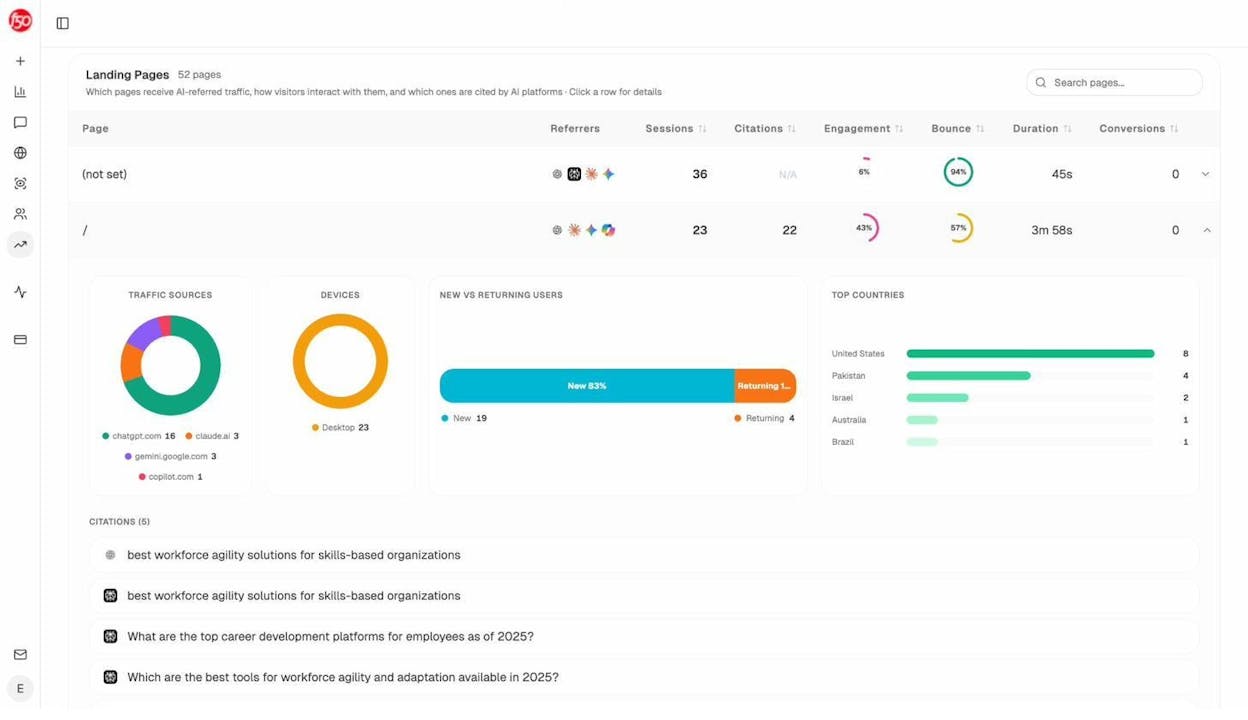
This closes the loop. You create linkable content, run outreach to earn backlinks, and then measure whether that same content is also getting picked up by AI engines. The pages that perform well in both Google and AI search are the ones to double down on.
How AI Engines Decide What to Cite
Understanding what AI models look for when selecting sources makes your outreach content more effective in both channels. Based on analysis of thousands of AI citations, AI engines tend to cite content that is:
-
Original and data-driven. Content with first-party data, original research, and unique statistics gets cited far more often than content that rehashes existing information.
-
Comprehensive and well-structured. Long-form guides with clear headings, direct answers, and logical flow are easier for AI models to parse and reference.
-
From authoritative domains. Domain authority still matters. Sites with strong backlink profiles and established expertise in their niche get cited more frequently.
-
Recently updated. AI engines favor fresh content. A statistics page from 2024 will lose citations to an updated version from 2026.
If you’re already creating content that’s good enough for publishers to link to, it’s likely good enough for AI engines to cite. The overlap between what makes a great linkable asset and what gets cited in AI answers is almost complete.
How to Find Outreach Targets Using Free Tools
You don’t need expensive tools to build a solid prospect list. Here are free methods that work:
Google Search Operators
Use advanced search operators to find content on your topic from sites that are likely to link out. For example:
-
intitle:"SEO statistics" -site:yourdomain.com — Finds articles with your keyword in the title
-
"link roundup" + [your topic] — Finds weekly or monthly roundups that regularly link to new resources
-
"write for us" + [your niche] — Finds guest posting opportunities (use sparingly—these are often low quality)
![[Screenshot: Google search results page showing search operator query for “SEO statistics” link roundup results]](https://www.datocms-assets.com/164164/1777062156-blobid10.png?auto=format,compress&w=1248&fit=max)
SERP Analysis
Check who currently ranks on page one for your target keyword using a SERP checker. Every page ranking in the top 10 is a potential outreach target if your content offers something theirs doesn’t—newer data, a different angle, or a complementary resource they could reference.
Keyword Research for Outreach
Use a keyword generator to find related topics that publishers in your niche are writing about. Look for informational keywords with moderate search volume—these attract the kind of editorial content that links out to sources.
Pair this with a keyword difficulty checker to assess how competitive each keyword is. Lower difficulty keywords often have fewer quality articles written about them, which means your content is more likely to stand out and earn links.
Common Outreach Mistakes (and How to Avoid Them)
After thousands of outreach emails, a few patterns become clear. These are the mistakes that kill campaigns:
Pitching content that isn’t finished. Never reach out with a “coming soon” piece. Publishers want to see the final product before they decide whether to link to it.
Sending the same template for months. Even good templates decay over time. If your response rate drops below 2%, rewrite your template from scratch.
Targeting the wrong decision-maker. Emailing info@ or a generic contact form rarely works. Find the actual author or editor using LinkedIn, Twitter, or the site’s about page.
Asking for a link in the first email. This sounds counterintuitive for a link building guide, but in many cases—especially with high-authority publishers—it works better to first share your content as a useful resource and let the recipient decide whether to link to it. The link request can come in a follow-up if they respond positively.
Ignoring the relationship after getting the link. Outreach should build relationships, not just acquire links. Share their content on social media. Comment on their articles. When you have something new to pitch six months later, they’ll already know your name.
Measuring Outreach Success Beyond Link Counts
Links are the primary metric, but they’re not the only one worth tracking. A mature outreach program also measures:
Referral traffic from earned links. Use Google Analytics to see how much traffic each backlink actually drives. A single link from a high-traffic page can be worth more than 50 links from obscure blogs.
Domain authority growth over time. Track your domain authority (or domain rating) month over month. Consistent outreach should produce a slow, steady increase. Use a website authority checker to monitor this.
Keyword ranking improvements. After earning links to a specific page, track whether its target keywords move up in the SERPs. Links to a specific URL should improve rankings for that page’s target terms within 4 to 8 weeks.
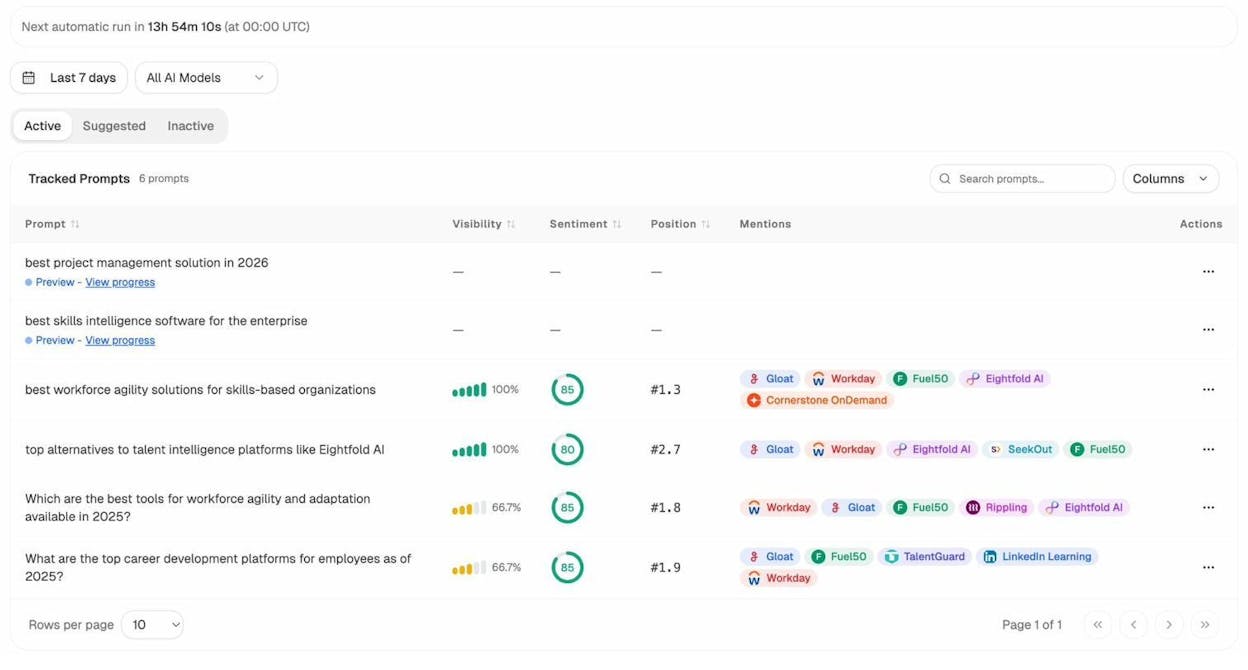
AI visibility and citations. Track whether your content is getting cited by AI engines. Analyze AI’s Prompts dashboard shows your visibility, position, and sentiment across every tracked prompt—so you can see whether your outreach content is winning in both traditional and AI search.
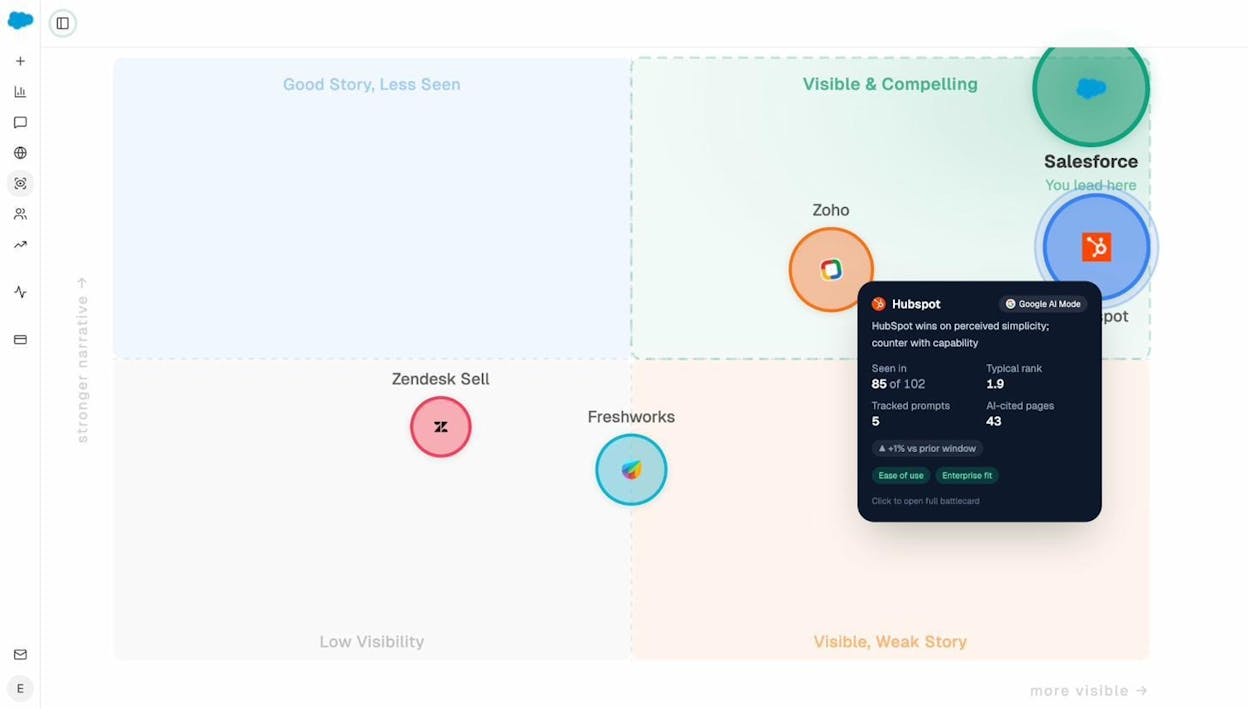
Brand perception across AI engines. Use Analyze AI’s Perception Map to see how AI engines frame your brand relative to competitors. As your outreach earns links from trusted sources, your brand narrative in AI responses should strengthen over time.
Final Thoughts
SEO outreach is fundamentally about earning links from other websites. That hasn’t changed. What’s changed is the landscape those links operate in.
Traditional outreach—whether shotgun, sniper, or the hybrid scoped shotgun method—still works. The hybrid approach remains the best option for most teams because it balances personalization with scale. But limiting your outreach strategy to Google rankings alone means leaving an entire channel on the table.
AI search engines now drive real traffic, and they cite the same kind of content that earns backlinks: original research, comprehensive guides, and authoritative resources. The best outreach programs in 2026 treat AI citations as a secondary benefit of every linkable asset they create—not a separate strategy, but a natural extension of the work they’re already doing.
Create something genuinely valuable. Find the right people to tell about it. Pitch them in a way that respects their time. Then measure the results across every channel—including the AI engines that are reshaping how buyers find products and information.
That’s the playbook. Now go build some links.

Ernest

Ibrahim


