



Summarize this blog post with:


Franchise SEO is not just local SEO multiplied by the number of locations. That oversimplification is exactly what causes most franchise brands to underperform in search.
With more locations come compounding challenges: duplicate content across location pages, inconsistent business listings, keyword cannibalization between regions, and a CMS that was never built for SEO at scale. On top of all that, buyers are now asking AI assistants—not just Google—where to find services near them.
The franchises that win in 2026 will be the ones that treat both Google and AI search as organic channels worth optimizing. This guide shows you how to do both.
In this article, you’ll learn what franchise SEO is, how it differs from regular local SEO, and the exact strategies you need to grow visibility for every franchise location—both on Google and across AI search engines like ChatGPT, Perplexity, and Gemini. You’ll also learn how to structure your site, scale keyword research nationally, track performance by region, and overcome common challenges that trip up franchise marketers at every stage.
Table of Contents
What Is Franchise SEO?
Franchise SEO is a search engine optimization strategy that improves the visibility of franchise businesses on search engines like Google. It operates at two distinct levels: a hyper-local level for each individual franchise location and a national level for the overall brand.
At the hyper-local level, franchise SEO focuses on making sure each individual location appears in local search results and map packs for the areas it serves. At the national level, the strategy expands to build the brand’s overall visibility across every city, state, and region where it has franchises.
In practice, franchise SEO involves:
-
Keyword research for local services across multiple locations
-
Listing each franchise in local directories and map platforms
-
Creating optimized landing pages for every location
-
Eliminating duplicate and thin content across location pages
-
Improving the technical setup of the franchise’s CMS
-
Building local authority through reviews, citations, and backlinks
-
Tracking search performance for each region individually
What makes franchise SEO harder than regular local SEO is coordination. A single-location business only needs to worry about one Google Business Profile, one set of local keywords, and one website. A franchise with 50 locations needs all of that multiplied by 50—with brand consistency maintained across every asset.
Why AI Search Matters for Franchise Brands
Here’s what most franchise SEO guides miss entirely: potential customers are no longer just Googling “plumber near me.” They’re also asking ChatGPT, Perplexity, and Google’s AI Mode for recommendations.
When someone asks an AI assistant “What are the best gym franchises in New York?”, the AI pulls its answer from content across the web. If your franchise brand has clear, well-structured content that explains your services, locations, and differentiators, AI models are more likely to mention you. If your website is a thin collection of templated location pages with no unique information, you’ll be invisible in AI search results just like you would be in Google.
The good news: the same content quality that wins in traditional SEO also wins in AI search. The additional step is monitoring where your brand appears—and where competitors show up instead of you.
A tool like Analyze AI lets you track your brand’s visibility across ChatGPT, Perplexity, Claude, Gemini, and Copilot. You can see which prompts mention your franchise, how you compare against competitors in AI answers, and which of your pages get cited by AI models.
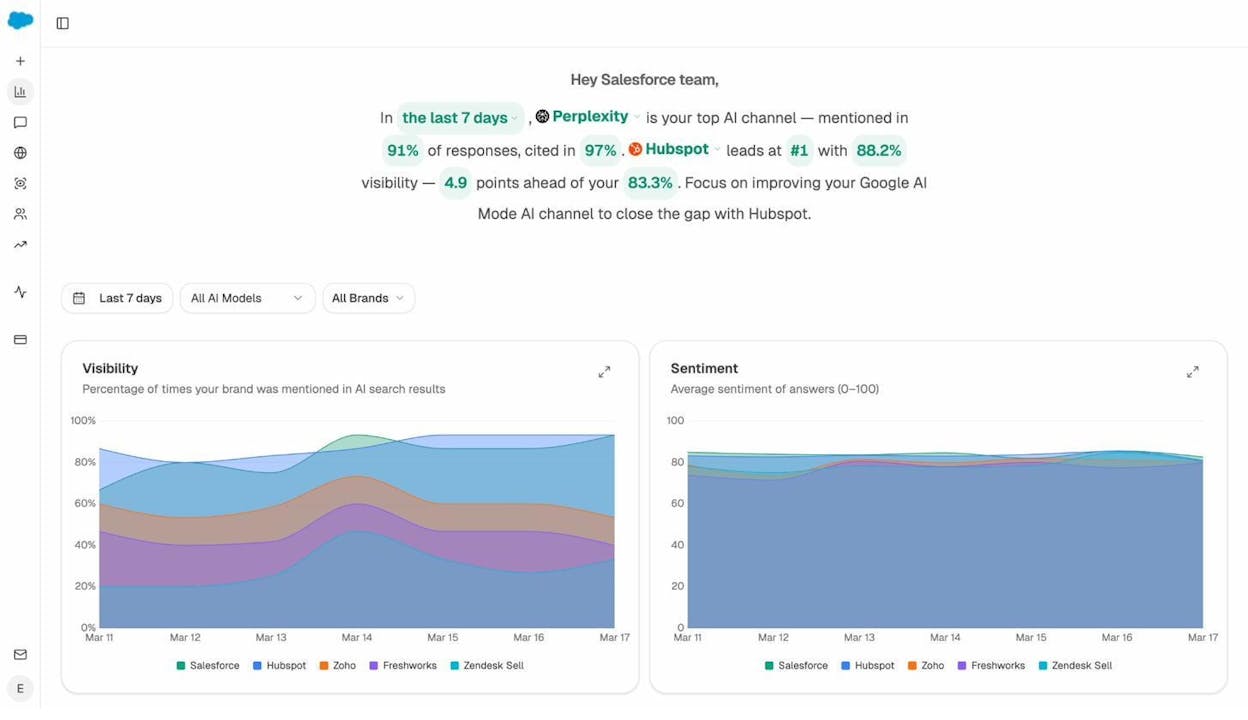
This kind of monitoring used to be impossible. Now it’s table stakes for franchise brands that want to stay ahead.
Local vs. National SEO for Franchises
Before diving into tactics, it’s important to understand the two levels of franchise SEO and how they interact.
Local franchise SEO focuses on each individual location. The goal is to make sure a specific franchise—say, the Brooklyn branch of a fitness studio—shows up when someone in Brooklyn searches for fitness classes nearby. This involves optimizing the location’s Google Business Profile, building local citations, earning reviews, and creating a dedicated landing page.
National franchise SEO zooms out. The goal here is to build the overall brand’s visibility across all cities, states, and regions where it operates. This involves scaling keyword research across locations, creating regional content hubs, establishing site-wide authority, and tracking share of voice against national competitors.
Neither level works in isolation. A franchise that only invests in national SEO will struggle to rank for local “near me” queries. A franchise that only does local SEO will miss opportunities to capture broader brand awareness searches and regional intent keywords.
The right approach combines both, tailored to how the franchise’s website and branded assets are set up.
Local SEO Tips for Franchises
For each franchise location, here’s what you need to do—in detail.
1. Establish a Consistent Local Address and Phone Number
Consistent name, address, and phone number (NAP) information is the foundation of local SEO for any business. For franchises, it’s even more critical because there are so many locations to manage.
Think of your NAP details like a virtual business card that gets shared across the web—Google Business Profile, Yelp, Apple Maps, social profiles, local directories. If any of those listings show a different phone number or address, it creates confusion for both search engines and potential customers.
For regular local businesses, using the owner’s personal phone number and home address is common. For franchises, that’s risky. Franchise ownership changes are more common than people realize, and when a franchisee leaves, you don’t want their personal details scattered across dozens of listings that you no longer control.
Here’s what to establish for each location instead:
Business name: Use a consistent format across all locations. The simplest approach is the franchise name plus the location: “Xtend Barre Arlington,” “Xtend Barre Brooklyn,” and so on.
![[Screenshot of a franchise brand’s Google Business Profile showing consistent naming convention across multiple locations]](https://www.datocms-assets.com/164164/1776872784-blobid2.jpg?auto=format,compress&w=1248&fit=max)
Address: If the franchise operates from a physical storefront, use that address. If the franchisee works from home, consider getting a virtual office address instead. A home address creates problems when ownership changes—and it looks less professional in business listings.
Phone number: Display a consistent local phone number on all public listings and forward calls to the franchisee’s mobile behind the scenes. Use a call tracking service like CallRail or WildJar to manage this.
Call tracking does more than keep phone numbers consistent. It connects marketing efforts to offline conversions, which is especially valuable for franchises. You can see which locations generate the most calls, which marketing channels drive those calls, and where you have gaps in national visibility.
A basic call tracking setup looks like this:
-
Select a call tracking provider.
-
Set up public-facing numbers for each location (use these on your website, business listings, social profiles, and directories).
-
Set up forwarding so all calls route to the right person in the right location.
-
Connect the tracking numbers to your analytics platform or create a dashboard to monitor conversions by location.
2. Create a Dedicated Landing Page for Each Franchise
This is franchise SEO 101, and yet a surprising number of franchise brands still don’t do it properly.
Each franchise location needs its own dedicated landing page on your website. Not a generic page. Not a copy-pasted template with just the city name swapped out. A real, useful page that gives a potential customer everything they need to know about that specific location.
Start by designing a template you can reuse across all locations. Then customize each page with unique, location-specific details.
Here’s what every franchise landing page should include:
-
A localized page title and H1 tag. “F45 Training Pooler” is better than “F45 Training — Locations.”
-
Conversion-focused elements above the fold. Phone number, booking button, or contact form—whatever action you want visitors to take.
-
An embedded map showing the franchise’s location. This helps with both user experience and local SEO signals.
-
Images of the actual premises and staff. Not stock photos. Real images build trust and signal to search engines that this is a unique page worth ranking.
-
A short video or virtual tour (if applicable). This is especially valuable for gyms, restaurants, and retail locations.
-
Details about the specific services available at this location. Not every location offers the same things.
-
Social proof specific to the franchise. Testimonials, review snippets, or awards from the local community.
When done right, these pages become powerful SEO assets. They rank for branded searches (“F45 Pooler”), local service searches (“gym in Pooler, GA”), and even “near me” queries when combined with a strong Google Business Profile.
The key is uniqueness. Google’s Helpful Content guidelines explicitly devalue pages that exist primarily to rank for specific locations without adding real value. If your 200 location pages are 95% identical with only the city name changed, they’re at risk of being filtered out—or worse, flagged as doorway pages.
3. Set Up Business Profiles on Google, Bing, and Apple
To appear on the map when someone searches for businesses like yours, you need listings on the major map platforms:
Setting up these listings is free. Each platform has a setup wizard that walks you through the process.
![[Screenshot of a Google Business Profile for a local franchise showing business name, rating, hours, and map location]](https://www.datocms-assets.com/164164/1776872784-blobid3.png?auto=format,compress&w=1248&fit=max)
When someone searches for your type of business “near me” with unbranded keywords, your listing can appear in the map pack—a highly visible section at the top of Google’s search results that displays three local businesses.
![[Screenshot of a Google Map Pack showing three local franchise listings for a “gym near me” search]](https://www.datocms-assets.com/164164/1776872790-blobid4.png?auto=format,compress&w=1248&fit=max)
Don’t cut corners on these profiles. Fill out every field. Be specific about the services you offer at each location. Add high-quality photos. Write a compelling business description that includes your key services and location.
When adding a website link to each profile, link to the franchise’s dedicated landing page—not the homepage. For example, if you’re setting up the profile for your Pooler location, link to yourfranchise.com/locations/pooler/, not yourfranchise.com. This creates a stronger connection between the business listing and the specific location page, which helps both with local rankings and with user experience.
4. Create Social Profiles for Each Location
Some franchise owners centralize all social media and don’t allow individual franchisees to create their own profiles. If that’s the case for your franchise, skip this step.
If franchisees are allowed to manage local social accounts, set up profiles on the platforms that make the most sense for your industry. A restaurant franchise might prioritize Instagram and TikTok. A B2B franchise might focus on LinkedIn. A home services franchise might stick with Facebook and Nextdoor.
The same rules apply here as with business listings:
-
Fill out every field on each profile.
-
Link to the franchise’s dedicated landing page—not the homepage.
-
Use the same consistent NAP details you established for business listings.
-
Only feature the location-specific social profiles on that location’s landing page.
This creates a self-reinforcing network of branded properties for each location. Each franchise becomes its own micro-brand with consistent contact details, a dedicated landing page, social profiles, and business listings that all point to each other.
![[Diagram showing how a franchise location’s landing page, social profiles, and business listings should all interlink with each other]](https://www.datocms-assets.com/164164/1776872792-blobid5.png?auto=format,compress&w=1248&fit=max)
Building each location’s brand in this way makes it easier to rank for hyper-local keywords. Instead of relying entirely on the national brand’s domain authority, each location has its own web of signals that search engines can use to assess its local relevance.
5. Feature Each Franchise in Local Directories
Local directories are the online equivalent of the Yellow Pages. They list businesses in a specific area and serve as a straightforward link-building strategy for franchise SEO.
Examples of local directories include Yelp, Better Business Bureau, Yellow Pages, Angi, and industry-specific directories relevant to your franchise’s vertical.
![[Screenshot of a Yelp directory listing for a franchise location showing business name, rating, photos, and location details]](https://www.datocms-assets.com/164164/1776872804-blobid6.png?auto=format,compress&w=1248&fit=max)
How to find the right directories for your franchise:
Use a link intersect analysis to find directories that link to your competitors but not to you. Here’s how:
-
Make a list of 3–5 competing franchise locations in the same area.
-
Use an SEO tool’s Link Intersect or Competitive Analysis feature.
-
Add your franchise landing page in the “not linking to” field.
-
Add competitor landing pages in the “but link to these competitors” field.
-
Review the results for directory sites you should be listed on.
![[Screenshot of an SEO tool’s Link Intersect report showing directories linking to competitor franchises but not to your franchise]](https://www.datocms-assets.com/164164/1776872804-blobid7.png?auto=format,compress&w=1248&fit=max)
When you claim or create directory listings, make sure to:
-
Use the same consistent NAP details as your Google Business Profile.
-
Link to the franchise’s dedicated landing page.
-
Add the location-specific social profiles when the directory asks for them.
-
Avoid linking to the national homepage or generic brand social accounts.
The goal is to make every listing as hyper-local as possible. Every directory listing should reinforce the same location-specific signals you’ve already built through your landing page, business profiles, and social accounts.
6. Earn and Manage Reviews for Each Location
Reviews are one of the most influential local ranking factors. According to BrightLocal’s research, 98% of consumers read online reviews for local businesses, and the quantity, recency, and quality of reviews all affect how search engines rank local listings.
For franchise SEO, reviews serve a dual purpose. They improve local search rankings for individual locations, and they build trust for the overall brand.
Here’s how to build a review strategy for your franchise:
Make it easy for customers to leave reviews. Create a short link to your Google Business Profile review page and share it with customers after service. Train staff to ask for reviews as part of the post-service process.
Respond to every review—positive and negative. Google confirms that businesses that respond to reviews show they value their customers, and this can help improve local visibility. For franchises, this also helps maintain brand consistency. Create response templates for common scenarios, but personalize each response.
Monitor reviews across locations. Set up alerts or use a reputation management tool to track reviews for every location. A single franchise with poor reviews can drag down the brand’s overall perception.
Never incentivize reviews in ways that violate platform policies. Offering discounts or rewards for reviews can get your listings penalized or removed entirely.
7. Implement Local Schema Markup
Structured data helps search engines understand your website’s content at a granular level. For franchise SEO, LocalBusiness schema tells Google exactly what each location offers, where it’s located, and how to contact it.
Add LocalBusiness or the appropriate sub-type (e.g., Restaurant, HealthClub, HomeAndConstructionBusiness) schema to each franchise landing page. Include:
-
Business name, address, and phone number
-
Opening hours for each location
-
Geo coordinates (latitude and longitude)
-
URL of the location’s landing page
-
Aggregate review rating (if available)
-
Service area or area served
![[Screenshot of Google’s Rich Results Test tool validating LocalBusiness schema markup for a franchise location page]](https://www.datocms-assets.com/164164/1776872813-blobid8.png?auto=format,compress&w=1248&fit=max)
This structured data doesn’t directly cause higher rankings, but it helps search engines serve richer results for your listings—star ratings, hours, phone numbers displayed directly in search results—which improves click-through rates.
National SEO Tips for Franchises
Local SEO gets each individual franchise on the map. National SEO is what ties all those locations together into a brand that dominates search across every market it operates in.
This is where franchise SEO stops feeling like local SEO multiplied by the number of locations. You have to think in systems.
Scale Keyword Research
Keyword research for a single-location business is straightforward. For a national franchise, it’s a scaling challenge.
If you’re new to keyword research, start with the basics in our guide to SEO keywords. If you already have some SEO experience, here’s how to scale the process.
Step 1: Identify relative search patterns in your country.
Before you research keywords for every individual location, understand how people in your country search for your services at a macro level.
For example, if you run a mold remediation franchise in the United States, “mold remediation” gets significantly more searches than “mold removal” or “mold treatment.” Knowing this tells you which primary term to target across all your location pages.
This pattern might be completely different in another country. In Australia, “mold removal” is far more popular than “mold remediation.” Knowing the relative popularity in each market saves you from targeting the wrong terms at scale.
Once you identify the dominant search patterns, use them as a baseline for all locations. You can apply these patterns to new franchise locations before you have time to do thorough location-specific research.
Step 2: Find granular location keywords at scale.
Some SEOs argue that granular location-specific keywords (like “mold remediation Pasadena”) don’t matter anymore because people mostly search with “near me” or expect Google to personalize results based on their device location.
That’s partly true. But you still need granular location keywords for three reasons:
-
To unify your Google Ads and SEO strategies nationally. If your paid team is targeting “mold remediation Pasadena” and your SEO team isn’t optimizing for it, you’re leaving gaps.
-
To track and report on local visibility more accurately. You can’t measure what you don’t track.
-
To find untapped regional opportunities. Some locations may have keywords with search volume that nobody in your organization has noticed.
Here’s a step-by-step process to scale this using a keyword research tool:
-
Create a list of all services your franchise offers (and variations). For example: mold remediation, mold removal, mold testing, mold inspection, black mold removal.
-
Enter this entire list into a keyword research tool. You can often enter thousands of seed keywords at once.
-
In the results filter, add all locations where you have franchises: suburbs, cities, states, regions, zip codes, and common abbreviations.
-
Set the filter to match “any word” so results include any combination of service + location.
-
Export the results and segment them by location.
![[Screenshot of a keyword research tool showing how to enter multiple service keywords and filter by location to get franchise-relevant keyword results]](https://www.datocms-assets.com/164164/1776872813-blobid9.png?auto=format,compress&w=1248&fit=max)
You should end up with a condensed list of service keywords in areas relevant to your franchise. You’ll see opportunities like “mold testing Beverly Hills” (low difficulty, decent volume) that you might never have found by researching one location at a time.
You can also use Analyze AI’s free Keyword Generator to brainstorm seed keyword ideas, and the Keyword Difficulty Checker to assess how hard each term will be to rank for.
Step 3: Segment keywords by location.
The final step is to map each keyword to the correct page on your website. How you do this depends on your site structure, which we’ll cover next.
How to Research Franchise Visibility in AI Search
Here’s where most franchise SEO guides end. But if people are asking AI assistants about your services—and they are—you need to know what those AI models are saying.
Traditional keyword research tells you what people search on Google. AI prompt research tells you what people ask ChatGPT, Perplexity, and Gemini. For franchise brands, the overlap matters.
Someone searching “best gym franchise in Texas” on Google might also be asking Perplexity “What are the top-rated gym franchises near Dallas?” If your brand shows up in Google results but is absent from AI answers, you’re missing an entire channel of visibility.
Analyze AI lets you track the prompts that matter to your franchise. You can add prompts like “best [service] franchise in [city]” and monitor whether your brand appears in AI answers, what position you rank at, and which competitors show up alongside you.
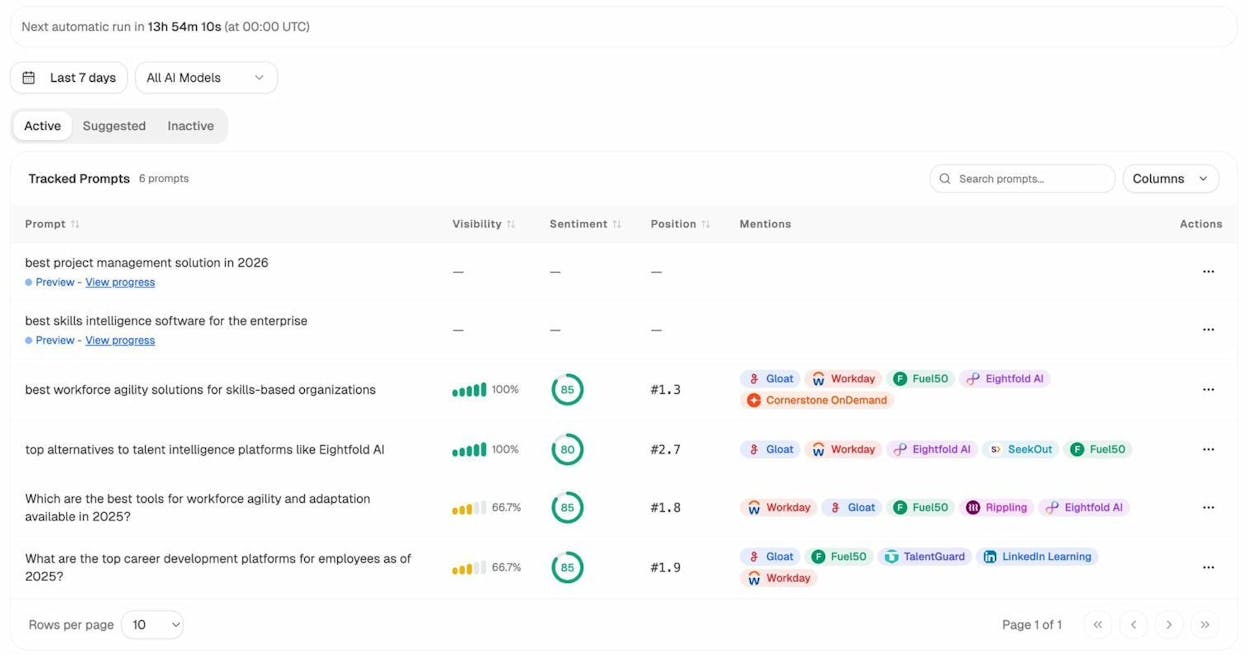
The Suggested Prompts feature also surfaces prompts that Analyze AI has identified as relevant to your brand based on your industry and competitors. This saves you from manually guessing which AI queries matter.
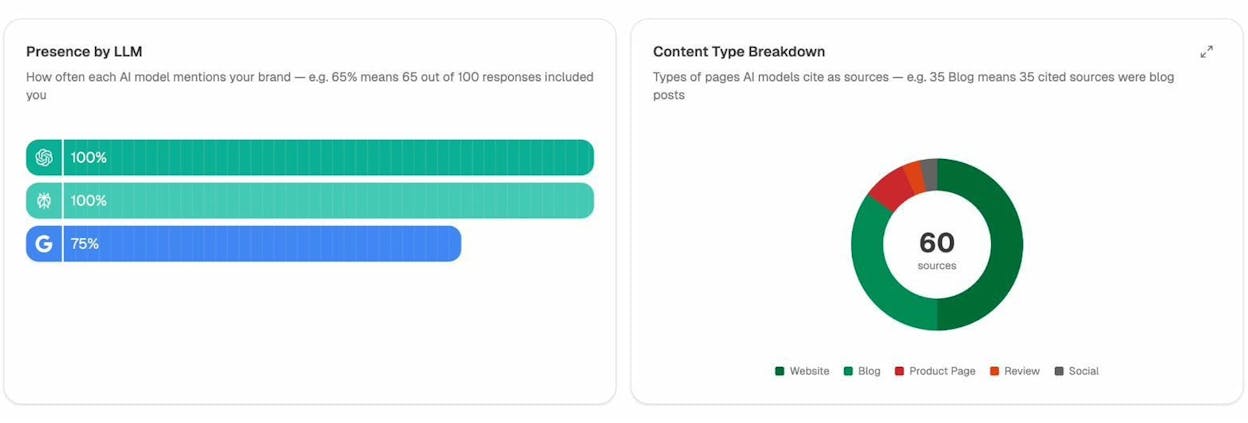
You can also use the Competitors dashboard to see which franchise brands AI models mention most frequently. If a competitor is getting mentioned 16 times across AI responses while you’re only mentioned 3 times, you know exactly where the gap is.
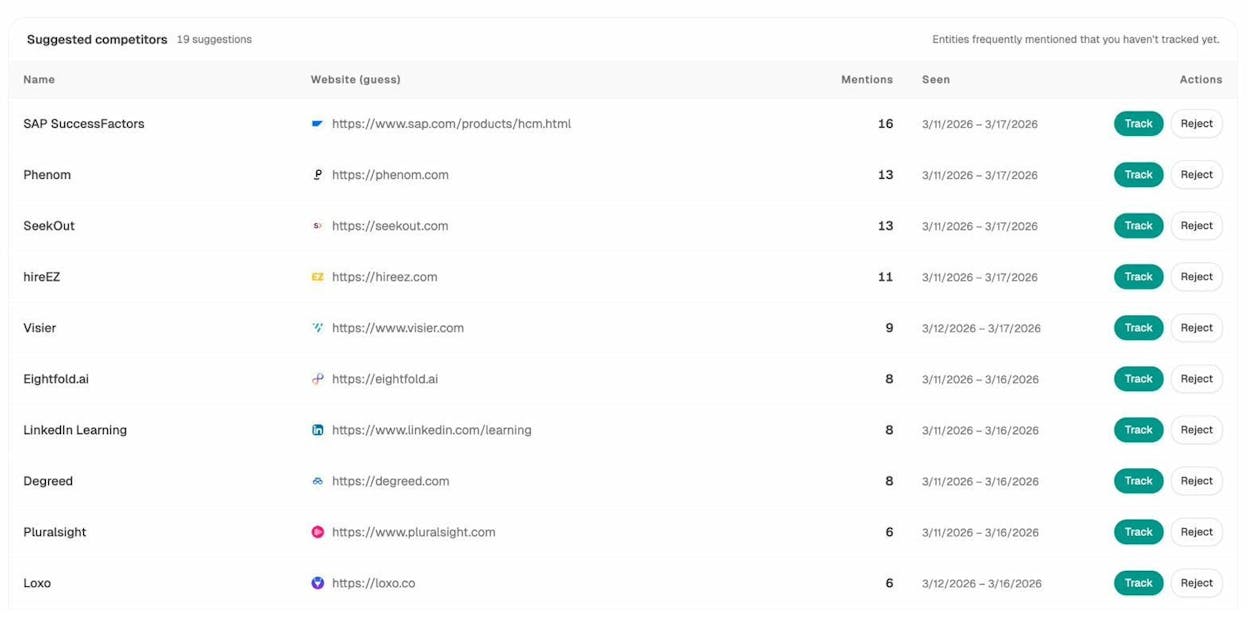
This isn’t a replacement for keyword research. It’s a complement to it. The franchises that do both—SEO keyword research and AI prompt monitoring—will have visibility across every channel where potential customers are looking.
Establish an SEO-Friendly Site Structure
Once you have your keywords segmented by location, you need to decide where to target them on your website. The answer depends on how your franchise’s CMS is structured.
There are three main options. Each has tradeoffs.
Option 1: One Website With a Single Page per Franchise
This is the most common setup. Each franchise gets one dedicated landing page on the main website. F45 Training uses this structure.
|
Pros |
Cons |
|---|---|
|
Simple to manage |
May not rank well for non-branded keywords |
|
Lower risk of duplicate content |
Limited space for location-specific content |
|
Leverages the main brand’s domain authority |
Limits franchisee marketing control |
|
Brand has full control over visibility |
Harder to target multiple services per location |
The URL structure typically looks like: www.yourfranchise.com/locations/franchise-name/
If you choose this structure, you’ll target all local keywords on a single page per franchise. If you find keywords for multiple services in a particular area (e.g., “mold remediation Pasadena” and “mold testing Pasadena”), you’ll need to create dedicated sections on that franchise’s page for each service.
Option 2: One Website With a Subfolder Hub per Franchise
This option creates a mini content hub for each franchise location. Instead of putting all services on one page, you create separate pages for each service in each location.
|
Pros |
Cons |
|---|---|
|
Better ranking potential for service + location keywords |
Higher risk of duplicate content |
|
Gives franchisees more marketing flexibility |
More pages to manage and optimize |
|
Distributes brand authority at a hyper-local level |
Requires careful internal linking |
The URL structure would look like:
-
/new-york/ (regional hub page)
-
/new-york/plumbing/ (service page for that location)
-
/new-york/gasfitting/ (another service page)
This is the structure I recommend for most franchise brands. It gives you the best balance of ranking potential, content flexibility, and brand authority distribution. But it only works if you can create genuinely unique content for each location’s service pages. Templated content with just the city name swapped out will backfire.
Option 3: Separate Websites or Subdomains per Location
Some franchises allow franchisees to build their own websites on separate domains (myfranchiseflorida.com) or subdomains (florida.myfranchise.com).
|
Pros |
Cons |
|---|---|
|
Maximum control for each franchisee |
More website assets to manage |
|
Each location can tailor messaging to local market |
Technical SEO becomes complex at scale |
|
Good for franchises with very distinct local offerings |
Harder to maintain brand consistency |
Only choose this option if there’s a strong non-SEO reason for it—like franchisees who need complete control over their marketing—and your technical team can manage multiple website properties effectively.
Important: Don’t choose this approach because someone told you it’ll “be better for SEO.” If implemented poorly, separate websites or subdomains can fragment your brand’s authority and create technical headaches that take years to fix.
Create Regional Content and Internally Link It Together
Many franchises forget to optimize for the general regions and cities where they have a presence.
For example, imagine a gym franchise with 8 locations across New York City. They have a landing page for each studio—Upper West Side, Brooklyn Heights, Midtown, and so on. But they don’t have a page optimized for “gyms in New York City.”
That’s a missed opportunity. There’s significant search volume for “gyms in New York,” “best gyms NYC,” and related terms. Without a regional page targeting these keywords, the franchise leaves that traffic on the table.
The solution: create pages for the general regions, cities, and states where you have a presence and where there’s search volume for your services.
Design these regional pages to:
-
Feature all franchise locations in that region, either on a map or as a card-based listing.
-
Include unique content about your services in that region. Don’t just list locations—explain what makes your franchise a good choice in that area.
-
Programmatically add new locations as they launch, so the page stays current without manual updates.
![[Screenshot of a regional franchise page showing multiple location cards with address, hours, and map for all franchise locations in a specific city]](https://www.datocms-assets.com/164164/1776872829-blobid13.png?auto=format,compress&w=1248&fit=max)
Once you have regional pages in place, build an internal linking structure that connects them:
-
From the regional page → each franchise location page within the region. This distributes authority down to individual locations.
-
From each franchise location page → the relevant regional page. This sends authority back up and creates a clear hierarchy.
-
Cross-link nearby regions and locations to each other. If someone’s looking at your Brooklyn location, link to your Manhattan and Queens locations too.
Build Local Authority With Content
Beyond location pages and regional hubs, franchise brands can build significant local authority through content marketing. This is an underused strategy that most franchise guides overlook entirely.
Here’s how it works: create blog content that targets informational keywords relevant to your services in specific locations. Not location-specific versions of the same generic post. Genuine content that serves local audiences.
For example, a pest control franchise in Austin might create a post about “Common Pests in Central Texas and How to Prevent Them.” A fitness franchise in Miami might write about “Outdoor Workout Spots in Miami Beach: Where to Train When the Gym Is Closed.”
This kind of content does three things:
-
It ranks for long-tail informational queries that location pages and service pages can’t capture.
-
It builds topical authority around your services in specific regions.
-
It gives you content that AI models can cite when people ask for local recommendations.
That last point matters more than most franchise marketers realize. When someone asks ChatGPT “What should I know about pest control in Austin?”, the AI looks for helpful, locally relevant content to cite. If you’ve published a detailed, expert-level article on that exact topic, you’re far more likely to be mentioned.
Track Performance for Each Region
Implementing all these strategies without tracking results is like driving with your eyes closed. You need to know what’s working, what isn’t, and where competitors are outperforming you.
For Google search performance, set up tracking that lets you monitor visibility by region. There are several approaches:
-
Portfolio-based tracking: Group pages for each region into a portfolio and track overall performance metrics. Best for smaller franchises with fewer locations.
-
Tag-based tracking in a rank tracker: Add keywords for each region and tag them by location. This lets you compare performance across regions and against competitors in the same markets.
-
API-based dashboards: For larger franchises, pull keyword and traffic data into a centralized dashboard using SEO APIs. This is the fastest way to scale performance tracking nationally, but you’ll need developer support.
![[Screenshot of a rank tracking tool showing regional keyword tags with visibility, traffic value, and position metrics for different franchise regions]](https://www.datocms-assets.com/164164/1776872834-blobid14.png?auto=format,compress&w=1248&fit=max)
Use the Keyword Rank Checker from Analyze AI to spot-check rankings for specific keywords in specific locations.
For AI search performance, use Analyze AI to track your brand’s visibility across AI models by prompt, competitor, and source.
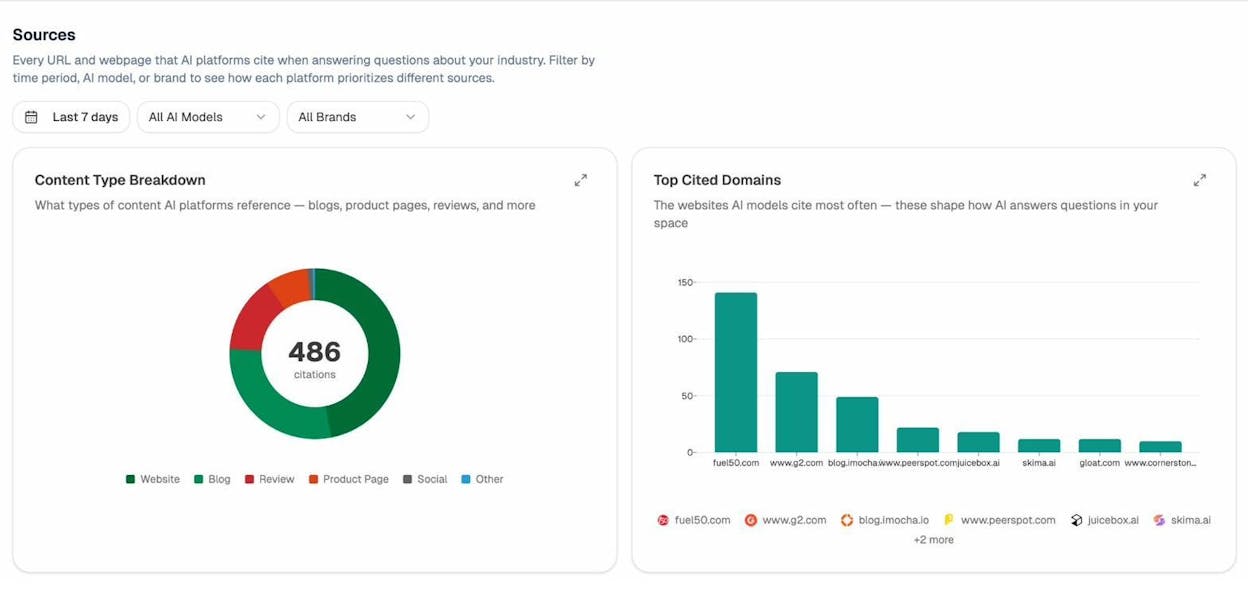
The Sources dashboard shows every URL and webpage that AI platforms cite when answering questions about your industry. This tells you which content types AI models favor—blog posts, product pages, review sites—and which specific domains get cited the most.
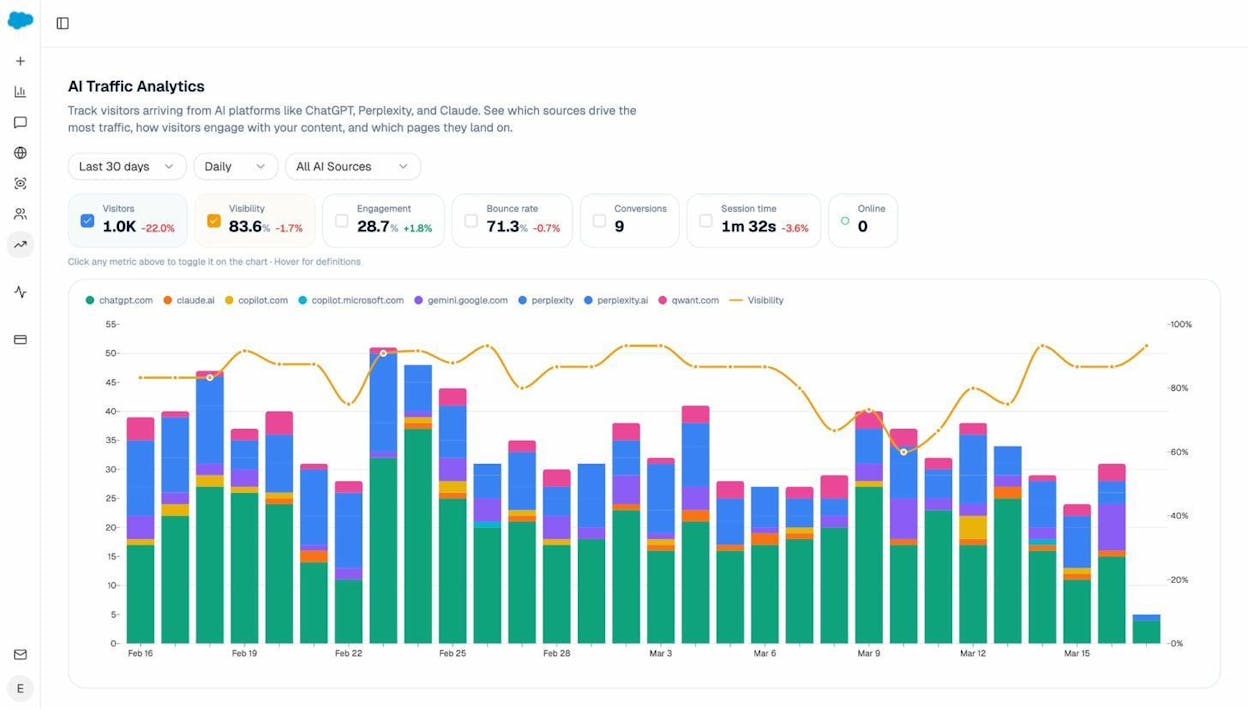
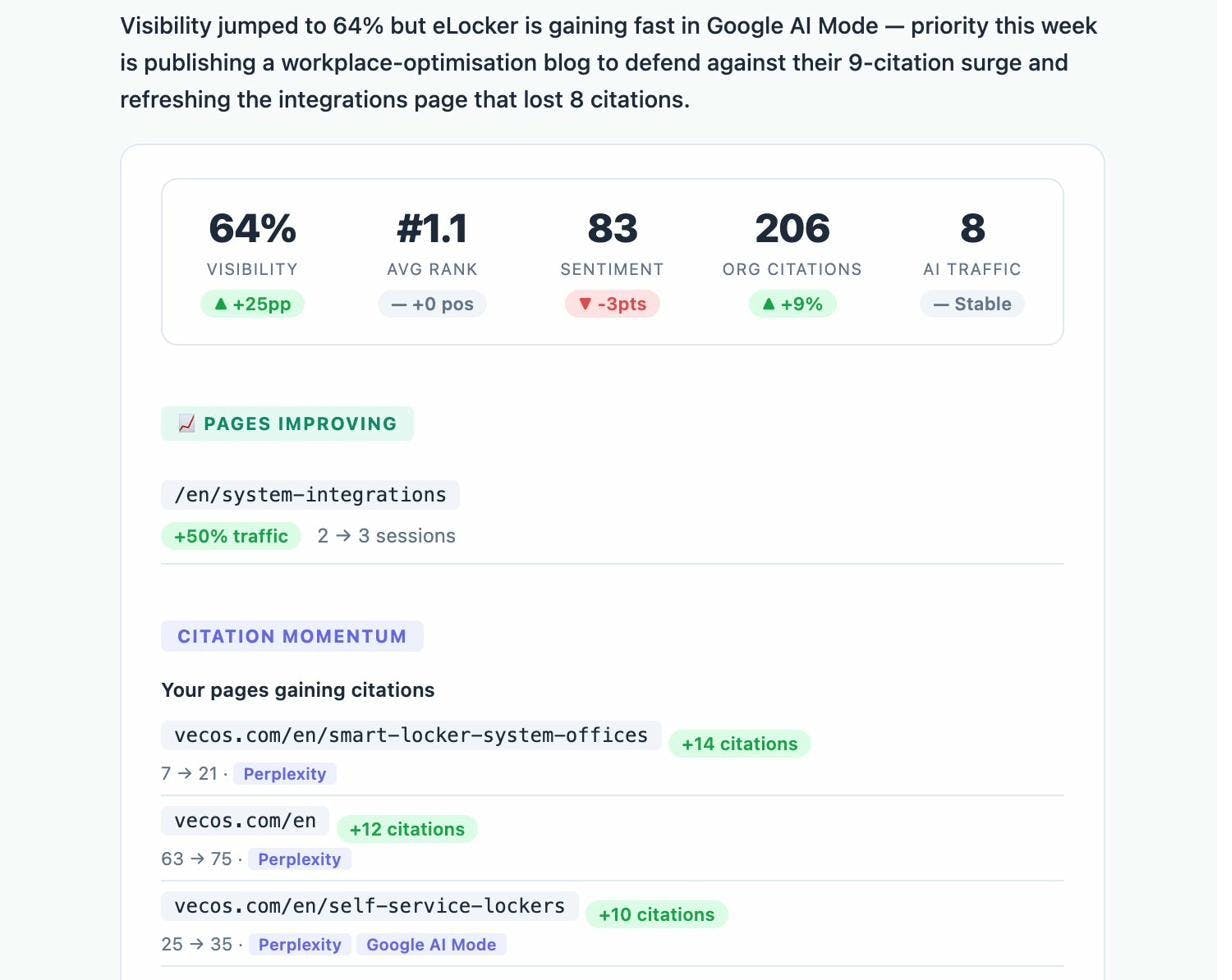
The AI Traffic Analytics dashboard goes even deeper. It shows you actual visitors arriving on your website from AI platforms like ChatGPT, Perplexity, and Claude. You can see which pages receive AI-referred traffic, how those visitors engage compared to organic visitors, and which AI sources drive the most sessions.
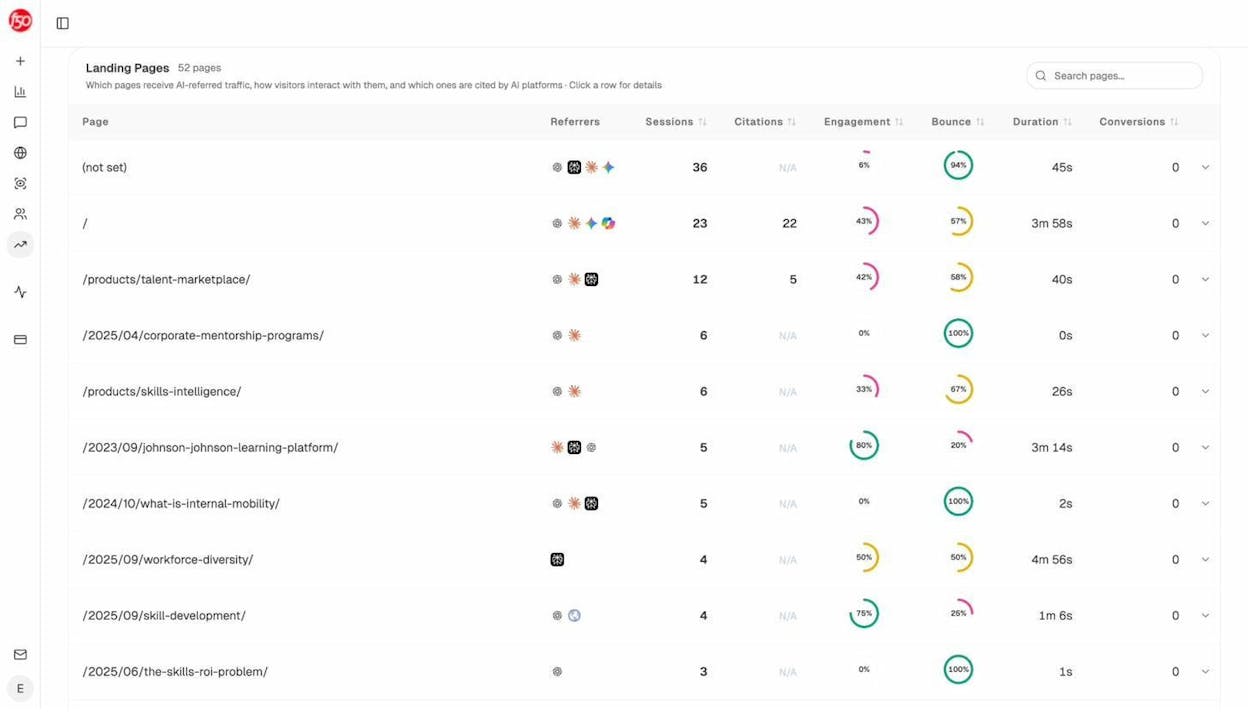
The Landing Pages report within AI Traffic Analytics reveals exactly which pages on your site receive traffic from AI search. For franchise brands, this is gold. If your Denver location page is getting traffic from ChatGPT but your Austin page isn’t, you can investigate why and replicate what works.
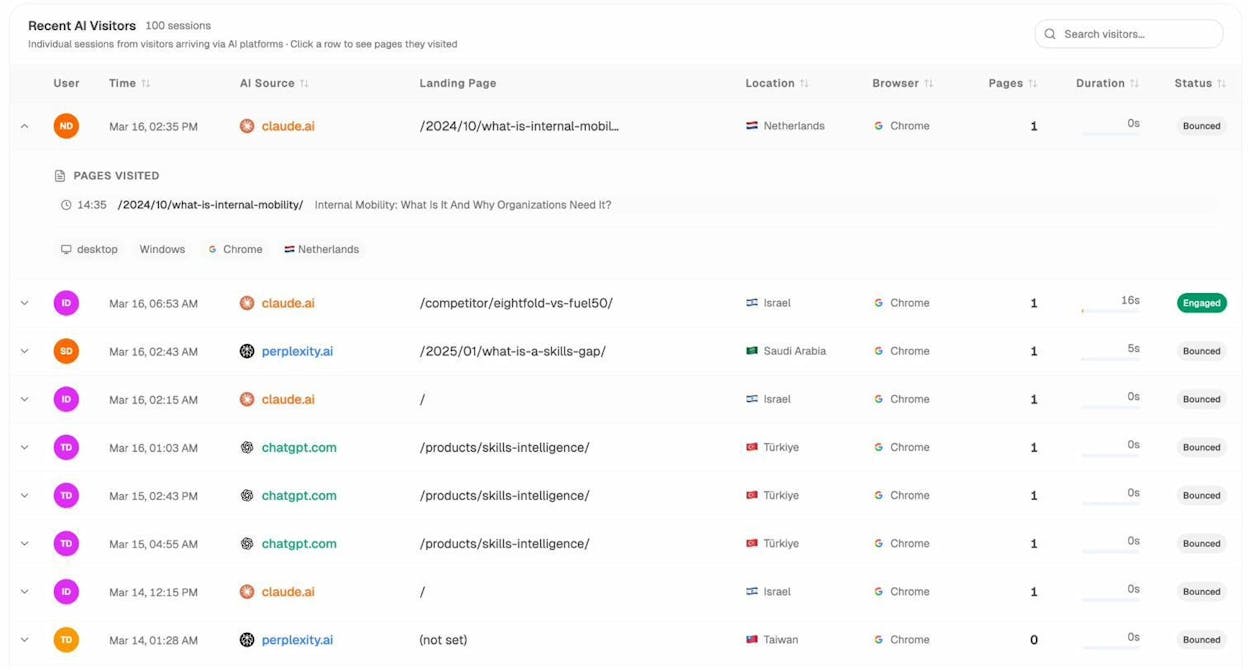
You can even drill down to individual AI visitor sessions to see the exact journey each visitor takes after arriving from an AI platform.
And to stay on top of changes without logging in every day, Analyze AI sends weekly email digests summarizing your brand’s AI visibility, key prompt performance, and competitor movements.
Overcoming Common Franchise SEO Challenges
Even with the right strategies, franchise SEO comes with obstacles that don’t exist for single-location businesses. Here are the most common ones and how to handle them.
1. Scaling SEO on a Custom CMS
Many franchise websites are built on proprietary CMS platforms that weren’t designed with SEO in mind. These systems may limit your ability to customize meta tags, control URL structures, add structured data, or manage internal links at scale.
Before committing to any SEO strategy—or before an agency quotes you on services—audit the CMS to understand what’s technically possible. Specifically, check whether you can:
-
Customize meta titles, descriptions, and canonical tags per page
-
Control URL structures and permalinks
-
Edit robots.txt and XML sitemaps
-
Add content and links to pages programmatically
-
Implement structured data (schema markup)
-
Customize page layouts and templates per location
If the CMS limits any of these capabilities, factor the cost of custom development or a CMS migration into your SEO roadmap. Some of the biggest franchise SEO failures I’ve seen happened because teams built elaborate strategies around a CMS that couldn’t support them.
2. Duplicate Content and Doorway Page Risks
Franchise websites are inherently at risk for duplicate content. When you have 100 location pages built from the same template, the content similarity between them can be very high.
Google’s Spam Policies specifically call out doorway pages—pages created primarily to rank for specific search queries while funneling users to a single destination. Templated franchise location pages with minimal unique content can fall into this category.
To avoid this:
-
Add genuinely unique content to each location page: staff bios, location-specific photos, customer testimonials, local service details, community involvement.
-
Don’t create location pages for areas where you can’t add meaningful unique information. Having fewer, better pages outperforms having hundreds of thin ones.
-
Use a site audit tool to regularly check for duplicate content issues across your location pages.
Use the Broken Link Checker from Analyze AI to make sure all your internal links across location pages are working properly. Broken links are especially common on franchise sites where locations open and close frequently.
3. Maintaining Brand Consistency and SEO Governance
As your franchise grows, maintaining brand consistency across dozens or hundreds of locations becomes increasingly difficult. Different franchisees may create their own content, set up social profiles with inconsistent branding, or make website changes that conflict with your national SEO strategy.
Here’s how to manage this:
-
Create a detailed brand and SEO guide that you share with every franchisee, marketer, and stakeholder. Include naming conventions, visual identity guidelines, content standards, and SEO requirements.
-
Consider a headless CMS that gives franchisees the ability to edit their location content within controlled templates. This preserves brand consistency while still allowing local customization.
-
Centralize SEO management through either an in-house team or an agency that works with all franchisees. Having one team responsible for the overall SEO strategy prevents the fragmentation that happens when each franchisee manages their own SEO independently.
4. AI Search Visibility Gaps Across Locations
This is a newer challenge that most franchise brands haven’t even thought about yet. Your national brand might be well-known to AI models, but individual locations might be completely invisible in AI search results.
For example, ChatGPT might mention your brand when asked “What are the best pest control franchises?” But when asked “What’s the best pest control service in [specific city]?”, your local franchise might not appear at all—even though a smaller, independent competitor in that city does.
To diagnose this, use Analyze AI to track prompts at both the national and local level. Set up prompts like:
-
“Best [service] franchise” (national)
-
“Best [service] in [city]” (local for each key market)
-
“Top [service] companies in [state]” (regional)
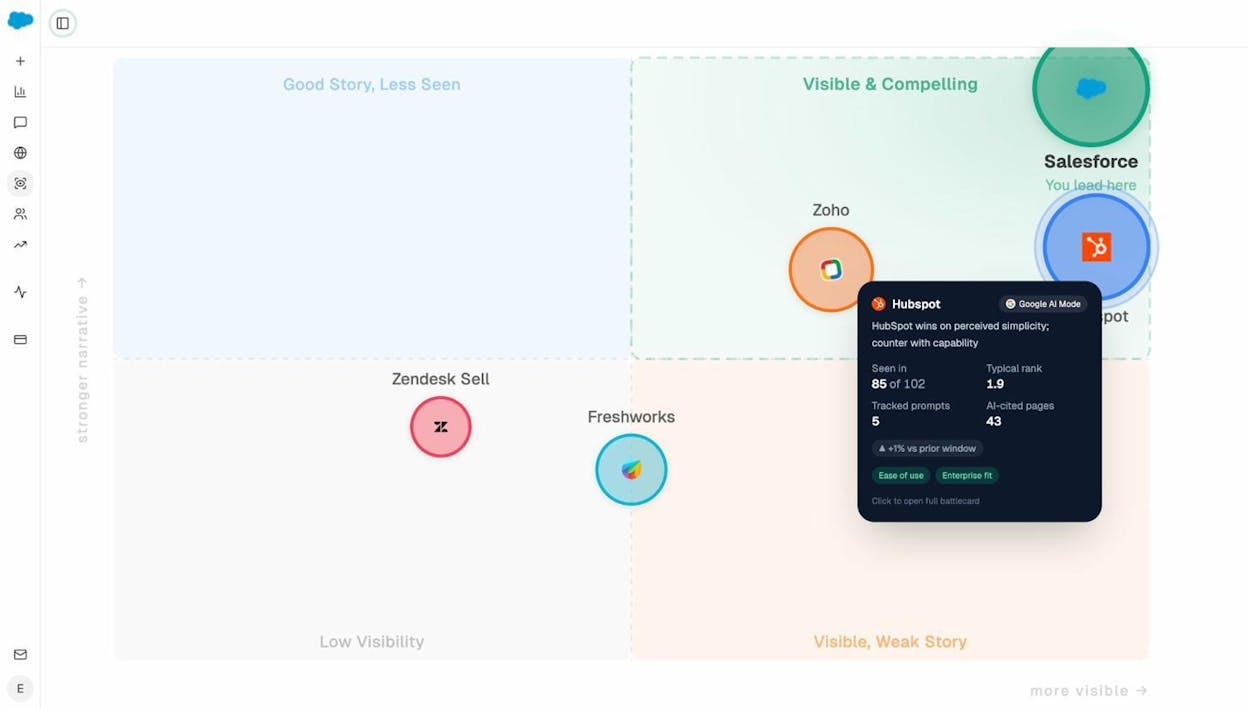
The Perception Map in Analyze AI shows you how AI models perceive your brand overall—what themes and language they associate with you, and whether the sentiment is positive, negative, or neutral.
If you notice that AI models rarely mention your franchise for local queries, the fix is usually content-related. Create more locally relevant, expert-level content that AI models can use as source material for location-specific answers.
Franchise SEO Checklist
Here’s a summary of everything covered in this guide, organized by priority.
For each franchise location (local SEO):
-
Establish consistent NAP details using a standardized format
-
Create a dedicated landing page with unique, location-specific content
-
Set up Google Business Profile, Apple Business Connect, and Bing Places
-
Create location-specific social profiles on relevant platforms
-
Claim listings in local directories using link intersect analysis
-
Implement LocalBusiness schema markup on each location page
-
Build a review generation and response process
-
Interlink each location’s landing page, business profiles, and social accounts
For the national franchise (national SEO):
-
Identify dominant search patterns for your services in each market
-
Scale keyword research by combining service keywords with location filters
-
Choose the right site structure (single page, subfolder hub, or separate sites)
-
Create regional content hubs for cities and states with multiple locations
-
Build an internal linking structure connecting regional and location pages
-
Produce locally relevant content that builds topical authority
-
Set up region-by-region performance tracking
For AI search visibility:
-
Track brand visibility across ChatGPT, Perplexity, Claude, and Gemini with Analyze AI
-
Monitor both national and location-specific prompts
-
Identify AI search gaps where competitors appear but you don’t
-
Review AI Traffic Analytics to see which pages get cited and visited from AI platforms
-
Use the Sources dashboard to understand which content types AI models prefer
-
Sign up for weekly email digests to stay current without daily logins
Grow Your Franchise’s Search Visibility Across Every Channel
Franchise SEO has always required more nuance than typical local SEO. But the game is bigger now. AI search is not replacing Google—it’s adding a new organic channel alongside it.
The franchises that invest in both traditional SEO and AI search visibility will be the ones that capture demand no matter how people search. Whether a potential customer Googles “plumber near me,” asks ChatGPT “What’s the best plumbing franchise in Denver?”, or checks Perplexity for reviews—your brand should be there.
Analyze AI gives you the data to make that happen. Track your franchise’s visibility across AI search engines, identify where competitors outrank you, and see exactly which pages AI models cite and send traffic to. Use the free Website Traffic Checker to benchmark your franchise’s overall organic performance, or the SERP Checker to see who ranks for your target keywords.
SEO is not dead. It’s evolving. And the franchises that evolve with it—by adding AI search as another organic channel—will be the ones that win.

Ernest

Ibrahim


