



Summarize this blog post with:


HARO link building is making a serious comeback.
The original Help A Reporter Out platform went through years of spam, ownership changes, and a full shutdown. But it’s been revived under new management, cleaned up, and is once again one of the most reliable ways to earn editorial backlinks from authoritative publications.
The timing couldn’t be better. As AI-powered search engines like ChatGPT, Perplexity, and Gemini reshape how people find information, brand mentions — linked or not — have become a critical factor in whether your brand gets recommended in AI answers. HARO gives you a direct path to earning those mentions from the kinds of trusted sources that both Google and LLMs pay attention to.
Here’s a step-by-step blueprint for making HARO work, pitching journalists the right way, and tracking the impact across both traditional search and AI search.
In this article, you’ll learn how HARO link building works, why brand mentions now matter as much as links for both SEO and AI search visibility, and how to write pitches that actually get picked. You’ll also get a breakdown of 11 HARO alternatives — with a comparison table — so you can choose the right platform for your industry.
Table of Contents
How Does HARO Link Building Work?
The model is straightforward:
-
A journalist or writer posts a callout — often with a tight deadline — requesting an expert quote, data point, or opinion for a piece they’re working on.
-
You (or your client) respond with a relevant, helpful answer.
-
If selected, your contribution gets included in the published article with a brand mention and, in most cases, a backlink to your website.
![[Screenshot: Example of a HARO journalist callout showing the query, deadline, and publication details]](https://www.datocms-assets.com/164164/1776792906-blobid1.png?auto=format,compress&w=1248&fit=max)
The value for your brand comes from earning links and mentions on authoritative, high-traffic publications. A single HARO placement on a site like Forbes, Business Insider, or a respected trade publication can drive referral traffic, boost your domain authority, and — increasingly — feed the training data and citation sources that AI models rely on.
Why Brand Mentions Matter (Even Without a Link)
This is the part most HARO guides skip too quickly.
Brand mentions — your company name being cited in a trusted source — help search engines and AI systems understand your authority, even when there’s no hyperlink attached.
Google has long used brand mentions as implicit signals within its E-E-A-T framework (Experience, Expertise, Authoritativeness, Trustworthiness). Unlinked mentions on authoritative sites tell Google that your brand is being talked about in credible contexts. This contributes to your perceived authority, which influences how well your pages rank.
But the real shift is in AI search. LLMs like ChatGPT, Claude, and Gemini are trained on massive corpora of web content. When your brand is frequently mentioned alongside relevant topics in high-quality sources, those models learn to associate your brand with expertise in that area. The result: your brand gets recommended in AI-generated answers.
This means that a HARO mention in a reputable publication — even without a dofollow link — still compounds your visibility over time. It shapes how AI models perceive and recommend your brand.
To validate whether a publication is worth pitching to, check its domain authority using a tool like Analyze AI’s Website Authority Checker. Look for high domain ratings, consistent organic traffic, and a clean backlink profile. Then visit the site and skim its recent articles. If the content is high quality and the publication earns links naturally, it’s worth your time.
![[Screenshot: Using a website authority checker to evaluate a publication’s domain rating and organic traffic before pitching]](https://www.datocms-assets.com/164164/1776792914-blobid2.png?auto=format,compress&w=1248&fit=max)
How to Track Brand Mentions Across AI Search
Here’s where HARO link building connects directly to AI visibility.
Every time your brand gets mentioned on a high-authority site through a HARO placement, that mention can influence how AI engines cite and recommend you. But you need a way to track whether those mentions are actually showing up in AI-generated answers.
Analyze AI lets you monitor exactly this. In the Sources dashboard, you can see every URL and domain that AI platforms cite when answering questions in your industry. If you’ve been earning HARO mentions on publications like Forbes or TechCrunch, you can verify whether those domains are among the sources that ChatGPT, Gemini, or Perplexity reference in your topic area.
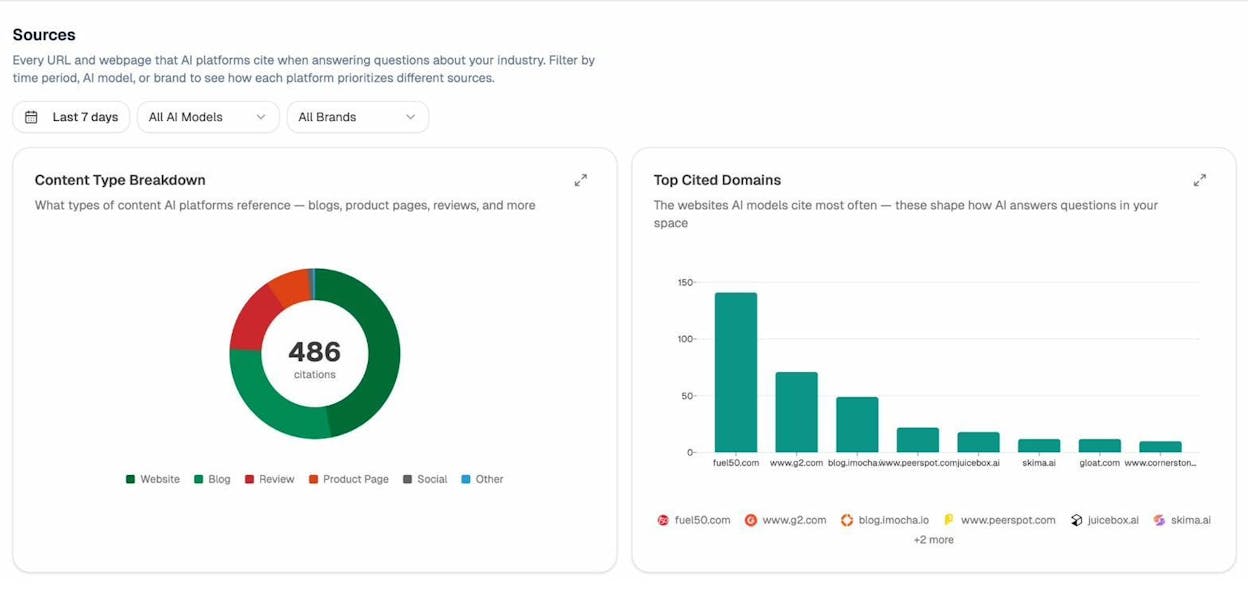
You can also use the Prompts dashboard to track specific questions that AI models answer about your industry — and see whether your brand appears in those answers. If a HARO placement on a high-authority site leads to your brand being mentioned in AI responses for relevant prompts, that’s a direct line from your journalist outreach to AI search visibility.
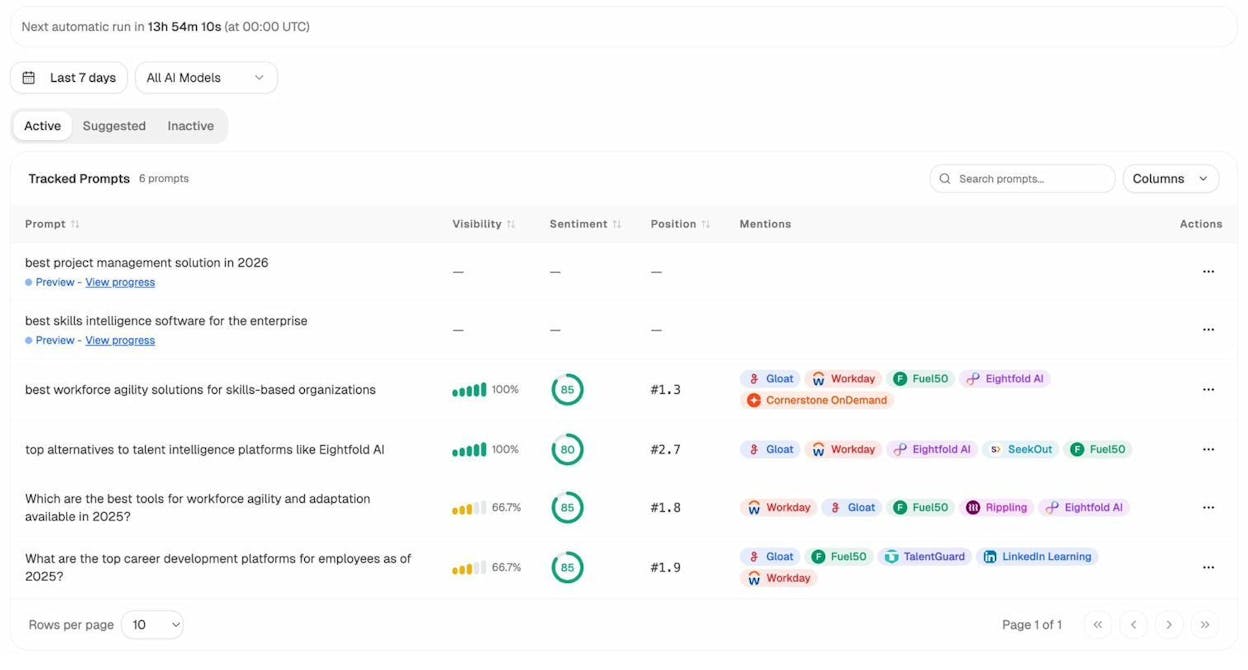
This kind of tracking turns HARO from a “nice to have” PR activity into a measurable growth channel.
Is HARO Dead?
No. But it came close.
HARO went through several ownership changes after being acquired by Cision. The platform was redesigned, which introduced glitches, a confusing interface, and a flood of AI-generated spam responses. Journalists lost trust. Sources stopped getting results. For a while, it was essentially unusable — and eventually, it was shut down.
Then Featured.com acquired the platform and overhauled it from the ground up. The focus was on reducing spam, filtering out low-quality AI replies, and restoring the journalist-source relationship.
The original creator of HARO, Peter Shankman, also launched his own alternative called Source of Sources after receiving thousands of requests to build a replacement.
The bottom line: HARO is back, it’s cleaner than it’s been in years, and the opportunity is real — especially for brands that take the time to pitch properly.
How to Succeed With HARO Link Building
Most people fail at HARO not because the platform doesn’t work, but because their pitches are bad.
Based on data from marketers who regularly use the platform, roughly two-thirds of responses to any given callout are a waste of the journalist’s time — even when they’re technically relevant to the topic. The problem isn’t relevance. It’s usefulness.
Here’s how to be in the minority that actually lands placements.
1. Show, Don’t Tell (And Don’t Explain the Obvious)
The most common mistake in HARO pitches is over-explaining basic concepts.
If a journalist is writing about how AI is changing search, they don’t need you to explain what a search engine is or how Google works. They already know. What they need is something they can’t find on their own: unique data, a counterintuitive insight, or a specific example from your experience.
Instead of telling a journalist “what” the topic is, show them evidence that speaks to “how” or “why” something is happening. Keep it brief and get to the point immediately.
Bad example: “AI is transforming how people search for information online. Search engines are now incorporating machine learning to deliver better results.”
Good example: “We tracked 500 branded queries across ChatGPT and Perplexity over 30 days. Brands with mentions on 3+ authoritative domains were recommended 4x more often than brands with only one mention source.”
The second response gives the journalist something quotable and unique. The first gives them nothing they couldn’t find in an AI Overview.
2. Don’t Lead With Unsupported Claims
Phrases like “I’ve personally seen…” or “I witnessed firsthand…” are weak unless you back them up with specifics.
Journalists use platforms like HARO to crowdsource credible information for their articles. What they need are claims they can fact-check, statistics they can cite, and examples they can verify. An unsubstantiated personal anecdote doesn’t meet that bar.
If you say something like “I’ve witnessed how AI transforms industries,” you’re stating something everyone has witnessed. That’s not a perspective worth quoting.
Instead, lead with the evidence. Then add context about what you observed. The data does the convincing; your interpretation adds the flavor.
3. Give Them Exactly What They Asked For
This sounds obvious, but most pitchers ignore it.
If a journalist specifically asks for data, don’t send an opinion piece. If they want a brief expert quote, don’t send a 900-word essay. If they’re looking for examples they haven’t already found online, don’t send them the same case study every other marketer already knows about.
Read the callout carefully. Identify exactly what the journalist needs. Then give them precisely that — and nothing more.
Over 80% of responses to a typical HARO callout contain opinions, personal anecdotes, or speculation when the journalist asked for something else entirely. This is the fastest way to get your pitch deleted.
4. Don’t Make the Journalist Follow Up
One of the most frustrating responses a journalist receives is something like: “I’d love to discuss this further. Here’s my Calendly link.”
Unless you’re a well-known public figure or you work for a household-name brand, no journalist is booking a meeting with you before you’ve proven you have the information they need.
Instead, provide everything upfront in your initial response: the data, the quote, the credentials. If the journalist wants more, they’ll reach out. And when they do, respond fast. Speed to follow-up is one of the strongest predictors of landing a placement.
5. Avoid Sweeping Generalizations
Generalizations are hard to quote because they’re impossible to attribute. Statements like “most people don’t click on AI search results” or “many companies will go out of business because of AI” are claims that require evidence. Without data backing them up, they’re just noise.
If you want a journalist to quote a bold claim, attach a source. Link to a study. Reference your own data. Give them something they can cite with confidence.
6. Lead With a Quotable Soundbite
The best HARO responses stand out because they say something the journalist hasn’t heard from everyone else.
There’s a difference between:
Generic: “AI-powered search is dramatically changing how users interact with search results.”
Quotable: “AI changed search from question-and-answer to prediction-and-summary.”
The second version is concise, punchy, and creates a curiosity gap. It’s the kind of line a journalist wants to put in their article because it makes their piece more interesting.
Think of your pitch like a headline: if it doesn’t make someone want to read more, it’s not working.
7. Match the Journalist’s Intent
This is the cardinal rule of both HARO pitching and good SEO: understand what the person on the other side actually needs, and deliver it.
For HARO, that means:
-
Understanding the journalist’s angle (not just their topic)
-
Providing information that’s genuinely helpful to their readers
-
Showcasing your E-E-A-T through credentials, data, and experience
-
Getting to the point fast — no journalist is reading a 900-word email response
-
Cutting all filler, conjecture, and repetition
-
Citing and verifying any statistics or sources you reference
-
Formatting your response for easy skimming (short paragraphs, bold key points, clear structure)
That last point is especially important. Journalists read HARO responses in their email inbox, often on their phone between meetings. If your response is a wall of text, it goes straight to the “too hard” pile.
8. Establish Your Credibility Upfront
Lead with one or two sentences that explain why you’re a relevant source. This isn’t about name-dropping your company — it’s about showing the journalist that your expertise aligns with their topic.
Effective credibility signals include:
-
A job title directly related to the topic (e.g., “I’m a digital PR strategist who’s placed 200+ HARO mentions in the past year”)
-
Years of experience in the specific industry
-
A company name that’s recognized in the space
-
A specific credential or achievement that’s relevant
If your company isn’t directly related to the callout topic, lead with what is relevant. Maybe it’s your job title. Maybe it’s a specific project you worked on. If you can’t summarize your credibility and relevance in one sentence, reconsider whether it’s the right callout to respond to.
Anatomy of a Perfect HARO Pitch
Putting it all together, here’s the structure of a pitch that lands placements consistently:
-
Credibility opener — One or two sentences establishing why you’re a relevant source. Include your name, title, and the specific experience that makes you qualified.
-
Direct answer — Short, skimmable insights that answer exactly what the journalist asked for. Use data, examples, or unique perspectives they can’t find elsewhere.
-
Quotable soundbite — One punchy line that the journalist would want to highlight in their article. Think of it as the tweet-sized summary of your expertise.
-
Brief bio and headshot — A short paragraph with your credentials, a link to your LinkedIn or company site, and a professional headshot.
-
Contact details — Email and phone so the journalist can follow up quickly if they need more.
The format matters less than the substance. What makes a winning pitch is how helpful and relevant it is to the journalist’s specific needs.
Research the Publication Before You Pitch
Before responding to a callout, spend a few minutes researching the publication. Read a few recent articles by the journalist. Look at how they quote experts and what kind of information they tend to use.
This research pays off in two ways: you can tailor your pitch to match what the journalist actually values, and you can reference their previous work in your response, which shows you’ve done your homework.
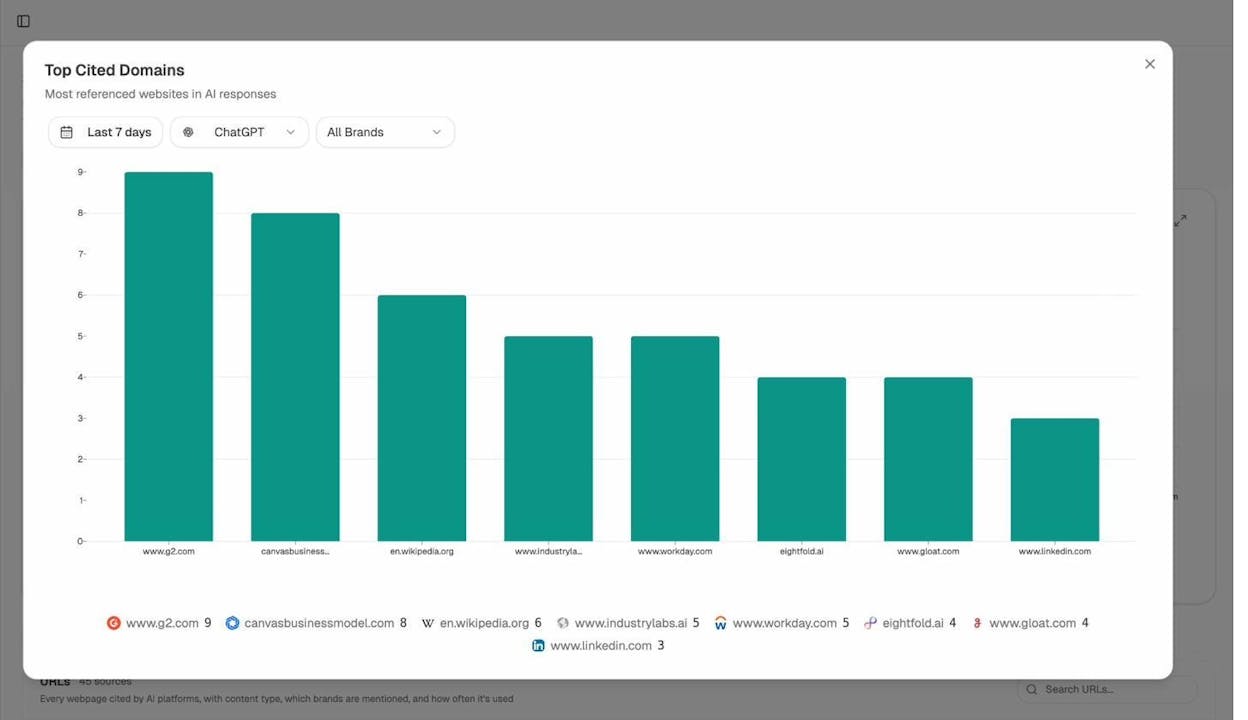
You can also check whether the publication’s articles are being cited by AI models. In Analyze AI, the Sources dashboard shows you which domains AI engines cite most often in your industry. If a publication appears frequently as a cited source across ChatGPT, Gemini, or Perplexity, a HARO placement there carries extra value — it’s likely to influence how AI models recommend brands in your space.
How to Track Your HARO Results
Landing a HARO placement is only half the job. You also need to track the impact.
Track Backlinks and Mentions
After pitching, monitor your new backlinks using SEO tools. Set up Google Alerts for your name and company name so you’re notified whenever a journalist publishes a piece that mentions you.
You can also use Google’s advanced search operators to find recent mentions. Search for your name and company, then filter by date to find articles from the past week or month.
![[Screenshot: Google advanced search operator showing how to find recent mentions of your brand — example: “Your Name” + “Your Company” filtered by past week]](https://www.datocms-assets.com/164164/1776792937-blobid6.jpg?auto=format,compress&w=1248&fit=max)
For a more automated approach, use Analyze AI’s Website Authority Checker to verify the authority of sites that link to you, and Analyze AI’s Broken Link Checker to make sure your hard-earned links haven’t gone dead over time.
Track AI Search Impact
This is where HARO link building connects to a broader growth strategy.
Traditional metrics — backlinks earned, domain authority gained, referral traffic — tell you part of the story. But if your HARO placements are landing on sites that AI models cite, the impact extends far beyond organic search.
In Analyze AI, you can track this in several ways:
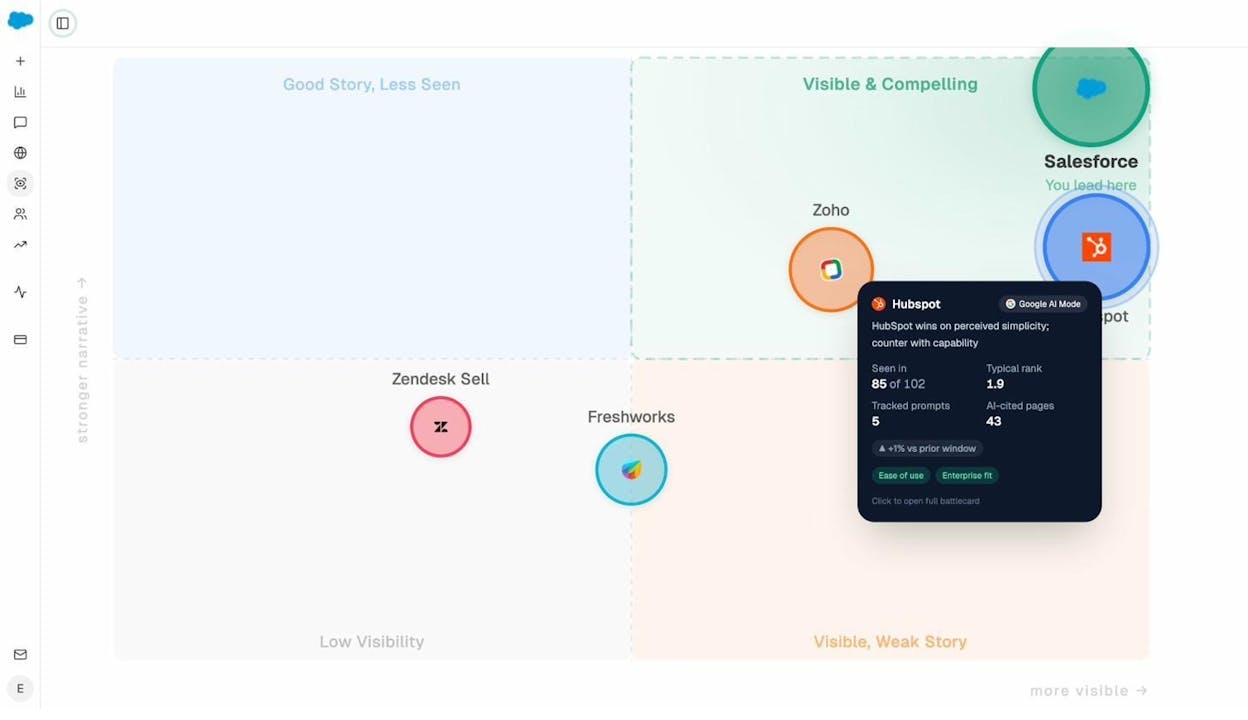
Perception Map: See how AI models frame your brand relative to competitors. If your HARO placements are shaping how ChatGPT or Gemini describe your brand, you’ll see it reflected in the narrative AI builds about you.
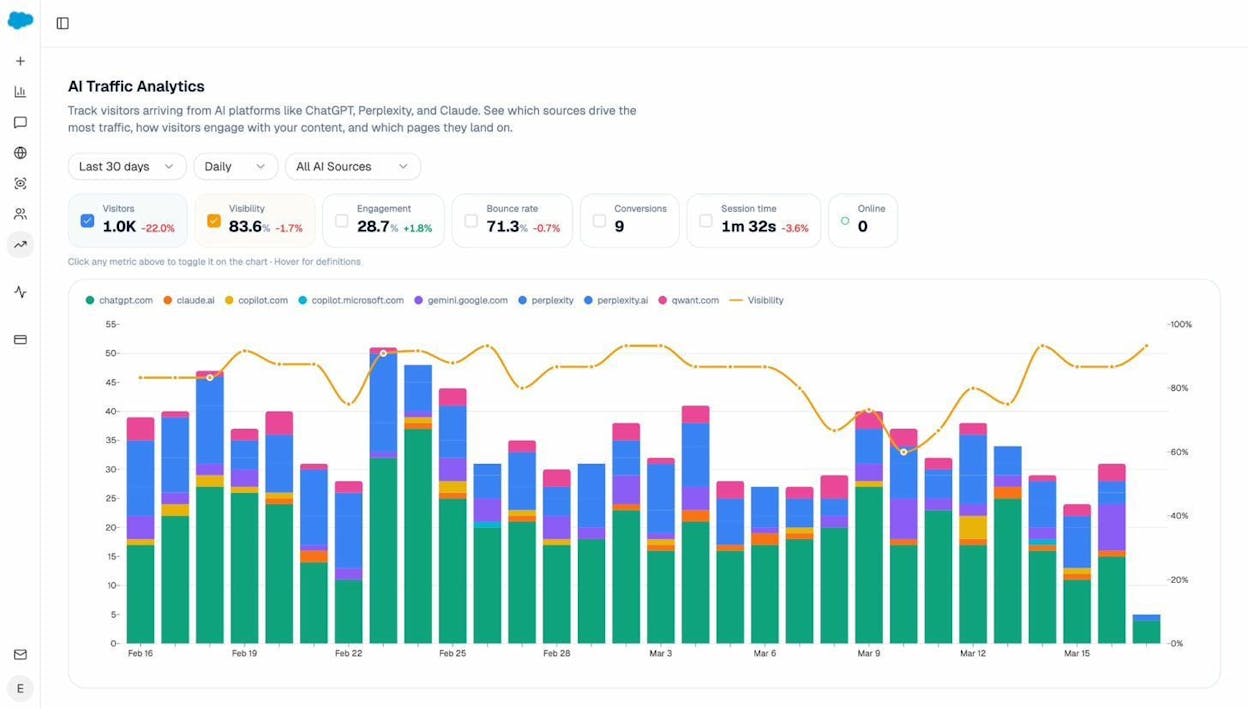
AI Traffic Analytics: Monitor how many visitors come to your site from AI search engines. If a HARO placement on a high-authority publication leads to your brand being cited in ChatGPT answers, you should see an uptick in AI-referred traffic to your site.
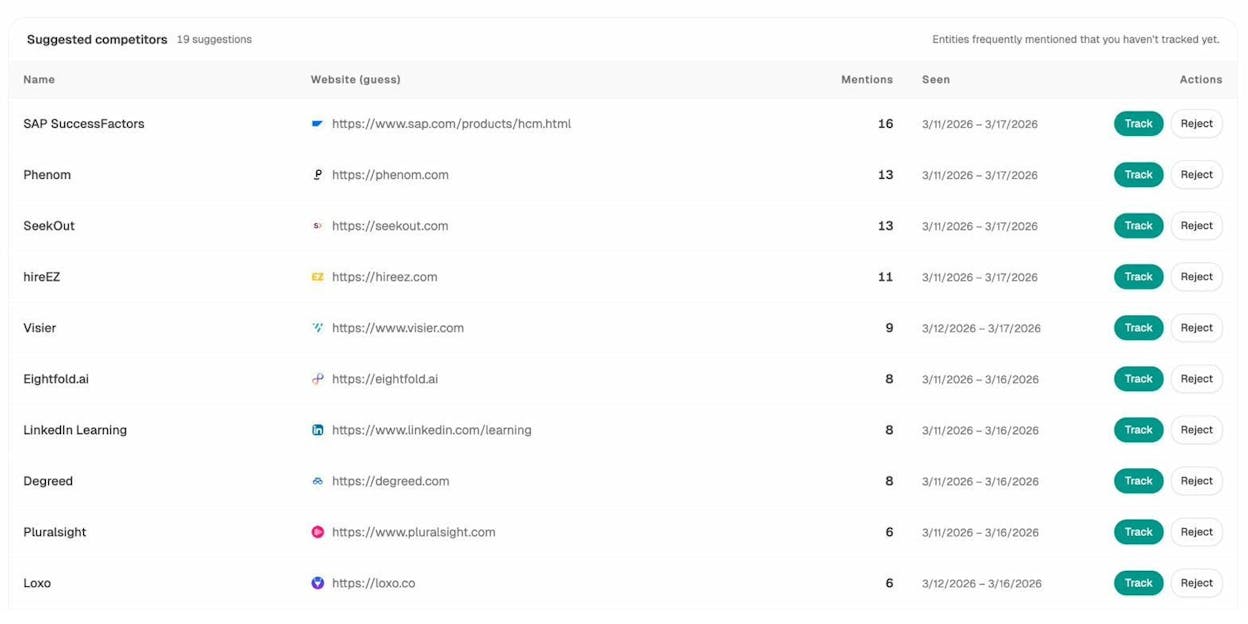
Competitors Dashboard: Track whether your HARO efforts are closing the gap between you and competitors in AI mentions. The Suggested Competitors view surfaces entities that AI models mention frequently in your space — even ones you hadn’t considered as competitors.
This level of tracking turns HARO from a one-off PR tactic into a compounding visibility strategy that works across both traditional and AI-powered search.
How to Systematize Your HARO Process
HARO works best when you treat it as a repeatable process, not a one-off activity. Here’s how to build a system:
Step 1: Set up your alerts. Sign up for HARO emails and select the industry categories most relevant to your expertise. Don’t check every category — you’ll get overwhelmed with irrelevant callouts.
![[Screenshot: HARO signup form showing industry category selection options]](https://www.datocms-assets.com/164164/1776792951-blobid10.png?auto=format,compress&w=1248&fit=max)
Step 2: Create a tracking spreadsheet. Log every pitch you send, including the callout topic, publication, date, your response, and the outcome (win, no response, partial quote). Over time, you’ll spot patterns: which types of callouts convert best, which publications use your quotes most often, and which pitch styles land placements.
![[Screenshot: Example HARO tracking spreadsheet in Google Sheets with columns for callout topic, publication, date, response summary, outcome, and link URL]](https://www.datocms-assets.com/164164/1776792952-blobid11.jpg?auto=format,compress&w=1248&fit=max)
Step 3: Build a swipe file of credentials. Prepare a short bio, headshot, and 2-3 versions of your credibility opener for different topics. This saves time when you’re racing to respond to a callout before the deadline.
Step 4: Set a daily pitch window. HARO sends emails three times a day. Block 15-20 minutes after each email to scan callouts and respond to the ones that fit. Speed matters — journalists often select sources from the first batch of responses they receive.
Step 5: Review your results monthly. Check which pitches converted, which publications gave you the best placements, and whether those placements are showing up in AI citations. Use Analyze AI to cross-reference your HARO wins against your AI search visibility and see if your mention frequency is increasing over time.
HARO Alternatives Worth Checking Out
HARO isn’t the only platform for journalist outreach. Several alternatives have gained traction, especially during the period when HARO was down. Here’s a breakdown of the top platforms, ranked by industry reputation and user feedback.
|
Platform |
Price |
Best For |
Key Differentiator |
|---|---|---|---|
|
Free |
B2B marketers |
Focused exclusively on B2B content writers |
|
|
Free + paid (from $99/mo) |
SEOs and marketers wanting scale |
Owns HARO; modern platform with source verification |
|
|
Free + paid |
PR professionals |
Direct journalist-source matching |
|
|
Free + paid (from $5.95/mo) |
Australian/UK brands |
Strong in regional PR markets |
|
|
Paid |
Enterprise PR teams |
Premium service via PR Newswire |
|
|
Paid (from $147/mo) |
Outbound PR |
Built for proactive journalist outreach, not reactive |
|
|
Paid (from $50/mo) |
PR teams needing journalist matching |
AI-powered pitch targeting |
|
|
Free |
Budget-conscious brands |
Free PR lead platform |
|
|
Paid (from ~$105/mo) |
UK/European brands |
UK-focused journalist sourcing |
|
|
Free |
Anyone (especially HARO veterans) |
Built by HARO’s original creator, Peter Shankman |
|
|
Invitation-only |
Executives and entrepreneurs |
Direct publishing access to Forbes.com |
1. Help a B2B Writer
Help a B2B Writer is run by Superpath and focuses exclusively on connecting B2B writers with industry experts. If your brand sells to businesses, this platform tends to deliver more relevant callouts than general-purpose alternatives.
It’s free to use and the volume is lower than HARO, which means less competition per callout.
![[Screenshot: Help a B2B Writer homepage showing how the platform connects B2B content writers with expert sources]](https://www.datocms-assets.com/164164/1776792961-blobid12.png?auto=format,compress&w=1248&fit=max)
2. Featured
Featured.com now owns and operates HARO. Together, the two platforms form a complementary system: HARO operates as a daily email newsletter, while Featured is a more modern, platform-based experience designed to streamline the pitching process.
Featured’s paid plans start at $99/month and offer additional tools for source verification and pitch management.
![[Screenshot: Featured.com dashboard showing active journalist callouts and pitch submission interface]](https://www.datocms-assets.com/164164/1776792962-blobid13.png?auto=format,compress&w=1248&fit=max)
3. Qwoted
Qwoted matches journalists with expert sources and allows direct collaboration. It’s popular among PR professionals and has a clean interface that makes it easy to browse and respond to relevant queries.
The platform offers both free and paid plans.
![[Screenshot: Qwoted platform showing journalist queries and source matching features]](https://www.datocms-assets.com/164164/1776792976-blobid14.png?auto=format,compress&w=1248&fit=max)
4. SourceBottle
SourceBottle connects journalists, bloggers, and media professionals with expert sources. It’s particularly popular in Australia and the UK, making it a good choice for brands targeting those markets.
Paid plans start at $5.95/month, making it one of the most affordable options.
![[Screenshot: SourceBottle interface showing journalist requests and category filters]](https://www.datocms-assets.com/164164/1776792981-blobid15.png?auto=format,compress&w=1248&fit=max)
5. ProfNet
ProfNet is a premium service operated by PR Newswire. It connects journalists with expert sources and is oriented toward enterprise PR teams with larger budgets.
This is a paid-only platform, so it’s best suited for companies that have dedicated PR resources.
![[Screenshot: ProfNet homepage showing the journalist-source connection workflow]](https://www.datocms-assets.com/164164/1776792991-blobid16.jpg?auto=format,compress&w=1248&fit=max)
6. JustReachOut
JustReachOut is different from most platforms on this list. Instead of responding to journalist callouts, it helps you proactively find and pitch journalists who cover topics relevant to your brand.
Paid plans start at $147/month after a 7-day free trial.
![[Screenshot: JustReachOut search interface showing how to find journalists by topic and publication]](https://www.datocms-assets.com/164164/1776793001-blobid17.png?auto=format,compress&w=1248&fit=max)
7. OnePitch
OnePitch uses AI-powered matching to connect your pitch with the most relevant journalists. It simplifies the process of targeting media outlets and helps PR teams send more focused pitches.
Paid plans start at $50/month after a 14-day free trial.
8. PitchRate
PitchRate is a free platform that connects journalists with expert sources. It’s a lightweight option for brands that want to dip their toes into journalist outreach without committing to a paid tool.
![[Screenshot: PitchRate homepage showing journalist queries and expert response interface]](https://www.datocms-assets.com/164164/1776793002-blobid18.png?auto=format,compress&w=1248&fit=max)
9. ResponseSource
ResponseSource is a UK-based service connecting media professionals with expert sources, press releases, and PR contacts. If you’re targeting UK or European publications, this platform is worth considering.
Paid plans start at approximately $105/month.
![[Screenshot: ResponseSource dashboard showing journalist request feed and category filters]](https://www.datocms-assets.com/164164/1776793014-blobid19.png?auto=format,compress&w=1248&fit=max)
10. Source of Sources
Source of Sources was created by Peter Shankman, the original founder of HARO. He built it after receiving over 2,000 emails asking him to create a new version of the platform. It’s free, and Shankman has committed to keeping it that way.
If you liked the original HARO before it was acquired by Cision, this is the closest thing to that experience.
11. Forbes Councils
Forbes Councils is an invitation-only community for executives and entrepreneurs. Members can contribute expert insights and thought leadership directly to Forbes.com, earning both brand exposure and backlinks from one of the highest-authority domains on the web.
The trade-off is exclusivity: you need to be invited and meet specific criteria to join.
![[Screenshot: Forbes Councils landing page showing the application and membership benefits]](https://www.datocms-assets.com/164164/1776793022-blobid20.png?auto=format,compress&w=1248&fit=max)
Using HARO Mentions to Strengthen AI Search Visibility
Here’s the bigger picture.
Every HARO placement you earn adds to the corpus of authoritative content that AI models draw from. Over time, consistent mentions across trusted publications compound into a stronger AI search presence. ChatGPT doesn’t just check if your website exists — it evaluates how often your brand appears in high-quality, relevant contexts across the web.
This is why HARO link building is more valuable now than it was five years ago. It’s not just about the link. It’s about building the kind of brand presence that both Google and AI search engines recognize as authoritative.
To make the most of this, track your progress across both channels:
-
Use Analyze AI’s Keyword Rank Checker to monitor your traditional search rankings for target keywords.
-
Use Analyze AI’s AI Traffic Analytics to see whether AI-referred traffic is growing as your mention frequency increases.
-
Use the Perception Map to track how AI models describe your brand relative to competitors — and whether your HARO-earned mentions are shifting the narrative in your favor.
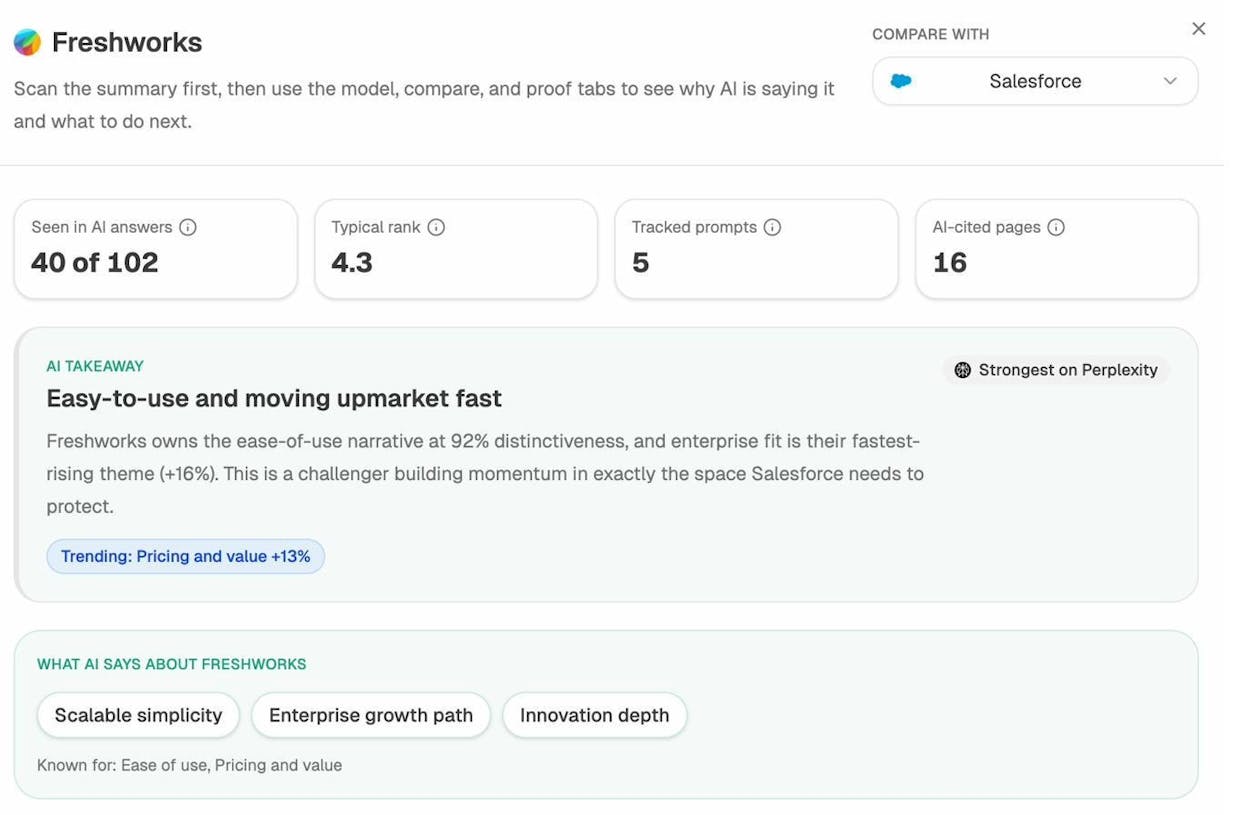
The brands that treat HARO as an isolated PR tactic miss the compounding effect. The brands that connect their journalist outreach to AI visibility tracking see the full picture.
Final Thoughts
SEO is evolving. Links still matter, but the signals that determine visibility have expanded to include brand mentions — especially in AI-powered search.
HARO link building is one of the most reliable ways to earn editorial mentions from authoritative sources. When you do it well — with targeted, useful pitches that genuinely help journalists — you build the kind of brand authority that compounds across both Google and AI search engines.
The process isn’t complicated. Sign up, respond to relevant callouts, pitch with substance instead of fluff, and track your results across both traditional and AI search channels.
Whether it’s Google or ChatGPT surfacing answers, your visibility now depends on how often and where your brand is mentioned as a trusted source. HARO gives you a direct way to influence that.
Start pitching. Start tracking. And connect every mention to the bigger picture of how your brand shows up when people search — however they search.

Ernest

Ibrahim


