



Summarize this blog post with:


In this article, you'll learn what long-tail and short-tail keywords actually are (hint: it's not about word count), why the distinction matters for your SEO and content strategy, how to find both types using free and paid tools, and how to use AI search data to uncover keyword opportunities that traditional tools miss entirely.
Table of Contents
What Are Short-Tail and Long-Tail Keywords?
The difference between long-tail and short-tail keywords comes down to one thing: search popularity.
Short-tail keywords get a large number of searches per month. Long-tail keywords get a small number of searches per month. That's it.
The names come from the "search demand curve." If you line up every search query people type into Google in a given month and sort them by volume, you get a chart that looks like this:
![[Screenshot: Search demand curve showing the 'fat head' of high-volume queries on the left tapering into the 'long tail' of low-volume queries on the right]](https://www.datocms-assets.com/164164/1774874001-blobid1.png?auto=format,compress&w=1248&fit=max)
On the left side — the "fat head" — sit a small number of queries that attract massive search volume. Think "shoes," "CRM software," or "electric cars." These are your short-tail keywords.
On the right side — the "long tail" — sit millions of queries that each get a handful of searches per month. Think "best waterproof trail running shoes for wide feet" or "CRM software for real estate teams under 10 people." These are your long-tail keywords.
Here's the part most people get wrong: long-tail and short-tail have nothing to do with how many words a keyword contains. A two-word keyword can be long-tail if almost nobody searches for it. A five-word keyword can be short-tail if millions of people search for it every month.
"PlayStation 5" is two words but gets hundreds of thousands of monthly searches — that's a short-tail keyword. Meanwhile, "dog groomers" is also two words but gets far less search volume in most local markets — placing it closer to the long tail.
The word count is often correlated (shorter phrases tend to be more generic and more searched), but it's not the defining feature. The position on the search demand curve is.
Why This Distinction Matters
Understanding whether you're targeting a short-tail or long-tail keyword changes three things about your strategy:
-
Competition. Short-tail keywords attract more competition because more traffic is at stake. Long-tail keywords tend to face less competition because fewer sites bother targeting them.
-
Intent clarity. Someone searching "shoes" could want anything — running shoes, dress shoes, shoe repair, shoe stores nearby, shoe history. Someone searching "women's waterproof hiking boots size 8" knows exactly what they want. Long-tail keywords usually carry clearer intent, which means you can match your content more precisely to what the searcher needs.
-
Conversion potential. Because long-tail keywords carry more specific intent, they tend to convert at higher rates. The person searching "best CRM for real estate teams" is much closer to a purchase decision than the person searching "CRM."
This is the foundation of what Grow and Convert calls Pain Point SEO — the idea that lower-volume, high-intent keywords often outperform high-volume keywords in terms of actual business results. A keyword getting 50 searches per month that converts at 5% is worth more than a keyword getting 5,000 searches per month that converts at 0.1%.
The Two Types of Long-Tail Keywords You Need to Know
Not all long-tail keywords are created equal. This is a critical distinction that separates effective keyword strategies from wasted effort.
Supporting Long-Tail Keywords
Supporting long-tail keywords are less popular ways of searching for the same thing as a more popular query. They're essentially broader topics wearing a disguise.
For example, "bedroom furniture chests" is a supporting long-tail keyword. It gets a small number of searches. But the people searching it want the same thing as people searching "dressers" — which gets thousands of searches per month.
![[Screenshot: Google search results for 'bedroom furniture chests' showing the same top-ranking pages as 'dressers']](https://www.datocms-assets.com/164164/1774874010-blobid2.png?auto=format,compress&w=1248&fit=max)
Here's the problem: if you create a page specifically targeting "bedroom furniture chests," you're competing for the same SERP as "dressers" — but you've anchored your content around a far less popular phrasing. You won't rank for the supporting long-tail unless you also rank for the parent topic.
That's why supporting long-tail keywords generally aren't worth targeting on their own. Google is smart enough to group these variations together and rank the same pages for all of them.
Topical Long-Tail Keywords
Topical long-tail keywords are the most popular phrasing for a given topic. They're topics in their own right — not alternative phrasings of something bigger.
"How to remove stripped screws" is a topical long-tail keyword. It doesn't have a more popular parent query — it is the topic. If you rank for it, you'll also pick up traffic from variations like "stripped screw removal" and "how to get a stripped screw out."
The way to tell the difference between supporting and topical long-tail keywords is straightforward:
-
Google the keyword. If the top-ranking pages are all about a different, broader topic, you're looking at a supporting long-tail keyword. If the top-ranking pages are specifically about the keyword you searched, it's a topical long-tail keyword.
-
Check the Parent Topic in a keyword research tool. Most keyword research tools show you the primary topic a keyword belongs to. If your keyword matches the parent topic, it's topical. If the parent topic is different (and more popular), it's supporting.
Here's why this matters: you should focus on topical long-tail keywords. These are the ones where you can create a dedicated page and rank for the term plus all its supporting variations. Targeting supporting long-tail keywords as standalone pages is usually a waste of content resources.
Long-Tail vs. Short-Tail Keywords: A Side-by-Side Comparison
|
Factor |
Short-Tail Keywords |
Long-Tail Keywords |
|
Search volume |
High (thousands to millions/month) |
Low (tens to hundreds/month) |
|
Competition |
Very high — established sites dominate |
Lower — more opportunity for newer sites |
|
Search intent |
Broad and ambiguous |
Specific and clear |
|
Conversion rate |
Generally lower |
Generally higher |
|
Content difficulty |
Hard to satisfy all possible intents |
Easier to match content to intent |
|
Time to rank |
Months to years |
Weeks to months |
|
Traffic per page |
High if you rank |
Low individually, compounds over many pages |
|
Best for |
Established sites with topical authority |
Newer sites, niche topics, bottom-of-funnel content |
Neither type is universally "better." The right choice depends on your site's authority, your business goals, and where you are in your content strategy.
Which Should You Target: Long-Tail or Short-Tail Keywords?
The honest answer: both. But the order matters.
When to Start With Long-Tail Keywords
If your site is new, has a low domain authority, or you're entering a competitive niche, long-tail keywords are your best starting point. Here's why:
-
You can rank faster. Long-tail keywords have less competition, which means you can start getting search traffic in weeks rather than months. Each page won't bring a flood of visitors, but the traffic compounds as you publish more pages.
-
You learn what converts. By targeting specific, high-intent long-tail keywords first, you can quickly learn which topics drive actual business results — signups, leads, sales. This data is invaluable for prioritizing future content.
-
You build topical authority. Ranking for many long-tail keywords within a topic cluster signals to Google that your site is a credible resource on that topic. Over time, this makes it easier to rank for the more competitive short-tail keywords in the same space.
Think of it like this: if you sell project management software, don't start by trying to rank for "project management software" (a brutally competitive short-tail keyword). Start with topical long-tail keywords like "how to manage remote team tasks across time zones" or "best way to track project milestones for small agencies." Rank for 20-30 of those, and you'll have built enough authority and internal linking structure to eventually compete for the head term.
When to Target Short-Tail Keywords
If your site already has authority, a strong backlink profile, and an established content library, short-tail keywords become viable targets. The payoff is significant:
-
Massive traffic potential. A single #1 ranking for a short-tail keyword can drive more traffic than dozens of long-tail pages combined.
-
Compounding link equity. Pages that rank for competitive short-tail keywords tend to attract backlinks naturally. You can then distribute that link equity to other pages on your site through internal links.
-
Brand authority signaling. Ranking for a head term like "email marketing" or "CRM software" positions your brand as a category leader.
The Best Approach: A Blended Strategy
The most effective keyword strategies target both types in a deliberate sequence:
-
Start with topical long-tail keywords that have clear business relevance and lower competition.
-
Build topical clusters by publishing multiple pieces of content around related long-tail keywords, all linking to a central pillar page.
-
Target short-tail keywords with pillar pages once you've built enough supporting content and authority within each topic cluster.
-
Keep expanding by using your existing rankings to find new long-tail opportunities within your cluster.
This approach is how sites like NerdWallet, HubSpot, and Healthline built massive organic traffic. They didn't start by trying to rank for "credit cards" or "marketing." They published thousands of pages targeting specific long-tail queries first, then used that authority to compete for head terms.
How to Find Short-Tail Keywords
Finding short-tail keywords is the easy part. They're the obvious, high-volume terms in your industry. The challenge is deciding which ones are worth pursuing.
Step 1: Start With Seed Keywords
Open a keyword research tool and type in a broad term related to your business. If you sell running shoes, start with "running shoes." If you offer accounting software, type "accounting software." Sort the results by search volume, and the keywords at the top of the list are your short-tail keywords.
![[Screenshot: A keyword research tool showing results for 'running shoes' sorted by volume, with short-tail keywords like 'running shoes,' 'best running shoes,' and 'Nike running shoes' at the top]](https://www.datocms-assets.com/164164/1774874012-blobid3.png?auto=format,compress&w=1248&fit=max)
Step 2: Mine Competitor Keywords
If you're not sure what seed keywords to start with, look at what your competitors already rank for. Enter a competitor's domain into a site analysis tool, navigate to their organic keywords report, and sort by volume.
![[Screenshot: Organic keywords report for a competitor domain, sorted by search volume, showing the head terms they rank for]](https://www.datocms-assets.com/164164/1774874017-blobid4.png?auto=format,compress&w=1248&fit=max)
The high-volume keywords at the top of the list are the short-tail terms your competitor has built authority around. These give you a roadmap of the topics that matter in your space.
You can also find competitor keyword ideas by:
-
Looking at the topics your industry's online publications cover most frequently
-
Checking which topics get discussed most on social media in your niche
-
Reviewing the category and product pages on competitor websites
Using a research audience tool like SparkToro to find what your audience searches for
Step 3: Evaluate Difficulty and Business Value
Not every short-tail keyword is worth targeting. Before committing resources, evaluate two things:
Keyword difficulty. Use a keyword difficulty checker to see how hard it will be to rank in the top 10. If the difficulty is very high and your site is relatively new, save this keyword for later and focus on long-tail variations first.
Business value. Does ranking for this keyword actually help your business? "Running shoes" has massive volume, but if you only sell trail running shoes, the match isn't great. The keyword needs to connect to what you sell or the problems you solve.
How to Find Long-Tail Keywords
Long-tail keywords take more effort to find, but the process is systematic. Here are the most effective methods.
Method 1: Use a Keyword Research Tool With Filters
The fastest way to find long-tail keywords is to start with a broad topic and apply filters to surface low-volume, low-competition opportunities.
In most keyword research tools, you can:
-
Enter a broad seed keyword (e.g., "project management")
-
Navigate to the keyword ideas or matching terms report
-
Set the search volume filter to a maximum of 300
-
Optionally filter by keyword difficulty (e.g., max 30) to find easy wins
![[Screenshot: Keyword research tool with volume filter set to max 300 and KD filter set to max 30, showing a list of long-tail keyword opportunities]](https://www.datocms-assets.com/164164/1774874019-blobid5.png?auto=format,compress&w=1248&fit=max)
You can refine further by using modifier words in the "Include" filter. Common modifiers that surface useful long-tail keywords include:
-
"for" — reveals niche audiences (e.g., "project management for nonprofits")
-
"vs" — reveals comparison intent (e.g., "Asana vs Monday for small teams")
-
"how to" — reveals tutorial/guide opportunities
-
"best" — reveals listicle/review opportunities
-
"without" — reveals pain points (e.g., "project management without email")
Method 2: Analyze Competitor Long-Tail Keywords
Your competitors have already done keyword research for you — they just don't know it.
Enter a competitor's URL into a site analysis tool and look at their organic keywords report. Filter for low-volume keywords (max 300 monthly searches) to see the long-tail keywords they rank for.
![[Screenshot: Site analysis tool showing a competitor's organic keywords filtered to max 300 volume, revealing long-tail keywords they rank for]](https://www.datocms-assets.com/164164/1774874023-blobid6.png?auto=format,compress&w=1248&fit=max)
Pay special attention to long-tail keywords where your competitor ranks in positions 5-20. These are terms where the competition hasn't fully satisfied the search intent — which means you have an opening to create better content and outrank them.
Method 3: Use Google Autocomplete and Related Searches
Google itself is one of the best free long-tail keyword research tools. Here's how to use it:
Autocomplete: Start typing your seed keyword into Google's search bar and watch the suggestions that appear. Each suggestion is a real query that real people search for — and many of them are long-tail keywords.
![[Screenshot: Google search bar showing autocomplete suggestions for a seed keyword, with long-tail variations highlighted]](https://www.datocms-assets.com/164164/1774874025-blobid7.png?auto=format,compress&w=1248&fit=max)
Related Searches: After searching for your seed keyword, scroll to the bottom of the results page. Google shows a "Related searches" section with queries that are semantically connected to yours.
People Also Ask: The "People Also Ask" section in the SERP reveals question-based long-tail keywords. Each question you expand generates more related questions, creating a chain of keyword ideas. Learn more about optimizing for these in our guide on People Also Ask.
Method 4: Use Free Keyword Generator Tools
If you don't have access to a paid keyword research tool, free tools can still surface long-tail keyword ideas:
-
Analyze AI's Keyword Generator — generates keyword ideas from a seed keyword
-
Analyze AI's YouTube Keyword Tool — finds long-tail keywords people search on YouTube
-
Analyze AI's Amazon Keyword Tool — surfaces product-related long-tail keywords from Amazon's search data
-
Analyze AI's Bing Keyword Tool — finds keyword ideas from Bing's search data, which can reveal terms Google tools miss
-
AnswerThePublic — visualizes questions and prepositions around a seed keyword
-
Google Keyword Planner (free with a Google Ads account) — gives search volume ranges and keyword suggestions
Method 5: Mine Your Own Data
Your existing analytics data is a goldmine for long-tail keyword opportunities. Check:
Google Search Console. Filter your Performance report to show queries where your site gets impressions but few clicks. These are long-tail keywords where Google already considers your site relevant — you just need to create or optimize content to rank higher. Use our guide on finding your ranking keywords for a detailed walkthrough.
Site search data. If your site has an internal search function, the queries people type there are direct signals of what your audience is looking for — and many of them will be long-tail keywords you haven't created content for yet.
Customer questions. Review your support tickets, sales call notes, and chat logs. The specific questions customers ask are often long-tail keywords in natural language form.
How AI Search Changes the Keyword Landscape
Traditional keyword research is built around Google's search bar. But today, people also ask questions through ChatGPT, Perplexity, Claude, Gemini, and Copilot. These AI platforms process queries differently — and they create both new challenges and new opportunities for your content strategy.
Here's what's changing:
AI Queries Are Naturally Long-Tail
When people use AI search tools, they tend to type longer, more conversational queries than they would in Google. Instead of "best CRM software," a user might type "I run a 15-person real estate team and need a CRM that integrates with Zillow and handles automated follow-ups — what are my options?"
This means the "long tail" of search is getting even longer. There are more specific, conversational queries being asked across AI platforms — and the content that answers these queries clearly and specifically is the content that gets cited in AI responses.
If your content already targets topical long-tail keywords with depth and specificity, you're well-positioned for AI search visibility. If your content only chases short-tail keywords with surface-level coverage, AI models will look elsewhere for detailed answers.
AI Search Surfaces Your Content Differently
In traditional search, you either rank on page one or you don't. AI search works differently. AI models pull from multiple sources, cite specific pages, and synthesize answers from across the web. Your content can be referenced in an AI response even if it doesn't rank #1 in Google — as long as it's the most useful, specific answer to the user's question.
This is especially relevant for long-tail keywords. A page that thoroughly answers "how to set up automated email sequences for abandoned carts in Shopify" might get cited by ChatGPT or Perplexity even if it ranks #5 in Google — because the AI model recognizes it as the most comprehensive resource on that specific topic.
How to Track Your Visibility in AI Search
The challenge is that traditional keyword rank checkers and SERP checkers only track Google rankings. They don't tell you whether your content is being cited by AI search engines.
This is where Analyze AI comes in. Analyze AI tracks how your brand and content appear across AI search platforms — including ChatGPT, Perplexity, Claude, Gemini, and Copilot — so you can see:
Which prompts mention your brand. Analyze AI runs daily prompt tracking to show where your brand shows up (and where it doesn't) in AI-generated answers. You can track prompts by topic cluster and see your visibility trend over time.
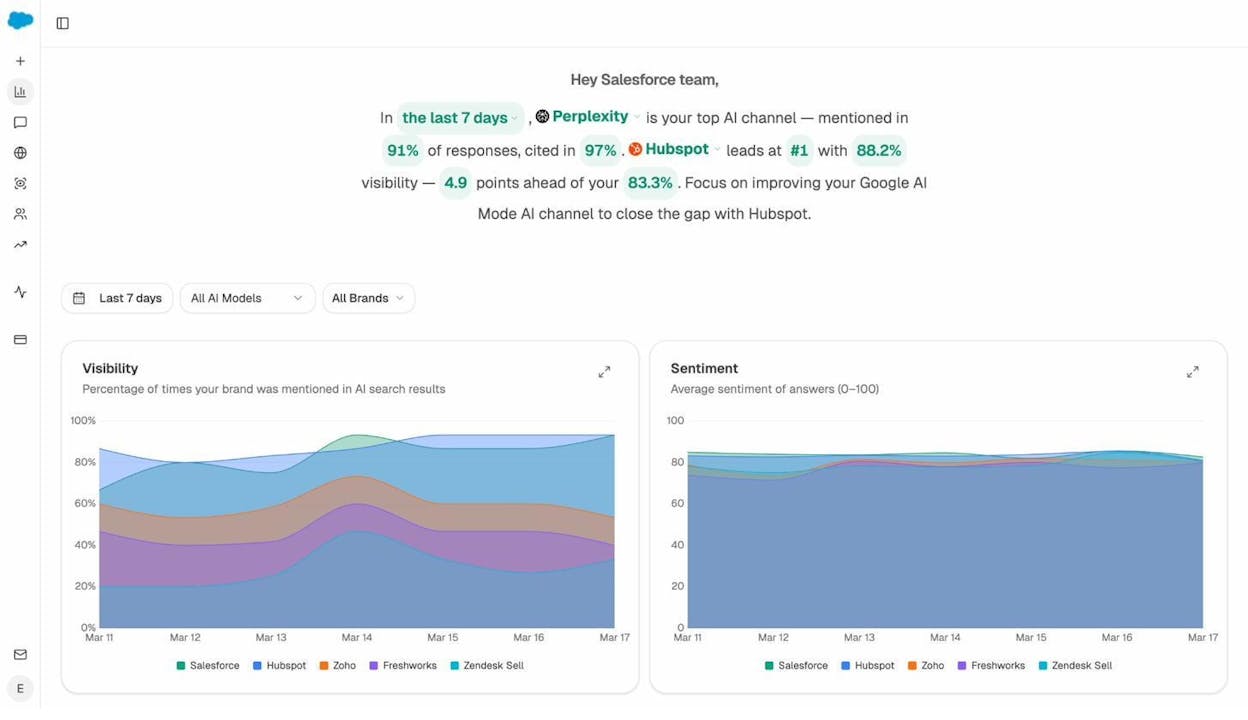
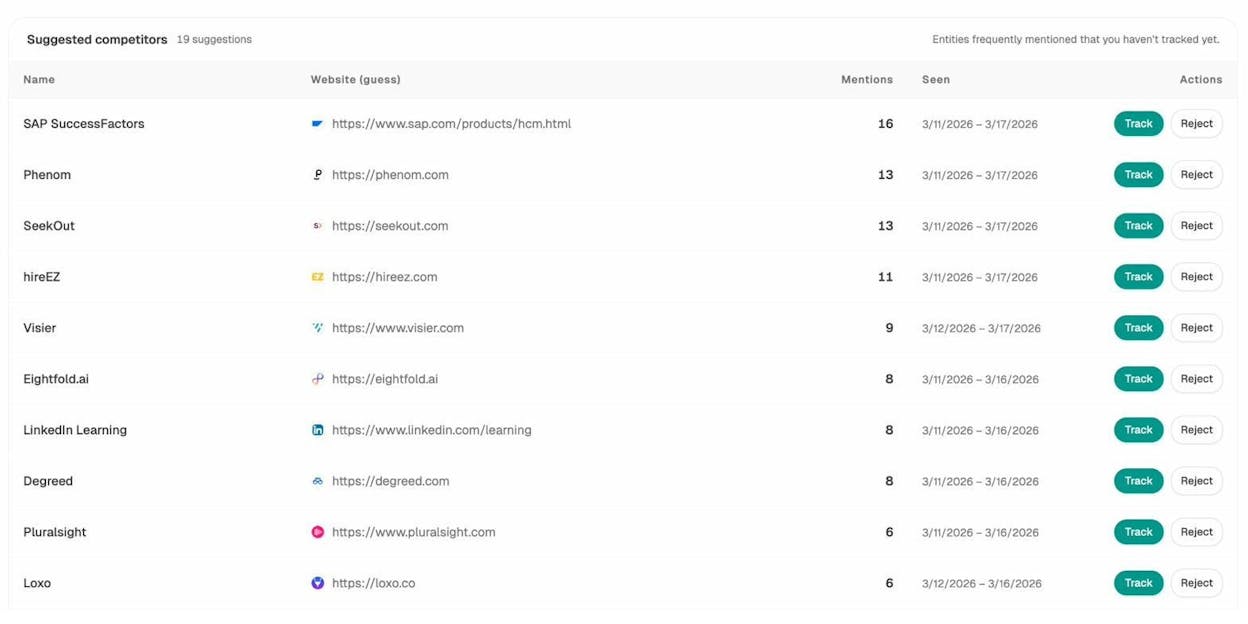
Where competitors win and you don't. The Competitors view shows which brands appear alongside yours in AI responses — and flags opportunities where competitors get mentioned but you don't. These gaps are essentially untapped long-tail keyword opportunities in the AI search layer.
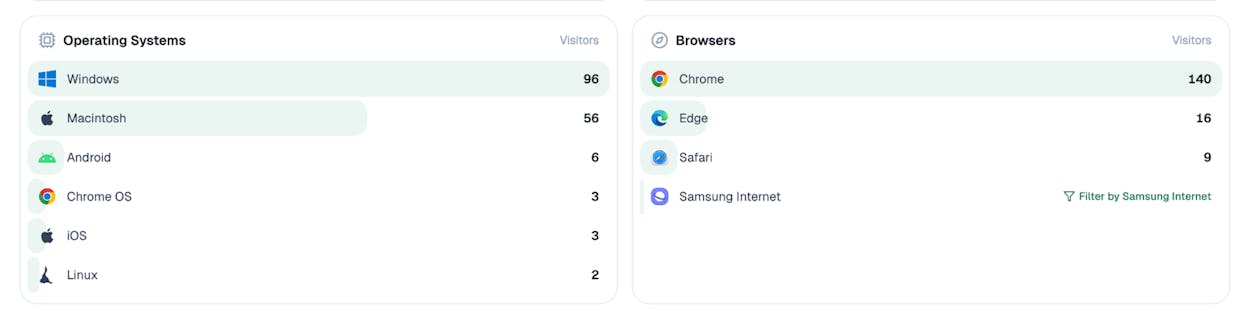
Which of your pages actually receive AI traffic. Analyze AI connects to your GA4 to show exactly which landing pages receive visits from AI search engines, with session counts broken down by referral source. This tells you which content formats and topics AI models prefer — so you can double down on what works.
Smart prompt suggestions. If you're not sure which prompts to track, Analyze AI suggests relevant prompts based on your industry and topic clusters. You can accept them with one click to start tracking immediately.

Think of it this way: traditional keyword research tells you what people search in Google. AI search analytics tells you what people ask AI models — and whether your content shows up in those answers. You need both to build a complete organic strategy.
How to Use Long-Tail Keywords to Win in Both SEO and AI Search
Once you've found your target long-tail keywords, the real work begins: creating content that ranks in Google and gets cited by AI models. Here's how to do both.
Match Search Intent Precisely
The #1 reason content fails to rank — for both short-tail and long-tail keywords — is an intent mismatch. Before writing a single word, Google your target keyword and study the top-ranking pages:
-
What format are they? (Listicle, how-to guide, comparison page, product page)
-
What angle do they take? (Beginner-focused, data-driven, opinionated)
-
What do they cover? (Which subtopics appear in every top-ranking page?)
-
What's missing? (Where do they leave the reader with unanswered questions?)
Create Genuine Information Gain
Matching intent gets you in the game. Information gain is what wins it.
Information gain means your content provides something the existing top-ranking pages don't. This could be:
-
Original data or research — survey results, case studies, proprietary analysis
-
A unique framework — a new way to think about the problem
-
Greater depth on a subtopic — going deeper where competitors skim
-
A practical tool or template — something the reader can immediately use
-
First-hand experience — real examples from actually doing the thing
Our research on how LLMs cite sources found that AI platforms tend to cite pages with original data, structured content, and clear expertise signals. Producing information gain isn't just good SEO — it's good AI search optimization.
Structure Content for Both Humans and AI Models
Content structure affects both Google rankings and AI citation rates. Here's what works:
Use clear heading hierarchy. Organize your content with H2s and H3s that follow a logical structure. Both Google and AI models use headings to understand what each section covers.
Answer questions directly. When your content addresses a specific question, provide a clear, concise answer in the first 1-2 sentences after the heading — then go deeper.
Use tables and structured data. Comparison tables, spec tables, and structured lists make information easy for both readers and AI models to parse.
Add internal links strategically. Link to related content on your site where it genuinely helps the reader go deeper. Read our full guide on internal linking for SEO for detailed strategies.
Use Keywords Naturally Across Your Content
Keyword placement still matters, but it's about natural integration rather than mechanical repetition. Include your target keyword and its semantic variations in:
-
The title tag and H1
-
The first 100 words of the article
-
At least one H2 subheading
-
Image alt text where relevant
-
The meta description
For more detailed guidance on keyword placement, see our guide on how to use keywords in SEO.
Track Performance Across Both Channels
Once your content is live, track its performance in both traditional search and AI search:
For traditional search: Monitor rankings and organic traffic using Google Search Console and a keyword tracking tool. Use the Analyze AI SERP checker for quick position checks.
For AI search: Use Analyze AI's AI Traffic Analytics to see if your page receives referral traffic from AI platforms. Check which AI engines send traffic, how visitors engage, and whether they convert.
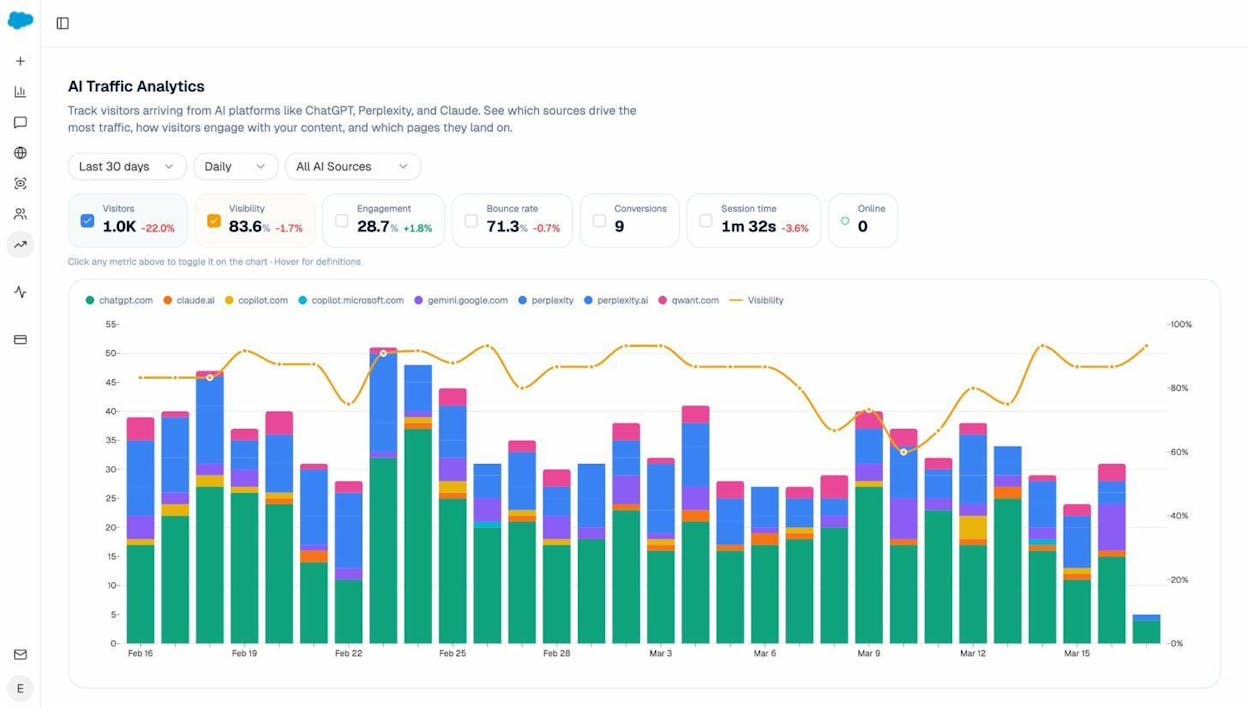
This dual-channel view reveals patterns you'd otherwise miss. For example, you might find that a long-tail keyword page that gets modest Google traffic is actually your top performer in AI search — driving highly engaged visitors from ChatGPT who convert at 3x the rate of Google visitors.
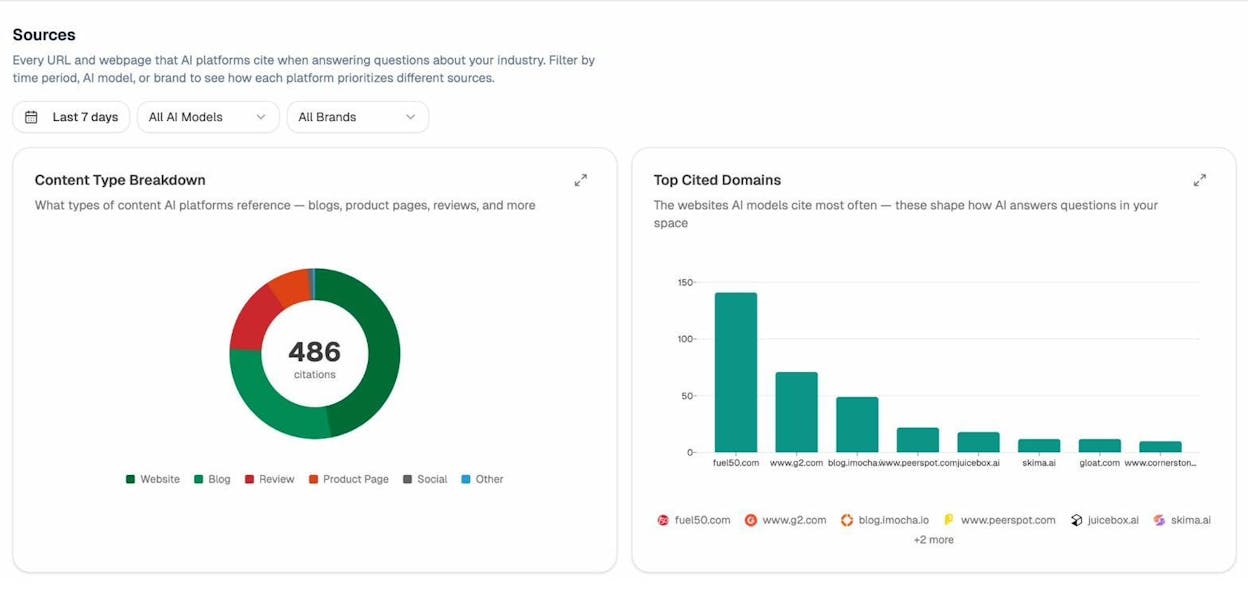
You can also use Analyze AI's Sources view to see which of your URLs get cited by AI platforms and which external domains are most frequently cited in your space.
Common Long-Tail Keyword Mistakes to Avoid
Mistake 1: Targeting Supporting Long-Tail Keywords as Standalone Pages
We covered this earlier, but it bears repeating because it's the most common waste of content resources. If your target keyword is just an unpopular phrasing of a more popular topic, creating a standalone page for it won't work. Google will rank the same pages for both queries.
Before creating content for any long-tail keyword, check whether it has its own unique SERP or shares results with a broader term. If it shares results, target the broader term instead and let the supporting long-tail traffic come naturally.
Mistake 2: Ignoring Business Relevance
A keyword can be low-volume and low-competition and still be a waste of your time if it has no connection to what you sell. Every keyword you target should pass the "business value" test: can you naturally mention your product or service in the content as a solution to the searcher's problem? This is the core principle behind Pain Point SEO.
Mistake 3: Creating Thin Content for Long-Tail Keywords
Some content teams treat long-tail keywords as an excuse to create short, shallow pages. This backfires. Google's helpful content signals reward depth and completeness regardless of search volume. And in AI search, thin content almost never gets cited. If you're going to create content for a long-tail keyword, make it the best resource on the internet for that specific topic — or don't bother.
Mistake 4: Only Tracking Google Rankings
If you're only measuring keyword performance through Google Search Console and traditional rank trackers, you're missing a growing portion of your content's impact. AI search platforms now drive measurable traffic, and that traffic often comes from exactly the type of long-tail, conversational queries that your content targets. Set up tracking for both channels. Check out our GEO vs. SEO comparison for a deeper look at how these two channels work together.
A Four-Step Process for Choosing the Right Keywords
Whether a keyword is long-tail or short-tail shouldn't be the primary factor in your decision. Here's a more useful framework for evaluating any keyword:
Step 1: Confirm Search Traffic Potential
Don't just look at the keyword's search volume. Check the traffic potential by looking at how much traffic the top-ranking page actually receives. A keyword with 200 monthly searches might drive 2,000 visits to the top-ranking page because that page also ranks for dozens of related terms. Use Analyze AI's website traffic checker to estimate traffic to any top-ranking URL.
Step 2: Verify Search Intent Alignment
Google the keyword. Do the top-ranking pages match the type of content you plan to create? If the SERP is full of product pages and you're planning a blog post, there's an intent mismatch. If the SERP shows beginner guides and you're planning an advanced technical deep-dive, same problem.
Step 3: Assess Business Value
Can you naturally weave your product or service into this content? Does the keyword align with a problem your customers actually have? If the answer to both is yes, the keyword has business value regardless of its search volume.
Step 4: Evaluate Your Ability to Rank
Consider the keyword difficulty, the authority of the sites currently ranking, and the quality of the existing content. Use Analyze AI's keyword difficulty checker and website authority checker to make this assessment quickly.
The goal isn't to chase long-tail keywords because they're easy or short-tail keywords because they're impressive. The goal is to find keywords — of any length or volume — that you can rank for, that serve your business, and that match what your audience actually needs.
Key Takeaways
Long-tail and short-tail keywords are defined by search popularity, not word count. Long-tail keywords get few searches per month; short-tail keywords get many.
Focus on topical long-tail keywords (unique topics with their own SERPs), not supporting long-tail keywords (unpopular phrasings of broader topics).
Start with long-tail keywords to build authority, then work toward short-tail keywords as your site grows.
AI search is expanding the long tail even further. People ask more specific, conversational questions in ChatGPT and Perplexity than in Google — and your content needs to be found in both channels.
Track performance across both Google and AI search. Use traditional SEO tools for Google rankings and Analyze AI for AI search visibility, citations, and referral traffic.
The best keyword strategy doesn't pick a side. It builds a content library that covers both the head terms that drive volume and the long-tail keywords that drive conversions — while staying visible across every channel where your audience searches.

Ernest

Ibrahim


![Link Building Outreach: A Step-by-Step Guide [With Templates]](/_next/image?url=https%3A%2F%2Fwww.datocms-assets.com%2F164164%2F1774864954-blobid0.png&w=3840&q=75)

