



Summarize this blog post with:


n8n is a strong tool if you’re a developer building general-purpose automations. But if you’re a marketer, content lead, or agency owner who needs agents that write content at scale, run keyword research across hundreds of topics, refresh stale pages automatically, or do link outreach without manual CSV wrangling, n8n starts to show its limits.
You end up wiring together API keys, writing custom code for every SEO data source, and maintaining brittle workflows that break the moment an API changes. Most n8n alternatives on the market solve the same problem n8n does. They give you a visual canvas and a library of integrations. That is not enough for marketing teams.
In this article, you’ll see 11 platforms you can use instead of n8n to build AI agents for marketing, learn what to look for in an n8n alternative when your use case is content, SEO, or GTM, and get a side-by-side comparison table so you can shortlist your top two picks in under five minutes.
Table of Contents
What Makes a Good n8n Alternative for Marketing
Before looking at individual tools, you need a framework. The right n8n alternative for marketing automation depends on three things.
The depth of marketing-specific nodes. A generic automation platform gives you “send an HTTP request.” A marketing-specific platform gives you keyword research, SERP tracking, content scoring, backlink analysis, and AI visibility monitoring as built-in nodes. The difference matters because every manual API integration you need to build is another point of failure.
The ability to run agents autonomously. Clicking “Run” once is useful. Scheduling an agent to refresh your declining content every Monday at 7 a.m. and post the rewritten version to WordPress without your involvement is transformative. Look for scheduled triggers, webhook triggers, and conditional logic so your agents can make decisions on their own.
AI search as a native channel. SEO is not dead. But AI search is a real organic channel now, and any modern marketing platform should treat it that way. If a tool can automate your Google Search Console workflows but has no concept of ChatGPT, Perplexity, or Gemini visibility, it is already behind.
With that framework, here are the 11 best n8n alternatives for marketing teams in 2026.
11 Best n8n Alternatives for Marketing in 2026
1. Analyze AI
-
Best for: Marketing teams that need content creation, SEO research, AI visibility tracking, and GTM ops in one agent platform
-
Pricing: Free trial available, then paid plans
-
Website: tryanalyze.ai
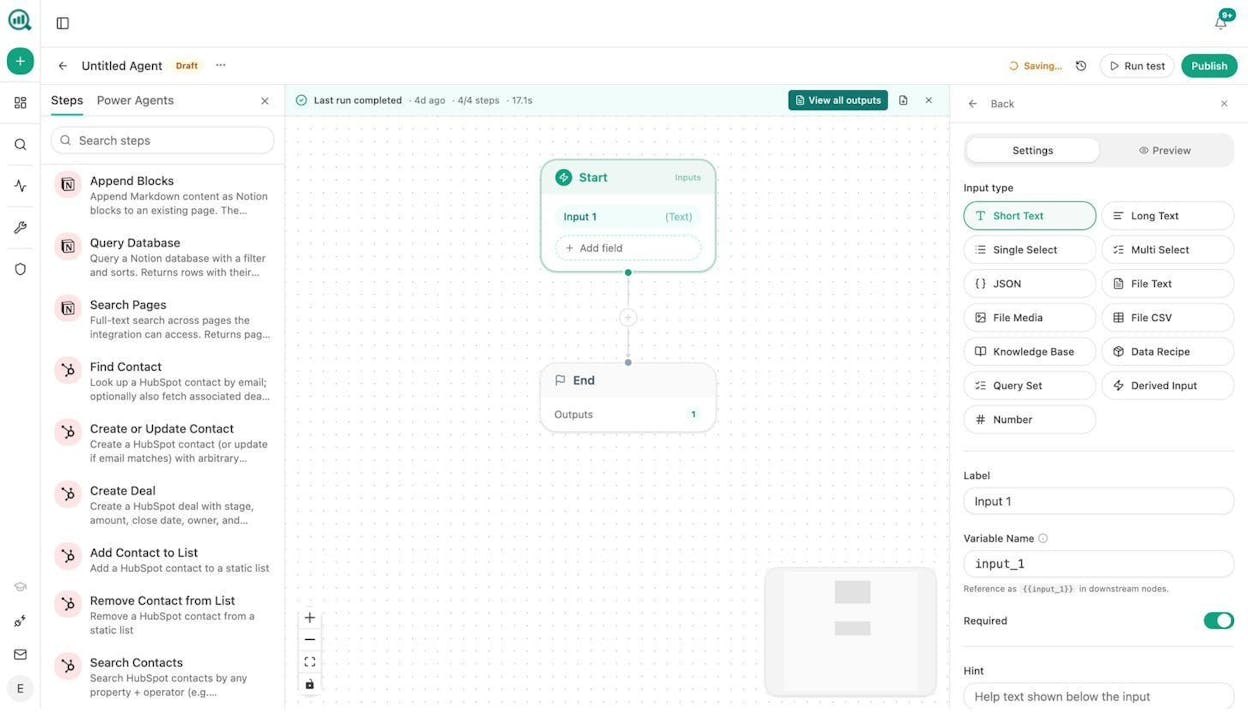
Analyze AI is the agentic platform for SEO, AEO, content, and GTM operations. Where most tools on this list give you a blank canvas and a library of generic integrations, Analyze AI gives you 180+ nodes purpose-built for marketing, 34 pre-built data recipes, integrations with GA4, Google Search Console, Semrush, DataForSEO, HubSpot, WordPress, Notion, Contentful, Mailchimp, Hunter.io, Tomba, and every major LLM.
The Agent Builder is the core of the platform. You build workflows visually by connecting nodes on a canvas, the same drag-and-drop pattern you know from n8n. But the nodes themselves are different. Instead of generic HTTP requests, you get dedicated nodes for Ranked Keywords, Keyword Ideas, Domain Overview, SERP Competitors, Brand Mentions, On-Page SEO Analysis, Lighthouse Audits, and 27 more DataForSEO nodes alone.
What you can build for marketing (real examples):
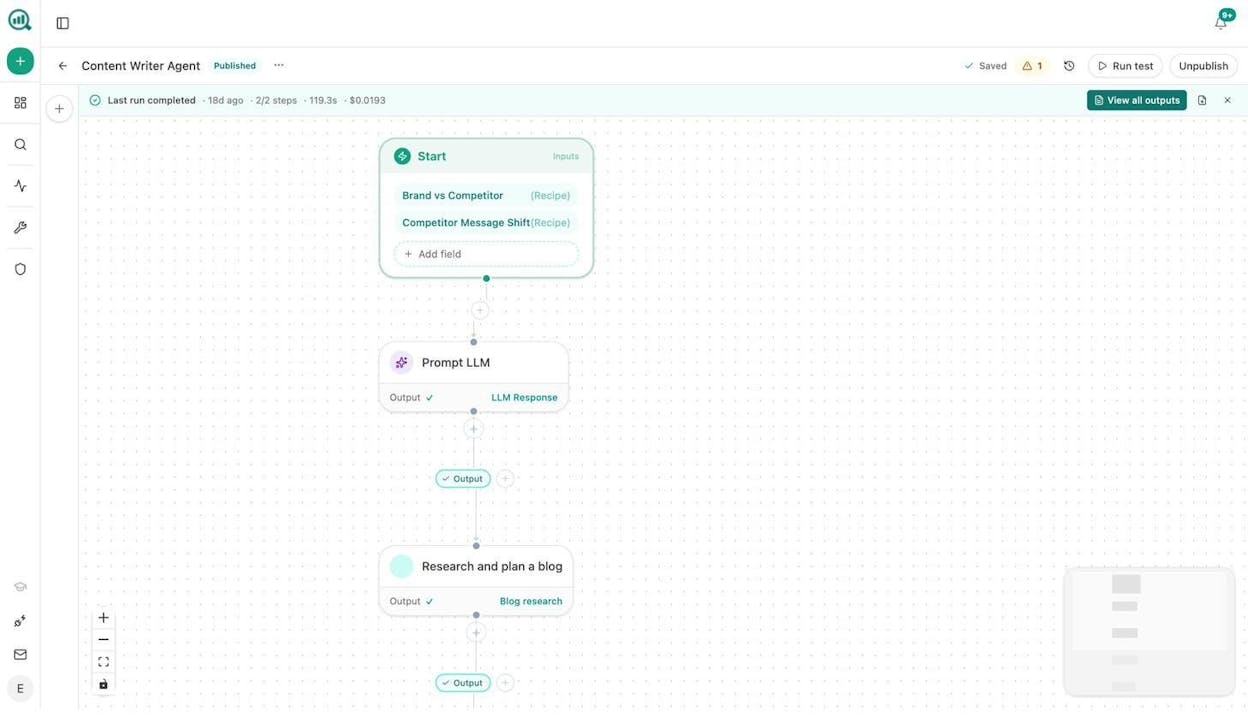
Content writing at scale. Build an agent that takes a topic, pulls competitive intelligence using the Brand vs Competitor data recipe, runs keyword research through DataForSEO, generates a full research brief, creates an outline, writes a complete draft with your brand voice injected from the Brand Vault, scores it against the AEO Content Scorecard, and publishes to WordPress if it passes. Schedule it to run weekly against your editorial calendar.
Content refresh at scale. Use the Declining Pages data recipe to find your pages losing traffic. The agent loops through each page, scrapes the current content, rewrites it for freshness and AI search visibility, runs a quality gate, and pushes the updated version to your CMS. This runs every week without you touching it.
Keyword research at scale. Feed the agent a list of seed keywords from a Google Sheet via Sheets. It runs each seed through DataForSEO Keyword Ideas, pulls search volumes, checks keyword difficulty, and organizes everything into topical clusters using an LLM. The output lands in Notion as a structured editorial plan.
Internal linking at scale. The agent loops through your sitemap, pulls GSC Top Keywords for each page, and uses an LLM to suggest three internal links per page based on topical relevance. The suggestions go to a Notion task board for your editor to review.
Link outreach. Combine the News Research node with Tomba Author Finder to identify journalists and bloggers covering your topic. The agent drafts a personalized pitch using your brand voice rules and logs the contact in HubSpot.
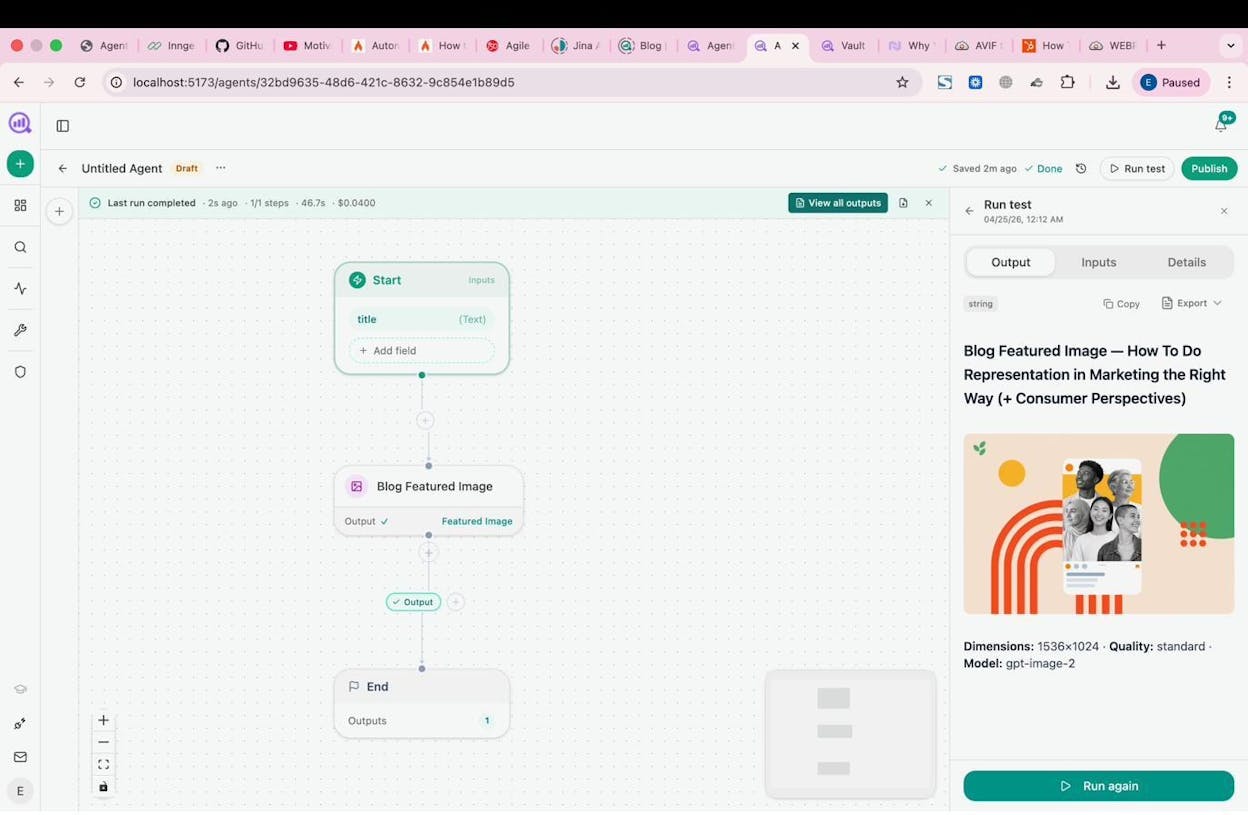
Image and infographic creation. Use the Blog Featured Image, Social Media Image, or Infographic Generator nodes to produce brand-aware visuals at scale. These nodes pull from your Brand Vault so the output matches your style guide without a designer in the loop.
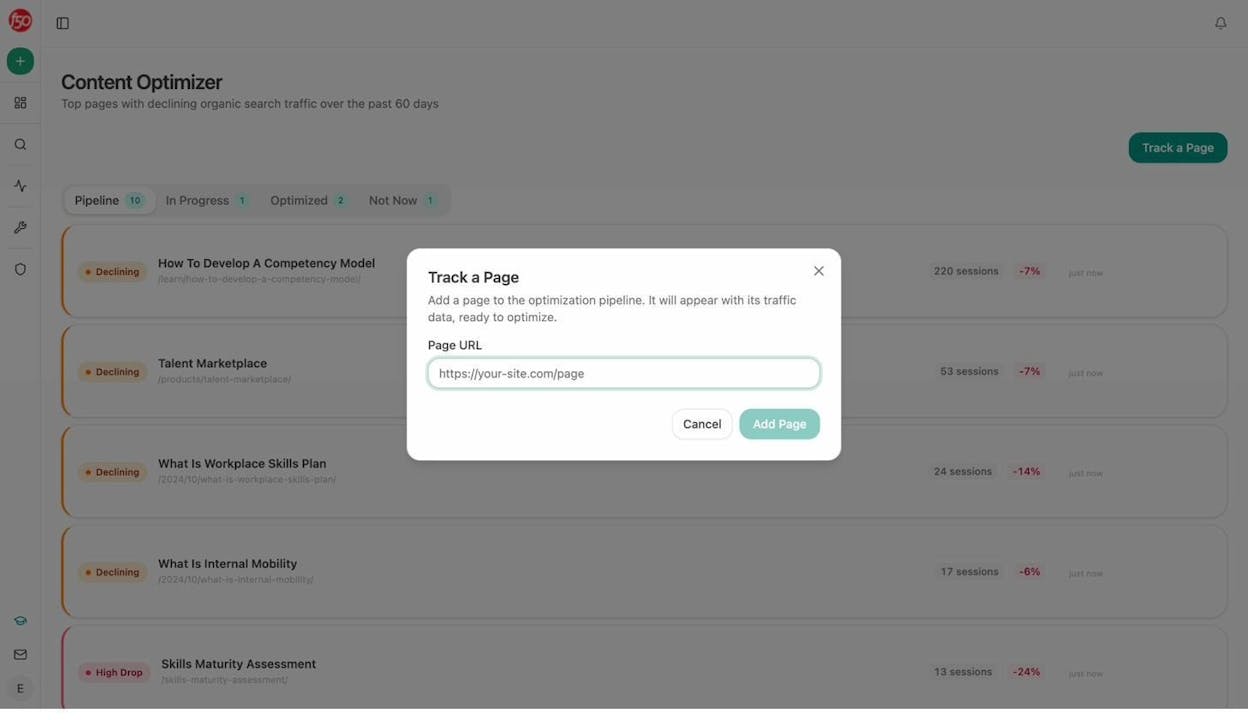
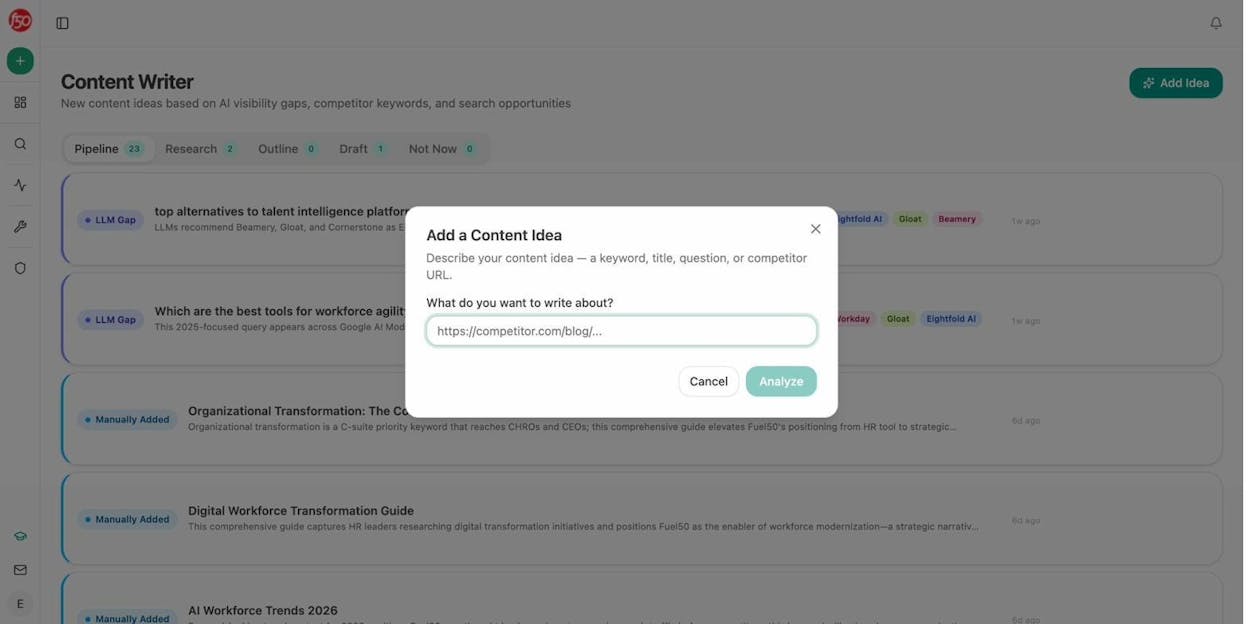
On top of the Agent Builder, Analyze AI includes a full Content Writer and Content Optimizer. The Writer goes from idea to research to outline to draft with strategic editorial comments at each step, not a one-shot AI dump. The Optimizer fetches your live page, scores it for both SEO and AI engine readiness, and gives you line-by-line suggestions for what to fix.
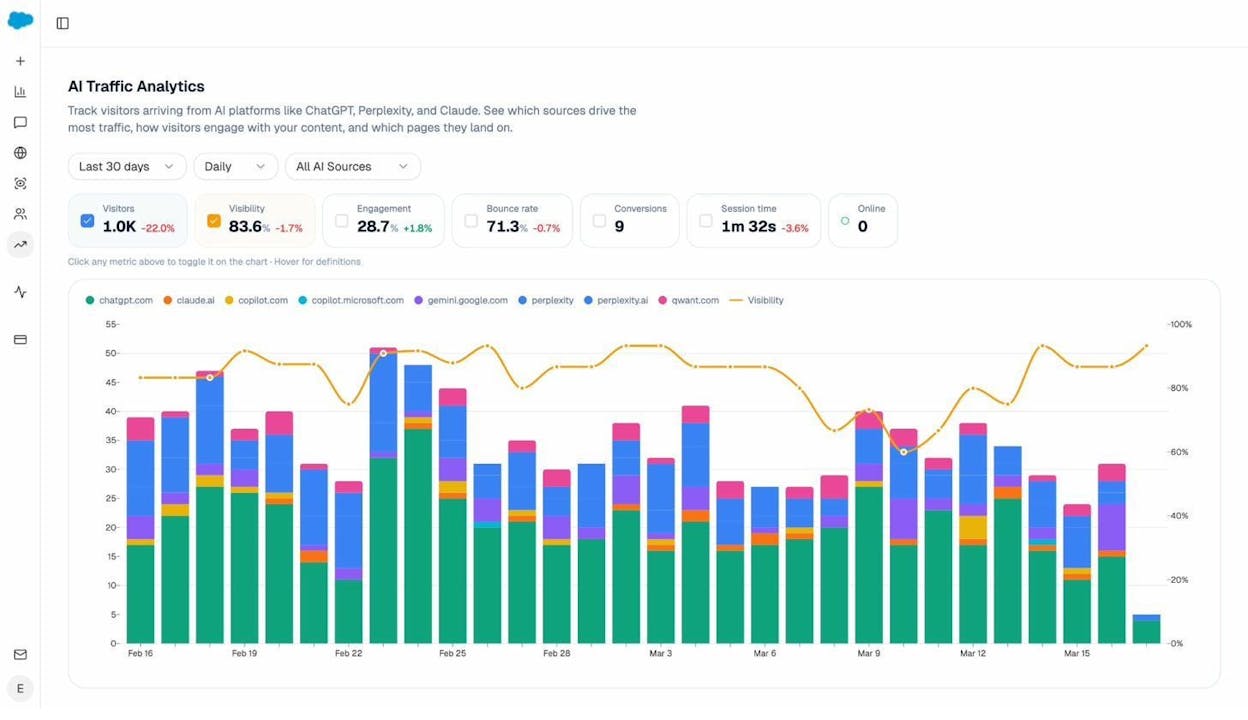
You also get AI Traffic Analytics that shows exactly how many sessions come from ChatGPT, Perplexity, Gemini, and Copilot, broken down by landing page. You can see which pages convert from AI traffic and double down on what works.
No other tool on this list combines agent building, content production, SEO research, and AI search attribution in one platform.
What could be improved: The platform has a learning curve for teams new to visual workflow builders. The sheer number of nodes and recipes means you need to invest time upfront to understand what is possible.
2. Make
-
Best for: Visual workflow automation with advanced flow control
-
Pricing: Free, then starts at $10.59/month
-
Website: make.com
Make (formerly Integromat) is one of the most popular n8n alternatives for non-technical teams. It has a visual canvas, 2,000+ integrations, and a credit-based pricing model that is significantly cheaper than Zapier at similar volumes.
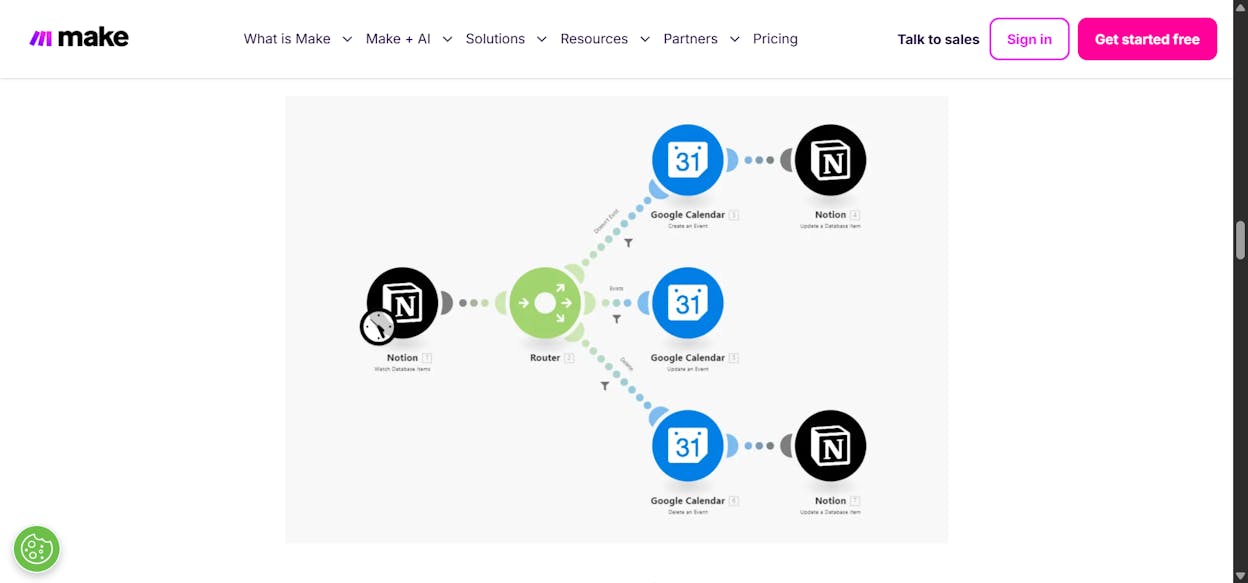
For marketing teams, Make works well for connecting tools you already use. You can sync your Notion database with Google Calendar, push form submissions to your CRM, or trigger Slack notifications when a blog post is published. Make’s Flow Control feature gives you conditional logic, routers, and error handlers that let you build branching workflows.
Where Make falls short for marketing is the lack of dedicated SEO and content nodes. You can connect to Google Sheets and send HTTP requests to SEO APIs, but you are building the marketing logic yourself. There is no built-in keyword research, no content scoring, no AI visibility tracking, and no concept of brand voice. If your workflows are mostly “connect App A to App B,” Make is a strong pick. If you need marketing intelligence built into the workflow, you will hit a ceiling.
Pricing: Free (1,000 credits/month), Core ($10.59/month), Pro ($18.82/month), Teams ($34.12/month), Enterprise (custom).
3. Zapier
-
Best for: Teams that need the largest integration library and proven reliability
-
Pricing: Free (100 tasks/month), then starts at $29.99/month
-
Website: zapier.com
Zapier is the most recognizable automation platform on the market. It has been around for over a decade and offers integrations with nearly every SaaS tool. If you need a specific niche app connected to your workflow, Zapier probably has it.
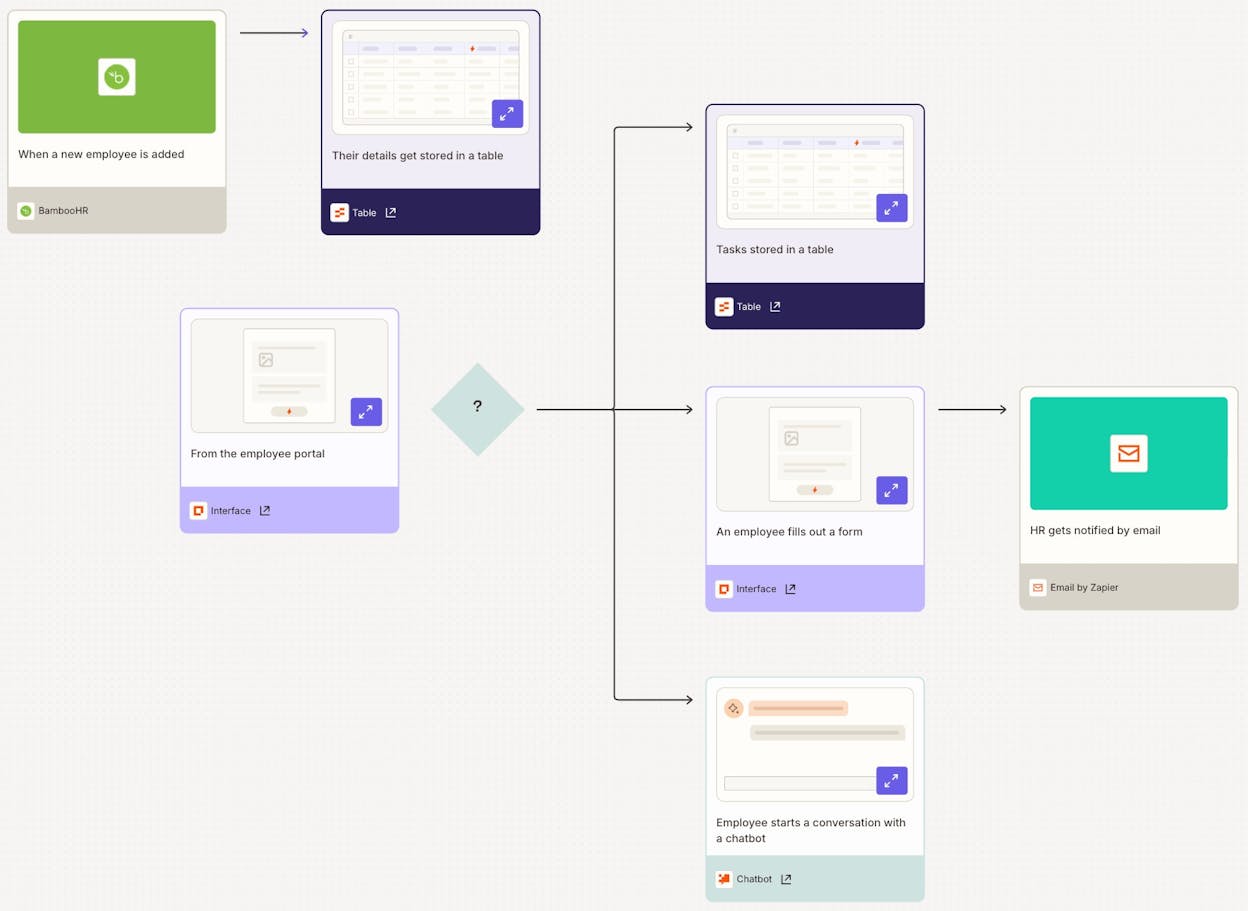
For marketing automation, Zapier handles the basics well. You can send new leads from a form to your email tool, cross-post social content, or trigger a notification when a deal moves stages in your CRM. The platform recently added AI features and a Chatbots product.
The main drawback for marketing teams is cost. Zapier charges per task, and multi-step Zaps consume one task per action. A five-step workflow processing 500 records burns 2,500 tasks. At that volume, you are already past the Starter plan and into the Professional tier at $73.50/month. For comparison, Make handles the same volume on a $10.59/month plan. Zapier also lacks native SEO or content nodes, so you are in the same position as Make when it comes to building marketing-specific logic.
Pricing: Free (100 tasks/month), Starter ($29.99/month for 750 tasks), Professional ($73.50/month for 2,000 tasks), Team ($103.50/month), Enterprise (custom).
4. Lindy AI
-
Best for: Sales automation and customer support operations
-
Pricing: Free, then starts at $49.99/month
-
Website: lindy.ai
Lindy AI positions itself as your “AI employee.” The platform is strongest in sales prospecting, email workflows, and customer support, where it can filter inbound messages with AI, draft responses, and route tickets across channels including SMS, WhatsApp, and Telegram.
For marketing teams, Lindy AI is a mixed fit. It can record meetings, do LinkedIn outreach, and help with lead generation. But it does not have the content creation depth, SEO research capabilities, or AI search visibility features that dedicated marketing platforms offer. If your primary need is a multi-channel sales agent, Lindy is worth evaluating. If you need agents that do keyword research, content optimization, or brand monitoring across AI engines, look elsewhere.
Pricing: Free, Pro ($49.99/month), Business ($199.99/month), Custom (contact sales).
5. Relevance AI
-
Best for: Building AI workforce for enterprise operations teams
-
Pricing: Free (200 actions/month), then starts at $29/month
-
Website: relevanceai.com
Relevance AI is an agent platform designed for operations teams at mid-to-large companies. Brands like Canva, Autodesk, and Rakuten use it. The platform lets you build AI teammates, train them on your data, and deploy them across departments.
For marketing, Relevance AI handles CRM enrichment, content repurposing, and internal knowledge management reasonably well. It is LLM-agnostic, so you can switch between models. The platform also supports custom integrations with tools like Gmail, Salesforce, Airtable, and Slack.
The downside is that the free plan is limited to 200 actions per month, which is not enough to test real marketing workflows. Advanced features are locked behind higher tiers, and the interface can feel complex for non-technical marketers.
Pricing: Free (200 actions/month), Pro ($29/month), Team ($349/month), Enterprise (custom).
6. Relay.app
-
Best for: Non-technical teams that need simple, clean AI workflows
-
Pricing: Free (500 AI credits/month), then starts at $27/month
-
Website: relay.app
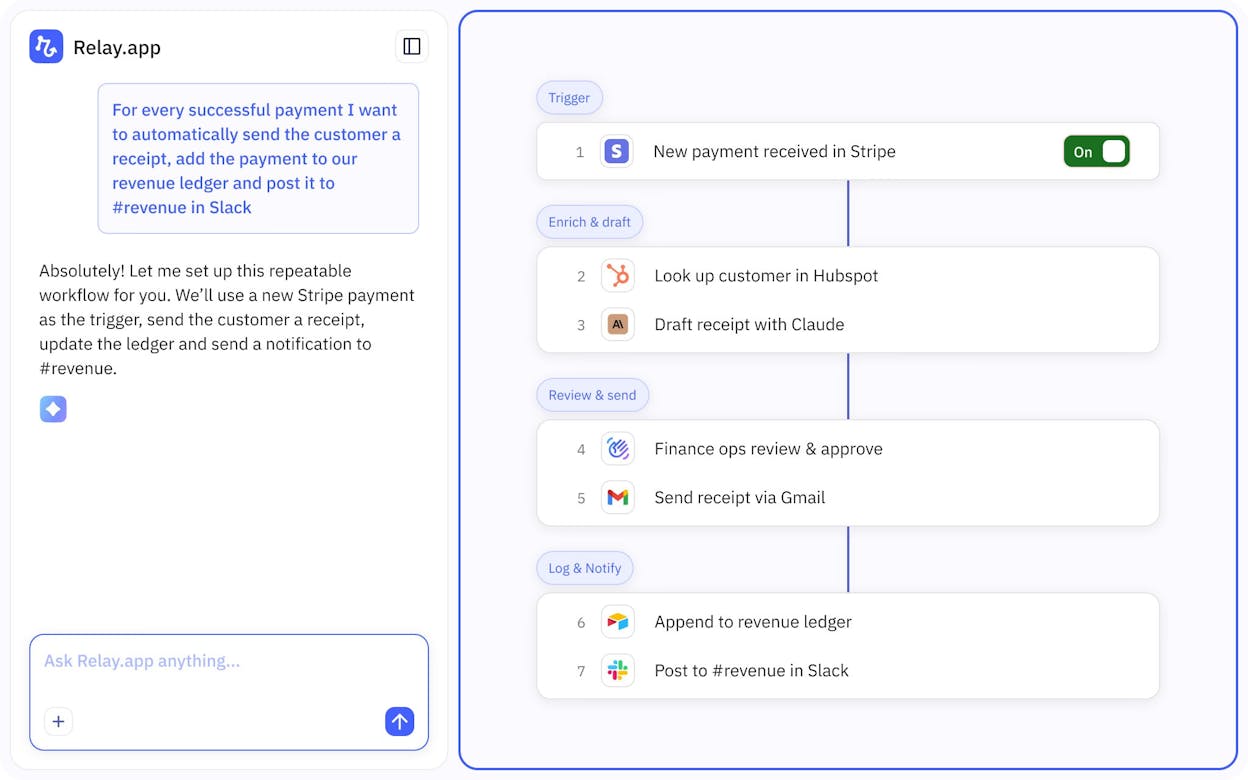
Relay.app is a lightweight automation builder that prioritizes simplicity. It has a clean interface, specific use-case templates, and enough integrations to handle common marketing tasks like lead qualification, social posting, and meeting follow-ups.
The platform works best for teams with clearly defined, simple automations. If you are looking to connect your CRM to Slack and send meeting summaries automatically, Relay.app does that without friction. Where it falls short is depth. Complex marketing workflows with branching logic, loops, or multi-step content pipelines will push you beyond what the platform handles comfortably.
Pricing: Free (500 AI credits), Professional ($27/month), Team ($98/month), Enterprise (custom).
7. Integrately
-
Best for: E-commerce automations and enterprise integrations with legacy platforms
-
Pricing: Free (100 tasks/month), then starts at $29.99/month
-
Website: integrately.com
Integrately has 20 million+ ready-made automations and integrations with platforms like BigCommerce, MailChimp, and SendFox. It is most useful for larger e-commerce companies or brands with established tech stacks. For modern marketing teams building AI agents, the platform lacks the agent capabilities and AI-specific features that newer tools offer.
8. IFTTT
-
Best for: Personal automations and simple smart home integrations
-
Pricing: Free, then starts at $3.99/month
-
Website: ifttt.com
IFTTT is the original automation platform. It handles personal use cases like syncing calendars, posting across social accounts, and weather-based notifications. For marketing teams, the business use cases are limited. The platform does not support complex multi-step workflows, loops, or conditional branching that marketing agents require. Consider it for personal productivity, not for team-level marketing operations.
9. Stack AI
-
Best for: Enterprise AI workflows in regulated industries
-
Pricing: Free (500 runs/month), then custom enterprise pricing
-
Website: stack-ai.com
Stack AI is built for large organizations in healthcare, finance, and government. If you work at an enterprise company that needs compliance-first AI workflows, Stack AI is worth evaluating. For marketing teams at startups and mid-size companies, the enterprise focus makes it a poor fit. Templates center on grant matching, compliance control, and policy analysis rather than content or SEO workflows.
10. Workato
-
Best for: Enterprise automation for companies with complex, legacy tech stacks
-
Pricing: Custom enterprise pricing (contact sales)
-
Website: workato.com
Workato is an AI agent orchestration platform used by Booking.com, HubSpot, and Nokia. It serves multiple internal teams including marketing, sales, HR, and security. The platform is capable, but you cannot sign up and start building. You must fill out a form and book a sales call. For marketing teams that need to move fast, this gated onboarding is a friction point. Pricing is opaque and enterprise-only.
11. Tray.ai
-
Best for: Technical teams that need code-based automation with Python support
-
Pricing: Custom enterprise pricing (contact sales)
-
Website: tray.ai
Tray.ai is a low-code automation builder similar to n8n in its technical depth. You can write Python and JavaScript within workflows, which is powerful for engineering-minded teams. The learning curve is steep, there is no free tier, and you need to contact sales to get started. For marketing teams without dedicated engineering support, the platform is likely more complexity than you need.
n8n Alternatives Comparison Table
|
Platform |
Best For |
Free Plan |
Starting Price |
Marketing Nodes |
AI Agent Support |
AI Search Tracking |
|---|---|---|---|---|---|---|
|
Analyze AI |
SEO, AEO, content, GTM ops |
Yes (free trial) |
Paid plans |
180+ dedicated nodes |
Full (scheduled, webhook, manual) |
Native |
|
Make |
Visual automation |
1,000 credits/mo |
$10.59/mo |
None (HTTP only) |
Limited |
No |
|
Zapier |
Integration library |
100 tasks/mo |
$29.99/mo |
None (HTTP only) |
Limited |
No |
|
Lindy AI |
Sales & support |
Limited |
$49.99/mo |
None |
Multi-channel agents |
No |
|
Relevance AI |
Enterprise ops |
200 actions/mo |
$29/mo |
None |
AI workforce |
No |
|
Relay.app |
Simple workflows |
500 credits/mo |
$27/mo |
None |
Basic |
No |
|
Integrately |
E-commerce |
100 tasks/mo |
$29.99/mo |
None |
None |
No |
|
IFTTT |
Personal use |
2 Applets |
$3.99/mo |
None |
None |
No |
|
Stack AI |
Enterprise/regulated |
500 runs/mo |
Custom |
None |
Enterprise AI |
No |
|
Workato |
Legacy enterprise |
No |
Custom |
None |
Orchestration |
No |
|
Tray.ai |
Technical teams |
No |
Custom |
None |
Code-based |
No |
How to Choose the Right n8n Alternative
The right platform depends on where you sit.
If you are a marketing team, content team, or agency that needs agents with native SEO, content, and AI search capabilities, Analyze AI is the clear choice. No other platform on this list combines 180+ marketing-specific nodes, a full content writer and optimizer, AI traffic attribution, and a visual agent builder in one product. You can start a free trial and build your first agent today.
If you only need to connect existing apps with simple “if this, then that” logic, Make gives you the best value at $10.59/month. Zapier is the safest bet for the largest integration library, though you will pay more for it.
If your use case is sales and support, Lindy AI and Relevance AI are both worth evaluating. For enterprise companies with regulated environments and legacy tech stacks, Stack AI and Workato serve that niche.
The broader trend is clear. Marketing teams are moving past basic automation and toward AI-powered agents that research, write, optimize, and distribute content without constant human involvement. The platforms that win will be the ones where the marketing data and intelligence are already built into the agent, not bolted on through a chain of API calls.
The best way to decide is to build something. Pick your highest-friction marketing workflow, build it as an agent, and see how much time you get back.

Ernest

Ibrahim


