



Summarize this blog post with:


A SERP is the page you see after typing something into a search engine. It’s short for Search Engine Results Page. Every SERP is made up of paid ads, organic results, and SERP features that pull data from various sources.
![[Screenshot description: Google search results page with paid ads, organic results, and a People Also Ask box highlighted with labels for each section]](https://www.datocms-assets.com/164164/1777647305-blobid1.png?auto=format,compress&w=1248&fit=max)
In 2026, the SERP looks very different from five years ago. AI Overviews sit at the top, forums and short videos take up real estate, and a growing share of users now skip Google entirely for ChatGPT, Perplexity, or Gemini.
In this article, you’ll learn what SERPs are, how they’ve changed in the AI era, and how to win visibility on both Google and AI engines like ChatGPT, Perplexity, and Gemini. You’ll see what shows up on a modern results page, which features you can compete for, and how to monitor and improve your visibility step by step.
Table of Contents
Why SERPs still matter (and why AI search matters too)
Most clicks happen on the first page. According to a study by Backlinko, the first organic result captures around 27.6% of clicks, and the top three results capture about 54.4% combined. By page two, traffic falls off a cliff.
That’s why brands fight so hard to rank in the top ten. If you’re on page two, you’re invisible to almost everyone searching that keyword.
But ranking on page one no longer guarantees traffic. Three forces have changed the math. Paid ads push organic results down. SERP features answer the query inside the page itself. And AI Overviews now summarize the web at the top.
Research from Pew Research Center shows users are far less likely to click any link when an AI summary appears. AI Overviews already trigger on roughly 1 in every 5 Google searches.
The result is the rise of zero-click search. A SparkToro study found that for every 1,000 Google searches in the US, only 374 clicks reach the open web.
There’s a parallel shift outside Google too. People run queries directly inside ChatGPT, Perplexity, Gemini, and Claude. These tools don’t show ten blue links. They generate an answer and cite a few sources.
Both trends point to the same conclusion. SEO is not dead, but the SERP is no longer the only place your audience finds you. You need to compete in Google’s results and inside AI engine answers, because both feed the same buyer journey. We’ve made the case for this approach in our piece on the 4 pillars of an effective SEO strategy for AI search.
The anatomy of a modern SERP
Every SERP is built from four core components. Once you know them, you can decide which ones to compete for.
Paid ads
Paid ads sit above and sometimes below the organic results. They’re labeled “Sponsored” but visually they look almost identical to organic listings.
![[Screenshot description: Google SERP for “buy running shoes” with three Sponsored ads at the top, labeled with arrows]](https://www.datocms-assets.com/164164/1777647314-blobid2.png?auto=format,compress&w=1248&fit=max)
Paid ads run on a Pay-Per-Click model. Advertisers bid on keywords and pay each time someone clicks. The highest bidder usually wins the top spot, but Google also weighs ad quality and expected click-through rate.
Organic results
Organic results are pages Google has indexed and ranked using its algorithm. Each listing usually shows three things. The page title, the URL, and a snippet of descriptive text.
![[Screenshot description: Close-up of an organic Google result showing the title tag, URL, and meta description snippet]](https://www.datocms-assets.com/164164/1777647314-blobid3.png?auto=format,compress&w=1248&fit=max)
You can influence what Google shows by setting your title tag, URL slug, and meta description. Google almost always uses your title, but it picks the snippet itself most of the time, often pulling text from somewhere on the page.
To rank in organic results, your page has to be the best match for the query. That means clear answers, fast load times, strong internal links, and external links from credible sites. We cover the full process in our SEO competitor analysis guide.
For YMYL topics like health, money, law, and safety, Google holds the bar much higher. You need verified author bios, citations to credible sources, and a track record of accurate information. Google calls this E-E-A-T: Experience, Expertise, Authoritativeness, and Trustworthiness.
SERP features
SERP features are the non-traditional blocks Google sprinkles across the page. Some are paid, some are organic, and some pull straight from Google’s Knowledge Graph. We’ll go through each one in the next section.
AI Overviews
AI Overviews are the newest layer of the SERP and the one reshaping everything beneath them. Instead of pointing to a website, Google reads multiple sources, generates an answer, and lists links underneath as “sources used.”
![[Screenshot description: Google SERP for “best CRM for small business” showing an AI Overview block with a synthesized answer and source citations on the right]](https://www.datocms-assets.com/164164/1777647319-blobid4.png?auto=format,compress&w=1248&fit=max)
According to Ahrefs research across 146 million SERPs, AI Overviews appear on 20.5% of queries and dominate informational intent. When they appear, click-through to organic results drops by about 34.5%.
If your audience asks “what,” “how,” or “why,” there’s a strong chance Google will answer for them before they ever scroll.
The 10 SERP features you should know
Google ships dozens of features. Below are the ones you’ll actually run into.
1. AI Overviews
Already covered above. To get cited, the playbook is part SEO and part brand. Pages already ranking in the top ten for a query are far more likely to be cited inside an AI Overview, so SEO fundamentals still apply.
Brand signals carry significant weight too. Mentions on Reddit, YouTube, and high-authority sites correlate strongly with AI Overview inclusion. We dig deeper in our piece on how to get mentioned in AI search.
2. Knowledge Panel
Knowledge Panels show up on the right side of desktop SERPs for branded or entity queries. They display logos, descriptions, social profiles, and key facts.
![[Screenshot description: Google SERP for “Apple” showing a Knowledge Panel on the right side with company info, founding date, and logo]](https://www.datocms-assets.com/164164/1777647320-blobid5.png?auto=format,compress&w=1248&fit=max)
If your company is recognized as an entity in Google’s Knowledge Graph, you can earn a branded Knowledge Panel. Submitting to Wikidata, getting a Wikipedia entry, and adding structured data to your homepage all help.
3. Featured Snippets
Featured Snippets pull a paragraph, list, or table from a top-ranking page and display it above the regular results. They used to be the holy grail for SEO.
![[Screenshot description: Google SERP for “how to boil an egg” with a numbered list Featured Snippet from a recipe blog]](https://www.datocms-assets.com/164164/1777647326-blobid6.png?auto=format,compress&w=1248&fit=max)
That’s changed. AI Overviews are eating into Featured Snippets fast. They’re still worth pursuing if you’re already in the top three, but don’t bet your strategy on them.
4. People Also Ask (PAA)
PAA boxes show four to six related questions, each with a collapsible answer pulled from a web page.
![[Screenshot description: Google SERP showing a People Also Ask box expanded to reveal an answer with a clickable source link]](https://www.datocms-assets.com/164164/1777647326-blobid7.png?auto=format,compress&w=1248&fit=max)
You can rank inside PAA by structuring your content with question-based subheadings followed by clear, concise answers. We’ve published a full breakdown in People Also Ask: 5 ways to optimize and track PAA in AI search.
5. Image pack
Image packs display a row of thumbnails. Click any of them and you go to Google Images, not the publisher’s website.
You can earn placements by using descriptive file names, alt text, and image structured data. The traffic value is small but real for visual industries like fashion, travel, and food.
6. Map pack
The Map pack shows three local businesses on a map for queries with local intent like “dentist near me” or “coffee shop in Brooklyn.”
![[Screenshot description: Google Map pack for “plumber Seattle” showing three businesses with reviews, hours, and a map preview]](https://www.datocms-assets.com/164164/1777647332-blobid8.png?auto=format,compress&w=1248&fit=max)
To appear here, you need a verified Google Business Profile, consistent Name/Address/Phone information across the web, real customer reviews, and accurate business categories. Proximity, relevance, and prominence drive the rankings.
7. Top Stories
Top Stories carousels surface news from publishers indexed in Google News. They appear for breaking news and trending topics.
If you publish news content, getting indexed in Google News and using NewsArticle schema are the two requirements. Most rankings here are short-lived because freshness is the whole point.
8. Videos and Short videos
Standard video results show YouTube thumbnails directly in the SERP. Short videos pull vertical clips from TikTok, YouTube Shorts, and Instagram Reels.
![[Screenshot description: Google SERP for “kitchen organization hacks” showing a row of vertical short videos from TikTok and YouTube Shorts]](https://www.datocms-assets.com/164164/1777647333-blobid9.png?auto=format,compress&w=1248&fit=max)
To compete, post on YouTube and use clear, search-friendly titles and descriptions. For embedded videos on your own site, VideoObject schema makes them eligible.
9. Discussions and forums
This block highlights threads from Reddit, Quora, LinkedIn, and niche forums. Google added it to surface real opinions and lived experience.
You can show up here by being an active, helpful participant in relevant communities. Posts that earn upvotes, replies, and links are the ones Google picks.
10. Sitelinks
Sitelinks are a set of internal links that appear under your main organic result, usually for branded queries.
![[Screenshot description: Google SERP for “Spotify” showing the main organic result with six sitelinks underneath, linking to Premium, Download, and Login pages]](https://www.datocms-assets.com/164164/1777647338-blobid10.png?auto=format,compress&w=1248&fit=max)
You can’t request sitelinks. Google adds them when your site has clear navigation and strong internal linking.
Here’s a quick reference for which features are worth your time:
|
SERP Feature |
Can you appear? |
Click value |
Effort |
|---|---|---|---|
|
AI Overviews |
Yes (citation) |
Low to medium |
High |
|
Knowledge Panel |
Yes (branded) |
Medium |
Medium |
|
Featured Snippets |
Yes |
Medium |
Low if top 5 |
|
People Also Ask |
Yes |
Low to medium |
Low |
|
Image pack |
Yes |
Low |
Low |
|
Map pack |
Yes |
High (local) |
Medium |
|
Top Stories |
News only |
Medium |
High |
|
Videos / Shorts |
Yes |
Medium |
Medium |
|
Discussions |
Yes |
Low to medium |
Low |
|
Sitelinks |
Earned automatically |
High |
Indirect |
The new SERP: AI engines have results pages too
Here’s the part most SERP guides miss. ChatGPT, Perplexity, Gemini, and Claude all have their own version of a results page. They just don’t look like Google’s.
When someone asks ChatGPT “what’s the best CRM for a 20-person team,” the model returns a synthesized answer along with a small list of cited sources. That citation list is, functionally, a SERP. It’s where buyers see brand names and decide what to research next.
Each engine constructs its results differently. Perplexity behaves most like a traditional search engine, running a real-time web search and ranking sources at the top of the answer. ChatGPT with browsing surfaces about 5 to 10 cited URLs per answer. Google AI Mode breaks one prompt into multiple subqueries using a “query fan-out” technique. Gemini blends Google’s Knowledge Graph with web retrieval.
If you’re not visible in these results pages, you’re invisible to a growing share of buyers. Our breakdowns of how to rank on ChatGPT and how to rank on Perplexity walk through the citation patterns we found across 65,000+ AI responses.
How to monitor your SERPs and AI visibility
You can’t improve what you don’t measure. Here’s how to track your visibility on Google SERPs and across AI engines, starting with free tools.
Free tools to track Google SERPs
These are the basics every SEO uses.
The Analyze AI SERP Checker lets you see the top results for any keyword in any country, no login required. Use it for quick competitive scans.
The Keyword Rank Checker shows exactly where your domain ranks for a given keyword. Run it on your top 10 priority keywords once a week.
The Keyword Difficulty Checker estimates how hard a keyword will be to rank for, based on the strength of the current top 10. Run it before committing to a new content brief.
The Website Authority Checker gives you a domain authority score so you can size up the competition. The Broken Link Checker finds dead links across your site, which hurt both rankings and user experience.
Finally, Google Search Console is the source of truth for your impressions, clicks, average position, and click-through rate. Install it on day one.
How to track your visibility in AI engines
Google rank trackers won’t help you here. AI engines don’t have ranks. They have prompts and citations. To know how you’re performing in AI search, you need to track three things.
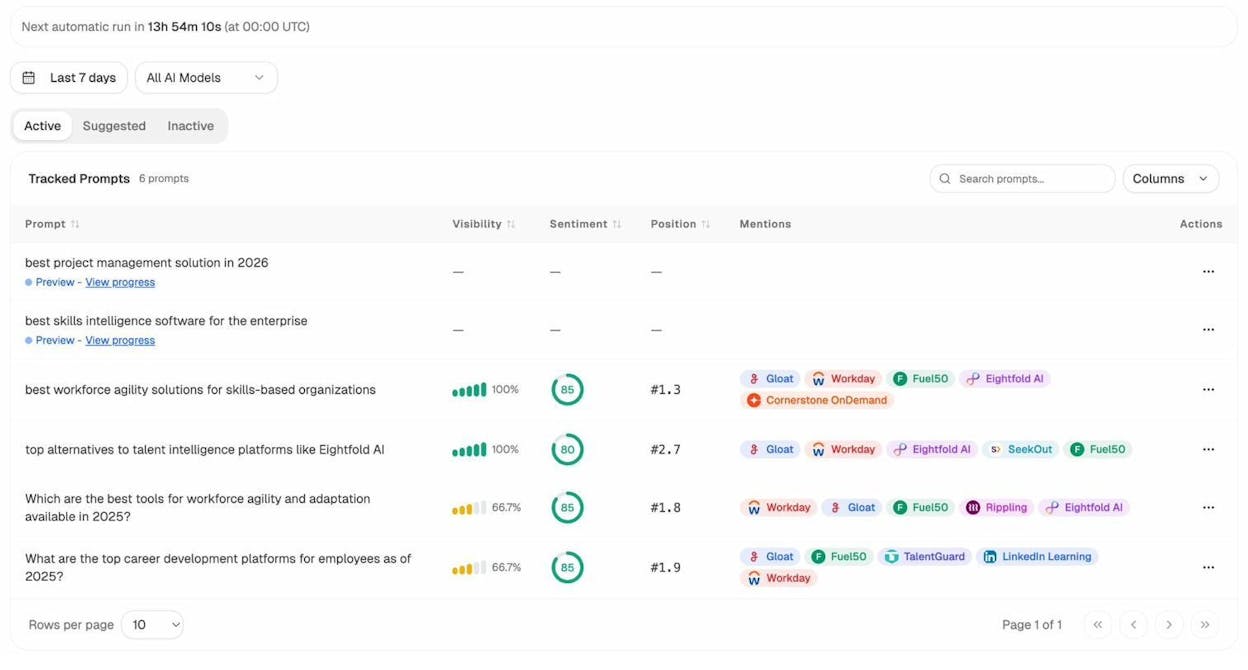
1. Which prompts your audience runs. These are the questions buyers actually type, in their own words. Inside Analyze AI, the Prompts module tracks how often your brand and your competitors get cited for each prompt across every major AI engine.
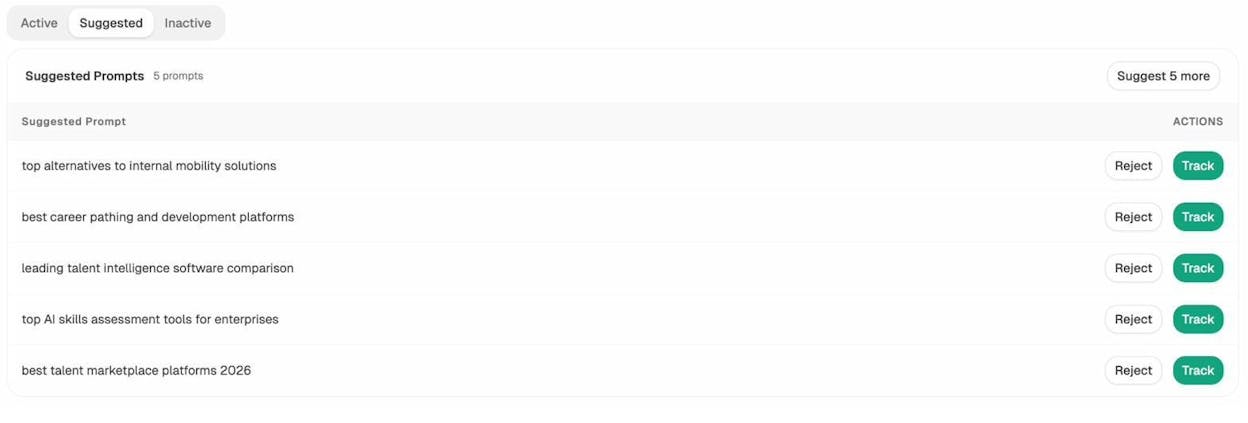
You don’t have to start from scratch. Analyze AI suggests new prompts based on your industry and competitors, so you can build a tracking list in minutes.
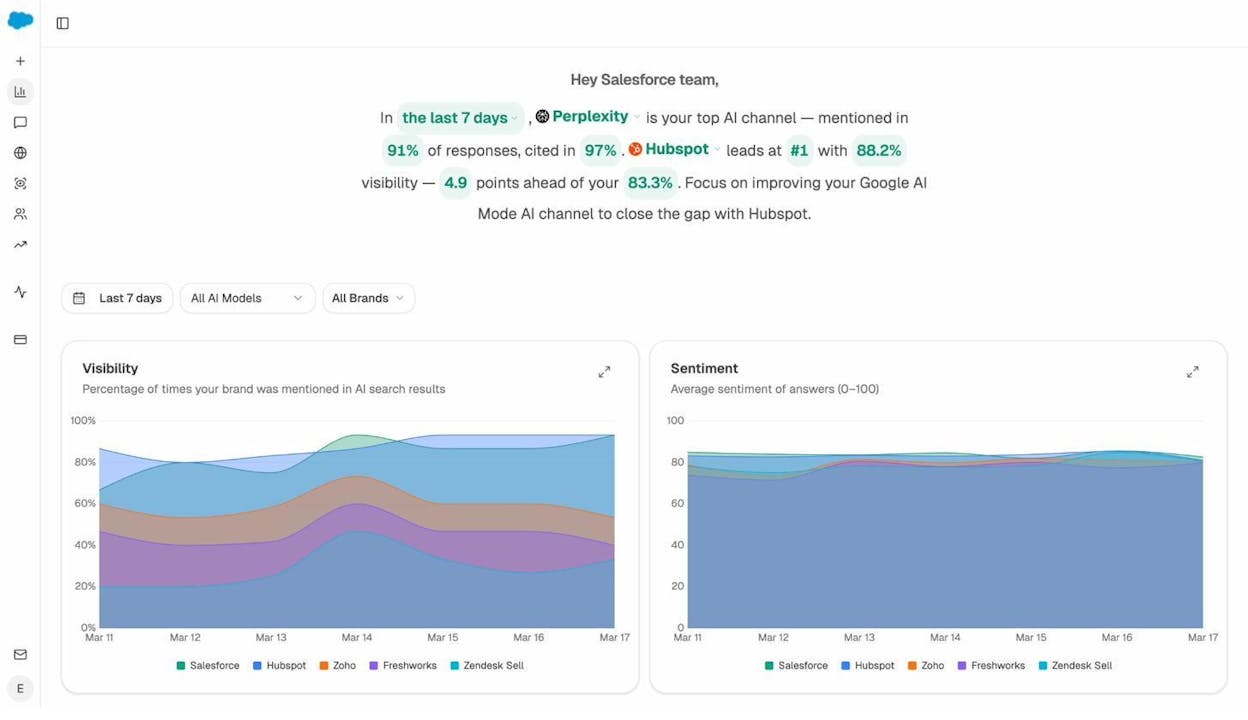
2. How often you get cited compared to your competitors. Visibility share, sentiment, and average rank position across engines tell you whether you’re winning or losing the share-of-voice battle.
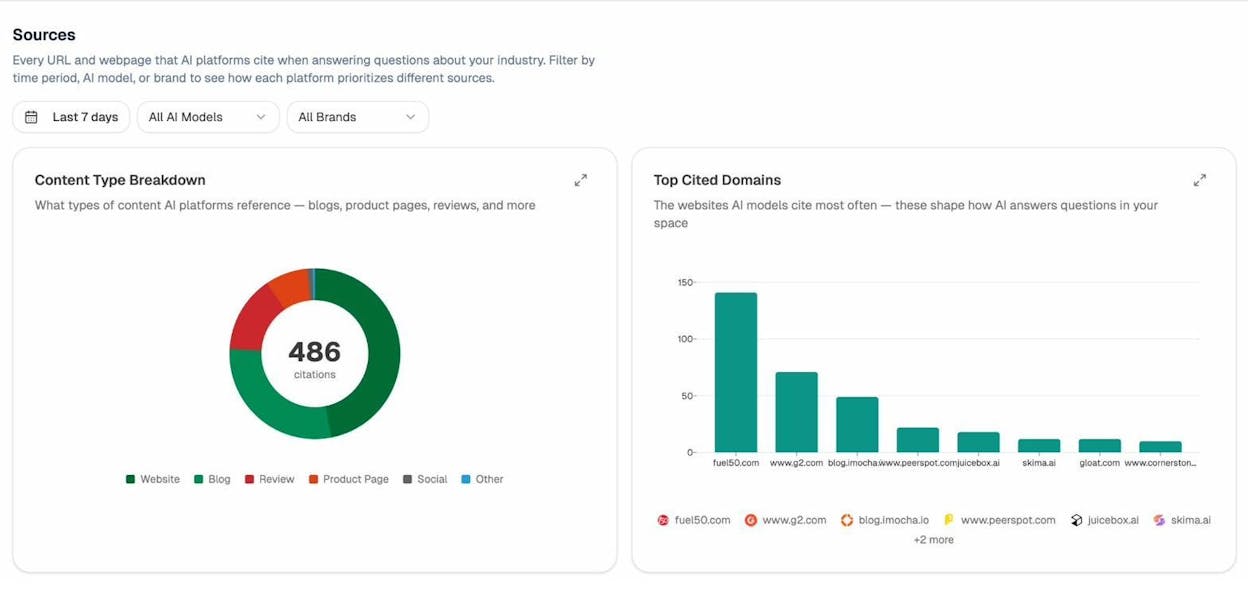
3. Which sources AI engines cite most often in your space. If you know which domains and content formats get cited, you know where to publish, where to pitch, and what to write next.
This is the equivalent of a traditional SERP rank tracker for AI engines. We compare it head to head with other tools in our roundup of the best AI search rank tracking and visibility tools.
How to use SERP analysis to improve your content
The SERP and the AI answer are the two best content briefs you’ll ever read. Both tell you exactly what Google and AI engines have decided is the right answer for a query. Here’s how to mine them.
Step 1: Read the SERP for search intent
Open an incognito window and search your target keyword. Then look at the top 10 results and answer three questions, the 3Cs framework.
-
Content type: Is the top result a blog post, a product page, a comparison, a video, or a tool? Match the format.
-
Content format: Is it a list, a step-by-step guide, an opinion piece, or a definition? Match the structure.
-
Content angle: What’s the hook? “For beginners,” “in 2026,” “free,” or “for SaaS”? Match the angle, then beat it.
![[Screenshot description: Google SERP for “best project management tools” with the top three results highlighted, showing they’re all listicle blog posts with year tags]](https://www.datocms-assets.com/164164/1777647352-blobid15.png?auto=format,compress&w=1248&fit=max)
If the top 10 are all listicles and you’re planning a 500-word definition page, you’ve already lost. Match the dominant format first, then differentiate on depth, recency, or unique data.
Step 2: Read the SERP features for hidden expectations
The features tell you what users actually want. People Also Ask reveals follow-up questions to cover as H3s. Featured Snippets show what Google considers the cleanest definition. Knowledge Panel entries reveal entity associations to mention. “Searches related to” at the bottom shows semantic neighbors of your keyword to work in.
Step 3: Read the AI answer for the next layer
This is where most teams stop short. Once you’ve handled the Google SERP, run your target query through ChatGPT, Perplexity, and Gemini. Read each answer carefully. Ask yourself three questions.
What does each engine cite? If the same five sources appear across all three engines, those are your real competitors for the query, regardless of where they rank in Google. What angle does each engine take? Notice the differences and decide which fits your audience. What’s missing? Gaps are gifts. If no engine mentions pricing, integrations, or a specific use case, that’s your wedge.
Step 4: Find pages that already win in AI search and double down
This is the workflow that pays compound returns. Inside Analyze AI’s AI Traffic Analytics, you can see exactly which pages on your site receive AI-referred sessions, which AI engines sent them, and how those visitors engaged.
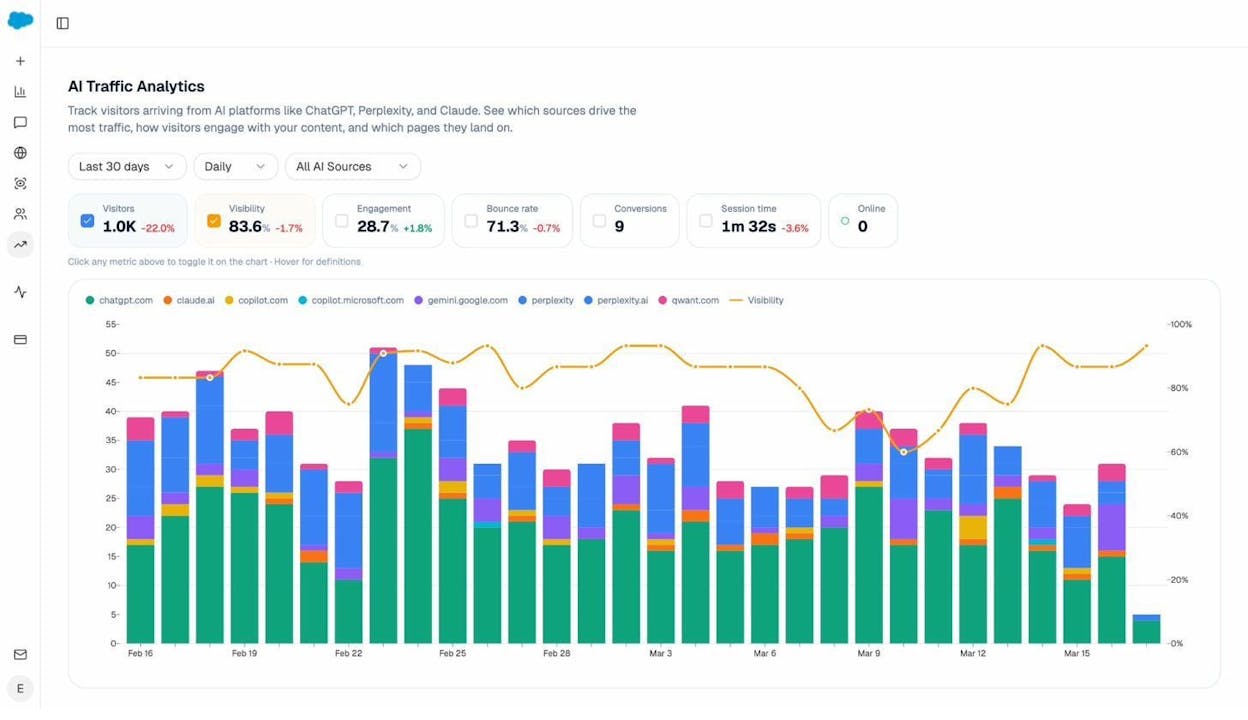
The pages that consistently pull AI traffic are showing you the structure, depth, and format that AI engines prefer for your topics. Reverse-engineer them, then apply the same patterns to other pages in your library.
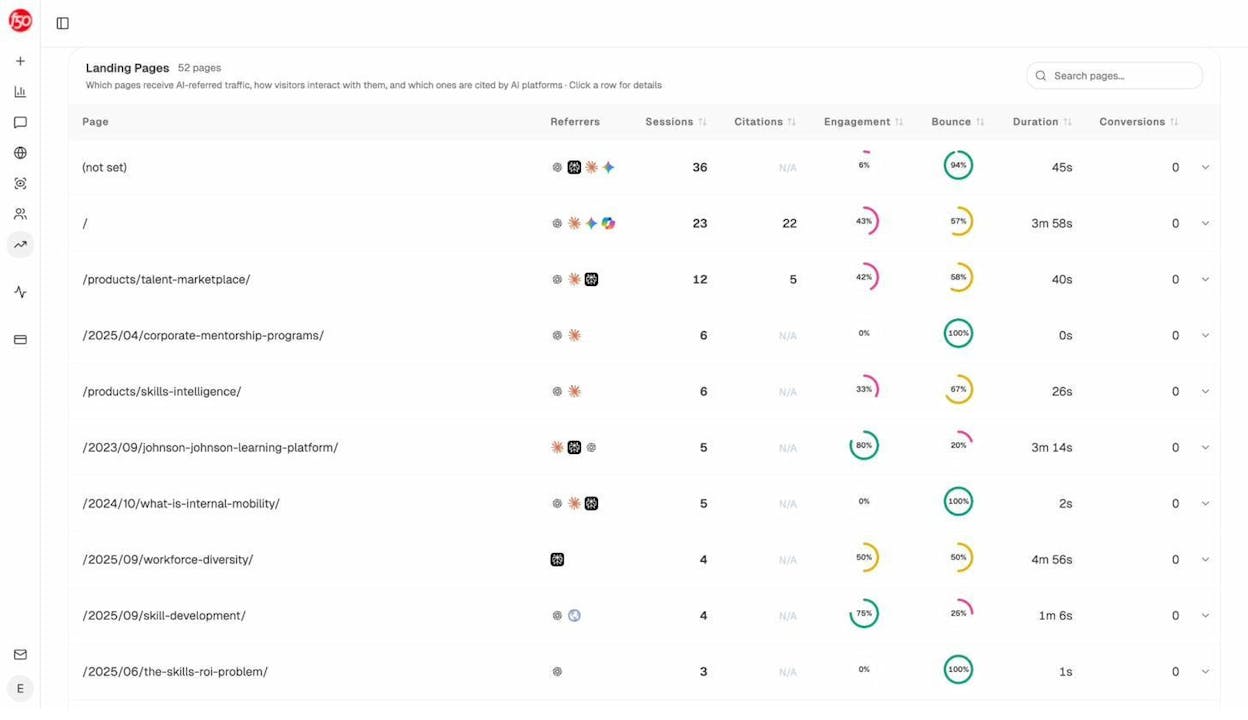
Step 5: Find prompts your competitors win and you don’t
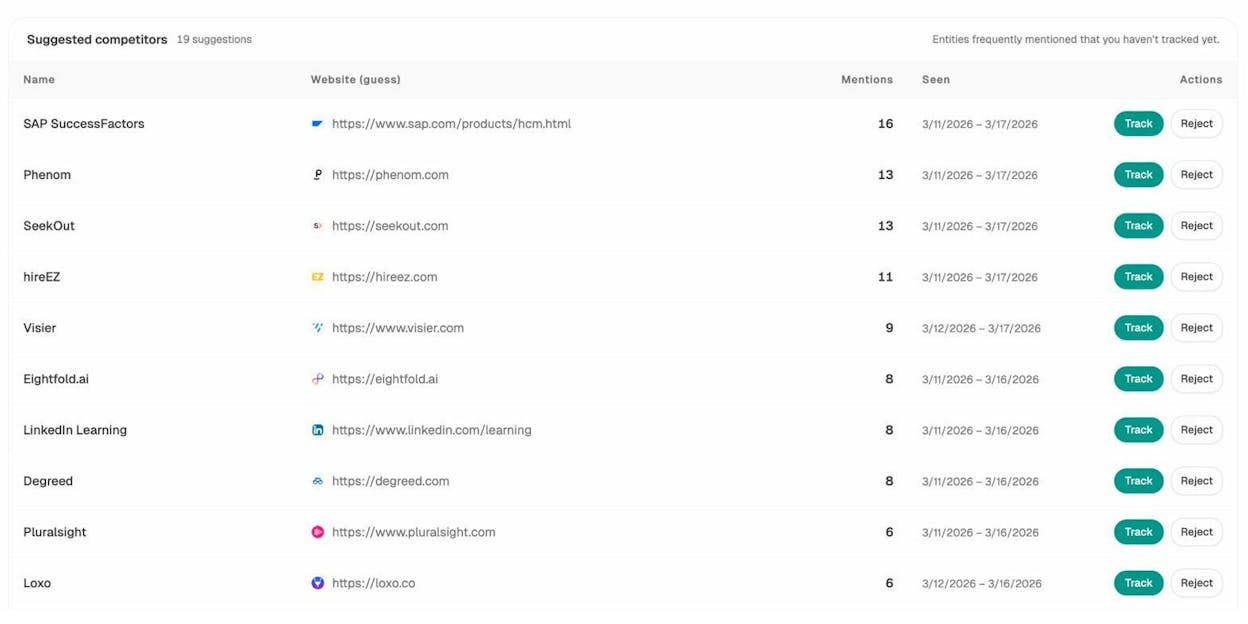
Open the Competitors view. Analyze AI surfaces brands cited in your space that you’re not yet tracking, ranked by mentions across AI engines. These are the rivals shaping the answer your buyers hear.
Then look at the Perception map. It plots your brand and competitors against two axes, narrative strength and AI visibility, so you can see whether you have a story problem, a visibility problem, or both.
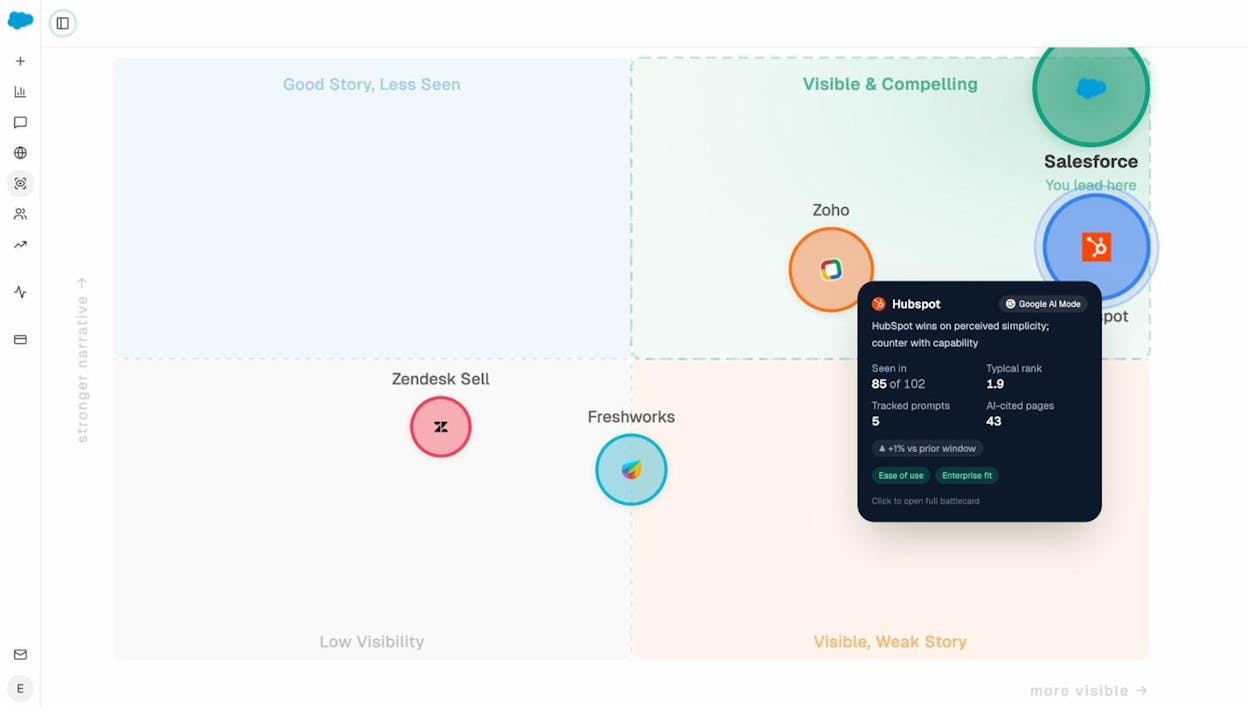
For every competitor that wins prompts you should be winning, the move is the same. Audit the pages they’re cited from, match the depth, sharpen the angle, and publish. Then track whether your visibility on those prompts climbs over the next 30 days.
The bottom line
A SERP in 2026 is bigger than ten blue links. It’s a layered surface of paid ads, organic results, snippets, panels, AI Overviews, and adjacent answers from AI engines that your buyers are quietly using more every month.
The brands that win this decade aren’t the ones who panic about SEO dying or who chase every AI hype cycle. They’re the ones who treat Google SERPs and AI engine answers as two halves of the same job, both rooted in the same fundamentals. Useful content, clear formatting, real authority, and disciplined measurement.
Start with the basics. Track your rankings, study your SERPs, and ship pages that earn the click. Then add the second layer. Track the prompts that matter, monitor your AI citations, and learn from the pages that already win in AI search. Do both, and you’ll compound your visibility no matter where the search box lives next.

Ernest

Ibrahim


