



Summarize this blog post with:


In this article, you’ll learn how to find broken pages with valuable backlinks, vet them for quality, create replacement content that earns the link, and send outreach emails that actually convert. You’ll also learn how to extend broken link building beyond traditional SEO—using it to strengthen your visibility in AI search engines like ChatGPT, Perplexity, and Claude.
Table of Contents
What Is Broken Link Building?
Broken link building is a link building tactic where you find dead pages on other websites—pages that return a 404 error—and reach out to the sites linking to those pages. You offer your own content as a working replacement. The site owner gets a fixed link. You get a backlink.
It works because you’re solving a real problem. Every broken link on someone’s site sends their visitors to a dead end. That hurts user experience, and most site owners want to fix it. When you show up with the problem and the solution, you’ve given them a reason to link to you that most cold outreach emails never provide.
Here’s a simple breakdown of how the process works:
|
Step |
What You Do |
Why It Matters |
|---|---|---|
|
1. Find |
Identify dead pages that have backlinks pointing to them |
More backlinks = more people you can pitch |
|
2. Vet |
Check whether the backlinks are worth pursuing |
Not all links are equal—filter for quality |
|
3. Create |
Build a replacement page that matches (or improves on) the dead page |
Linkers need a reason to swap the link |
|
4. Pitch |
Email the site owners who link to the dead page |
The broken link is your foot in the door |
The reason this tactic has survived for over a decade is that it flips the usual outreach dynamic. Instead of asking a stranger for a favor, you’re offering to help them fix something broken on their site. That changes the conversation entirely.
Why Broken Link Building Still Works (and When It Doesn’t)
Broken link building is the fifth most popular link building tactic according to Aira’s annual State of Link Building report, based on survey data from over 250 digital marketing professionals. That tells you two things: it works often enough that professionals keep using it, and it’s competitive enough that you need to do it well.
The tactic works best when three conditions are met. First, the dead page has backlinks from sites you’d actually want links from—real publications, niche blogs with engaged audiences, or high-authority domains. Second, the reason people linked to the page is something you can replicate. If they linked because of original research or proprietary data you can’t reproduce, the opportunity is weaker. Third, your replacement content genuinely serves the same purpose as the dead page, or improves on it.
It tends to fall flat when people skip the vetting step and blast outreach to every site linking to any 404 page they can find. Low-quality broken pages attract low-quality links, and sending hundreds of generic emails to sites linking to irrelevant dead pages is a waste of time.
There’s also a common misconception that broken link building is easy. It isn’t. You’re still doing outreach, which means you’re still at the mercy of open rates, response rates, and the editorial judgment of strangers. The broken link is an advantage—a reason for contact—but it doesn’t guarantee anything.
Why It Matters for AI Search Visibility
Here’s something most guides on broken link building miss: backlinks don’t just help you rank on Google anymore. They also influence whether AI search engines cite your content.
Analyze AI’s research across 83,670 citations found that pages with strong backlink profiles are cited more often by AI engines like ChatGPT, Perplexity, Claude, and Copilot. This makes sense—AI models draw heavily from sources that traditional search already considers authoritative. A page with 50 quality backlinks is more likely to appear in an AI-generated answer than a page with zero.
That means every backlink you earn through broken link building does double duty. It strengthens your traditional search rankings and increases the likelihood that AI engines reference your content when users ask related questions. This is what we mean when we say SEO isn’t dead—it’s evolving. AI search is an additional organic channel, not a replacement for the one you’ve been building.
How to Do Broken Link Building (Step by Step)
Broken link building follows four steps: find broken pages with backlinks, vet the backlinks for quality, create replacement content, and do outreach. Each step has nuance that separates campaigns that earn links from campaigns that waste time.
Step 1: Find Broken Pages with Backlinks
You can’t do broken link building without finding broken pages first. And you can’t evaluate whether a broken page is worth pursuing without seeing its backlink profile. That means you’ll need an SEO tool like Ahrefs, Semrush, or a free backlink checker to get started.
There are four reliable methods for finding broken link building opportunities. Each has a different starting point and works better in different situations.
a) Find Your Competitors’ Broken Pages
Every website accumulates dead pages over time. Companies rebrand, restructure their blog, sunset old products, or simply forget to redirect URLs after a site migration. When those old pages had backlinks, those links now point to a 404 error—and that’s your opportunity.
Here’s how to find them in Ahrefs:
-
Open Site Explorer and enter a competitor’s domain
-
Navigate to the Best by links report under the Pages section
-
Apply a filter for “404 not found” pages
-
Sort by Referring domains from highest to lowest
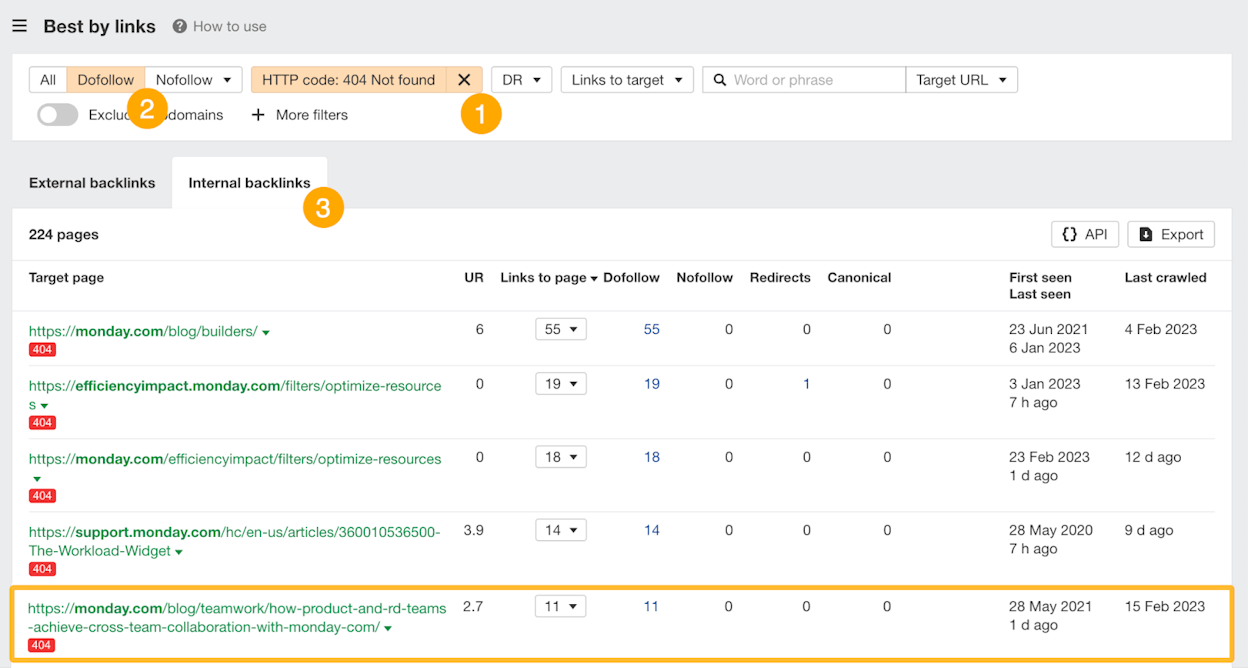
This gives you a list of every dead page on that competitor’s site, ranked by how many unique domains link to it. The pages at the top are your best opportunities because they have the most link prospects to pitch.
Look for dead pages that cover topics relevant to your business. If you run a SaaS company in the project management space and you find a competitor’s dead page about “best practices for remote team collaboration” with 40 referring domains, that’s an opportunity worth pursuing—you could create a strong replacement and pitch all 40 sites.
If one competitor doesn’t surface enough opportunities, repeat this process for five or six competitors. You’ll almost always find something worth pursuing.
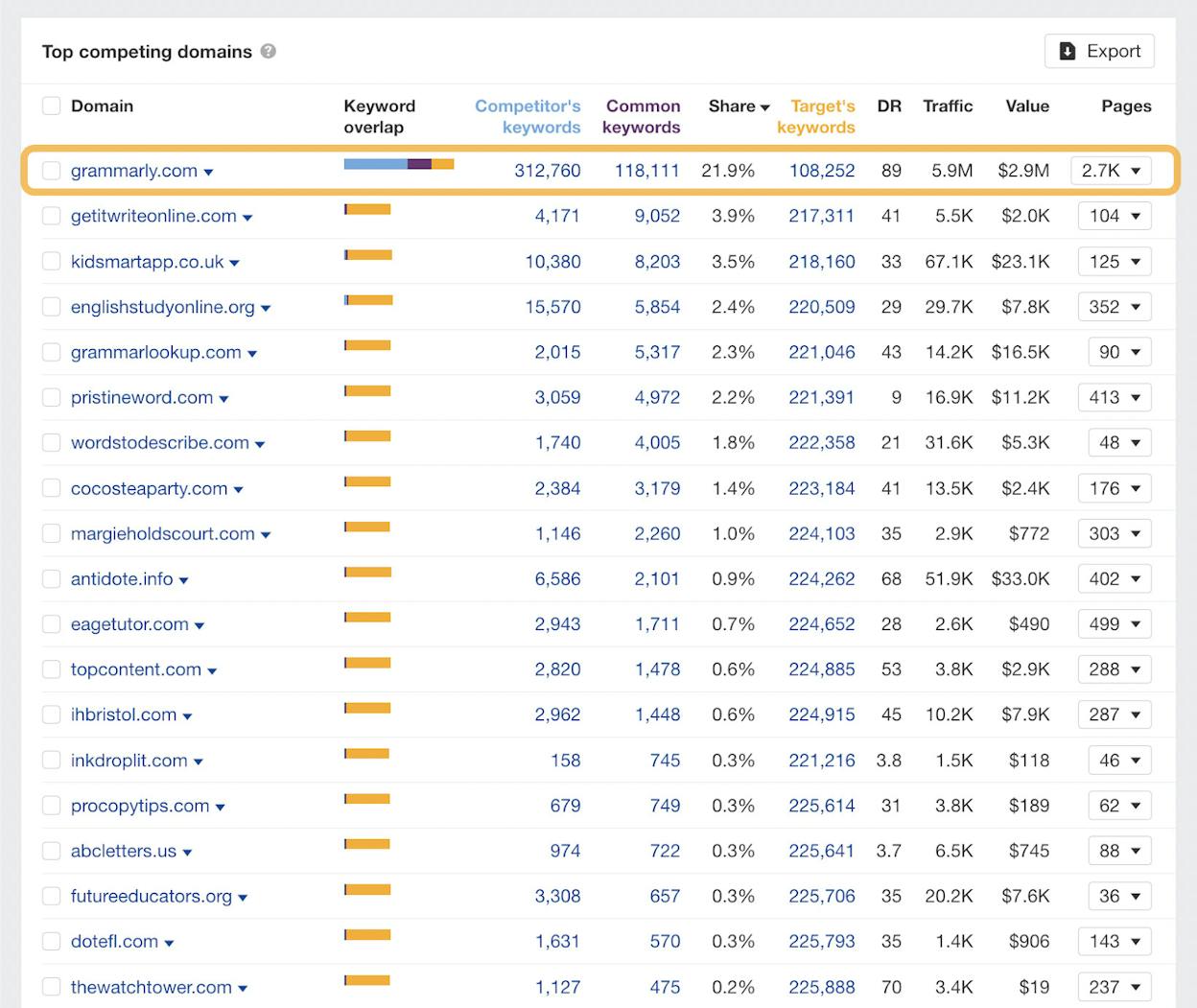
Tip: Not sure who your competitors are? Enter your domain in Site Explorer and check the Competing Domains report. It shows sites that rank for many of the same keywords as you.
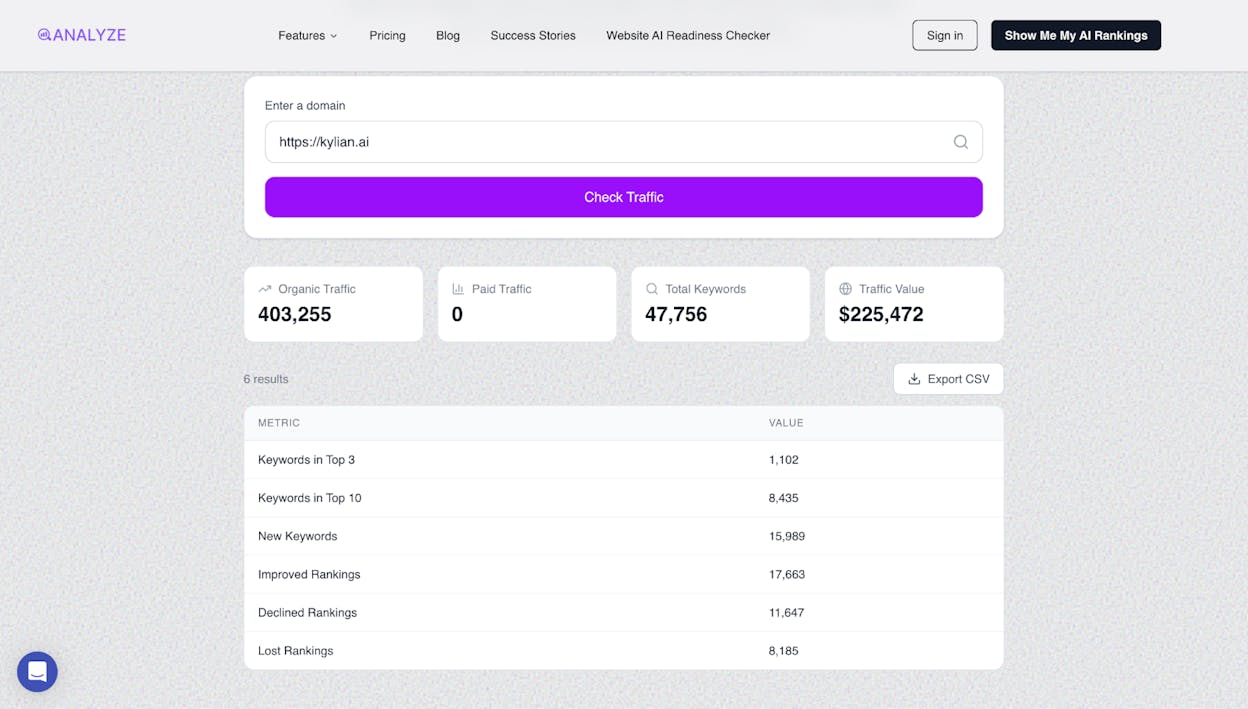
You can also use Analyze AI’s free website traffic checker to quickly gauge how established a competitor is before investing time in analyzing their backlink profile.
b) Find Broken Pages About a Specific Topic
The competitor-based method limits you to dead pages on a handful of websites. But what if you could search the entire web for broken pages about a specific topic? That’s exactly what Ahrefs’ Content Explorer allows.
Here’s the process:
-
Enter a broad topic (e.g., “content marketing” or “link building”)
-
Set the search mode to “In title”
-
Click search
-
Filter for broken pages only (under the “Page status” dropdown)
-
Set a minimum referring domains filter—20 is a good starting point
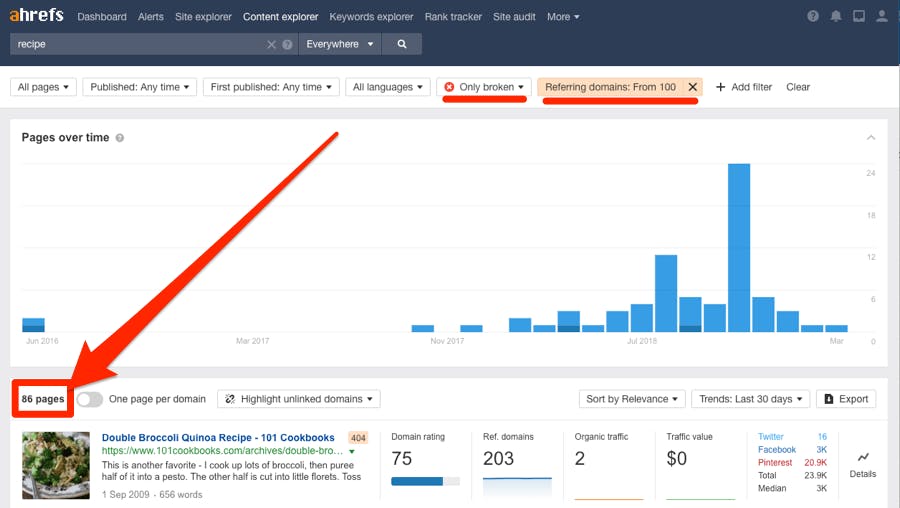
This search pulls up every indexed page about your topic that has died but still has backlinks. It’s often the fastest way to find high-value broken link opportunities because you’re not limited to specific competitors—you’re scanning the entire web.
Tip: Check the “Page traffic” column. If the dead page used to get organic traffic before it broke, that’s a strong signal its backlinks were helping it rank. Those backlinks are likely higher quality than links to a page that never ranked for anything.
c) Find Broken Outgoing Links on Competing Sites
This method flips the perspective. Instead of looking for your competitors’ own broken pages, you look for broken links on their pages—links that point to dead pages on other sites.
Why? Because when a popular site links to a dead page, that dead page likely has links from many other sites too. You’re using your competitor’s website as a prospecting tool.
Here’s how to do it:
-
Open Site Explorer and enter a competitor’s domain
-
Go to the Broken Links report (under Outgoing links)
-
Review the list of broken external links
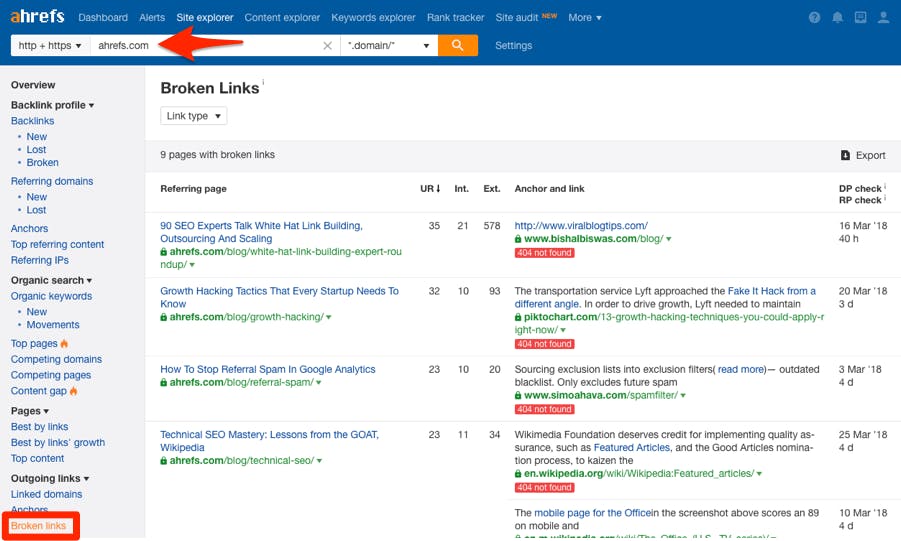
You’ll see every external link on the competitor’s site that points to a 404 page. To figure out which broken pages are most valuable, export the list and paste the broken URLs into Ahrefs’ Batch Analysis tool. Sort by referring domains to find the pages with the most backlink prospects.
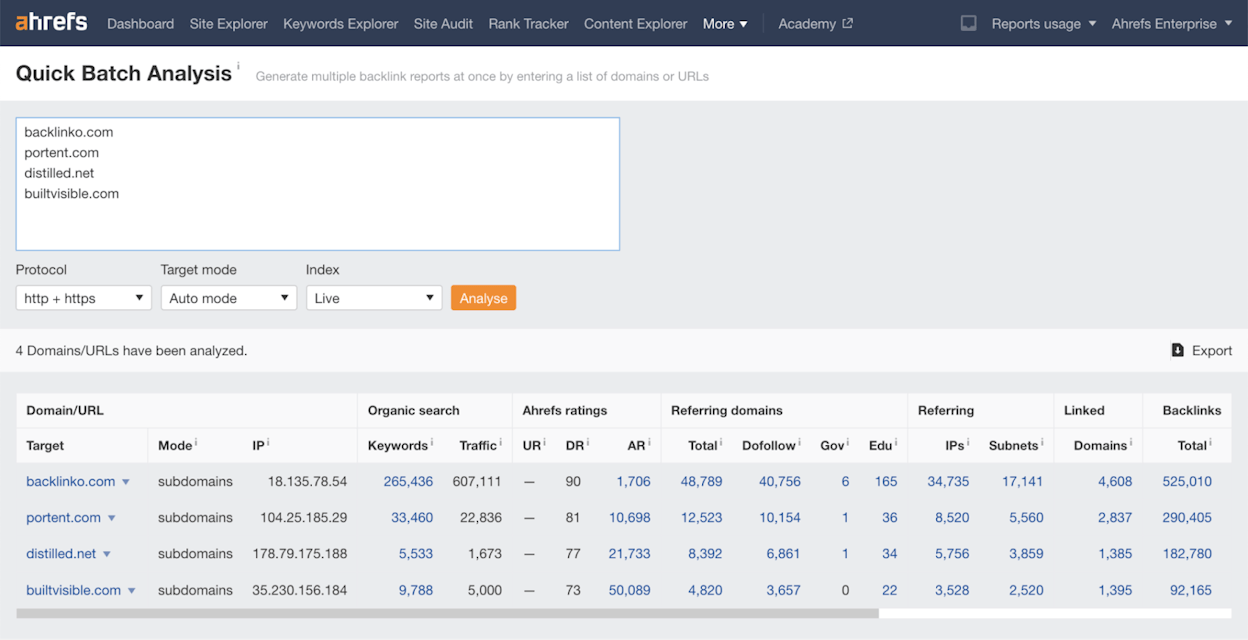
For example, if you find that your competitor links to a dead industry report that has 276 referring domains, that’s 276 sites you could potentially pitch your replacement content to.
d) Find Broken Links on Resource Pages
Resource pages are curated lists of links on a specific topic—like “Best Free SEO Tools” or “Marketing Resources for Startups.” They’re goldmines for broken link building because they tend to link to many external resources, and site owners rarely update them. That means they often contain multiple broken links, each of which may have its own backlink profile.
To find resource pages in your industry, use these Google search operators:
-
KEYWORD intitle:resources inurl:links.html
-
KEYWORD intitle:links inurl:resources.html
-
KEYWORD inurl:resources intitle:resources
For example, searching for link building intitle:resources inurl:resources surfaces pages that curate link building tools and guides.
Once you find a resource page, check it for broken links. You can do this for free with Ahrefs’ SEO Toolbar browser extension:
-
Visit the resource page
-
Click the toolbar icon
-
Go to the “Links” tab
-
Click “Check status”
-
Filter for broken links
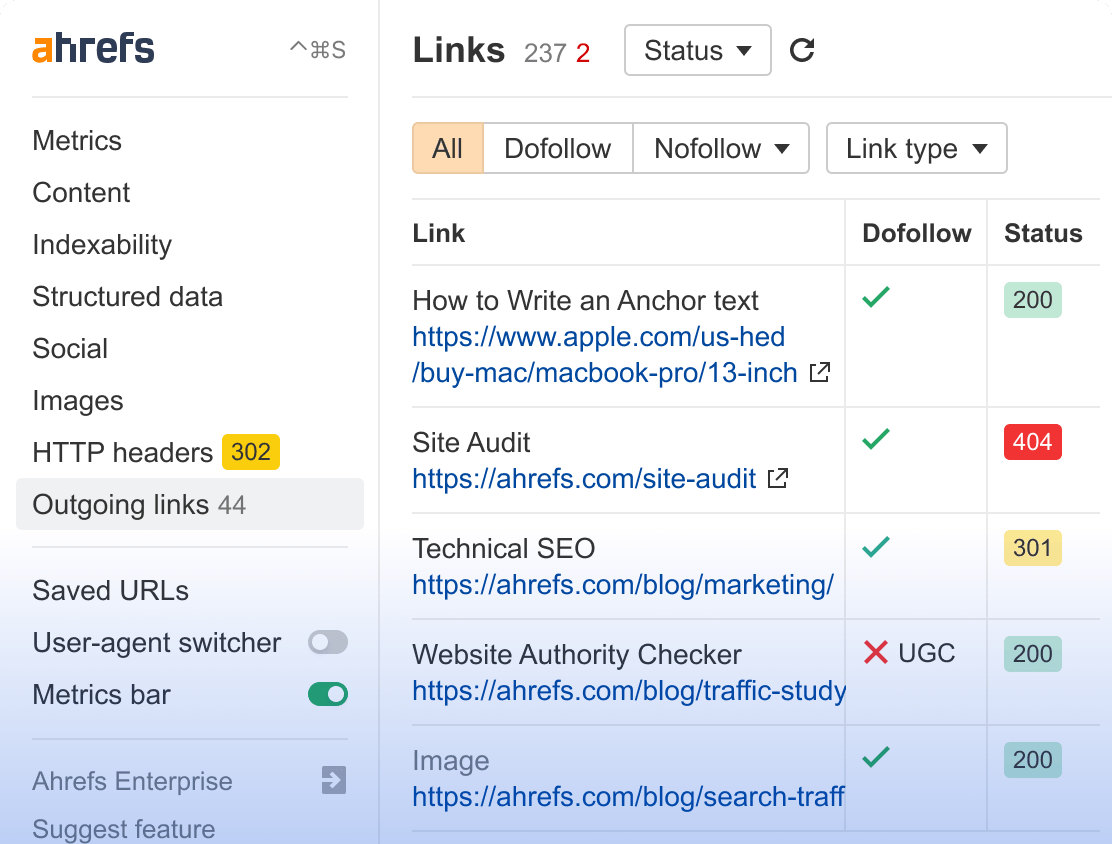
Alternatively, you can use Analyze AI’s free broken link checker to scan any URL for dead links without installing a browser extension.
Export the broken URLs and paste them into Batch Analysis to see which ones have the most referring domains. The ones at the top of that list are your best opportunities.
Step 2: Vet the Backlinks
Most people find a broken page with a decent number of referring domains and immediately start creating replacement content. That’s a mistake for two reasons.
First, referring domain counts can be misleading. A page might have 50 referring domains, but if 45 of them are spammy directories and blog comment sections, those links aren’t worth pursuing. You’d be building content for 5 real prospects—barely enough to justify the effort.
Second, understanding why people linked to the dead page tells you what your replacement content needs to cover. This alignment between content and outreach is what separates campaigns with a 15% conversion rate from campaigns with a 2% conversion rate.
Vetting is a two-part process: check link quality, then check link reasons.
a) Check Link Quality
Open the dead page’s URL in Site Explorer and go to the Backlinks report. Set the view to “One link per domain” so you’re looking at unique linking sites, not duplicate links from the same site.
Now apply filters to isolate the links that matter:
|
Filter |
Why |
|---|---|
|
Dofollow links only |
Excludes nofollow links from directories, forums, and comment sections |
|
Exclude subdomains |
Removes links from blogspot.com, wordpress.com, and similar free hosting platforms |
|
DR 5+ |
Filters out extremely low-authority sites |
|
Domain traffic 20+ |
Removes sites with essentially no real audience |
These aren’t perfect proxies for link quality, but they’re efficient for a quick spot-check. If a broken page had 80 referring domains and drops to 12 after filtering, the opportunity is weaker than it looked. If it holds at 50+, you’re looking at a strong candidate.
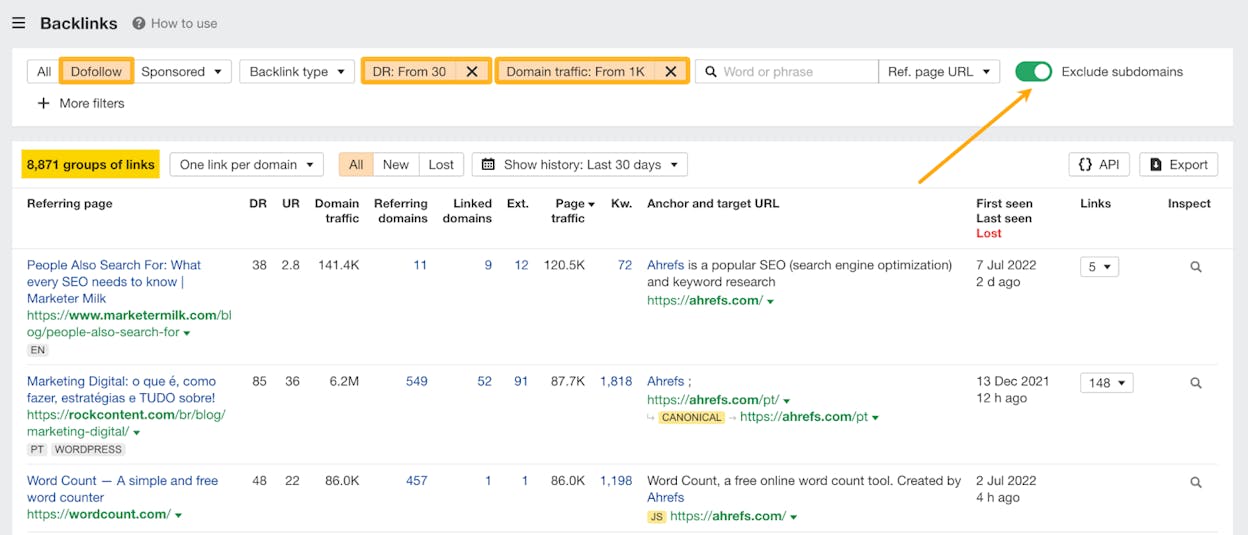
Eyeball the remaining links. Do you recognize any of the domains? Are they real publications or niche blogs with actual audiences? Or are they mostly scraper sites and link farms? This manual review takes five minutes and saves you from chasing dead ends.
b) Check Link Reasons
Now look at why people linked to the dead page. This is the step that most guides skip and most practitioners ignore—but it’s the single biggest lever for improving your outreach conversion rate.
There are two types of link reasons:
General links are where someone references the dead page without a specific reason. The anchor text might say “this article” or “read more here.” You can’t tell what they liked about the page from the link’s context alone.
Deep links are where someone references the dead page for a clear, specific reason. The anchor text or surrounding text says something like “according to this study” or “this guide explains how to calculate X.” You know exactly what they valued about the page.
Deep links are gold. Each one tells you something your replacement content must include for your pitch to make sense. If eight sites link to a dead page because it contained original salary data for content marketers, your replacement page needs salary data—preferably more recent and comprehensive.
To find patterns among deep links, search the Backlinks report’s anchor text for relevant keywords. For example, if the dead page was about calculating net worth, search for words like “calculate,” “formula,” “grow,” or “improve” to see if multiple sites linked for the same reason.
Write down the reasons you find and how many sites link for each reason. Your final notes might look something like this:
|
Link Reason |
Type |
Count |
|---|---|---|
|
Links to the page generally (no clear reason) |
General |
18 |
|
References the net worth calculation formula |
Deep |
7 |
|
References advice on growing net worth |
Deep |
5 |
|
References the free tracking template |
Deep |
3 |
This table becomes the blueprint for both your content and your outreach. The deep link segments each get their own outreach template (more on that in Step 4).
When to walk away: If most backlinks reference original research, proprietary data, or something else you can’t realistically replicate, the opportunity probably isn’t worth pursuing. A dead page whose links are mainly about “this study analyzed 1 million pages” is hard to replace unless you run your own study. Focus your effort on opportunities where the link reasons are things you can match or improve on.
Step 3: Create a Replacement Page
You’ve found a broken page with quality backlinks. You know why people linked to it. Now you need to create a page that serves as a credible replacement—one that fulfills the same purpose, addresses the same needs, and gives you legitimate outreach angles.
This isn’t about copying the dead page. It’s about creating something that makes it easy for linkers to say yes when you ask them to swap the link.
a) Study the Dead Page
Use the Wayback Machine to see how the dead page looked before it went offline. Enter the broken URL and browse archived versions to understand what the page covered, how it was structured, and what made it worth linking to.
Pay attention to the page’s structure (how many sections, what topics it covered), its depth (surface-level overview or detailed guide?), and its format (was it a how-to, a list, a research report?). These details shape your replacement content.
b) Build Your Outline Around Link Reasons
Start with an outline that mirrors the dead page’s core structure, then layer in the specific points people linked to—the deep link reasons from your vetting notes.
For example, if the dead page was about calculating net worth and your vetting revealed that people linked because of the calculation formula, tips for growing net worth, and a free template, your outline should include all three:
-
H1: Net Worth: How to Calculate and Grow It
-
H2: What Is Net Worth?
-
H2: How to Calculate Your Net Worth (Step by Step)
-
H2: Example Calculations
-
H2: How to Track and Improve Your Net Worth
-
H2: Free Net Worth Tracking Template
Each of those deep link reasons now maps to a section in your article and a segment in your outreach campaign. This alignment is what makes the difference between a 3% and a 15% reply rate.
c) Improve on the Original
Most backlinks to any given page are general links—people who recommended the resource without a specific reason. You can’t tailor your content for these linkers because you don’t know what they valued. But you can strengthen your pitch by making your page objectively better than the dead one.
Here are four ways to do that:
Simplify. If the dead page was dense or jargon-heavy, make yours clearer and more accessible. Use plain language. Break complex ideas into steps.
Visualize. Add diagrams, flowcharts, or screenshots that make concepts easier to understand. A visual walkthrough of a process is almost always more useful than a wall of text.
Templatize. Include a downloadable template, spreadsheet, or checklist that lets readers apply the advice immediately. Templates are one of the strongest “extras” you can offer because they save the reader time.
Update. If the dead page referenced outdated statistics, tools, or methods, make sure yours reflects current information. Citing 2026 data when the dead page cited 2019 data is a clear upgrade.
These improvements give you a concrete value proposition for general linkers: “The page you linked to is dead. Here’s a replacement—and here’s why it’s actually better.”
d) Optimize for AI Search Citability
Here’s the additional step that turns traditional broken link building into a dual-channel strategy. Pages that earn backlinks also tend to earn citations from AI search engines—but only if the content is structured in a way that AI models can parse and reference.
When creating your replacement page, follow these practices to make it citable by AI engines:
Lead with direct answers. AI models pull excerpts from pages that answer questions clearly and concisely at the top of each section. Use the BLUF (Bottom Line Up Front) structure: state the key point first, then elaborate.
Use structured data. Tables, numbered lists, and clearly labeled sections make it easier for AI models to extract and cite specific pieces of information. The net worth calculation template, for example, is more likely to be cited if it’s presented as a structured table rather than buried in a paragraph.
Include specific, citable claims. Statements backed by data—“the average American’s net worth is $192,084 according to the Federal Reserve’s 2022 Survey of Consumer Finances”—are exactly the kind of content AI engines pull into answers. Vague generalizations don’t get cited.
Cover the topic comprehensively. Analyze AI’s research shows that pages cited by AI engines tend to be comprehensive, authoritative sources rather than thin or superficial content. Depth matters.
This doesn’t require extra work—it’s a way of writing your replacement content that serves both goals. The same page that earns backlinks from broken link building also earns citations from ChatGPT and Perplexity.
Step 4: Do Outreach
Outreach is where most broken link building campaigns either succeed or stall. You’ve done the hard work of finding a broken page, vetting its links, and creating replacement content. Now you need to convince the people linking to the dead page to swap their link to your page instead.
There are two common approaches: shotgun outreach (sending the same email to everyone) and sniper outreach (sending a unique, fully personalized email to each prospect). Both have problems at scale. Shotgun outreach has low conversion rates and burns bridges. Sniper outreach converts better but takes so long that you can only send a dozen emails per day.
The better approach is a hybrid method built on the link reason segments from Step 2. Instead of one generic email or a fully custom email per prospect, you create a tailored template for each segment—one for each deep link reason, and one for general linkers.
Pitching Deep Linkers
Each segment of deep linkers gets its own template because you know exactly why they linked to the dead page. That gives you a specific, relevant value proposition that generic pitches never have.
Here’s an example template for people who linked to the dead net worth page because it explained how to calculate net worth:
Subject: Quick heads up about a broken link on [Their Site]
Hey [Name],
I was reading your post on [Topic] and noticed you linked to [Dead Page Author]’s guide on calculating net worth. Looks like that page is no longer live—it’s returning a 404.
If you’re still maintaining that post, I recently published a guide that covers a similar step-by-step calculation process. It also includes a free downloadable template to make the math easier.
Here’s where I spotted the broken link on your page:
[Screenshot of their page showing the broken link]
No pressure at all. Just thought it might save your readers a dead-end click.
[Your Name]
And here’s one for people who linked because of the advice on growing net worth:
Subject: Broken link on your [Topic] post
Hey [Name],
Came across your post on [Topic]—nice piece. I noticed you recommended [Dead Page Author]’s advice on growing net worth, but that link seems to be dead now.
If you’d like a working replacement, I published a guide that covers several strategies for increasing net worth over time, including [specific tactic your content covers].
Here’s where the broken link appears:
[Screenshot]
Happy to help either way. Let me know if you have questions.
[Your Name]
Notice the differences. Each template references the specific reason that person linked to the dead page, and the value proposition maps directly to what your content delivers. This level of relevance matters. A generic “I found a broken link on your site” email gets ignored. An email that says “I noticed you recommended advice on growing net worth, and that link is dead—here’s a working resource that covers the same strategies” gives them a reason to act.
Pitching General Linkers
General linkers recommended the dead page without a clear reason, so you can’t customize the value proposition the same way. Instead, lean on the improvements you made to the dead page.
Here’s a template:
Subject: Broken link on [Their Site]
Hey [Name],
I was going through your post on [Topic] and noticed you linked to [Dead Page Author]’s guide on [Topic]. That page looks like it’s been taken down.
If you’re still updating that post, I published a guide on the same topic that might work as a replacement. A few reasons it might be useful for your readers:
-
Includes a step-by-step calculation process with examples
-
Comes with a free downloadable tracking template
-
Updated with 2026 data and current best practices
Here’s where I found the broken link:
[Screenshot]
No worries if not. Just thought I’d flag it.
[Your Name]
The bullet points are your improvements from Step 3c. They give general linkers a reason to choose your page over simply removing the dead link—which is the path of least resistance for most site owners.
Outreach Tips That Improve Conversion Rates
Always include a screenshot of the broken link on their page. It shows you actually visited their site and makes it easy for them to find and fix the link. Cropping a screenshot takes 30 seconds and can meaningfully lift response rates.
Send from a real email address with a real name and a real signature. Generic addresses like “[email protected]” get ignored. If possible, send from the author of the replacement content.
Follow up once. A single follow-up email 5–7 days after your initial pitch is acceptable and often necessary—many people miss the first email. More than one follow-up crosses into pestering territory.
Don’t pitch irrelevant replacements. If the dead page was about pet nutrition and your site is about digital marketing, don’t pitch it. The topic match has to be close enough that swapping the link makes sense for the site owner’s readers.
Track your results. Use a spreadsheet or CRM to log who you pitched, when, whether they responded, and whether the link was swapped. Over time, you’ll see patterns in what works—which templates, which segments, which types of sites—and you can refine your approach.
How to Use AI Search Data to Find Better Broken Link Building Opportunities
Traditional broken link building focuses exclusively on earning backlinks for Google rankings. But if you’re already going through the effort of finding broken pages, creating replacement content, and doing outreach, you should use every available signal to prioritize the highest-impact opportunities.
That’s where AI search data becomes useful. Analyze AI tracks how AI engines like ChatGPT, Perplexity, Claude, Copilot, and Gemini reference and cite content across the web. You can use this data to add an additional prioritization layer to your broken link building campaigns.
Find Content Gaps Where Competitors Win in AI Search
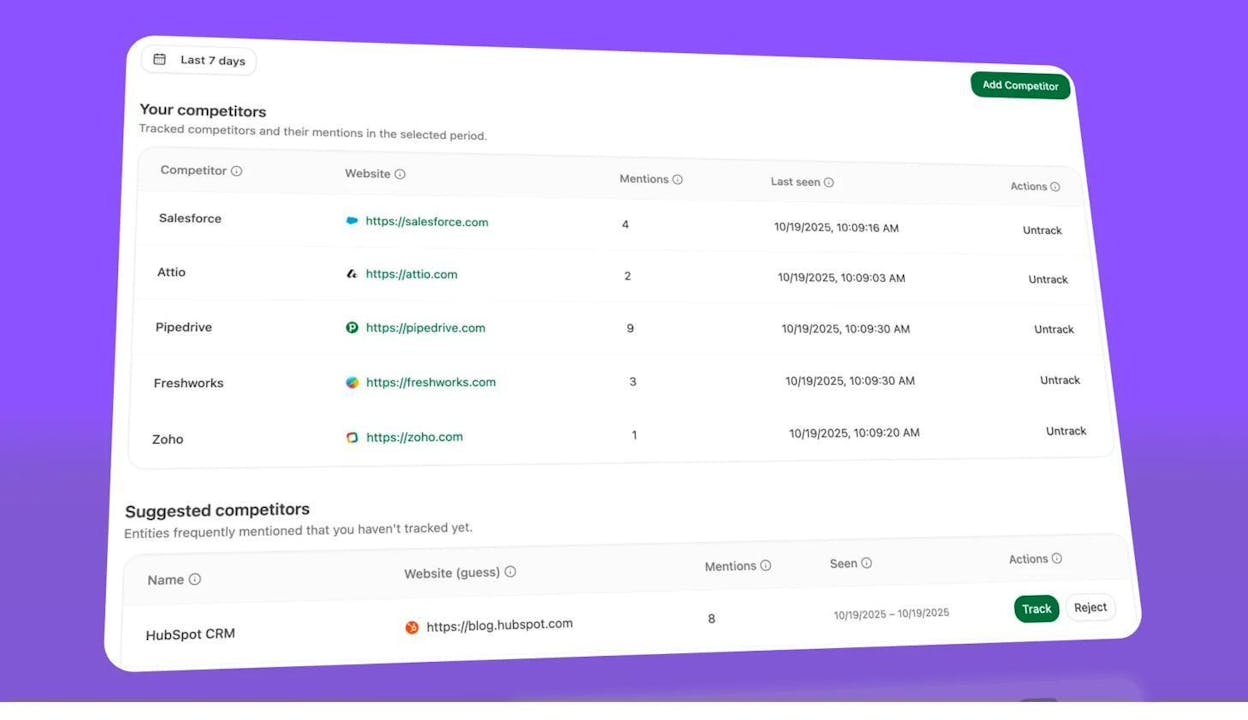
Analyze AI’s Opportunities feature shows prompts where your competitors are mentioned by AI engines and you aren’t. This is relevant to broken link building because it tells you which topics are high-value for AI visibility—not just traditional search.
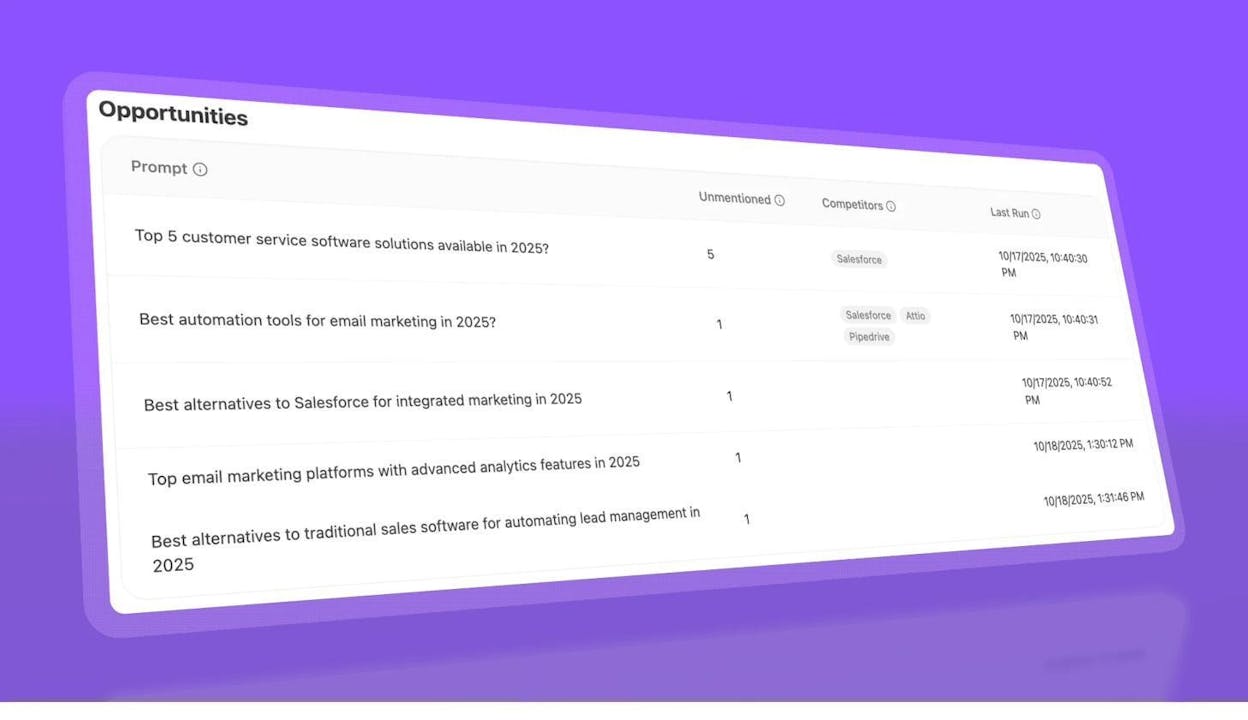
If you find a broken page about a topic where your competitors already dominate AI answers, that’s a priority opportunity. The replacement content you create won’t just earn backlinks—it will position you to compete in AI-generated answers for that topic.
For example, if Analyze AI shows that Salesforce is mentioned in 5 out of 5 AI answers about “best customer service software” and you’re absent from all of them, and you also find a broken competitor page about customer service tools with 30+ referring domains—that’s a double opportunity worth prioritizing.
Check Which Competitor Pages AI Engines Cite
Analyze AI’s Citation Analytics shows which URLs AI engines reference when answering prompts in your topic area. If a competitor URL that gets cited frequently goes down (or has gone down), that’s a broken link opportunity with AI search implications.
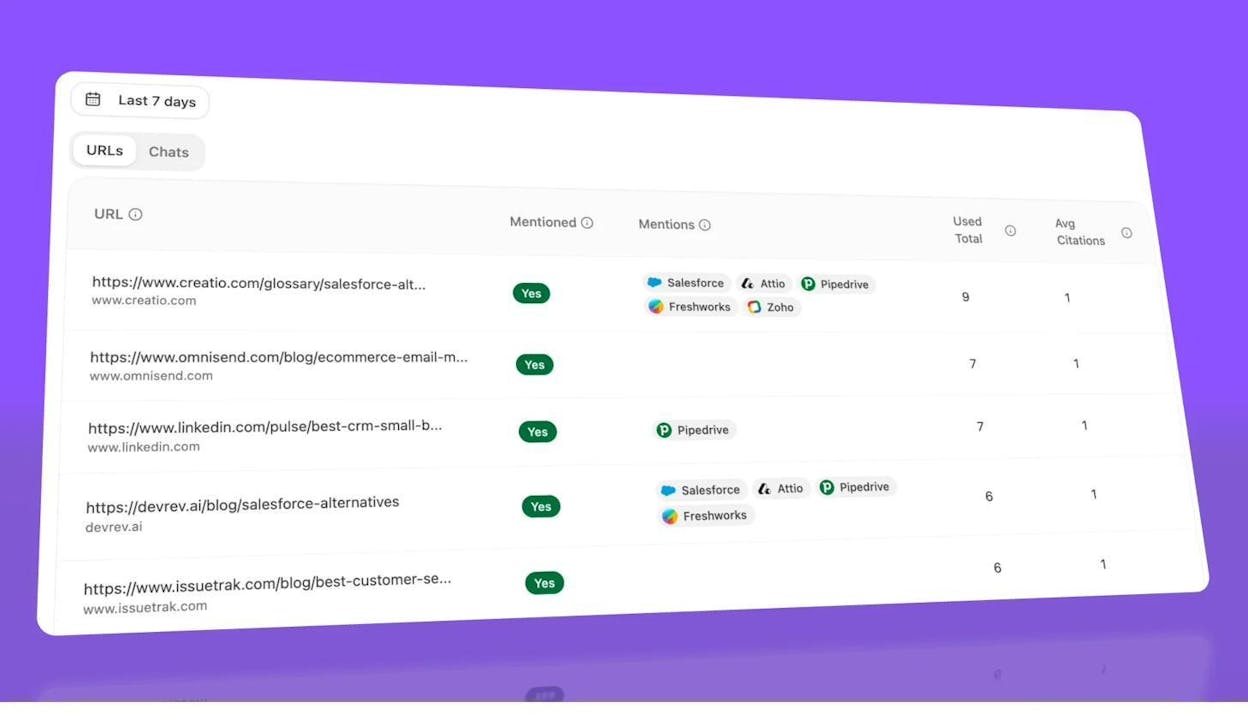
The logic is straightforward: if ChatGPT was citing a page that no longer exists, you can create the replacement that both backlink linkers and AI engines prefer.
Identify Which Content Formats Earn AI Traffic
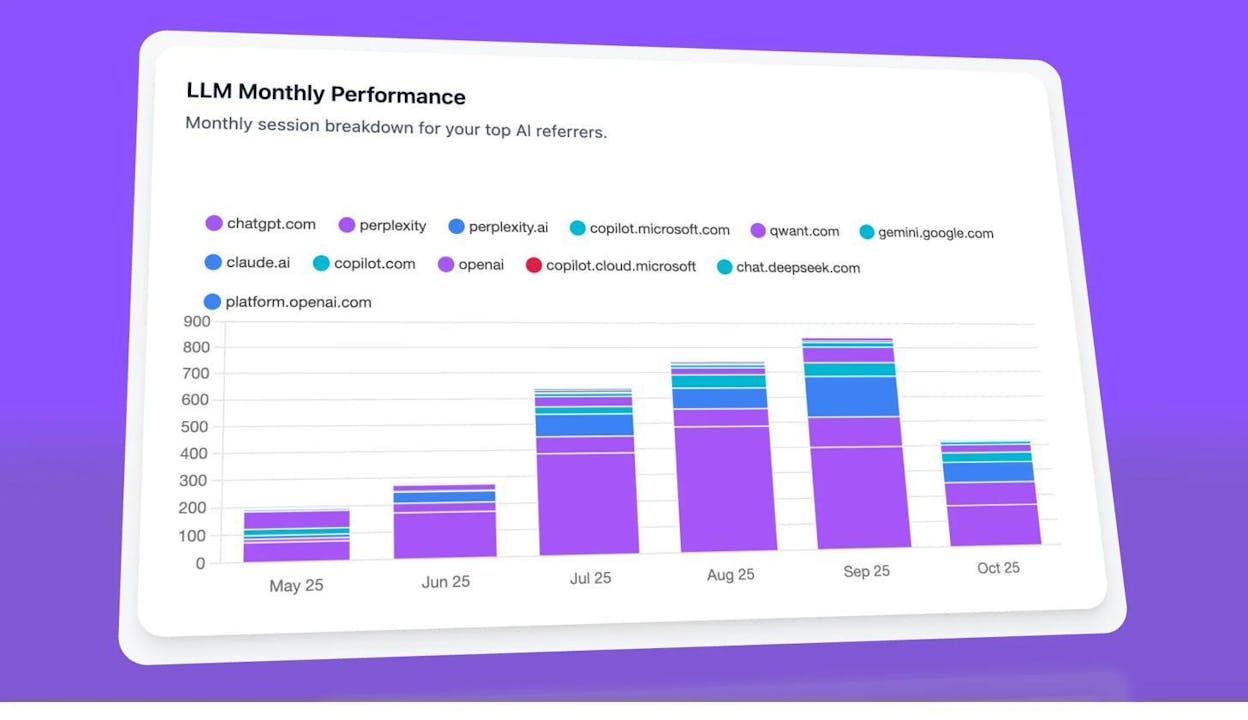
Before you create your replacement page, check what types of content on your own site already earn traffic from AI search engines. Analyze AI’s Landing Pages from AI Search report shows exactly which pages receive visits from AI engines and which engines send the traffic.
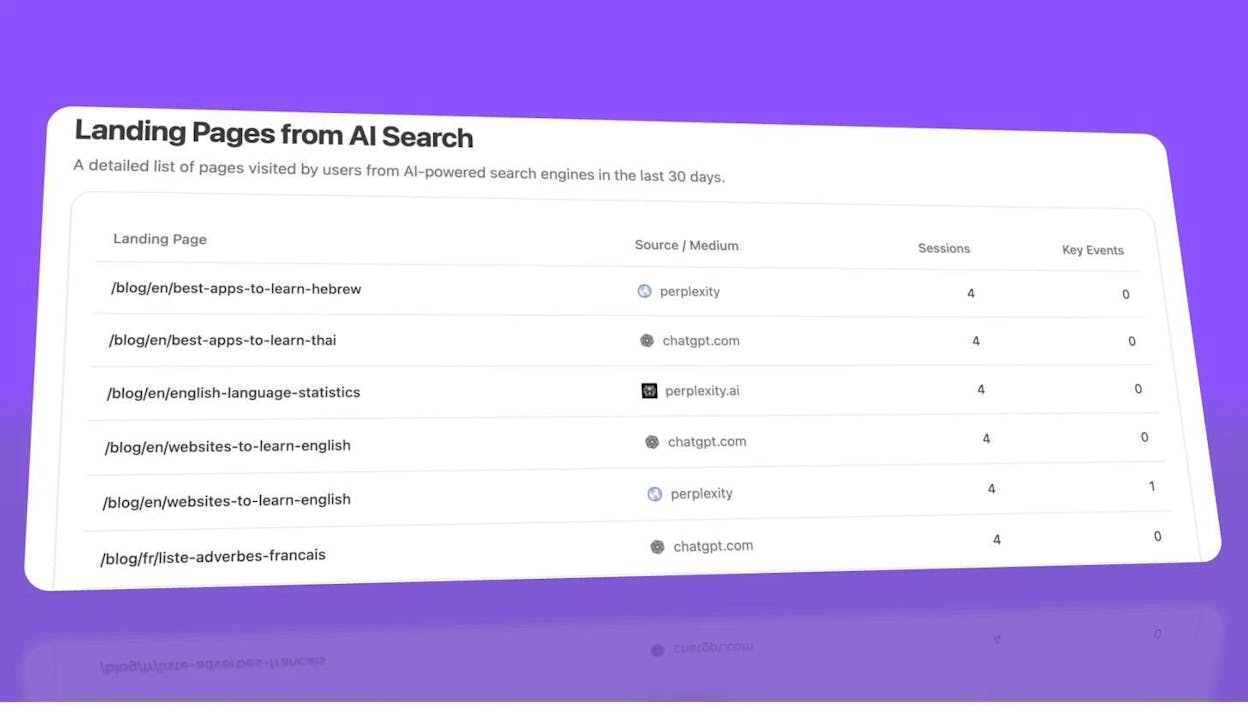
If you notice that list-format pages, comprehensive guides, or pages with structured tables earn more AI referral traffic, use those formats for your replacement content. You’re not guessing—you’re using real data about what AI engines already prefer to cite and send traffic to.
Track Whether Your Broken Link Building Efforts Impact AI Visibility
After you earn backlinks through broken link building, use Analyze AI’s AI Referral Traffic dashboard to track whether your new (or updated) pages start appearing in AI-generated answers and earning AI referral sessions.
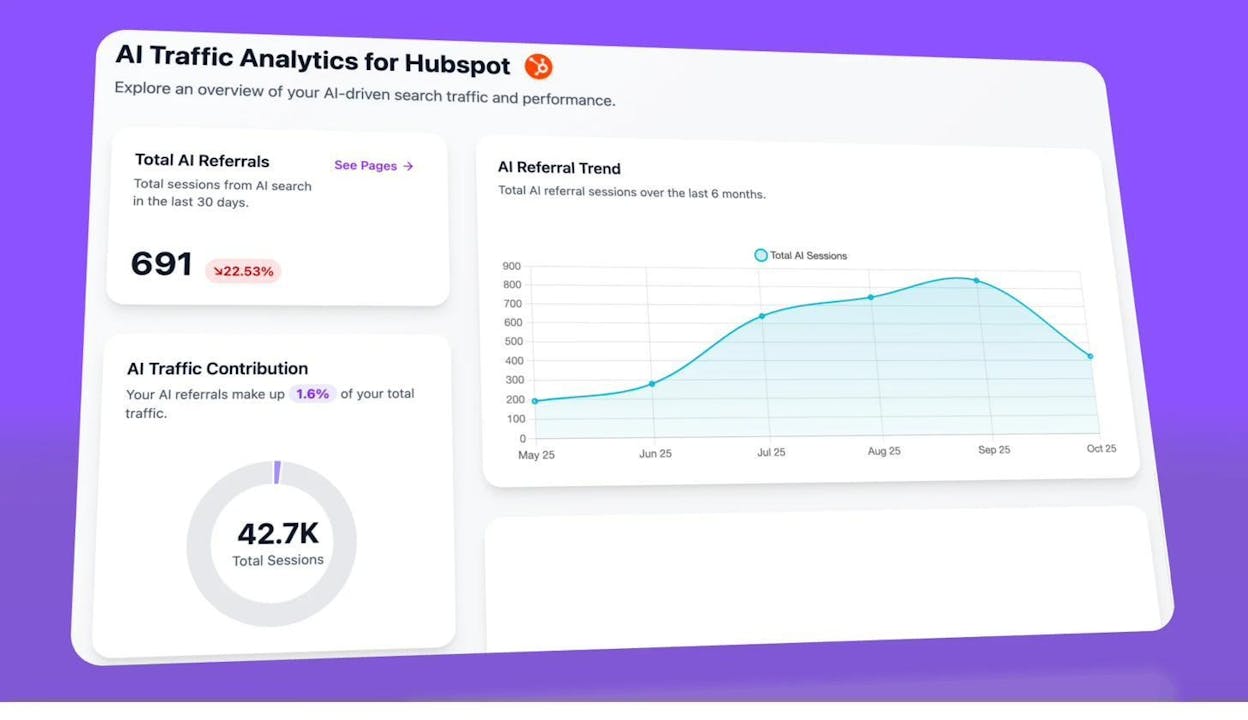
This closes the loop. Instead of measuring broken link building success only by backlinks earned and ranking changes, you’re also measuring whether the content earns visibility in ChatGPT, Perplexity, and other AI engines. That gives you a fuller picture of the ROI from each campaign.
You can also check Analyze AI’s Analytics by Engine report to see which specific AI engines are driving the most sessions to your replacement content.
Common Broken Link Building Mistakes (and How to Avoid Them)
After walking through the full process, here are the mistakes that kill most broken link building campaigns—and how to sidestep them.
Skipping the vetting step. Finding a broken page with 100 referring domains feels like a win, but if 90 of those links are from spam sites, you’ll create content and send outreach for almost no return. Always filter for quality before you invest time in content creation.
Creating a generic replacement page. If the dead page was a detailed, 3,000-word guide with original research and your replacement is a 500-word overview, site owners have no reason to swap the link. Your replacement needs to serve the same purpose at the same level of depth—or better.
Sending identical emails to every prospect. The segmentation approach from Step 4 exists because different people linked for different reasons. A template that references the specific reason someone linked converts significantly better than a one-size-fits-all pitch.
Pitching irrelevant replacements. If the dead page was about Python debugging and your replacement is about JavaScript frameworks, no one is going to swap the link. The topical match needs to be tight.
Ignoring the AI search angle. If you’re creating content and doing outreach anyway, structure your replacement content to be citable by AI engines. The marginal effort is minimal, and the upside is visibility in a growing channel. See our guide to answer engine optimization for more on this.
Not following up. One polite follow-up email 5–7 days after your initial pitch is standard practice. Many site owners miss the first email. Skipping the follow-up means leaving links on the table.
Quitting after one campaign. Broken link building compounds. Each campaign you run teaches you which types of broken pages have the best links, which outreach templates convert highest, and which topics are worth targeting. The third campaign is almost always more efficient than the first.
How to Scale Broken Link Building
Once you’ve run a few campaigns manually and understand the process, you can start looking for ways to do it more efficiently.
Build a prospecting system. Instead of finding one broken page at a time, set up a recurring workflow: every month, analyze 5–10 competitor domains for broken pages, run two or three Content Explorer searches for broken pages in your topics, and check resource pages in your niche. Batch the prospecting work so you always have a pipeline of opportunities.
Create a reusable content library. If you cover a topic that comes up repeatedly—like “how to do keyword research” or “best CRM tools”—a single, comprehensive page can serve as the replacement for multiple broken link campaigns. Every time you find a dead page on that topic, you pitch the same resource. This dramatically reduces the content creation burden.
Use templates wisely. Build a library of outreach templates organized by link reason type. “Referenced a statistic” gets one template. “Recommended the resource generally” gets another. “Referenced a specific how-to section” gets a third. Over time, you refine these templates based on response rates.
Prioritize with data. Use Analyze AI’s Competitor Overview data alongside traditional SEO metrics to decide which opportunities to pursue first. A broken page on a topic where your competitors dominate AI search answers is a higher-priority target than one on a topic where you already have strong visibility.
Track everything. Maintain a spreadsheet with columns for the broken URL, the topic, the number of quality link prospects, the outreach date, the response, and the result. This data tells you which segments of opportunities are worth your time and which aren’t.
A Quick-Reference Checklist for Your Next Campaign
Here’s the full broken link building process condensed into a checklist you can follow for each campaign:
|
Phase |
Action |
Done? |
|---|---|---|
|
Find |
Analyze 5+ competitor domains for 404 pages with backlinks |
☐ |
|
Find |
Search Content Explorer for broken pages on your target topics |
☐ |
|
Find |
Check competitor outgoing links for dead URLs |
☐ |
|
Find |
Scan resource pages in your niche for broken links |
☐ |
|
Vet |
Filter backlinks for quality (dofollow, DR 5+, traffic 20+) |
☐ |
|
Vet |
Identify deep link reasons and count how many sites link for each |
☐ |
|
Vet |
Decide whether the opportunity is worth pursuing |
☐ |
|
Create |
Study the dead page via the Wayback Machine |
☐ |
|
Create |
Build an outline that covers all deep link reasons |
☐ |
|
Create |
Improve on the original (simplify, visualize, templatize, update) |
☐ |
|
Create |
Structure content for AI citability (BLUF, structured data, specific claims) |
☐ |
|
Pitch |
Create segment-specific outreach templates for each deep link reason |
☐ |
|
Pitch |
Create a general linker template highlighting your improvements |
☐ |
|
Pitch |
Include a screenshot of the broken link on each prospect’s page |
☐ |
|
Pitch |
Send initial outreach |
☐ |
|
Pitch |
Follow up once after 5–7 days |
☐ |
|
Measure |
Track backlinks earned in your SEO tool |
☐ |
|
Measure |
Track AI referral traffic to replacement content in Analyze AI |
☐ |
Final Thoughts
Broken link building works because it solves a real problem. Someone has a broken link on their site. You have a working replacement. That exchange gives you a foot in the door that cold outreach alone never provides.
The difference between campaigns that earn links and campaigns that don’t comes down to how well you vet opportunities and how closely your content and outreach align with the reasons people linked to the dead page in the first place. Skip the vetting, create a generic replacement, and blast the same email to everyone—and you’ll struggle. Do the segmentation work, create content that addresses specific link reasons, and send tailored pitches—and your conversion rate improves meaningfully.
What most guides won’t tell you is that broken link building is also one of the best ways to build visibility in AI search. Every quality backlink you earn strengthens the authority signals that AI engines use to decide which sources to cite. By structuring your replacement content for AI citability and tracking results with a tool like Analyze AI, you turn a single tactic into a dual-channel growth strategy—earning links for Google and citations for ChatGPT, Perplexity, Claude, and beyond.
The best time to start is now. Pick a competitor, check their broken pages, and see what you find. The opportunities are there. They’ve always been there. The question is whether you’ll do the work to capitalize on them.

Ernest

Ibrahim


![The Only SEO Checklist You Need in 2026 [With Template]](/_next/image?url=https%3A%2F%2Fwww.datocms-assets.com%2F164164%2F1774288228-image7.png&w=3840&q=75)


