



Summarize this blog post with:


In this article, you’ll learn what negative SEO is, why it’s harder to pull off in 2026 than it used to be, and how to detect and shut down each of the eight most common attack types before they touch your rankings or AI search visibility. That includes one threat that didn’t exist five years ago, brand-reputation hijacking inside AI engines like ChatGPT, Perplexity, and Google AI Overviews.
Table of Contents
What is negative SEO?
Negative SEO is when someone uses black-hat tactics to sabotage another website’s rankings. Usually a competitor, sometimes an ex-employee, occasionally a troll with a budget. The intent is to drag your visibility down so theirs can climb.
The practice is unethical, often violates Google’s spam policies, and in some jurisdictions illegal. None of which has stopped people from trying.
The 8 most common negative SEO attacks in 2026
-
Spammy link building
-
Fake link removal requests
-
Content scraping
-
False URL parameters
-
Fake reviews
-
Hacking your site
-
DDoS attacks
-
Brand-reputation hijacking in AI search (the new one)
Does negative SEO actually work in 2026?
Google’s official position is no. Gary Illyes, John Mueller, and most public Googlers have repeated this for nearly a decade. Most of the time, they’re right. Not always.### Penguin 4.0 changed the math
Before 2016, Google’s Penguin algorithm demoted entire sites when it detected link spam. A single attack on one URL could tank your whole domain. Then Google released Penguin 4.0, which moved from demoting sites to devaluing the spammy links themselves.
Today, Google tries to ignore obviously spammy backlinks rather than punish you for them. Most automated link-spam attacks fizzle out. But “tries to ignore” is not “always ignores.” Sophisticated attacks, or sites already on shaky ground, can still tip into penalty territory.
What’s different in 2026: AI search adds a second target
Five years ago, an attacker only had one channel. Now there are two.
LLMs like ChatGPT, Perplexity, and Gemini are increasingly retrieval-based, pulling from live search results to answer questions. Recent research found a moderate positive correlation between Google rankings and AI Overview citations, and Grow and Convert reported that 67% of their clients’ page-one Google rankings translated to ChatGPT mentions.
If a negative SEO attack hurts your Google rankings, it almost certainly hurts your AI search visibility too. The same defensive posture covers both. Our GEO vs SEO guide breaks down where the two overlap.
How to detect, avoid, and fix each type of attack
1. Spammy link building
Still the most common form of negative SEO and the cheapest to launch. Some sites openly sell 60 million backlinks for around $1,475, which tells you everything about the quality.
Attackers run two playbooks. Volume, blasting tens of thousands of low-quality links at your domain in a short window. Anchor text manipulation, pointing a flood of exact-match keyword anchors at one ranking page so the anchor ratio looks unnatural. Either way, the goal is to trigger a spam penalty.
How to detect a link spam attack
Method 1. Set up backlink alerts. Most backlink tools let you create alerts for new and lost referring domains. If you suddenly see hundreds of new domains where you used to see five, you’re under attack.
![[Screenshot: a backlink alerts setup screen showing email frequency options and a domain input field]](https://www.datocms-assets.com/164164/1777675519-blobid1.png?auto=format,compress&w=1248&fit=max)
Method 2. Check your referring domains graph. Look for unexplained spikes that don’t line up with a launch, viral post, or outreach campaign.
![[Screenshot: a referring domains line chart with a sharp vertical spike around a single date]](https://www.datocms-assets.com/164164/1777675524-blobid2.png?auto=format,compress&w=1248&fit=max)
Method 3. Audit anchor text distribution. Pull your dofollow anchors and look for any single phrase that suddenly accounts for an outsized share of links. If 80% of new links use “buy cheap luxury watches” and you sell accounting software, someone’s messing with you.
![[Screenshot: an anchor text distribution table sorted by referring pages, with one keyword-rich anchor circled]](https://www.datocms-assets.com/164164/1777675524-blobid3.png?auto=format,compress&w=1248&fit=max)
Method 4. Check referring IP subnets. Hundreds of new domains hosted on the same subnet usually means one operator running a private blog network.
![[Screenshot: a referring IPs report showing 800+ referring domains concentrated on a single IP subnet]](https://www.datocms-assets.com/164164/1777675530-blobid4.png?auto=format,compress&w=1248&fit=max)
You can sanity-check ranking impact with our Keyword Rank Checker, or get a quick read on a domain’s authority with our Website Authority Checker before deciding whether to act.
How spam links also hurt your AI visibility
When Google devalues your page, AI engines that rely on Google citations follow suit. You’ll see this in AI traffic and citation counts.
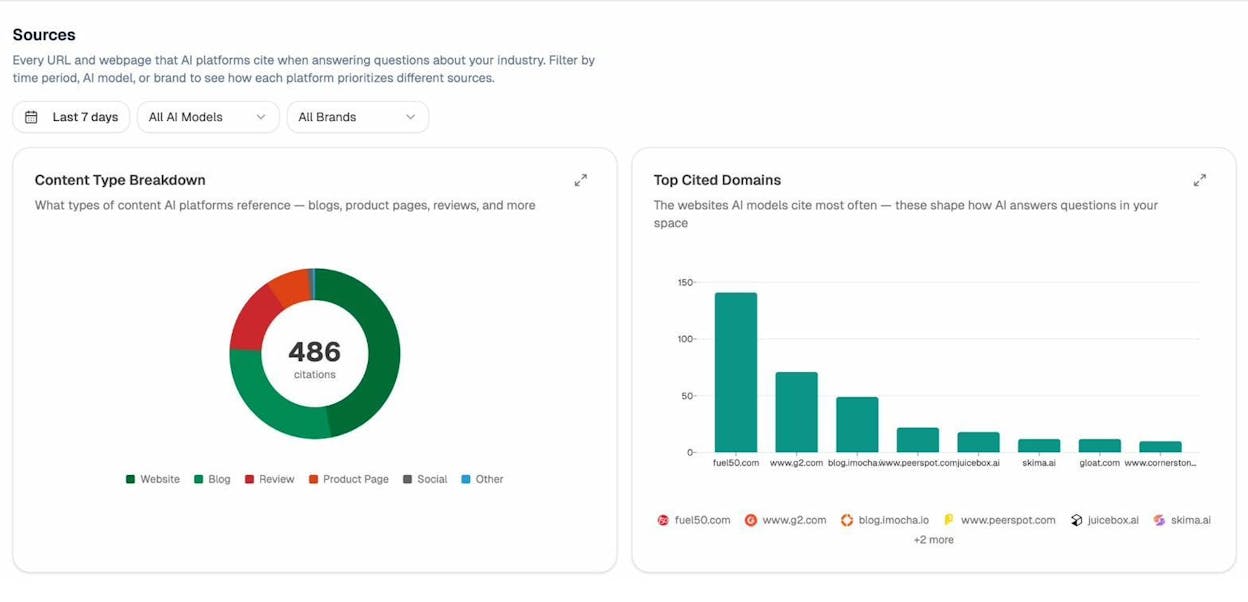
Analyze AI’s Citation Analytics tracks every URL on your site cited by AI engines, alongside which competitors appear in the same answer. A sudden drop in citations to specific URLs, with no content changes on your end, is a strong signal something external is pulling them down.
How to fight back
Disavowing should be a last resort, not a reflex. Google is good at ignoring obvious spam, and disavowing the wrong links can cost you ranking power you actually want.
Disavow only when one of three things is true. A clear traffic drop lines up with the attack. You’re in a hyper-competitive niche with stricter anti-spam algorithms. You have a history of self-built links. If those apply, build your disavow file using whole domains rather than individual URLs, submit through Search Console, and wait four to eight weeks for recrawl.
2. Fake link removal requests
The attacker emails sites that link to you, pretends to be your team, and asks them to remove the link. Most webmasters comply because they don’t double-check who’s emailing. You lose your best backlinks overnight. Rankings drop. By the time you notice, the attacker is on attempt fifty.
How to detect
The same backlink alerts that catch spam will catch removals. Configure a “lost backlinks” alert with the same frequency as your “new backlinks” one.
![[Screenshot: a lost backlinks alert email showing five high-DR removed links with linking domain authority scores]](https://www.datocms-assets.com/164164/1777675536-blobid6.png?auto=format,compress&w=1248&fit=max)
When quality links disappear for no obvious reason, the page is still live, and the linking domain is still ranking, reach out to the webmaster directly. If they reference an email from “your” team that you didn’t send, you’ve found your attack.
How to fight back
Reach out to every site that removed a link. Explain the request didn’t come from you and ask them to reinstate. Most will, especially if your relationship is real. For sites still linking, send a quick heads-up that spoofed removal requests are circulating.
3. Content scraping
Scraping is when someone copies your content word-for-word and republishes it. Most scrapers aren’t malicious, just lazy aggregators looking for free content. The damage is the same.
If a high-authority site scrapes you and Google decides theirs is the canonical version, you lose the ranking. If they file a bogus DMCA claim, your original page gets deindexed entirely. LLMs cite based on relevance and authority, so a high-authority scraper can also pull AI citations away from you.
How to detect
The fastest method is the simplest. Copy a distinctive paragraph from your page, paste it into Google with quotation marks, and see who shows up.
![[Screenshot: a Google SERP showing the same exact paragraph appearing as a featured result on two different domains]](https://www.datocms-assets.com/164164/1777675537-blobid7.png?auto=format,compress&w=1248&fit=max)
Google caps quoted searches at 32 words, so pick a paragraph specific enough to be unique but short enough to fit. For pages you suspect, run a quick check inside Google Search Console using URL Inspection. If the “Google-selected canonical” field points to a URL that isn’t yours, you have a scraping problem.
![[Screenshot: a GSC URL Inspection panel showing an external domain in the "Google-selected canonical" field]](https://www.datocms-assets.com/164164/1777675542-blobid8.png?auto=format,compress&w=1248&fit=max)
For larger libraries, run a duplicate-content scanner across your sitemap monthly. Our Broken Link Checker helps spot scrapers that copied your content but broke your internal links along the way.
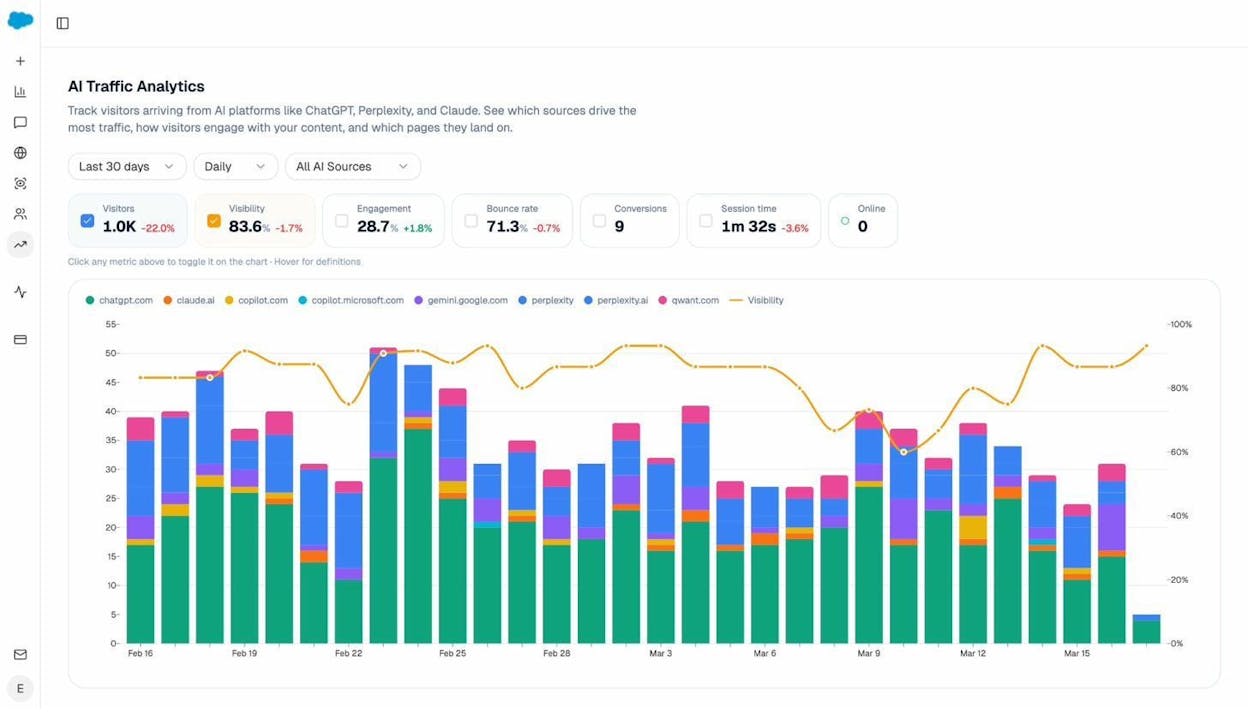
For the AI side, AI Traffic Analytics shows which URLs pull AI traffic. If a page that used to drive AI sessions drops to zero with no content changes, scraping is one of the first hypotheses to test.
How to fight back
Three options, in order of escalation.
Ask for an attribution link. If the scraper is reasonable and the site has decent authority, a link back to your original may be worth more than a takedown.
File a DMCA complaint via Google’s DMCA dashboard when the scraper is profiting and ignoring you. The form is slow but effective. Be specific about which URLs were copied and which paragraphs match.
Strengthen your internal linking. Scraped pages often retain your internal links, signaling to search engines and LLMs which version is the original. Keep your internal link graph dense around your most important pages.
4. False URL parameters
URL parameters are the bits after a question mark, like ?size=small. Attackers link to your URLs with random parameters such as /your-page?ref=spam1, /your-page?ref=spam2, and so on. If your site indexes parameter variations, Google sees thousands of near-duplicate pages, dilutes your equity, and may downgrade the canonical version.
How to detect
Open Google Search Console’s Pages report. Look for a sudden spike in indexed URLs, especially with parameters you don’t use.
![[Screenshot: a GSC Pages report showing the indexed-URL count climbing sharply over a two-week period]](https://www.datocms-assets.com/164164/1777675548-blobid10.png?auto=format,compress&w=1248&fit=max)
How to fight back
The fix is preventive. Add a self-referencing canonical tag to every important page on your site:
<link rel="canonical" href="https://yourdomain.com/your-page/" />
This tells Google to ignore parameter variations and treat the clean URL as the source of truth. It also handles legitimate parameter use like UTM tags without code changes.
For ecommerce, configure your CMS to strip parameters that don’t change content (sort orders, tracking IDs) and keep the ones that do (filters, color variants).
5. Fake reviews
Fake negative reviews don’t show up in your backlink profile. They show up on Google Business Profile, G2, Trustpilot, Yelp, and Capterra. They tank your click-through rate and, increasingly, the way AI engines describe your brand.
In 2021, the worst case was a 1-star rating in your SERP rich snippet. In 2026, LLMs read reviews to form opinions about your product. When someone asks ChatGPT “is [your product] any good?” the answer is shaped by whatever public review content the model can retrieve. A coordinated fake-review campaign can poison that retrieval pool fast.
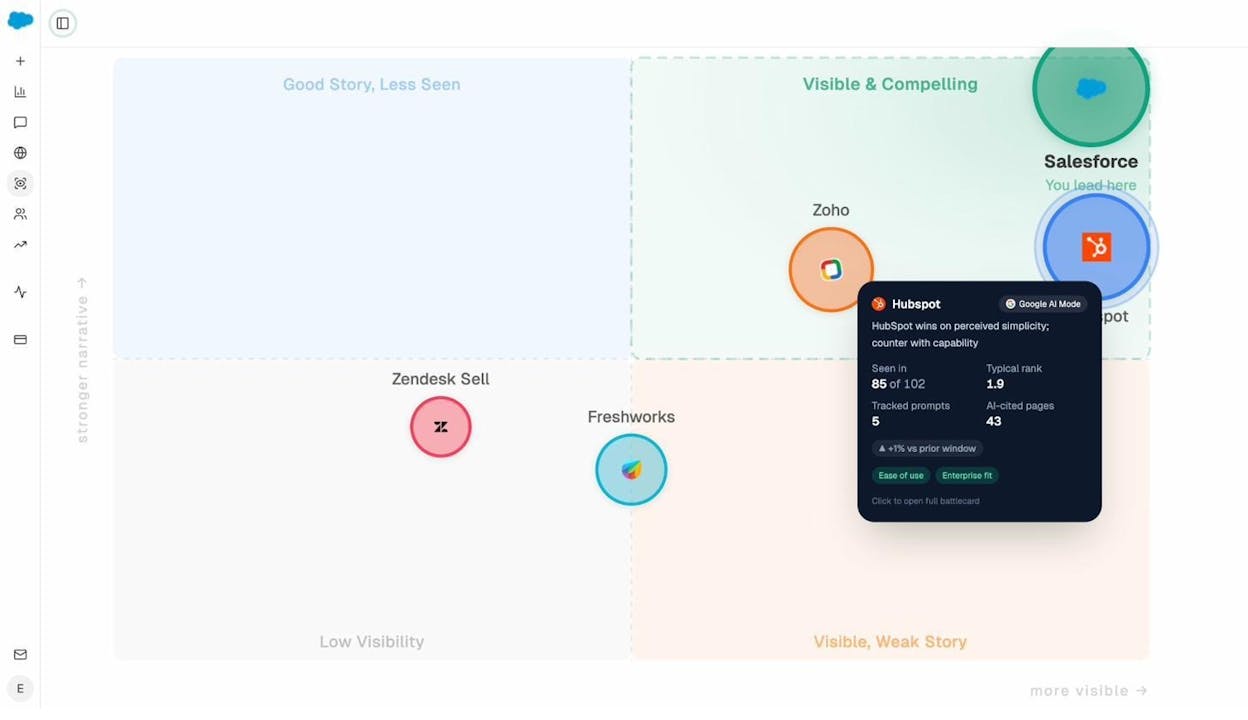
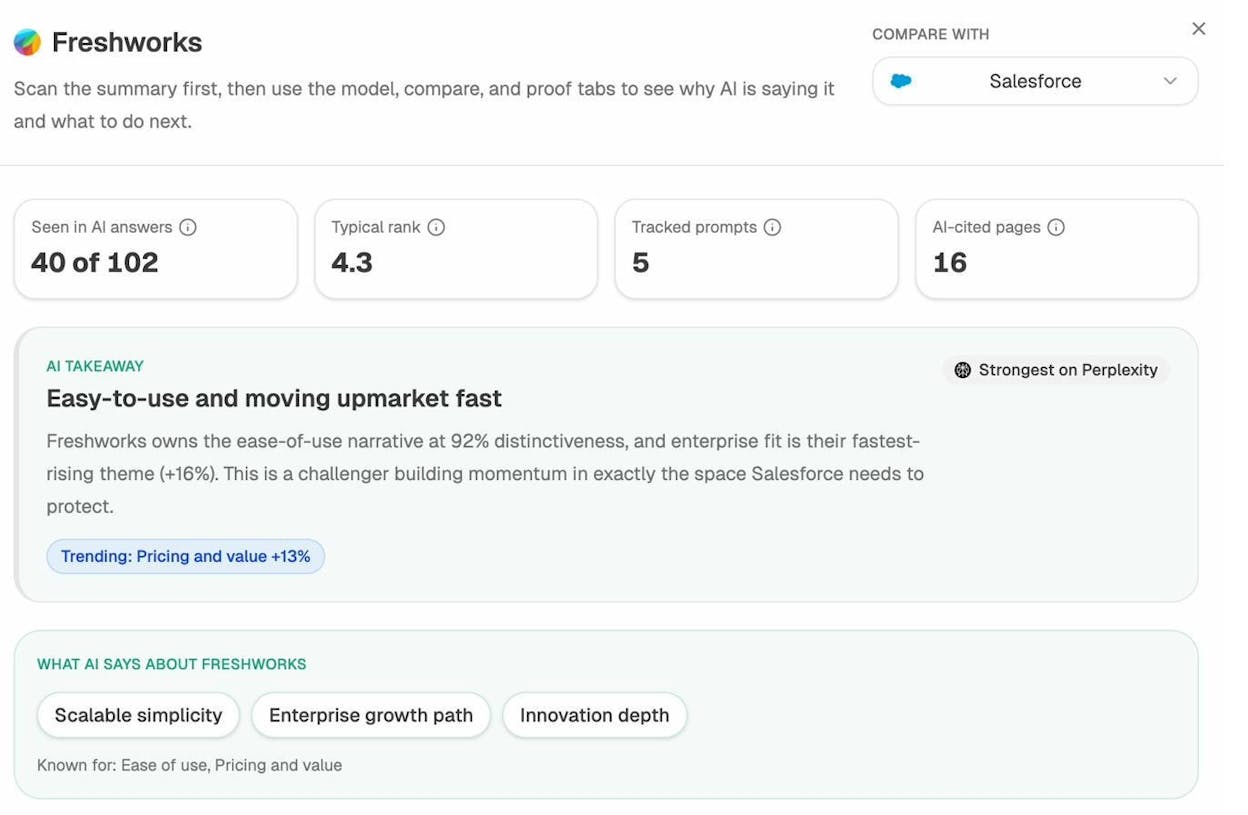
Analyze AI’s Perception Map tracks which sentiment themes AI engines associate with your brand, broken down by engine. If “expensive,” “buggy,” or “poor support” suddenly spike across ChatGPT, Perplexity, and Gemini in the same week, the underlying sources are usually a small set of recent reviews or posts. You can drill into the exact citations driving that sentiment.
How to detect
Run a monthly branded-review search across the major review platforms in your category. For local businesses, also search from outside your usual geo using a VPN or incognito window to catch geo-targeted attacks.
For AI-side detection, set up sentiment monitoring inside one of the AI sentiment analysis tools on the market. You want a weekly view of how your brand is described in AI answers, not just whether you’re mentioned.
How to fight back
Report fake reviews through each platform’s flagging system. Be specific about why a review is fake (impossible facts, identical phrasing across multiple accounts, suspicious account history). Don’t expect immediate takedowns.
The bigger lever is offense. Encourage real customers to leave honest reviews. Volume drowns out manipulation. Ten genuine 4-star reviews do more for your AI sentiment than the takedown of two 1-star ones.
If your category is competitive enough that fake reviews are an ongoing problem, build AI battlecards so your sales team can address the false narratives in conversation while platform-side reporting works.
6. Hacking your site
Hacks cross into criminal territory. The attacker breaks into your CMS or server, injects malicious code or hidden links, and waits for Google to flag your site as compromised.
When Google flags it, your SERP listings show a “this site may be hacked” warning. Click-through rate falls off a cliff. AI engines that respect Google’s safety signals stop citing you too.
How to detect
Open Google Search Console and check the Security Issues tab. A clean site shows no issues detected. A compromised site lists detected problems with sample URLs.
![[Screenshot: a side-by-side of GSC Security Issues, one panel showing "No issues detected" and the other showing flagged URLs with descriptions]](https://www.datocms-assets.com/164164/1777675555-blobid13.png?auto=format,compress&w=1248&fit=max)
Set up alerts for unexpected admin logins, new admin users you didn’t create, and outbound requests to unfamiliar domains. #### How to fight back
Prevention is cheaper than recovery. Enable two-factor authentication on every admin account. Use a password manager and unique passwords. Keep your CMS, plugins, themes, and server packages on automatic security updates. Install a security plugin or web application firewall like Wordfence, Sucuri, or Cloudflare’s free tier.
If you’re already hacked, restore from a clean backup, rotate every credential, and request a Google security review through Search Console. Expect 24 to 72 hours for the warning to clear.### 7. DDoS attacks
A distributed denial-of-service attack floods your server with traffic until legitimate users can’t reach it. Your site goes down or slows to a crawl. Brief 503 errors are normal to Google, but extended downtime causes deindexing. Slow load times feed into Core Web Vitals and can hurt rankings even when the site stays up.
How to detect
If your site is down, you’ll know. The sneakier version is a slow-burn attack that degrades response time. Pair uptime monitoring with Real User Monitoring to catch performance hits that don’t trigger downtime alerts. You can spot-check a domain’s recent traffic trend with our Website Traffic Checker.
How to fight back
Put a CDN in front of your origin. Cloudflare, Fastly, and AWS CloudFront all offer free or cheap tiers with built-in DDoS protection. For larger sites, dedicated mitigation like Cloudflare Magic Transit or AWS Shield Advanced handles attacks measured in terabits per second. The largest recorded attacks now exceed 5 Tbps, so pick infrastructure that can absorb them.
8. Brand-reputation hijacking in AI search
This is the new one, and the only attack here that didn’t exist in 2021. The attacker publishes (or seeds via posts, forum comments, low-quality reviews, or coordinated PR) a body of negative content about your brand, and waits for it to enter the retrieval pool LLMs use.
Once that content is widely cited and lives on indexable sites, AI engines treat it as ground truth. ChatGPT tells prospects you’re overpriced. Perplexity flags concerns about your reliability. Gemini cites a specific outage that never happened.
A real example. Coding bootcamp Codesmith saw revenue drop roughly 80% after a competitor co-founder spent over a year posting negative content on Reddit. Today, those posts dominate Google and AI search results for the brand.
How to detect
Watch your sentiment, not just your visibility. A 50% increase in mentions can be a bad thing if the new mentions are negative.
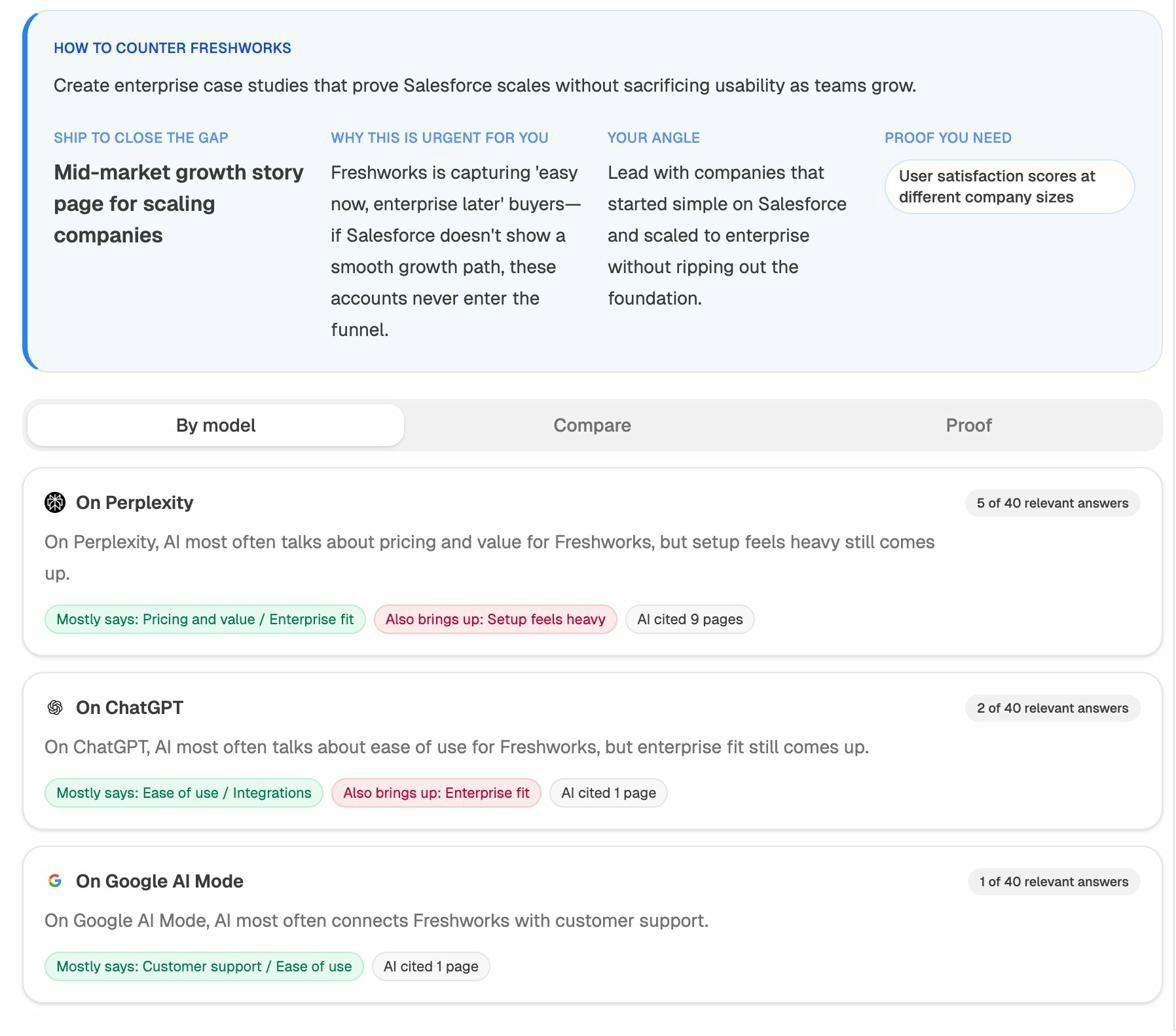
Analyze AI’s AI Sentiment Monitoring shows you, week over week, which sentiment themes your brand gets associated with across each AI engine. If a theme like “poor reliability” spikes across multiple engines in the same week, you can click through to the exact AI answers and source citations driving that change.
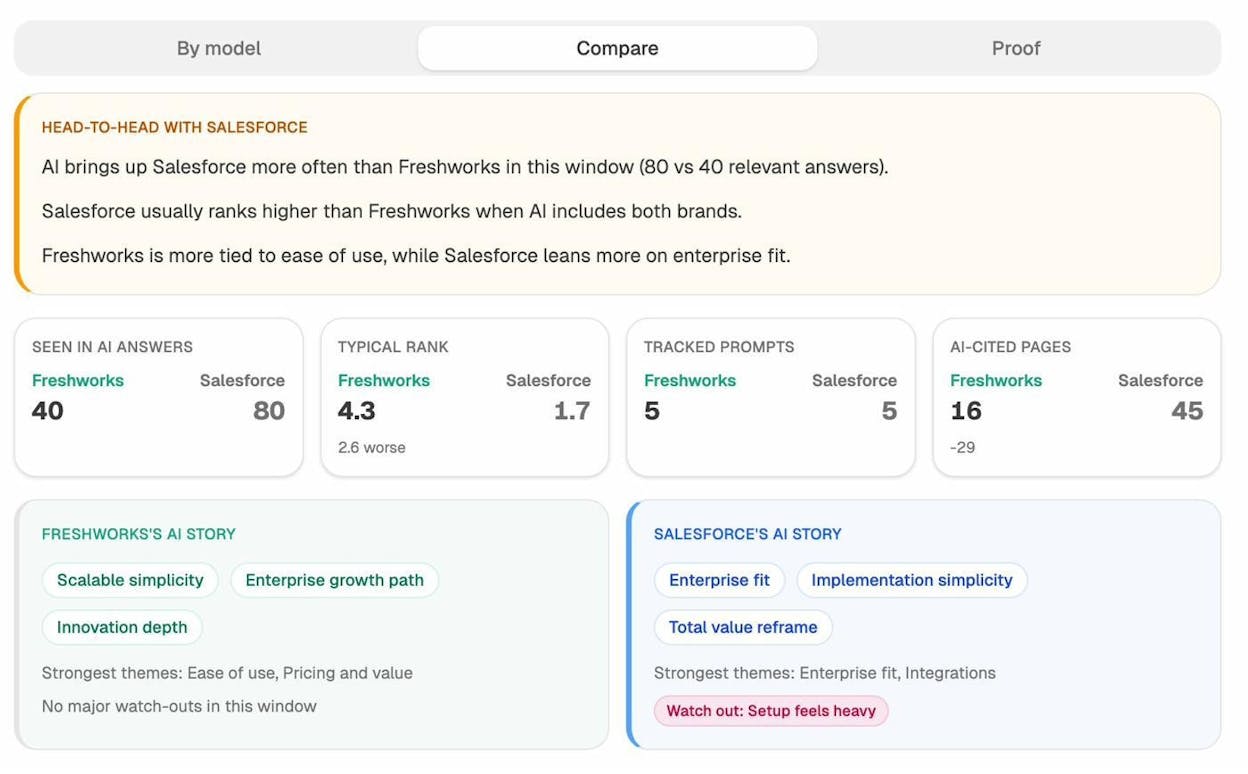
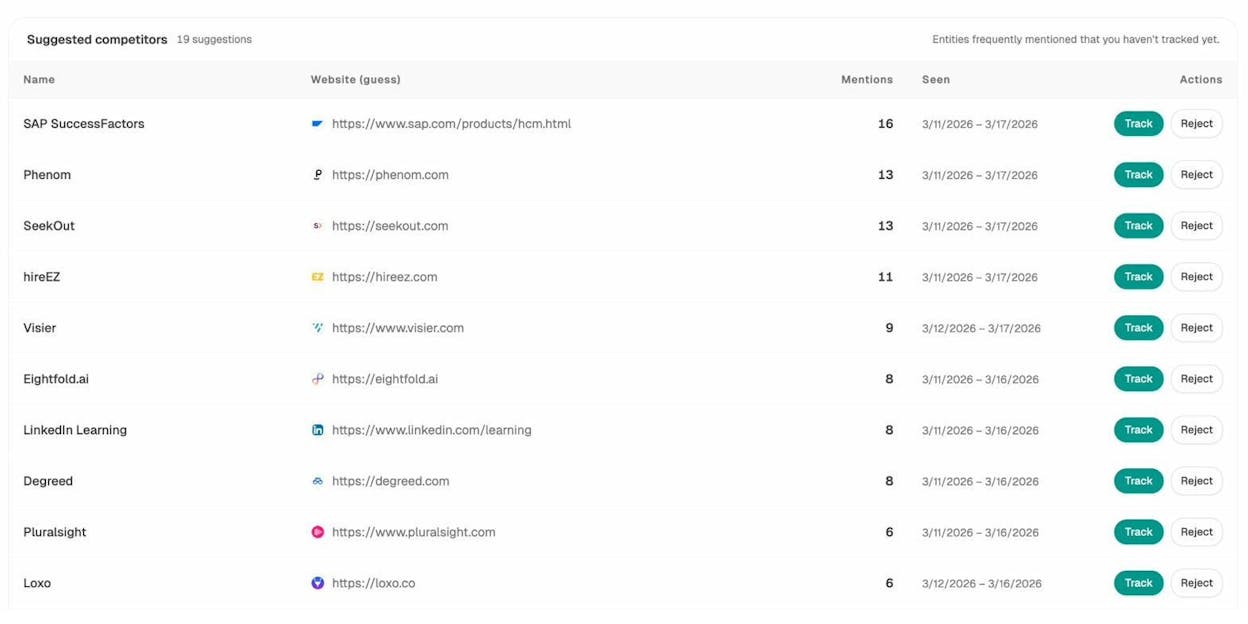
The goal is to catch the narrative shift while it’s still localized to a few sources. You can also pull competitors into the same view to see whether the negative narrative is unique to you or sweeping the category.
How to fight back
Three moves work, in this order.
Identify the source content. Use citation analytics to find the exact pages and posts AI engines pull from. If the source is a low-authority post cited by only one engine, you may be able to drown it out with higher-authority content on the same topic.
Earn counter-content. The most efficient way to change what AI engines say about your brand is to publish things they want to cite. Customer case studies with hard outcomes, original research, and direct comparison pages tend to land well. Our guide on how to get mentioned in AI search walks through this.
Equip your team. Build AI battlecards so sales reps have specific responses for the false claims AI is repeating. Convert AI-influenced prospects rather than waiting for the AI to update.
Cheat sheet: detection signals and primary defenses
|
Attack type |
Detection signal |
Primary defense |
|---|---|---|
|
Spammy link building |
Sudden spike in low-quality referring domains, or a new spike in keyword-rich anchors |
Wait, observe, disavow only if rankings drop |
|
Fake link removal requests |
Quality backlinks disappearing without cause |
Reach out to webmasters and reinstate links |
|
Content scraping |
Your unique paragraphs appearing on other domains, or an external Google-selected canonical |
DMCA, attribution request, strong internal linking |
|
False URL parameters |
Sudden spike in indexed URLs with unfamiliar parameters |
Self-referencing canonical tags |
|
Fake reviews |
Surge of negative reviews from new accounts, or sudden negative AI sentiment |
Report fakes, encourage real reviews, build AI battlecards |
|
Site hacking |
GSC Security Issues alert, or unusual admin activity |
2FA, security plugin, automatic updates, clean backups |
|
DDoS attacks |
Site downtime or sustained slowdown |
CDN with DDoS protection, dedicated mitigation |
|
AI reputation hijacking |
Negative sentiment spike across multiple AI engines in the same week |
Counter-content, citation analytics, sales battlecards |
How to monitor your full online presence (not just backlinks)
Most negative SEO advice from 2018 still treated this as a backlink problem. In 2026, you’re protecting four surfaces.
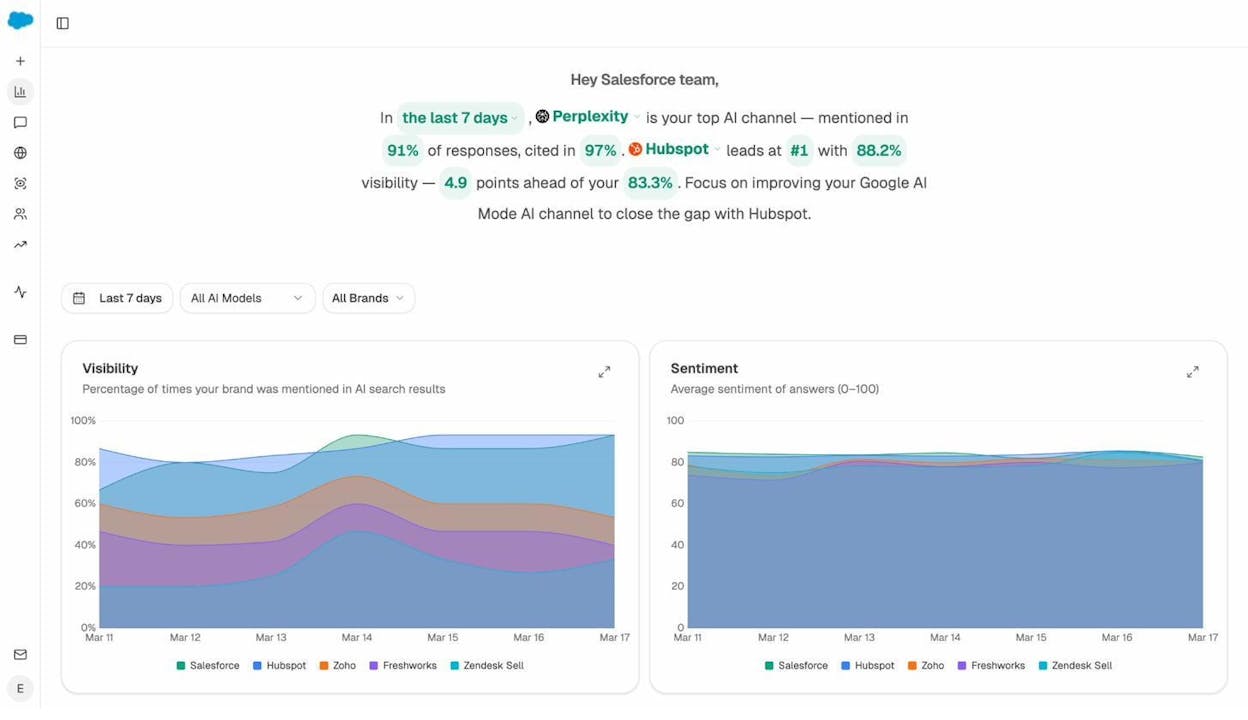
Your backlink profile, your content (against scraping and DMCA abuse), your reviews and brand mentions, and your visibility and sentiment across AI engines. A weekly digest that touches all four catches most attacks while they’re still small.
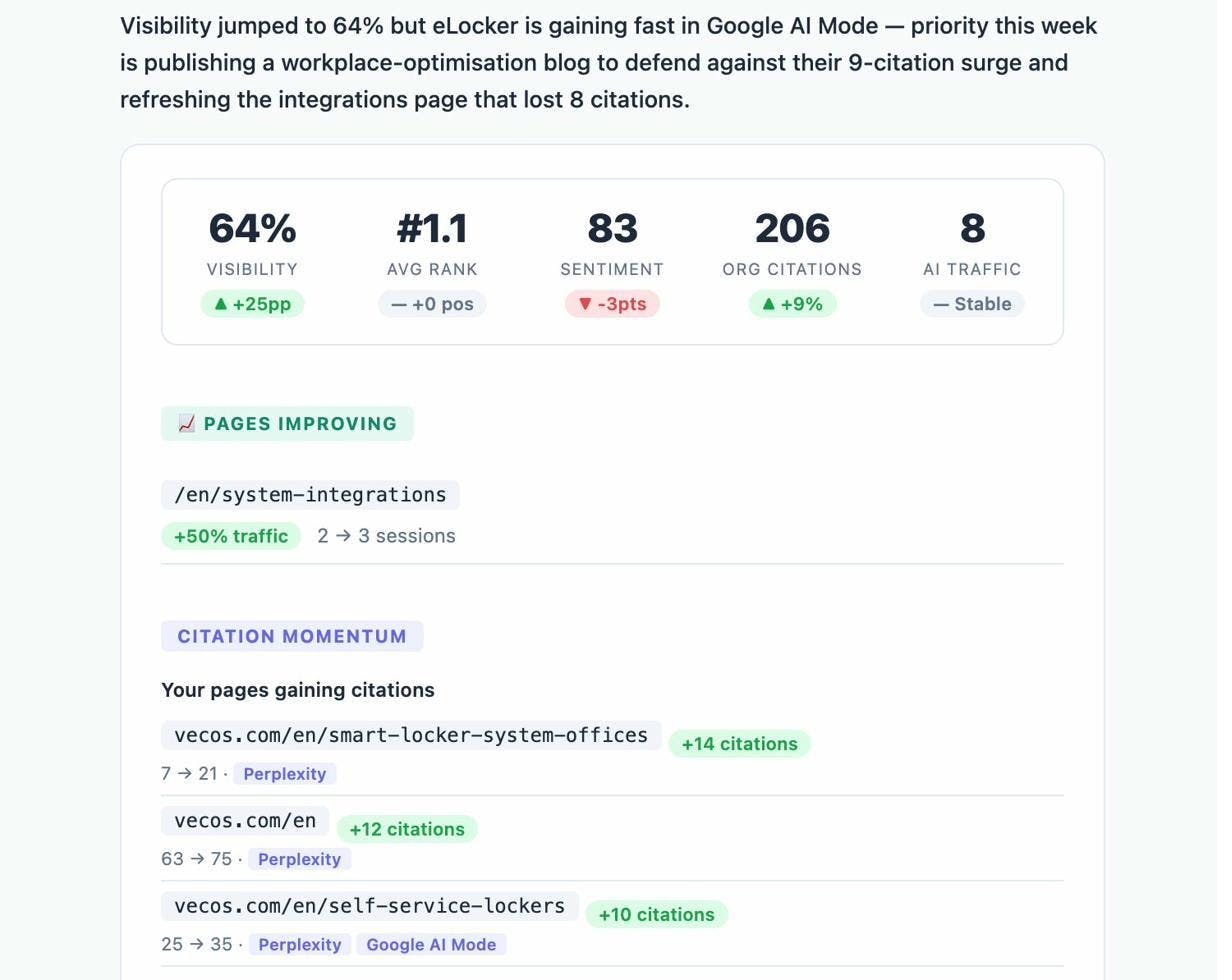
The questions to answer each week are the same. Are my new and lost backlinks consistent with what I expected? Has anyone scraped my best content? Are my reviews trending the right direction? Is my AI sentiment stable across engines? If the answer to any is “I don’t know,” you have a blind spot.
Final thoughts
Negative SEO is rarer than the panic content suggests, and harder to pull off than it used to be. Most attacks fail because Google has gotten better at ignoring spam and most attackers are unsophisticated.
The exceptions are real. Sophisticated attackers, ongoing scraping operations, and AI-reputation attacks can do real damage if you’re not watching. Vigilance is cheap. Recovery isn’t.
Set up your alerts, run a monthly review, and look at your data weekly. The attackers are betting you won’t.

Ernest

Ibrahim


