



Summarize this blog post with:


In this article, you’ll learn what backlinks are, why they still matter for SEO rankings, what separates a high-quality backlink from a worthless one, and how to check, analyze, and build backlinks for your website. You’ll also learn how backlinks are becoming relevant in a new way — as citations that AI search engines like ChatGPT, Perplexity, and Gemini use to inform their answers. By the end, you’ll have a clear, actionable plan for building backlinks that improve your visibility across both traditional and AI-powered search.
Table of Contents
What Is a Backlink?
A backlink is a link from one website to another. When a page on someone else’s site links to a page on yours, that’s a backlink for you.
Search engines like Google treat backlinks as votes of confidence. When a reputable site links to your content, it signals that your page is worth paying attention to. The more high-quality backlinks a page has, the more likely it is to rank higher in search results.
Here’s a simple example. Say you run a SaaS company and a well-known industry blog links to your product comparison page. That link serves two purposes: it sends referral traffic directly from their readers, and it tells Google your page is credible enough to rank.
![[Screenshot: Simple diagram showing how a backlink works — Site A links to Site B, with an arrow labeled “backlink” pointing from A to B]](https://www.datocms-assets.com/164164/1776975563-blobid1.png?auto=format,compress&w=1248&fit=max)
But backlinks don’t just matter for Google anymore. AI search engines — ChatGPT, Perplexity, Claude, Gemini, Copilot — use a similar concept: citations. When these AI models generate an answer, they pull from and reference specific web pages. The pages they cite most often tend to be the same pages with strong backlink profiles. In other words, the authority you build through backlinks compounds across both traditional search and AI search.
Why Are Backlinks Important?
Backlinks are one of the oldest and most studied ranking factors in SEO. Their importance has been confirmed repeatedly through data.
A well-known study analyzing over a billion pages found a clear relationship: pages with more backlinks from unique websites (referring domains) tend to get significantly more organic traffic. The vast majority of pages with zero referring domains get zero traffic from Google.
![[Screenshot: Chart showing correlation between referring domains and organic traffic — pages with more referring domains get more search traffic]](https://www.datocms-assets.com/164164/1776975577-blobid2.png?auto=format,compress&w=1248&fit=max)
This correlation held up in a controlled experiment, too. When backlinks to certain pages were disavowed (telling Google to ignore them), traffic to those pages dropped. When the disavow file was removed, traffic recovered. That’s about as close to causal evidence as you can get in SEO.
Beyond rankings, backlinks serve another critical function: discoverability. Google’s crawlers follow links to find new pages. If your content has backlinks from pages Google already knows, your content gets discovered and indexed faster.
Why Backlinks Now Matter for AI Search, Too
Here’s what most backlink guides miss: the same authority signals that backlinks provide for Google rankings are increasingly relevant for AI search engines.
AI models like ChatGPT, Perplexity, and Gemini don’t rank pages in a list of ten blue links. They generate answers and cite sources. But the pages they choose to cite are not random. Research on how LLMs cite sources shows that AI engines disproportionately cite pages that are already authoritative — pages with strong backlink profiles, high domain authority, and comprehensive content.
This means backlink building isn’t just an SEO tactic anymore. It’s a visibility strategy that works across both traditional search and AI-generated answers. When you build backlinks to a page, you increase the odds that page will be cited by AI models answering questions in your niche.
You can track exactly which of your pages AI engines are citing using Analyze AI’s Sources dashboard. It shows every URL and domain that AI platforms reference when answering questions about your industry, broken down by AI model, content type, and frequency.
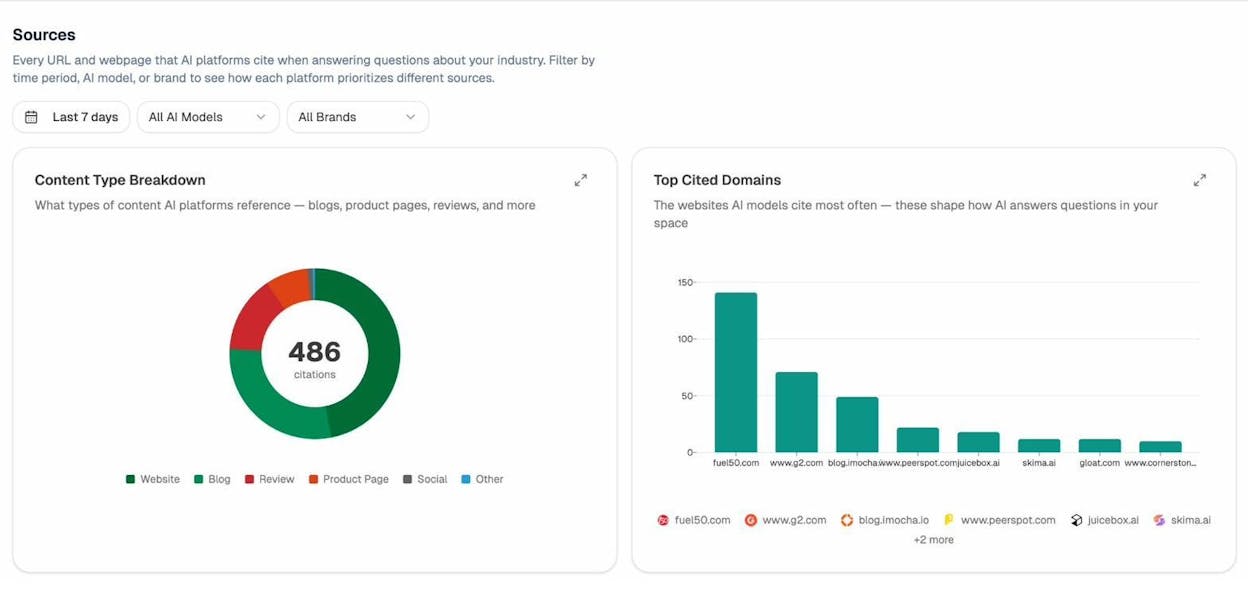
This data helps you connect the dots between your backlink-building efforts and your visibility in AI answers — something no traditional SEO tool can do.
What Makes a Good Backlink?
Not all backlinks are equal. A single link from a highly authoritative, relevant page can move the needle more than hundreds of links from low-quality sites.
Google’s John Mueller has stated this directly: the total number of backlinks is essentially irrelevant. What matters is quality. One strong link from a trusted source can be more impactful than thousands of weak ones.
Here are the six attributes that determine whether a backlink is valuable.
Authority
Pages with more high-quality backlinks have more authority in Google’s eyes. When one of those authoritative pages links to you, a portion of that authority passes through the link.
Think of it this way: a link from the BBC or the New York Times carries more weight than a link from a brand-new blog with no traffic. The linking page’s own authority determines how much value the backlink transfers.
![[Screenshot: Visual showing how high-authority pages pass more link equity than low-authority pages — two pages linking out, one with high UR and one with low UR]](https://www.datocms-assets.com/164164/1776975589-blobid4.png?auto=format,compress&w=1248&fit=max)
But there’s a catch. The more outbound links a page has, the less authority each individual link passes. This is based on the PageRank algorithm, which divides a page’s authority among all its outbound links.
So a link from a page with high authority and few outbound links is the most valuable combination.
Page authority vs. domain authority: These are different things. Page-level authority (often measured as URL Rating or UR) reflects the strength of a specific page’s backlink profile. Domain authority (often called Domain Rating or DR) reflects the overall strength of the entire website.
Google ranks pages, not websites. So page-level authority has a stronger correlation with rankings than domain-level authority. That said, domain authority still matters — a site with high DR has a stronger foundation, and its internal links pass more value to individual pages.
|
Metric |
What It Measures |
Why It Matters |
|---|---|---|
|
Page Authority (UR) |
Strength of a specific page’s backlink profile |
Directly correlates with that page’s ability to rank |
|
Domain Authority (DR) |
Overall strength of the entire website’s link profile |
Indicates the site’s competitive capacity and internal link equity |
|
Referring Domains |
Number of unique websites linking to a page or site |
More unique linking sites = stronger signal to Google |
Relevance
Google considers the topical relationship between the linking page and the page being linked to. A backlink from a site about the same topic as yours carries more weight than one from a completely unrelated site.
Google’s own documentation has stated that links from prominent websites “on the subject” are a sign of high quality. Their Reasonable Surfer patent and research on topic-sensitive PageRank both describe evaluating the topical relevance of links.
For example, if you run an email marketing tool, a backlink from an email marketing blog is likely more valuable than one from a cooking website — even if both sites have similar authority scores.
This doesn’t mean you should avoid links from unrelated but authoritative sites. A link from a high-DR hosting company is still valuable. But when prioritizing link building efforts, relevance should be a factor.
Anchor Text
Anchor text is the clickable text in a hyperlink. It tells Google (and readers) what the linked page is about.
Google’s original patent listed anchor text as one of the techniques used to improve search quality. When the anchor text matches the topic of the linked page, it reinforces the page’s relevance for that topic.
![[Screenshot: Example showing anchor text in a hyperlink — the clickable words that form the link]](https://www.datocms-assets.com/164164/1776975592-blobid5.png?auto=format,compress&w=1248&fit=max)
For example, if multiple sites link to your page with the anchor text “email marketing best practices,” Google gets a strong signal that your page is about email marketing best practices.
However, be careful here. If too many of your backlinks have the exact same anchor text matching your target keyword, Google might interpret it as manipulation. A natural backlink profile has a mix of anchor texts: branded anchors (“Analyze AI”), generic anchors (“click here,” “this article”), partial-match anchors, and some exact-match anchors.
Placement
Where a link appears on a page affects its value. Links placed within the main content of a page are more valuable than links buried in footers, sidebars, or author bios.
This aligns with Google’s “Reasonable Surfer” model, which assigns different weights to links based on how likely a user is to click them. A link in the body of an article, surrounded by relevant text, is more likely to be clicked than a link in a footer with dozens of other links. Google weighs it accordingly.
![[Screenshot: Visual showing prominent vs. non-prominent link placement on a web page — content links carry more weight than footer or sidebar links]](https://www.datocms-assets.com/164164/1776975597-blobid6.png?auto=format,compress&w=1248&fit=max)
When evaluating potential link opportunities, prioritize those that would place your link within the content itself — not in a list of 50 other links on a resources page.
Follow vs. Nofollow Links
A nofollow attribute (rel="nofollow") tells search engines not to pass authority through a link. Followed links (those without a nofollow, sponsored, or UGC attribute) are the ones that pass ranking value.
![[Screenshot: HTML code showing the difference between a followed link and a nofollow link — the rel=“nofollow” attribute]](https://www.datocms-assets.com/164164/1776975609-blobid7.jpg?auto=format,compress&w=1248&fit=max)
Since 2019, Google treats nofollow as a “hint” rather than a directive. This means Google might still consider a nofollow link, but followed links are still what you should prioritize.
Common sources of nofollow links include social media profiles, forum comments, and sponsored content. These links can still drive referral traffic and brand awareness, but they typically don’t directly boost rankings.
Destination
Google ranks individual pages, not entire websites. So the page your backlink points to matters.
Ideally, you want backlinks pointing to the specific page you want to rank. If you want your “email marketing guide” to rank, you need backlinks to that page — not just to your homepage.
The challenge is that most people prefer to link to informational content rather than commercial pages. To work around this, use internal links strategically. Get backlinks to your best content (guides, studies, tools), then use internal links from those pages to pass authority to your commercial pages.
![[Screenshot: Diagram showing internal links transferring authority from high-link content pages to commercial “money pages”]](https://www.datocms-assets.com/164164/1776975614-blobid8.png?auto=format,compress&w=1248&fit=max)
How to Check Backlinks
Checking your backlinks is the first step to understanding your link profile. Here’s how to do it for your own site and for your competitors.
Checking Backlinks to Your Website
The simplest free tool for checking your own backlinks is Google Search Console. After signing in, click Links in the sidebar. The number under External links shows your total backlinks.
![[Screenshot: Google Search Console Links report showing external links count and top linked pages]](https://www.datocms-assets.com/164164/1776975615-blobid9.png?auto=format,compress&w=1248&fit=max)
Google Search Console has limitations, though. It caps the data at 1,000 links and doesn’t show important SEO metrics like the authority of linking pages or anchor text distribution.
For a more complete view, use a dedicated backlink analysis tool. Enter your domain, and you’ll see every backlink pointing to your site along with metrics like the linking page’s authority, anchor text, follow status, and when the link was first or last seen.
![[Screenshot: A backlink analysis tool showing a detailed backlinks report with columns for referring page, DR, UR, anchor text, and follow status]](https://www.datocms-assets.com/164164/1776975629-blobid10.png?auto=format,compress&w=1248&fit=max)
Checking Competitor Backlinks
Competitor backlink analysis is where things get strategic. By examining who links to your competitors, you can find link opportunities for your own site.
Enter a competitor’s domain into a backlink analysis tool and explore their referring domains. You’ll often discover patterns: certain types of content attract links, certain directories or resource pages link to everyone in your niche, and certain relationships produce recurring links.
![[Screenshot: Competitor backlink analysis showing a competitor’s top referring domains, the number of backlinks from each, and the domain rating of each linking site]](https://www.datocms-assets.com/164164/1776975631-blobid11.png?auto=format,compress&w=1248&fit=max)
Use Analyze AI’s free Website Authority Checker to quickly gauge the authority of any domain before pursuing it as a link prospect.
Checking What AI Engines Cite (AI Backlink Equivalent)
In traditional SEO, you check which sites link to you. In AI search, the equivalent is checking which of your pages get cited by AI models.
Analyze AI’s Sources report shows every URL that AI platforms cite when answering questions in your industry. You can filter by AI model (ChatGPT, Perplexity, Claude, Gemini, Copilot) and by time period to see trends.
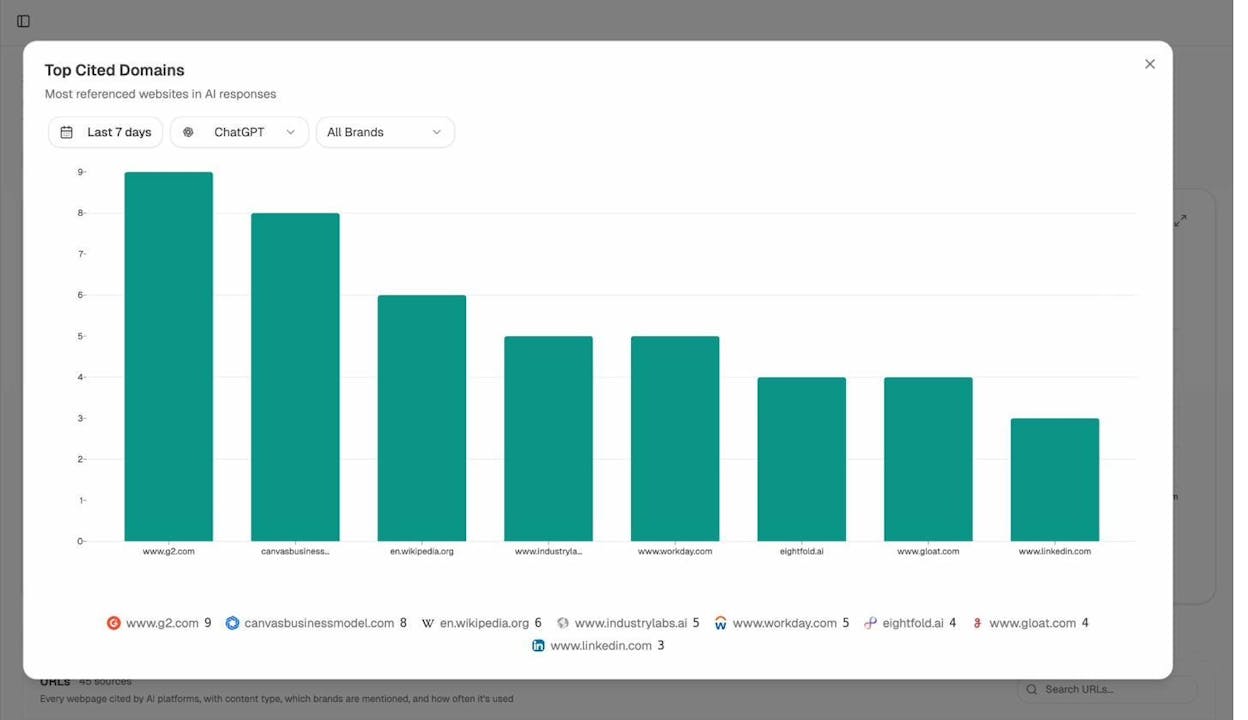
This is the AI search equivalent of a backlinks report. Instead of asking “who links to me?”, you’re asking “who does AI cite when answering questions about my industry?” The pages and domains that appear here are the ones AI models trust most — and the ones you need to compete with.
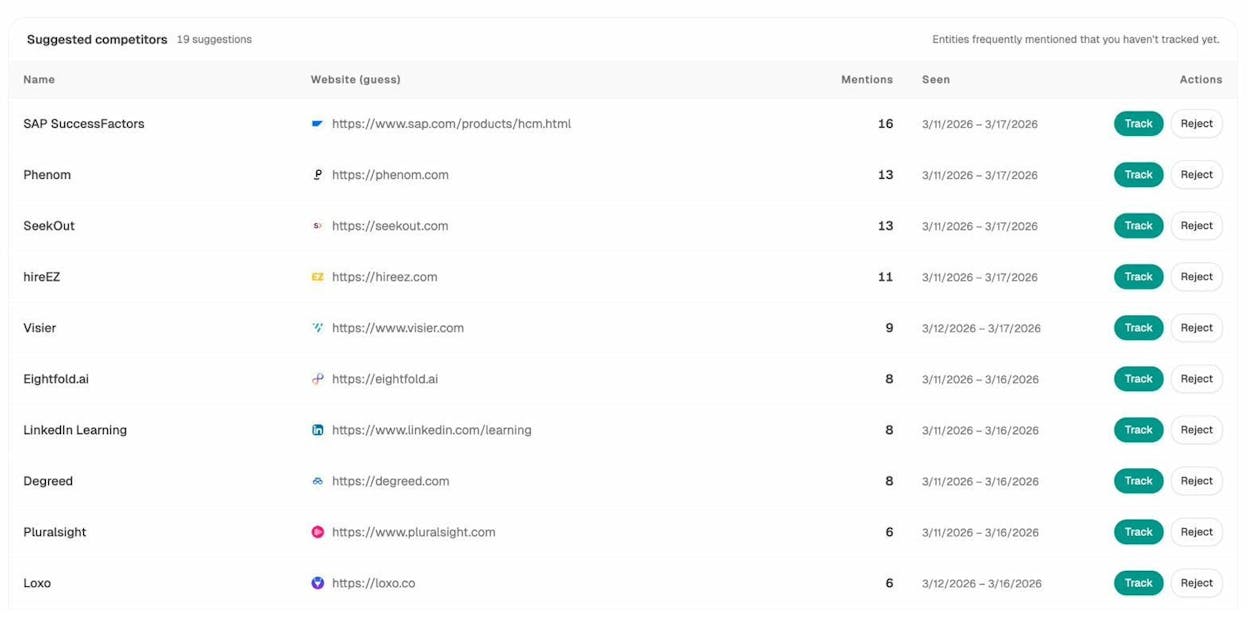
You can also use Analyze AI’s Competitors dashboard to see which competitors appear alongside your brand in AI answers, how often, and with what sentiment.
How to Analyze Backlinks
Checking your backlinks is step one. Analyzing them — understanding which links actually matter and where the gaps are — is step two.
Here’s a practical framework for analyzing backlinks.
Analyze Your Own Backlink Profile
Start by looking at your own backlinks with these filters:
Follow status. Filter for followed links only. These are the links passing authority. Nofollow links are worth noting but shouldn’t be your priority.
Link type. Filter for “in content” links. These are links placed within the body of a page, not in sidebars, footers, or navigation menus. In-content links carry the most weight.
Domain rating. Sort by the linking domain’s authority score. Links from higher-authority domains generally pass more value.
Domain traffic. A linking site with real organic traffic is more likely to be legitimate and authoritative. Sites with zero traffic but high DR may be part of link networks.
Anchor text distribution. Look at the anchor text across all your backlinks. A healthy profile has a mix: branded anchors, generic anchors (“click here,” “learn more”), partial-match anchors, and some exact-match anchors. If your profile is dominated by exact-match anchors, you may be at risk of an over-optimization penalty.
![[Screenshot: Backlink analysis tool showing anchor text distribution — pie chart or table breaking down branded, generic, partial-match, and exact-match anchors]](https://www.datocms-assets.com/164164/1776975650-blobid14.png?auto=format,compress&w=1248&fit=max)
Analyze Competitor Backlinks
Competitor backlink analysis reveals two things: where your competitors get their links from, and what kind of content earns them links.
Find their best links. Enter a competitor’s domain into a backlink tool and filter for high-authority, followed, in-content links. These are the backlinks moving the needle for them. Study the linking pages — are they resource roundups, guest posts, editorial mentions, or something else?
![[Screenshot: Competitor’s backlinks report filtered by high DR and followed status, showing the most impactful links]](https://www.datocms-assets.com/164164/1776975650-blobid15.png?auto=format,compress&w=1248&fit=max)
Find content that earns links. Look at your competitor’s “Best by links” report to see which of their pages have the most backlinks. This tells you what type of content earns links in your niche. Common patterns include original research, comprehensive guides, free tools, and data-driven studies.
Run a link intersect. This analysis compares the backlink profiles of multiple competitors to find domains that link to them but not to you. These are your highest-priority link prospects because they’ve already shown a willingness to link to content in your space.
![[Screenshot: Link intersect report showing domains that link to Competitor A and Competitor B but not to your site, with the number of links to each competitor]](https://www.datocms-assets.com/164164/1776975665-blobid16.png?auto=format,compress&w=1248&fit=max)
Analyze AI Citations as a Complement
Your traditional backlink analysis tells you who links to your competitors in Google. But you should also analyze who AI models cite when they answer questions your competitors rank for.
With Analyze AI, you can run ad hoc prompt searches to see how AI engines respond to questions in your niche. For each response, you’ll see which brands are mentioned, which pages are cited, and how your brand compares.
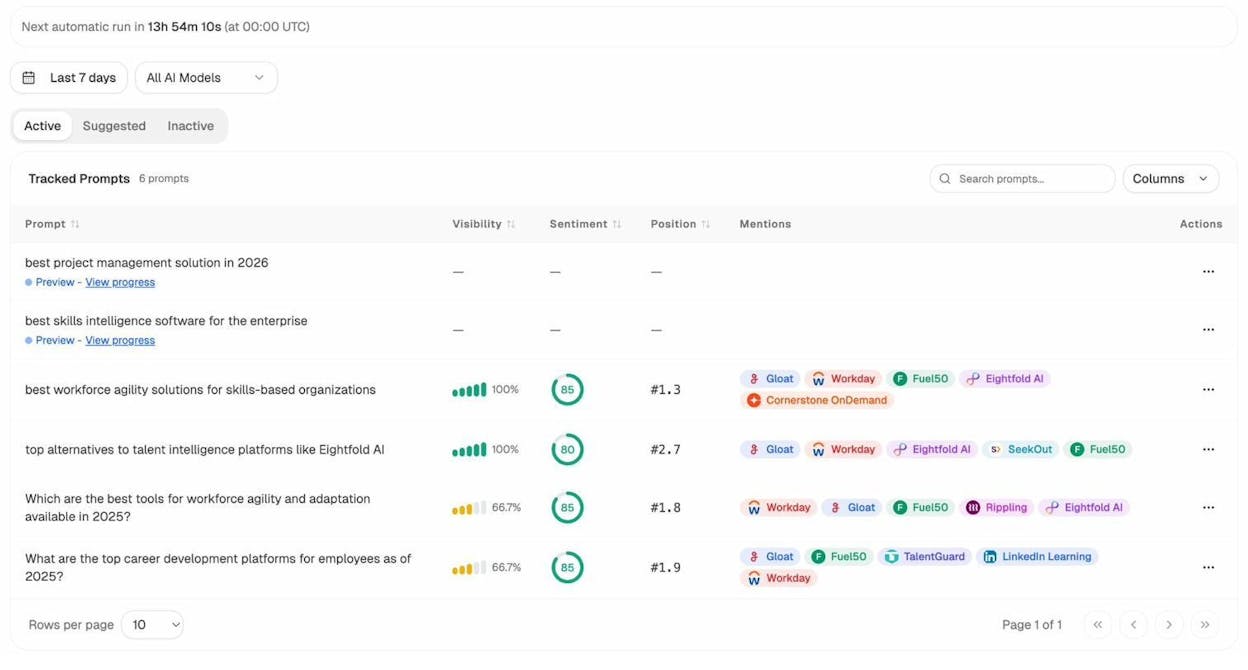
This gives you a second layer of competitive intelligence. You might find that a competitor with fewer backlinks than you is getting cited more by ChatGPT because their content is better structured for AI retrieval. That’s a signal to improve your content’s structure and depth — not just your link count.
How to Get Backlinks
There are four ways to get backlinks. Each has different effort levels, risk profiles, and expected returns.
1. Adding Backlinks
Some websites allow you to add a link to your site manually. This includes business directories, social profiles, forum signatures, and community sites.
These links are easy to get but typically low in value. They’re often nofollow, and Google knows they’re self-created. That said, submitting your business to relevant, high-quality local directories is still a worthwhile tactic. Directories can help you rank for local search queries and get discovered by potential customers browsing those directories directly.
How to find relevant directories:
-
Run a link intersect analysis comparing your competitors’ backlink profiles.
-
Look for domains that link to multiple competitors but not to you.
-
Browse those domains — many will be directories, resource lists, or industry roundups.
-
Submit your site to the relevant ones.
![[Screenshot: Link intersect results showing directory-type domains that link to competitors — with the submit/add link step highlighted]](https://www.datocms-assets.com/164164/1776975674-blobid18.png?auto=format,compress&w=1248&fit=max)
Use Analyze AI’s free Broken Link Checker to find broken links on resource pages in your niche. If a directory page has broken links, you can suggest yours as a replacement — which transitions into the next tactic.
2. Asking for Backlinks (Outreach)
This is active link building. You reach out to other site owners, editors, or journalists and give them a compelling reason to link to your content.
The key phrase is compelling reason. Nobody links to you as a favor. You need to offer value. Here are the most reliable outreach-based tactics:
Guest blogging. Write a high-quality article for another website in your niche. In exchange, you get a backlink (usually in the author bio or within the content). The trick is targeting sites that actually have an audience and editorial standards. A guest post on a site with zero traffic helps nobody.
How to find guest blogging prospects:
-
Search for a topic related to your niche in a content discovery tool.
-
Filter for sites in your language with substantial word counts (500+ words).
-
Look for sites with multiple authors — this suggests they accept outside contributors.
-
Pitch the editor with a specific article idea that fills a gap in their existing content.
![[Screenshot: Content discovery tool showing websites with multiple authors that publish content on a relevant topic — indicating guest post opportunities]](https://www.datocms-assets.com/164164/1776975681-blobid19.png?auto=format,compress&w=1248&fit=max)
Broken link building. Find pages in your niche that link to resources that no longer exist (404 pages). Reach out to the site owner, let them know about the broken link, and suggest your content as a replacement. This works because you’re solving a problem for them — they don’t want broken links on their site.
![[Screenshot: Free broken link checker showing broken outbound links on a resource page, with the URL and anchor text of each broken link]](https://www.datocms-assets.com/164164/1776975682-blobid20.png?auto=format,compress&w=1248&fit=max)
The skyscraper technique. Find a piece of content in your niche that has lots of backlinks. Create something better — more thorough, more current, better designed. Then reach out to everyone who linked to the original and show them your improved version.
Unlinked brand mentions. Search for mentions of your brand (or product) that aren’t linked. Reach out to the author and ask them to make the mention clickable. This is one of the highest-conversion outreach tactics because the author already knows and trusts your brand enough to mention it.
![[Screenshot: Brand monitoring tool showing unlinked mentions — instances where a brand is mentioned but not hyperlinked]](https://www.datocms-assets.com/164164/1776975695-blobid21.png?auto=format,compress&w=1248&fit=max)
3. Earning Backlinks
Earned backlinks happen when people find your content and link to it voluntarily. No outreach required.
This is the most sustainable link building strategy, but it requires creating content that’s genuinely worth linking to. In SEO, this type of content is called “link bait” — and it works because it provides value that’s hard to find elsewhere.
Content types that consistently earn backlinks:
Original research and data studies. If you can publish unique data that others can cite, you’ll earn links over months and years. Industry surveys, benchmark reports, and analyses of proprietary data are all strong candidates.
Free tools and calculators. Interactive tools that solve a specific problem earn links naturally because people reference them in their own content. Tools like Analyze AI’s free Keyword Generator, SERP Checker, and Keyword Difficulty Checker are good examples of this approach.
Comprehensive guides. When your guide is the most thorough, well-structured, and actionable resource on a topic, people link to it as a reference. The key is going deeper than what already exists — not just matching it.
Strong opinions and original frameworks. Content with a clear, defensible point of view gets linked to more than content that just restates what everyone else has already said. If you have a unique perspective backed by experience, publish it.
Visual assets. Original infographics, diagrams, and charts get embedded (and linked to) across the web. If you create a visual that explains something complex in a simple way, bloggers and journalists will use it.
Over the years, the most effective link bait content has been at least one of these things: practical (tools, templates, guides), opinionated (a strong take on a common issue), emotional (stories that spark sharing), visual (infographics, charts), newsworthy (timely commentary on current events), or data-driven (original research people can cite).
4. Buying Backlinks
Buying backlinks means paying a website owner to add a link to your site. This is explicitly against Google’s spam policies and can result in manual penalties that tank your rankings.
Don’t do it. The risk-reward ratio is terrible. A manual penalty can take months to recover from, and the “links” you buy are typically from low-quality sites that provide little value even before they get flagged.
This is different from hiring a legitimate link building agency. Good agencies use the tactics described above — outreach, guest blogging, digital PR — to earn links through white-hat methods. They don’t buy links on your behalf.
How Backlink-Worthy Content Performs in AI Search
There’s an important connection between content that earns backlinks and content that gets cited by AI search engines. The same qualities that make content link-worthy — depth, originality, data, structure — also make it more likely to be cited by AI models.
With Analyze AI’s AI Traffic Analytics, you can track which of your pages receive referral traffic from AI platforms. The Landing Pages report shows exactly which pages AI engines send visitors to, which AI models are driving the traffic, and how engaged those visitors are.
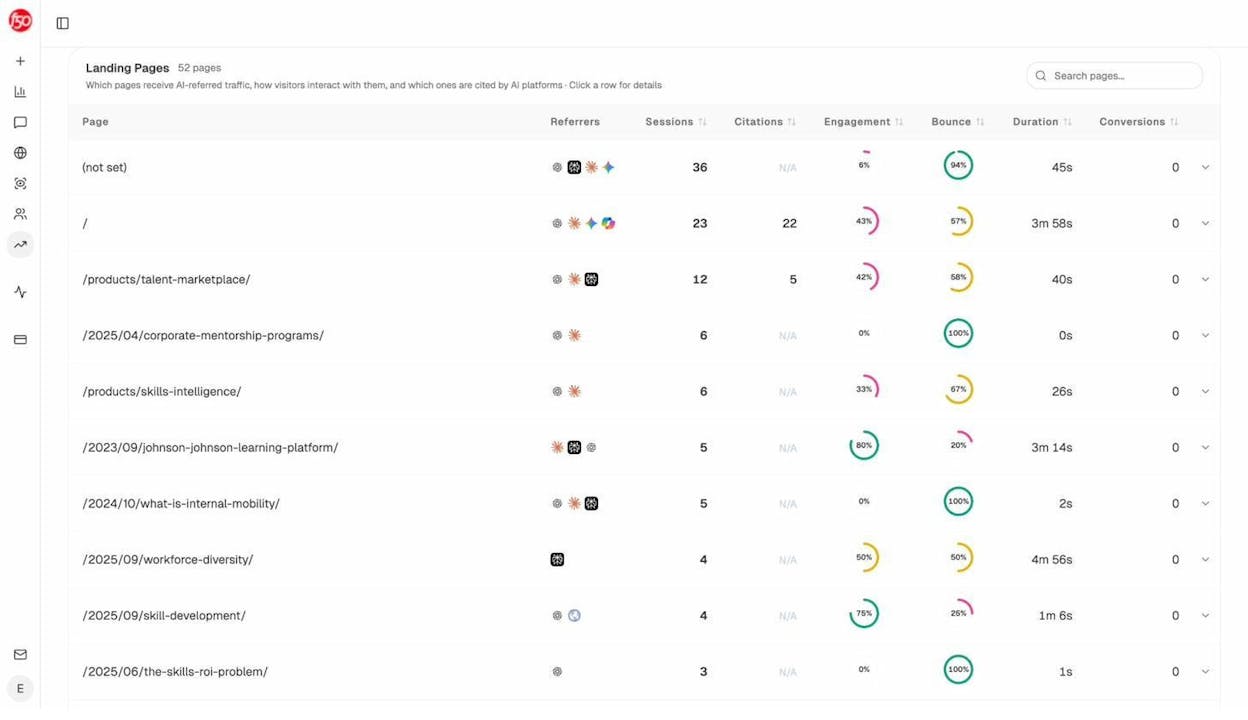
If you notice that your data-rich research posts receive the most AI traffic while your thin “me too” content gets none, that’s a clear signal to double down on the content formats that work — both for backlinks and for AI citations.
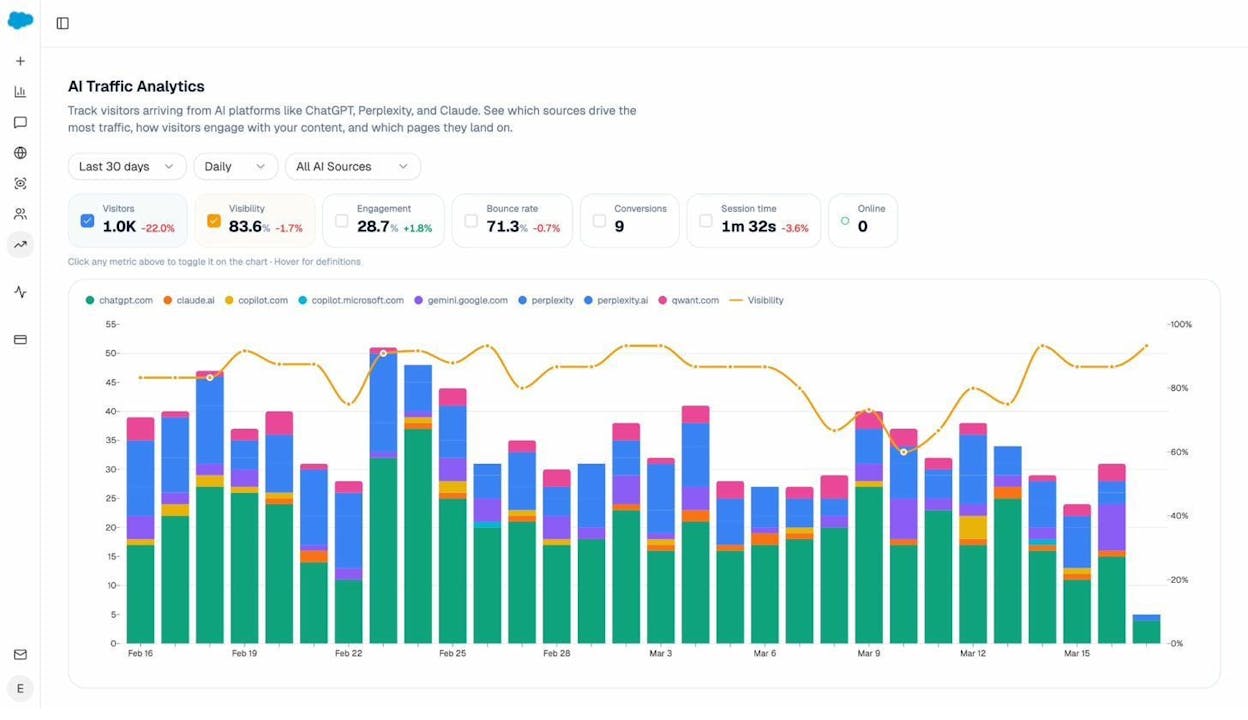
You can also track overall AI referral traffic trends over time using the main AI Traffic Analytics dashboard. This shows visitors arriving from ChatGPT, Perplexity, Claude, Copilot, Gemini, and other AI platforms, along with engagement metrics and conversion data.
What to Avoid with Backlinks
Some backlinks can hurt your rankings. At best, low-quality links have zero impact. At worst, they trigger manual penalties or algorithmic demotions that make your pages rank lower — or disappear from search results entirely.
Here are the link practices you should avoid:
Private Blog Networks (PBNs). These are networks of sites created solely to link to a target site and manipulate rankings. Google has gotten very good at detecting PBNs. When they find one, every site in the network — and every site it links to — can get penalized.
Paid links. Exchanging money, goods, or services for links that pass PageRank is a violation of Google’s guidelines. This includes paying bloggers for “sponsored posts” that include followed links without proper disclosure.
Excessive link exchanges. “I’ll link to you if you link to me” is a common pitch. Occasional, natural reciprocal links are fine. But systematic, large-scale link exchanges are a red flag.
Automated link building. Software that creates backlinks at scale — through comment spam, forum spam, or automated directory submissions — produces worthless links and puts your site at risk.
Anchor text over-optimization. If your backlink profile is dominated by exact-match keyword anchors, Google may interpret it as manipulation. A natural profile has varied anchor text. If 90% of the backlinks to your page about “backlinks” use the anchor text “what are backlinks,” that looks artificial.
Low-quality directories and link farms. Mass-submitting your site to hundreds of low-quality directories provides no value and can be seen as spammy behavior.
The general rule: if a link is easy to get and doesn’t require genuine editorial judgment from the linking site, it’s probably not worth much — and could be harmful at scale.
Types of Backlinks (Cheat Sheet)
Here’s a reference table of the most common backlink types, how they’re typically acquired, and their relative value for SEO.
|
Backlink Type |
How It’s Acquired |
SEO Value |
Notes |
|---|---|---|---|
|
Editorial backlinks |
Naturally earned by being cited as a source |
High |
The gold standard — editorial links from authoritative content |
|
Guest blogging backlinks |
Writing articles for other sites |
Medium-High |
Quality depends on the host site’s authority and relevance |
|
Digital PR backlinks |
Press coverage from news outlets |
High |
Data studies and newsworthy content earn these |
|
Resource page links |
Being listed on a curated resource page |
Medium |
Value depends on the page’s authority and how many other links it has |
|
Business directory links |
Submitting to relevant directories |
Low-Medium |
Best for local SEO; choose quality directories only |
|
Relationship-based links |
Built over time through genuine industry relationships |
Medium-High |
Authors who’ve linked to you before may do so again |
|
Embedded asset links |
Tools, badges, or widgets on other sites |
Medium |
Creative way to earn ongoing passive links |
|
Social profile links |
Creating profiles on social platforms |
Low |
Usually nofollow; useful for brand awareness, not rankings |
|
Comment and forum links |
Posting in discussions with a link |
Very Low |
Almost always nofollow; spamming is counterproductive |
|
PBN links (avoid) |
Private blog networks |
Negative |
Will trigger penalties when detected |
|
Paid links (avoid) |
Buying links for PageRank manipulation |
Negative |
Against Google’s policies |
|
Automated links (avoid) |
Generated by software |
Negative |
Spammy and easily detected |
Use this table as a quick reference, but always evaluate each individual backlink against the six quality attributes covered earlier: authority, relevance, anchor text, placement, follow status, and destination.
How to Track Your Backlink and Citation Performance Over Time
Building backlinks is not a one-time activity. You need to track your progress across both traditional and AI search to understand what’s working.
Traditional Backlink Tracking
Monitor these metrics on a monthly basis:
Total referring domains. This is more important than total backlinks. One domain linking to you 50 times counts as one referring domain. Growth in unique referring domains is a stronger signal than growth in raw backlink count.
New vs. lost links. Track which backlinks you gain and lose each month. If you’re losing links faster than you’re gaining them, your link profile is shrinking — and your rankings may follow.
Anchor text distribution. Review your anchor text profile periodically to make sure it stays diverse and natural.
Link quality trend. Are your new backlinks coming from high-authority, relevant sites? Or low-quality sites? The quality trend matters more than the quantity trend.
Use tools like Analyze AI’s free Keyword Rank Checker and Website Traffic Checker to correlate your backlink growth with ranking and traffic improvements.
AI Citation Tracking
In parallel, track your visibility in AI search. This is the new frontier of measuring content authority.
With Analyze AI, you can monitor:
Which prompts mention your brand. The Prompts dashboard shows your visibility, sentiment, and position across tracked prompts. You can see which AI models mention you, how often, and which competitors appear alongside you.
Which of your pages get cited. The Sources report shows every URL that AI models reference. This tells you which of your content is being used as a source by AI engines — and which content is being ignored.
How AI traffic is trending. The AI Traffic Analytics dashboard connects to your Google Analytics to show real AI-referred sessions, not estimates. You can see which AI engines drive the most traffic, which pages they send visitors to, and whether those visitors convert.
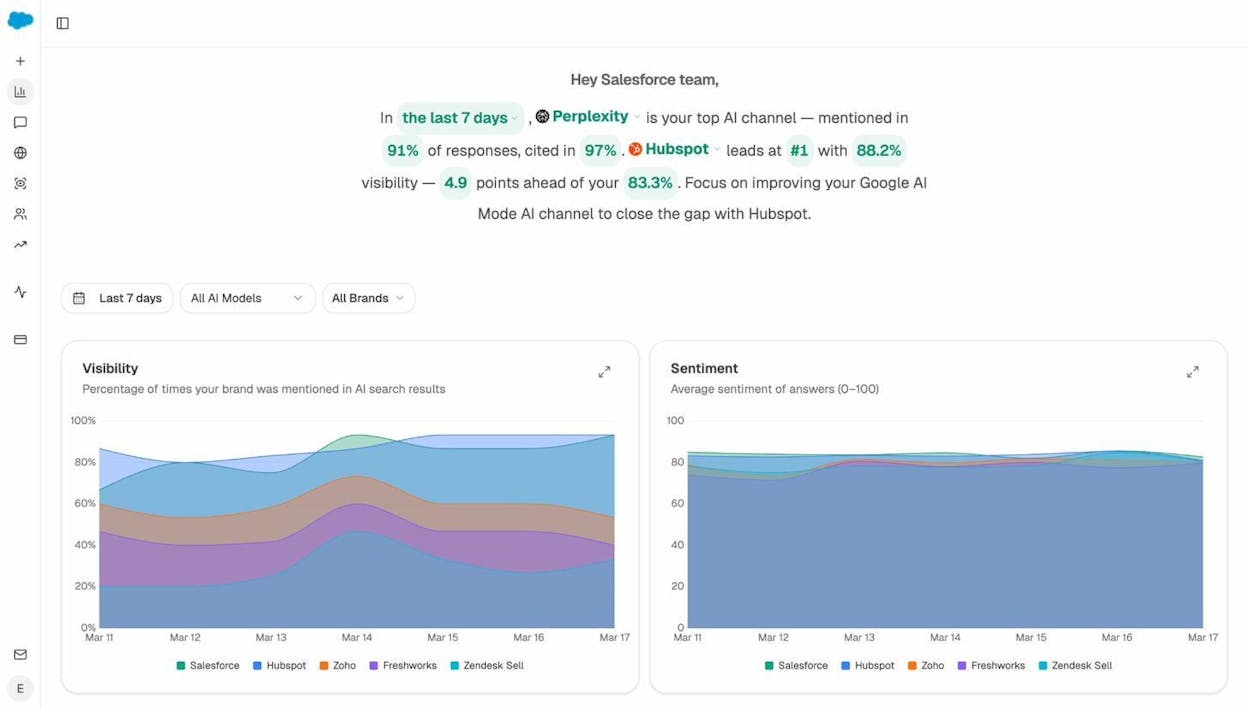
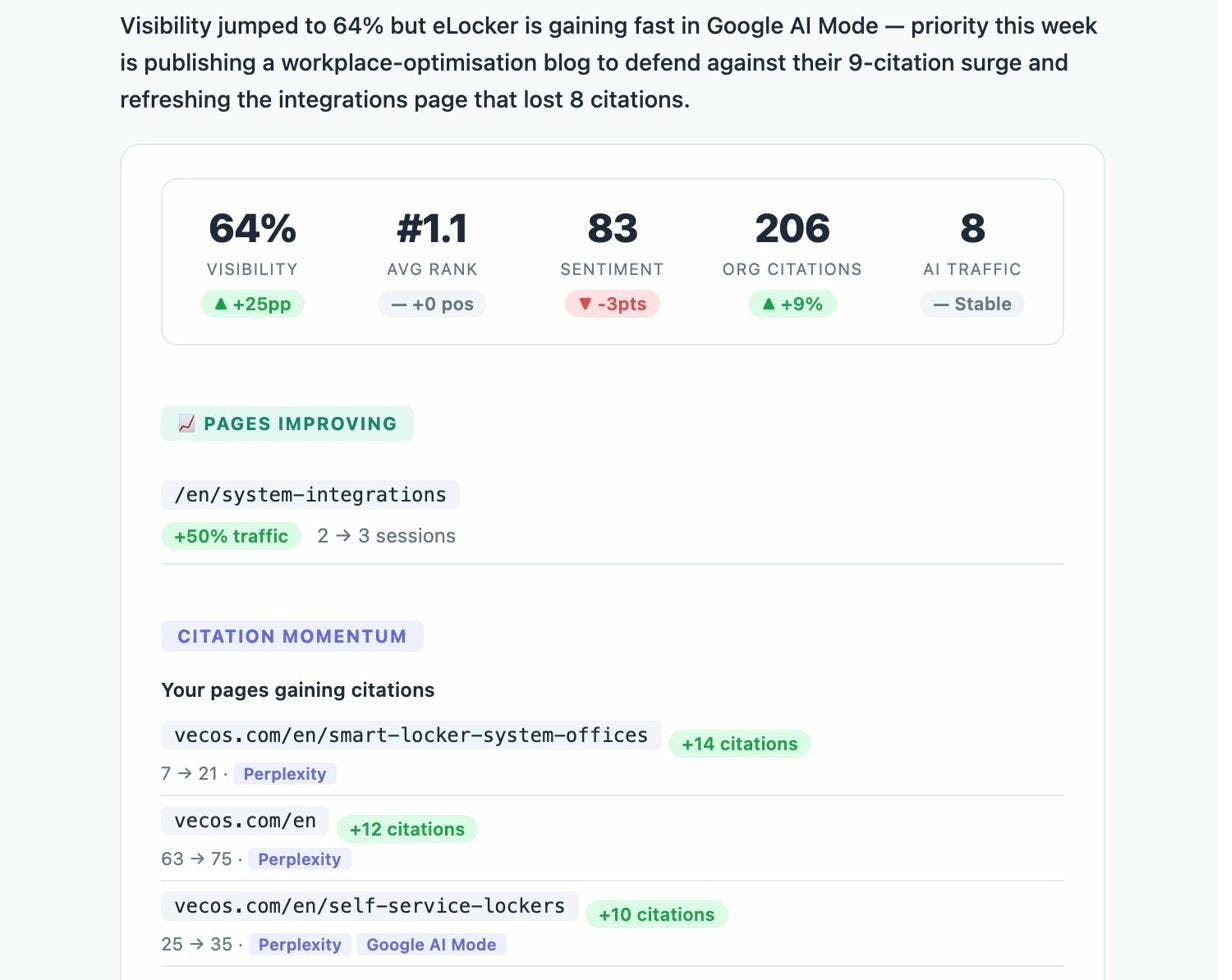
You can even set up weekly email reports from Analyze AI to get a regular digest of your AI visibility performance without logging in.
FAQs
How many backlinks do you need to rank?
There’s no universal number. The backlinks needed to rank depend on the competitiveness of the keyword and the quality of the links.
For low-competition keywords, you might rank with zero backlinks if your on-page SEO is strong. For highly competitive terms, you might need hundreds of backlinks from unique, authoritative domains.
Use a keyword difficulty tool to estimate how many referring domains top-ranking pages have for your target keyword. That gives you a rough benchmark for what you’ll need.
The most important takeaway: quality outweighs quantity. Ten backlinks from relevant, high-authority pages will outperform 1,000 links from low-quality directories.
Can you rank without backlinks?
Yes — for low-competition, long-tail keywords. If you’re targeting queries that few other pages are optimized for, strong on-page SEO and good content can be enough.
But for any moderately competitive keyword, backlinks are a major differentiator. Pages that rank in the top positions for competitive queries almost always have strong backlink profiles.
What are toxic backlinks?
“Toxic backlinks” is an SEO industry term, not a Google term. It refers to links that could harm your search performance or trigger a manual action — typically spammy links from link schemes, PBNs, or paid link networks.
Google’s disavow tool lets you submit a list of backlinks you want Google to ignore. Google recommends using it only if you’ve received a manual action or believe one is imminent.
In most cases, a handful of low-quality links pointing to your site won’t cause problems. Google is generally good at ignoring junk links. It’s only when you have a large number of spammy links — or links you actively participated in creating — that disavowing becomes necessary.
Are backlinks becoming less important?
Backlinks still matter, but their relative importance has shifted.
In April 2024, Google’s Gary Illyes stated at a conference that links matter less than they used to. A subsequent study confirmed that the correlation between links and rankings has decreased, particularly for low-volume, non-branded queries.
However, the same study found that backlinks still correlate strongly with rankings for high-volume, competitive queries. External backlinks also correlate much more strongly with rankings than internal links, suggesting Google still weights them heavily.
The nuance: for easy queries, great content and on-page SEO may be sufficient. For competitive queries, backlinks remain a critical differentiator.
And there’s an emerging twist: as AI-generated content floods the web, backlinks may become more important as a trust signal. When anyone can generate passable content, the links a page earns become one of the few signals that prove genuine third-party endorsement.
Do backlinks help with AI search visibility?
Not directly in the same way they help with Google rankings. AI models don’t use backlink counts as a ranking factor in the traditional sense.
But indirectly, yes. The pages that AI models cite most often tend to be authoritative, well-linked pages. This isn’t a coincidence — AI models are trained on web data where backlinks are a proxy for quality, and they tend to surface content from sources the broader web trusts.
Building backlinks improves your chances of being cited in AI answers for two reasons: your content is more likely to appear in the training data and retrieval systems these models use, and it signals to retrieval-augmented generation (RAG) systems that your content is authoritative.
Track this with Analyze AI’s citation and traffic analytics to see the actual relationship between your backlink-building efforts and your AI visibility.
Final Thoughts
Backlinks remain one of the most important factors for ranking in Google search, especially for competitive queries. The fundamental equation hasn’t changed: earn links from authoritative, relevant sites, and your pages will rank higher.
What has changed is the landscape. Search is no longer just ten blue links. AI-powered answer engines now generate responses that cite web sources — and the pages they cite tend to be the same authoritative, well-linked pages that rank well in traditional search. Building backlinks isn’t just an SEO strategy anymore. It’s a visibility strategy that compounds across both traditional and AI search channels.
Start with the basics: check your current backlink profile, analyze your competitors’ links, and identify the highest-value opportunities. Then build a systematic link building process using outreach, content-driven link earning, and strategic internal linking.
And don’t forget to track the other side of the equation. Use Analyze AI to monitor which of your pages AI engines cite, which competitors they mention alongside you, and how AI-referred traffic is trending. The brands that track both backlinks and AI citations will have the clearest picture of their true search visibility — and the biggest advantage in building it.

Ernest

Ibrahim


