



Summarize this blog post with:


In this article, you’ll learn what causes Google to generate an AI Overview for a search query, which types of keywords are most (and least) likely to trigger one, how AI Overview prevalence varies by industry, and what all of this means for your SEO and AI search strategy. We’ll draw on data from multiple large-scale studies covering more than 146 million SERPs and break down 86+ factors that influence whether an AI Overview appears.
You’ll also learn how to track your brand’s visibility inside these AI-generated answers and across standalone AI search engines like ChatGPT, Perplexity, and Claude.
Table of Contents
Key Findings at a Glance
|
Finding |
Source |
|---|---|
|
AI Overviews appear on about 21% of all keywords |
Ahrefs, 146M SERPs, Sep 2025 |
|
AI Overviews now trigger on nearly 48% of tracked queries (58% YoY growth) |
BrightEdge, Feb 2025 - Feb 2026 |
|
99.9% of AIO-triggering keywords are informational |
Ahrefs, Sep 2025 |
|
Informational intent share dropped from 91.3% to 57.1% over 10 months |
Semrush, Jan - Oct 2025 |
|
57.9% of question queries trigger an AI Overview |
Ahrefs, Sep 2025 |
|
44.1% of medical YMYL queries trigger an AI Overview |
Ahrefs, Sep 2025 |
|
Only 7.9% of local searches trigger an AI Overview |
Ahrefs, Sep 2025 |
|
Education queries went from 18% to 83% AIO presence |
BrightEdge, May - Dec 2025 |
|
Only 17% of AIO-cited sources also rank in the organic top 10 |
BrightEdge, Feb 2026 |
|
AI Overviews reduce organic CTR by up to 61% |
Seer Interactive, Sep 2025 |
These numbers tell two stories at once. AI Overviews are expanding fast and eating into organic clicks for informational queries. But they are not replacing traditional search. More than half of all queries still return a classic results page with no AI summary at all.
That split matters for how you plan your strategy. And it matters even more when you realize that AI search engines like ChatGPT and Perplexity are growing alongside Google’s AI Overviews, each with their own citation logic and content preferences.
What Is a Google AI Overview?
A Google AI Overview (AIO) is an AI-generated summary that appears at the top of a search results page. Instead of showing only a list of links, Google uses its Gemini model to read multiple sources, synthesize an answer, and display it above the traditional organic results.
Google CEO Sundar Pichai announced in early 2026 that AI Overviews had reached 2 billion monthly users. The feature launched in the US in May 2024 and has since expanded to over 100 countries.
For marketers and SEOs, AIOs change the math of search visibility in two ways. First, the AI-generated box pushes organic results below the fold. BrightEdge found that the average AIO now exceeds 1,200 pixels in height, which means the first organic result often sits below the visible screen on desktop.
Second, the sources cited inside an AIO are frequently different from the pages that rank in the top 10 organically. BrightEdge’s data shows that only about 17% of AIO-cited sources also rank in the organic top 10 for the same query. That means five out of six citations come from content that a traditional rank tracker would never flag.
This is why tracking AI Overviews, and your presence inside them, has become a separate discipline from rank tracking. And it’s why the same logic now applies to standalone AI search engines.
How We Compiled This Data
This article synthesizes findings from four major studies on AI Overview triggers.
Ahrefs (November 2025) analyzed 146 million desktop SERPs from September 2025 and explored how 86 keyword traits, from intent to CPC to query length, correlate with AI Overview appearance.
Semrush (December 2025) studied more than 10 million keywords and tracked how AI Overview prevalence changed month by month from January through October 2025. Their data showed the shift from mostly-informational AIOs to a broader intent mix.
BrightEdge (February 2026) used their Generative Parser to track AI Overview presence across industry-specific keyword sets on a daily basis for twelve months (February 2025 to February 2026). Their dataset includes citation overlap analysis, pixel-height measurements, and industry breakdowns for nine sectors.
Analyze AI (January 2026) studied 83,670 AI citations across ChatGPT, Claude, and Perplexity over 54 days, tracking brand mentions, citation patterns, and source preferences for each engine. This data is relevant because the content that earns citations in standalone AI search overlaps with the content that gets cited in Google’s AI Overviews.
Where the studies agree, the finding is strong. Where they diverge (and they do, especially on the pace of AI Overview expansion), we note the difference.
21% of Keywords Trigger an AI Overview (and Growing)
Ahrefs found that AI Overviews appear on 20.5% of all SERPs in their database of 146 million keywords. That means roughly one in five search queries returns an AI-generated summary above the traditional results.
But that number is already dated. BrightEdge’s more recent tracking shows AI Overviews now trigger on approximately 48% of tracked queries, a 58% increase year over year. The difference likely comes from methodology. Ahrefs analyzed a broad keyword database. BrightEdge tracked industry-specific keyword sets over time. Both are valid. The takeaway is that the range sits between 20% and 48% depending on the keyword set, and the trend line is unmistakably upward.
![[Screenshot: Google SERP showing an AI Overview above organic results for a health-related query]](https://www.datocms-assets.com/164164/1777581854-blobid1.jpg?auto=format,compress&w=1248&fit=max)
Put another way, your website is now competing with a Google-branded, AI-generated summary for between one-fifth and nearly half of all search queries. That share will likely keep growing.
We can use the 20.5% baseline from Ahrefs to measure whether specific keyword characteristics make it more or less likely for AI Overviews to appear. Every section below compares a keyword trait against that baseline.
Informational Intent Dominates (But the Mix Is Shifting)
99.9% of keywords that triggered AI Overviews in Ahrefs’ September 2025 data were informational in intent. Only 5.5% were commercial, 1.2% transactional, and 0.1% navigational.
|
Intent |
AIO SERPs |
Total SERPs |
AIO Rate |
|---|---|---|---|
|
Informational |
29,959,542 |
140,287,290 |
21.4% |
|
Commercial |
1,657,560 |
38,117,465 |
4.3% |
|
Transactional |
366,400 |
17,806,400 |
2.1% |
|
Navigational |
26,413 |
2,909,989 |
0.9% |
![[Screenshot: Bar chart showing AIO rate by search intent]](https://www.datocms-assets.com/164164/1777581876-blobid2.png?auto=format,compress&w=1248&fit=max)
But Semrush’s longitudinal data adds an important nuance. In January 2025, 91.3% of AIO-triggering queries were informational. By October 2025, that share dropped to 57.1%. The share of commercial and transactional AIOs rose over that period.
Even more notable, navigational queries that trigger AI Overviews jumped from 0.74% in January to 10.33% in October 2025 according to Semrush.
This tells us that Google started by testing AIOs in low-risk informational territory and has been steadily expanding into commercial and navigational queries. The safe zone for non-informational keywords is shrinking.
What This Means for Your Strategy
If your traffic depends heavily on informational keywords, you are most exposed to AI Overviews today. But the data suggests that commercial and transactional keywords will see more AIOs in the coming months.
The practical move is to audit your top-performing keywords and check which ones already trigger an AI Overview. You can do this manually in Google, or use the SERP features filter in a keyword research tool to see which of your tracked keywords return an AIO.
![[Screenshot: Using a keyword research tool’s SERP features filter to identify keywords with AI Overviews]](https://www.datocms-assets.com/164164/1777581912-blobid3.png?auto=format,compress&w=1248&fit=max)
How to Track This in AI Search
Google AI Overviews are just one piece of the puzzle. When someone asks ChatGPT or Perplexity about a topic you rank for, your brand might not appear at all.
With Analyze AI, you can track which prompts surface your brand across ChatGPT, Claude, Perplexity, Gemini, and Copilot. The Prompt Tracking feature lets you monitor specific queries over time, so you can see how your visibility in AI answers changes week over week.
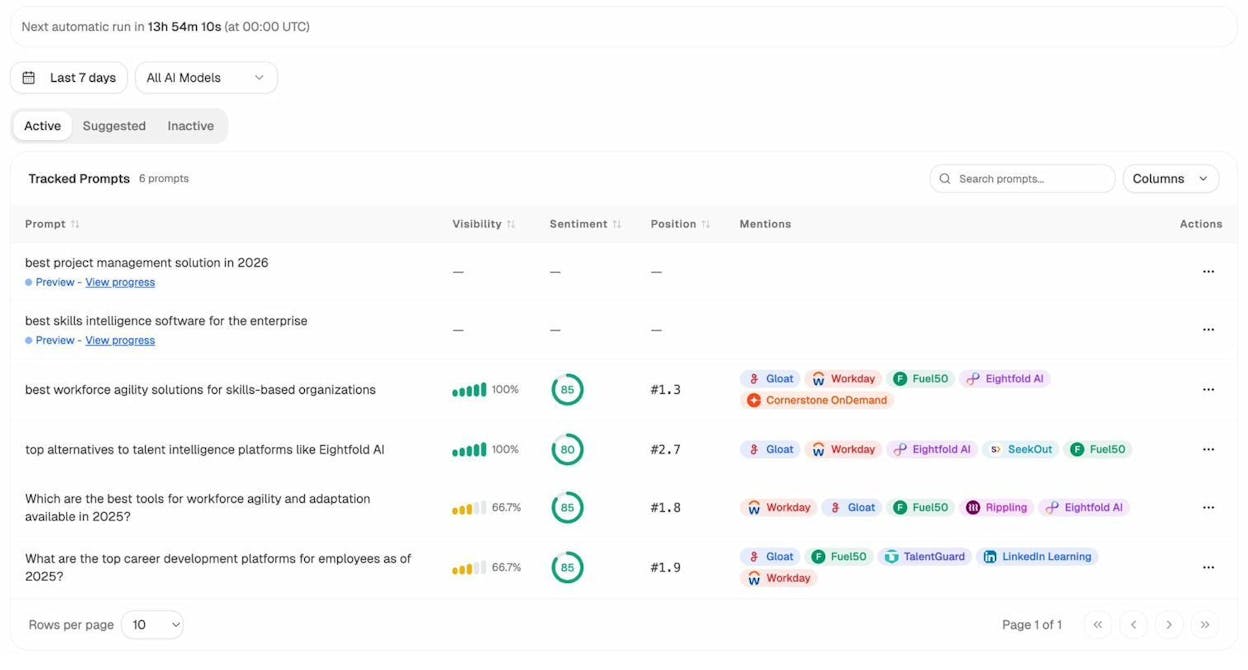
If you’re visible for a query in Google’s AI Overview but invisible in ChatGPT, that gap is worth knowing about. Each AI engine cites different sources and favors different content types. Our own study of 83,670 citations found that Claude favors blog content (43.8% of its citations), while ChatGPT and Perplexity prefer product and feature pages (60.1% and 54.3% respectively).
Non-Branded Queries Are 1.9x More Likely to Trigger AIOs
76.3% of keywords that trigger AI Overviews are non-branded (like “seo tools”), while 23.7% are branded searches (like a specific company name).
|
Query Type |
AIO SERPs |
Total SERPs |
AIO Rate |
|---|---|---|---|
|
Branded |
7,095,160 |
54,150,524 |
13.1% |
|
Non-branded |
22,896,838 |
91,971,867 |
24.9% |
Non-branded queries trigger AIOs at nearly double the rate of branded queries. This makes sense. When someone searches for a specific brand, Google generally knows to send them to that brand’s website. When someone searches a generic topic, Google sees an opportunity to answer the question directly with an AI summary.
The implication for brand strategy is clear. Your branded queries are relatively protected from AIOs. Your unbranded, category-level queries are not.
This is also where AI search engines become relevant. When a buyer asks ChatGPT “what are the best project management tools,” that’s the AI equivalent of a non-branded search. And just like Google’s AIOs, the answer will mention some brands and leave others out.
The Competitor Intelligence feature in Analyze AI shows which competitors appear alongside your brand in AI search responses. It automatically surfaces brands that get mentioned frequently in responses to your tracked prompts, even if you weren’t previously aware of them.
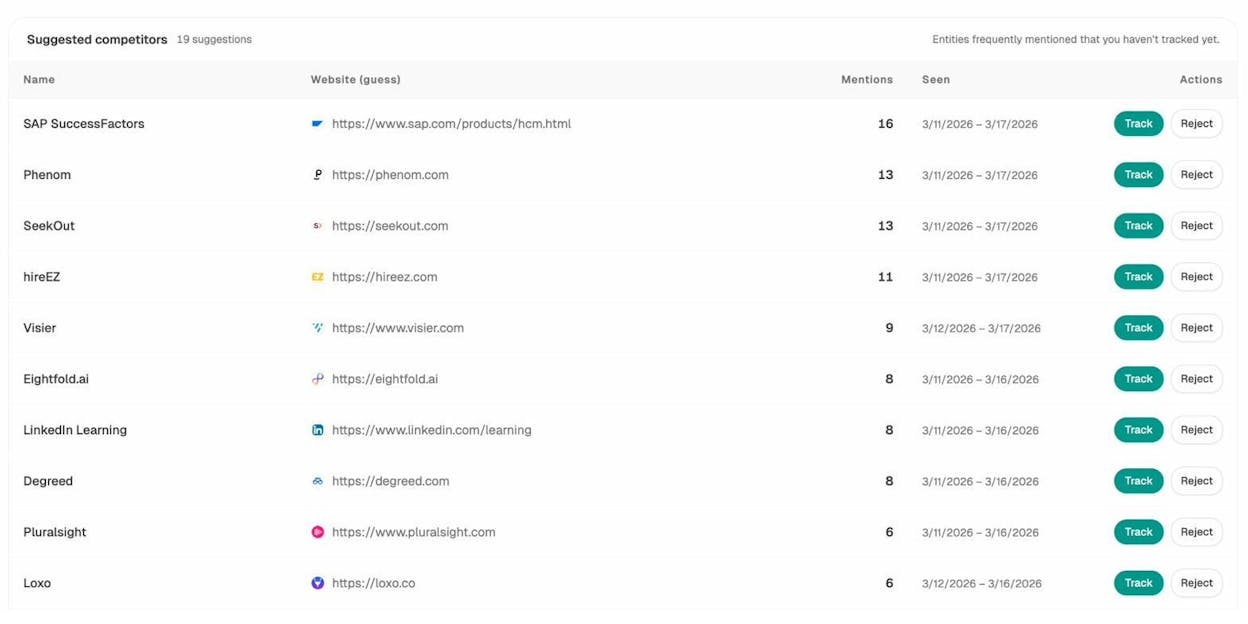
Longer Queries Are Far More Likely to Trigger AIOs
Query length has one of the strongest correlations with AI Overview appearance in the data. The longer the search query, the higher the chance an AIO appears.
|
Query Length |
AIO SERPs |
All SERPs |
AIO Rate |
|---|---|---|---|
|
1 word |
471,691 |
4,964,588 |
9.5% |
|
2 words |
2,537,067 |
25,594,777 |
9.9% |
|
3 words |
5,740,261 |
40,931,537 |
14.0% |
|
4 words |
6,315,178 |
32,365,814 |
19.5% |
|
5 words |
5,321,458 |
19,303,206 |
27.6% |
|
6 words |
3,935,672 |
10,753,233 |
36.6% |
|
7+ words |
5,670,671 |
12,209,236 |
46.4% |
![[Screenshot: Line chart showing AIO trigger rate increasing from 9.5% for 1-word queries to 46.4% for 7+ word queries]](https://www.datocms-assets.com/164164/1777581948-blobid6.png?auto=format,compress&w=1248&fit=max)
Single-word queries trigger AIOs just 9.5% of the time. Seven-or-more-word queries trigger them 46.4% of the time. That’s nearly a 5x difference.
This pattern makes sense intuitively. Longer queries tend to be more specific and more likely to be questions. They represent the kind of detailed information need that an AI-generated summary is well suited to address. Short queries are more ambiguous. Google can’t be as confident about what the user wants, so it’s less likely to serve an AI answer.
For SEO, this means that your long-tail keyword portfolio is the most exposed to AI Overviews. If your content strategy relies on capturing traffic from specific, detailed queries (which is a common and effective approach), a growing share of those queries will have AI-generated answers above your organic listing.
57.9% of Question Queries Trigger an AI Overview
Questions are the clearest signal for AI Overview generation. More than half (57.9%) of all question-format queries in Ahrefs’ data trigger an AIO. Non-question queries trigger at just 15.5%, below the 20.5% baseline.
|
Query Type |
AIO SERPs |
All SERPs |
AIO Rate |
|---|---|---|---|
|
Question |
10,045,913 |
17,361,451 |
57.9% |
|
Non-question |
19,946,085 |
128,760,940 |
15.5% |
![[Screenshot: Comparison chart showing 57.9% AIO rate for questions vs 15.5% for non-questions]](https://www.datocms-assets.com/164164/1777581952-blobid7.png?auto=format,compress&w=1248&fit=max)
This is the single most useful filter for predicting whether a keyword will trigger an AIO. If the query starts with “what,” “how,” “why,” “when,” “where,” or “who,” there’s a better-than-even chance that Google will generate an AI answer for it.
Query Classifier Breakdown
A set of Google query classifiers discovered by Mark Williams-Cook provides even more granular insight. Ahrefs mapped AIO rates against these classifiers and found:
|
Query Classifier |
AIO SERPs |
All SERPs |
AIO Rate |
|---|---|---|---|
|
Reason |
4,603,040 |
7,696,962 |
59.8% |
|
Boolean (yes/no) |
772,554 |
1,346,630 |
57.4% |
|
Definition |
5,208,895 |
11,001,131 |
47.3% |
|
Consequence |
219,770 |
470,434 |
46.7% |
|
Short fact |
6,462,155 |
15,700,313 |
41.2% |
|
Instruction |
4,394,332 |
12,521,507 |
35.1% |
|
Comparison |
1,292,772 |
4,942,567 |
26.2% |
|
Other |
6,999,483 |
91,932,424 |
7.6% |
“Reason” queries (asking why something happens) have the highest AIO rate at 59.8%. Boolean yes/no queries follow at 57.4%. Both are the kind of query that an AI can answer definitively in a paragraph or two.
“Comparison” queries sit lower at 26.2%. These tend to be more nuanced and harder for a single AI-generated box to handle well. “Other” queries (the catch-all category) sit at just 7.6%, far below baseline.
What This Means for Content Planning
If you create content that answers “why” and “what is” questions, expect strong AI Overview competition. If you create comparison content, buying guides, or content built around complex decision-making, you face less AI Overview pressure in Google today.
However, comparison queries are heavily targeted by standalone AI search engines. When someone asks ChatGPT “best CRM for small businesses” or asks Perplexity “how does HubSpot compare to Salesforce,” those engines produce detailed comparison responses. And the brands that show up in those responses get real traffic.
Analyze AI’s AI Search Explorer lets you run ad hoc searches across AI engines to see how they respond to comparison and research queries in your space. You type a prompt, select the engines and the country, and see the full response with cited sources.
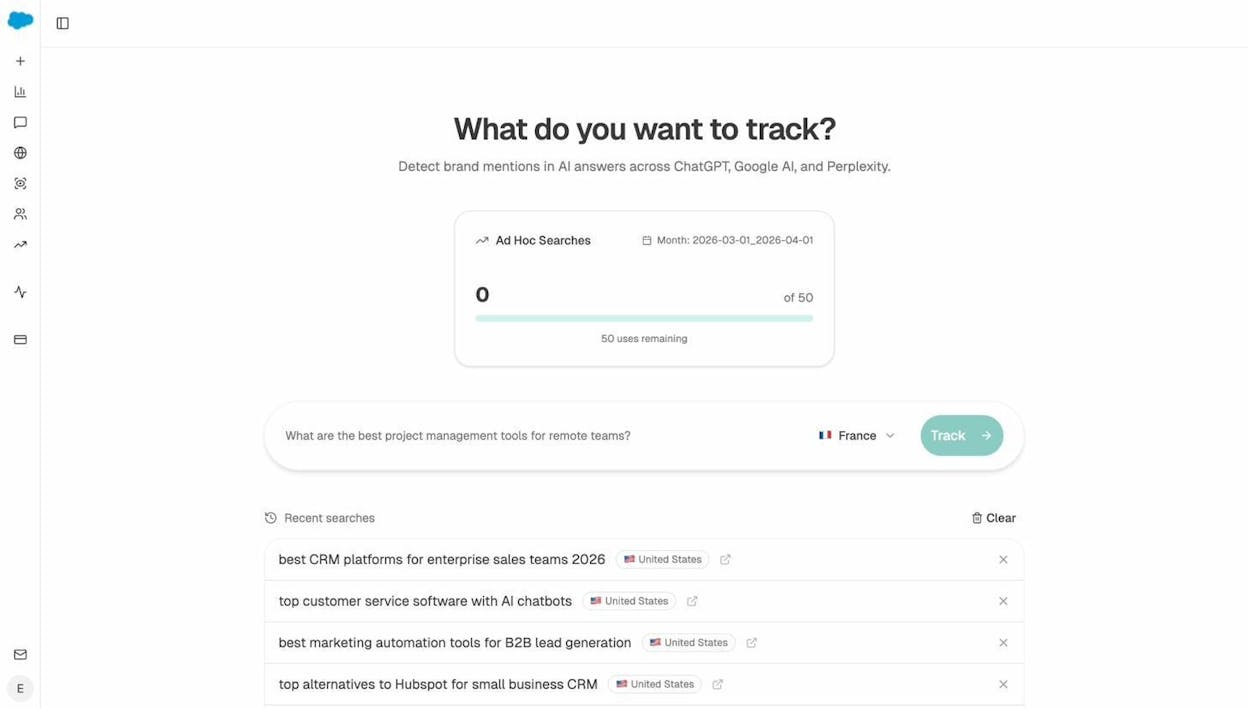
This is useful for spot-checking how AI engines handle specific topics, especially when you’re planning new content around competitive queries.
CPC Has No Clear Impact on AI Overview Generation
You might expect that high-CPC keywords would be less likely to trigger AI Overviews, since Google has a financial incentive to protect its ad revenue. The data doesn’t support that assumption clearly.
|
CPC Range (USD) |
AIO SERPs |
All SERPs |
AIO Rate |
|---|---|---|---|
|
$0.00 - $0.10 |
2,427,764 |
8,787,818 |
27.6% |
|
$0.10 - $0.20 |
847,079 |
4,573,228 |
18.5% |
|
$0.20 - $0.50 |
1,740,808 |
14,057,337 |
12.4% |
|
$0.50 - $1.50 |
2,435,272 |
13,550,276 |
18.0% |
|
$1.50 - $5.00 |
1,511,232 |
7,709,489 |
19.6% |
|
$5.00 - $20.00 |
302,047 |
1,576,723 |
19.2% |
|
$20.00+ |
20,943 |
132,852 |
15.8% |
Most CPC ranges hover within a few percentage points of the 20.5% baseline. The lowest CPC bucket ($0.00 - $0.10) actually has the highest AIO rate at 27.6%, which makes sense because those are the low-commercial-value, informational queries where Google has the least ad revenue to protect.
The highest CPC bucket ($20.00+) shows a slightly lower rate at 15.8%, but the sample size is small. The middle ranges are remarkably flat.
The takeaway is that CPC alone is not a reliable predictor of whether an AI Overview will appear. Intent and query structure matter far more.
44% of Medical YMYL Queries Trigger an AI Overview
This is one of the most surprising findings in the data. YMYL (Your Money or Your Life) queries, the queries Google describes as needing extra care due to their potential impact on health, finances, and safety, trigger AI Overviews at a significantly higher rate than normal queries.
|
YMYL Category |
AIO SERPs |
All SERPs |
AIO Rate |
|---|---|---|---|
|
Not YMYL |
20,291,372 |
117,843,464 |
17.2% |
|
Medical |
5,924,866 |
13,430,263 |
44.1% |
|
Safety |
1,215,129 |
3,922,977 |
31.0% |
|
Other YMYL |
178,156 |
566,435 |
31.5% |
|
Legal |
354,573 |
1,499,855 |
23.6% |
|
Financial |
2,027,902 |
8,859,397 |
22.9% |
Medical YMYL queries have the highest AIO rate at 44.1%, more than double the baseline rate and far above the non-YMYL rate of 17.2%.
![[Screenshot: Chart comparing AIO rates across YMYL categories]](https://www.datocms-assets.com/164164/1777581962-blobid9.png?auto=format,compress&w=1248&fit=max)
This aligns with BrightEdge’s findings. Healthcare was already one of the highest-AIO-presence industries entering 2025, and it currently shows AIOs on approximately 88% of tracked queries in their dataset.
The tension here is real. Google’s own Search Quality Evaluator Guidelines emphasize that YMYL topics deserve the highest standards of expertise, experience, authoritativeness, and trust (E-E-A-T). Yet Google is answering nearly half of medical search queries with an AI-generated snippet that could hallucinate or oversimplify.
For brands in healthcare, finance, and legal, this means AI Overview optimization is now a core part of your search strategy, whether you like it or not. Your content needs to be structured and written in a way that the AI summary can cite accurately. And you need to monitor what the AI Overview actually says about your topics, because mistakes in health or financial advice carry real consequences.
How to Track YMYL AI Visibility Across Engines
Beyond Google, AI search engines like ChatGPT handle YMYL topics in their own way. OpenAI reported in January 2026 that over 5% of all ChatGPT conversations are healthcare-related, and 25% of weekly active users search health topics.
If you operate in a YMYL industry, tracking your visibility in ChatGPT and Perplexity matters as much as tracking AI Overviews in Google. The AI Visibility Tracking feature in Analyze AI lets you monitor your brand’s mention rate and position across all major AI engines over time.
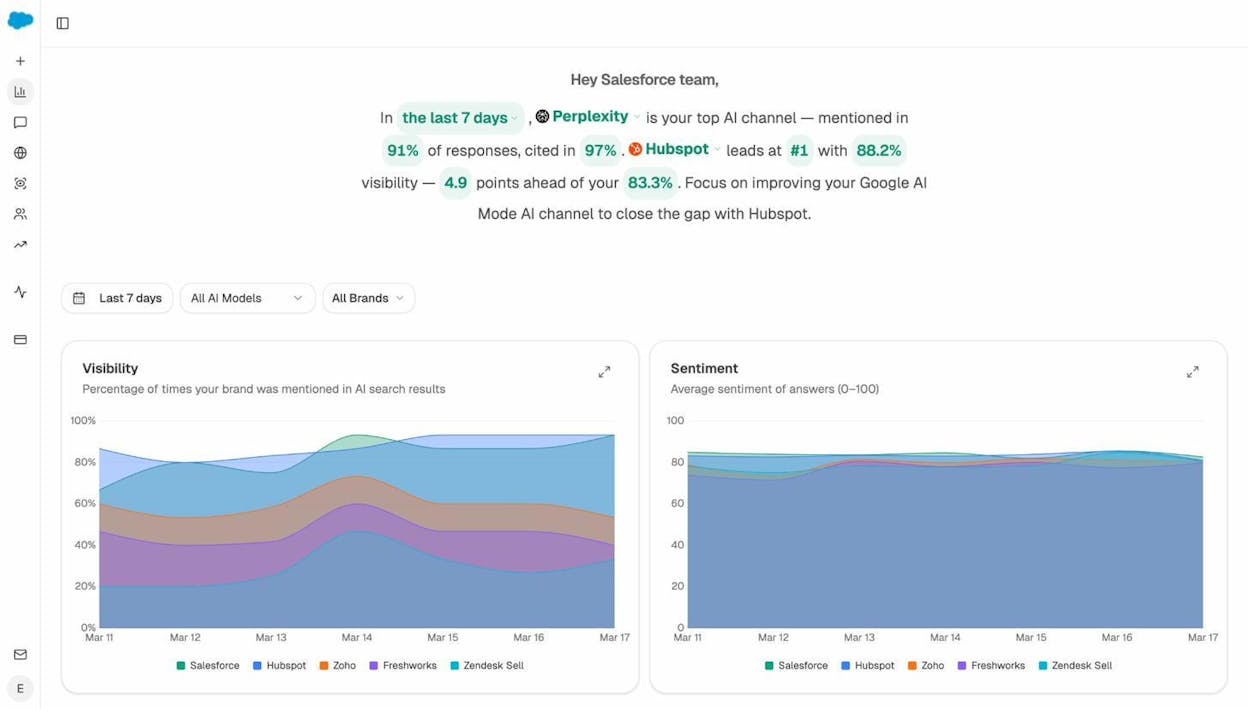
You can filter by AI engine, time period, and brand to see exactly where you stand and where competitors are pulling ahead.
AI Overview Prevalence by Industry: Massive Variation
Not all industries are affected equally. The data shows enormous variation in how often AI Overviews appear depending on the topic.
Industries With Highest AIO Rates (Ahrefs, Sep 2025)
|
Category |
AIO SERPs |
All SERPs |
AIO Rate |
|---|---|---|---|
|
Science |
1,281,223 |
2,939,427 |
43.6% |
|
Health |
6,638,182 |
15,436,927 |
43.0% |
|
Pets & Animals |
1,179,593 |
3,203,717 |
36.8% |
|
People & Society |
1,665,904 |
4,722,623 |
35.3% |
|
Internet & Telecom |
377,053 |
1,244,501 |
30.3% |
|
Reference |
1,140,509 |
3,786,834 |
30.1% |
|
Computers & Electronics |
1,675,947 |
5,862,964 |
28.6% |
|
Finance |
1,355,373 |
5,451,993 |
24.9% |
Industries With Lowest AIO Rates (Ahrefs, Sep 2025)
|
Category |
AIO SERPs |
All SERPs |
AIO Rate |
|---|---|---|---|
|
Shopping |
555,271 |
17,343,482 |
3.2% |
|
Real Estate |
170,199 |
2,916,211 |
5.8% |
|
Adult |
44,106 |
3,599,311 |
1.2% |
|
Sports |
964,484 |
6,519,231 |
14.8% |
|
News |
746,414 |
4,948,735 |
15.1% |
![[Screenshot: Horizontal bar chart showing AIO rates by industry, ranked from highest to lowest]](https://www.datocms-assets.com/164164/1777581974-blobid11.png?auto=format,compress&w=1248&fit=max)
BrightEdge’s yearlong tracking adds the growth trajectory. Some industries that started with low AIO presence have seen explosive growth.
|
Industry |
AIO Rate (Early 2025) |
AIO Rate (Late 2025/Early 2026) |
|---|---|---|
|
Healthcare |
Already high |
~88% |
|
Education |
18% |
83% |
|
B2B Technology |
36% |
82% |
|
Restaurants |
10% |
78% |
|
Insurance |
Moderate |
~63% |
|
eCommerce |
Low |
Slow growth |
|
Real Estate |
Low |
Minimal growth |
The pattern is clear. Google is deploying AI Overviews aggressively in sectors with high-information queries (health, education, technology). It is moving slowly in sectors with high-commercial intent (shopping, real estate, e-commerce), which is consistent with protecting ad revenue.
Finding Your Industry’s Exposure
To check how exposed your specific keywords are, run your top 50 to 100 tracked keywords through a SERP features analysis. Look at what percentage already trigger an AIO. Then check the trend. If the share has been growing month over month, plan for continued expansion.
![[Screenshot: Filtering keywords by SERP feature in a keyword research tool to identify AI Overview presence]](https://www.datocms-assets.com/164164/1777581977-blobid12.png?auto=format,compress&w=1248&fit=max)
For a broader picture, use Analyze AI’s AI Traffic Analytics to see how much traffic your website already receives from AI search platforms. This shows visitors arriving from ChatGPT, Claude, Perplexity, Gemini, and Copilot alongside your AI visibility score over time.
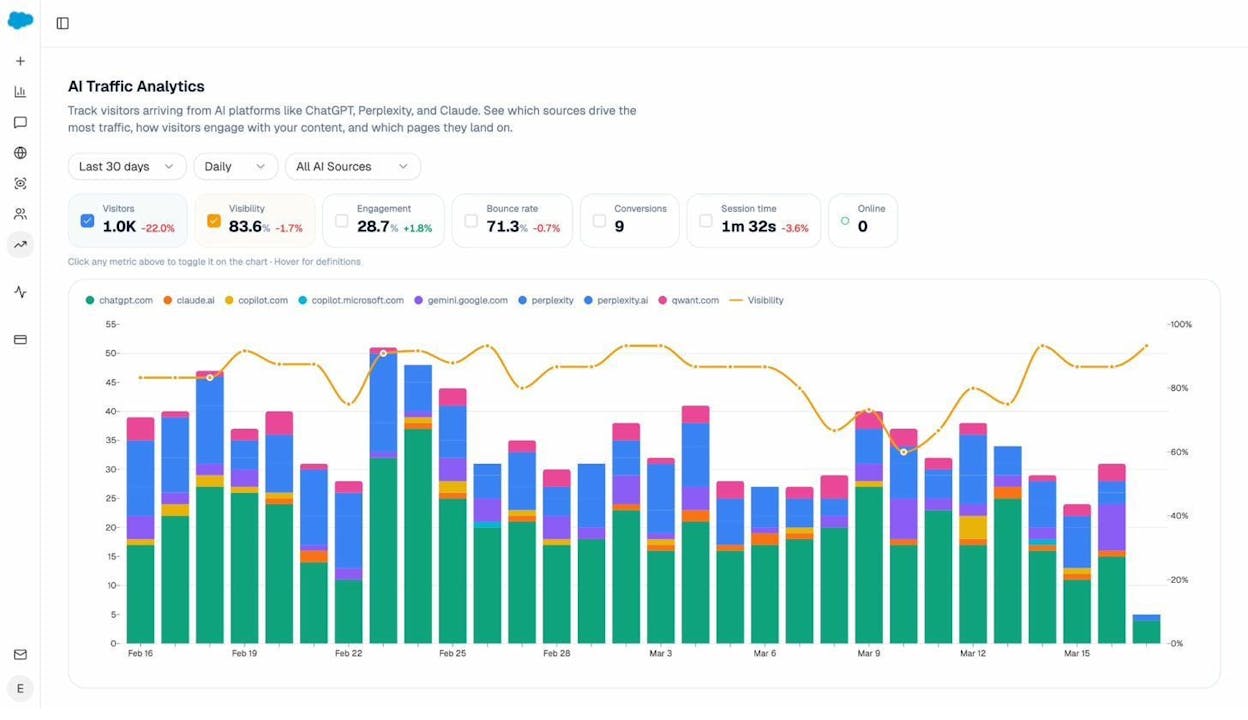
This data connects the dots between visibility in AI answers and actual business outcomes. If you notice that your AI traffic is growing while your Google organic traffic for the same topics is declining, you’re seeing the AI Overview displacement effect in real time.
Only 6% of News Queries Trigger an AI Overview
News-related queries are among the least likely to trigger AI Overviews. Ahrefs categorized keywords by how “newsy” they are and found a stark difference.
|
Category |
AIO SERPs |
All SERPs |
AIO Rate |
|---|---|---|---|
|
Not newsy |
28,256,716 |
136,181,642 |
20.7% |
|
Somewhat newsy |
1,714,865 |
9,618,926 |
17.8% |
|
Very newsy |
20,417 |
321,823 |
6.3% |
Very newsy queries trigger AIOs only 6.3% of the time. This makes sense on multiple levels. News content changes rapidly, which makes AI-generated summaries risky (they could be outdated within hours). Google also has existing infrastructure for surfacing news content (Top Stories, Google News) that serves the user intent well without an AI summary.
For publishers who depend on news traffic, this is relatively good news. Your queries are the least disrupted by AIOs. For everyone else, it reinforces the pattern that AIOs target evergreen, informational content, not time-sensitive material.
Only 7.9% of Local Searches Trigger an AI Overview
Local queries like “dentist near me” or “best pizza in Brooklyn” rarely trigger AI Overviews.
|
Category |
AIO SERPs |
All SERPs |
AIO Rate |
|---|---|---|---|
|
Local |
1,757,205 |
22,358,147 |
7.9% |
|
Non-local |
28,234,793 |
123,764,244 |
22.8% |
At just 7.9%, local searches are well below the baseline. Google already has the Local Pack (map results) and Google Business Profiles to handle local queries. Adding an AI-generated answer on top of those features would likely create more confusion than value.
For local businesses, this means local SEO fundamentals (Google Business Profile optimization, local citations, review management) remain the primary path to visibility. AI Overviews are not a significant threat here today.
Only 4% of NSFW Queries Trigger AIOs
Google is cautious about generating AI answers for sensitive content. Only 4% of queries classified as NSFW trigger an AI Overview, far below the baseline.
|
Category |
AIO SERPs |
All SERPs |
AIO Rate |
|---|---|---|---|
|
Not NSFW |
29,732,356 |
139,636,777 |
21.4% |
|
NSFW |
259,642 |
6,485,614 |
4.0% |
Within the NSFW category, the highest AIO rates are for drug-related queries (12.6%) and scam-related queries (11.3%), both of which are topics where an authoritative AI answer could arguably help users. Adult content (1.5%) and gambling (1.4%) see almost no AI Overviews.
99% of AIOs Appear on “Know” Queries
Google’s Search Quality Evaluator Guidelines describe four types of user intent: Know, Do, Website, and Visit-in-person.
|
Google Intent |
AIO SERPs |
All SERPs |
AIO Rate |
|---|---|---|---|
|
Know |
29,959,549 |
140,287,274 |
21.4% |
|
Do |
2,755,518 |
21,168,986 |
13.0% |
|
Visit-in-person |
628,188 |
8,813,799 |
7.1% |
|
Website |
26,411 |
2,909,983 |
0.9% |
99.9% of AIO keywords fall into the “Know” category. “Website” queries (where the user wants a specific site) trigger AIOs less than 1% of the time. “Visit-in-person” queries align almost exactly with the local search data from earlier (7.1% vs. 7.9%).
This confirms that AI Overviews are, fundamentally, an answer-generation feature. Google deploys them when it’s confident the user wants to know something, and holds back when the user wants to do something, visit somewhere, or reach a specific website.
How AI Overview Citations Differ From Organic Rankings
One of the most important findings from BrightEdge’s research is that AI Overview citations and organic search rankings operate on different logic.
Only about 17% of sources cited in AI Overviews also rank in the organic top 10 for the same query. The broader overlap (sources ranking somewhere in the top 100) has been slowly increasing, from about 49% to 53%. But the page-1 overlap has stayed flat.
This means that content ranked on pages 2 through 10 (content that gets almost no organic traffic from traditional search) is increasingly getting cited in AI Overviews.
The implication is significant. Ranking #1 for a keyword does not guarantee that your content will be cited in the AI Overview for that keyword. And not ranking on page 1 does not exclude you from AIO citations. The two systems are connected but follow different rules.
What Earns AI Overview Citations
Based on the aggregate data across studies, content that earns AI Overview citations tends to share these characteristics:
Clear structure and formatting. Content with well-organized headings, short paragraphs, and direct answers to specific questions is easier for AI models to parse and cite. One study found that 61% of AI Overviews use unordered lists in their format, suggesting Google favors content that is structured in digestible chunks.
Topical authority. Sites that cover a topic comprehensively across multiple pages perform better. A single blog post on a topic is less likely to earn citations than a cluster of related articles.
Original data and research. Content that includes unique data points, statistics, or original findings is more likely to be cited. This is the same “information gain” principle that differentiates strong SEO content from me-too content.
Freshness. For topics where information changes, recently updated content has an edge. BrightEdge found that citation patterns shift more rapidly than organic rankings, suggesting that freshness matters more in the AI layer.
E-E-A-T signals. Author bylines, cited sources, and evidence of real experience matter. Medical YMYL content cited in AIOs tends to come from authoritative institutional sources.
How AI Search Engines Differ From Google’s AI Overviews
Everything above covers Google’s AI Overviews, but the same principles apply to standalone AI search engines. With some important differences.
Each Engine Has Its Own Citation Logic
Our study of 83,670 citations across ChatGPT, Claude, and Perplexity found that each engine cites sources very differently.
|
Metric |
ChatGPT |
Claude |
Perplexity |
|---|---|---|---|
|
Wikipedia citation rate |
12.1% |
0.1% |
0.0% |
|
LinkedIn citation rate |
4.1% |
0.0% |
0.0% |
|
Citations per brand mention |
0.98 |
1.05 |
1.26 |
|
Blog content preference |
16.7% |
43.8% |
36.8% |
|
Product page preference |
60.1% |
10.5% |
54.3% |
|
First-party citation rate |
13.5% |
22.2% |
17.0% |
ChatGPT uses Wikipedia for about 1 in 10 citations. Claude uses it for 0.1%. Perplexity never cited Wikipedia at all. ChatGPT cited LinkedIn 900 times in our dataset. Claude and Perplexity cited it zero times.
These differences mean that a single content strategy won’t work equally well across all AI engines. If you optimize only for Google’s AI Overviews, you’ll miss the patterns that drive visibility in ChatGPT, Claude, and Perplexity.
Third-Party Sources Dominate Across All Engines
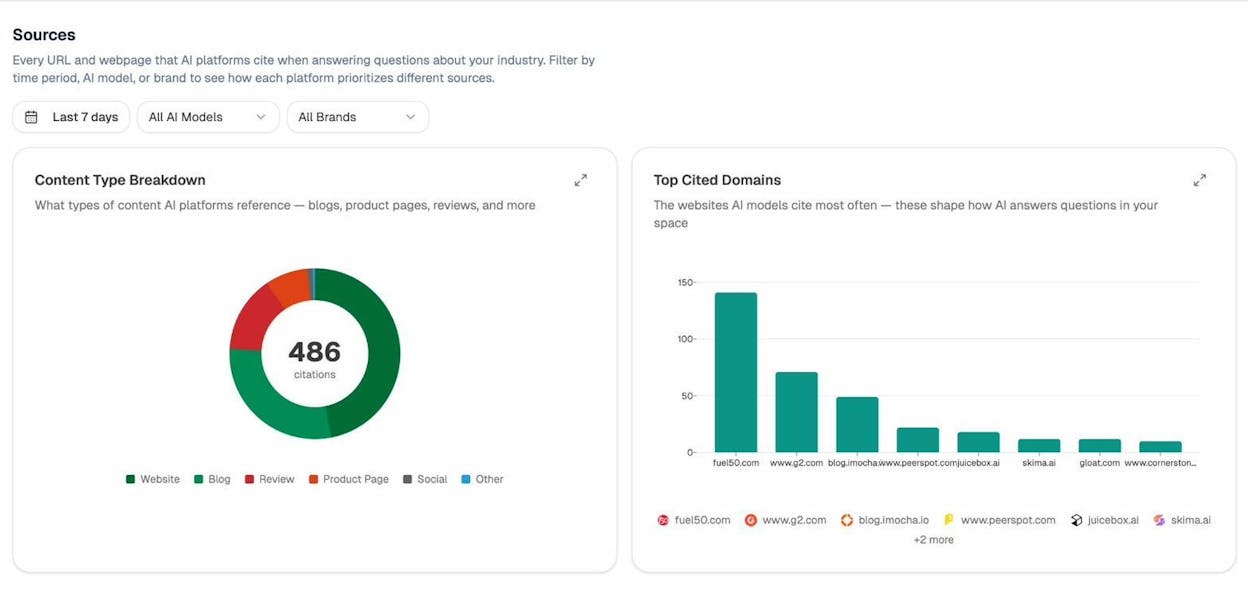
About 83% of all AI citations come from third-party sources (review sites, news articles, analyst reports, industry blogs). Only 17% come from the brand’s own website.
This mirrors the AI Overview finding about citation overlap. Just as AIO citations often come from sources outside the organic top 10, AI engine citations often come from sources outside the brand’s own properties.
This means earned media, third-party reviews, and industry mentions are critical inputs for AI visibility. You can’t control every citation, but you can influence what third-party sources say about you. And you can use the Sources feature in Analyze AI to see exactly which websites are being cited when AI engines mention your brand or your competitors.
Sentiment Varies Wildly by Engine
The same brand can be perceived very differently depending on which AI engine you ask. Our data found sentiment scores ranging up to 79 points apart for the same brand across ChatGPT, Claude, and Perplexity.
This happens because each engine pulls from different sources, weights them differently, and synthesizes answers with its own biases. A brand might score 79/100 in ChatGPT and 0/100 in Perplexity for the same query.
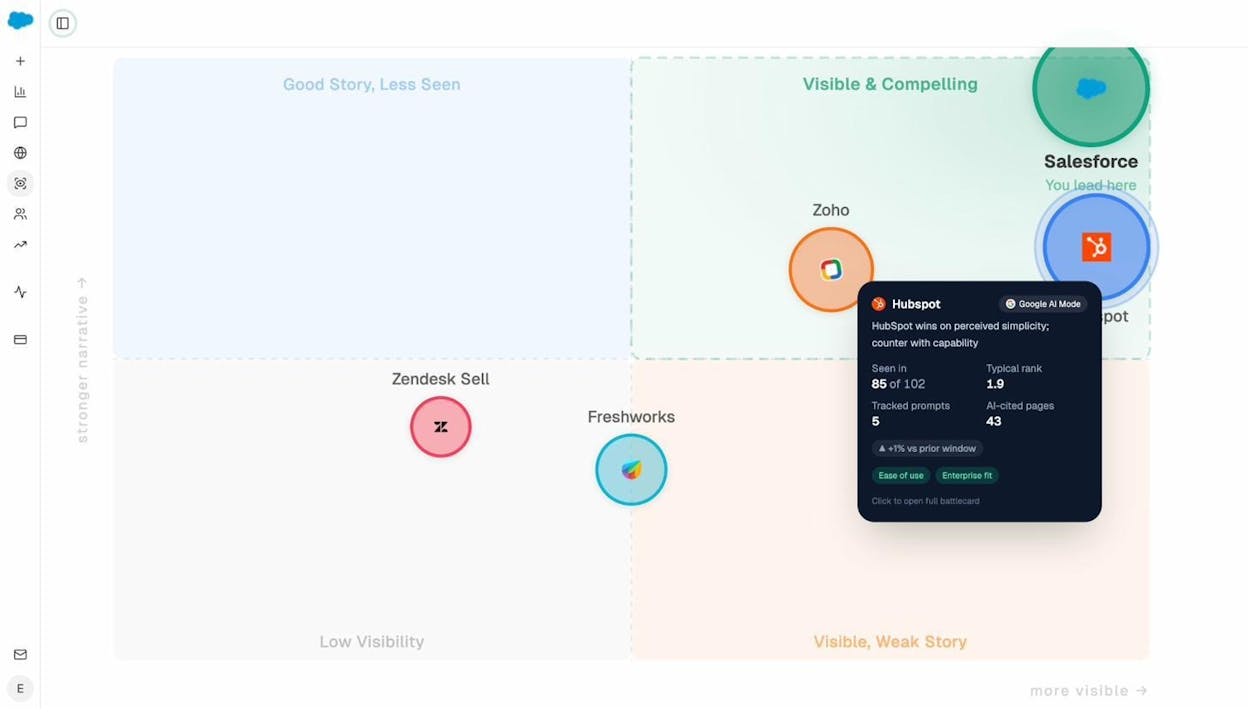
Monitoring AI sentiment across engines is how you catch these discrepancies before they become a problem. The Perception Map in Analyze AI visualizes how different AI engines position your brand relative to competitors across key attributes.
How to Respond: A Practical Framework
The data points toward a clear set of actions depending on your situation.
Step 1: Audit Your Current Exposure
Start by identifying which of your top keywords trigger AI Overviews. Use a keyword tool to filter your tracked keywords by SERP features and find the ones with AIOs.
Then check your AI search visibility. Use Analyze AI’s Prompt Discovery feature to find the prompts that people are using in AI search that relate to your industry or product category.
![[Screenshot: Using Analyze AI’s Prompt Discovery to find relevant AI search prompts]](https://www.datocms-assets.com/164164/1777582013-blobid16.png?auto=format,compress&w=1248&fit=max)
For a quick manual check, type your top 10 keywords into ChatGPT, Perplexity, and Google (with AI Overviews enabled) and record whether your brand appears, which competitors appear, and which sources are cited.
Step 2: Identify Where You’re Winning and Losing
Compare your visibility across Google organic, Google AI Overviews, and standalone AI engines. You’ll likely find gaps. Maybe you rank #1 organically for a keyword but don’t appear in the AI Overview. Or maybe you’re cited in ChatGPT but invisible in Perplexity.
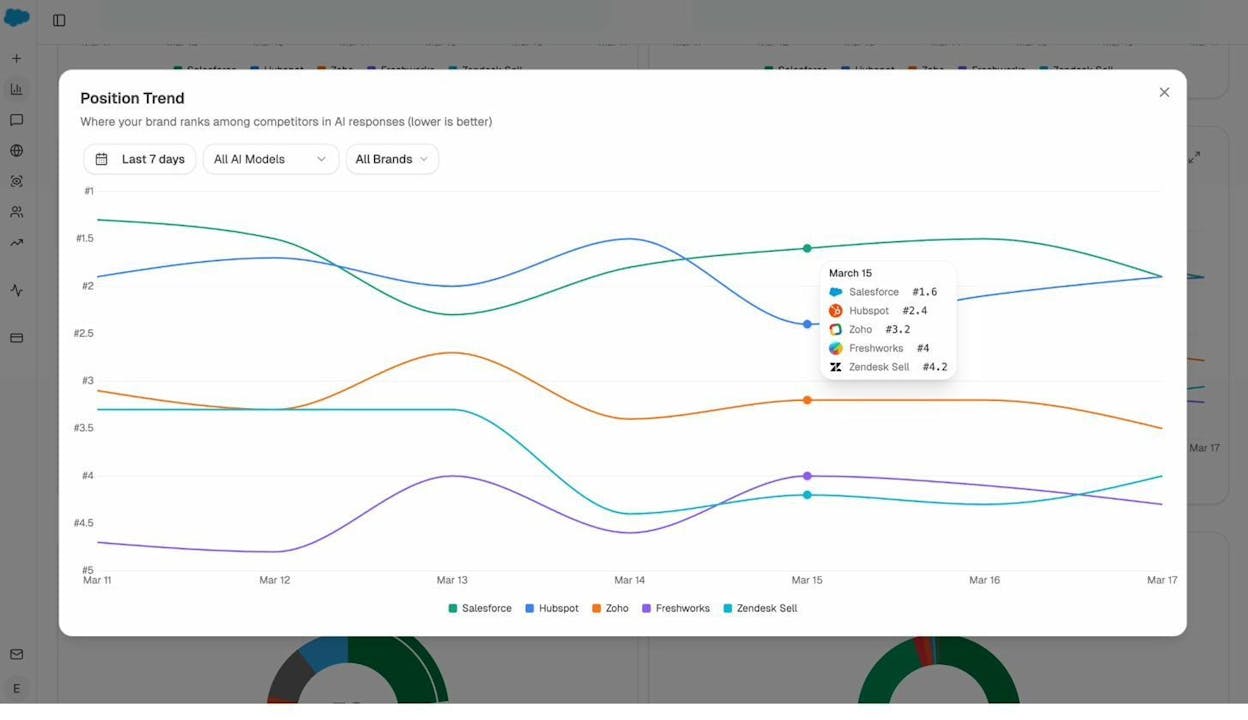
Analyze AI’s Overview dashboard gives you this view across all tracked prompts and engines in one place. The AI-generated summary at the top tells you which engine is your strongest channel and where your biggest competitor gap is.
Step 3: Optimize Your Content for Both SEO and AI Engines
Based on the data we’ve covered, the content characteristics that earn citations are the same ones that make for good SEO content. Clear structure, topical authority, original data, and genuine expertise.
The addition for AI is making sure your content is formatted in a way that AI models can parse easily. That means using clear heading hierarchies, answering questions directly at the start of sections (not buried in the middle), and including structured data where appropriate.
For a more hands-on approach, use the AI Content Optimizer in Analyze AI to analyze your existing pages against what AI engines are currently citing. The optimizer fetches your page, scores it on argument flow, clarity, and completeness, and generates editorial comments with specific improvement suggestions.
Step 4: Track Landing Pages That Already Get AI Traffic
One of the most actionable things you can do is look at which of your landing pages are already receiving traffic from AI platforms and double down on what’s working.
In the AI Traffic Analytics report, you can see which specific pages get visitors from ChatGPT, Claude, Perplexity, and other AI sources. These pages are the ones AI engines already trust enough to cite or link to.
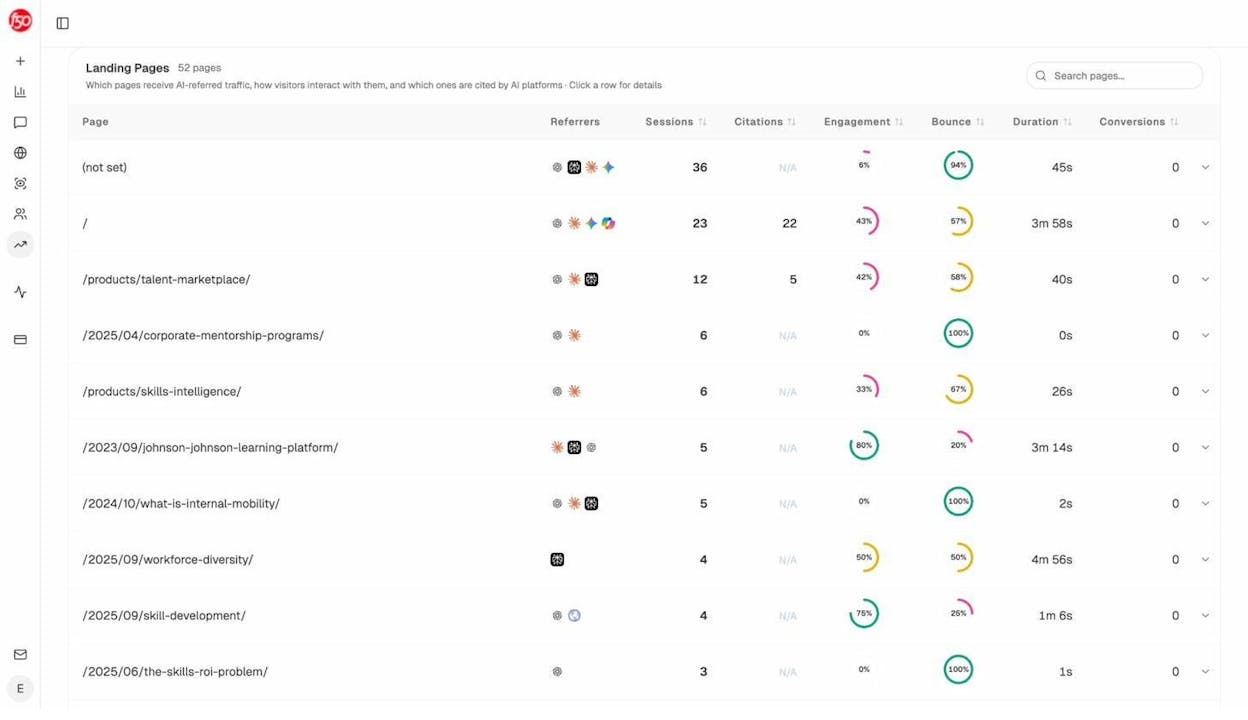
Study those pages. Look at what they have in common. Then apply those patterns to pages that aren’t getting AI traffic yet.
Step 5: Set Up Ongoing Monitoring
AI visibility is not a one-time audit. Citation patterns change, AI engines update their models, and competitors adjust their strategies. Set up recurring tracking to catch changes early.
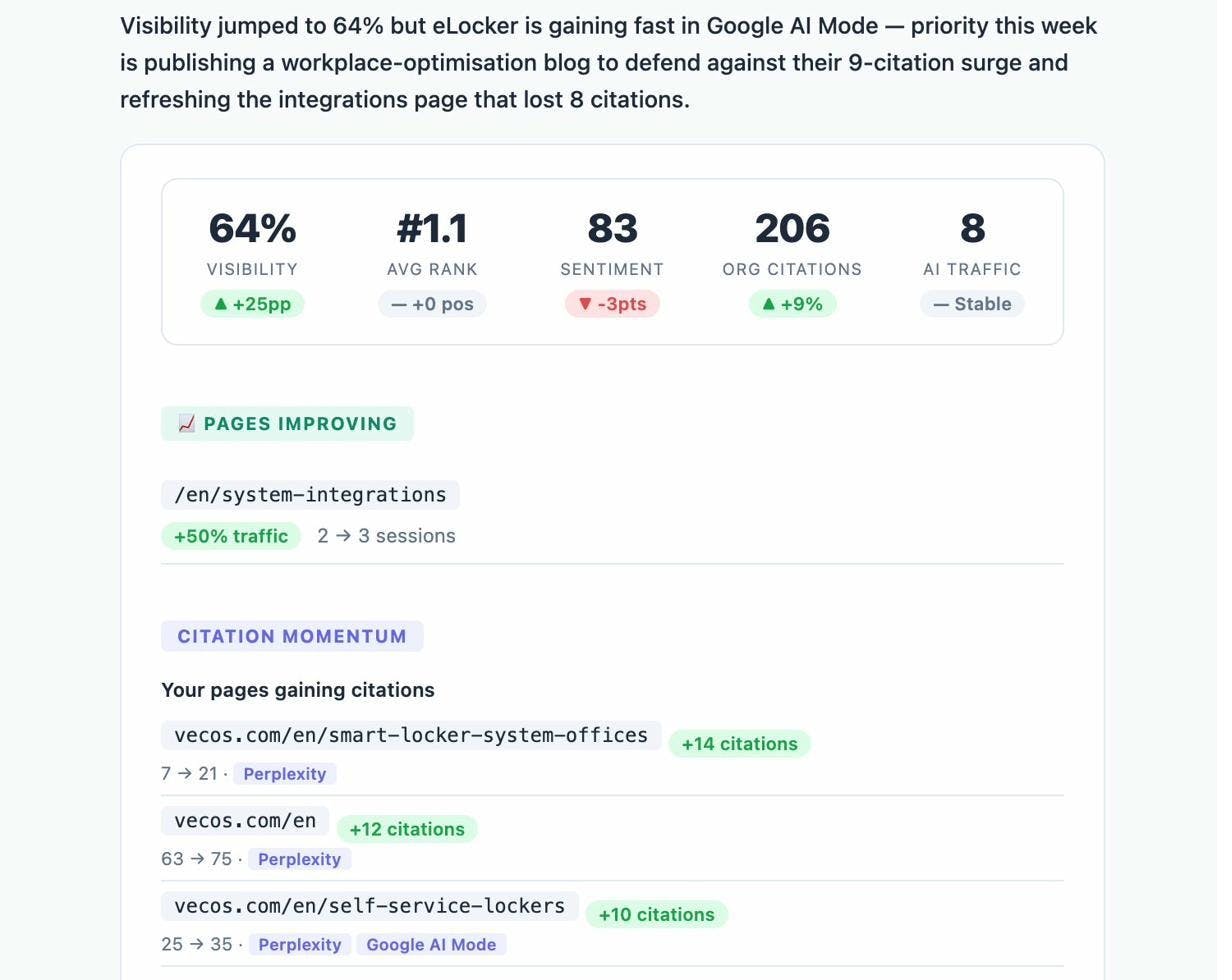
Analyze AI’s Weekly Email Digests send you a summary of your AI visibility changes each week, including new competitor movements, sentiment shifts, and citation changes.
The Bigger Picture: SEO Is Not Dead, but It Is Evolving
Every data point in this article supports the same conclusion. AI Overviews are expanding, they are eating into organic clicks for informational queries, and they are changing how brands need to think about search visibility.
But the data also shows that more than half of all search queries still return a traditional results page. Local SEO, news SEO, and brand-driven search remain largely unaffected. And even in AI-heavy categories, the content that earns AI citations is the same content that performs well in traditional SEO.
The right response is not panic, and not denial. It’s adding AI search as another organic channel alongside traditional SEO. Track both. Optimize for both. Measure both.
That’s the approach we advocate at Analyze AI, and it’s the approach this data supports.
Further Reading

Ernest

Ibrahim


