



Summarize this blog post with:


In this article, you’ll see the seven enterprise SEO platforms that actually earn their contracts in 2026. You’ll get real pricing for every tool, the workload each one is built for, where it falls short, and how to layer in AI search visibility without bolting on another vendor.
Table of Contents
TL;DR: the seven tools at a glance
|
Tool |
Starting price |
Best fit |
Watch-out |
|---|---|---|---|
|
seoClarity |
$3,600/m (1 domain) |
Single source of truth across rankings, content, technical, analytics |
Steep ramp, premium pricing |
|
BrightEdge |
~$12,000/year, enterprise avg $127K |
Global brands needing content + technical + AI Catalyst |
Custom pricing only, heavy onboarding |
|
Conductor |
$26,800/year floor, median $48,950 |
Content-led in-house teams that want SEO and AI visibility in one place |
Light on deep technical SEO, no public pricing |
|
Botify |
$75K–$150K/year mid-size, up to $400K+ |
Sites with 500K+ URLs facing crawl or indexation pain |
Overkill below 500K URLs, requires technical owner |
|
Semrush Enterprise |
Business $499.95/m, Enterprise custom |
Cross-channel marketing teams wanting SEO + PPC + social + AI in one |
Breadth becomes sprawl without clear owners |
|
Ahrefs Enterprise |
From $14,990/year |
Teams that live on link and keyword data |
Lighter on workflows and governance |
|
Analyze AI |
$99/m, $250/m, Custom |
Teams that want AI search visibility + an agentic platform that runs SEO, content, and GTM ops |
Pair with a deep technical crawler for very large sites |
Now the long version, with what each tool gets right and where it stops earning its contract.
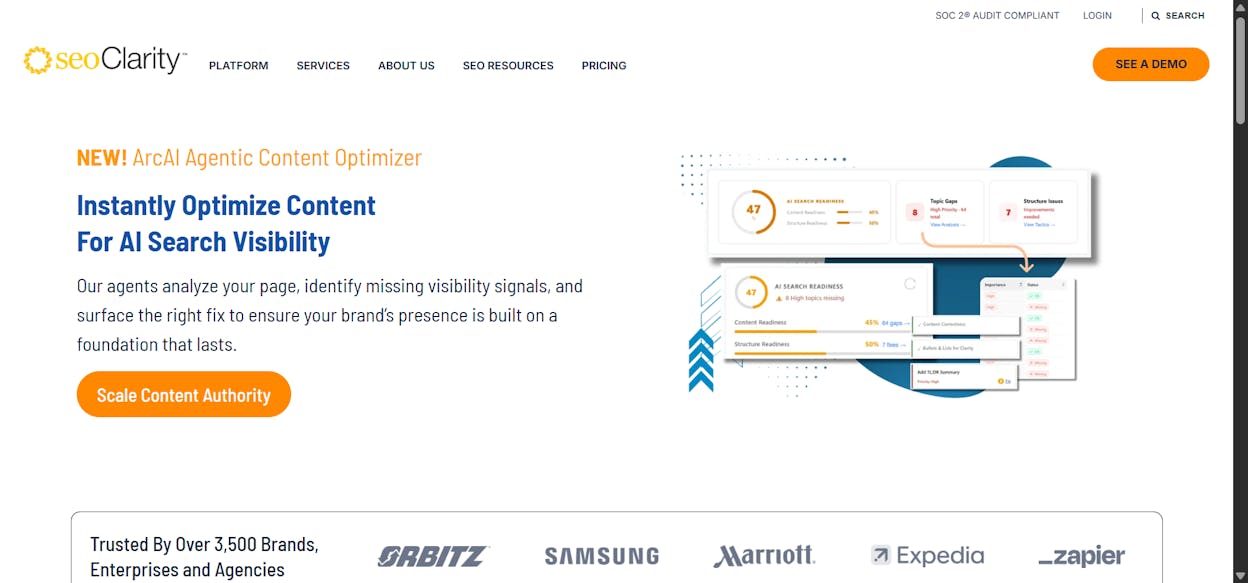
1. seoClarity: best for building one SEO source of truth
Standout features
-
Unified rankings, crawl, content, and analytics in one workspace
-
Very large keyword and topic database covering global markets
-
Unlimited crawling and audits, even on multi-million-URL sites
-
ClarityAutomate to roll out schema, internal links, and on-page changes at template scale
-
Custom dashboards with role-based views for SEO, content, and exec stakeholders
Pricing
seoClarity is one of the few enterprise platforms that publishes a floor. It starts at $3,600 per month for one domain and $4,500 per month for multiple domains, which works out to $43,200 to $54,000 a year before any add-on modules. Add-ons and large keyword sets push that higher.
Where it fits
seoClarity is built for teams whose biggest problem is fragmentation. If you have 12 dashboards and your weekly meeting starts with someone asking which number is correct, seoClarity collapses that into one view. ClarityAutomate is the differentiator. You can roll a schema change across 4,000 product pages without filing a dev ticket. For teams stuck waiting on engineering, that alone pays for the license.
Where it falls short
The depth is also the problem. New users hit a wall in week one. Teams without a dedicated SEO owner use maybe 30% of the platform. It’s pure SEO, so you still need separate tools for paid, social, and PR.
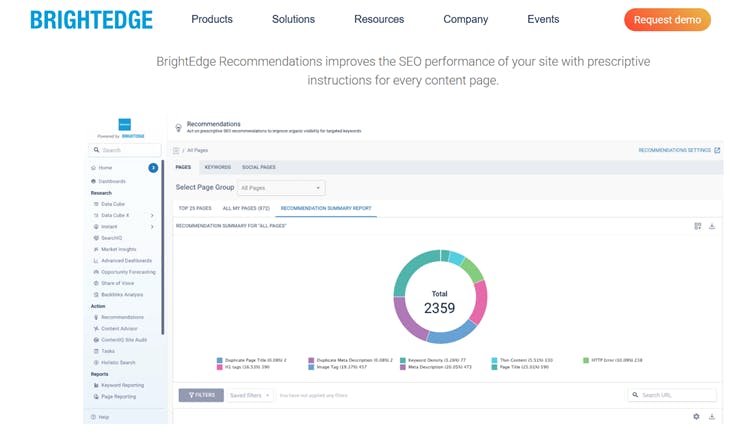
2. BrightEdge: best for global content performance and answer engines
Standout features
-
DataCube for deep keyword, topic, and competitor data across markets
-
ContentIQ for technical audits and site-health checks at scale
-
Share of Voice tracking against named competitors
-
Copilot and Autopilot for AI-assisted recommendations
-
AI Catalyst module for visibility inside AI Overviews and answer engines
Pricing
BrightEdge does not publish list pricing. Independent benchmark data puts entry contracts at around $12,000 a year for the Professional tier, with enterprise contracts averaging $127,080 a year and global deployments running well past $200,000. SpendHound reports enterprise pricing rose 14.49% year-over-year, which matters at renewal.
Where it fits
BrightEdge sits at the center of global SEO programs because DataCube reads demand in many markets at once and ContentIQ scans millions of pages for the technical issues that quietly drag a site down. If you run dozens of country domains and need shared dashboards for SEO, content, and exec teams, BrightEdge handles it.Where it falls short
BrightEdge rewards teams that assign clear owners to research, audits, content, and reporting. Without that structure, modules sit unused. Onboarding runs two to three months, training is on top of the license, and smaller catalogs do not unlock the value.
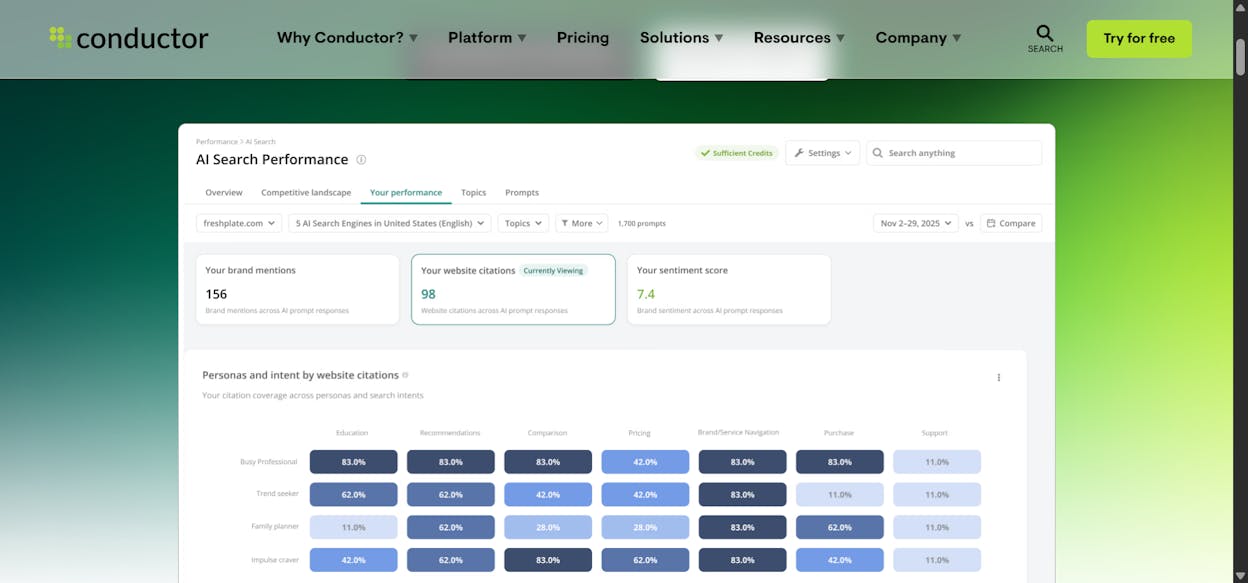
3. Conductor: best for content-led teams wiring SEO to revenue
Standout features
-
Strong keyword and search-intent data for editorial planning
-
Competitor and share-of-voice tracking for rankings and content
-
Built-in site auditing and real-time monitoring (acquired via ContentKing)
-
AI visibility tracking tied to GA4 conversions and revenue
-
Conductor Creator for AI content generation and Conductor Intelligence for reporting
Pricing
Conductor uses custom pricing only. Vendr’s transaction data shows a floor of $26,800 a year, a median of $48,950 for mid-market, and enterprise contracts pushing past $150,000 to $500,000+ for global, multi-domain deployments. Implementation and professional services typically add 50–100% to first-year cost.
Where it fits
Conductor is the right call when your SEO program is content-led and your CFO wants to see SEO tied to revenue, not rankings. The unlimited keyword tracking model is real, not marketing copy, and Content Guidance turns intent research into writer-ready briefs without leaving the platform.
Where it falls short
Conductor is lighter on deep crawl analysis and log-file diagnostics than tools built for that. Enterprise-scale catalogs still pair it with Botify or Lumar. The full value also depends on a clean GA4 setup. If your analytics is messy, Conductor’s ROI features can’t deliver what they promise.
4. Botify: best for crawl, log files, and indexation at scale
Standout features
-
Botify Analytics, Intelligence, and Activation as a three-module stack
-
Log-file analysis that shows exactly how bots crawl your site
-
Crawl data at scale for sites with millions of URLs
-
Activation to push pages into indexation through CDN and infrastructure integrations
-
Detailed signals per URL across templates, sections, and regions
Pricing
Botify is custom-quoted with no public list price. Industry benchmarks put mid-sized deployments at $75,000 to $150,000 a year and enterprise contracts at $400,000+. There is no free trial and no monthly billing. Contracts run 12 to 36 months.
Where it fits
If your site has 500,000+ URLs and you’ve watched traffic drop without a clear cause, Botify will probably tell you why. The log-file analysis is the part you can’t replicate with another platform. It shows where Googlebot wastes crawl budget on faceted URLs, where bots never reach your money pages, and where rendering issues quietly kill indexation across templates.
Where it falls short
Botify is a technical SEO platform. Content-only teams do not get value from it. Below 500,000 URLs, Screaming Frog at $259 a year plus a keyword tool covers ~80% of what you need at roughly 1% of the cost. The data is dense enough that you need a dedicated technical SEO owner to act on it.
5. Semrush Enterprise: best all-in-one suite for cross-channel marketing teams
Standout features
-
Full SEO toolkit across keyword research, audits, rank tracking, and backlinks
-
AI Visibility Toolkit and AI Visibility Index for answer engines
-
Cross-channel coverage including PPC, social, PR, and competitive research
-
Site Intelligence for technical health monitoring at scale
-
Semrush One bundles SEO and AI visibility into one plan
Pricing
Semrush publishes its tiers. Pro is $139.95/m, Guru $249.95/m, Business $499.95/m. Semrush One starts at $199/m and includes the AI Visibility Toolkit. Enterprise is custom, with SpendHound benchmarking the average at around $18,240 a year. Watch the per-seat fees. A 3-person Guru team pays $410/m, not $250/m. The AI Visibility Toolkit costs $99/m as an add-on if you don’t take the bundle.
Where it fits
Semrush Enterprise makes sense when one team owns SEO, PPC, social, and PR and you’d rather pay one vendor than four. The breadth replaces several tools, the AI Visibility Toolkit covers answer engines without a separate purchase, and the ecosystem of templates and training shortens the ramp for new hires.
Where it falls short
The same breadth becomes the cost. Without clear internal owners for each module, the suite feels confusing and most teams use only a slice. Very large sites still need a separate technical crawler. And Semrush’s AI Toolkit is fine for surface-level visibility, but it stops at “you appeared in ChatGPT” without tying that appearance to actual traffic or conversions.
6. Ahrefs Enterprise: best for link intelligence and keyword depth
Standout features
-
Site Explorer, Keyword Explorer, Rank Tracker, and Site Audit as the core stack
-
One of the largest backlink indexes in the industry
-
Portfolios that group up to 10 domains into one consolidated view
-
AI-assisted Opportunities tool with suggestions linked to relevant reports
-
Instant keyword clustering and team-oriented features for larger orgs
Pricing
Ahrefs is one of the few enterprise tools with a public starting price. Ahrefs Enterprise starts at $14,990 a year. SpendHound benchmarks enterprise spend at ~$11,808 a year on average across customers, with extra users adding a flat $50/m each.
Where it fits
Ahrefs is the best pure-data tool on this list. If your work is competitive analysis, backlink intelligence, keyword research, and SERP tracking, Ahrefs gives you the cleanest UI for those tasks and the deepest backlink index. The Enterprise tier expands crawl quotas and historical data, which matters when you’re auditing several domains at once.
Where it falls short
Ahrefs is data-first, not workflow-first. There’s no shared content brief tool, no governance layer, no AI search visibility tracking that ties to conversions. Teams running content-led programs pair it with another platform. And while the entry price looks reasonable, additional seats and high crawl needs push costs up quickly.
7. Analyze AI: best for AI search visibility plus the agentic platform underneath
Standout features
-
Visibility tracking across ChatGPT, Perplexity, Claude, Gemini, Copilot, Grok, and DeepSeek
-
Prompt-level intelligence with share of voice, sentiment, and competitor gaps
-
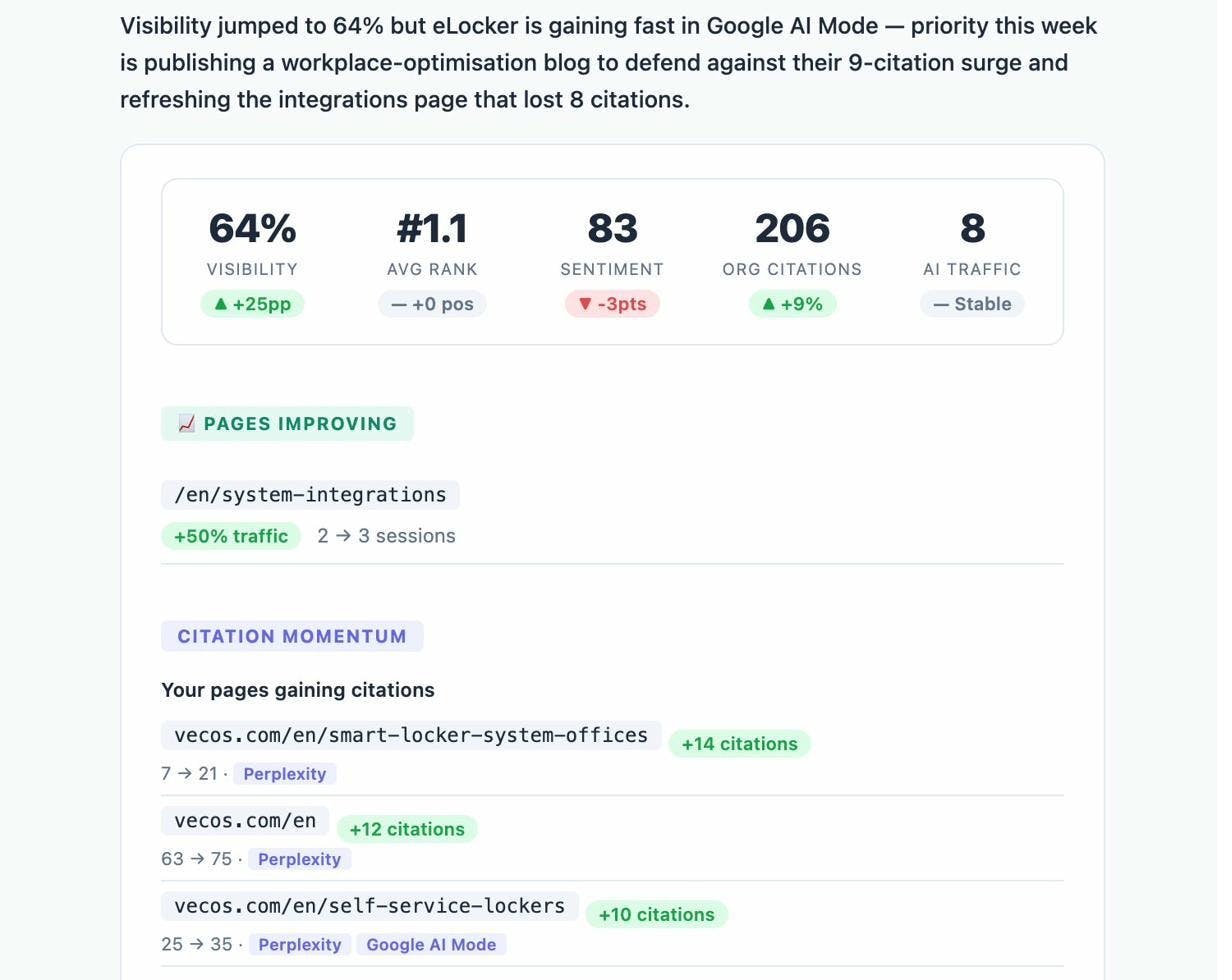
AI Traffic Analytics tying answer-engine visibility to GA4 sessions, landing pages, and conversions
-
Content Writer and Content Optimizer that produce drafts the editorial team actually keeps
-
Agent Builder with 180+ nodes, 34 pre-built data recipes, and integrations across GA4, GSC, DataForSEO, Semrush, HubSpot, Notion, WordPress, Slack, and major LLMs
-
Free tools suite covering SEO audits, keyword difficulty, SERP checking, website authority, and broken links
Pricing
Analyze AI publishes everything. Growth $99/m, Pro $250/m, Custom for enterprise. Unlimited seats on every plan, no per-user fees, cancel anytime. The Custom plan covers all AI engines, custom prompt volumes, unlimited Content Writer and Optimizer workflows, daily recommendations, a dedicated account manager, and custom integrations.
Where it fits
Analyze AI started as the AI search visibility platform, and that’s still the front door. You can track which prompts you appear in, which competitors appear beside you, which domains the models cite, and how all of that maps to real GA4 sessions and conversions.
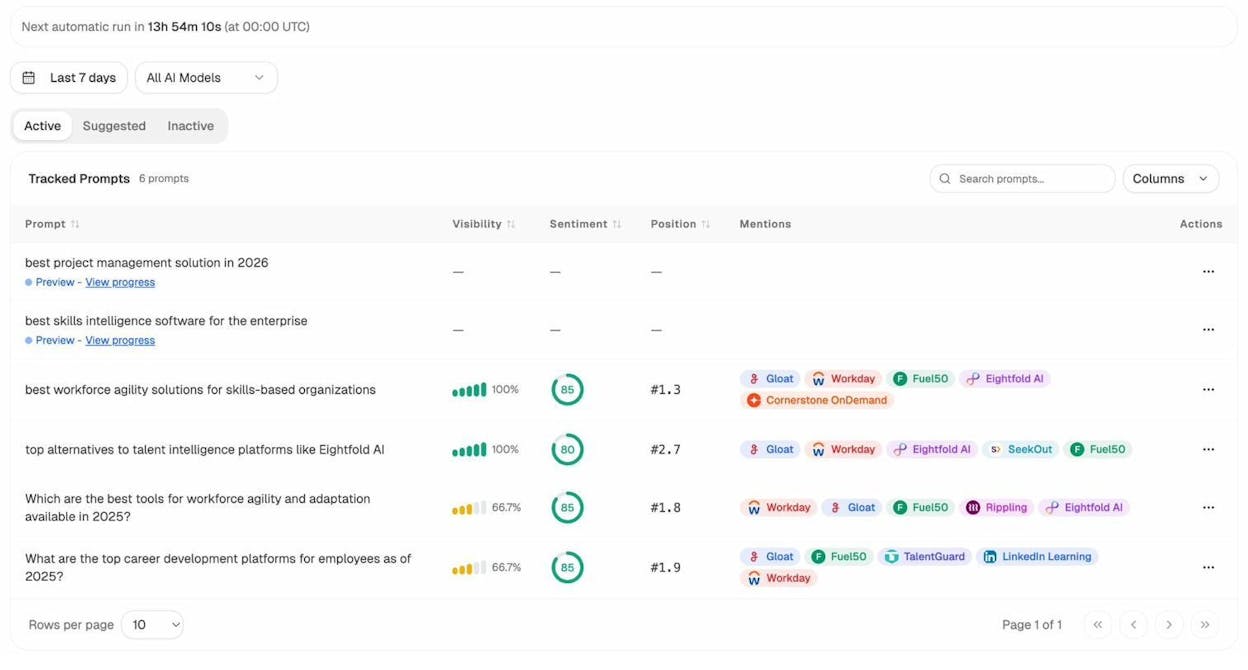
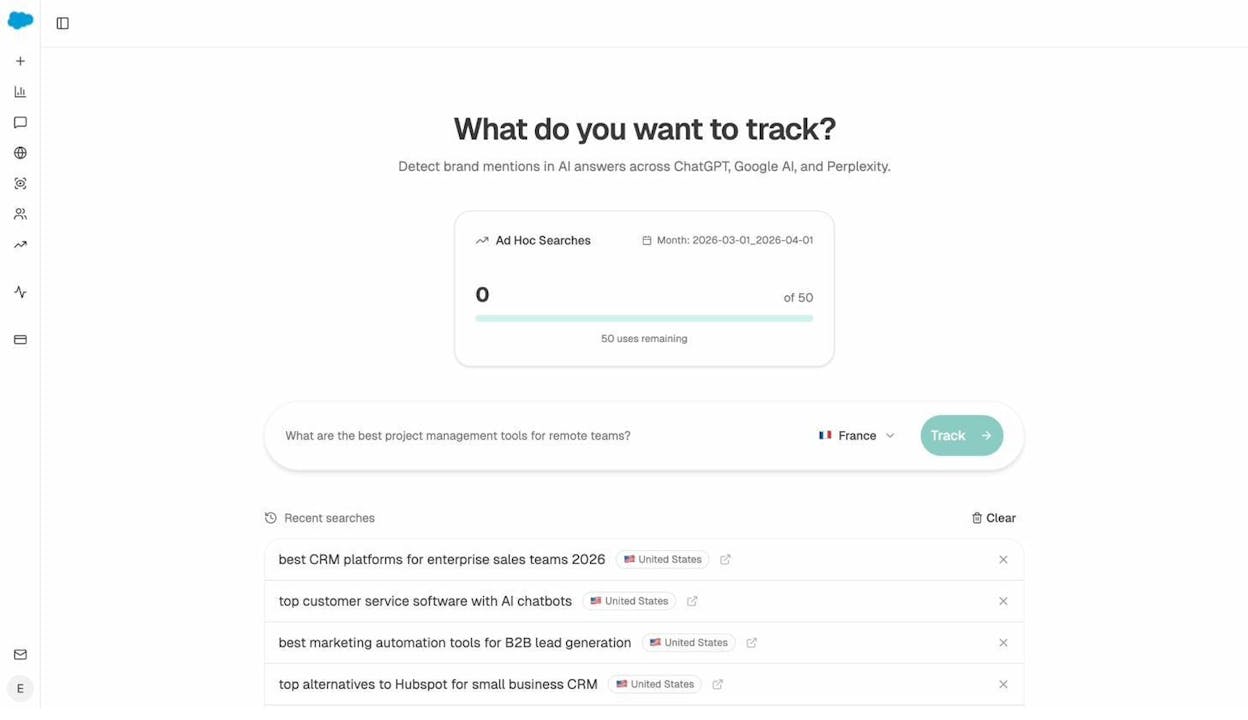
You set the prompts you care about (or let Analyze AI suggest the bottom-of-funnel ones based on your domain), and the platform queries each engine on schedule. For one-off questions, ad hoc search checks a prompt across every engine in seconds.
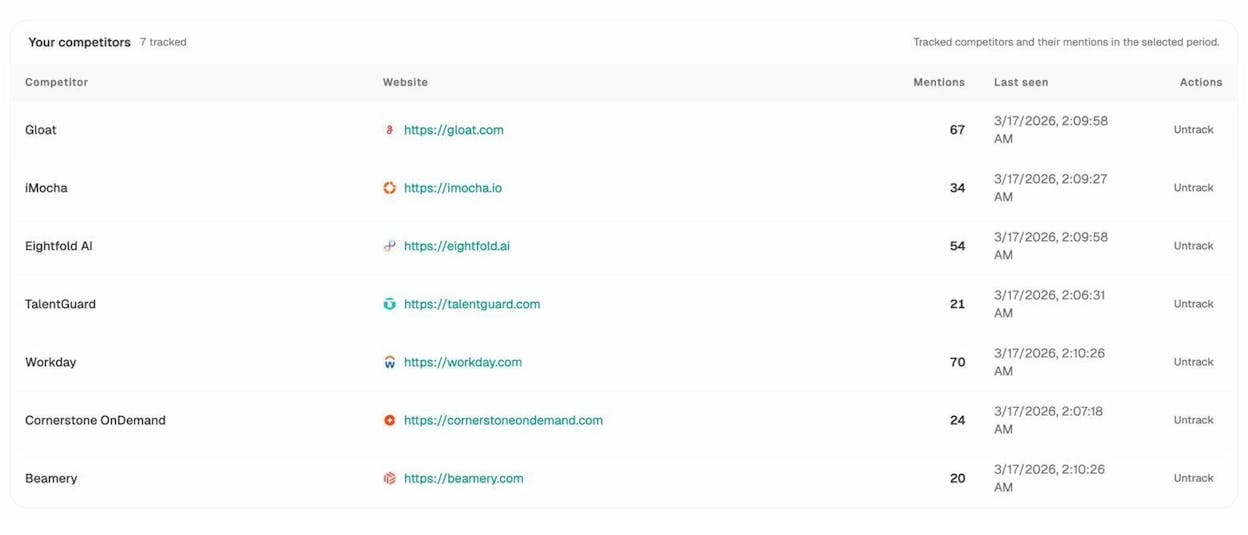
The competitor view tells you exactly where you lose. You see where rivals get cited and you don’t, how that’s trending, and which prompts to compete for next week.
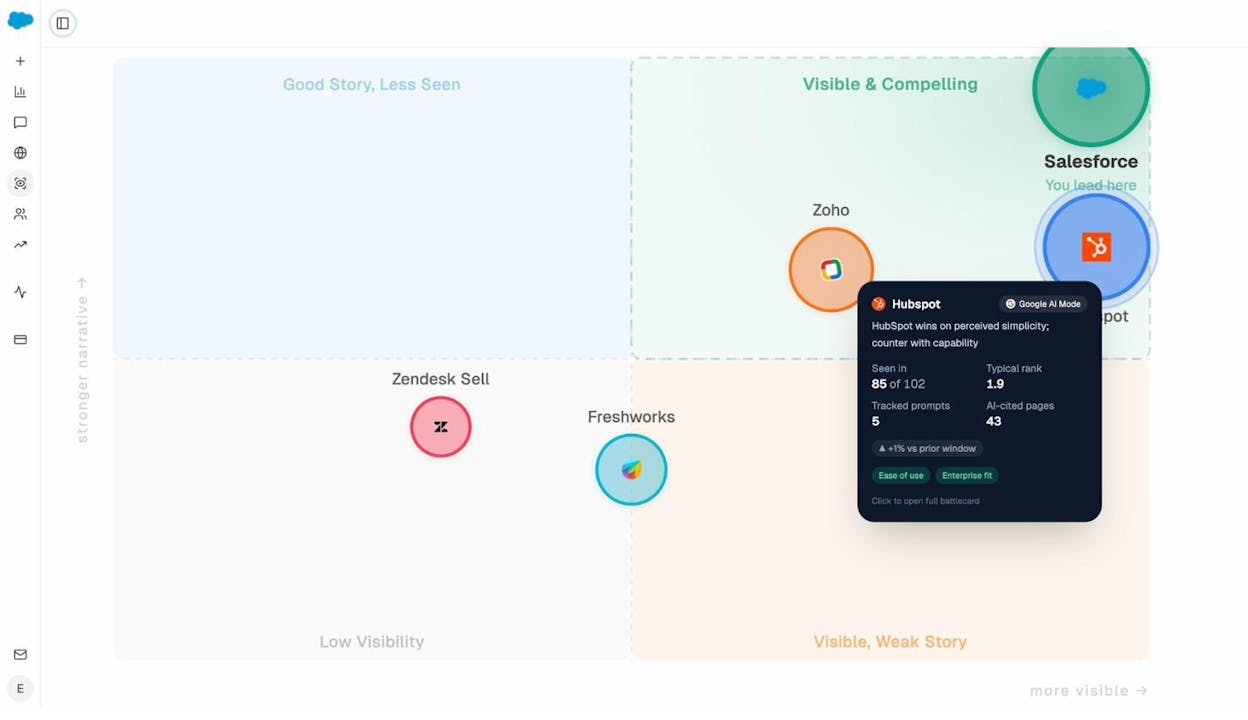
The Perception Map plots every tracked brand on a presence × narrative-strength quadrant. This is the slide that lands in the board deck.
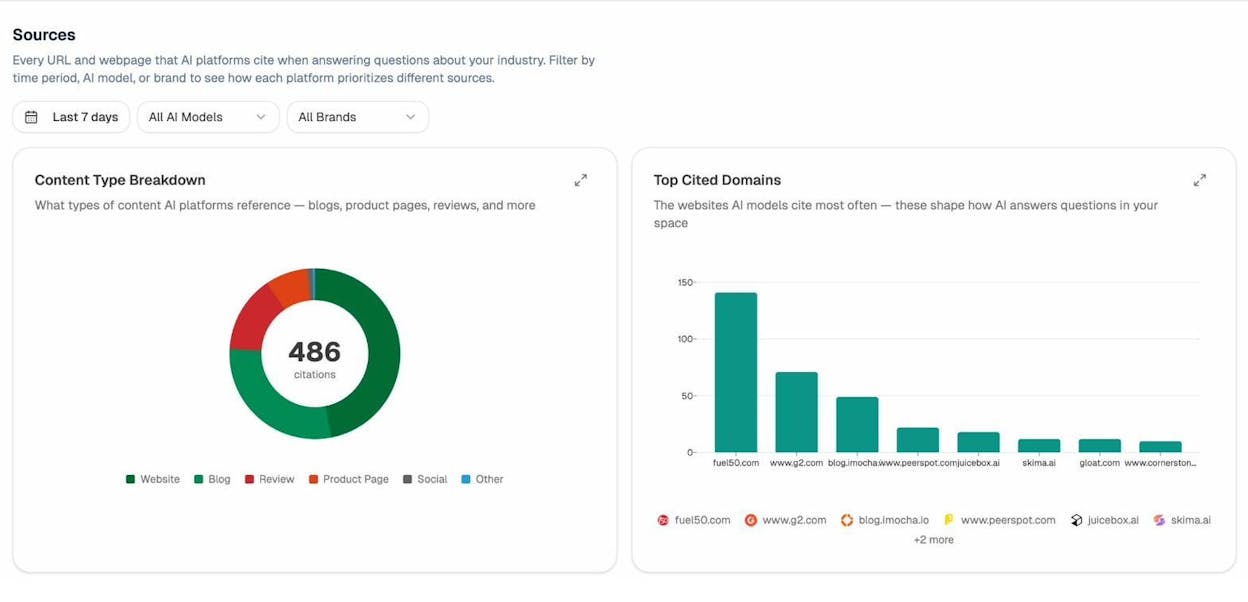
Citation Analytics shows which domains the models pull from to write their answers. That tells you where to focus authority-building and which competitor pages you’re losing citations to.
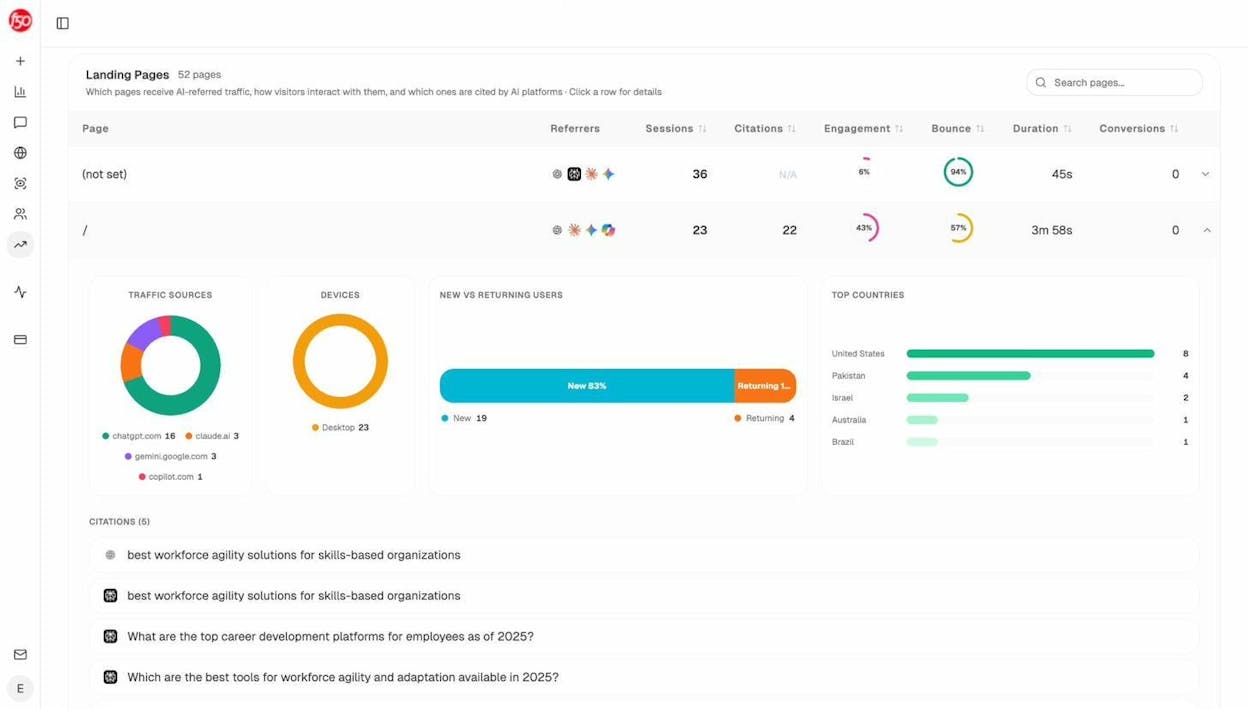
The piece that closes the loop is AI Traffic Analytics. Most AI search tools stop at “you appeared in ChatGPT.” Analyze AI ties that appearance to real sessions in GA4, which landing pages received them, and how many converted.
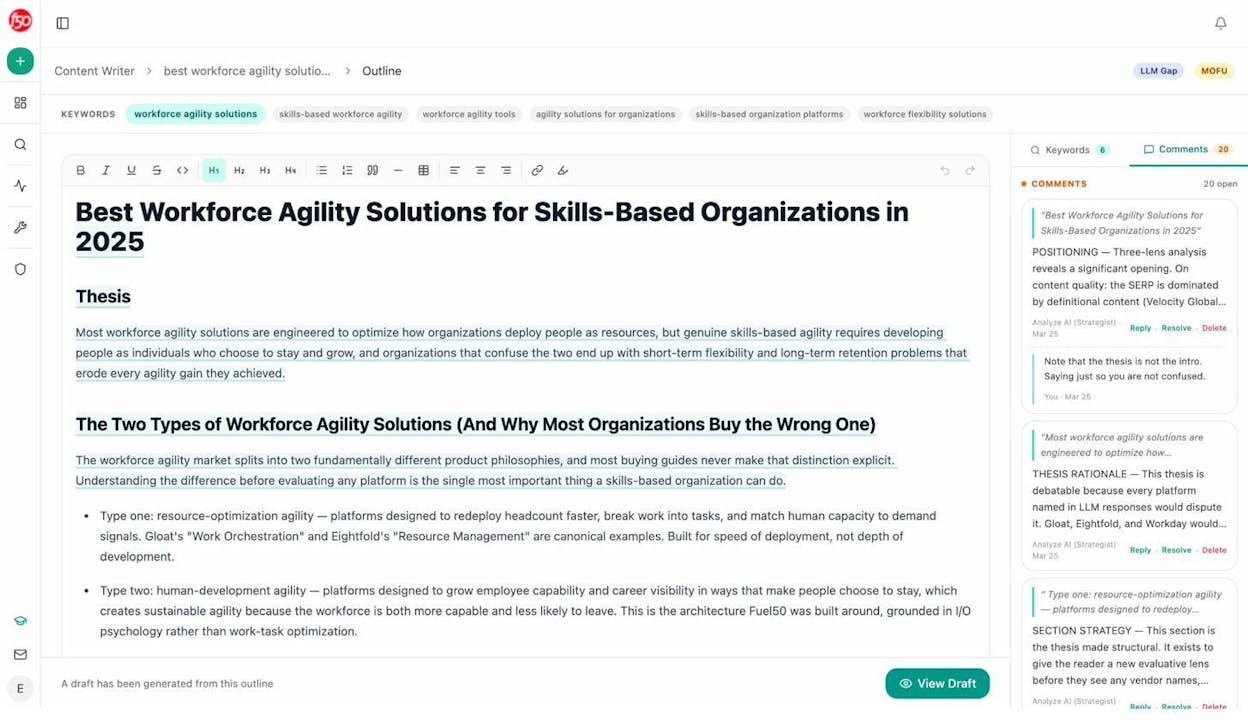
Then there’s the part most reviews miss. The Content Writer turns a brief into a researched draft that follows your brand voice rules and clears the AEO scorecard before you read it.
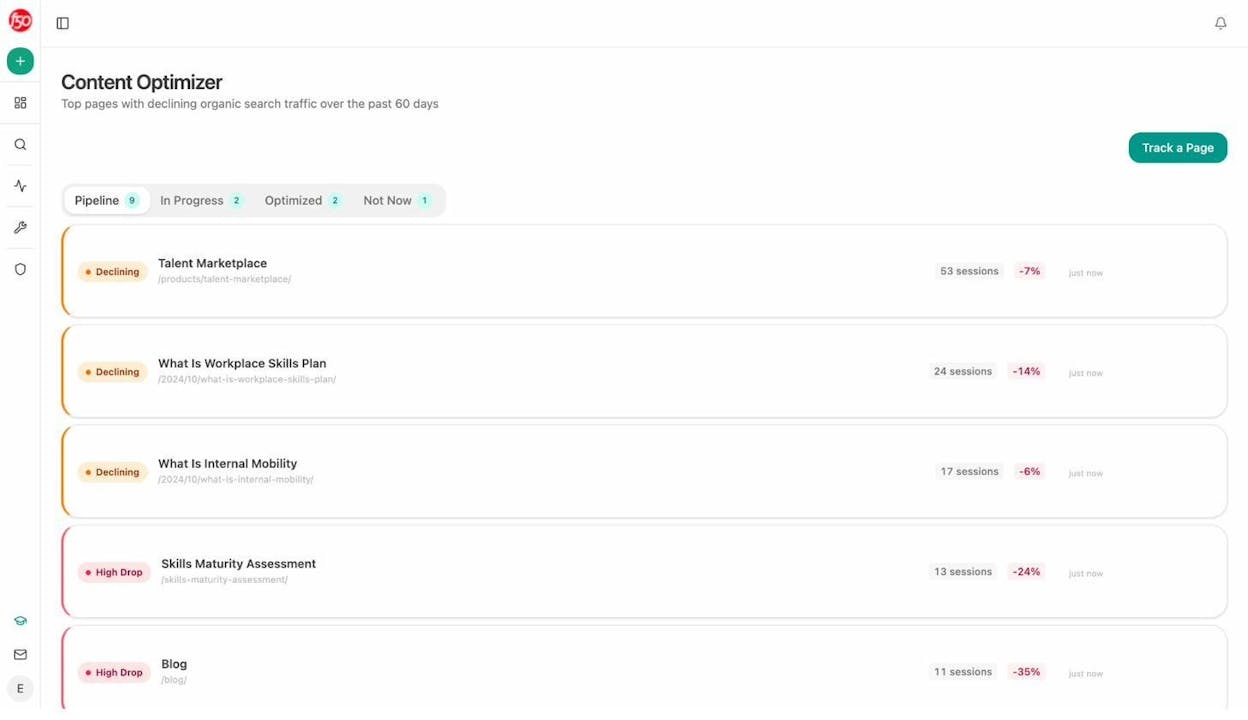
The Content Optimizer takes a URL that’s losing visibility, scores it against the gaps it actually has, and rewrites the sections that matter. Both pipelines work because they pull from your brand vault, your citation data, and the prompts you care about, then produce drafts you can ship.
And then there’s the Agent Builder. This is the part of the platform most reviews miss entirely.
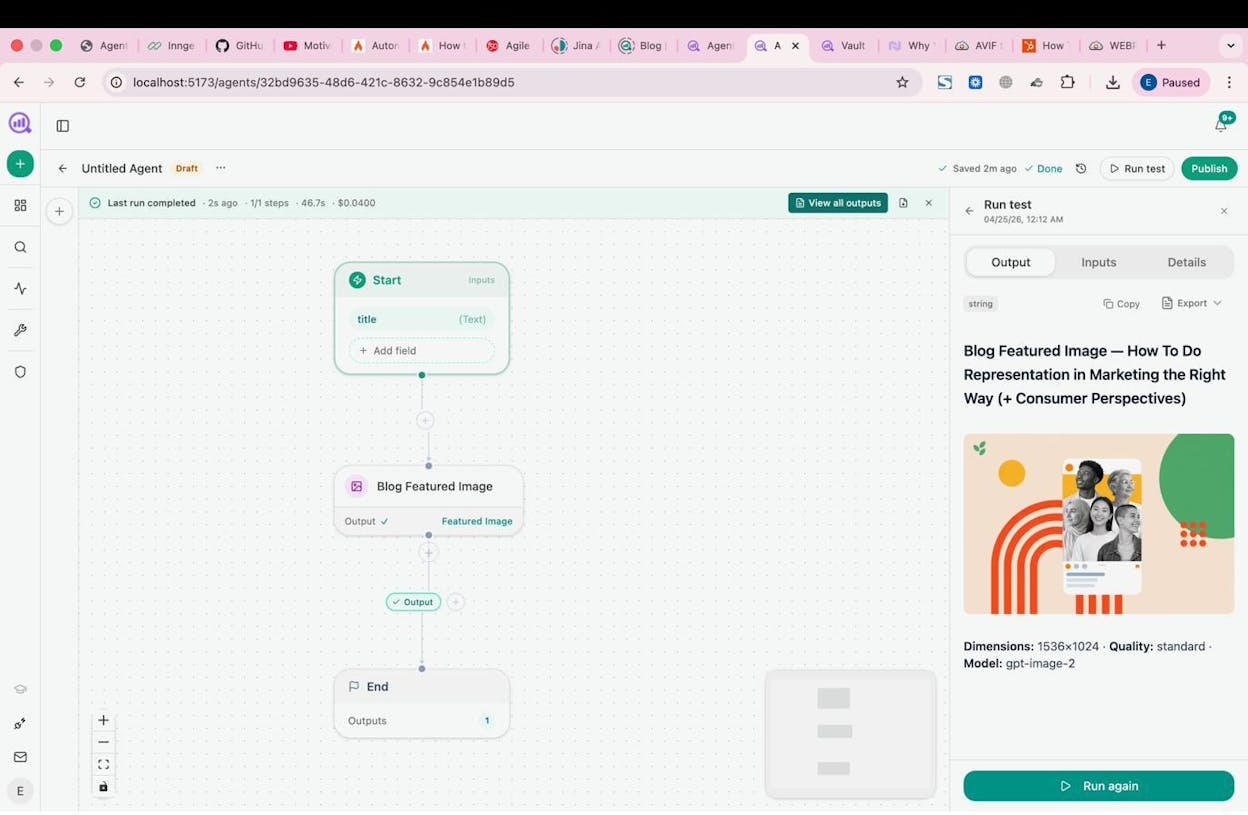
The Agent Builder is the substrate the rest of the platform runs on. It gives you 180+ production-ready nodes, 34 pre-built data recipes, and three trigger modes (manual, schedule, webhook). The nodes cover GA4, GSC, DataForSEO (27 nodes for keyword research, SERP, backlinks, brand mentions, on-page audits, Lighthouse, news research), Semrush, HubSpot (full CRM read/write), Notion, WordPress with media upload, Sanity, Contentful, Mailchimp, Tomba, Hunter, every major LLM, Slack, and more.
The point is not the node count. The point is the workflows you can wire together:
-
Monday board prep: scheduled agent pulls share of voice, GA4 AI traffic, GSC top pages, and new HubSpot deals, then drafts an executive summary and emails leadership before 7am.
-
Brief-to-publish: webhook from Notion triggers research, outline, full draft, AEO scorecard, and if the score passes 80 it auto-publishes to WordPress with featured image and inline images.
-
Content refresh fleet: weekly schedule finds declining pages, rewrites them for freshness and AEO, and pushes the diff back to WordPress.
-
Citation decay alert: daily check pings Slack with any page losing AI citations faster than traffic.
-
Inbound lead enrichment: Typeform fill triggers Hunter, Tomba, DataForSEO domain overview, and a HubSpot contact with notes attached before your AE replies.
-
Crisis early warning: 15-minute schedule scans brand mentions, filters by sentiment, and Slacks the PR team with source URLs before the CEO sees the article.
None of those require a separate Zapier, Make, n8n, or Retool subscription. The data is already in the platform.
Where it falls short
Analyze AI focuses on AI search visibility and the agentic substrate around it. If your problem is crawling 5 million URLs and reading log files at that scale, you still want Botify. If your link database needs to be the deepest available, Ahrefs still wins on raw index size. Analyze AI is built to sit alongside one of those, not replace them. AI search visibility also moves faster than traditional SEO, which is why monitoring habits matter and why weekly digests are built in.
How to choose between these seven
After you strip the marketing language away, the choice usually comes down to four questions.
1. What’s your biggest pain right now? If it’s “we can’t agree on the numbers,” seoClarity. If it’s “Googlebot isn’t crawling our money pages,” Botify. If it’s “our content isn’t moving revenue,” Conductor. If it’s “we’re invisible in ChatGPT and our pipeline is leaking to competitors who aren’t,” Analyze AI. If it’s “we want one tool for SEO, paid, social, and PR,” Semrush.
2. What’s your annual budget? Under $20K: Ahrefs Enterprise or Analyze AI Custom. $25K–$75K: Conductor or BrightEdge floor tier. $75K+: any of the above plus seoClarity or Botify. The platforms that won’t publish a price are usually the ones whose pricing surprises you. Get a quote from at least two competitors before you sign anything custom.
3. Do you have a dedicated owner? Botify, BrightEdge, and seoClarity all reward dedicated owners. Without one, you use a fraction of the platform. Conductor, Semrush, Ahrefs, and Analyze AI are more accessible to mixed in-house teams.
4. Is AI search part of the strategy or not? If yes, it should be a first-class column in your evaluation. Analyze AI and Conductor treat it that way. Semrush, BrightEdge, and Ahrefs have it as an add-on or module. seoClarity and Botify focus elsewhere. Pretending AI search is a “nice to have” in 2026 is a bet against where buyers are spending their time.
A note on SEO and AI search (because everyone gets this wrong)
Every enterprise SEO vendor is now selling some version of “AI search is killing SEO, buy our new module.” That’s panic marketing. Buyers are searching differently. They get answers from ChatGPT, Perplexity, and Gemini instead of clicking through blue links. The way buyers find you is changing. The reason they choose you is not.
Quality content still wins. The brands showing up in AI answers are the ones with clear, useful, well-sourced content. The difference is that your content has to work for AI models too, not just Google. Treat AI search as an additional organic channel, alongside traditional SEO, not a replacement. You still need keyword research, technical SEO, and a content engine. You just also need to know which prompts your buyers ask, who’s cited, and how that maps to revenue.
That’s why the right stack is layered. A core SEO platform (Ahrefs, Conductor, Botify, or seoClarity depending on weight class) plus Analyze AI sitting on top for AI visibility, content production, and the agentic workflows that connect everything. We’ve written more on how AI search is evolving alongside SEO if you want the longer view.
What this looks like next week
Pick seoClarity when fragmentation is your worst enemy. Pick BrightEdge when global content, technical, and AI Catalyst all matter. Pick Conductor when content drives your SEO program and you need ROI tied to revenue. Pick Botify when crawl and indexation are the bleeding artery. Pick Semrush when one team owns SEO, paid, and social. Pick Ahrefs when raw link and keyword data is the work. Pick Analyze AI when you need AI search visibility plus a programmable substrate that runs SEO, content, and GTM operations underneath.
If you want to see what AI search visibility looks like for your domain in the next 10 minutes, start with Analyze AI on Growth or book a demo for the Custom plan. Get a quote from at least two other names above before you sign anything custom. Enterprise SEO pricing is a negotiation, not a price tag.

Moïse

Ernest


