



Summarize this blog post with:


Clay is a powerful data enrichment and workflow platform. But most of its value centers on sales prospecting. If you’re a content marketer, an agency owner running campaigns for multiple clients, or a CMO trying to scale marketing operations, Clay’s $185 to $495+ per month feels steep for a tool that doesn’t help you write, optimize, or distribute content.
You need something different. In this article, you’ll see 10 Clay alternatives built for marketing and content teams, not just SDRs chasing leads. You’ll learn what each tool does well, where it falls short, what it costs, and which one gives you the most leverage if your job is to create content, run SEO, manage outreach, and now track AI search visibility on top of it all.
Table of Contents
What to look for in a Clay alternative for marketing
Not every Clay alternative will fit your stack. Before you pick one, ask yourself these four questions.
Does it solve your actual workflow? Clay excels at enriching prospect data. But if your daily work is writing blog posts, refreshing old content, building internal links, or tracking how your brand shows up in ChatGPT and Perplexity, you need a tool shaped for those jobs. Look for platforms with content creation, optimization, and distribution features baked in.
Can it scale without multiplying costs? Many tools charge per credit, per contact, or per action. That math gets ugly fast when you’re running content operations across dozens of pages. Find a tool with predictable pricing that doesn’t punish you for doing more work.
Does it integrate with what you already use? Your CMS, your analytics, your CRM. If the tool can’t push a finished article to WordPress or pull data from GA4 and Google Search Console, you’ll spend half your time on manual data transfers.
Does it cover AI search, not just traditional SEO? This is the part most tools miss entirely. AI search is now a real organic channel. People ask ChatGPT, Perplexity, and Gemini questions your content should answer. The best marketing tools in 2026 help you track your brand’s visibility in AI search and optimize for it, alongside Google.
10 best Clay alternatives for marketing teams in 2026
Here’s the full list:
-
Analyze AI
-
Apollo
-
Hunter
-
Outreach
-
ZoomInfo
-
Saleshandy
-
VoilaNorbert
-
Cognism
-
Kaspr
-
Lusha
1. Analyze AI
-
Best for: Content teams, agencies, and CMOs who need to create content, optimize existing pages, and track AI search visibility from one platform
-
Pricing: Free trial available. Growth starts at $99/month. Pro at $250/month.
-
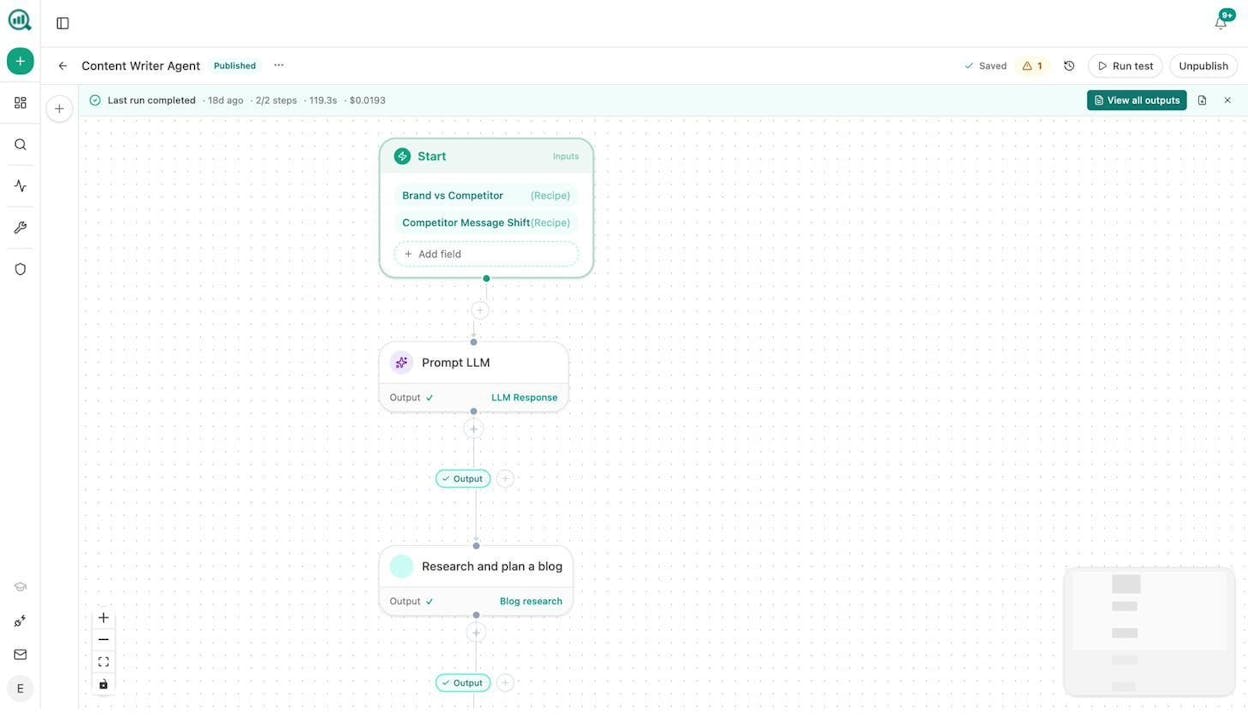
What stands out: A programmable Agent Builder with 180+ nodes that connects GA4, GSC, Semrush, DataForSEO, HubSpot, Notion, WordPress, and every major LLM into workflows you design once and run forever.
Analyze AI is not a lead enrichment tool. It is an agentic platform for SEO, AEO, content, and GTM operations. Where Clay helps sales teams enrich contact records, Analyze AI helps marketing teams produce content at scale, track AI search traffic, monitor brand sentiment across AI engines, and automate the repetitive work that eats up your team’s week.
The platform has four core surfaces: Discover (find where your brand appears in AI answers), Monitor (track visibility, citations, and traffic over time), Improve (write and optimize content that gets cited), and Govern (monitor sentiment and catch negative narratives early).
But the real differentiator is the Agent Builder.
The Agent Builder is a programmable operating system for marketing ops. It’s not a template library. It’s a substrate with 180+ nodes, 34 pre-built data recipes, 13 input types, and 3 trigger modes (manual, scheduled, webhook). You can build an agent that runs keyword research via DataForSEO, pulls competitor data from Semrush, generates an outline using Claude or GPT, writes a full draft, applies your brand voice from the Knowledge Base, scores the piece for AEO readiness, and publishes to WordPress. All in one flow. No code.
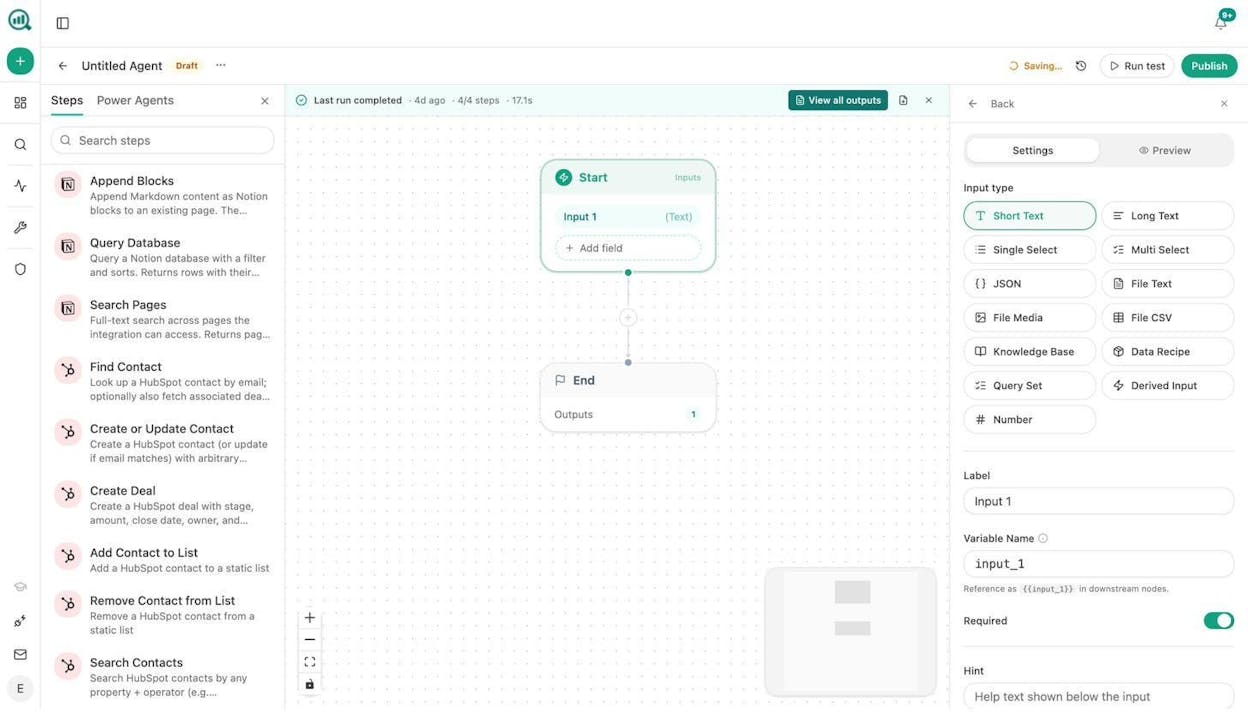
Here’s a sample of what marketing teams build with it:
-
Content refresh at scale. Schedule a weekly agent that pulls your declining pages from GA4, scrapes each one, rewrites for freshness and AI search optimization, and pushes updates to WordPress. The pages that quietly bleed traffic stop bleeding.
-
Keyword research to published draft. Start with a seed keyword. The agent runs DataForSEO Keyword Ideas, filters by difficulty and volume, generates research, builds an outline, writes a full draft with brand voice injected, generates a featured image, and publishes. What took your team a week now takes minutes.
-
Internal linking maintenance. Schedule an agent to loop your sitemap weekly, pull GSC top keywords per page, and use an LLM to suggest three internal links per page. Push the suggestions to Notion as tasks or auto-apply via API.
-
Link outreach. Use Hunter and Tomba nodes (built into the Agent Builder) to find journalist and author emails, scrape their recent articles for context, generate personalized pitches with your brand voice, and send. All logged to HubSpot.
-
Social media image creation. Use the Social Media Image, Infographic Generator, or Illustrate Any Text nodes to generate on-brand visuals at scale, all connected to your Knowledge Base for consistent style.
The Agent Builder also includes nodes for GA4 traffic data, Google Search Console performance, AI visibility scores, sentiment scores, citation shares, and perception quadrants. This means your agents don’t just act on external data. They act on your own performance data in real time.
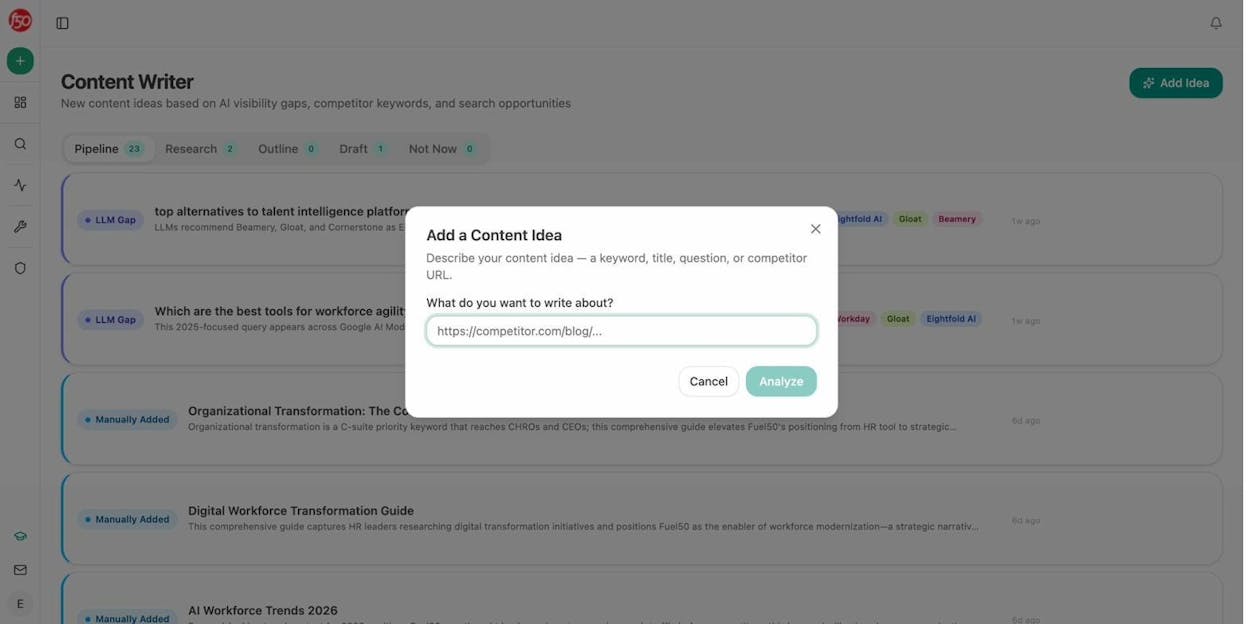
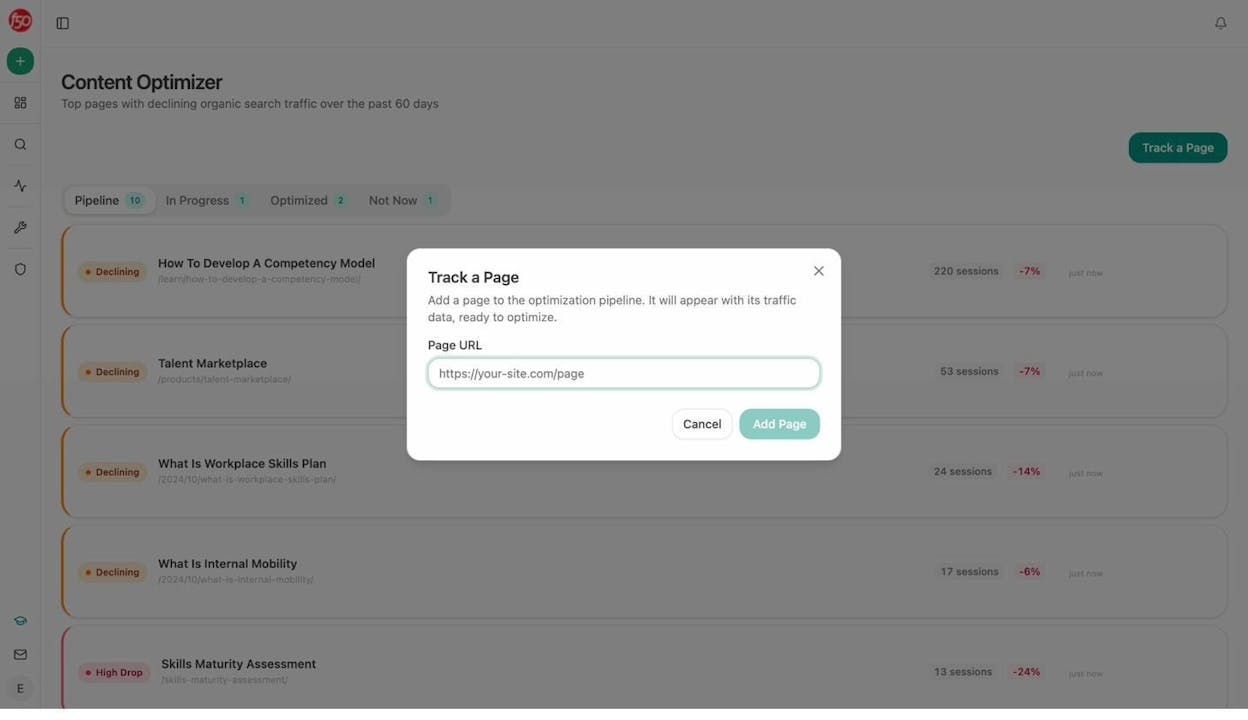
On top of the Agent Builder, Analyze AI ships a dedicated Content Writer and Content Optimizer. The Writer moves ideas through a pipeline from research to outline to full draft, with SERP analysis, keyword tracking, and editorial comments at every step. The Optimizer surfaces your pages with declining organic traffic and walks you through an audit with specific improvement suggestions.
For teams that care about AI search, the Competitors dashboard shows exactly which brands AI engines recommend instead of you, on which prompts, and why. The Citation Analytics feature shows which URLs and domains AI models cite in your space. You can find the gaps and earn the citations that drive recommendations.
Analyze AI pricing:
|
Plan |
Price |
AI Engines |
Tracked Prompts/Day |
Content Writer Workflows |
Content Optimizer Workflows |
|---|---|---|---|---|---|
|
Growth |
$99/month |
3 |
25 |
1 |
1 |
|
Pro |
$250/month |
4 |
35 |
10 |
5 |
|
Custom |
Custom |
All |
Custom |
Unlimited |
Unlimited |
All plans include unlimited seats, unlimited competitor tracking, and AI Traffic Analytics via GA4. You can start a free trial without a credit card.
Compared to Clay’s $185/month Launch plan (which gives you data enrichment and basic workflows), Analyze AI’s $99/month Growth plan gives you content creation, content optimization, AI search tracking, competitor intelligence, and access to the Agent Builder. For marketing teams, it is not a close comparison.
2. Apollo
-
Best for: Marketing teams that also run outbound campaigns and need a combined prospecting and outreach tool
-
Pricing: Free plan available, then $49/month per user
-
What stands out: Clean interface with an AI workflow assistant and strong email deliverability
Apollo started as a sales prospecting tool but has grown into a broader GTM platform. For marketing teams, it’s useful for ABM campaigns, building media lists, and running email outreach for link building or PR.
The platform has a database of over 200 million contacts with verified emails, direct dials, and company data. The AI workflow assistant lets you build sequences based on trigger events. If you’re a B2B marketing team running outbound alongside content, Apollo covers both sides without needing two tools.
What works well: The free plan is generous (1,200 credits/year). The platform integrates with most CRMs. The contact data quality is strong for North American prospects.
What could be better: The workflow rules can be hard to audit when you add human-in-the-loop steps. The platform is built primarily for sales teams, so marketing-specific workflows feel like secondary features.
Apollo pricing: Free ($0/month), Basic ($49/user/month), Professional ($79/user/month), Organization ($119/user/month, minimum 3 users). All paid plans billed annually.
3. Hunter
-
Best for: Finding verified emails for link building outreach and PR campaigns
-
Pricing: Free plan available, then $49/month
-
What stands out: Best-in-class email verification accuracy with a simple interface
Hunter.io does one thing and does it well. You type in a domain or a person’s name and company, and Hunter finds their email address. It then verifies whether that address is valid.
For content marketers, this is the tool you reach for when building outreach lists for guest posting, broken link building, or journalist pitches. The free plan gives you 50 credits per month, which is enough for manual, intentional outreach.
What works well: The verification accuracy is the best in its category. The Chrome extension lets you find emails while browsing LinkedIn or company websites. The API is clean and integrates with Zapier, Google Sheets, and most CRMs.
What could be better: It only finds emails. It won’t help you write the outreach message, manage sequences, or track responses. You’ll need another tool for that. Analyze AI’s Agent Builder includes Hunter nodes for domain email search, person email search, and email verification, so you can build outreach workflows that start with finding the email and end with sending the pitch.
Hunter pricing: Free ($0/month, 50 credits), Starter ($49/month, 2,000 credits), Growth ($149/month, 10,000 credits), Scale ($299/month, 25,000 credits).
4. Outreach
-
Best for: Enterprise marketing teams running large-scale email outreach campaigns
-
Pricing: Custom pricing for all plans
-
What stands out: Battle-tested email sequencing with AI-powered engagement tracking
Outreach is an enterprise revenue workflow platform. Marketing teams at companies like Okta, Siemens, and Snowflake use it for multi-touch email campaigns, event follow-ups, and ABM sequences.
The platform excels at deliverability management and engagement analytics. If you’re running listicle outreach campaigns at scale or managing complex nurture sequences, Outreach handles the volume without landing in spam folders.
What works well: Enterprise-grade reliability. Deep CRM integrations. Detailed engagement analytics that tell you which messages work and which don’t.
What could be better: The pricing is opaque (you need to talk to sales for every plan). The platform has a steep learning curve. For smaller teams or those focused purely on content marketing, it’s more tool than you need.
Outreach pricing: Custom for all plans. Contact sales for a quote.
5. ZoomInfo
-
Best for: Enterprise marketing teams that need B2B intent data for content targeting and ABM
-
Pricing: Custom pricing for all plans
-
What stands out: The largest B2B contact and company database with buyer intent signals
ZoomInfo is one of the most established GTM data platforms. For marketing teams, the value is in the intent data. You can identify which companies are actively researching topics related to your product and then create targeted content or outreach campaigns for those accounts.
The platform integrates with HubSpot, Salesforce, and most marketing automation tools. If your content strategy is account-based, ZoomInfo’s intent signals tell you which topics to write about and which accounts to prioritize.
What works well: The B2B database is massive and generally accurate. The intent data is genuinely useful for content planning. CRM integrations are seamless.
What could be better: Pricing is enterprise-level and not transparent. Contact data can be outdated when people change roles. For teams that just need email finding, ZoomInfo is overkill.
ZoomInfo pricing: Custom for all plans (Sales, Marketing, Talent). Enterprise contracts reportedly start around $15,000/year.
6. Saleshandy
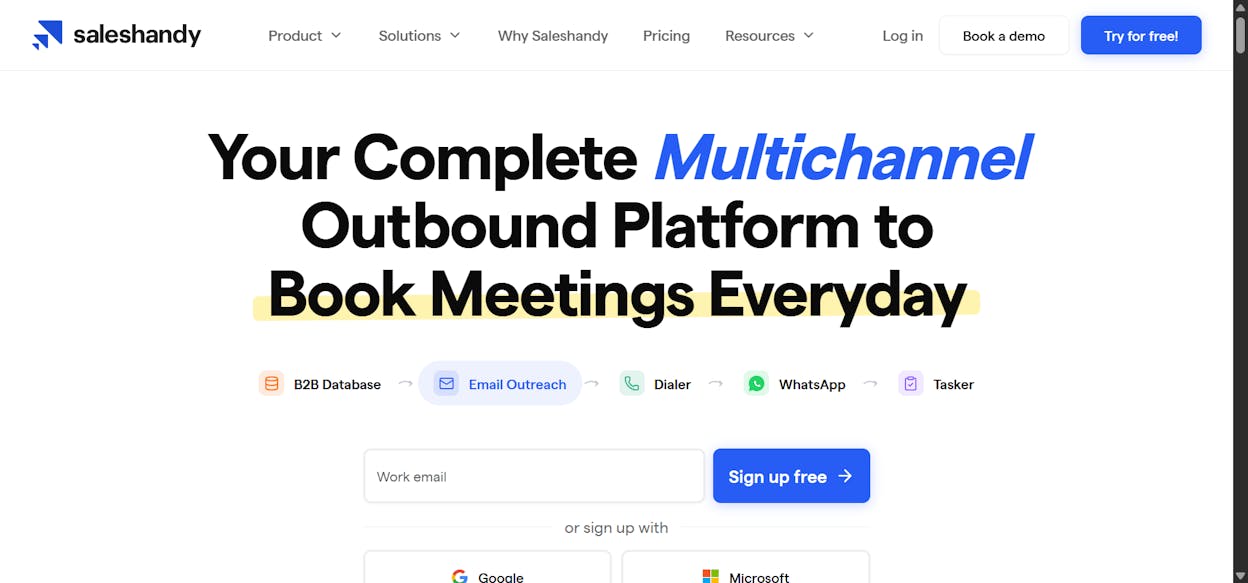
-
Best for: Cold email outreach for link building and digital PR at a reasonable price
-
Pricing: Free trial, then $25/month
-
What stands out: Strong email deliverability features and a built-in database of 700M+ B2B contacts
Saleshandy is a cold email platform that focuses on deliverability. For content marketers doing link building outreach or digital PR, this matters. Gmail and Outlook are cracking down on bulk senders, and Saleshandy’s deliverability optimization keeps your outreach out of spam folders.
What works well: The starting price ($25/month) is the lowest on this list for email outreach. The platform includes email warm-up, sender rotation, and a B2B lead finder.
What could be better: The UI feels dated compared to newer tools. It’s focused narrowly on email sequences and doesn’t help with content creation or SEO research.
Saleshandy pricing: Outreach Starter ($25/month), Outreach Pro ($69/month), Outreach Scale ($139/month), Outreach Scale Plus ($209/month).
7. VoilaNorbert
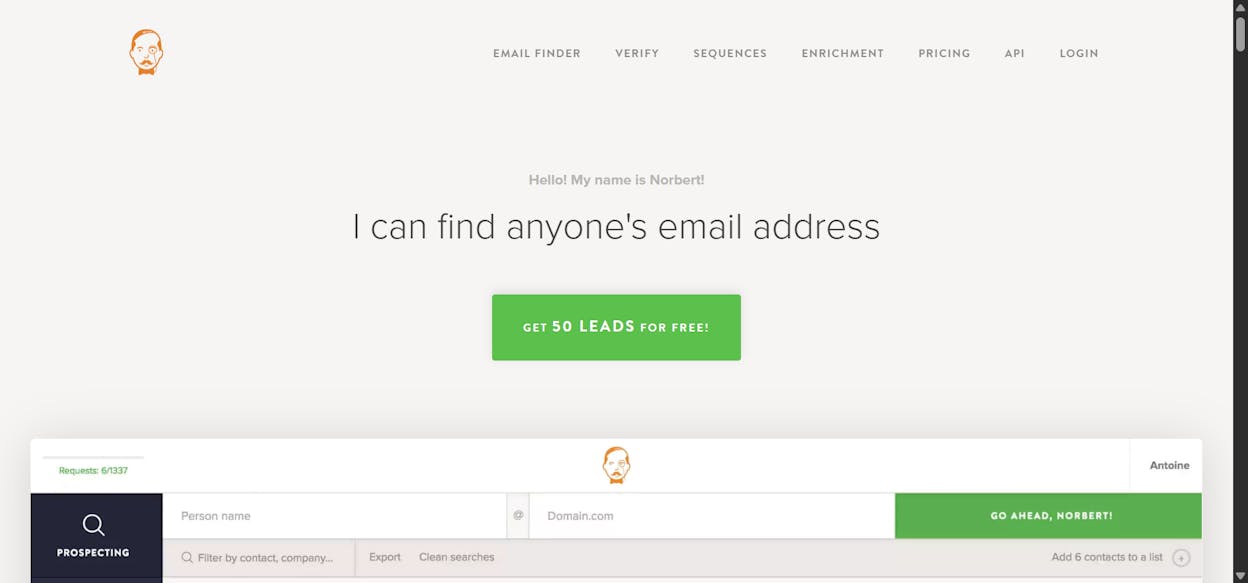
-
Best for: Reliable email verification as a backup to Hunter for outreach campaigns
-
Pricing: Starts at $49/month
-
What stands out: Simple interface with accurate email data and bulk processing
VoilaNorbert is an email finder and verifier used by teams at companies like Airbnb and Intel. It’s a solid backup for when Hunter can’t find a contact. The platform also supports email outreach sequences, though that’s not its primary strength.
What works well: The email data is accurate. Bulk processing is fast. The interface is straightforward.
What could be better: The lead enrichment features are basic compared to Clay or Apollo. The platform lacks advanced workflows or integrations beyond Zapier.
VoilaNorbert pricing: Valet ($49/month, 1,000 leads), Butler ($99/month, 5,000 leads), Advisor ($249/month, 15,000 leads), Counselor ($499/month, 50,000 leads).
8. Cognism
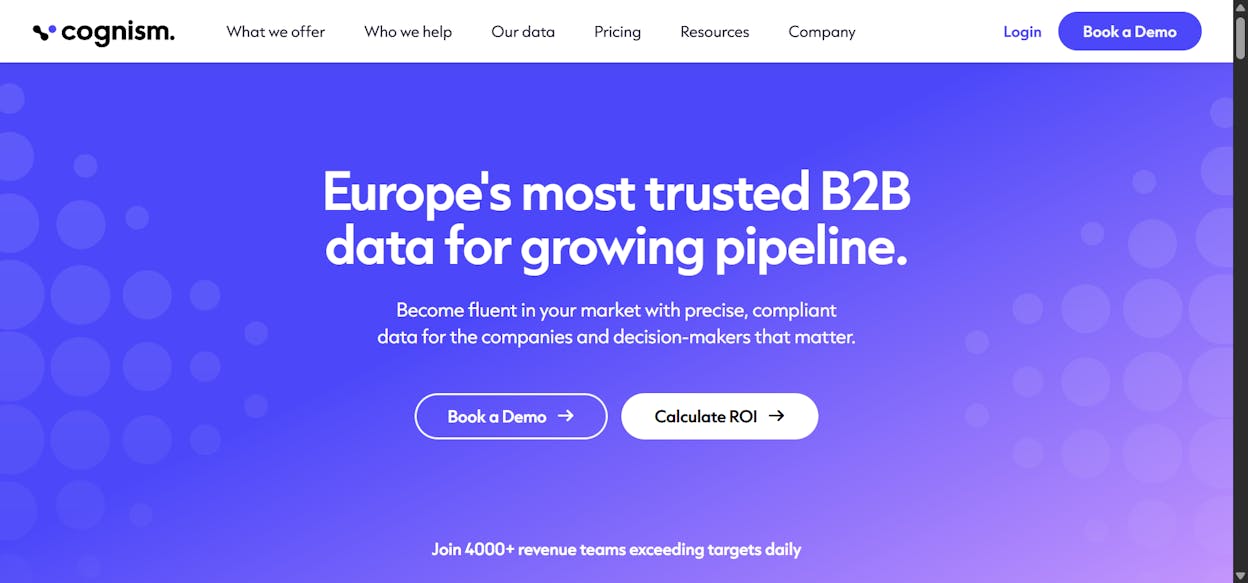
-
Best for: Enterprise marketing teams in Europe that need GDPR-compliant prospect data
-
Pricing: Custom pricing (contact sales)
-
What stands out: Premium data quality with full GDPR compliance for European markets
Cognism is a sales intelligence platform used by KPMG, Gartner, and American Express. For marketing teams at large companies, the value is clean, compliant contact data for ABM campaigns and content distribution lists.
What works well: The data quality is consistently praised by users. The platform integrates with most CRMs. GDPR compliance is built in, not bolted on.
What could be better: Pricing is enterprise-only and reportedly expensive. The platform is not built for small teams. The UI can feel clunky.
Cognism pricing: Custom for all plans (Grow and Elevate tiers). Contact sales for a demo.
9. Kaspr
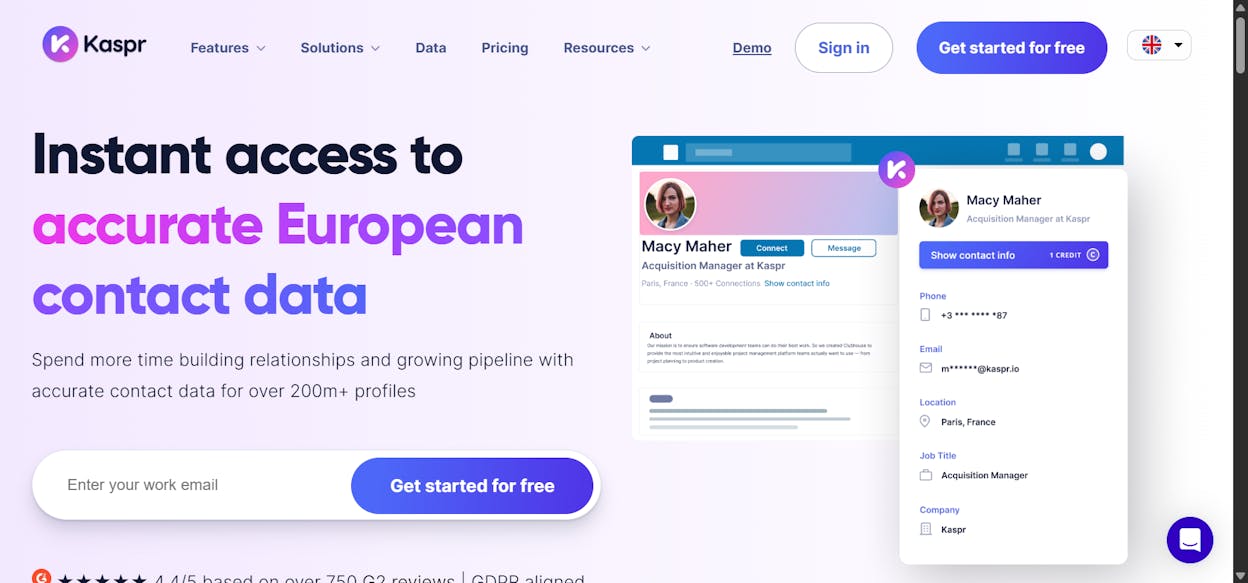
-
Best for: European marketing teams building influencer and author outreach lists from LinkedIn
-
Pricing: Free plan available, then $65/month
-
What stands out: A Chrome extension that pulls contact data directly from LinkedIn profiles
Kaspr is built specifically for extracting B2B contact data from LinkedIn. For content marketers, this is useful when building outreach lists for influencer collaborations, podcast guest pitches, or SEO outreach campaigns.
What works well: The Chrome extension is fast and well-reviewed. Bulk enrichment lets you process entire LinkedIn Sales Navigator lists. GDPR compliance is native.
What could be better: Built primarily for European companies. The starter plan ($65/month) is steep compared to Hunter’s free tier. The tool only works with LinkedIn data.
Kaspr pricing: Free ($0/month, 15 email credits), Starter ($65/month/user), Business ($99/month/user), Enterprise (custom).
10. Lusha
-
Best for: Small marketing teams experimenting with contact enrichment on a budget
-
Pricing: Free plan available, then $29.90/month
-
What stands out: Affordable entry point with decent data quality for C-suite and VP-level contacts
Lusha is an AI sales intelligence platform used by over 1.5 million users. For smaller marketing teams, the free plan (40 credits/month) and low starting price make it an easy entry point for building outreach lists.
What works well: The pricing is the most affordable on this list for paid plans. The data quality for senior-level contacts is strong. Credit rollover (up to 2x) reduces waste.
What could be better: Mid-level contact data is often outdated. The pricing model becomes confusing as you scale. For anything beyond basic contact finding, you’ll need additional tools.
Lusha pricing: Free ($0/month, 40 credits), Pro ($29.90/month, 250 credits), Premium ($69.90/month, 600 credits).
How to choose the right Clay alternative
If your primary job is creating and distributing content, the choice is straightforward. Most tools on this list solve one piece of the puzzle, whether that’s finding emails, enriching contacts, or sending outreach sequences. Only one solves the full stack from keyword research to content creation to optimization to distribution to AI search tracking to automated reporting.
Analyze AI is the only platform on this list where a single agent can research a topic, write a draft, apply your brand voice, score it for AI search readiness, publish it to your CMS, and generate a featured image. And you can schedule it to do that every week without clicking anything.
If you need email finding for outreach campaigns, pair it with Hunter or Apollo (both of which integrate as nodes inside the Analyze AI Agent Builder). If you’re an enterprise team with complex ABM needs, ZoomInfo or Cognism cover the data layer.
But if you’re looking for one platform to replace the patchwork of tools your marketing team currently juggles, start with Analyze AI’s free trial. You’ll see the difference in your first workflow.

Ernest

Ibrahim


