



Summarize this blog post with:


Here are the 12 link building strategies, organized by difficulty and expected impact.
|
Strategy |
Difficulty |
Time to Results |
Outreach Required? |
AI Search Benefit |
|---|---|---|---|---|
|
Pitch “best of” listicles missing your brand |
Low |
2–4 weeks |
Yes |
High — listicles are heavily cited by LLMs |
|
Create data-led campaigns on trending topics |
High |
4–8 weeks |
Yes |
Very high — original data earns AI citations |
|
Build journalist relationships for reactive PR |
Medium |
Ongoing |
Yes |
Medium — press mentions build entity authority |
|
Create map-o-graphics and pitch them |
High |
4–8 weeks |
Yes |
Medium — visual data earns links and citations |
|
Rank statistics pages for “fact finder” keywords |
Medium |
2–6 months |
No |
Very high — stats pages are top LLM sources |
|
Host unique giveaways and promote to press |
High |
2–4 weeks |
Yes |
Low — brand awareness, not citations |
|
Pitch sites linking to inaccessible resources |
Medium |
2–4 weeks |
Yes |
Low — replaces links, doesn’t generate new content |
|
Guest posting with AI-assisted pitches |
Low |
2–4 weeks |
Yes |
Medium — contextual links from relevant sites |
|
The skyscraper technique (updated) |
Medium |
4–8 weeks |
Yes |
High — superior content gets cited by models |
|
Build free tools that attract links passively |
High |
2–6 months |
No |
Very high — tools are frequently cited by AI |
|
Create original research and surveys |
High |
4–12 weeks |
Optional |
Very high — original data is AI citation gold |
|
Become the cited source in AI answers |
Medium |
Ongoing |
No |
Very high — direct AI visibility play |
Let’s walk through each one.
Table of Contents
1. Pitch “best of” listicles that feature your competitors but not you
This is one of the highest-ROI link building strategies because it targets pages that already exist, already rank, and already link to your competitors. All you’re doing is asking to be included.
The logic is simple. If someone published a list of “best project management tools” and mentioned Asana, Monday, and ClickUp but not your tool, there’s no reason you shouldn’t be on that list — assuming your product is competitive. The author already did the work. You’re just filling a gap.
How to do it
Step 1: Build your competitor list. Write down 3–5 direct competitors. These are the brands that show up alongside yours in comparison searches, review sites, and industry roundups.
Step 2: Find listicles that mention them but not you. Use a content research tool to search for pages that include your competitors’ names but exclude yours. The search pattern looks like this:
[competitor 1] +[competitor 2] -[your brand] title:(best OR top)
For example, if you sell email marketing software and your competitors are ConvertKit and Aweber, you’d search for pages that mention both of them but not your brand.
![[Screenshot: Content Explorer or Google search results showing listicles that mention competitors but exclude a target brand]](https://www.datocms-assets.com/164164/1777121465-blobid1.png?auto=format,compress&w=1248&fit=max)
Step 3: Qualify the prospects. Not every listicle is worth pitching. Prioritize pages that have organic traffic (meaning they rank for something), have a reasonable domain authority, and were updated within the last 12 months. Outdated listicles that no one reads won’t move the needle.
Step 4: Find the author’s contact information. Check the author bio, the site’s contact page, or use a tool like Hunter.io to find their email address.
Step 5: Send a short, specific pitch. Your email should do four things: explain why your product belongs on the list, reference other reputable lists that already feature you, offer something useful (free access, a case study, a product demo), and ask about their criteria for inclusion. Keep it under 150 words. Nobody wants to read a novel from a stranger.
Here’s a framework:
Subject: Quick suggestion for your [topic] list
Hi [Name],
I noticed your roundup of [topic] includes [Competitor A] and [Competitor B] — great picks. I’d love to suggest [Your Brand] for the list as well.
We’ve been featured in [Notable List 1] and [Notable List 2], and we [one-sentence differentiator].
Happy to provide a free account for review or answer any questions about what we do differently. What are your criteria for adding new entries?
Best, [Your name]
Why this also helps with AI search visibility
Listicles are one of the most frequently cited content types by AI models. When someone asks ChatGPT or Perplexity “what are the best tools for X,” the models pull from exactly these kinds of roundup articles. Getting included on high-authority listicles increases the probability that AI engines mention your brand in their answers.
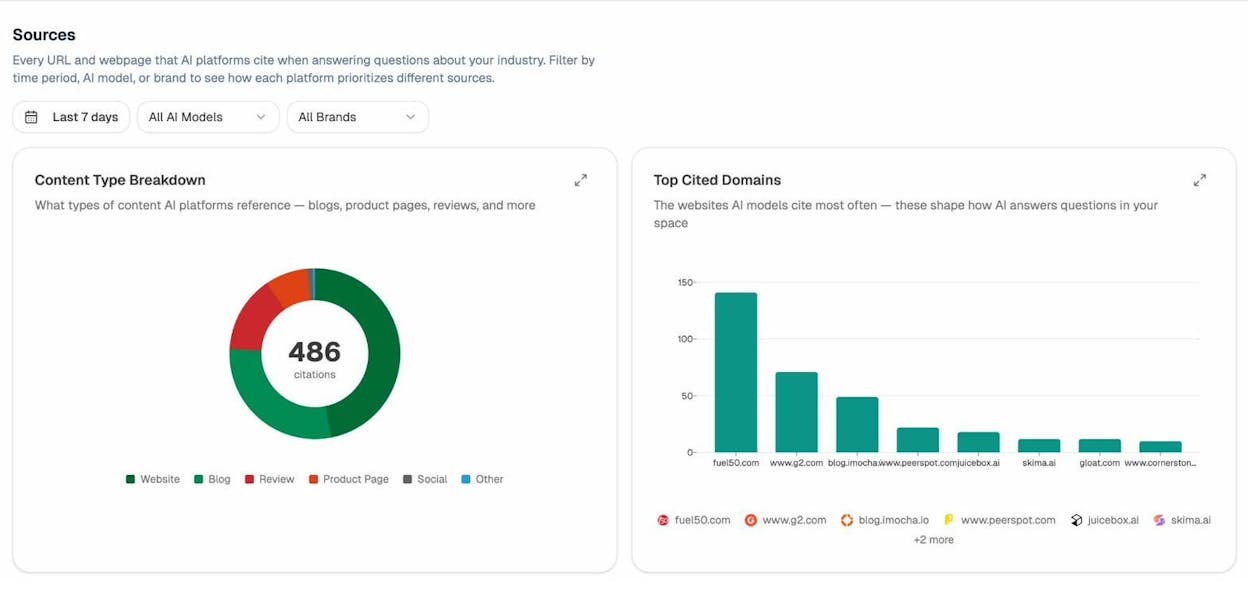
You can track this directly. In Analyze AI, the Sources dashboard shows you which URLs and domains AI models cite most often when answering questions in your industry. If you notice that a particular listicle keeps getting cited by ChatGPT or Perplexity, that’s the one to prioritize your pitch for.
And once you’ve been added to a listicle, use Analyze AI’s Prompts dashboard to track whether your brand starts appearing in AI responses to relevant prompts. If it does, you’ve earned both a backlink and an AI citation — two wins from one outreach email.
2. Create data-led campaigns about a trending topic, then pitch journalists
Original data is the single most linkable asset type on the internet. Journalists need data to support their stories. Bloggers need data to back up their arguments. And increasingly, AI models need data to generate accurate answers.
The strategy is straightforward: find a trending topic, source unique data about it, publish your findings in a clear format, and pitch the story to journalists who cover that beat.
How to do it
Step 1: Find a trending topic journalists care about. Start with Google Trends and Google News. Look for topics with rising search interest that connect to your industry.
![[Screenshot: Google Trends showing a rising topic relevant to the brand’s industry]](https://www.datocms-assets.com/164164/1777121471-blobid3.jpg?auto=format,compress&w=1248&fit=max)
You can also use keyword research tools to find breakout terms. Enter a broad topic and sort by growth or trending metrics to spot searches that are gaining momentum fast.
![[Screenshot: Keyword research tool showing trending/breakout keywords sorted by growth]](https://www.datocms-assets.com/164164/1777121478-blobid4.png?auto=format,compress&w=1248&fit=max)
Step 2: Source unique data. This is where most people give up, but it’s easier than you think. Here are reliable free data sources:
-
Government databases: USA.gov, Data.gov (US), UK Data Service (UK), Eurostat (EU), Statistics Canada, World Bank Open Data, United Nations Data
-
Research organizations: Pew Research Center (social issues, demographics), CDC (health data), FBI Crime Data Explorer (crime statistics)
-
Freedom of Information (FOI) requests: Submit requests to government agencies for data that hasn’t been published yet — this gives you truly exclusive data
-
Your own product data: If your platform generates usage data, anonymize and aggregate it into insights (this is what companies like HubSpot, Salesforce, and Analyze AI do regularly)
-
Original surveys: Use tools like SurveyMonkey, Typeform, or Pollfish to survey your audience or industry professionals
Step 3: Publish in an easy-to-use format. Journalists are busy. Make your data scannable. Use charts, tables, maps, and pull-out statistics. Include a methodology section so reporters can cite your work with confidence.
The best format includes: a clear headline with a number or finding, a summary of key takeaways above the fold, visual assets (charts, maps, infographics) that journalists can embed, and the full dataset or methodology at the bottom.
Step 4: Build your journalist list. Find reporters who’ve covered similar topics before. You can use tools like Muck Rack, Cision, or even X (Twitter) to search for journalists by beat. Look at bylines in relevant publications to see who writes about your topic, and review their recent articles to understand their angle.
Another approach: search a content research tool for pages published about your topic in the last 90 days, then extract journalist names and contact information from those articles.
![[Screenshot: Content research tool filtered to show recent articles on a topic, revealing journalist names]](https://www.datocms-assets.com/164164/1777121478-blobid5.png?auto=format,compress&w=1248&fit=max)
Step 5: Pitch the story, not the data. Journalists don’t want raw data. They want a story. Your pitch should lead with the most surprising or newsworthy finding, explain why it matters to their audience, and offer exclusive access to additional data or expert commentary.
A real-world example
A digital PR agency ran a campaign mapping illegal vape hotspots across the UK using FOI request data. They published the findings as an interactive map with regional breakdowns. The campaign earned links from 72 referring domains and got featured in multiple regional newspapers.
That’s the power of combining trending topics with exclusive data. The data was freely available through FOI requests — the agency simply did the work of requesting, cleaning, and visualizing it before anyone else did.
Why original data is gold for AI search
AI models like ChatGPT and Perplexity heavily cite pages with original data, statistics, and research findings. When someone asks “what percentage of X does Y,” the model needs a source. If your page is that source, you earn both the citation and the traffic.
You can verify this pattern in Analyze AI’s Sources view. Filter by content type to see what kinds of pages — blogs, product pages, research reports — AI models cite most in your industry. In many verticals, original research and statistics pages dominate the citation charts.
This means every data-led campaign you publish isn’t just a link building play. It’s also a long-term AI visibility asset. Track which of your data pages earn AI citations using the AI Traffic Analytics landing pages report, and double down on the formats and topics that get picked up most.
3. Build relationships with journalists for reactive PR
Most link building strategies are proactive — you create something and pitch it. Reactive PR flips the model. You build relationships with journalists in advance so that when they need a quote, a data point, or an expert opinion, they come to you.
This is slower to start but compounds over time. Once a journalist knows you as a reliable source, they’ll reach out directly — skipping HARO, skipping the inbox pile, and going straight to you.
How to do it
Step 1: Identify journalists who cover your beat. Set up Google Alerts for keywords related to your brand and industry. For example, if you work in HR tech, set alerts for “employee retention,” “talent management,” “skills-based hiring,” and similar terms. Every alert is a potential journalist to build a relationship with.
You can also use SEO tools with content alert features. The advantage over Google Alerts is the ability to filter by language, traffic, domain authority, and publish date — which helps you separate high-value journalists from low-traffic blogs.
![[Screenshot: Content alerts setup showing keyword monitoring with filters for DR, language, and traffic]](https://www.datocms-assets.com/164164/1777121483-blobid6.jpg?auto=format,compress&w=1248&fit=max)
Step 2: Find journalists who’ve written about your topic recently. Use a content research tool to search for your topic and filter for pages published in the last 90 days. Look at the bylines. If someone has written multiple articles about your topic recently, they’re actively covering the beat and likely need sources.
Check the journalist’s profile. Look at the publications they write for, their social media presence, and their previous coverage. This context helps you craft a personalized outreach message.
Step 3: Reach out and introduce yourself. Don’t pitch anything in the first email. Just introduce yourself and your area of expertise, let them know you’re available for commentary when they need it, and offer to provide exclusive data or expert quotes on their beat. This is the “deposit before withdrawal” approach. You’re building trust first.
Step 4: Respond fast when opportunities arise. Sign up for HARO (Help a Reporter Out) and similar platforms. But don’t rely solely on these. The real wins come when journalists reach out directly because they already know you.
When responding to any journalist request, keep these tips in mind: be specific and quotable (give them a sentence they can paste into their article), respond within hours (journalists work on tight deadlines), and never use AI-generated copy verbatim. Journalists can spot it, and it’ll get you blacklisted.
Step 5: Follow up with gratitude. After a journalist uses your quote or features your data, send a thank-you note. It takes 30 seconds and keeps the relationship alive for next time.
The AI search angle
Press coverage builds what SEO professionals call “entity authority” — the signal that tells both Google and AI models that your brand is a credible, well-known player in your space. When multiple authoritative news sites mention your brand, AI models become more likely to include you in their answers.
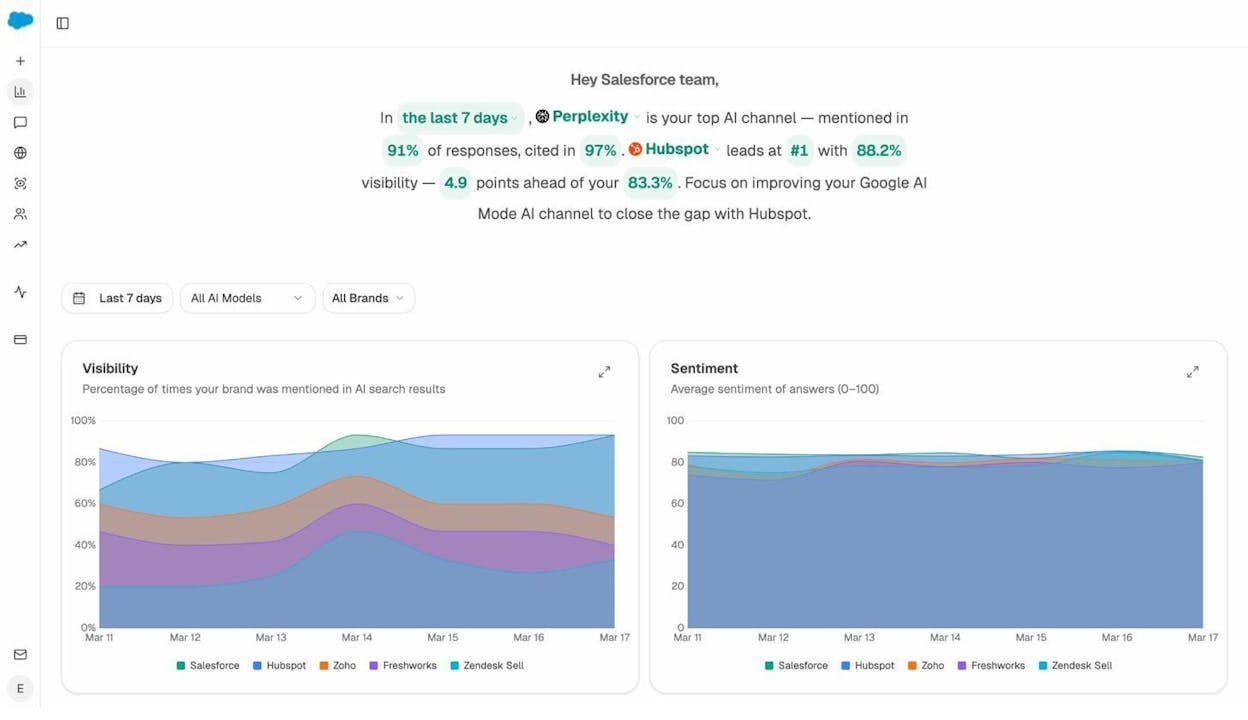
You can monitor this in Analyze AI by tracking your brand’s visibility and sentiment across AI models over time. After a successful PR campaign, watch for a corresponding uptick in AI mentions.
4. Create map-o-graphics and pitch them to journalists
Maps work because they’re inherently shareable. A well-designed map tells a story at a glance. It’s visual, it’s data-driven, and it gives regional publications a reason to cover it (because their region is on the map).
Data-driven map campaigns are consistently among the highest-performing link building assets for digital PR teams.
How to do it
Step 1: Brainstorm map-worthy topics that connect to your brand. The key question: what would a journalist and their readers expect you to be an expert on? If you’re a financial services brand, a map of average tax burdens by state makes perfect sense. If you’re a travel brand, a map of tourist visa costs by country is on-brand.
The topic must pass two tests: it has clear geographic variation (so the map is interesting), and it’s relevant to your industry (so the link has topical value).
Step 2: Find proven ideas by looking at what’s already earned links. Search a content research tool for pages about your broad topic, then filter for pages with 50+ or 100+ referring domains. These are proven ideas that people demonstrably want to link to. Your job is to find a fresh angle or update the data.
![[Screenshot: Content research tool filtered to show pages with 100+ referring domains on a broad topic like “tax” or “salary”]](https://www.datocms-assets.com/164164/1777121489-blobid8.png?auto=format,compress&w=1248&fit=max)
For example, a search for “tax” might reveal that a page listing countries with “tourist tax” has links from 300+ referring domains. That immediately sparks an idea: create a map of tourist tax costs by country with updated data.
Step 3: Source and verify your data. Use the government and research databases listed in Strategy 2. For international maps, the World Bank, OECD, and United Nations are reliable. For US state-level data, look at Census Bureau, BLS, and state government sites.
Step 4: Design the map. You don’t need a designer. Tools like Datawrapper, Flourish, or even Google Sheets with a map chart can produce clean, embeddable maps. Make sure the map is: visually clear with a logical color scale, embeddable (so journalists can drop it into their articles), and accompanied by a methodology section.
Step 5: Pitch regional journalists. This is where maps shine. A map of “which US states pay the most in lifetime taxes” gives you a pitch angle for journalists in every state. The journalist in Texas can write “Texas ranks #X for lifetime tax burden” and link to your map as the source.
Find journalists by searching for recent articles about your topic in specific regions, then pitch them the local angle.
Real results
One digital PR team created a map showing which US states pay the most taxes over a lifetime. The campaign earned links from 188 referring domains — many of them regional news sites that covered the story because their state was featured.
Another team mapped illegal vape hotspots across the UK using FOI data. Result: 72 referring domains and features in regional newspapers across England, Scotland, and Wales.
Maps and AI search
Map-based content that includes underlying data tables tends to get cited by AI models that answer location-specific questions. If your map page also includes a text-based summary of the key findings (not just the visual), AI models can parse and cite the data more effectively.
5. Rank statistics pages for “fact finder” keywords
This is the closest thing to passive link building that actually works. The idea: find keywords that writers and journalists search for when they need facts and figures for their articles. Create a better page than what currently ranks. Then sit back and collect links as people cite your page in their own content.
The reason this works is simple. Writers constantly Google things like “[industry] statistics,” “[topic] facts,” or “how many people [do X].” When they find a good source, they link to it. If your page is that source, links come to you on autopilot — without outreach.
How to do it
Step 1: Find “fact finder” keywords in your niche. Enter a broad topic into a keyword research tool. Then filter for keywords that include modifiers like: statistics, stats, facts, data, trends, numbers, benchmarks, average, how many, what percentage.
![[Screenshot: Keyword research tool showing filtered results for “statistics” and “facts” modifiers on a topic]](https://www.datocms-assets.com/164164/1777121489-blobid9.jpg?auto=format,compress&w=1248&fit=max)
For example, if you’re in the HR tech space, you might find keywords like “employee retention statistics,” “remote work facts 2026,” or “average time to hire by industry.” Each of these is a page idea that can earn links passively.
Use the Analyze AI Keyword Generator to brainstorm related terms, then check difficulty with the Keyword Difficulty Checker.
Step 2: Evaluate the SERP for link potential. Not every statistics keyword is worth targeting. Look at the current top-ranking pages and check how many referring domains each one has.
The ideal SERP looks like this: 3–4 pages with 100+ referring domains each, and a couple more with 20–50. This distribution shows that journalists and bloggers are actively linking to multiple sources, not just one dominant page. That means there’s room for your page to earn links too.
![[Screenshot: SERP analysis showing top results for a “statistics” keyword with referring domain counts]](https://www.datocms-assets.com/164164/1777121495-blobid10.jpg?auto=format,compress&w=1248&fit=max)
Avoid keywords where one page has 2,000 referring domains and everything else has fewer than 10. That’s a winner-take-all SERP, and breaking in is nearly impossible.
Step 3: Create a page that’s genuinely better than what ranks. “Better” usually means: more up-to-date statistics (many stats pages go stale within a year), better visual presentation (charts and graphs instead of walls of text), clearer source attribution (link to every original source), and a scannable format (numbered stats, table of contents, category headers).
Look for opportunities where the current ranking pages aren’t fulfilling user intent well. Maybe the key statistics are buried in long paragraphs. Maybe the data is three years old. Maybe there are no charts or visuals. Each of these gaps is your competitive advantage.
Step 4: Promote once, then let it compound. Share the page on social media, mention it in your newsletter, and consider running a small paid promotion to seed initial traffic. After that, the page should earn links organically as writers discover it through search.
The real beauty of this strategy is that you don’t need ongoing outreach. The page earns links because it ranks for a keyword that your link-building audience (writers, journalists, bloggers) actively searches for.
How this connects to AI search
Statistics pages are among the most cited content types by AI models. When someone asks ChatGPT “what are the latest [topic] statistics,” the model pulls from pages exactly like the one you’d create with this strategy.
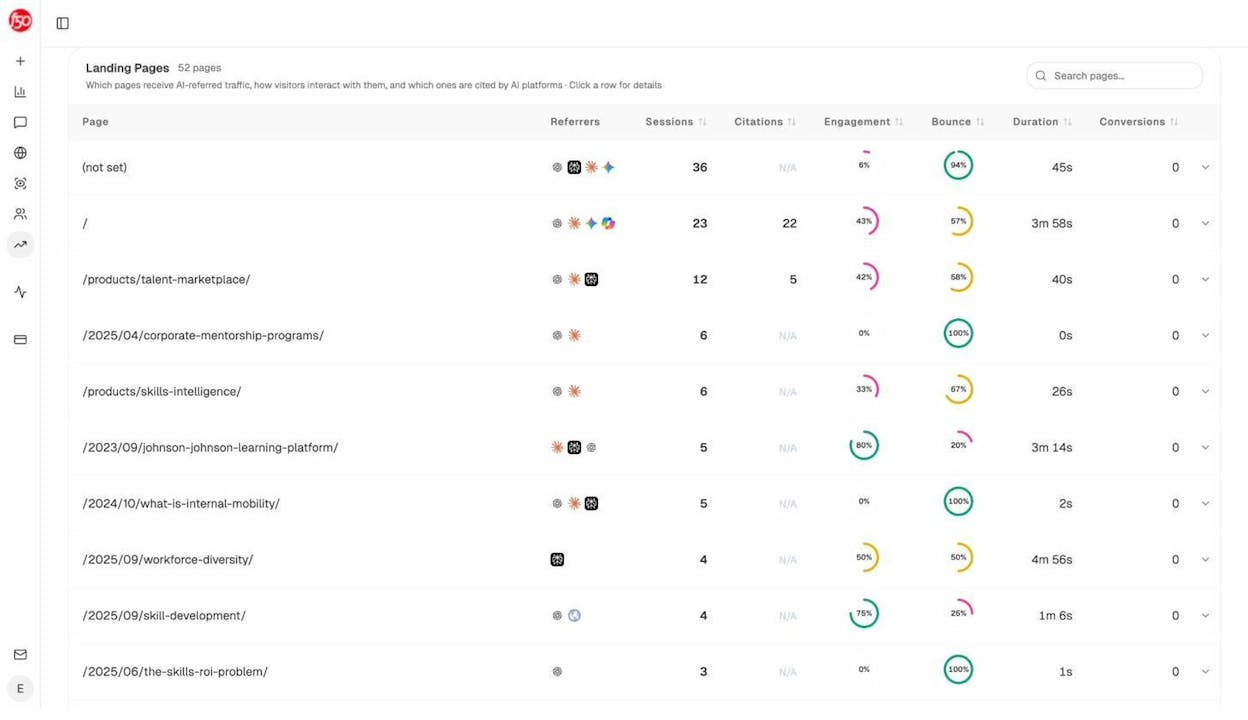
In Analyze AI, you can use the AI Traffic Analytics landing pages report to see which of your pages receive AI-referred traffic. Statistics pages often show up as top performers because AI models link to them as sources in their answers.
If your statistics page starts earning AI traffic, that’s a signal to keep it updated. Fresh data means continued citations. Stale data means AI models will eventually switch to a competitor’s page.
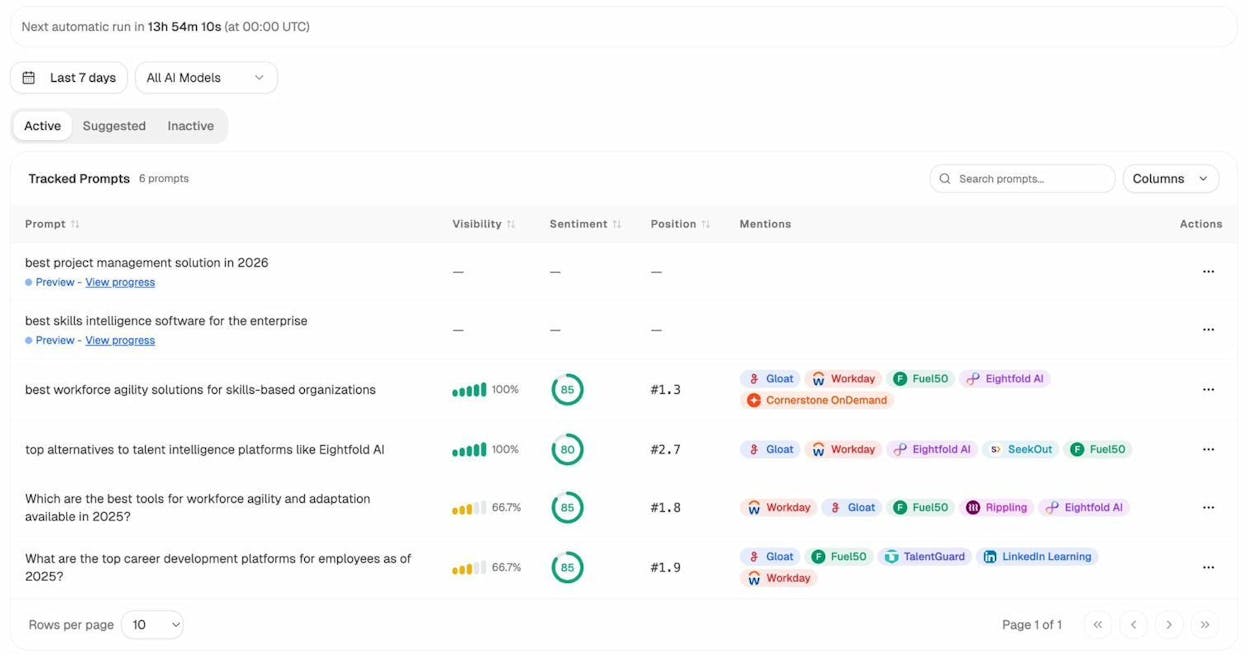
You can also track this at the prompt level. Use Analyze AI’s Prompts dashboard to monitor whether your brand appears when people ask AI models questions that your statistics page should answer.
6. Host unique giveaways and promotions, then promote them to journalists
Unusual promotions get press coverage. Press coverage gets links. The crazier or more creative the promotion, the more likely journalists are to write about it — because quirky stories get clicks.
This strategy isn’t about discounts or standard marketing promotions. It’s about creating a story that’s interesting enough to earn media coverage on its own merits.
How to do it
Step 1: Study promotions that have earned press coverage before. Look at what’s worked in the past. One well-known example: Dish Network offered $1,000 to anyone willing to binge-watch 15 hours of The Office. It earned links from 150 referring domains, including major media sites.
The pattern is consistent: take a trending cultural topic, connect it to your brand, and create a promotion that’s newsworthy on its own.
Step 2: Brainstorm ideas for your brand. The promotion needs to connect to your product or industry, otherwise the links won’t have topical relevance. A coffee brand might offer to pay someone to drink coffee every morning for a month and document the experience. A fitness brand might pay someone to try a different workout class every day for 30 days.
Use AI tools to brainstorm ideas. Give ChatGPT context about your brand and ask it to generate promotion ideas inspired by successful campaigns you’ve found. The ideas won’t be perfect, but they’ll spark better ones.
Step 3: Create a dedicated landing page. The promotion needs a URL that journalists can link to. Build a clean landing page with the promotion details, clear entry requirements, a deadline, and your brand context. This page is what earns the backlinks.
Step 4: Pitch journalists who’ve covered similar promotions. The easiest way to find them: look at who linked to similar campaigns in the past. If a promotion by another brand earned 150 links, export those linking sites, identify the journalists, and reach out to them with your campaign.
![[Screenshot: Backlink analysis tool showing the list of sites linking to a competitor’s promotion campaign, ready for outreach]](https://www.datocms-assets.com/164164/1777121502-blobid13.jpg?auto=format,compress&w=1248&fit=max)
The pitch is simple: “We’re running [this promotion]. Here are the details. Would you be interested in covering it?” Include a link to the landing page and any relevant images or assets.
Limitations for AI search
This strategy is primarily a link building and brand awareness play. Promotional pages don’t typically get cited by AI models because they’re time-bound and don’t contain evergreen information. That said, the links you earn boost your overall domain authority, which indirectly strengthens your AI search visibility across all your other pages.
7. Pitch sites linking to resources with accessibility issues
This is a clever variation of broken link building. Instead of finding broken links (which everyone does), you find pages with accessibility compliance issues. Then you create an accessible alternative and pitch it to the sites linking to the non-compliant resource.
The pitch is stronger than standard broken link building because you’re not just offering a replacement — you’re helping the linking site improve their accessibility compliance. That’s a much more compelling value proposition, especially for government and educational sites that have legal obligations around accessibility.
How to do it
Step 1: Find relevant pages with lots of backlinks. Search a content research tool for a topic and filter for pages with 100+ referring domains. Also filter out subdomains, homepages, and duplicate domains to get a clean list.
![[Screenshot: Content research tool showing pages with 100+ referring domains on a topic, filtered for relevance]](https://www.datocms-assets.com/164164/1777121508-blobid14.png?auto=format,compress&w=1248&fit=max)
Step 2: Run accessibility audits on those pages. Use a free tool like AccessScan or WAVE to check how accessible each page is for people with disabilities. You’re looking for pages that fail compliance checks — specifically, pages that aren’t accessible for users with vision, motor, or cognitive impairments.
Step 3: Check who’s linking to the non-compliant pages. Focus on government (.gov) and education (.edu) sites first. These organizations often have legal requirements around accessibility (like Section 508 compliance in the US). They’re most likely to care about replacing a non-compliant resource.
Step 4: Create an accessible version of the resource. This is where you invest the real effort. Build a page that covers the same topic but meets WCAG 2.1 AA compliance standards. This means: proper heading hierarchy, alt text on all images, keyboard navigability, sufficient color contrast, and screen-reader compatibility.
Step 5: Pitch the linking sites. Your outreach email should: identify the specific page they’re linking to, explain that it fails accessibility compliance, offer your accessible alternative as a replacement, and keep the tone helpful rather than alarmist.
The response rates on this type of outreach are significantly higher than generic link requests because you’re solving a real problem — not just asking for a favor.
Building an accessible alternative benefits AI visibility too
Accessible pages tend to have better semantic HTML structure, clearer heading hierarchies, and more descriptive alt text. All of these factors make your content easier for AI models to parse and cite. Building for accessibility and building for AI readability overlap significantly.
Use Analyze AI to check whether your accessible resource starts earning AI citations after you build and promote it. The Sources view will show you if AI models begin citing your page as a replacement for the non-compliant resource.
8. Guest posting — with smarter prospecting and AI-assisted pitches
Guest posting still works. The tactic itself hasn’t changed: you write valuable content for another site and get a link back to yours. What has changed is how you find prospects and craft pitches.
The old way — Googling “write for us” and sending hundreds of generic emails — is dead. The new way is to find sites that are already publishing content about your topic and pitch them something specific and valuable.
How to do it
Step 1: Find sites that publish content about your topic. Use a content research tool to search for a broad industry term. Filter for sites with a Domain Rating between 30–60 (this removes huge sites that won’t accept guest posts and tiny sites that won’t provide value). Then look at the “Websites” tab to see which sites get the most organic traffic for your topic.
![[Screenshot: Content research tool showing top websites by traffic for a topic, filtered by DR 30-60]](https://www.datocms-assets.com/164164/1777121508-blobid15.png?auto=format,compress&w=1248&fit=max)
These are your best prospects. They’ve already demonstrated interest in your topic, and their DR range suggests they’re open to contributions.
Step 2: Research their content gaps. Before you pitch, look at what they’ve already published. Use the Analyze AI SERP Checker or their site search to identify topics they haven’t covered yet. Your pitch should fill a gap, not duplicate existing content.
Step 3: Craft a personalized pitch. Your pitch should reference a specific article they published (so they know you’ve actually read their site), propose a specific topic that fills a content gap, explain your credibility to write about that topic, and include 2–3 bullet points outlining what the post would cover.
AI can help here. Use it to brainstorm subject lines, refine your pitch structure, or even generate custom visuals (like a diagram or chart) to include with your pitch. The goal is to make your email stand out in an inbox full of generic requests.
One creative approach: some link builders use AI image generators to create attention-grabbing visuals related to the prospect’s niche. It’s unexpected, it shows effort, and it breaks the pattern of text-only outreach emails.
Step 4: Write genuinely useful content. If your pitch is accepted, deliver quality. The guest post should be good enough that you’d publish it on your own blog. Include original insights, data, or examples — not just a rehash of existing content. And don’t stuff it with links to your site. One or two contextual links is plenty.
Step 5: Promote the guest post. Share it on your social channels, include it in your newsletter, and consider running a small paid promotion. This helps the host site (more traffic to their page) and strengthens the relationship for future contributions.
Guest posts and AI search visibility
Guest posts on relevant, authoritative sites contribute to your brand’s entity signals. When AI models see your brand consistently mentioned across high-quality sites in your niche, they’re more likely to include you in their answers.
Track this in Analyze AI using the Competitors view. If your brand’s visibility starts increasing across AI models after a guest posting campaign, that’s confirmation the strategy is working on both fronts.
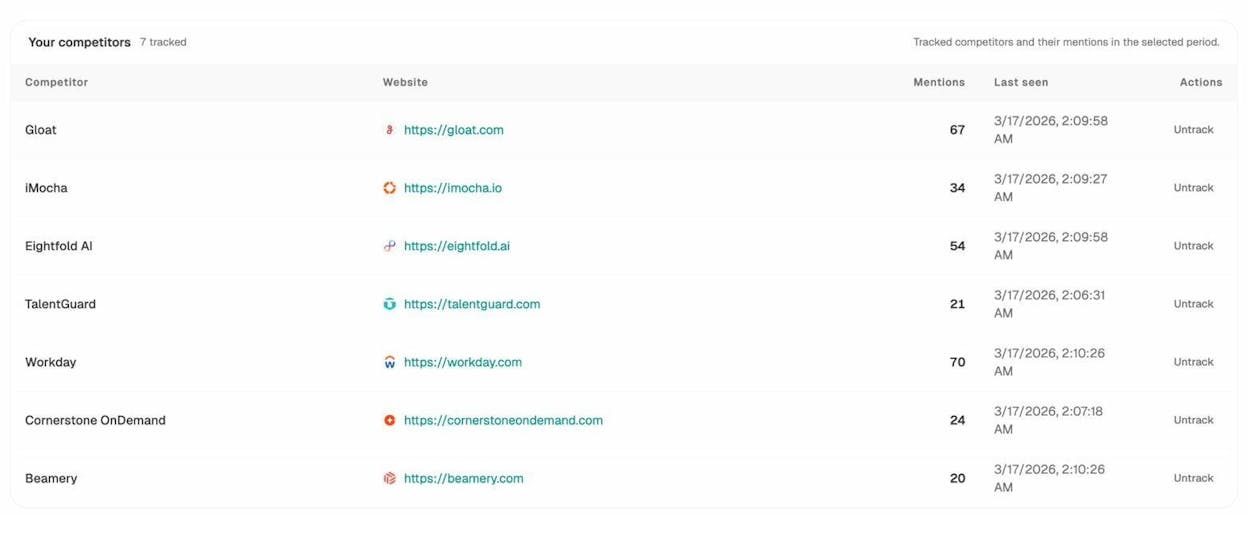
Analyze AI Competitors dashboard showing tracked competitors with their websites, mention counts, and last seen dates
9. The skyscraper technique — find outdated content with links, create something better, pitch it as a replacement
The skyscraper technique got a bad reputation because people abused it. They’d find any page with links, create a marginally longer version, and blast outreach emails at scale. It stopped working.
But the core idea remains sound: if hundreds of sites are linking to a resource that’s outdated or incomplete, and you create a genuinely better version, some of those sites will switch their links to you.
The key word is “genuinely.” A longer article isn’t a better article. An updated, more accurate, better-structured article is.
How it works
Step 1: Find pages with lots of backlinks that are outdated. Search for topics in your niche using a content research tool. Filter for pages with 100+ referring domains. Then visit those pages and check: when was it last updated? Is the information still accurate? Are the recommendations still relevant?
![[Screenshot: Content research tool showing a page with 400+ referring domains on a topic]](https://www.datocms-assets.com/164164/1777121514-blobid17.png?auto=format,compress&w=1248&fit=max)
For example, a “best headphones” list from 2021 with 469 referring domains is a prime target. The headphone industry moves fast, and hundreds of sites are linking to a list that recommends products that have been discontinued.
Step 2: Create a genuinely better version. “Better” means different things depending on the content type. For a product roundup: test current products and provide updated recommendations. For a guide: add sections the original missed, include updated data, and improve the structure. For a statistics page: find newer data from original sources.
The key is to create something so clearly superior that the pitch practically writes itself.
Step 3: Pitch it to sites linking to the outdated page. Export the list of referring domains from the outdated page. Filter for sites that are still active and relevant. Then pitch them:
Subject: Update to the [topic] resource you’re linking to
Hi [Name],
I noticed you link to [Outdated Page] in your article on [their article topic]. That page hasn’t been updated since [year], and some of the information is now outdated.
We just published an updated version that covers [what makes yours better]. Would you consider updating the link?
Here’s the page: [Your URL]
Step 4: Offer extra incentive. Some link builders offer to share the linker’s content on social media in exchange for the link update. It’s a small gesture that can meaningfully improve response rates.
Why the skyscraper technique matters more in AI search
AI models are trained on web content and continuously reference it. When they encounter multiple versions of similar content, they tend to cite the most comprehensive and up-to-date version. By creating a genuinely better resource, you’re not just competing for backlinks — you’re competing for AI citations.
After publishing your skyscraper content, use Analyze AI’s Ad Hoc Prompt Searches to test whether AI models reference your page when asked about the topic. Type in a prompt related to your content and see which sources the AI cites.
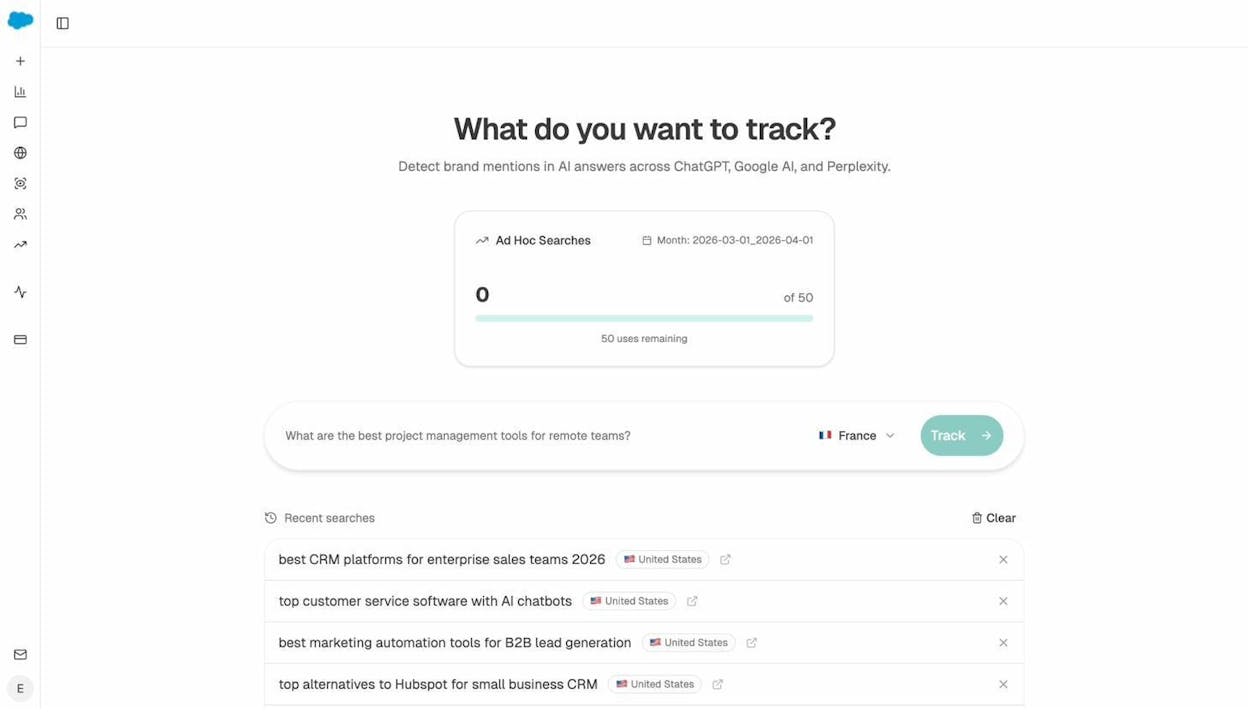
If the AI still cites the outdated page, you know you need to keep building authority. If it switches to yours, you’ve won both the link building and AI visibility game.
10. Build free tools that attract links passively
Free tools are link magnets. A useful calculator, checker, template, or generator will earn backlinks for years without any outreach because people naturally link to tools they find helpful.
This is a high-effort strategy (you need to build and maintain the tool), but the payoff compounds. Every link to your free tool strengthens your entire domain’s authority.
How to do it
Step 1: Identify a repetitive task in your industry that people need help with. The best tool ideas solve a specific, frequent problem. Think: ROI calculators, compliance checkers, conversion tools, keyword generators, readability analyzers, and similar utilities.
Look at what tools your competitors offer. Look at what people ask about in forums, Reddit, and Quora. The more frequently the task occurs, the more links the tool will earn.
Step 2: Build a simple, fast, free version. The tool doesn’t need to be complex. It needs to be fast, free, and solve one problem well. A simple calculator built with HTML, CSS, and JavaScript can earn hundreds of backlinks.
For example, at Analyze AI, we’ve built free tools that address specific SEO and AI search needs:
-
Keyword Generator — generates keyword ideas from a seed term
-
Keyword Difficulty Checker — estimates how hard it is to rank for a keyword
-
SERP Checker — shows who ranks for a given keyword
-
Website Authority Checker — checks a domain’s authority score
-
Broken Link Checker — finds broken links on any page
-
Website Traffic Checker — estimates a site’s monthly traffic
-
Keyword Rank Checker — checks where a page ranks for a keyword
-
AI Visibility Checker — audits how visible your brand is in AI search
Each tool serves a specific purpose and earns links from blog posts, guides, and resource pages that recommend useful SEO tools.
Step 3: Make it easy to link to. Give the tool a clean, descriptive URL. Add an embed code or share button. Include a brief “About this tool” section that other sites can reference when linking to it.
Step 4: Seed the initial promotion. Publish the tool, share it on social media, submit it to Product Hunt or relevant directories, mention it in guest posts, and link to it from your own blog content. After the initial push, the tool should earn links organically as people discover it through search.
Free tools and AI search
Free tools are frequently cited by AI models. When someone asks ChatGPT or Perplexity “how do I check my domain authority,” the model often recommends specific free tools by name. If your tool is well-known and well-linked, it has a strong chance of being cited.
Track which of your tools AI models mention using Analyze AI’s Prompts dashboard. Set up prompts like “best free keyword research tools” or “how to check domain authority for free” and monitor whether your tool appears in the AI responses.
11. Create original research and surveys that the industry wants to cite
Original research is the ultimate link building asset because it creates information that didn’t exist before. Nobody else has your data, which means anyone who wants to reference it has to link to you.
This is different from curating statistics (Strategy 5). In that strategy, you compile existing data from other sources. In this strategy, you generate new data through surveys, experiments, or product analytics.
How to do it
Step 1: Choose a question your industry cares about but hasn’t answered well. The best research topics live at the intersection of “people argue about this” and “nobody has good data on it.” Browse industry forums, conference talks, and Twitter debates to find these questions.
For example: “What percentage of companies are actually getting meaningful traffic from AI search?” or “How do AI models decide which brands to recommend?” These are questions people want answered, and the first company to provide credible data will earn links for years.
Step 2: Design a credible methodology. Your research needs to be defensible. For surveys, aim for a minimum sample size of 200+ respondents, use clear and unbiased questions, and document your methodology transparently. For product data analysis, explain how you anonymized and aggregated the data, what time period you covered, and what filters you applied.
At Analyze AI, we’ve published research based on our analysis of 65,000+ AI citations across AI models to answer questions like “how do LLMs cite sources” and “what makes a page more likely to be cited by ChatGPT.” This kind of proprietary data is impossible for competitors to replicate — which is exactly what makes it link-worthy.
Step 3: Write it up as a narrative, not just a data dump. The most linkable research tells a story. Lead with the most surprising finding. Walk the reader through the implications. Include quotable statistics that other writers will want to reference.
Structure your write-up so that other writers can easily cite specific findings. Use clear section headers, pull-out statistics, and numbered findings. The easier you make it to reference, the more people will link to it.
Step 4: Promote to your industry. Share the research on social media with key findings highlighted. Pitch industry newsletters and podcasts. Submit to relevant communities. And write a blog post summarizing the key takeaways — this gives people an easy-to-share version of the full research.
Original research is the strongest AI citation signal
The data is clear: AI models disproportionately cite original research over curated content. If you produce a definitive study on a topic, AI engines will cite it repeatedly whenever users ask about that topic.
You can see this in action in Analyze AI. Our GEO statistics page — which compiles 50+ data points from our original research — consistently appears in AI search results for queries about generative engine optimization. It earns both organic backlinks and AI citations simultaneously.
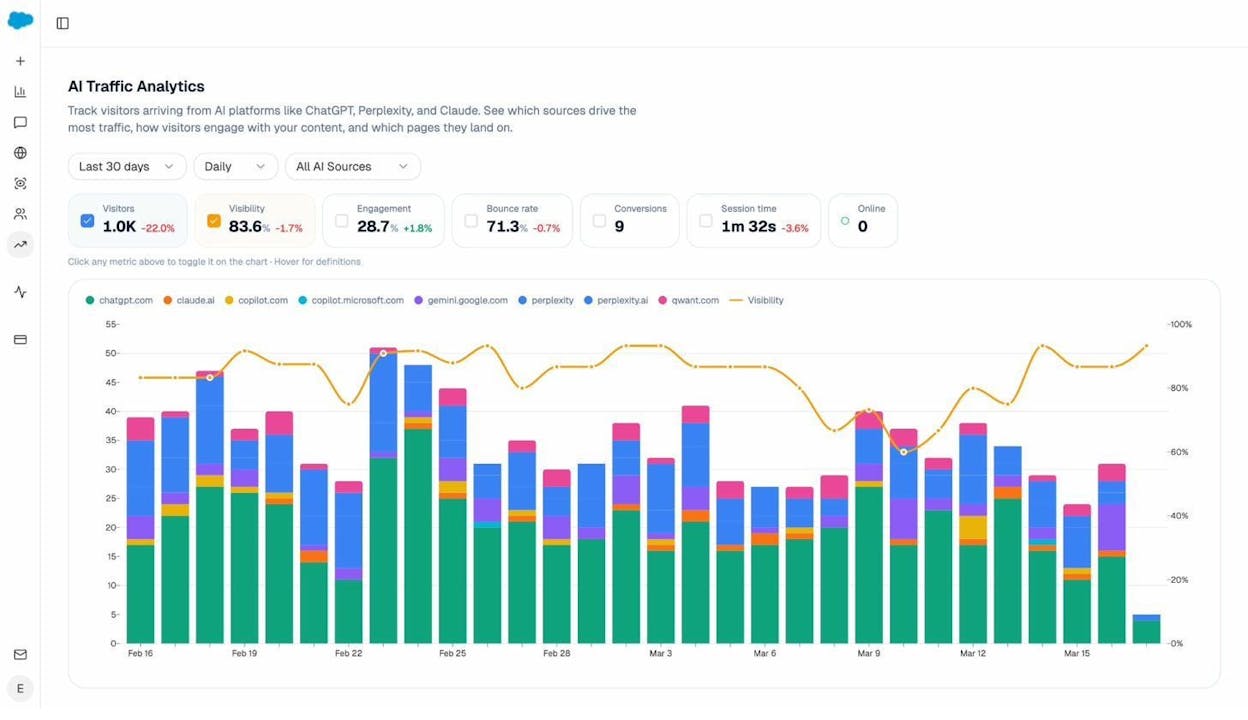
Use the AI Traffic Analytics dashboard to track which research pages are driving AI-referred visits to your site.
12. Become the cited source in AI answers
This is the strategy none of your competitors are executing yet. While everyone else focuses exclusively on traditional link building, you can build authority in a channel that’s growing faster than any other: AI search.
AI engines like ChatGPT, Perplexity, Claude, and Gemini are answering millions of queries per day. When they answer questions in your industry, they cite sources. Those citations drive real traffic. And the brands that get cited most consistently are the ones investing in AI search visibility now.
This isn’t a replacement for traditional link building. It’s an additional channel that compounds alongside it. The same content that earns backlinks — statistics pages, original research, comprehensive guides — also earns AI citations. But there are specific things you can do to increase your chances of being cited.
How to do it
Step 1: Understand what AI models cite. AI models tend to cite pages that are comprehensive, well-structured, recently updated, and from authoritative domains. Pages with clear heading hierarchies, factual claims backed by data, and original insights get cited more than generic overview content.
The content types most frequently cited by AI models include: original research and data studies, statistics and benchmark pages, comprehensive guides and tutorials, product comparison pages, and expert analysis with clear recommendations.
Step 2: Audit your current AI visibility. Before you can improve, you need to know where you stand. Use Analyze AI to see where your brand appears (and doesn’t appear) across AI answers.
Start with the Overview dashboard to see your visibility percentage, average rank position, and sentiment score across AI models. Compare your performance against competitors.
Then drill into the Prompts dashboard to see exactly which prompts your brand appears in, your position, and which competitors are mentioned alongside you.
Step 3: Identify your AI visibility gaps. Use Analyze AI’s Competitors view to see where your competitors are being cited and you’re not. The platform automatically suggests competitors it detects being mentioned alongside your tracked keywords — brands you may not have even considered.
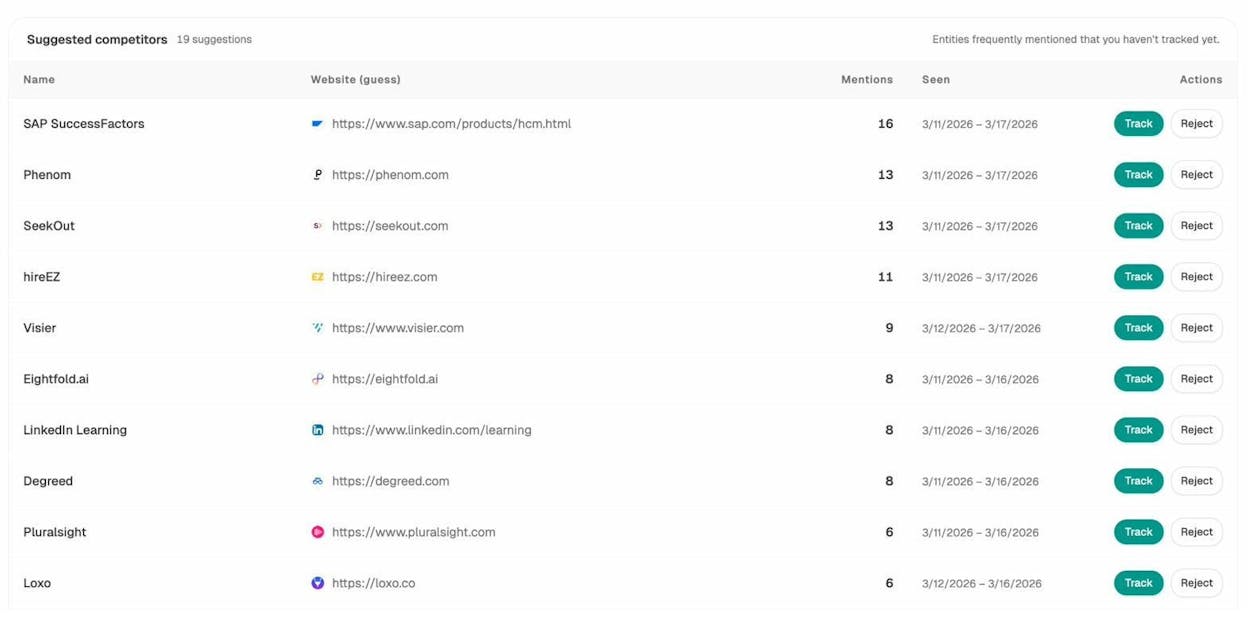
These gaps represent content opportunities. If a competitor is being cited for a topic you also cover, it means your content isn’t structured, authoritative, or comprehensive enough for AI models to prefer it.
Step 4: Optimize your content for AI citations. Based on our analysis of 65,000+ prompt citations, here’s what increases your chances of being cited by AI models:
-
Structure content with clear, descriptive headings. AI models use heading hierarchies to understand content structure. Use H2s and H3s that describe the content below them, not clever or vague titles.
-
Include original data points. AI models prefer to cite pages with specific, quotable statistics rather than pages that make claims without evidence.
-
Update content regularly. AI models favor recently updated content. A page updated in 2026 will be cited over an identical page last updated in 2023.
-
Build topical authority. Publish multiple pages covering different aspects of the same topic. AI models are more likely to cite a domain that demonstrates deep expertise in a subject.
-
Add an llm.txt file to your site. This emerging standard helps AI models understand your site’s structure and identify your most important pages.
Step 5: Track your progress and double down on what works. Use Analyze AI’s AI Traffic Analytics to see which pages on your site actually receive traffic from AI engines. The Landing Pages report shows sessions, citations, engagement, bounce rate, and conversions for each page — broken down by AI source.
The pages that already earn AI traffic are your winners. Study what they have in common — content format, length, structure, topic depth — and replicate those patterns across your other content.
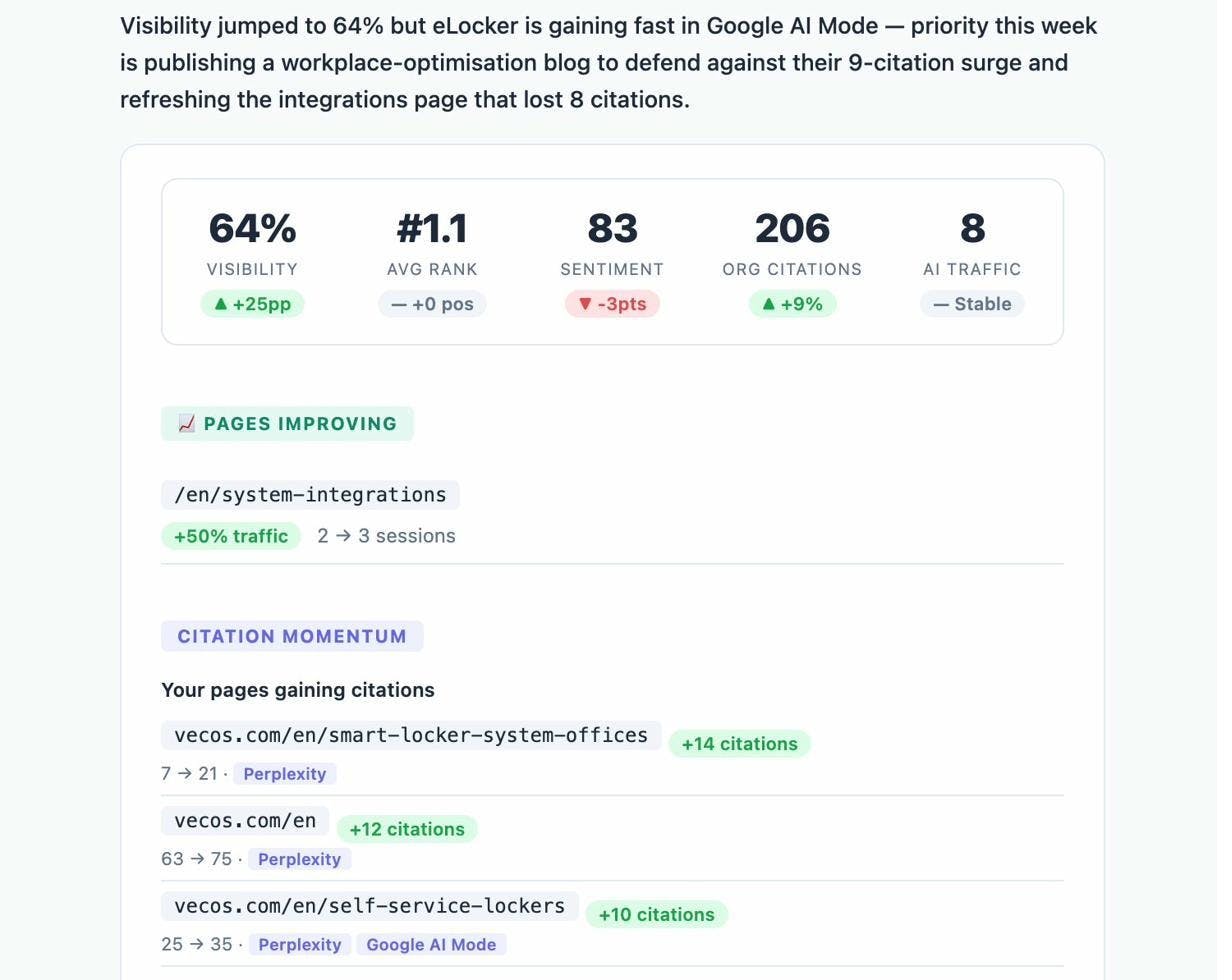
Step 6: Set up monitoring to catch competitive threats. AI search is dynamic. Your brand might be cited today and replaced by a competitor tomorrow. Analyze AI’s Weekly Emails give you a summary of visibility changes, citation momentum, and competitive threats so you can respond quickly.
The link between backlinks and AI citations
This is the critical insight: backlinks and AI citations are mutually reinforcing. Pages with more backlinks tend to have higher domain authority, which AI models interpret as a trust signal. And pages that get cited by AI models tend to earn more backlinks because AI answers drive referral traffic that leads to additional exposure and linking.
This is why every strategy in this article matters for AI search — not just this one. Every backlink you earn strengthens your domain’s authority. And every unit of domain authority makes it more likely that AI models will cite your pages.
The brands that understand this flywheel and invest in both traditional link building and AI search optimization will have a compounding advantage that’s extremely difficult for competitors to overcome.
How to choose the right strategy for you
Not every strategy works for every business. Here’s how to decide where to focus.
If you’re a SaaS company with a product in a competitive market, start with Strategy 1 (pitch listicles) and Strategy 10 (build free tools). These are the highest-leverage plays for SaaS because listicles are where buyers discover tools, and free tools earn links passively while also serving as top-of-funnel acquisition.
If you’re an agency or consultancy, focus on Strategy 3 (journalist relationships) and Strategy 11 (original research). Agencies thrive on credibility, and research + press coverage builds credibility faster than any other approach.
If you’re a content-heavy publisher or media company, Strategy 5 (statistics pages) and Strategy 2 (data-led campaigns) are your best bets. You already have the editorial muscle to produce these assets. The incremental effort is small relative to the link-building payoff.
If you’re just getting started with link building, Strategy 8 (guest posting) and Strategy 1 (pitch listicles) require the least upfront investment. You don’t need to create a new asset — you just need to find the right opportunities and send smart outreach emails.
Regardless of your situation, add Strategy 12 (become the cited source in AI answers) to your plan. AI search visibility compounds alongside everything else you do, and the earlier you start tracking and optimizing for it, the bigger your advantage.
Key takeaways
Link building in 2026 is about more than earning backlinks. Every strategy that earns links also contributes to your AI search visibility — the growing channel where AI engines like ChatGPT, Perplexity, Claude, and Gemini recommend brands and link to sources in their answers.
The most effective approach is to focus on strategies that serve both goals simultaneously: create original data, build comprehensive resources, earn authoritative links, and monitor your AI visibility to see what’s working.
SEO isn’t dead. It’s evolving. And link building is evolving with it. The fundamentals haven’t changed — create something valuable, make sure the right people know about it. What has changed is the payoff. Your links now compound across two channels instead of one.
Start with one strategy from this list. Execute it well. Measure the results in both backlinks and AI citations. Then add another. That’s how you build a durable moat that gets wider over time.

Ernest

Ibrahim


